
At its core, Japandi design is the intentional synthesis of Scandi-functionalism and Wabi-sabi philosophy, a union where pragmatic efficiency meets the soulful acceptance of impermanence to create a refined, holistic interior. This aesthetic dialogue relies on the dialectical pairing of opposites-the clinical precision of Nordic minimalism is softened by the rustic, organic irregularities of Japanese craft, resulting in a space that feels rigorously disciplined yet profoundly nurturing. By curating a landscape of sensorial contrasts, such as the juxtaposition of cold, honed basalt against the fibrous, vegetal warmth of tatami, we move beyond mere decoration into the realm of haptic resonance. To master the Japandi palette is to orchestrate a tactile symphony: a layering of abrasive, earthy, and velvet-muted textures that transform a domestic environment into a sanctuary of equilibrium.
Japandi Texture Combinations


Organic Wood And Stone Japandi Texture Combinations
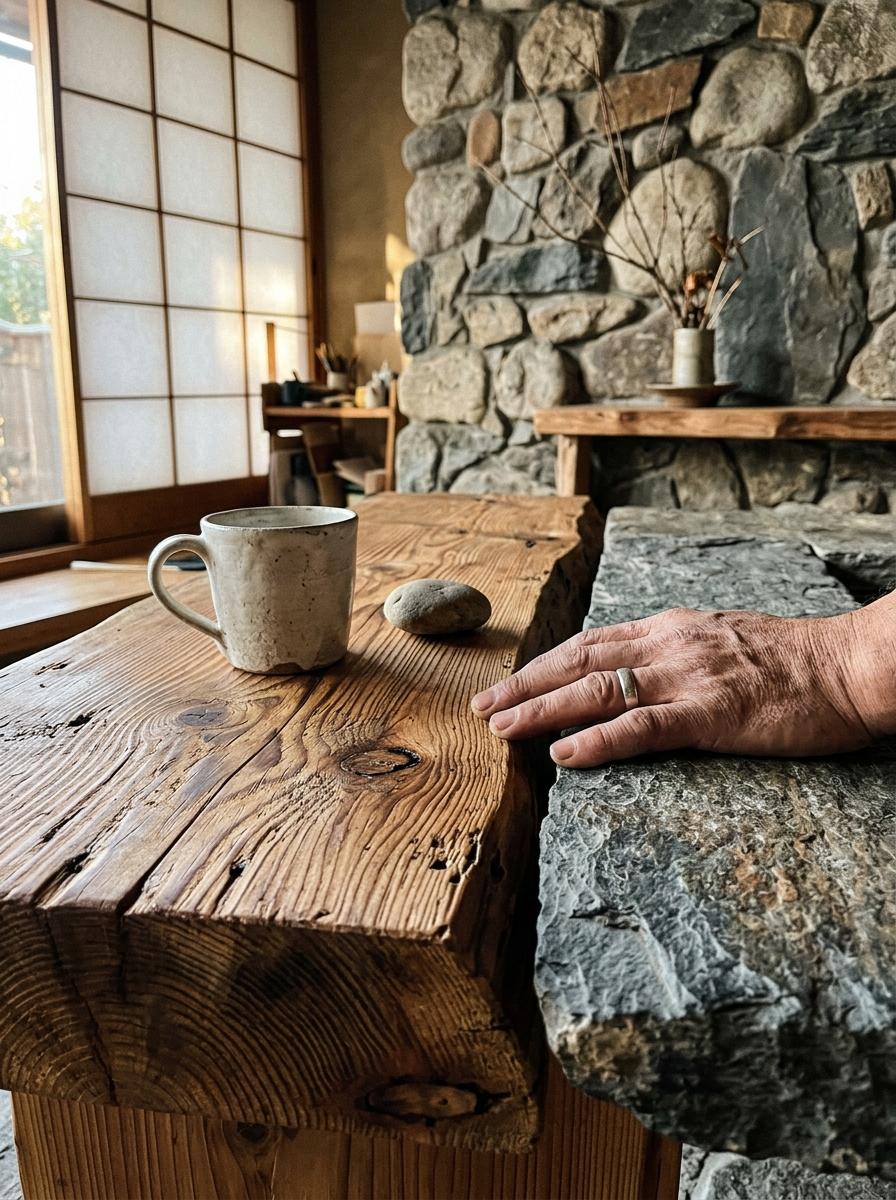

Standing amidst the sterile, clinical glare of a high-gloss corporate lobby-all cold chrome and echoing marble-I often find myself craving the quiet gravity of a space that actually breathes. It was during a recent interview with a Tokyo-based craftsman that I finally understood why the tactile pull of organic materials feels so essential. He was running a calloused thumb over a slab of live-edge cedar when he remarked, "The wood holds the warmth of the sun," before pausing to adjust his chisel, "while the stone provides the silence of the earth." This interplay of haptic qualities is what defines the Japandi palette; it is the deliberate layering of low-sheen timber grains against the rugged, patinated surfaces of river rock or slate. By juxtaposing these raw, unrefined elements, we move away from the frantic artificiality of modern urban life toward a more grounded, wabi-sabi inspired interior. This delicate calibration of material weight and texture is not merely an aesthetic choice, but a fundamental study in how we ground ourselves within the home.
Soft Linen Fabrics Meet Raw Oak In Japandi Spaces
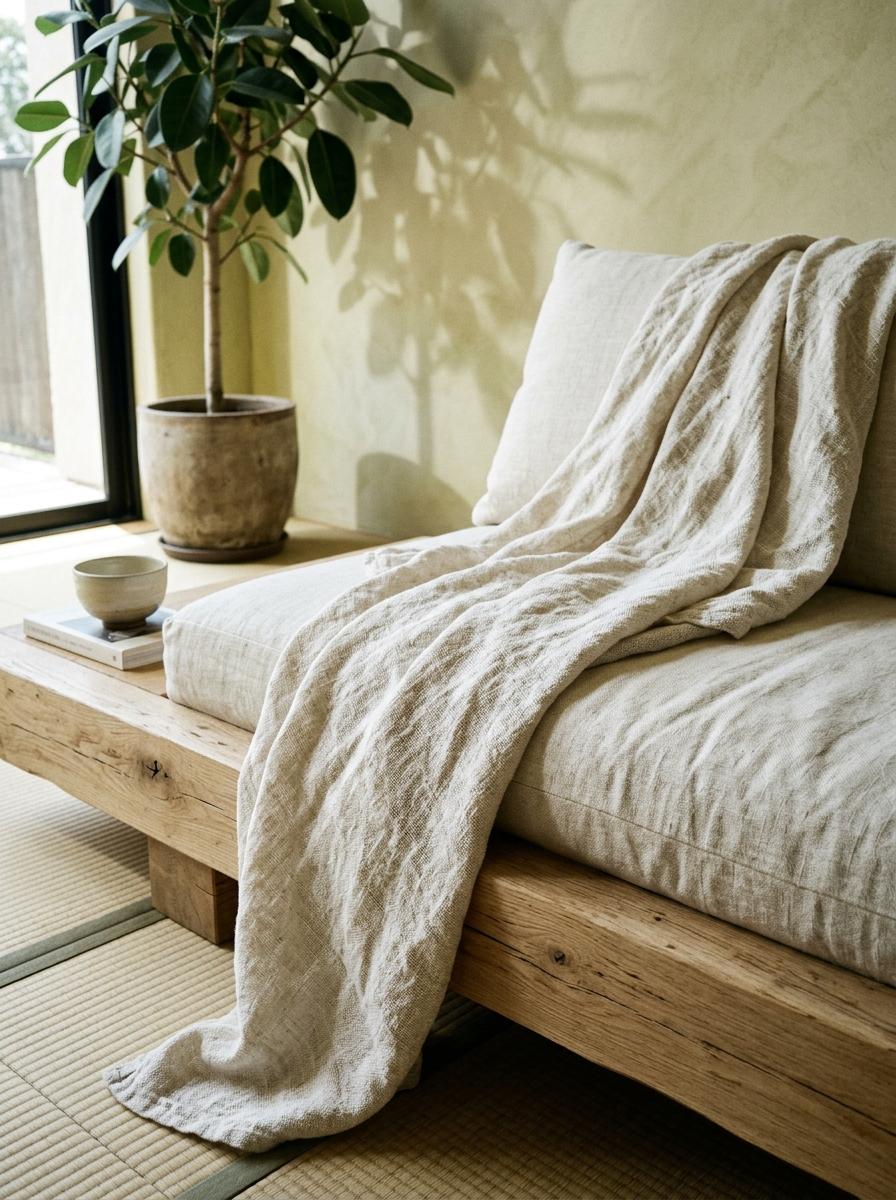

In the quiet corners of a Kyoto-inspired townhome, the design narrative hinges on a deliberate collision between the ethereal and the terrestrial. Note how the diaphanous, slubbed texture of stone-washed linen drapes over the structural honesty of kiln-dried, quartersawn white oak. This pairing creates a disciplined softness-a paradox where the textile's fluid, open-weave vulnerability meets the timber's unyielding, tactile grain. As your hand moves from the cool, fibrous breathability of the fabric to the warm, sandpaper-matte finish of the raw wood, the physiological transition is immediate: your heart rate settles into a rhythmic lull, trading the high-frequency friction of modern synthetic life for a grounded, sensory stillness. In these curated Japandi sanctuaries, the material palette does not merely occupy space; it orchestrates a visceral return to a more primitive, regulated state of calm.
Tactile Japandi Texture Combinations Using Woven Rattan And Wool
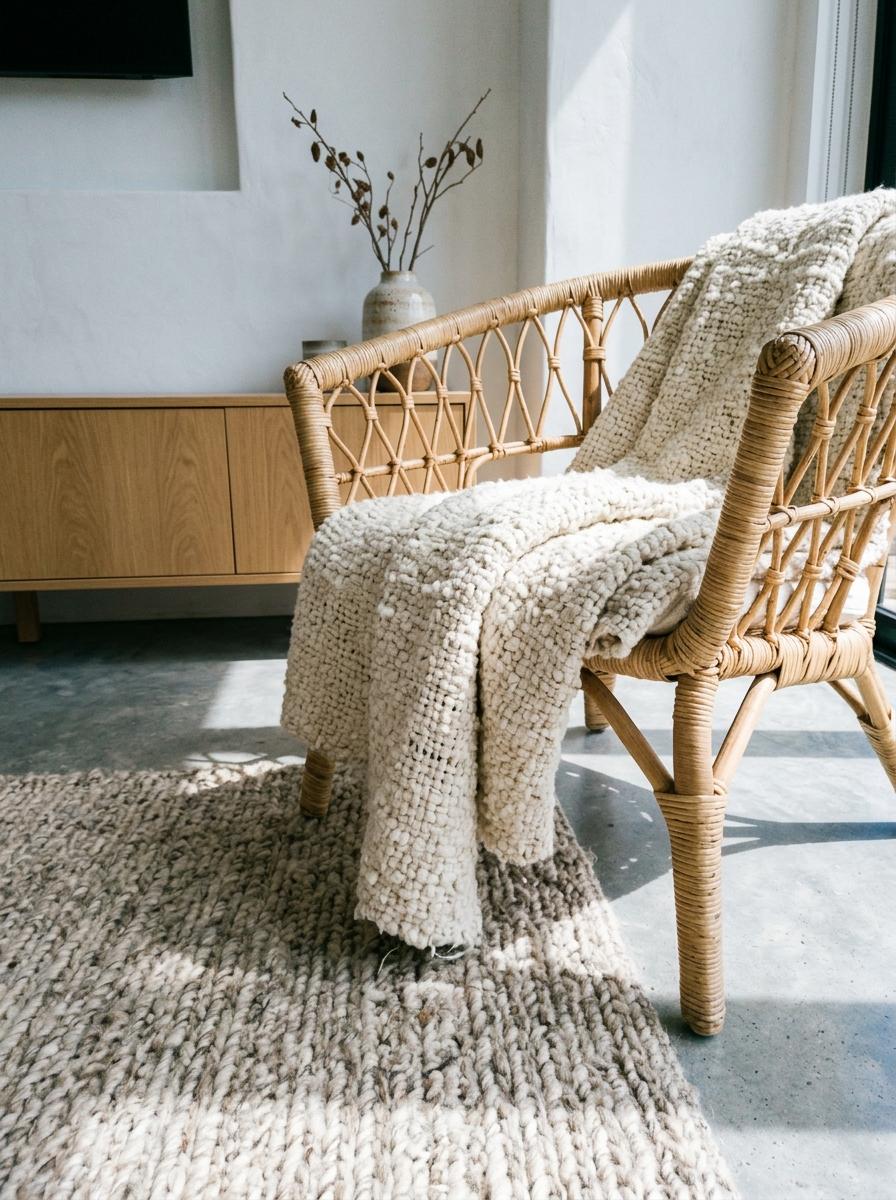

To understand the essence of Japandi is to observe a deliberate chemical reaction: the synthesis of Scandinavian hygge-a commitment to cozy functionality-with the Japanese ethos of wabi-sabi, or the celebration of ephemeral imperfection. This fusion transcends mere aesthetic trend, manifesting instead as a rigorous study in haptic contrast. At the heart of this dialogue lies the interplay between woven rattan and organic wool. Rattan offers a structural, skeletal rigidity that borders on the architectural, yet when juxtaposed with the voluminous, unrefined loft of sheep's wool, the tension dissolves into a state of serene equilibrium. The sensory impact of this pairing is profound; it is a composition of desiccated, fibrous warmth set against a dense, lanolin-rich softness. By integrating the rhythmic, linear cadence of cane-work with the amorphous, cloud-like pile of a hand-knotted textile, the space achieves a grounded atmosphere that feels simultaneously ancient and avant-garde. This is not simply interior styling, but a sensorial curation where the tectonic meets the tactile, inviting a meditative engagement with the physical world.
The Art Of Layering Earthy Clay And Smooth Timber In Japandi Homes
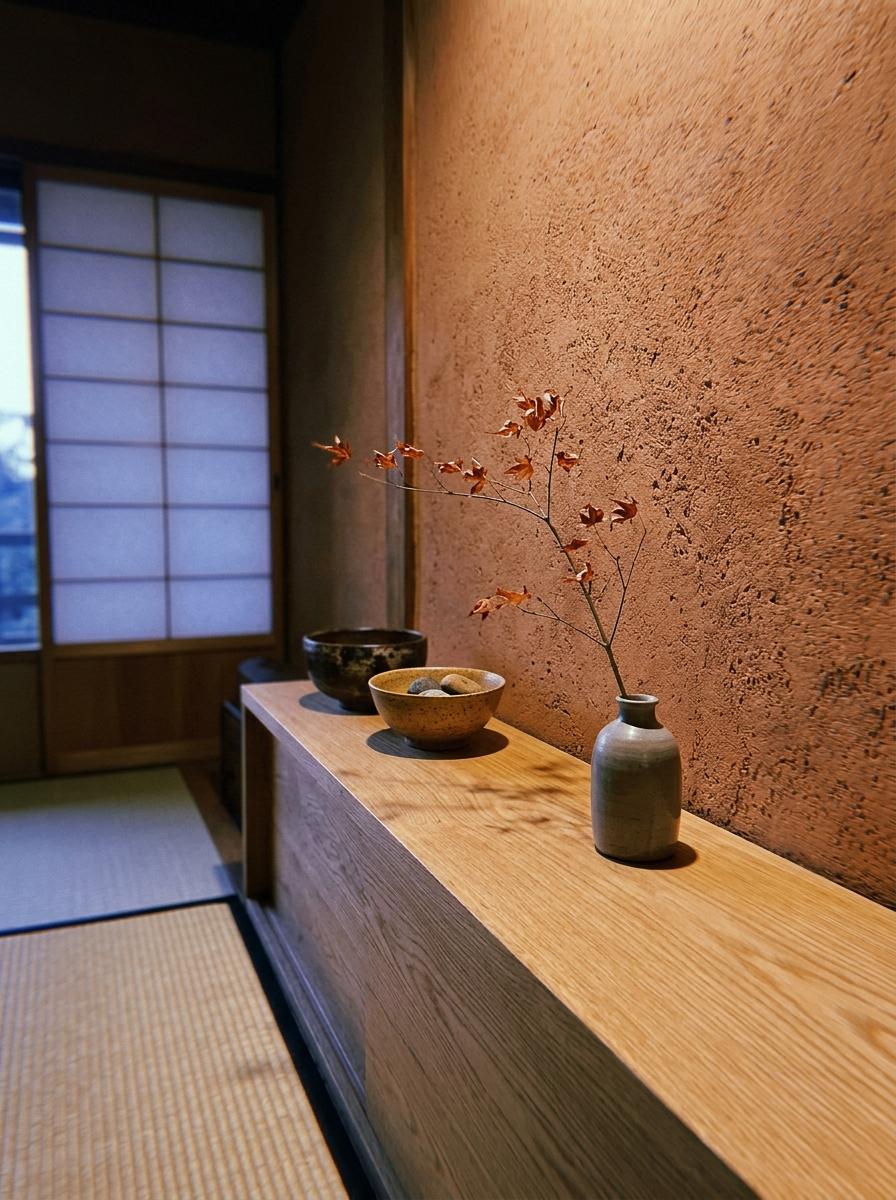

In the sophisticated interior landscape of a Kyoto-inspired residence, the dialogue between finish and form transcends mere decoration. Note how the tactile, granular topography of hand-applied terracotta plaster meets the seamless, oil-rubbed expanse of Hokkaido oak, creating a sensory intersection where the primitive and the polished coexist. This deliberate arrangement thrives on a structured spontaneity, a design paradox where the raw, geological weight of the clay anchors the ethereal, weightless grain of the timber. As your eye traces the transition from the matte, light-absorbing walls to the honeyed, reflective wood, a profound physiological stillness settles within you-a slowing of the pulse that signals a departure from the digital world and an immersion into a home that breathes with organic permanence.
Luxurious Boucle And Pale Ash Japandi Texture Combinations
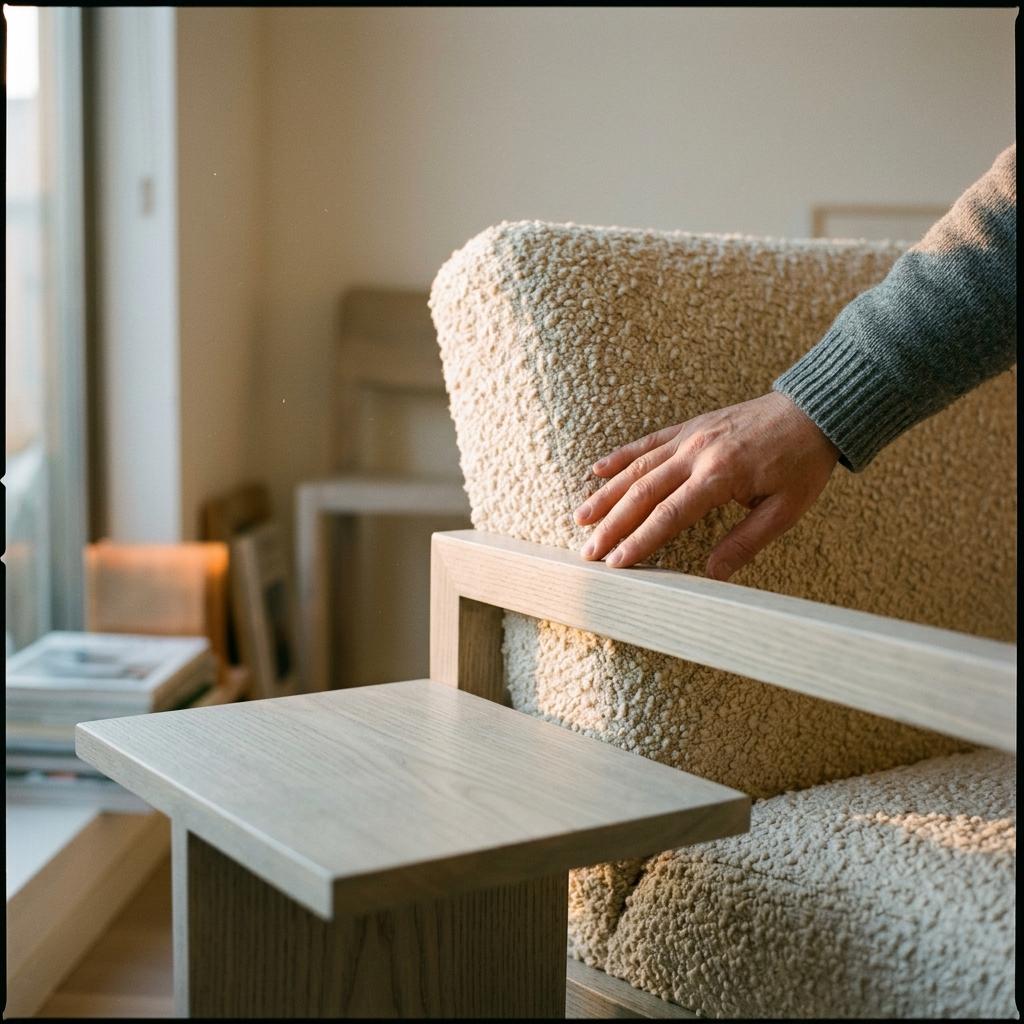

Standing in a chaotic, neon-lit Shibuya intersection, the air is a frantic hum of friction and digital noise-a stark contrast to the sanctuary I discovered moments later inside a minimalist studio tucked away in a quiet side street. There, I watched a master craftsman run his hand over a low-slung lounge chair, explaining that the soul of a room lies not in its furniture, but in its "tactile tension." "The secret," he remarked, pausing to trace the raised, knotted pile of the upholstery, "isn't just about selecting a fabric... it is about how that grain catches the light." This interplay between the heavy, nubby topography of Luxurious Bouclé and the ethereal, uniform grain of Pale Ash creates what designers call a sensory equilibrium. While the Bouclé provides a cozy, three-dimensional warmth, the Ash offers a desaturated, architectural grounding that prevents the space from feeling overly soft. This deliberate juxtaposition of "visual weight" and "linear clarity" transforms a simple room into a curated study of Nordic-Japanese harmony.
Natural Washi Paper Accents For Depth In Japandi Design
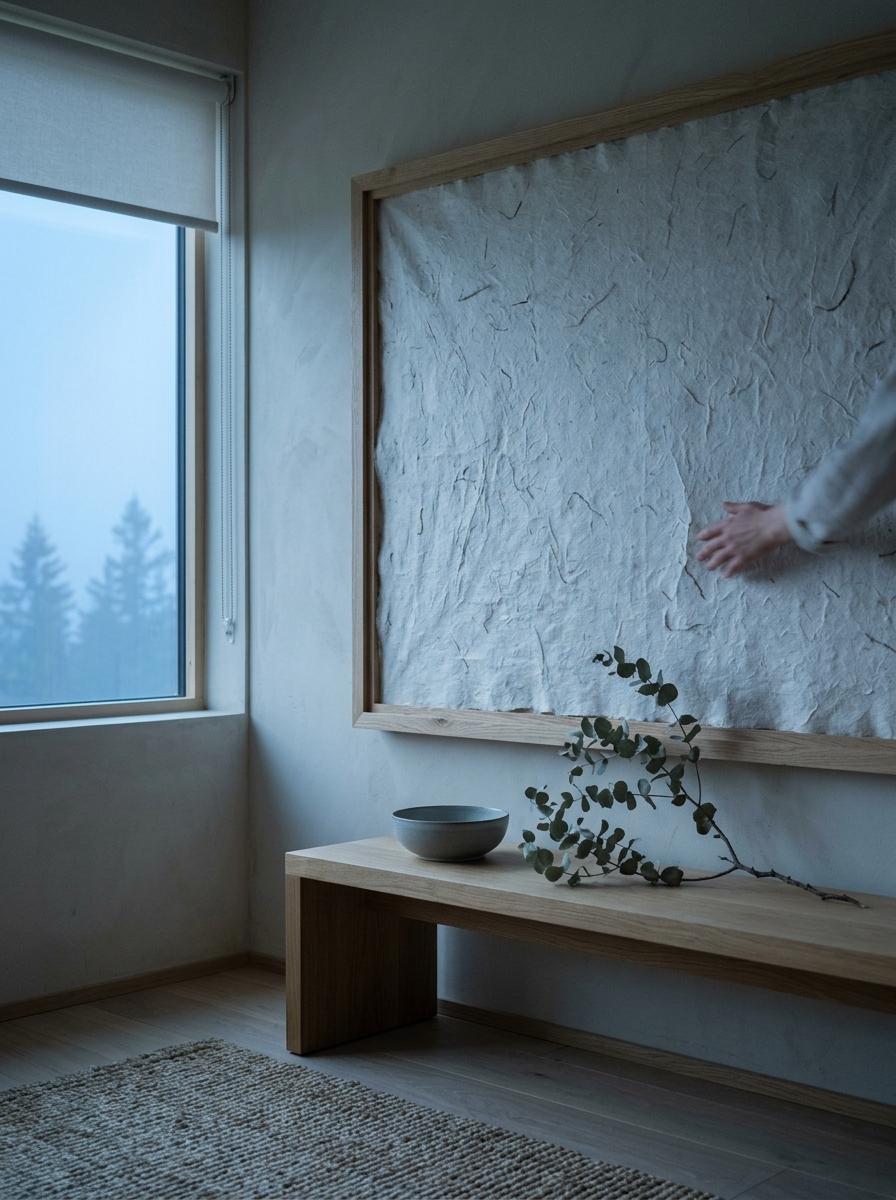

To truly master the Japandi aesthetic, we can look beyond mere minimalism and embrace the fibrous, translucent materiality of traditional Japanese papermaking. Note how the integration of Echizen Washi-a craft perfected over fifteen centuries in the Fukui Prefecture-transforms a sterile wall into a canvas of structured chaos, where the organic irregularities of the mulberry bark create a tactile rhythm against the clean, sharp geometries of Scandi-style oak framing. This interplay achieves a heavy weightlessness; the paper acts as a physical barrier that remains visually ethereal, filtering light into a soft, diffused glow that mimics the hazy atmosphere of a Kyoto morning. As you trace the delicate, gossamer veins of the paper with your gaze, the body undergoes a physiological shift-the pulse slows and the breath deepens-moving from the simple observation of a decorative object to a profound state of sensory stillness, where the home becomes a sanctuary of tactile quietude.
Sophisticated Marble And Light Oak Japandi Texture Combinations
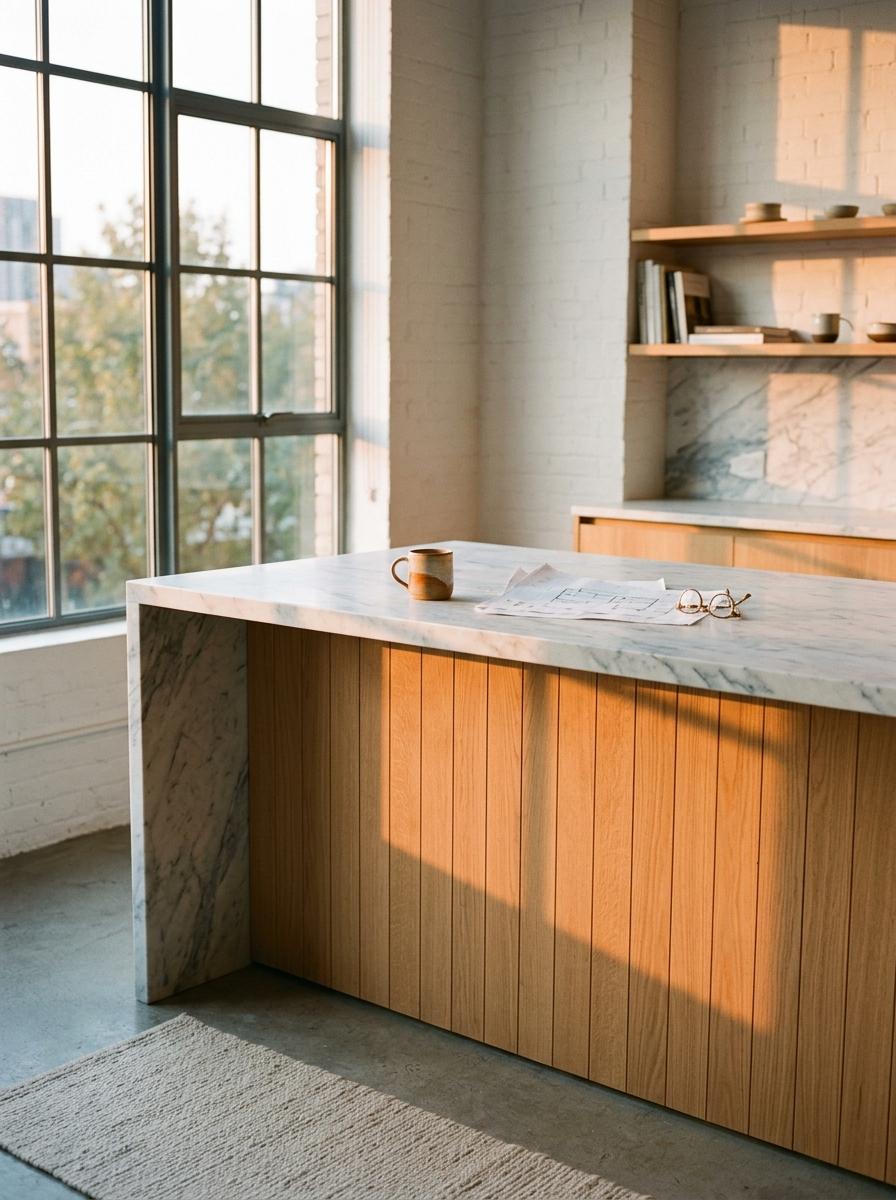

In the curated stillness of a high-ceilinged atelier, where the geometry of light meets the silence of shadow, the fusion of marble and oak anchors the room in a state of atmospheric grounding. This dialogue creates a monumental fragility, a figurative paradox where the crushing weight of stone is visually buoyed by the ethereal lightness of blonde timber. There exists a sharp structural dualism in this pairing: the marble serves as the cold, internal spine of the space-immovable and ancient-while the light oak acts as an external organic skin, softening the architectural perimeter with its breathable warmth. This is not a mere surface choice, but a study in material specificity, where the honed, silk-matte finish of Bianco Carrara, with its grey-blue kinetic veining, provides a tactile counterpoint to the open-pore texture and tight grain of vertical-sawn European white oak. Ultimately, this combination serves a vital functionalist specification; it integrates the clinical hygiene of non-porous stone with the acoustic dampening properties of wood, offering a refined industrial solution that transforms a minimalist interior into a resonant, livable sanctuary.
Cozy Jute Rugs Paired With Minimalist Japandi Furniture Textures
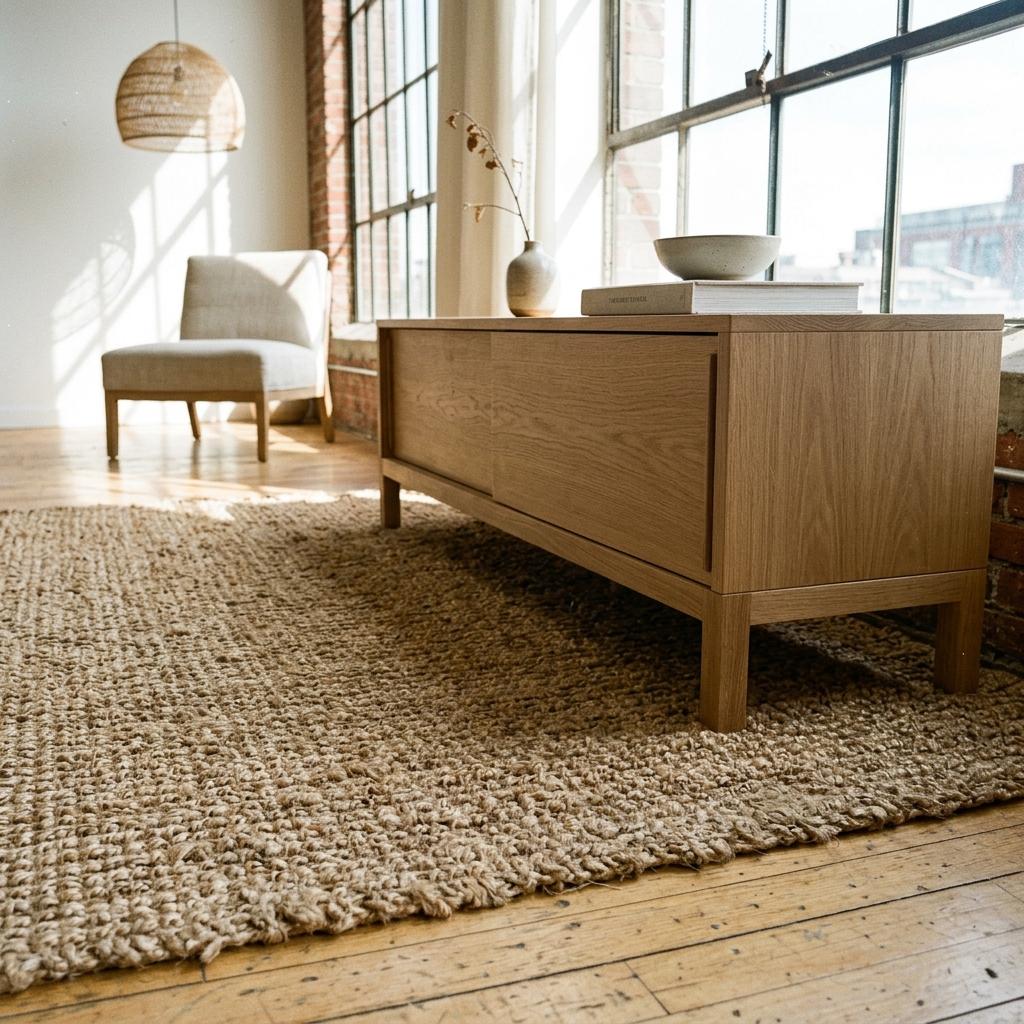

In the curated landscape of a Kyoto-inspired urban loft, the foundational dialogue begins where the tactile honesty of the floor meets the restrained silhouettes of Scandi-craftsmanship. Note how the fibrous, idiosyncratic topography of a hand-knotted jute rug anchors the room, offering a coarse yet yielding counterpoint to the velvet-smooth, matte finish of a solid white oak credenza. This arrangement thrives on a structured spontaneity-a deliberate tension between the raw, vegetal irregularities of the weave and the surgically precise joinery of the furniture. As your eyes trace the interplay of light across the organic husks of the jute, a profound sense of grounding occurs; the initial prickly friction of the natural fibers gives way to a rhythmic, soothing acupressure underfoot, slowing the pulse and signaling a transition from the chaotic exterior world to a sanctuary of sensory stillness. This is the quintessence of the Japandi ethos: a sophisticated marriage of rustic grit and polished serenity that transforms a living space into a meditative retreat.
Refined Concrete And Warm Wood Japandi Texture Combinations
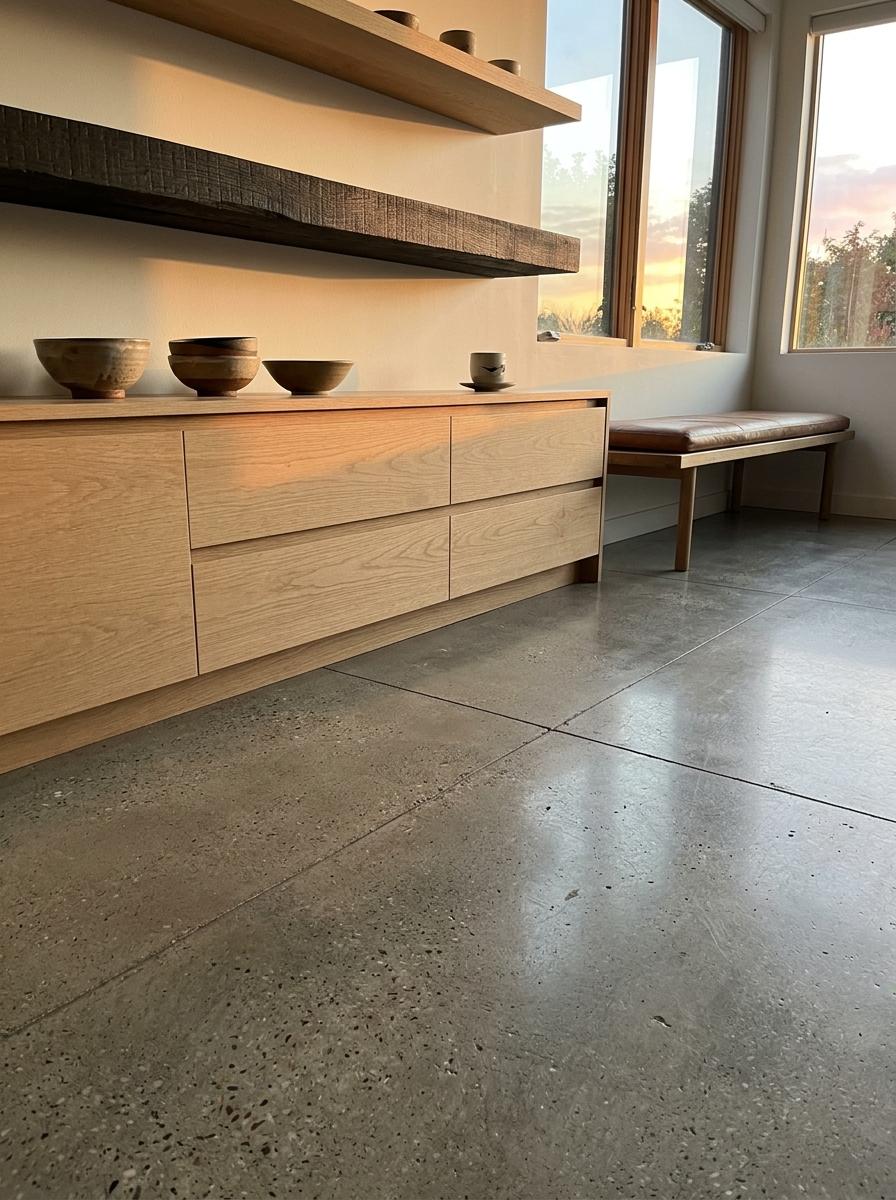

In the modern Japandi interior, the atmosphere is grounded by a deliberate stillness, where the echoing expanse of an open-plan gallery meets the hushed intimacy of a private sanctuary. Within this void, a weightless density emerges; the visual mass of the architecture is paradoxically lifted by the strategic infusion of light and organic grain. This structural dualism creates a definitive boundary between the external shell-a stoic, impermeable fortress-and the internal soul, which radiates a soft, pulsing warmth. Tactile imagery is defined by the juxtaposition of diamond-polished, aggregate-flecked concrete floors against the rhythmic precision of vertical-grain Shou Sugi Ban or honey-hued quarter-sawn white oak cabinetry. Ultimately, this pairing serves a vital functionalist specification: the high thermal mass of the refined masonry acts as a passive climate regulator, while the fibrous texture of the timber provides the essential acoustic dampening required for a truly meditative living environment.
Textured Plaster Walls Enhancing A Modern Japandi Aesthetic
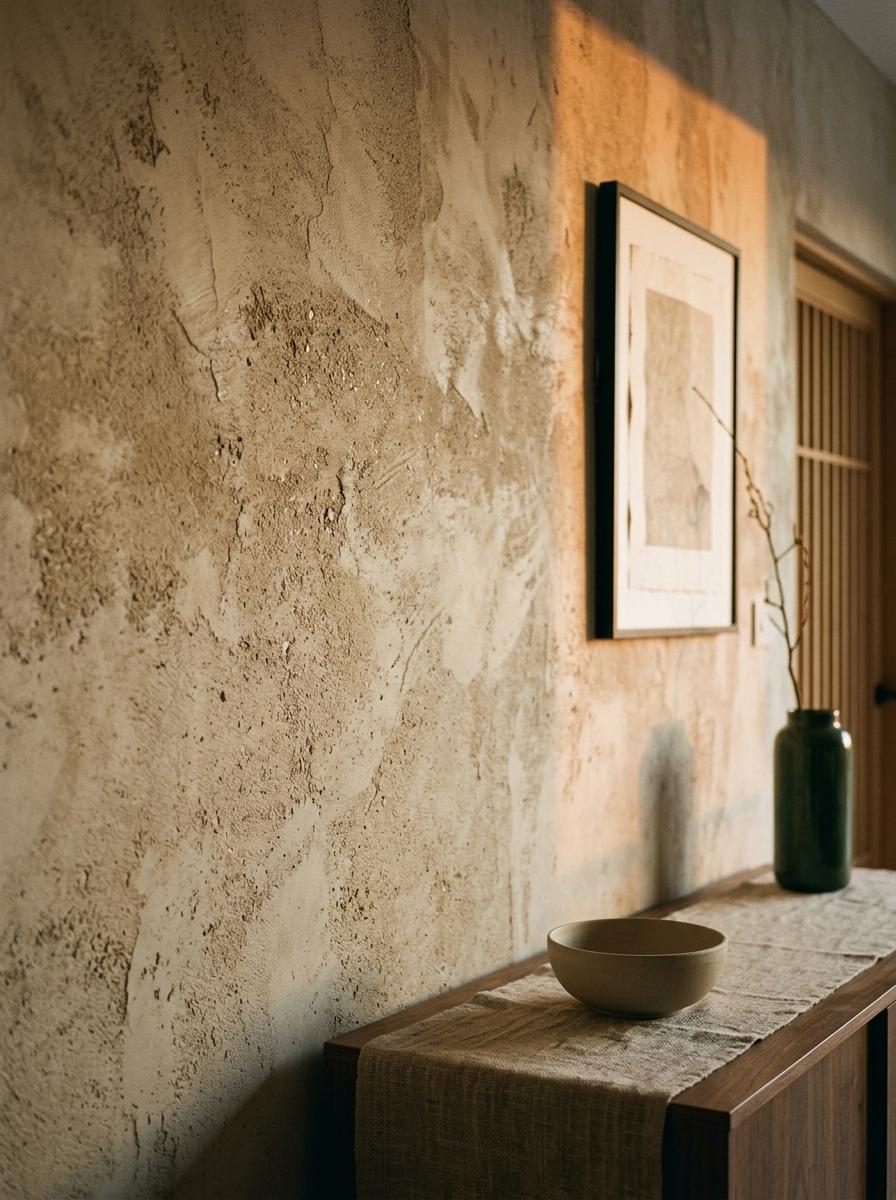

In the sun-drenched minimalist villas of Ibiza or the hushed wooden tea houses of Kyoto, the surface of a wall is never merely a boundary; it is a canvas of haptic storytelling. To achieve a modern Japandi aesthetic, You must look beyond flat paint and embrace the granular, artisanal depth of lime-based Venetian plaster or the earthy, monolithic grit of Tadelakt. Note how the raking light catches the deliberate imperfections of the hand-troweled surface, transforming a static partition into a living landscape of highlight and shadow. This architectural choice masters the art of structured spontaneity, where the rigid discipline of geometry meets the organic unpredictability of mineral aggregates. As your eyes trace the velvet-rough topography, a profound sense of physiological decompression takes hold; the visual "noise" of modern life is replaced by a grounding, subterranean quietude. By integrating these tactile finishes, a space ceases to be a mere room and becomes a resonant sanctuary that satisfies the primal human craving for touch and permanence.
Harmony In Contrast With Bamboo And Soft Cotton Japandi Textures
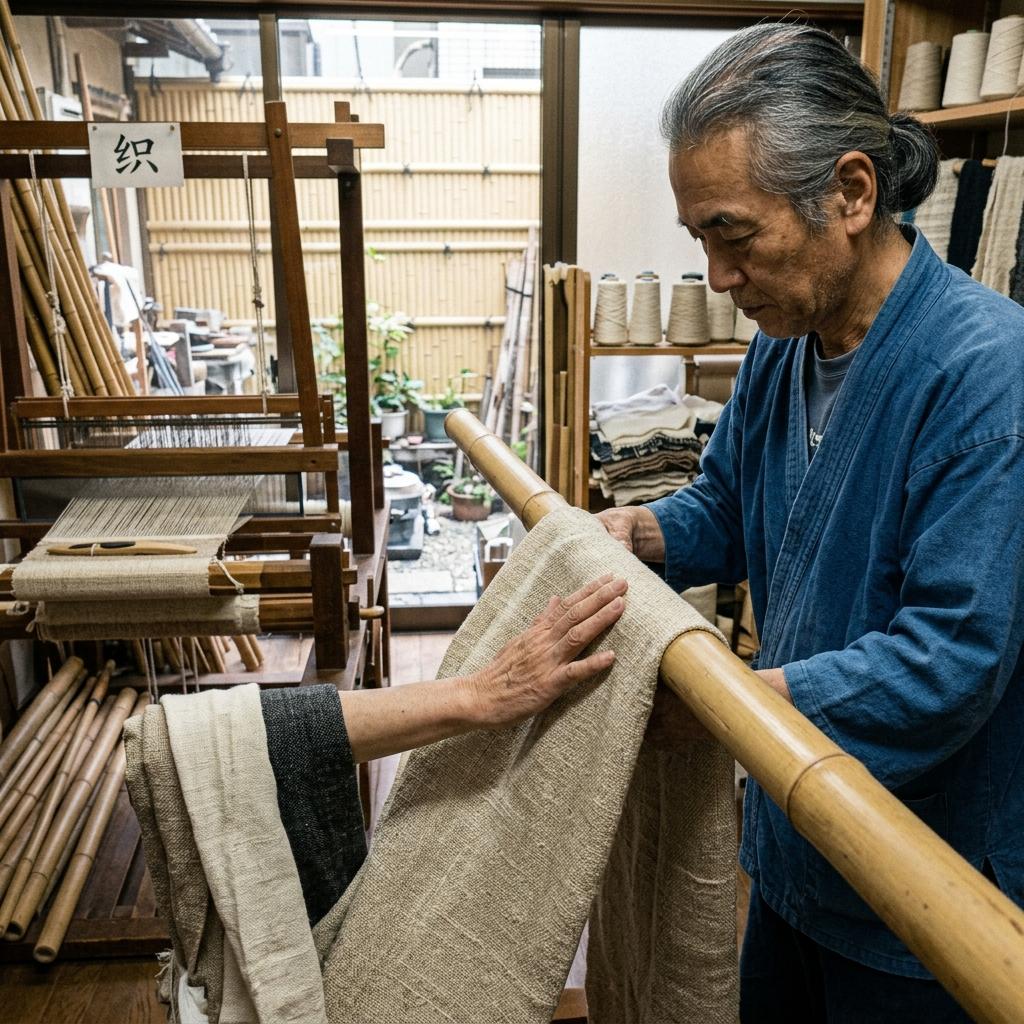

Walking into the workshop of a master weaver in Kyoto, I was struck by the sensory dissonance between the environment and the craft. Outside, the city pulsed with the "visual noise" of neon signage and the unrelenting friction of urban asphalt-a cacophony of hard edges. Inside, however, the air felt curated. "The soul of a room," the weaver remarked, pausing to adjust a loom of raw fibers, "isn't found in its ornaments, but in the tactile tension between its elements." He smoothed a length of hand-loomed textile against a structural bamboo pole, noting how the material's organic irregularities acted as a foil to the timber's linear precision. This interplay-the way a plush, heavyweight cotton softens the architectural rigidity of a fluted bamboo screen-creates a sophisticated chromatic depth that eludes modern minimalism. It is within this specific intersection of the resilient and the refined that we find the heart of Japandi textures.
Matte Ceramic Finishes Within Contemporary Japandi Texture Combinations
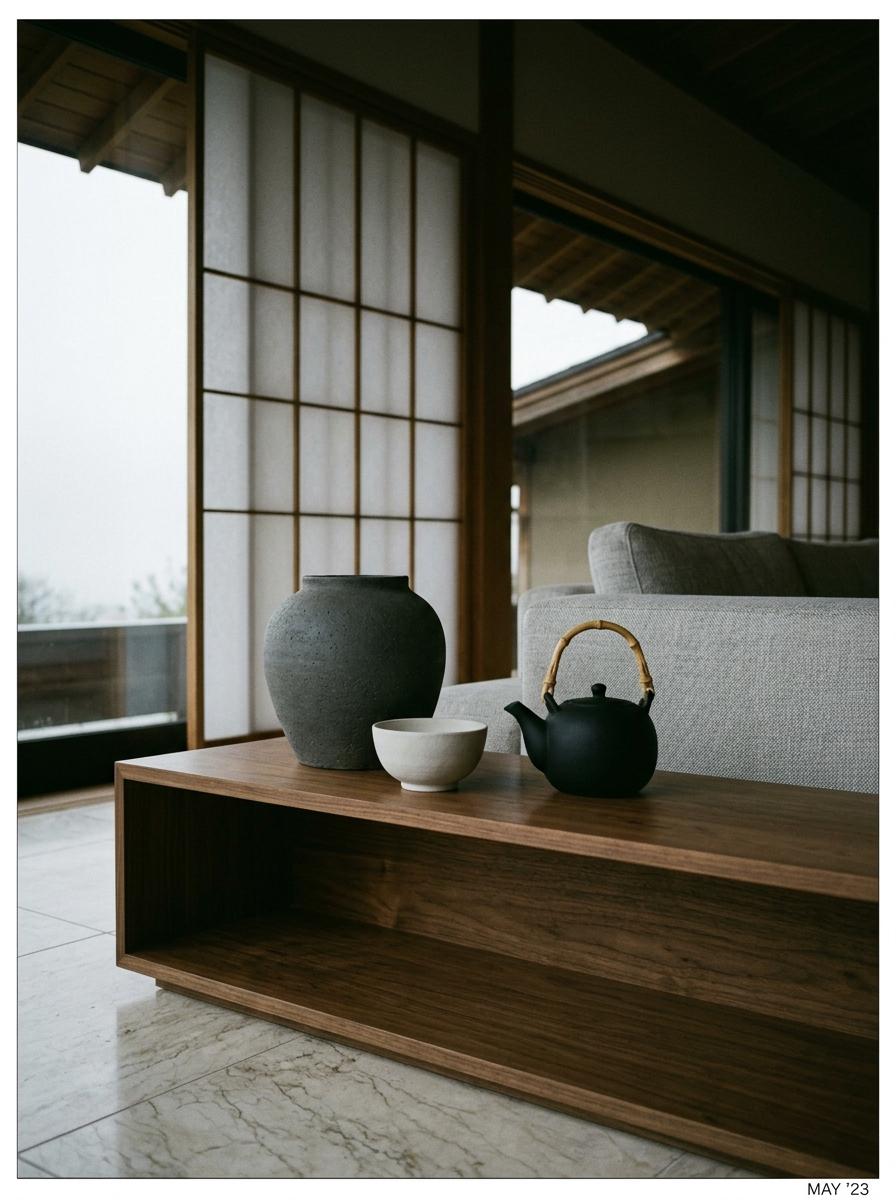

In the muted stillness of a Japandi interior-where the play of light is governed by the deep overhangs of cedar eaves and the soft diffusion of shoji screens-the atmosphere is grounded by a profound sense of "weightless density." This figurative paradox defines the contemporary matte ceramic: a surface that feels industrially permanent yet visually ethereal, absorbing the room's glare into a velvety, non-reflective void. This structural dualism creates a sharp tension between the vessel's internal silence and the external cacophony of modern living, acting as a sensory anchor amidst open-plan fluidity. By prioritizing material specificity, we see the tactile superiority of unglazed stoneware and cold-pressed porcelain, where the micro-porous grain provides a "soft-grip" friction that contrasts against the slickness of polished walnut or honed marble. Ultimately, this integration serves a functionalist specification; these matte finishes are not merely decorative but act as essential acoustic and visual dampers, neutralizing the sharpness of high-tech environments to foster a space of restorative utility.
Velvety Textures Meet Light Grained Woods In Japandi Interiors
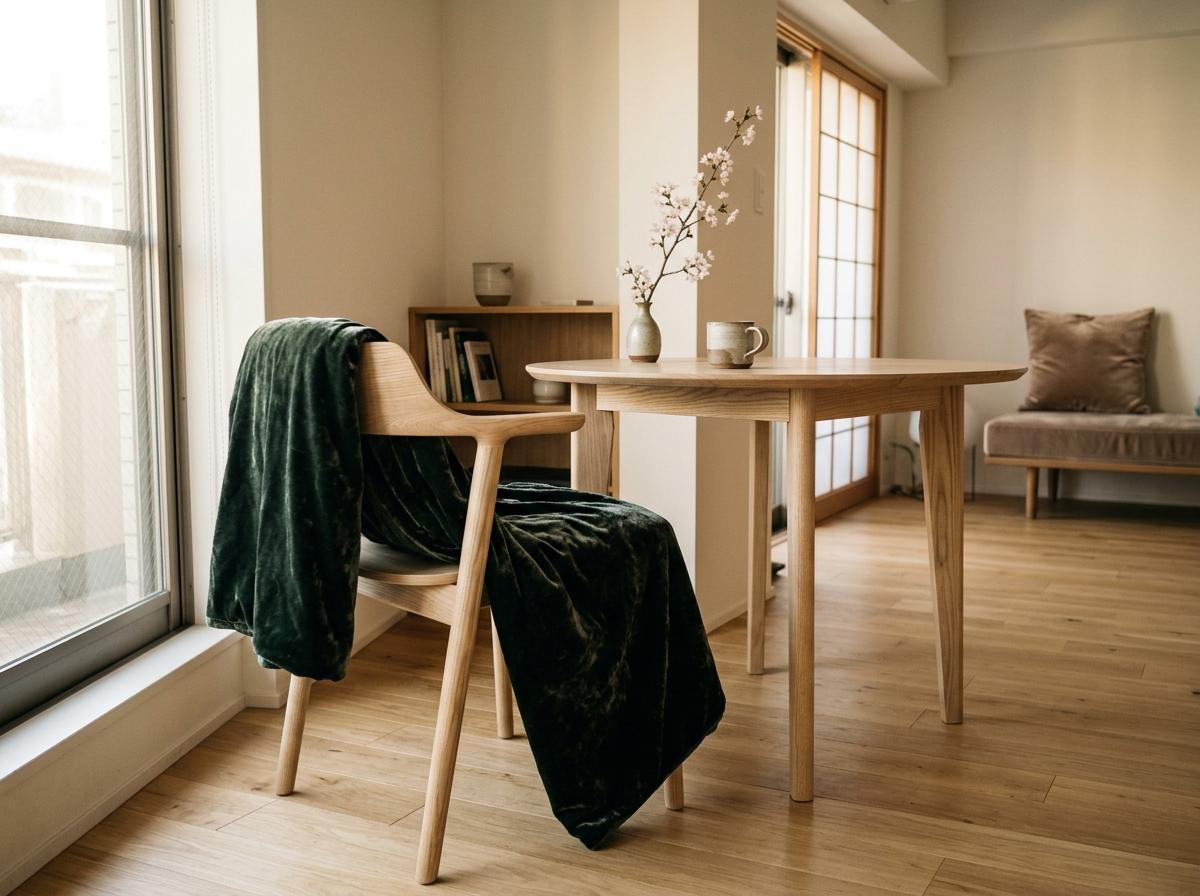

In analyzing the evolution of modern minimalism, one cannot ignore the diachronic contrast between the austere, utilitarian Zen monasteries of the Muromachi period and the plush, tactile comforts demanded by contemporary urban life. This shift has birthed a luxurious simplicity, where the raw honesty of natural materials is elevated by a deliberate, soft-focus elegance. In a recent project nestled within the prestigious enclave of Tokyo's Aoyama neighborhood, this dialogue comes to life. The homeowners, a repeat client who previously commissioned a high-concept loft in Copenhagen, sought to deepen their exploration of the Japandi aesthetic through a more sensory-driven lens. The resulting space achieves its balance through a rigorous technical synthesis of materiality and luminescence, specifically by pairing the high-pile depth of velvety textiles against the matte, linear precision of light-grained ash wood to modulate both acoustic quality and light diffusion.
Durable Sisal And Polished Stone Japandi Texture Combinations
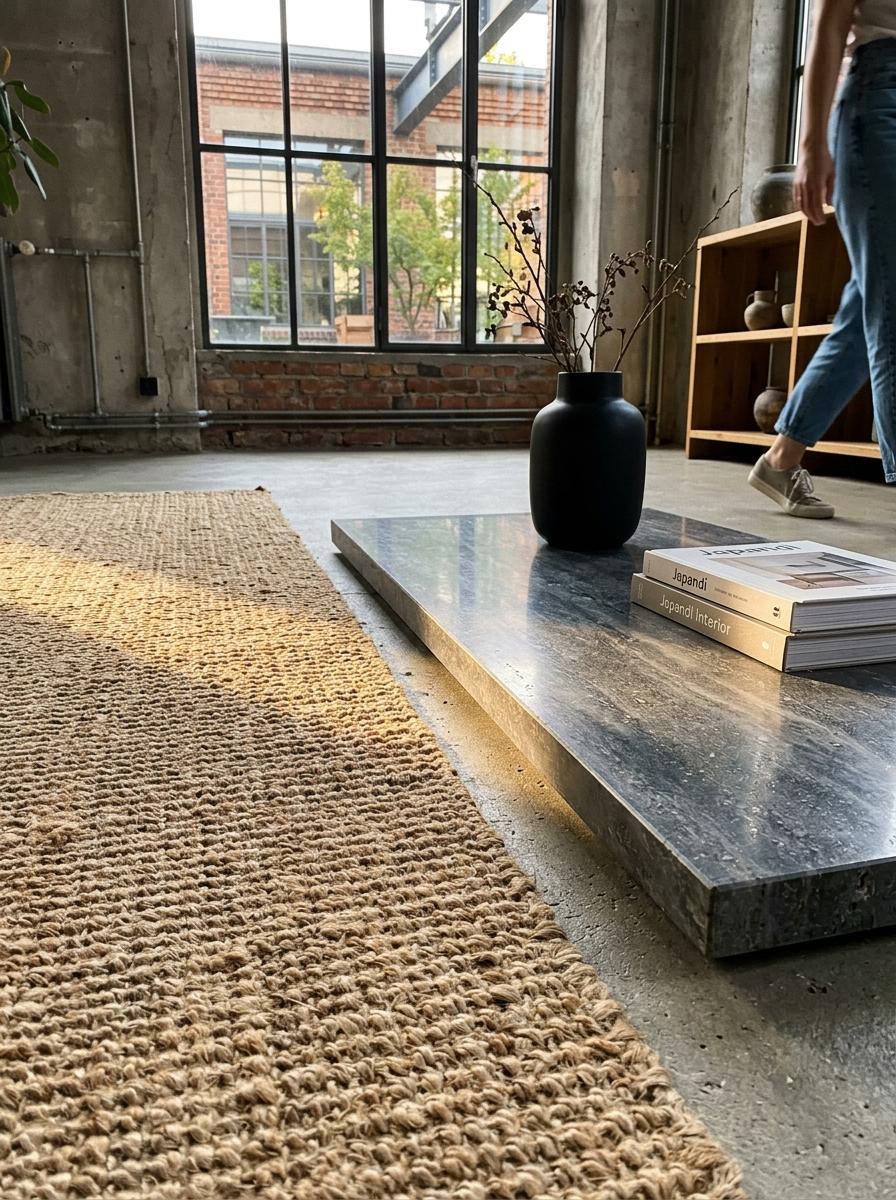

I remember standing in a drafty, concrete industrial loft in Berlin, where the cold, echoing floors felt less like a home and more like a sterile gallery. "The problem with minimalism," an interior stylist friend of mine remarked, tracing the edge of a rough-hewn fiber sample, "is that without tactile friction... it loses its soul." She was right; the space was missing that essential tension between the raw and the refined. In Japandi design, this equilibrium is found in the interplay of high-contrast finishes. By placing the coarse, organic tooth of sisal carpeting against the cool, monolithic slab of polished stone, you create a haptic experience that grounds the room's ethereal geometry. This specific dialogue between the durable and the sleek serves as the foundational blueprint for a home that feels both sophisticated and deeply rooted in the natural world.
Elegant Silk Accents Within Minimalist Japandi Texture Palettes
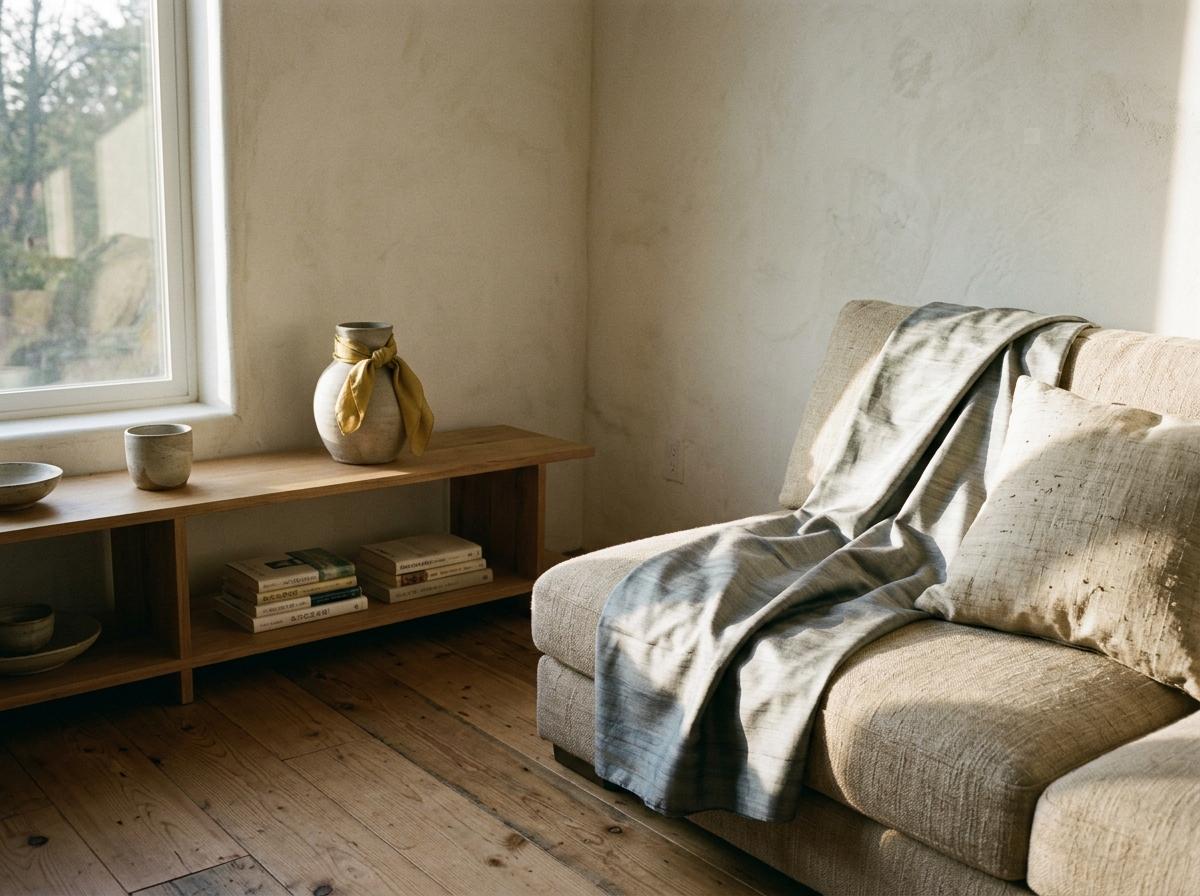

In the hushed stillness of a Japandi interior, where shadows lengthen across monochromatic planes, the atmosphere is grounded by a deliberate calibration of visual weight and silence. Within this void, the introduction of silk creates a luminous austerity; it is a material that feels both fragile and indestructible, offering a shimmering defiance to the matte stillness surrounding it. This creates a rigorous structural dualism, where the external shell of the room-defined by the stoic, porous surfaces of reclaimed Hinoki wood and lime-wash plaster-stands in sharp contrast to the intimate, fluid soul of the silk accents. Tactilely, the palette is elevated through the use of heavy-gauge habotai and raw tsumugi weaves, fabrics that possess a grainy, organic irregularity that mirrors the earthiness of stoneware. Far from mere decoration, these textiles serve a critical functionalist specification: they act as soft-surface acoustic dampeners and light-refraction tools, softening the industrial harshness of modern minimalism while maintaining the disciplined geometric integrity of the space.
Rustic Reclaimed Wood Mixed With Modern Japandi Textures
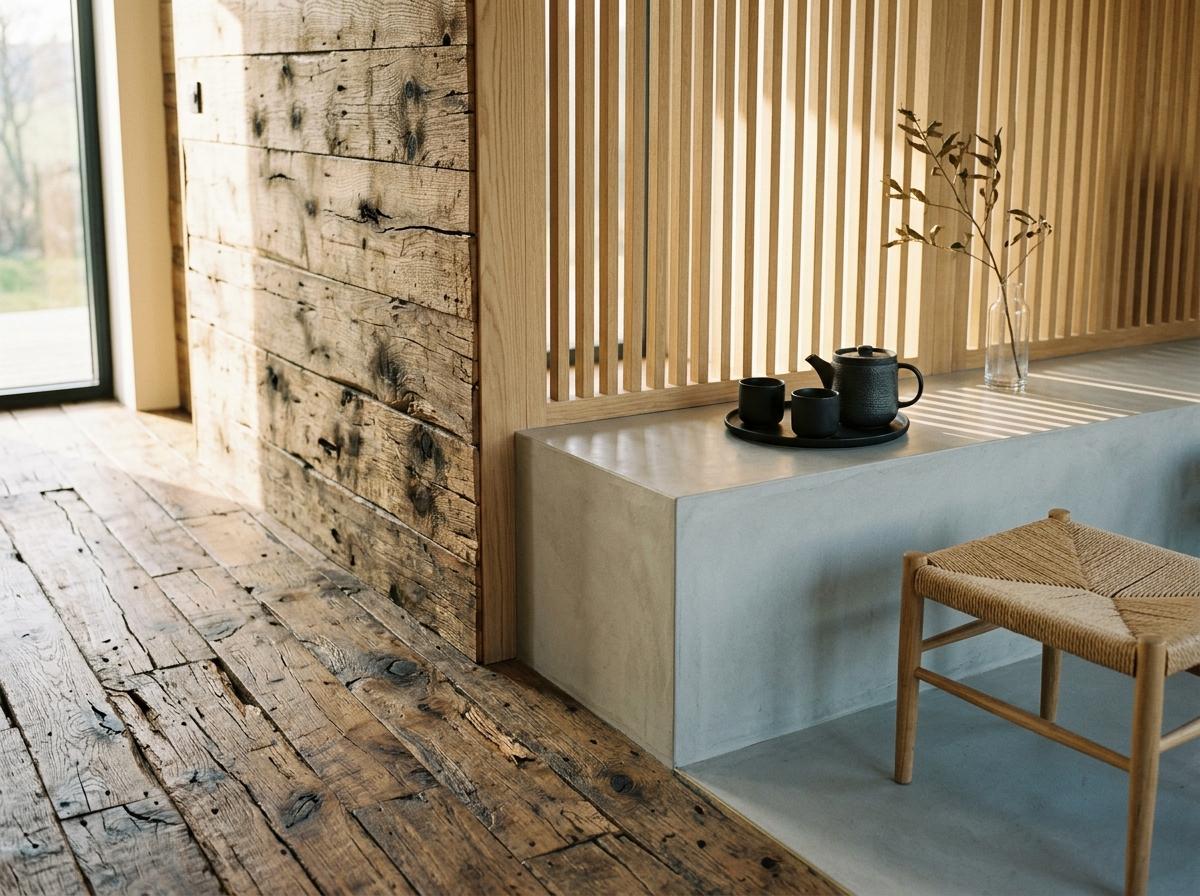

Walking through the heavy oak doors of an old farmhouse in the countryside, I was immediately struck by the aggressive, unrefined grain of the floorboards-timbers that had survived a century of expansion and contraction. "The knots in this wood," noted Elara, a specialist in sustainable sourcing, as she traced a deep fissure with her thumb, "they aren't just imperfections. They are... a biography of the tree." In that drafty, rustic shell, the texture felt almost chaotic, a wild dissonance of splinters and history. Yet, when these same reclaimed planks are transported into a curated Japandi interior, they undergo a metamorphosis; their rugged materiality is suddenly disciplined by the silken, matte finish of slatted shoji screens and the cool, non-reflective surfaces of micro-cement. It is this specific friction between the weathered and the polished-what designers call the tactile dialogue-that transforms a sterile space into a sanctuary of grounded modernism.
Breathable Hemp Fabrics Complementing Structural Japandi Elements
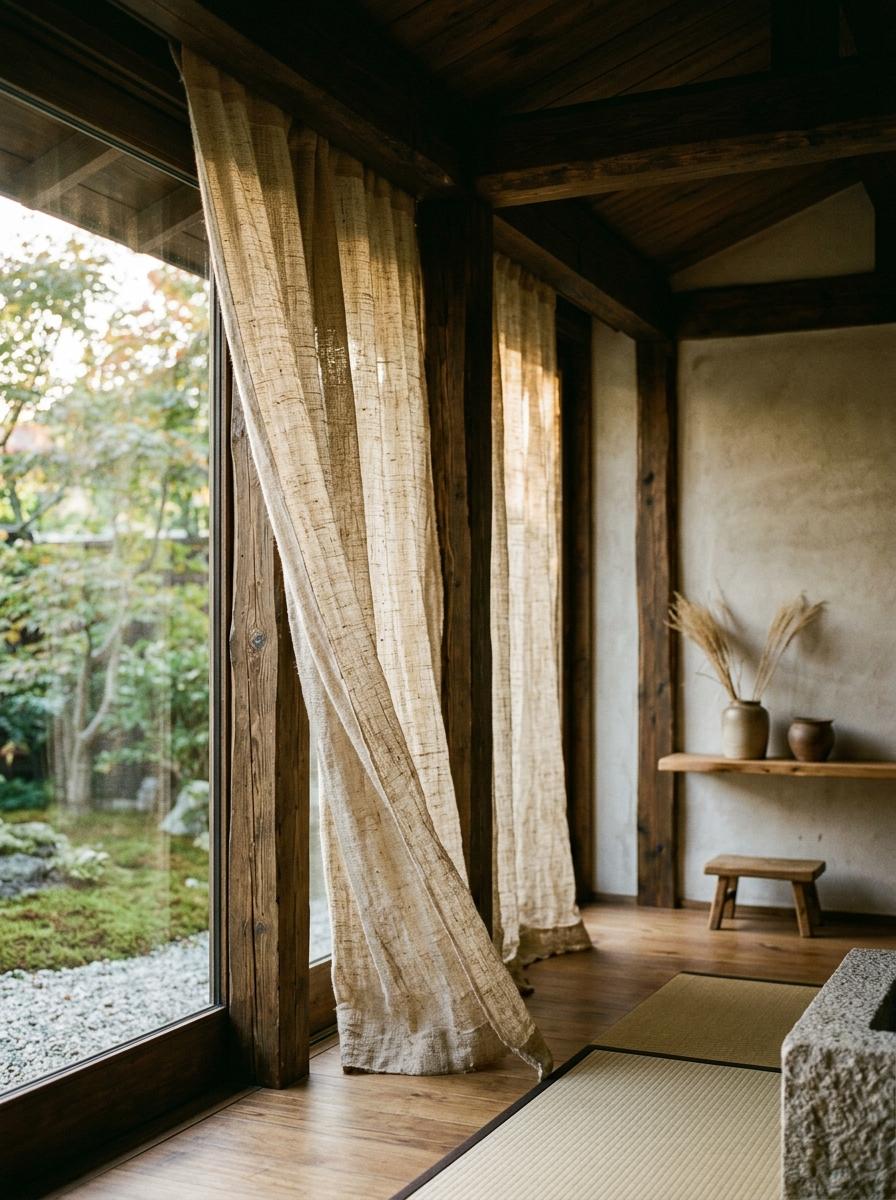

In the muted light of a Japandi-inspired sanctuary, where the scent of Hinoki wood anchors the room in a state of quiet permanence, a dialogue emerges between the rigid and the fluid. The interior achieves a weightless density, where the massive presence of low-slung timber frames is softened by the ethereal, semi-translucent drape of hemp. This structural dualism creates a stark boundary: the exterior architecture provides an unyielding, skeletal geometry, while the internal atmosphere is defined by the organic movement of fiber. Specifically, the coarse, open-weave long-staple hemp-retaining its natural slubs and raw, unbleached oatmeal hue-offers a tactile grit that counters the polished surfaces of stone and wood. Far from mere decoration, these breathable textiles serve a rigorous functionalist purpose; their high thermal conductivity and hygroscopic properties act as a passive climate regulator, integrating seamlessly with the minimalist aesthetic to ensure the home remains a living, breathing machine for tranquil habitation.
Discovering Depth Through Layered Japandi Texture Combinations
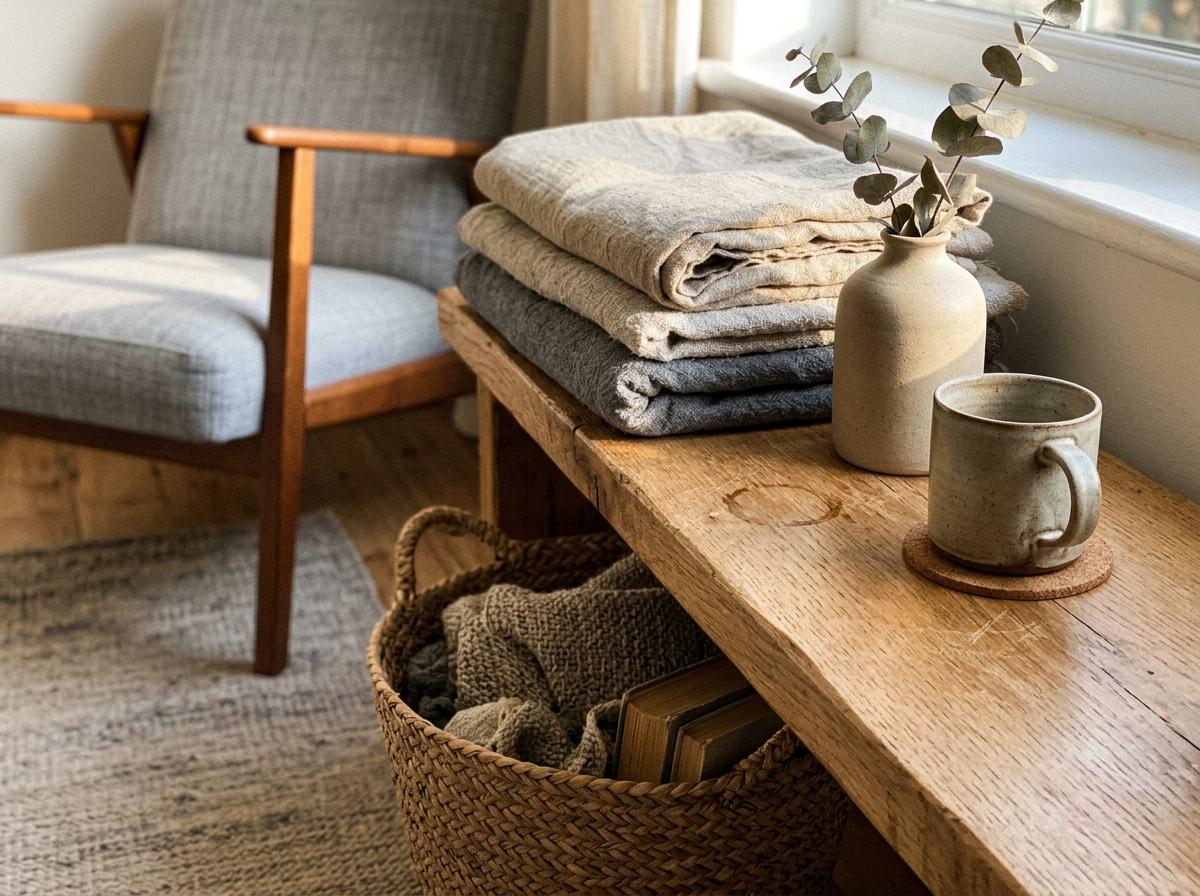

At its core, Japandi is the aesthetic result of a deliberate synthesis: the uncompromising rigor of Japanese minimalism coalescing with the soulful functionality of Scandinavian hygge. This union creates a visual vernacular that is both structurally disciplined yet profoundly inviting, a dialectical tension where the sleek silhouettes of mid-century Nordic design meet the rustic, organic imperfection of wabi-sabi. In exploring this intersection, we need to move beyond mere surface-level aesthetics to master the art of haptic layering. It is a world defined by sensorial depth-where the tactile gravity of raw, hand-hewn timber is softened by the ethereal, diaphanous drape of linen, creating a spatial experience that is simultaneously grounding, atmospheric, and restorative.
Handcrafted Pottery Textures Within A Balanced Japandi Home
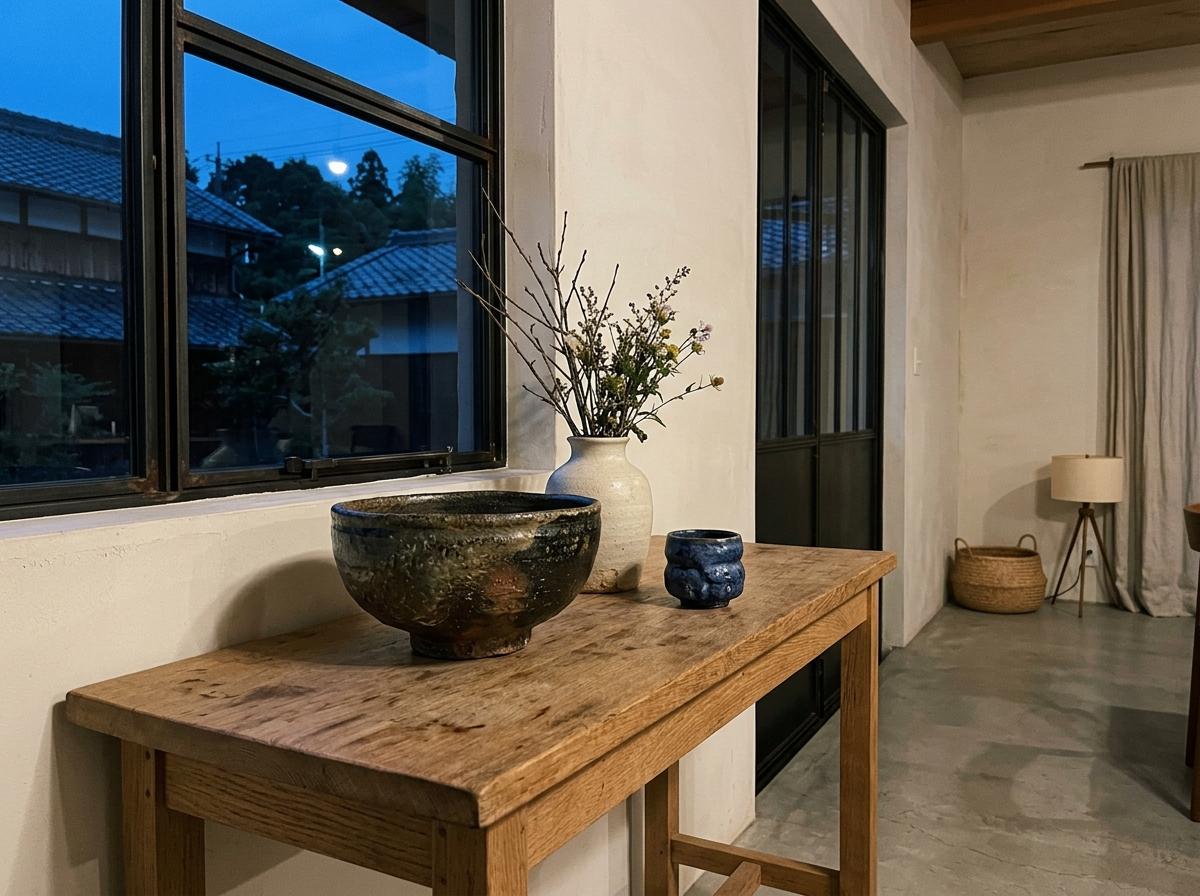

The evolution of the Japandi aesthetic has traveled far from its origins as a mere fusion of regional minimalism, moving toward a depth that feels more curated than constructed. In this latest project, we see a striking stylistic juxtaposition of industrial warmth-a paradox where the raw, rugged textures of handcrafted pottery breathe life into the sharp, disciplined lines of modern architecture. Situated in the serene enclave of Kamiyamacho, the residence serves as a canvas for a repeat client whose ongoing collaboration with their design team has fostered a unique level of trust and aesthetic precision. To bridge the gap between ancient craft and contemporary living, the home utilizes a diachronic contrast, placing centuries-old ceramic glazing techniques alongside the polished surfaces of today's high-end finishes. This deliberate technical synthesis is achieved through the careful calibration of tactile materiality and negative space, ensuring that every ceramic grain serves as a grounding force within the home's ethereal, light-filled volume.
Subtle Ribbed Glass And Smooth Oak Japandi Texture Combinations
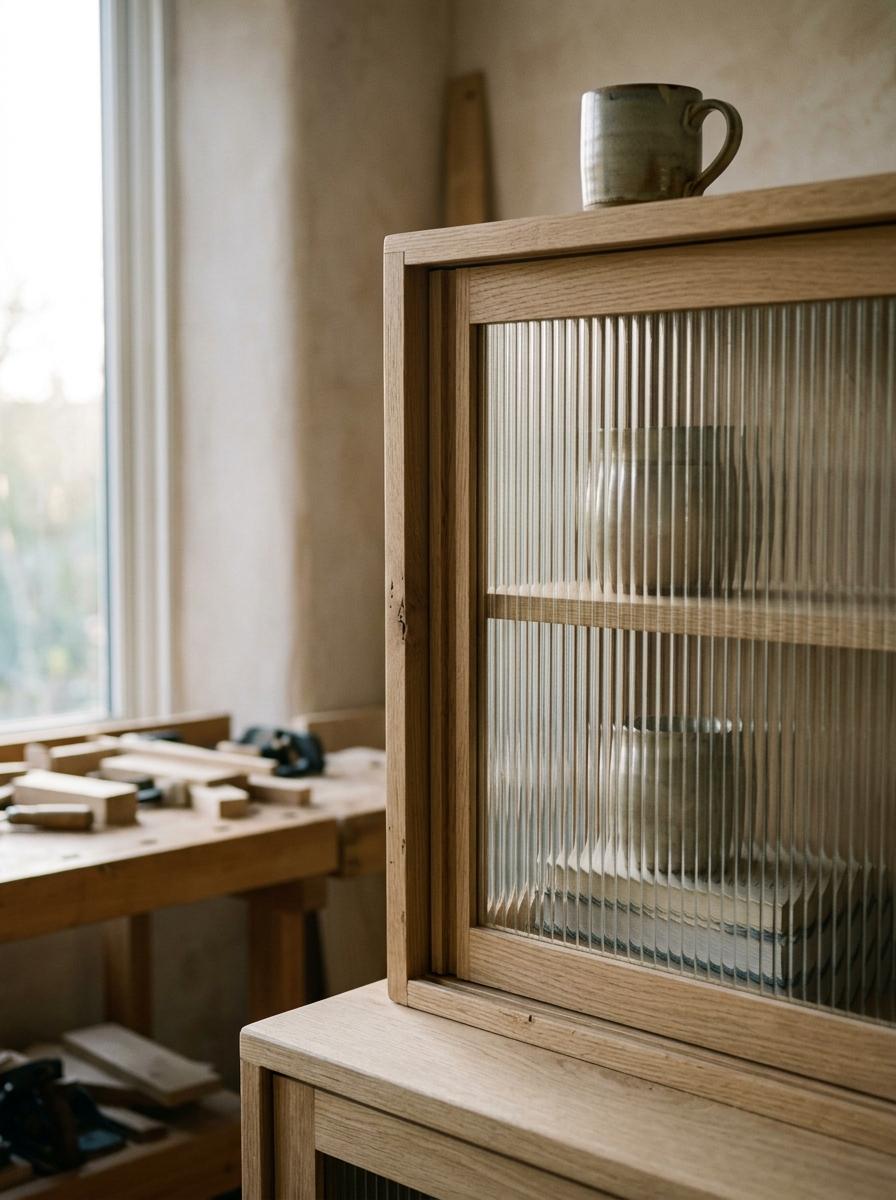

During a recent studio visit, I watched a craftsman run his hand across a slab of untreated white oak, the wood appearing almost velvet-like under the soft morning light. "The secret isn't in the perfection," he remarked, pausing to trace a faint cathedralling in the grain, "but in how the surface... well, how it actually holds the shadows." This tactile honesty stands in stark contrast to the sterile, high-gloss environments of contemporary high-rises, where cold marble and polished chrome often vibrate with a restless, clinical energy. In those mirrored spaces, light is reflected harshly, offering no place for the eye to rest or the spirit to settle. By introducing fluted architectural glass against a backdrop of smooth, quartersawn timber, we move away from that industrial coldness toward a more intentional materiality. This interplay between the rhythmic, vertical linearities of the glass and the grounding warmth of the wood illustrates why the juxtaposition of transparency and solid mass is the essential heartbeat of the Japandi aesthetic.
Comments