
At its core, Japandi is the masterful synthesis of Scandinavian hygge and Japanese wabi-sabi, a hybrid typology where Nordic functionality intersects with the profound ethos of transience. In my ongoing study of these environments at Japandi.design, I have observed a compelling dialectic: these homes are rigorously curated yet intuitively lived-in, manifesting a spatial austerity that remains remarkably soulful. By utilizing a palette of tactile, haptic materials and muted, chromatic neutrality, these designs transcend mere aesthetics to achieve a state of being-offering a residential experience that is simultaneously visceral, atmospheric, and profoundly meditative.
Japandi Style House
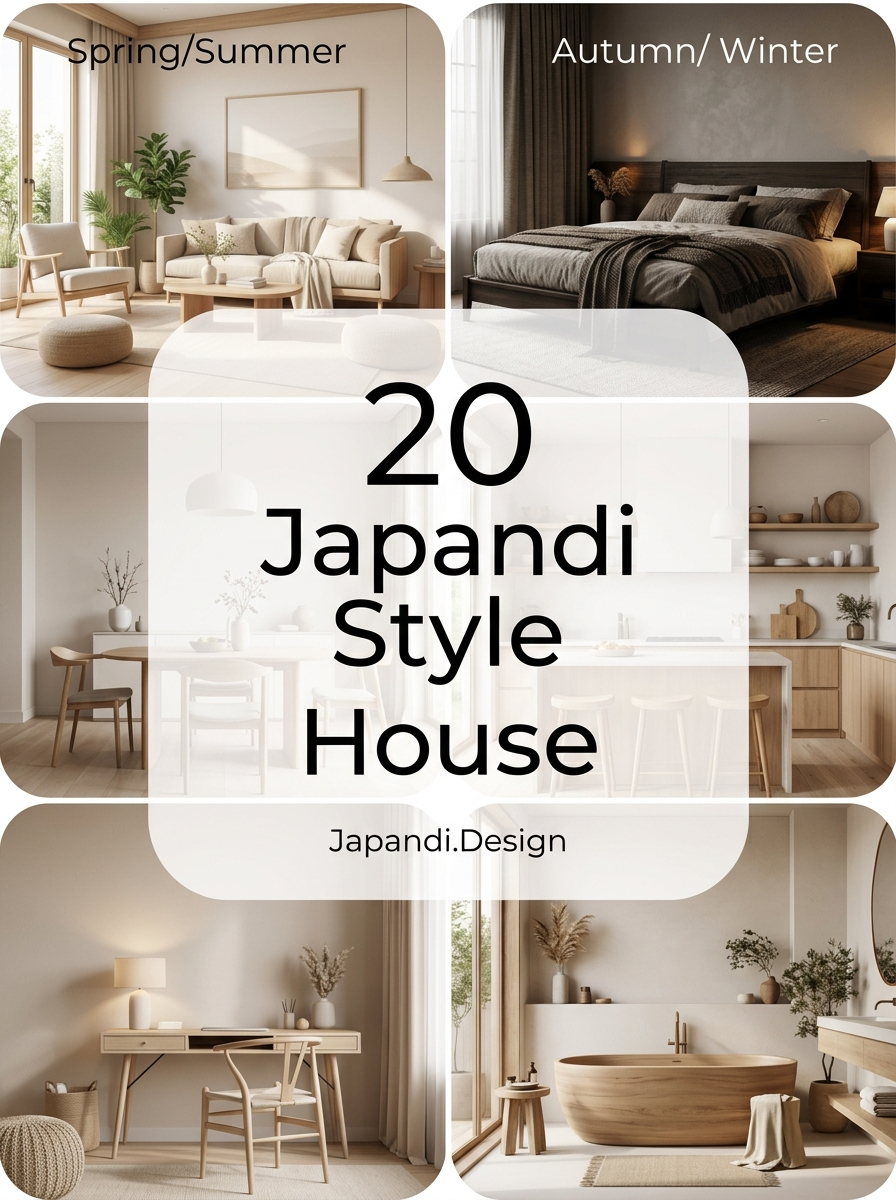

Discover The Charm Of A Modern Japandi Style House
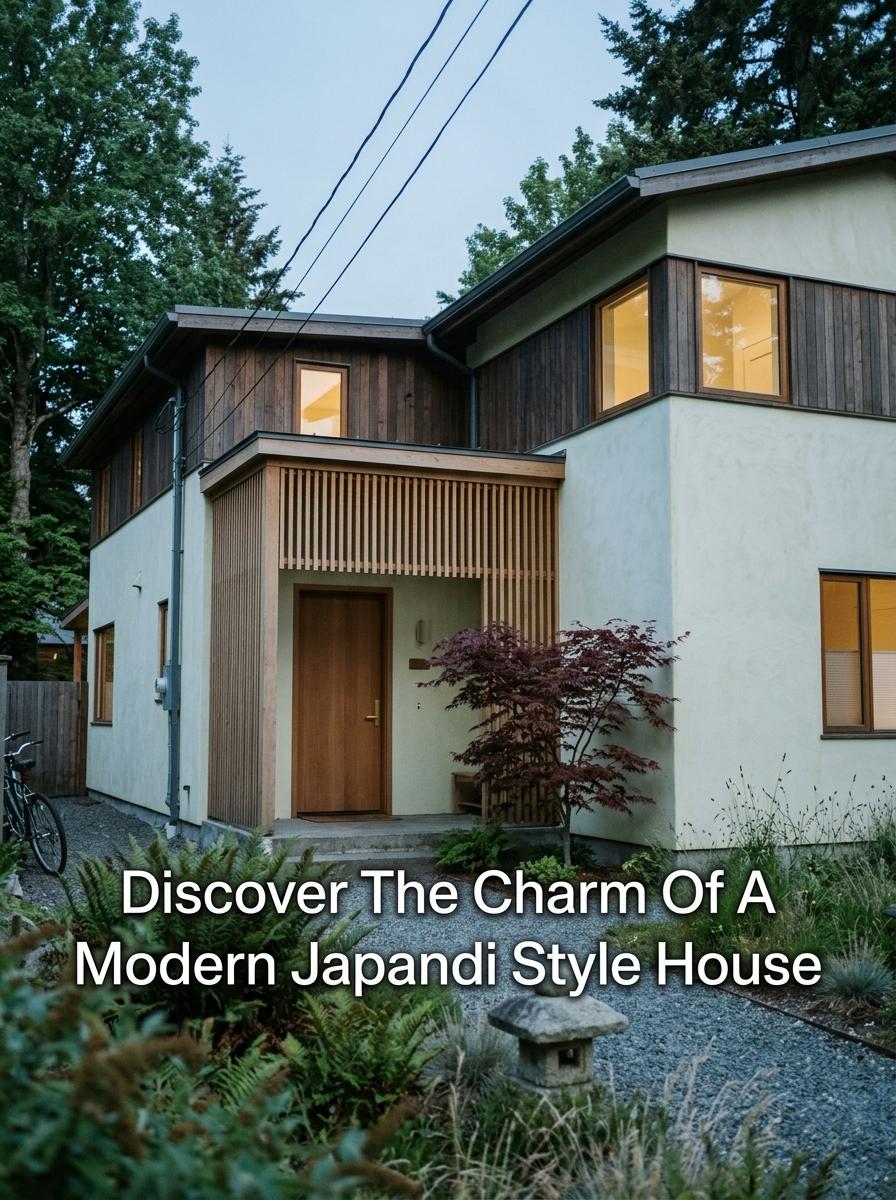

At its core, a modern Japandi style house is the result of a rigorous architectural alchemy: the fusion of Scandinavian hygge-with its emphasis on cozy functionality-and the Japanese ethos of wabi-sabi, which finds divinity in the transient and the imperfect. This synthesis transcends mere decor, manifesting instead as a curated spatial philosophy where the lean, mid-century silhouettes of the North intersect with the meditative, tectonic discipline of the East. The aesthetic is defined by a calculated dialectic; it is inherently minimalist yet profoundly soulful, demanding a rigorous stripping away of the superfluous but never at the expense of human warmth. To inhabit such a space is to experience a sensorial symphony of tactile, earthen, and ethereal layers-where the raw grain of unfinished oak meets the hushed, monolithic serenity of lime-wash walls, grounding the dweller in a residence that feels both clinically precise and deeply primordial.
An Open Concept Living Space With Japandi Design Principles
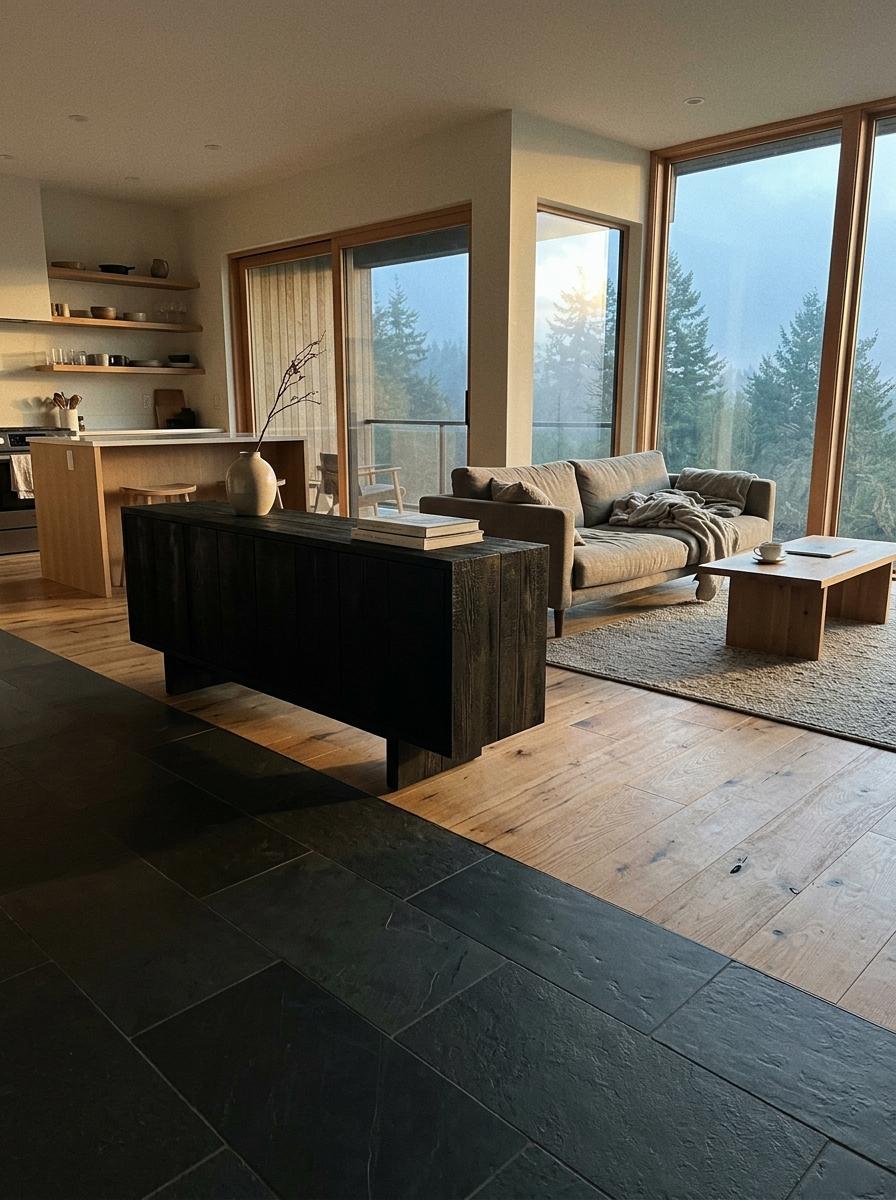

In this open-concept layout, the transition between the kitchen and lounge is defined not by walls, but by the tactile shift of honed basalt floor tiles meeting the resilient, open-grain texture of reclaimed Douglas fir planks. Note how the placement of a low-slung, charred cedar sideboard anchor the room, drawing the eye toward the floor-to-ceiling glazing that frames the misty landscape of the Pacific Northwest. This design achieves a rare complex simplicity, where the rigorous geometry of Japanese joinery meets the rugged, unrefined soul of Scandinavian hygge. As you move through the space, the visual coolness of the stone gives way to the radiant warmth of the timber, triggering a physiological shift; your heart rate slows as the "visual noise" of urban life is replaced by a profound sense of grounded stillness. This is the essence of the Japandi ethos-a curated sanctuary where every fibrous textile and matte surface serves as an invitation for the body to exhale.
Step Inside This Light Filled Japandi Style House
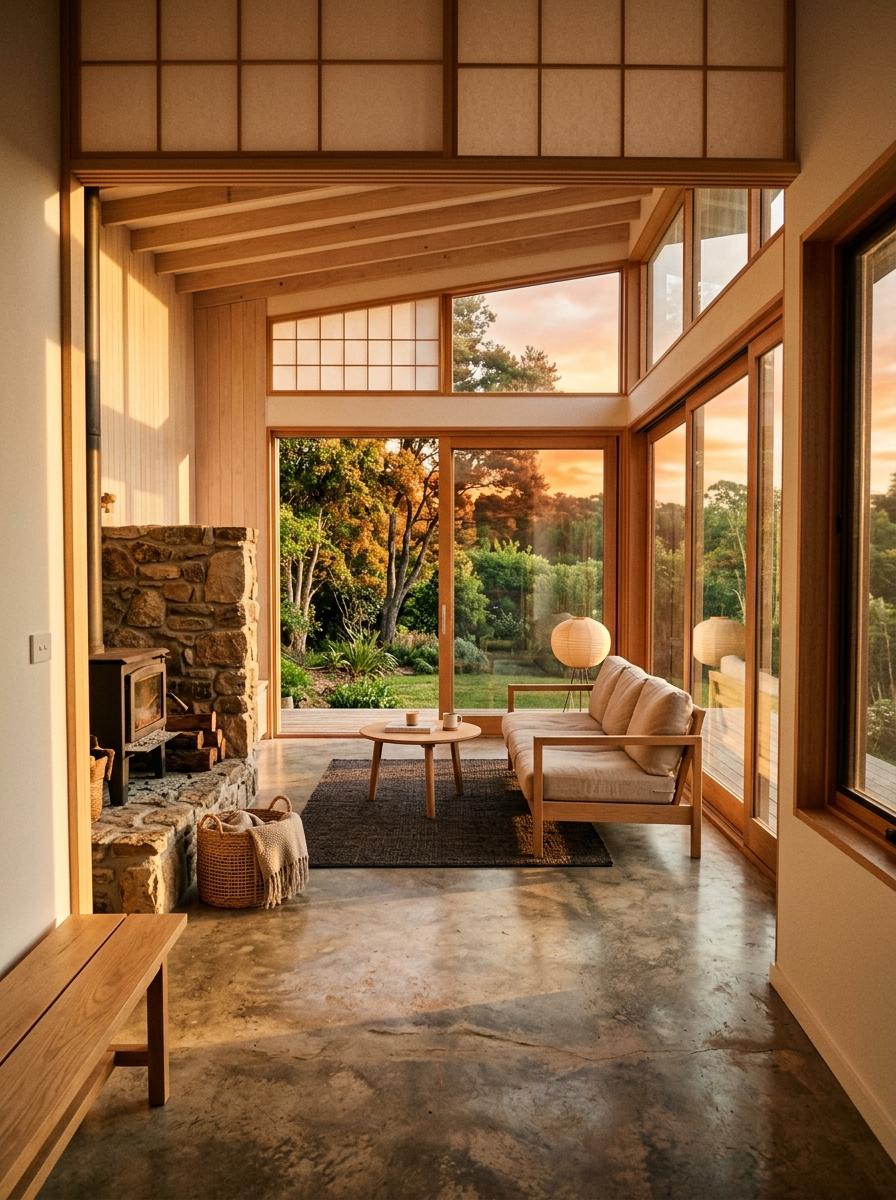

This light-filled sanctuary was meticulously conceived as a dialogue between Scandinavian efficiency and Japanese restraint. Within the void, a profound sense of uncluttered clarity governs the atmosphere, where pale timbers and paper-thin textures eliminate the heavy burden of excess. Sunlight surges through seamless glass spans, illuminating the rhythmic resonance of the residence's raw materials. To enter is to witness how the architecture sculpts the shadows, stretches the sightlines, and sustains the silence. This composition ultimately converges through the precise placement of low-slung furnishings, the deliberate depth of the stone hearth, and the soft sheen of the polished concrete floors.
A Sophisticated Blend Of Cultures In A Japandi Style House
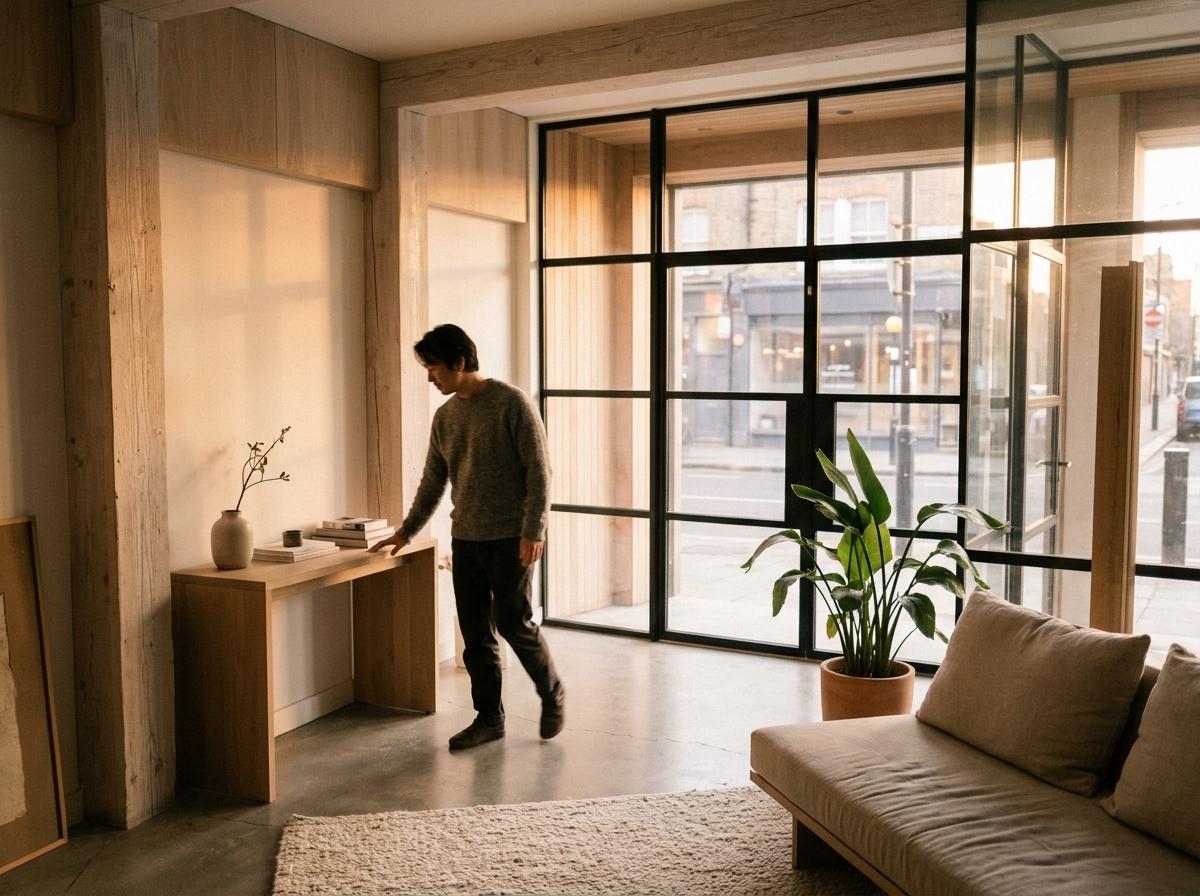

Standing on the curb of a frenetic metropolitan intersection, the air thick with the metallic scent of exhaust and the staccato rhythm of sirens, it is difficult to imagine that stillness exists just behind a single cedar threshold. "We wanted a retreat," says Hiroshi, the homeowner, as he runs a hand over a matte-finished console, "not just a house, but a... a sort of emotional recalibration." This intentional shift from urban chaos to domestic serenity is achieved through a meticulous application of Japandi principles, where the raw, rustic textures of Wabi-sabi meet the streamlined, functional elegance of Scandi minimalism. By balancing the tactile warmth of white oak with the sharp, architectural precision of black steel mullions, the space moves beyond simple decoration into the realm of spatial poetry. This curated tension between two distant cultures illustrates how a home can become a physical manifestation of a global dialogue.
Experience The Quiet Beauty Of A Japandi Style House
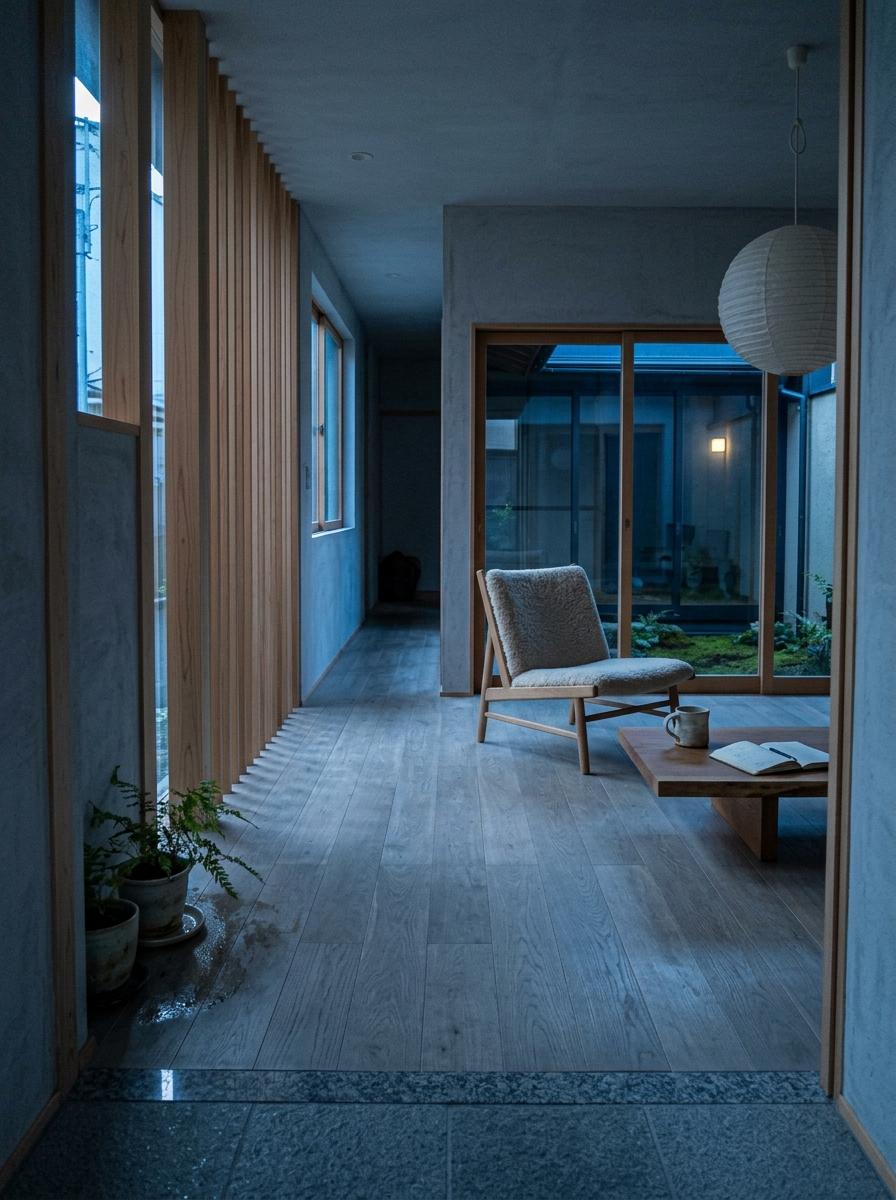

In the heart of Kyoto's Gion district, where traditional craftsmanship meets contemporary restraint, one finds the ultimate expression of the Japandi ethos: a residence that breathes. As you step across the threshold, note how the tactile contrast of sand-blasted white oak floorboards meets the cool, monolithic precision of honed grey basalt. This is a study in vibrant stillness, where the deliberate emptiness of the floor plan creates a space that feels both expansive and intimate. The visual rhythm of vertical cedar slats-finished with a velvety, open-pore matte sealer-filters the afternoon sun into rhythmic stripes of amber light. As your gaze follows these linear shadows, the psychological clutter of the outside world begins to dissolve; your heart rate decelerates, and a profound sense of somatic relief washes over you. It is not merely a house, but a curated sanctuary of complex simplicity, where every grain of wood and pore of stone is a testament to the power of functional serenity.
Transforming A Suburban Retreat Into A Japandi Style House
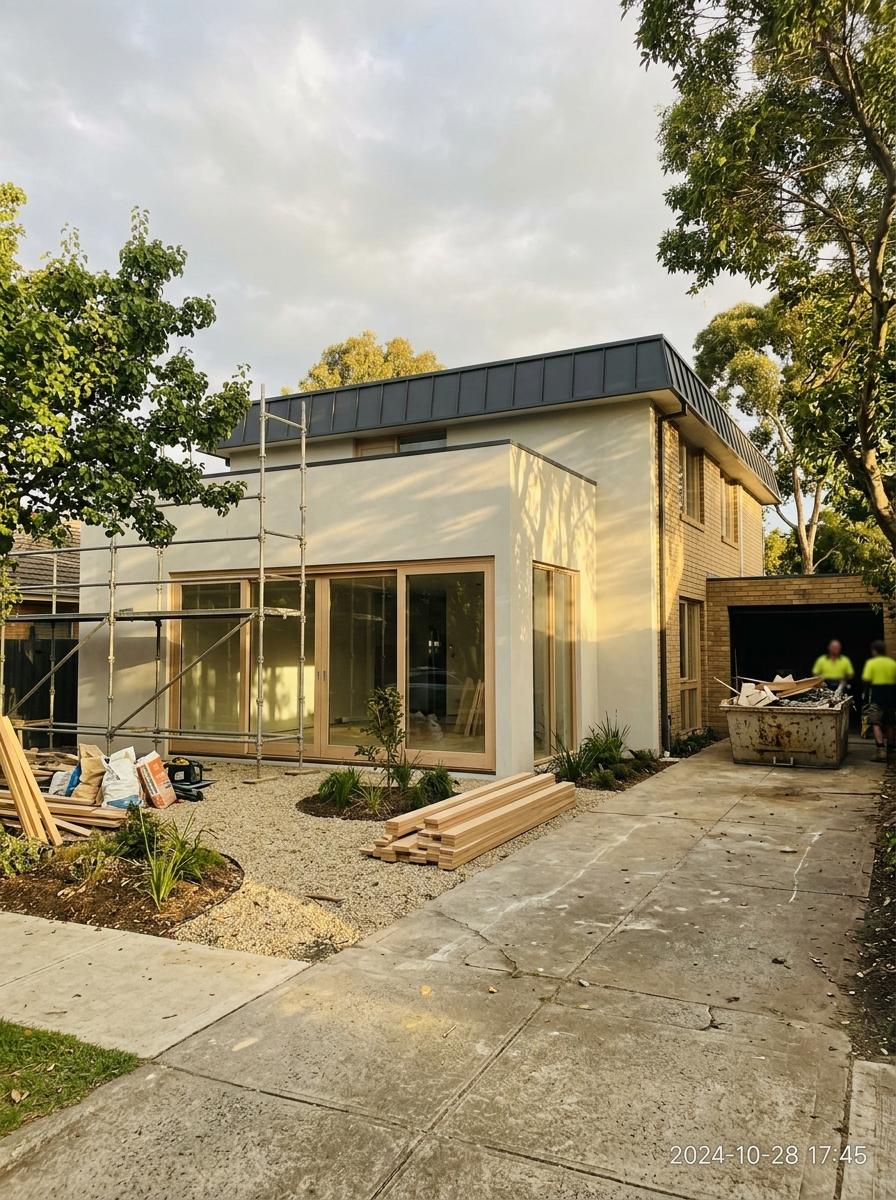

The transformation of this residence marks a compelling evolution from its origins as a rigid, compartmentalized 1990s build into a fluid sanctuary of modern minimalism. This diachronic shift-moving from an era of excess and heavy ornamentation to a present defined by intentionality-allows the structure to shed its historical weight while retaining its structural soul. Nestled within the leafy, prestigious enclave of Silver Lakes, the project thrives on a sense of ordered chaos, where the wild unpredictability of the surrounding landscape is filtered through a framework of strict geometric precision. Because the homeowners are repeat clients of the lead architect, there existed a foundation of radical trust that permitted an uncompromising exploration of the Japandi ethos. Ultimately, the home achieves its serene identity through a rigorous technical synthesis: the strategic subtraction of non-load-bearing partitions, the integration of tactile timber joinery, and the recalibration of light apertures to bridge the threshold between the interior and the garden.
Urban Living Redefined Within A Small Japandi Style House
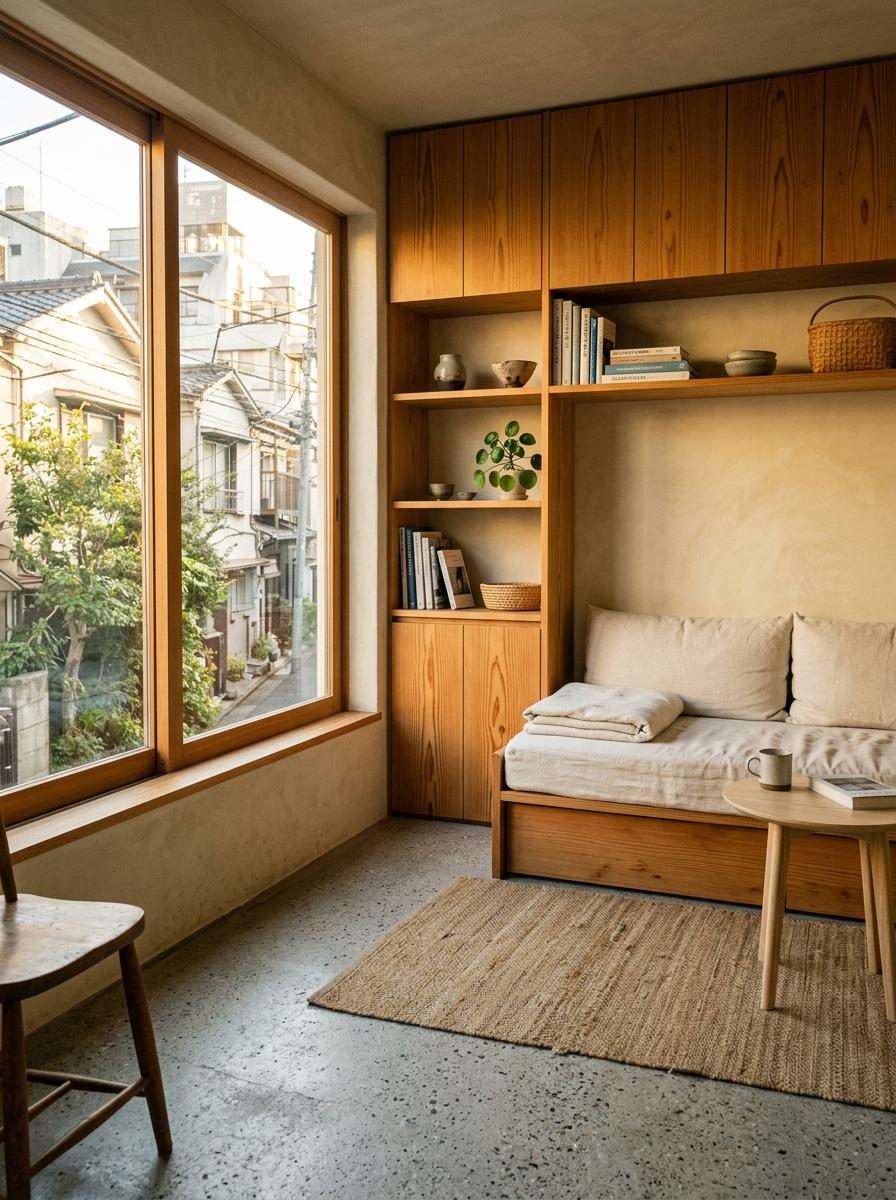

In the heart of Tokyo's dense Nakameguro district, where square footage is often sacrificed for proximity, this residence emerges as a masterclass in spatial alchemy. Note how the architect employs a sequence of tactile transitions to expand the perceived volume: the cold, silken polish of poured concrete floors gives way to the fibrous, honey-hued warmth of vertical-grain Douglas fir cabinetry. This is a study in crowded emptiness, where every square inch is curated to perform double duty, blending the rigorous utility of Japanese minimalism with the soft, hygge-inflected textures of Scandinavian craft. As you trace the movement of light across the chalky, open-pore lime wash walls, the frantic kinetic energy of the surrounding metropolis begins to dissipate. You are no longer merely observing a structure; your pulse slows and your breath deepens, a physical surrender to a sanctuary that feels both fortress-like and weightless. By redefining the "small" house as a vast sensory experience, this Japandi intervention proves that urban density need not be a constraint, but a catalyst for architectural intimacy.
The Art Of Balance In A Contemporary Japandi Style House
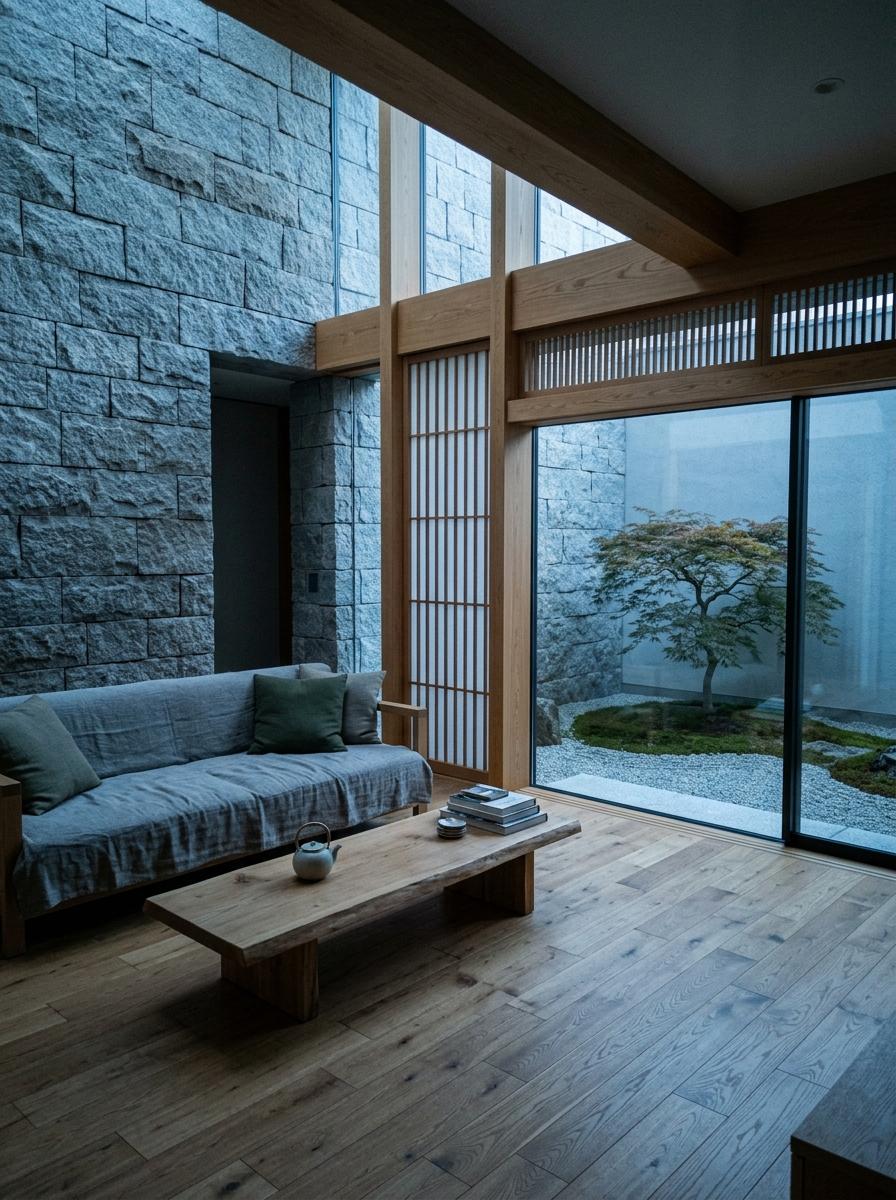

The evolution of the contemporary home has moved from the rigid, ornate partitions of the early 20th century toward the fluid, breathable volumes of the modern era, marking a diachronic shift from domestic enclosure to spatial liberation. In a recent project located in the heart of Tokyo's prestigious Aoyama district, this history is distilled through a sense of primitive refinement, where the raw texture of unfinished stone meets the surgical precision of Japanese joinery. Because the homeowners are repeat clients of the firm, there exists a profound level of creative trust that allowed for such bold experimentation-a testament to a long-standing collaborative synergy. The resulting residence achieves its artful balance not through mere decoration, but through a technical synthesis of calibrated natural light, a desaturated material palette, and the deliberate tension between negative space and structural mass.
Natural Light And Warm Wood Define This Japandi Style House
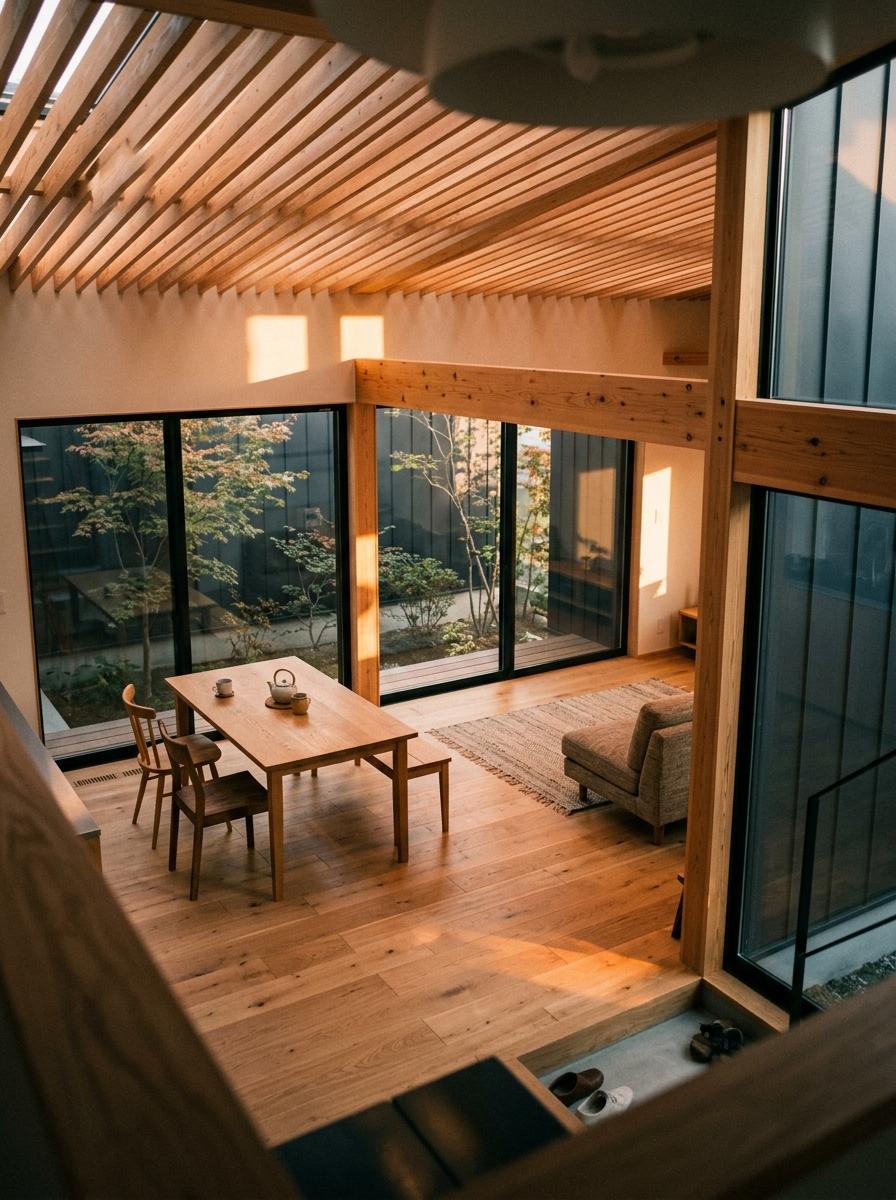

In the suburban quietude of this Saitama residence, the architecture acts as a sensory filter, anchoring the dweller within a curated void where the rush of the city dissolves into a stillness that feels almost tactile. This home exists as a structured spontaneity, a paradox where the rigid geometry of the frame serves only to liberate the movement of shadow and air. While the exterior presents a stoic, monolithic shell of matte charcoal steel to the street, the interior unfolds into a radical vulnerability, peeling back layers to reveal a sanctuary of glass and grain. The warmth of the space is anchored by wide-plank white oak flooring and raw cedar ceiling slats, their coarse textures catching the low-angled sun to create a rhythmic interplay of amber and honey. Far from being mere decoration, these elements function as a sophisticated thermal and acoustic regulator; the integrated joinery and recessed clerestory windows work in tandem to optimize natural convection, transforming the house into a breathing apparatus that balances industrial precision with the soft, erratic beauty of the natural world.
A Journey Through A Carefully Curated Japandi Style House
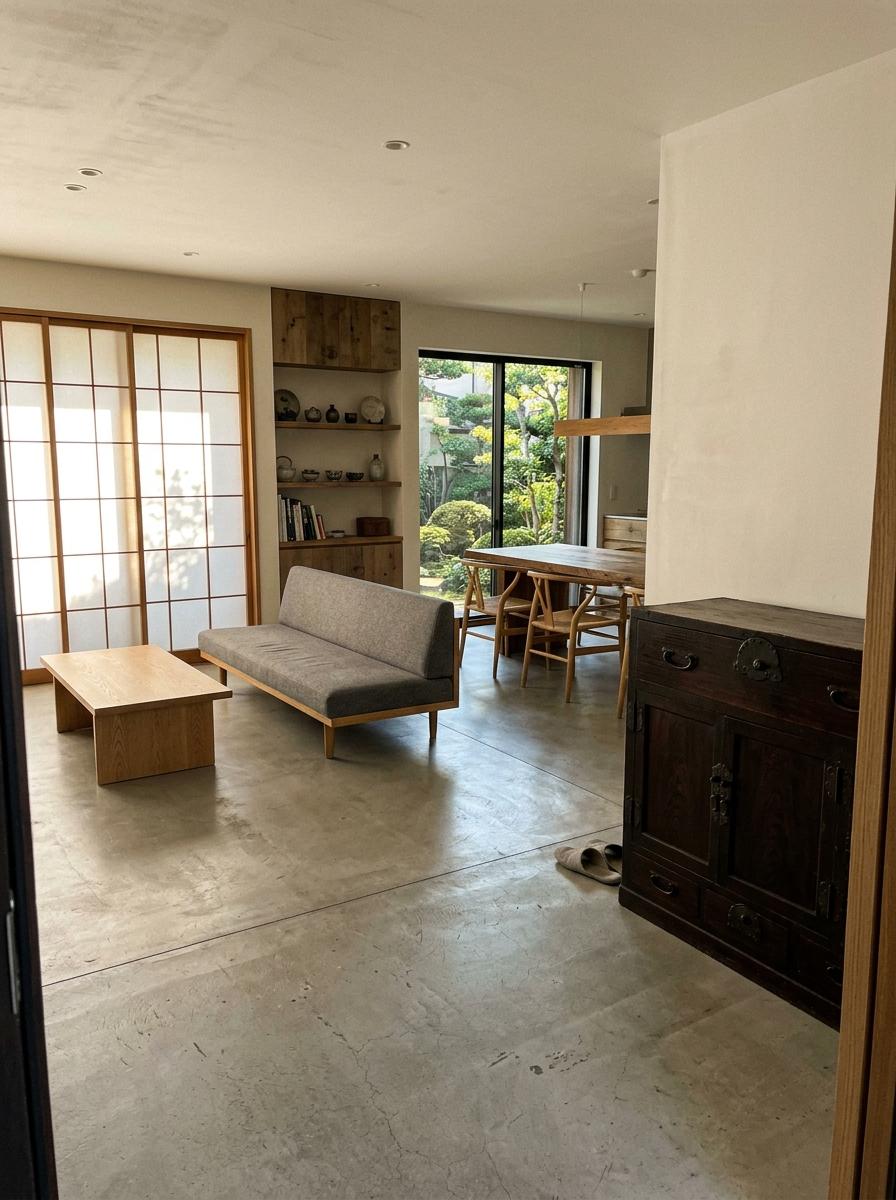

As we step inside this residence, we are greeted by a dialogue between eras; where the heavy, ornamental legacies of 20th-century craftsmanship meet the streamlined, hushed efficiency of the contemporary era. This "maximalist minimalism" defines the home's interior, creating a space that feels both profoundly empty and emotionally full. Located in the leafy, prestigious enclave of Tokyo's Den-en-chōfu, the project marks the third collaboration between the architects and these specific homeowners-a status as repeat clients that signals a deep-seated trust in the firm's ability to evolve alongside their lifestyle. The resulting atmosphere is not merely an aesthetic choice but a technical synthesis of light-filtering shoji screens, reclaimed timber joinery, and a monochromatic palette, all serving as the primary levers to balance Japanese heritage with Scandinavian functionality.
Practical Meets Aesthetic In A Family Japandi Style House
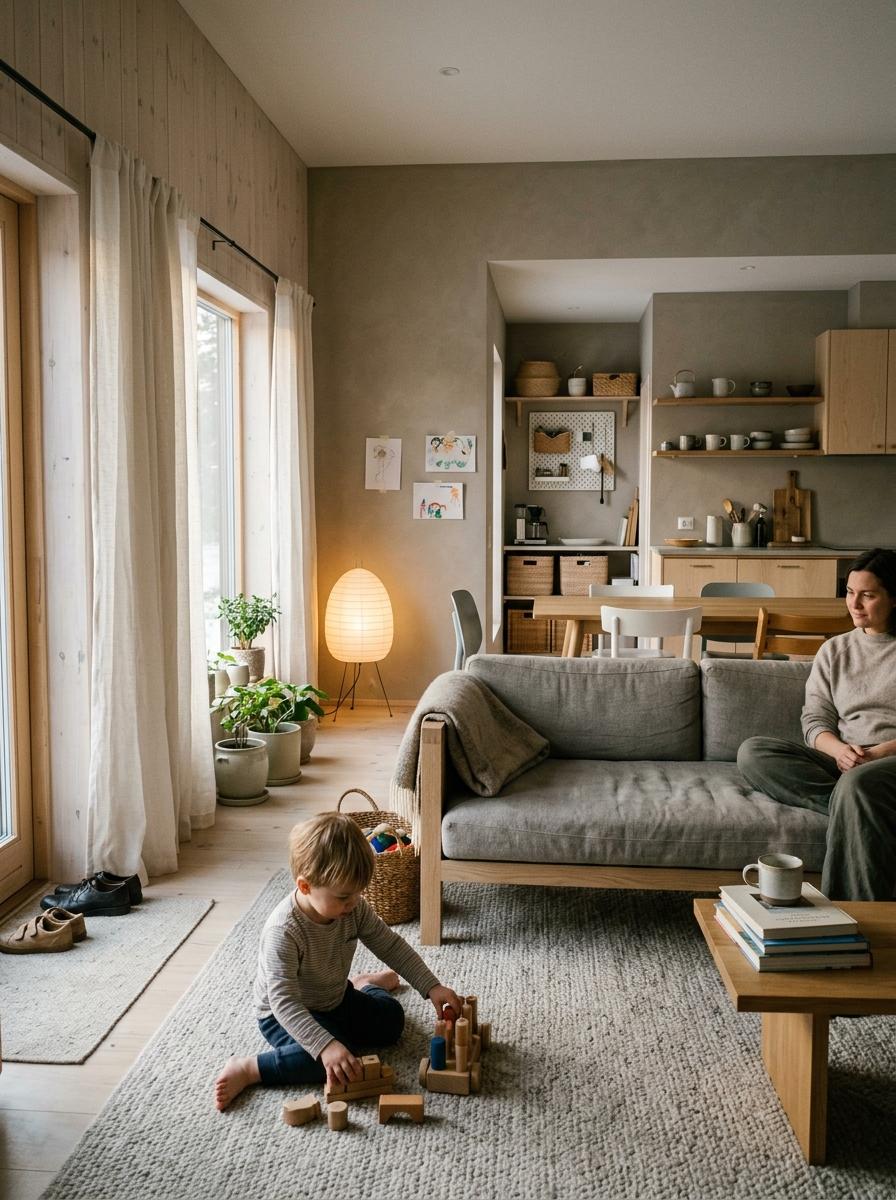

At the nexus of Japanese minimalism's rigorous restraint and Scandinavian hygge's tactile warmth, we find the emergence of Japandi-a synthesis that transcends mere trend to become a structural philosophy of living. It is a style that demands a rigorous spatial economy, yet offers a resonant, haptic softness; it is profoundly utilitarian in its commitment to the shibui ideal of unobtrusive beauty, but remains anchored by the Nordic necessity for domestic comfort. To enter a family home designed through this lens is to experience a curated sensory landscape where the ethereal, diaphanous glow of shoji-inspired light meets the grounded, visceral honesty of raw white oak and artisanal ceramics. By balancing these dialectical forces, the Japandi interior resolves the tension between clinical precision and lived-in chaos, resulting in a sanctuary that is as intellectually disciplined as it is emotionally enveloping.
Unveiling The Textures Of A Luxurious Japandi Style House
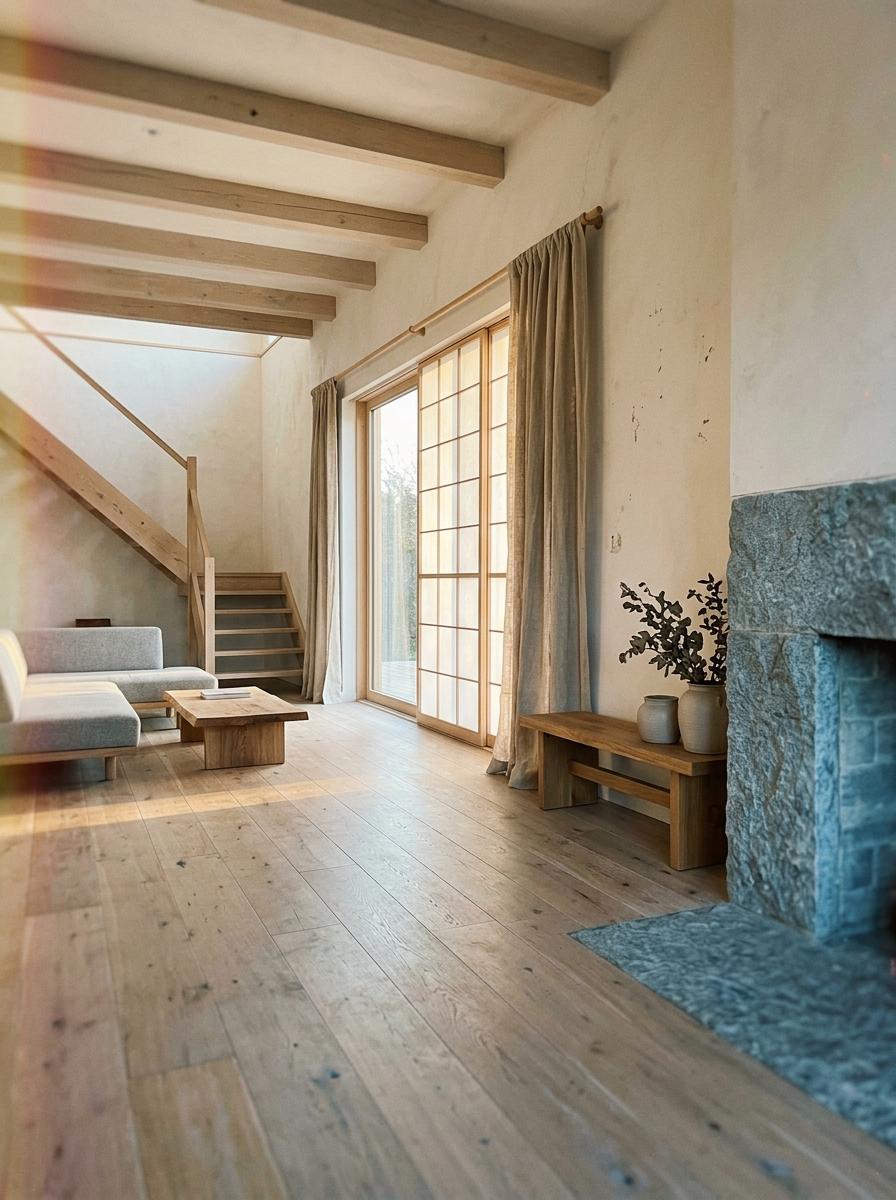

The architectural narrative of this residence was conceived through a deliberate fusion of Scandinavian efficiency and Japanese restraint, ensuring that every structural choice honors the quietude of the site. Within the living volume, translucent screens filter a hushed, hollow light, while barren surfaces celebrate a deliberate, desaturated palette that rejects the clutter of the modern world. Soft shadows stretch across the smooth slate, creating a rhythmic cadence that tames the vastness of the interior. This layout masterfully carves open voids and expands the vertical horizon, allowing the gaze to drift across the pale oak planks, the cool stone hearth, and the raw linen drapes.
Minimalist Luxury Inside A Private Japandi Style House
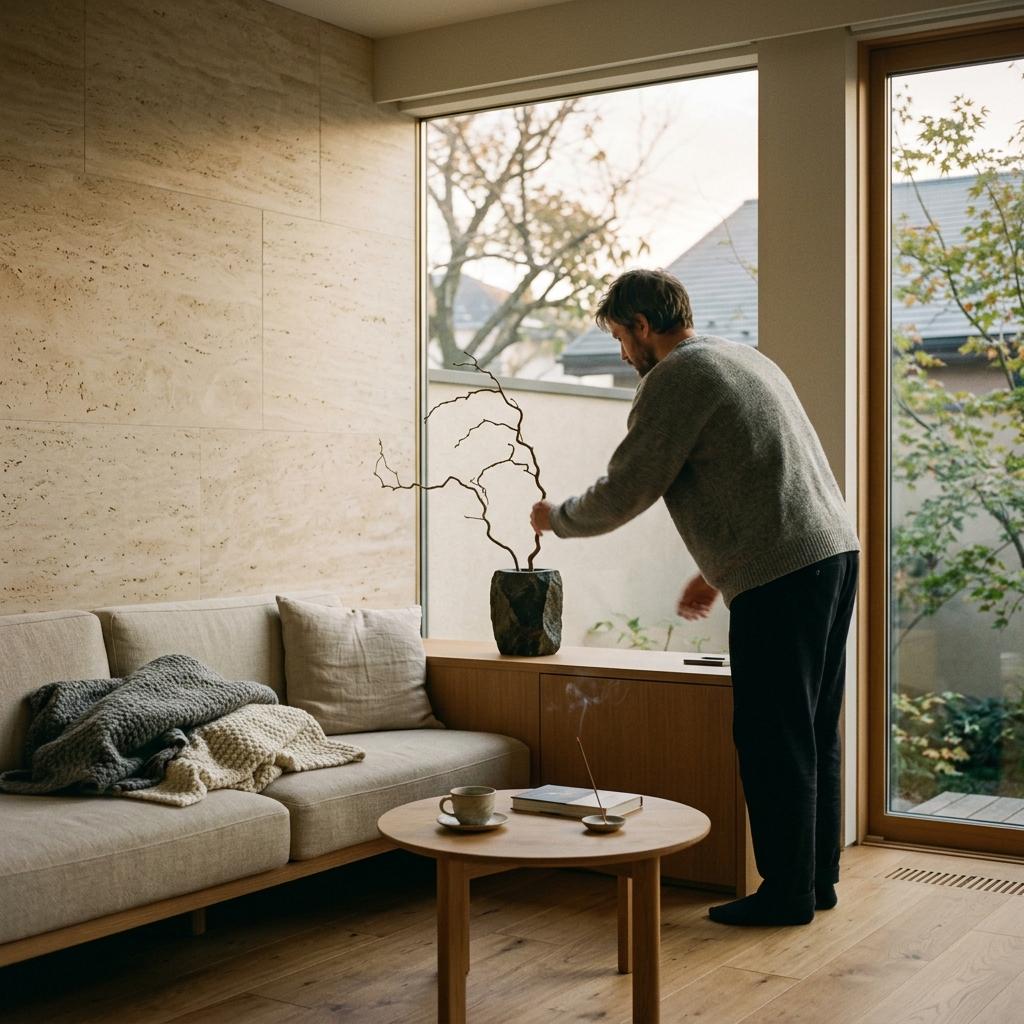

Stepping off the frantic, neon-blurred streets of Tokyo into this private residence is less like entering a building and more like a physical decompression of the lungs. Outside, the city is a cacophony of visual noise-harsh fluorescent lights and the relentless verticality of steel-but inside, the atmosphere shifts into a curated silence. "We didn't want a showroom," the owner explains, pausing to adjust a single, gnarled branch in a basalt vase, "we wanted... a sanctuary where the shadows felt as deliberate as the light." This intentionality is the hallmark of the home's aesthetic, where the raw, tactile honesty of Scandinavian hygge meets the disciplined restraint of Japanese wabi-sabi. By prioritizing a palette of matte oak and honed travertine, the architecture avoids the coldness of traditional modernism, opting instead for a sensory richness found in the grain of the wood and the softness of the lightwells. This seamless marriage of texture and tranquility illustrates how minimalist luxury is no longer about the accumulation of objects, but the masterful curation of space.
A Peaceful Retreat Found In A Modern Japandi Style House
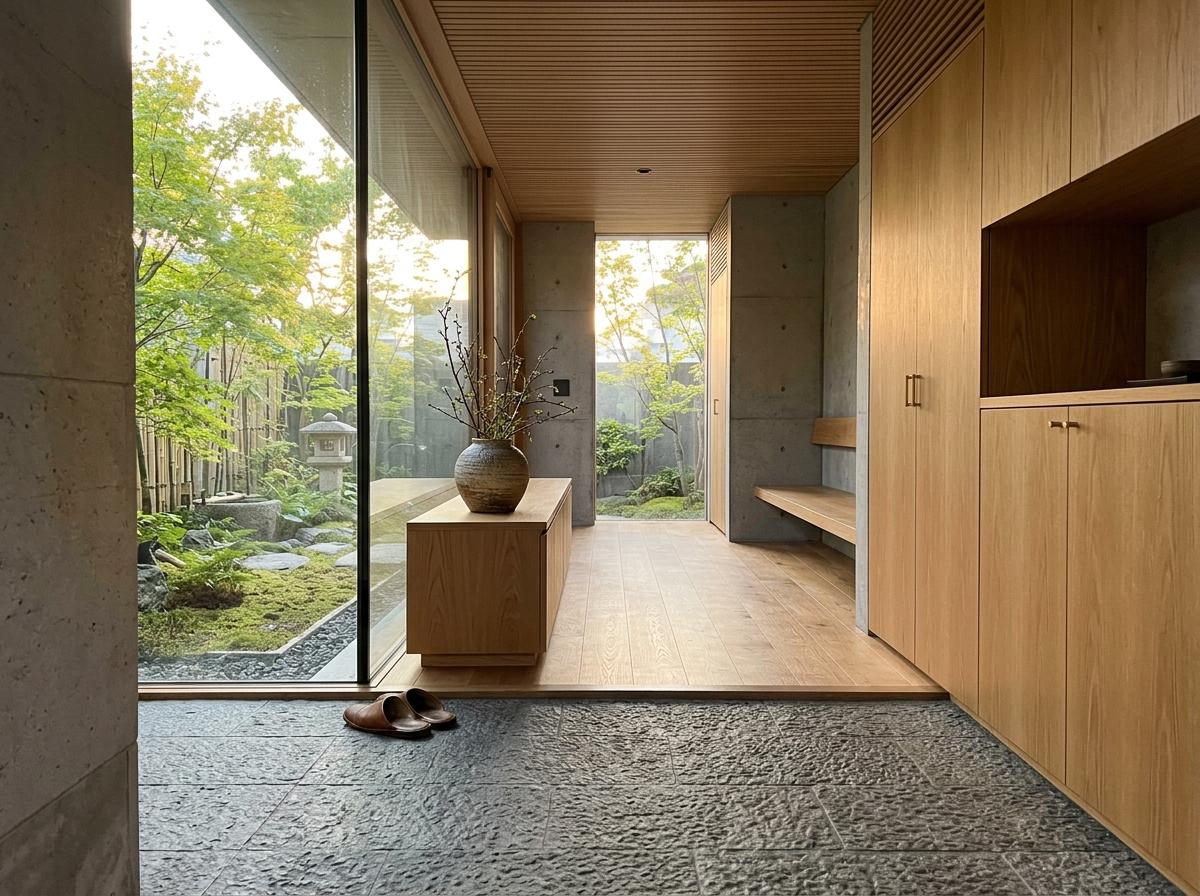

The entrance to this residence immediately establishes a dialogue between raw earth and refined craftsmanship. Note how the tactile friction of the bush-hammered basalt flooring meets the velvet-smooth grain of oil-rubbed white oak cabinetry, creating a sensory bridge between the garden and the interior. This "structured spontaneity" defines the home's layout, where every architectural line feels both deliberate and effortless. As you transition from the limestone-clad foyer into the heart of the home, the physical sensation of cooling stone beneath your feet triggers a measurable drop in heart rate, a physiological shift that signals the brain to exhale. It is here, within this Kyoto-inspired sanctuary reimagined for a suburban landscape, that the "Modern Japandi" ethos transcends mere aesthetics; it becomes a biological necessity, silencing the frantic noise of the outside world through the profound weight of stillness.
Functional Beauty Within A Compact Japandi Style House
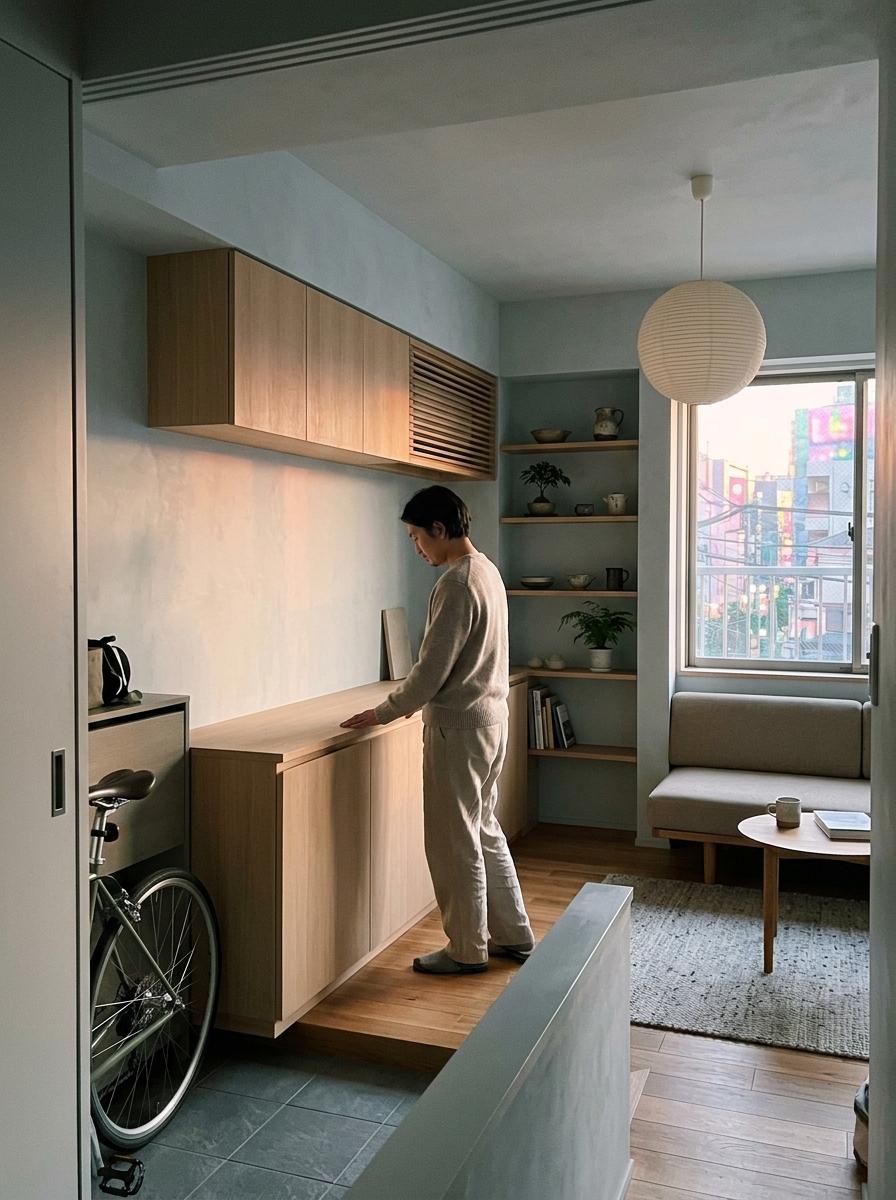

Stepping off the frantic, neon-blurred pavement of downtown Tokyo and into the threshold of this residence is like watching a chaotic orchestral crescendo suddenly drop into a single, resonant note of a cello. While the street outside is a cluttered montage of sensory overload, the interior unfolds through a lens of intentional restraint, where the air feels filtered by the pale oak and cool plaster. During our walkthrough, the homeowner paused by a custom-built cabinetry unit that seemed to dissolve into the wall. "In a footprint this small," they noted, running a hand over the matte timber, "every square centimeter has to earn its keep." It is a masterclass in spatial efficiency; the design utilizes a subterranean palette of warm burls and slate greys to anchor the room. "We didn't want a showroom," they continued, "we wanted a sanctuary that breathes." This seamless marriage of Nordic pragmatism and Japanese minimalism-what we call Japandi-illustrates how a compact floor plan can transcend its physical limitations to become a sprawling landscape of quietude. This specific project serves as a compelling study in how functional beauty is not found in the accumulation of objects, but in the meticulous choreography of space.
Exploring The Simple Elegance Of A Japandi Style House
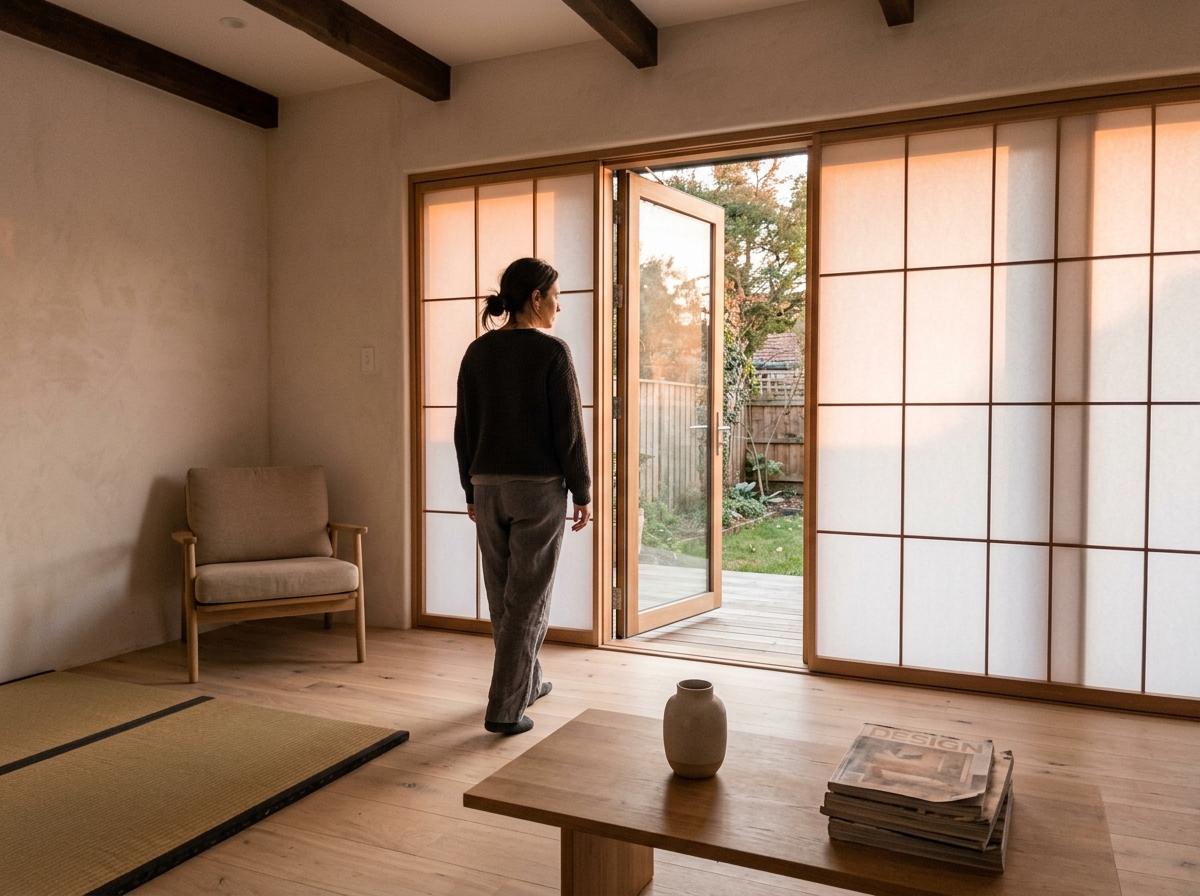

To truly understand the essence of a Japandi style house, we can look beyond the contemporary trend toward its deep-rooted lineage, where the rustic austerity of Edo-period Japan meets the industrial pragmatism of mid-century Scandinavia. This home represents a complex simplicity, balancing the weight of raw timber against the ethereal lightness of paper-thin textures to create a space that feels both grounded and airborne. Situated in the exclusive enclave of Den-en-chōfu, the project carries a distinct weight of trust, as the owners are repeat clients who previously collaborated with the design team on a more traditional modernist villa. The resulting residence is a masterclass in technical synthesis, achieved through the meticulous calibration of natural light filtration, a muted tonal palette, and the seamless integration of joinery that blurs the line between furniture and architecture.
A Multi Generational Home Embracing Japandi Style House Elements
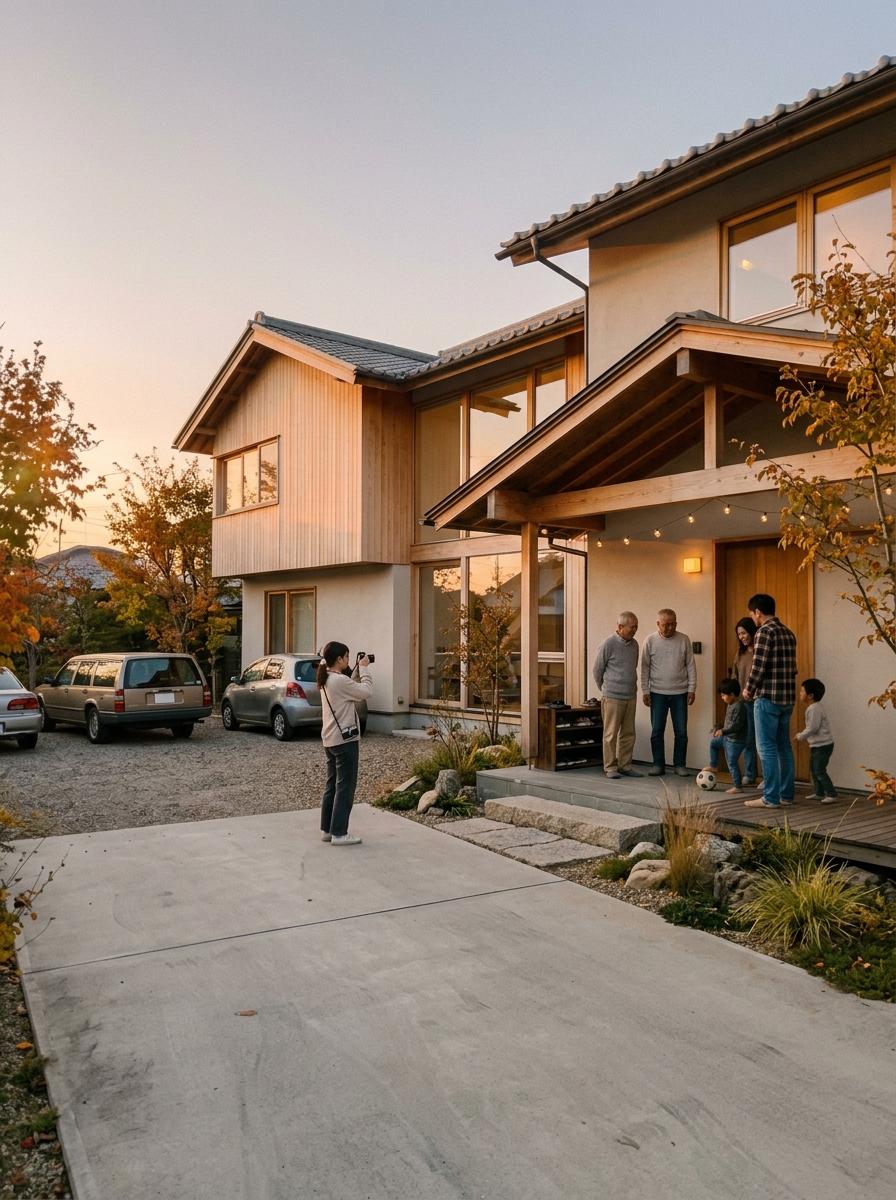

In this suburban sanctuary, the architecture achieves a hushed grandeur, balancing the expansive needs of a three-generation household with the intimate restraint inherent to the Japandi aesthetic. Note how the tactile interplay of rift-sawn white oak cabinetry meets the cool, monolithic presence of honed Basaltina stone flooring, creating a sensory dialogue between warmth and permanence. By integrating the low-slung profiles typical of Kyoto's Machiya houses with the airy, expansive volumes of Scandinavian Modernism, the design fosters a state of active stillness. As you transition from the sun-drenched atrium into the shaded, timber-lined corridors, the physical drop in ambient temperature triggers an immediate physiological release-a slowing of the pulse that transforms a mere residence into a restorative vessel for the collective family soul.
Seamless Indoor Outdoor Living In A Japandi Style House
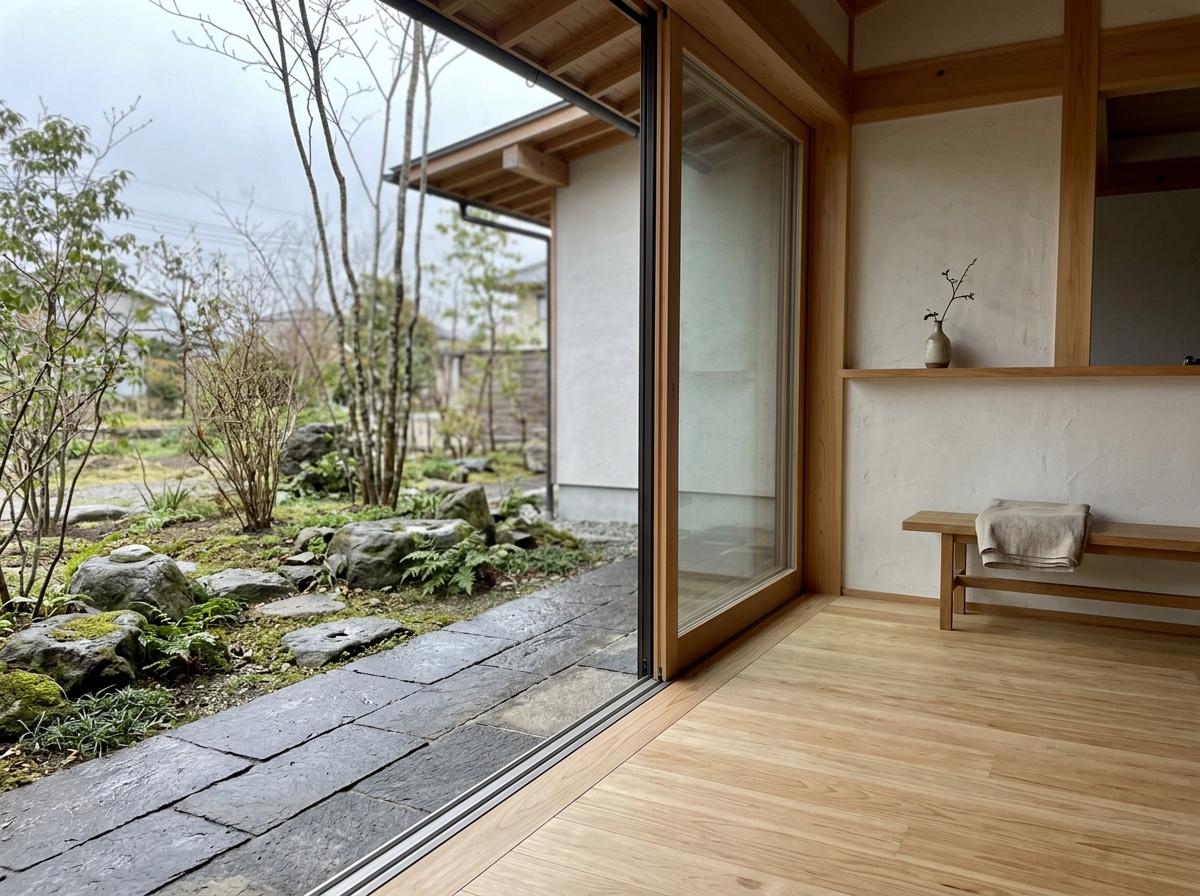

The Japandi residence stands as a quiet sentinel between the rugged topography of the garden and the hushed, climate-controlled sanctuary of the interior, grounding the inhabitant in a space where mossy stone meets hand-planed wood. This threshold achieves a structured fluidity, a conceptual synthesis where the rigid boundaries of shelter are dissolved by the very frames that provide its strength. While the exterior is defined by the raw, unpredictable rhythms of shifting light and seasonal decay, the interior remains a domain of curated stillness and geometric precision. Tactile transitions are articulated through the deliberate use of honed basalt pavers that run flush against quarter-sawn white oak flooring, eliminating visual friction at the feet. This seamlessness is finalized by the integration of recessed floor-to-ceiling sliding track systems, an industrial utility that allows entire glass elevations to vanish, transforming the home from a closed vessel into a ventilated pavilion.
Walk Through A Light Filled Residence With Japandi Style House Details
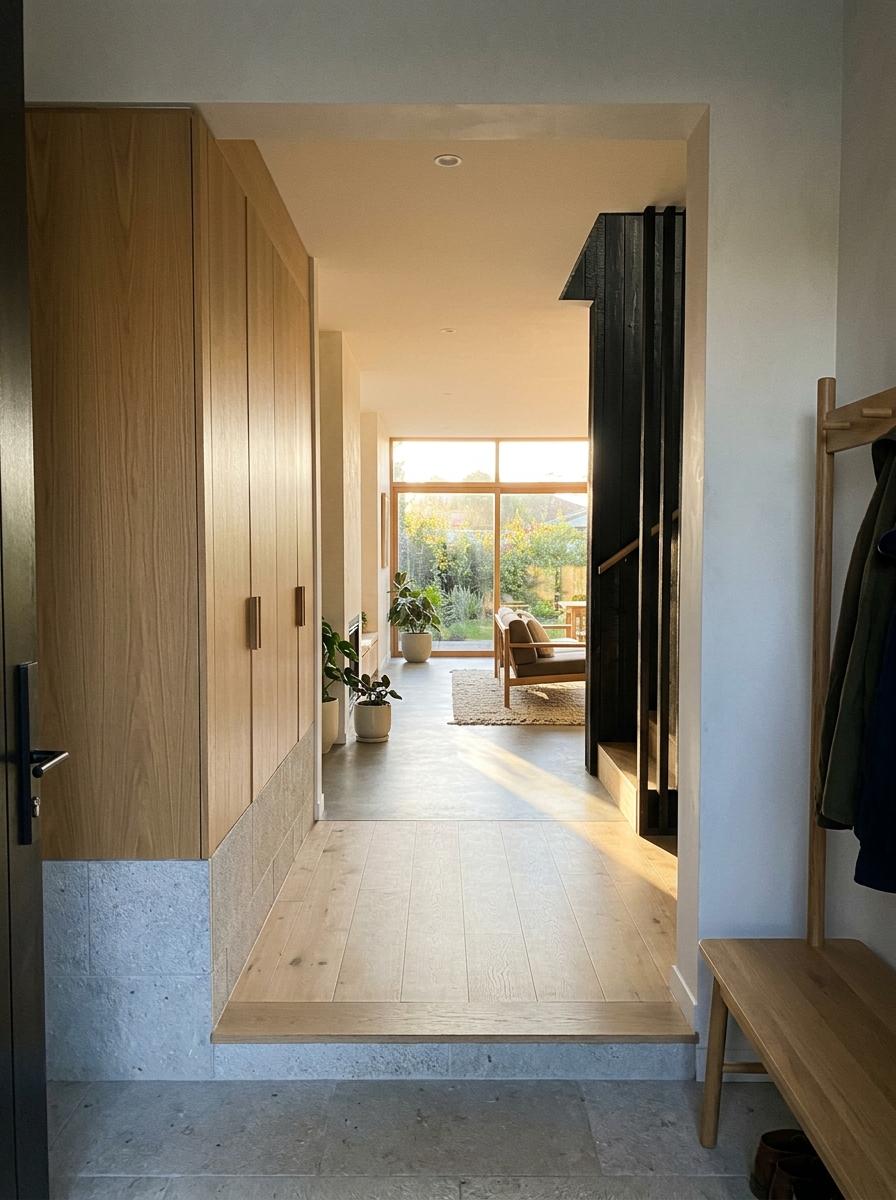

Stepping into this suburban sanctuary, one is immediately struck by the tactile interplay of matte-finished white oak and the porous, cool-toned limestone that anchors the entryway. Note how the architect's deliberate use of vertical grain cabinetry draws the eye upward, acting as a structural compass that guides you toward the central atrium. This space thrives on the concept of ordered chaos; the rigid, geometric lines of the Shou Sugi Ban accents provide a stark, charred boundary against the soft, ethereal diffusion of light filtering through floor-to-ceiling glazing. As you transition from the compressed foyer into the expansive living hall, the physical shift in volume triggers a visceral release-a lowering of the shoulders and a steadying of the breath as the architecture transitions from a protective shell into a breathable lung. Drawing inspiration from the Setagaya minimalist movement while respecting the Scandinavian ethos of Hygge, this residence serves as a masterclass in how Locational Branding-the marriage of Tokyo's spatial efficiency with Copenhagen's warmth-can transform a simple floor plan into a profound physiological experience.
Inside A Refined Sanctuary Focusing On Japandi Style House Aesthetics
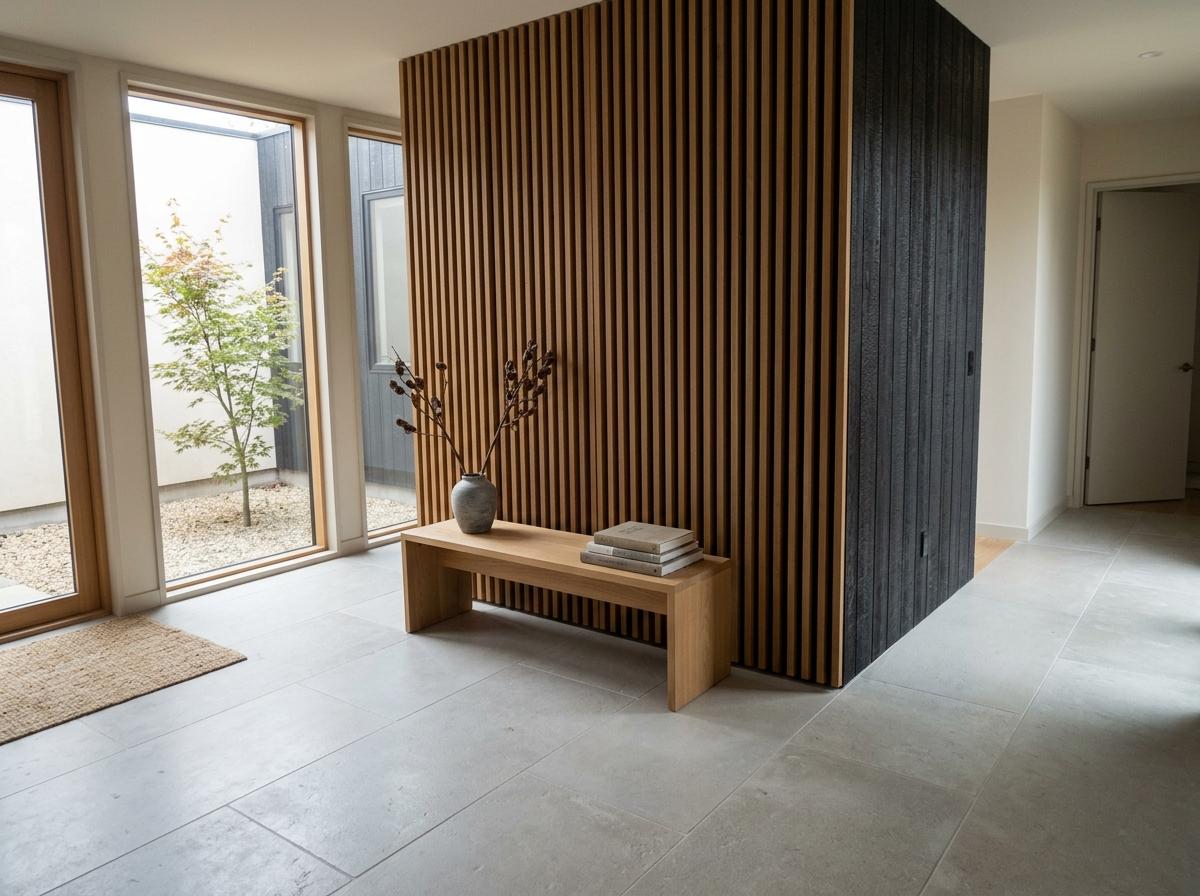

Stepping into this residence feels less like entering a building and more like descending into a curated silence, where the chaotic hum of metropolitan life is filtered through a sieve of deliberate geometry. This "quiet intensity" defines the home's character-a space that manages to be both rigorously disciplined and softly welcoming, bridging the gap between austere minimalism and organic warmth. While the exterior presents a stoic, monolithic presence to the street, the interior unfolds as a fluid sanctuary of light, creating a sharp tension between the public-facing shell and the private, permeable core. Tactile engagement is driven by the use of charred cedar siding-shou sugi ban-which offers a charcoal grit that contrasts sharply against the silk-smooth touch of sand-blasted limestone floors. Every element serves a dual purpose: the floor-to-ceiling rhythmic timber slats act not merely as decorative screens, but as a high-performance acoustic and thermal buffering system, seamlessly integrating industrial efficiency into the home's poetic, Japandi-inspired DNA.




Comments