
By synthesizing the rigorous functionalism of Scandinavian hygge with the transcendent, weathered honesty of Japanese wabi-sabi, Japandi emerges as a curated equilibrium of intentionality. This aesthetic intersection demands a sophisticated dialectic: the entryway must be clinically organized yet profoundly soulful, acting as a threshold that is structurally austere but textually rich. To master this transition, one must look beyond mere storage to embrace a sensorial palette of tactile, monolithic, and ethereal elements-transforming the foyer from a transient passage into a grounding, evocative prelude to the domestic sanctuary.
Japandi Entryway Styling


Sophisticated Japandi Entryway Ideas For Small Spaces
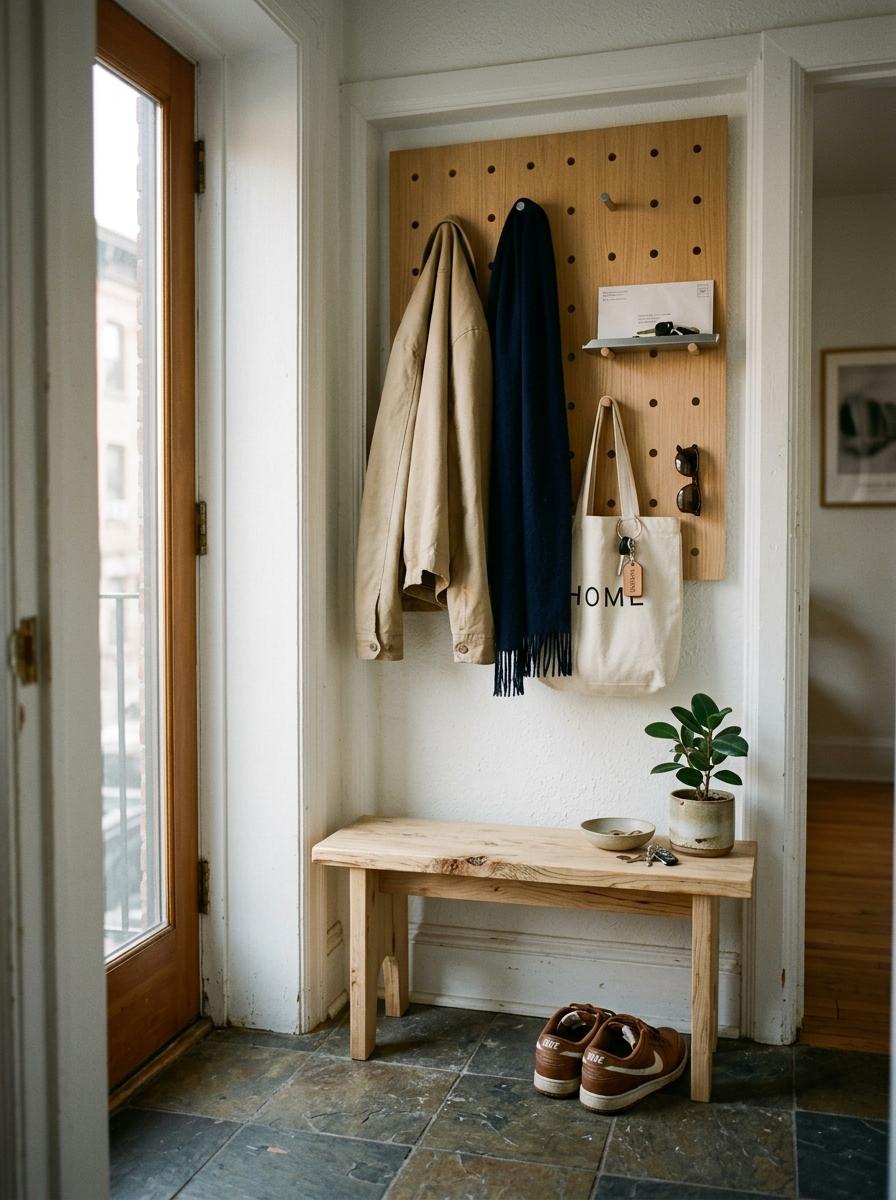

In the narrow confines of an urban foyer, where the threshold must bridge the chaotic exterior with the meditative interior, the Japandi entryway acts as a vital sensory filter. It achieves a state of monumental lightness, where the physical weight of solid oak furniture is visually dissolved by the airy geometry of its silhouette. This spatial transition creates a sharp rift between the frenetic noise of the street and the curated silence of the home, transforming a mere hallway into a portal of decompression. By anchoring the space with a low-slung bench of unfinished Hinoki wood and the cool, tactile grit of a honed basalt floor, the entryway gains a grounded materiality that resists the clutter of daily life. Ultimately, the integration of a recessed modular pegboard system serves as the primary functionalist engine, streamlining the organization of essential objects into a seamless, industrial-grade display that prioritizes both flow and utility.
Creating An Inviting Welcome With Japandi Entryway Decor
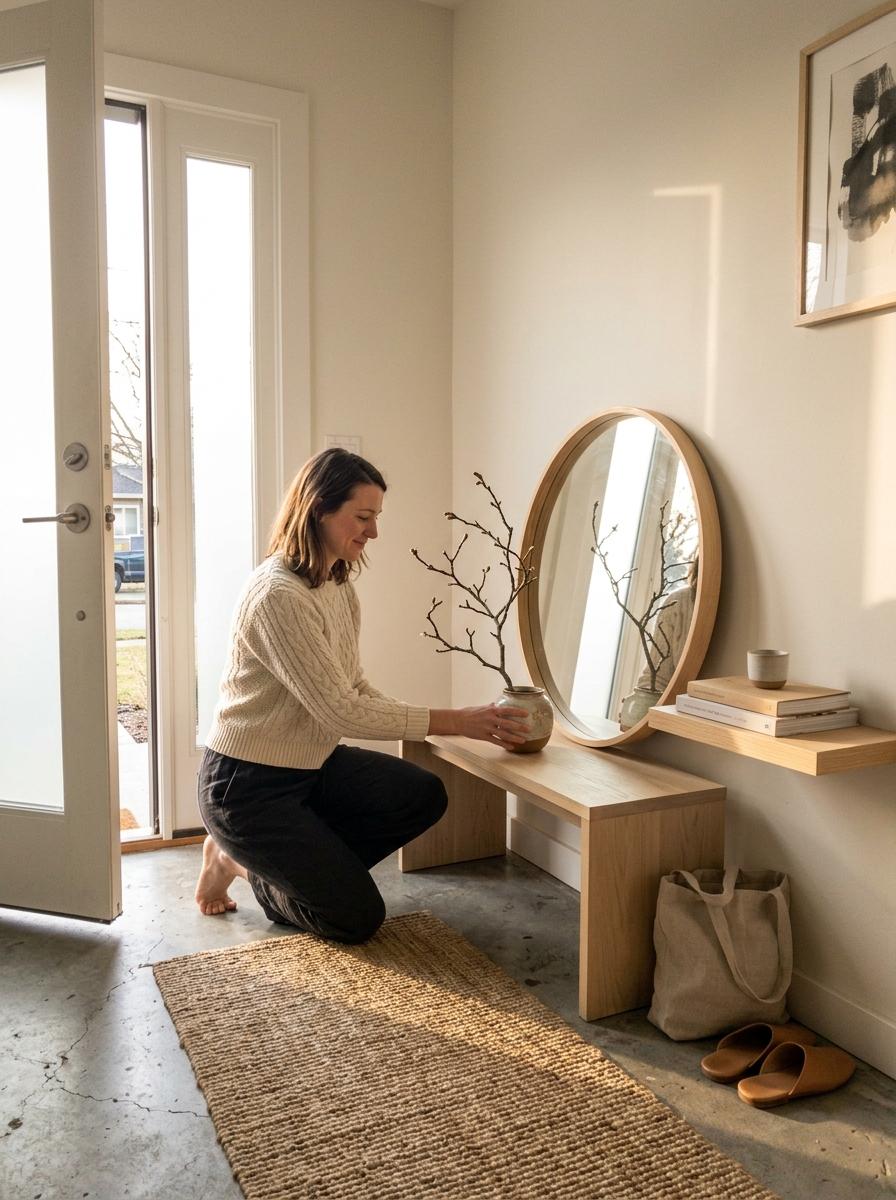

To understand the Japandi entryway is to witness a deliberate synthesis: the rustic, transient honesty of Japanese wabi-sabi merged with the streamlined, functional pragmatism of Scandinavian hygge. This intersection creates a transitional zone that is neither purely utilitarian nor strictly ornamental, but rather a curated threshold of intentionality. The aesthetic relies on a rigorous dialectical pairing, where the composition feels profoundly disciplined yet remains viscerally welcoming-a tension that balances the austerity of minimalism against the warmth of organic texture. By prioritizing an architectural economy of form, the space achieves a sensorial resonance; it is simultaneously grounded, ethereal, and tactile. Through the use of low-profile genkan-inspired seating and monochromatic oak palettes, the entryway transcends its role as a mere passage, becoming a sanctuary of haptic serenity and quietude.
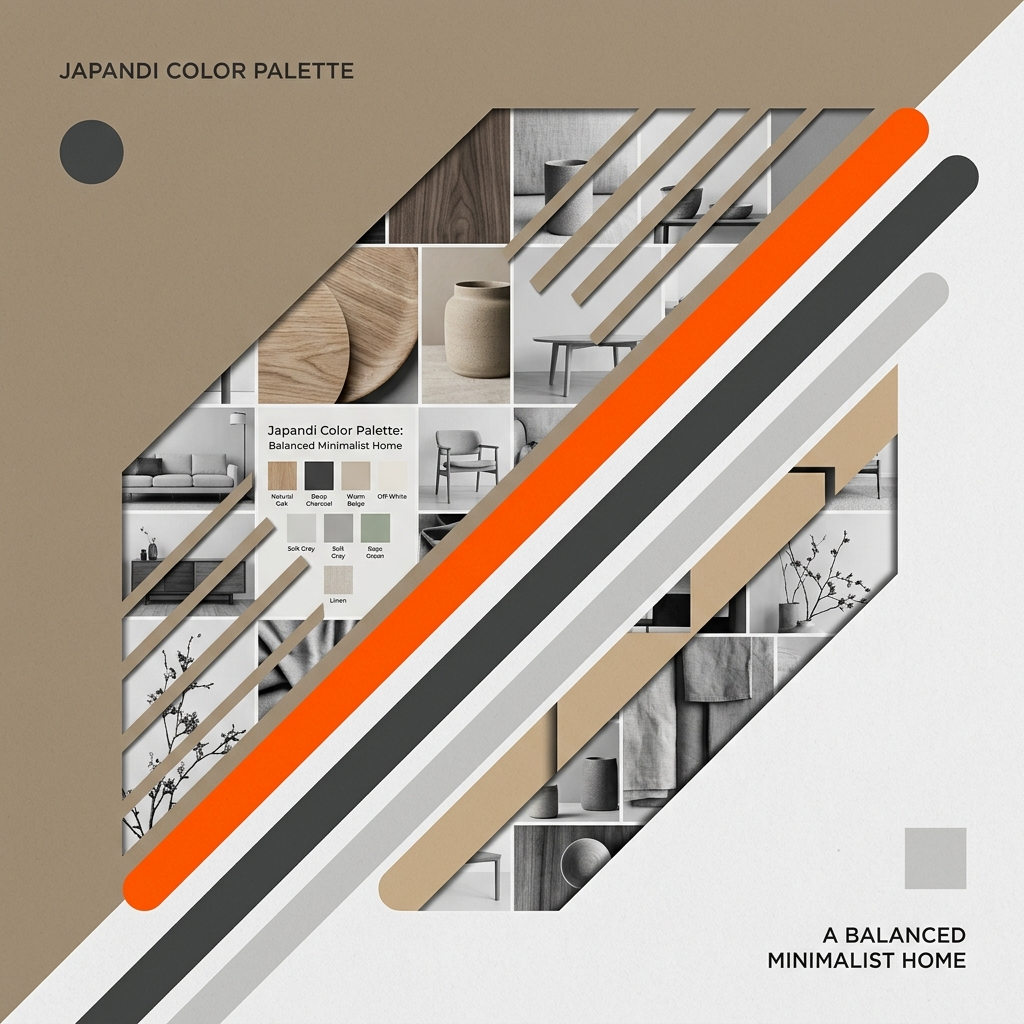
Modern Japandi Entryway Styling For A Balanced Home
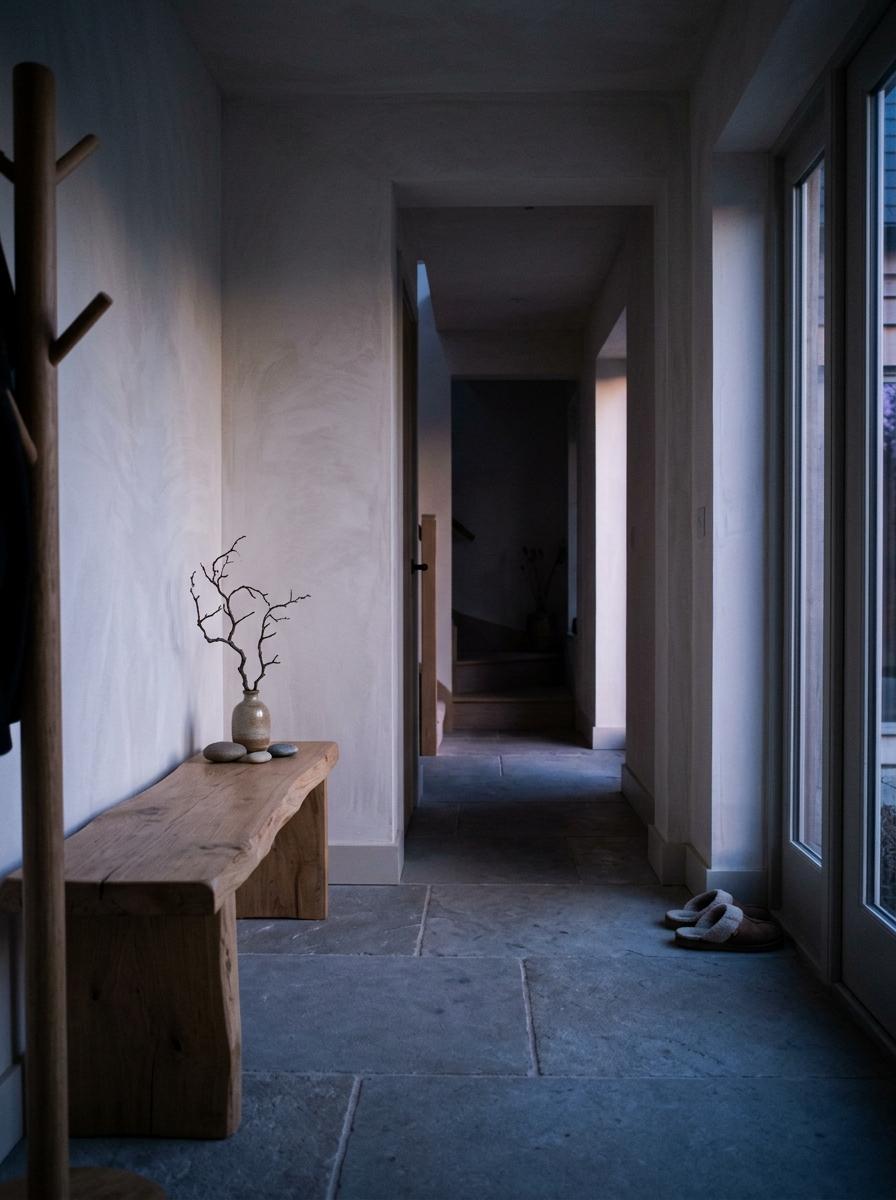

The foundation of this transition space was established through the deliberate selection of reclaimed white oak and hand-applied lime wash, ensuring the architecture remains the primary focus. Within this void, a curated stillness is maintained by spare surfaces and unadorned junctions, fostering a tactile yet tranquil environment free from visual noise. Subtle shadows stretch across the stone, softening the structure and soothing the senses as one moves further into the interior. Light carves out new dimensions within the hall, bridging the threshold and anchoring the eye to the minimalist geometry. This intentional arrangement frames the view, flattens the clutter, and fixes the home's harmonic pulse.
The Art Of Organizing A Minimalist Japandi Entryway
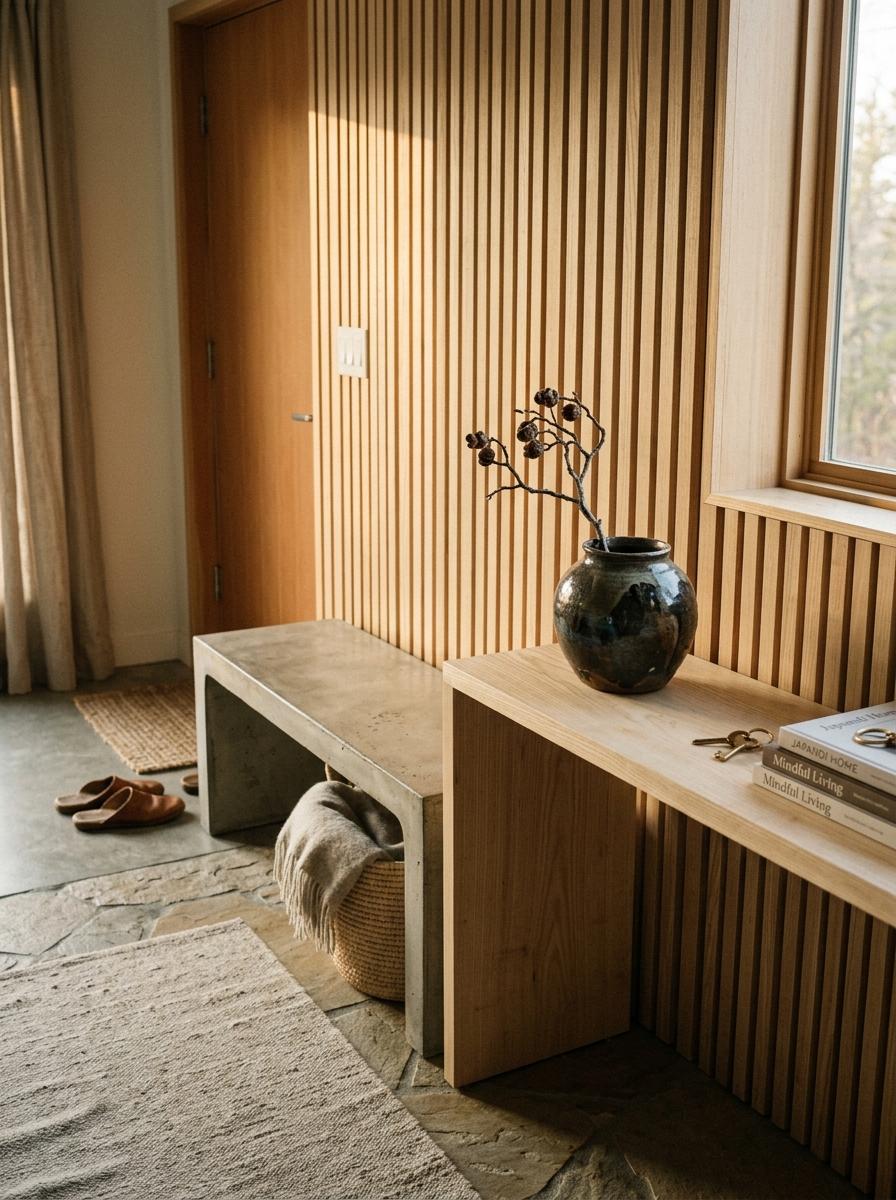

To curate a threshold that truly embodies the Japandi ethos, we need to begin with the tactile selection of a scandi-industrial console, perhaps crafted from porous, sand-blasted travertine or the tight-grained resilience of salvaged Hokkaido ash. Note how the placement of a single, weather-worn ceramic vessel against a hyper-linear slatted wall creates a visual rhythm; this deliberate arrangement serves as a functional void, where the emptiness itself holds the weight of the room's utility. This calculated balance of structured spontaneity works to decelerate the frantic pace of the outside world. As your hand brushes the cool, silken vitrification of a hand-poured concrete bench, the physical chill triggers a visceral release-a lowering of the shoulders and a deepening of the breath as the nervous system recalibrates from urban chaos to domestic sanctuary. Much like the serene transition zones found at the Aman Kyoto, your entryway becomes a site of ordered abandonment, where the soul sheds its daily armor long before the shoes are even tucked away.
How To Achieve A Functional Japandi Entryway Design
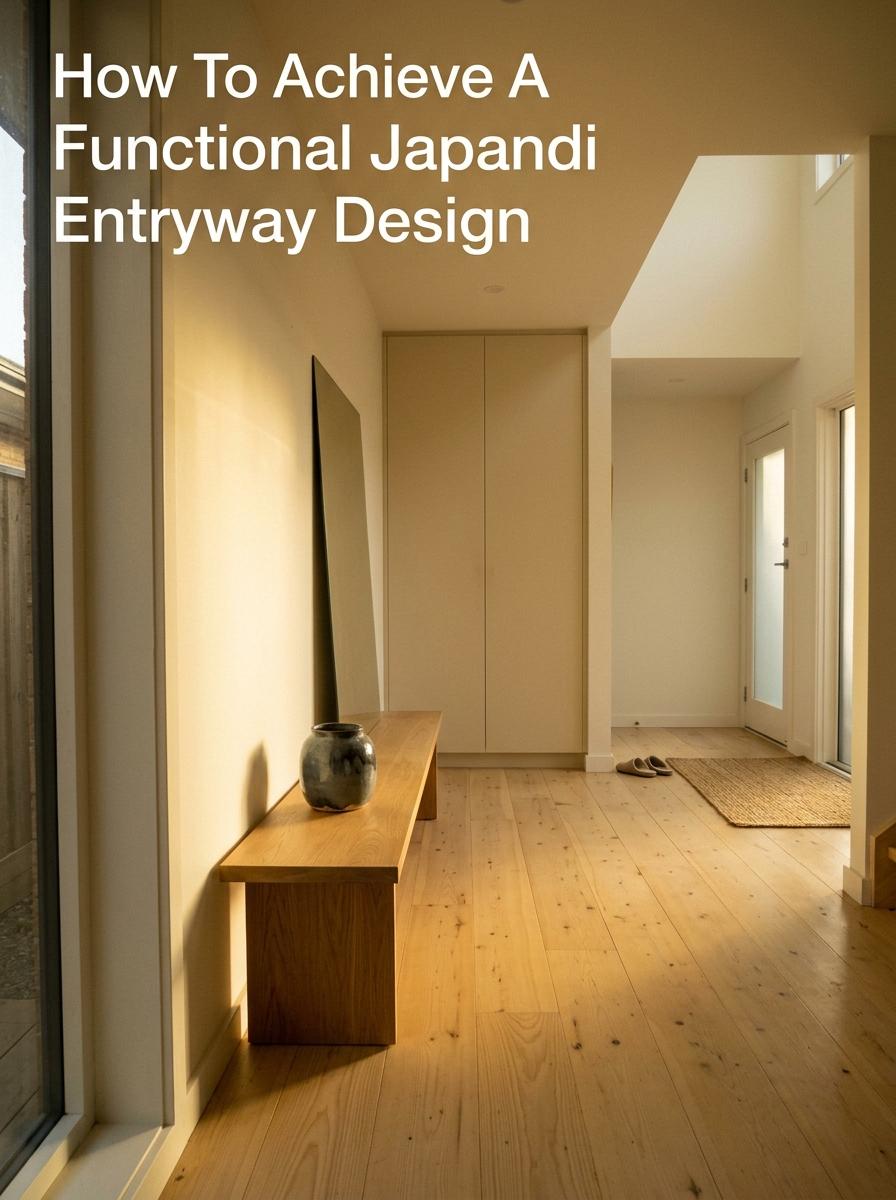

In the pursuit of a functional Japandi entryway, the transition from the chaotic exterior to the tranquil interior is meticulously orchestrated through a selection of intentional, understated materials. To cultivate this threshold, a palette of sparse, stainless, and sterile surfaces is prioritized, ensuring that the visual field remains unburdened by unnecessary ornamentation. As guests step inside, soft, sallow sunlight washes over the grain of pale, polished planks, grounding the space in a rhythmic serenity. This design carves a generous void from the floorplan, stretches the perceived height of the ceiling, and anchors the home's initial impression. The final composition is achieved by the placement of a low-slung oak bench, a singular ceramic vessel, and a concealed wall of cabinetry.
Experience A Harmonious Welcome In This Japandi Entryway
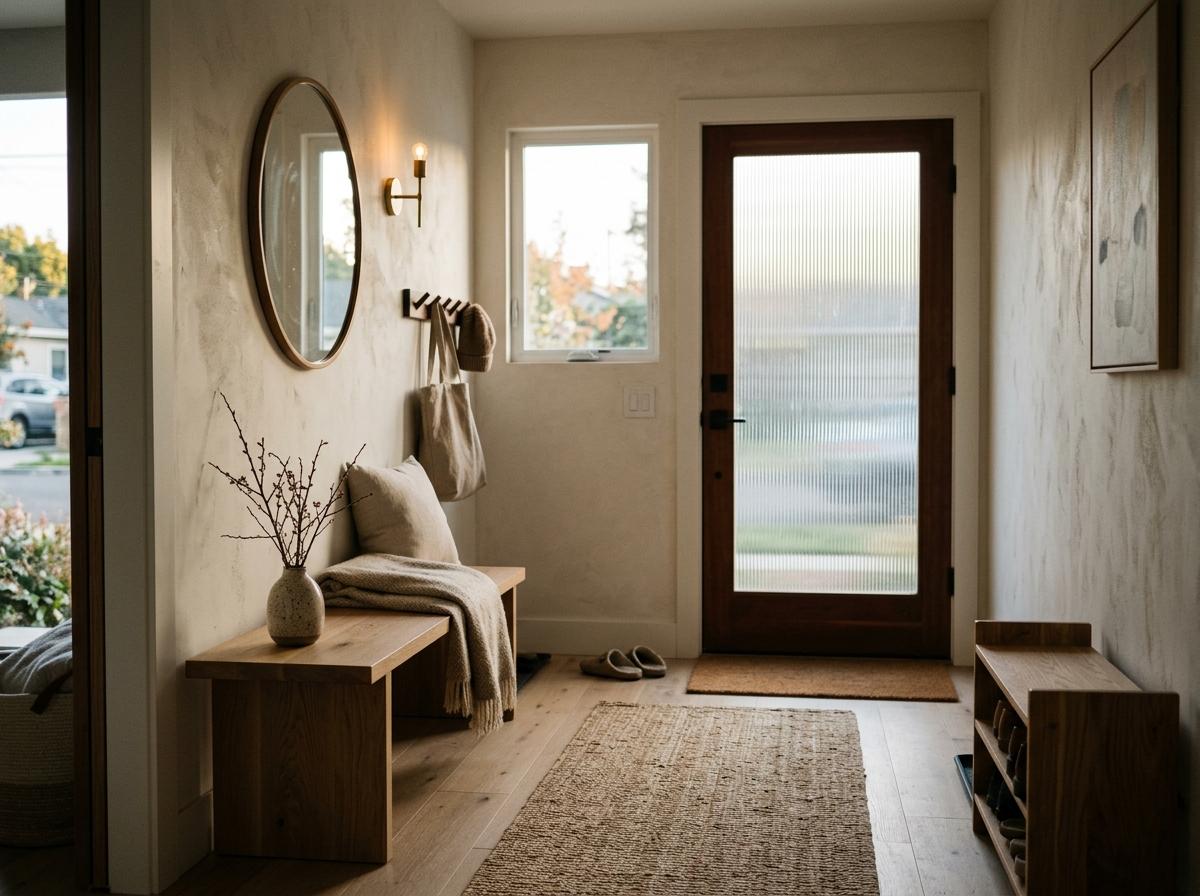

The entryway functions as a threshold of intentionality, where the frantic cadence of the street dissolves into a curated silence. This space achieves a structured fluidity, a conceptual synthesis where the rigid discipline of Japanese minimalism embraces the soft, organic warmth of Scandinavian hygge. While the exterior world remains a chaotic theater of visual noise, the interior transition is defined by a sharp, deliberate stillness, severing ties with the public realm to prioritize the sanctity of the private. A low-slung bench of matte-finished white oak anchors the space, its grain echoing the tactile honesty of a hand-knotted jute runner and the cool, artisanal texture of wabi-sabi lime plaster walls. This composition is not merely decorative but serves as a precise industrial solution: a seamless integration of concealed storage and geometric lighting that manages the friction of daily transition, transforming the utilitarian act of arrival into a meditative ritual.
Essential Elements For A Beautiful Japandi Entryway Look
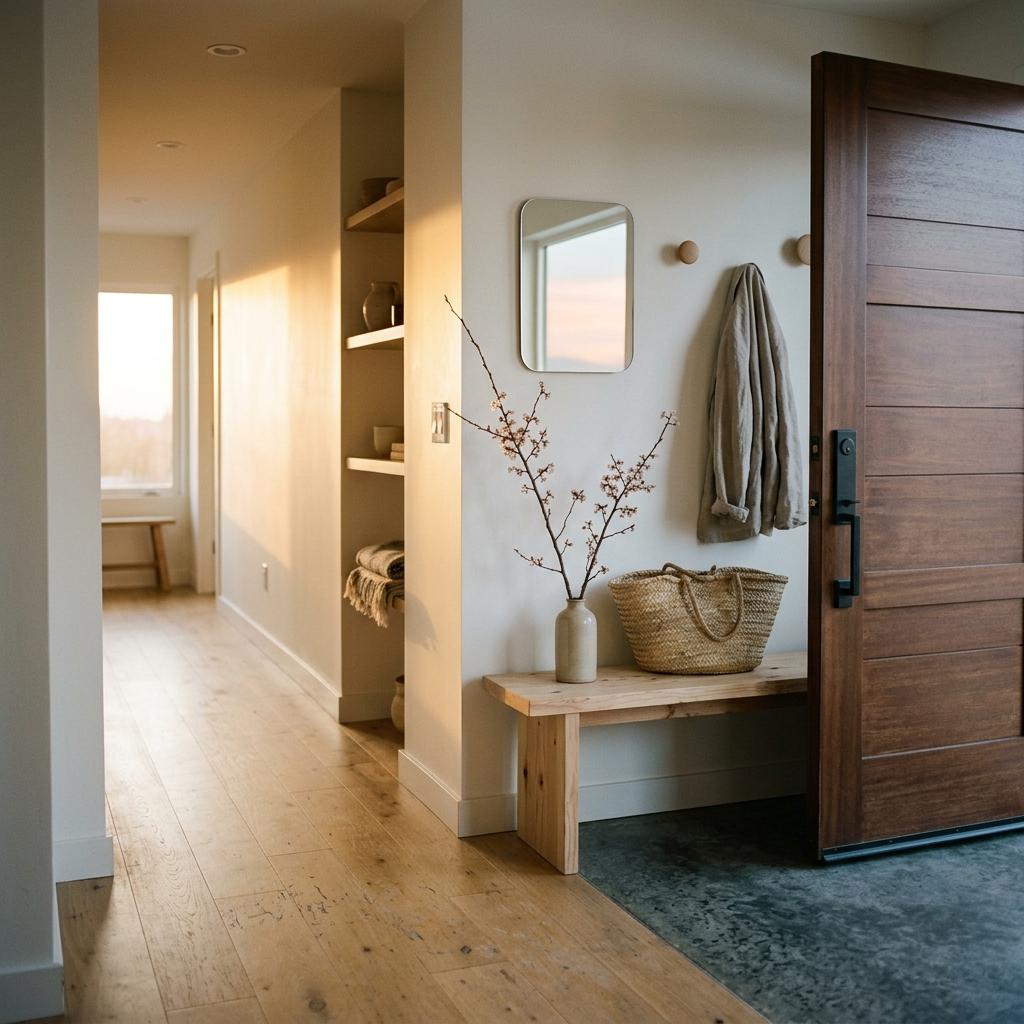

Through a careful study of recent international projects, the serene Japandi entryway is defined by a meticulous calibration of light and volume. Within these threshold spaces, the cluttered chaos of the outside world is shed in favor of a hollowed, hushed, and honest simplicity. Neutral tones navigate the narrow hallway, carving out a sense of boundless expansion that stretches beyond the physical walls. This architectural stillness breathes through the use of tactile textures, balanced beams, and bespoke boundaries. The final composition anchors the home by introducing raw timber textures, soft diffused lighting, and purposeful negative space.
Walk Through A Beautifully Organized Japandi Entryway Space
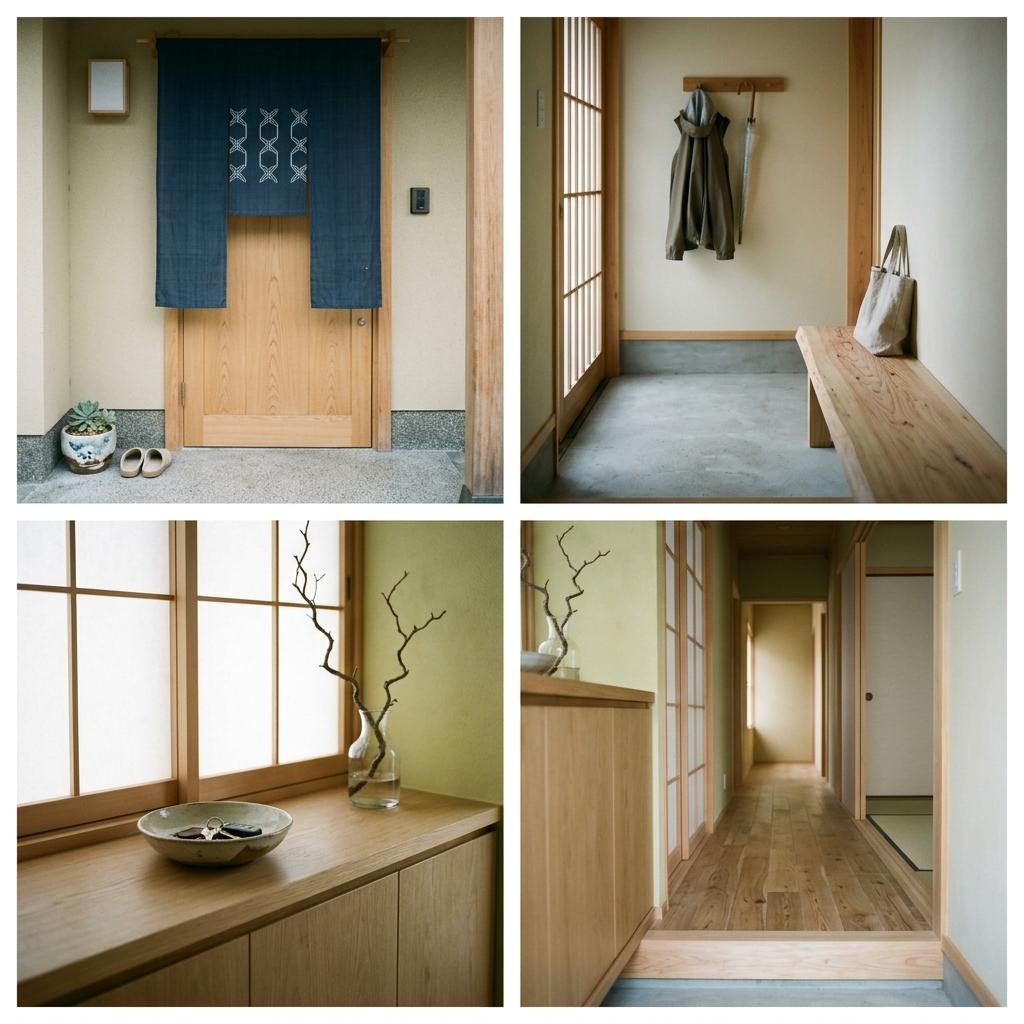

Walk Through A Beautifully Organized Japandi Entryway Space Step across the threshold and allow the sensory shift to recalibrate your internal rhythm. Note how the tactile grain of the sand-blasted Honoki cypress bench offers a structural grounding against the ethereal, translucent shimmer of the Washi paper partitions. This transition zone exemplifies a controlled spontaneity, where the rigorous geometry of Scandinavian cabinetry meets the intentional imperfection of a hand-thrown ceramic catch-all. As your eyes trace the silhouette of a single, gnarled branch set against a lime-washed wall, you experience a visceral de-escalation-a physical loosening of the shoulders and a deepening of the breath that signals the departure from urban chaos into domestic sanctuary. In this curated portal, reminiscent of the refined genkan transitions found in the boutique residences of Kyoto's Nakagyo-ku, the space does not merely store your belongings; it filters your consciousness, ensuring that you enter the home as the lightest version of yourself.
Inside A Nature Inspired Japandi Entryway Design Scheme
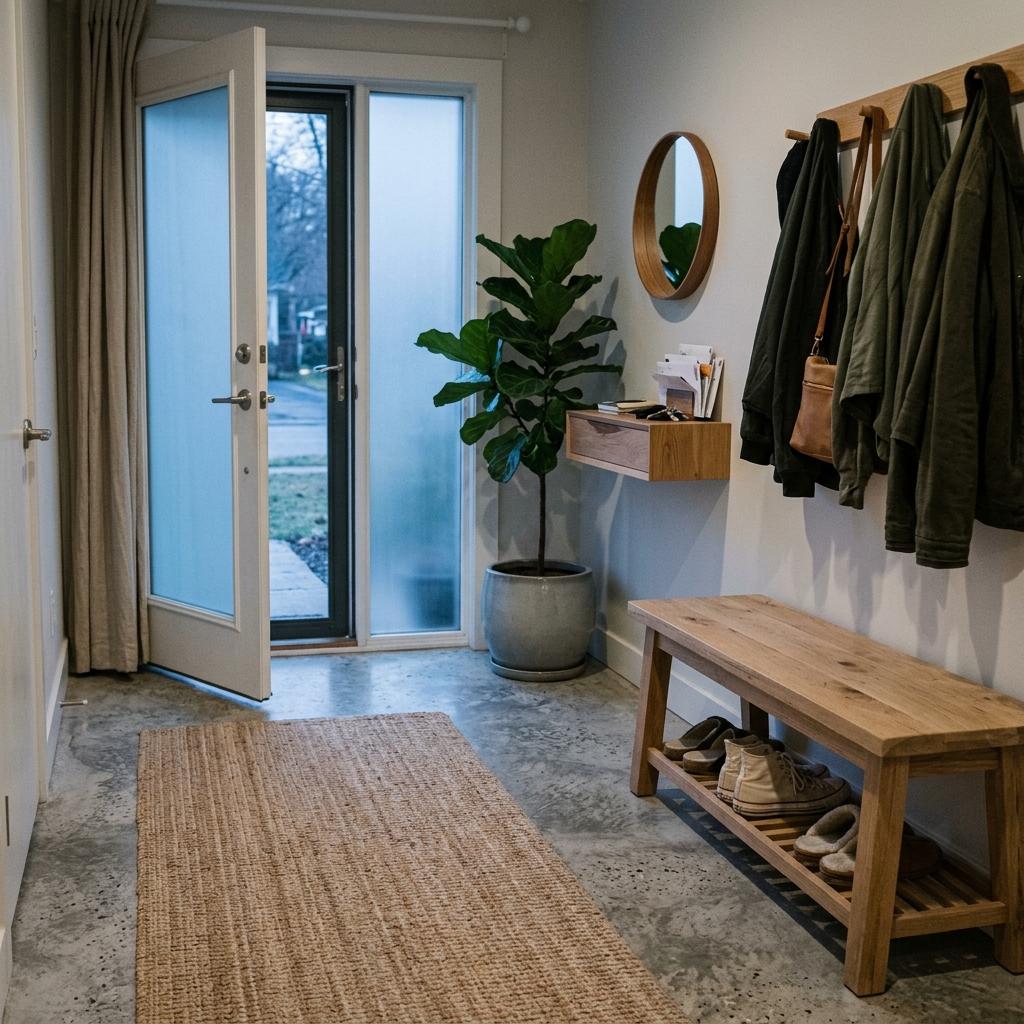

The transition from the frantic, gray cacophony of a city street to the threshold of a well-curated home should feel like a long-held breath finally being released. I recently sat down with a local minimalist enthusiast who described their entryway not as a room, but as a "decompression chamber" designed to shed the weight of the outside world. "The goal," they explained, gesturing toward a low-slung bench of reclaimed white oak, "wasn't just about storage. It was about creating an immediate sense of ma-that essential Japanese concept of pure, intentional space." To achieve this, they utilized a palette of organic textures, layering a tactile sisal rug against the cool, monolithic finish of polished concrete floors. While the urban sprawl thrives on sensory overload and jarring visual noise, this entryway leans into a nature-inspired "soft minimalism," where the interplay of dappled light and honest materials creates a sanctuary of quietude. This delicate balance between raw, wabi-sabi imperfections and the clean linework of Scandinavian craft forms the backbone of a design philosophy where the foyer becomes the ultimate prologue to the home.
Transforming A Narrow Hallway Into A Japandi Entryway
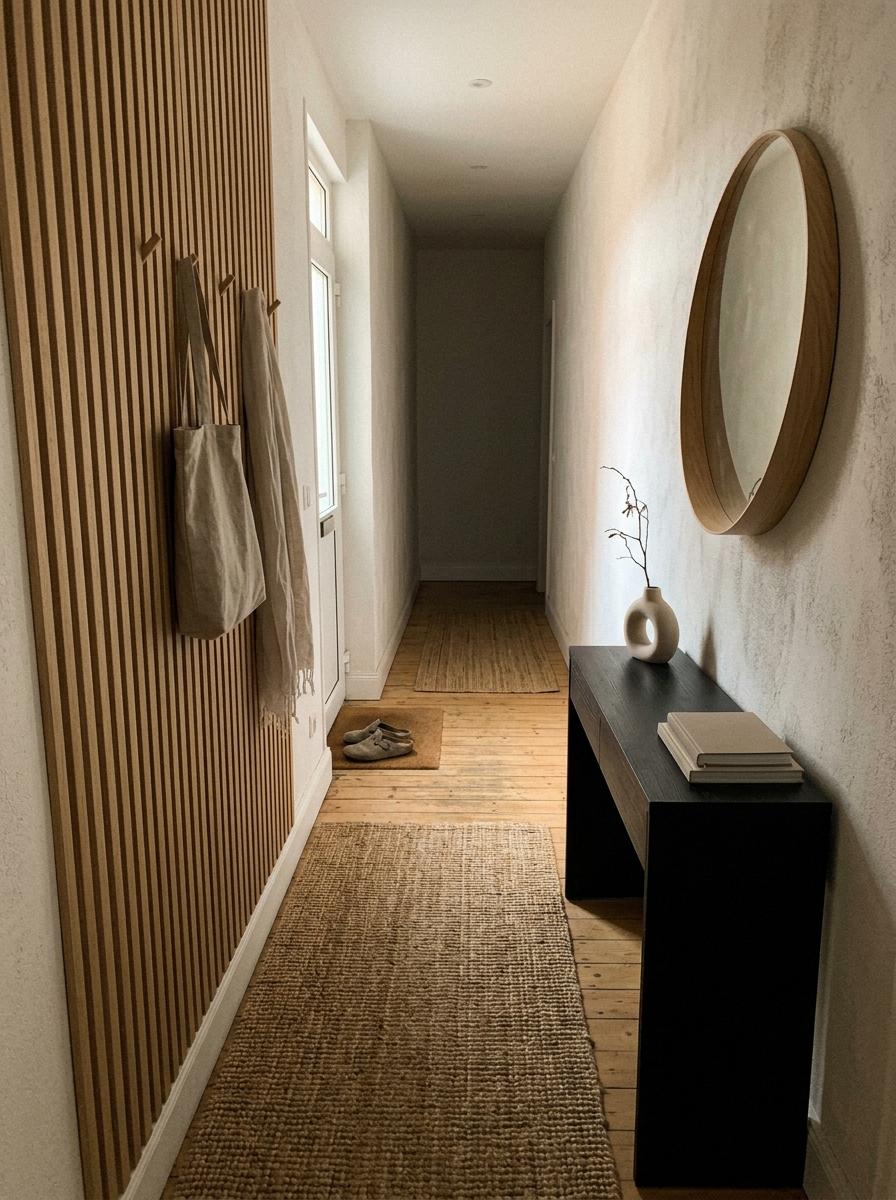

In the constricted throat of the urban home, the narrow hallway often exists as a forgotten transit zone, a claustrophobic conduit that prioritizes speed over presence. To apply a Japandi lens to this space is to embrace a cluttered emptiness; it is the deliberate act of filling a void with silence rather than objects, stripping away the noise of transit to reveal a curated stillness. This transformation requires a rigorous structural dualism, where the chaotic, sensory overload of the external world is abruptly severed by a threshold that demands an internal shift toward composure. We move away from generic surfaces toward a material specificity, anchoring the gaze with the low-sheen texture of a blackened ash console and the organic, open-weave of a jute runner that grips the floor. This is not merely aesthetic posturing but a functionalist specification, where integrated vertical slats in light oak serve as both a rhythmic visual anchor and a concealed acoustic buffer, turning a mere passageway into a deliberate, high-utility transition that breathes despite its dimensions.
A Deep Dive Into Minimalist Japandi Entryway Furniture
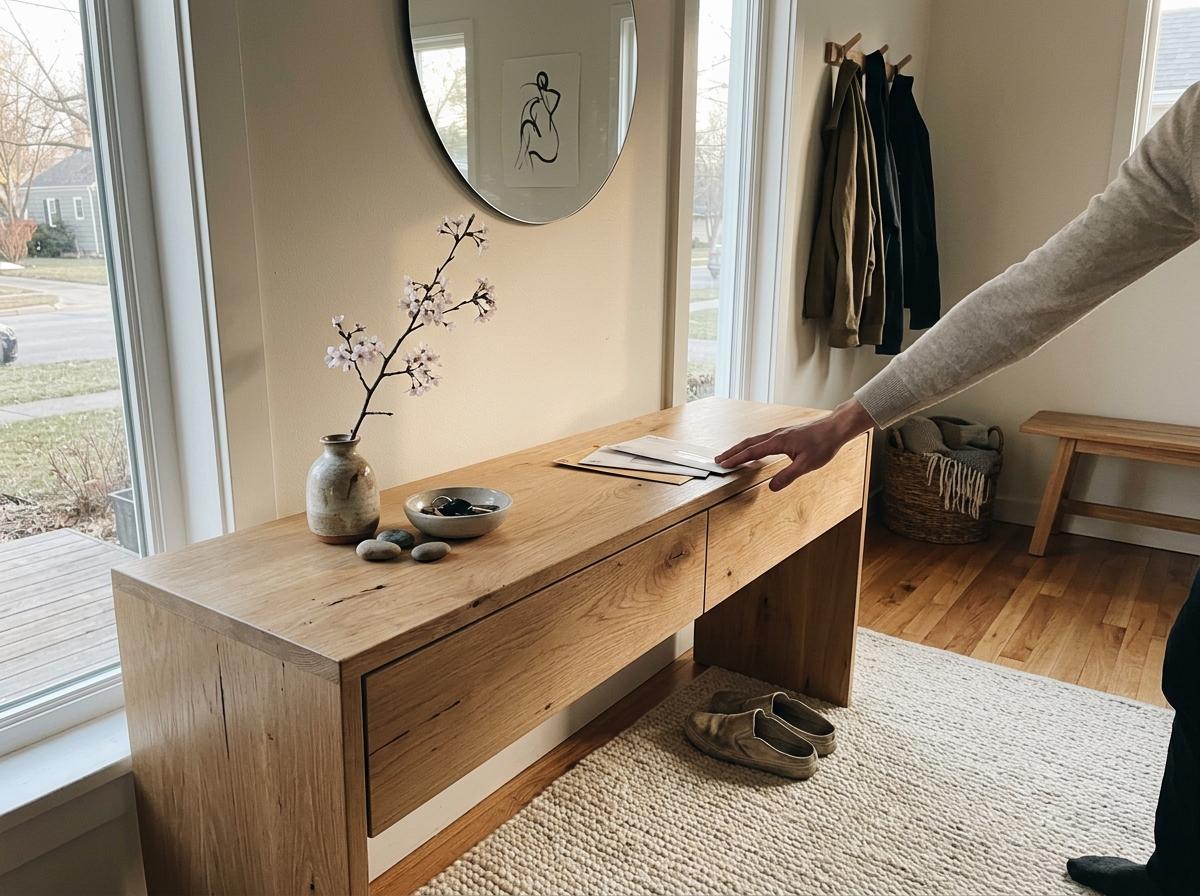

Walking into a cluttered, high-traffic hallway often feels like a sensory assault-a cacophony of discarded mail, tangled coats, and the visual noise of excess. Yet, when I recently stepped into a home defined by intentional Japandi principles, that frantic energy simply evaporated into the "negative space." I recall asking the homeowner about the low-slung, white oak console anchoring the foyer; "It isn't just a surface," she remarked, tracing the grain of the wood, "it's a boundary... a way to shed the chaos of the street before crossing into the private sanctum." This deliberate juxtaposition-the transition from the frantic, uncurated world outside to a vestibule defined by shibui (an understated elegance)-illustrates why furniture in this niche must do more than just hold keys. By prioritizing a "material honesty" through tactile finishes and a strictly "reductive silhouette," these pieces act as a functional filter for the modern soul. This intersection of utility and tranquility is precisely where we begin our study of the specific furnishings that transform a mere doorway into a meditative threshold.
Glimpse A Warm And Welcoming Japandi Entryway Interior
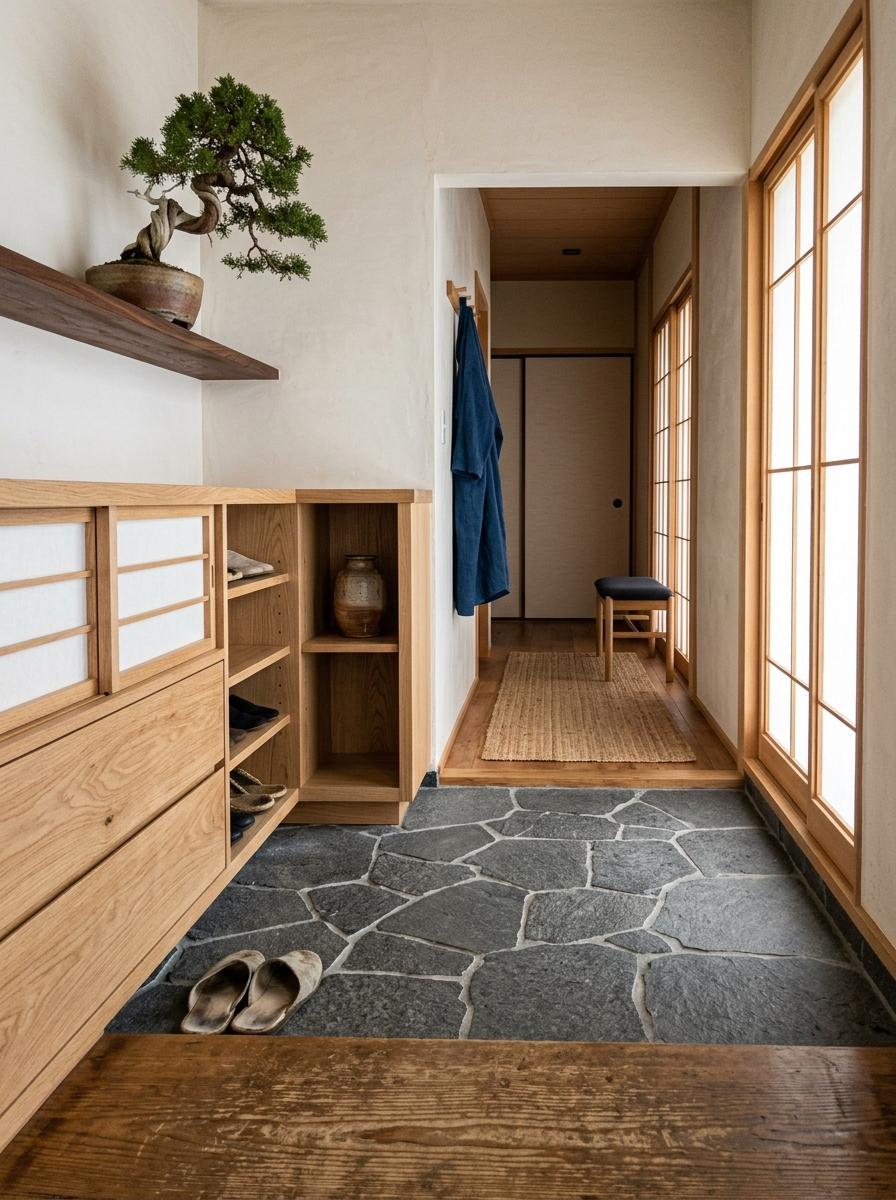

As we step into this Kyoto-inspired residence, the foyer immediately challenges the traditional boundary between external chaos and internal sanctuary. The flooring features a honed, charcoal-grey basalt that feels impossibly soft underfoot, contrasting against the fibrous, open-grain warmth of untreated white oak cabinetry. Note how the architectural silhouette utilizes a 'structured spontaneity'; the clean, geometric lines of the custom joinery are interrupted by the organic, gnarled curve of a single bonsai branch. This deliberate maximalist minimalism ensures the space feels curated yet lived-in. As the eyes settle on the soft diffusion of light through Washi paper screens, a physical shift occurs: the heart rate slows, and the frantic thrum of the street is replaced by a profound sense of expansive intimacy. In this Japandi threshold, the transition is not merely spatial, but physiological, grounding the dweller in a state of quiet, tactile grace.
This Organic Modern Apartment Features A Japandi Entryway
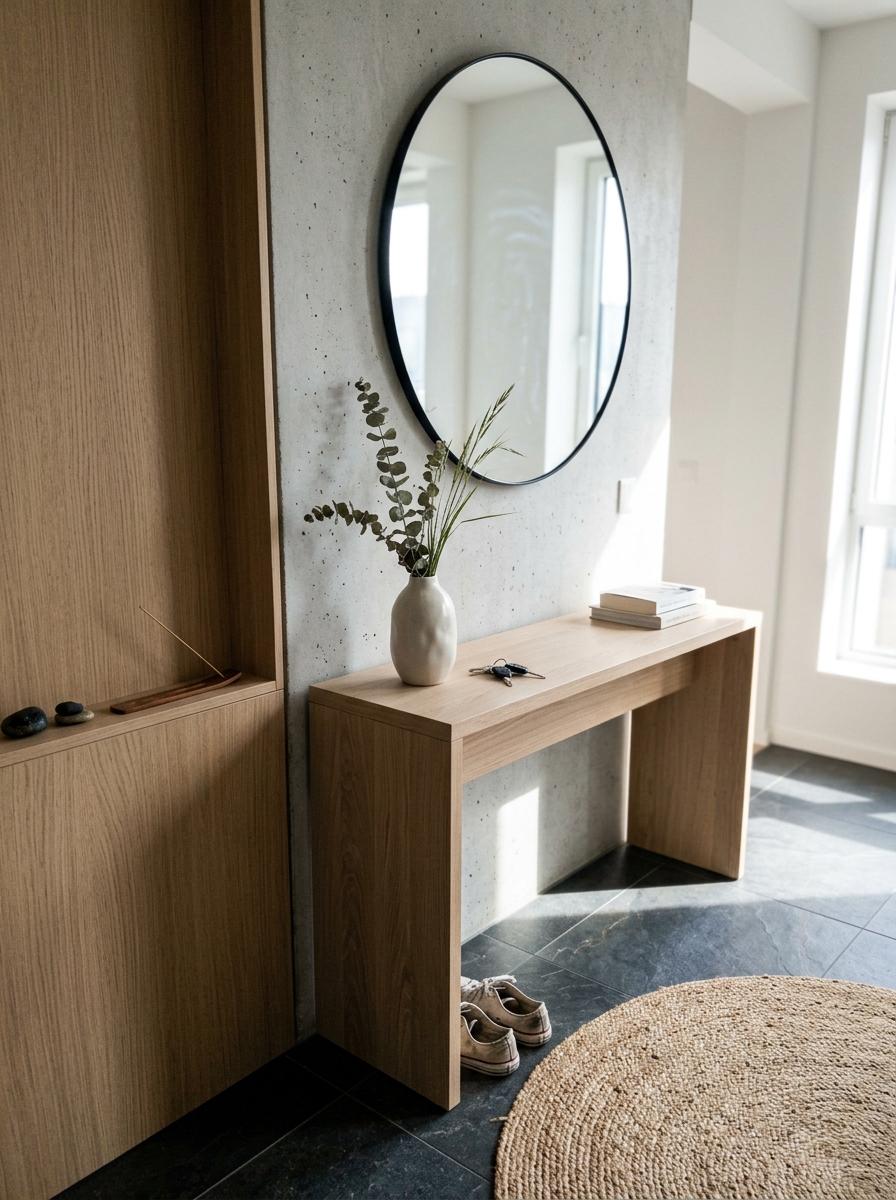

The entryway of this Organic Modern apartment functions as a quiet threshold, a compression chamber of shadow and soft light that separates the kinetic energy of the city from the stillness of the home. Here, the interior operates through a precise spontaneity, where the rigorous geometry of Japanese minimalism is softened by the unpredictable, fluid contours of Scandinavian nature. While the building's exterior remains bound by the rigid, vertical grid of urban concrete, the foyer dissolves these lines into a horizontal landscape of serenity and warmth. Tactile depth is introduced through a console of rift-sawn white oak and a floor of honed basalt, materials that invite the hand as much as the eye. This composition is not merely decorative but serves as a spatial filtration system, utilizing integrated recessed niches and hidden joinery to eliminate visual noise, ensuring that the transition into the living space is an act of intentional shedding.
Elevate Your Home Welcome With Japandi Entryway Styling
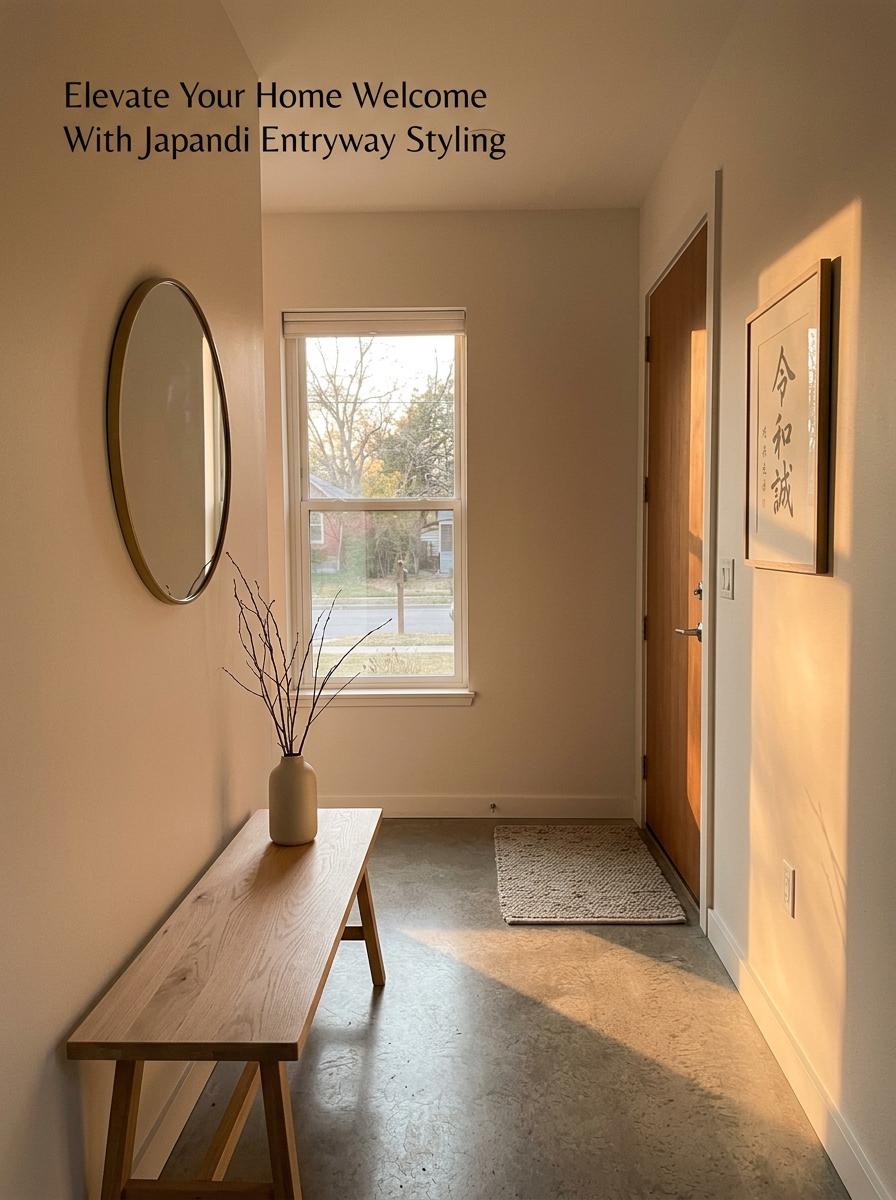

The threshold is meticulously shaped by a synthesis of Scandinavian utility and Japanese restraint, where every structural choice prioritizes the quiet power of purposeful placement. Within this curated void, the atmosphere remains exceptionally lean, defined by sterile surfaces and a hushed, unburdened clarity that invites immediate composure. This serene sanctuary softens the transition from the bustling exterior, welcoming the weary with a sense of polished peace. Light stretches across the grain of pale timber, while the open layout breathes life into the narrowest corridor. Ultimately, this intentional void frames the home's soul, anchors the wandering mind, and celebrates the profound beauty of less.
Simple Transitions Within A Modern Japandi Entryway Layout
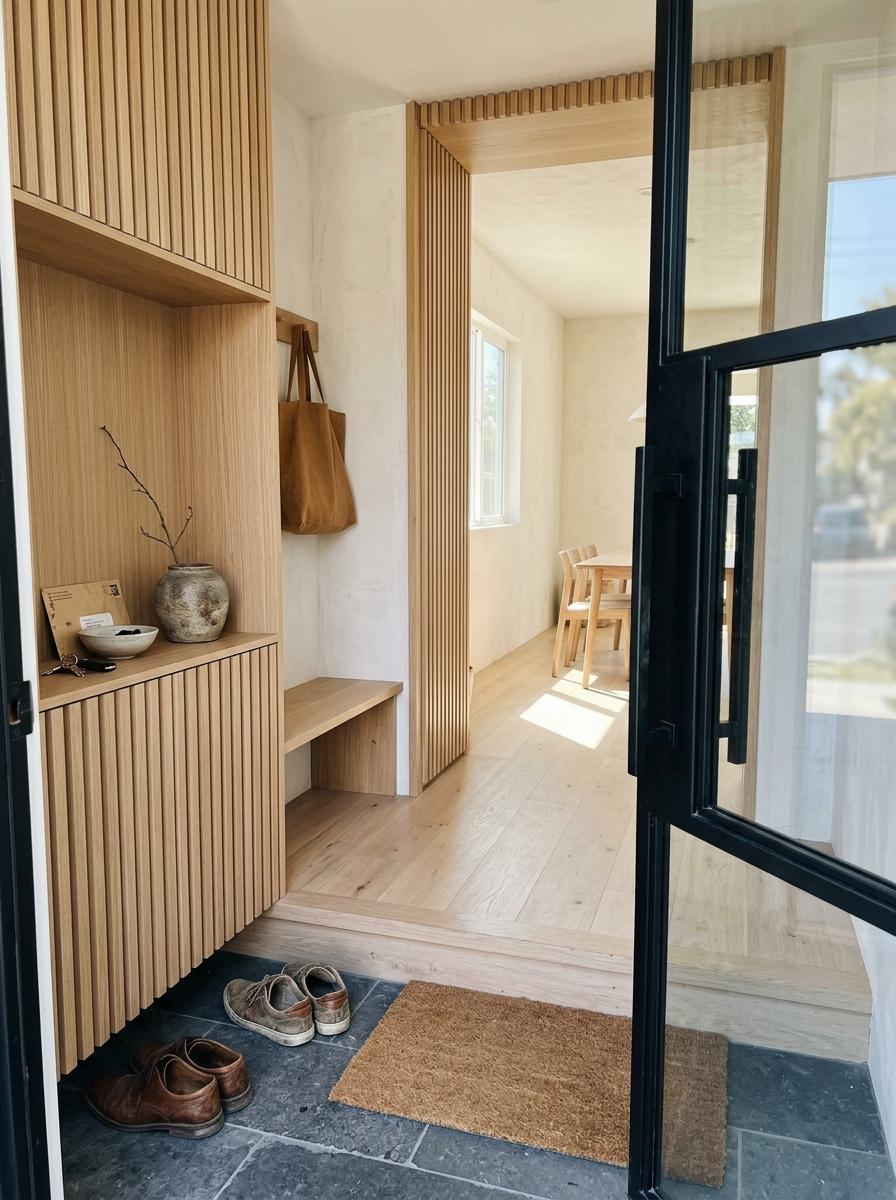

The modern Japandi entryway serves as a threshold of intentionality, where the compressed air of the street dissolves into the expansive silence of the home. This transition relies on a deliberate chaos, a curated arrangement where the rigorous geometry of Scandinavian lines meets the soft, organic imperfection of Japanese wabi-sabi. While the exterior world remains a blur of kinetic motion and visual noise, the interior reveals itself as a sanctuary of static depth, creating a sharp structural dualism between the public facade and the private core. To achieve this grounding, the floor is anchored by honed Basaltina stone tiles, their cool, matte texture providing a tactile contrast to the warm, vertical grain of slatted white oak cabinetry. This is not merely an aesthetic choice but a functionalist solution: the integrated "genkan" drop-zone serves as a technical filter, ensuring that the physical and mental clutter of the outside world is stripped away the moment the heavy blackened-steel handle is turned.
Balancing Texture And Light In A Japandi Entryway
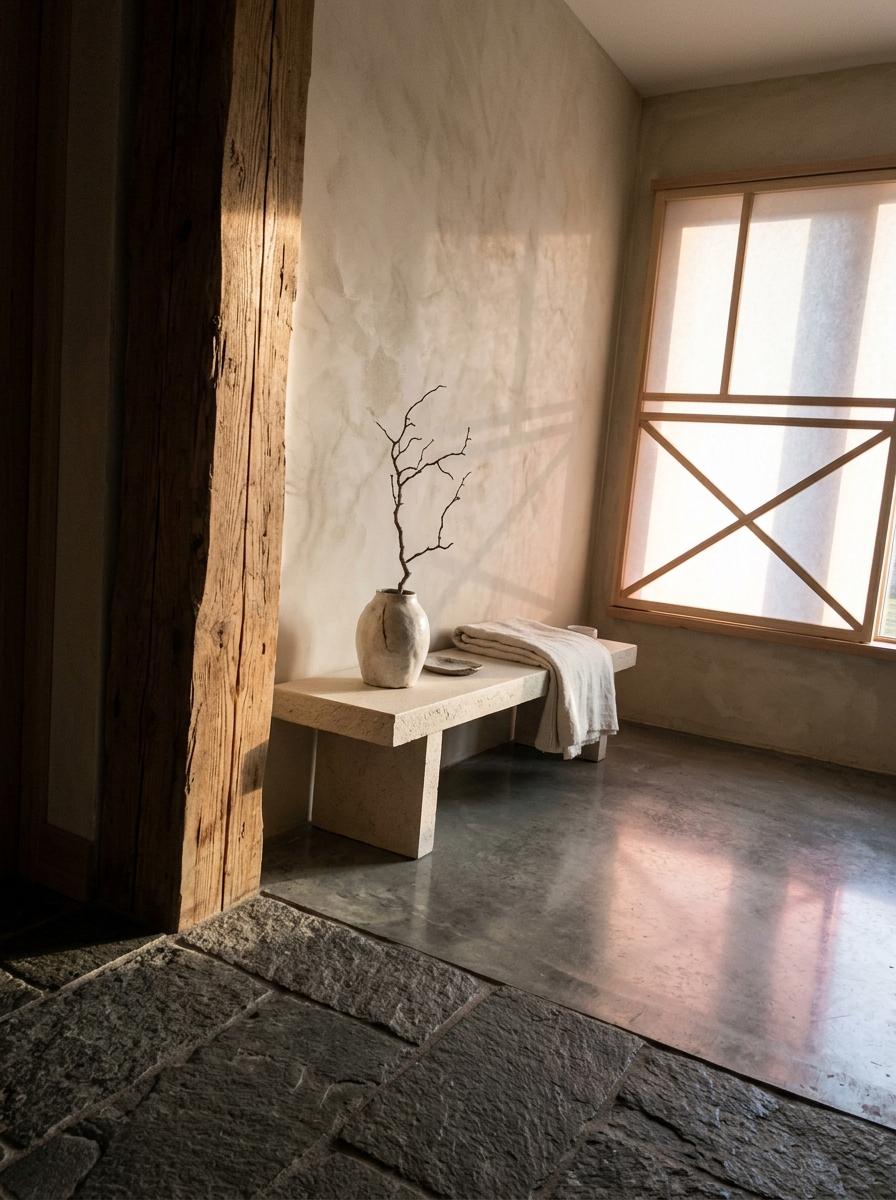

At its core, Japandi is the aesthetic result of a rigorous chemical synthesis: the rustic, transient honesty of Japanese wabi-sabi fused with the structured, ergonomic clarity of Scandinavian hygge. In the entryway-the home's transitional threshold-this balance is achieved through a meticulous manipulation of materiality and luminance. We find a space that demands a high degree of tactile granularity through rough-hewn timber and lime-washed plinth, yet it maintains a clinical, ethereal lightness that prevents the composition from feeling tethered. By layering diaphanous, translucent shoji-inspired screens against the profound, tectonic weight of basalt or oak, the designer creates an atmosphere that is simultaneously grounded and transcendent, ancient yet innovative, and visceral yet serene.
Discover The Quiet Beauty Of A Japandi Entryway
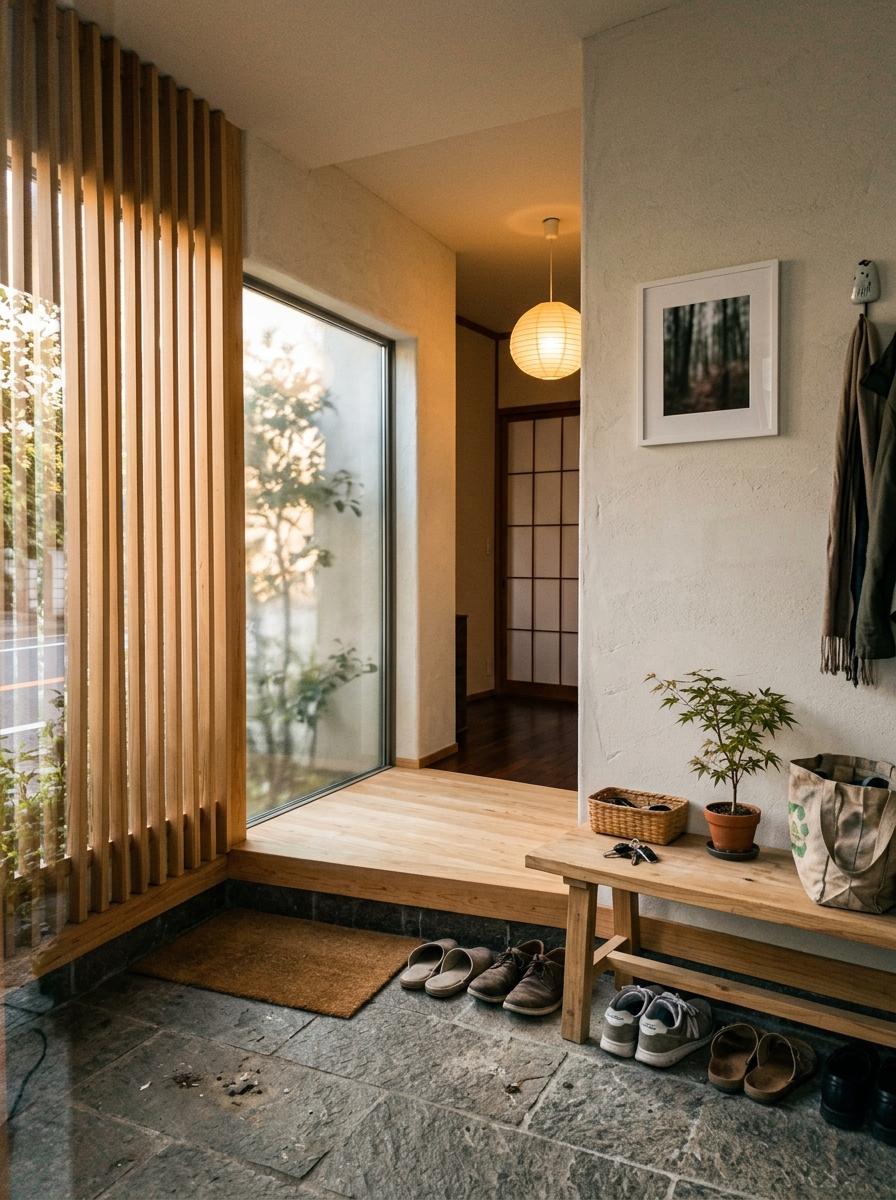

Historically, the Japanese genkan served as a rigid threshold of social transition, a utilitarian space of departure that stood in stark contrast to the ornate, heavy foyers of mid-century Western estates. Today, this boundary has dissolved into something far more nuanced-a sanctuary of maximalist minimalism where every void feels intentional and every texture speaks. Situated in the leafy, prestigious enclave of Kuraba in Tokyo, this particular project was commissioned by a repeat client, a family whose continued trust allowed us to push the boundaries of their previous domestic aesthetic. The resulting entryway achieves its quiet beauty through a deliberate technical synthesis of tactile materiality and light diffusion, using floor-to-ceiling cedar slats and honed volcanic stone to calibrate the transition from the chaotic city to the rhythmic stillness of the home.
Practical Tips For Designing A Japandi Entryway Focal Point
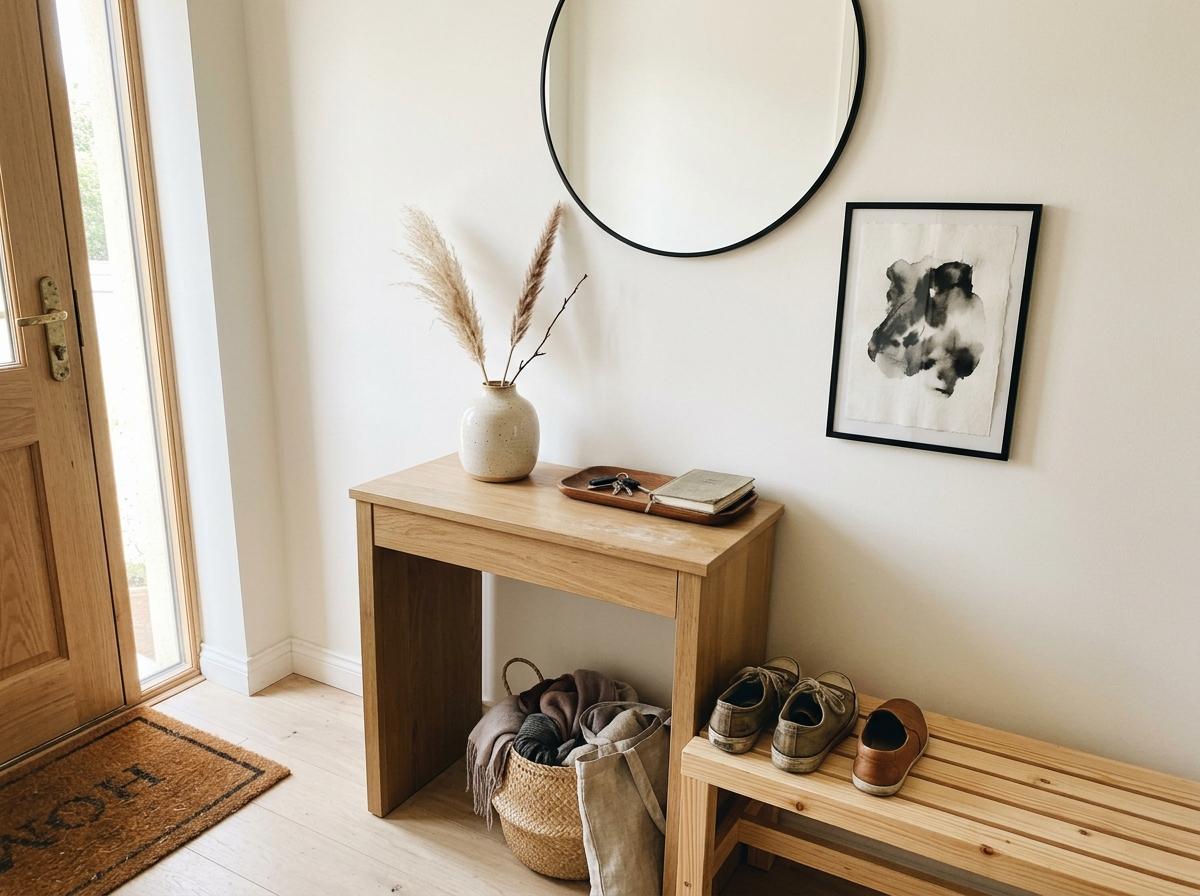

I remember stepping into a chaotic London flat during a heavy downpour-the air thick with the smell of wet wool, a mountain of shoes creating a literal barricade, and the visual noise of mismatched mail piles. It felt like a frantic exclamation point at the end of a long day. "A home shouldn't demand your energy," a Tokyo-based designer told me last month as we discussed the concept of monogatari, or the story a space tells. "It should," she paused, adjusting a singular, hand-thrown ceramic vase on her console, "be the exhale after the breath." In the Japandi tradition, the entryway serves as this vital transition, a choreographed pause between the kinetic energy of the street and the static calm of the interior. By balancing the raw, tectonic honesty of Scandi-industrial materials with the Wabi-sabi appreciation for imperfection, we can transform a mere hallway into a curated threshold. This intentionality begins with a singular focal point, a design anchor that dictates the rhythm of the entire home.
A Curated Collection Of Japandi Entryway Styling Ideas
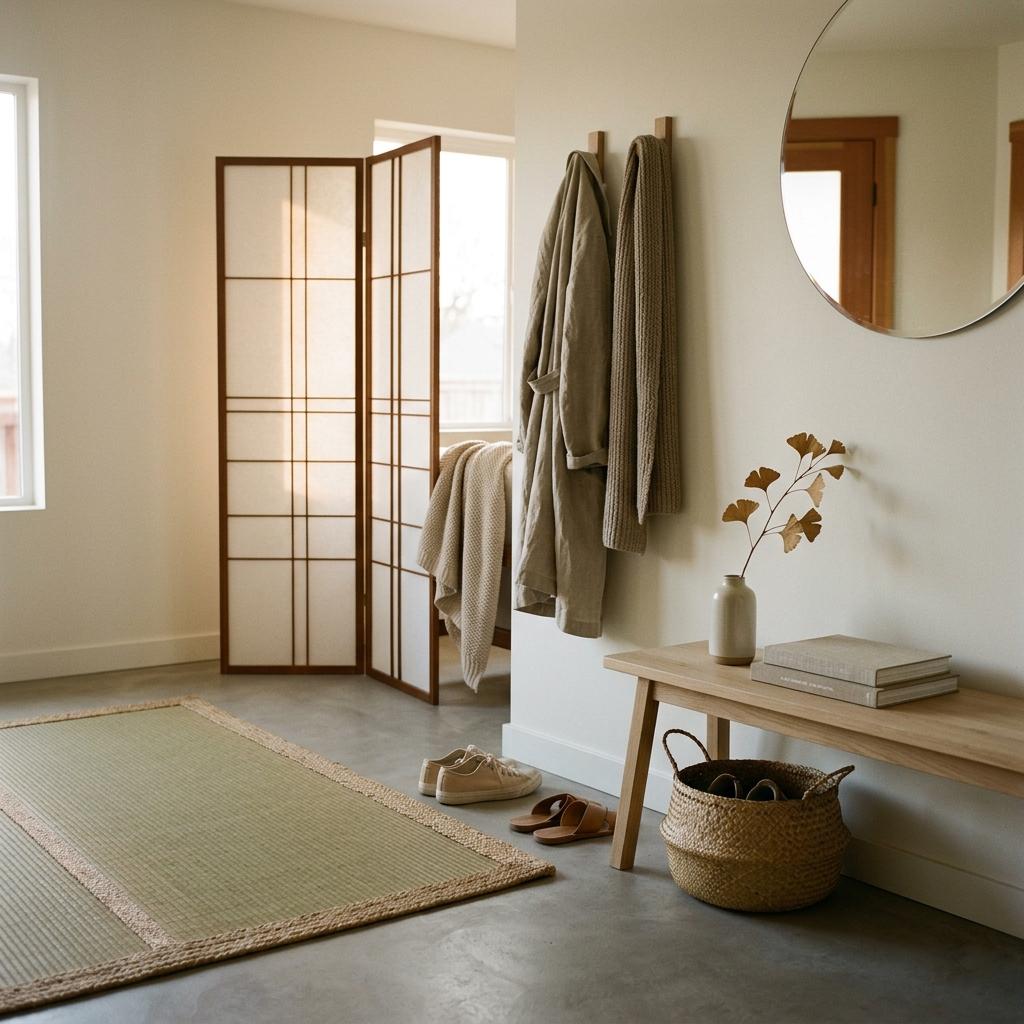

In this curated exploration of the home's threshold, we move beyond mere utility to analyze the intentional composition of the Japandi entryway. The aesthetic success of these spaces hinges on the interplay of tactile diversity: imagine the fibrous, honey-hued warmth of hand-woven tatami juxtaposed against the cool, matte-smooth serenity of micro-cement flooring. Note how the placement of a single, asymmetrical Shoji-style screen creates a controlled chaos, partitioning the space without severing the visual flow. This specific design language-which we might call a structured spontaneity-functions as more than just a stylistic choice; it acts as a sensory filter. As you transition from the frenetic energy of the street into a foyer inspired by the quietude of a Kyoto machiya or the raw minimalism of a Copenhagen studio, your heart rate visibly decelerates. The physical weight of the day dissolves into a feeling of expansive lightness, proving that the Japandi entryway is not merely a room, but a physiological reset.
Stylish Storage Solutions For A Clutter-Less Japandi Entryway
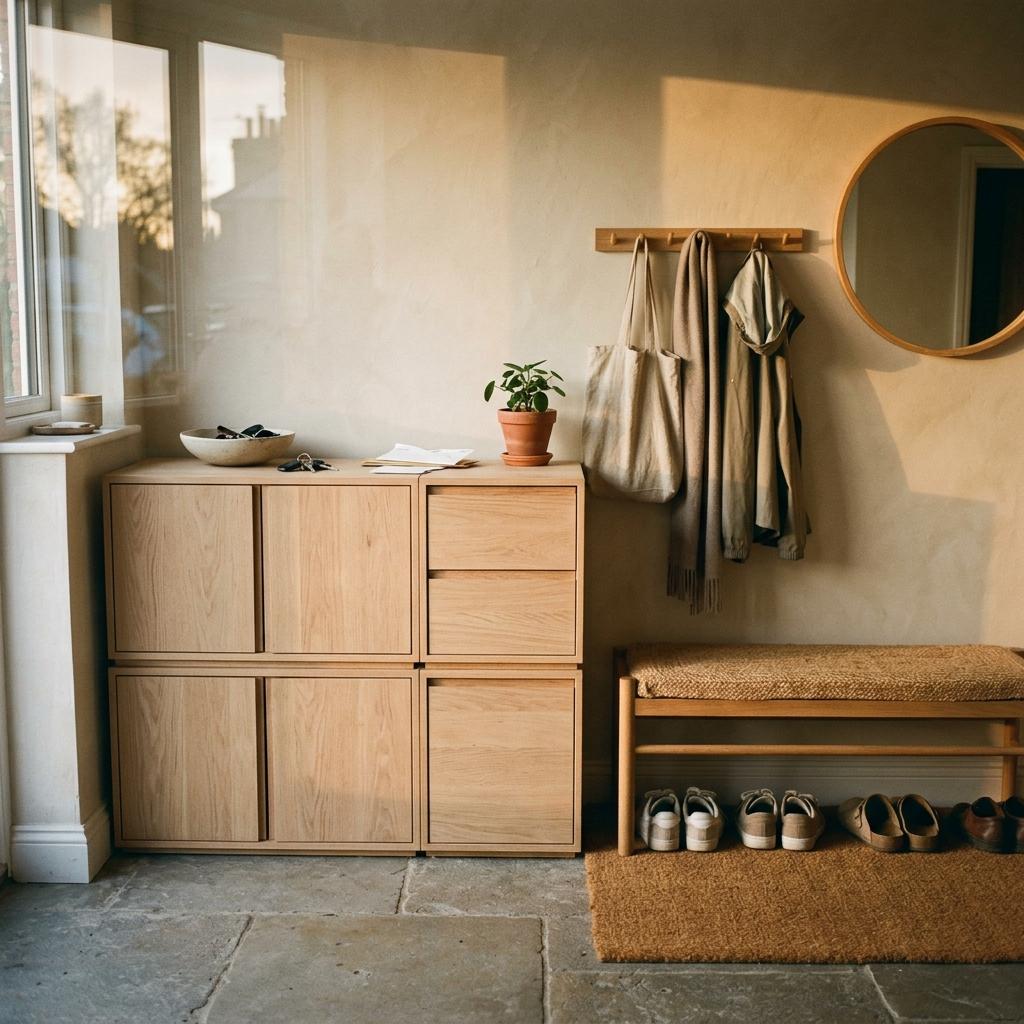

At its core, Japandi is the aesthetic resolution of Japanese asceticism and Scandinavian hygge-a deliberate synthesis where the meditative stillness of Zen philosophy meets the pragmatic warmth of Northern European craft. In the entryway, this manifests through a commitment to shibui (restraint) and tectonic honesty, utilizing modular cabinetry that honors the grain of white oak while embracing the minimalist rigor of a handle-less facade. The result is a threshold that feels paradoxically ethereal yet grounded; it is a space that demands rigorous organization, but whispers an invitation of soft, tactile serenity. To enter such a foyer is to experience a sequence of atmospheric transitions-from the abrasive, kinetic energy of the outside world to a curated sanctuary of olfactive cedar, hushed textiles, and luminous, obsidian-toned surfaces.


Comments