
In the study of contemporary interiors, Japandi emerges as a deliberate synthesis where the rustic, weathered soul of Japanese wabi-sabi converges with the streamlined, functional pragmatism of Scandinavian hygge to cultivate a third, heightened aesthetic state. This union necessitates a careful curation of wall art that bridges the two worlds: the pieces must project a profound, earthen stillness, yet maintain a crisp, intellectual rigor that prevents the space from feeling cluttered. By integrating organic textures-such as hand-pressed washi or raw, tactile linen-with the austere, geometric discipline of Nordic minimalism, a homeowner achieves a visual dialogue that is simultaneously evocative, ethereal, and grounded.
Japandi Wall Art Decor

Discover Elegant Textured Japandi Wall Art Decor
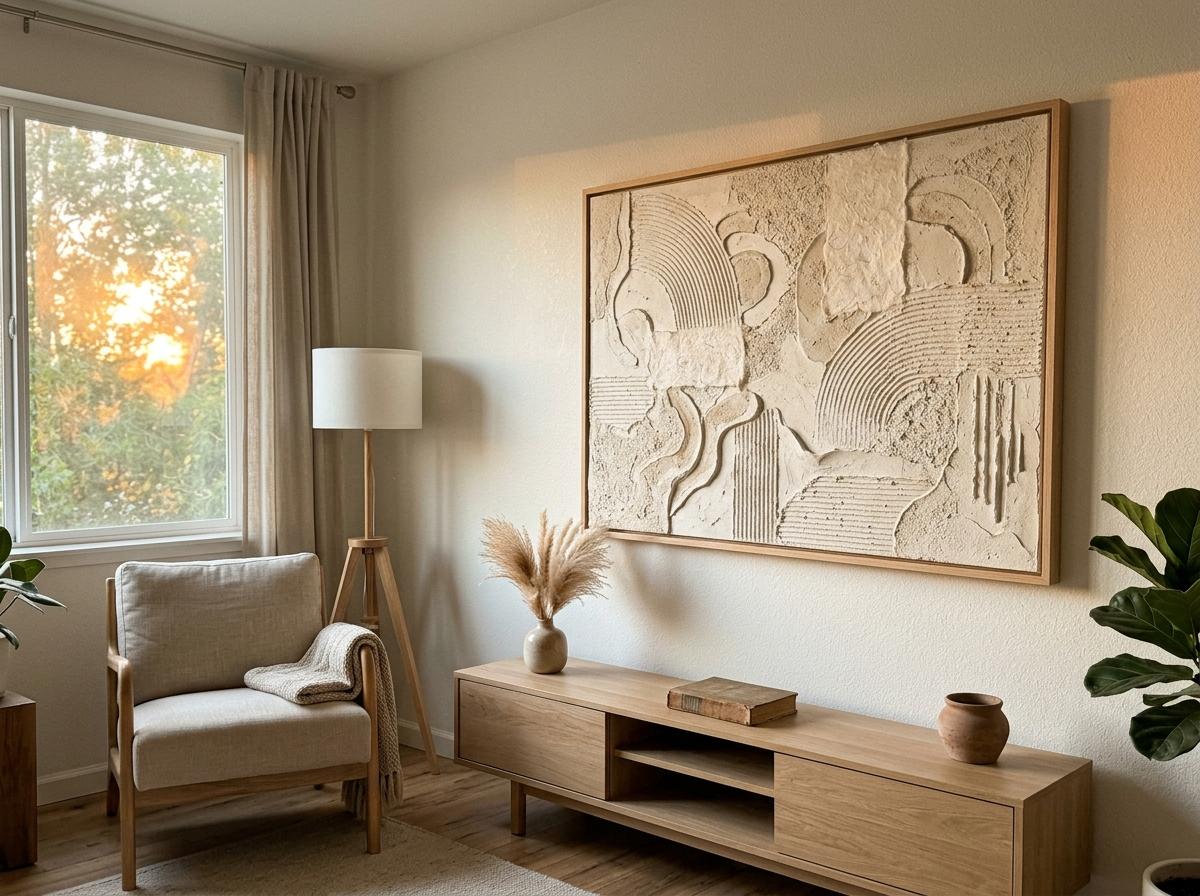

At Japandi.design, we observe how the modern living room serves as a silent gallery, where the "white cube" ethos of minimalism meets the intimate warmth of a sanctuary. Within this niche, textured wall art functions as a structured chaos, reconciling the rigid geometry of the frame with the fluid, unpredictable undulations of hand-applied plaster. This interaction highlights a profound structural dualism: while the external silhouette remains anchored in the stoic, clean lines of Scandinavian functionality, the internal surface vibrates with the organic imperfection of Japanese wabi-sabi. By utilizing precise material specificity-such as the granular grit of limestone wash, the fibrous depth of handmade washi paper, or the raked furrows of hydrated lime-these pieces transcend mere decoration. They offer a functionalist specification for the modern dweller, serving as a tactile acoustic solution that dampens the harsh echoes of open-plan living while providing a visual focal point that grounds the room in sensory depth.
The Art Of Balance In Japandi Wall Art Decor
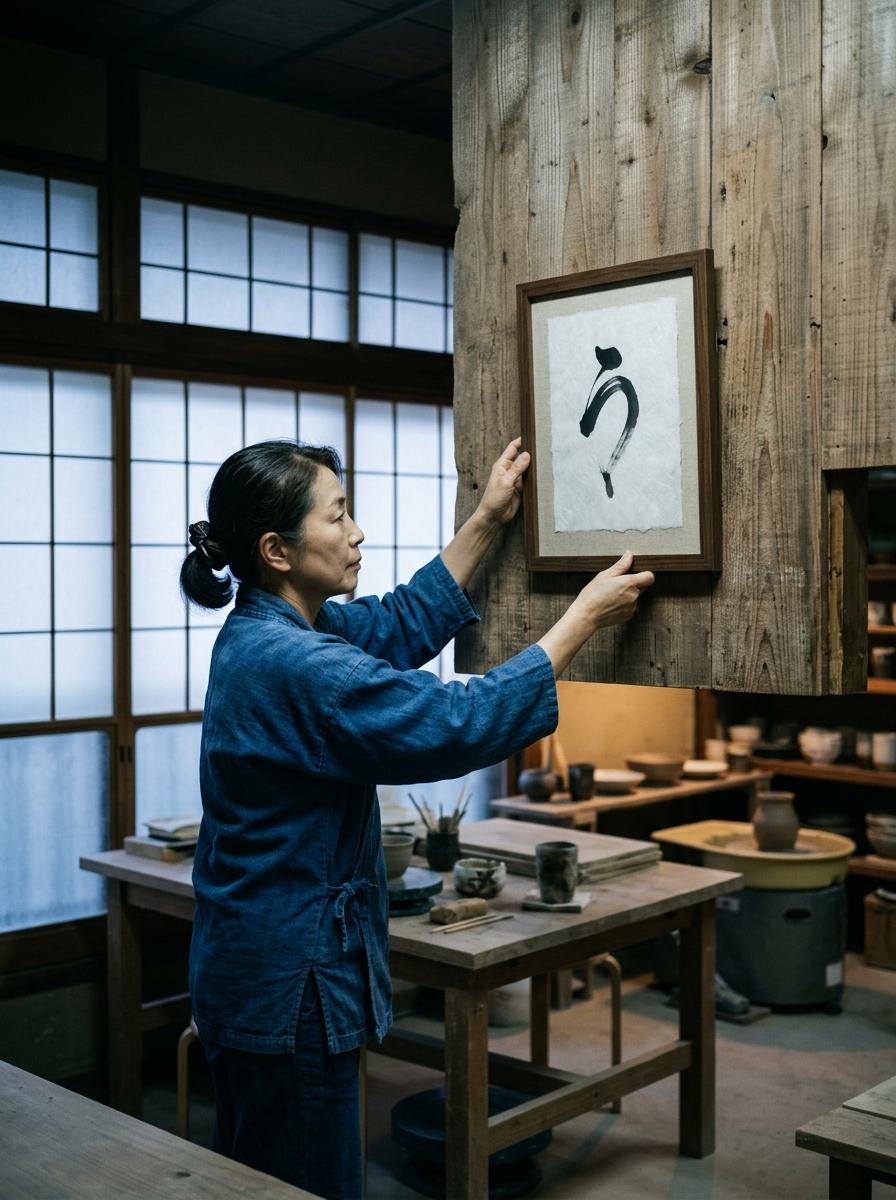

Last autumn, while interviewing a ceramicist in her Kyoto atelier, I watched as she spent nearly an hour debating the placement of a single, ink-wash scroll against a reclaimed cedar wall. "The eye needs a place to rest," she remarked, stepping back to adjust the frame by a mere millimeter, "but the soul... it needs a reason to linger." This pursuit of equilibrium is where the friction of modern life meets the stillness of the home. Imagine a frantic, maximalist gallery wall in a city apartment-cluttered with competing neon geometries and heavy gilded frames-and contrast it with the intentionality of a Japandi arrangement, where a solitary, tactile lithograph anchors a vast expanse of negative space. By prioritizing shibui-an aesthetic of subtle, unobtrusive beauty-over mere decoration, we move beyond simple styling and into the realm of spatial poetry. This delicate tension between Scandi functionality and Japanese minimalism is not just a trend, but a curated masterclass in the art of atmospheric composure.
A Guide To Curating Minimalist Japandi Wall Art Decor
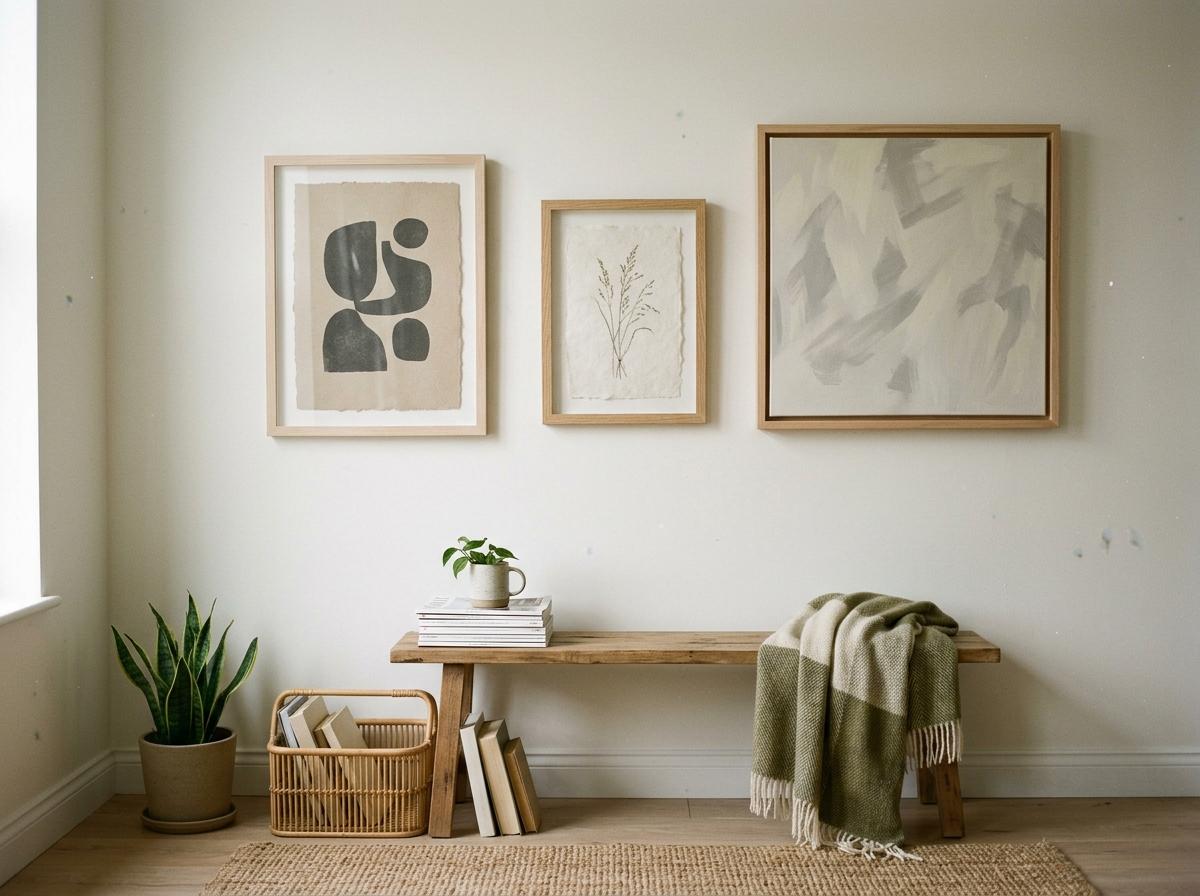

To curate minimalist Japandi wall art is to anchor a room in a state of "composed silence," where the vast white space of a gallery wall acts as a structural stabilizer for the warm, domestic chaos of a living area. This practice relies on a naturalistic void, where the emptiness of the canvas becomes its most profound presence, reconciling the stark rigidity of Japanese Zen with the soft, hygge-led comfort of Scandinavian life. While the exterior world thrives on visual noise and digital saturation, the interior plane is redefined by a sharp distinction: the wall becomes a boundary of deliberate stillness against the kinetic energy of the home. To achieve this, You can look toward material specificity, opting for hand-pressed Washi paper with deckled edges or raw linen canvases framed in unsealed, pale white oak. These selections serve a functionalist specification, acting not merely as decoration, but as acoustic and visual dampeners that resolve the industrial harshness of modern living through the soft utility of organic textures.
Transforming Spaces With Large Scale Japandi Wall Art Decor
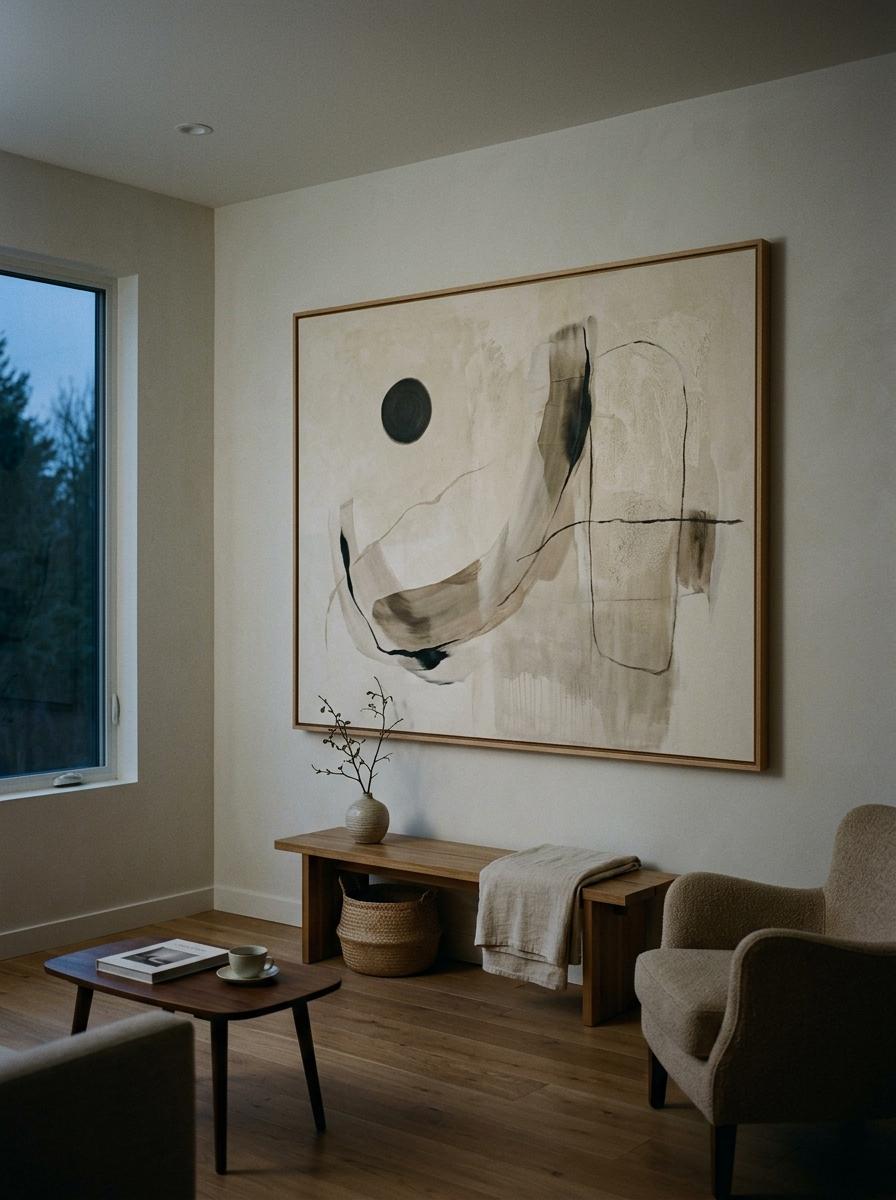

The transformation of an interior is often initiated by the thoughtful placement of a singular, expansive focal point. In these curated environments, a quiet clarity is maintained through the use of spare, seamless surfaces that reject the clamor of excessive ornamentation. This deliberate restraint allows the art to breathe, as balanced brushwork brings a soft serenity to the surrounding structure. These large-scale compositions stretch the visual boundaries of a room, carving out depth where there was once only flatness and anchoring the eyes within a void of calm. Ultimately, the presence of oversized art defines the atmosphere, anchors the architecture, and harmonizes the home.
Modern Abstract Japandi Wall Art Decor For Living Rooms
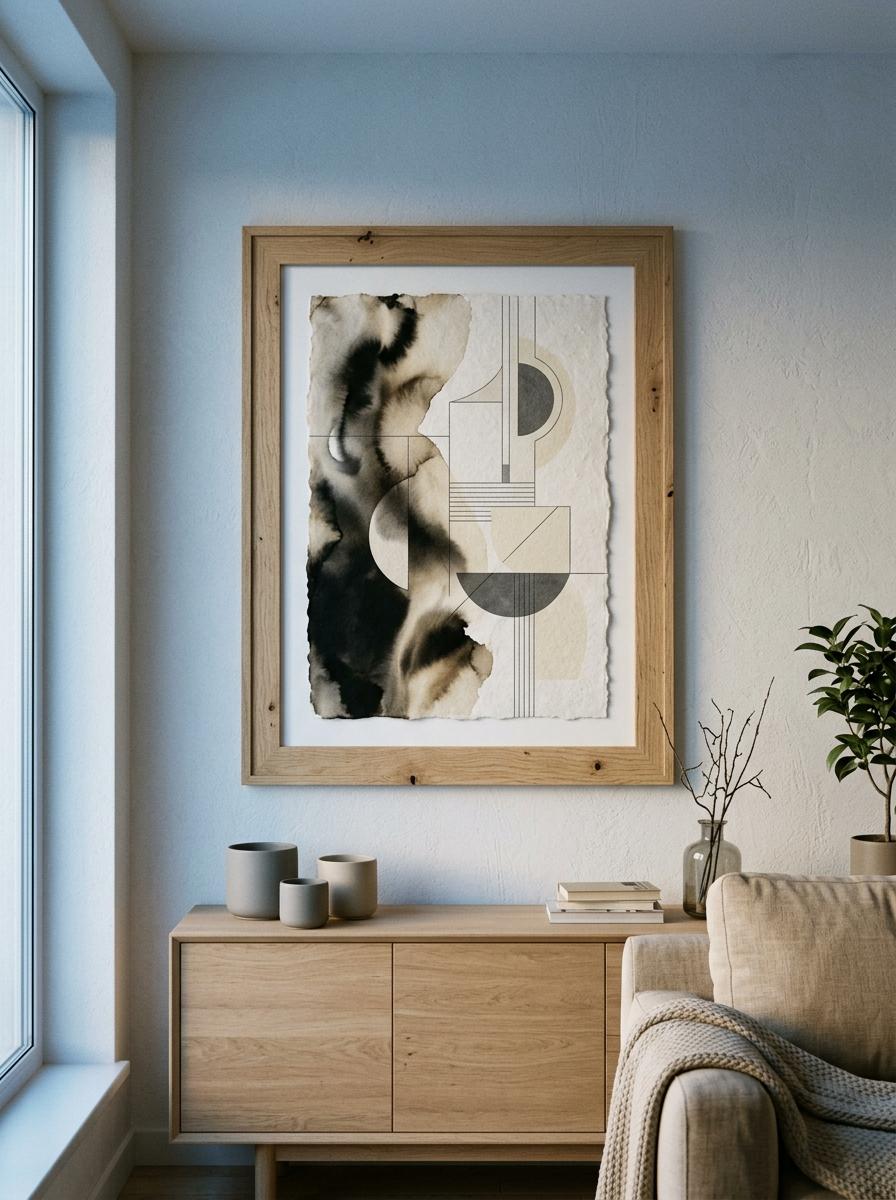

In the curation of a modern living room, the selection of abstract Japandi wall art acts as the structural anchor that bridges Scandinavian pragmatism with Japanese minimalism. To achieve this, prioritize pieces featuring fibrous, hand-loomed washi paper or fine-grained, matte-oiled oak frames that offer a tactile depth beyond mere visual stimulus. Note how the intentional placement of a single oversized canvas can manipulate the perceived volume of the room, drawing the eye toward a focal point of structured chaos. This aesthetic paradox-where the rigid discipline of geometric lines meets the fluid, organic unpredictability of ink-wash gradients-creates a sense of ordered spontaneity. As your gaze settles upon these earthen pigments and porous textures, observe the shift in your own physical state; the visual noise of urban life dissolves, replaced by a visceral stillness and a lowered heart rate. This is the hallmark of the Kyoto-Stockholm synthesis: a design philosophy that transcends simple decoration to become a meditative experience, grounding the inhabitant in a sanctuary of quietude and refined deliberate intent.
Wooden Frames And Natural Textures In Japandi Wall Art Decor
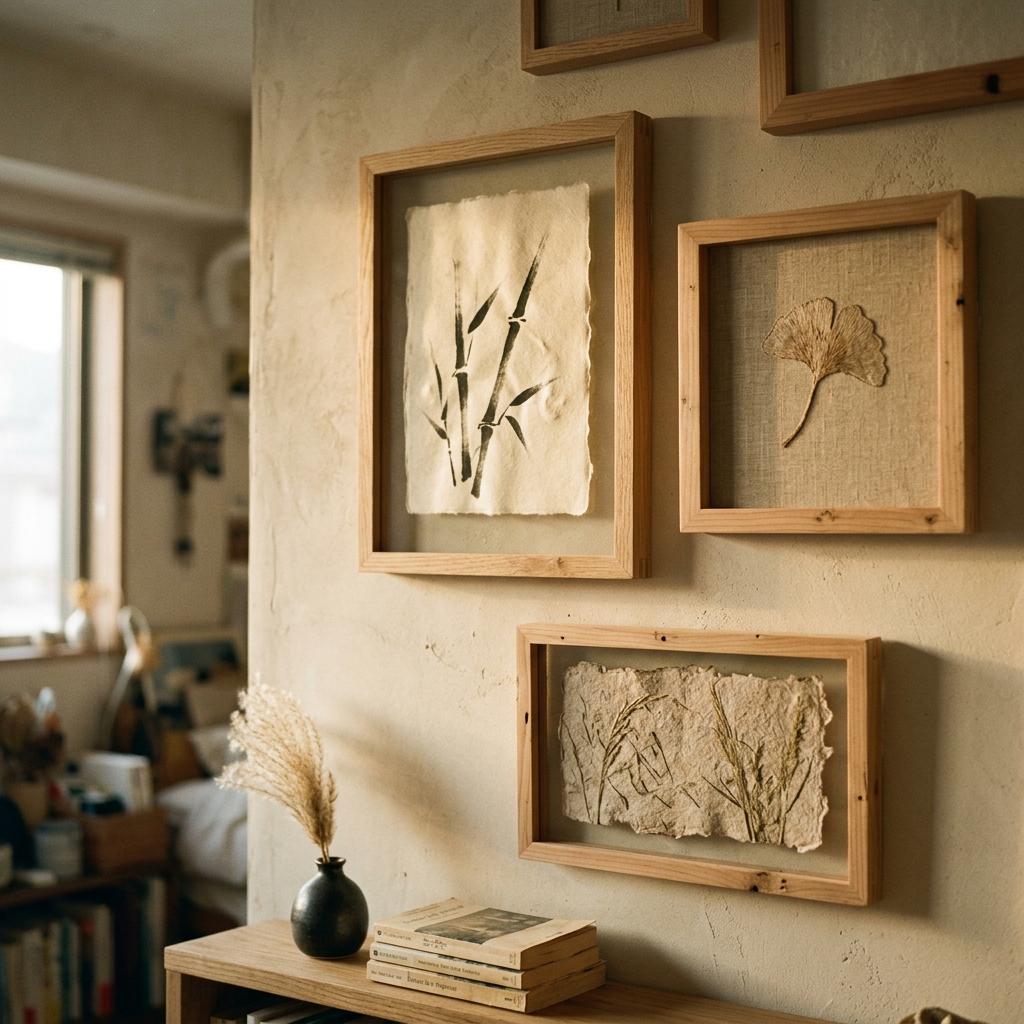

When I first visited the minimalist studio of a Kyoto-based printmaker, the transition from the frantic, neon-slicked streets of Shinjuku was almost physical; the city's cacophony of polished steel and glass felt suddenly abrasive against the quietude of his workshop. I watched him smooth a sheet of textured washi paper, his fingers tracing the grain of a raw oak surround. "The frame," he remarked, pausing to adjust a joiner's tool, "should never be an afterthought. It is the boundary," he continued, as he tightened the clamp, "where the chaos of the room meets the stillness of the art." This interplay of materiality-the tactile honesty of light-toned woods against the organic irregularities of natural fibers-exemplifies the sensory depth required in a well-curated space. By moving away from the cold, clinical sterility of modern gallery walls and embracing the haptic warmth of timber, we find that the true soul of Japandi wall art lies in this deliberate marriage of raw structure and serene composition.
Enhance Your Bedroom With Subtle Japandi Wall Art Decor
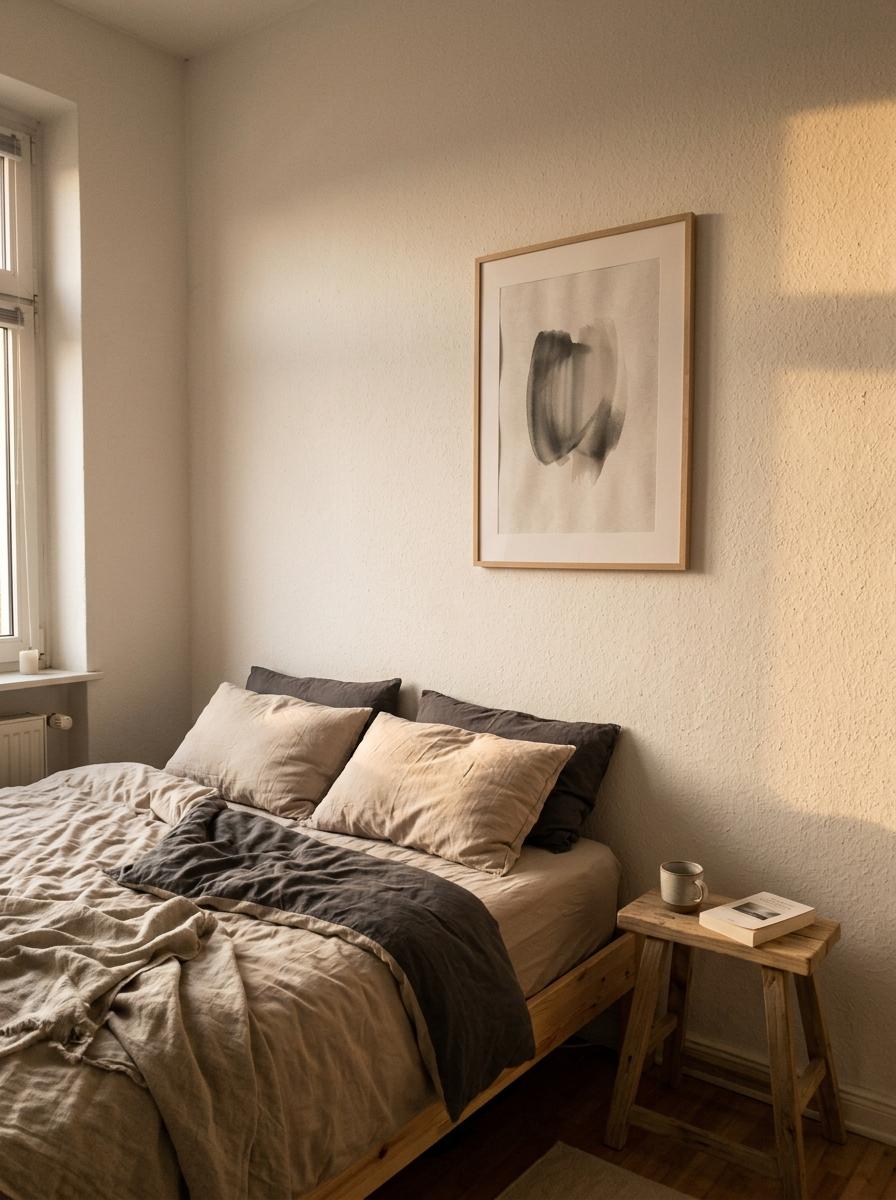

The integration of subtle Japandi wall art is achieved when intentional negative space was prioritized over visual noise to cultivate a restorative sanctuary. This aesthetic rests upon a sparse, silent, and seamless foundation, where the absence of clutter invites a profound sense of breath into the room. To achieve this, muted monochrome motifs and soft shadows should be selected to anchor the gaze without demanding its focus. Such purposeful placements carve out depth, extend the perceived horizon, and bridge the gap between structure and soul. The final composition emerges through the careful balance of raw textures, organic geometries, and hushed palettes.
The Intersection Of Wabi Sabi And Japandi Wall Art Decor
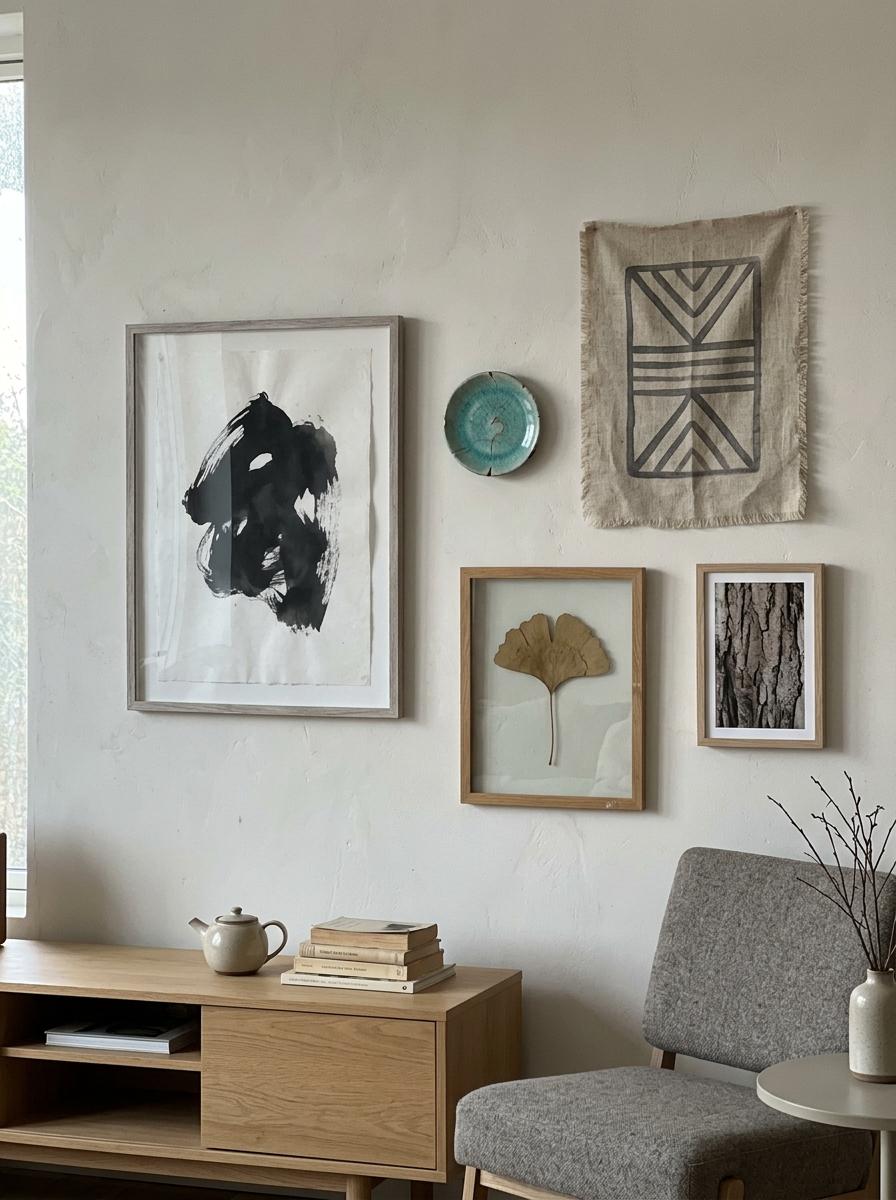

In the hushed enclosure of a Japandi-inspired living room, where the air feels filtered by stillness and light pools in intentional voids, the walls serve as the silent skin of the sanctuary. Here, the curation of art operates through a calculated spontaneity; it is a disciplined effort to stage the accidental, where the raw imperfections of Wabi Sabi are reconciled with the rigorous geometry of Scandi-modernism. While the room's external architecture maintains a clinical, grid-like precision, the art inhabiting it provides an internal visceral pulse, breaking the symmetry with the weight of lived experience. Each piece demands material specificity, favoring the coarse tooth of hand-pressed washi paper, the crackled glaze of raku-fired ceramic discs, or the irregular grain of reclaimed white oak frames. This intersection serves a strict functionalist specification: it utilizes the wall not merely as a surface for display, but as an acoustic and emotional dampener, where the organic textures of the decor mitigate the sterility of modern construction to anchor the inhabitant in the present moment.
Minimalist Geometric Shapes In Japandi Wall Art Decor
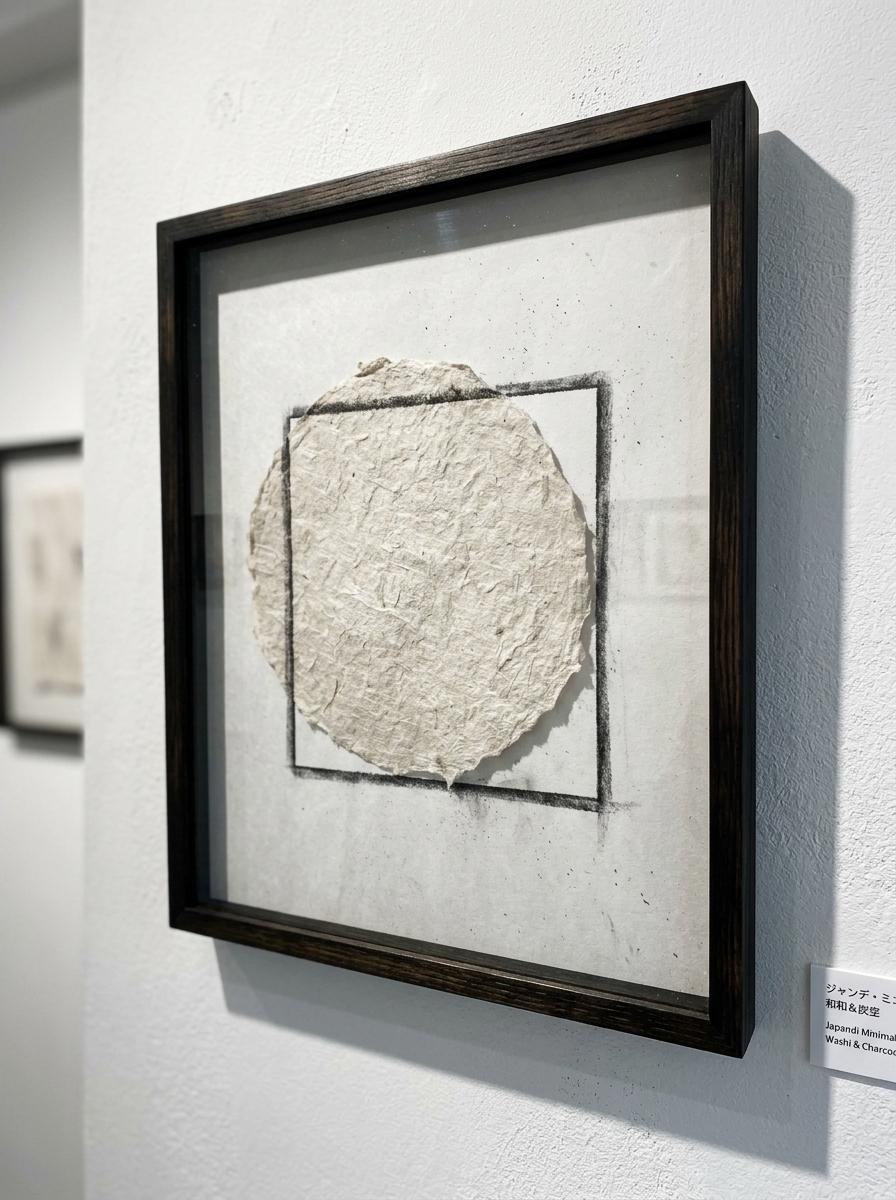

In the curated galleries of Tokyo's Daikanyama district, the dialogue between Scandinavian functionality and Japanese stoicism is best articulated through the tactile language of minimalist wall decor. Note how the inclusion of a single, fibrous mulberry paper circle-textured with a decidedly rugged grain-interacts with the satin-smooth precision of a scorched oak frame. This composition thrives on a complex simplicity, where the rigid, mathematical certainty of a square is softened by the erratic uniformity of hand-applied charcoal pigments. As your eyes trace these intersecting lines, the initial visual stimulus gives way to a profound physiological shift; the brain sheds its frantic analytical pace, replaced by a visceral, marrow-deep stillness that lowers the heart rate and anchors the spirit in the present moment.
Canvas Prints Featuring Neutral Japandi Wall Art Decor
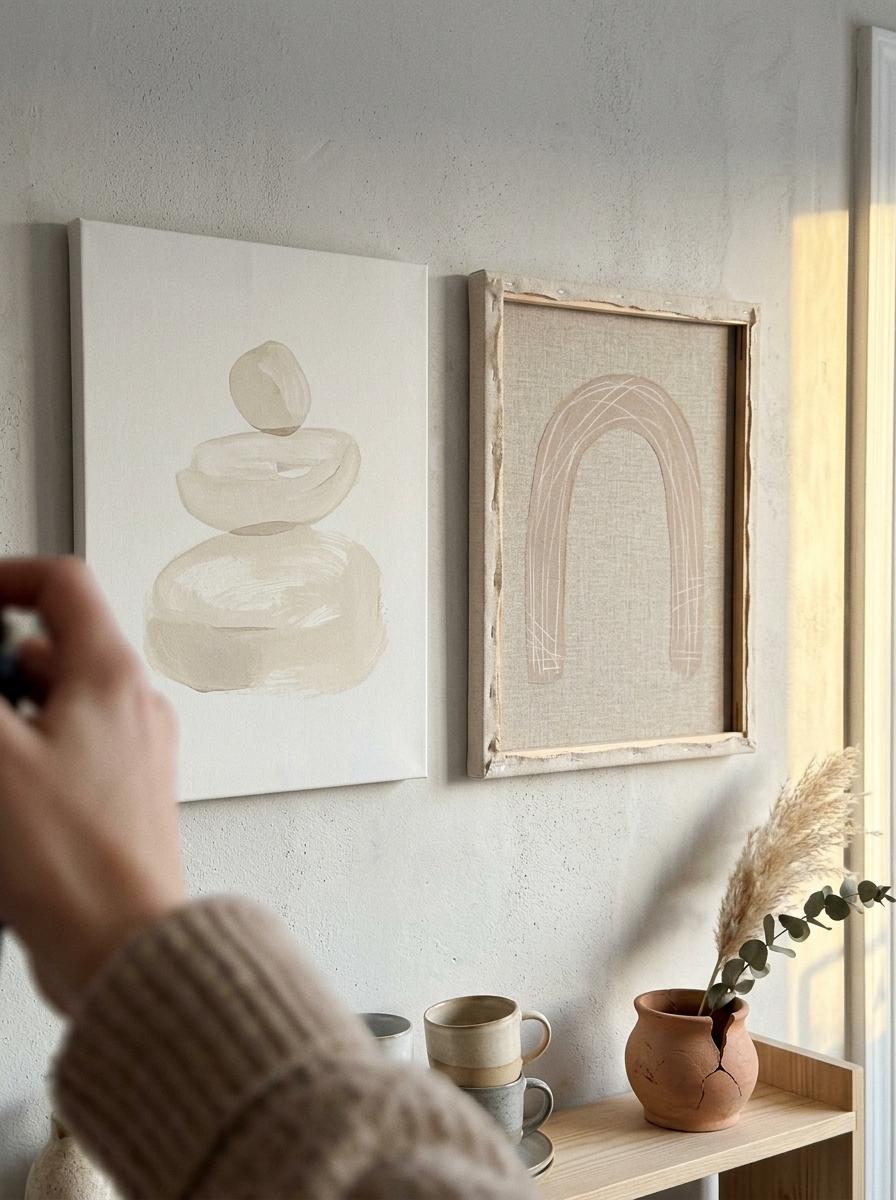

When I first sat down with interior stylist Elena Vance, she gestured toward a cluttered, high-contrast loft outside her studio window-a space vibrating with visual noise and what she called "aesthetic anxiety." Turning back to her own workspace, she pointed to a single, oversized canvas print defined by a muted, taupe-and-cream gradient. "The goal of Japandi wall art," she explained, adjusting a sprig of dried eucalyptus, "is not to fill a void in the room, but to curate a moment of..." she paused, searching for the right cadence, "...deliberate stillness." This juxtaposition between the frenetic energy of the city and the hushed, organic textures of her walls highlighted a core tenet of the movement: the tension between wabi-sabi imperfection and Scandinavian hygge. By integrating such high-fidelity canvas prints, one doesn't just decorate a surface; they introduce a tactile sense of negative space that anchors the entire room. This pursuit of visual equilibrium is precisely why neutral Japandi art has evolved from a mere trend into a fundamental tool for creating a sanctuary within the home.
Framing Nature Through Organic Japandi Wall Art Decor
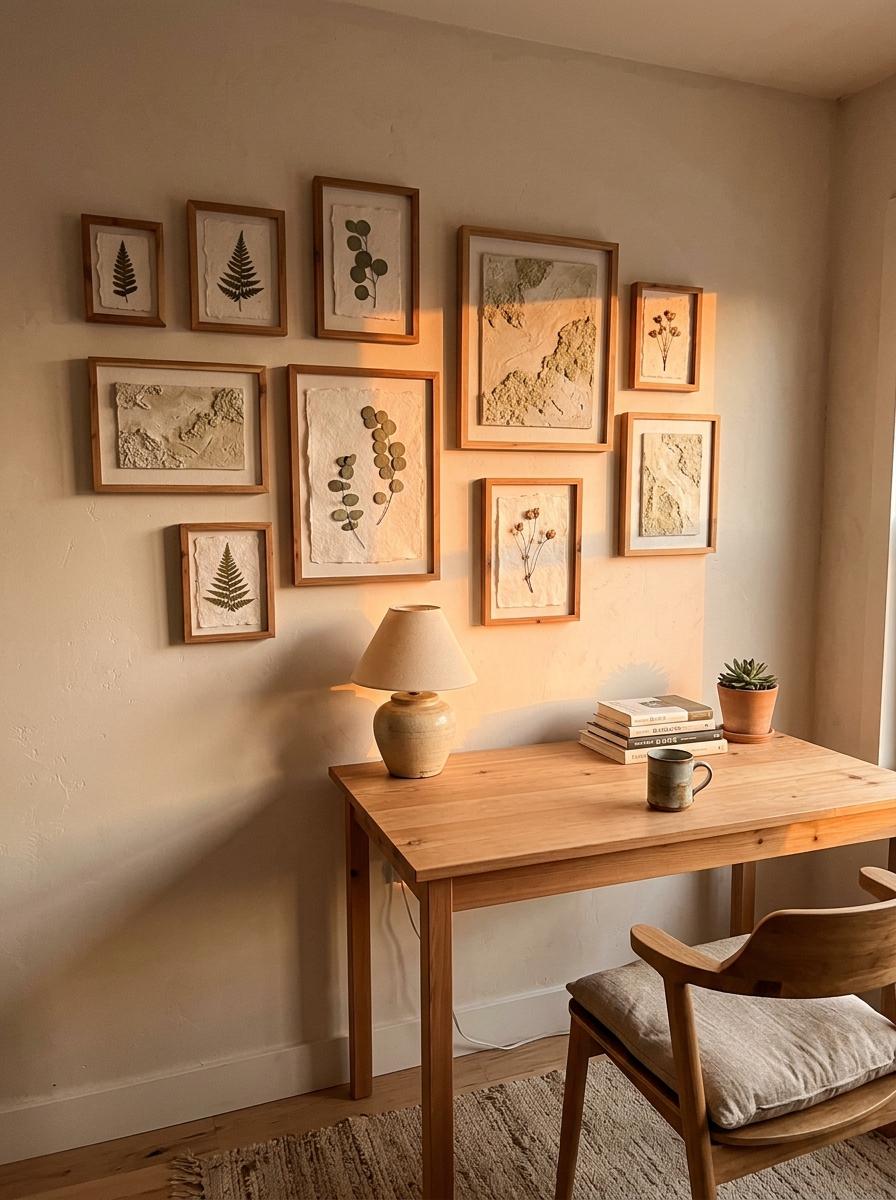

In the hushed stillness of a Japandi-inspired study, where the soft morning light settles on neutral surfaces, the walls function as more than structural boundaries; they are the canvas for a curated wilderness. This controlled spontaneity allows for a conceptual synthesis where the wild, unpredictable textures of the natural world are reconciled within the rigorous, geometric constraints of minimalist living. While the internal environment remains a sanctuary of stillness and order, the artwork introduces an external dialogue-a sharp distinction between the stationary quiet of the room and the rhythmic, organic movement of the landscape outside. Through the use of hand-pressed washi paper, reclaimed cedar frames, and tactile plaster reliefs, the wall art provides a sensory depth that transcends simple visual decoration. These pieces serve as a deliberate spatial calibration, utilizing organic form as a functional solution to soften the industrial sharpness of modern architecture, effectively framing nature as an essential component of the home's interior ecosystem.
Sophisticated Lines In Contemporary Japandi Wall Art Decor
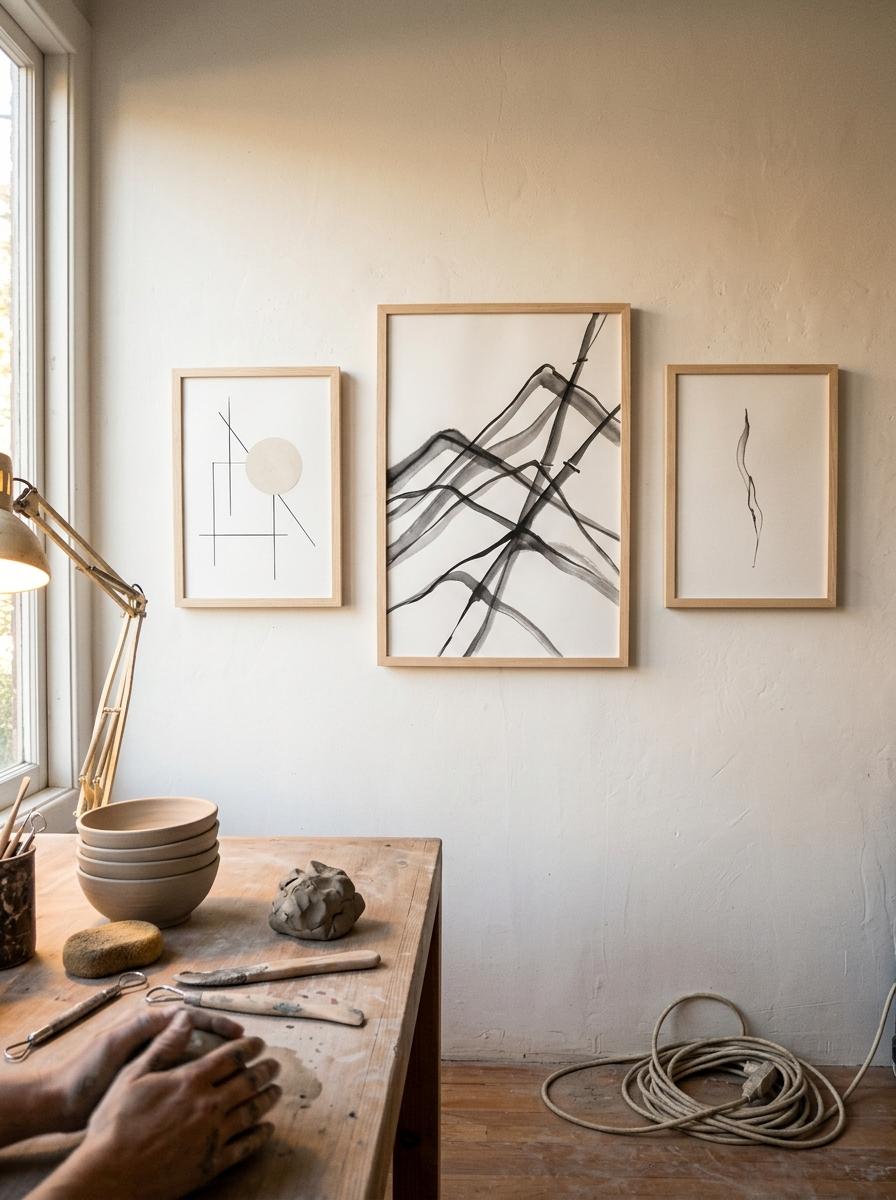

Stepping into the workshop of a local ceramicist, I was immediately struck by the visual dissonance of the space-the back room was a chaotic sprawl of splattered slip and raw, unformed clay, yet the gallery wall ahead offered a startling clarity. "The secret," she told me, pausing to wipe a smudge of grey earth from her brow, "isn't in what we add to the canvas." She gestured toward a series of framed minimalist ink washes where fine, rhythmic strokes mimicked the silhouette of mountain ridges. "It is," she continued, her voice trailing off as she adjusted the lighting to highlight a particular shadow, "the discipline of the void." This juxtaposition of the messy, tactile process against the finished, linear precision of the art perfectly encapsulates the Japandi ethos: a sophisticated tension where Scandinavian functionalism meets the Japanese mastery of Ma, or negative space. It is within this intersection of raw craft and intentional compositional balance that we find the true soul of modern wall decor. This interplay between the organic and the architectural is what transforms a simple vertical surface into a profound study of sophisticated lines.
Bringing Harmony Home With Japandi Wall Art Decor
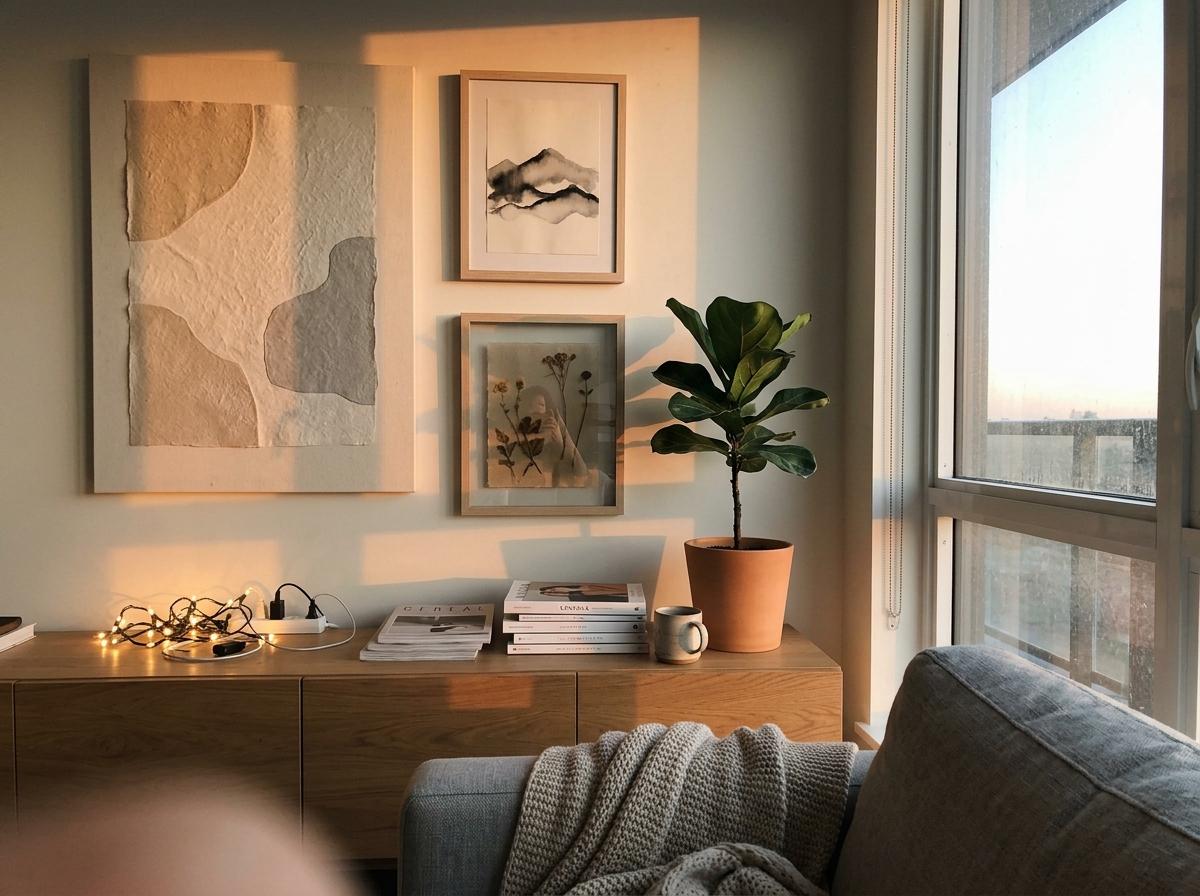

In the modern home, the wall serves not merely as a boundary but as a silent canvas where the sprawling chaos of urban life is filtered into a curated sanctuary of stillness. This intentional placement of Japandi wall art achieves a structured spontaneity, a conceptual state where the rigid discipline of Japanese minimalism is softened by the organic, unrefined warmth of Scandinavian soul. While the external world remains a cacophony of transient trends and visual noise, the internal landscape is anchored by a profound spatial equilibrium. One might run a hand over the relief-textured washi paper or trace the grain of sanded white oak frames, feeling the weight of materials that prioritize the tactile over the purely decorative. These pieces function as aesthetic stabilizers, integrating acoustic dampening and visual focal points to transform a hollow architectural void into a purposeful environment of meditative utility.
Earthy Tones And Textures In Japandi Wall Art Decor
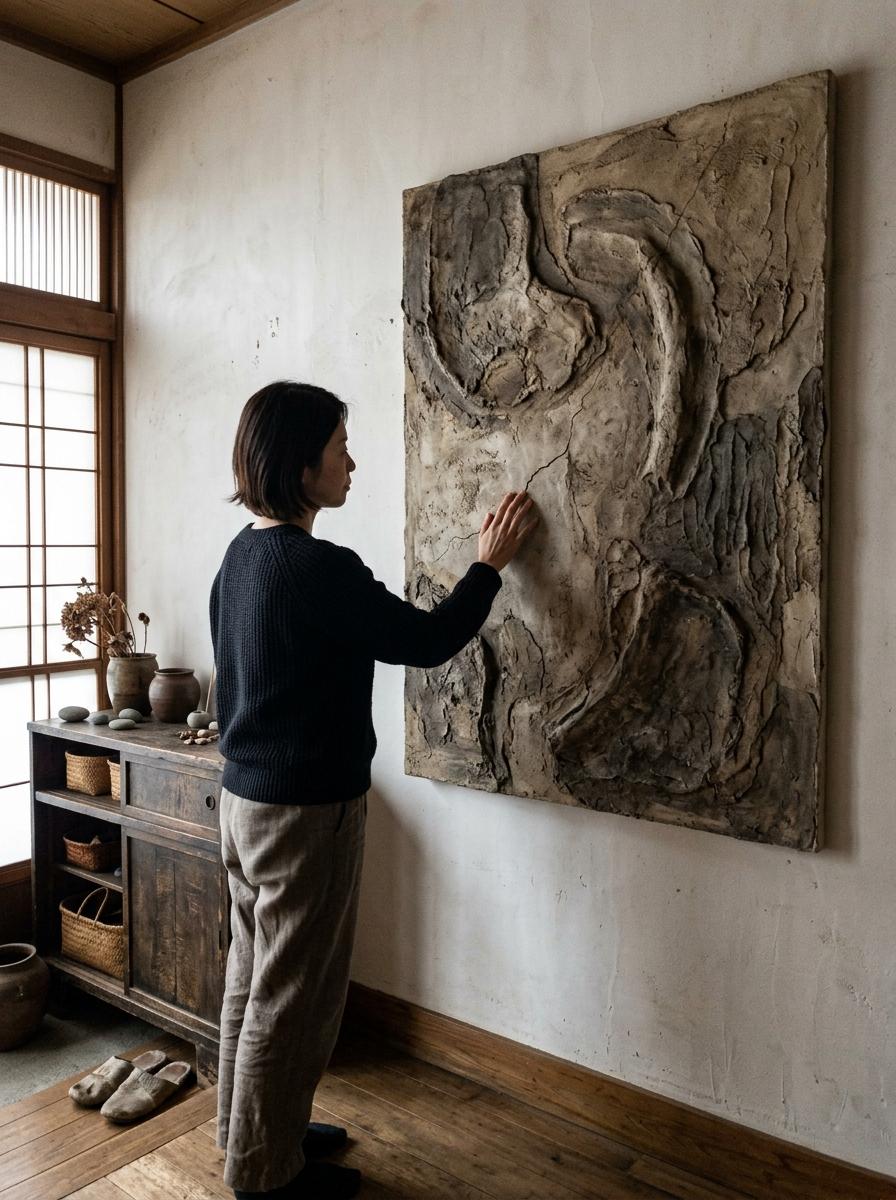

Walking from the neon-slicked pavement of a Tokyo thoroughfare into a quiet residence in the Setagaya district is a lesson in sensory recalibration. The city outside is a cacophony of polished steel and synthetic light, but inside, the air feels heavier, grounded by the tactile presence of a singular, oversized plaster relief hanging in the entryway. "The beauty of a wall," the homeowner remarked, pausing to trace a hairline crack in the piece, "isn't in its perfection, but in how it captures the..." she searched for the word, "...the fleeting weight of the earth." This interplay of wabi-sabi humility and Scandi-functionalism is most potent in the way Japandi wall art prioritizes the haptic over the visual; we see these pieces through their organic topographies, where raw impasto techniques and limewash glazes replace the flat distraction of high-gloss prints. By shifting our focus from the sterile symmetry of modern minimalism to these weathered, monochromatic reliefs, we begin to understand how the soul of a room is built through the intentional layering of nature's most humble pigments.
A Gallery Wall Designed With Japandi Wall Art Decor
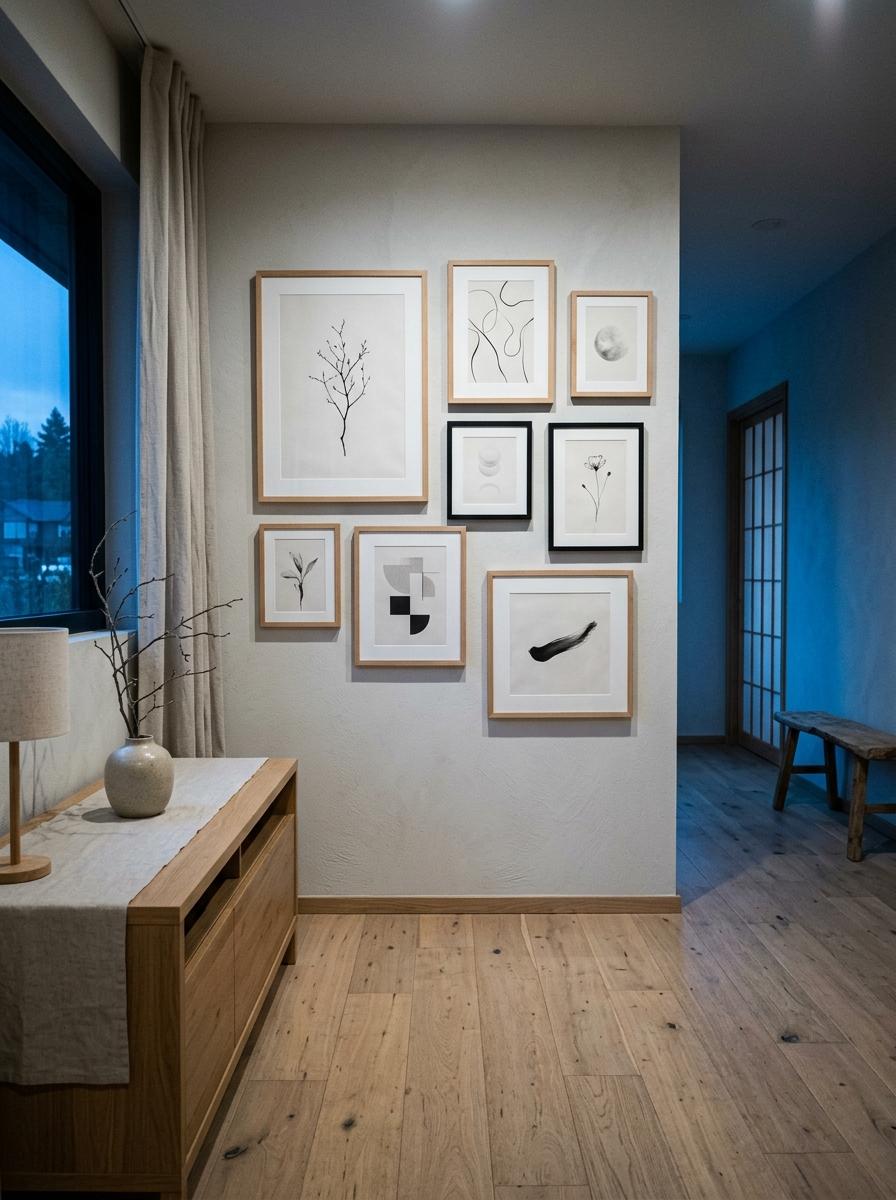

The curation of this gallery wall was meticulously conceived to balance visual weight with structural silence. Within the composition, each frame encloses a vacant, velvety expanse that honors the unadorned surface over chaotic clutter. This deliberate arrangement permits the soft, skeletal sketches to breathe, fostering a sense of peaceful, purist poise across the vertical plane. The layout anchors the room's height, stretches the perceived boundaries of the corridor, and carves a rhythmic relief through its muted palette, organic textures, and disciplined geometry.
Botanical Illustrations Within Japandi Wall Art Decor
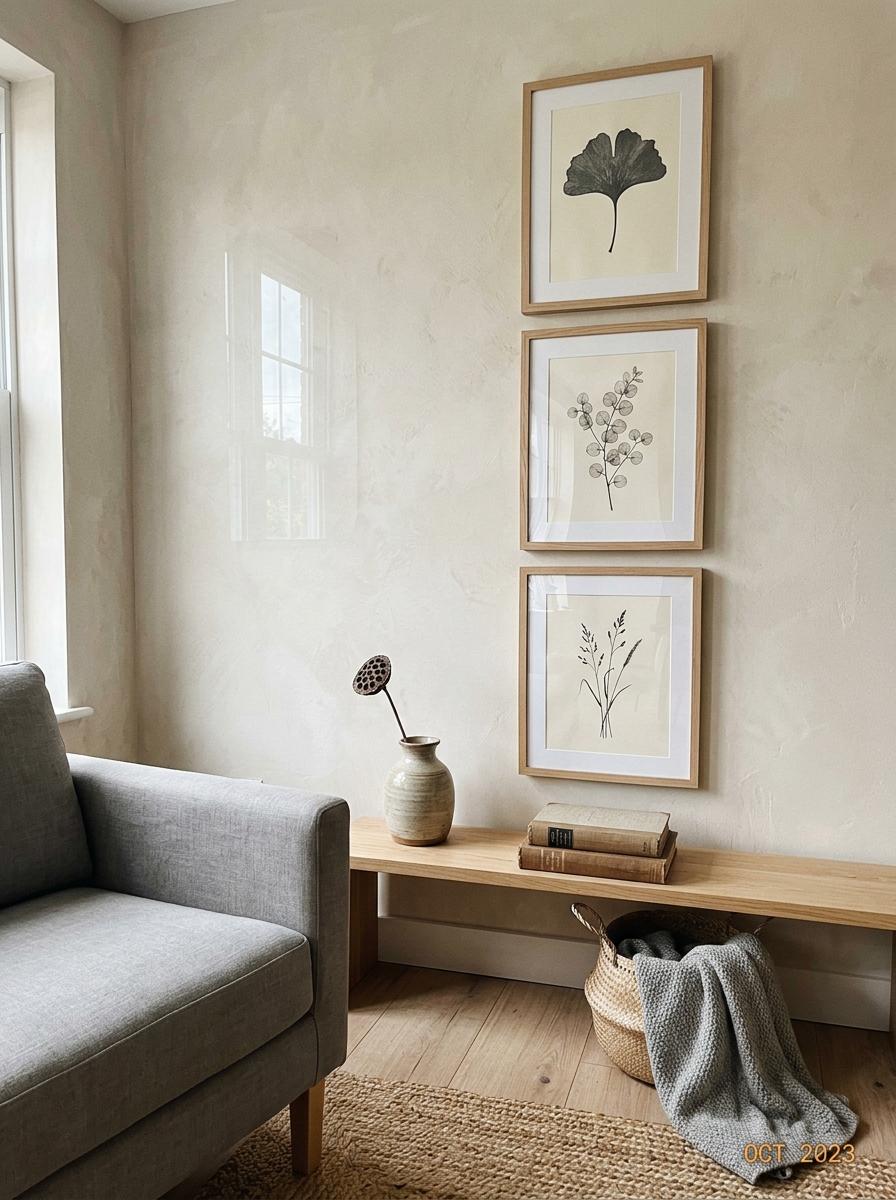

Title: Botanical Illustrations Within Japandi Wall Art Decor Japandi is defined by a rigorous synthesis: the rustic, transience-focused ethos of Japanese wabi-sabi integrated with the pragmatic, light-infused efficiency of Scandinavian hygge. Within this aesthetic framework, botanical illustrations serve as a vital organic counterpoint to the interior's architectural rectilinearity. These works often feature monochromatic ginkgo leaves or skeletal eucalyptus branches that adhere to a minimalist silhouette, yet they pulsate with a profound, latent vitality. By utilizing such curated flora, the space achieves a precarious but masterful equilibrium between the curated and the wild, the sterile and the soulful. The result is an atmosphere defined by a quiet, haptic resonance-a serene, visceral, and contemplative stillness that invites the inhabitant to find permanence within the ephemeral beauty of the natural world.
Curating A Timeless Look With Japandi Wall Art Decor
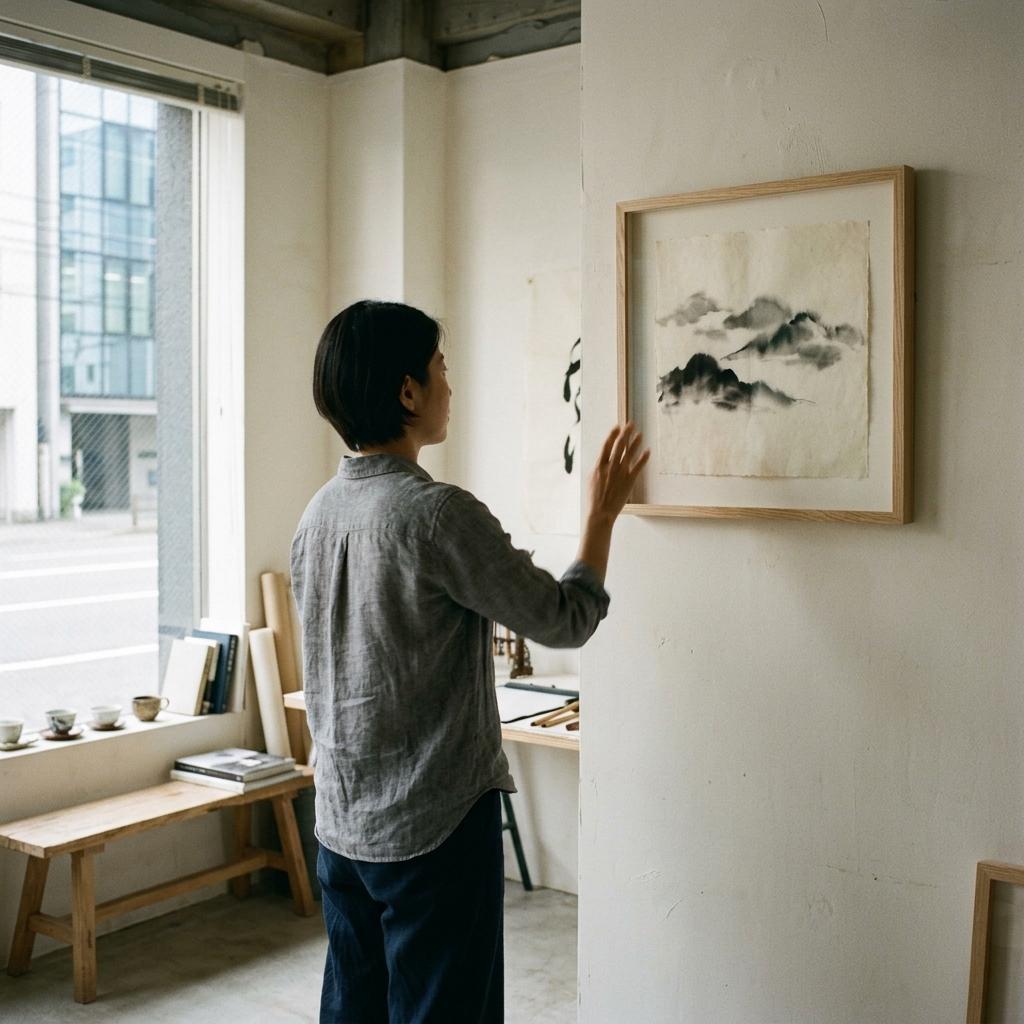

During a recent interview with a minimalist curator in Kyoto, I watched as she paused mid-sentence to adjust a single, ink-wash landscape on her studio wall. "The difficulty with modern interiors," she noted, stepping back to eye the frame's alignment, "is that we often mistake clutter for character, or-" she gestured toward a sleek, clinical glass tower across the street, "-sterility for sophistication." This observation struck a chord; while the glass tower exuded a cold, frictionless perfection that felt transient and hollow, her studio breathed with a quiet permanence, grounded by the wabi-sabi textures of the art. We discussed how Japandi wall art serves as a corrective to these extremes, moving beyond mere decoration to act as a tether for the soul. By selecting pieces that prioritize negative space and tactile organicism over loud, synthetic trends, we are not just filling a void on a plaster surface. This intentional curation is where the ephemeral nature of home styling meets the enduring philosophy of slow living.
High Contrast Ink Drawings In Japandi Wall Art Decor
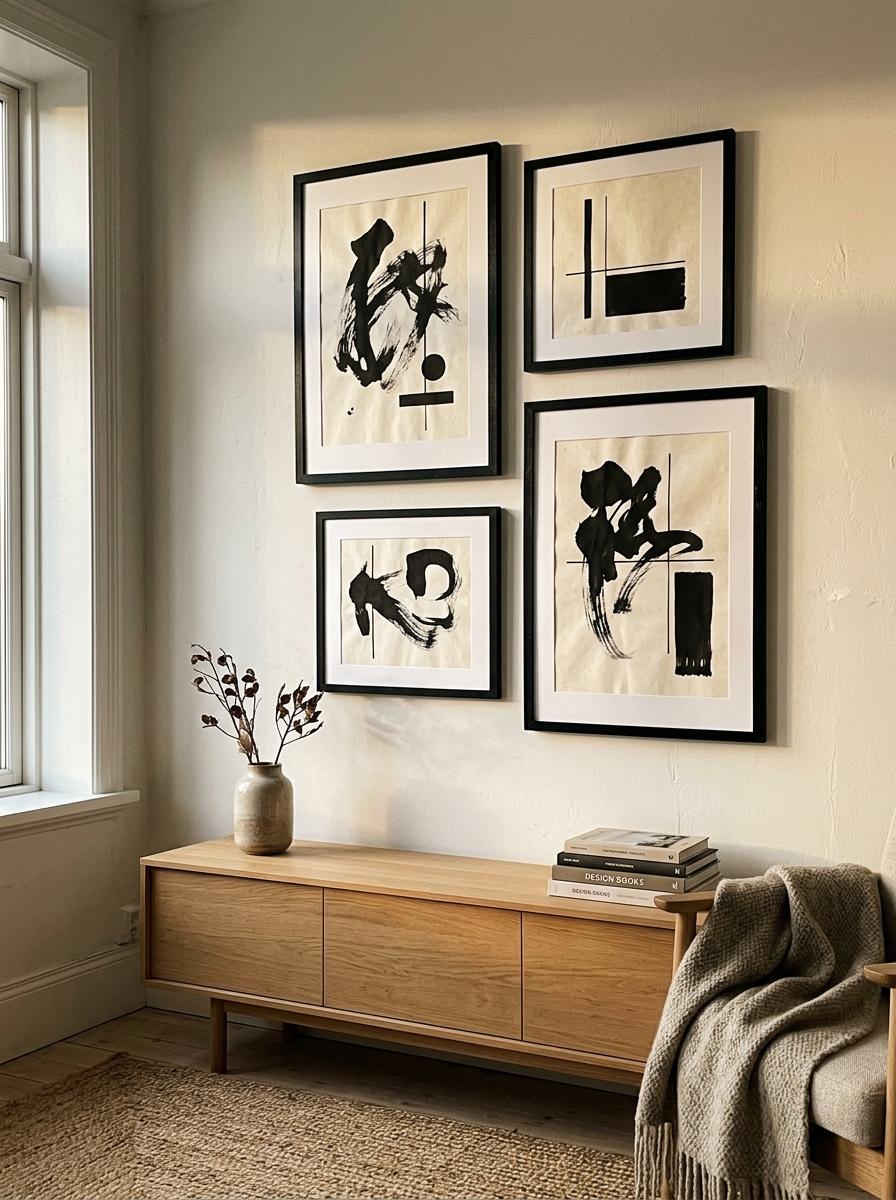

At Japandi.design, our analysis of contemporary interiors often returns to a singular aesthetic intersection: the synthesis of Japanese sumi-e tradition and Scandinavian graphic minimalism. Japandi wall art is the definitive byproduct of this fusion, where the expressive, calligraphic soul of the East meets the rigid, functional clarity of the North to create a visual language of intentional restraint. In high-contrast ink drawings, we observe a compelling dialectical tension; the compositions feel profoundly visceral and raw, yet remain architecturally disciplined and curated. To incorporate these pieces into a space is to introduce a sensorial layer of tactile, obsidian depth against a backdrop of ethereal, parchment-like stillness, transforming a void into a focal point that demands contemplation without disrupting the home's essential equilibrium.
Minimalist Scenic Landscapes For Japandi Wall Art Decor
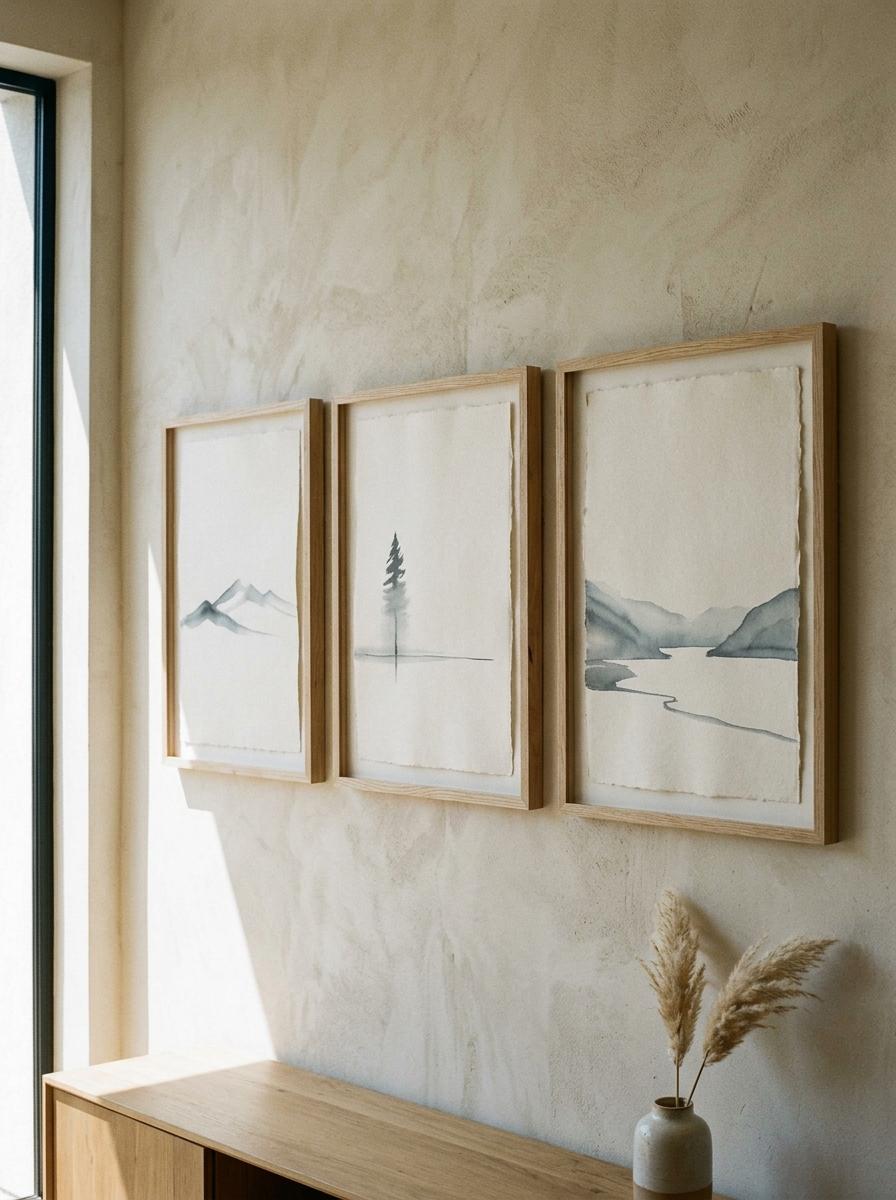

When selecting minimalist scenic landscapes for a Japandi-inspired interior, prioritize compositions that celebrate the fibrous, deckle-edged textures of handmade Washi paper or the matte, chalky finish of archival giclée prints. These material choices are essential; they absorb light rather than reflecting it, ensuring the art integrates into the wall rather than competing with it. Note how the intentional use of negative space-often referred to in Japanese aesthetics as Ma-creates a structural void that allows the room to breathe. This is the crowded emptiness of a well-curated home; a paradoxical balance where a single brushstroke of a mountain range feels more substantial than a cluttered gallery wall. As your eyes trace the fluid, ink-washed horizons typical of the Hokkaido wilderness or the misty, Nordic fjords of Geirangerfjord, you will experience a distinct physiological shift-a lowering of the heart rate and a softening of the shoulders. By framing these "quiet" landscapes in raw, open-grain white oak, you ground the ethereal beauty of the outdoors into the tactile reality of your living space, bridging the gap between high-latitude minimalism and ancient Eastern philosophy.
Handcrafted Elements In Modern Japandi Wall Art Decor
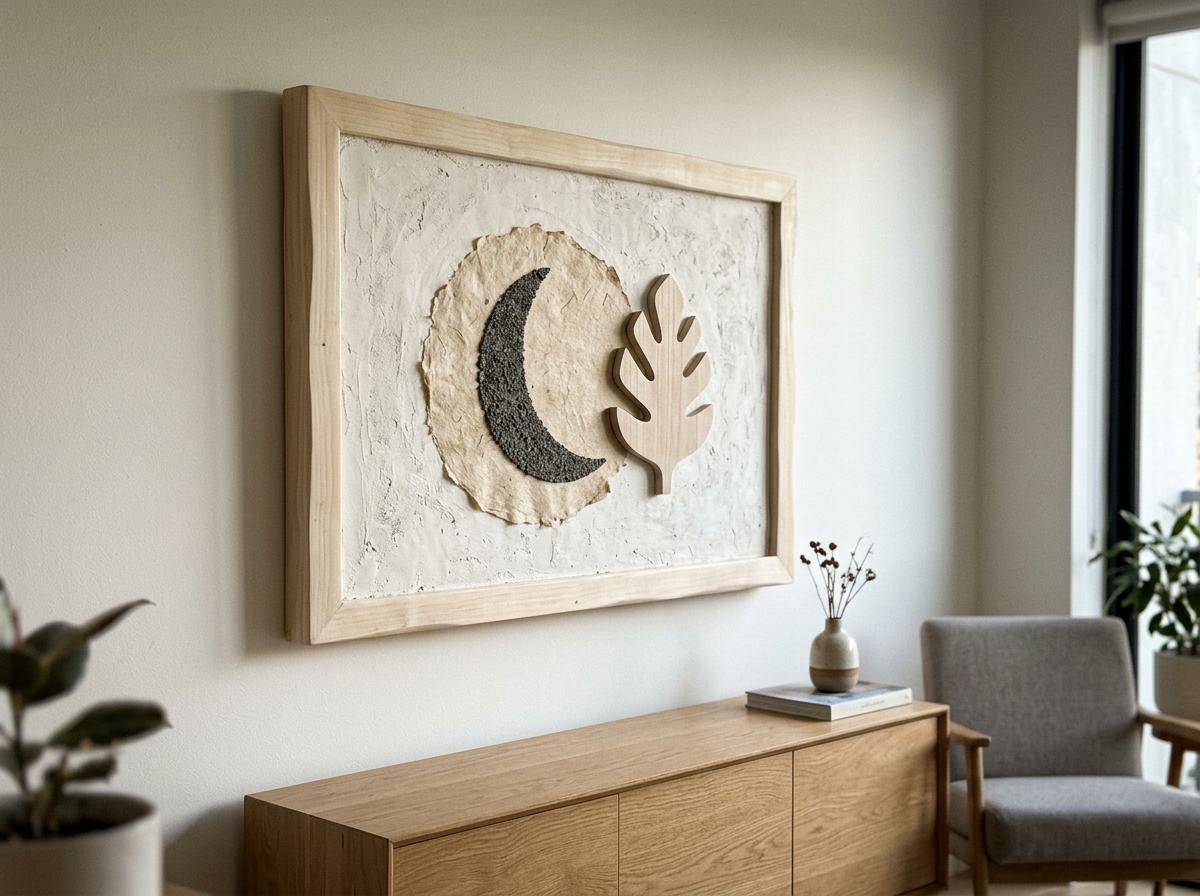

In the modern Japandi home, wall art serves as a silent anchor, grounding the expansive stillness of open-plan living with a localized, tactile presence that prevents minimalism from drifting into sterility. This "curated spontaneity" allows the precision of CNC-milled frames to reconcile with the raw, unpredictable textures of hand-poured plaster, bridging the gap between digital perfection and human imperfection. While the external architecture of the space often follows a rigid, linear geometry, the internal soul of these handcrafted pieces introduces a necessary organic tension-a softening of the structural grid through deliberate, manual intervention. By utilizing material-specific elements such as coarse volcanic sand, hand-beaten Washi paper, and unstained Paulownia wood, the artwork becomes more than mere decoration; it acts as a high-performance acoustic buffer and a visual focal point. This integration of artisanal craftsmanship into the modern interior is a functionalist solution, transforming the wall from a blank void into a sensory interface that balances industrial efficiency with the enduring warmth of the maker's hand.
Comments