
In the design language of Japandi.design, we recognize this aesthetic not as a fleeting trend, but as a deliberate synthesis where the rustic pragmatism of Scandinavian hygge converges with the transcendental impermanence of Japanese wabi-sabi to yield a calibrated sanctuary. The Japandi bathroom serves as the ultimate expression of this dialectic: it is a space characterized by its austere architectural discipline, yet it remains profoundly enveloped in a tactile, hospitable warmth. By orchestrating a balance between monolithic stone surfaces and the organic irregularities of timber, one creates an environment that is simultaneously ethereal, grounding, and restorative-a refined minimalist retreat that transcends mere utility to become a site of ritualized repose.
Japandi Bathroom Inspiration

Modern Japandi Bathroom Design With Natural Wood Accents
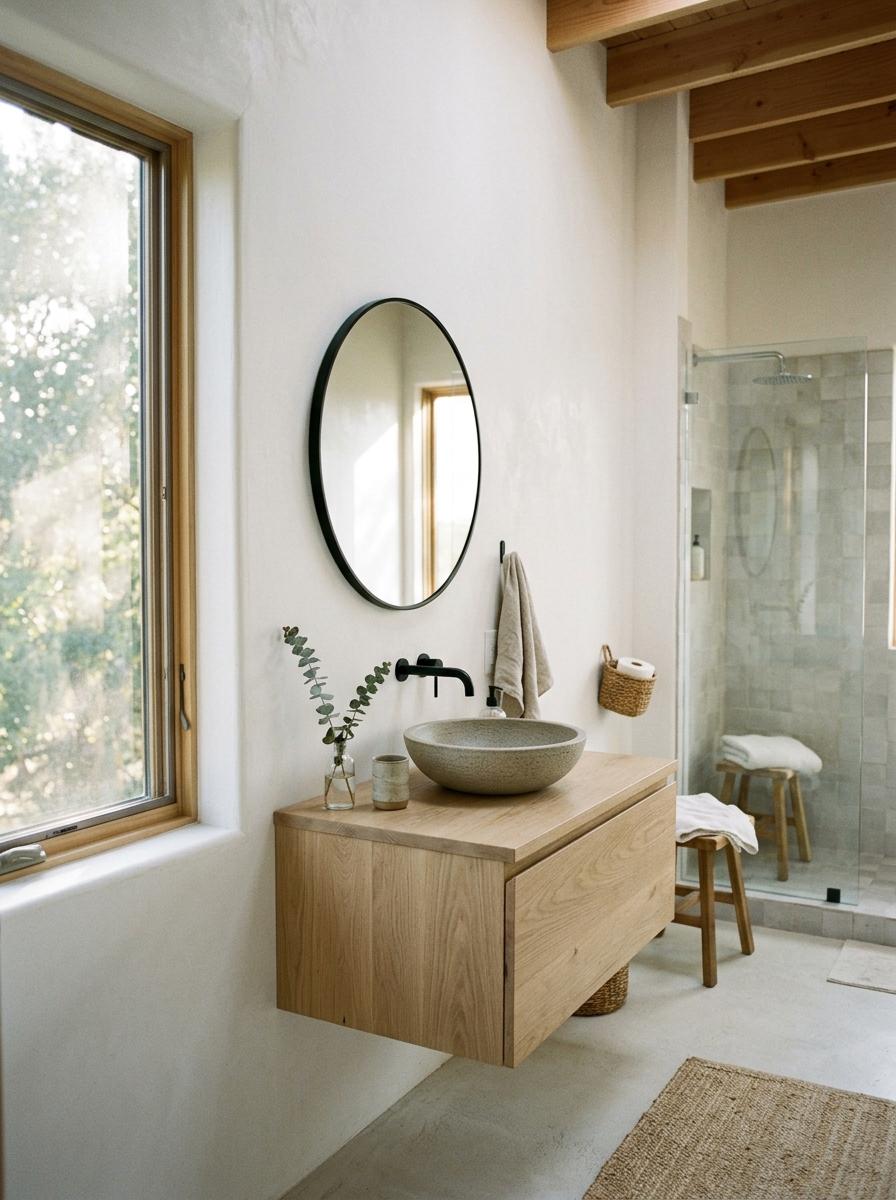

In this curated study of a contemporary sanctuary, the structure was conceived as a dialogue between Japanese restraint and Scandinavian utility. The interior occupies a vacant, vestigial volume, where unadorned surfaces and weightless planes dissolve the visual noise of daily life. This serene sanctuary achieves a soft, stilled spirit through the careful integration of tactile timber. The layout carves out a cavernous depth, stretches the perceived ceiling height, and anchors the room with a floating vanity of pale oak, a sunken stone basin, and a singular sprig of greenery.
Inside A Tranquil Japandi Bathroom With Stone Textures
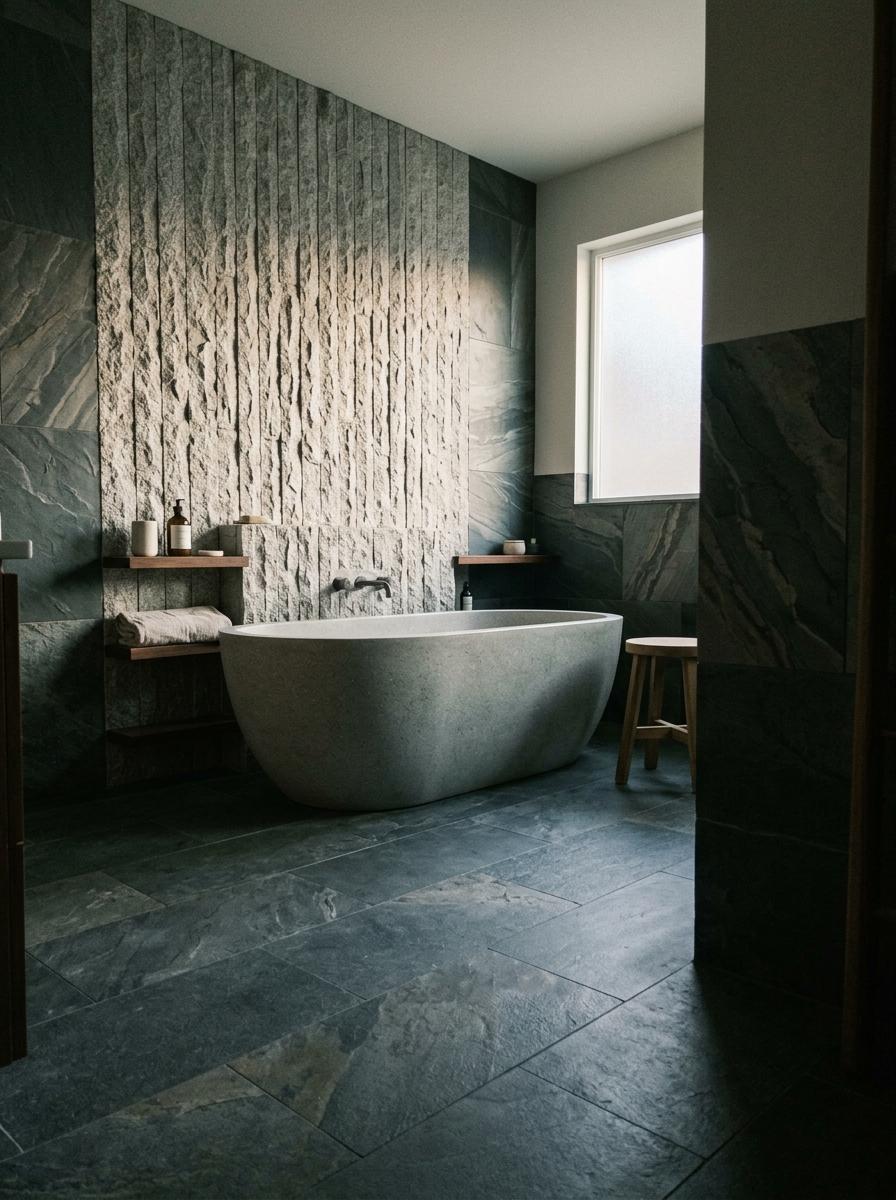

The experience of the space begins with the floor-a seamless expanse of honed basalt that feels like velvet underfoot. Note how the granular, porous texture of the feature wall, clad in hand-chiseled Aji stone from Kagawa, creates a rhythmic backdrop for the sculptural curves of the soaking tub. This intentional layering of stone represents a structured spontaneity, where the rigid durability of rock is softened by a meticulously matte finish. As your eyes trace the veins of the slate, the room's static dynamism begins to take hold; the visual weight of the heavy stone paradoxically lifts, triggering a profound physiological release. Your breath deepens, and the parasympathetic nervous system begins to recalibrate, trading the day's cognitive clutter for a sense of subterranean sanctuary. In this environment, the Japandi aesthetic transcends simple decor, acting instead as a meditative vessel that grounds the spirit through the raw, unyielding honesty of the Earth.
How To Create A Minimalist Japandi Bathroom Oasis
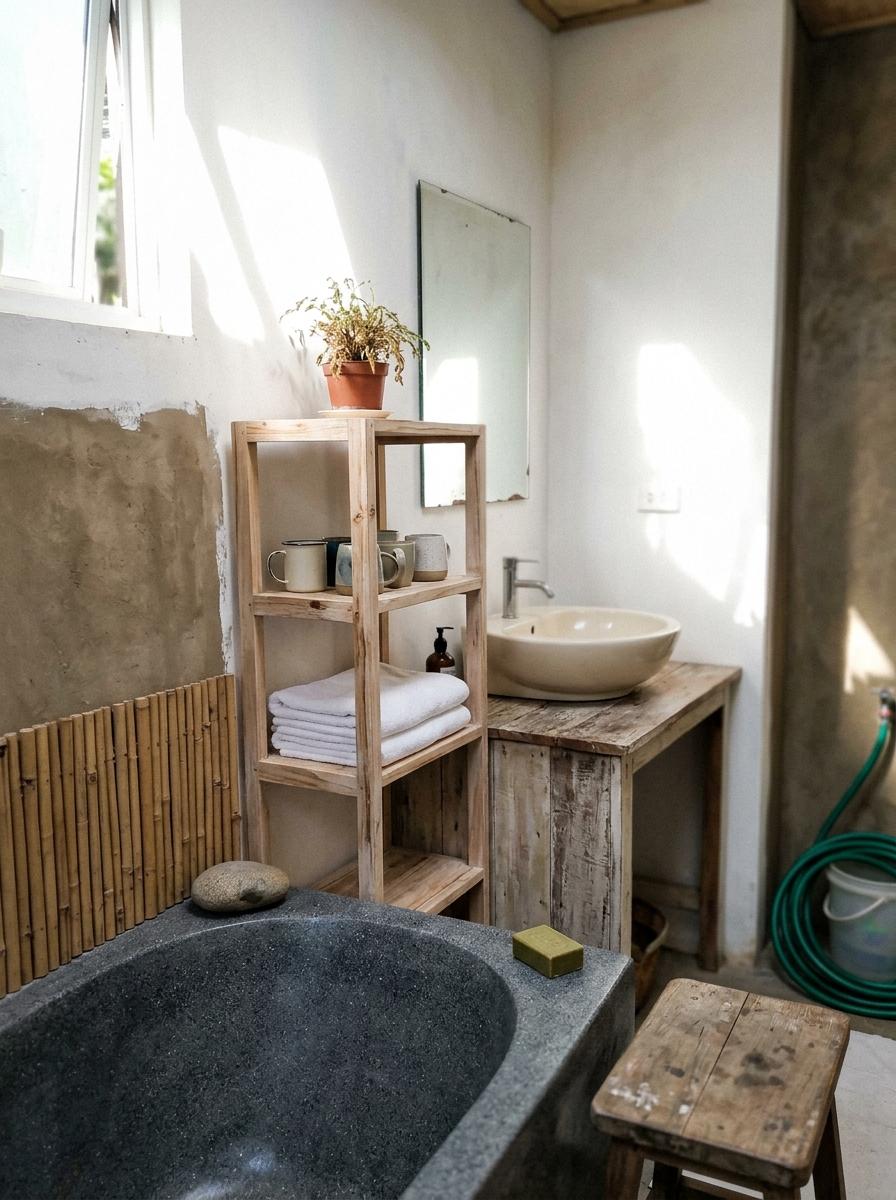

I remember sitting across from a master carpenter in Kyoto, watching as he ran a calloused thumb over the grain of a hinoki wood soaking tub. "The Western bathroom is a laboratory," he remarked, pausing to let the steam from our tea swirl between us, "it is designed for the clinical removal of dirt." He leaned back, his eyes tracking the way the soft morning light hit the matte surface of the timber. "But a bath," he continued, "should be a transition-a slow return to the self." This friction between the sterile, high-gloss environments we often endure and the soulful, tactile sanctuary of Japandi design is where true luxury resides. By balancing the raw, organic warmth of wabi-sabi with the exacting, functional lines of Scandinavian modernism, we move away from cold porcelain efficiency toward a more mindful domesticity. To achieve this, we can look beyond mere plumbing and instead curate an intentional landscape of sensory stillness.
This Sophisticated Japandi Bathroom Features Organic Materials
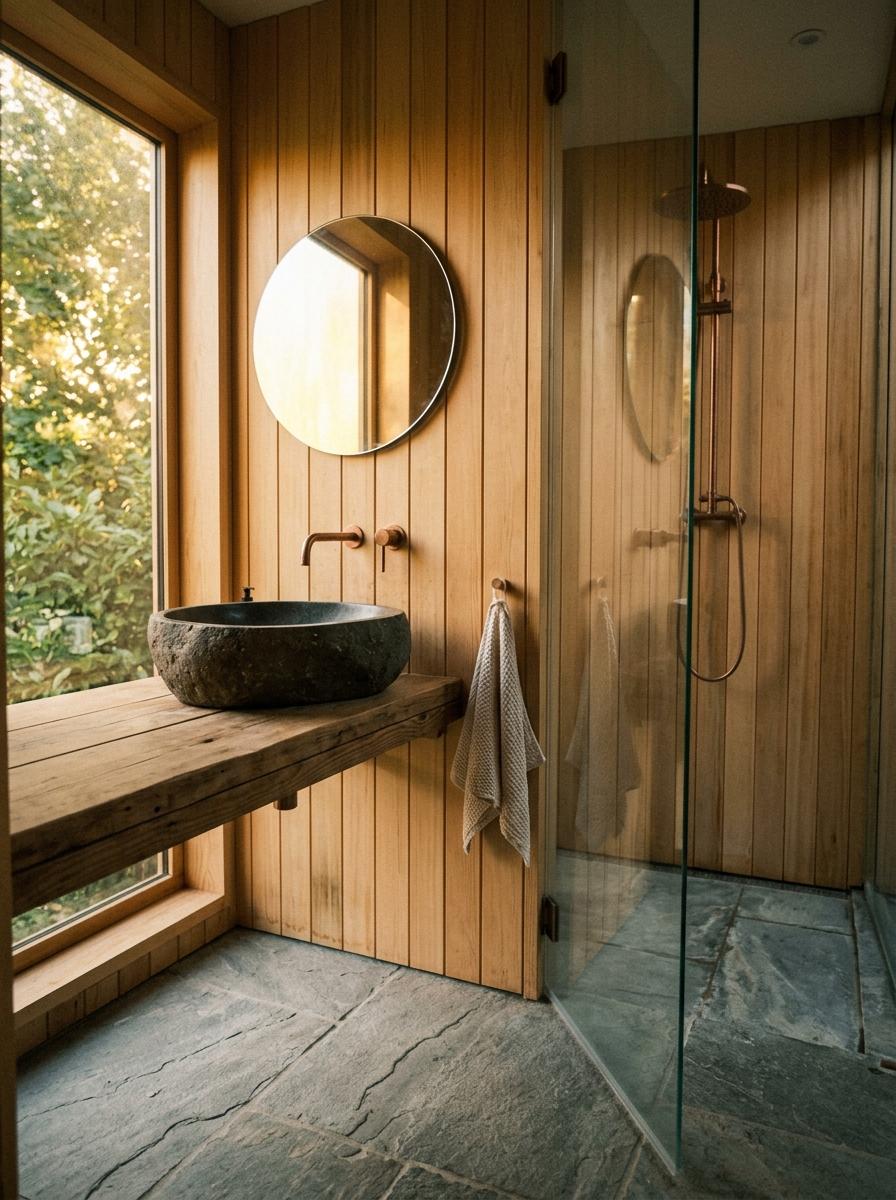

The space breathes within a secluded niche where the boundaries of the wet room dissolve into a sanctuary of stillness, anchoring the inhabitant in a private clearing of light and shadow. Here, the aesthetic achieves a structured fluidity, a calculated arrangement where the rigid geometry of the layout is softened by the unpredictable grain of nature. While the external world remains defined by frenetic movement and synthetic noise, the interior environment operates as a vacuum of silence, drawing a sharp line between urban chaos and domestic ritual. This sensory shift is grounded in the presence of a monolithic basalt basin and honey-hued Hinoki wood slats, materials that offer a gritty, tactile resistance against the skin. These elements are not merely decorative but serve a purpose of industrial utility, where the seamless integration of a hidden drainage system and precision-engineered matte black fixtures transforms the primitive act of cleansing into a streamlined, high-performance experience.
Walk Through A Spa Like Japandi Bathroom Transformation
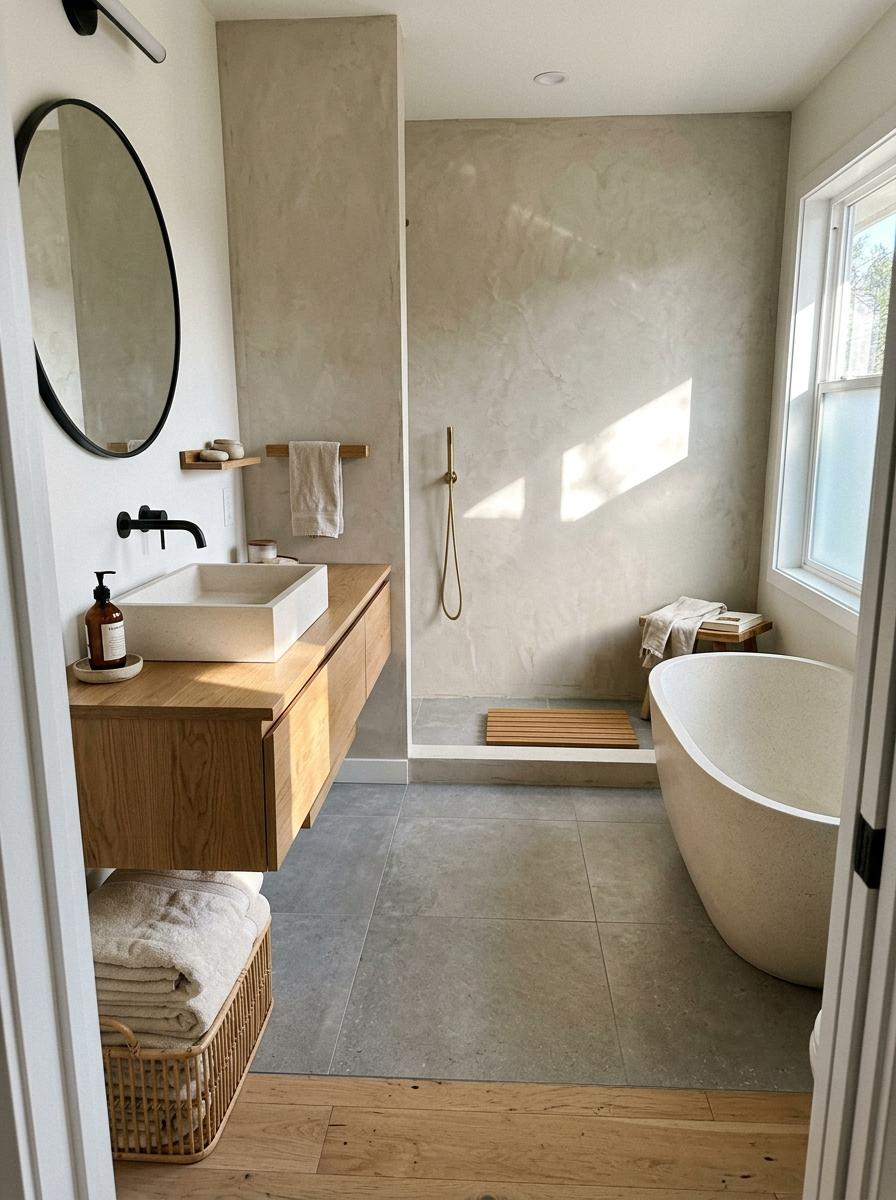

When I first stepped into the original space, it was a chaotic monument to early-2000s excess: cold, high-gloss subway tiles clashing against the frantic visual noise of chrome fixtures. "The goal wasn't just to renovate," the homeowner explained, gesturing toward the now-muted palette of the room, "but to find... well, a sense of stillness." By replacing that frantic energy with a composition of tactile white oak and matte stone, the renovation achieves a masterful chiaroscuro-a play of light and shadow that emphasizes form over flash. This transition from a cluttered, utilitarian box to a curated sanctuary demonstrates how the marriage of Japanese minimalism and Scandinavian functionality-Japandi-serves as more than an aesthetic trend; it is a structural commitment to the restorative power of our private environments.
Glimpse A Luxurious Home With Japandi Bathroom Details
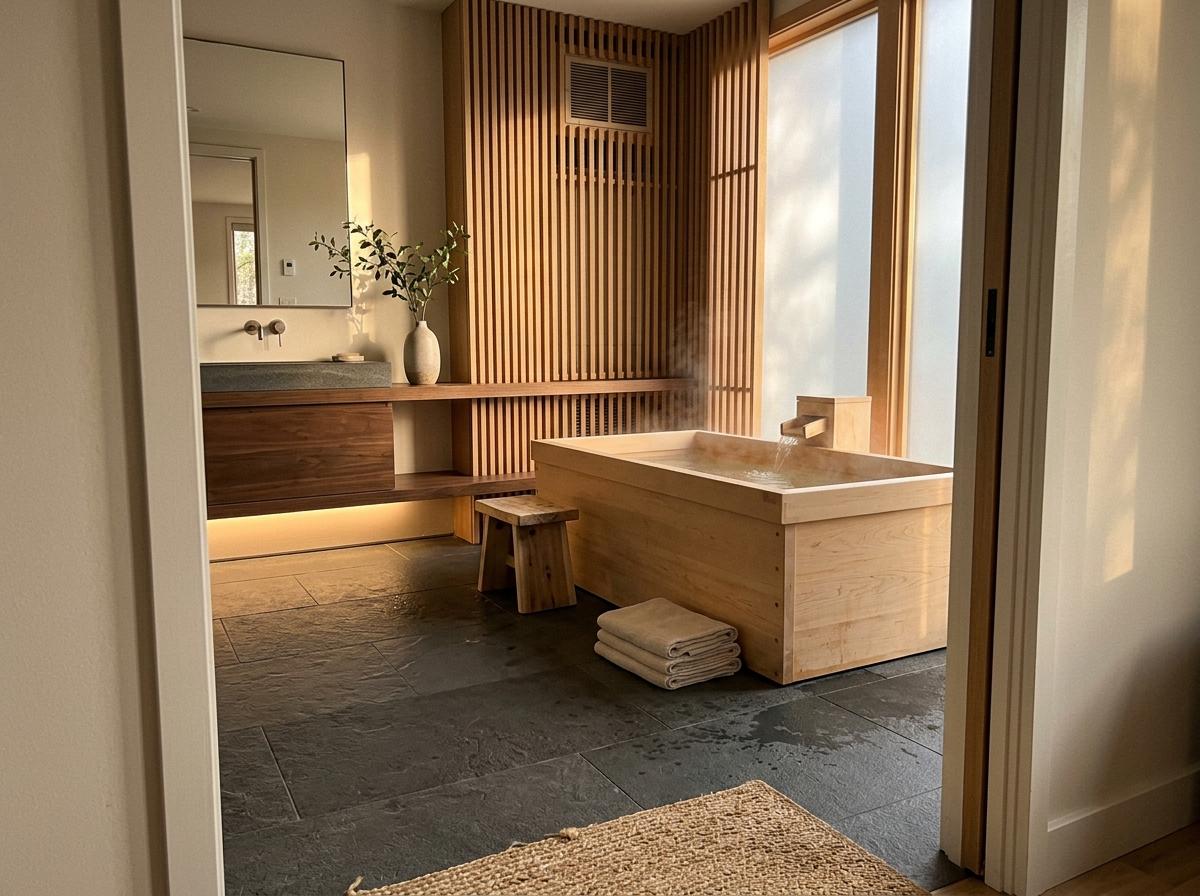

Stepping into this residence feels less like entering a building and more like transitioning into a curated sanctuary where the air settles with a distinct, hushed gravity. Within the primary suite, the bathroom manifests as a primitive elegance-a space that feels simultaneously raw and polished, ancient yet urgently modern. While the home's exterior corridors hum with the sharp, linear energy of contemporary urban life, this private bathing volume exists in a state of suspended animation, insulating the dweller in a cocoon of quietude. The tactile narrative is driven by the use of oversized honed Basaltina floor slabs, which provide a matte, velvet-like grip underfoot, contrasting against the warmth of a custom-milled Hinoki wood soaking tub that releases a citrusy, forest-laden scent when dampened. Far from being merely decorative, these elements are calibrated through meticulous functionalist integration; the seamless floor-to-ceiling slatted oak screens act as both a visual veil and a sophisticated ventilation system, ensuring that the room's high-humidity utility never compromises its minimalist aesthetic.
Essential Elements For A Functional Japandi Bathroom Space
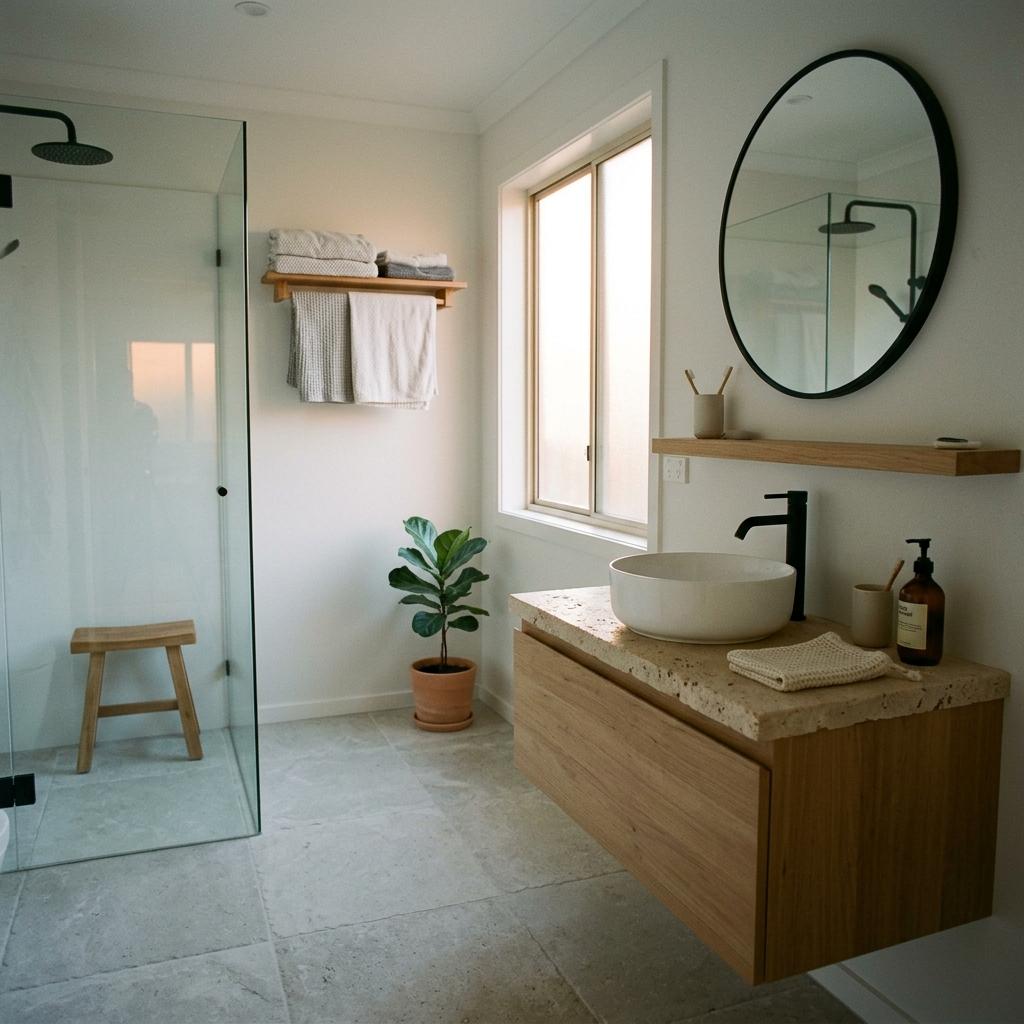

The layout of the modern Japandi bathroom is meticulously shaped by a commitment to quietude, ensuring that every fixture is thoughtfully positioned to maximize flow. Within this sanctuary, the atmosphere is defined by sterile surfaces, unburdened shelves, and a profound, airy stillness that rejects the chaotic clutter of the everyday. Soft light sweeps across the room, while pale, porous stone anchors the vanity in a seamless display of structure and substance. To achieve true spatial harmony, the design carves out void, extends sightlines, and pushes boundaries to foster a sense of infinite expansion. This careful calibration of form ultimately yields a space that prioritizes tactile timber, matte metals, and serene stone.
Experience The Calm Of A Modern Japandi Bathroom Layout
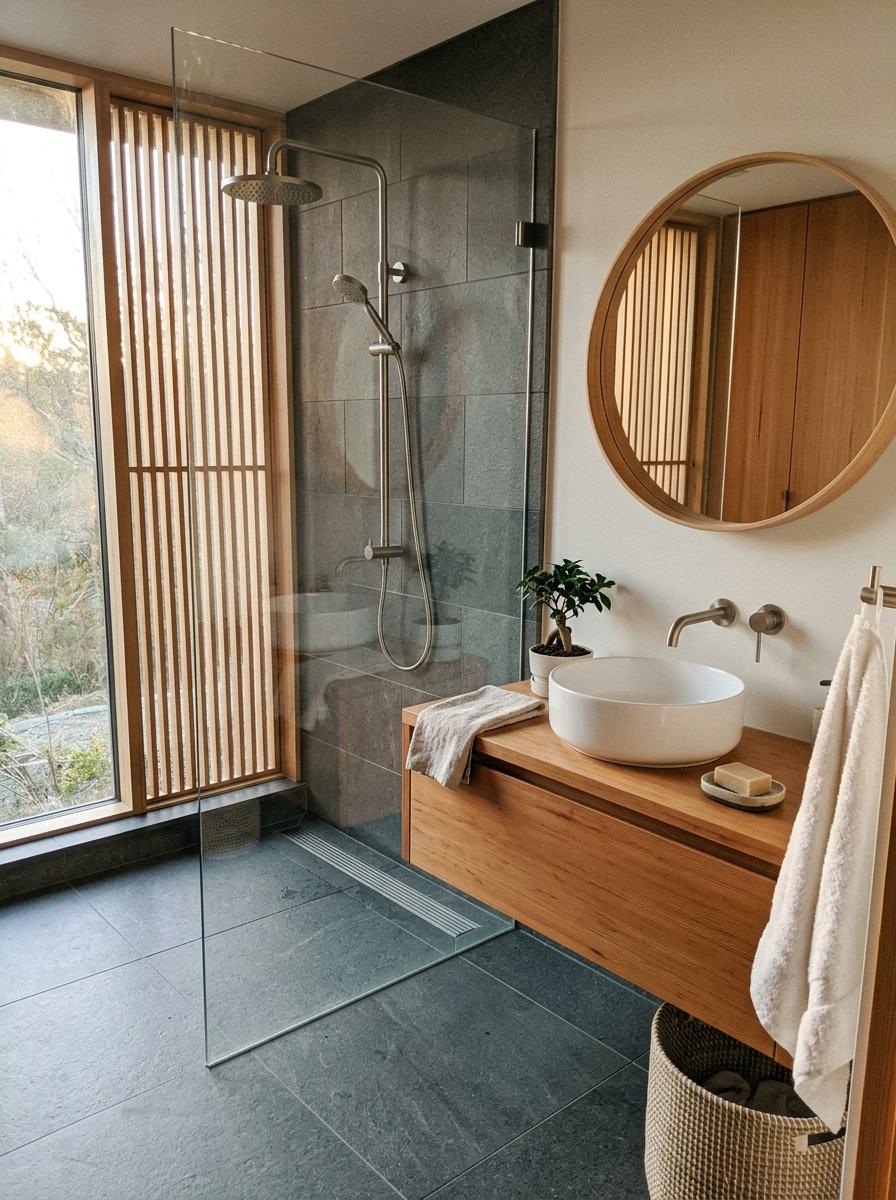

The modern Japandi bathroom serves as a sanctuary of hushed containment, a wet zone where the rush of the outside world is filtered through the stillness of a meticulously curated enclosure. Within this space, one encounters a calculated spontaneity; every element is positioned with a precision that mimics the effortless sprawl of nature, reconciling the rigid geometry of the layout with the organic flow of daily ritual. This environment thrives on a sharp structural dualism, where the external chaos of urban life is severed by a threshold that opens into a private internal landscape of meditative silence. To anchor this experience, the tactile presence of honed Basaltine tiles meets the warmth of rift-sawn Hinoki wood, creating a sensory dialogue between the cool, stony floor and the fragrant, antimicrobial surfaces of the vanity. Ultimately, this aesthetic is anchored by a functionalist specification: the seamless integration of a low-profile linear floor drain and wall-mounted brushed nickel fixtures, engineering a clutter-free utility that transforms the simple act of cleansing into an efficient, soulful study of form and flow.
A Guide To Designing Your Perfect Japandi Bathroom Retreat
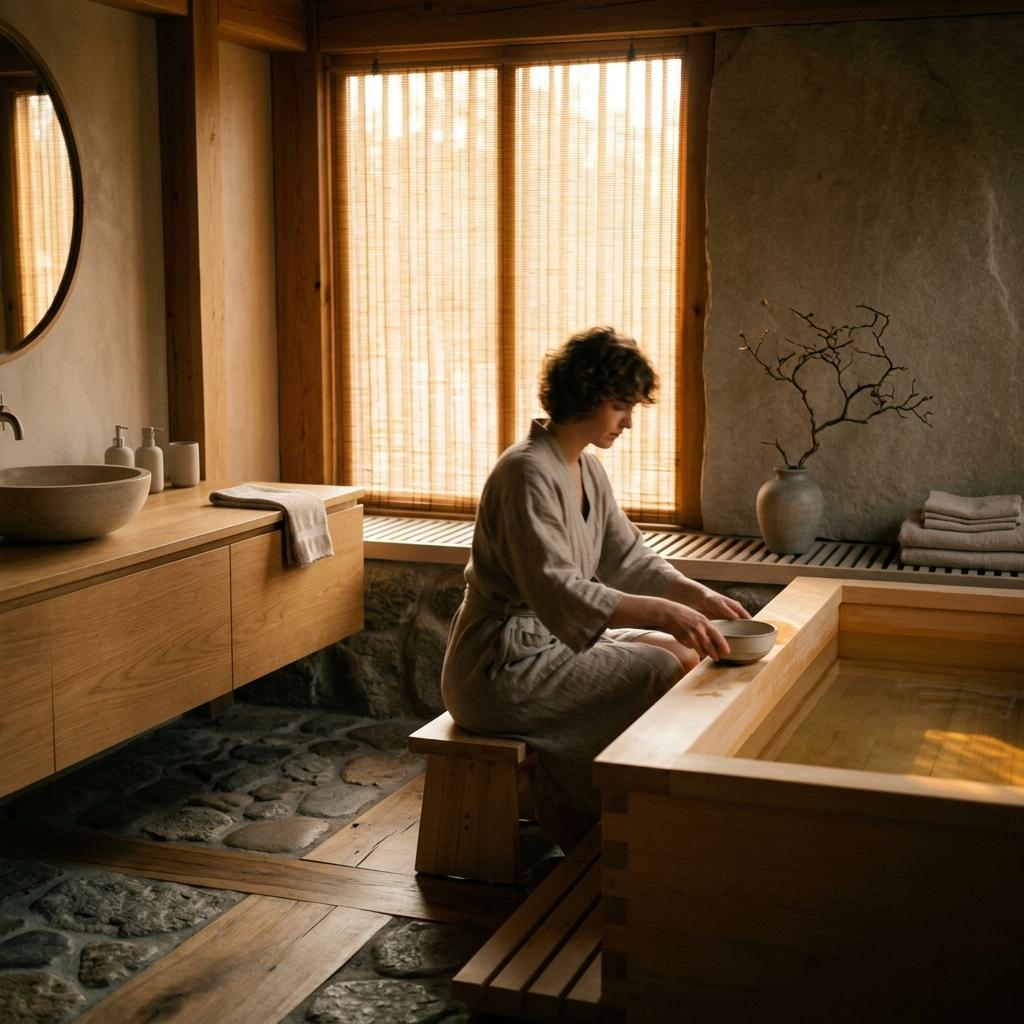

The foundational layout of this sanctuary was conceived through a meticulous blending of Scandinavian utility and Japanese minimalism. Within this boundary, the atmosphere is defined by unburdened surfaces and a profound, hollow stillness that rejects all extraneous clutter. Soft stones and smooth slats satisfy the senses, grounding the room in a tactile harmony of warmth and wood. This spatial arrangement carves out pockets of tranquility, expands the perceived footprint of the floor, and anchors the spirit in quietude. To achieve the final aesthetic, the design integrates honest materials, curated light, and rhythmic geometry.
Discover The Beauty Of Earthy Tones In Japandi Bathroom Design
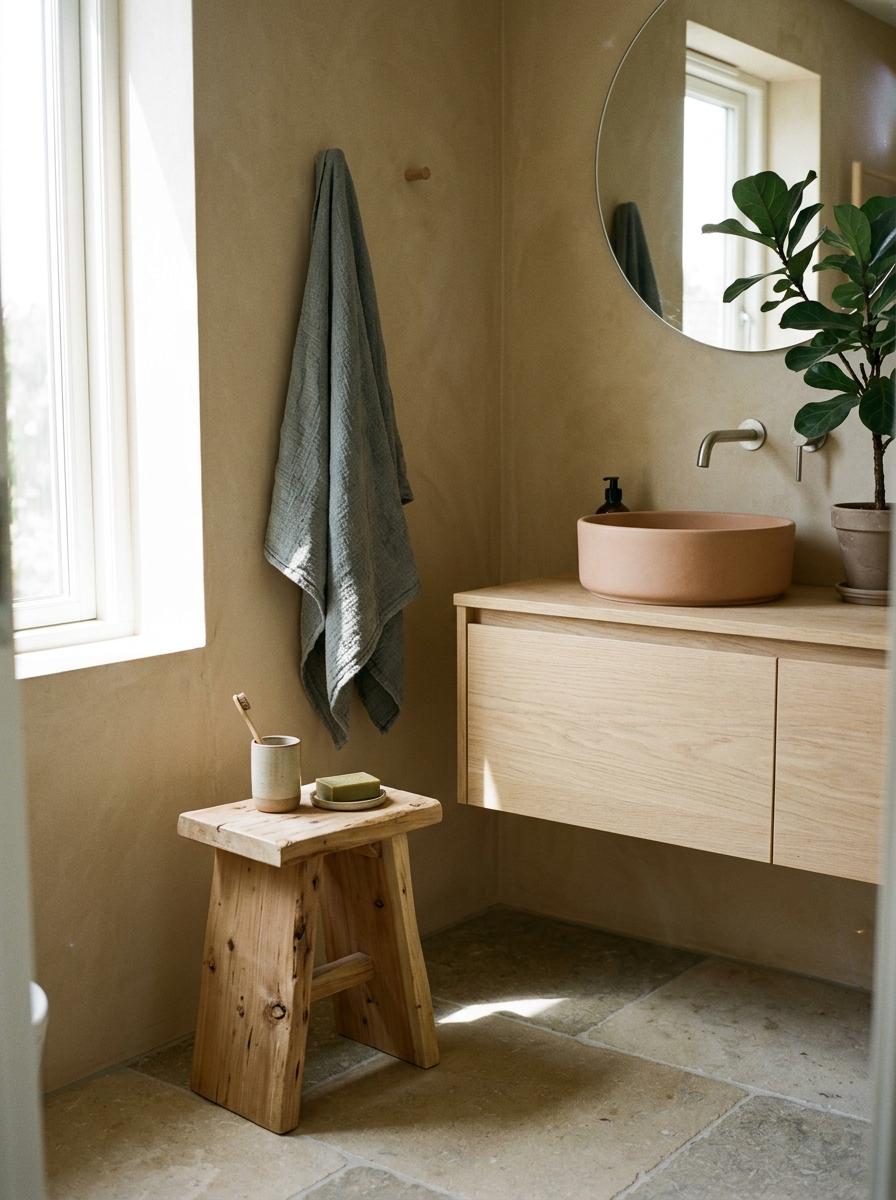

Stepping into a typical modern bathroom often feels like entering a clinical laboratory; the harsh glare of cool-toned LEDs bouncing off sterile, white subway tiles creates an atmosphere that is efficient, yet undeniably frigid. In contrast, the Japandi aesthetic seeks to dissolve that sterility, replacing it with a tactile warmth that feels almost ancestral. I recently discussed this shift with a Tokyo-based designer who specializes in sustainable materiality. “The secret,” she noted, pausing to run her hand over a rough-hewn cedar stool, “isn't just in the color palette, but in the wabi-sabi appreciation for imperfection-the way a matte, clay-plaster wall catches the light.” By prioritizing a desaturated, organic spectrum-think toasted oatmeal, soft terracotta, and damp slate-we move away from the high-gloss artificiality of the city and toward a grounded sense of serenity. This intentional use of earthy tones serves as the foundational anchor for creating a sanctuary that honors both Japanese minimalism and Scandinavian comfort.
This Urban Apartment Showcases A Compact Japandi Bathroom
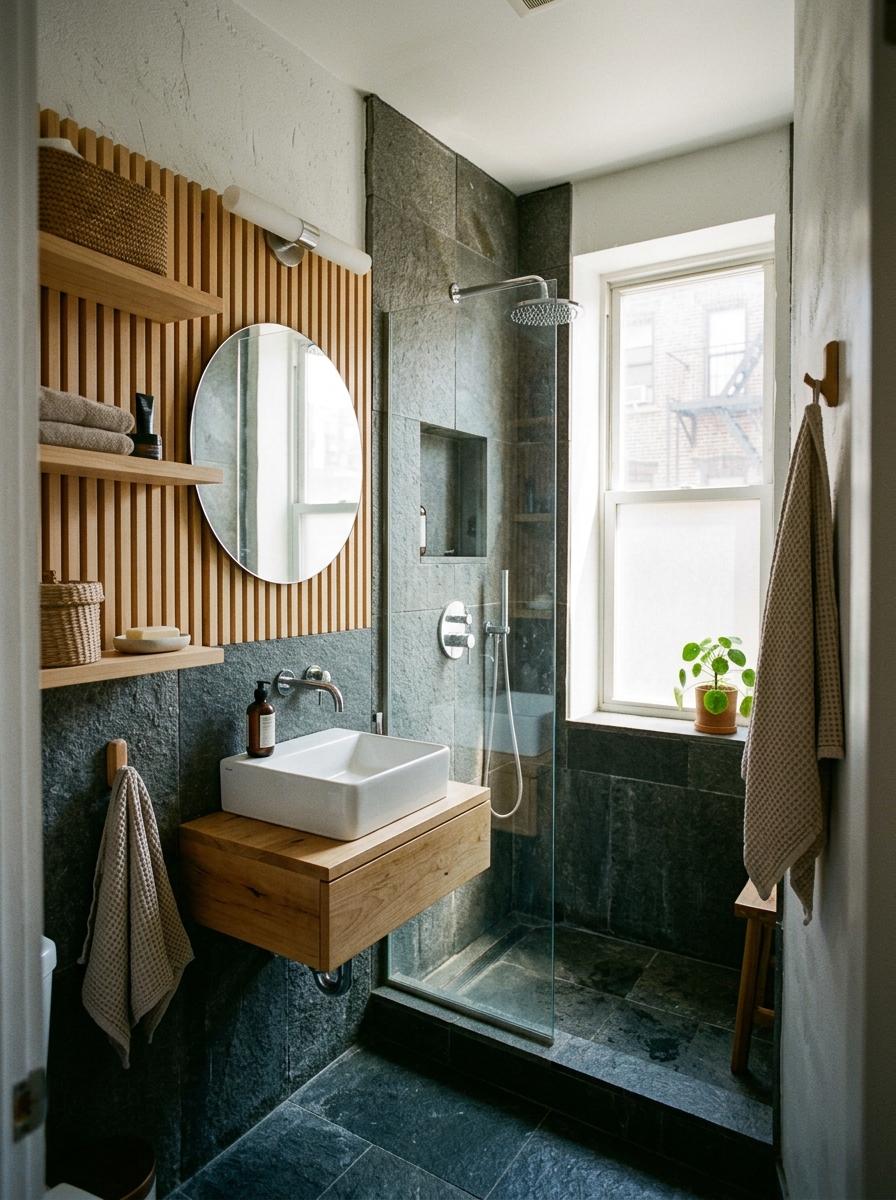

In this urban apartment, the bathroom is not merely a utility but a sequestered sanctuary anchored within the high-density friction of the city, evoking a sense of quietude amidst the relentless metropolitan pace. This compact space operates through a calculated softness, where the rigid constraints of a small footprint are reconciled with the expansive breath of minimalist aesthetics. While the external living areas grapple with the visual noise of the skyline, the interior threshold shifts into a realm of curated silence, creating a sharp distinction between the chaotic outer world and this private restorative core. The tactile landscape is defined by honed Basaltina stone and slatted Hinoki wood, materials that ground the room in a raw, earthy permanence. To resolve the spatial limitations, the design integrates a cantilevered vanity and a recessed thermostatic rain shower, ensuring that every industrial fixture serves as a high-performance solution for seamless, unobstructed movement.
Innovative Storage Solutions For A Clutter Less Japandi Bathroom
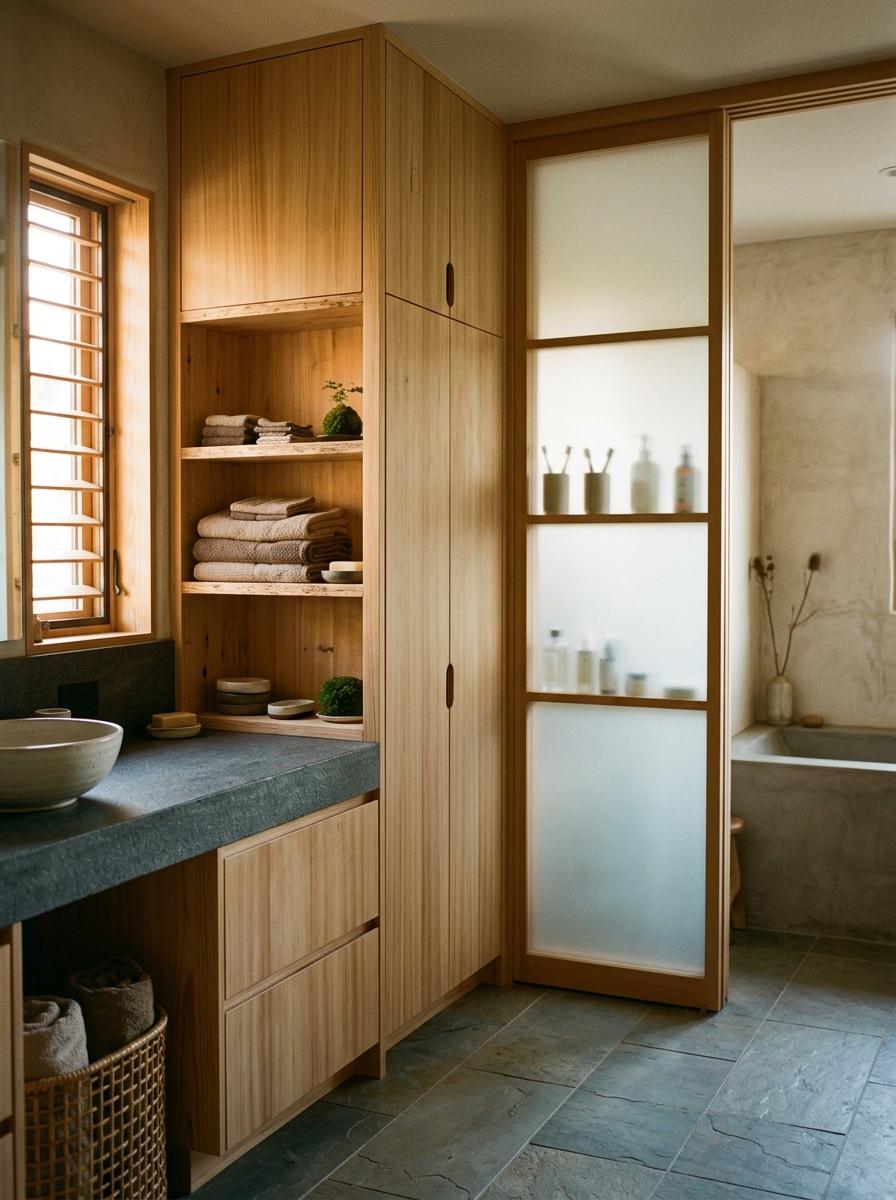

To achieve the serene equilibrium of a Japandi retreat, we must look toward the tactile honesty of the materials used to house our daily rituals. Consider the integration of scabrous, open-pore Hinoki wood shelving alongside honed, non-reflective basalt surfaces; these textures provide a sophisticated grip for both the hand and the eye. Note how the vertical grain of the cabinetry draws the gaze upward, creating an optical expansion of the room while grounding the space in organic warmth. This design language thrives on a structured spontaneity, where the rigid discipline of Japanese joinery meets the fluid, soft-minimalism of Scandinavian hygge. As the visual noise of plastic bottles and utilitarian clutter vanishes behind frosted-glass shoji panels, you will feel a palpable drop in cortisol-a physical unwinding as the nervous system stops scanning for chaos and begins to settle into the stillness. This is the hallmark of the Kyoto-Copenhagen aesthetic, a deliberate curation where every concealed object serves the overarching goal of a breathless, functional sanctuary.
Transform Your Master Suite With Japandi Bathroom Inspiration
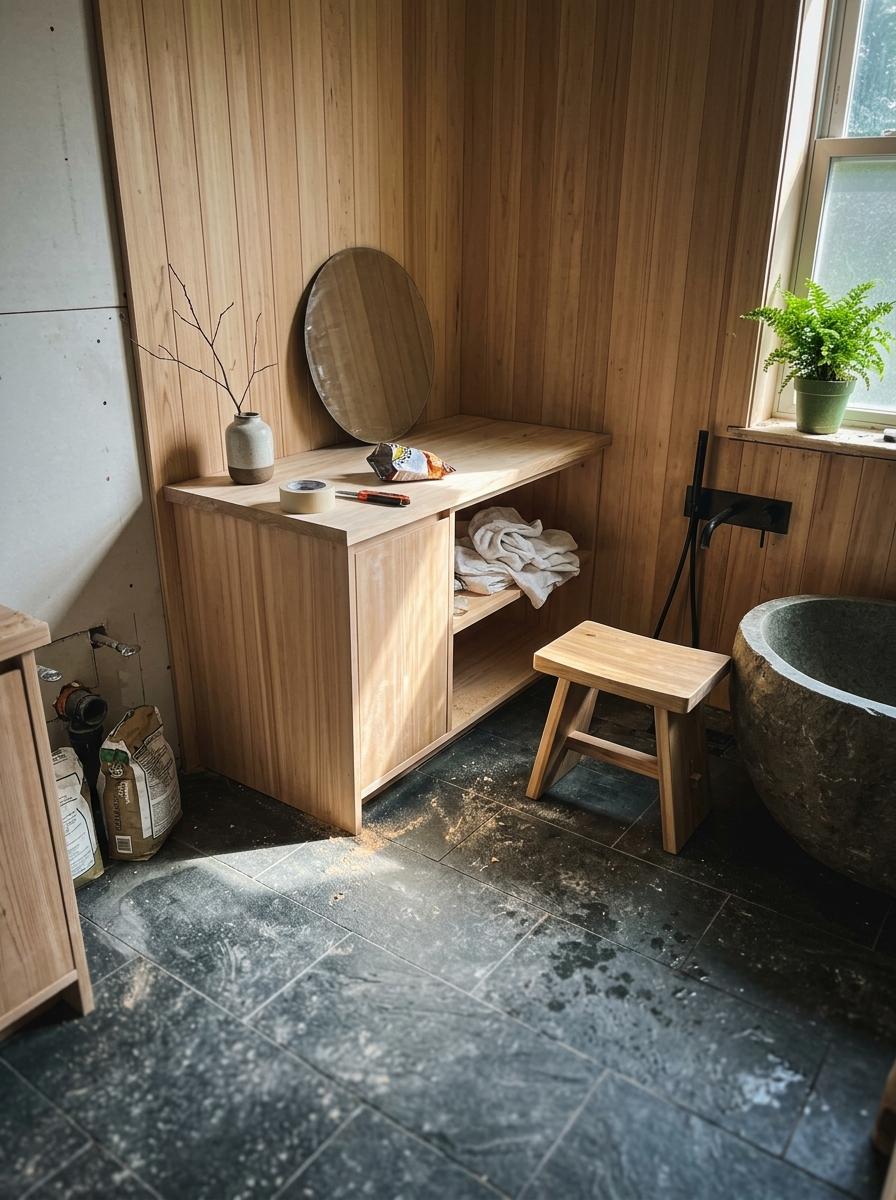

To step into a Japandi-inspired master suite is to enter a sanctuary where the boundaries of the home dissolve into a curated state of quietude. This transition begins in the en-suite, a space defined by atmospheric grounding where the dense, humid air of a private spa is anchored by low-profile silhouettes and a deliberate reduction of visual noise. Here, the room thrives on a figurative paradox, achieving a state of disciplined indulgence-it is a space that feels lavishly appointed yet remains stringently essentialist. This design philosophy hinges on a sharp structural dualism, contrasting the chaotic, high-velocity demands of the external world with an internal environment of static, rhythmic calm. The tactile narrative is driven by material specificity, where the rough, cool grain of honed basalt floor tiles meets the warm, moisture-resistant oils of vertical-grain Hinoki wood cabinetry. Finally, this aesthetic is grounded in functionalist specification, utilizing concealed drainage systems and wall-mounted matte fixtures to ensure that every industrial utility serves as a seamless solution for a life lived with intentionality.
The Intersection Of Comfort And Style In Japandi Bathroom Decor
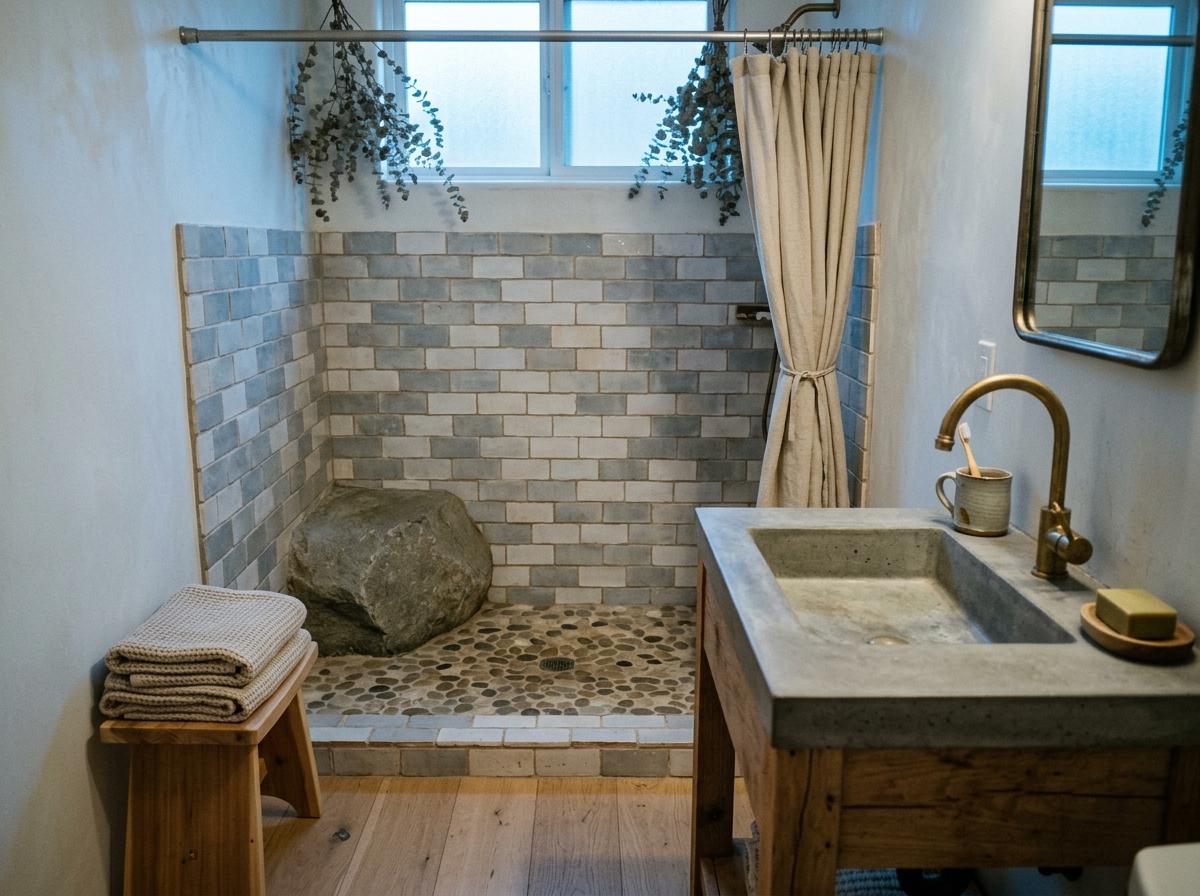

The Japandi bathroom is not merely a stylistic hybrid, but a rigorous synthesis of Scandinavian hygge-with its emphasis on cozy, lived-in warmth-and Japanese wabi-sabi-the profound appreciation for imperfection and transience; together, they yield a sanctuary of calibrated serenity. This aesthetic relies on a sophisticated mastery of lexical precision, where the tactile tactility of honed basalt and the organic irregularities of rift-sawn oak replace the sterile uniformity of traditional modernism. There exists a persistent dialectical tension within the space: the silhouettes are uncompromisingly architectural and austere, yet the experiential quality remains profoundly nurturing and soft. This balance is achieved through sensorial layering, where the atmosphere becomes an immersive composition of haptic, temporal, and ethereal qualities-transforming a utilitarian ritual into a meditative retreat.
Embrace Simplicity With These Japandi Bathroom Design Ideas
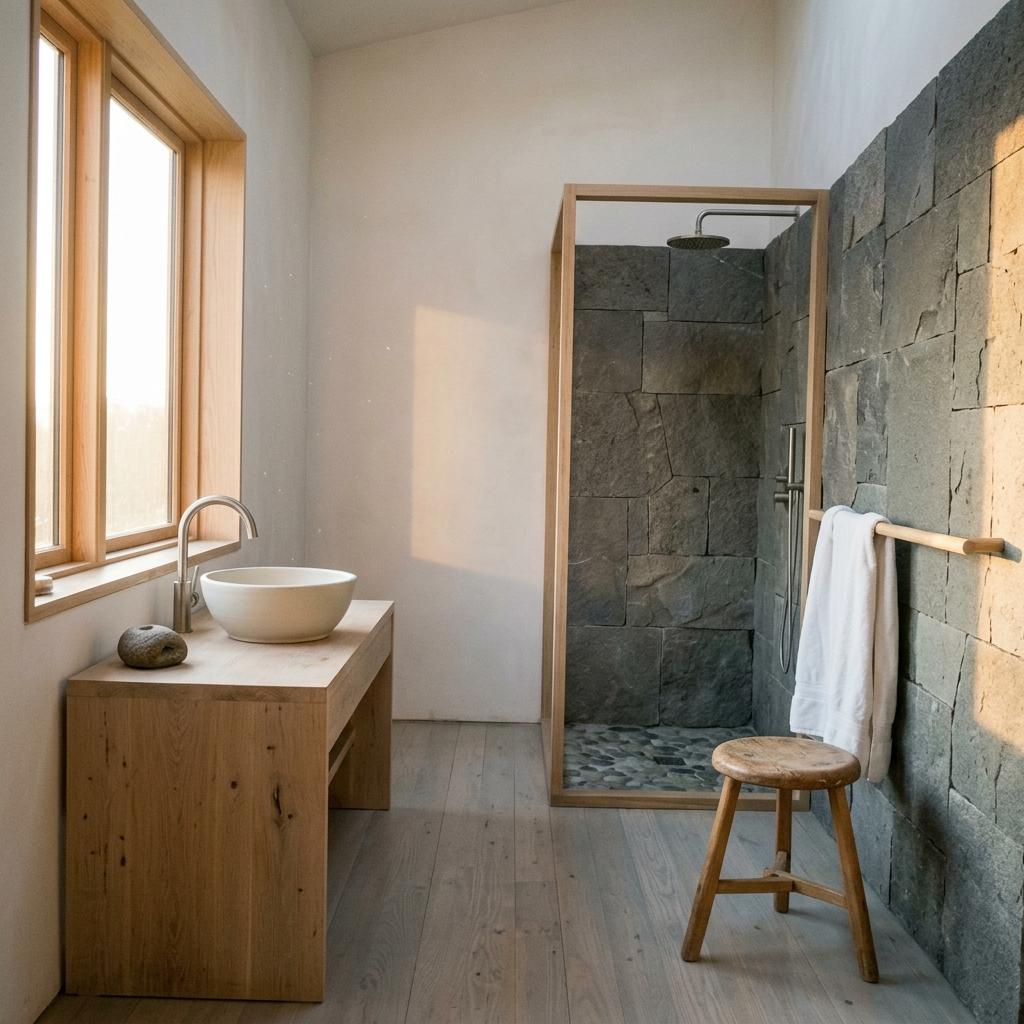

The seamless fusion of Japanese minimalism and Scandinavian functionality is meticulously realized through the deliberate selection of organic materials and neutral tones. Within these curated spaces, an unadorned stillness prevails, anchored by the inclusion of spare, scrubbed surfaces and hollow, high-ceilinged voids. Soft sunlight streams across the stone, smoothing the sharp shadows of the morning. This intentional openness breathes life into the layout, as the floor plan expands to prioritize movement and light. To achieve this restorative atmosphere, the design harmonizes tactile timber, matte ceramics, and weathered basalt.
Focus On Texture Within A Contemporary Japandi Bathroom
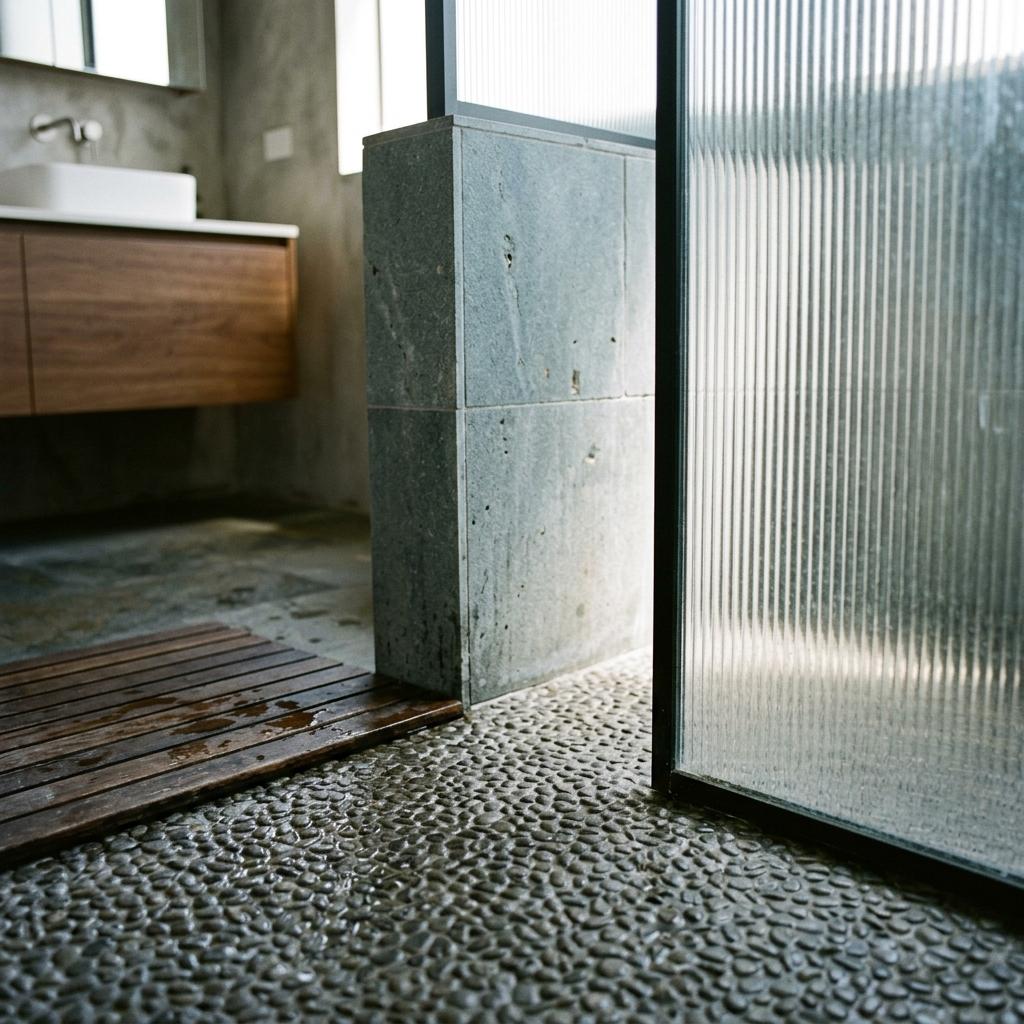

To achieve a truly elevated atmosphere in a contemporary Japandi bathroom, we need to prioritize the tactile interplay between the organic and the engineered. Note how the inclusion of honed Pietra di Bedonia sandstone-a staple in the minimalist retreats of Setouchi-provides a steady, grounding counterpoint to the fluid transparency of fluted glass partitions. This deliberate curation creates a precise irregularity; the stone feels clinically clean yet primal to the touch, offering a soft hardness that defines the space's perimeter. As your feet move from the heat-treated, velvety-matte blackened timber slats of the vanity toward the micro-pebbled basalt flooring of the walk-in shower, the transition triggers a shift in your internal rhythm. It is a sensory dialogue that moves beyond mere aesthetics; the friction of the raw stone against the skin lowers the pulse, grounding the nervous system through a sophisticated, haptic intimacy. This is the hallmark of high-level Japanese-Nordic fusion: a space where the rigorous geometry of modern plumbing is softened by the unapologetic soul of unrefined earth.
A Deep Dive Into Neutral Palettes For Japandi Bathroom Interiors
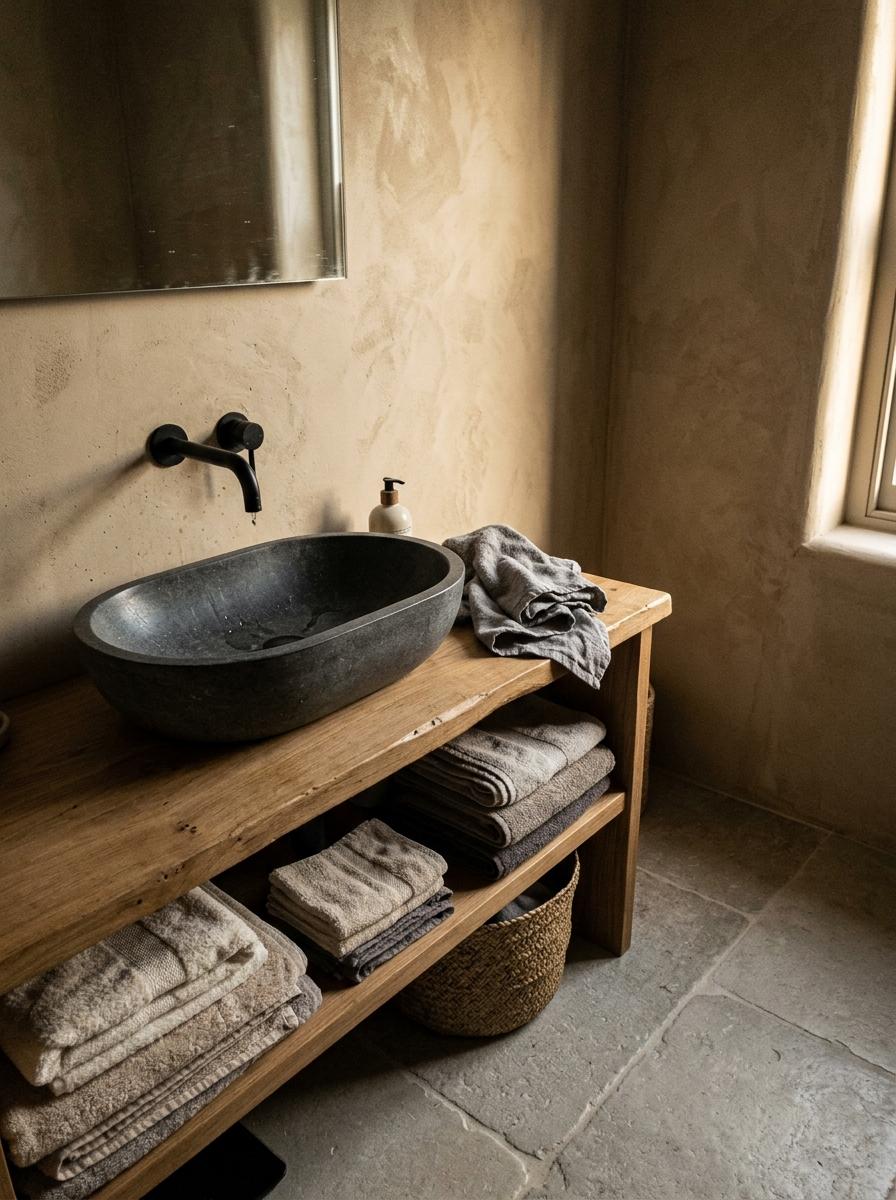

To understand the modern Japandi bathroom, You must look back at the ritualistic austerity of the Meiji-era bathhouses and the ornate, stone-heavy European washrooms of the early 20th century, where utility was once strictly separated from artistry. Today, this evolution culminates in what I call a structured fluidity-a design tension that allows rigid architectural lines to dissolve into the softness of a neutral color story. This specific project, nestled in the quiet, prestigious enclave of Highgate, was commissioned by a repeat client who sought to refine the successes of our previous study. By balancing warm oatmeal limewash against cold, brushed basalt, the space achieves a technical synthesis where material tactility and chromatic restraint act as the primary levers for sensory tranquility.
Unveiling A Private Sanctuary With Distinct Japandi Bathroom Style
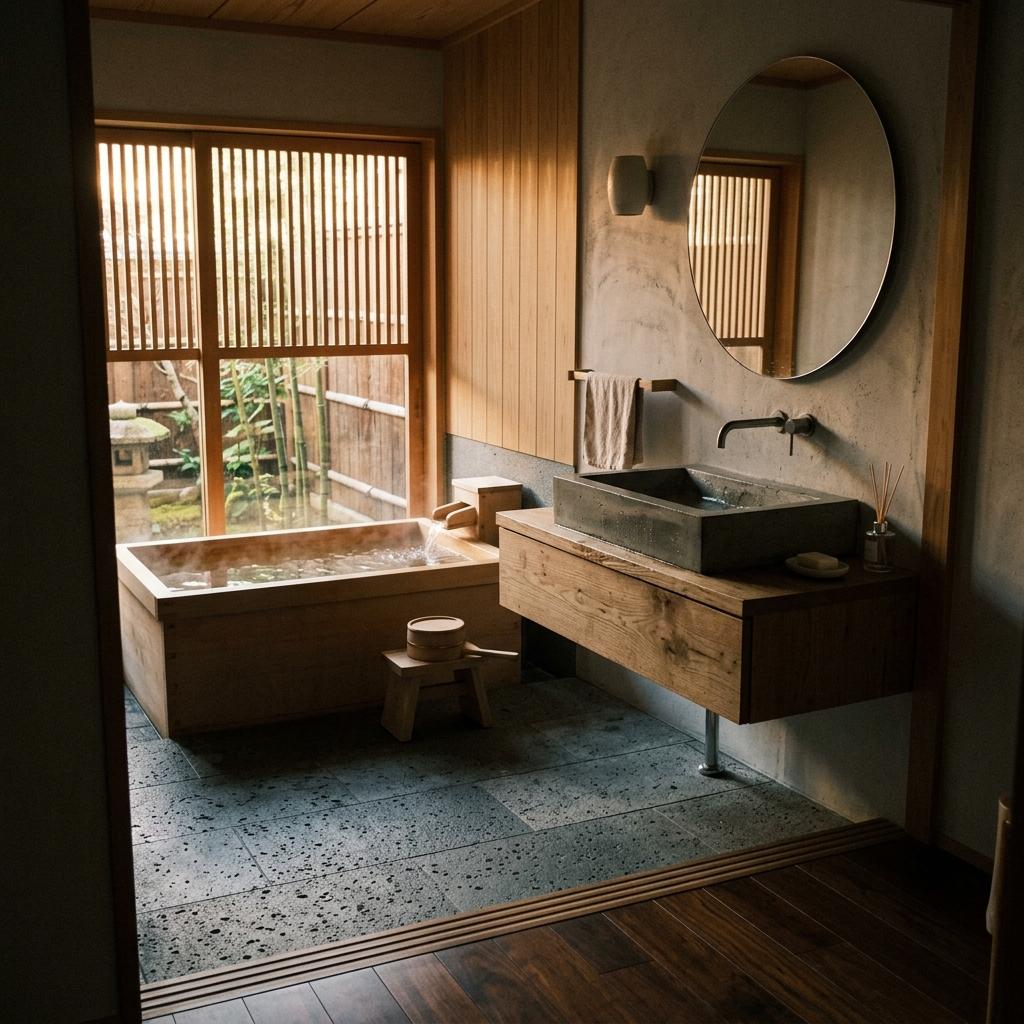

In this Kyoto-inspired retreat, the threshold of the bathroom marks a deliberate departure from the chaotic hum of urban life. Note how the tactile landscape shifts beneath your feet, moving from polished hardwood to the porous, volcanic grit of basalt floor tiles that ground the room in a raw, earthen weight. This space masters the art of structured spontaneity, where the rigid, linear precision of light-toned oak cabinetry meets the fluid, viscous sheen of a hand-poured concrete basin. As you transition into the bathing area, the scent of damp hinoki wood triggers a visceral slowing of the pulse, a physiological surrender that moves beyond simple relaxation into a deep, cellular stillness. It is a masterclass in Japandi restraint: a sanctuary where the utilitarian opulence of high-end Japanese fixtures dissolves into the quiet, rustic soul of Scandinavian minimalism.


Comments