
By synthesizing the rustic, intentional imperfection of Japanese wabi-sabi with the streamlined, utilitarian rigor of Scandinavian funkis, we arrive at a domestic vernacular that is as soul-stirring as it is disciplined. In the context of the kitchen, this fusion traditionally leans toward blonde timbers and neutral palettes, yet the emergence of Dark Japandi introduces a provocative subversion: an aesthetic that feels cavernous yet intimate, brooding but fundamentally serene. To design in this shadow-laden spectrum is to embrace a palette of tactile obsidian, charred shou sugi ban textures, and matte anthracites-sensorial layers that replace clinical brightness with a grounded, atmospheric depth, elevating modern minimalism into a realm of sophisticated, quiet drama.
Dark Japandi Kitchen

Dark Elegance: A Sophisticated Dark Japandi Kitchen Interior
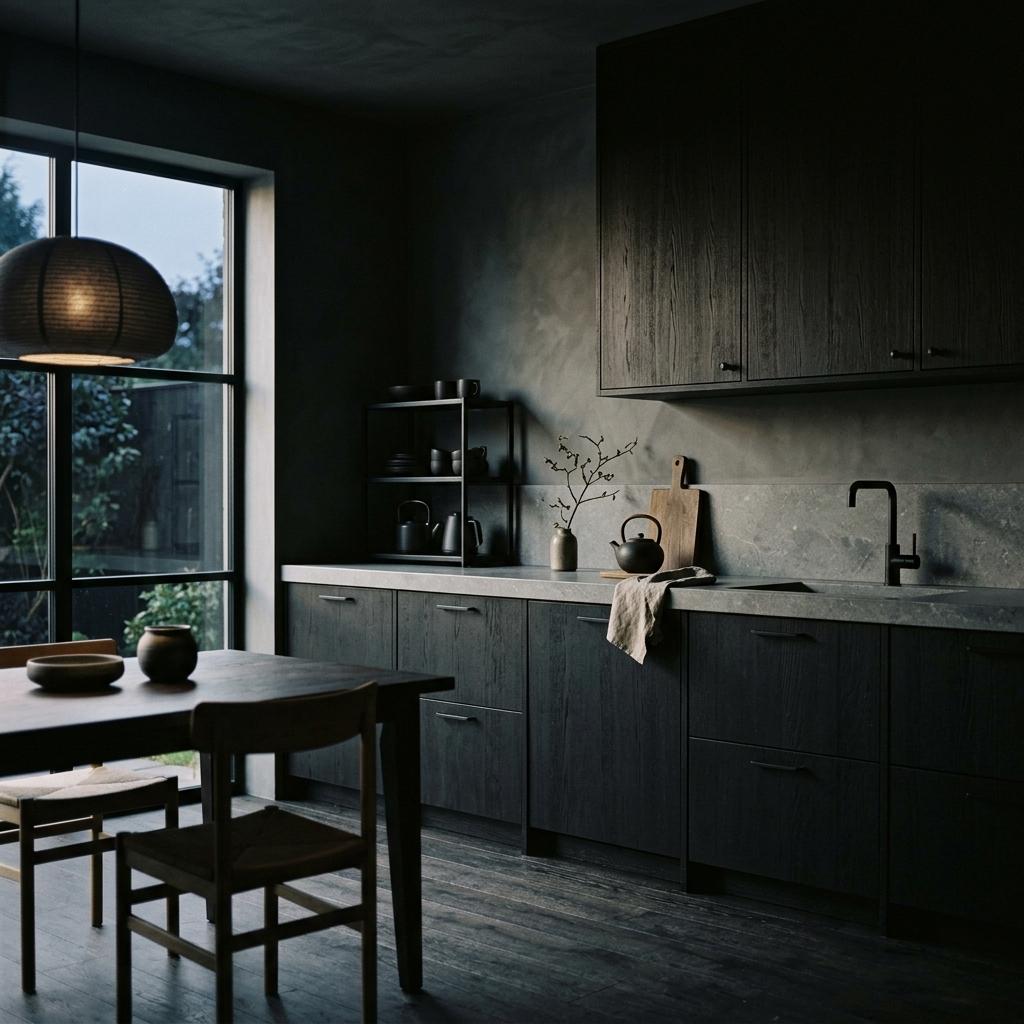

In this exploration of culinary sanctuary, we look at a space that defies the traditional lightness of Nordic influence to embrace a moodier, more introspective aesthetic. Note how the tactile landscape is defined by the juxtaposition of obsidian-stained, wire-brushed oak cabinetry against the cold, honed surfaces of Pietra di Fossena limestone. This interplay creates a harmonious tension-a visual paradox where the "heavy" visual weight of the dark charcoal palette is balanced by the "weightless" minimalist geometry of the joinery. The atmosphere transcends simple decoration to trigger a physiological shift; as the eyes adjust to the low-chroma environment, the nervous system mirrors this descent into stillness, replacing the frantic energy of daily life with a profound sense of groundedness. This is not merely a room, but a study in Kyoto-meets-Copenhagen sensibilities, where the raw, scorched textures of Japanese Shou Sugi Ban philosophy find a sophisticated partner in the sleek, ergonomic precision of Danish Vipp-inspired modularity. The result is a kitchen that doesn't just store tools, but serves as a vessel for ritual and quietude.
Moody Aesthetics Within The Modern Dark Japandi Kitchen
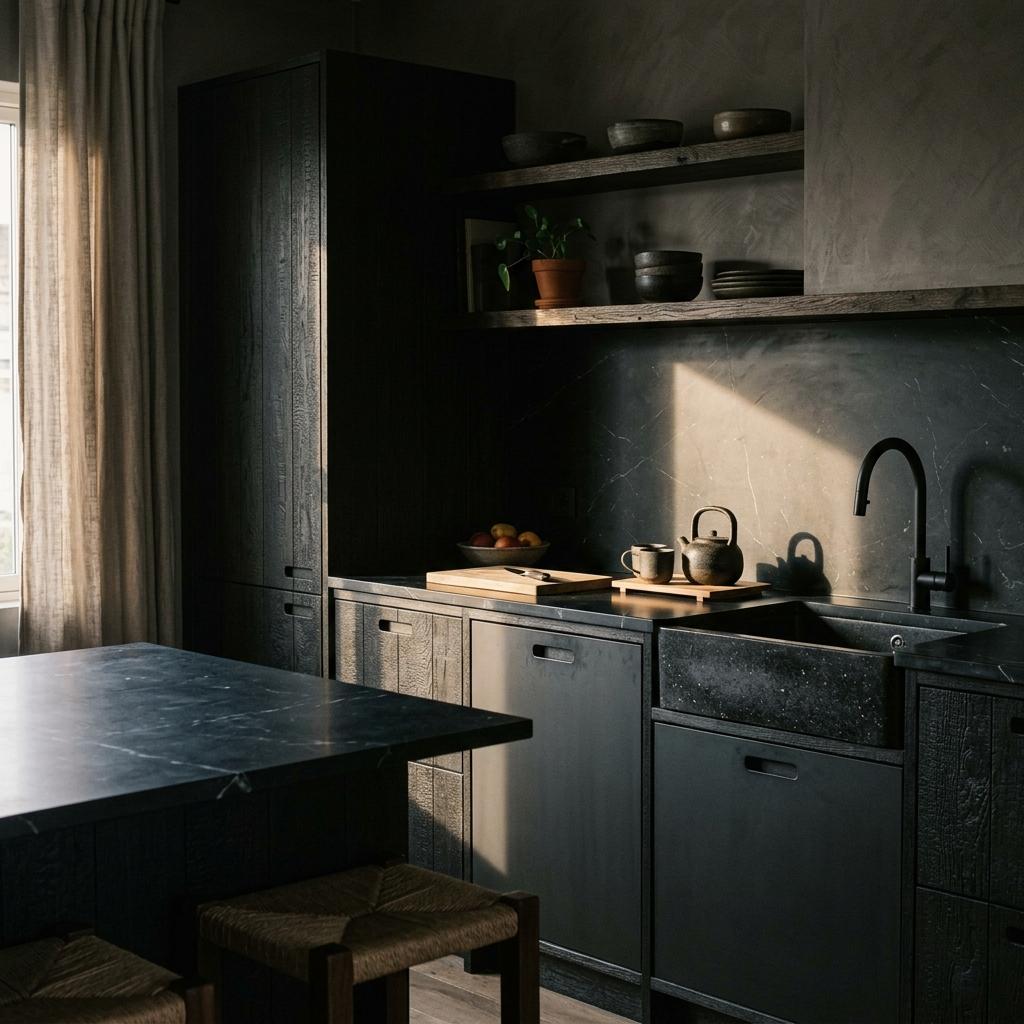

The modern dark Japandi kitchen exists as a sanctuary of shadows, a deliberate departure from the airy transparency of traditional minimalism to create a space that feels profoundly anchored and introspective. Within this cocoon of charcoal and slate, the room achieves a luminous gloom, where the deliberate absence of light serves only to intensify the brilliance of what remains. This atmosphere is defined by a sharp structural dualism: while the external world may be chaotic and saturated with visual noise, the internal architecture of the kitchen is a disciplined exercise in restraint and silence. The tactile narrative is driven by material specificity, juxtaposing the rugged, open-grain texture of charred Shou Sugi Ban cedar against the velvet-smooth, non-reflective surface of honed Nero Marquina marble. This sensory contrast is not merely aesthetic but serves a clear functionalist specification; by integrating integrated matte-black cabinetry with recessed finger pulls, the kitchen eliminates visual friction, transforming necessary industrial utility into a seamless, sculptural landscape that prioritizes both the hand and the eye.
Charcoal Tones Meet Natural Wood In This Dark Japandi Kitchen
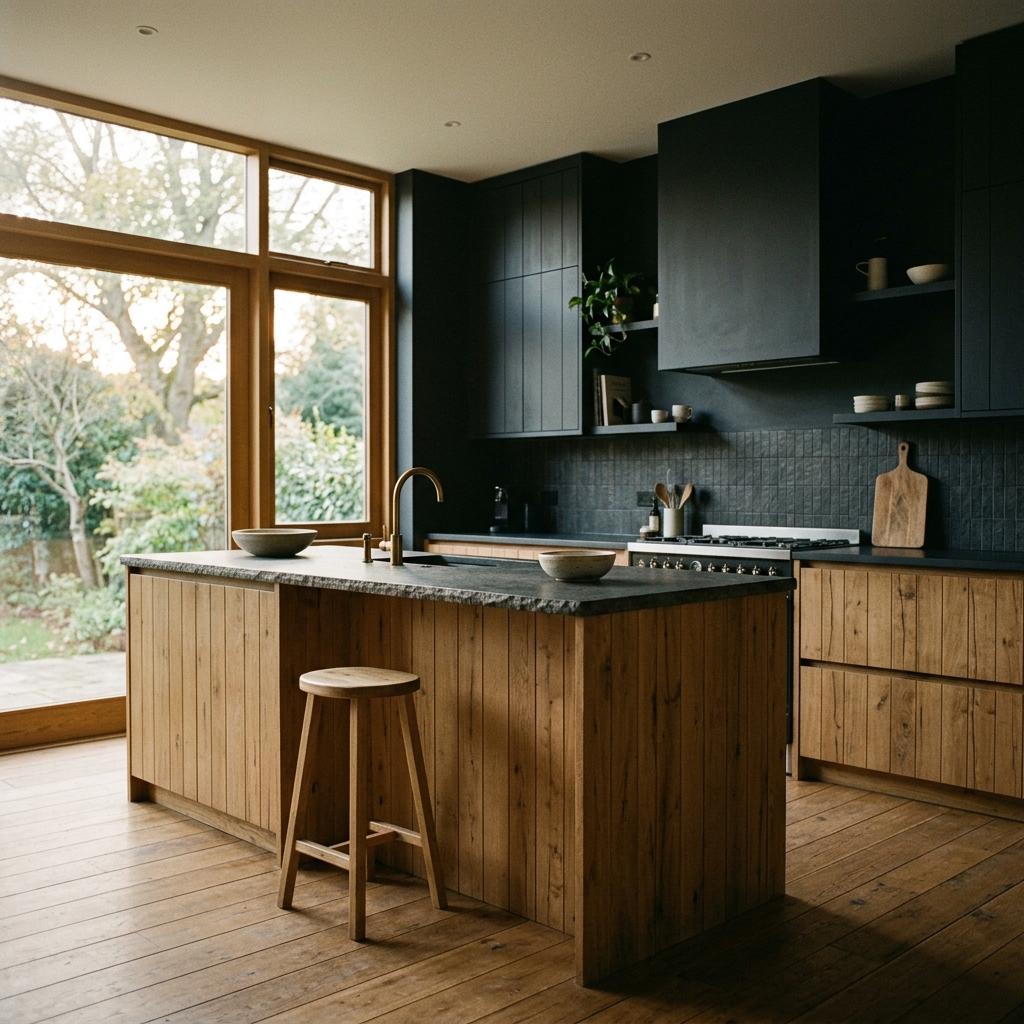

To understand the soul of this kitchen, You need to first look back at the soot-stained kitchens of the mid-century Shōwa era, where utility was born of necessity and shadows were merely overlooked. Today, however, that utilitarian heritage has been reimagined through a lens of contemporary luxury, evolving from a space of hidden labor into a stage for architectural performance. This particular project achieves a compelling melancholic radiance, where the heavy, light-absorbing charcoal surfaces are invigorated by the warmth of raw, honeyed timber. Situated in the leafy enclave of London's Highgate, the home serves as a sophisticated retreat for a repeat client-a family whose continued partnership with the design team acts as a silent testament to the enduring functionality of the Japandi aesthetic. Ultimately, the space succeeds through a deliberate technical synthesis, utilizing vertical grain alignment and recessed shadow gaps to bridge the gap between Nordic minimalism and Japanese craftsmanship.
Inside A Dramatic Dark Japandi Kitchen Design Style
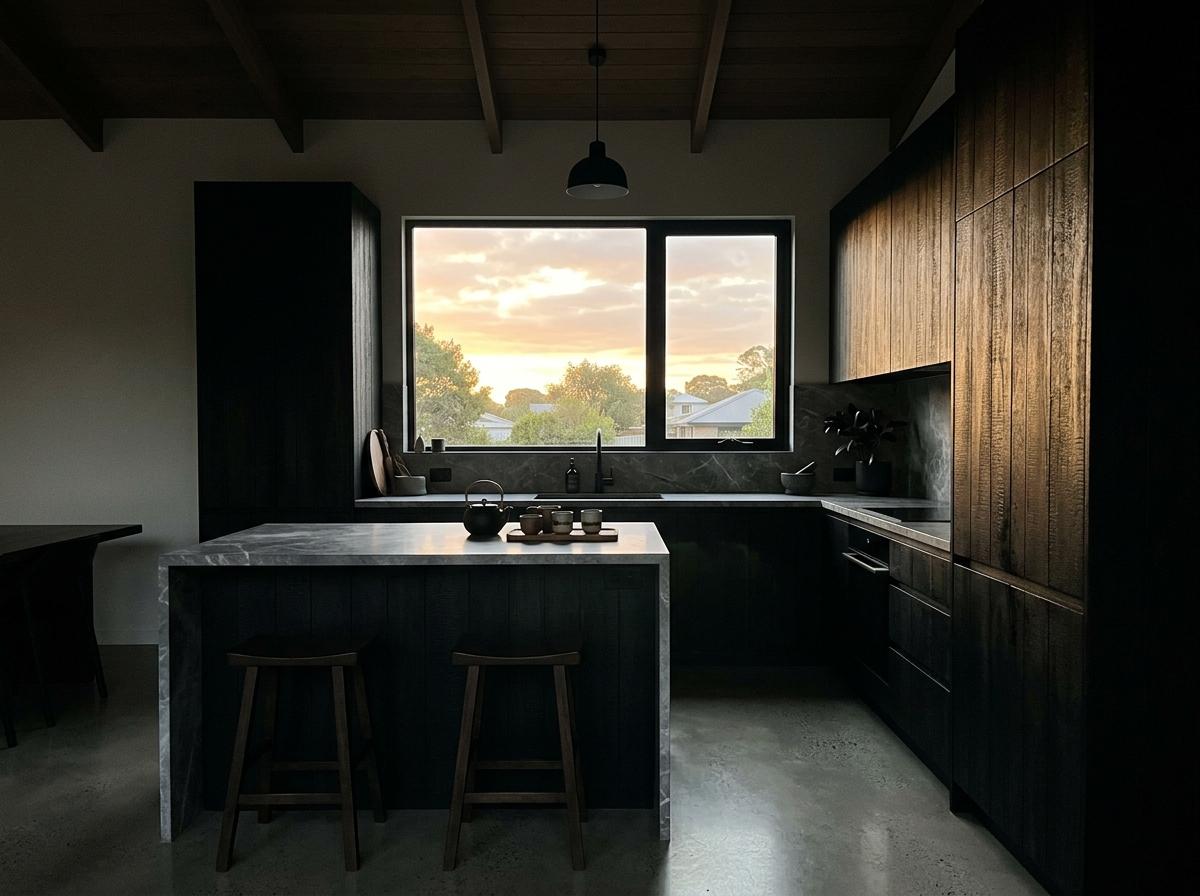

The kitchen emerges as a cavernous sanctuary, where the vastness of an open-plan layout is anchored by the gravitational pull of deep, charcoal-stained wood. Within this void, the design achieves a serene intensity; it is a space that feels simultaneously weightless in its minimalism yet heavy with the emotional weight of shadows. While the exterior world pulses with visual noise and fleeting trends, this interior shell retreats into a monastic stillness, creating a vacuum where light is not merely reflected but curated. The tactile soul of the space is defined by the coarse grain of ebonized charred cedar (Shou Sugi Ban) juxtaposed against the velvet-smooth coldness of honed Pietra Grey marble countertops. This material dialogue is bridged by the functionalist integration of recessed finger-pull channels and handle-less cabinetry, a precision-engineered solution that ensures the visual plane remains uninterrupted, allowing the kitchen to operate as a high-utility laboratory hidden within a silent, dark gallery.
Bold And Minimalist Dark Japandi Kitchen Inspiration For Homes
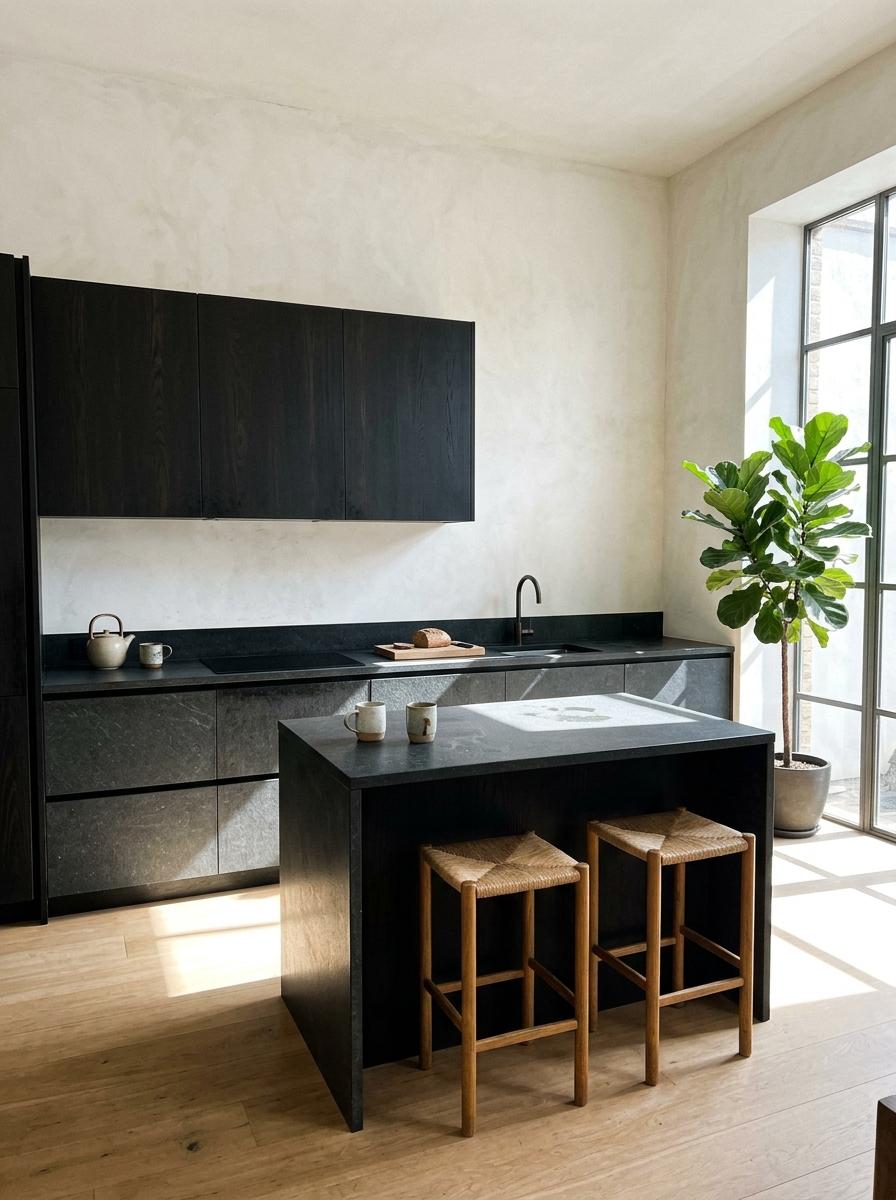

To achieve a kitchen that feels both grounded and ethereal, we can look toward the tactile synergy of ebony-stained oak and honed volcanic basalt. Note how the matte, light-absorbing surfaces of the cabinetry provide a quiet backdrop for the hyper-organized "hidden kitchen" configuration, where every utensil is tucked away to preserve a sense of visual silence. This design language exemplifies a complex simplicity; it is an environment that feels intensely curated yet entirely effortless, stripping away the excess of modern life to reveal the structural soul of the home. As your hand glides over the porous, cool-to-the-touch stone and your eyes settle on the soft diffusion of light against the dark grain, a physiological shift occurs-your heart rate slows, and the frantic pace of the outside world is replaced by a profound, meditative stillness. This is the same atmospheric intentionality found in the Ando-esque concrete structures of Naoshima or the high-end residential enclaves of Daikanyama, where the "Dark Japandi" aesthetic transcends mere interior design to become a vessel for restorative living.
Deep Hues Define This Functional Dark Japandi Kitchen Space
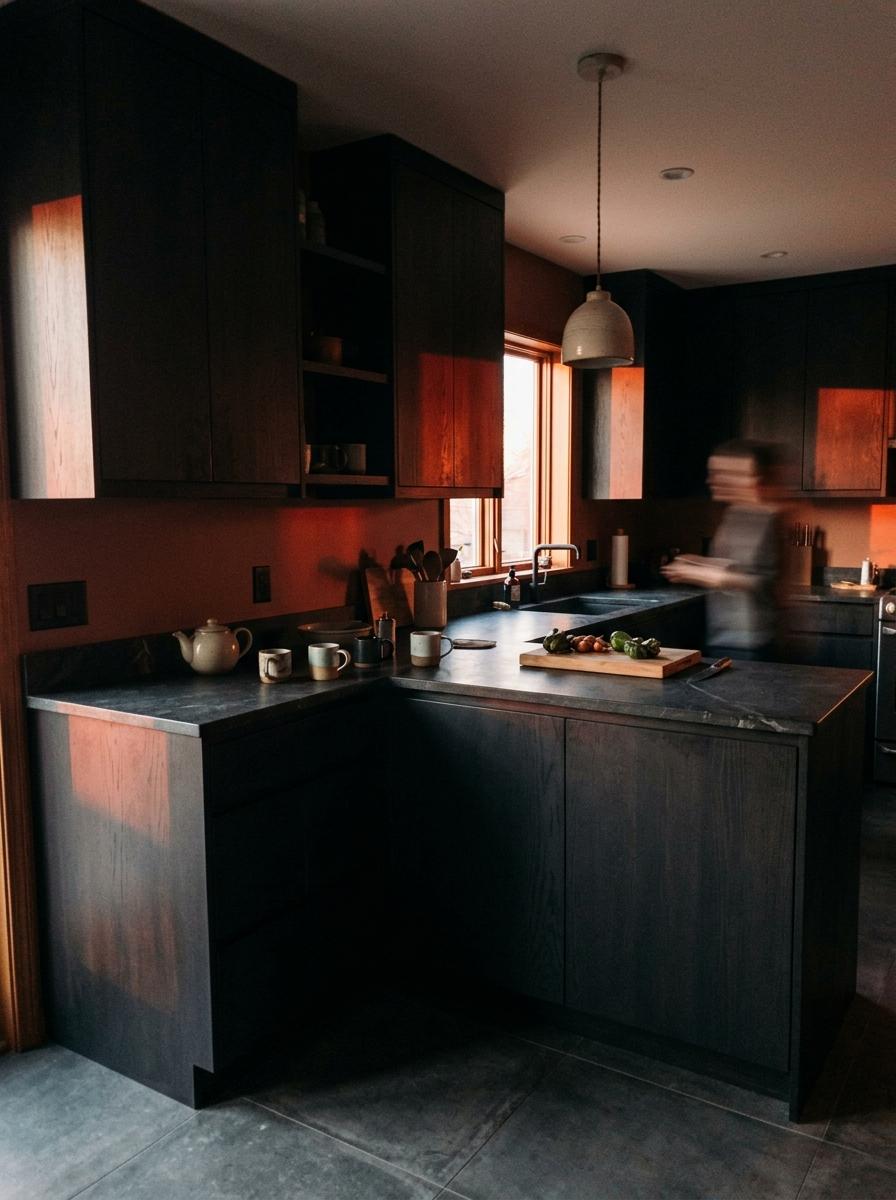

Deep Hues Define This Functional Dark Japandi Kitchen Space In the landscape of contemporary interiors, this kitchen serves as a masterclass in the Definition via Synthesis of two seemingly divergent worlds: the stoic, rugged permanence of Scandinavian brutalism merged with the ephemeral, rhythmic grace of Japanese wabi-sabi. This union transcends mere aesthetic preference, manifesting instead as a calibrated environment where "High-Functionality" meets "Ancestral Stillness." To achieve this, the design utilizes a Lexical Precision that favors material integrity; matte carbon-stained oak cabinetry provides a monochromatic anchor, while honed basalt countertops offer a tactile, lithic counterpoint to the grain-heavy timber. The space thrives on a Dialectical Pairing of shadow and utility, presenting a facade that is visually impenetrable and moody, yet fundamentally ergonomic and light-efficient in its execution. It is a space of deliberate tension-a sanctuary that feels subterranean and private, but remains entirely intuitive for the rigors of modern culinary life. This atmosphere is further heightened through Sensorial Adjective Stacking, where the obsidian surfaces evoke a velvety, primordial, and hushed elegance. By eschewing the traditional "bright and airy" Japandi trope in favor of these saturated tones, the kitchen transforms from a mere utility zone into a cavernous, soulful, and resonant heart of the home.
Urban Luxury Found In A Refined Dark Japandi Kitchen
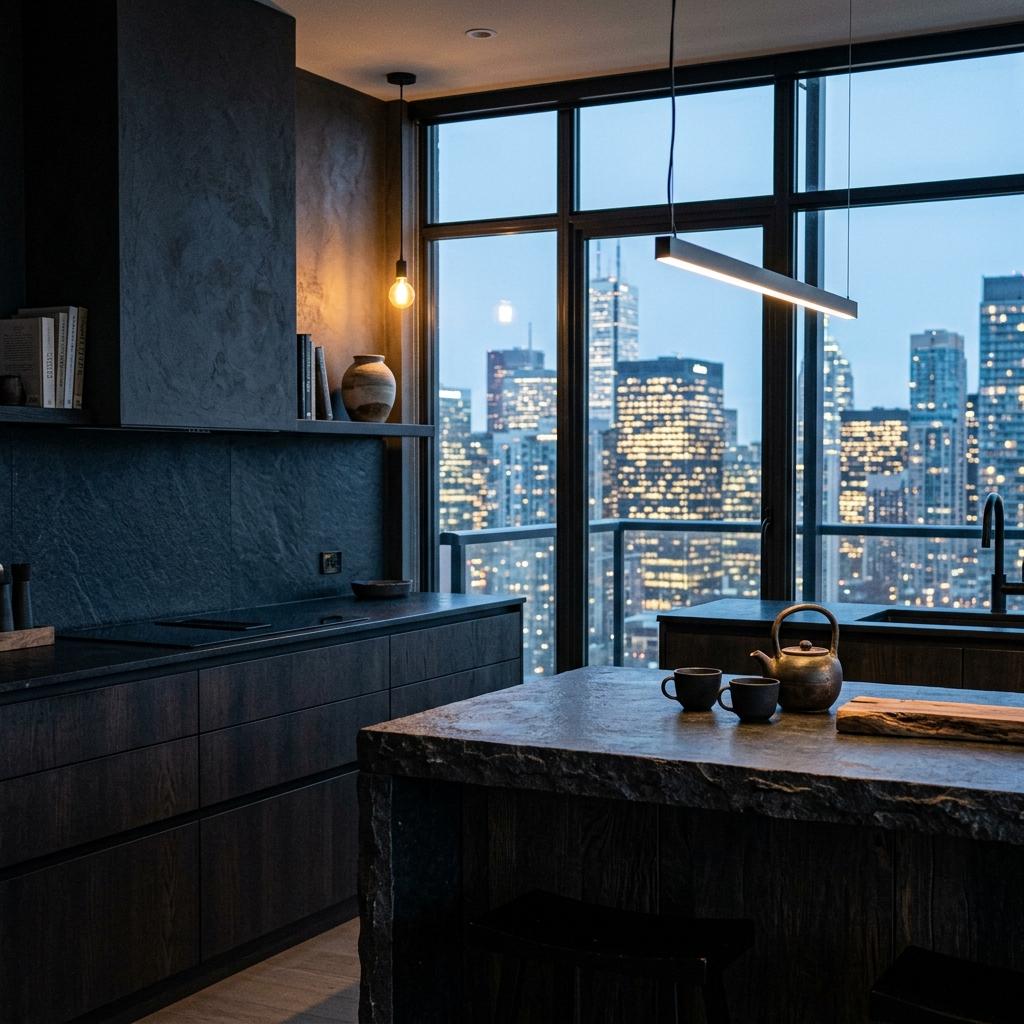

In the heart of a high-rise metropolis, this kitchen serves as a cavernous retreat, anchoring the restless energy of the skyline into a singular, grounded sanctuary of shadow and stillness. It exists as a manifestation of "primitive sophistication," where the raw, unyielding weight of stone is tamed by the hyper-refined sensibilities of modern minimalist craft. While the external world outside the floor-to-ceiling glass vibrates with chaotic luminescence and steel-clad verticality, the internal volume remains a vacuum of composure, drawing a sharp perimeter between urban fatigue and domestic ritual. To touch the cabinetry is to engage with fumed oak veneers and matte-honed Nero Marquina marble, materials that reject superficial sheen in favor of a deep, haptic resonance. This aesthetic gravity is sharpened by integrated linear induction bays and recessed handleless profiles, industrial solutions that dissolve technical clutter into the architecture itself, ensuring that every utilitarian action is subsumed by the kitchen's profound, dark composure.
Texture And Shadow In The Ultimate Dark Japandi Kitchen
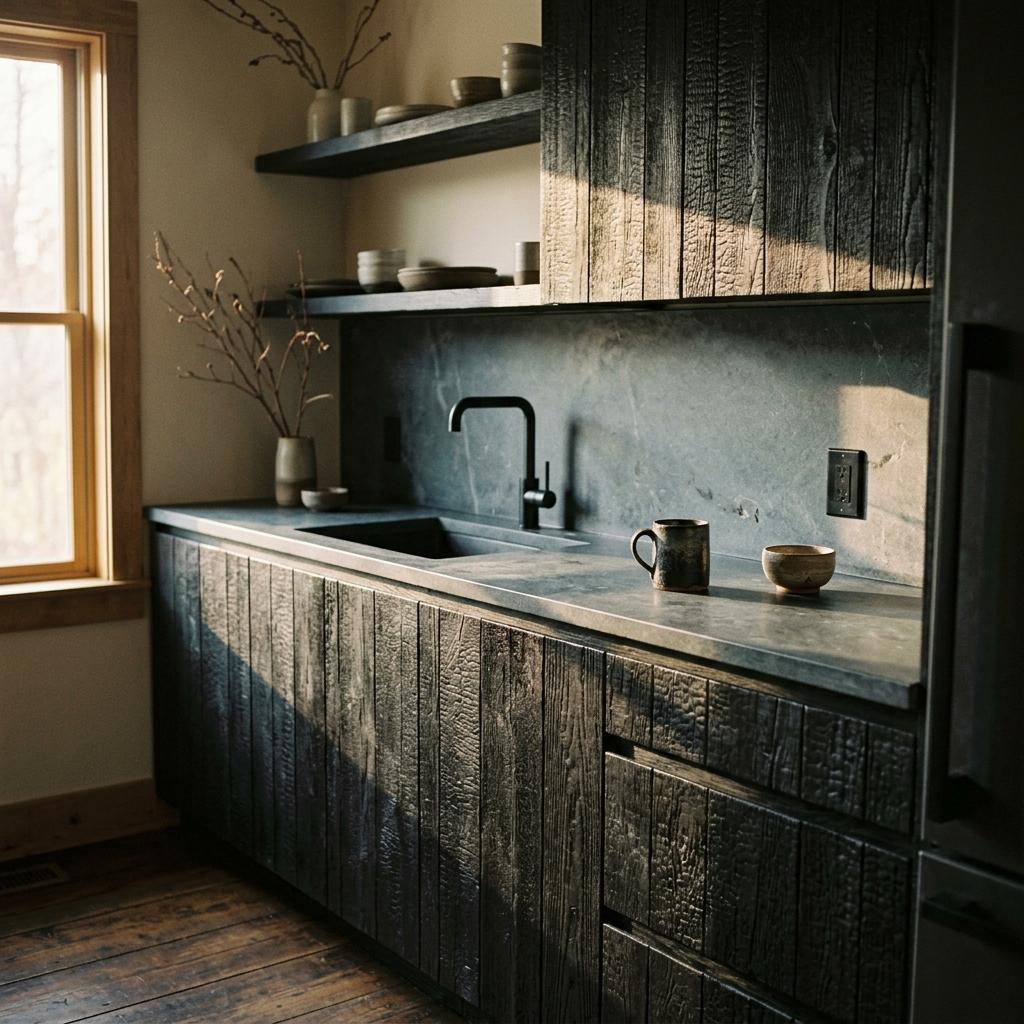

In the ultimate Dark Japandi kitchen, the aesthetic depth relies entirely on the interplay between tactile grit and ethereal dimness. Note how the charcoal-stained Shou Sugi Ban cabinetry-treated with the traditional Japanese charring technique-creates a surface of carbonized ridges that seem to swallow the light, only to be punctuated by the cool, honed silkiness of Belgian Bluestone countertops. This curation thrives on a structured spontaneity; every jagged grain of wood is met by the clinical, razor-edge precision of a Quake blackened steel faucet. As your hand brushes across the matte, open-pore oak, the transition from the rugged, scorched exterior to the fluid smoothness of stone triggers a profound sense of primordial calm, slowing your heart rate as the space shifts from a mere culinary station into a sanctuary of shadow. This isn't just a kitchen; it is a study in Kyoto-inspired minimalism meeting Copenhagen's moody functionalism, where the darkness does not feel heavy, but rather envelops the inhabitant in a protective, velvet embrace.
Sleek Cabinetry For A Polished Dark Japandi Kitchen Look
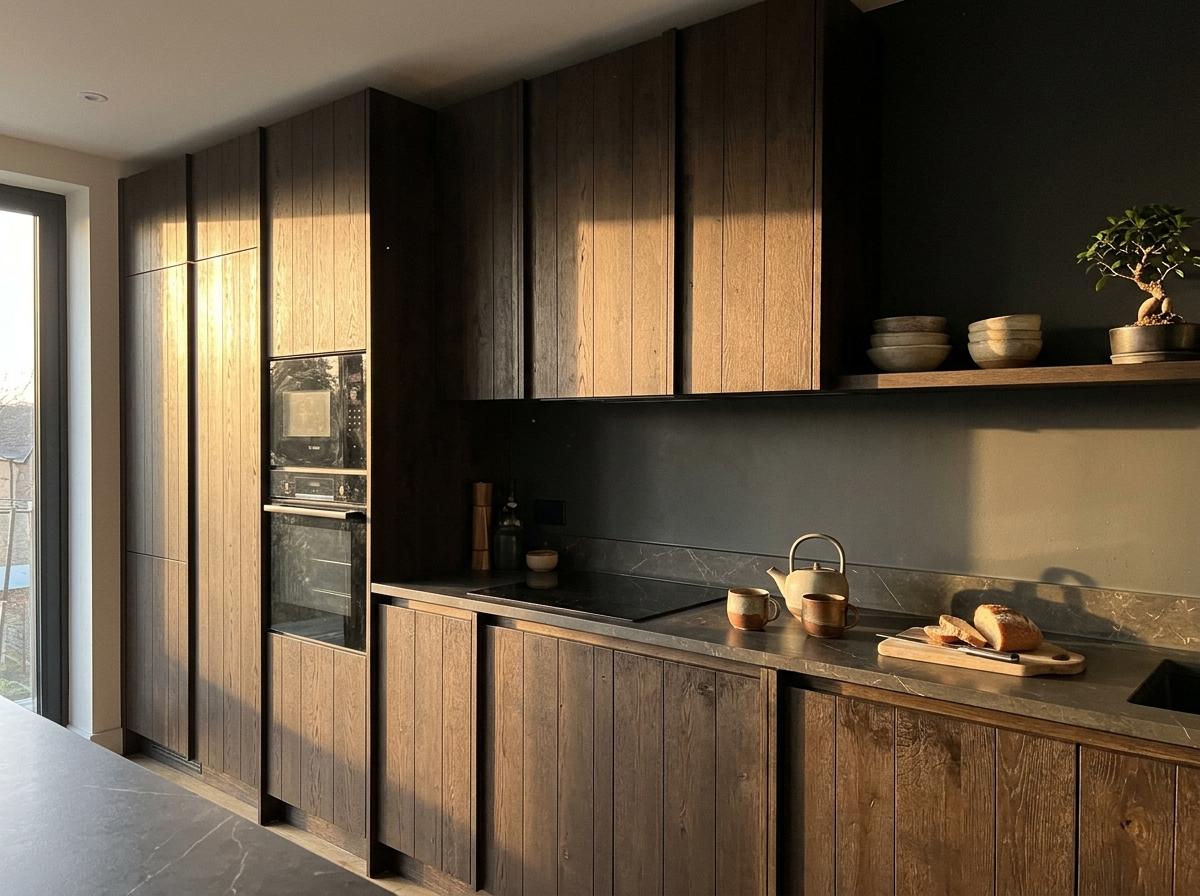

Sleek Cabinetry For A Polished Dark Japandi Kitchen Look At its core, the dark Japandi kitchen emerges from a rigorous synthesis of Scandinavian functionalism and the ancient Japanese ethos of wabi-sabi; it is a deliberate union where Nordic efficiency meets a profound appreciation for transience. This aesthetic relies on a palette of obsidian stains and charred timber-reminiscent of the traditional shou sugi ban technique-to anchor the space in a state of tectonic stillness. The cabinetry is defined by a paradoxical dialectic: the silhouettes are uncompromisingly linear and geometric, yet they possess an organic warmth that prevents the atmosphere from feeling clinical or austere. To achieve this polished look, You need to select finishes that offer a sensorial journey, moving beyond mere matte textures toward surfaces that feel velvety, haptic, and atmospheric. By prioritizing handleless, integrated millwork, the kitchen transcends its utilitarian purpose, transforming into a soulful, shadowy sanctuary where minimalist rigor and artisanal depth exist in perfect equilibrium.
Atmospheric Lighting For A Stunning Dark Japandi Kitchen
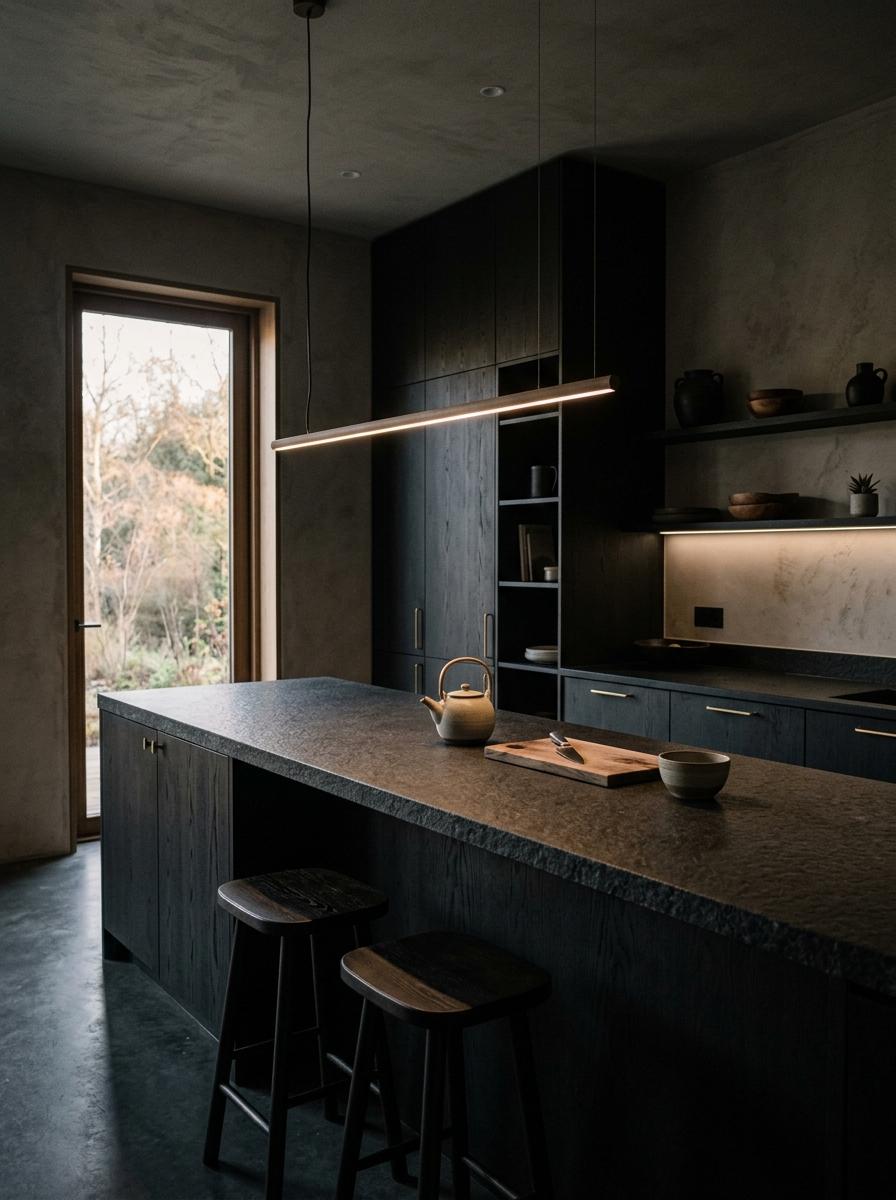

The structural narrative of this dark Japandi kitchen was conceived through a meticulous interplay of shadow and intentional luminescence. Within the void of charcoal cabinetry, a quiet, uncluttered clarity emerges, defined by the absence of extraneous ornament and the presence of pure, unadorned surfaces. Soft, subtle silhouettes stretch across the stone, guiding the eye toward a profound sense of stillness. Warmth carves through the cool depth as hidden fixtures sculpt the void, anchor the island, and illuminate the essential textures of timber, basalt, and bronze.
Natural Materials Elevate This Dark Japandi Kitchen Layout
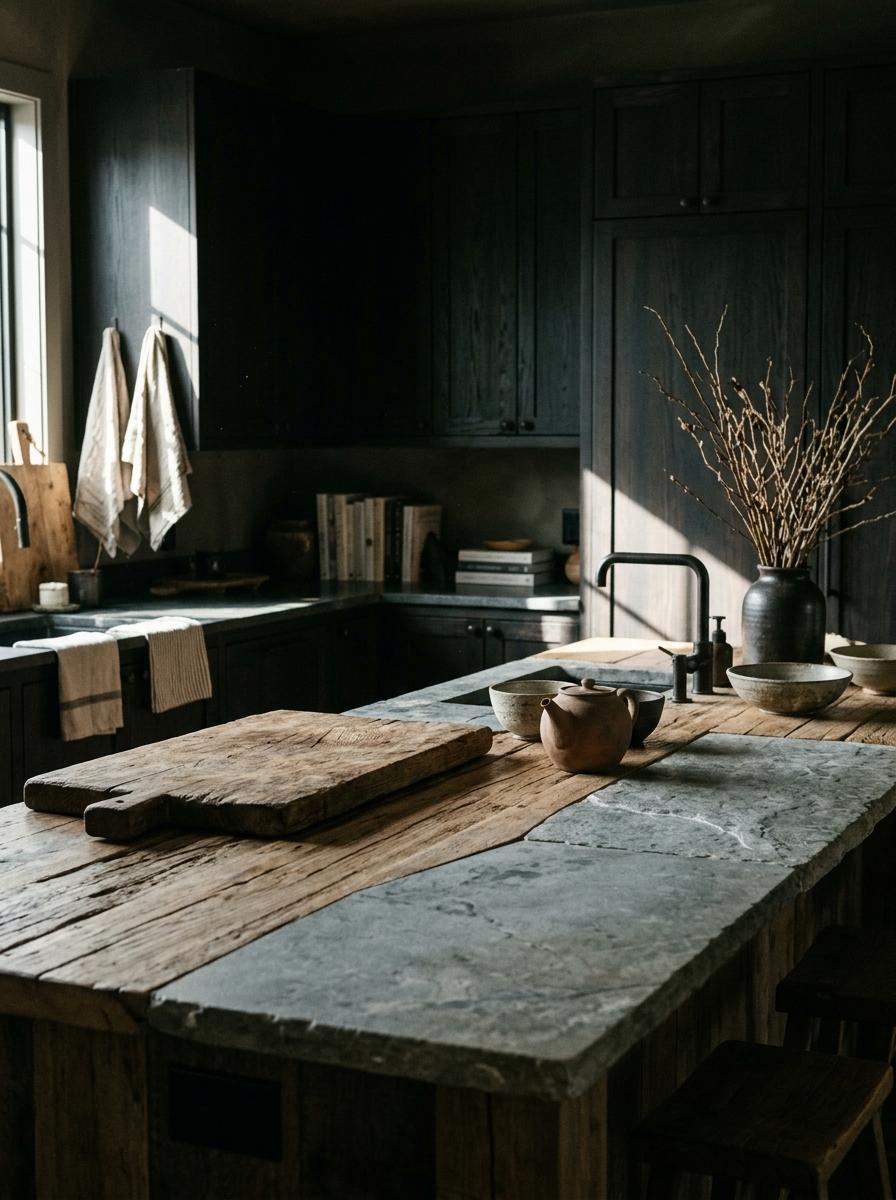

Stepping into the kitchen of the "Shadow House," I was immediately struck by how the air seemed to thicken with a quiet, obsidian weight, a stark departure from the sterile, fluorescent glare of the modern open-plan apartments that flank this district. "The challenge," the lead designer explained, tracing a finger over the deep grooves of a charred timber island, "wasn't just about managing the lack of light, but rather," they paused to adjust the positioning of a handmade ceramic vessel, "learning to treat the darkness as a tactile material in its own right." This deliberate play of shadows creates a sophisticated chiaroscuro effect, where the somber depth of midnight-stained cabinetry is softened by the organic irregularities of rift-sawn oak and honed limestone. By layering these raw, biophilic textures against a moody, monochromatic palette, the space transcends mere functionality to become a study in sensory balance. This alchemy of shadow and substance serves as a masterclass in how grounding elements can transform a potentially cold, cavernous layout into a sanctuary of warmth and intentionality.
Striking Contrast In A Small Dark Japandi Kitchen Apartment
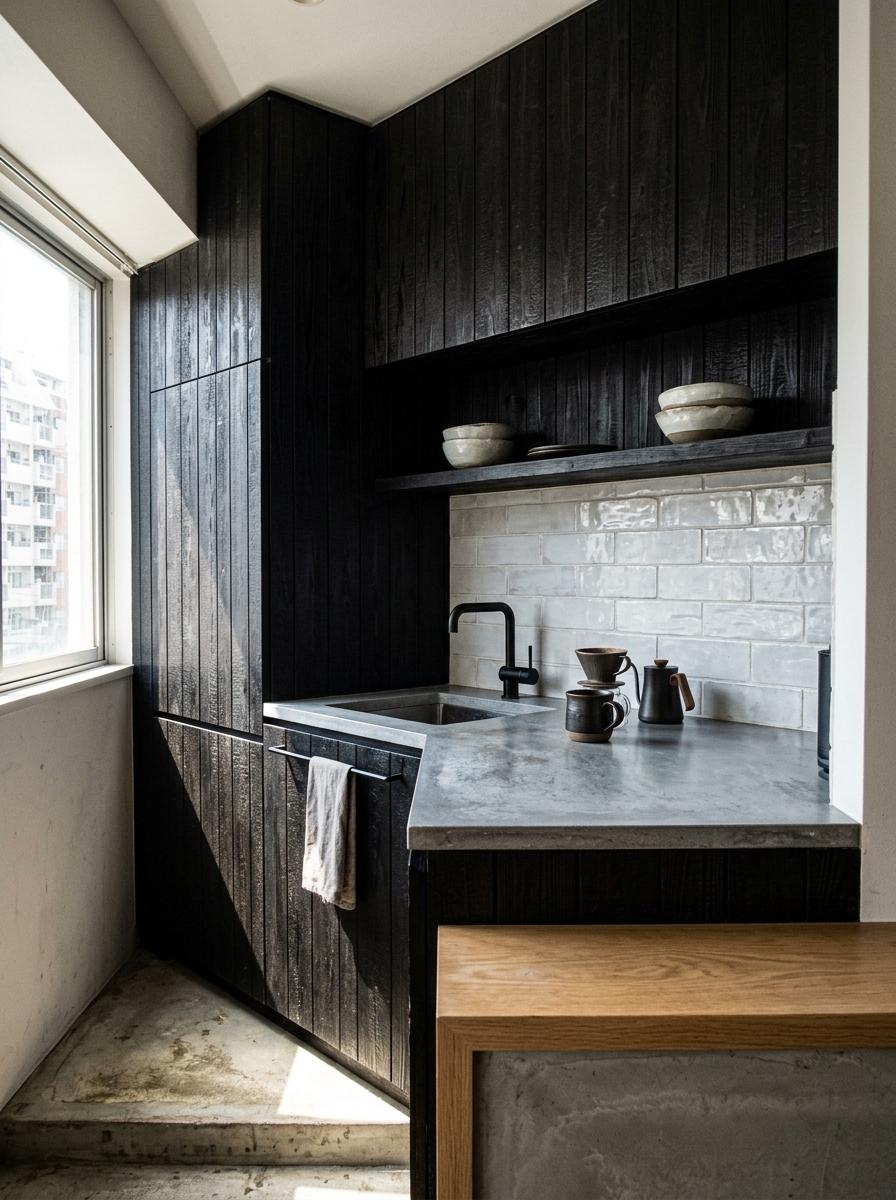

In this compact Tokyo-inspired footprint, the kitchen transcends its utilitarian purpose to become a masterclass in controlled atmosphere. Note how the tactile, open-pore grain of the charred cedar cabinetry provides a rhythmic, vertical structure that seems to absorb the surrounding city light. This deliberate choice creates a luminous gloom, where the obsidian depths of the matte finishes are punctuated by the crystalline, cool-to-the-touch surface of a brushed-quartz countertop. As your eyes trace the sharp, geometric lines against the soft, artisanal undulations of the hand-glazed ceramic tiles, the physical environment triggers a profound physiological shift; the chaotic pulse of urban life decelerates into a rhythmic, measured heartbeat. By blending the moody, cavernous aesthetics of a high-end Shinjuku lounge with the minimalist restraint of Scandinavian functionality, the space achieves a state of grounded elevation that transforms a routine morning coffee into a meditative ceremony of shadow and light.
An Industrial Take On The Classic Dark Japandi Kitchen Theme
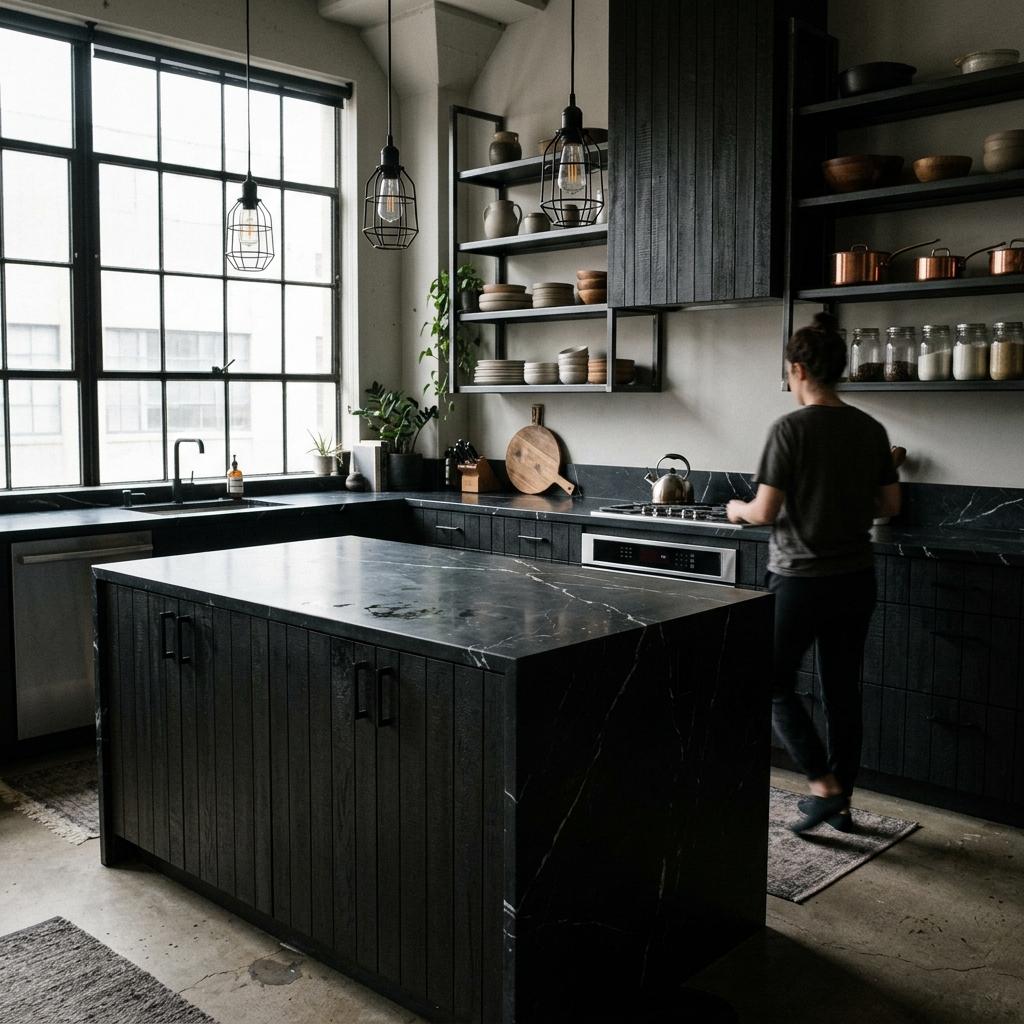

The kitchen emerges as a low-exposure sanctuary, where the deep, nocturnal palette of Japandi design is anchored by an unapologetic architectural weight. It is a space defined by industrial serenity, where the raw, utilitarian pulse of a factory floor is quieted by the rhythmic minimalism of Japanese composition. While the exterior silhouette remains anchored in the stoic permanence of the structure, the interior experience shifts toward an intimate, human-centric softness. This tactile dialogue is articulated through the juxtaposition of honed Nero Marquina marble against the linear precision of charred Shou Sugi Ban cabinetry, grounding the room in a sensory, matte depth. Ultimately, the integration of exposed blackened-steel shelving serves as a rigorous functionalist solution, transforming open storage into a deliberate bridge between cold structural necessity and the warmth of a lived-in culinary studio.
Harmonious Balance In A Dark Japandi Kitchen Environment
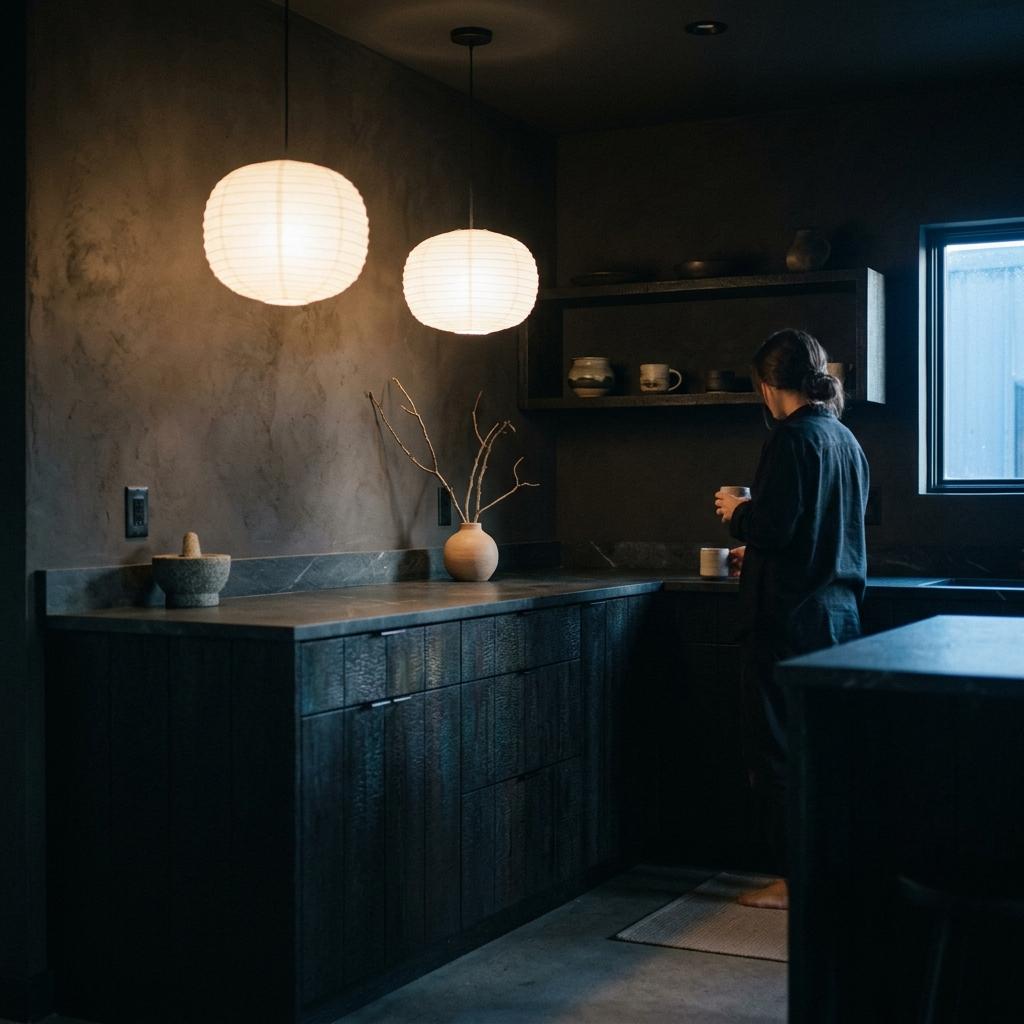

I remember standing in a friend's traditional high-gloss kitchen-a sterile, neon-lit "laboratory" that hummed with a frantic, cold energy-and feeling an immediate, visceral need for silence. It was this memory that surfaced when I recently sat down with a leading minimalist designer to discuss the rise of charcoal palettes in the home. "The misconception," they told me, leaning forward to adjust a single ceramic vase, "is that darkness equates to gloom, when in reality..." they paused, tracing the tactile, open-pore grain of a scorched oak cabinet, "...it is the only canvas that truly allows light to breathe." In this dark Japandi kitchen, we see the intentional friction between shou sugi ban textures and the soft, diffused glow of washi paper pendants-a delicate exercise in chiaroscuro that transforms a utilitarian space into a sanctuary. By moving away from the clinical brightness of modern minimalism toward a more subterranean, earthy depth, we discover that the most profound sense of domestic peace is often found in the shadows.
Zen Aesthetics For A Contemporary Dark Japandi Kitchen Setup
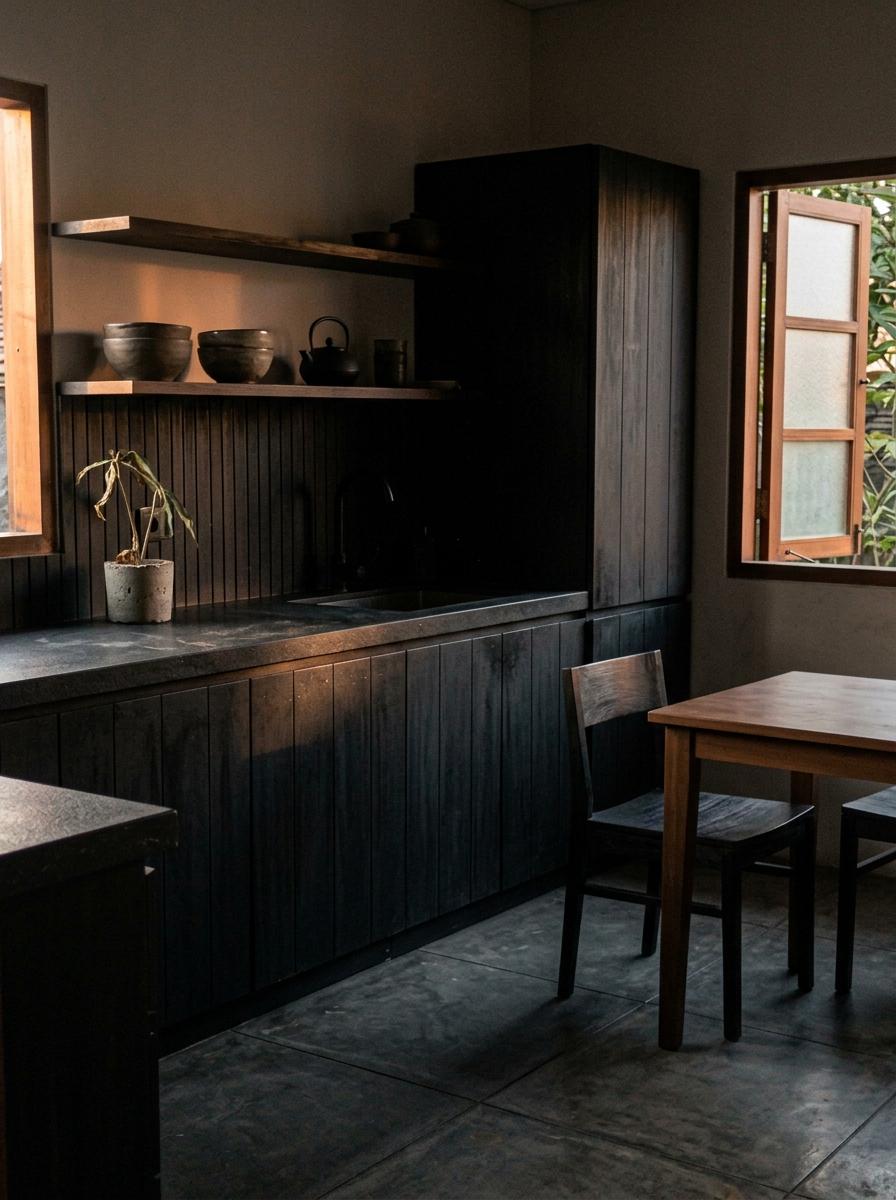

The evolution of the culinary space has transitioned from the sequestered, utilitarian sculleries of the early 20th century to the expansive, emotive hearts of the home we see today. In this project, we explored a theatrical stillness, where the moody intensity of charcoal tones meets the airy weightlessness of Japanese minimalism. Located in the leafy, prestigious enclave of Notting Hill, this kitchen was commissioned by a repeat client who sought to deepen our previous collaborations through a more rigorous exploration of texture. The final composition achieves its poise through a deliberate technical synthesis of materiality and shadow, utilizing charred cedar cladding and honed volcanic stone to anchor the space in a state of permanent, meditative calm.
Warm Minimalism In This Unique Dark Japandi Kitchen
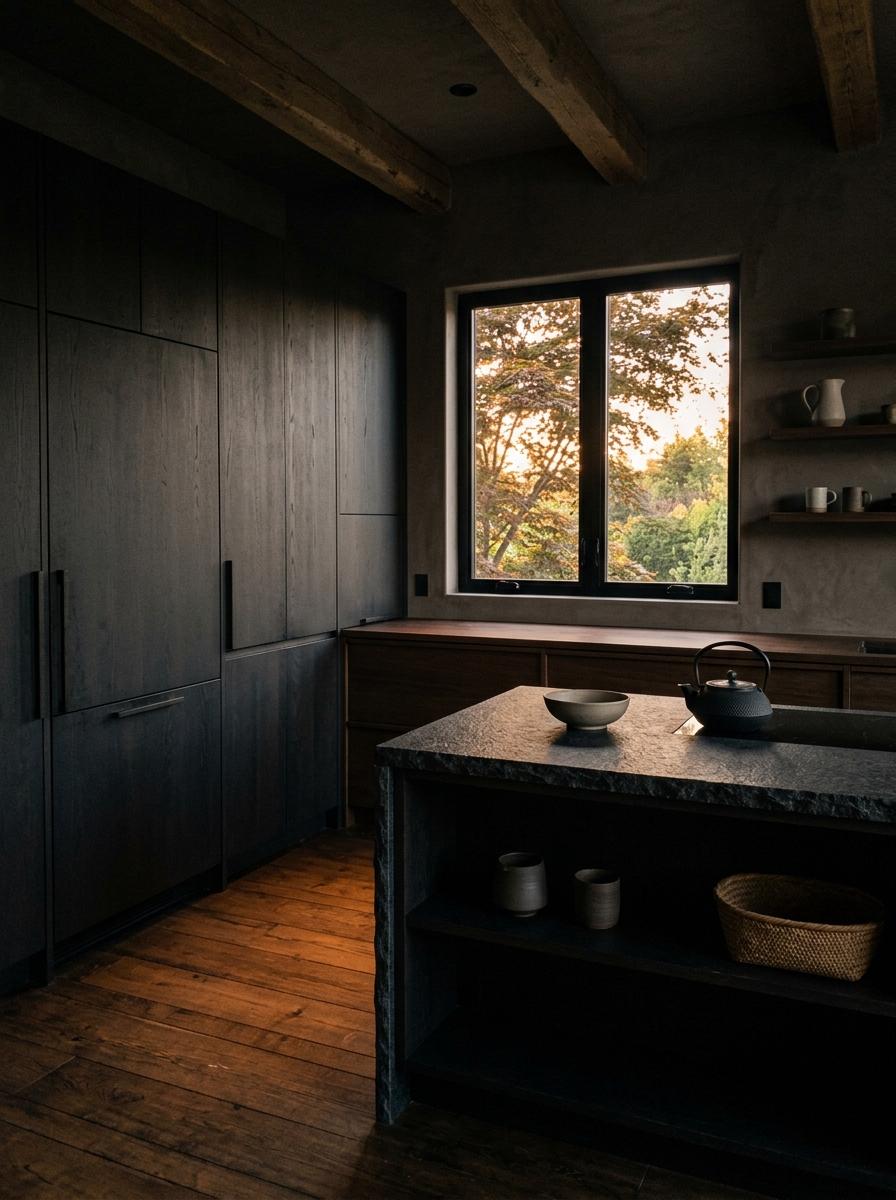

The architectural narrative of this space was conceived through a deliberate intersection of shadow and texture, where the traditional boundaries of a culinary zone are reimagined as a sanctuary of stillness. Within this void, the composition remains strikingly sparse, defined by an unadorned geometry and the hushed presence of matte surfaces that resist any visual noise. This moody, monochromatic palette provides a profound sense of depth, allowing light to pool in soft pockets rather than bounce off cluttered planes. To achieve this balance, the design carves out an expansive void, anchors the eye with weightless lines, and stretches the horizon through seamless joinery, intentional lighting, and raw materiality.
Timeless Beauty Of A Private Dark Japandi Kitchen
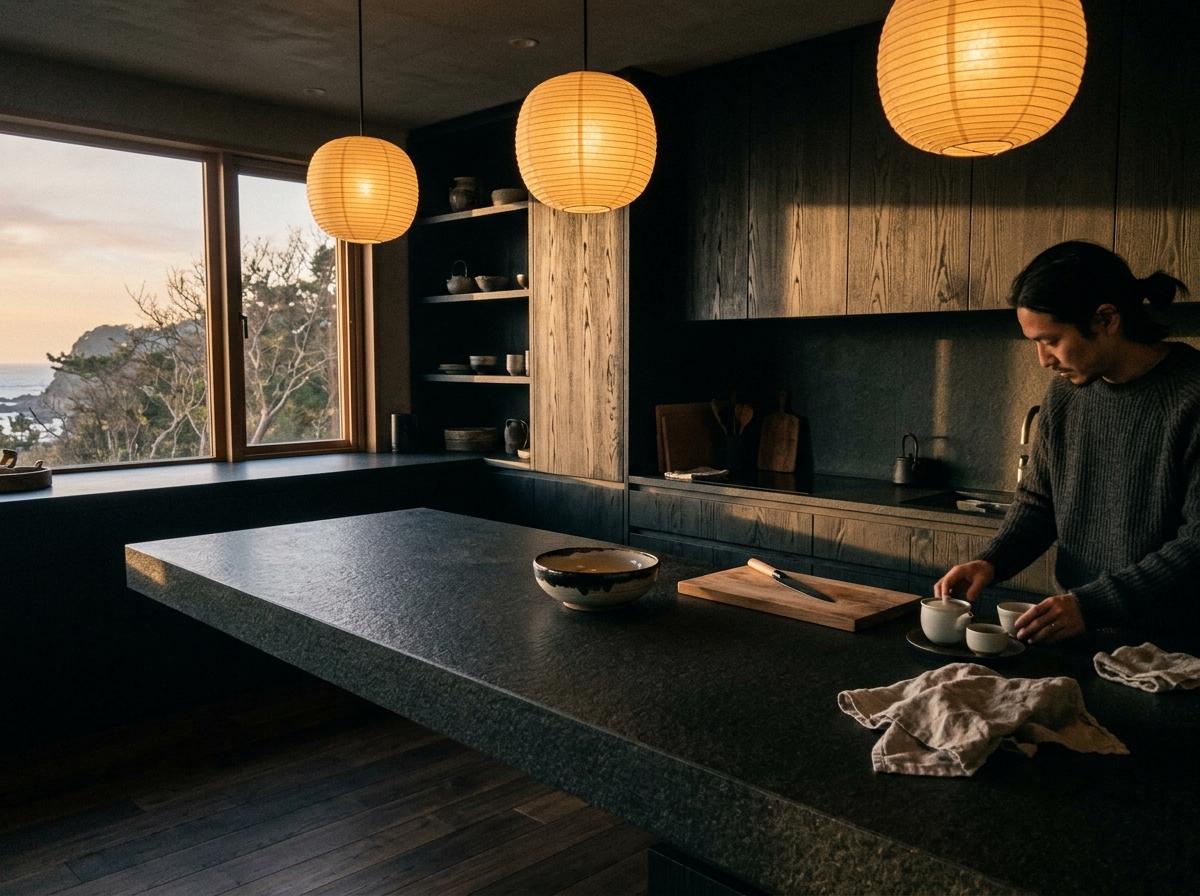

In the heart of a secluded residence overlooking the rugged coastline of Kamakura, the kitchen serves as a masterclass in the Timeless Beauty Of A Private Dark Japandi Kitchen, where the shadows do not hide, but rather reveal. Note how the charcoal-stained oak cabinetry-possessing a deep, open-pore grain-absorbs the morning light, preventing the glare often found in traditional western culinary spaces. This is a study in monumental lightness; the massive, obsidian-hued basalt island appears to float above the floorboards, its brushed, leathered surface inviting a tactile exploration. To touch the stone is to feel a sudden, grounding calm-a lowering of the heart rate as the skin meets the cool, volcanic density of the material. This visceral stillness is further elevated by the inclusion of Washi paper pendants from the Kyoto-based studio Oue, which cast a diffused, amber glow against the dark timber. By merging the somber austerity of Japanese aesthetics with the ergonomic warmth of Scandinavian living, this space transcends mere utility, transforming the act of preparation into a rhythmic, meditative ritual.
Sculptural Elements In A Moody Dark Japandi Kitchen
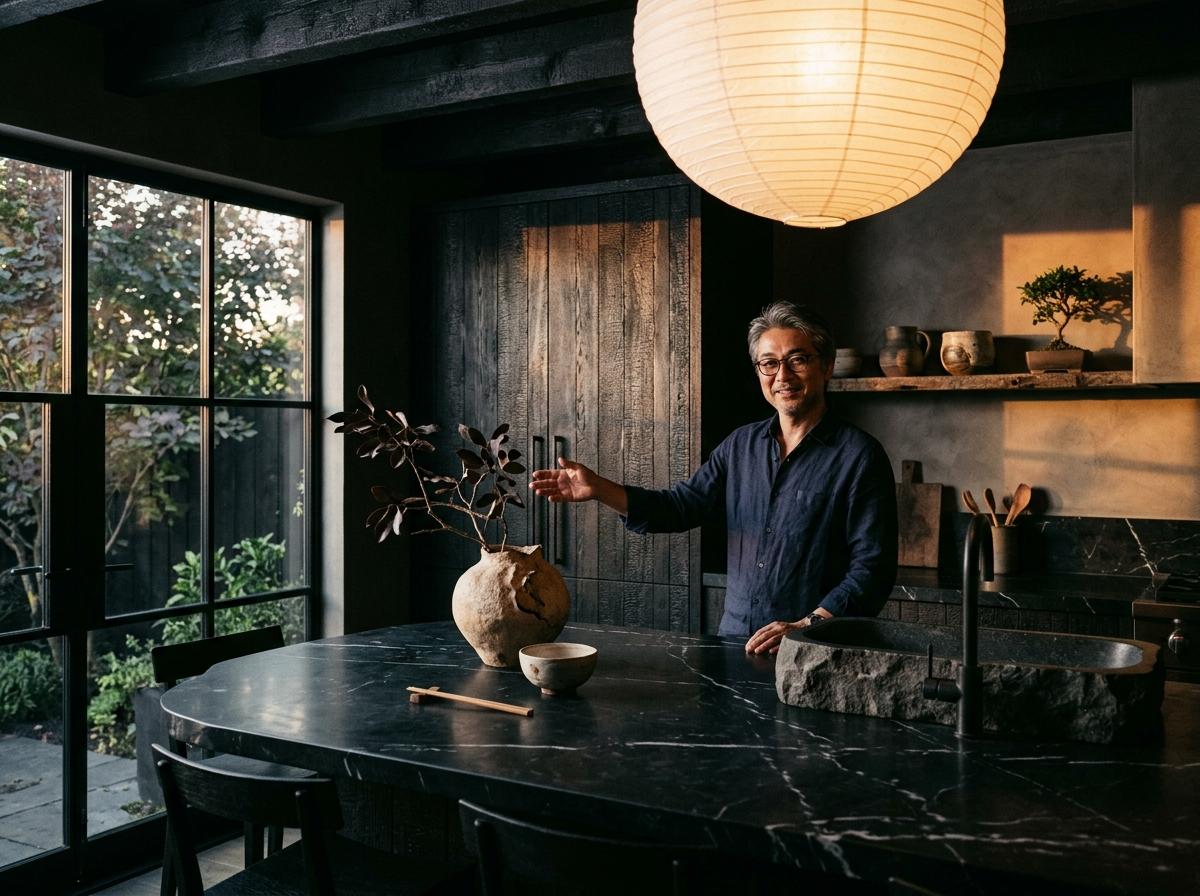

Standing in a sterile, fluorescent-lit showroom feels like being trapped inside a migraine-all sharp edges and aggressive clarity. But as I sat across from lead designer Hiroki Sato in his latest project, the air felt thick, almost tactile, as if the shadows themselves were a material choice. "The challenge with a dark palette," Hiroki told me, tracing the rim of a hand-chiseled basalt sink, "isn't the absence of light... it's the choreography of texture." He paused to adjust a single, organic ceramic vessel on the island. "If the surface doesn't speak, the room stays silent." We were surrounded by a symphony of shou sugi ban cabinetry and honed Nero Marquina, where the typical clinical kitchen had been replaced by a cavernous, meditative retreat. By juxtaposing the brutalist weight of a cantilevered stone counter against the ethereal lightness of a paper Noguchi pendant, the space achieved a rare wabi-sabi tension. This deliberate play between mass and void reveals how a kitchen can transcend utility to become a gallery of lived-in sculpture.
Discover The Quiet Allure Of A Dark Japandi Kitchen
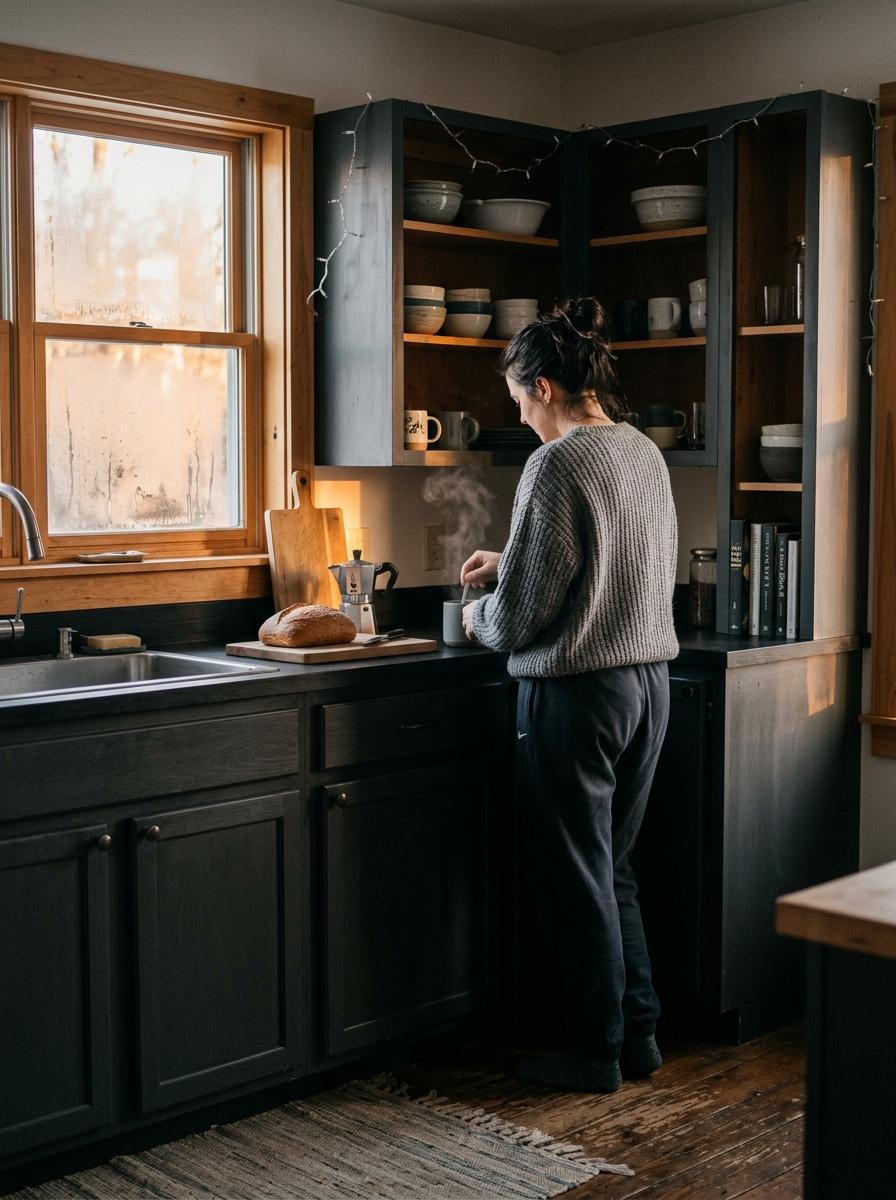

In the context of the modern home, the dark Japandi kitchen functions as a subterranean sanctuary, anchoring the open-plan living space with a profound sense of gravitational weight and stillness. It is a study in luminous shadows, where the inherent gloom of deep charcoals and obsidian stains does not diminish the light, but rather clarifies it, allowing every flicker of a candle or morning sunbeam to feel intentional. This internal world of contemplative silence stands in sharp contrast to the external frenzy of the digital age, creating a boundary where the chaos of the outside world is filtered through a lens of monochromatic calm. To touch this space is to encounter the tactile honesty of charred shou sugi ban timber paired with the honed, velvet-cool surface of Pietra Grey marble-materials that demand a slower, more deliberate physical engagement. Far from being a mere aesthetic choice, this darkness serves a rigorous industrial utility; the integration of matte-black anti-fingerprint nanotech surfaces and recessed task lighting ensures that the kitchen remains a high-performance laboratory for living, proving that true minimalism is found in the seamless fusion of shadow and solution.
Functional Art: How To Style A Dark Japandi Kitchen
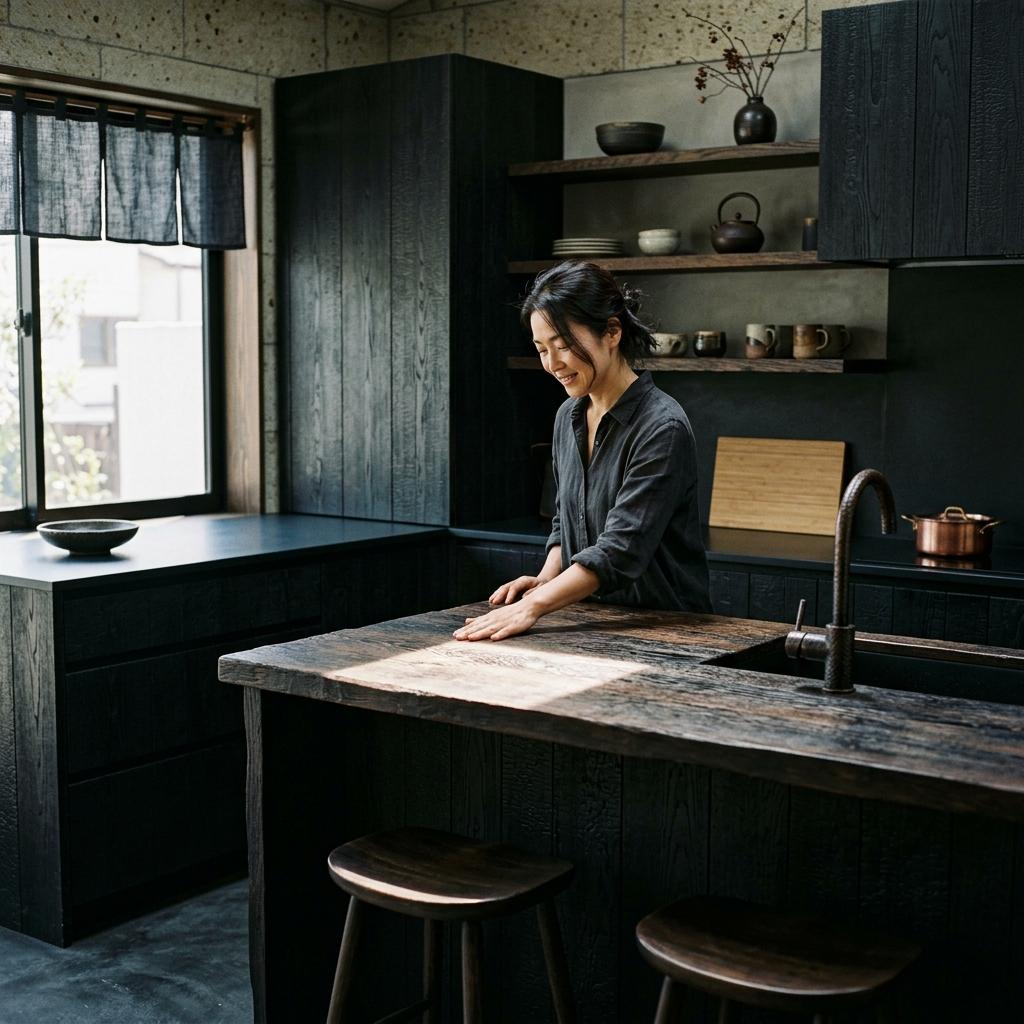

Walking into a kitchen clad in matte obsidian oak feels vastly different from the clinical, high-gloss white laboratories that dominated the last decade; the former doesn't just occupy space, it absorbs the frantic energy of the day. During a recent study of a Tokyo residence, I watched as sunlight hit a charred-timber island, and the homeowner remarked, "The shadows here aren't empty," pausing to trace the tactile grain of the wood, "they are actually the anchors of the room." This interplay of wabi-sabi imperfection and Scandi utility creates a visual silence, where the "visual noise" of traditional cabinetry is replaced by a moody, atmospheric depth. By juxtaposing the sterile, reflective glare of modern minimalism against the grounding, velvet-like textures of a dark palette, we discover that a kitchen can transcend its utility to become a sculptural centerpiece. This shift toward a more somber, intentional aesthetic invites us to view our most functional spaces through the lens of lived-in, curated art.

Comments