
At Japandi.design, we view the kitchen not merely as a utility zone, but as the ultimate manifestation of hybridity-where the rustic, weathered soul of Japanese wabi-sabi converges with the streamlined, high-performance ethos of Scandinavian Modernism to yield a space of profound tectonic clarity. This aesthetic synthesis demands a delicate dialectical pairing: the cabinetry must feel architecturally rigorous, yet inherently organic; the layout is dictated by uncompromising precision, but softened by an artisanal, human touch. By curating a palette of tactile, matte finishes and diaphragmatic spatial arrangements, we transform the culinary environment into a hallowed, monochromatic sanctuary that is simultaneously ethereal, grounded, and visceral.
Minimalist Japandi Kitchen Style
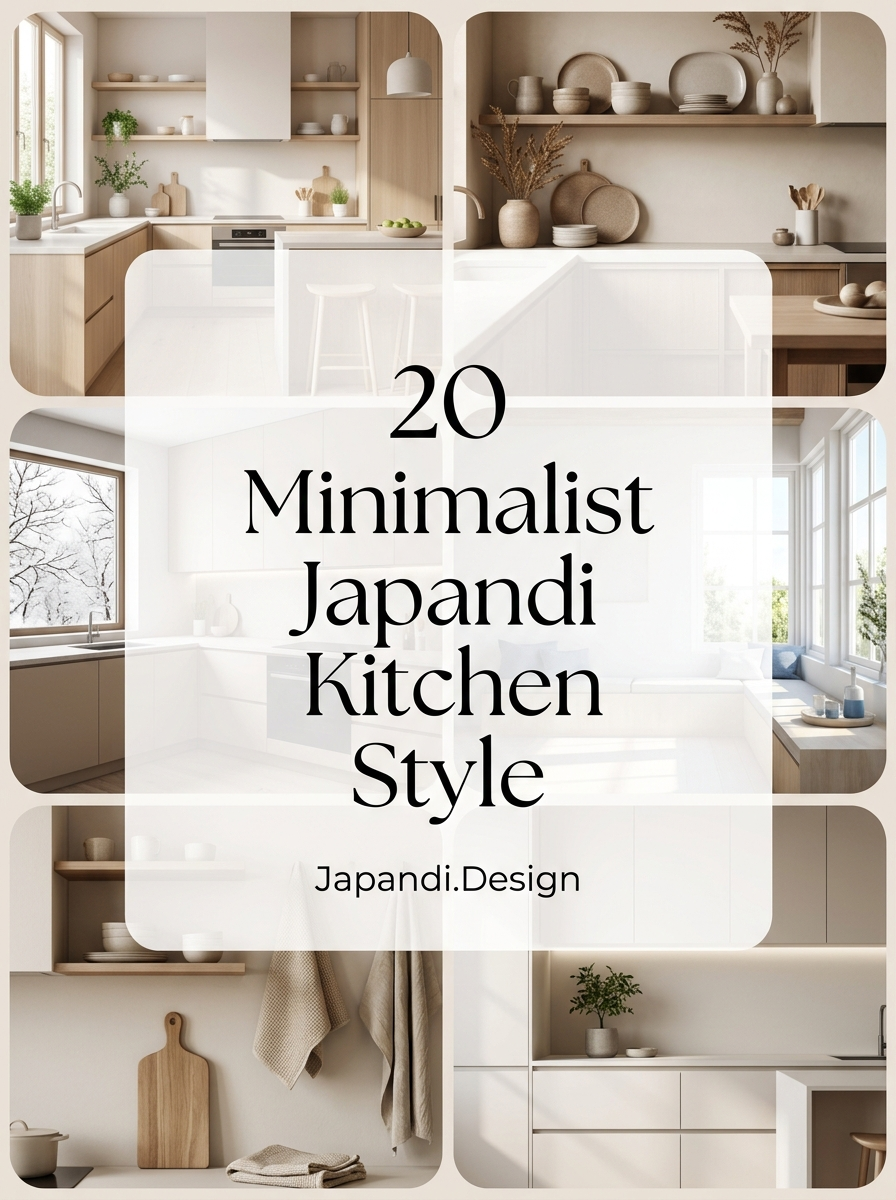

A Guide To Creating The Perfect Minimalist Japandi Kitchen Style
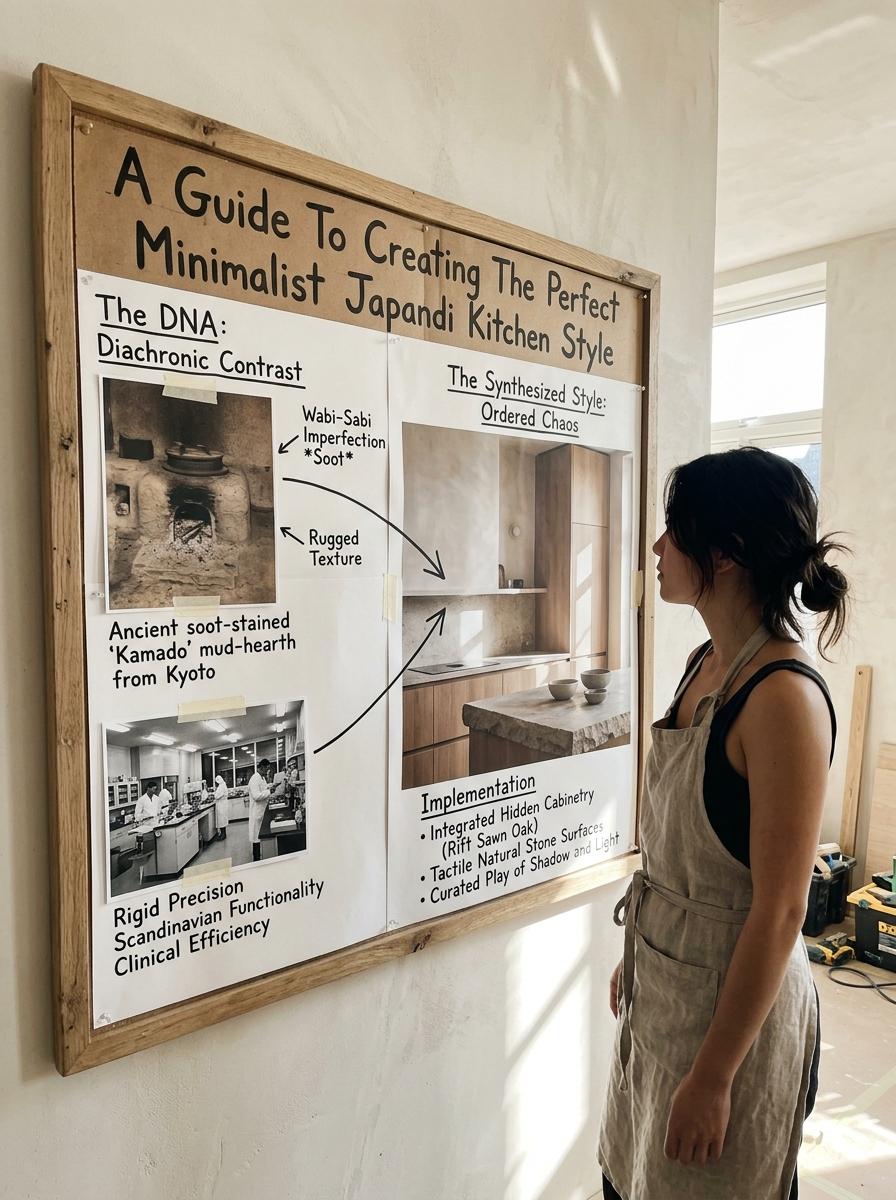

To truly understand the DNA of a minimalist Japandi kitchen, You must look beyond modern aesthetics to the diachronic contrast between the soot-stained Kamado hearths of old Kyoto and the clinical, high-tech efficiency of mid-century Western laboratories. This kitchen represents a harmonious friction, a space defined by its ordered chaos where the rugged imperfection of wabi-sabi meets the rigid precision of Scandinavian functionality. Situated in a light-filled penthouse overlooking the leafy streets of Aoyama, Tokyo, the project was commissioned by a repeat client who sought to refine their previous collaborations into a singular expression of domestic tranquility. The resulting design achieves its balance through a rigorous technical synthesis of integrated hidden cabinetry, tactile natural stone surfaces, and a curated play of shadow and light.
Inside A Functional Minimalist Japandi Kitchen Space
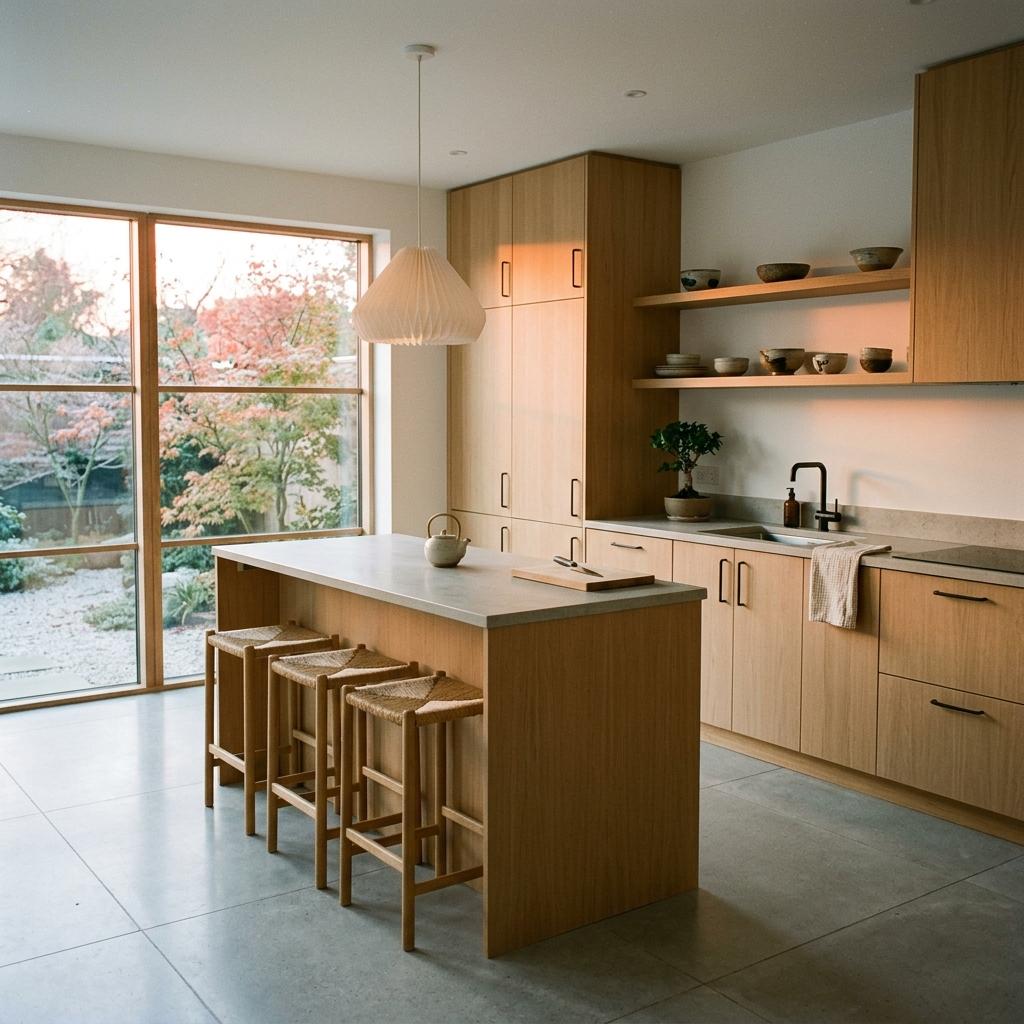

The architecture of this culinary sanctuary was conceived through a meticulous distillation of form, where every structural element was intentionally positioned to honor the void. In this unburdened environment, sterile surfaces meet the quietude of vacant volumes, ensuring that the visual landscape remains free from the friction of excess. Tactile timber textures ground the room, creating a soft, serene symmetry that flows seamlessly from the cabinetry to the hearth. Strategic lighting carves out depth within the alcoves, while the open floor plan stretches the perceived boundaries of the room to invite a lingering stillness. This refined balance is anchored by the presence of honed limestone, matte black hardware, and the rhythmic warmth of white oak.
How To Achieve A Minimalist Japandi Kitchen Design In Small Homes
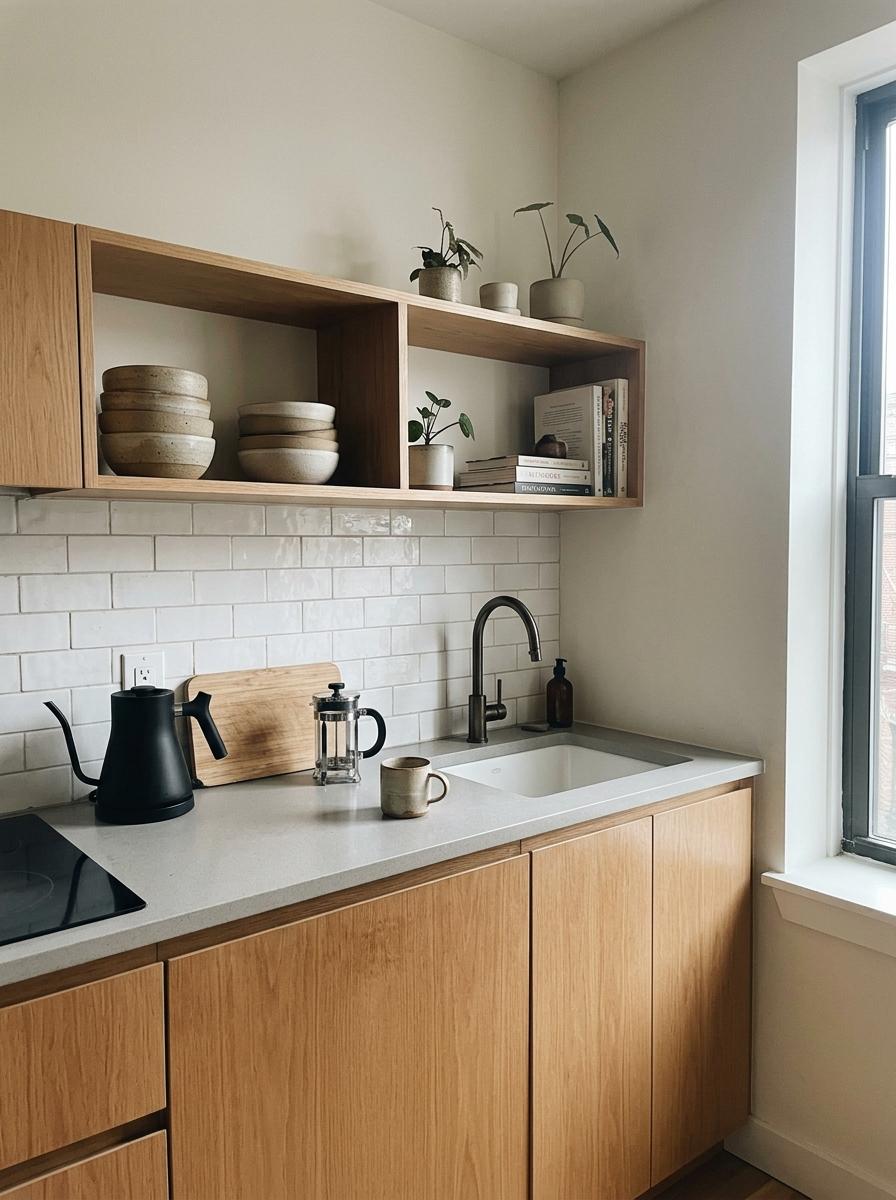

At its core, a Japandi kitchen is the masterful synthesis of Scandi-industrial efficiency and Japanese aesthetic restraint-a fusion where pragmatic hygge meets the transcendent simplicity of wabi-sabi. In the context of a small-footprint home, this design language demands a commitment to shibui-an unobtrusive beauty-integrated with the ergonomic precision of Nordic cabinetry. The result is a space that feels inherently disciplined yet profoundly soulful, balancing the clinical geometry of handleless surfaces with the visceral, haptic warmth of reclaimed timber and honed stone. To achieve this, You need to curate a sensory landscape that is simultaneously austere and indulgent, employing a palette of monochromatic ochres, porous ceramics, and ethereal, diffused light to transform a utilitarian kitchenette into a sanctuary of quietude.
The Art Of Building A Minimalist Japandi Kitchen For Modern Living
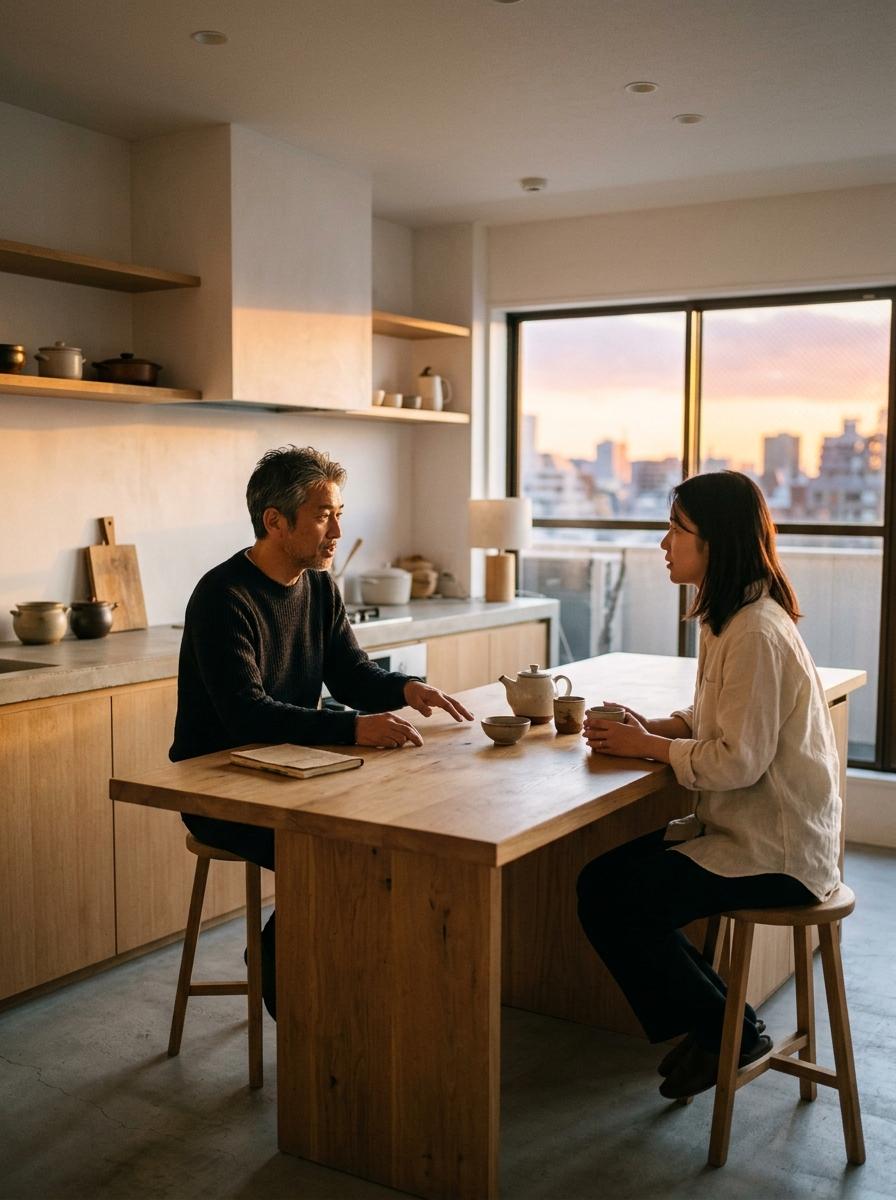

I remember sitting across from a Tokyo-based designer in a kitchen that felt less like a utility room and more like a curated sanctuary. As he traced the grain of a reclaimed white oak island, he paused, searching for the right words to describe the philosophy behind the space. “The modern kitchen,” he told me, leaning in as the soft morning light caught the matte patina of the cabinetry, “is often a battlefield of chrome and noise.” He gestured toward the seamless, handleless drawers. “But here, we aim for shibui-a complex simplicity that honors the void as much as the object.” This stillness is a far cry from the cluttered, maximalist hubs we've grown accustomed to, where heavy moldings and a cacophony of stainless-steel appliances compete for visual dominance. In a traditional high-tech kitchen, the eye is exhausted by sensory overload; in a Japandi-inspired culinary space, however, the aesthetic shifts toward a rhythmic tactile experience, defined by "negative space" and a palette of organic neutrals. This intentional juxtaposition between the chaotic world outside and the meditative warmth of the home illustrates why we are seeing a global shift toward this hybrid discipline. The pursuit of such a balance is not merely about cabinetry or stone, but about understanding how the art of reduction can ultimately lead to a more enriched way of living.
Experience A Warm Minimalist Japandi Kitchen With Natural Elements
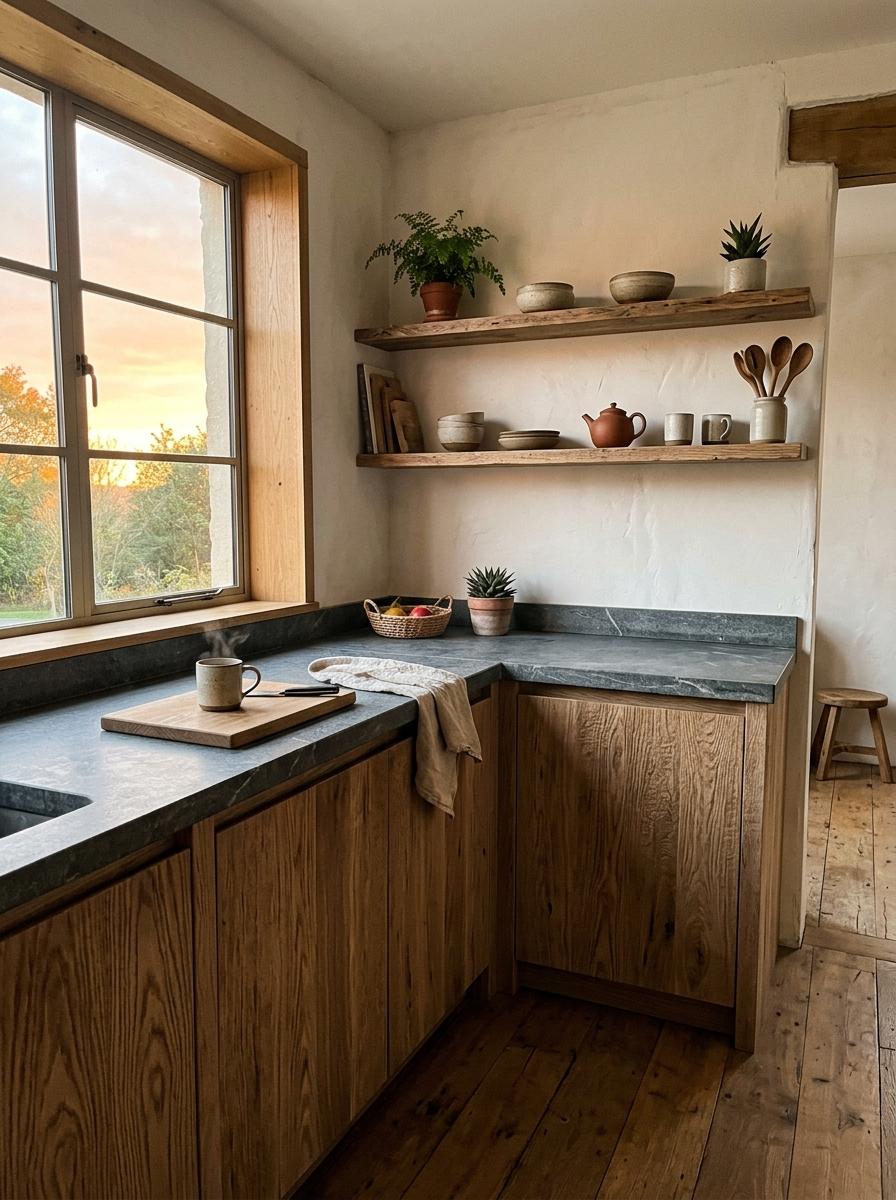

In this culinary sanctuary, the architecture achieves a state of precise irregularity, where the clinical efficiency of a modern workspace meets the soul-stirring warmth of organic craft. Note how the tactile grain of sandblasted reclaimed ash cabinetry anchors the room, offering a haptic counterpoint to the velvet-matte honing of the Pietra del Cardoso stone counters. This intentional dialogue between the fibrous and the mineral creates an environment of ordered spontaneity, grounding the rush of daily life in a framework of disciplined calm. As you trace the vein of the stone, the physical sensation of cool, dense earth triggers a visceral lowering of the heart rate-a physiological transition from the kinetic energy of the outside world to a state of domestic mindfulness. Drawing inspiration from the quietism of Kyoto's tea houses and the refined utilitarianism of Copenhagen's minimalist studios, the kitchen transcends its functional purpose to become a vessel for sensory restoration.
The Essential Elements Of A Minimalist Japandi Kitchen Style
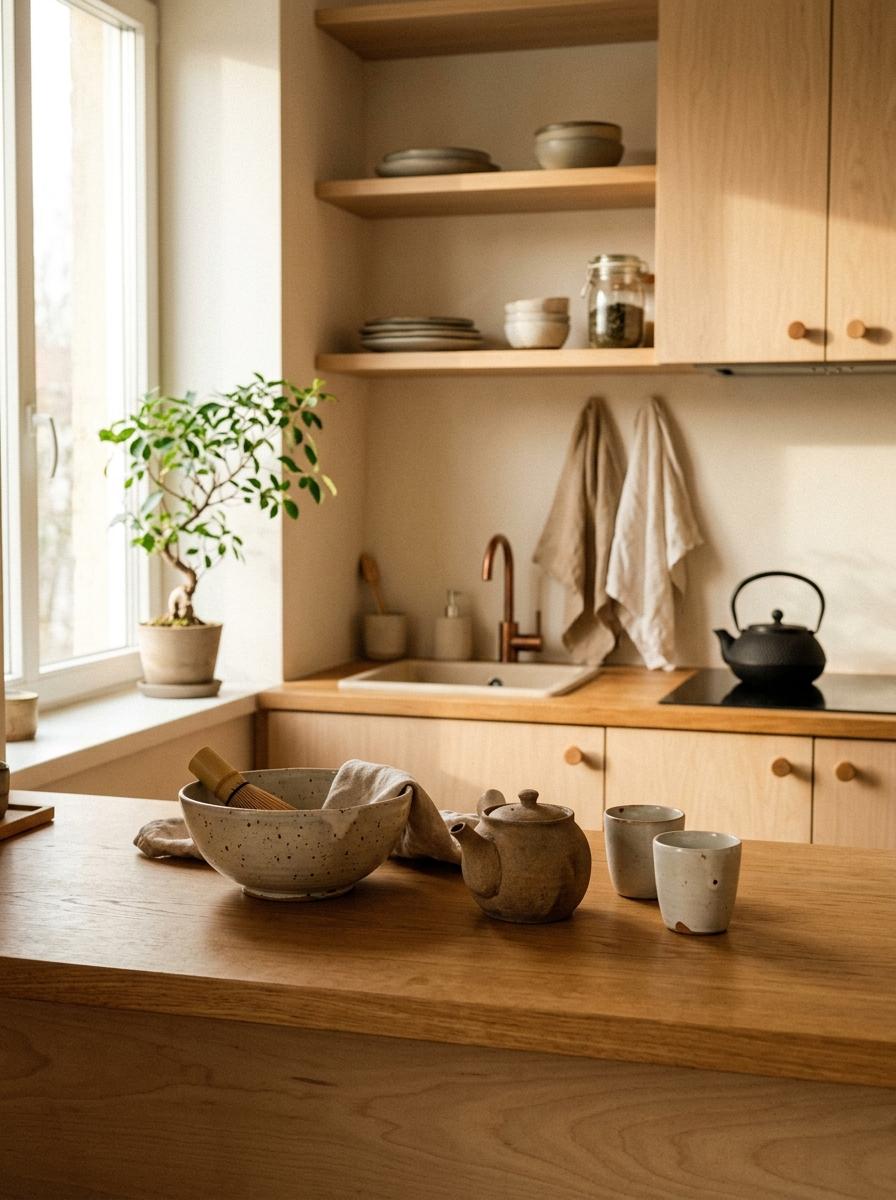

To understand the modern Japandi kitchen, You can first appreciate the diachronic contrast between the smoke-filled, utilitarian sculleries of the Edo period and the clinical, high-tech kitchen laboratories of the late 20th century; today's design rejects both the grime of the past and the coldness of the near-present in favor of a soulful, high-performing sanctuary. This evolution results in a stunningly modest aesthetic-a stylistic oxymoron where the raw, "imperfect" texture of hand-fired ceramic tiles meets the "perfect" precision of laser-cut oak cabinetry. In the leafy, high-design enclaves of Aoyama, Tokyo, and the historic streets of Frederiksberg, Copenhagen, this balance has become the ultimate marker of quiet luxury. For this featured project, the owners are repeat clients who previously commissioned a minimalist retreat in Kyoto, a partnership that underscores a deep, technical trust in the enduring value of this hybrid style. Ultimately, the success of this kitchen is found in a rigorous technical synthesis, where the warmth of Japanese wabi-sabi is engineered through Scandinavian modularity and the strategic calibration of natural light.
Designing A Minimalist Japandi Kitchen With Sustainable Materials
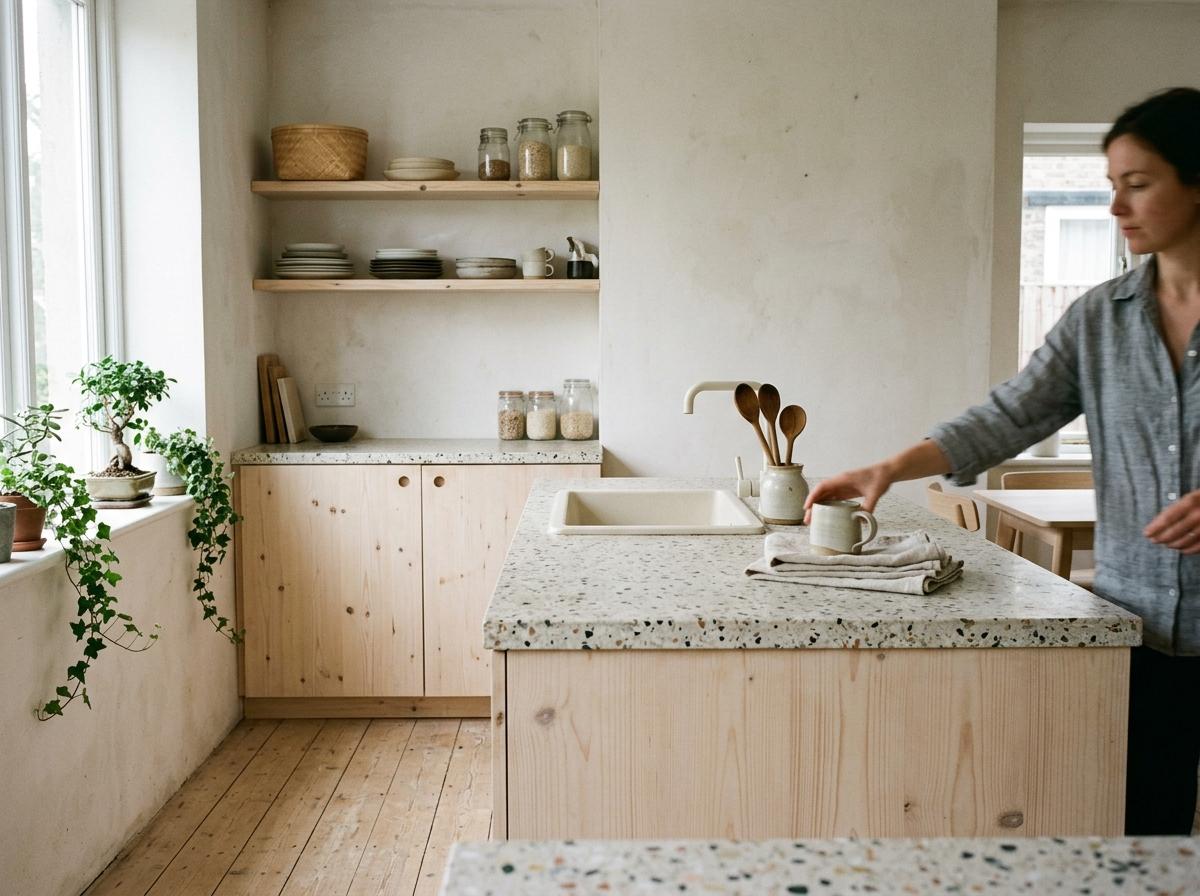

The layout of this Japandi kitchen was conceived as a deliberate dialogue between Scandinavian utility and Japanese serenity, where the structural footprint is defined by a commitment to ecological integrity. Within this curated void, silent surfaces and spare silhouettes eliminate the friction of visual noise, replacing traditional clutter with a profound, pervasive calmness. This balanced basement of design relies on the tactile tension between polished plaster, pale pine, and pensive patterns of grain. To achieve such breathability, the cabinetry carves out generous pathways, the central island anchors the expansive volume, and the filtered light illuminates a harmony of recycled stone, reclaimed timber, and raw linen.
Why Minimalist Japandi Kitchen Style Defines Modern Culinary Spaces
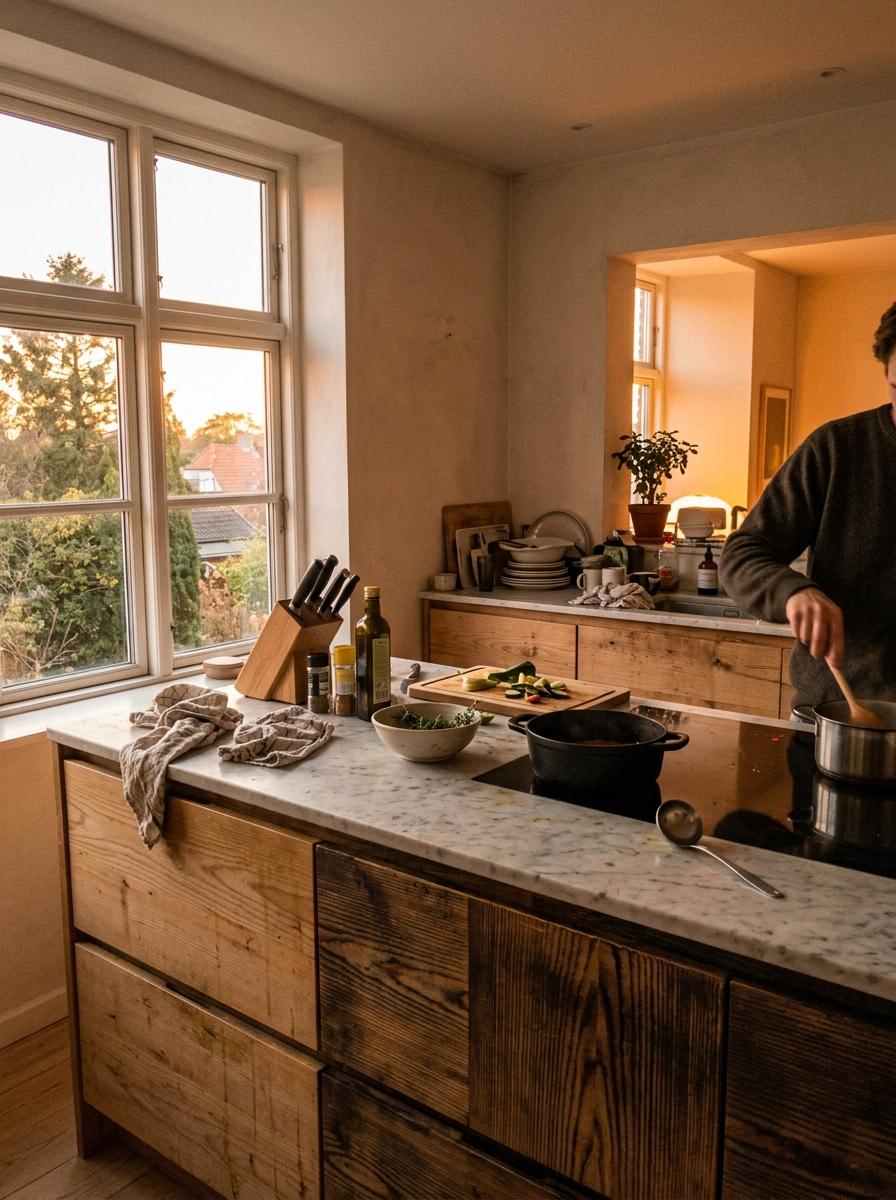

The modern kitchen has evolved from a hidden service corridor into the domestic sanctuary of the home, a shift where the Japandi aesthetic acts as the definitive spatial anchor. It exists as a form of cluttered emptiness, where the rigorous discipline of Japanese Zen reconciles with the cozy, democratic warmth of Scandinavian Hygge. This movement creates a sharp structural dualism: while the external facade presents a silent, monolithic boundary of handleless cabinetry, the internal life of the kitchen pulses with the rhythmic heat of culinary labor. Tactile immersion is found in the interplay of honed Carrara marble against the raw, open-grain texture of charred larch wood, grounding the inhabitant in a palette of organic permanence. Ultimately, the style transcends mere decoration through functionalist specification-integrating flush-mount induction systems and concealed task lighting to ensure that the precision of industrial utility never disrupts the poetic stillness of the hearth.
The Ultimate Guide To A Minimalist Japandi Kitchen Transformation
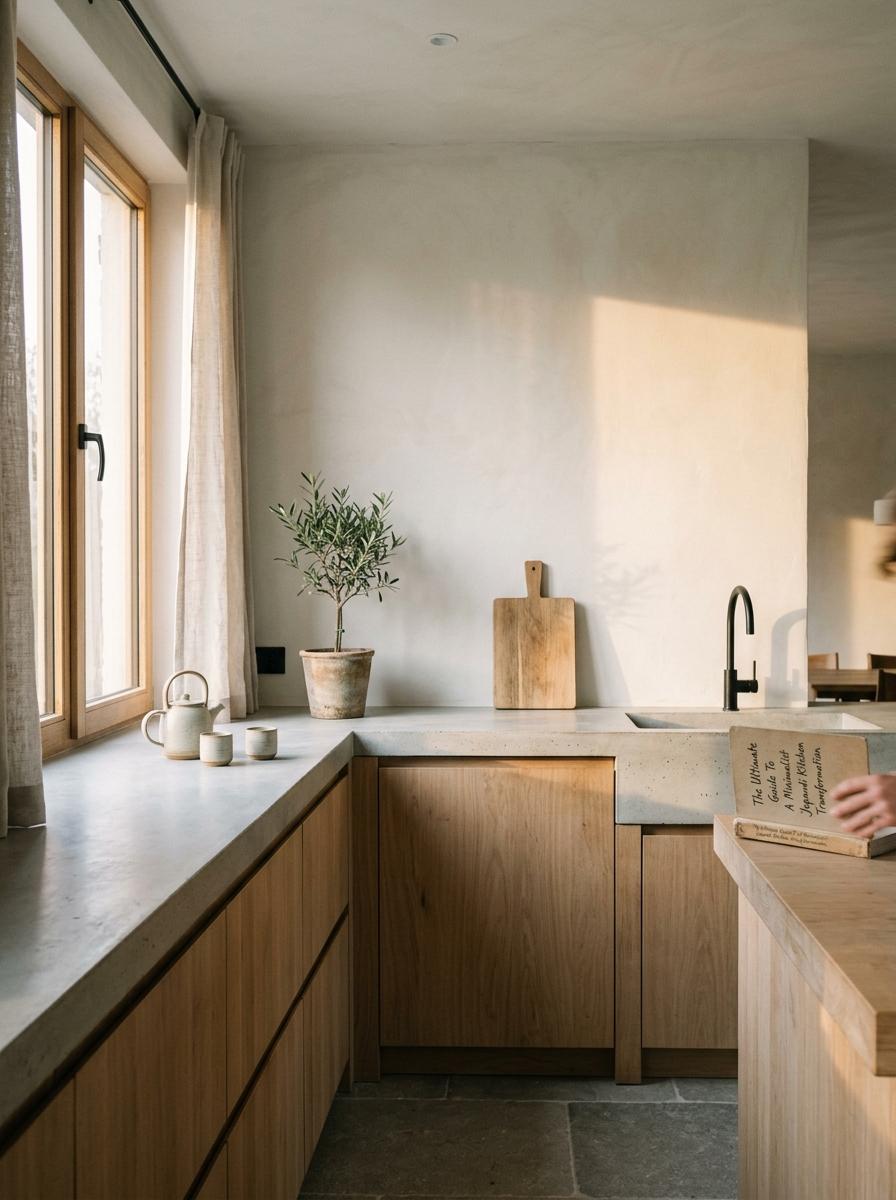

I remember standing in my old kitchen, a space defined by "visual noise"-a frantic collection of chrome gadgets, mismatched ceramic jars, and the cold, clinical glare of overhead fluorescent lighting. It was a utilitarian box that felt perpetually cluttered, no matter how much I tidied. Seeking a remedy, I sat down with a local master of joinery to discuss how one might strip away the chaos without losing the soul of a home. “The secret,” he said, pausing to run a thumb over a grain of raw white oak, “isn't just about removing objects. It's about...” he looked up, his eyes scanning the sketches on his workbench, “...intentionality. You must choose materials that breathe.” This conversation shifted my perspective from seeing a kitchen as a mere workstation to viewing it as an exercise in shibui-the Japanese concept of understated beauty. We moved away from the chaotic, high-contrast energy of my past and toward a palette of tactile warmth: matte limewash walls, handle-less cabinetry, and a seamless integration of organic textures that invite a sense of hygge. This evolution from a frantic storage unit to a balanced sanctuary serves as the blueprint for understanding how a minimalist Japandi transformation can redefine the very heart of your home.
Exploring The Aesthetic Of A Minimalist Japandi Kitchen Layout
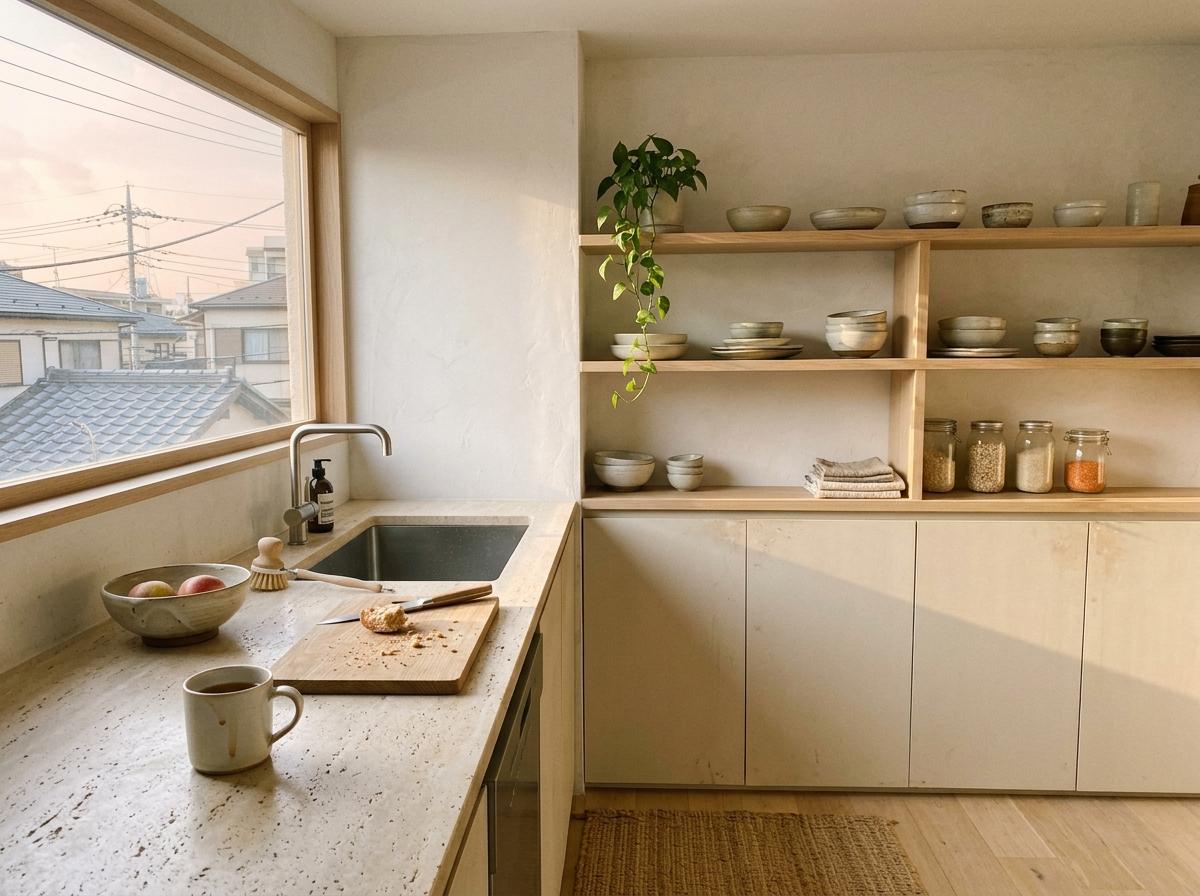

In the heart of a Tokyo residence designed by Keiji Ashizawa Design, the kitchen transcends mere utility to become a masterclass in the Japandi ethos. Note how the juxtaposition of porous, honed travertine countertops against the velvety, matte-lacquered cabinetry creates a tactile dialogue that guides the eye across the minimalist expanse. This intentional curation exemplifies a complex simplicity, where the rigorous geometry of the layout is softened by the organic, whisper-quiet grain of FSC-certified white oak. As you trace the seamless transition from cool stone to warm timber, the space triggers a profound physiological deceleration; your breathing rhythmicizes with the horizontal lines, and the initial visual austerity melts into a deep, visceral sense of sanctuary. It is an environment where the disciplined restraint of Scandinavian functionalism meets the weathered soul of Japanese wabi-sabi, grounding the dweller in a state of alert tranquility.
A Closer Look At Minimalist Japandi Kitchen Cabinetry Design
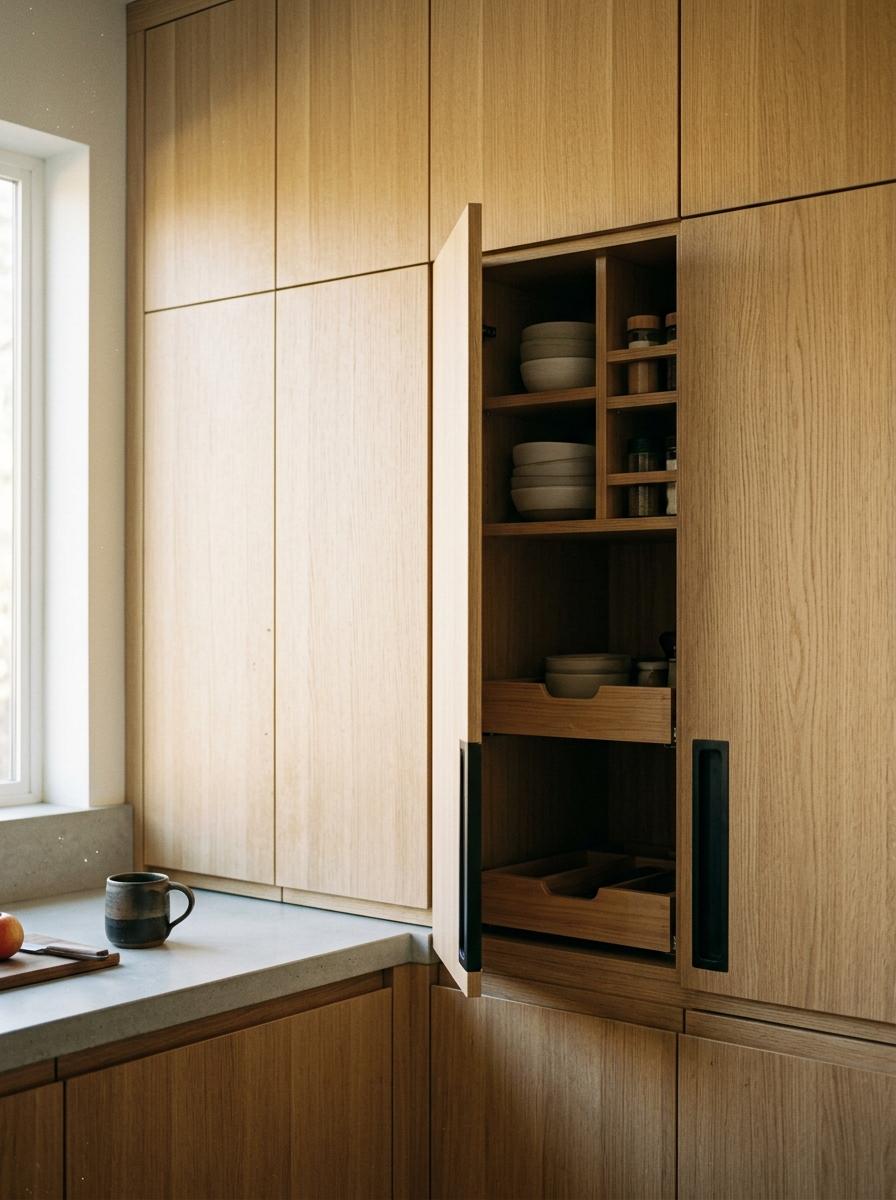

The minimalist Japandi kitchen serves as a silent nucleus of the home, a space where the sterile discipline of a laboratory meets the warm, meditative hush of a forest clearing. Within this framework, the cabinetry embodies a complex simplicity; it is a design language that demands an arduous level of craftsmanship to achieve an appearance of effortless void. While the exterior facades present a seamless, monolithic wall of verticality, the interior architecture reveals a rigorous compartmentalization, creating a sharp tension between the stoic stillness of the outer face and the kinetic organization hidden within. This duality is grounded in material honesty, favoring the raw, tactile grain of quarter-sawn white oak or matted ash, often punctuated by a singular, precision-milled recessed finger pull in blackened steel. Far from mere aesthetic indulgence, these cabinetry systems function as a high-performance solution for modern living, where integrated handle-less channels and soft-close mechanical tracks eliminate visual noise, transforming the kitchen into a high-utility apparatus that preserves the sanctuary of the home.
Balance Beauty And Function In A Minimalist Japandi Kitchen
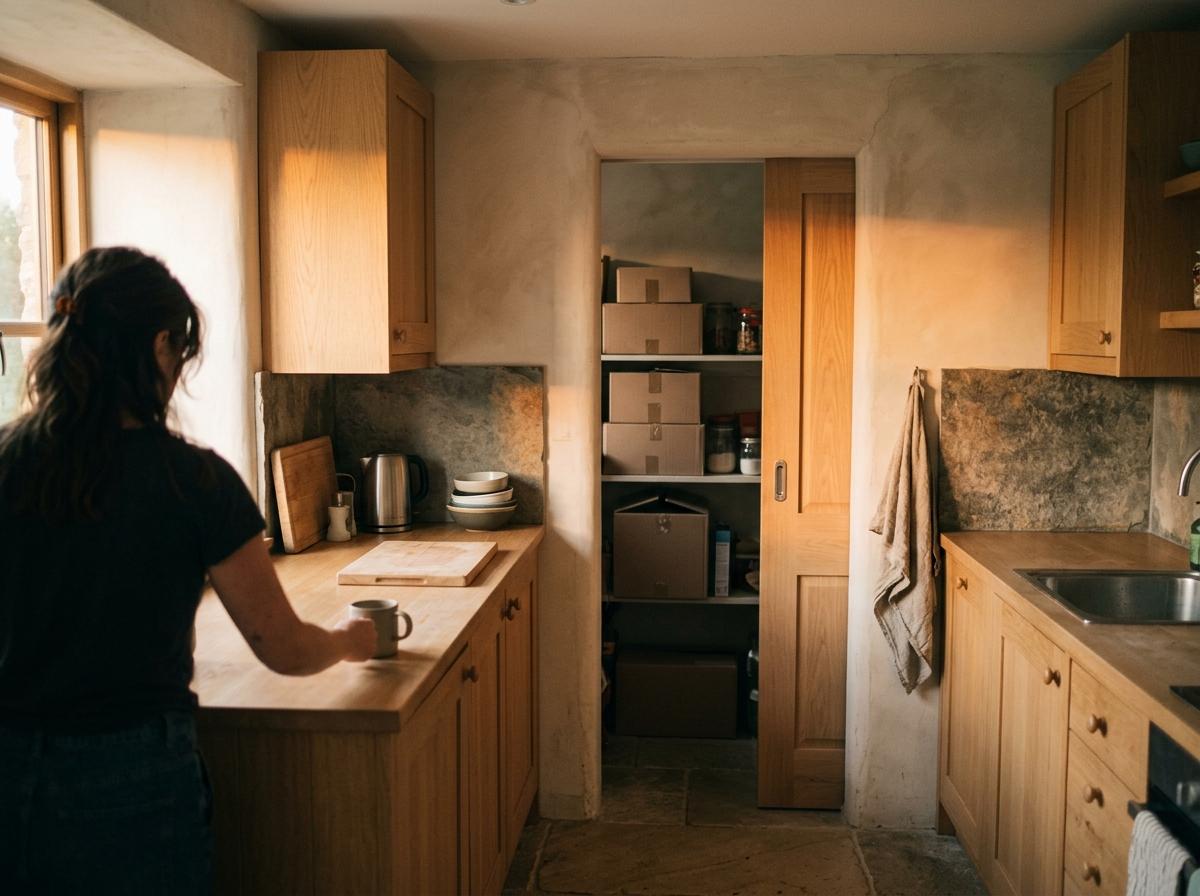

I recently found myself standing in a kitchen that felt like a battlefield of modern convenience-a chaotic landscape of chrome appliances, tangled cords, and the relentless hum of a refrigerator that seemed to vibrate with the same frantic energy as its owner. It was the antithesis of the quiet apartment I visited a week later in Kyoto, where the air seemed to settle into the very grain of the reclaimed cedar cabinetry. "The secret isn't just removing the clutter," my host, a local craftsman, remarked as he slid a hidden pocket door to reveal a perfectly integrated pantry, "it is about giving the object... space to breathe." He paused to pour tea, the steam rising against a matte stone backsplash, before adding, "If a tool has no beauty, it shouldn't be on the counter; if it has no use, it shouldn't be in the house." This delicate calibration of shibui-that subtle, unobtrusive beauty-and Scandinavian utility is what defines the tactile soul of the Japandi kitchen. Beyond the mere aesthetics of light oaks and limewash finishes, this design language seeks to resolve the tension between the domestic machine and the sanctuary of the home. This pursuit of harmony is not merely a stylistic choice, but a fundamental reimagining of how we inhabit our most functional spaces.
Minimalist Japandi Kitchen Ideas For An Open Floor Plan
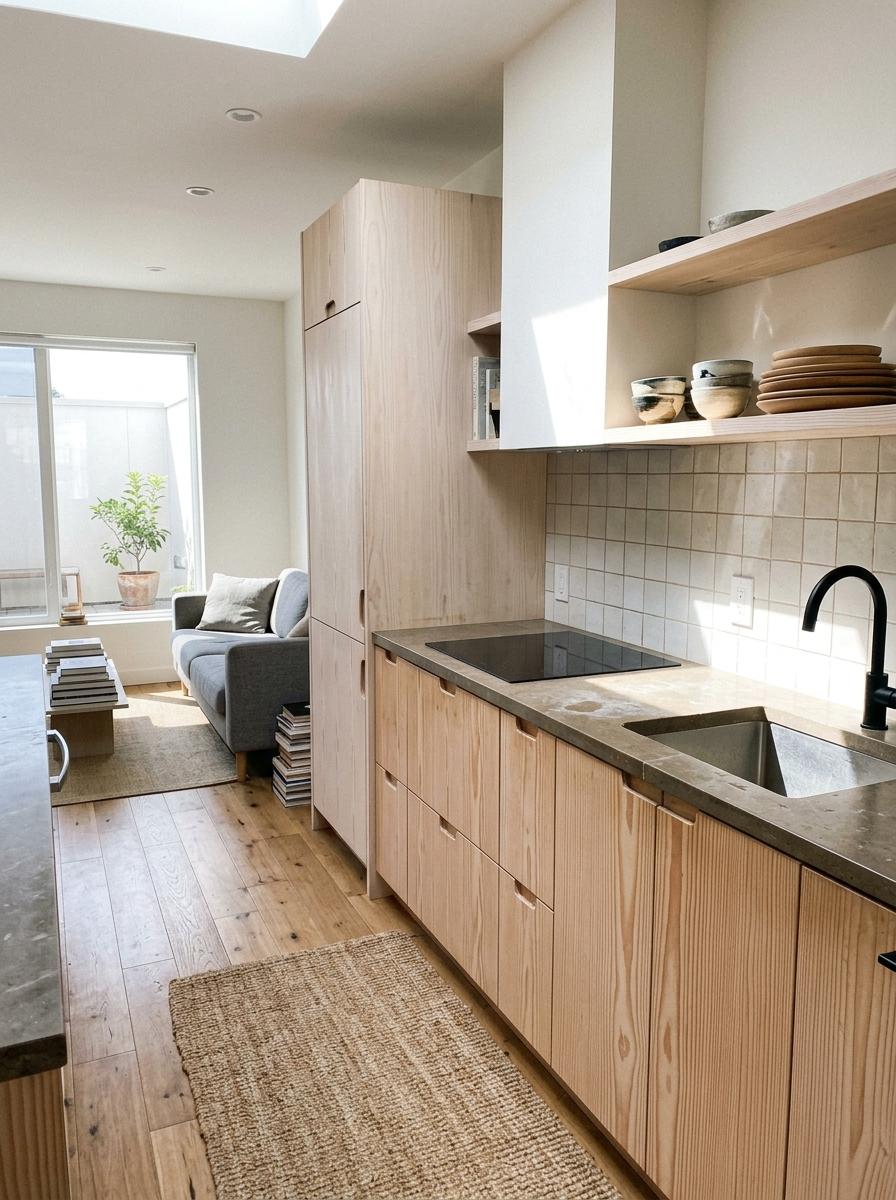

In the modern open floor plan, the kitchen no longer exists as a secluded service bay but as the silent gravitational center of the domestic landscape, anchoring the fluidity of the living area with a sense of curated stillness. This transition embodies a functional void, where the emptiness of the layout is precisely what fulfills the room's purpose, creating a space that feels both expansive and intimately contained. While the external architecture invites the chaotic light and movement of the surrounding home, the internal logic of the Japandi kitchen remains a sanctuary of rigid composure, drawing a sharp line between the social energy of the hearth and the disciplined order of the culinary zone. This equilibrium is physically articulated through the dialogue of honed Basaltina stone countertops paired against the pale, vertical grain of quarter-sawn Douglas Fir cabinetry, textures that ground the ephemeral design in raw, earthbound permanence. By integrating recessed finger-pull channels and flush-mount induction surfaces, the design eliminates visual noise, transforming the utilitarian demands of cooking into a seamless, invisible choreography that serves the home without disrupting its peace.
Transform Your Cooking Area With Minimalist Japandi Kitchen Elements
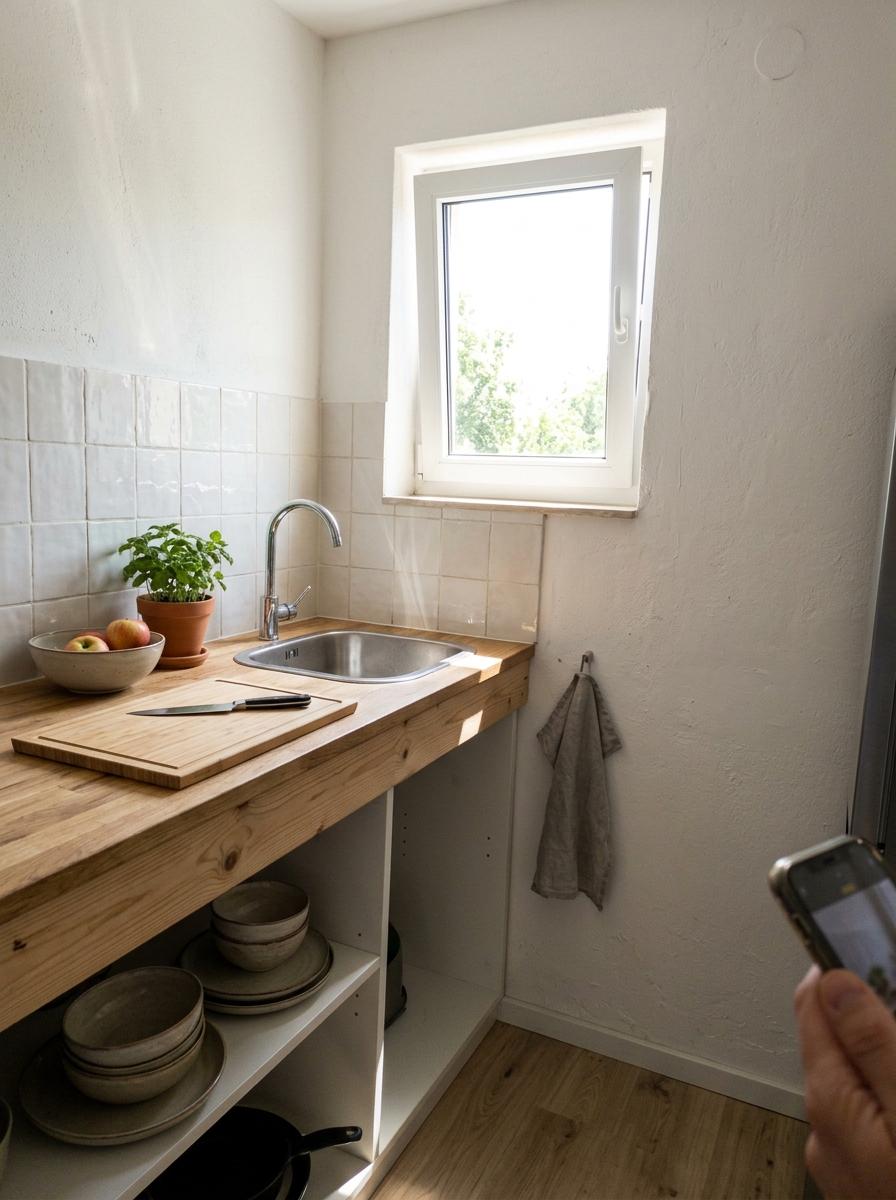

At its core, the Japandi kitchen is a sophisticated architectural hybrid: the utilitarian rigor of Scandinavian Functionalism fused with the ancient Japanese aesthetic of Wabi-sabi. This synthesis creates a space where structural austerity meets organic warmth, moving beyond mere cabinetry into the realm of spatial philosophy. The design relies on a precise vernacular of tactile materiality-think rift-sawn oak, honed basalt, and patinated bronze-that establishes a sense of permanence and intentionality. The resulting atmosphere is one of profound dialectical tension; the kitchen feels rigorously disciplined yet inherently soulful, stripped of superfluous ornamentation but vibrating with a quiet, artisanal depth. By prioritizing a sensorial palette of desiccated textures, muted earthen tones, and ethereal light diffusion, the Japandi approach transforms the culinary environment into a meditative sanctuary that honors both the precision of the chef and the imperfect beauty of the natural world.
Elegant Features Of A Minimalist Japandi Kitchen For Compact Living
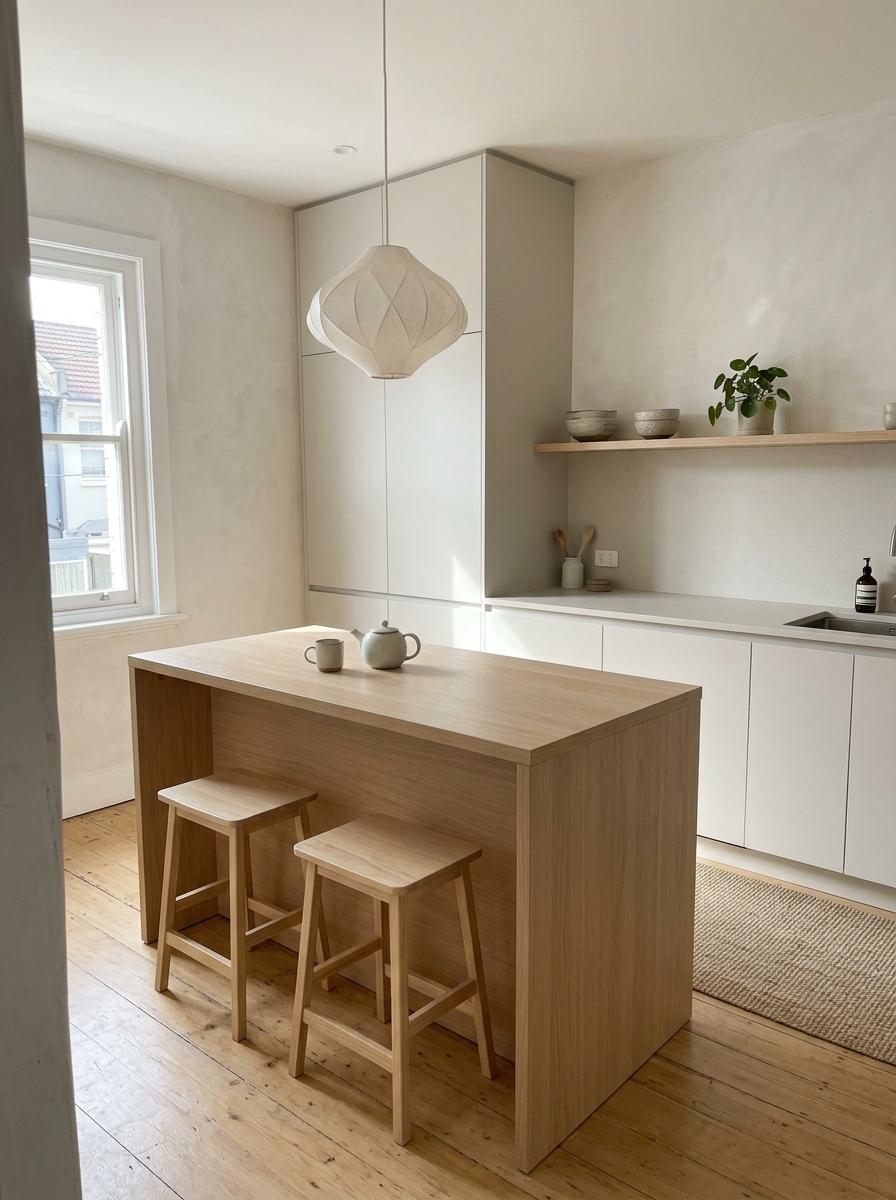

The deliberate integration of Scandi-functionality and Japanese ethos was realized through a layout that prioritizes void over volume. Within this curated culinary zone, sleek surfaces and unadorned cabinetry create a weightless aesthetic, ensuring that every square inch remains breathable and balanced. This sense of serenity is sustained by a seamless sequence of soft textures, where natural light reflects off muted tones to push the boundaries of the physical walls. The architecture breathes life into the narrow footprint, effectively expanding the visual field and dissolving clutter. To achieve this harmony, the design anchors the room with a pale timber island, hones the focus through hidden storage, and elevates the atmosphere with a singular, sculptural pendant.
A Journey Into Creating A Minimalist Japandi Kitchen Environment
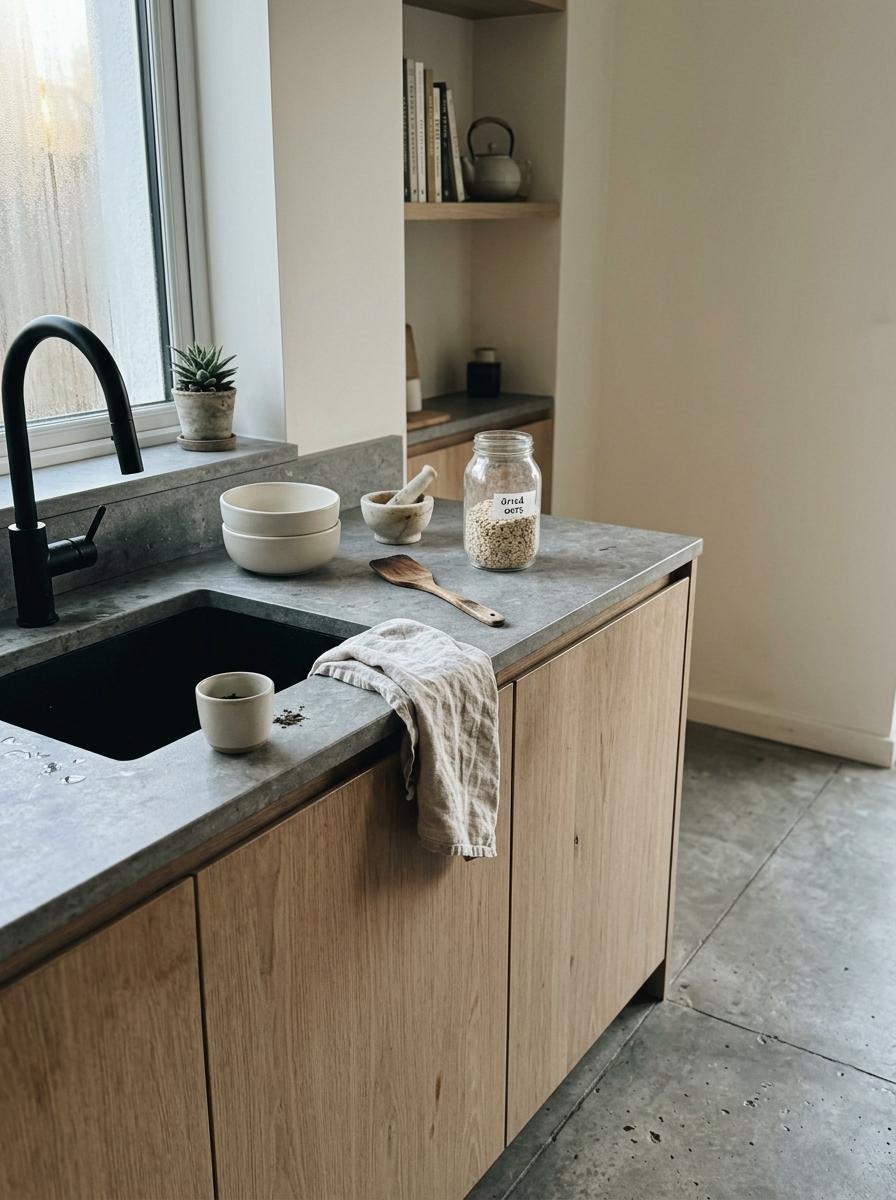

In the quiet corner of the modern home, the kitchen acts as a sanctuary of tactile stillness, where the rhythmic hum of daily ritual anchors the spirit within a landscape of intentional void. This environment thrives on a cluttered emptiness, a curated state where every absence is deliberate and every presence is essential. While the external world demands a relentless speed, the internal logic of this space enforces a profound deceleration, drawing a sharp line between the chaotic noise of urban life and the meditative silence of the hearth. Beneath the fingertips, the cool, honed surface of Pietra Serena stone meets the warmth of wire-brushed white oak, creating a sensory dialogue between geological permanence and organic growth. Every element is refined toward a specific utility, where integrated matte-black fixtures and handleless cabinetry serve as seamless solutions, transforming the industrial necessity of food preparation into a fluid, effortless choreography.
Discover The Harmony Of Minimalist Japandi Kitchen Style
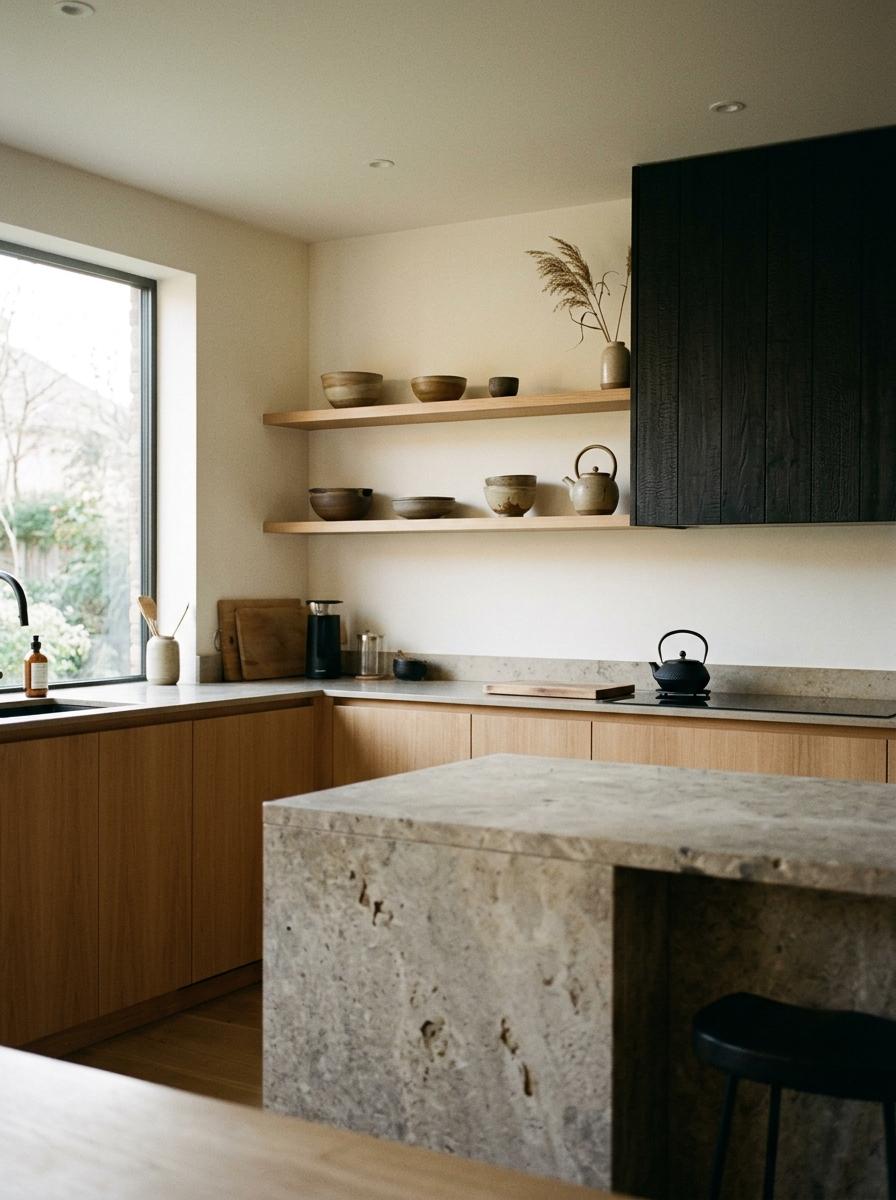

At its core, the Japandi kitchen is a masterclass in Definition via Synthesis, where the unflinching functionalism of Scandinavian hygge coalesces with the ancient, transience-focused aesthetics of Japanese wabi-sabi. It is a space defined by lexical precision, utilizing an architectural vernacular of shou sugi ban textures, monolithic stone islands, and handleless cabinetry that prioritizes a seamless, linear continuity. This style thrives on dialectical pairing: the silhouette is unapologetically austere, yet the atmosphere remains profoundly inviting; the geometry is rigid and disciplined, but the material palette is deeply rooted in the organic and the artisanal. To step into such a kitchen is to experience a sensorial adjective stacking of the profound-a curated environment that feels hushed, tactile, grounded, and luminously serene.
Refined Details In A Minimalist Japandi Kitchen Renovation
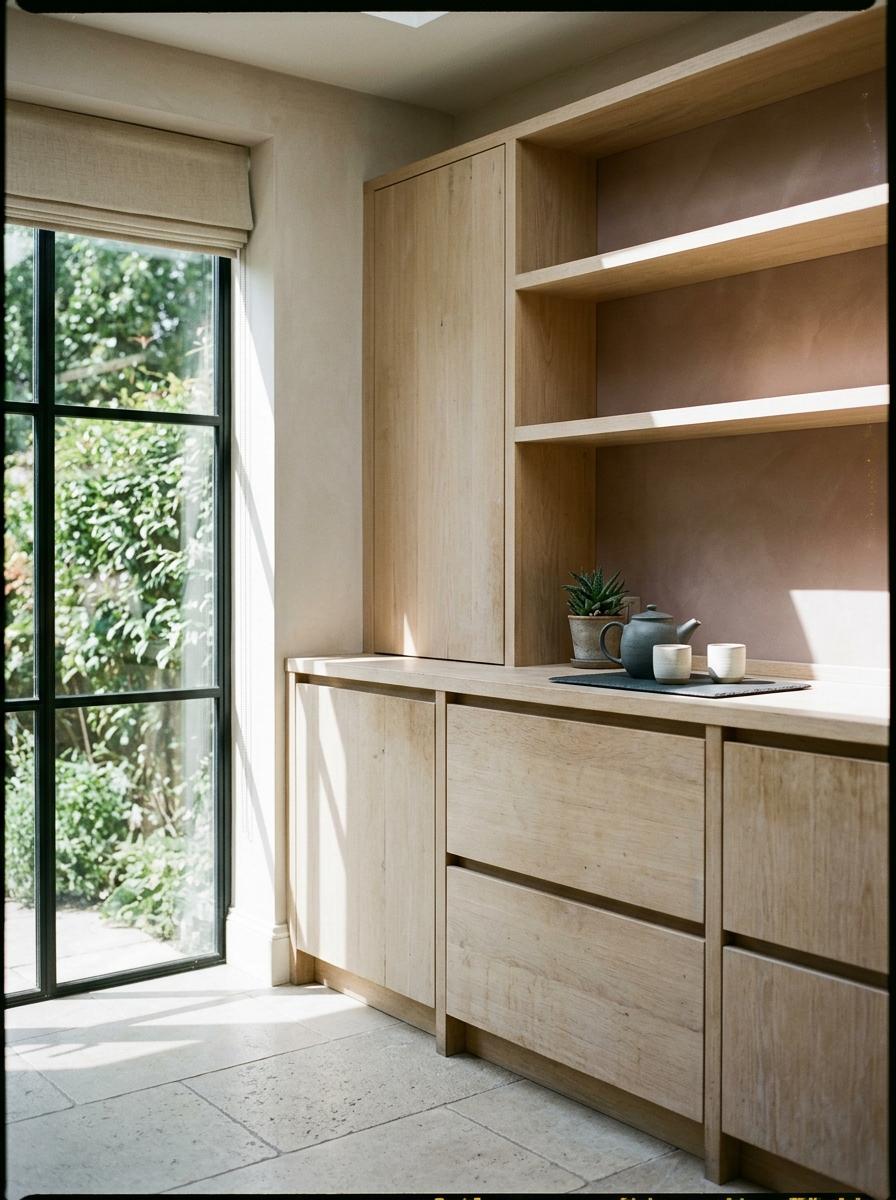

The transformation of this kitchen begins with a dialogue between eras, moving away from the heavy, compartmentalized utility of its 1990s origin toward a fluid, light-filled contemporary sanctuary. This evolution explores the concept of complex simplicity-where the visual silence of the space is achieved only through intricate, hidden engineering and meticulous craftsmanship. Situated in the leafy, prestigious enclave of North London's Highgate, the project carries an inherent weight of trust, as the homeowners are repeat clients who previously engaged the design team for their primary residence. This long-standing relationship allowed for a deeper exploration of the Japandi ethos, resulting in a technical synthesis of tactile materiality, shadow-gap detailing, and a disciplined monochromatic palette that bridges the gap between Scandinavian functionality and Japanese minimalism.
Crafting A Minimalist Japandi Kitchen In An Urban Apartment
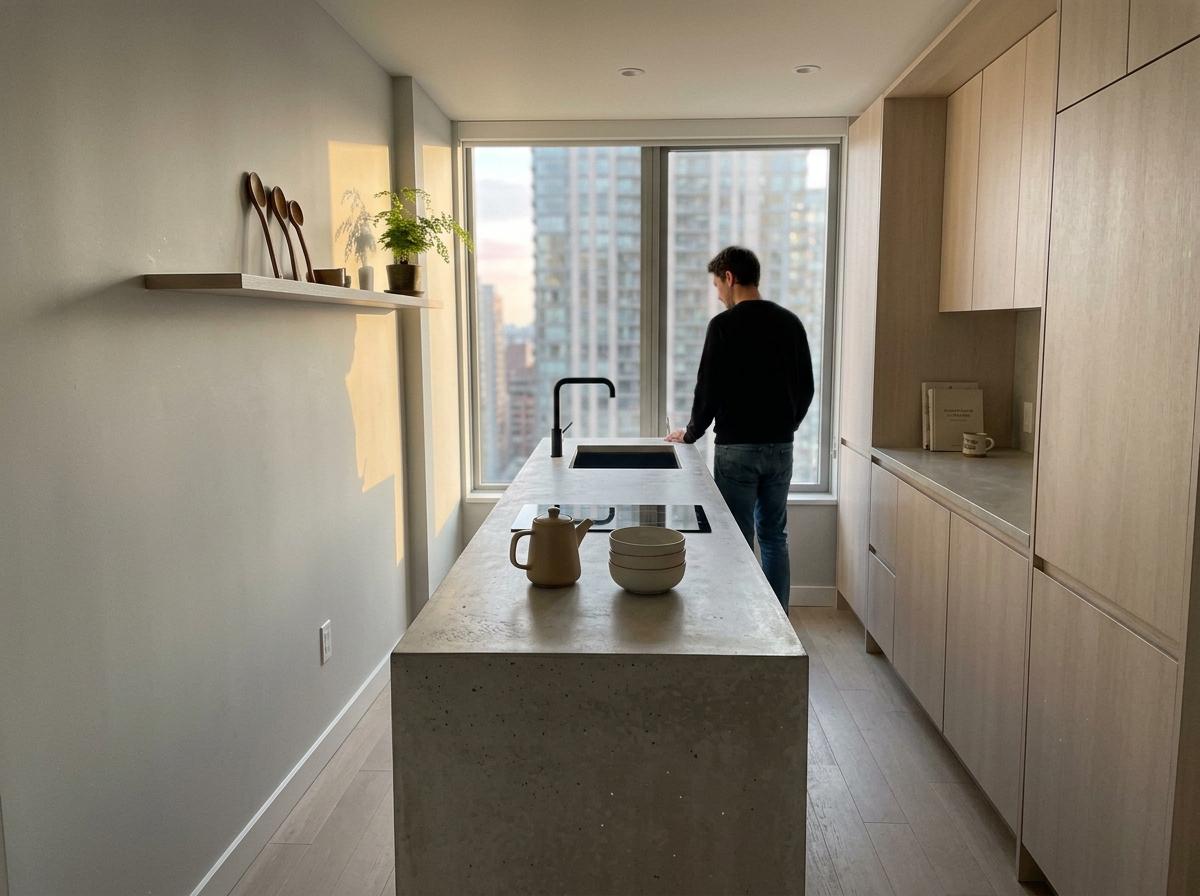

The structural reconfiguration of this metropolitan dwelling was meticulously executed to dissolve the boundaries between utility and tranquility. Within the galley, a monochromatic palette of muted minerals and matte surfaces replaces the typical urban clutter with a sense of profound stillness. This deliberate restraint allows the soft sunlight to sweep across the space, sharpening the silhouettes of stone and stem. To maximize the footprint, clever cabinetry conceals the chaos of culinary life, while the central island carves a path for communal flow. The resulting environment breathes through its balanced proportions, breathable voids, and bleached woods.
Simple Living With A Minimalist Japandi Kitchen Aesthetic
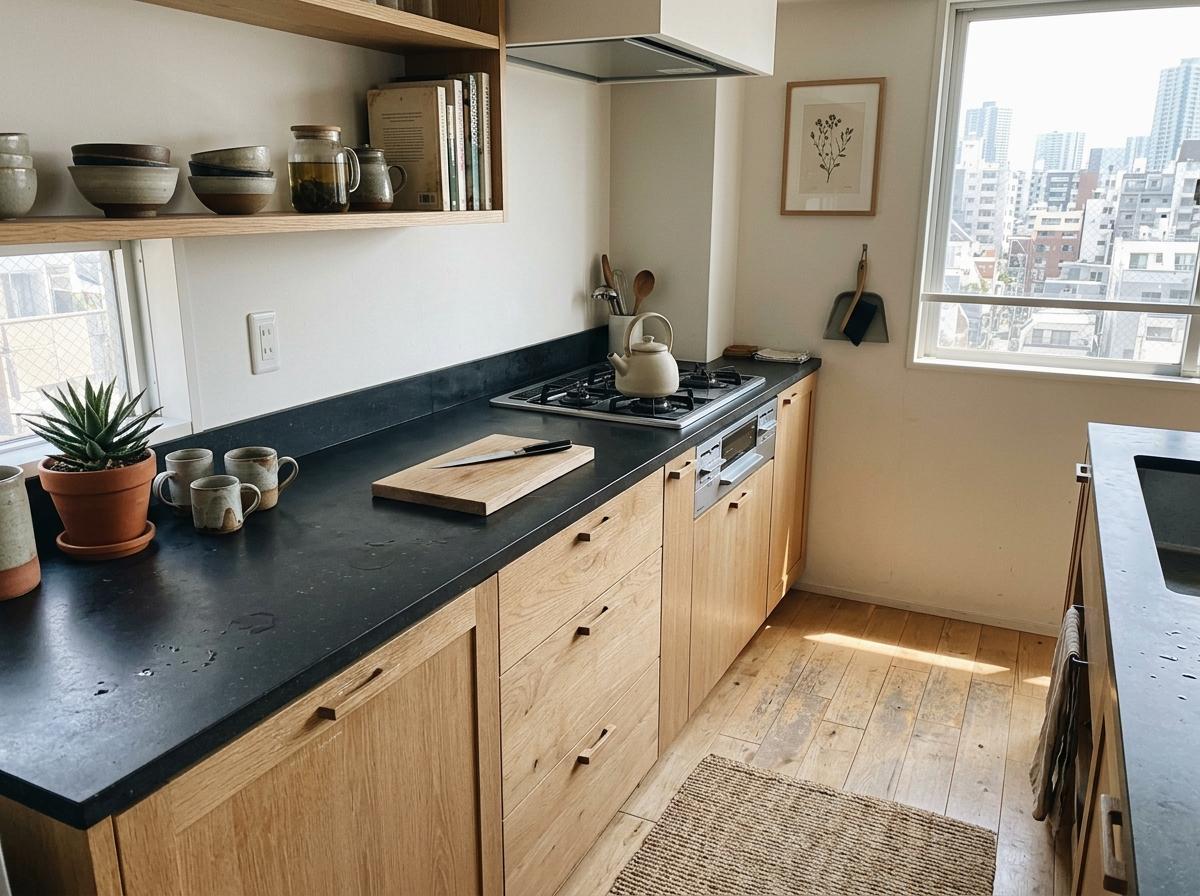

In the contemporary culinary landscape, particularly within the serene urban lofts of Tokyo's Daikanyama district, the Japandi kitchen transcends mere utility to become a sanctuary of structured chaos. Note how the tactile interplay between the open-pore, wire-brushed white oak cabinetry and the honed, silk-matte volcanic basalt countertops creates a grounding sensory anchor. This deliberate fusion of Scandinavian efficiency and Japanese rusticism invites a profound physiological shift; as your hand brushes across the velvety, non-reflective surfaces, the sympathetic nervous system yields, lowering the heart rate through the sheer honesty of the materials. By stripping away the visual noise of ornate hardware and replacing it with integrated, finger-milled pulls, the space achieves a complex simplicity that demands a slower, more intentional pace of living.


Comments