
By synthesizing the austere structural discipline of Japanese minimalism with the rustic, lived-in hygge of Scandinavian craft, the Japandi kitchen emerges as a masterclass in functional equilibrium. In this analytical study for Japandi.design, we examine the countertop as the room's primary tactile anchor-an element that must remain uncompromisingly monolithic in its geometry, yet visceral and inviting in its materiality. Through this dialectical pairing of stony permanence and organic warmth, the workspace transcends mere utility to become a sensorial landscape of haptic serenity and quietude.
Japandi Kitchen Countertops

A Closer Look At Natural Stone For Japandi Kitchen Countertops
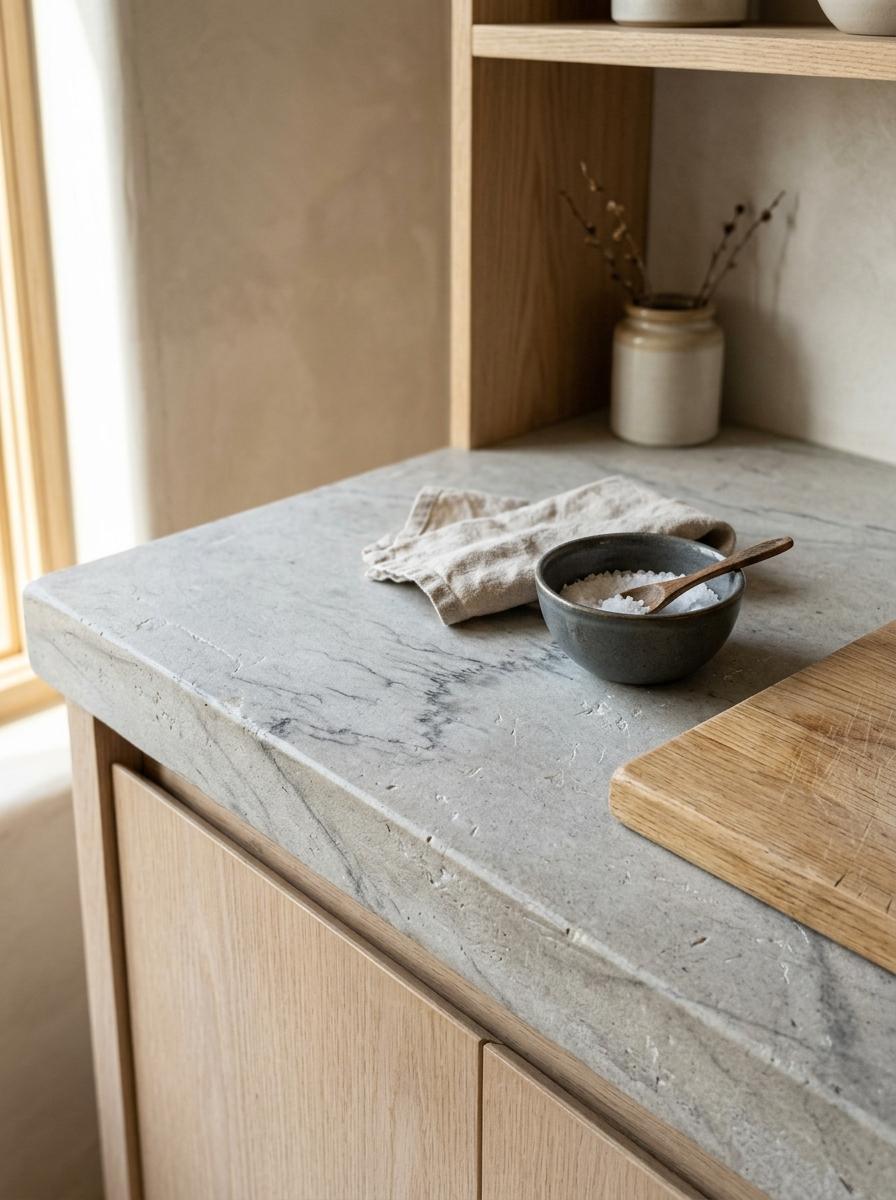

In the hushed theater of a Japandi kitchen, where the morning light catches the drift of steam over pale wood, the countertop serves as more than a utility-it is a grounded horizon. Within this space, natural stone introduces a primordial modernism, a conceptual synthesis where the raw, jagged history of the earth is reconciled with the clinical precision of contemporary Japanese minimalism. This structural dualism creates a necessary tension; while the exterior surface is honed to a silk-touch matte finish that feels soft to the palm, the stone's internal geology remains a chaotic record of deep-time pressure and ancient mineral shifts. Selecting a slab of honed Volakas marble or deep-grey Pietra Cardosa allows for a precise tactile imagery-the cool, non-reflective density and the delicate, feathered veining that mimics ink blooming in water. Ultimately, this choice functions as a vital industrial utility, where the stone's inherent thermal mass and scratch-resistance provide a high-performance solution for the rigorous demands of daily culinary preparation, seamlessly bridging the gap between poetic stillness and mechanical endurance.
How To Pair Oak Cabinets With Japandi Kitchen Countertops
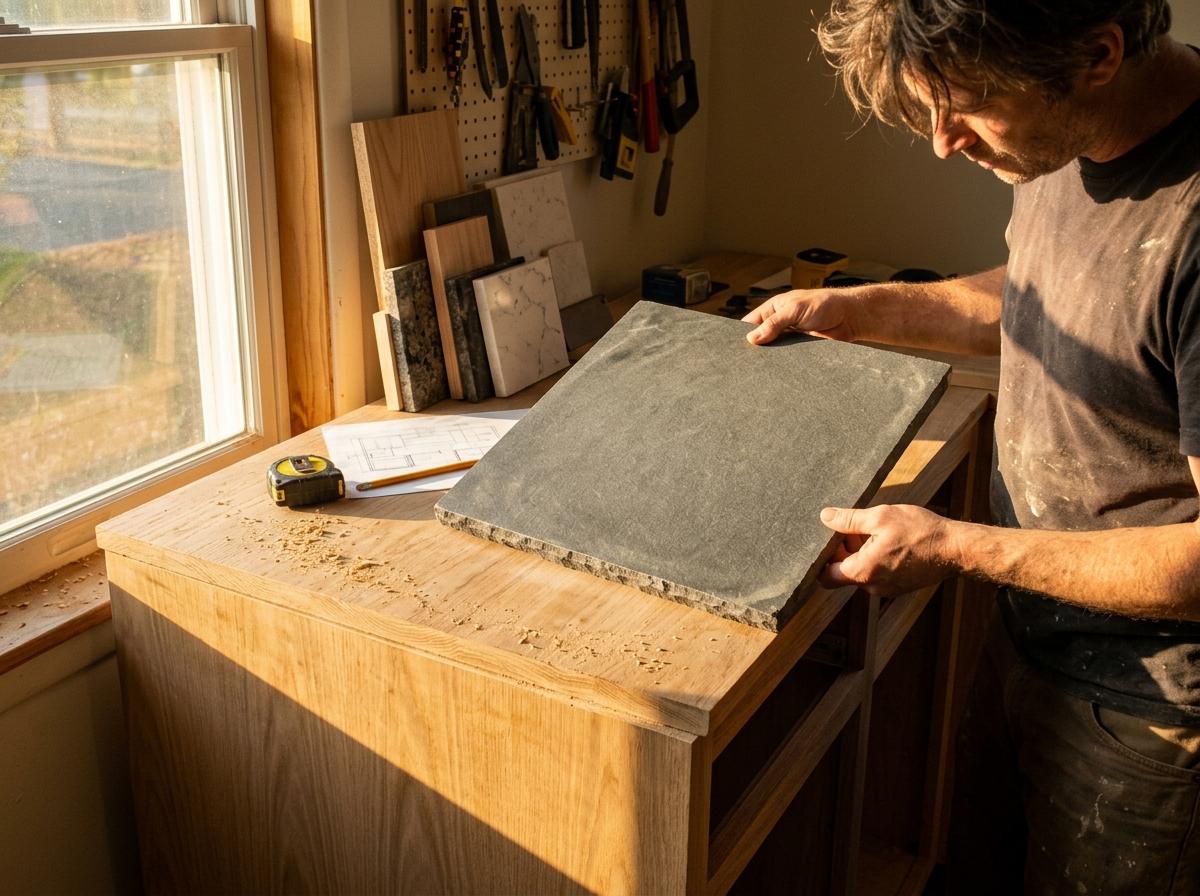

Last Tuesday, while tracing the cathedral grain of a white oak slab in a local workshop, I watched a master carpenter pause to examine the way light hit the honey-toned surface. "The wood," he noted, tilting his head to catch the afternoon glare, "is never just a background element; it's a living dialogue with the stone you place upon it." This interaction is where most kitchen renovations either find their soul or lose their direction. In a sterile, hyper-modern kitchen, oak can feel like a nostalgic relic-too warm, perhaps too busy-yet in a cluttered rustic setting, it risks becoming part of the visual noise. It is only through the Japandi lens that we find a sophisticated middle ground, utilizing a matte, honed finish on countertops to ground the organic vibrancy of the cabinetry. By understanding this delicate interplay between raw botanical textures and the silent weight of stone, we can begin to curate a space that feels both grounded and ethereal.
Inside A Modern Home Featuring Sleek Japandi Kitchen Countertops
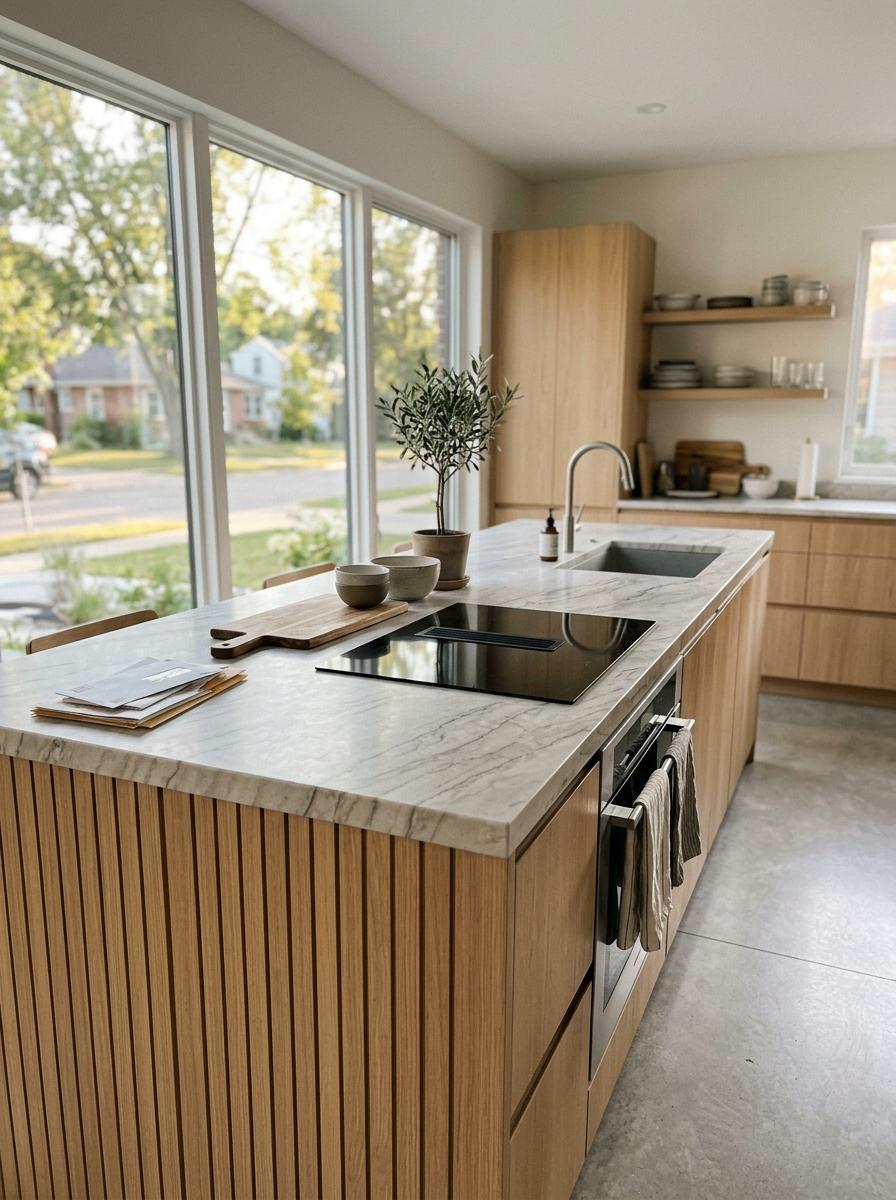

In the heart of this contemporary residence, the kitchen serves as a silent anchor, where the expansive island defines a territory of quietude amidst the flux of daily domestic life. This space embodies a measured spontaneity, a conceptual synthesis where the strict geometry of minimalist form meets the organic warmth of human interaction. While the exterior of the home contends with the shifting light and suburban rhythm, the interior remains a sanctuary of static composure, creating a sharp structural dualism between the chaotic world outside and the disciplined serenity within. The tactile experience is grounded in material specificity: a singular expanse of honed Volakas marble meets the fine-grained texture of vertical-slat white oak, offering a cool, stone-touch contrast to the velvet warmth of the wood. Far from mere ornament, this design employs functionalist specification by integrating a flush-mount induction cooktop and a seamless undermount granite-composite sink, ensuring that the sleek Japandi aesthetic functions as a high-utility solution for the rigorous demands of modern culinary art.
The Essential Guide To Choosing Japandi Kitchen Countertops
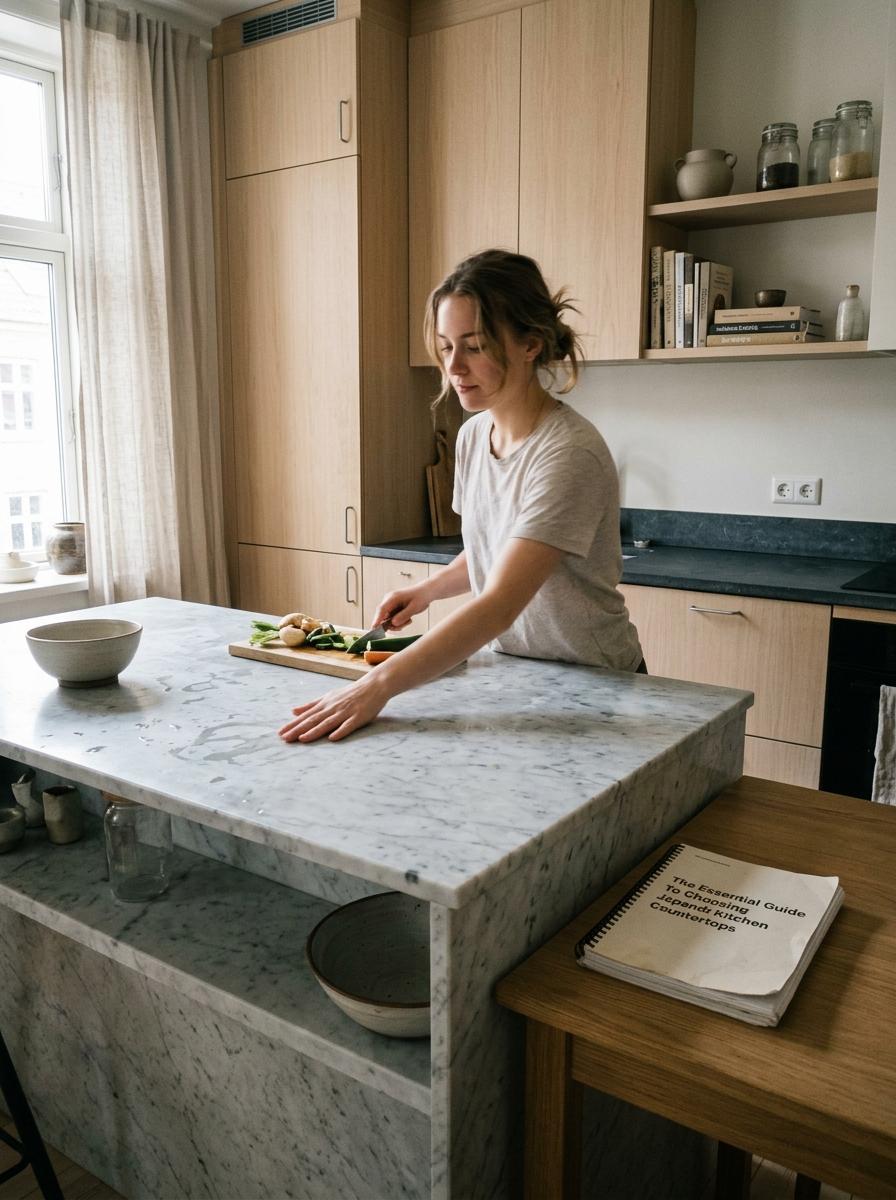

When selecting the foundation for your culinary space, you must prioritize materials that embody a tactile, matte-hewn serenity. Note how the choice of a honed Carrara marble island introduces a complex simplicity to the room-its surface remains cool and stone-still, yet it pulses with the organic, directional energy of grey veining. This intentional juxtaposition of the monolithic and the ethereal does more than just anchor the kitchen; it triggers a profound physiological shift, cooling the heart rate as your palms meet the unyielding, velvety grain of the slab. By integrating specific finishes like the Belgian Bluestone found in high-end Antwerp ateliers, you bridge the gap between industrial permanence and the fleeting beauty of Wabi-sabi. The result is a space that feels both grounded in ancient earth and lightened by modern minimalism, turning the simple act of food preparation into a grounding, meditative ritual.
Why Matte Quartz Is Perfect For Japandi Kitchen Countertops
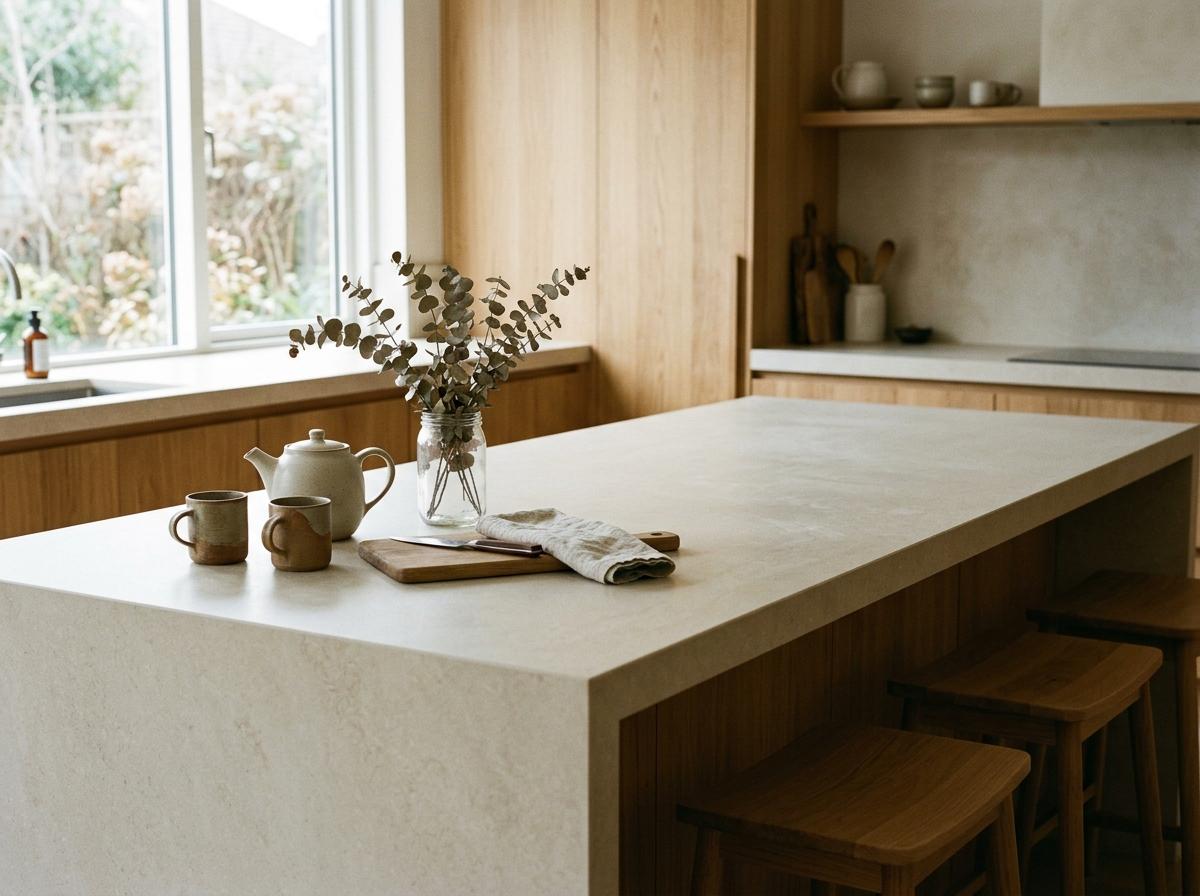

The choice of matte quartz is often favored in high-end Japandi commissions to anchor the kitchen's visual weight without the intrusive glare of polished stone. Within these curated zones, the surface manifests as a muted, monolithic slab that absorbs ambient light, fostering a soft stillness and a sense of unburdened space. This finish strikes a balanced beauty, blending a powdery presence with a persistent practicality that defies the sterile shine of modern synthetic materials. The expansive island stretches across the room to define the culinary hearth, while the velvety texture carves a quiet void amidst the warm wood grain. Each installation exemplifies a commitment to tactile honesty, structural simplicity, and enduring serenity.
Achieving Balance With Textured Japandi Kitchen Countertops
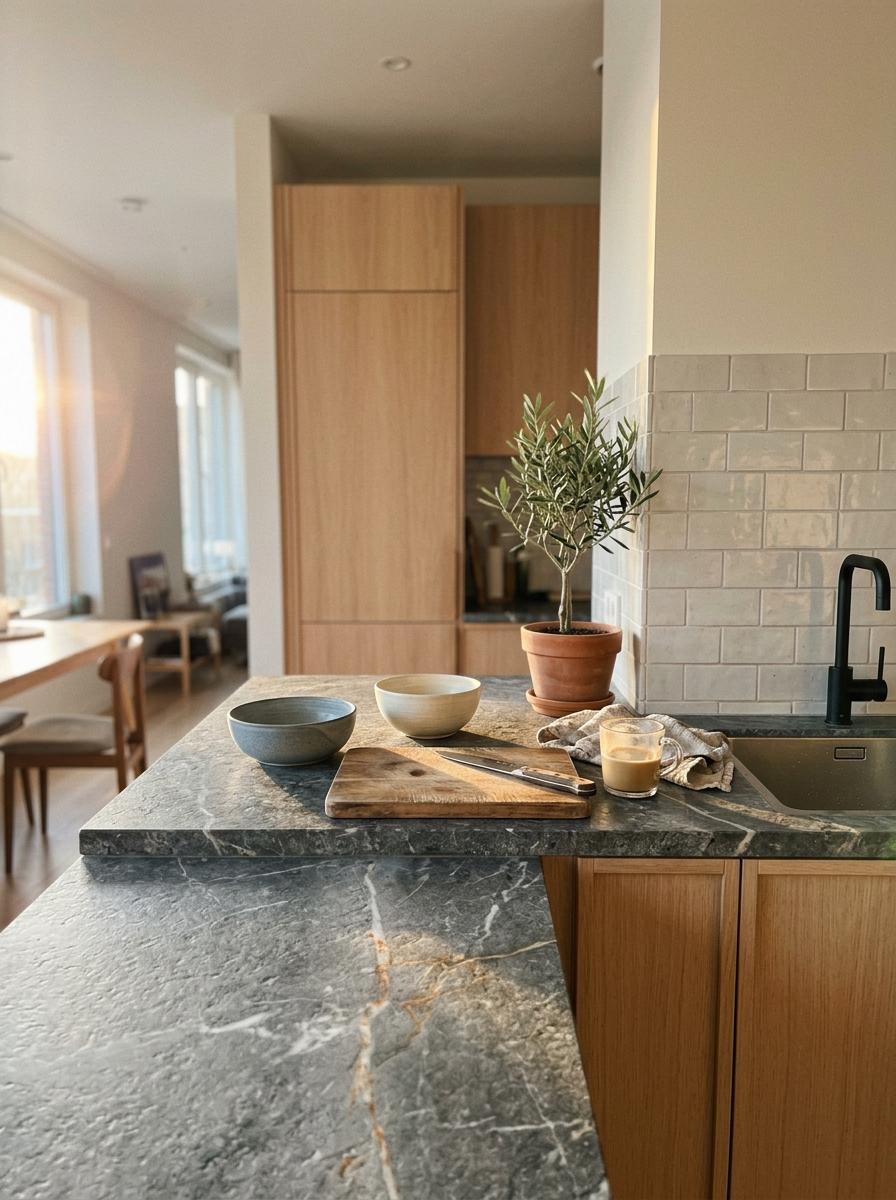

In the modern kitchen, the countertop serves as more than a mere utility; it is a horizontal anchor that grounds the airy fluidity of an open-plan living space into a focused culinary sanctuary. To achieve the Japandi ideal, You need to embrace a controlled ruggedness, where the primitive imperfection of raw materials is refined through a lens of deliberate, minimalist sophistication. While the external silhouette of the kitchen remains defined by the austere, linear geometry of Scandi-cabinetry, the internal soul of the room is found in the tactile unpredictability of the surface itself. By selecting honed Pietra Grey marble or bush-hammered basalt, the space gains a sensory depth that smooth laminates cannot replicate-the microscopic pits and matte undulations capturing light rather than reflecting it. This integration of textured masonry acts as a functional stabilizer, transforming a high-traffic workspace into a durable, tactile landscape that harmonizes industrial resilience with a quiet, organic warmth.
A Refined Apartment Showcasing Elegant Japandi Kitchen Countertops
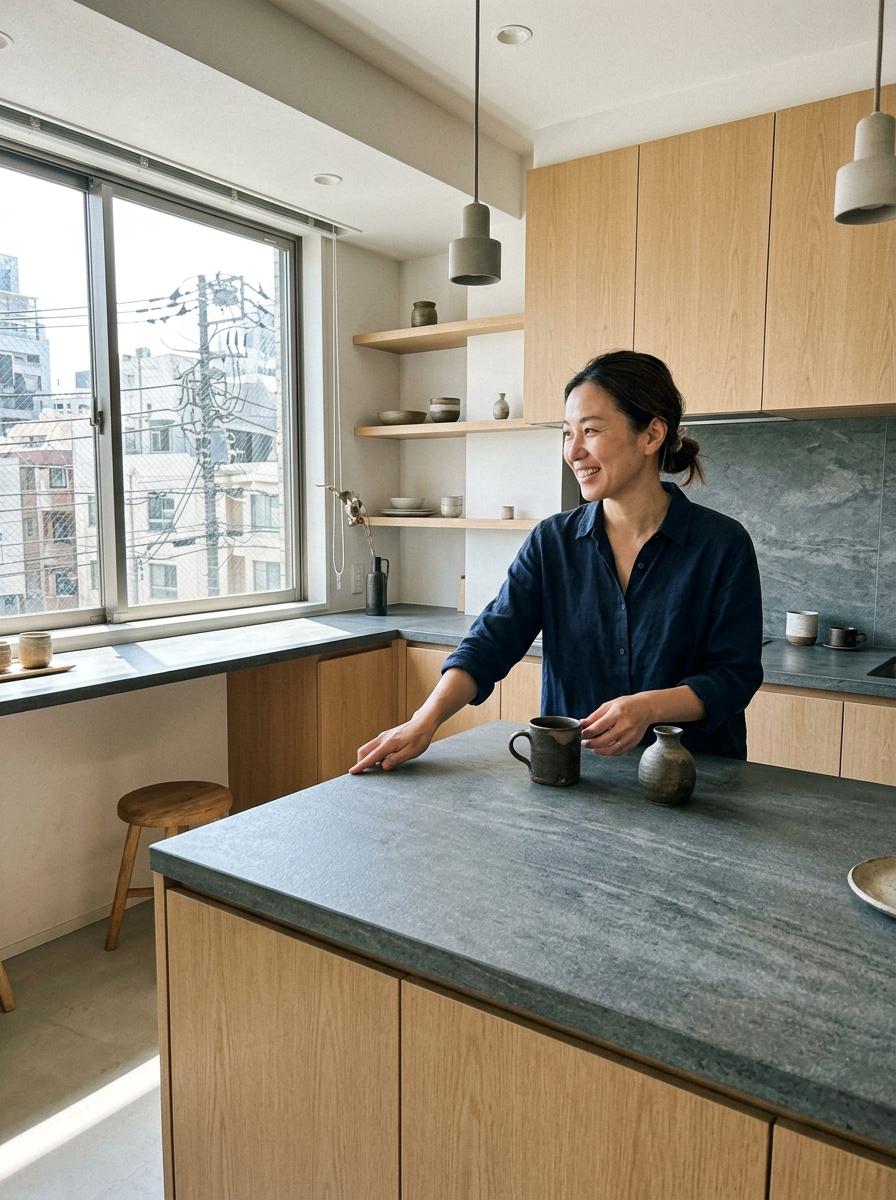

Stepping out of the frantic, neon-blurred rhythm of the Shibuya crossing and into this residence feels less like entering a room and more like a long-awaited exhale. Where the city outside is a cacophony of jagged metal and sensory overload, this kitchen is a study in tonal restraint-a sanctuary where the frantic pace of Tokyo is hushed by the quiet gravity of natural stone. "The challenge wasn't just finding a durable surface," the lead designer explained, tracing a finger along the seamless mitered edge of the island, "but capturing that specific wabi-sabi quality-the beauty in the subtle imperfection of the grain." They paused to adjust a piece of handcrafted ceramic, adding, "In Japandi design, the countertop acts as the room's horizon line; if the materiality feels synthetic, the entire spatial harmony collapses." This commitment to tactile authenticity is visible in the choice of honed basalt, which offers a matte, velvety patina that absorbs light rather than reflecting it. By juxtaposing these heavy, structural masses with the airy verticality of light oak cabinetry, the space achieves a precarious yet perfect equilibrium. This delicate tension between the industrial and the organic serves as a masterclass in how a single choice of surface can redefine the domestic landscape.
Transforming A Small Space With Bright Japandi Kitchen Countertops
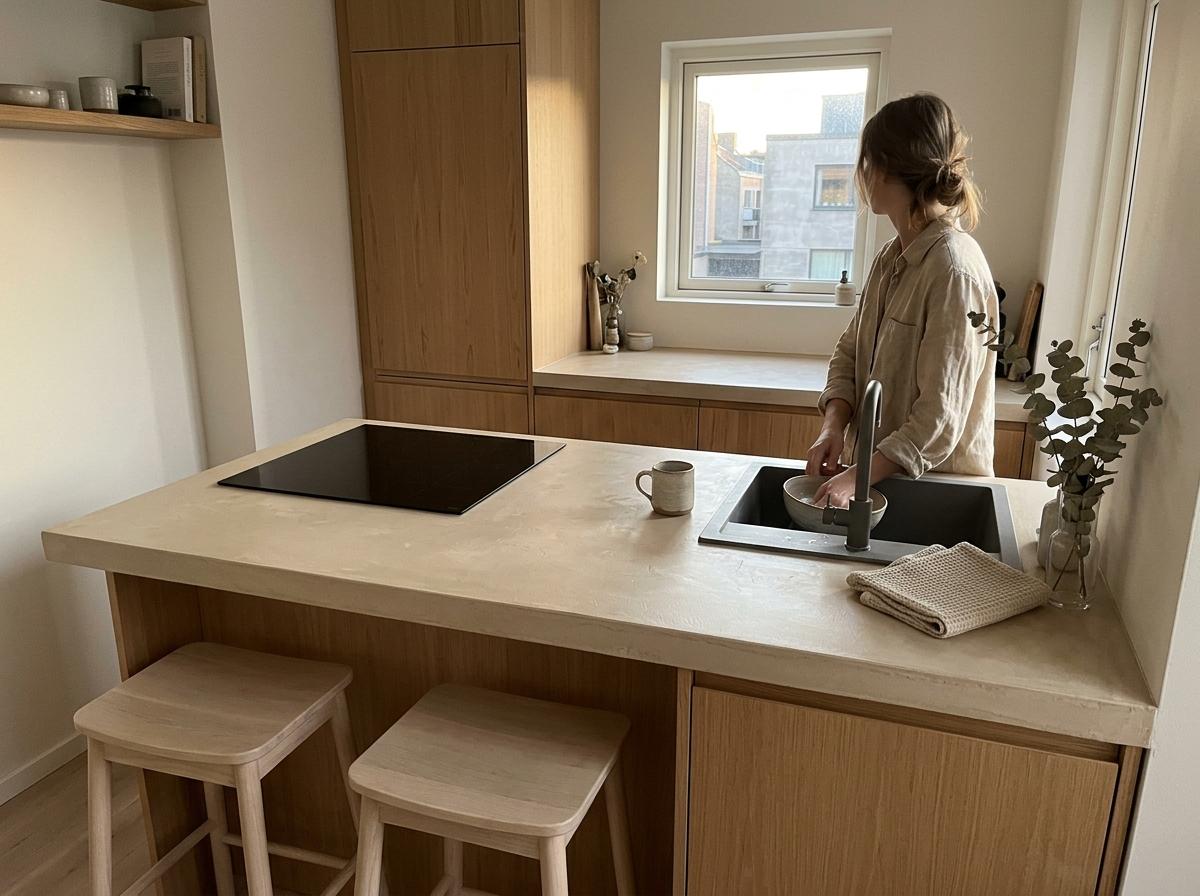

In the narrow confines of an urban kitchenette, where every square inch is a battle against enclosure, the kitchen island ceases to be mere furniture and becomes an anchor for the home's contemplative rhythm. This central plane introduces a luminous weight, a conceptual paradox where the visual lightness of a bleached surface anchors the room's gravity without succumbing to bulk. While the exterior world presses in with its cluttered noise and erratic movement, the internal topography of the kitchen remains a sanctuary of stillness, defined by a sharp boundary between the chaos of the city and the curated calm of the hearth. To achieve this, the selection of material is paramount: a slab of honed Volakas marble with its soft, ethereal veining, or perhaps a micro-cement finish in a warm oatmeal hue, offers a tactile matte grain that absorbs harsh light rather than reflecting it. This choice is more than aesthetic; it is a rigorous exercise in spatial ergonomics, where the seamless integration of a flush-mounted induction hob and an undermounted silgranit sink transforms a single surface into a multi-functional node. By consolidating preparation, cooking, and social interaction into one bright, resilient plane, the Japandi countertop solves the riddle of the small footprint, proving that utility is most effective when it is invisible.
Sustainability Meets Style In Modern Japandi Kitchen Countertops
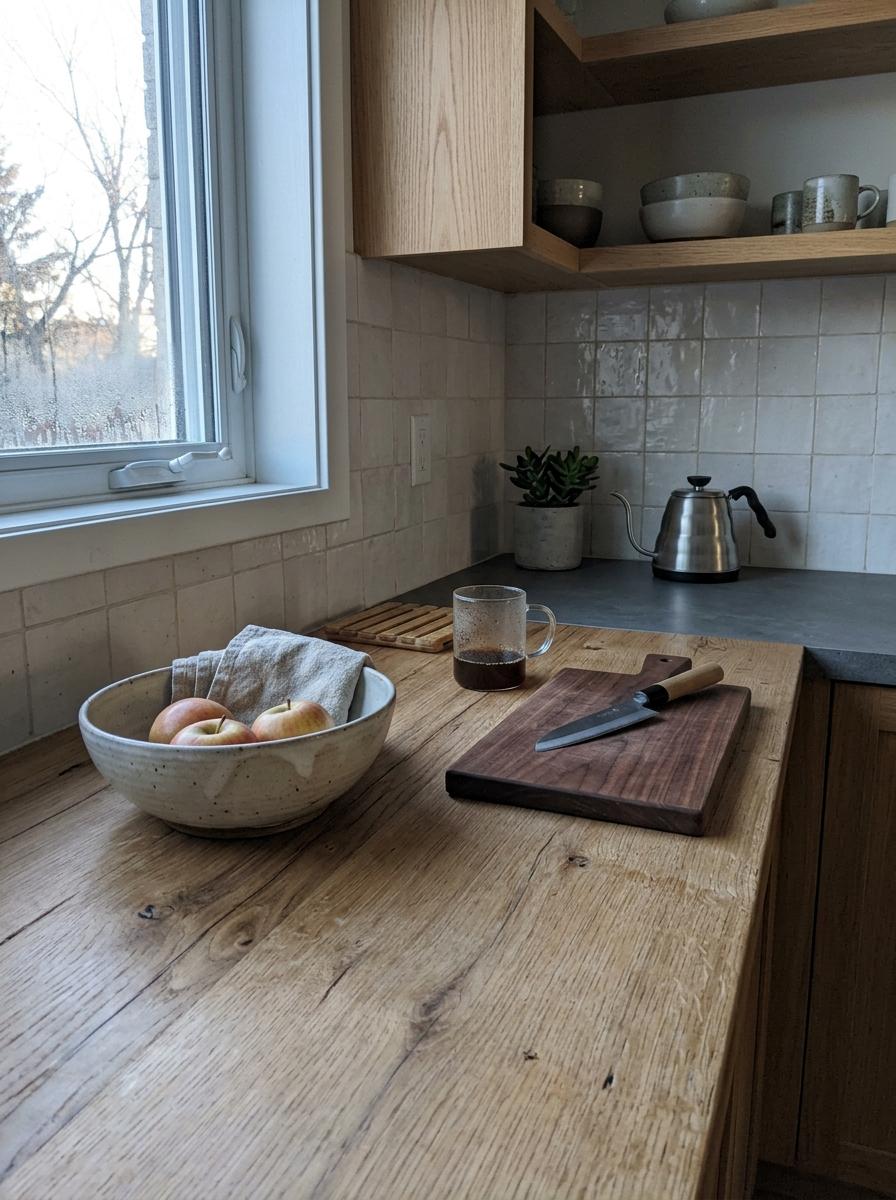

At its core, the Japandi kitchen is the precise architectural synthesis of Scandi-industrial pragmatism and the profound aesthetic of Japanese wabi-sabi, yielding a space that functions as both a culinary laboratory and a meditative sanctuary. When selecting modern countertops, You need to navigate the dialectical tension between the cold, impervious resilience of sintered stone and the tactile, organic warmth of reclaimed timber; the surfaces are engineered for high-performance durability, yet they remain deeply evocative of the natural world's fleeting imperfections. Through my study of current material innovations, it is clear that the contemporary kitchen surface has evolved beyond mere utility into a tactile experience defined by its pellucid, haptic, and grounded qualities. This deliberate curation of sustainable substrates-ranging from bio-based resins to matte-finished volcanic basalt-ensures that the workspace is not only ecologically responsible but also possesses a soulful, atmospheric resonance that anchors the entire home.
The Art Of Minimalist Living With Japandi Kitchen Countertops
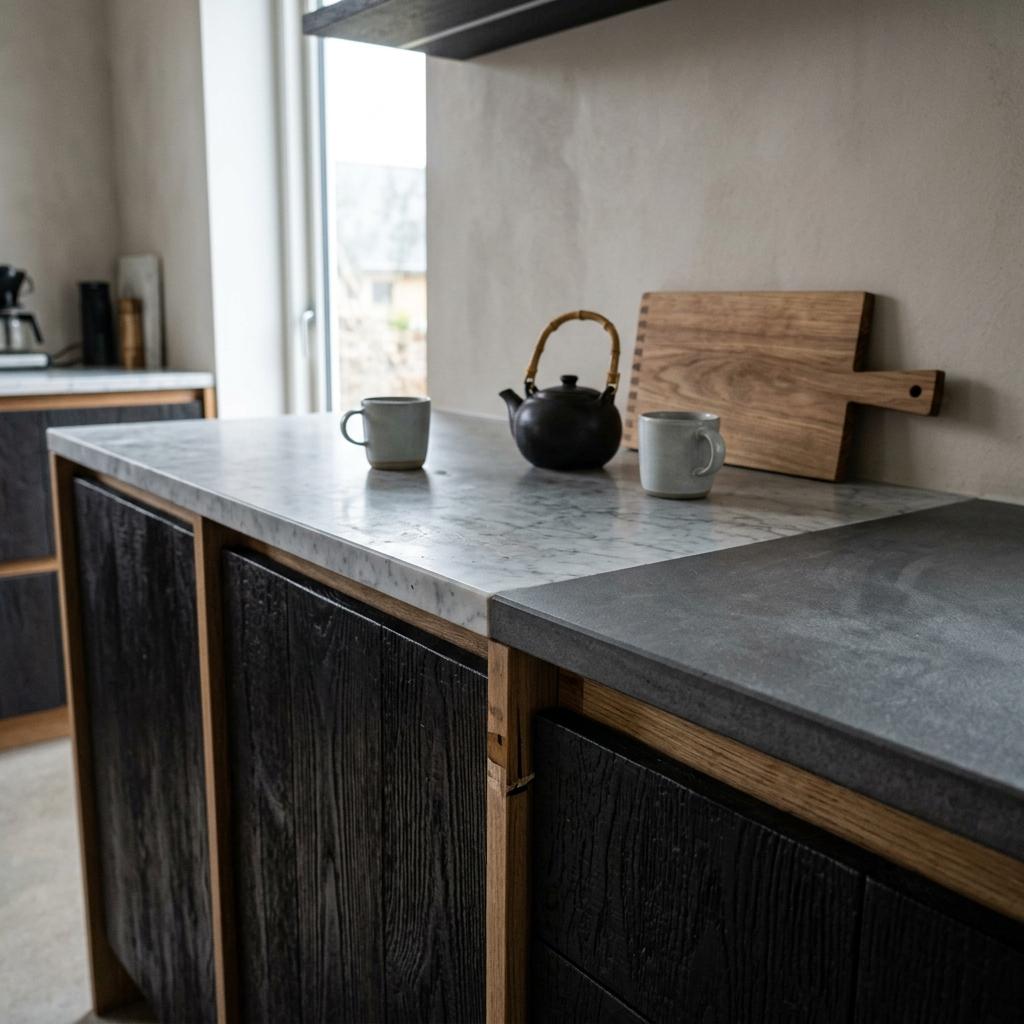

To achieve the serenity of a Japandi heart-of-the-home, we can look toward the tactile dialogue between the organic and the engineered. Note how the juxtaposition of a honed Carrara marble slab against the fibrous, open-grain texture of charred Shou Sugi Ban cabinetry creates a space that feels both meticulously curated and effortlessly wild. This is the essence of complex simplicity: a design paradox where the austerity of the lines serves only to amplify the richness of the materials. When your fingertips brush across the suede-finish Silestone-a hallmark of contemporary Milanese-inspired minimalism-the body experiences a sudden, rhythmic deceleration. The coolness of the stone acts as a grounding force, triggering a visceral sense of stasis that lowers the heart rate and quiets the mental chatter of the outside world. By integrating the structural precision of Hygge-infused Danish joinery with the impermeable, matte surfaces favored in Tokyo's high-end residential districts, the countertop ceases to be a mere utility. It becomes a sanctuary of functional art, proving that in the Japandi kitchen, less is not just more-it is everything.
Why Neutral Tones Are Best For Japandi Kitchen Countertops
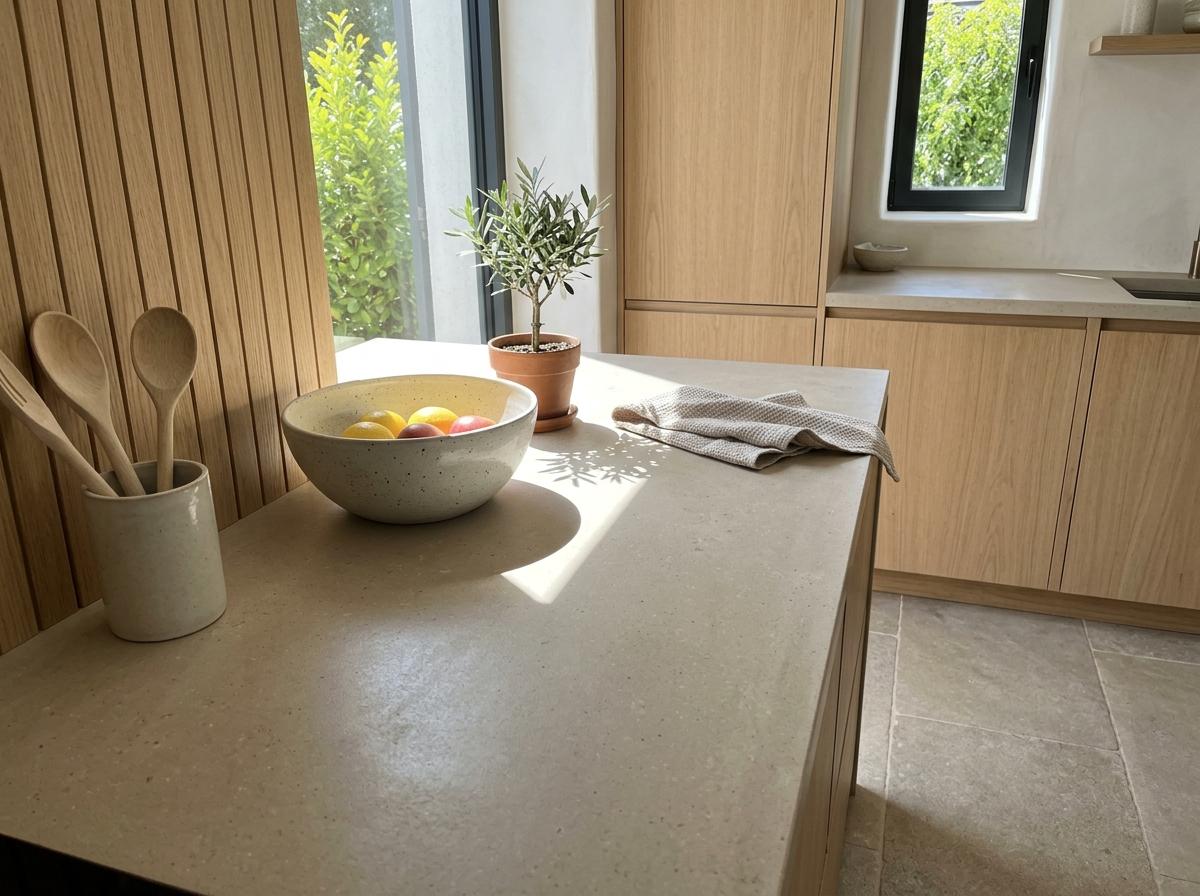

The choice of neutral countertops in Japandi kitchens marks a significant departure from the ornate, polished granites that defined high-end culinary spaces in the late twentieth century, favoring instead a contemporary return to raw, unadorned materiality. This evolution reflects a desire for ordered chaos, where the stark minimalism of Japanese aesthetics meets the rugged, tactile warmth of Scandinavian hygge. In our recent study of a private residence in London's Highgate district, the design's success hinged on this precise tonal balance. Because the homeowners were a repeat client who had previously commissioned a more traditional build, their transition to a muted palette served as a powerful endorsement of neutral durability and visual longevity. Ultimately, the cohesion of the space was achieved through a technical synthesis of light-reflective surfacing and organic textural depth, proving that neutral tones are not merely a safe choice, but a strategic architectural tool.
Exploring Handcrafted Finishes For Japandi Kitchen Countertops
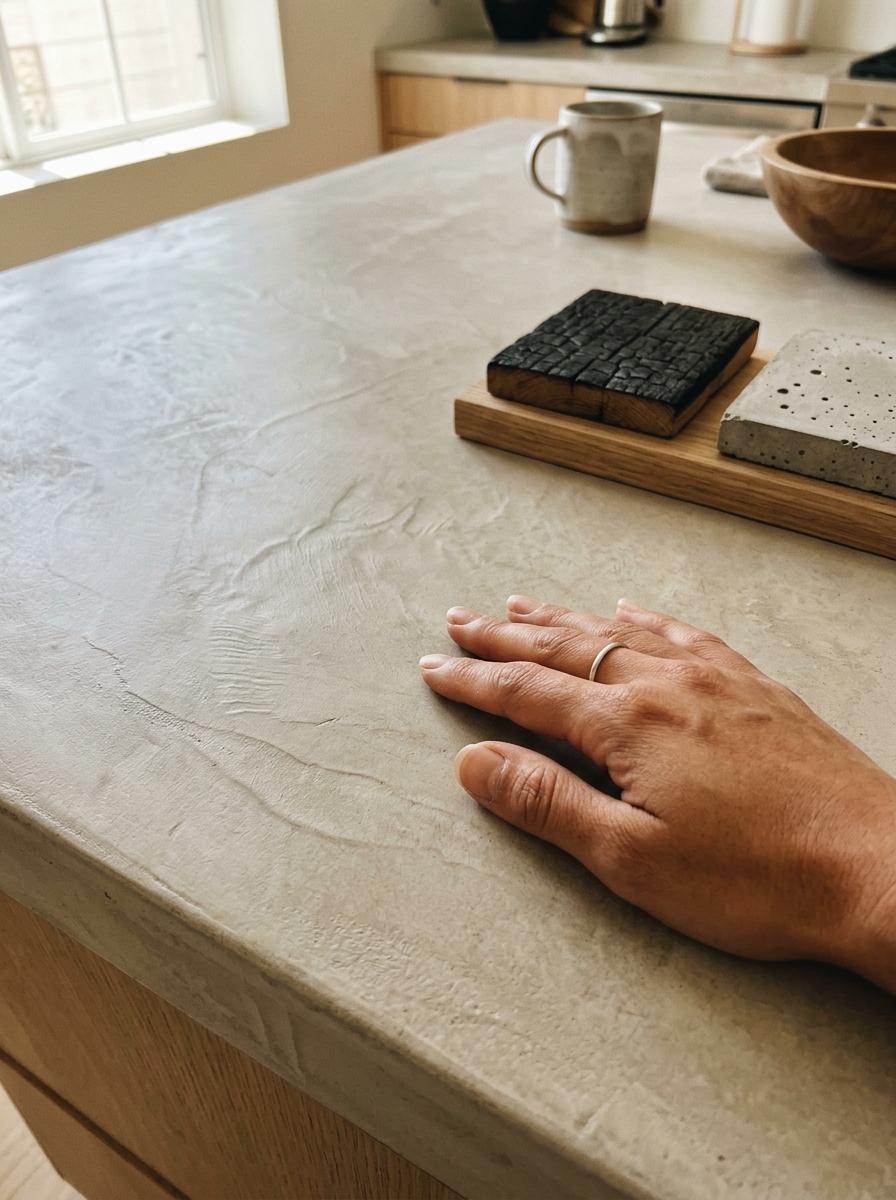

In the realm of Japandi kitchen design, the countertop is no longer a mere utility surface but a tactile dialogue between Shokunin craftsmanship and Scandinavian restraint. Note how the application of hand-burnished Tadelakt-a traditional Moroccan lime plaster-creates a surface that is simultaneously impermeably porous, offering a matte finish that feels remarkably velvet-like to the touch. This paradox of a "soft stone" provides a grounding presence in the home; as your palms graze the cool, undulating ridges of the artisanal trowel marks, a sense of profound somatic stillness settles in the chest, lowering the heart rate through pure sensory connection. Much like the bespoke woodwork found in the studios of Kyoto's Nakagawa Mokkougei, these handcrafted finishes celebrate the beauty of the "imperfectly permanent." By eschewing the sterile uniformity of industrial quartz for the nuanced grit of hand-poured concrete or the charred resilience of Shou Sugi Ban accents, the kitchen transcends its functional roots, becoming a curated sanctuary of touch and time.
Creating An Organic Atmosphere Using Japandi Kitchen Countertops
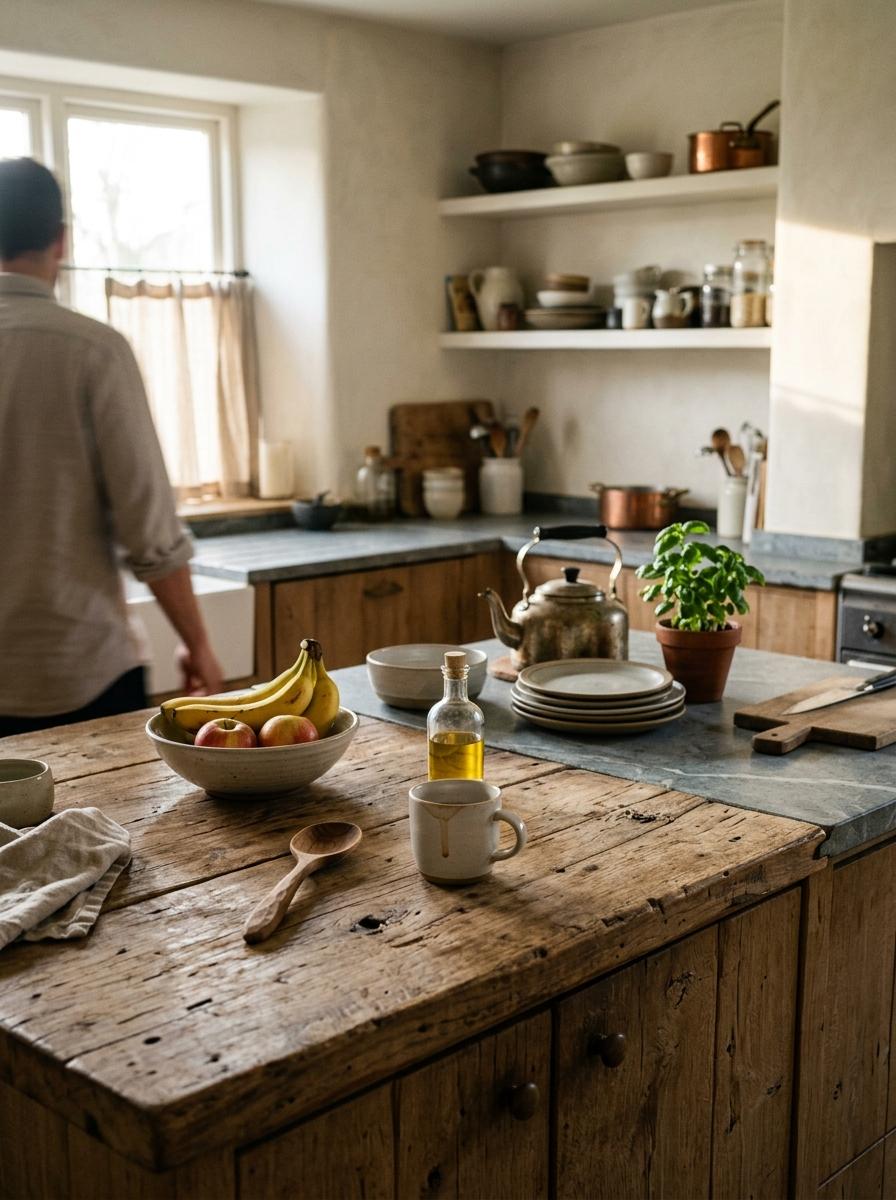

The pursuit of an organic atmosphere is realized through the selection of materials that honor both form and function. Within this framework, the kitchen is transformed by the installation of honed stone and reclaimed timber, ensuring the surface serves as a bridge between utility and art. Each countertop exalts a bare, breathable, and balanced aesthetic, stripping away the superfluous to reveal the raw elegance of the grain. This deliberate design language helps to ground the gaze, foster a sense of flow, and forge a connection to the natural world. These planes of tactile texture extend the reach of the room, inviting the eye to trace the seamless transitions where the material anchors the island, activates the light, and architexturalizes the void.
Functional Beauty Defined By Unique Japandi Kitchen Countertops
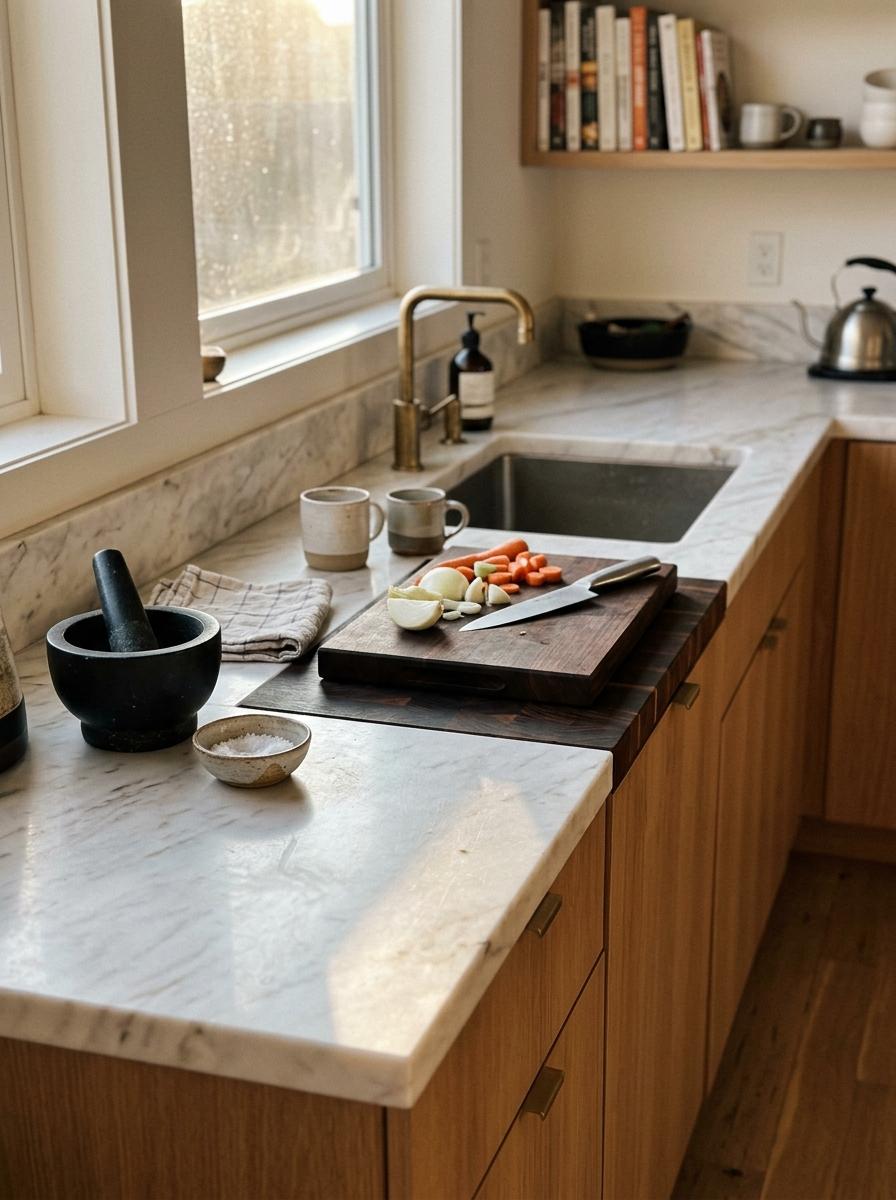

The modern kitchen acts as a quiet sanctuary where the rhythmic hum of the home meets the precision of a culinary workshop. Within this space, the countertop emerges as a sculptural utility, a surface that exists simultaneously as a motionless work of art and a site of intense daily labor. This tension defines the dual nature of the Japandi aesthetic: while the external silhouette remains a testament to minimalist restraint, the internal composition is engineered for the rigors of heat, blade, and moisture. To achieve this balance, one might look to a slab of honed Volakas marble or carbonized bamboo, where the cool, velvet-like touch of the stone or the fibrous density of the grain offers a specific tactile resistance. Ultimately, these unique selections serve as a modular ergonomic solution, seamlessly integrating the raw beauty of natural geology with the demanding performance metrics of contemporary living.
A Quiet Home Featuring Sophisticated Japandi Kitchen Countertops
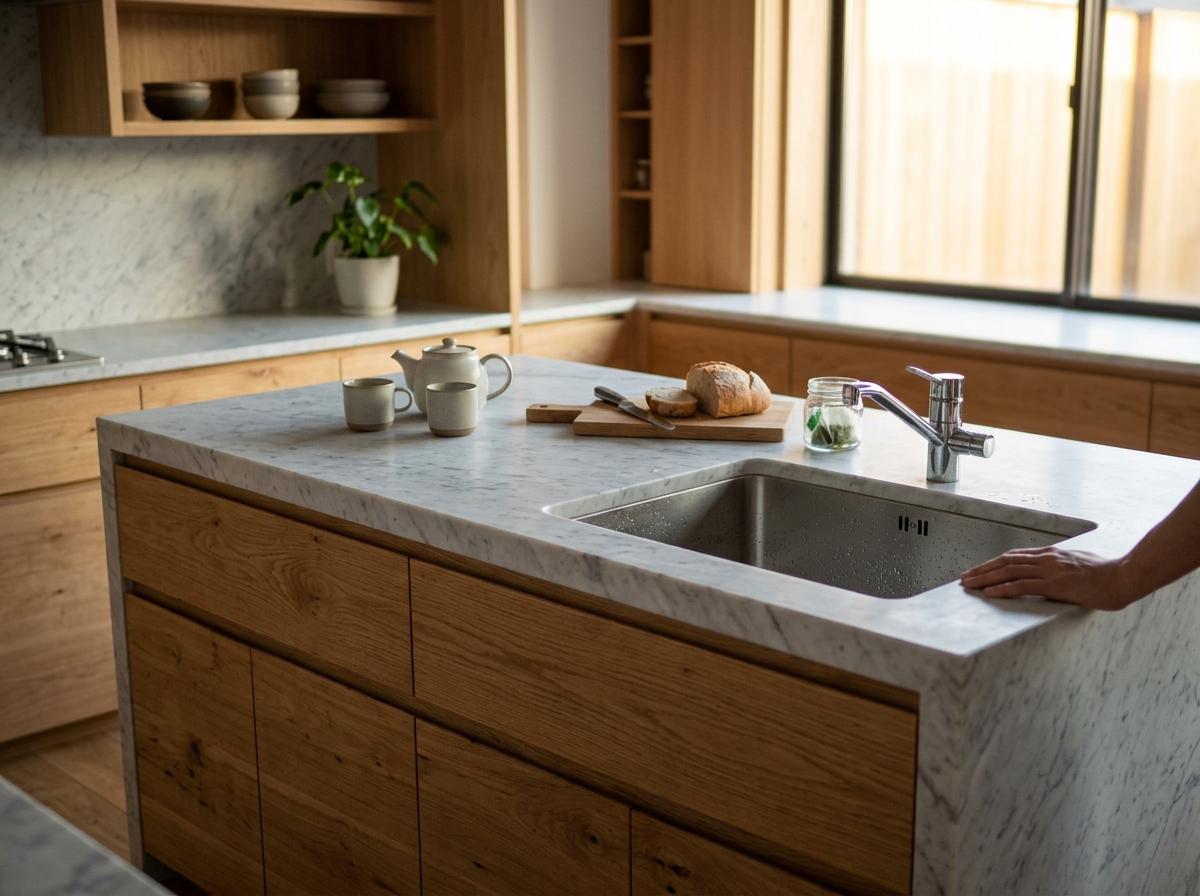

In this Tokyo residence, the culinary space is anchored by a monolithic island carved from honed Carrara marble, its surface possessing a matte, silk-grain finish that feels remarkably soft against the skin despite its geological density. Note how the designer deliberately juxtaposes the clinical precision of the stainless steel under-mount sink with the organic, open-pored warmth of the reclaimed Hokkaido white oak cabinetry. This creates a complex simplicity, where the visual weight of the stone is balanced by the ethereal lightness of the surrounding timber. As you run your palm across the cool, mineral surface, a profound sense of kinetic stillness washes over you-the physical grounding of the material slowing the heart rate and quieting the mind. It is a masterclass in Kifune-inspired restraint, proving that in a Japandi kitchen, the most sophisticated luxury is not found in ornamentation, but in the visceral pulse of raw, tactile honesty.
Integrating Earthy Elements Into Your Japandi Kitchen Countertops
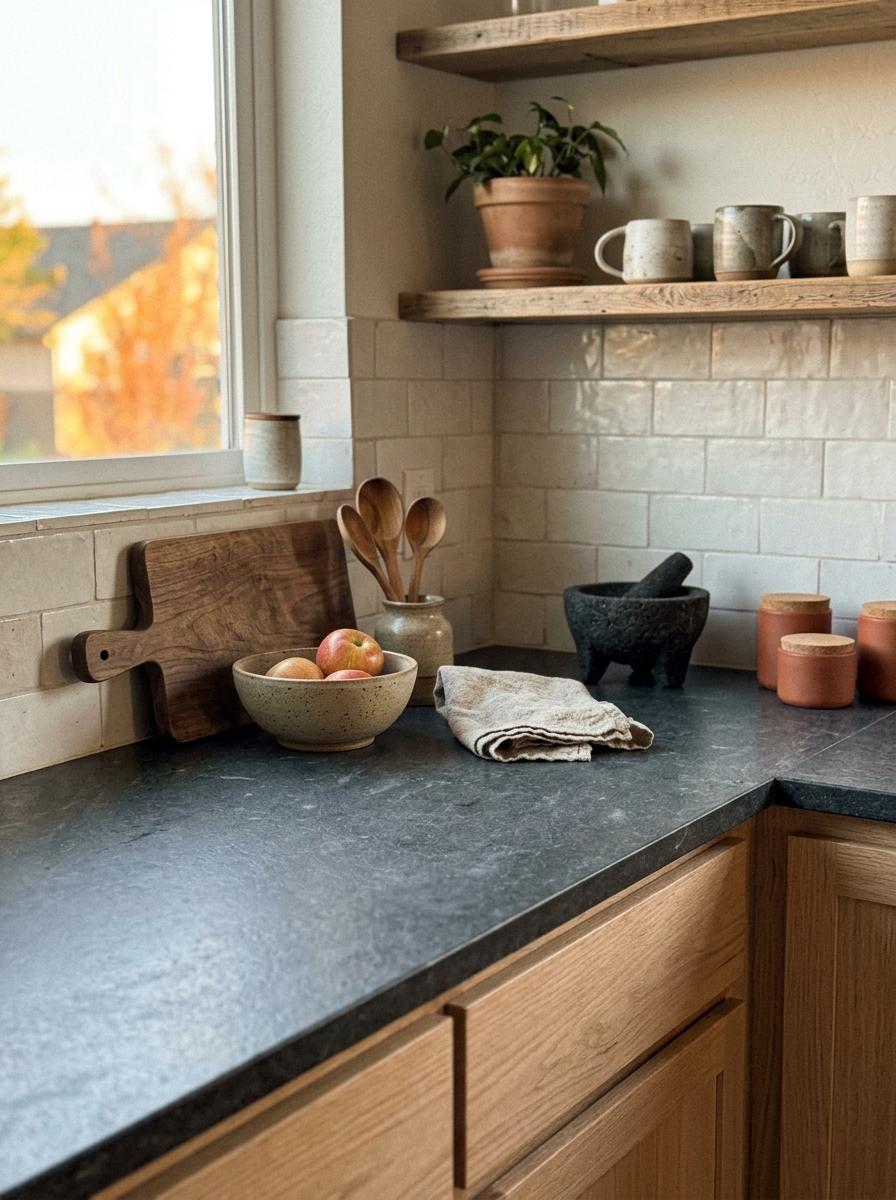

The seamless integration of organic textures within the modern culinary space is masterfully achieved through the deliberate selection of raw, tactile materials. In these curated environments, the presence of stark, silent stone provides a hushed, hollowed harmony that grounds the home's busiest hub. Every surface stretches across the cabinetry to carve out a sense of boundless utility, while the void between objects expands the room's inherent breatheability. This deliberate layout secures a balance where the physical weight of the counters anchors the light, airy spirit of the surrounding woodwork. To truly embody this philosophy, the design employs honed basalt, weathered walnut, and matte clay.
The Ultimate Selection Of Materials For Japandi Kitchen Countertops
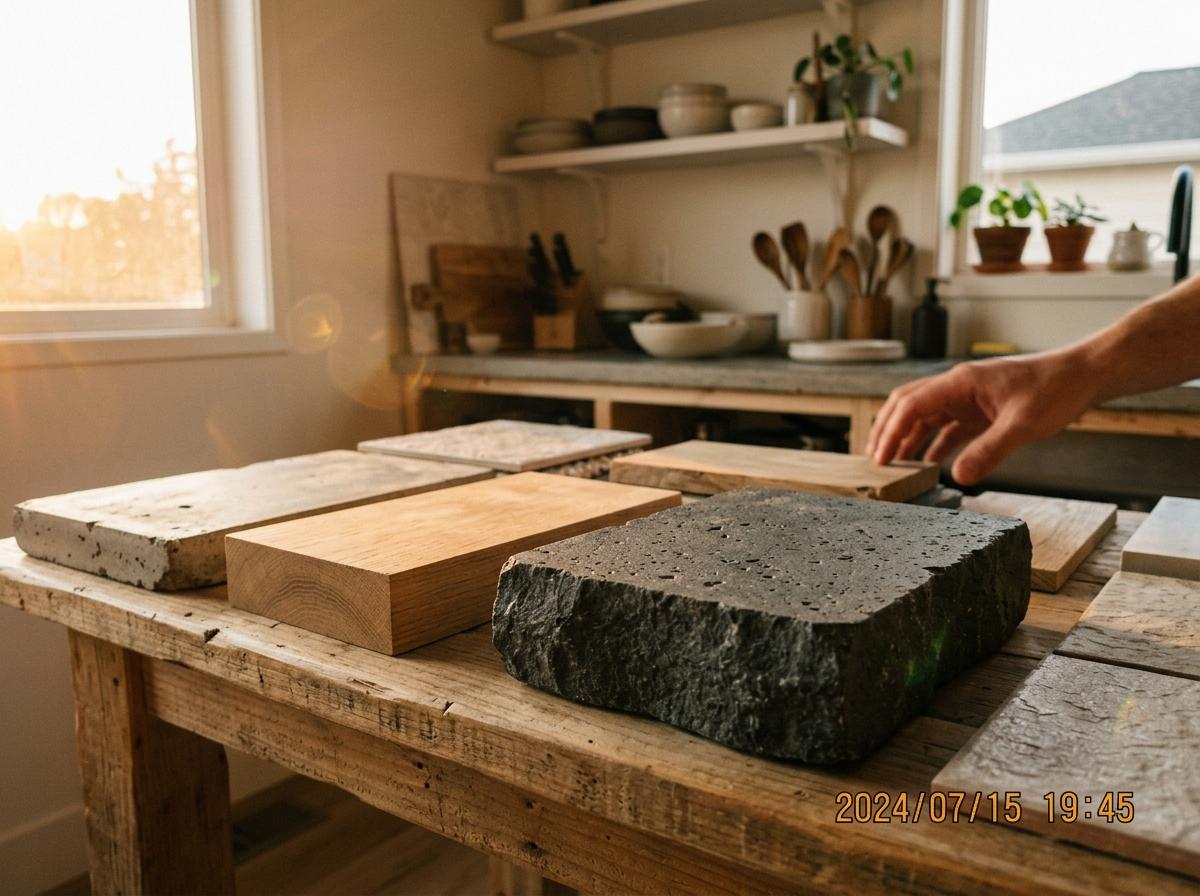

Selecting a material for a Japandi kitchen requires more than a visual match; it demands a tactile synergy between Scandinavian functionalism and Japanese rustic minimalism. Consider the honed Basaltina stone, often sourced from the volcanic quarries of Viterbo, Italy; its surface possesses a vesicular yet velvety texture that feels ancient yet engineered. Note how the charcoal-grey slab anchors the room, absorbing light rather than reflecting it, creating a visual weight that grounds the airy cabinetry. This is the refined raw aesthetic-a deliberate paradox where the countertop appears ruggedly unfinished to the eye, yet feels buttery and sophisticated under the palm. As your skin meets the cool, matte surface, the physiological response is immediate: a sudden lowering of the pulse and a grounding sense of permanence that transforms the act of meal preparation into a meditative ritual. Through the lens of Tokyo's modern teahouses and Copenhagen's culinary studios, we see that the right stone doesn't just serve as a workspace; it acts as a silent, sensory anchor for the home.
How Tactile Surfaces Enhance Modern Japandi Kitchen Countertops
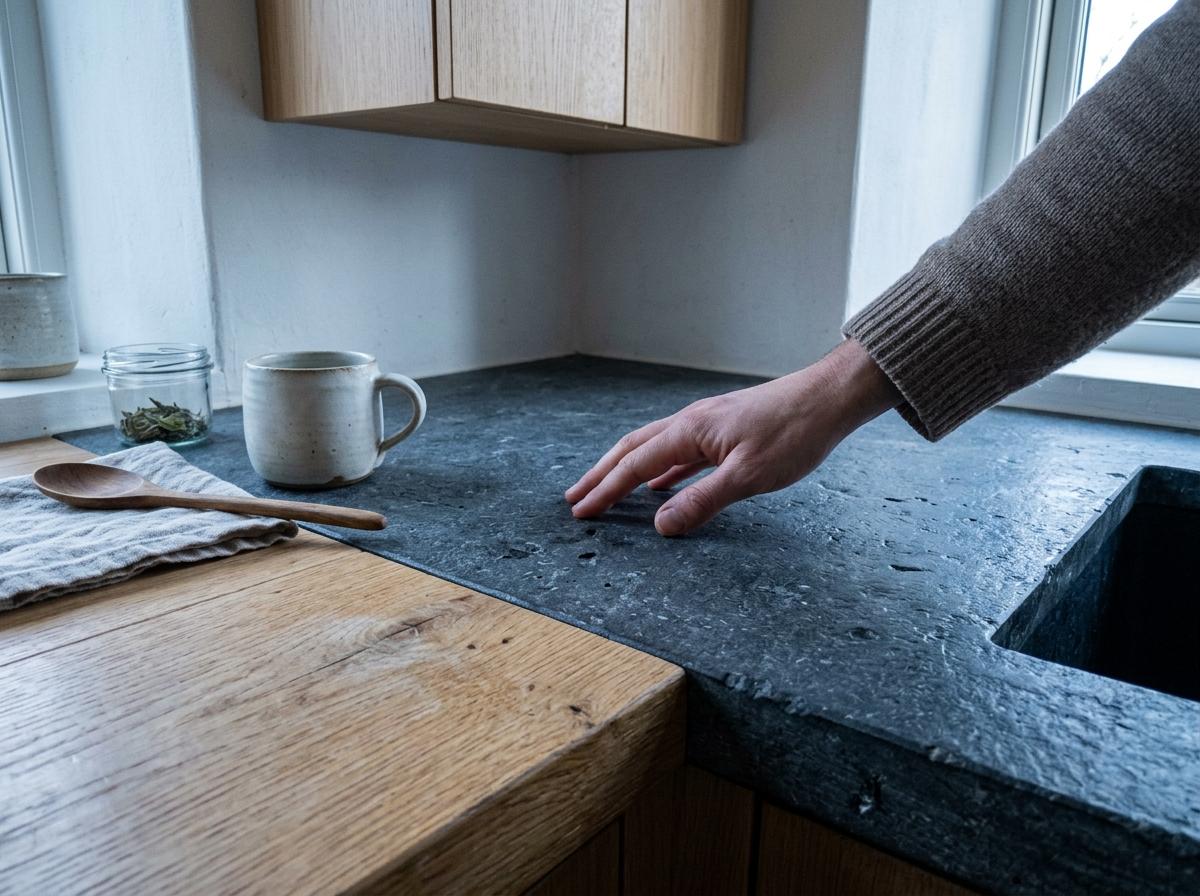

To understand the allure of the contemporary Japandi kitchen, we can first recognize its DNA: the synthesis of Scandinavian hygge-a commitment to cozy functionality-and the Japanese ethos of wabi-sabi-the celebration of impermanence and natural patina. This union results in a domestic landscape that is profoundly minimalist yet resonant with an earthy, haptic depth. Nowhere is this tension more palpable than in the selection of countertop surfaces, where the clinical precision of modern engineering meets the raw, organic soul of the earth. These tactile surfaces offer a friction-filled reprieve from our increasingly digital lives; a honed basalt slab feels monolithically stoic yet velvet-soft to the touch, providing a grounding counterpoint to the ethereal, airy lightness of light oak cabinetry. By prioritizing such multidimensional textures-ranging from the granular, porous relief of travertine to the undulating, hand-planed grain of reclaimed timber-the kitchen transcends its utilitarian roots. It becomes a sensorial sanctuary that is simultaneously austere and immersive, quiet and evocative, where every interaction is an exercise in mindful, physical connection.
Comments