
At Japandi.design, we define the exterior landscape through a formula of rhythmic synthesis: the rustic, tectonic honesty of Scandinavian hygge integrated with the ephemeral, transcendent imperfection of Japanese wabi-sabi. This intentional curation creates an outdoor sanctuary where the architectural rigivity of clean lines meets the fluid organicism of the natural world, resulting in a space that feels profoundly disciplined yet inherently soulful. By prioritizing a palette of tactile, weathered timbers and limestone alongside a rigorous minimalist ethos, these environments achieve a sense of monastic tranquility that is simultaneously visceral, ethereal, and grounding.
Japandi Outdoor Living
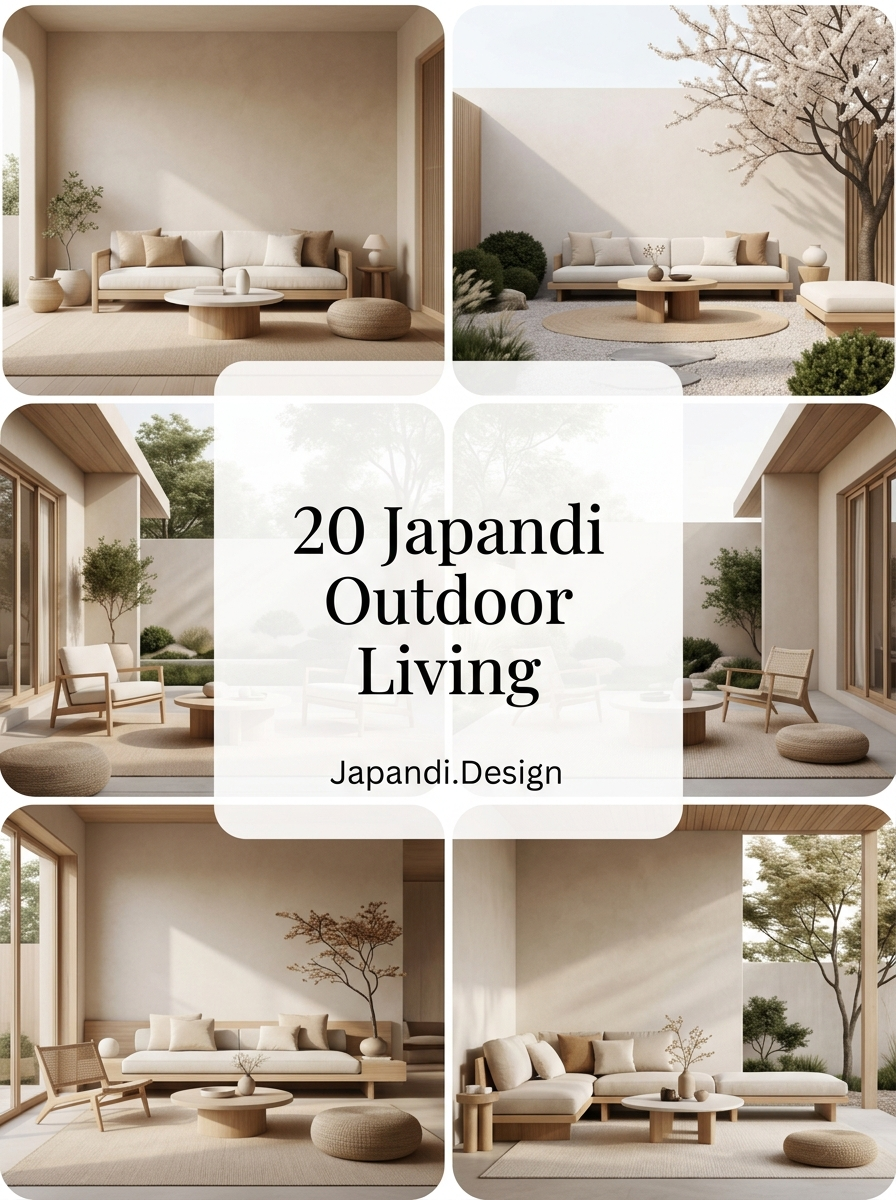

Create A Balanced Japandi Garden Oasis
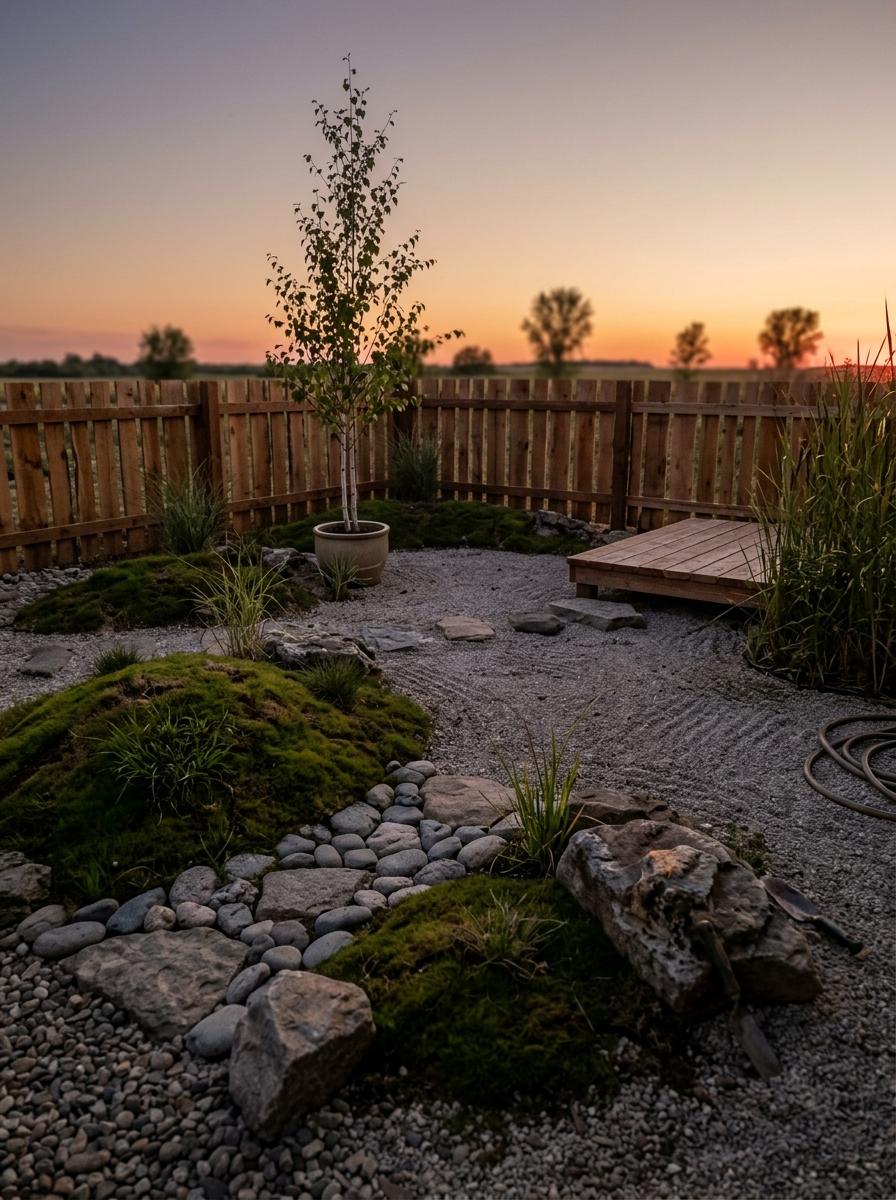

The essence of a balanced Japandi garden is meticulously forged through the integration of raw stone and deliberate greenery. In this serene enclosure, a sparse aesthetic governs the landscape, defined by hollow volumes and an unadorned horizon that invites quiet contemplation. Mossy mounds meet muted minerals, grounding the space in a tactile tranquility that resonates with the rhythmic rustle of reeds. Strategic voids carve out paths for light to travel, while low-slung timber structures anchor the perimeter and extend the visual depth of the terrain. This intentional composition frames the view, tames the wild, and anchors the soul.
The Essence Of A Modern Japandi Backyard Retreat
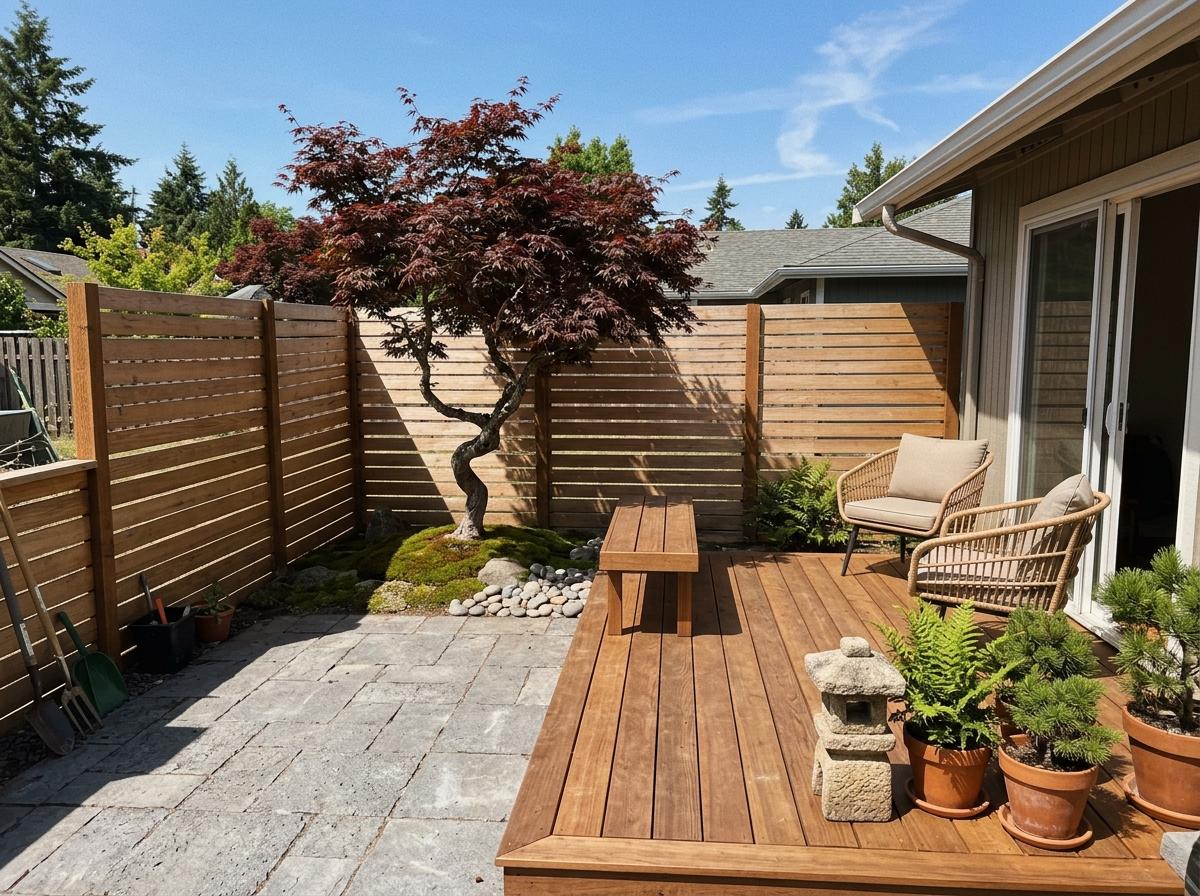

To create a modern Japandi sanctuary, we need to master the dialogue between the tactile and the ethereal. Imagine a terrace paved in abrasive, thermal-finished basalt that meets the silken, oil-rubbed grain of sustainably sourced hinoki wood. Note how the horizontal rhythm of the fencing directs your gaze toward a singular, sculptural Acer Palmatum, grounding the space in intentionality. This composition thrives on a complex simplicity; it is an environment that feels meticulously engineered yet entirely primordial. As you transition from the structured deck to the soft moss periphery, the physical cooling of the air triggers a profound physiological shift-your heart rate decelerates, and the frantic mental noise of the city dissolves into a state of alert stillness. This is the design philosophy championed by firms like Zen Associates and the aesthetic soul of Kyoto's Arashiyama districts: a realization that a backyard is not merely an outdoor room, but a biological reset button.
Designing A Functional Deck With Japandi Influence
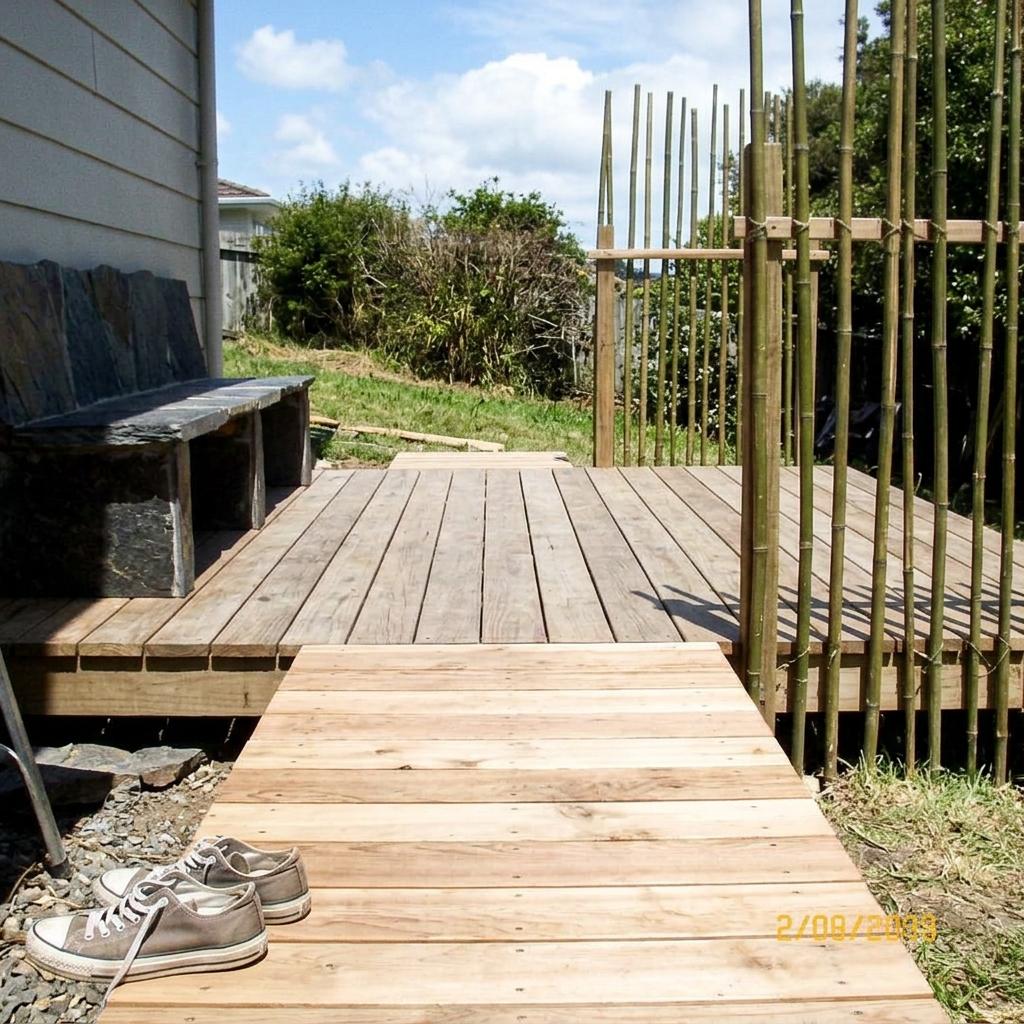

The layout of this outdoor sanctuary was conceived to bridge the threshold between internal comfort and the raw exposure of nature. Within this curated space, a sparse aesthetic governs every corner, characterized by unadorned surfaces and a vacant simplicity that invites a profound sense of stillness. Through careful planning, the timber planks provide a peaceful path toward the perimeter, grounding the inhabitant in a rhythmic sequence of wood and light. The structure carves out a hollow volume, extends the living area toward the horizon, and anchors the gaze within a frame of balanced beauty. To achieve this harmony, the design integrates muted cedar decking, low-slung stone seating, and slender bamboo screens.
How To Transform Your Balcony Into A Japandi Escape
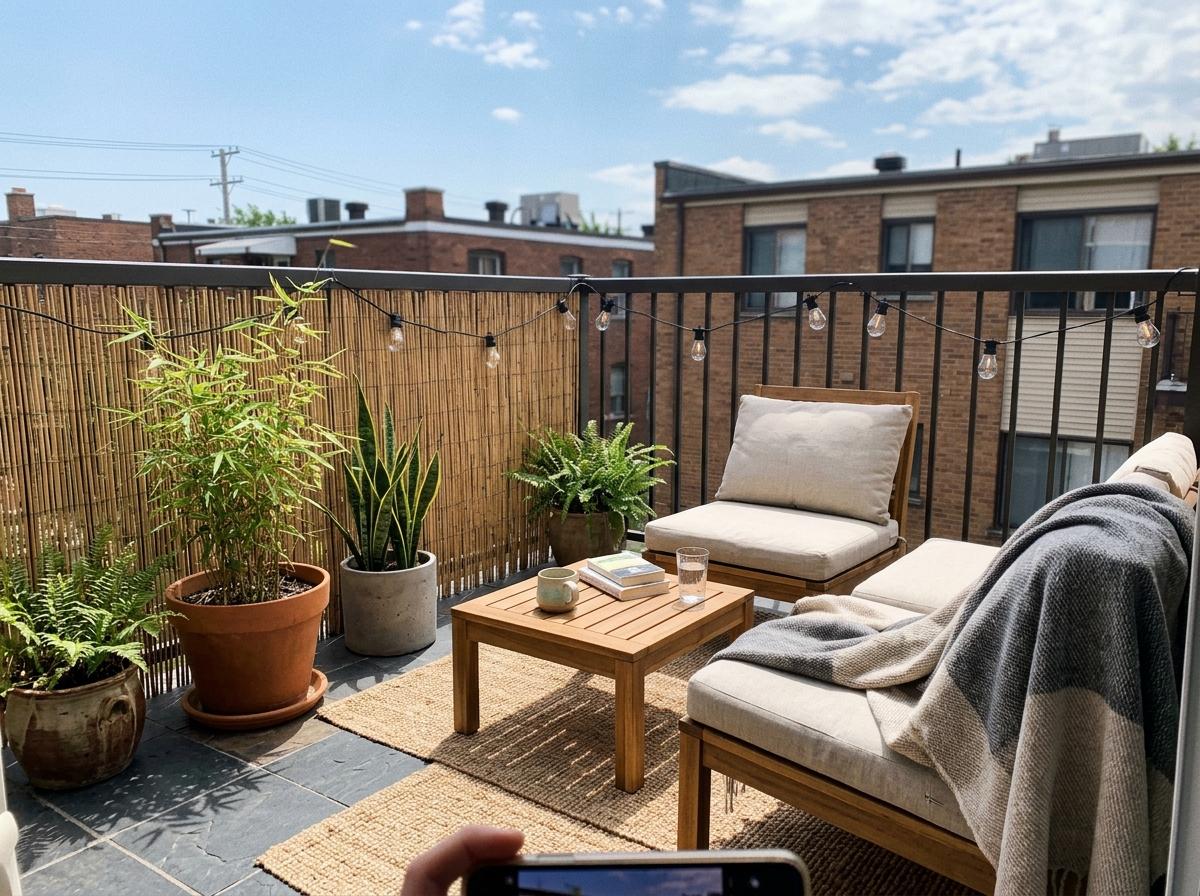

In analyzing the contemporary outdoor retreat, we must view Japandi not as a mere aesthetic choice, but as a deliberate synthesis where the rustic imperfection of Japanese wabi-sabi meets the pragmatic clarity of Scandinavian hygge. To transform a balcony into such an escape requires a mastery of textural curation; one must select materials that feel grounded yet ethereal, curated yet organic. This design dialectic demands a rigorous adherence to minimalism, yet it invites a profound tactile warmth-a tension that prevents the space from feeling sterile. By layering low-profile teak furnishings against a backdrop of neutral, basalt-toned stones, you evoke a mood that is simultaneously monastic, restorative, and soul-quieting.
A Look Inside An Elegant Japandi Outdoor Living Space
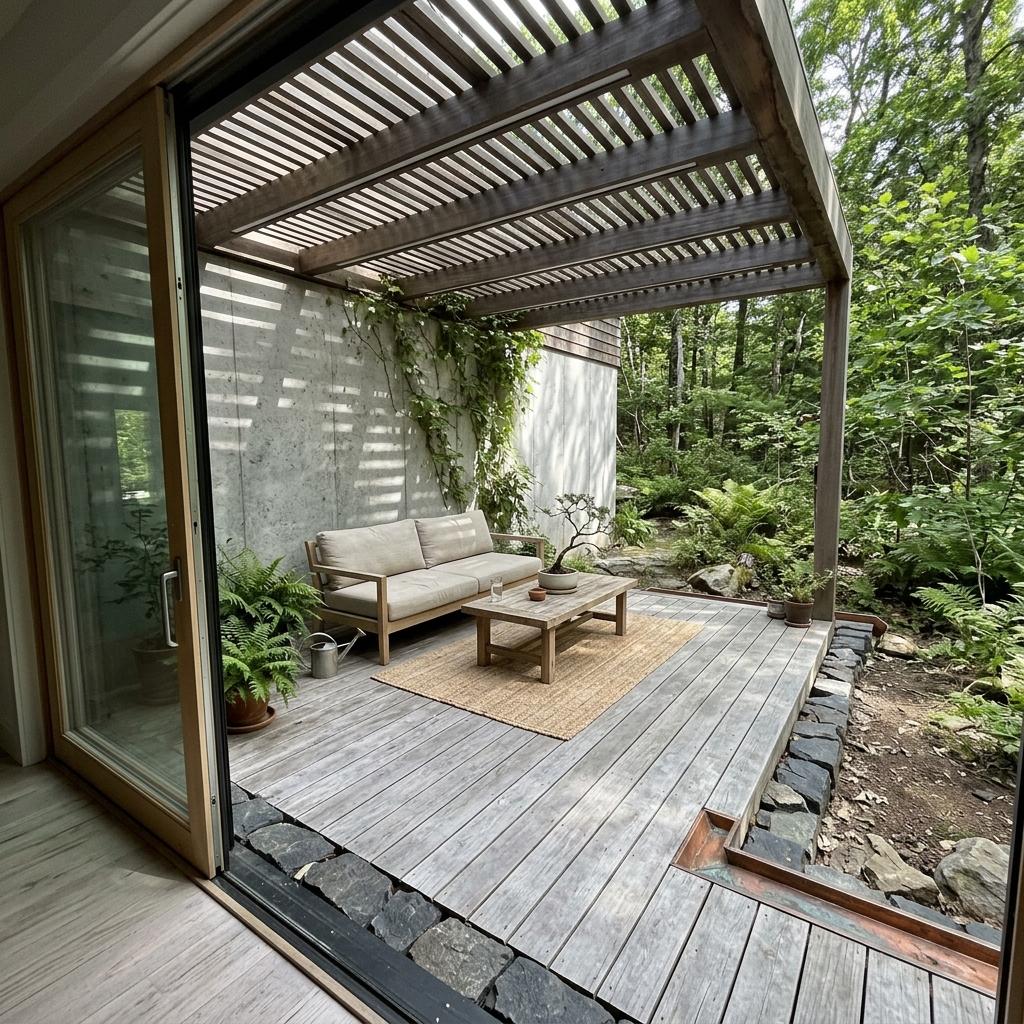

In the quiet periphery where the rigid architecture of the home dissolves into the unmanicured wild, this patio serves as a dedicated sanctuary of stillness. It exists as a structured wilderness, a conceptual space where the calculated precision of human design embraces the unpredictable entropy of the natural world. While the interior of the residence remains a fortress of conditioned air and static light, this outdoor extension functions as a permeable threshold, exposed to the shifting shadows and the tactile humidity of the open sky. The floor is composed of weathered silver-grey larch decking, chosen for its silvering patina, which contrasts sharply against the raw, hand-chiseled basalt stones bordering the periphery. Every element is governed by a philosophy of industrial restraint; integrated drainage hidden beneath the timber slats and recessed LED channels work in tandem to ensure that the space remains a high-performance environment, capable of weathering the elements without sacrificing its curated, minimalist composure.
The Perfect Blend Of Nature In A Japandi Patio
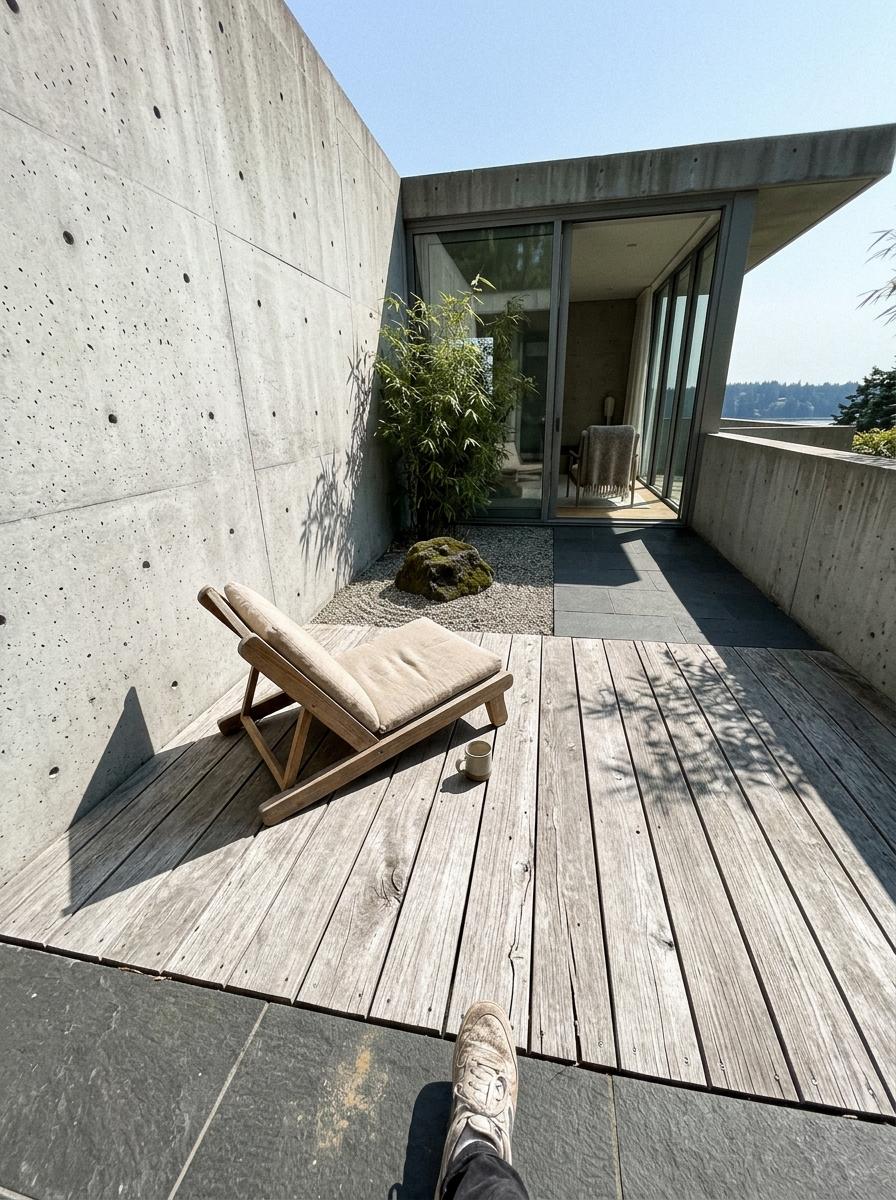

To truly master the Japandi patio, You need to look toward the Setouchi Retreat Aonagi, where the architecture of Tadao Ando serves as a masterclass in elemental restraint. Note how the raw, pockmarked tactile quality of the poured concrete walls acts as a brutalist anchor for the fibrous, open-grained warmth of weathered teak decking. This intentional juxtaposition creates a structured spontaneity; every plank is laid with mathematical precision, yet the wood remains unapologetically honest in its silvering decay. As you step onto the transition between cool, honed basalt stone and the sun-warmed timber, the physical temperature shift triggers a deep, parasympathetic release-a visceral settling of the breath. It is within this intersection of Nordic functionalism and Japanese wabi-sabi that the patio ceases to be an outdoor room and becomes a living lung, where the stillness of the design allows the kinetic energy of nature to finally take center stage.
Experience Harmony In This Carefully Crafted Japandi Terrace
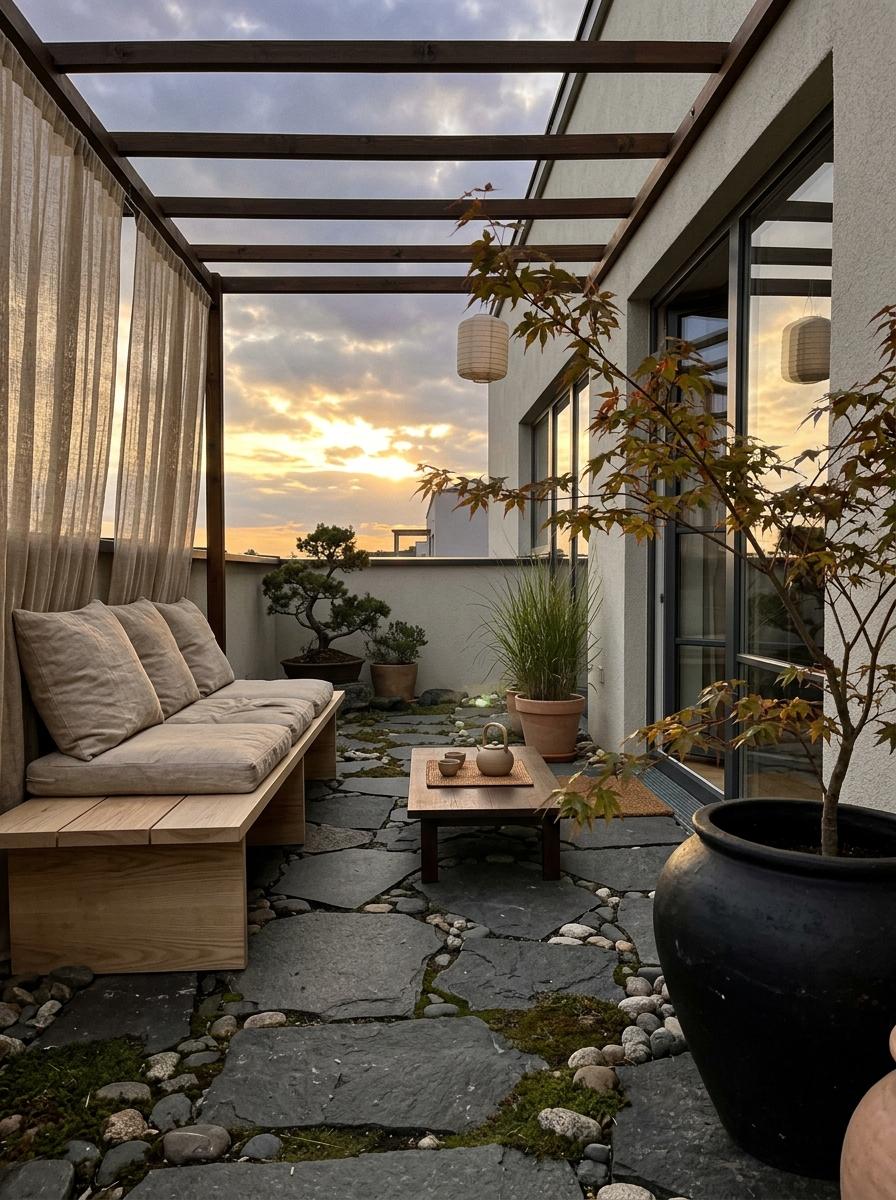

Experience Harmony In This Carefully Crafted Japandi Terrace This terrace serves as a definitive case study in the power of hybridity, where the unflinching rigor of Scandinavian functionalism coalesces with the ancient, weathered grace of wabi-sabi to forge a sophisticated Japandi sanctuary. The intervention achieves a precarious yet intentional equilibrium: the structural envelope feels architecturally disciplined, yet the atmospheric quality remains profoundly ethereal. To traverse this space is to encounter a masterclass in sensorial curation, moving through a sequence of tactile basalt surfaces, desaturated timber joinery, and diaphanous linen drapery that creates a haptic experience both grounded and weightless. By juxtaposing the sharp, geometric precision of Nordic silhouettes against the organic, asymmetrical soul of Japanese aesthetics, the design transcends mere decoration, becoming a study in how deliberate restraint can yield an environment of restorative, silent luxury.
Modern Minimalism Meets Nature In A Japandi Courtyard
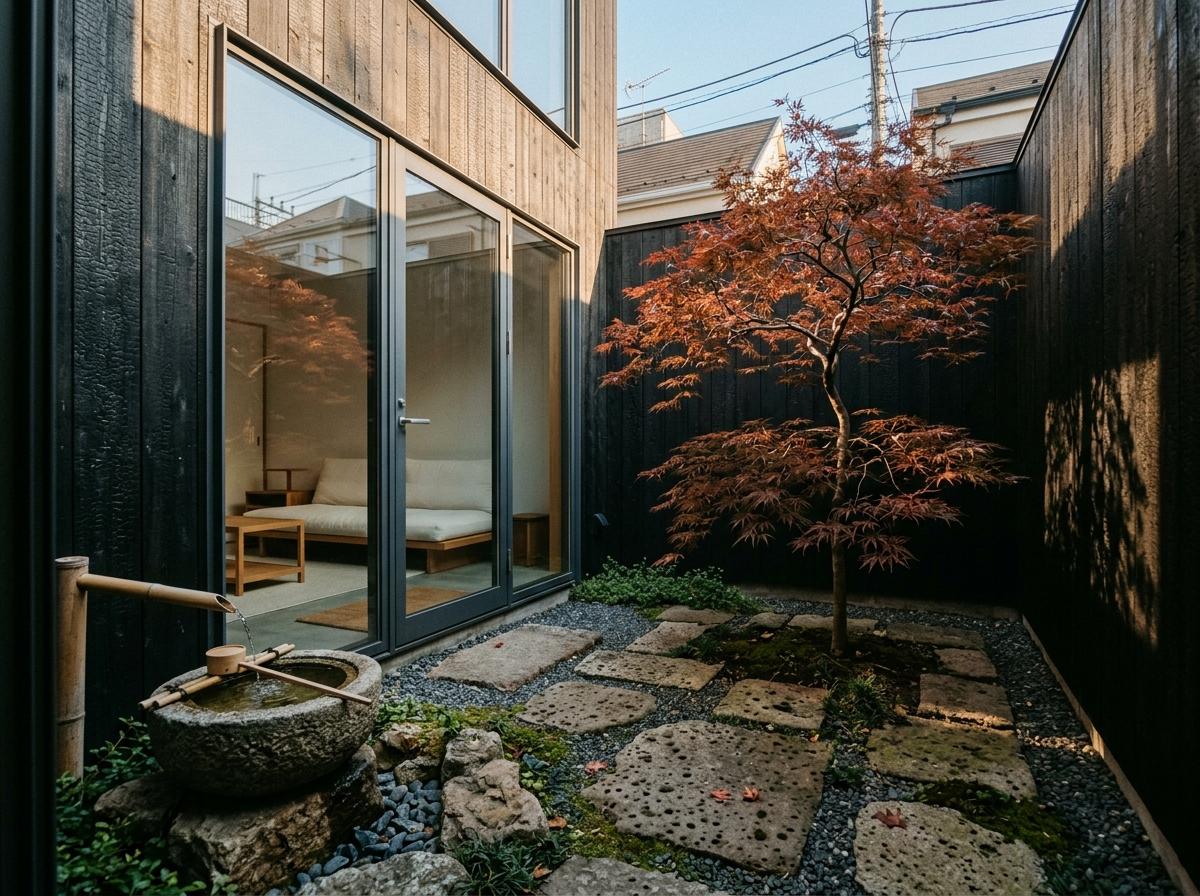

In this Tokyo residence, the architecture dissolves into a study of structured spontaneity, where the rigid geometry of blackened cedar meets the fluid grace of a single Japanese maple. Note how the tactile roughness of the shou sugi ban siding absorbs the morning light, creating a velvet-like depth that serves as a canvas for the courtyard's choreography of shadows. This purposeful arrangement of porous stone and polished glass creates an atmosphere of complex simplicity, anchoring the dwelling in a state of permanent transition. As you trace the vein of a weathered granite basin against the sleek, linear precision of the zinc framing, the visual noise of the surrounding Shibuya district fades into a rhythmic silence. Your breathing slows, the pulse synchronizing with the gentle trickle of water, as the physical boundary of the wall transforms into a psychological sanctuary-a visceral reminder that in the Japandi tradition, nature is not merely viewed, but inhaled.
Crafting A Quiet Japandi Outdoor Dining Area
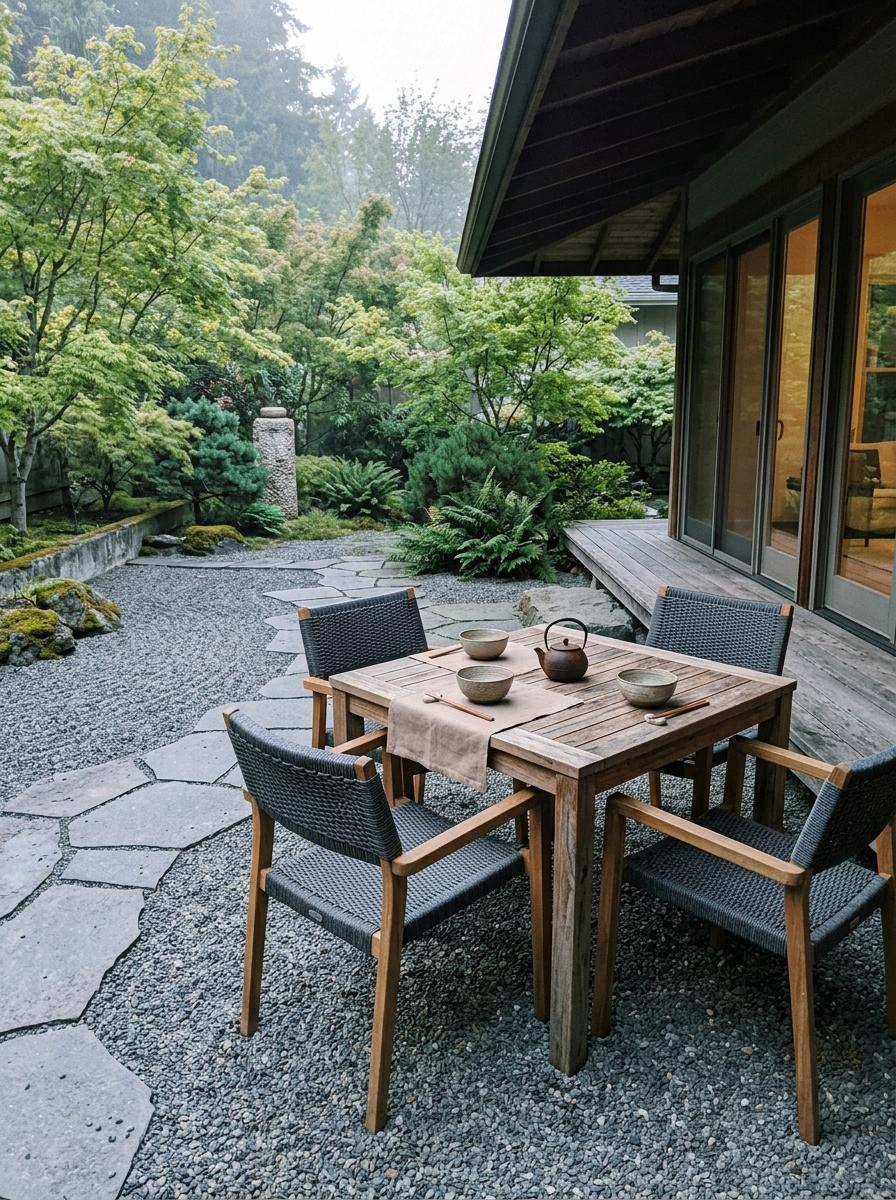

To create a quiet Japandi outdoor dining area, we must first anchor the space within the threshold of the "engawa"-that transitional zone where the controlled domestic interior dissolves into the untamed garden. This setting relies on a structured spontaneity, where the rigorous geometry of Japanese minimalism is softened by the organic, weathered imperfections of Scandinavian hygge. While the internal volume of the home remains a sanctuary of still air and smooth finishes, the exterior dining nook embraces the volatile elements, defining a boundary where architecture ends and the environment begins. To ground this dialogue, one might specify a low-slung table of reclaimed teak paired with chairs featuring a tight weave of charcoal-grey polyolefin rope, materials chosen for their ability to age into the landscape rather than fight against it. Ultimately, the space functions as a tactical intervention: the placement of modular basalt pavers and integrated hidden drainage ensures that the aesthetic of a Zen gravel court remains a high-utility surface, capable of hosting life while maintaining an unwavering, silent composure.
Subtle Elegance In A Modern Japandi Rooftop Garden
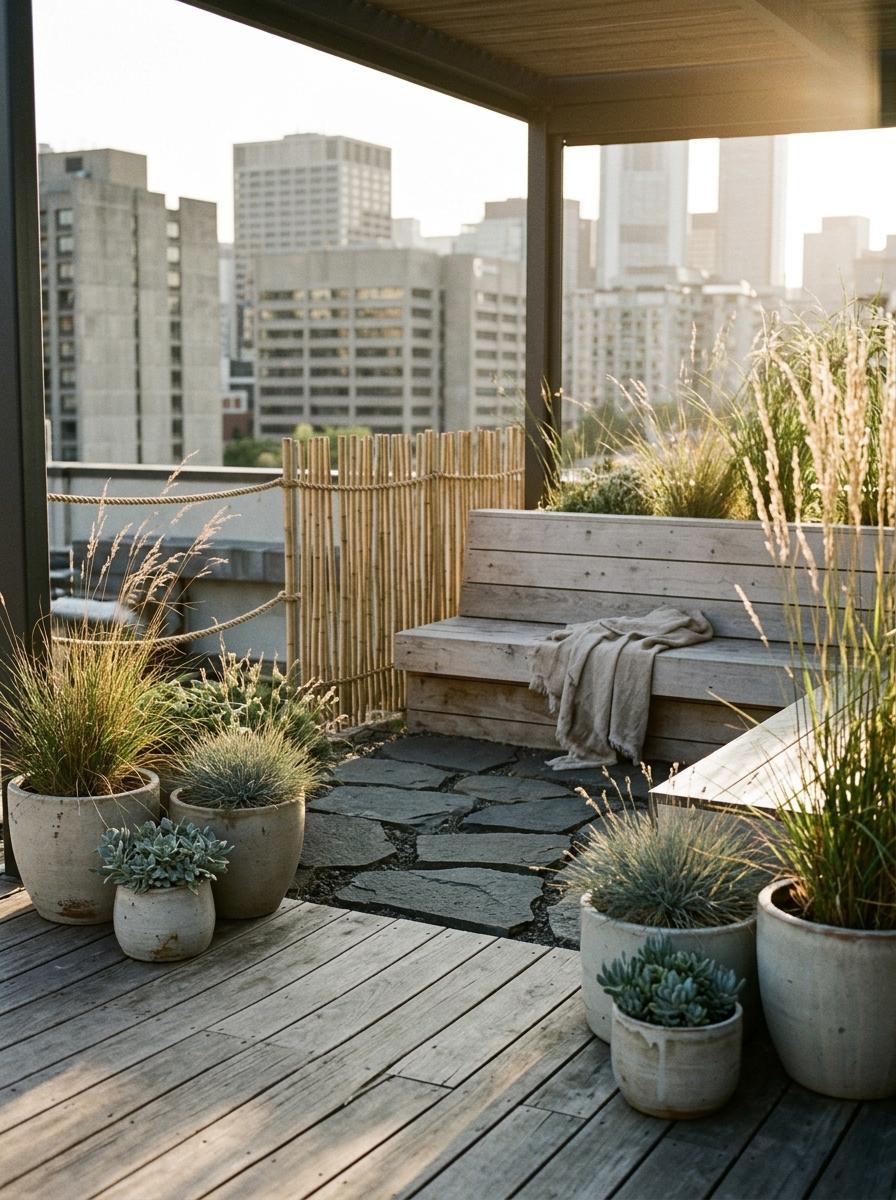

At its core, the modern Japandi rooftop garden is defined by the synthesis of Scandinavian hygge-that pursuit of lived-in intimacy-and the Japanese principle of wabi-sabi, which honors the profound beauty of impermanence; together, they form a landscape of intentional serenity. This aesthetic equilibrium requires a mastery of lexical precision, utilizing monochromatic xeriscaping and structural minimalism to curate an environment that feels architecturally disciplined yet inherently organic. The design thrives on a dialectical tension: the lines are unapologetically rigorous and geometric, but they are softened by the ephemeral, swaying movement of ornamental grasses and the weathered patina of basalt stone. It is a space characterized by haptic, ethereal, and grounded textures-a sensory sanctuary where the starkness of the city's skyline is filtered through a veil of quietude.
A Guide To Sustainable Materials For Japandi Outdoor Spaces
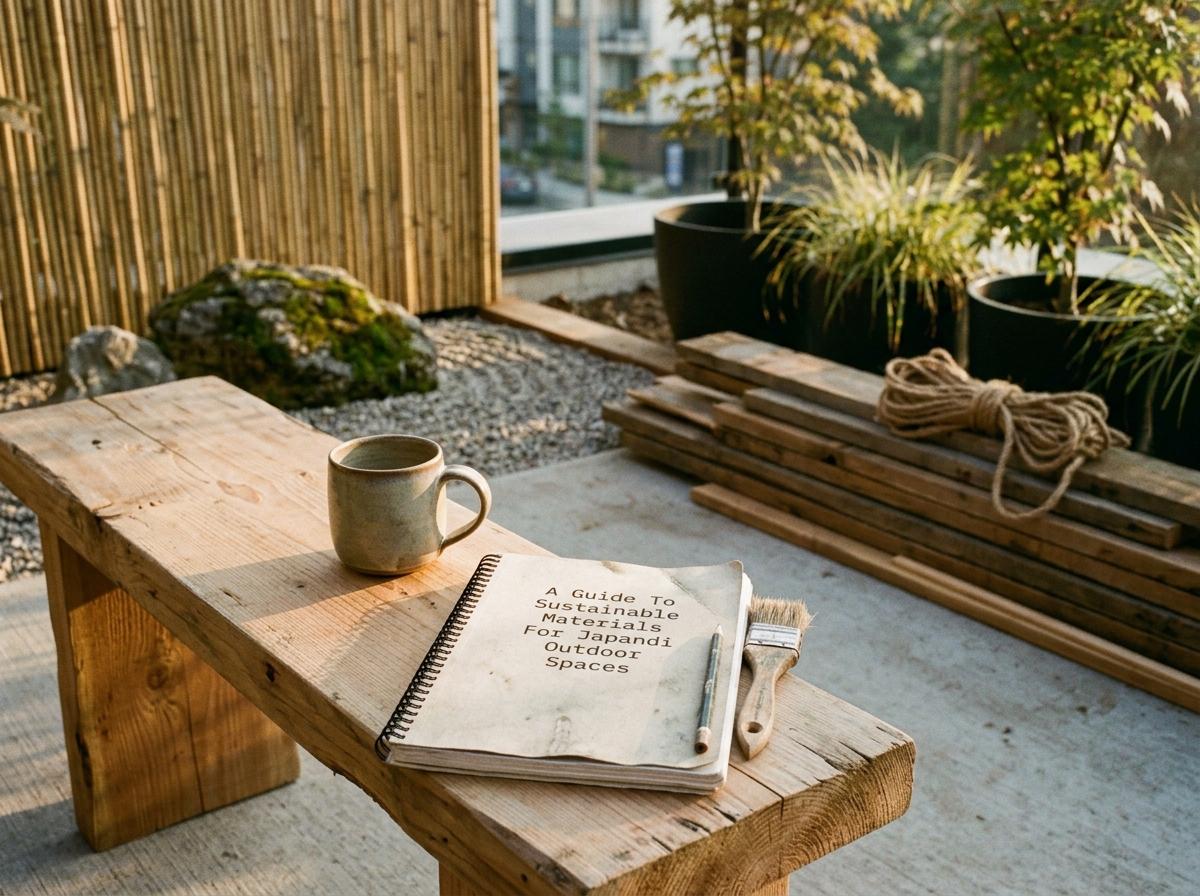

While walking through a frantic, sun-bleached construction site in the city center-where the air feels thick with the scent of synthetic resins and the jarring glare of polished chrome-I found myself yearning for the muffled silence of a moss-covered courtyard I had visited in Kyoto. "Sustainability isn't about sacrifice," an eco-conscious artisan once told me as he smoothed the grain of a reclaimed cedar plank, "it is about..." he paused, searching for the right cadence, "...the intentionality of aging." In that moment, the harsh, industrial sprawl felt chemically sterile compared to the tactile warmth of his workshop, where the wabi-sabi appreciation for imperfection met the clean, linear precision of Scandi functionality. This tension between the disposable and the enduring is where we find the soul of exterior curation. To truly achieve a harmonious biophilic flow, we need to select a palette that respects the earth as much as the eye, moving beyond mere aesthetics toward a deeper ecological integrity.
Integrating Natural Textures Into A Japandi Exterior Design
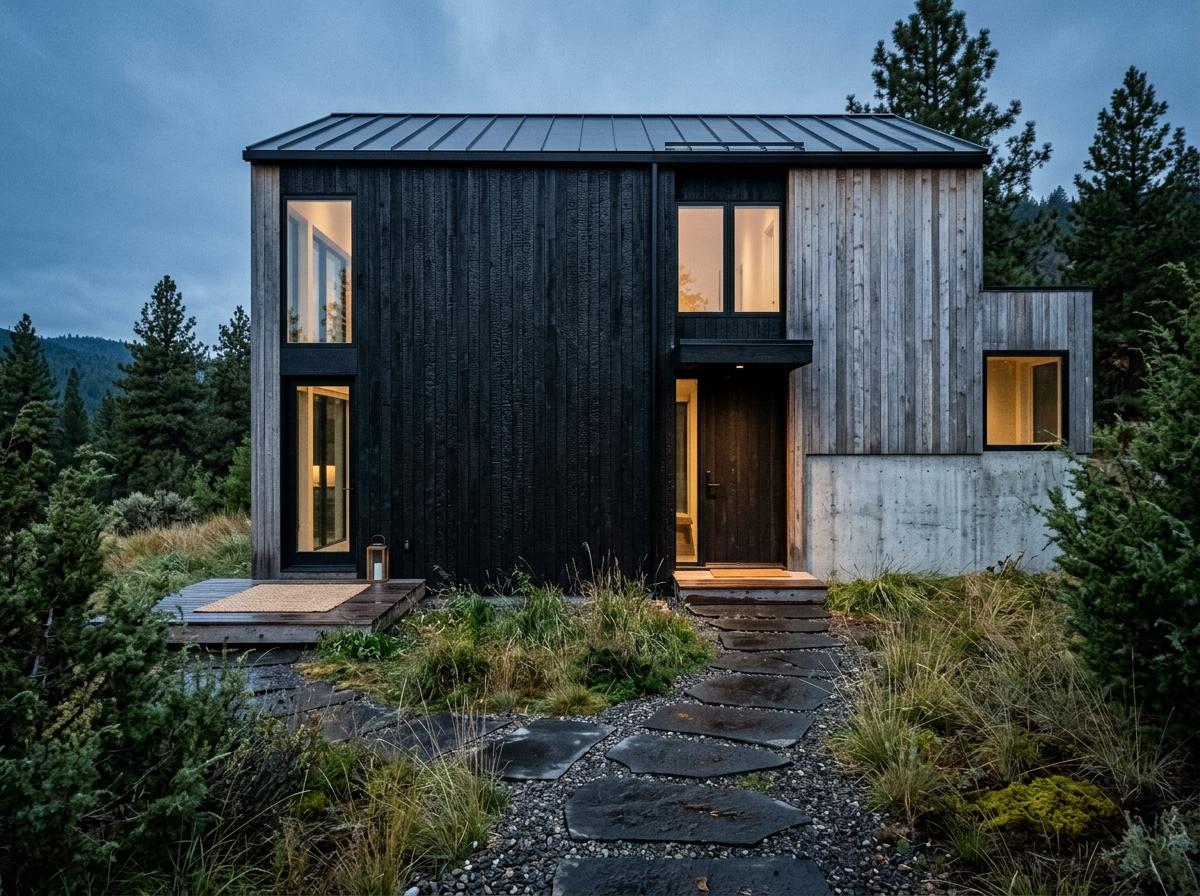

To achieve a true Japandi facade, You can prioritize the tactile honesty of the building envelope. Note how the inclusion of charred Shou Sugi Ban cedar siding-with its carbonized, alligator-skin grain-provides a rugged defense against the elements while remaining velvet-soft to the visual palette. This specific material choice creates a calculated spontaneity; the wood is both preserved by fire and reborn as a refined architectural skin, offering a delicate brutality that grounds the structure in its environment. As your eye travels from the silver-grey patina of weathered larch to the cool, granular density of a Honed Basalt walkway, the transition triggers a distinct physiological shift. The tension in your shoulders yields to a rhythmic calmness, a visceral reaction to the "tactile silence" found in high-end projects like the Aman Kyoto or the residential retreats of Shigeru Ban. By grounding the exterior in these raw yet curated textures, the home ceases to be a mere shield from the world and becomes a breathing, sensory extension of the landscape itself.
The Beauty Of Simplicity In A Japandi Style Garden
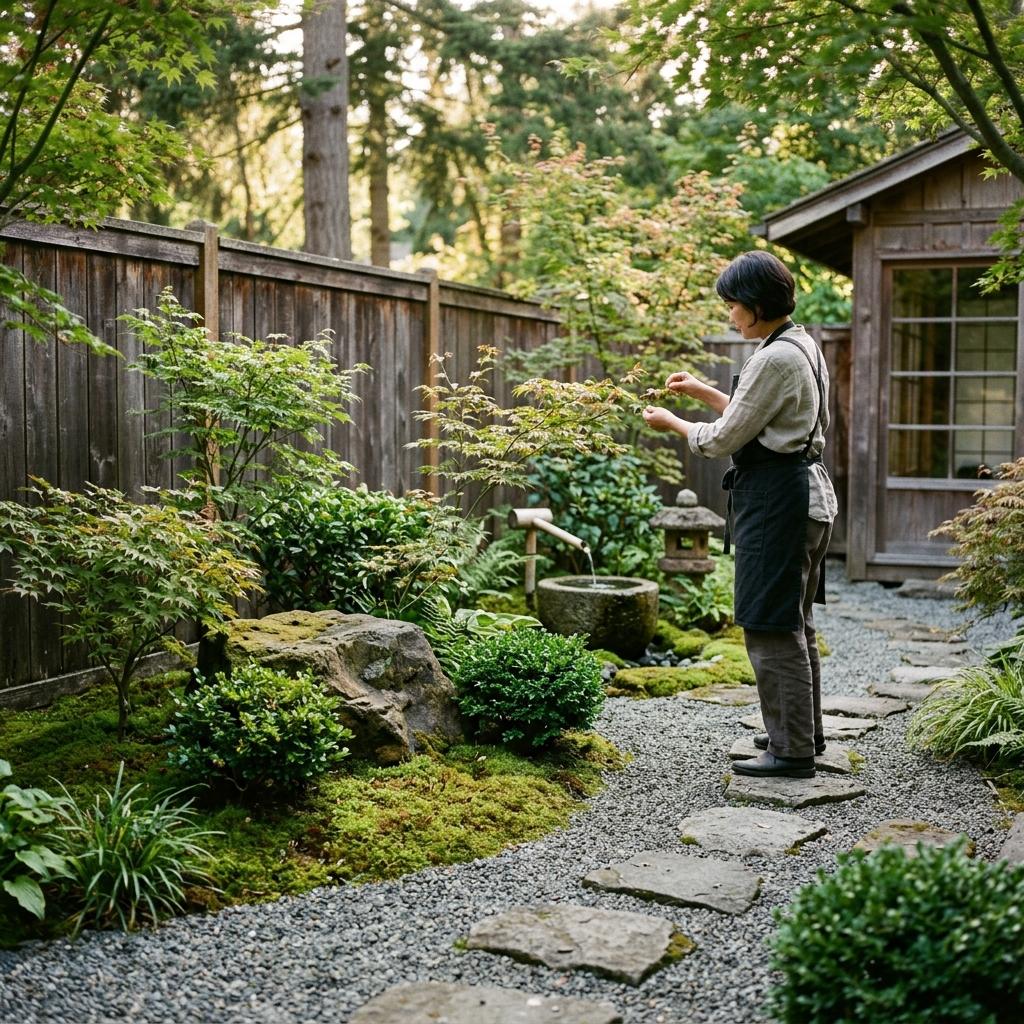

I remember sitting across from a landscape designer in a garden that felt less like a backyard and more like a deliberate exercise in restraint. The air was thick with the scent of damp moss and cedar, a sharp departure from the sensory assault of the city-where jagged skylines and neon light pollution create a constant state of visual noise. "The secret to a Japandi outdoor space," she told me, pausing to reposition a weathered basalt stone, "isn't about filling the void." She stepped back, eyes narrowing as she studied the placement. "It's about honoring the ma, that negative space that allows the eye to actually breathe." This shift from the cluttered maximalism of traditional Western flowerbeds to a curated palette of evergreen structural planting and gravel creates a profound sense of wabi-sabi-the appreciation of beauty in the weathered and the fleeting. By stripping away the superfluous to reveal the raw texture of natural materials, we find that the garden becomes more than a hobby; it becomes a sanctuary of intentionality.
Transform Your Outdoor Area Into A Quiet Japandi Space
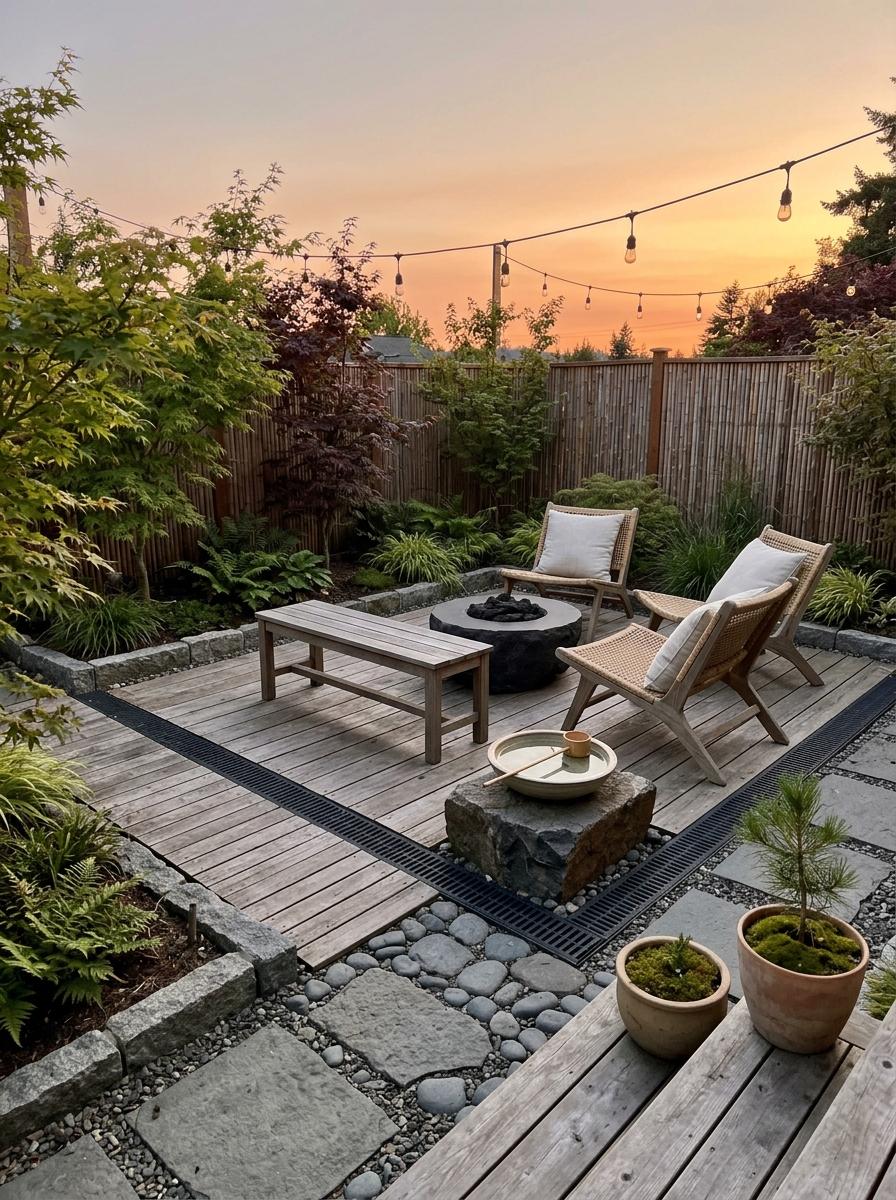

The modern patio is no longer a mere extension of the home, but a threshold where the curated discipline of Kyoto meets the rugged soul of Scandinavia. In this pursuit of a quiet outdoor sanctuary, we encounter a deliberate spontaneity-a landscape that feels both meticulously planned and entirely untamed. While the world beyond the fence line remains a chaotic hum of motion, the space within the perimeter collapses into a profound, intentional stillness. To ground this transition, we can look to the tactile honesty of weathered cedar planks and the cool, unyielding weight of river-washed basalt. These are not merely decorative choices, but a form of functionalist choreography: by integrating recessed slate drainage channels and modular teak platforms, the design solves the problem of seasonal exposure through a lens of high-utility elegance, ensuring the space remains a durable vessel for contemplation.
A Closer Look At A Minimalist Japandi Deck Design
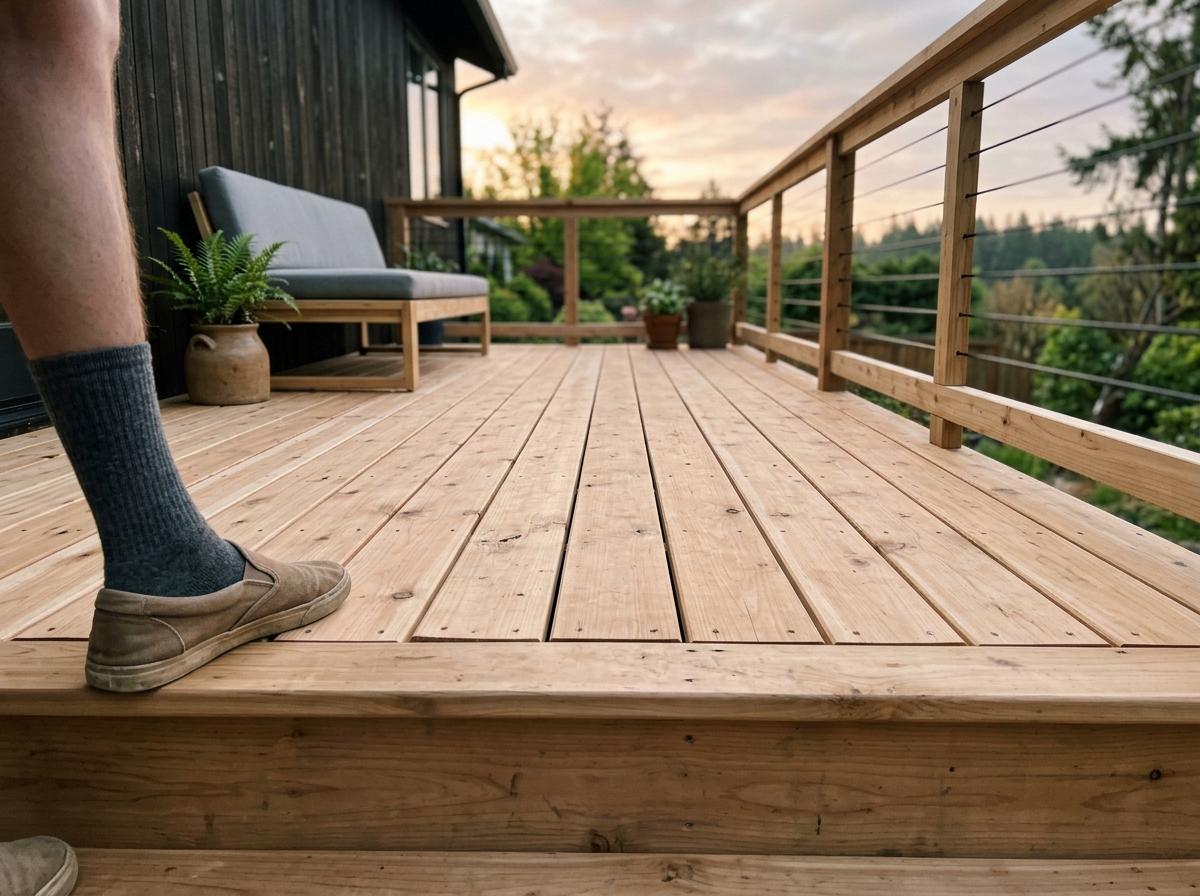

Stepping onto the cedar planks of this particular project, I was immediately struck by the silence-a sharp departure from the visual noise of the surrounding suburban sprawl where oversized masonry and chaotic floral arrangements often compete for dominance. "The intention here," explained the lead designer as he traced the clean, linear grain of the balustrade, "wasn't to impose a structure upon the landscape, but rather," he paused, adjusting his focus toward the distant treeline, "to curate a void where the mind could finally settle." This deliberate use of negative space, or ma, creates a profound sense of tectonic lightness, juxtaposing the heavy, ornate decks of yesteryear against a platform that feels almost ethereal. By utilizing a restrained palette of charred timber and muted stone, the design achieves a sophisticated materiality that speaks to both Japanese wabi-sabi and Scandinavian hygge. It is within this intersection of raw texture and precise geometry that we find the true essence of the modern outdoor sanctuary.
Redefining The Modern Patio With Japandi Aesthetic
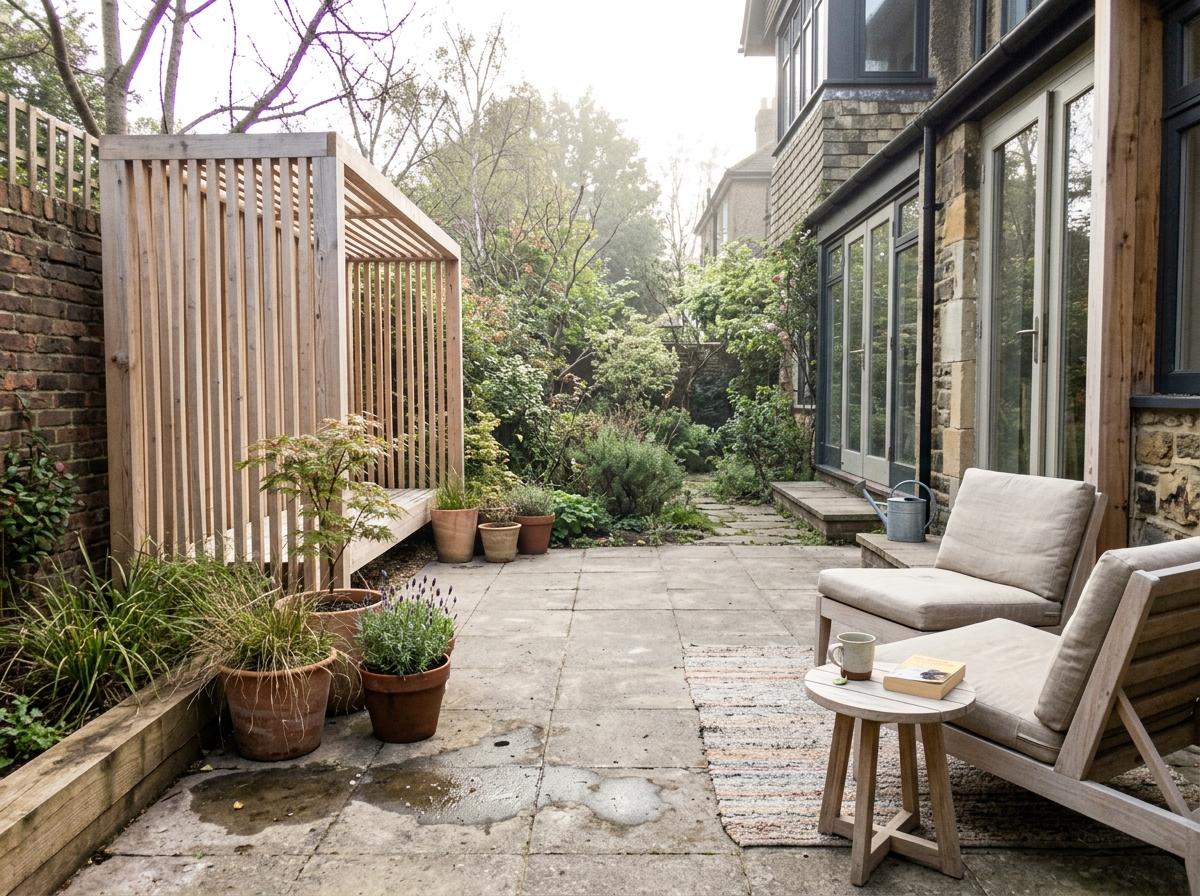

The evolution of the outdoor living space has transitioned from the rigid, strictly utilitarian stone terraces of the mid-century to a contemporary sanctuary that prioritizes emotional resonance. In this latest project, we explore a patio that achieves a sense of ordered chaos, where the organic wildness of nature is disciplined by the clean lines of functionalism. Nestled within the quiet, leafy enclaves of Hampstead, this intervention was commissioned by a repeat client-a partnership that allowed for a deeper level of conceptual risk-taking and trust. The resulting space is a masterclass in the Japandi aesthetic, realized through a technical synthesis of tactile materiality, rhythmic timber screening, and a calibrated play of light and shadow.
Finding Balance In A Small Japandi Outdoor Space
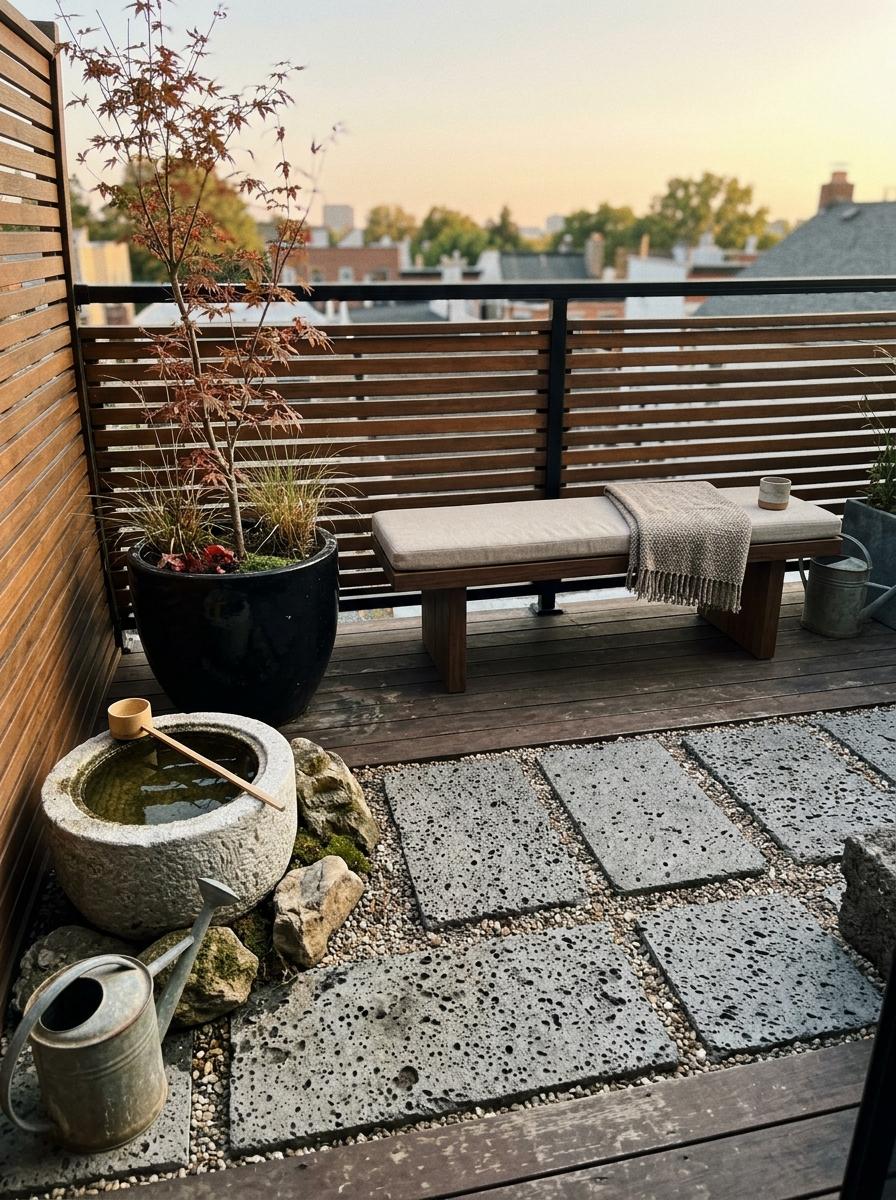

To achieve equilibrium within a compact footprint, You must prioritize the tactile interplay between the rugged and the refined. Note how the juxtaposition of rough-hewn, porous lava stone pavers against the silken, oil-rubbed finish of a slatted teak privacy screen creates a visual dialogue that anchors the space. This is the essence of a crowded emptiness; by selecting fewer, more substantial elements rather than a clutter of miniatures, the small terrace begins to breathe. As you step onto the weathered surface, feel the transition from the frantic rhythm of the city to a state of structured spontaneity. The cool, calcified touch of a stone water basin-reminiscent of the meditative courtyards at the Adachi Museum of Art-slows the heart rate, grounding the nervous system through a deliberate connection to the earth. In this pocket of curated nature, the tension in your shoulders dissolves, replaced by the profound stillness that only a perfectly balanced Japandi environment can evoke.
Discover The Art Of Japandi Outdoor Furnishing
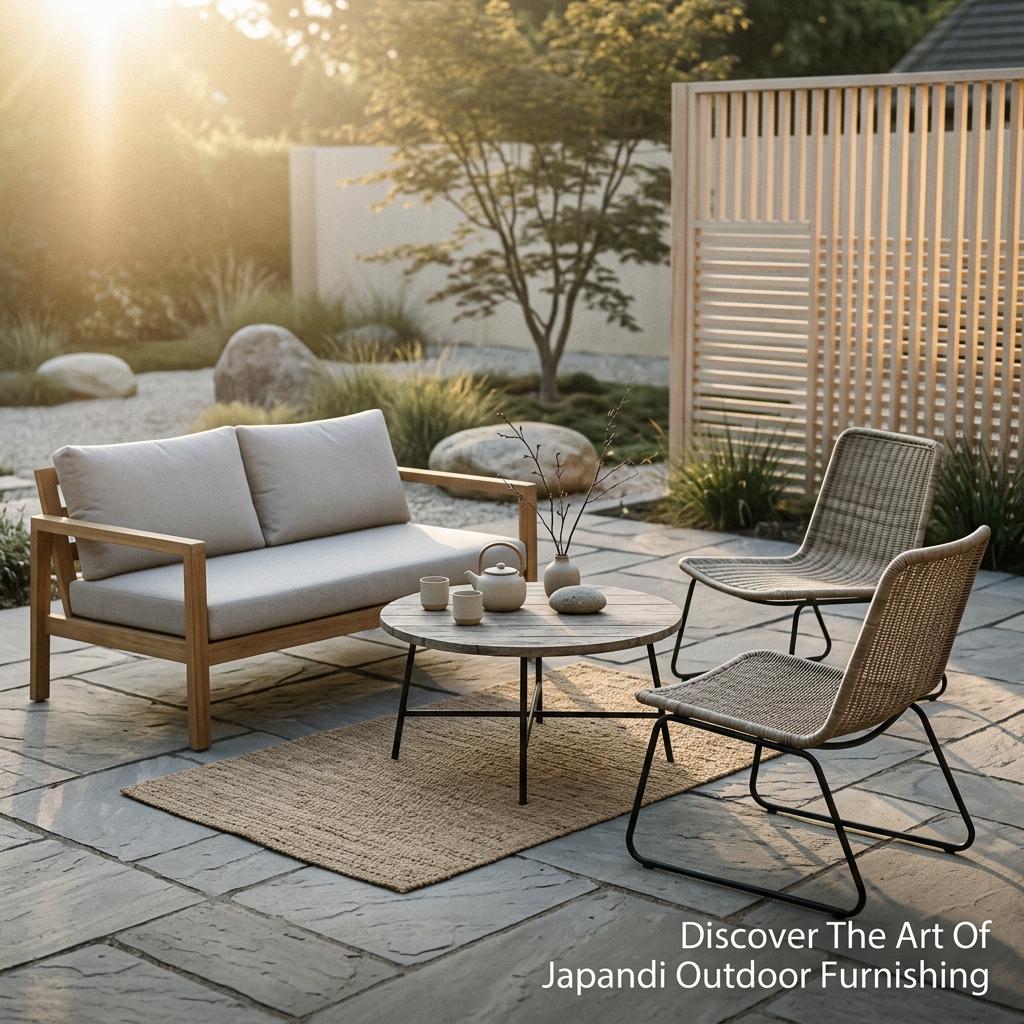

The structural blueprint for the modern terrace was conceived as a dialogue between Scandinavian pragmatism and Japanese discipline. Within this void, an unadorned elegance emerges through the use of spare, silent surfaces and a muted, monochrome palette. Light leans across the low-slung layouts, while slender silhouettes stretch toward the horizon to expand the perceived volume of the garden. This deliberate arrangement anchors the atmosphere, providing a serene sanctuary for the senses. To achieve this balance, the patio prioritizes tactile teak, weathered wicker, and smooth stone.
Elevate Your Home With A Purposeful Japandi Landscape
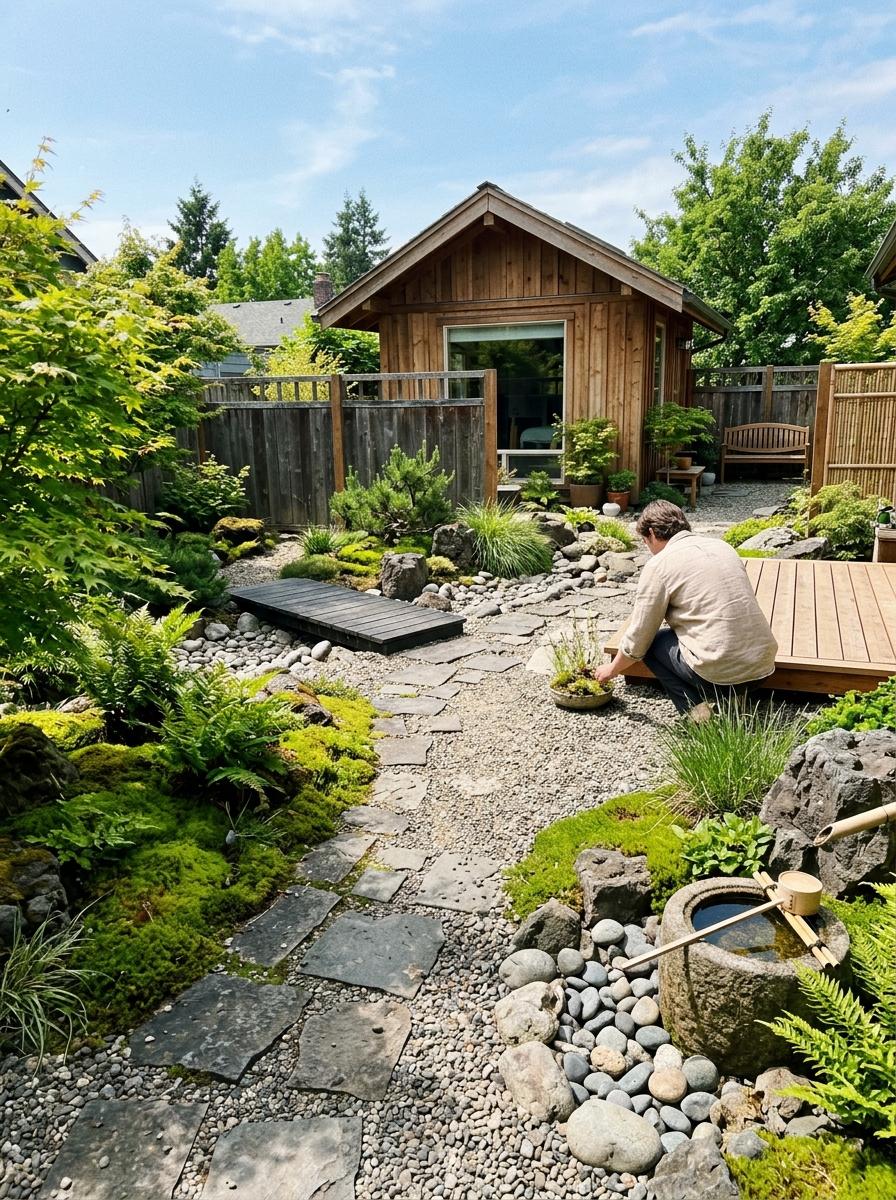

At its core, a Japandi landscape is the intentional synthesis of Scandinavian hygge-a commitment to cozy, lived-in warmth-and the Japanese ethos of wabi-sabi, which finds divinity in the transient and the weathered. This aesthetic alchemy transcends mere gardening, evolving into a rigorous study of spatial composition where the structural austerity of Nordic flint meets the organic fluidity of moss-clad basalt. The design language is defined by a dialectical tension: the environment feels meticulously curated, yet entirely primordial; it is functionally rigid in its zoning, but emotionally expansive in its atmosphere. To wander through such a space is to experience a sensorial immersion in the ethereal, the haptic, and the temporal-where the crisp, olfactory snap of cedar wood balances the velvet, hushed stillness of a gravel path, grounding the inhabitant in a sanctuary of profound, rhythmic quietude.
Seamless Transitions In A Japandi Indoor Outdoor Home
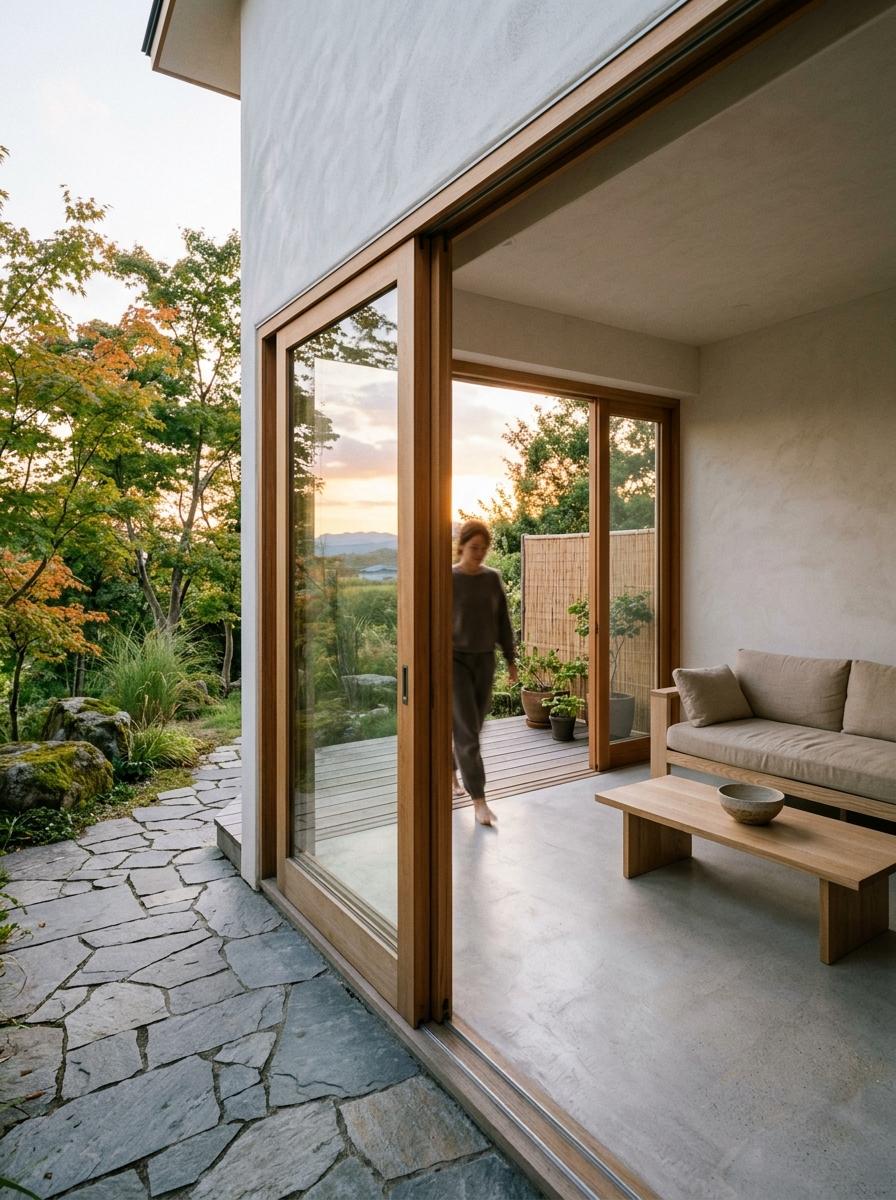

The structural integrity of this Japandi residence was realized through a deliberate blurring of thresholds, where traditional boundaries were dismantled to invite the landscape inward. Within the living volume, an austere atmosphere prevails, shaped by unadorned surfaces, muted tones, and vacant expanses that reject the clutter of the external world. This serene sanctuary silences the senses, fostering a quiet composure through its pale palette and polished proportions. Wide apertures carve through the building envelope, stretching the interior footprint into the verdant garden and pulling the gaze toward the horizon. The design breathes through the seamless integration of raw timber, recessed glass, and rhythmic stone.



Comments