
By synthesizing the rustic, intentional imperfection of wabi-sabi with the streamlined, functional rigor of Scandinavian hygge, we arrive at the balanced equilibrium of the Japandi herb garden-a living installation where culinary utility meets meditative stillness. This botanical integration demands more than mere placement; it requires an understanding of organic textures set against an orthogonal framework, creating a space that feels profoundly ancestral yet remains hyper-modern in its efficiency. Through this dialectical pairing of untamed verdure and disciplined geometry, the kitchen is transformed into a sanctuary that is atmospheric, tactile, and ethereal, grounding the high-tech culinary environment in the visceral, perennial rhythms of the natural world.
Japandi Herb Garden
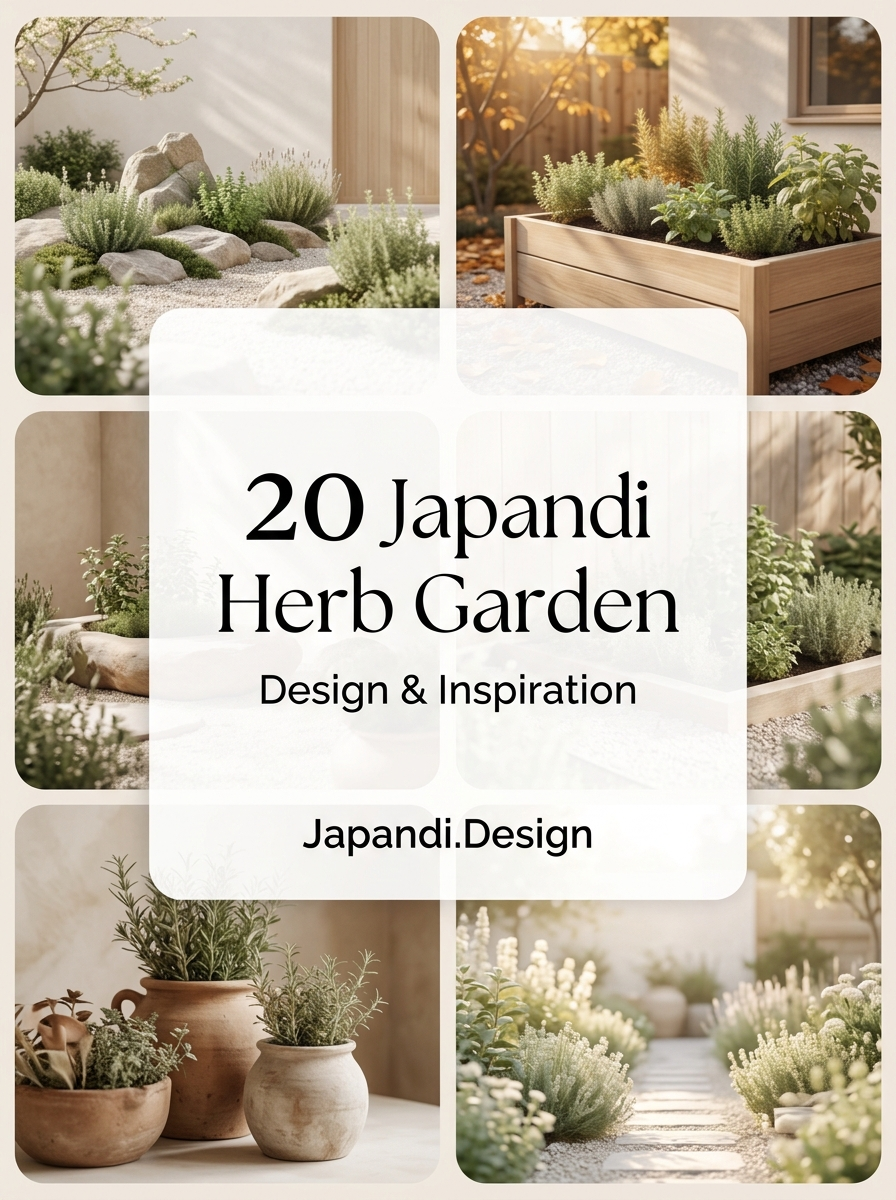

Cultivating A Sustainable Japandi Herb Garden In The Modern Kitchen
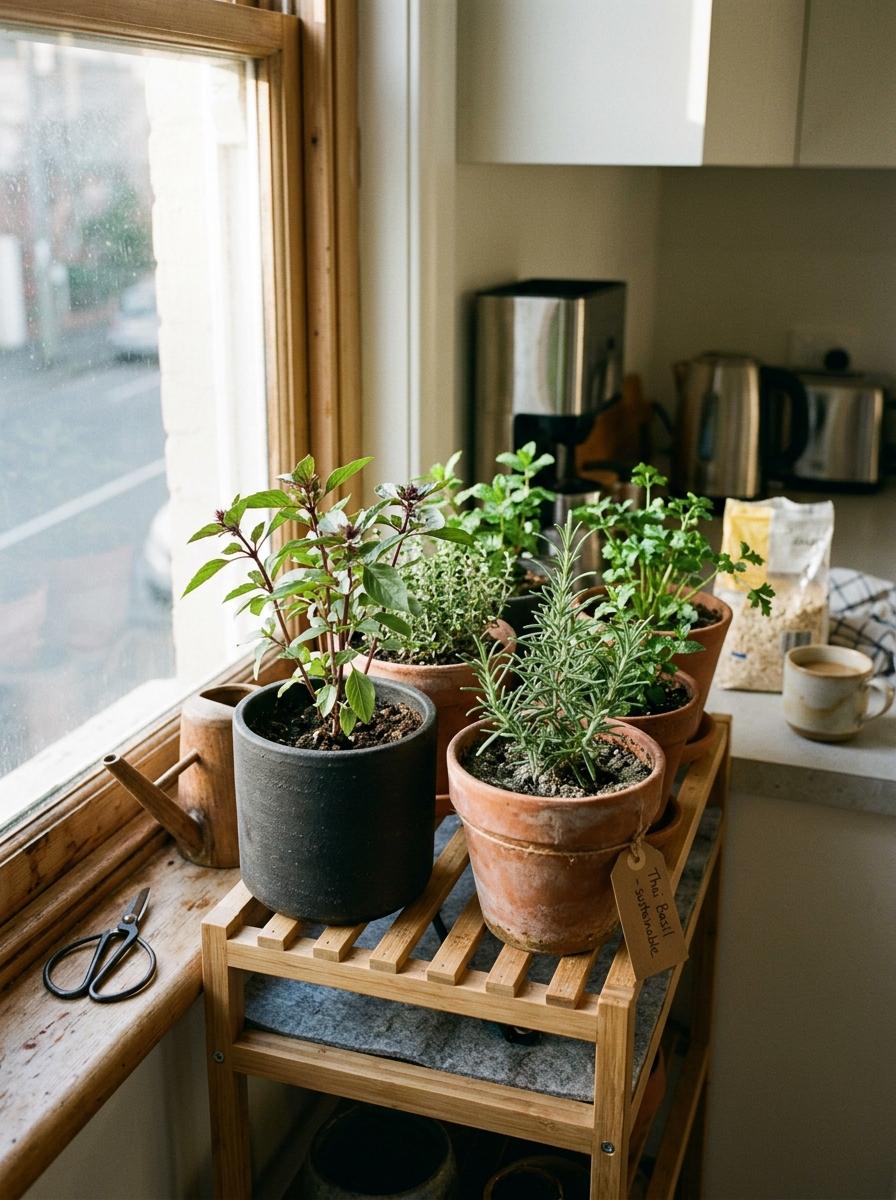

In the quiet corner of a modern kitchen, the Japandi herb garden sits as a curated sanctuary, anchoring the frantic pace of contemporary culinary life within the stillness of a sun-drenched alcove. This arrangement thrives on a structured wildness, where the untamed growth of organic flora is reconciled with the disciplined constraints of minimalist geometry. While the external world demands high-speed efficiency, this internal ecosystem operates on a timeline of slow gestation, drawing a sharp line between the chaotic noise of the street and the rhythmic silence of a sprouting seed. Tactile layers of charcoal-fired unglazed stoneware and porous terracotta house the roots, their gritty surfaces contrasting against the delicate, waxy veins of Thai basil and the silver-green needles of rosemary. Far from being merely decorative, these vessels function as a high-utility irrigation system, integrating self-watering capillary mats and modular timber frames into a seamless solution that transforms a simple windowsill into a productive engine of sustainable living.
A Balanced Approach To Designing Your Japandi Herb Garden
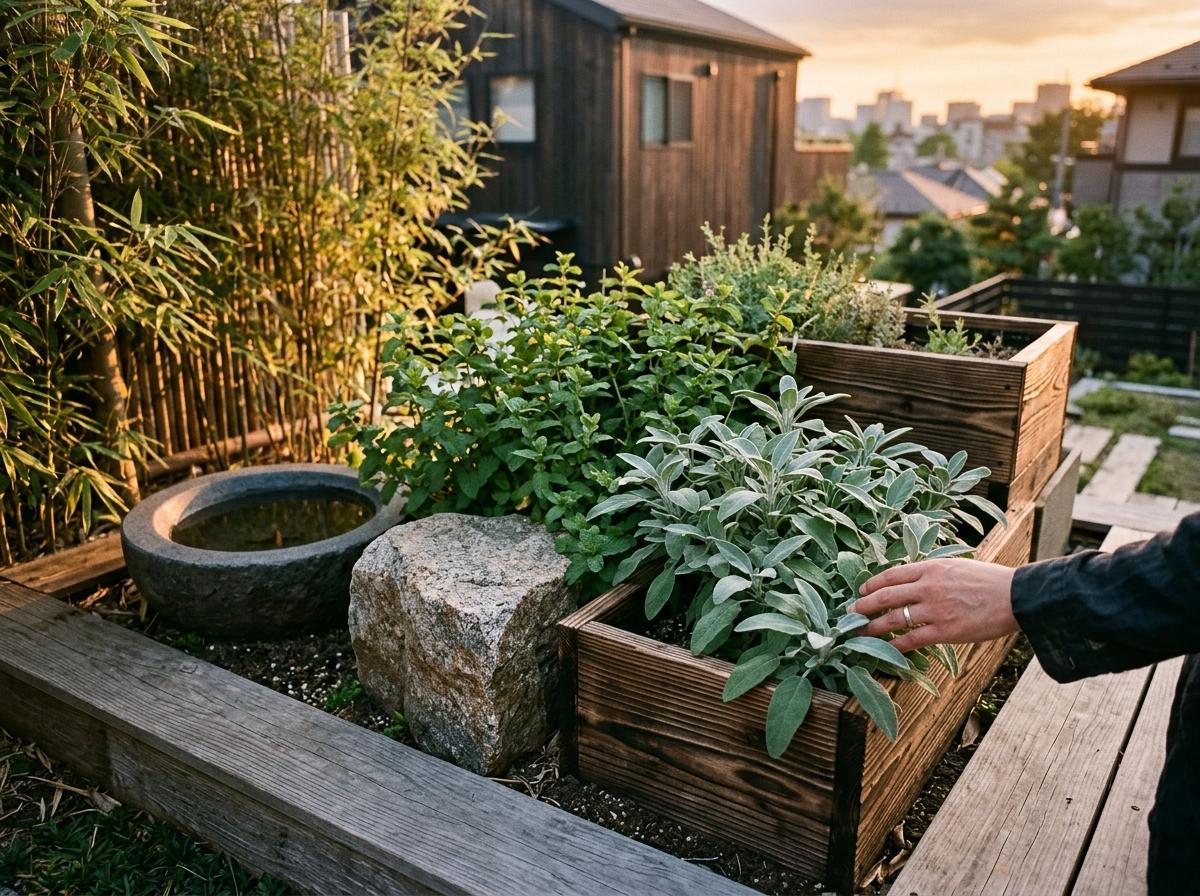

To cultivate a true Japandi herb garden, You need to begin with the tactile honesty of fibrous, weathered cedar and the cool, non-reflective grain of basalt basins. As you arrange your rosemary and shiso, note how the intentional placement of a singular, rough-hewn granite boulder grounds the ethereal lightness of the surrounding bamboo screening. This composition relies on the concept of ordered chaos-a paradox where the wild, sprawling growth of mint is restrained by the rigid, mathematical precision of a modular charred-wood planter. As your hands brush against the velvety, silver-dusted leaves of sage, the sharp, camphorous aroma triggers a sudden deceleration of the heart rate, shifting your state from urban franticness to a profound, visceral stillness. This is the same sensory equilibrium found in the rooftop sanctuaries of Minato City or the hidden courtyard retreats of Copenhagen's Indre By, where the architecture does not just house the plants, but breathes alongside them.
Small Space Solutions For A Minimalist Japandi Herb Garden
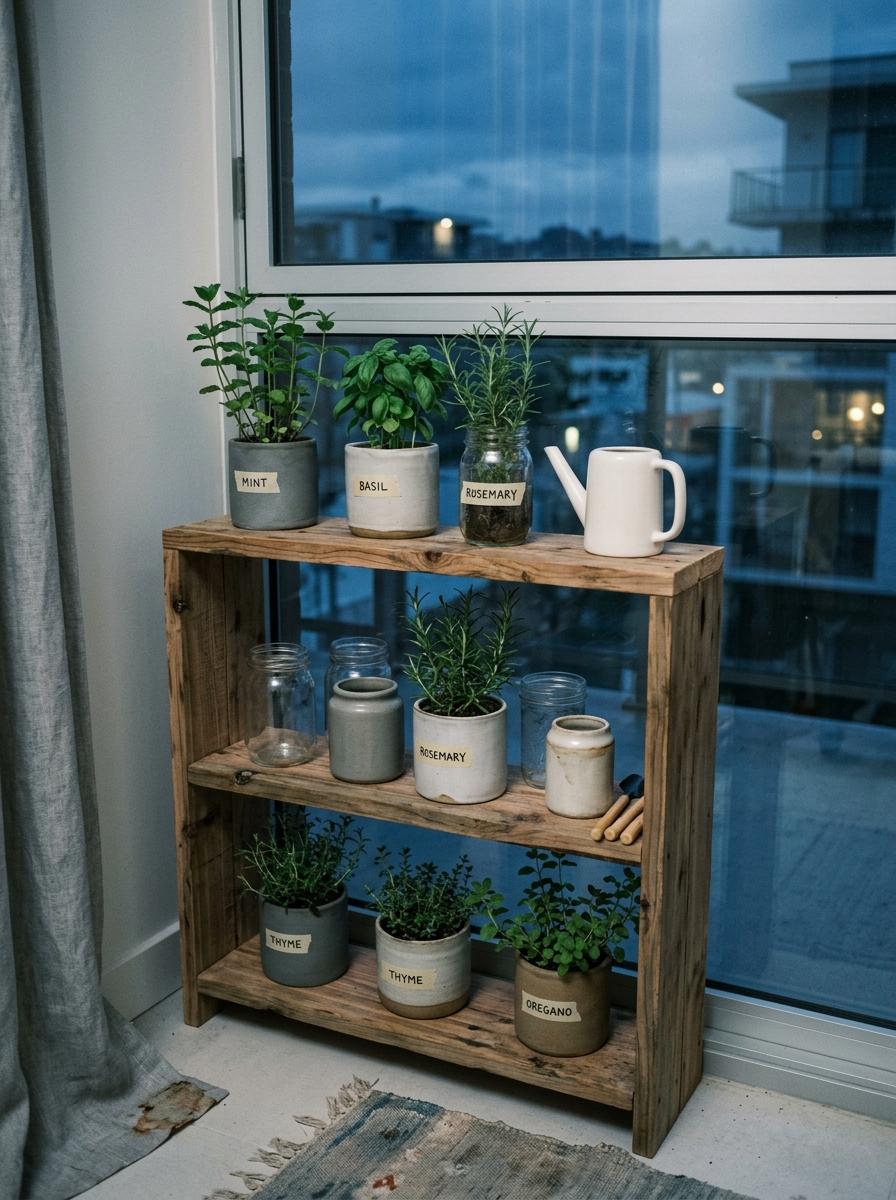

The integration of botanical elements into compact living quarters was realized through a deliberate curation of unadorned stoneware and reclaimed cedar. Within these sparse settings, a quiet, contemplative atmosphere is achieved through the use of translucent glass and matte, monochromatic surfaces that reflect a stark simplicity. This purposeful arrangement allows the greenery to flourish, as slender stems and soft soil provide a tactile contrast to the linear layout. Vertical shelving stretches the perception of height, while open framing invites a surplus of natural light to carve out a sense of boundless air. The resulting sanctuary anchors the room, balances the breath, and blurs the boundary between the internal hearth and the natural world.
Integrating Lush Greenery In A Modern Japandi Herb Garden Setup
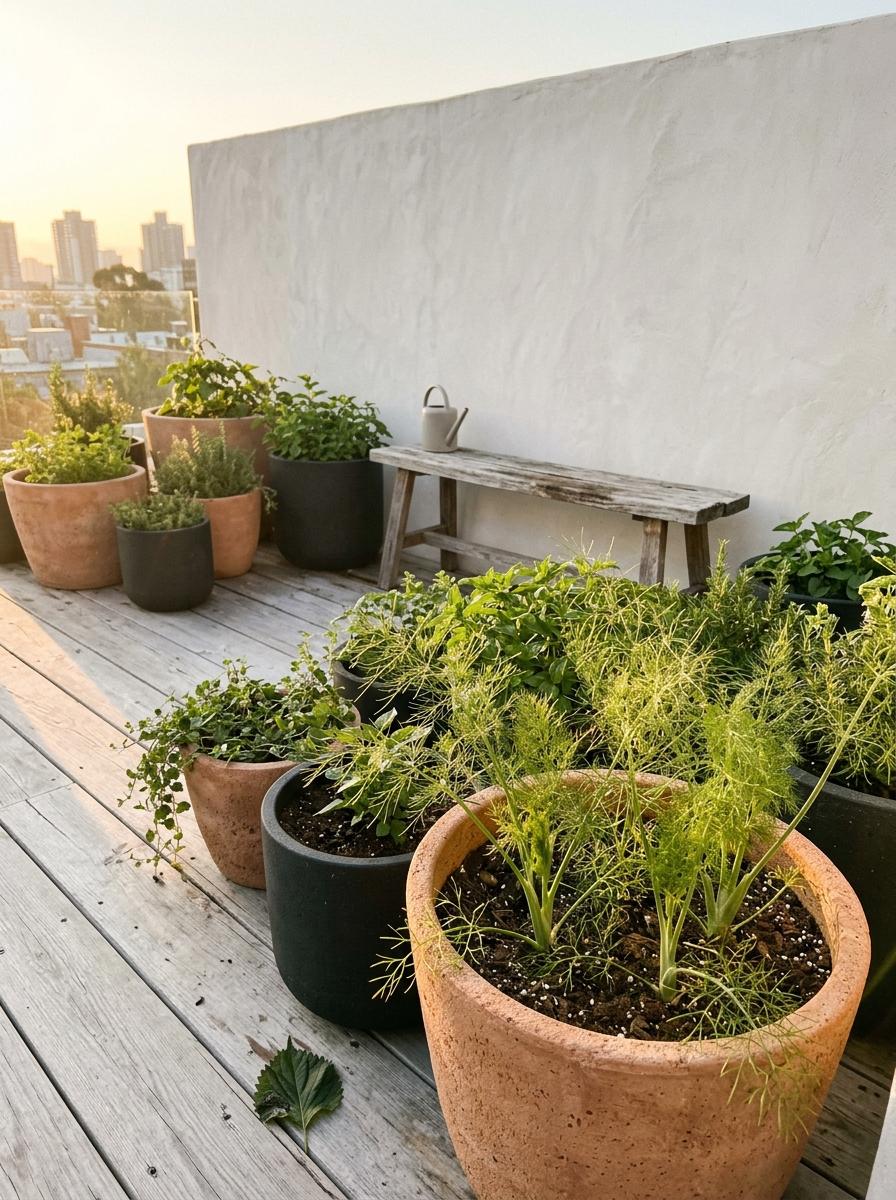

To cultivate a truly authentic Japandi herb garden, we need to prioritize the tactile interplay between organic vitality and disciplined geometry. Begin by housing your botanical collection in vessels of porous, sand-blasted terracotta or matte-finished basalt, materials that provide a rugged, granular contrast to the delicate, silken filaments of dill and fennel. Note how the placement of a single, weather-beaten cedar bench against a stark, bone-white lime-plaster wall creates a focal point that directs the eye without crowding the spirit. This curation relies on a structured spontaneity, where the rigid, linear precision of Japanese minimalism meets the wild, untamed exuberance of a Scandinavian meadow. As you transition from the visual appreciation of these sculptural greens to the act of harvesting, the sharp, pungent aroma of crushed shiso leaves triggers a cooling sensation in the chest, lowering the heart rate and inducing a state of alert tranquility. Much like the curated landscapes found at the Aman Kyoto or the botanical integration seen in Copenhagen's ‘The Silo', this setup serves as more than mere decoration; it is a physiological anchor that grounds the high-concept aesthetic of the home into the sensory reality of the earth.
How To Curate A Functional Japandi Herb Garden Indoors
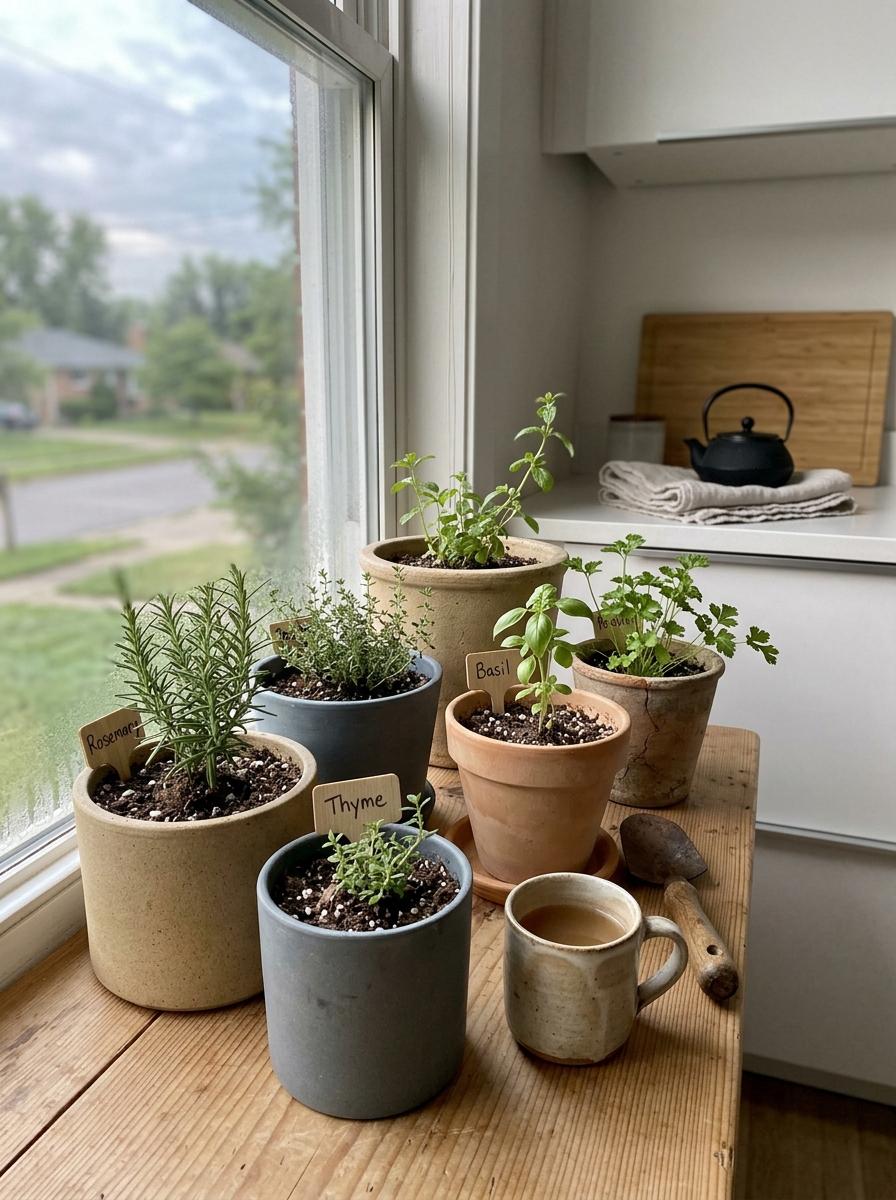

I spent the better part of an afternoon watching the light move across a friend's windowsill-a cluttered, chaotic landscape of plastic nursery pots and overflowing rosemary that felt more like a domestic battlefield than a sanctuary. "The challenge," she remarked, pausing to brush a stray soil crumb from her marble countertop, "isn't just keeping the plants alive, but finding a way for them..." she gestured vaguely toward the visual noise of the tangled stems, "...to actually belong here." In that moment, the jarring contrast between her sleek, minimalist kitchen and the unruly greenery highlighted the central tension of urban gardening: the struggle between wild vitality and refined restraint. We often think of herb gardens as purely utilitarian patches of dirt, yet through a Japandi lens, they become an exercise in shibui-a subtle, unostentatious beauty that marries the organic imperfection of wabi-sabi with the rigorous spatial intentionality of Scandinavian craft. This delicate balance of form and function is exactly what defines a curated indoor garden, turning a simple culinary necessity into a soulful expression of domestic equilibrium.
Aesthetic Harmony Found In A Miniature Japandi Herb Garden
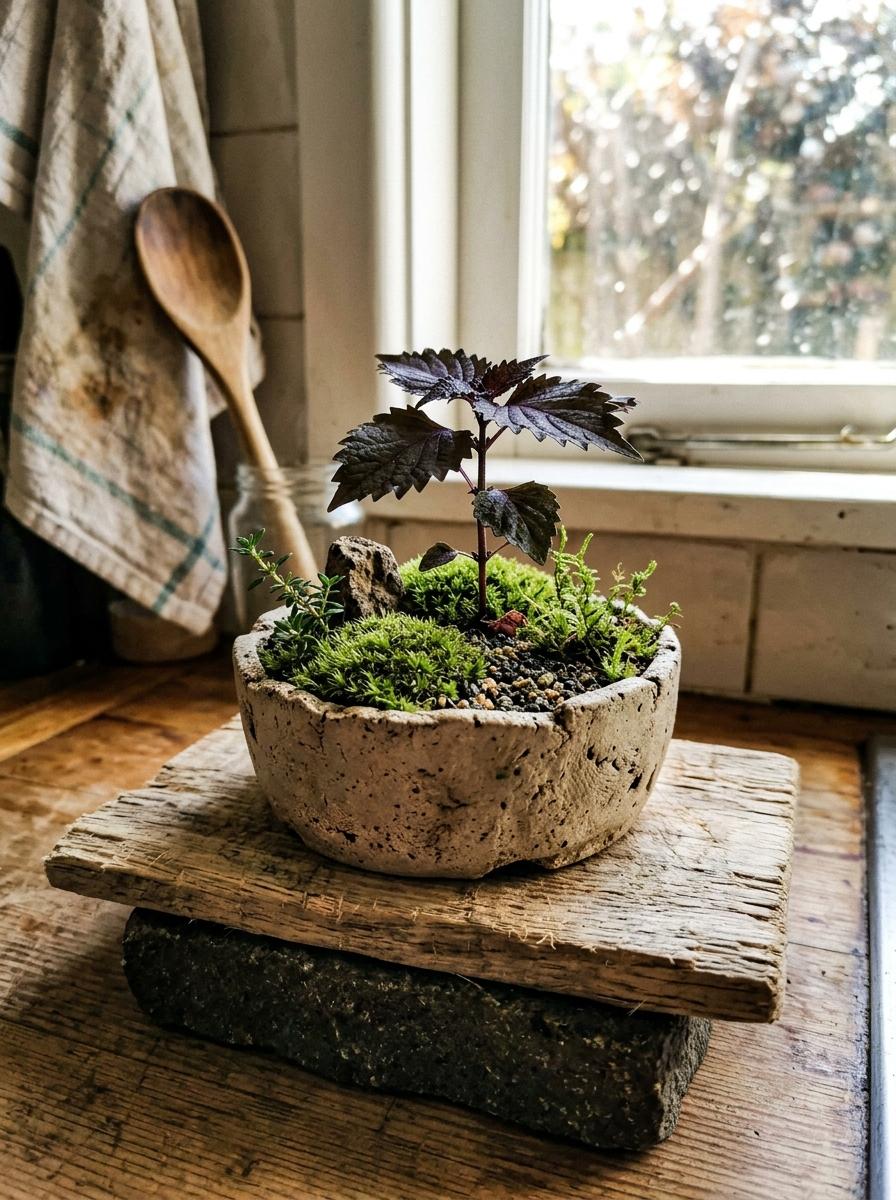

The miniature Japandi herb garden sits anchored upon a honed basalt plinth, transforming a neglected kitchen corner into a sanctuary of intentional stillness. Within this small vessel, the expansive confinement of the arrangement mirrors the vastness of a mountain range through the silhouette of a single shiso leaf, capturing a sense of infinite scale within a finite border. While the exterior of the ceramic planter remains raw and unglazed-bearing the brutalist textures of the outside world-the interior is a meticulously controlled micro-climate of soft moss and verdant life. Every tactile detail, from the fibrous grain of the hinoki wood base to the porous volcanic grit supporting the roots, emphasizes a deep commitment to material authenticity. This is not merely a decorative object; it is a botanical machine, where the precise calibration of sub-irrigation and passive aeration serves as a functionalist solution for urban self-sufficiency, harmonizing industrial utility with the quiet poetry of growth.
Explore An Elegant Apartment Featuring A Japandi Herb Garden
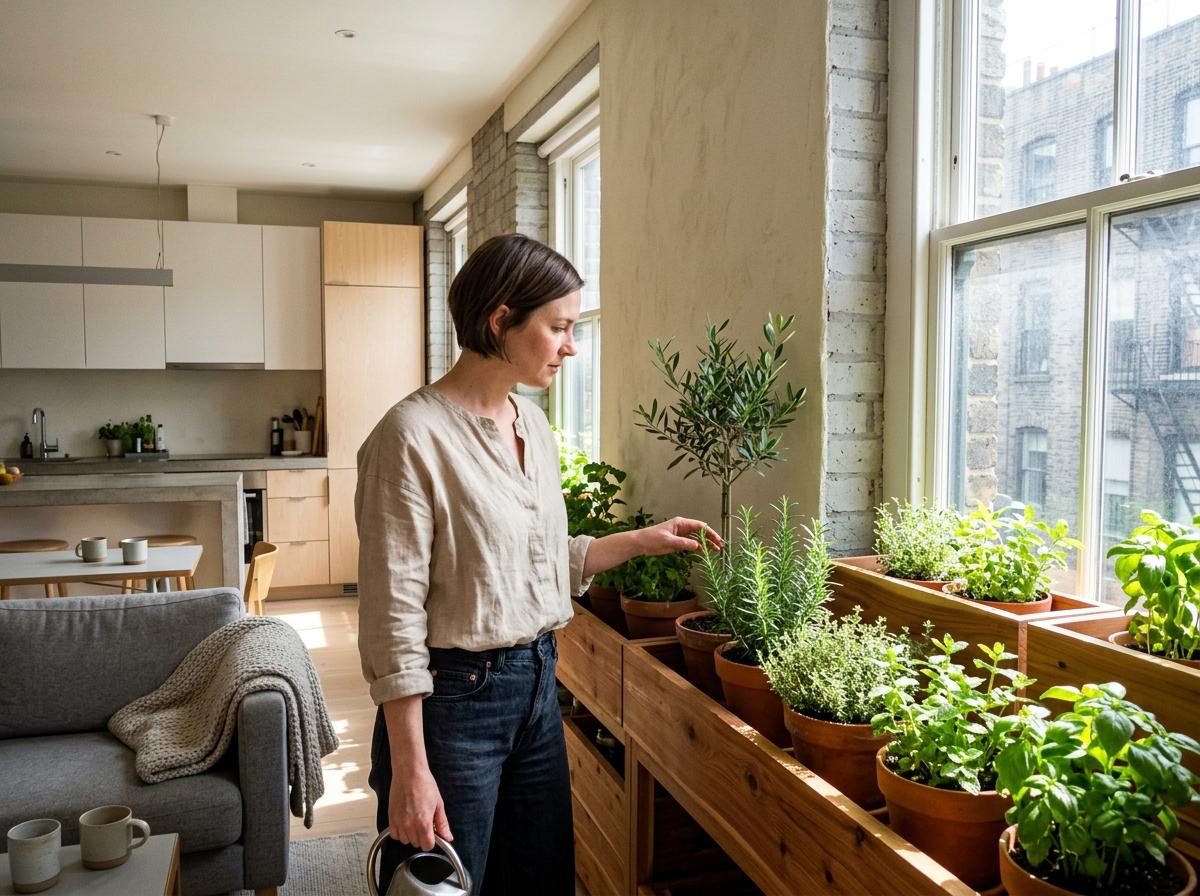

Standing on the narrow, soot-stained balcony of my previous city rental, the "garden" was little more than a dying succulent amidst a cacophony of sirens and grey concrete. It was the antithesis of the apartment I recently stepped into-a sanctuary where the air feels scrubbed clean by greenery and the visual noise of the metropolis simply evaporates. "The secret to this layout," the lead designer explained, pausing to adjust a sprig of rosemary that caught the morning light, "wasn't just about adding plants, but about creating a functional landscape." She moved a hand toward the hand-crafted timber planters, noting that "the materiality of the cedar"-she stopped here, tracing the grain with a finger-"must dialogue directly with the neutral palette of the masonry." This deliberate tension between raw, organic textures and the disciplined, minimalist lines of the cabinetry transforms the space into more than just a home. By juxtaposing the frantic, saturated energy of the city street with the muted, haptic warmth of this interior, we begin to see how a simple herb garden becomes the vital meridian where Japanese utility and Scandinavian comfort finally meet.
The Beauty Of Natural Wood Accents In A Japandi Herb Garden
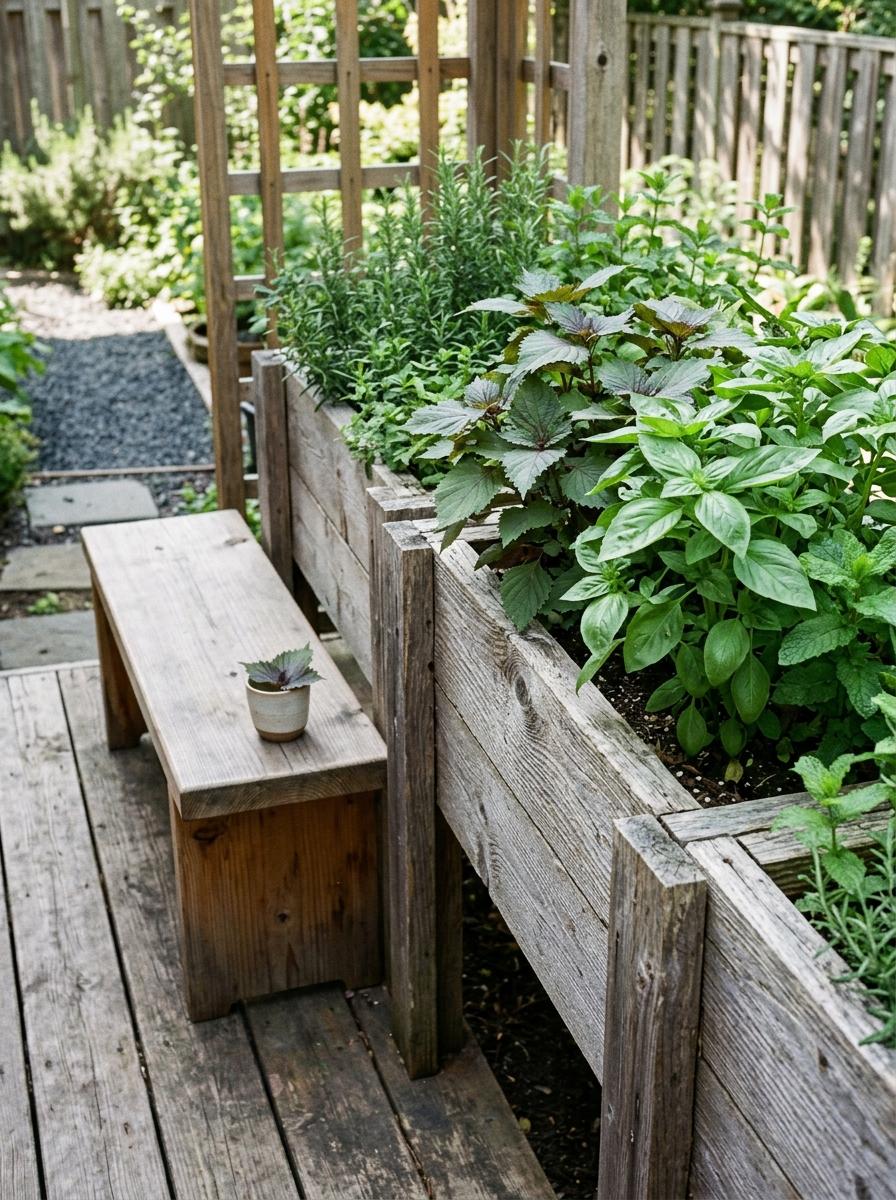

To understand the soul of a Japandi herb garden, we can first appreciate the interplay of raw and refined textures. Consider the presence of reclaimed Hokkaido cedar planters; their surfaces are a masterclass in tactile contrast, exhibiting a fibrous, open-grain porosity that feels ancient against the satin-smooth, planed finish of the surrounding deck. Note how the silvered patina of the weathered wood anchors the vibrant, succulent greens of Thai basil and shiso, creating a visual dialogue between decay and vitality. This design choice embraces a structured spontaneity, where the rigid geometry of Japanese carpentry meets the wild, untamed reaching of the herbs. As you run your hand along the splinter-free, resinous edges of a handcrafted bench, the cooling scent of damp earth and cedarwood triggers a profound physiological shift-your heart rate decelerates and your breath deepens, moving beyond mere aesthetic appreciation into a state of cellular tranquility. This is not just a garden; it is a rhythmic sensory experience where the material honesty of the wood serves as a conduit for a restorative, quiet energy.
Transform Your Sunlit Balcony Into A Productive Japandi Herb Garden
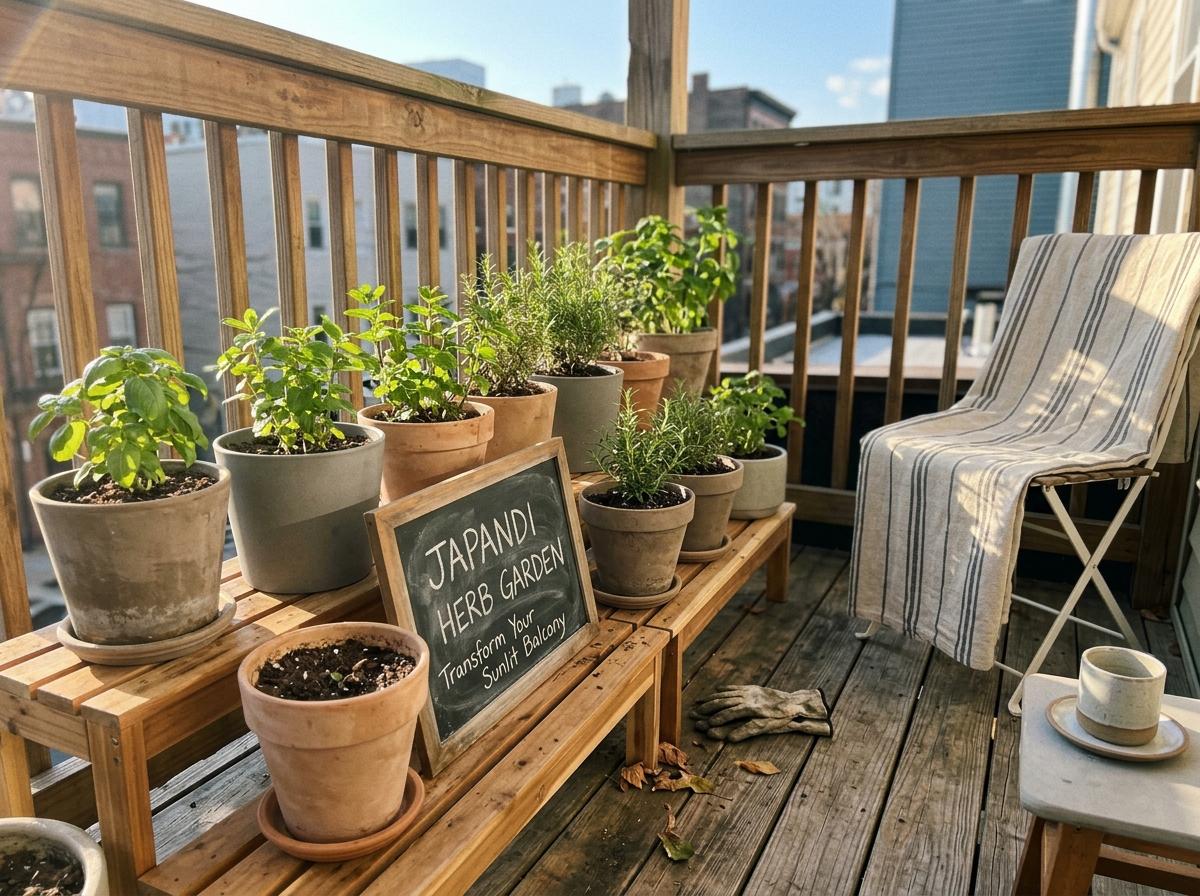

At its core, the Japandi herb garden is a rigorous exercise in Definition via Synthesis: the marriage of Scandinavian hygge's pragmatic warmth with the Japanese ethos of wabi-sabi creates a third, transcendent space defined by intentionality. For the urban dweller, a sunlit balcony is no longer a mere architectural appendage but a sanctuary of Lexical Precision, where the topiary of rosemary and the filigreed texture of dill are housed in matte-glazed stoneware or patinated cedar vessels. This design language thrives on Dialectical Pairing; the aesthetic is strikingly minimalist, yet deeply nourishing; the arrangement feels effortless and organic, but is underpinned by a strict, geometric discipline. To step onto such a balcony is to be enveloped by Sensorial Adjective Stacking: the resinous, earthy, and humic scent of damp soil mingling with the bracing, diaphanous, and restorative aroma of fresh mint, grounding the observer in a moment of profound, productive stillness.
Organic Textures Meet Greenery In This Japandi Herb Garden
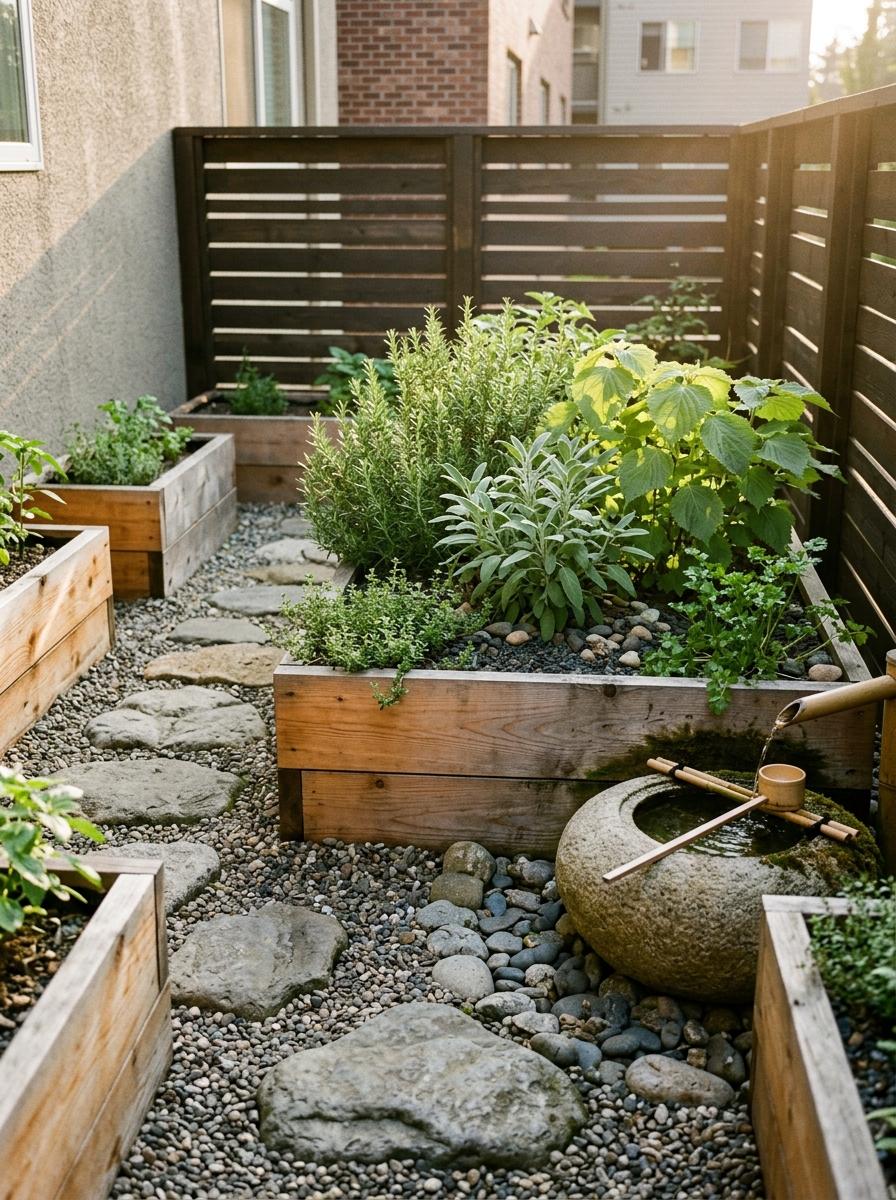

In this curated sanctuary, the tactile language of the Earth takes center stage through a rigorous selection of granulated basalt and honey-hued cedar. Note how the arrangement of weathered river stones provides a grounding, structural weight that directs the eye upward toward the ethereal lightness of silver-green sage and translucent shiso leaves. This composition thrives on a choreographed randomness-a design paradox where every "accidental" sprout of moss against a geometric timber planter feels both meticulously planned and wildly untamed. Touching the porous, cool surface of a stone basin while inhaling the sharp, medicinal scent of rosemary triggers an immediate parasympathetic release, lowering the heart rate as the body synchronizes with the slow rhythm of the garden. Drawing inspiration from the Tsuboniwa traditions of Kyoto translated for modern urban living, this space serves as a masterclass in Japandi principles, proving that when organic textures meet intentional greenery, the result is not just a garden, but a physiological reset.
A Sophisticated Kitchen Interior Enhanced By A Japandi Herb Garden
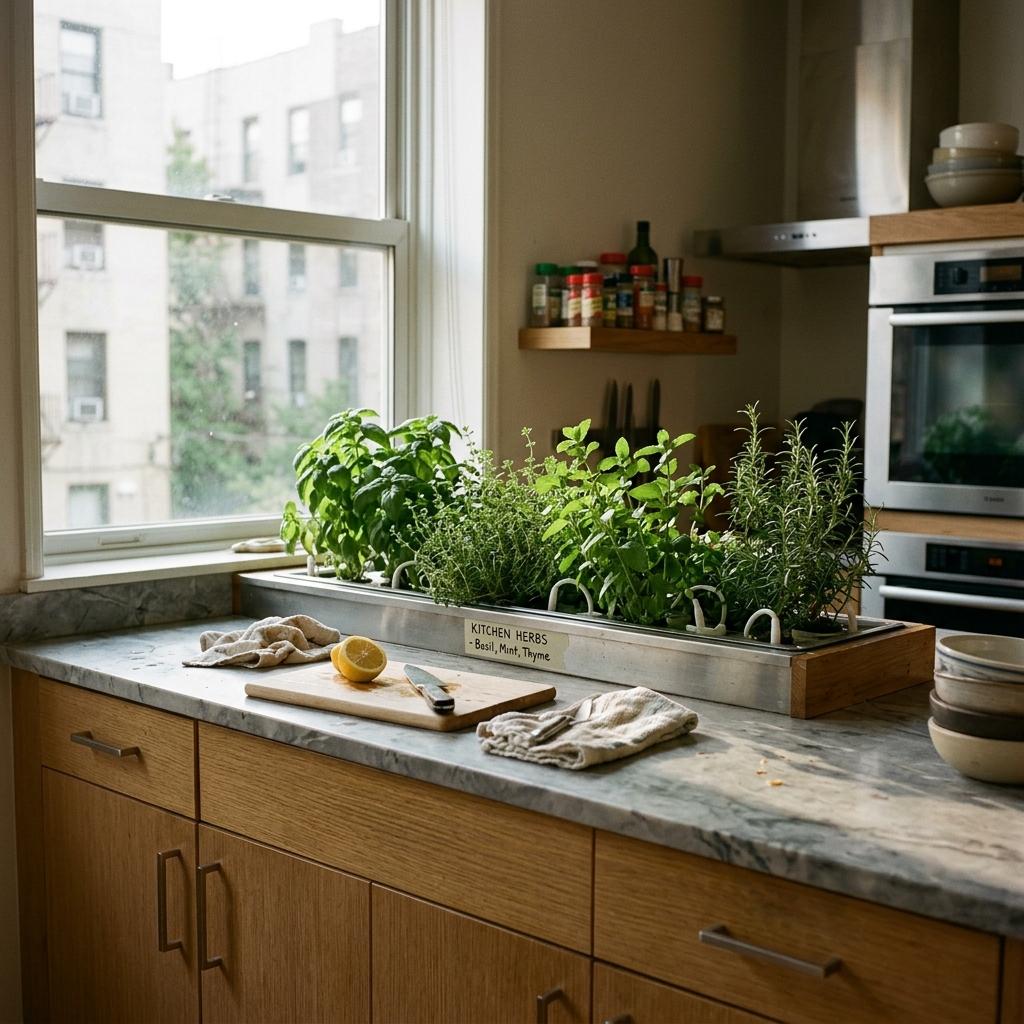

The kitchen serves as a sanctuary of hushed intensity, where the clinical precision of a culinary workspace is softened by the rhythmic shadows of a bespoke indoor greenery niche. It is a space defined by structured organicism, a conceptual synthesis where the rigid geometry of high-performance cabinetry meets the unpredictable, wild silhouettes of living flora. This internal micro-climate stands in sharp defiance of the external metropolitan sprawl; while the city beyond the glass remains a cacophony of steel and movement, the interior is governed by a stillness rooted in the slow, silent growth of the garden. Tactile engagement is driven by the interplay of honed Pietra Grey marble and wire-brushed white oak, materials that demand a sensory connection to the earth beneath the polished surface. Far from mere decoration, the integrated herb trough functions as a hydroponic utility, a seamless convergence of irrigation technology and culinary necessity that ensures the vitality of the ingredients is as engineered as the high-end appliances surrounding them.
Discover The Quiet Sophistication Of A Japandi Herb Garden
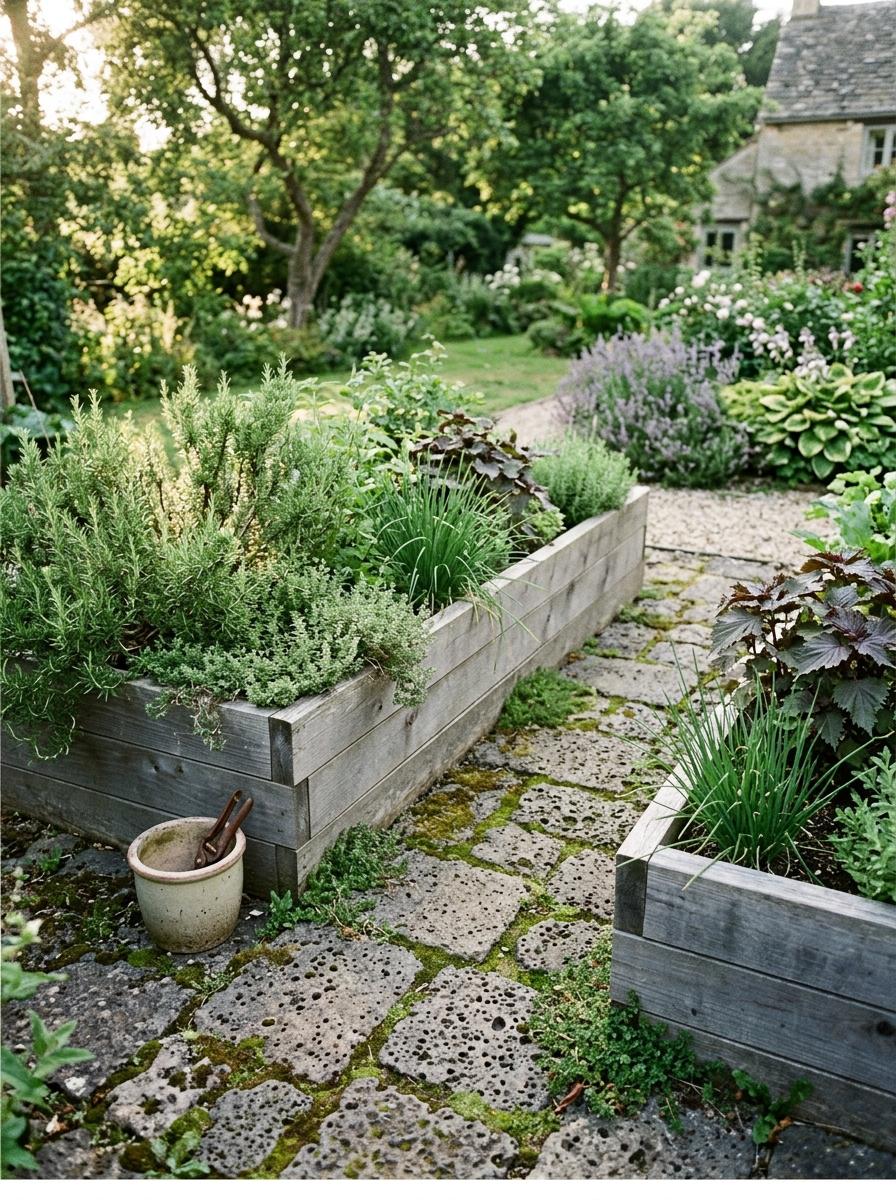

To truly understand the essence of a Japandi herb garden, we must look beyond the mere utility of planting and towards a disciplined choreography of form and function. Note how the tactile juxtaposition of open-pored, volcanic basalt pavers set against the velvety, matte-finished cedar of the raised beds creates a visual dialogue between the rugged and the refined. This arrangement masterfully achieves a state of structured wildness-a paradox where the unruly sprawl of rosemary and creeping thyme is held in check by the uncompromising geometry of the layout. As you transition from the limestone paths of a typical Cotswold landscape into this East-meets-West sanctuary, the sensory shift is immediate: the sharp, camphorous scent of crushed shiso leaves works in tandem with the sight of weathered stone to lower your heart rate and loosen the tension held in your shoulders, inducing a profound sense of biological stillness. By integrating the rustic simplicity of Scandinavian hygge with the rigorous minimalism of a Kyoto courtyard, the space ceases to be a mere plot of soil and becomes a vessel for quiet sophistication.
Bringing The Outdoors Inside With A Curated Japandi Herb Garden
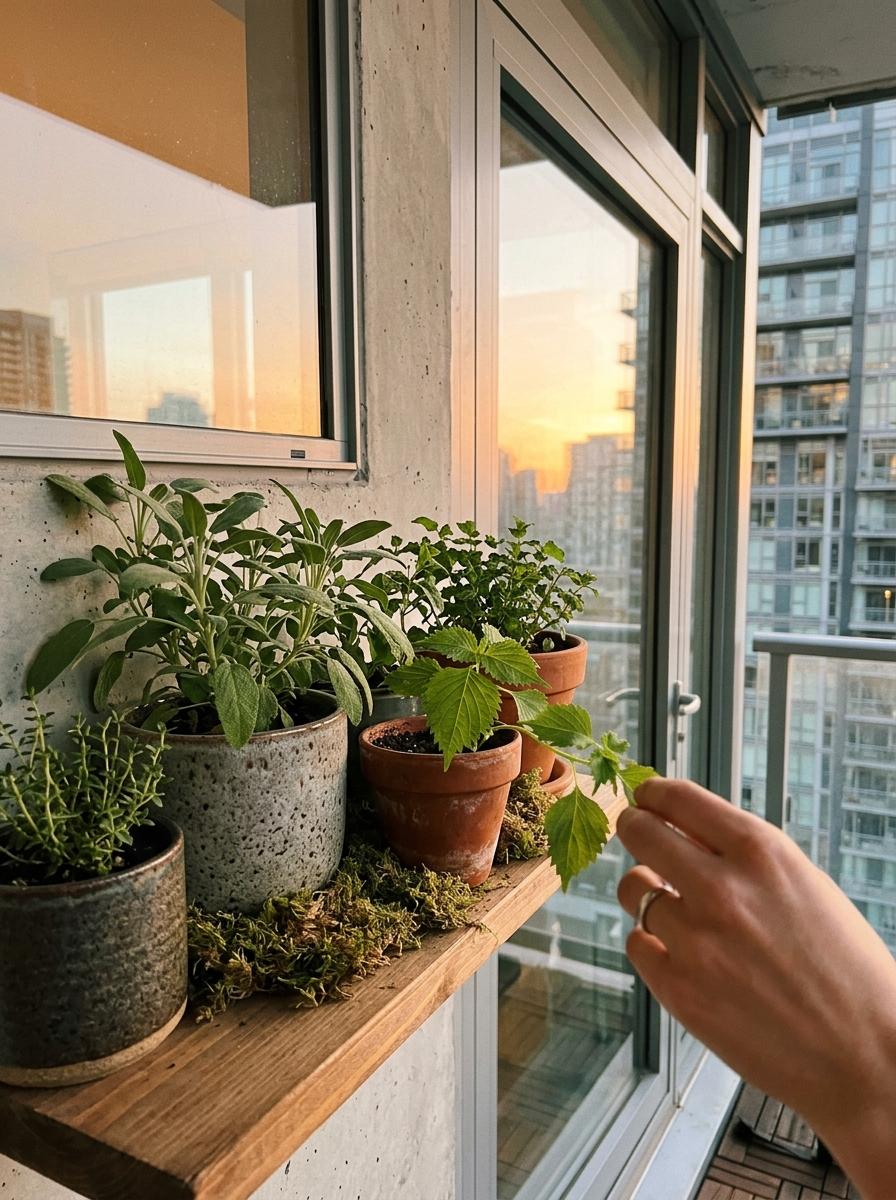

While walking through the sleek, glass-encased corridors of an urban high-rise, one often feels the cold sterility of concrete minimalism-a sharp, jarring contrast to the wild, unrestrained vitality of a moss-covered forest floor. During a recent conversation with a Tokyo-based stylist about bridging this gap, she paused to adjust a ceramic vessel, noting that, "the secret to a home's soul," she whispered, smoothing a stray leaf, "is not in the furniture, but in the living breath of the greenery." Her focus on shibui-that elusive, understated beauty-reminded me that true Japandi design requires more than just clean lines; it demands a tactical use of organic textures to soften the brutalism of modern life. By introducing a curated selection of herbs, we move beyond mere decoration into the realm of biophilic harmony, where the pungent aroma of shiso and the muted palette of sage serve as a functional bridge between our sheltered interiors and the untamed natural world.
Mindful Living Starts With A Thoughtful Japandi Herb Garden
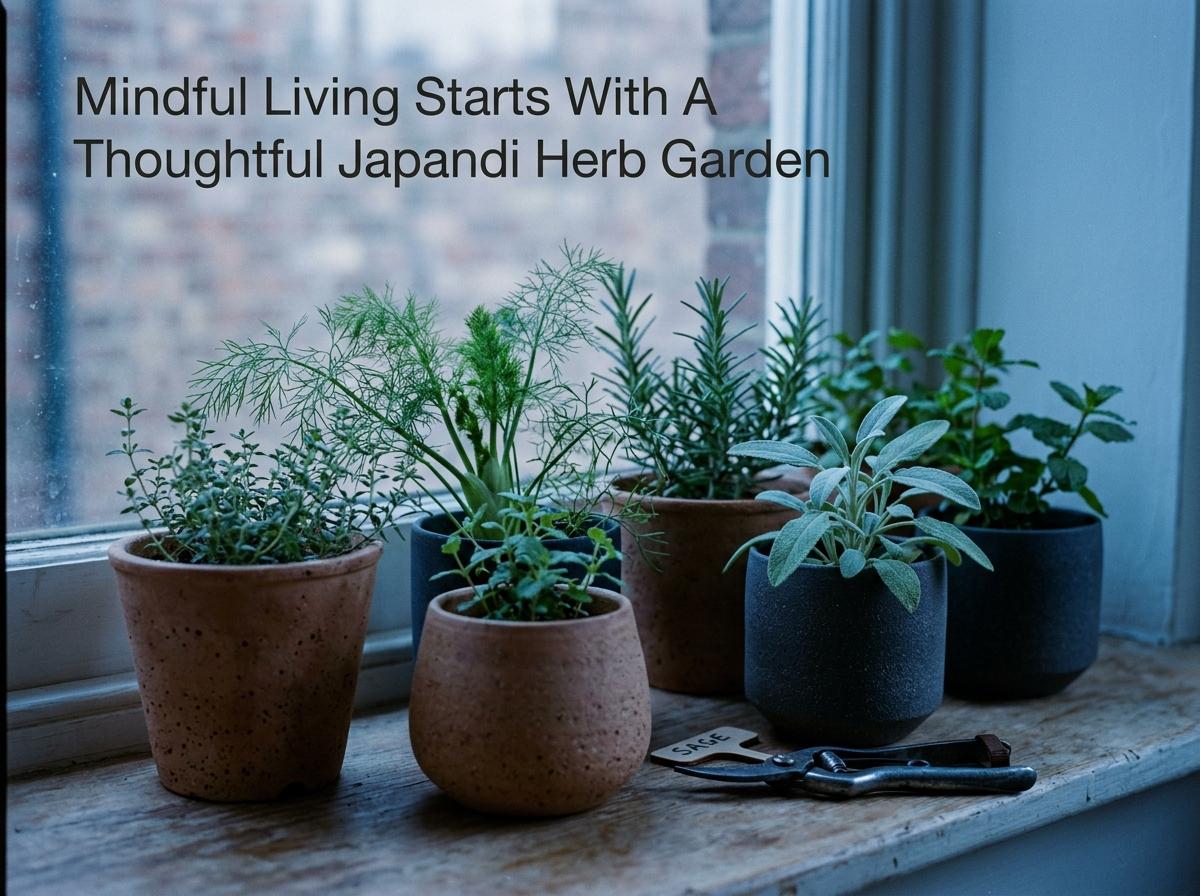

To cultivate a mindful interior, we must look beyond mere decoration toward a synthesis of utility and stillness. Begin your journey by selecting vessels of porous, unglazed terracotta or sandblasted obsidian stoneware, materials that offer a tactile, granular resistance against the fingertips. Note how the rough, organic exterior of a handmade planter anchors the ephemeral, feathery fronds of dill or fennel-a visual anchor in a fluid space. This arrangement relies on the power of functional minimalism, a design paradox where the deliberate absence of clutter creates a profound abundance of sensory focus. As you brush against the resinous leaves of rosemary or the velvet-soft pile of sage, the transition from physical touch to physiological calm is instantaneous; the sharp, herbaceous scent triggers a slowing of the heart rate, grounding your nervous system in the present moment. Drawing inspiration from the Kyoto-meets-Copenhagen aesthetic championed by studios like Norm Architects, this thoughtful herb garden transforms a standard windowsill into a curated sanctuary. By integrating these living elements, you move past the aesthetic surface of Japandi design and into a lived experience of restorative quietude.
Practicality Meets Style In A Compact Japandi Herb Garden
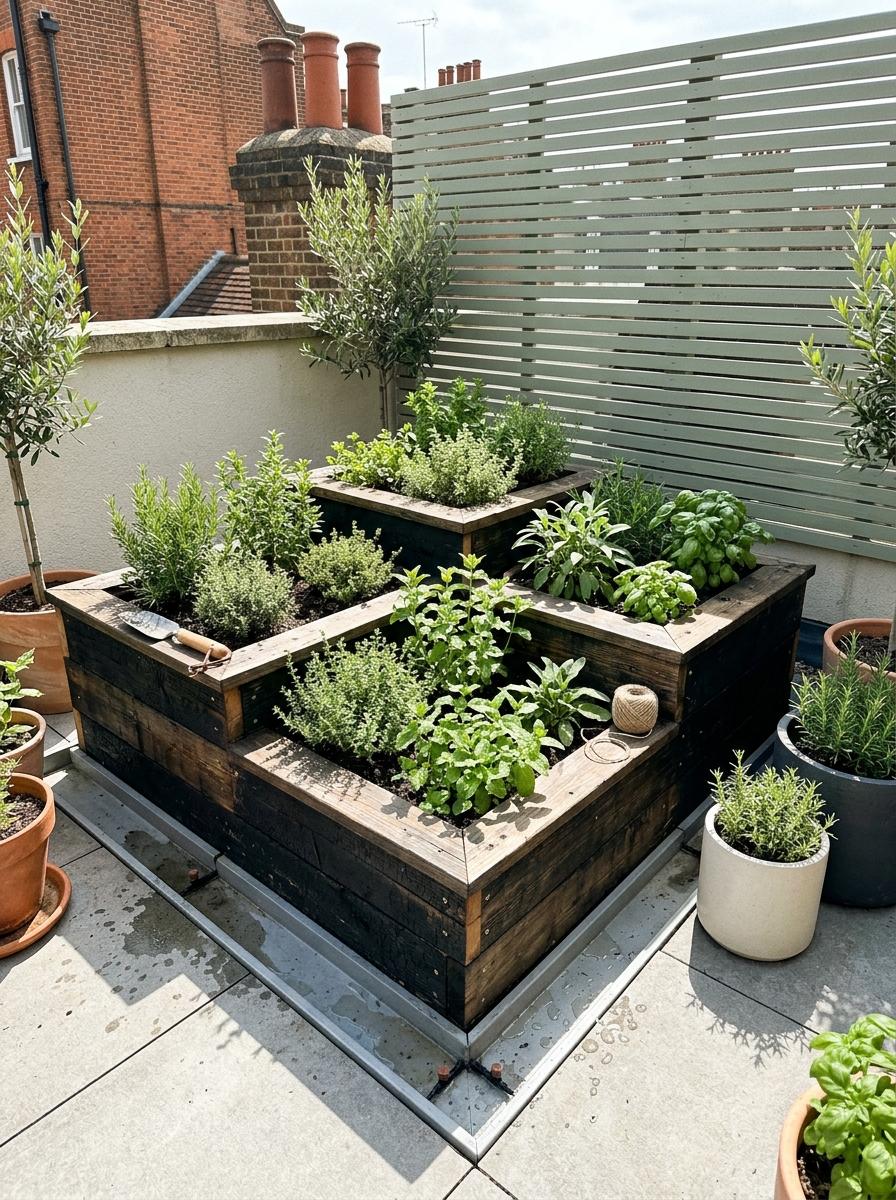

Historically, the herb garden was a utilitarian necessity of the rustic farmhouse-a sprawling, unkept patch of soil prioritized solely for survival. Today, however, this ancient concept has been reimagined for the modern urban dweller as a form of curated wildness, where the raw unpredictability of nature is disciplined by the minimalist rigors of Japandi aesthetics. This particular installation, situated within a sun-drenched terrace in London's prestigious Marylebone, was commissioned by a repeat client who sought to extend the serene visual language I previously analyzed in their interior living space. The project represents a sophisticated technical synthesis of spatial economy, utilizing modular charred-timber raised beds and integrated irrigation channels to harmonize functional horticulture with architectural permanence.
Sustainable Urban Living Through A Dedicated Japandi Herb Garden
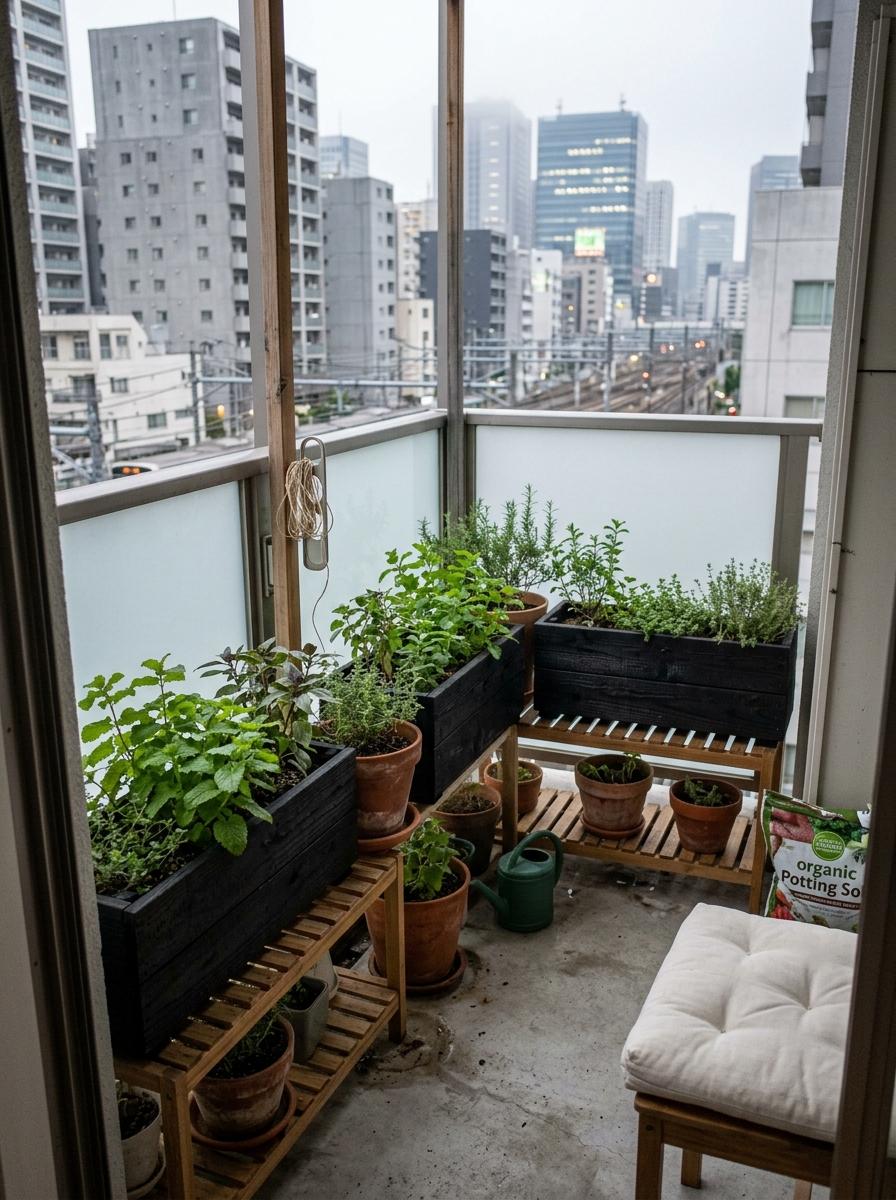

In the modern metropolitan apartment, the balcony is no longer a mere architectural afterthought but a curated threshold where the chaos of the city meets the stillness of the home. Here, the Japandi herb garden emerges as a controlled wilderness, a conceptual synthesis where the untamed vitality of organic growth is reconciled with the rigid austerity of minimalist discipline. This interior sanctuary stands in sharp defiance of the exterior skyline; while the street level vibrates with the frantic, unyielding pulse of steel and glass, the private terrace breathes through a rhythm of slow, intentional cultivation. The tactile presence of charred shou sugi ban planters and porous terracotta vessels grounds the space, providing a weighted, earthbound contrast to the ephemeral fragrance of lemon balm and Thai basil. By integrating these modular, self-irrigating timber systems into the urban footprint, the dweller achieves a functionalist feat: transforming a decorative niche into a high-utility micro-ecosystem that serves as both a biological filter for the soul and a sustainable source of nourishment for the kitchen.
Natural Light And Fresh Greenery Define This Japandi Herb Garden
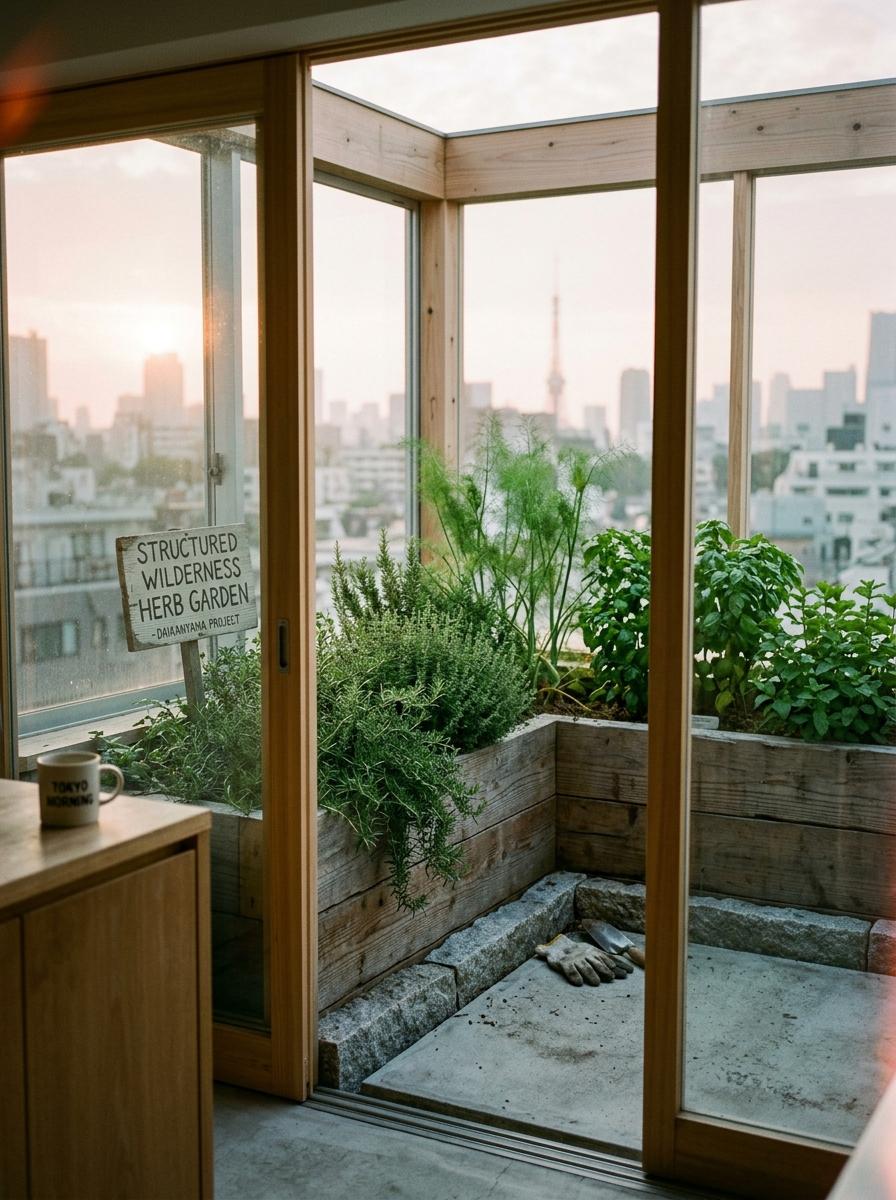

The evolution of the urban garden has shifted from the rigid, ornamental topiary of the Edo period to a contemporary pursuit of "wild minimalism," where the intentionality of the East meets the raw functionality of the West. This project, a "Structured Wilderness" nestled in the refined enclave of Tokyo's Daikanyama neighborhood, represents a sophisticated evolution of the Japandi aesthetic. Commissioned by a repeat client whose previous collaborations have pushed the boundaries of indoor-outdoor living, the space serves as a living laboratory for domestic horticulture. The final composition achieves its serene atmosphere through a precise technical synthesis of floor-to-ceiling glazing, seasonal timber framing, and a curated selection of culinary perennials, effectively blurring the threshold between the kitchen and the canopy.
Elevate Your Culinary Workspace With A Japandi Herb Garden
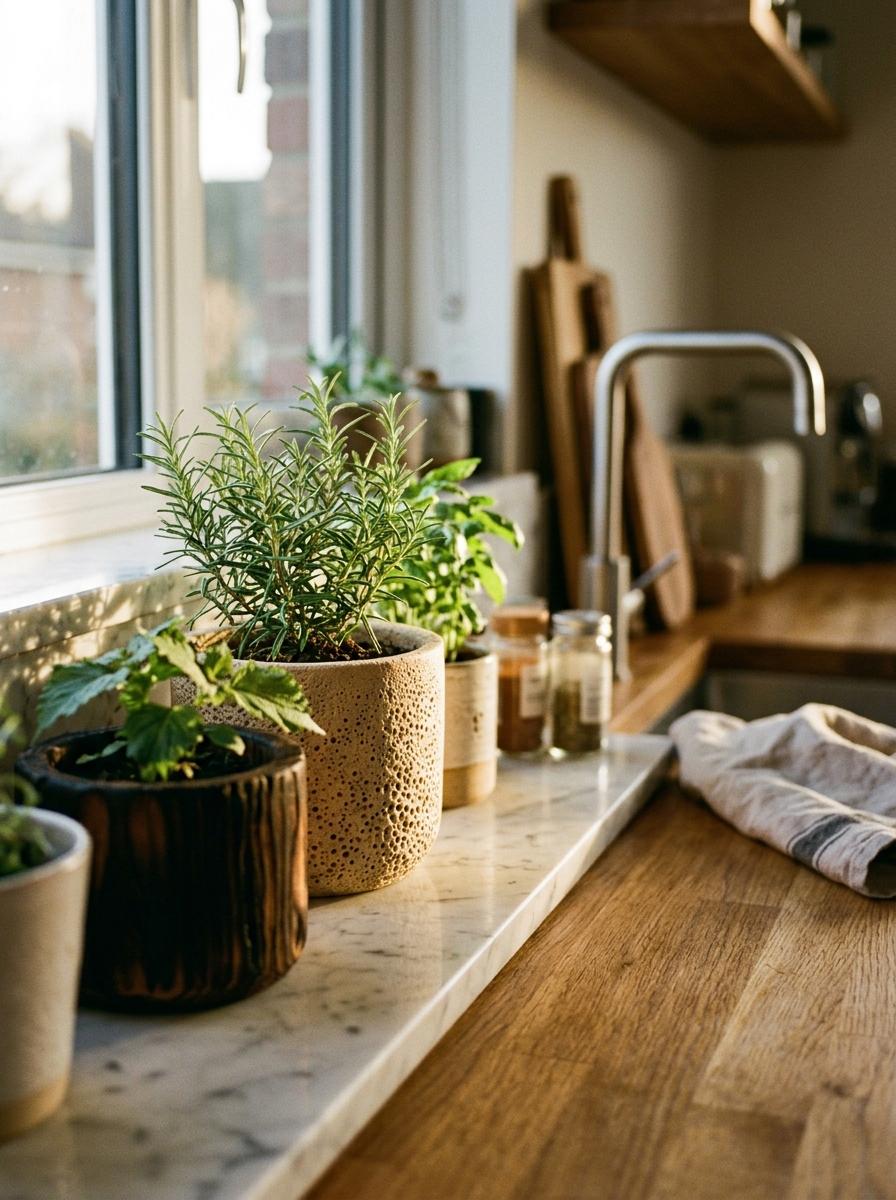

To truly elevate your culinary workspace, begin by introducing vessels crafted from porous, unglazed biscuit porcelain or open-grained charred cedar, materials that provide a tactile grounding against the sterile efficiency of a modern kitchen. Note how the deliberate placement of these organic forms against a polished marble backsplash creates a dynamic stillness, a paradox where the rugged imperfections of the earth meet the surgical precision of contemporary design. As you brush against a sprig of rosemary or crushed shiso, the transition from the cool, stony texture of the pot to the resinous warmth of the herb triggers a visceral release, slowing your heart rate and sharpening your sensory focus. By integrating the minimalist restraint of Kyoto-inspired greenery with the functional rigors of a bulthaup-influenced layout, you transform a mere prep station into a sanctuary of "wabi-sabi" utility, where the scent of damp soil and aromatic oils anchors the fleeting chaos of daily life.
Refined Simplicity Within A Modern Japandi Herb Garden Layout
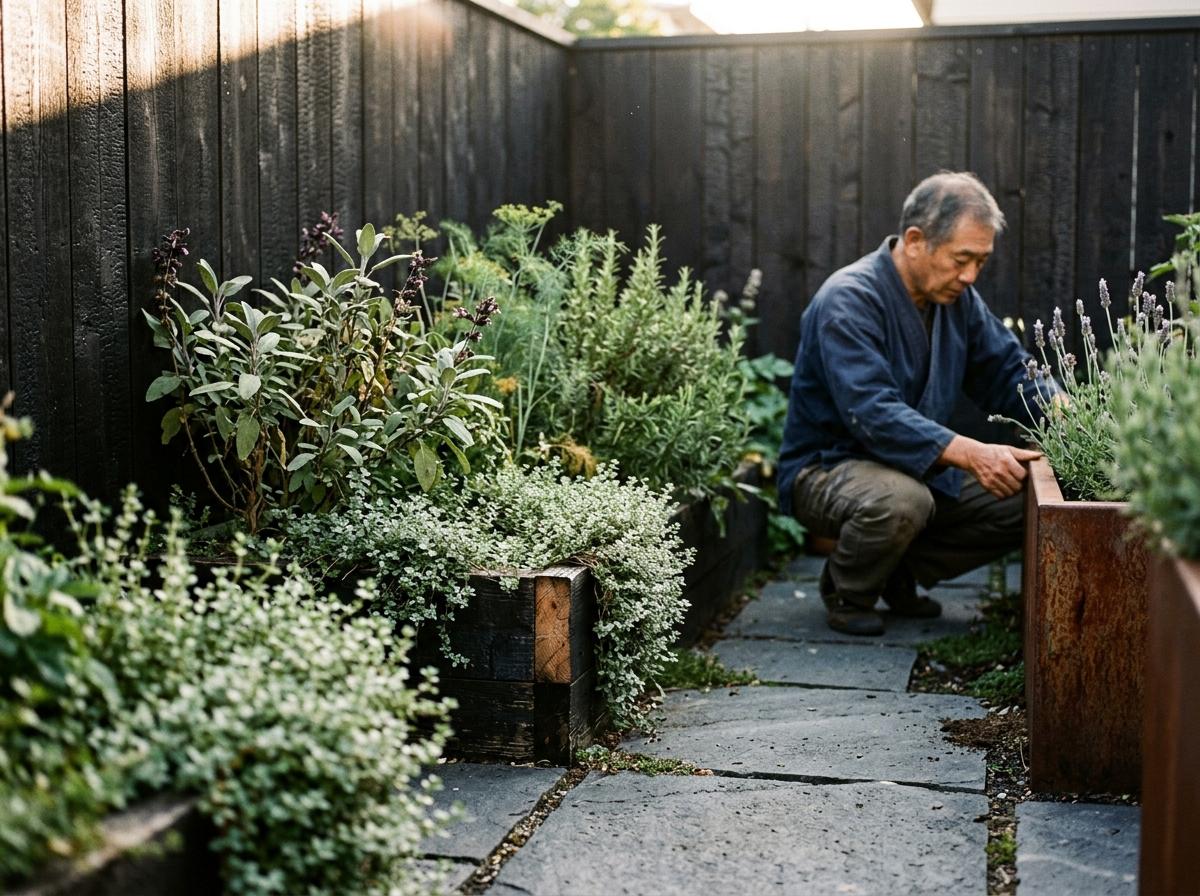

Walking through the dense, cacophonous heat of the Tokyo subway, I found myself longing for a silence that wasn't just an absence of sound, but a presence of intention. It was only when I stepped into Hiroshi's courtyard that the frantic urban density dissolved into a masterclass of spatial compression and release. "The herb garden," Hiroshi noted, pausing to adjust a weathering steel planter, "is not merely a collection of flora... it is a rhythmic pacing of the void." By placing the tactile, organic sprawl of creeping thyme against the rigid geometry of a shou sugi ban privacy screen, he achieved a striking visual tension. This deliberate juxtaposition-the soft, silver-green foliage of sage spilling over the hard, monolithic lines of basalt pavers-creates a sensory equilibrium that mirrors the Japandi ethos of functional poetry. This balance between the wild and the willed serves as the foundational blueprint for understanding how refined simplicity can transform a humble herb garden into a sanctuary of modern architectural repose.
Creating A Living Art Piece With A Japandi Herb Garden
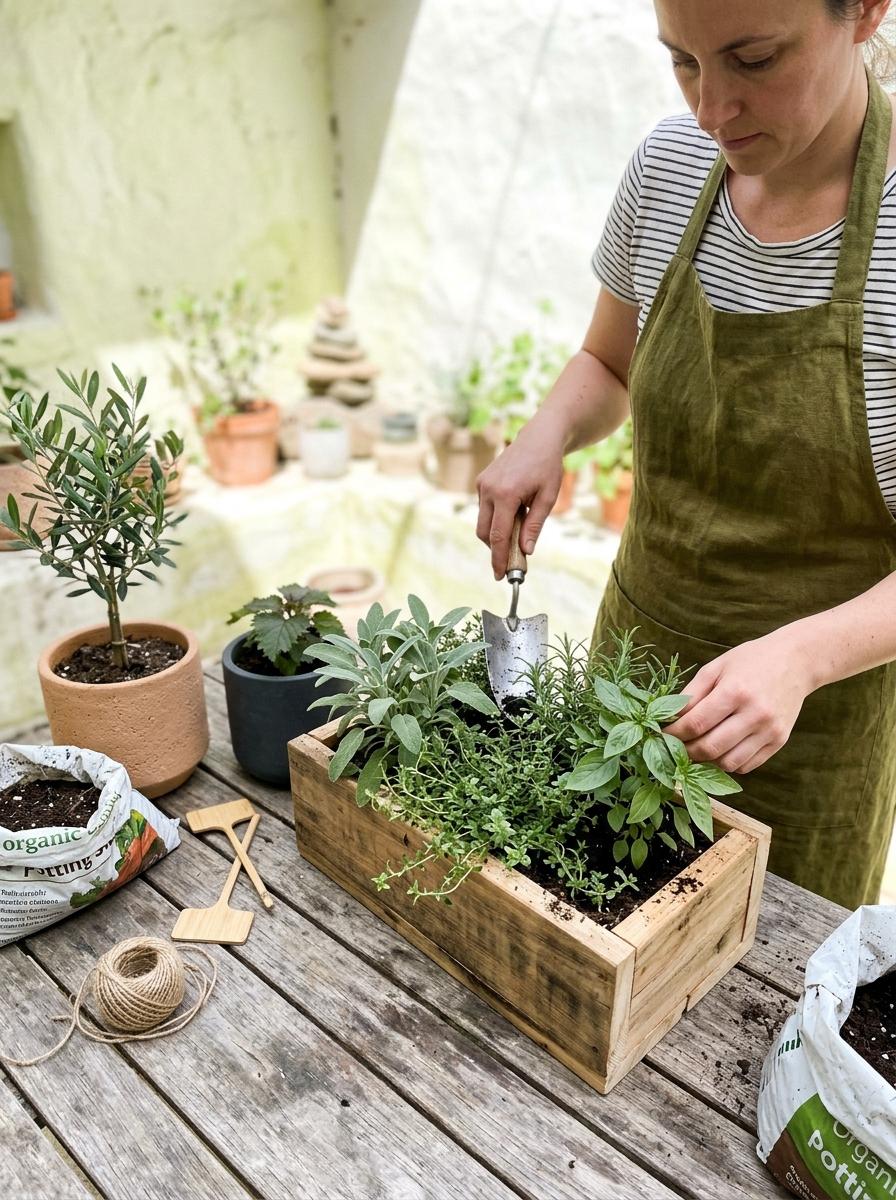

To curate a Japandi herb garden is to orchestrate a gallery where botanical life meets structural silence. Begin by selecting vessels of porous, sand-blasted terracotta or matte-finished basalt, ensuring the surfaces offer a tactile, granular resistance against the softness of the foliage. Note how the coarse, open-pore grain of a Hinoki cypress planter anchors the ephemeral shimmer of silver-leafed sage. This composition thrives on the structured wildness of the arrangement-a paradox where the strict, geometric lines of Scandinavian minimalism are softened by the chaotic, sprawling reach of organic growth. As you brush against a cluster of Thai basil or lemon thyme, the transition from visual appreciation to a visceral somatic response is instantaneous; the sharp, herbaceous top notes trigger a cooling sensation in the chest, physically lowering the pulse and grounding the spirit. This is not merely a hobbyist's corner, but a deliberate study in Wabi-sabi aesthetics paired with the functional pragmatism of a Copenhagen kitchen. By situating these living sculptures against a backdrop of neutral, lime-washed walls, you transform a domestic utility into a high-concept installation that breathes, ages, and nourishes.


Comments