
Japandi emerges as the ultimate aesthetic synthesis, where the rustic, unrefined honesty of Japanese wabi-sabi intersects with the pragmatic, structural clarity of Scandinavian hygge to create a sanctuary of intentional living. This union demands a sophisticated color story-one that is rigorously disciplined yet profoundly soul-stirring, grounding its inhabitants in a palette that feels both architecturally resolute and ethereally light. By mastering the dialectical pairing of cool, achromatic Nordic greys against the organic, foundational warmth of Kyoto-inspired ochres, we achieve a chromatic equilibrium that is spare but never sterile. To design within this spectrum is to engage in a sensorial choreography of muted, tactile, and atmospheric hues, resulting in a domestic landscape that transcends mere minimalism to become a masterclass in restorative poise.
Japandi Color Palette

Neutral Tones In A Modern Japandi Color Palette
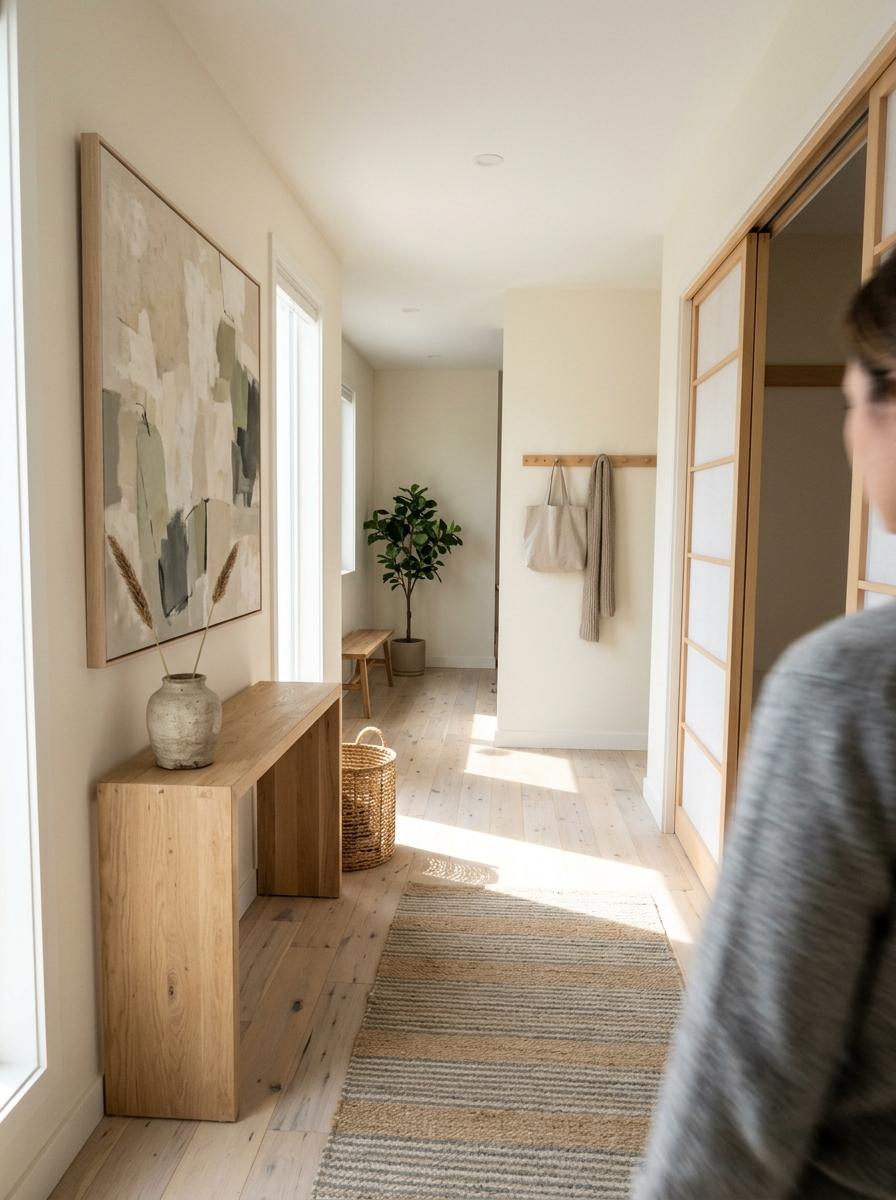

The project's origins are rooted in a deliberate fusion where Scandinavian functionality is seamlessly synthesized with Japanese minimalism. Within this layout, a pale palette provides a clean, calm canvas that silences the visual noise of the external world. These muted tones tether the timber, creating a rhythmic harmony that anchors the atmosphere. Each neutral shade carves the corridor, expands the entryway, and stretches the ceiling to emphasize the room's newfound height. This intentional use of color clarifies the layout, quiets the spirit, and cradles the light.
Create Warmth Using A Soft Japandi Color Palette
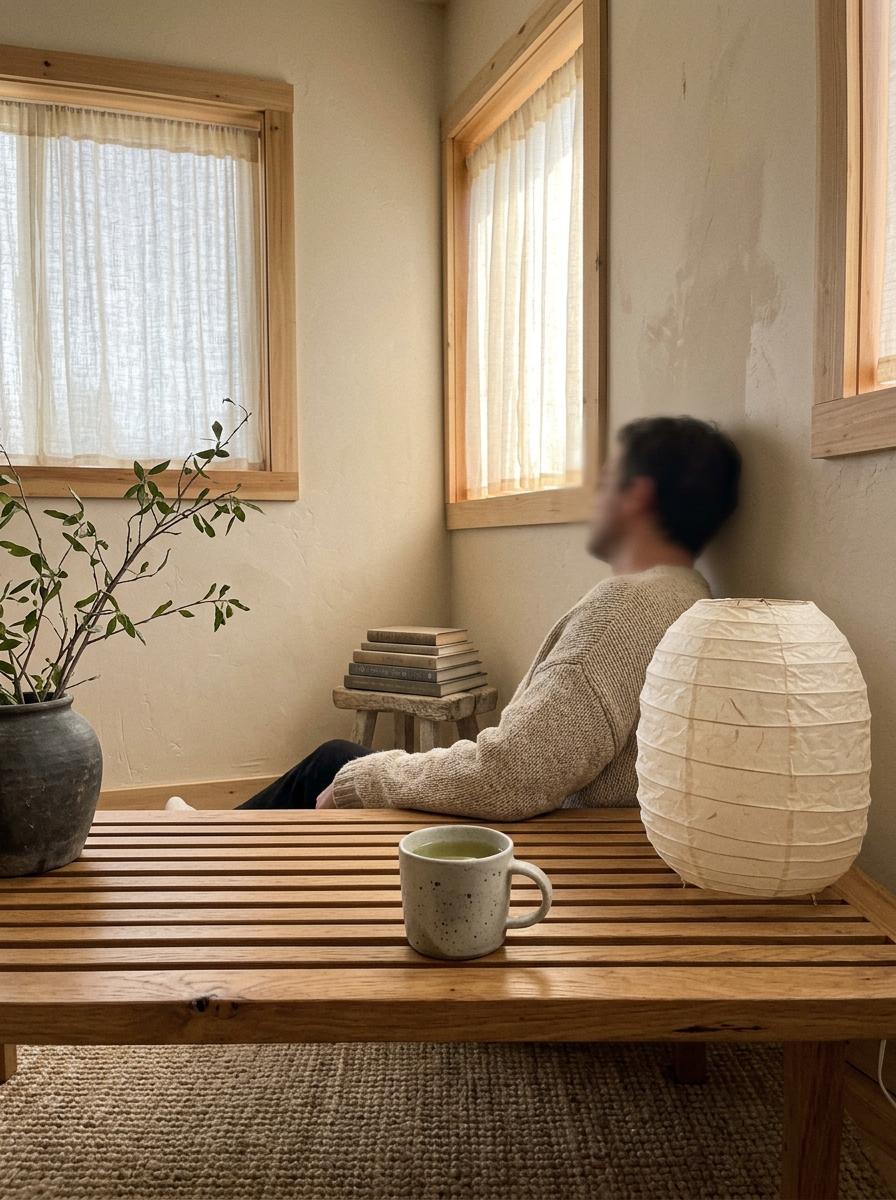

To achieve a truly resonant atmosphere, we need to move beyond mere beige and embrace the saturated translucence of hand-rubbed white oak and the fibrous grit of unfiltered washi paper. Note how the interplay of light across these surfaces creates a sense of complex simplicity; the visual field is at once empty yet brimming with tactile information. This deliberate curation of tones-ranging from oatmeal linens to the charcoal depths of charred cedar-triggers an immediate physiological release, lowering the heart rate as the body synchronizes with the stillness of the room. It is a sensory experience reminiscent of the Aman Tokyo, where the architectural rigidness of the city is dissolved by a palette that feels both grounded and ethereal. By grounding your space in these high-precision neutrals, you transform a domestic setting into a sanctuary of restorative silence.
Earth Tones Define This Minimalist Japandi Color Palette
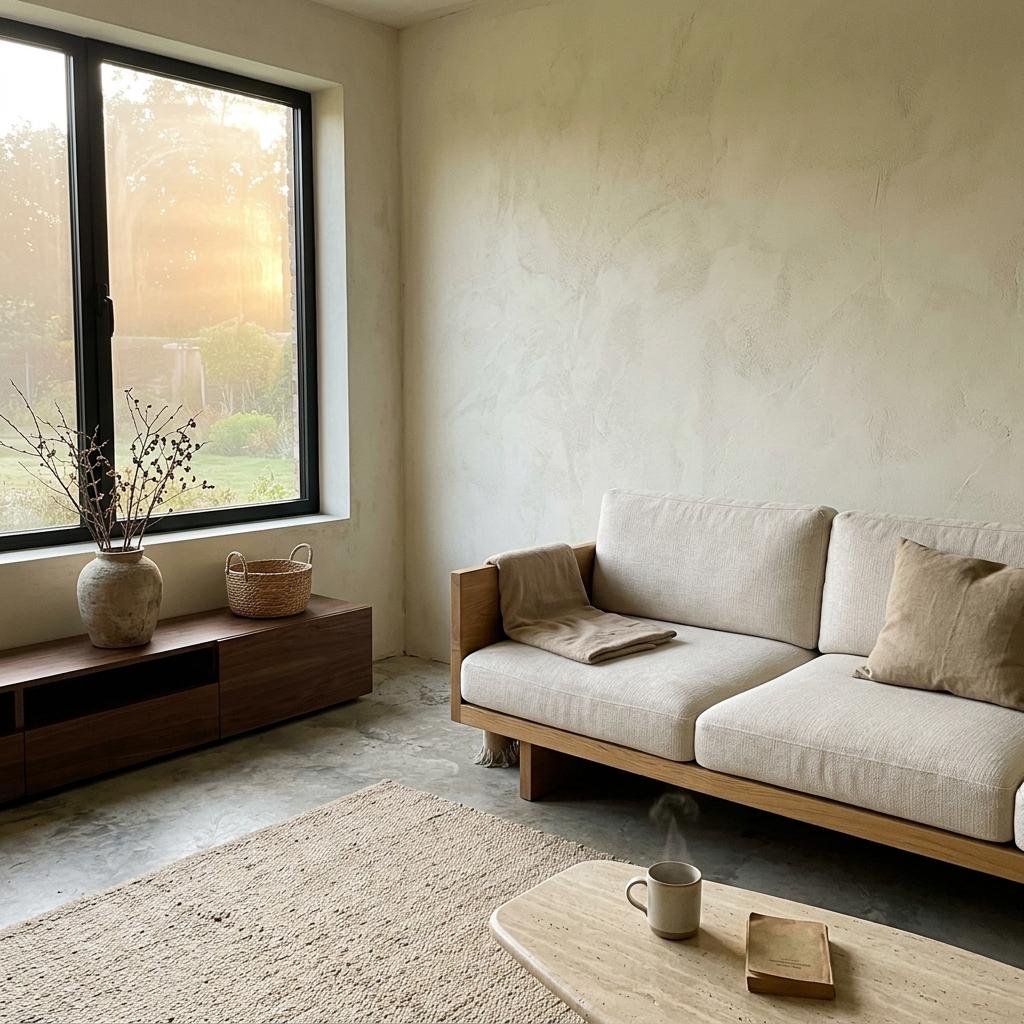

In analyzing the intersection of Scandinavian restraint and Japanese philosophy, one finds that the atmospheric grounding of the Japandi aesthetic is rooted in the "quietude of the soil"-a spatial context where living areas are anchored by low-slung profiles to evoke a primal sense of stability. This design language thrives on a figurative paradox, achieving a state of complex simplicity where the visual sparseness of a room works to reconcile rigorous minimalism with a soulful, lived-in warmth. Such harmony is maintained through a strict structural dualism, drawing a sharp distinction between the chaotic, unpredictable energy of the external world and the curated, rhythmic silence of the interior sanctuary. Central to this transition is a commitment to material specificity, where the tactile imagery of open-pore travertine and raw, unbleached hemp provides a sensory depth that flat, synthetic surfaces cannot replicate. Ultimately, the use of earth tones serves a functionalist specification, acting as an industrial utility that integrates light-diffusing pigments as a solution to ocular fatigue, transforming the home into a high-performance tool for psychological restoration.
Muted Hues Within A Sophisticated Japandi Color Palette
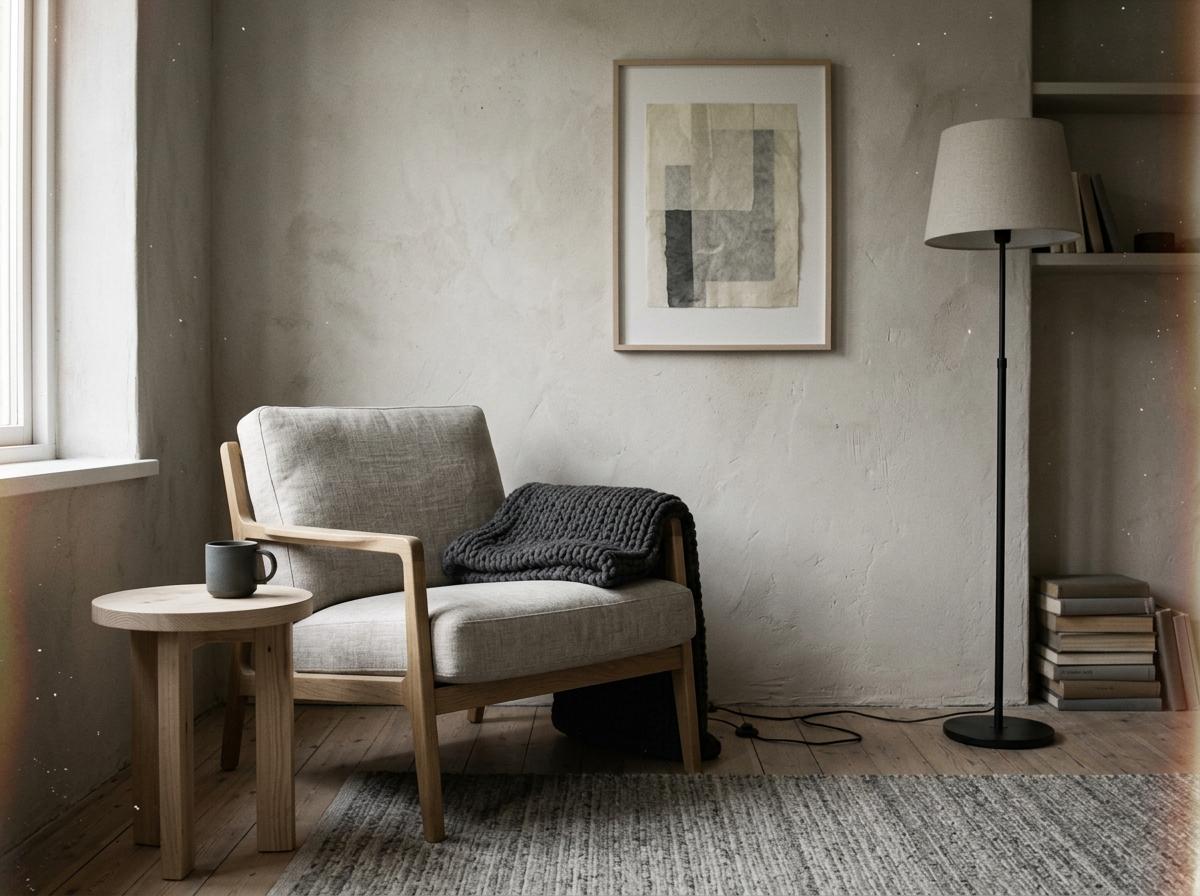

At the intersection of Scandinavian functionalism and the Zen-inflected ethos of wabi-sabi, Japandi emerges not merely as a decorative trend, but as a rigorous synthesis of haptic warmth and structural restraint. This aesthetic paradigm demands a color palette anchored in desaturated, earth-bound neutrals-think bone, silvered driftwood, and charcoal-which serve to articulate a sophisticated visual silence. The palette is inherently dialectical: it feels profoundly monastic in its austerity, yet remains inherently cocooning through its atmospheric depth. By layering these muted hues, the space achieves a sensorial resonance that is at once ethereal and grounded, replacing the clinical coldness of pure minimalism with a tactile, soulful equilibrium.
Natural Wood Elements Meet A Subtle Japandi Color Palette
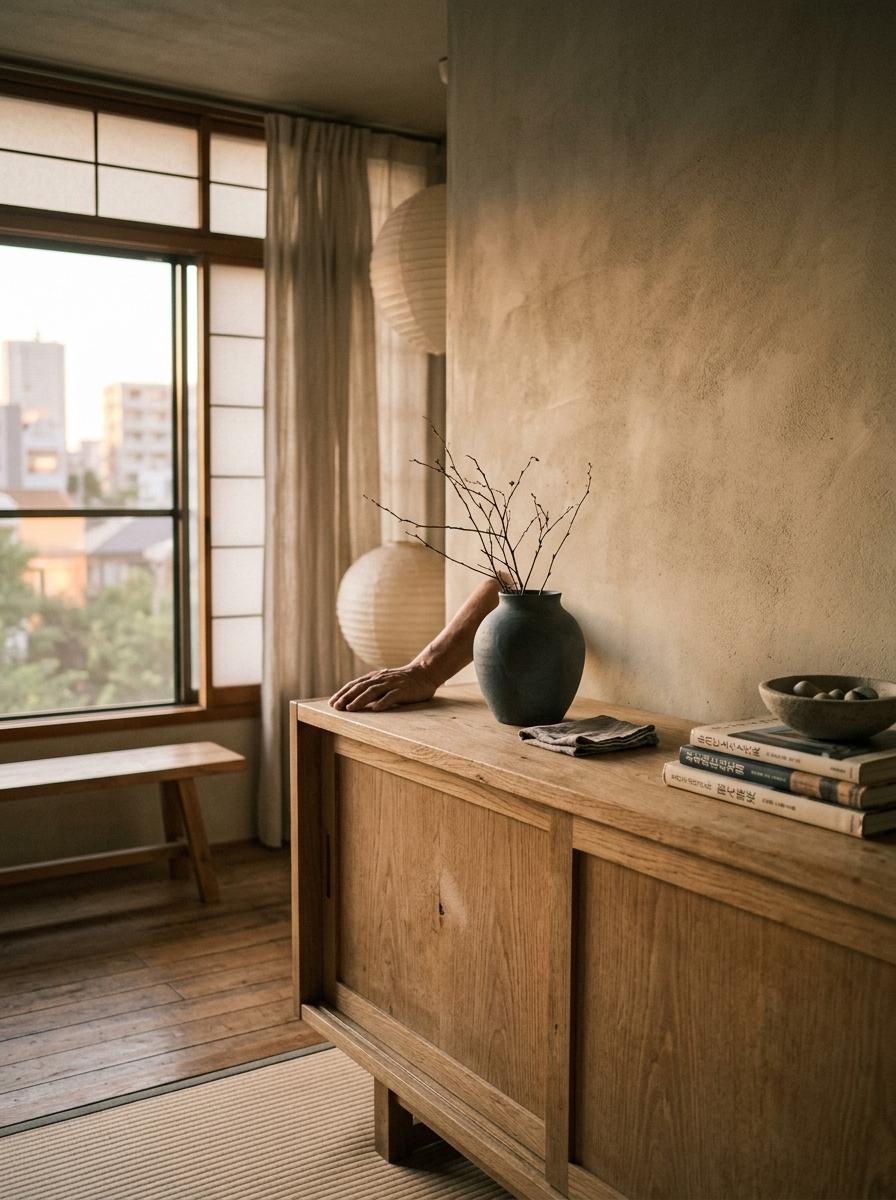

Stepping into the Tokyo residence of architect Kenji Sato, the transition is almost physical; one leaves behind the jagged, neon-lit friction of the Shinjuku skyline and enters a space defined by profound, intentional stillness. As I traced the grain of a white oak sideboard, Kenji began to explain the tension between material and pigment. "The wood must breathe," he noted, pausing to adjust the placement of a single ceramic vessel, "before the color-that muted, stony oatmeal-can truly anchor the room." This delicate interplay of tactile organicism and a desaturated wash creates a sanctuary where the "visual noise" of urban life is silenced by the soft matte finish of timber and lime-wash. By layering these raw, ligneous textures against a subdued spectrum of sand and slate, the space achieves a refined equilibrium that defines the very soul of the modern home. Such a balance suggests that when natural wood elements meet a subtle Japandi color palette, we aren't just decorating a room; we are curating a sensory retreat.
Achieve Visual Harmony Using A Balanced Japandi Color Palette
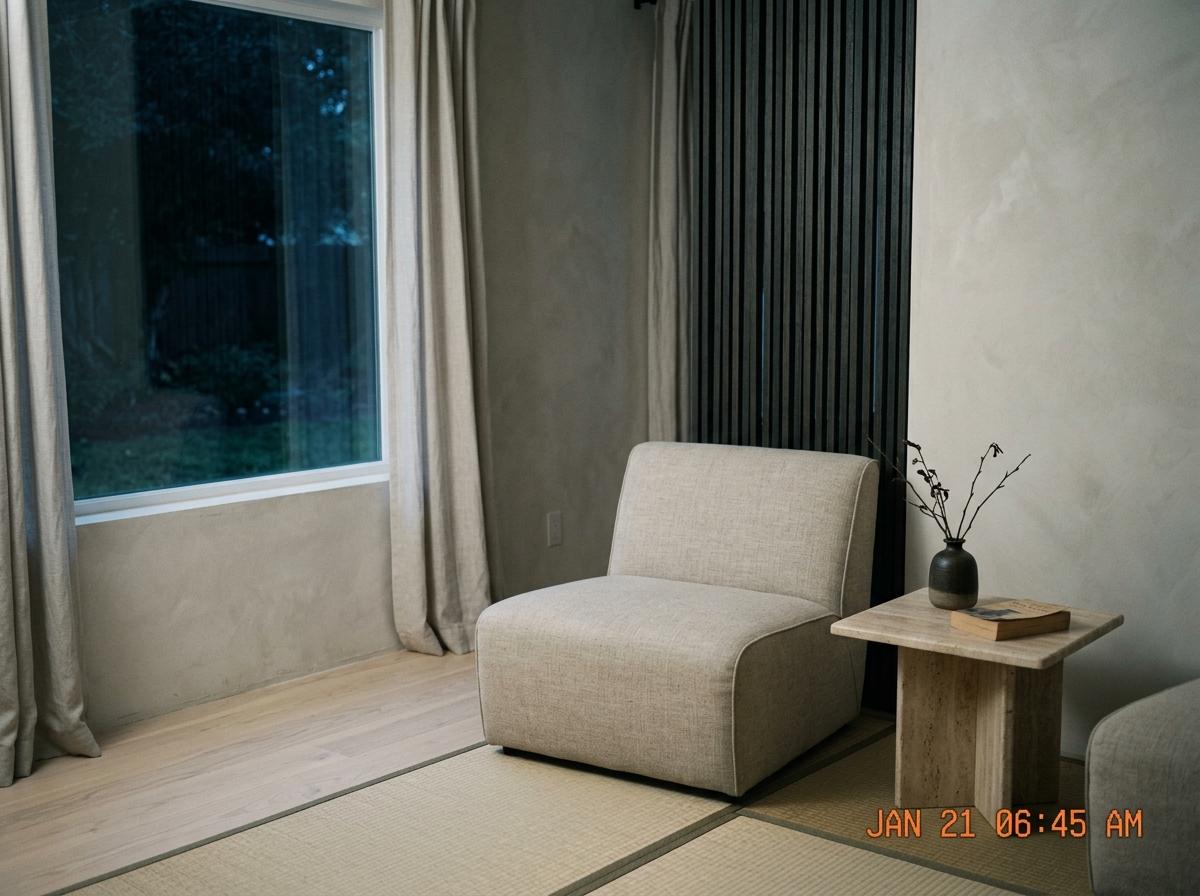

To achieve visual harmony in a Japandi interior, we must master the art of layering tonal depth through a curated selection of tactile finishes. Start with a foundation of sanded, open-pore ash and low-sheen, honed travertine to establish a base of organic neutrality. Note how the rhythmic interplay between the charcoal-stained oak slats and the soft, oatmeal-colored linen upholstery creates a spatial dialogue that guides the eye across the room without interruption. This deliberate curation relies on a structured fluidity, where the rigid geometry of Scandinavian minimalism meets the intentional imperfection of Japanese wabi-sabi. As you transition from the cooling touch of a limewash-plastered wall to the grounding warmth of a woven tatami mat, the body undergoes a physiological shift; the heart rate decelerates, and a profound sense of "seishen" (spiritual serenity) replaces the chaotic static of urban life. Drawing inspiration from the meditative atmosphere of the Aman Kyoto or the understated luxury of a Vipp Shelter, this palette proves that true luxury lies not in excess, but in the precise calibration of silence and substance.
Warm Beige Influences In A Classic Japandi Color Palette
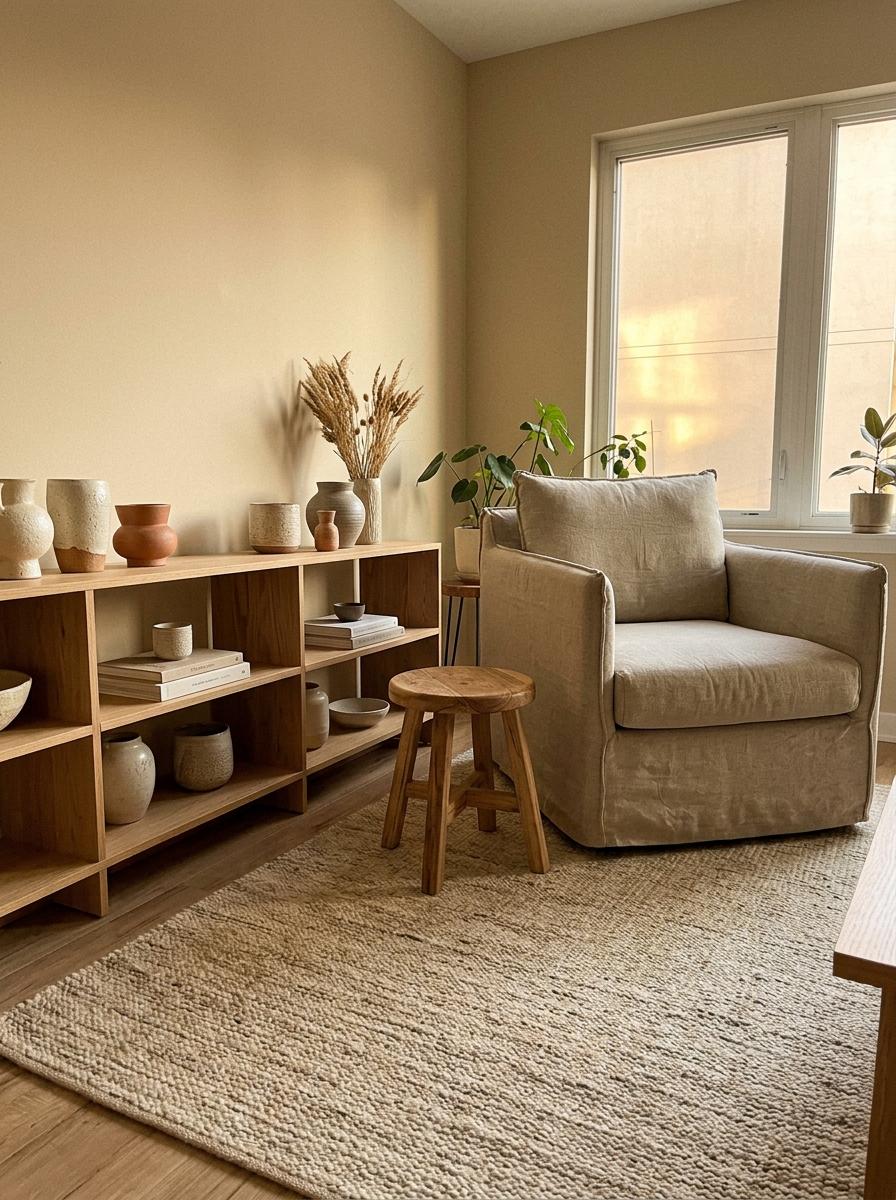

Walking into a high-gloss, ultra-minimalist loft in the city often feels like stepping into a refrigerated gallery; the crisp whites are blinding, the surfaces are sterile, and the silence is sharp. However, when I recently sat down with a local weaver whose studio was bathed in "Parchment" and "Oatmeal" tones, the atmosphere shifted from cold precision to a tactile embrace. "The secret isn't just the neutral base," she explained, pausing to adjust a hank of raw linen, "it's the way a warm beige-this specific, muddy, sun-drenched hue-manages to ground the airiness of Scandi design." This subtle infusion of warmth acts as the necessary tether for the "Organic Modernism" we crave, softening the rigid geometry of Japanese silhouettes with a compassionate, earthen undertone. By pivoting away from clinical greys and toward these toasted pigments, we move from a space that merely looks clean to one that feels inhabited. This delicate balancing act between the cool efficiency of the north and the golden resonance of the east is what defines the soulful evolution of the classic Japandi color palette.
Oatmeal And Charcoal Accents For A Japandi Color Palette
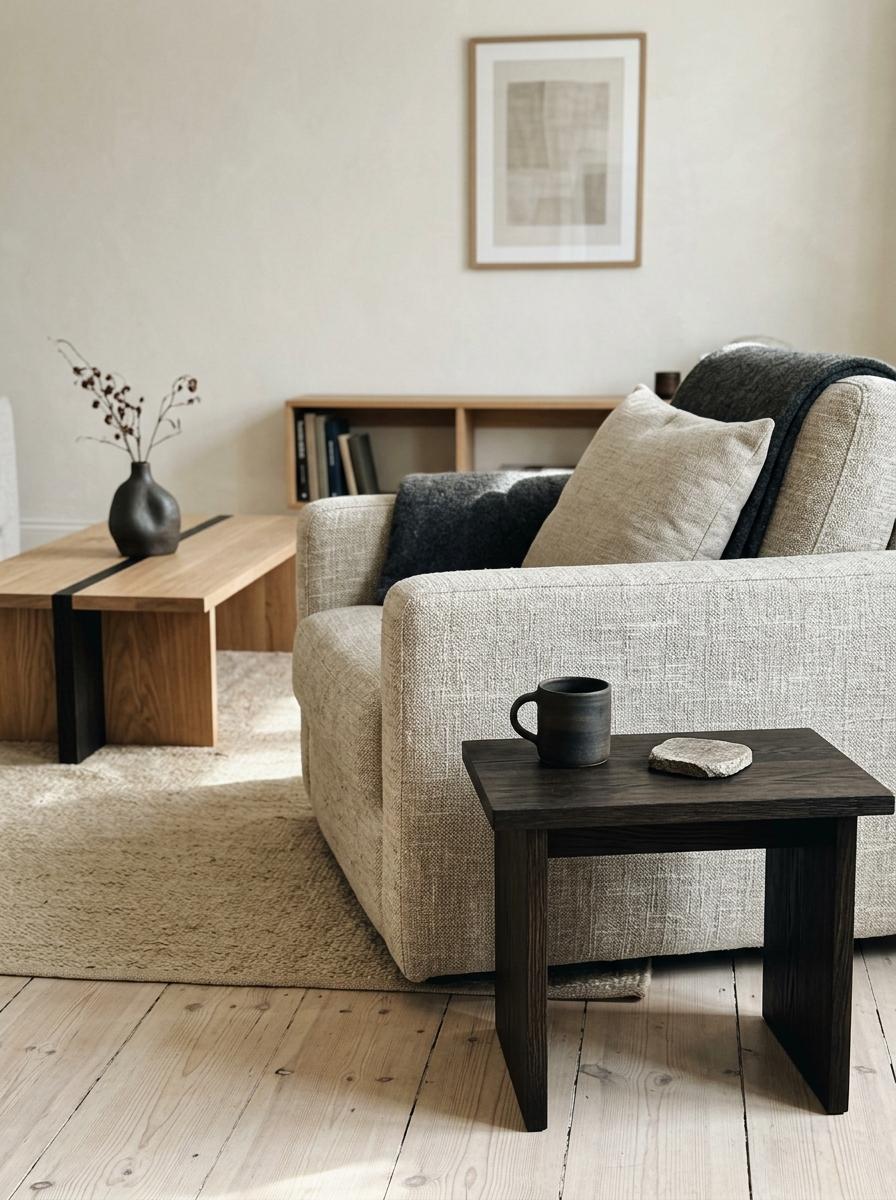

To anchor a Japandi living space, begin with a foundation of oatmeal-hued, slubbed linen upholstery that offers a rugged yet refined tactile profile. Note how the interplay between the light-absorbent weave and the sharp, carbonized oak accents creates a moment of structured softness; it is a deliberate paradox where the fragility of fiber meets the architectural permanence of timber. This juxtaposition serves as a visual sedative, shifting the body from a state of high-alert sensory processing to a deep, parasympathetic release as you trace the grain of a Kyoto-inspired low table. By framing these neutral tones within the disciplined geometry of a Scandinavian silhouette, the room transcends mere decoration, evolving into a vessel for stillness in motion that tethers the occupant to the present moment.
Organic Materials Highlighting A Quiet Japandi Color Palette
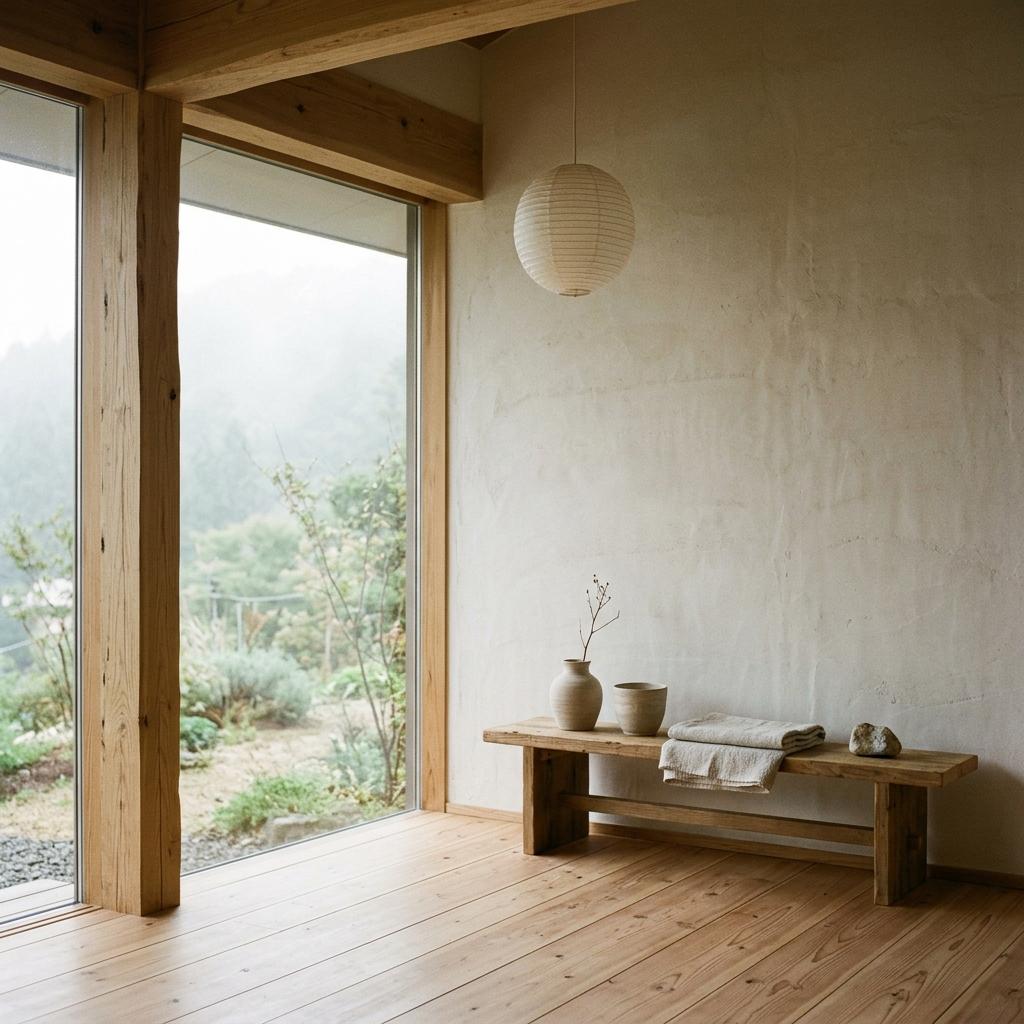

Historically, the architecture of the Tokyo hills was defined by rigid social hierarchies and heavy timber framing, yet today, this heritage has evolved into a breathable minimalism that prioritizes sensory experience over status. In a recently completed residence in the prestigious Azabu-juban district, we see this evolution firsthand through a design that masters the art of expressive silence. By embracing a calculated spontaneity, the home balances the raw, rugged textures of stone against the soft, hushed tones of a muted Japandi palette. This project was a collaborative journey with a repeat client, whose continued trust allowed for a deeper exploration of how materiality influences well-being. Ultimately, the home achieves its serene atmosphere through a precise technical synthesis of tactile organic finishes and diffused rhythmic lighting, proving that the quietest spaces often speak the loudest.
Sage Green Touches Enhancing A Modern Japandi Color Palette
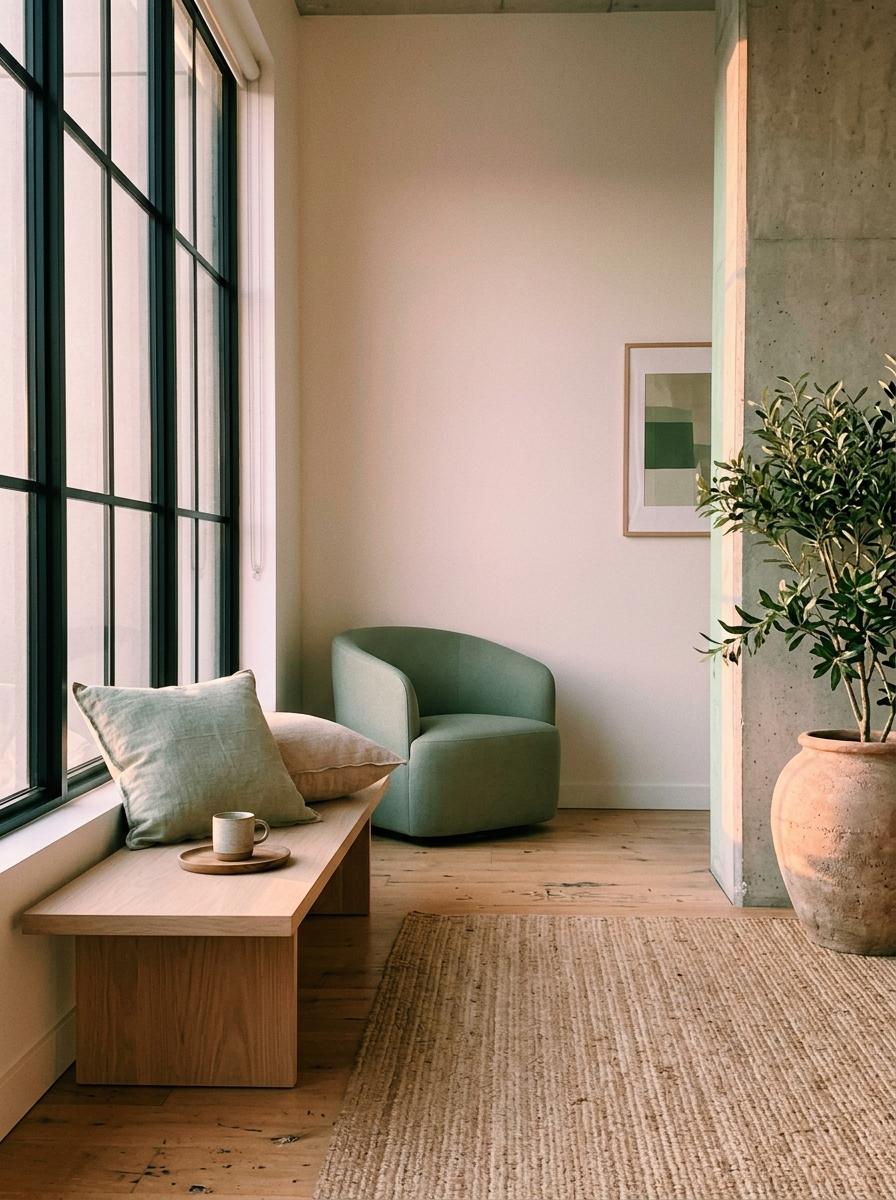

The architectural framework was conceived as a dialogue between Scandinavian efficiency and Japanese restraint, where every structural choice was dictated by the pursuit of intentional stillness. Within this void, a curated selection of muted materials creates a sterile yet soulful environment, defined by unadorned surfaces and weightless transitions. Soft sage shadows stretch across the space, grounding the ethereal light with a persistent, peaceful presence. This verdant hue carves out depth, breathes life into the limestone, and expands the visual horizon. The palette ultimately reconciles the coolness of concrete, the warmth of white oak, and the organic pulse of pale green.
Soft Terracotta Shades Inside A Cozy Japandi Color Palette
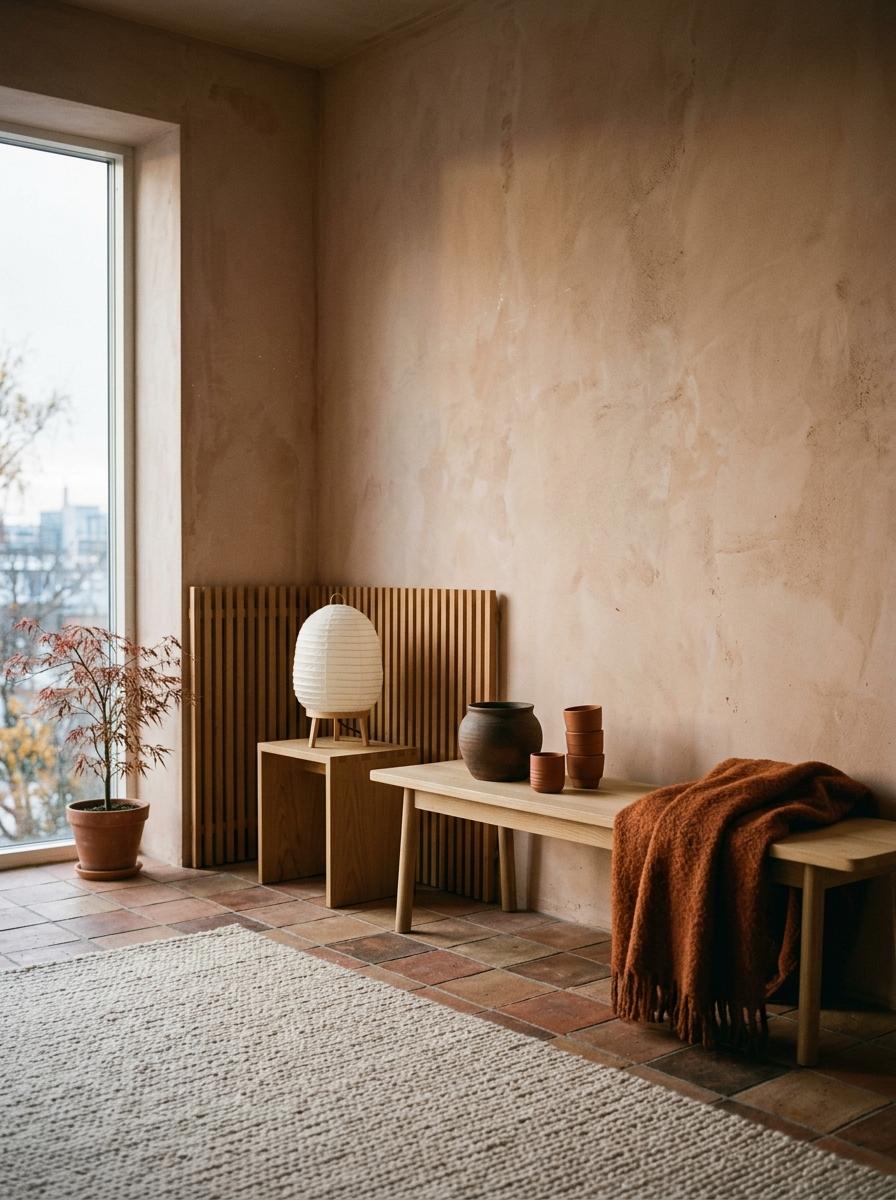

The Japandi interior acts as a curated sanctuary, where the stillness of a Northern autumn is anchored by the rhythmic, warm pull of the earth. Here, we encounter the structured fluidity of the palette-a conceptual synthesis where the rigid discipline of Scandi-minimalism is softened by the clay-like, organic warmth of the East. While the external world remains a chaotic sprawl of neon and concrete, the internal volume is defined by a sharp pivot toward seclusion, grounding the inhabitant in a space that feels both expansive and protective. This atmosphere is given tactile weight through the use of honed terracotta floor tiles and raw, limewashed plaster, materials that offer a matte, porous contrast to the sleekness of pale oak joinery. Far from mere decoration, these soft reddish hues serve a vital chromatic calibration; they act as a thermal bridge, absorbing harsh artificial light and re-emitting it as a soft, functional glow that optimizes the room for both contemplative rest and daily utility.
Monochromatic Beauty Using A Deep Japandi Color Palette
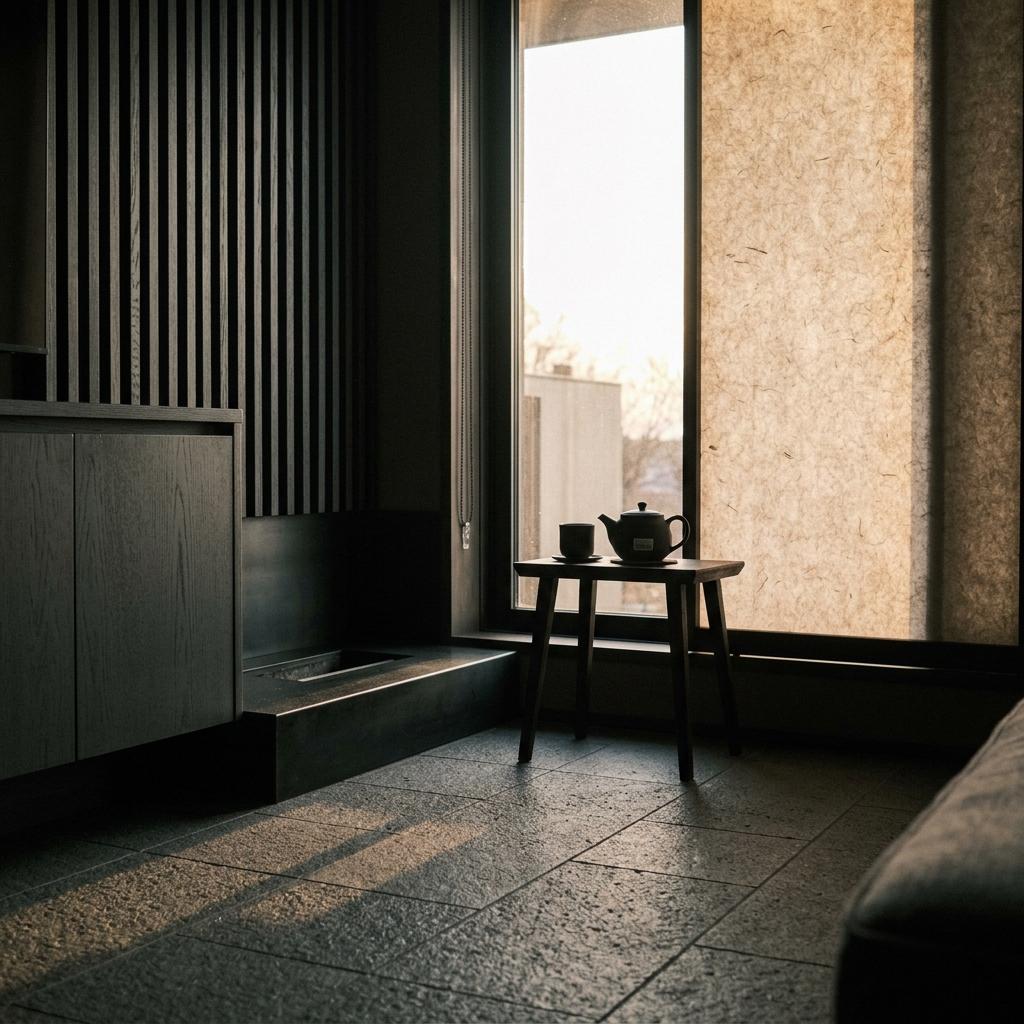

To master the art of the deep Japandi aesthetic, we must look beyond simple minimalism and embrace the gravity of shadow. In this monochromatic study, we examine how charcoal-stained, open-pore oak cabinetry interacts with the haptic granularity of matte basalt flooring. Note how the rhythmic placement of vertical slats creates a "sculptural silence"-a deliberate paradox where the visual density of the dark palette actually expands the perceived volume of the room, offering a complex simplicity that feels both grounding and ethereal. As your eyes trace the liquid-smooth finish of a blackened steel hearth against the fibrous unevenness of hand-loomed washi paper, you may feel your heart rate settle into a steady, meditative rhythm; this is the physiological shift from domestic chaos to a state of profound sensory stillness. Drawing inspiration from the Aoyama district in Tokyo, where urban sleekness meets organic restraint, this approach proves that a monochromatic interior isn't just a stylistic choice, but a curated environment designed to recalibrate the human nervous system through the power of shade and texture.
Sand And Stone Textures Of A Japandi Color Palette
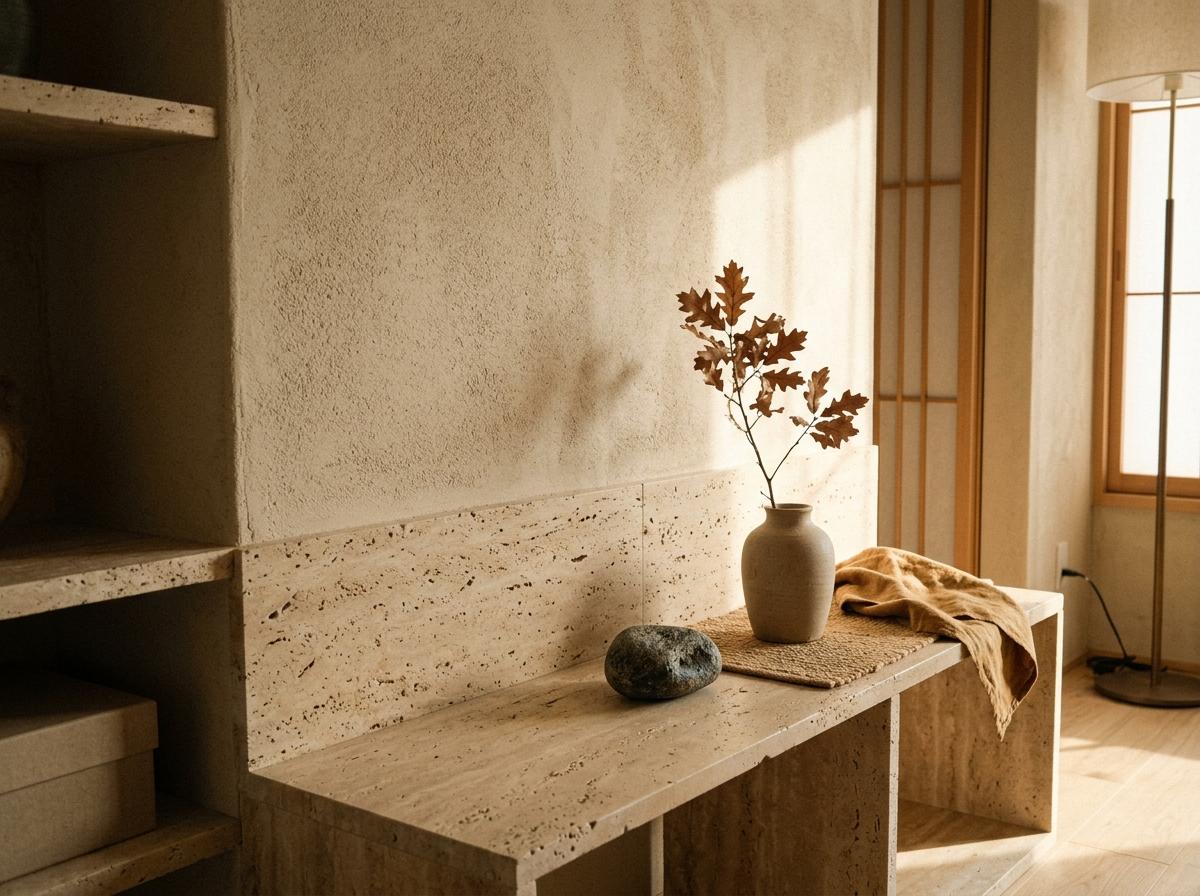

To step into a Japandi interior is to enter a space defined by atmospheric grounding, where the domestic sanctuary is anchored not by walls, but by the elemental weight of a landscape brought indoors. The palette thrives on a figurative paradox, achieving a state of static movement-where the stillness of the stone provides a foundation for the shifting, rhythmic play of light across sand-toned surfaces. This structural dualism creates a profound tension between the internal psyche and the external world; while the exterior environment remains chaotic and unpredictable, the interior is curated into a disciplined topography of calm. The tactile narrative is told through material specificity, utilizing the raw, open-pore texture of honed travertine and the granular depth of tadelakt plaster to ground the visual experience in physical reality. These choices are never purely aesthetic, however, but rooted in functionalist specification. The integration of these mineral textures serves as a thermal and acoustic solution, where the density of the stone acts as a natural heat sink and the matte, irregular surfaces diffuse sound, transforming the home into a high-performance vessel for contemplative living.
Light Oak Finishes Complementing A Japandi Color Palette
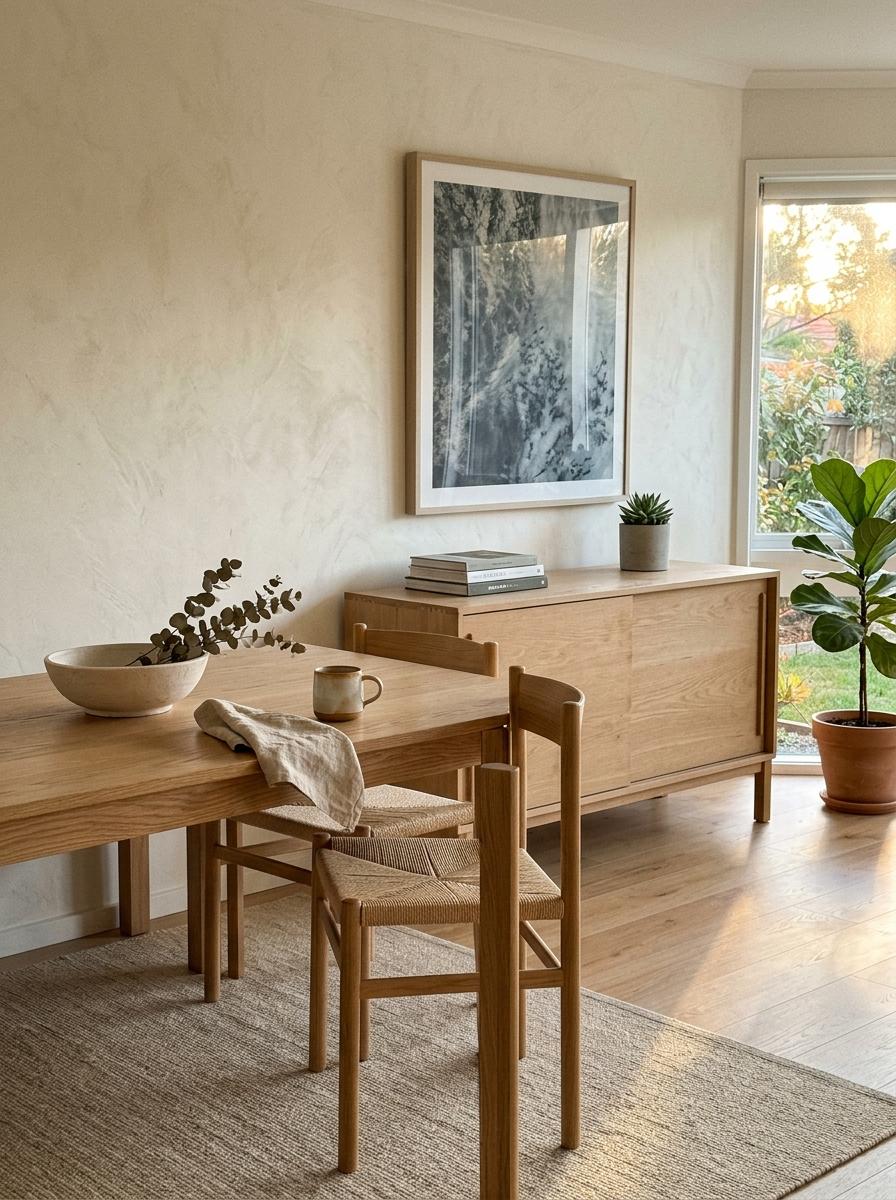

To truly grasp the synergy of a Japandi interior, You must look toward the tactile presence of light oak-a timber that defines the bridge between Scandinavian functionality and Japanese minimalism. Note how the honeyed, rectilinear grain of a custom rift-sawn oak table acts as a grounding force against the ethereal, chalky backdrop of a Shikkui plaster wall. There is a deliberate spontaneity in the way the wood's tight-pored surface catches the morning sun; it feels simultaneously raw and refined, a calculated piece of nature brought indoors. When you run your hand over a matte-lacquered sideboard-perhaps a piece inspired by the understated joinery found in a Kyoto machiya or a contemporary Copenhagen flat-the physical sensation is one of silken grit. This textural friction does more than satisfy the eye; it triggers a profound physiological shift, lowering the heart rate and inducing a state of seburi, or focused calm. By anchoring the neutral Japandi palette with the amber warmth of light oak, the space ceases to be merely a room and becomes a resonant sanctuary that breathes with the occupant.
Subtle Grey Undertones In A Refined Japandi Color Palette
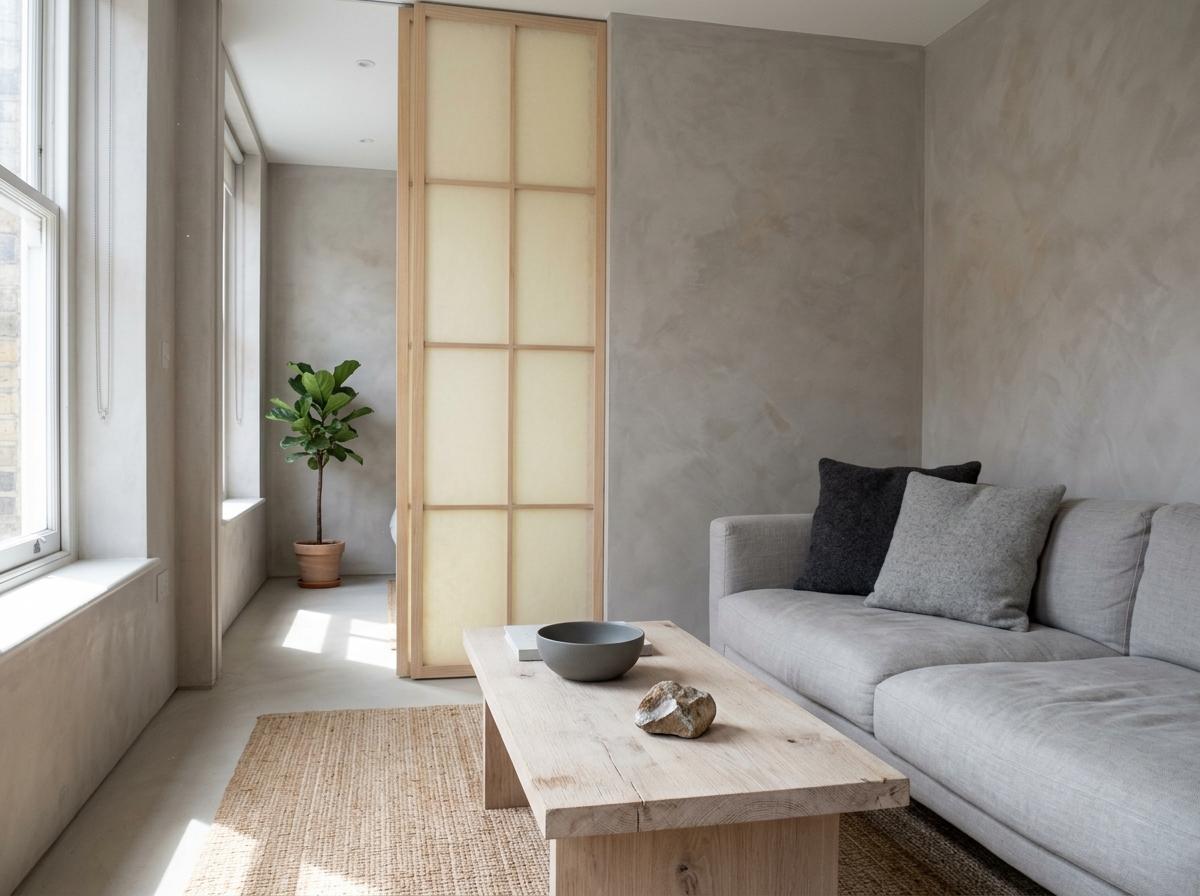

To step into this residence is to witness the evolution of a design philosophy that has shifted from the raw, unpolished wabi-sabi aesthetics of the early decade to a contemporary state of polished permanence. This structured fluidity defines the interior, where the rigid geometry of Japanese minimalism meets the soft, organic comfort of Scandinavian hygge. Situated in the heart of London's refined Marylebone, the project serves as a sophisticated evolution for the homeowners-a repeat client whose continued partnership with the design team signals a deep-seated trust in this specific aesthetic trajectory. The space ultimately achieves its quiet power through a technical synthesis of tonal layering, where subtle grey undertones are manipulated alongside diffused natural lighting to create a sanctuary that feels both ancient and cutting-edge.
Warm White Walls Defining A Clean Japandi Color Palette
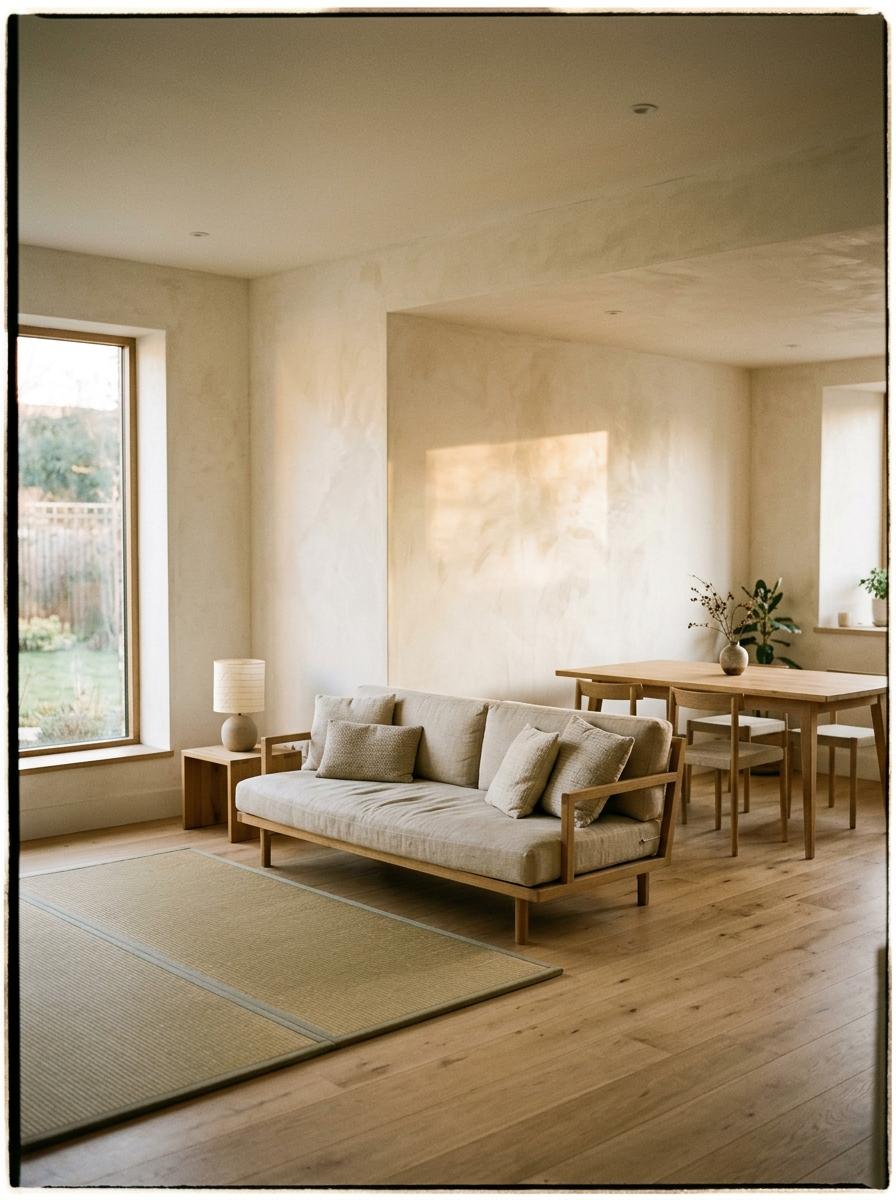

Warm White Walls Defining A Clean Japandi Color Palette The modern Japandi interior begins as a quiet sanctuary, where the vastness of an open-plan layout is anchored by the soft, diffused glow of peripheral boundaries, grounding the inhabitant in a space that feels both expansive and intimate. Within this void exists a luminous shadow-a conceptual synthesis where the brightness of a white wall does not coldly repel, but rather absorbs and softens the incoming light to create a welcoming depth. This creates a rigorous structural dualism: while the external world remains a chaotic montage of shifting colors and noise, the internal environment is a curated vacuum of stillness, defined by its monochromatic restraint. To achieve this tactile serenity, the palette relies on material specificity, moving beyond generic pigments to utilize the bone-ash undertones of lime-wash plasters and the velvety, non-reflective finish of chalk-based emulsions. Ultimately, these warm white surfaces serve a critical functionalist specification, acting as an industrial-grade canvas that integrates organic textures-such as light oak and woven tatami-into a singular, cohesive system of visual utility.
Contrast And Calm Within A Dark Japandi Color Palette
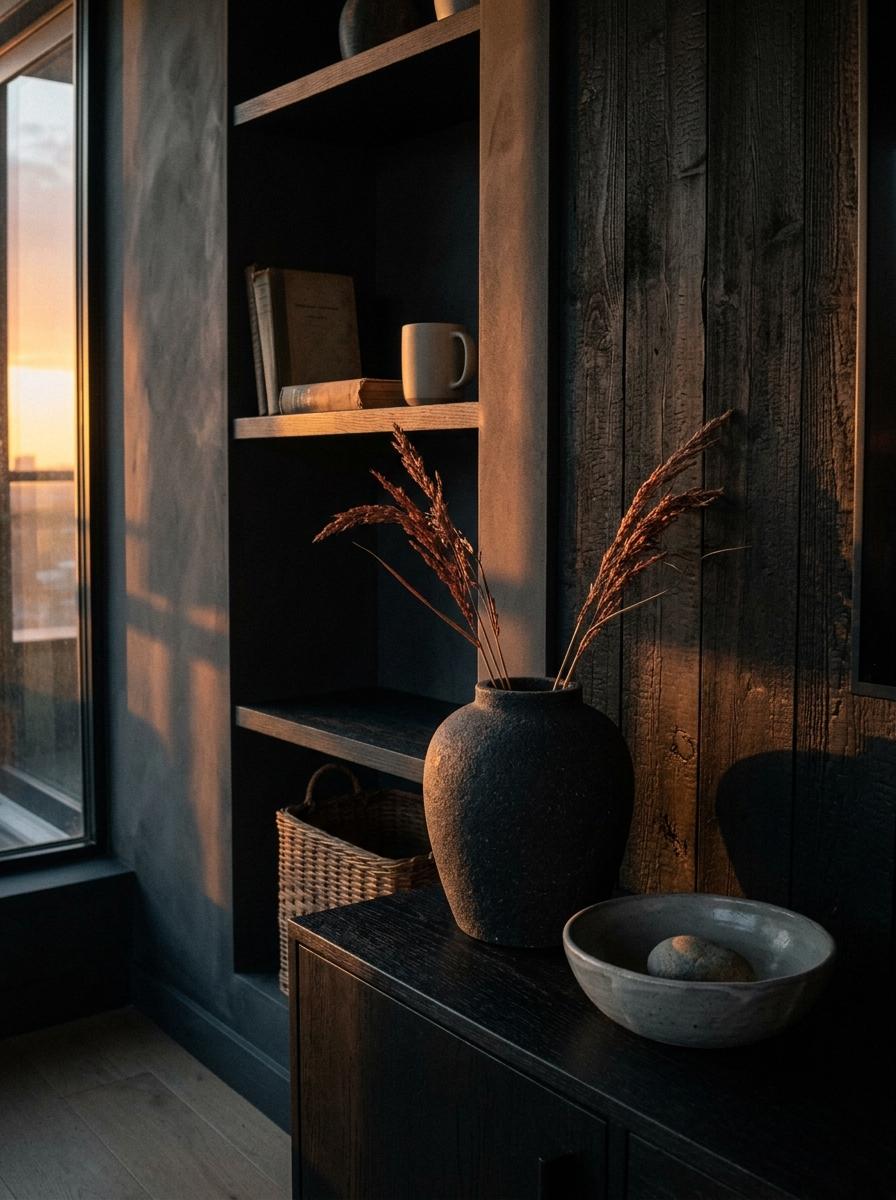

When I first stepped into a sun-drenched, all-white Scandinavian apartment, the visual noise of the bright light reflecting off pale oak felt almost frantic-a sterile glare that offered no place for the eye to rest. But as I transitioned into a project that favored a moody, charcoal-inflected palette, the atmosphere shifted instantly. "The darkness isn't meant to hide the space," the lead designer explained, pausing to adjust a basalt vase against a charred cedar wall, "it's designed to... cradle it." We watched as the afternoon sun hit the matte surfaces, and she continued, "the shadows provide the necessary weight that a purely light room lacks." By trading the clinical brightness of traditional minimalism for a saturated, tenebrous depth, the space achieved a sense of 'wabi-sabi'-finding beauty in the imperfect, shadowed corners. This deliberate play between the somber and the serene reveals how a dark Japandi palette functions not as a void, but as a grounding anchor for meditative living.
Earthy Pigments Shaping A Holistic Japandi Color Palette
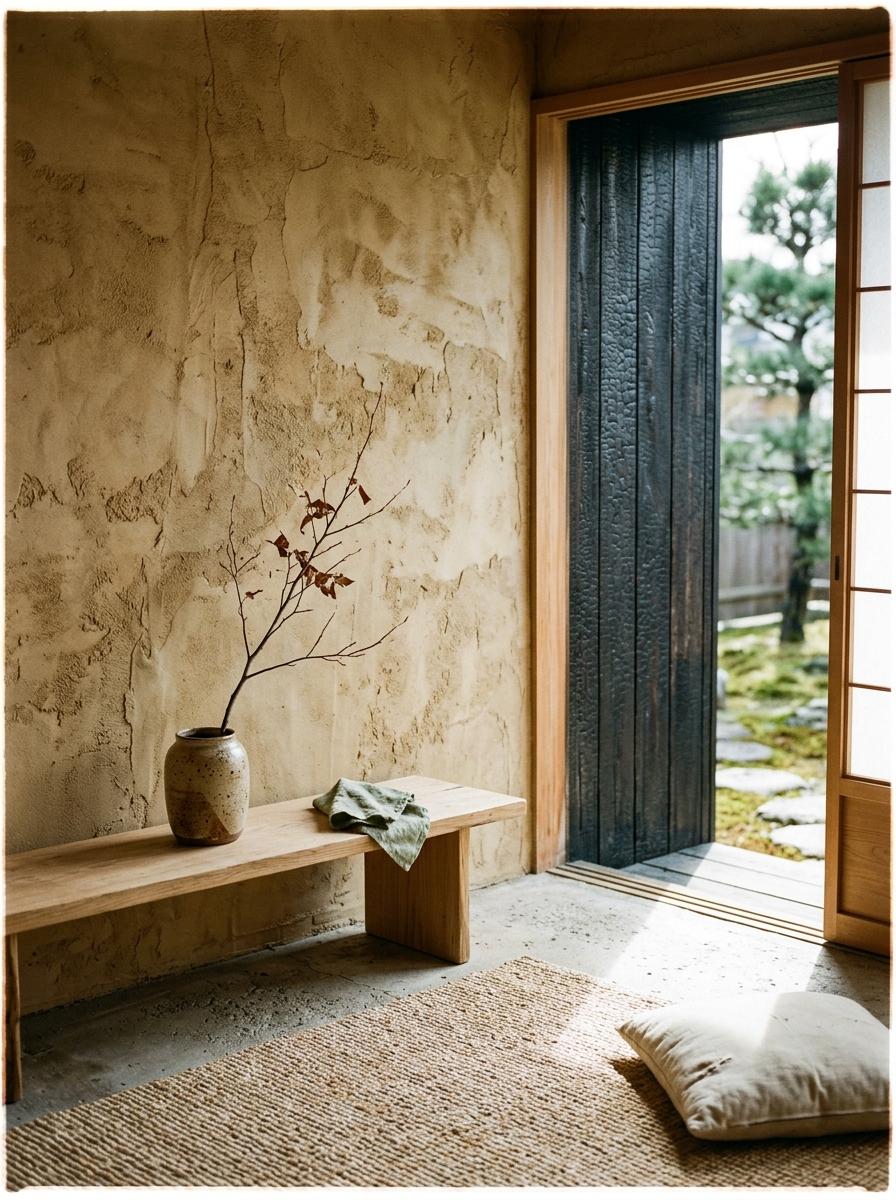

To understand the soul of a contemporary Japandi interior, You can look toward the raw, mineral-driven hues currently defining the Aman Kyoto or the understated villas of Hayama. These are not mere colors, but visceral experiences rooted in the earth. Note how the chalky, desaturated ochre of hand-applied lime wash creates a rugged softness against the grain of charred cedar. This deliberate juxtaposition of the delicate and the industrial forces a sensory shift within the observer; as your eyes trace the tactile, friable surface of a clay-plastered wall, the nervous system begins to recalibrate. The visual weight of these ochre and umber pigments triggers a profound physiological cooling, a lowering of the pulse that transforms a simple living area into a sanctuary of stillness. By grounding the palette in the geological reality of the landscape, the space ceases to be a mere room and becomes a holistic extension of the natural world.
Natural Light Illuminates A Muted Japandi Color Palette
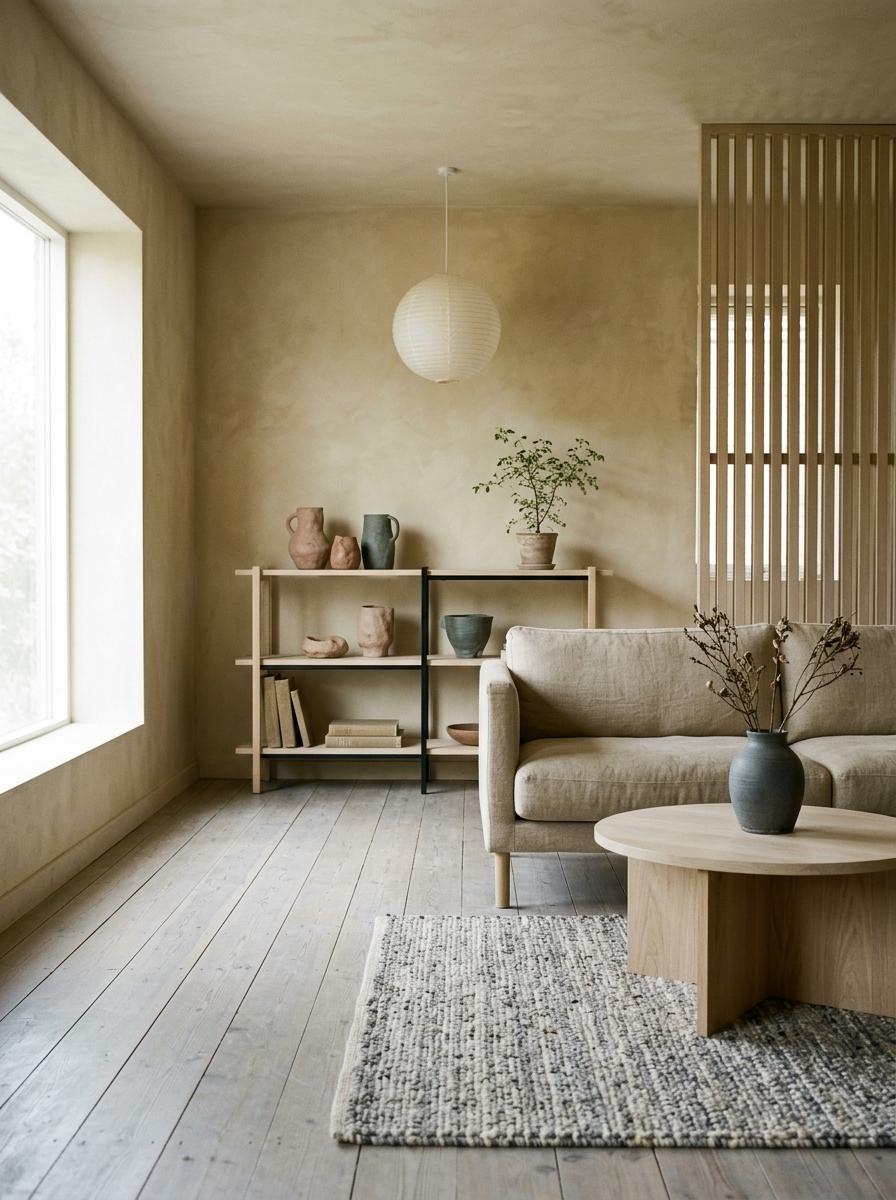

Japandi design emerges as a sophisticated synthesis, where the rustic, weathered honesty of Japanese wabi-sabi converges with the streamlined, functional pragmatism of Scandinavian hygge to create a singular aesthetic of quiet intentionality. This fusion relies on a meticulous dialectical pairing: the palette is rigorously muted, often bordering on the monastic, yet it feels profoundly expansive when activated by the rhythmic interplay of natural light. To achieve this, You must move beyond mere neutrals and embrace niche tonal values-think monochromatic ochres, desaturated umbers, and the silvered grain of bleached timber. When sunlight permeates these spaces, it transforms the atmosphere through a sensorial layering of ethereal, tactile, and grounded textures, ensuring the environment feels architecturally disciplined but emotionally resonant.
Harmony Found Through A Simple Japandi Color Palette
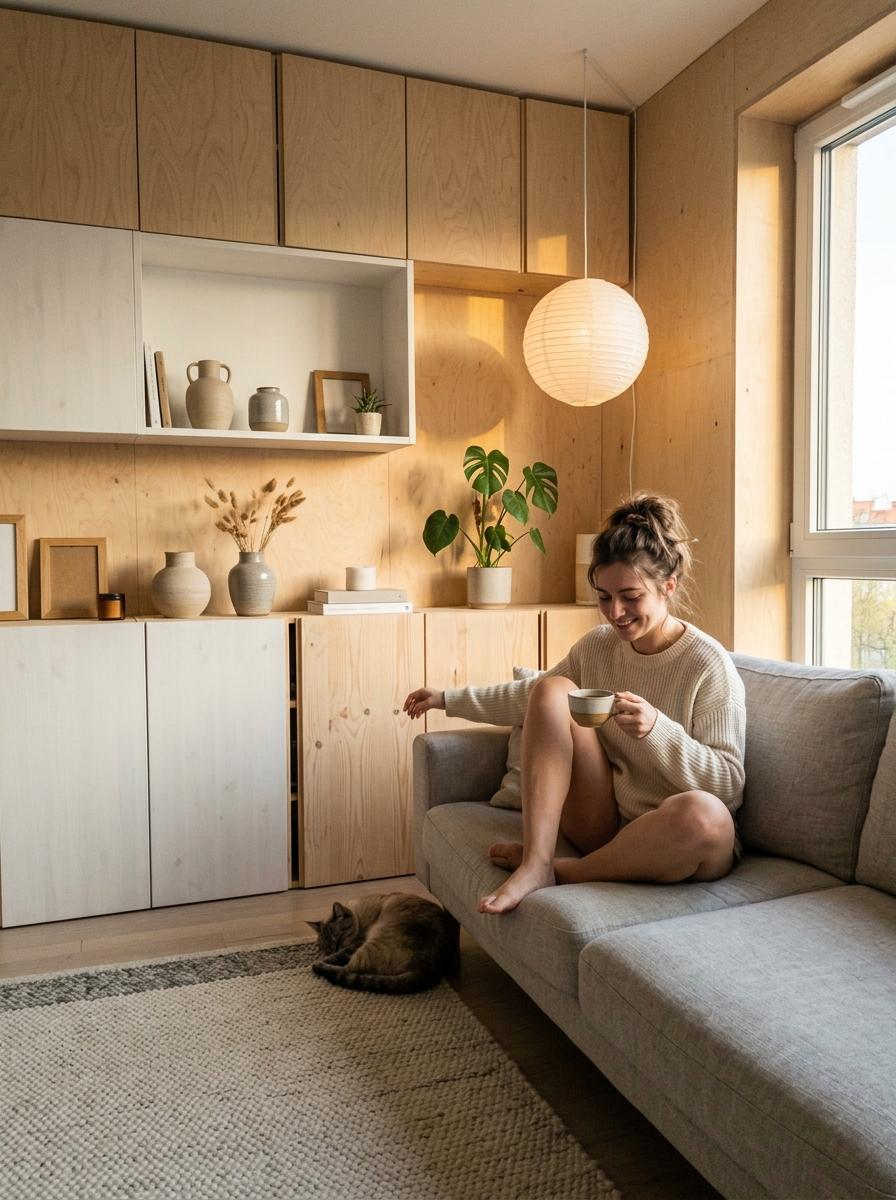

Stepping into a curated Japandi interior, one immediately feels the Atmospheric Grounding of a space where the air seems to settle into a hushed, monochromatic stillness, anchoring the inhabitant within a sanctuary that feels miles away from the kinetic friction of urban life. This serenity is born from a Figurative Paradox, a form of complex simplicity where the reduction of visual noise actually amplifies the emotional resonance of the home. Within these walls, a strict Structural Dualism governs the aesthetic; while the external world remains a chaotic sprawl of neon and steel, the internal environment is a rigorous study in rhythmic restraint and organic cohesion. To achieve this, the palette relies on Material Specificity, utilizing the pale, honeyed warmth of unfinished shina plywood juxtaposed against the cool, porous grit of light-grey Moroccan tadelakt plaster. Ultimately, this color story transcends mere decoration through Functionalist Specification, where the choice of neutral tones serves as a cognitive utility-neutralizing sensory overload to ensure that the architecture functions not just as a shelter, but as a deliberate tool for mental clarity.




Comments