
When the rigorous intentionality of Japanese minimalism converges with the tactile warmth of Scandinavian hygge, the resulting synthesis-Japandi-emerges as a masterclass in functional serenity. This design vernacular demands a meticulous dialectic between sparse, geometric precision and an organic, lived-in softness; it is a space that remains unapologetically disciplined, yet profoundly restorative. To curate a Japandi workspace is to reject the sterile artifice of the corporate cubicle in favor of an environment that is haptic, visceral, and contemplative. By layering raw timber textures against a monochromatic silhouette, we cultivate a workspace that transcends mere utility to become a sanctuary of cognitive clarity.
Japandi Office Ideas
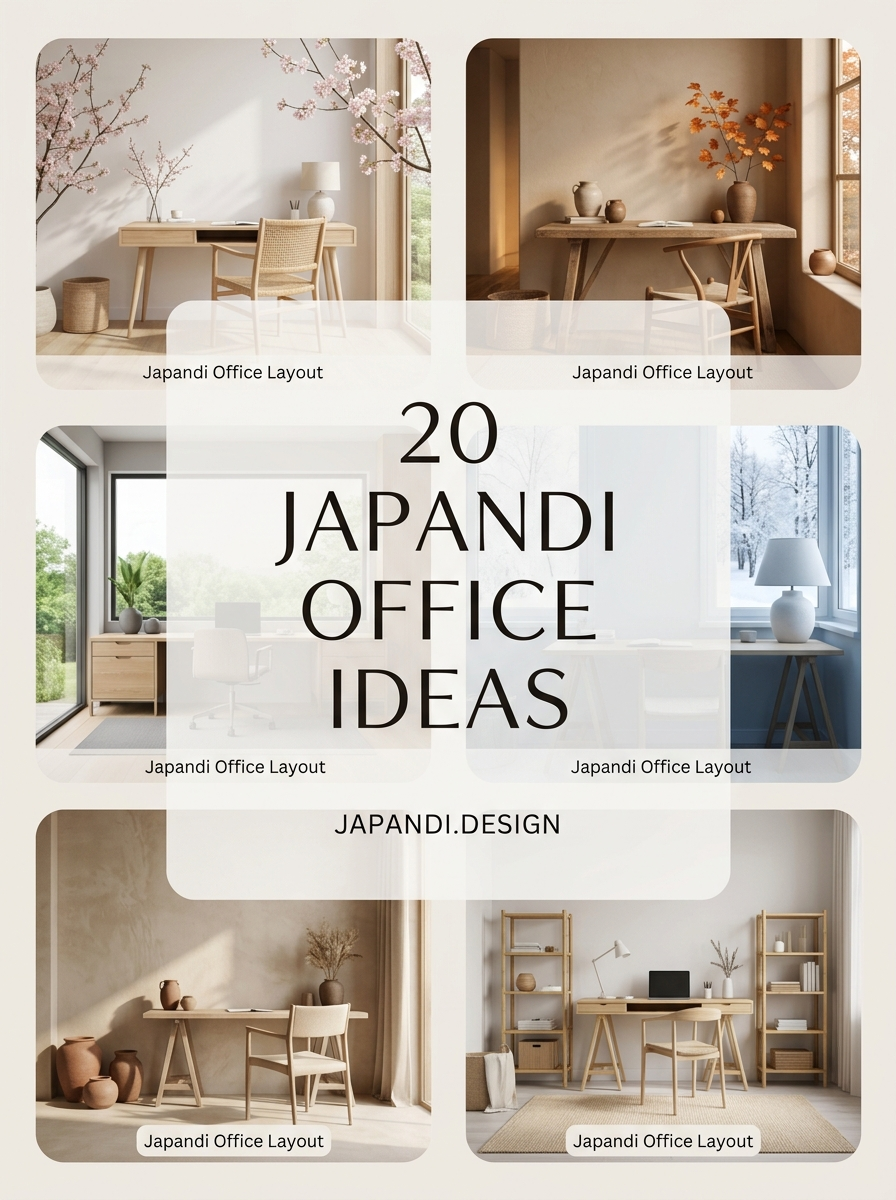

Minimalist Japandi Office Setup For Productive Workdays
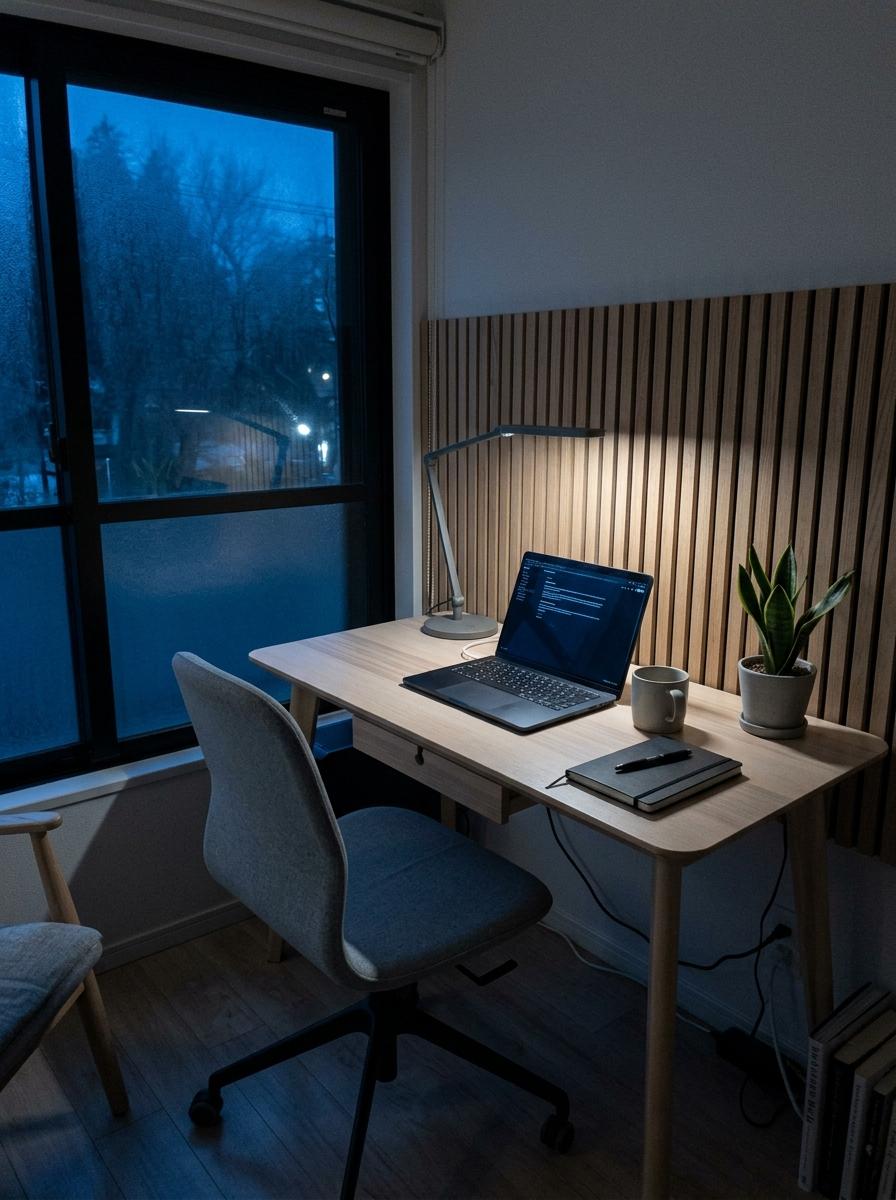

Creating a productive workspace requires more than just a desk and a chair; it requires a deliberate balance of heritage and innovation. At Japandi.design, we've observed how the rigid, compartmentalized cubicles of the 1990s-once the global standard for corporate efficiency-have evolved into today's fluid, intentional home sanctuaries where the boundaries between professional duty and personal peace have blurred. This evolution has birthed a unique structured spontaneity, a design philosophy that allows for creative freedom within a framework of strict organization. In a recent study of a private residence nestled in the leafy streets of Tokyo's Daikanyama neighborhood, we analyzed a workspace belonging to a repeat client who sought a deeper integration of form and function. This continued collaboration allowed for a nuanced understanding of their workflow, proving that the most effective environments are built on long-term trust and spatial refinement. The resulting setup achieves a high-performance atmosphere through a precise technical synthesis of biophilic lighting, acoustic dampening via slatted oak paneling, and a monochromatic palette that anchors the mind and eliminates visual noise.
A Functional Workspace Featuring Classic Japandi Style Elements
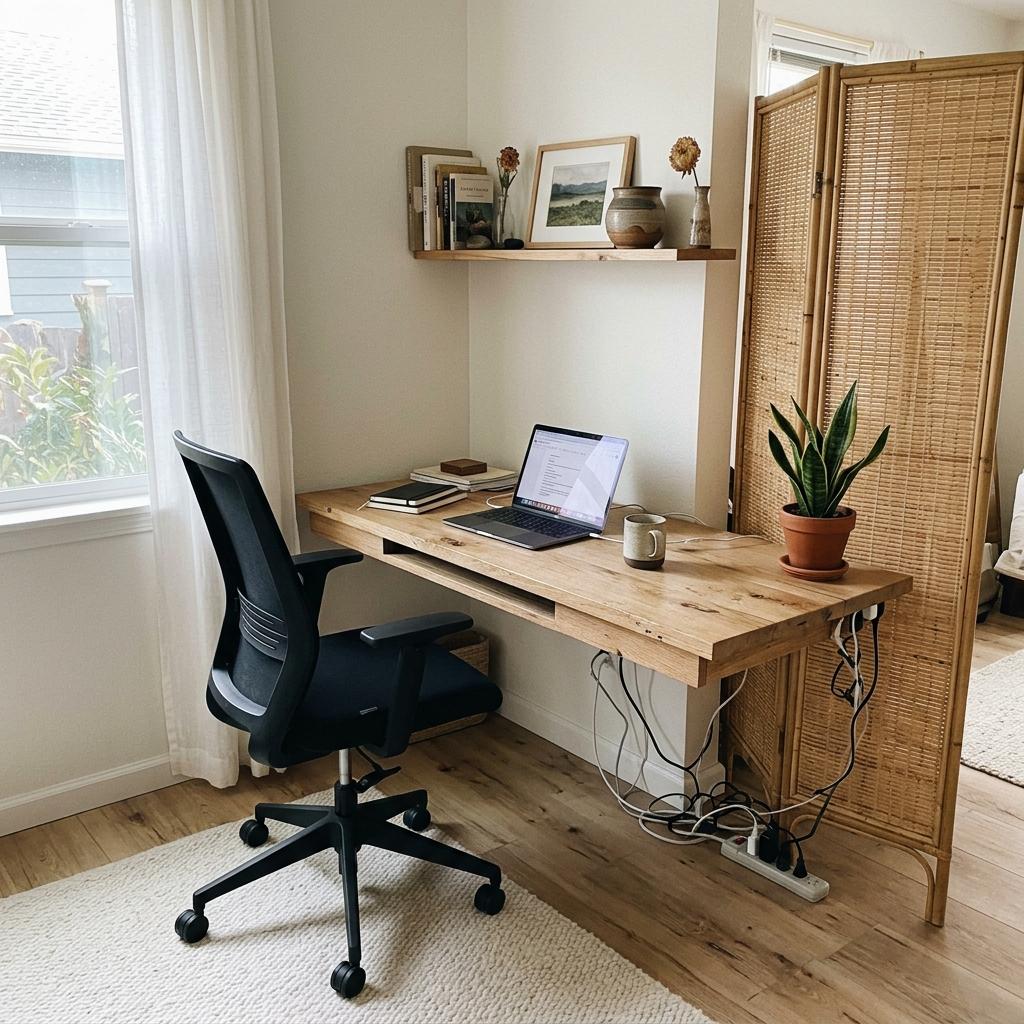

The home office is no longer a peripheral annex but a dedicated sanctuary nestled within the quietest corner of the dwelling, where the atmosphere is thick with the scent of Hinoki wood and filtered morning light. Within this space, the design achieves a complex simplicity, where the rigorous minimalism of Zen philosophy reconciles with the demanding clutter of modern productivity. While the external world remains a chaotic sprawl of visual noise, the internal environment is governed by a rhythmic precision that isolates the occupant in a vacuum of focus. This intentional stillness is grounded by a cantilevered desk crafted from reclaimed white oak, its grain tactile and raw against the velvet-smooth matte black of an ergonomic task chair. To resolve the friction between domestic comfort and professional necessity, integrated cable management channels and recessed ambient LED strips are woven into the joinery, ensuring that every industrial utility is masked by a veil of serene, organic continuity.
Walk Through A Light Filled Apartment With A Japandi Office
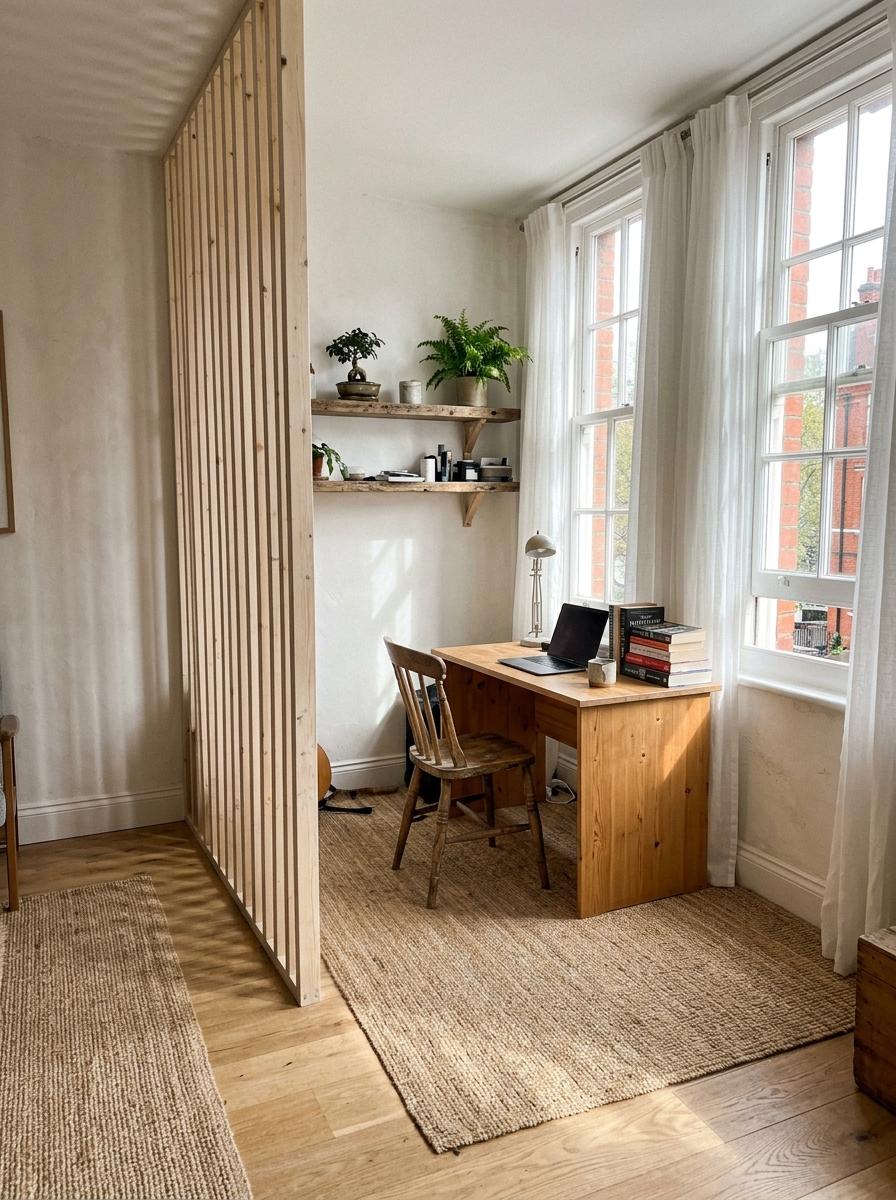

This light-filled apartment represents a profound evolution of space, where the rigid, compartmentalized floor plans of the mid-century have been systematically dismantled to make way for the fluid, breathable volumes of the present. Situated within the historic architectural fabric of London's Marylebone, the home thrives on a sense of ordered chaos-a stylistic tension where the raw, organic textures of Japanese wabi-sabi meet the precise, clinical functionality of Scandinavian modernism. This project marks a significant milestone for the design team, as the owners are repeat clients whose long-standing trust allowed for an uncompromising exploration of the Japandi aesthetic, particularly within the dedicated home office. The final result is a masterclass in technical synthesis, achieved through the strategic use of axial alignment, rhythmic timber screening, and a calibrated palette of reflective surfaces to pull natural light into the deepest corners of the plan.
The Essential Elements Of A Modern Japandi Workspace
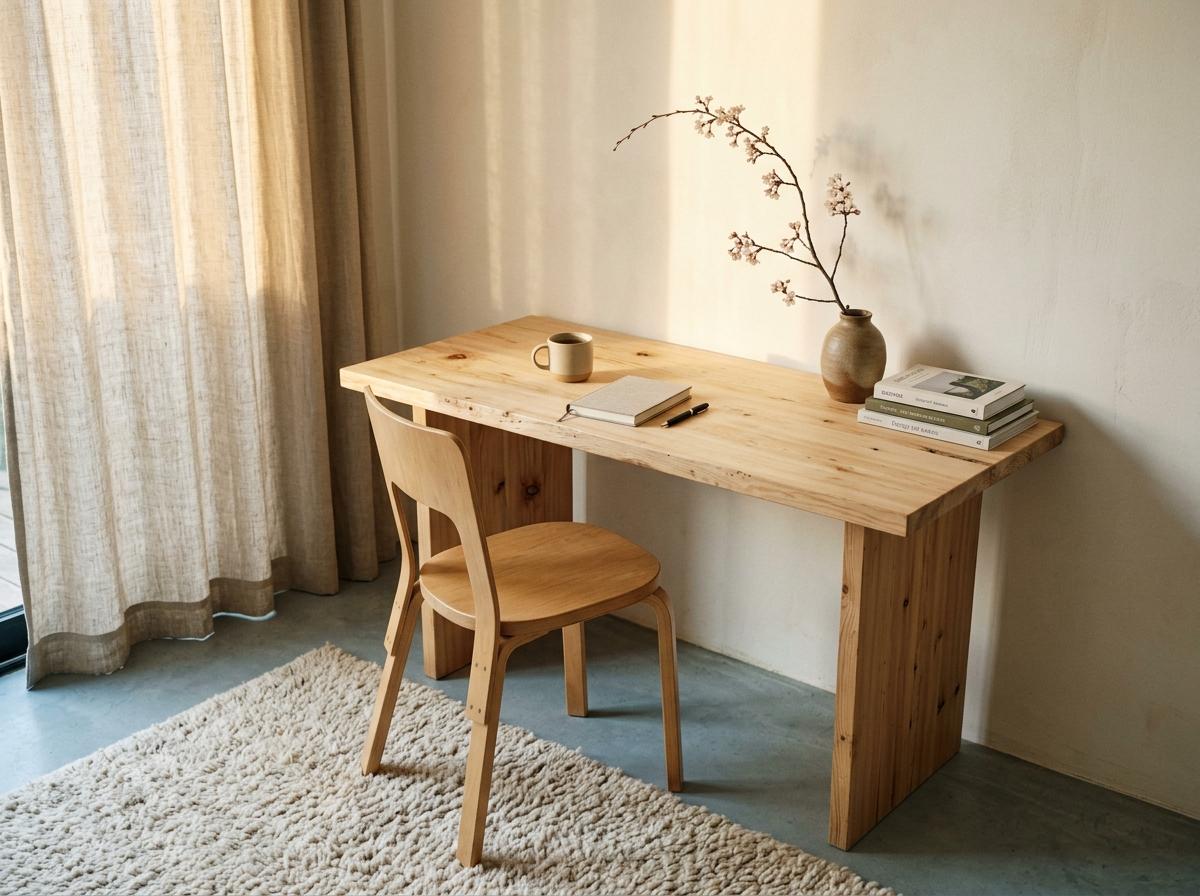

To curate a modern Japandi workspace, You need to look beyond mere furniture and toward the tactile synergy of geography and craft. Begin with the desk-a centerpiece of open-pore solid ash or fibrous, hand-planed Hinoki cypress. Note how the rigorous, linear silhouettes of Scandinavian functionalism intersect with the intentional imperfections of Japanese wabi-sabi. This design language thrives on a structured spontaneity; it is an organized chaos where every grain of wood feels both mathematically precise and wildly organic. As you inhabit the space, the calcified coolness of a concrete floor meets the downy, high-pile warmth of a wool rug, triggering a profound physiological shift. You will feel your pulse decelerate as the "visual noise" of the outside world is muted by the room's acoustic softness. To achieve this atmospheric equilibrium, draw inspiration from the Kyoto-meets-Copenhagen aesthetic championed by the Audo House or the Karimoku Case Study collections. By anchoring your office in these specific cultural intersections, the workspace ceases to be a site of labor and becomes a sanctuary of calm productivity, where the air feels lighter and the mind feels singularly unburdened.
Inside A Professional Studio With Minimalist Japandi Design
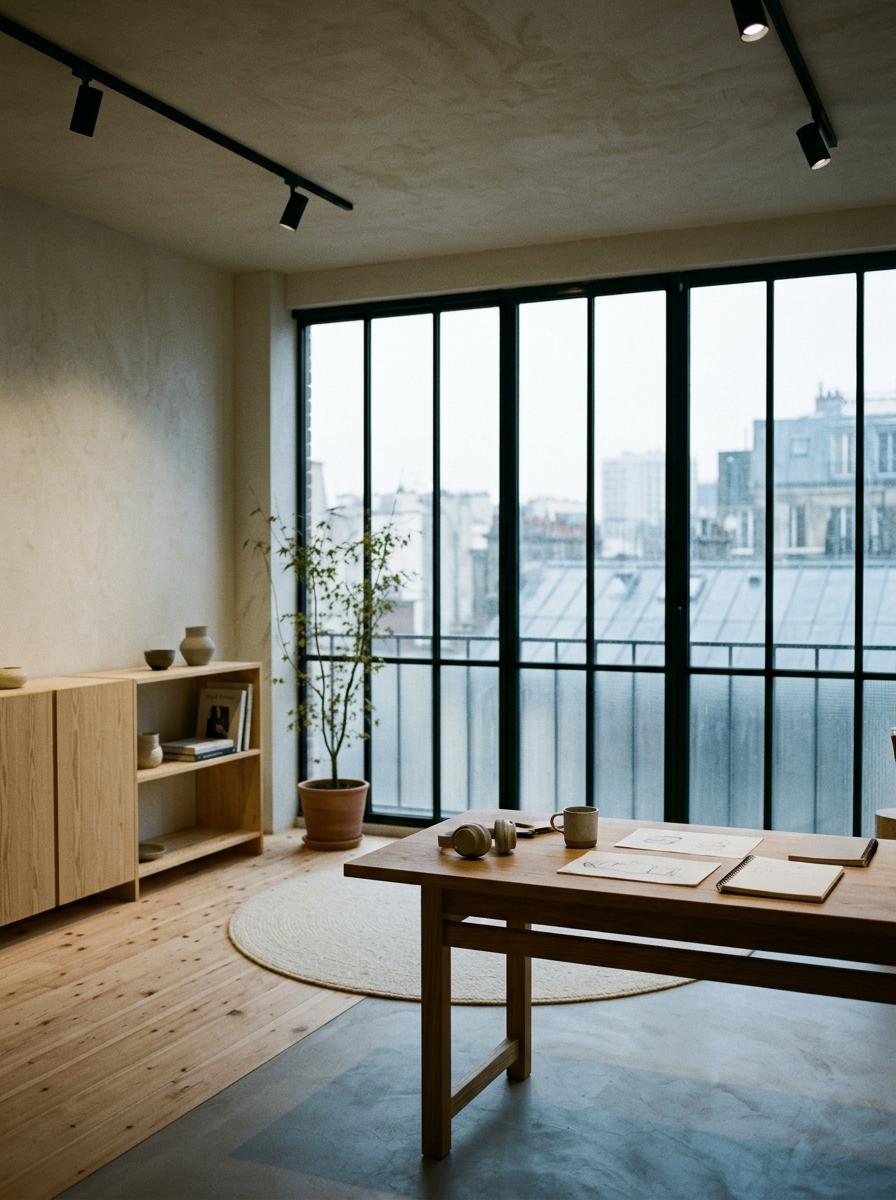

Stepping into this workspace, the air seems to settle into a quiet stillness, filtered through the tall, narrow apertures of a converted industrial loft where the frantic pulse of the city is muted by a pervasive, intentional calm. It is a space defined by a structured fluidity, where the rigid discipline of a professional environment dissolves into the soft, organic warmth of a private sanctuary. While the external world outside the glass vibrates with a chaotic, metallic grey, the interior recalibrates the senses through a profound silence, manifesting a sharp boundary between urban exhaustion and creative clarity. Underfoot, the raw texture of reclaimed Hinoki cypress planks meets the cool, matte expanse of micro-cement, a tactile dialogue between ancient timber and modern earth. Every element serves a purpose beyond aesthetics; recessed blackened-steel track lighting and modular ash-wood cabinetry are integrated not as mere decor, but as high-performance ergonomic solutions that transform a minimalist void into a machine for focused, contemplative labor.
Transform Your Spare Room Into A Japandi Office Retreat
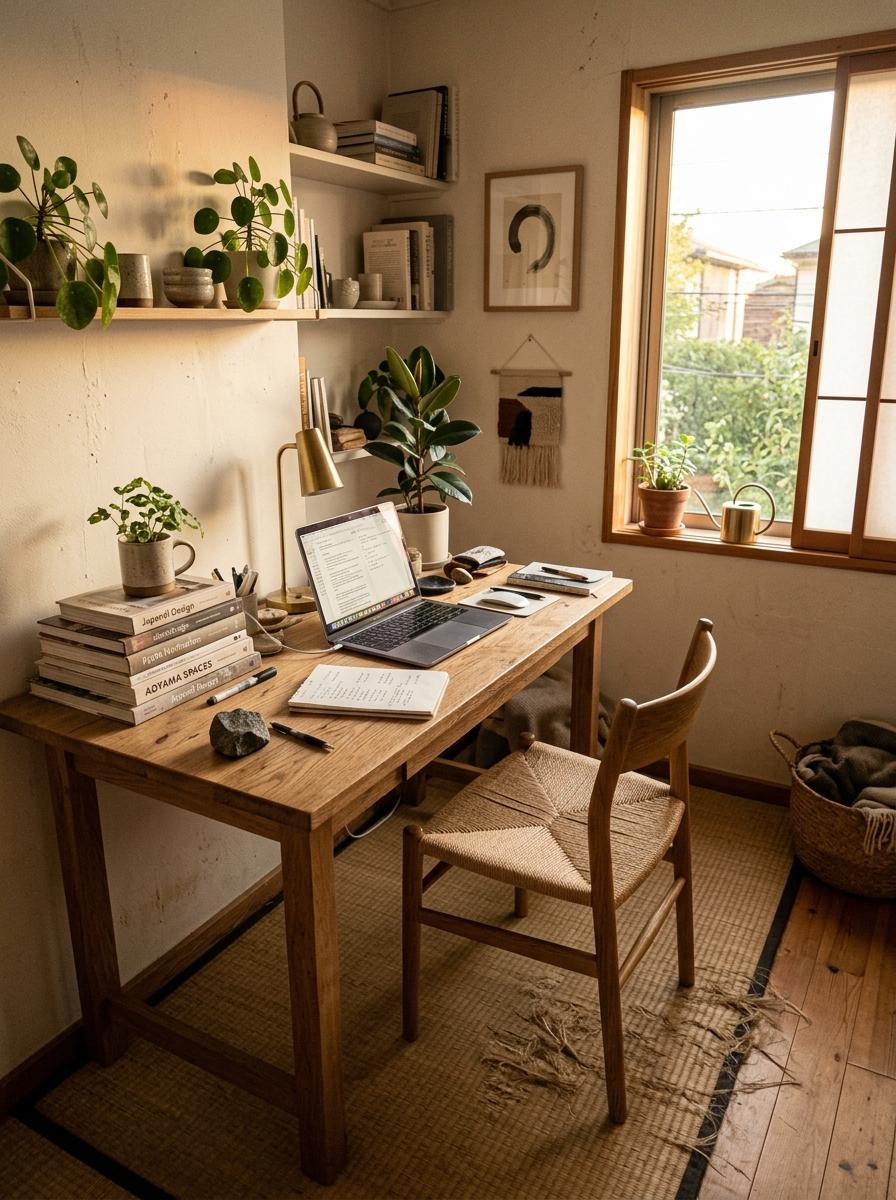

To begin your transformation, prioritize the tactile honesty of scandi-industrial materials-specifically the open-grain texture of solid white oak paired with the fibrous, matte finish of hand-woven tatami mats. Note how the intentional clutter of a curated desk setup creates a sense of organized chaos, allowing the mind to find focus within a structured mess. As you run your hand over the satiny, cool surface of a stone paperweight, your heart rate slows, shifting your body from the frantic hum of a workday into a state of alert tranquility. By adopting the Kyoto-minimalism often found in the boutique workspaces of Aoyama, you aren't just renovating a spare room; you are engineering a physiological sanctuary where the air feels lighter and the silence feels profound.
Small Space Solutions For A Minimalist Japandi Desk Area
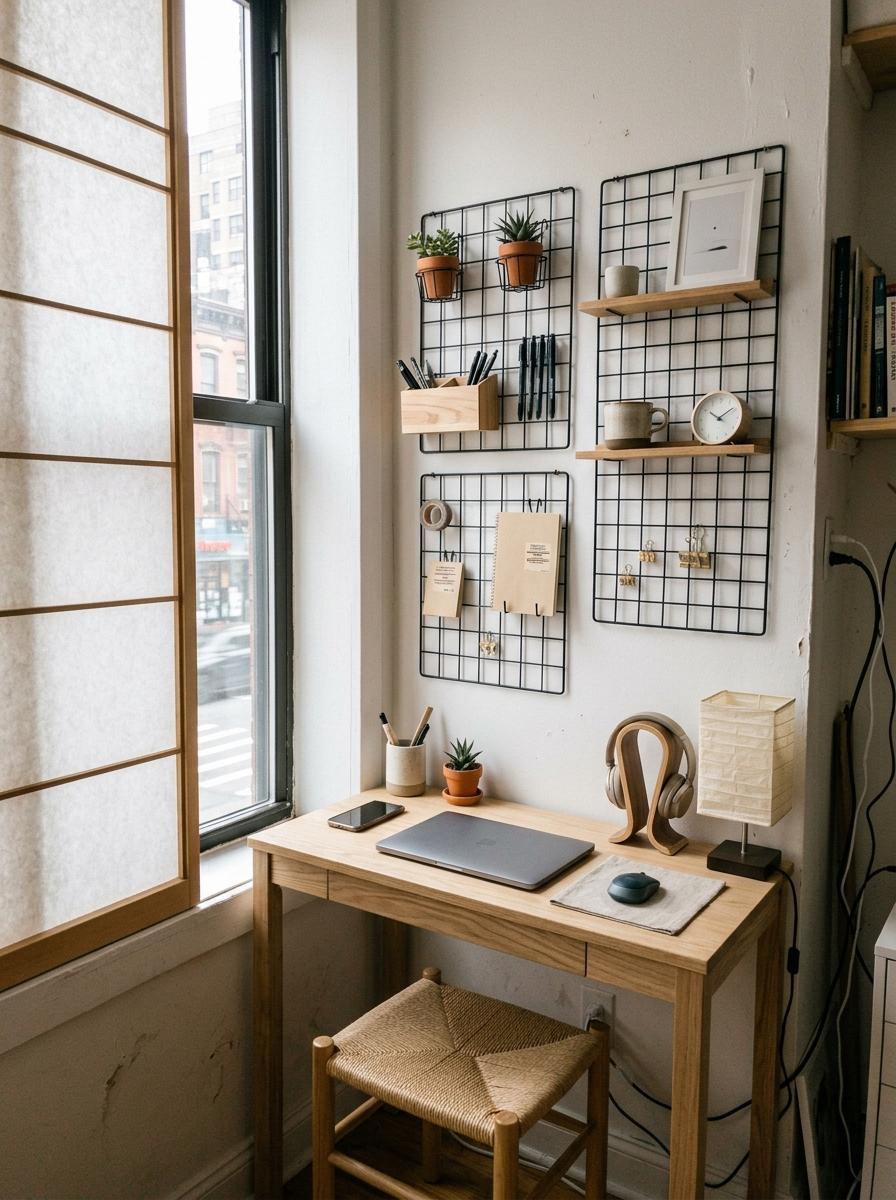

In the corner of a compact city apartment, where the footprint of daily life is measured in mere inches, the desk area becomes an island of intentionality amidst the urban rush. This space thrives on the clutter-free density of Japandi design-a state where a multitude of functions are compressed into a singular, breathable point of focus. While the external world outside the window remains a cacophony of movement and visual noise, the internal landscape of the workstation is a sanctuary of profound stillness. The tactile reality of the setup is defined by a slender console of unfinished light oak, paired with a textured rice-paper shoji screen that diffuses harsh light into a soft glow. To solve the problem of limited square footage, the integration of matte black steel wall-grids provides a vertical storage solution, ensuring that every tool remains accessible yet elevated, transforming a cramped niche into a disciplined study of spatial efficiency.
Glimpse A Fashionable Professional Space With Japandi Aesthetic
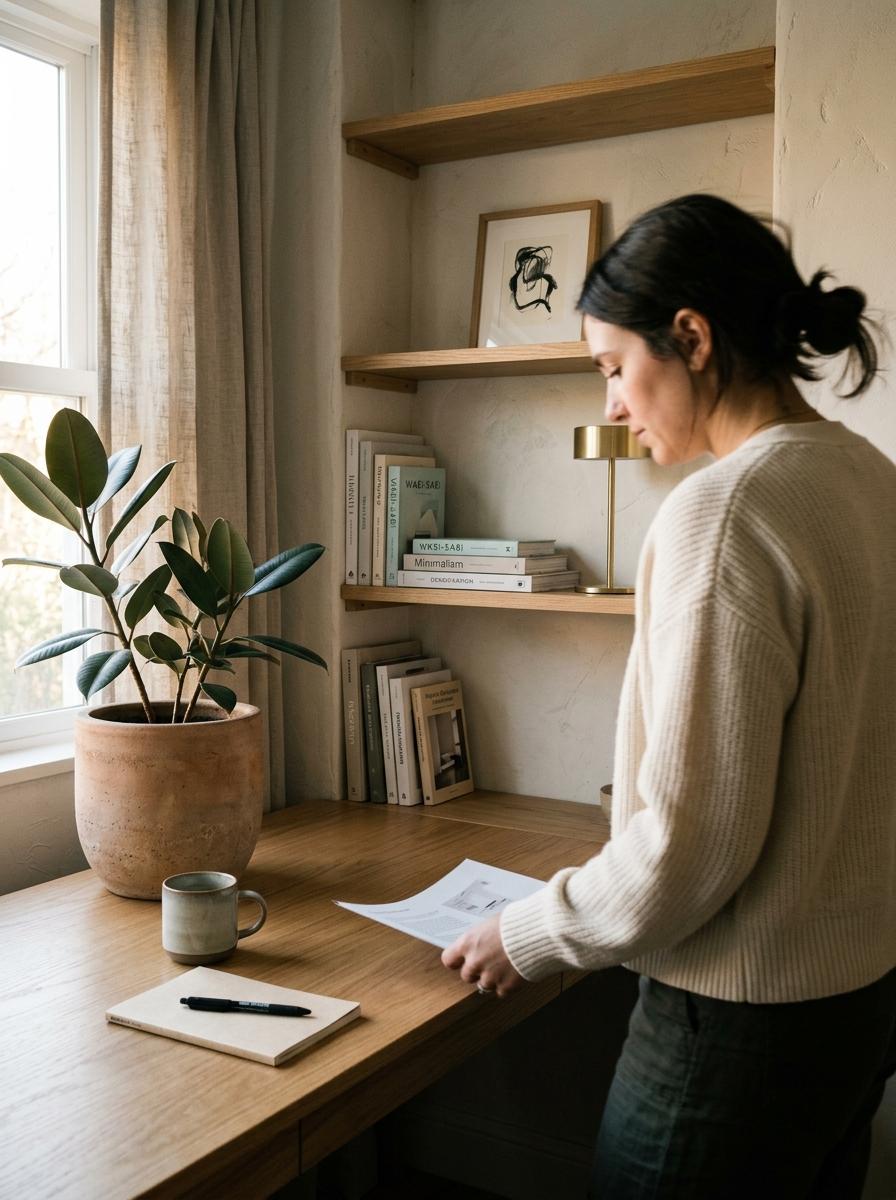

At its core, the Japandi aesthetic emerges from a rigorous synthesis of Scandinavian hygge and Japanese wabi-sabi, merging Nordic functionalism with the transcendent impermanence of Eastern philosophy to create a singular, elevated vernacular. This design language thrives on a dialectical tension: the silhouette is strictly minimalist, yet the atmosphere is profoundly soulful; the spatial planning is unapologetically disciplined, but the tactile experience remains organic and inviting. In the context of a professional workspace, this translates into an environment defined by ethereal, haptic, and grounded materiality. By integrating the refined precision of mid-century joinery with a muted, earthen palette, the office is transformed from a mere site of productivity into a curated sanctuary of quietude and intellectual clarity.
The Art Of Organizing A Productive Japandi Office Space
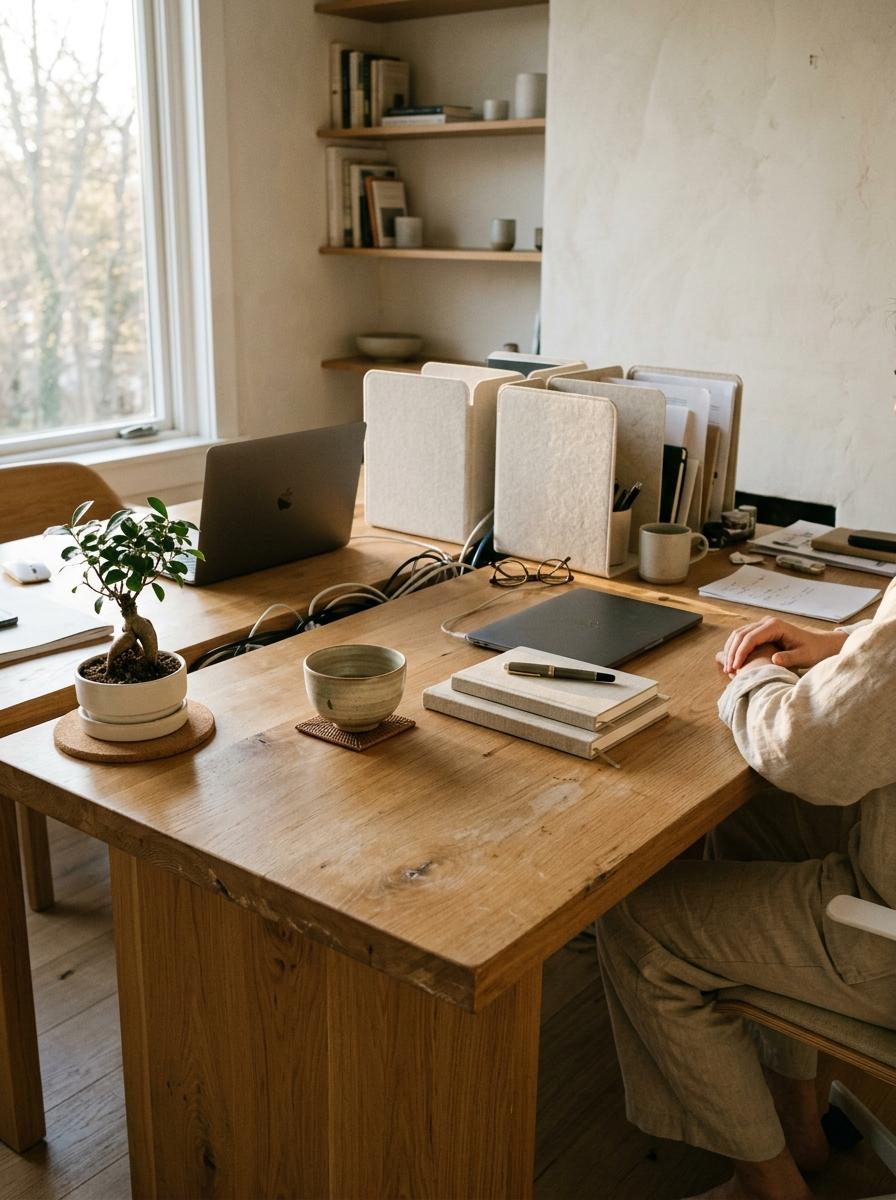

The Japandi workspace begins with Atmospheric Grounding, anchoring the psyche within a monastic perimeter of soft light and silent textures that transform a mere room into a sanctuary of focused intent. Within this shell exists a Figurative Paradox, where the "disciplined fluidness" of the layout allows for a rigorous workflow to thrive amidst an atmosphere of total relaxation. This serenity is maintained through a strict Structural Dualism, which draws a hard line between the chaotic noise of the digital world and the tactile stillness of the physical desktop. On this surface, Material Specificity takes center stage; one's fingers trace the open-pored grain of a solid white oak desk-sanded to a velvet finish-contrasting against the cool, unglazed ceramic of a Japanese tea bowl. Finally, this aesthetic harmony meets Functionalist Specification through the integration of hidden cable management tracks and modular felt dividers, industrial solutions that ensure the beauty of the void is never compromised by the clutter of necessity.
Incorporating Natural Wood Into A Modern Japandi Office Design
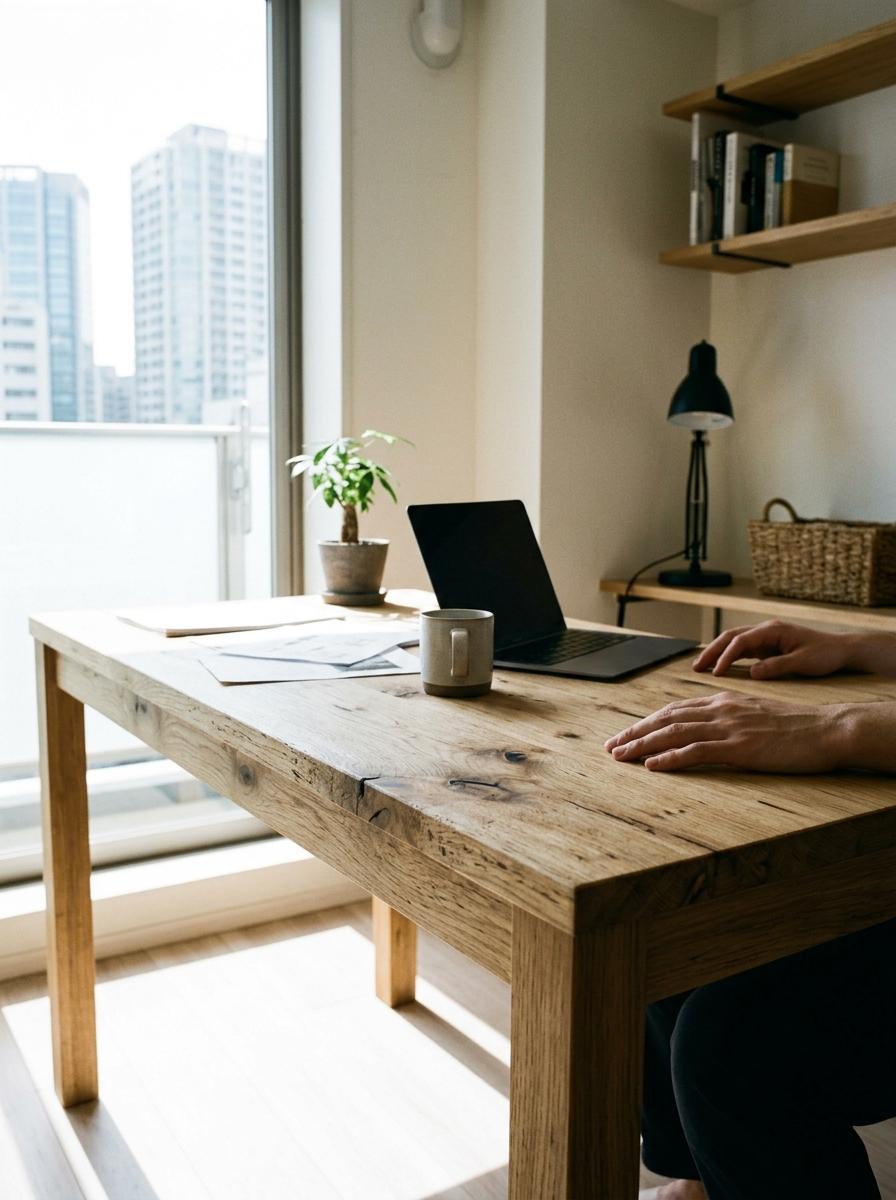

To achieve a workspace that balances productivity with profound stillness, You need to prioritize the tactile integrity of the environment. Note how the desk-crafted from reclaimed Hokkaido Oak-features a raw-satin finish that preserves the wood's open-pore structure, inviting a sensory dialogue between the user and the grain. This centerpiece embodies a complex simplicity; while the silhouette remains strictly geometric and minimalist, the wood's variegated knots and honeyed cathedrals provide a rich, organic visual density. As your hands rest upon the cool, fibrous surface, the initial chill of the wood gives way to a radiating warmth, triggering a localized parasympathetic response that lowers the heart rate and anchors the mind. In this curated setting, reminiscent of the executive suites in Tokyo's Marunouchi district, the natural material acts not merely as furniture, but as a biological stabilizer against the digital fatigue of modern work.
A Quiet Corner For Focused Work In A Japandi Office
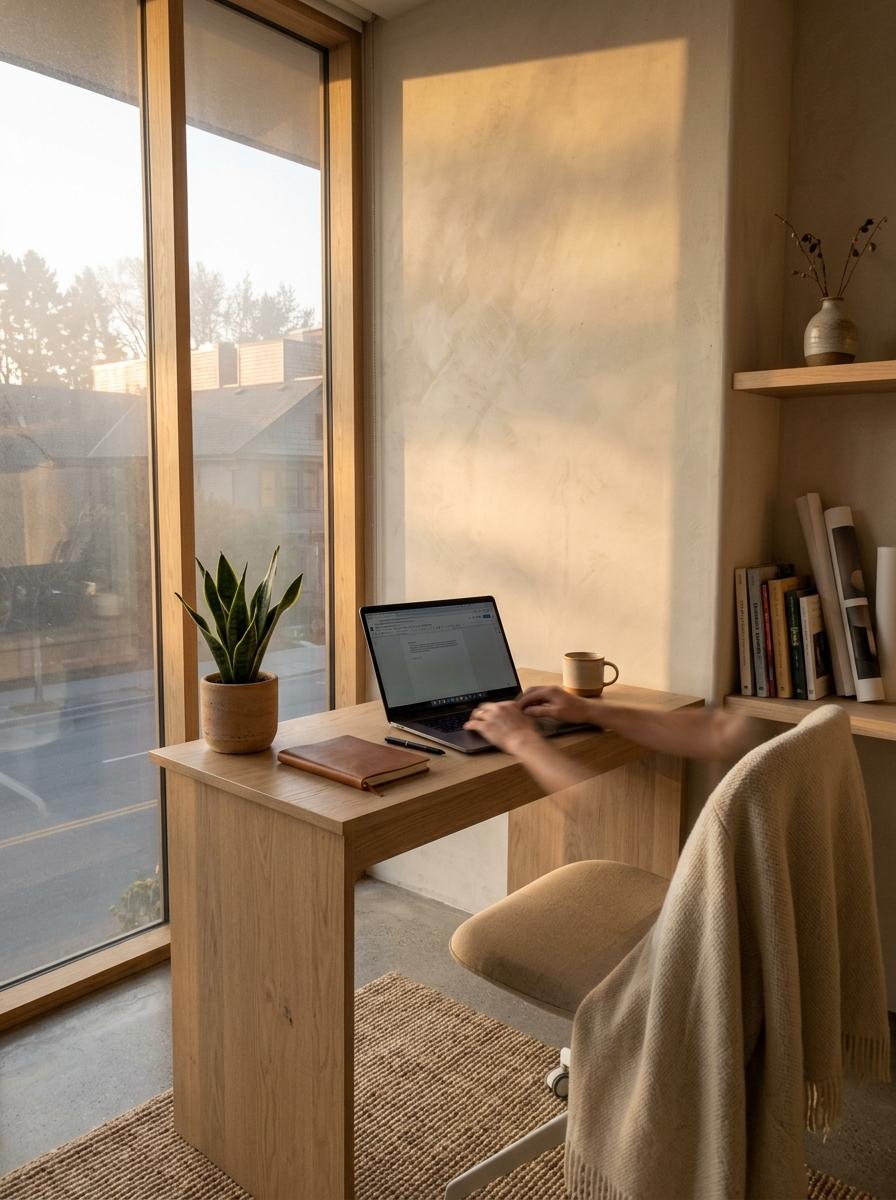

At the core of the modern workspace, the Japandi aesthetic emerges through the synthesis of Scandinavian hygge-that intentional embrace of cozy intimacy-and the Japanese principle of wabi-sabi, which honors the transcendent beauty found in imperfection and transience. This fusion creates a high-performance sanctuary that demands cognitive clarity; the environment is rigorously minimalist in its spatial configuration, yet profoundly tactile and nourishing in its materiality. By integrating low-profile, ergonomic silhouettes with a palette of desaturated earth tones, the office becomes a site of "monastic productivity"-a space that feels architecturally disciplined but remains atmospherically soft. The result is a quiet corner characterized by an ethereal, grounded, and hushed serenity, where the friction of the outside world dissolves into a focused, rhythmic stillness.
Achieve Peak Performance In A Japandi Inspired Workspace
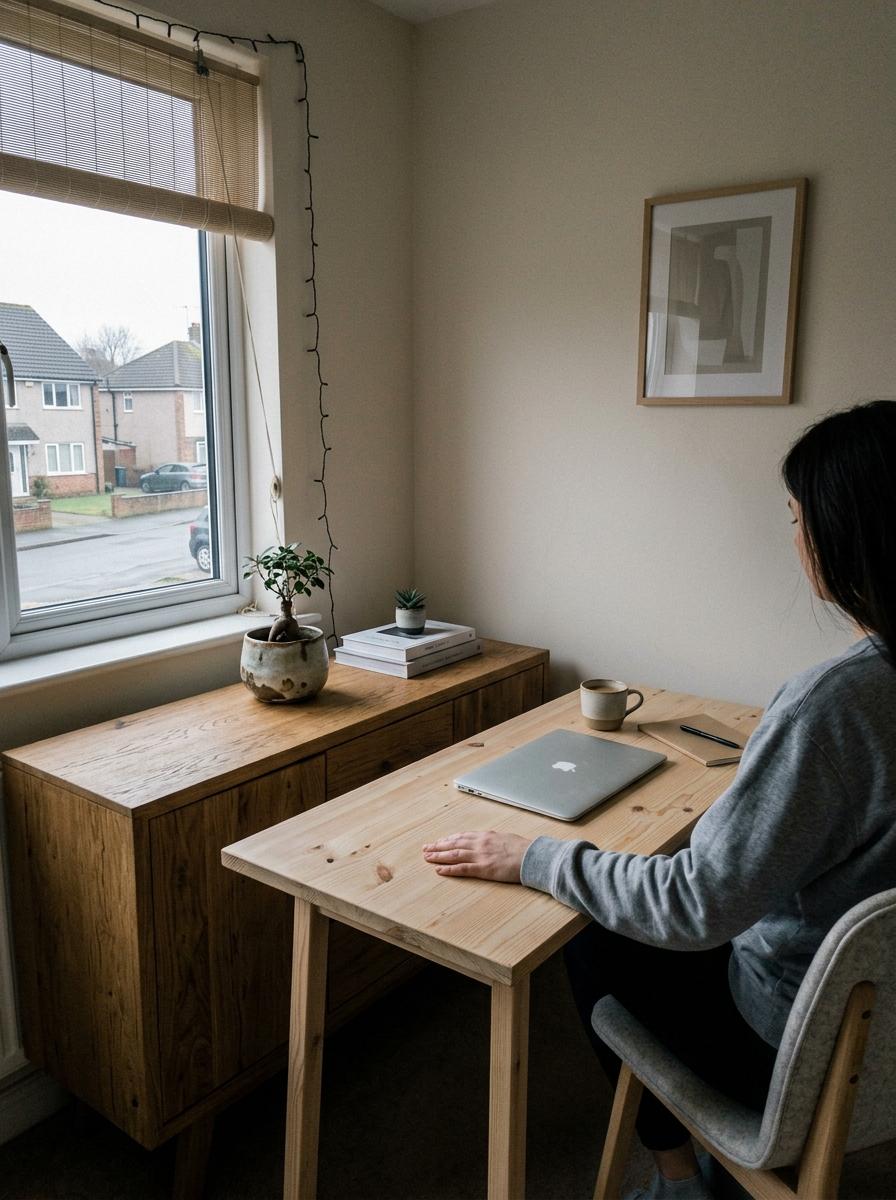

To achieve peak performance in a home office, we must move beyond mere decoration and embrace the deliberate structural harmony of the Japandi aesthetic. Note how the placement of a low-slung, honey-hued sideboard in fibrous solid oak anchors the room, creating a visual weight that stabilizes the wandering mind. This design philosophy thrives on the ordered chaos of organic minimalism-where the sharp, disciplined geometry of a Scandinavian desk meets the wabi-sabi imperfection of a hand-thrown ceramic vessel. As you run your palm across the cool, open-pore grain of an untreated timber surface, the tactile feedback triggers an immediate physiological shift; your heart rate decelerates, and the frantic "fight or flight" cortisol spike of a workday dissolves into a state of rhythmic, focused flow. Much like the serene yet rigorous atmosphere found within the Aman Kyoto or the quiet intensity of a Stockholm design studio, your workspace becomes a cathedral of productivity where the air feels lighter and the silence feels earned.
Minimalist Furniture For The Perfect Japandi Office Setup
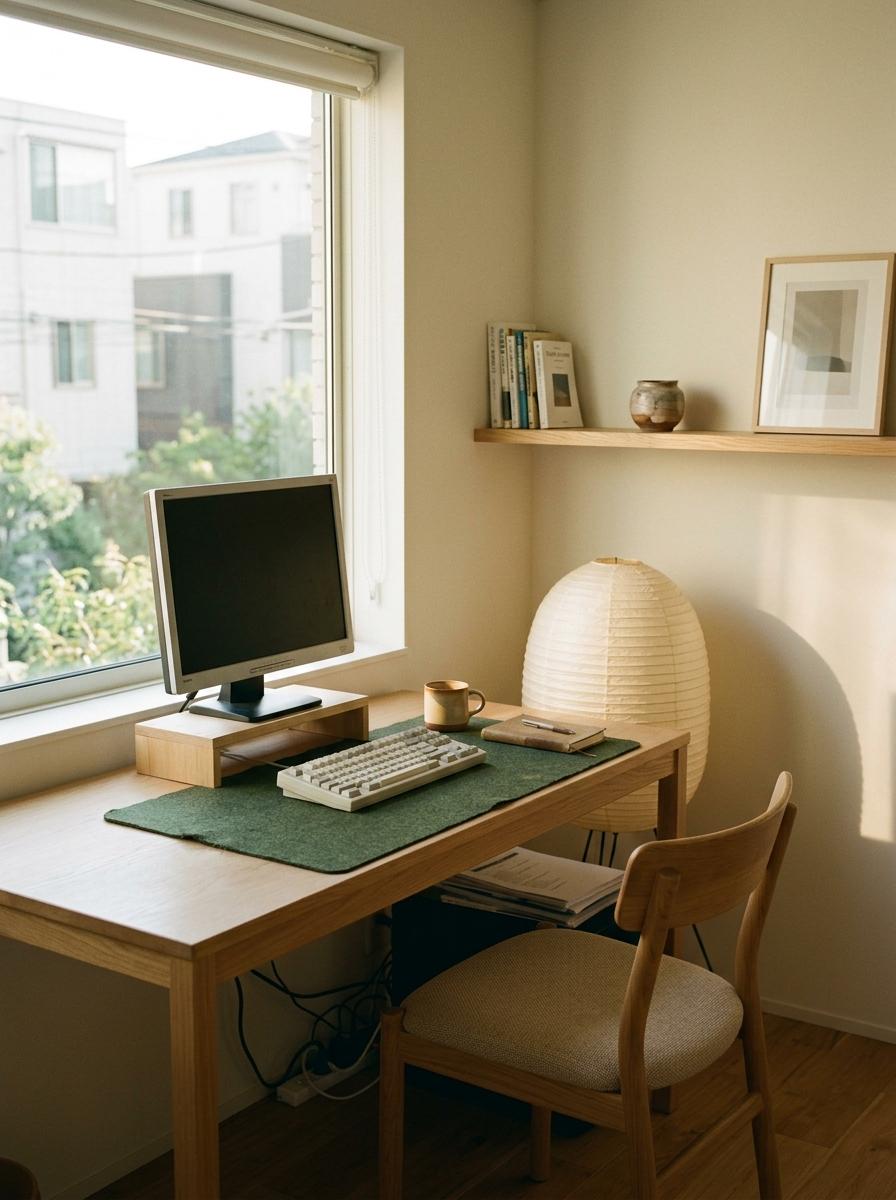

To understand the modern Japandi workspace, You can first look back at the rigid, mahogany-clad executive suites of the mid-century-environments built for status and hierarchy-and compare them to today's fluid, essentialist sanctuaries where the boundary between labor and life has dissolved. This evolution has birthed a unique cluttered emptiness, a deliberate design tension where every minimalist object carries the weight of both function and spirit. In a recent study of a private residence in Tokyo's sophisticated Aoyama district, I observed how this balance manifests in practice. The project was commissioned by a repeat client of a leading Tokyo studio, a detail that speaks to a deepening trust in the minimalist philosophy rather than a fleeting aesthetic trend. Ultimately, the success of this office setup is found in a rigorous technical synthesis of tactile materiality and spatial economy, where the warmth of Japanese oak meets the industrial precision of Scandinavian form to catalyze deep focus.
Light And Airy Japandi Office Decor For Remote Professionals
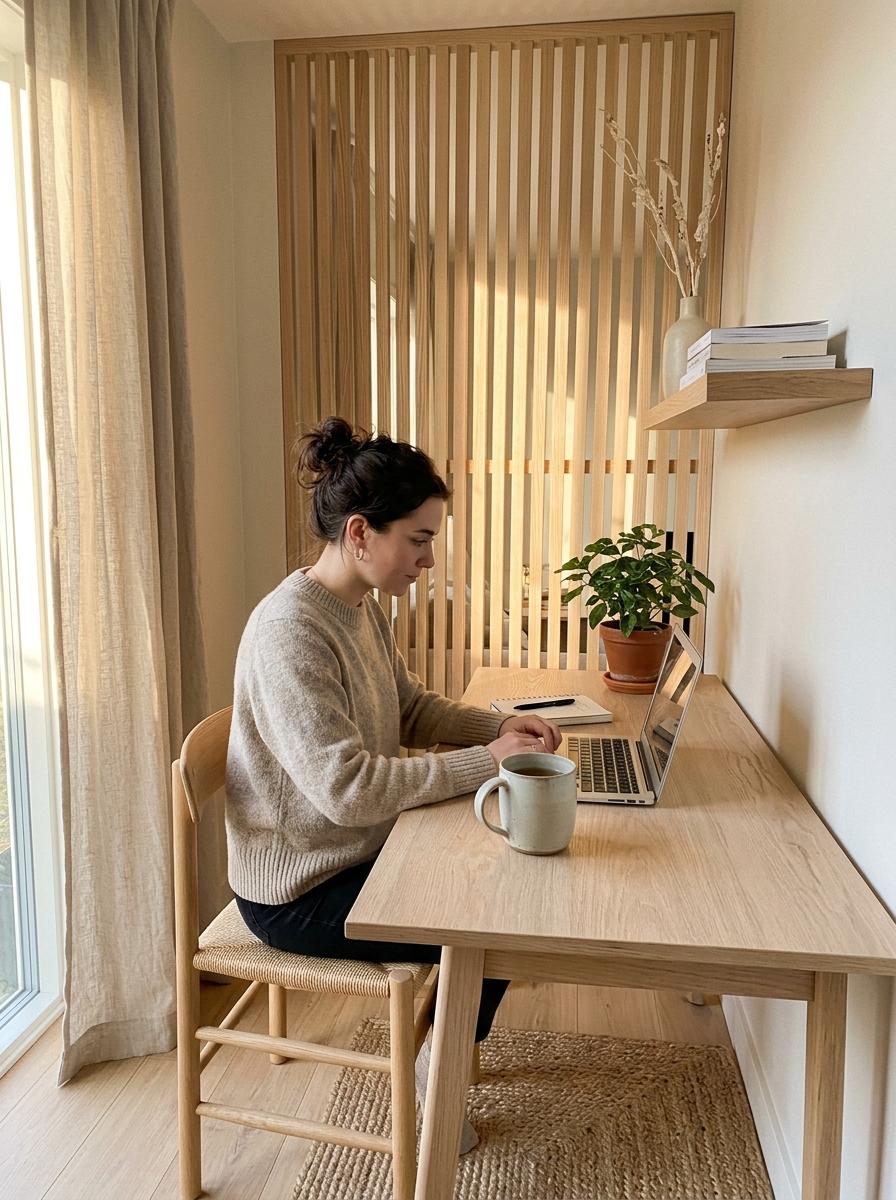

In the quiet corners of the contemporary dwelling, the remote workspace has evolved from a temporary nook into a curated sanctuary where the austerity of Tokyo meets the warmth of Copenhagen. This "minimalist abundance" defines the Japandi study, a space that feels intellectually expansive yet physically contained, harmonizing the chaotic demands of the digital cloud with the stillness of the solid earth. While the external world pulses with frantic, uncoordinated energy, the internal environment remains governed by a disciplined tranquility, drawing a sharp line between professional urgency and domestic peace. This atmospheric balance is anchored in tactile honesty-think the pale, open-grained texture of untreated white oak paired against the raw, matte imperfections of hand-thrown ceramic vessels. Every element serves a dual purpose: a slatted ash wood privacy screen does not merely divide a room but acts as a functionalist light filter, diffusing harsh sunbeams into a soft, rhythmic glow that mitigates screen fatigue and anchors the professional spirit.
Balancing Function And Form In A Professional Japandi Office
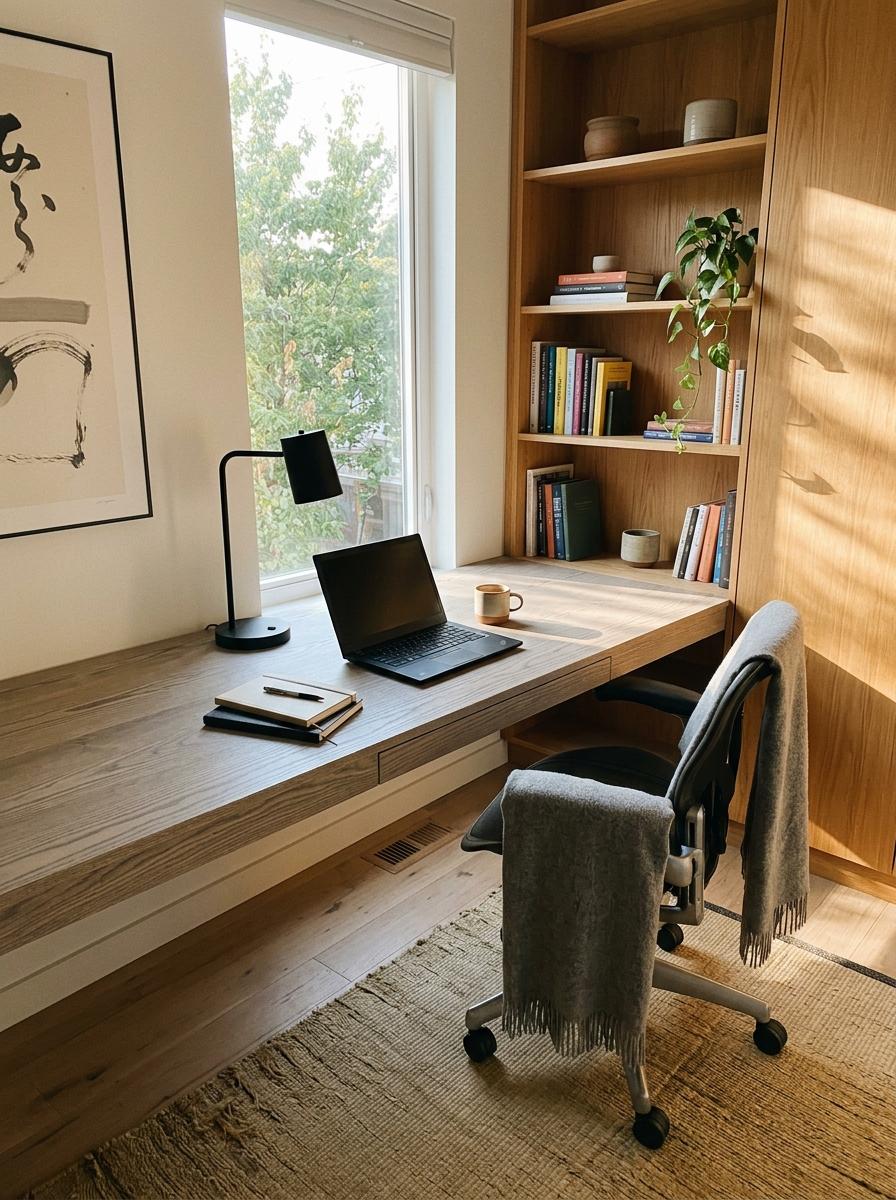

To achieve a workspace that fosters both productivity and serenity, You need to look toward the deliberate synthesis of Scandinavian pragmatism and Japanese minimalism. In a professional Japandi setting, the choice of materials dictates the psychological rhythm of the workday. Note how the juxtaposition of a desaturated, open-grained ash desk against the tactile, fibrous irregularities of a hand-loomed tatami rug creates a visual dialogue between structural rigidity and organic softness. This design philosophy thrives on a structured fluidity, where the clinical precision of high-end office ergonomics meets the untamed soul of natural materials. As your eyes move from the matte, obsidian-finished steel of a minimalist task lamp to the porous, honey-hued warmth of a solid oak shelving unit, a physiological shift occurs; the frantic cortisol of a looming deadline gives way to a rhythmic, diaphragmatic calm. By situating a workspace within this aesthetic framework-much like the curated interiors found at the Kyoto International Conference Center or the refined simplicity of a Muuto-inspired Copenhagen studio-the office ceases to be a mere site of labor. Instead, it becomes a sanctuary of high-functioning peace, where the soul finds room to breathe amidst the necessity of professional discipline.
Sustainable Materials For A Greener Japandi Office Layout
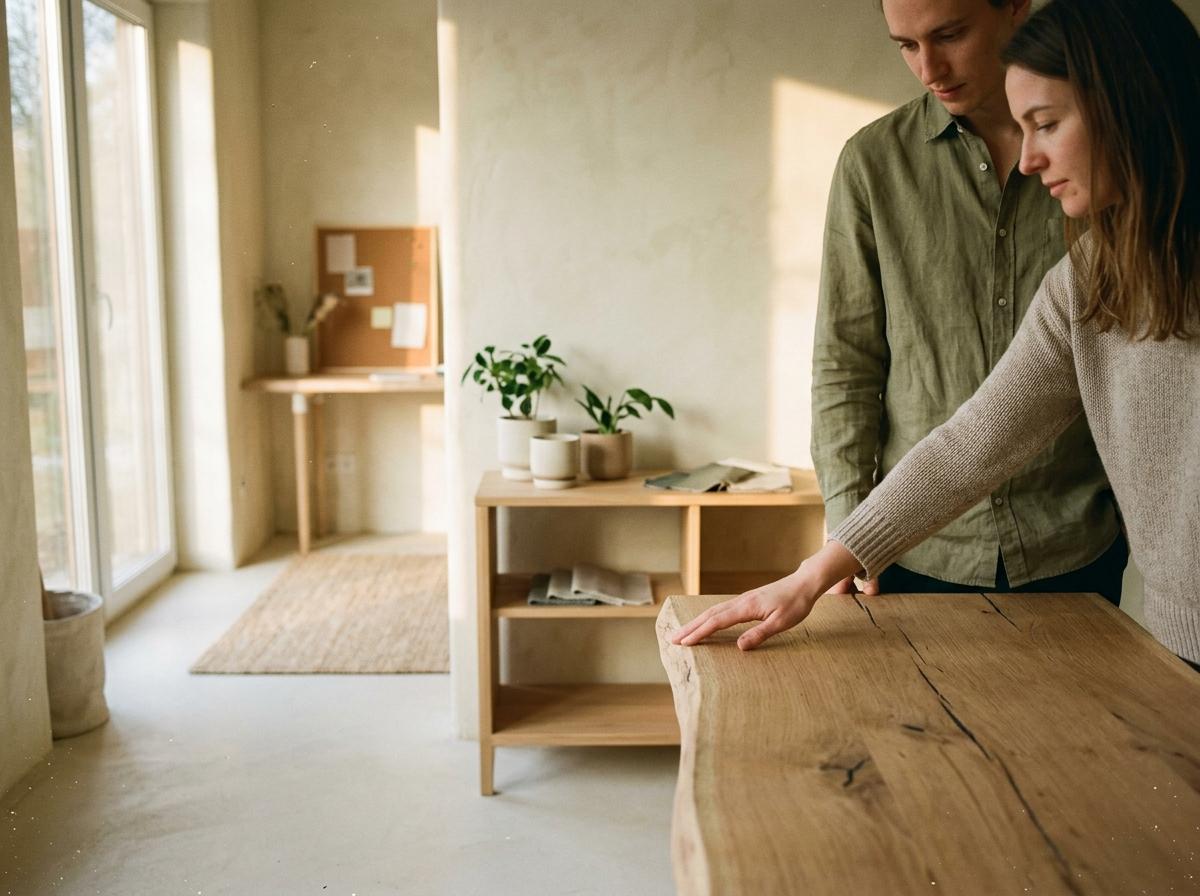

While researching this piece, I found myself sitting in a generic corporate lobby-a sterile landscape of cold, extruded aluminum and off-gassing synthetic carpets that felt more like a waiting room for burnout than a place of creation. It stood in jarring contrast to the studio I had visited just hours prior, where the air felt alive, filtered through the "breathable" grain of reclaimed cedar and the tactile warmth of lime-wash walls. "The soul of a workspace," interior consultant Elena Vance told me, pausing to run her hand over a slab of live-edge oak, "isn't found in its efficiency," she leaned in, her eyes tracing the organic fissures in the wood, "but in the honesty of its materiality." This tactile integrity is the heartbeat of the Japandi ethos, where the selection of low-impact, sustainable elements does more than just lower a carbon footprint; it transforms a workspace into a restorative sanctuary. By prioritizing the patina of FSC-certified timbers and the muted, biophilic textures of cork and hemp, we move beyond simple aesthetics toward a holistic philosophy of environmental stewardship.
A Sophisticated Take On Modern Japandi Office Furniture
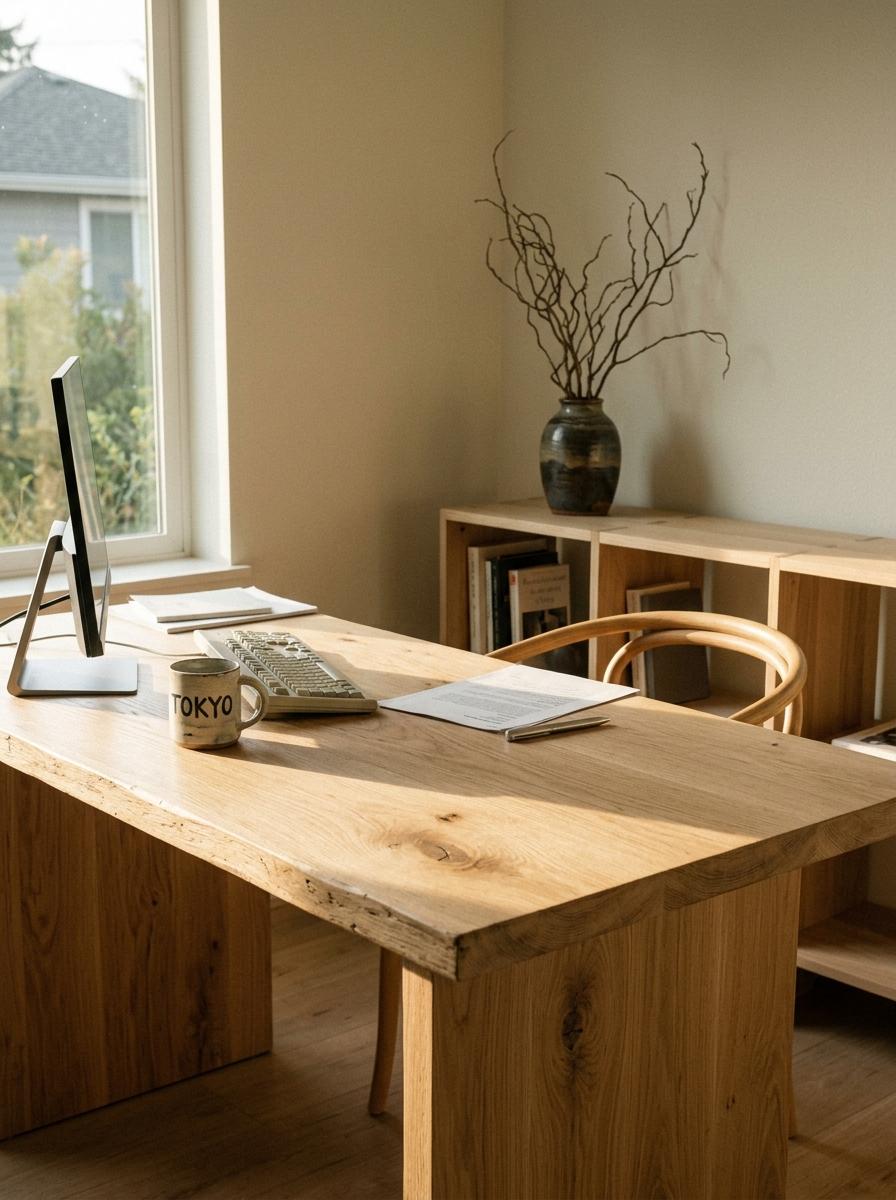

At its core, the modern Japandi workspace is a masterful synthesis: the uncompromising rigor of Scandinavian functionalism merged with the meditative, time-worn soul of Japanese minimalism. This aesthetic evolution transcends mere office decor, demanding a lexical shift toward "tactile serenity" and "spatial intentionality." The furniture is defined by its dialectical tension; a desk may possess a brutalist, monolithic silhouette, yet it is softened by the organic vulnerability of open-grain white oak. It is a dialogue between the industrial and the artisanal. To inhabit such a space is to experience sensorial adjective stacking that grounds the professional mind-think of surfaces that are at once silken, grounding, and atmospheric. In this sophisticated take on the home office, the furniture does not just occupy a room; it orchestrates a state of focused equilibrium.
Refresh Your Workspace With A Complete Japandi Office Makeover
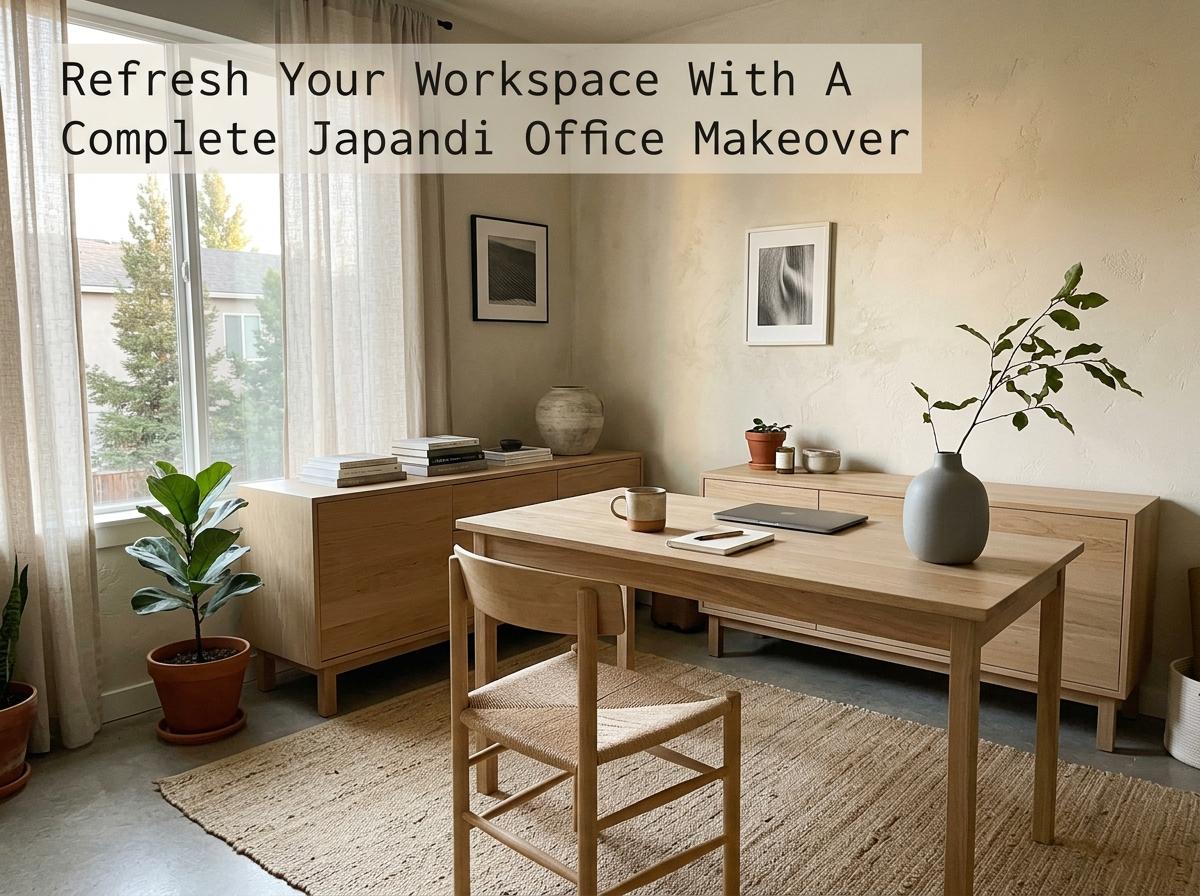

To refresh your workspace, begin by introducing the tactile honesty of honey-hued white oak and the aqueous smoothness of matte-finished ceramic vessels. Note how the placement of a low-slung credenza creates a visual anchor against a backdrop of lime-washed walls, guiding your gaze toward the intentional void of the room. This design philosophy creates a structured spontaneity, where the rigid geometry of a Scandi-inspired desk finds harmony with the asymmetrical grace of a hand-woven tatami rug. As your hand brushes across the open-pored grain of the timber, a physiological shift occurs-the frantic cadence of a workday dissolves into a rhythmic stillness, lowering your cortisol levels through sheer environmental alignment. To achieve this professional serenity, look toward the curatorial standards of Tokyo's Daikanyama district or the minimalist ateliers of Copenhagen, where the fusion of Eastern Zen and Nordic hygge isn't just a trend, but a blueprint for cognitive clarity.
Comfortable And Efficient Japandi Office Design Principles
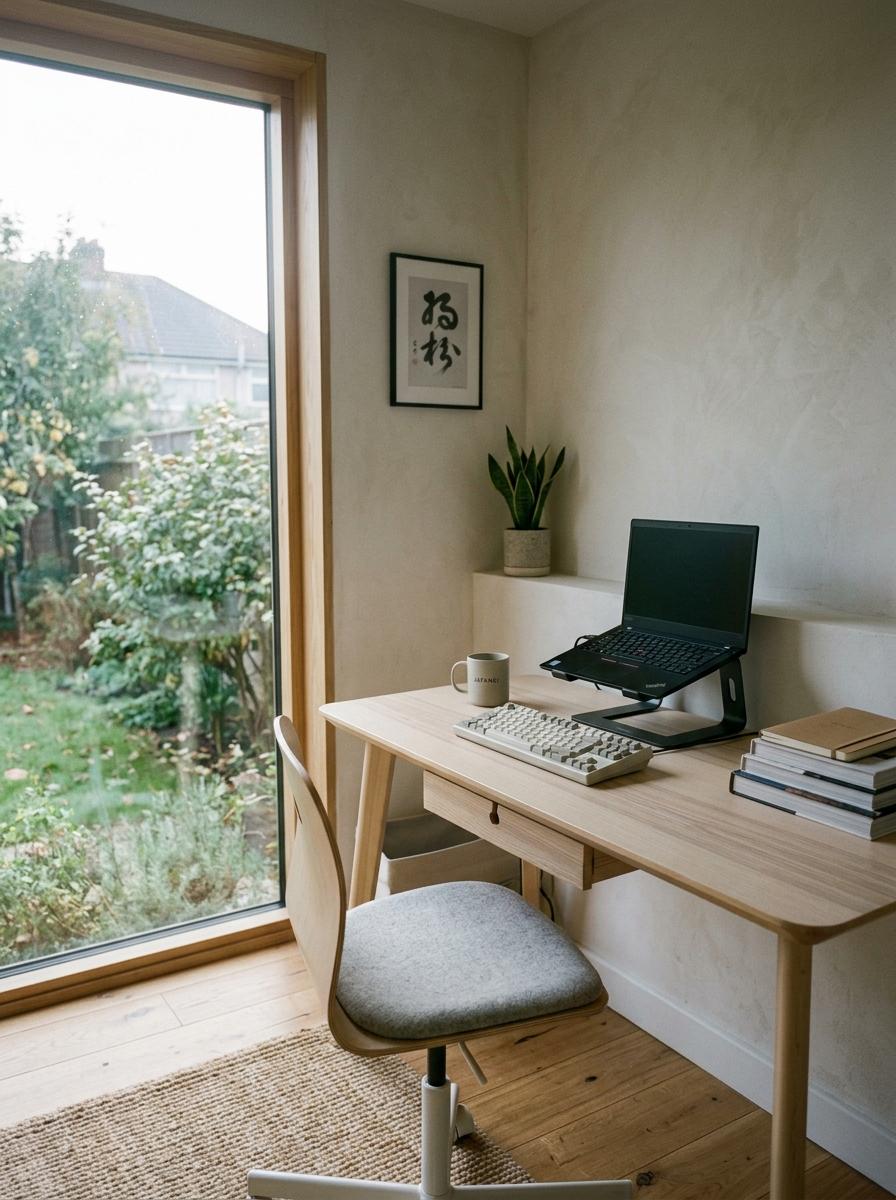

At Japandi.design, our study of the modern workspace begins with Atmospheric Grounding, where the office is no longer a sterile void but a sanctuary anchored by the low-slung profiles of Japanese minimalism, creating a spatial gravity that pulls the frantic energy of the workday toward a centered, calm horizon. This environment thrives on a Figurative Paradox, achieving a state of disciplined warmth; it is a place where the rigid austerity of Zen philosophy meets the soft, indulgent comfort of Hygge, reconciling the need for peak productivity with the necessity of emotional rest. In our analysis of the layout, we observe a sharp Structural Dualism that bisects the room: the internal world is a curated zone of deep focus and silence, while the external world is invited in only through expansive floor-to-ceiling glass, marking a clear boundary between cognitive labor and the shifting rhythms of nature. The tactile soul of the office is found in its Material Specificity, utilizing the pale, tight grain of untreated ash wood paired against the porous, matte texture of hand-applied lime plaster to ground the occupant in a sensory reality. Ultimately, these aesthetic choices serve a Functionalist Specification, where integrated cable management hidden within modular joinery and ergonomic task seating act as industrial solutions, ensuring that the poetic beauty of the Japandi style never compromises the high-utility demands of a professional life.
Inside A Beautifully Appointed Home With A Japandi Office
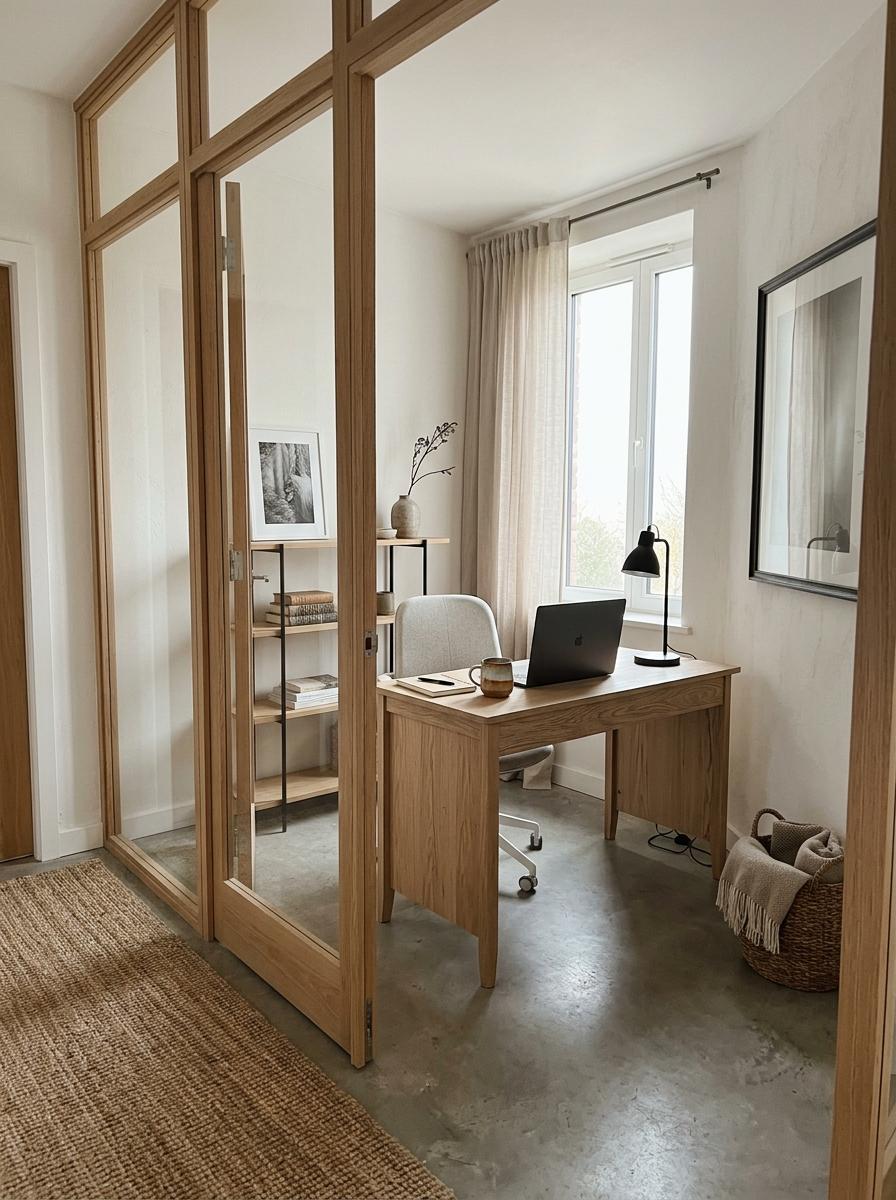

Stepping off the frantic, asphalt-grey streets where the city's cacophony feels like a physical weight, crossing the threshold into this residence feels less like entering a house and more like a sharp intake of breath. I sat down with the homeowner, Elena, who gestured toward her workspace-a masterclass in the Japandi ethos. "I needed a sanctuary," she told me, tracing the grain of a light oak desk with her fingertips, "not just a room with a computer, but a space where the visual noise... finally goes quiet." The room is a rhythmic exercise in shibui-that subtle, unobtrusive beauty-where the tactile warmth of Scandinavian hygge meets the strict, intentional discipline of Japanese minimalism. By utilizing a palette of oatmeal textiles and blackened steel accents, the design achieves a profound sense of tectonic clarity; every joint and surface feels purposeful. While her previous office was a cluttered battleground of wires and neon lighting, this new environment leverages soft, diffused illumination and a curated "less is more" approach to foster deep focus. This transformation from chaotic workspace to a refined temple of productivity illustrates how a deliberate fusion of two cultures can fundamentally recalibrate our daily rhythm.

Comments