
Japandi emerges from the rigorous synthesis of Scandinavian hygge and Japanese wabi-sabi, forming a hybrid typology where Nordic functionality meets the transcendental austerity of the East. In the context of a modern workspace, this union demands a dialectical pairing: the environment must be uncompromisingly utilitarian in its structural logic, yet profoundly restorative in its atmosphere. By replacing the frenetic clutter of traditional office archetypes with a curated sequence of tactile oak, haptic linens, and ethereal silhouettes, we achieve a state of minimalist productivity that feels both grounded and weightless. This study explores how the integration of such biophilic underpinnings and monochromatic depth creates a spatial rhythm that is not merely silent, but resonant.
Japandi Style Office
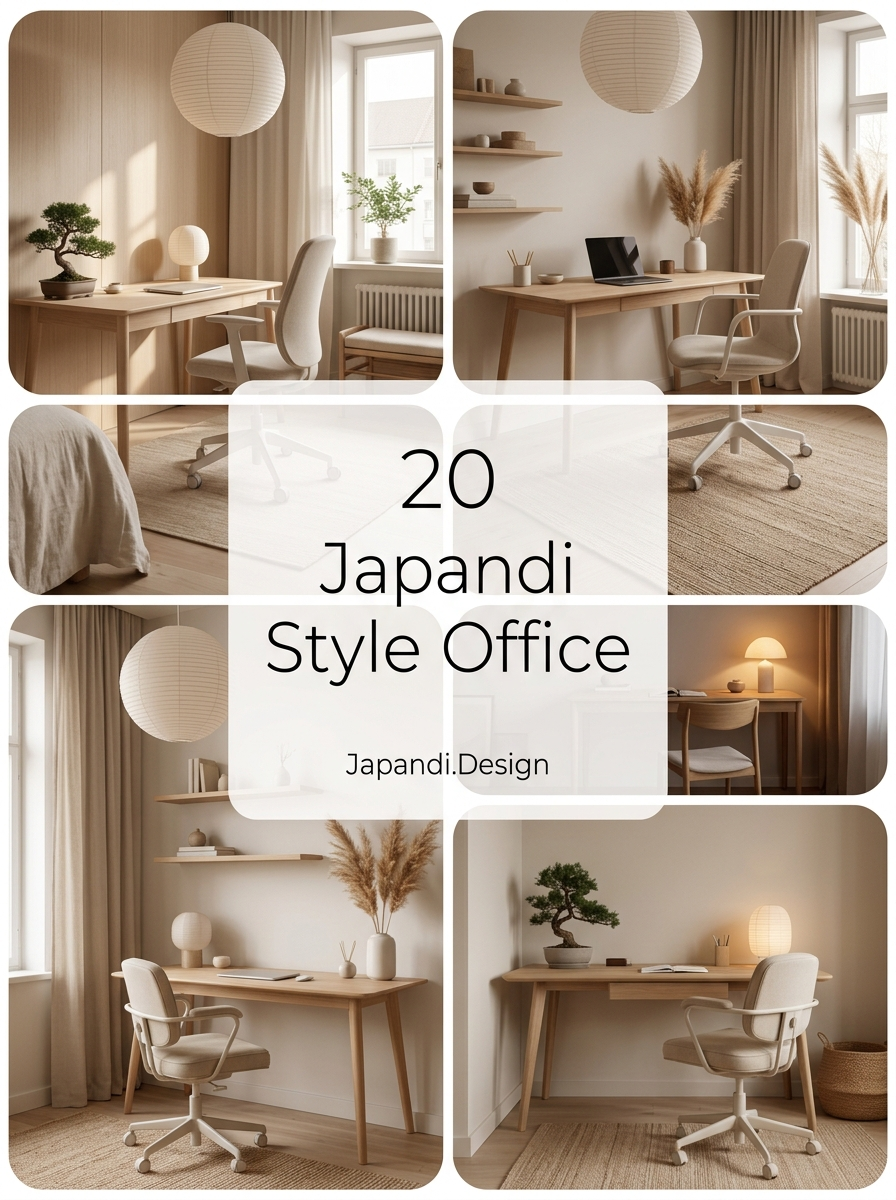

Transform Your Workspace With A Modern Japandi Office Layout
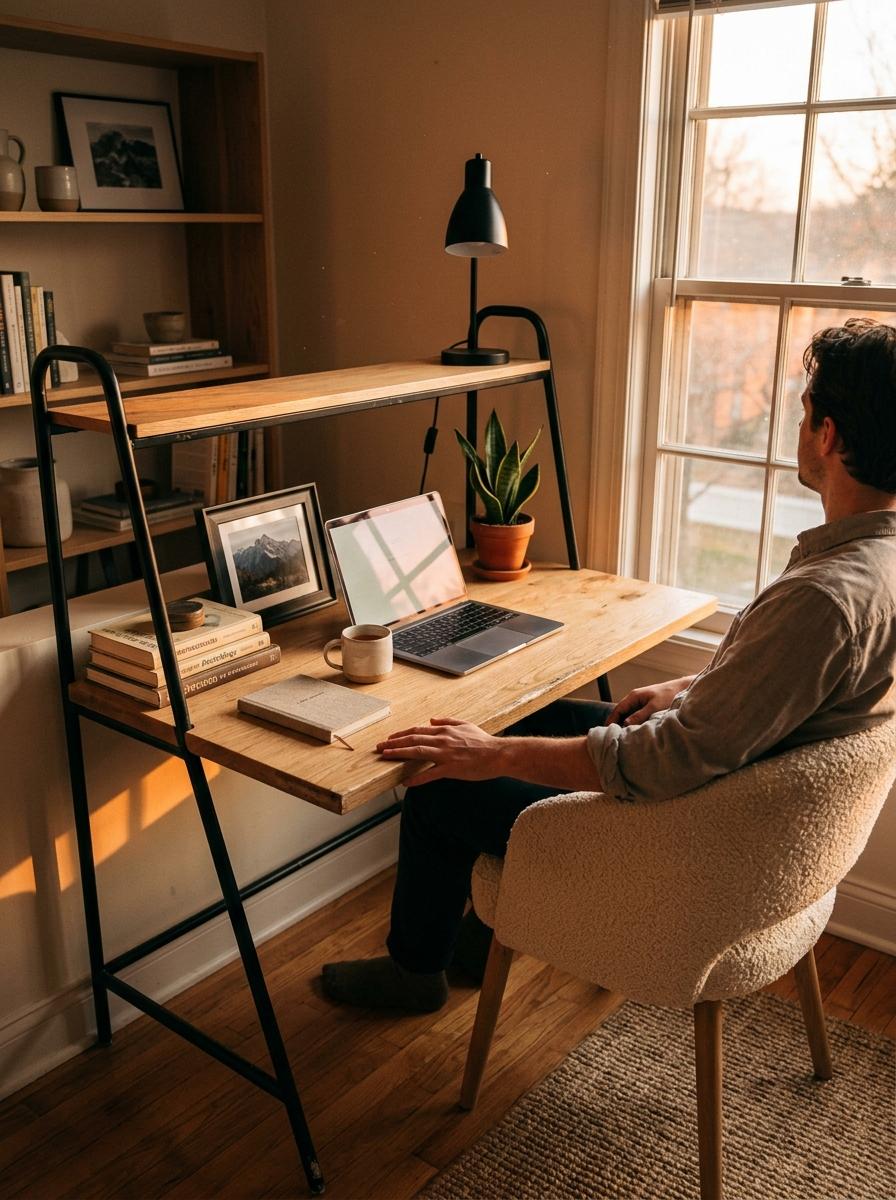

To achieve a workspace that balances cognitive clarity with physical comfort, You can look toward the tactile vocabulary of the modern Japandi aesthetic. Begin by selecting a desk crafted from open-pore solid white oak, where the fibrous, honeyed grain meets the cool, matte precision of a powder-coated steel frame. Note how the placement of a nubby, boucle-upholstered task chair creates a structured softness against the floor-a paradox of rigid ergonomics and plush sanctuary that prevents the clinical coldness often found in traditional corporate settings. As you run your hand over the velvety, soap-finished timber, the tactile grounding triggers a measurable shift: the frantic pulse of a deadline gives way to a rhythmic, diaphragmatic calm, transitioning your body from high-cortisol stress to a state of alert tranquility. This isn't merely a decorative choice, but a spatial philosophy rooted in the same principles found at the Aman Tokyo or the Muji Hotel Ginza, where the environment is engineered to serve as a silent collaborator. By integrating these elements, you transform a mere workstation into a curated ecosystem that honors both the demands of the modern professional and the ancestral need for natural connection.
Creating A Productive Workspace Using Japandi Design Elements
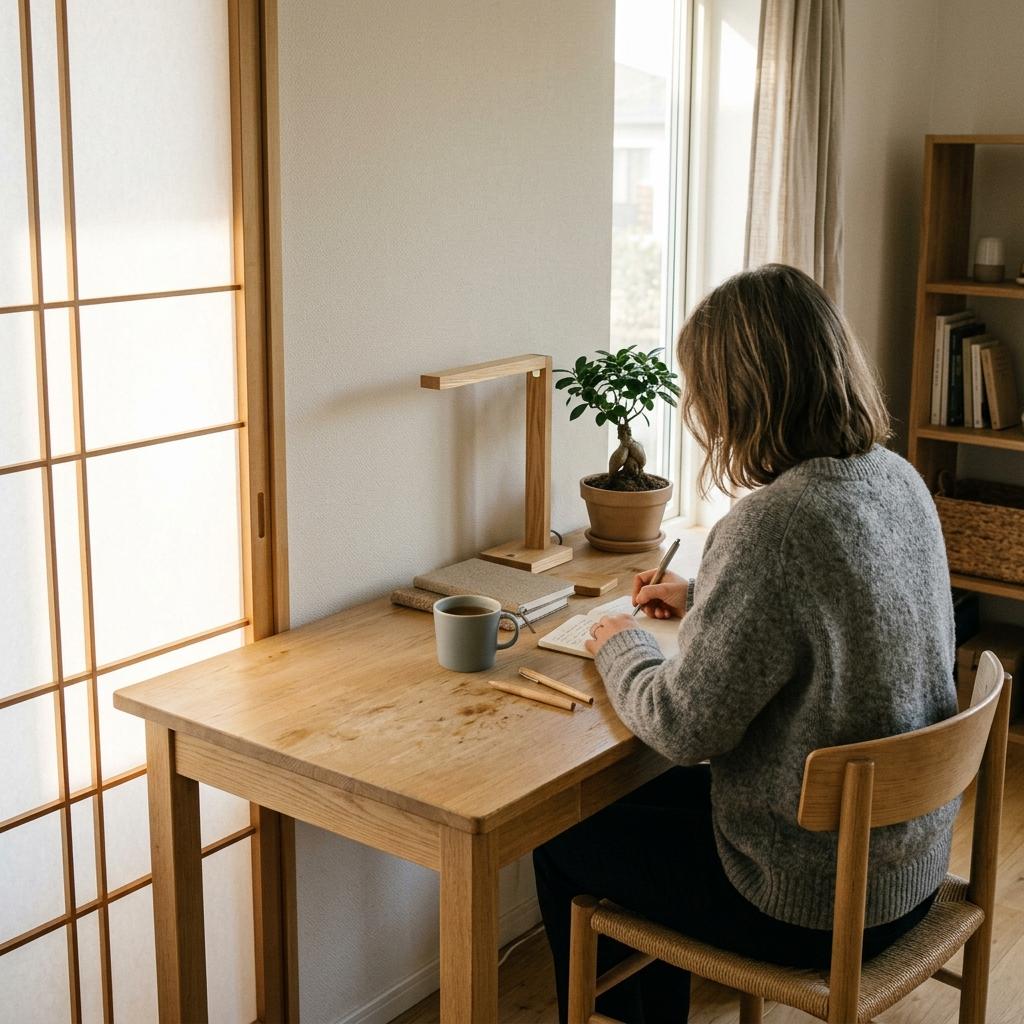

At its core, Japandi is the formal resolution of a distinct aesthetic equation: the rustic, impermanent soul of Japanese wabi-sabi synthesized with the functional, democratic clarity of Scandinavian hygge. This is not merely a decorative trend, but a rigorous spatial philosophy that demands a precise calibration of seemingly opposing forces. It requires an environment that feels profoundly disciplined, yet viscerally inviting; it is a framework where the austere minimalism of a shoji-inspired partition meets the tactile warmth of tactile, blonde-oak joinery. To sit within a Japandi-informed workspace is to experience a curated sensory immersion-a rhythmic interplay of etherial, grounded, and hushed textures that quiet the mental noise of the workday while sharpening the focus of the inhabitant.
A Quiet Home Office Featuring Minimalist Japandi Interior Design
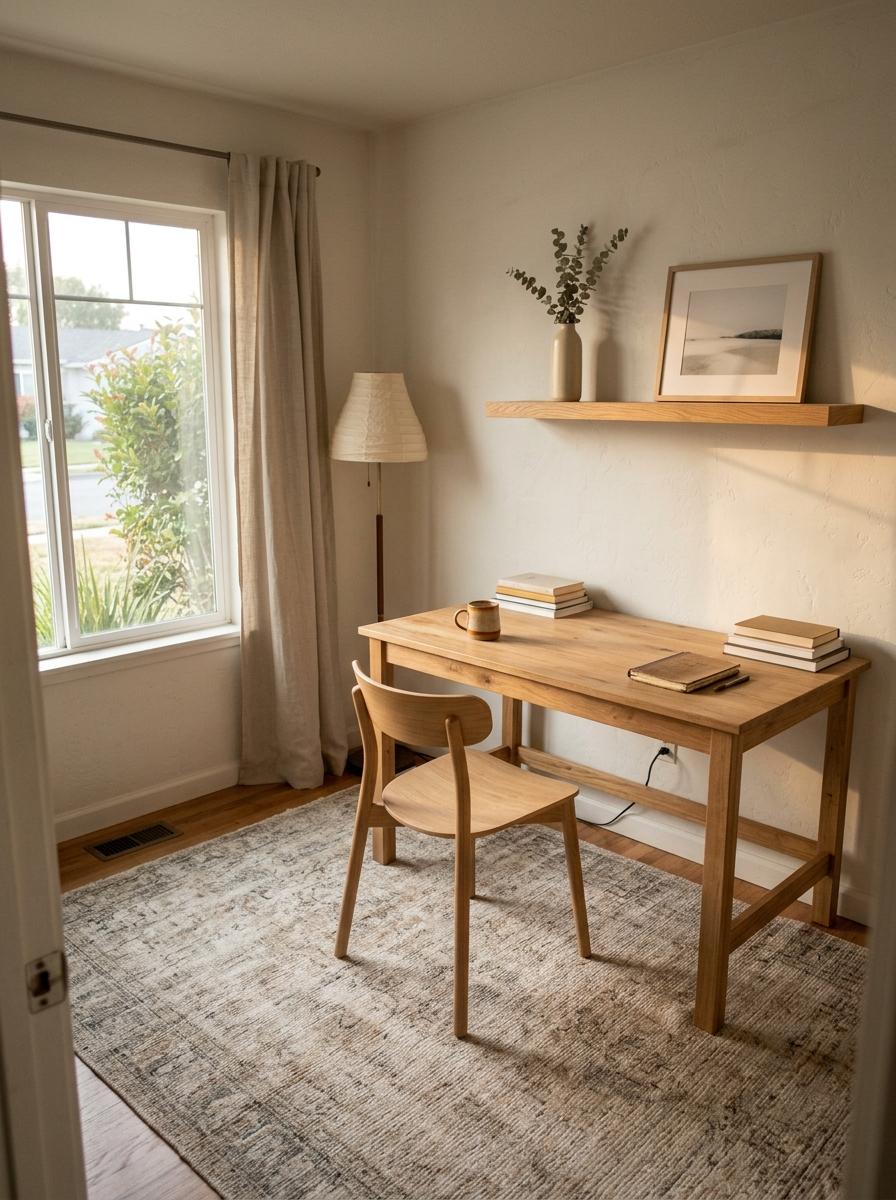

Stepping into this workspace, the frantic, high-decibel clutter of the city-the screech of brakes and the relentless glare of neon-immediately dissolves into a hush of soft textures and intentional silence. It is a masterclass in the Japandi aesthetic, where the raw warmth of Scandinavian hygge meets the disciplined elegance of Japanese minimalism. "The goal wasn't just to clear the desk," the homeowner remarked, pausing to adjust a single ceramic vessel on a floating oak ledge, "but rather... to clear the internal noise that prevents deep work from happening." This deliberate orchestration of shibui-an understated beauty-utilizes a palette of oatmeal linens and sand-blasted timber to create a tactile sense of grounding. Unlike the sterile coldness of modern industrialism, this room breathes through its organic imperfections and curated "negative space." By prioritizing this delicate equilibrium between form and function, the home office transforms from a mere utility room into a sanctuary designed for cognitive clarity.
Step Inside A Professional Workspace With Japandi Style Nuances
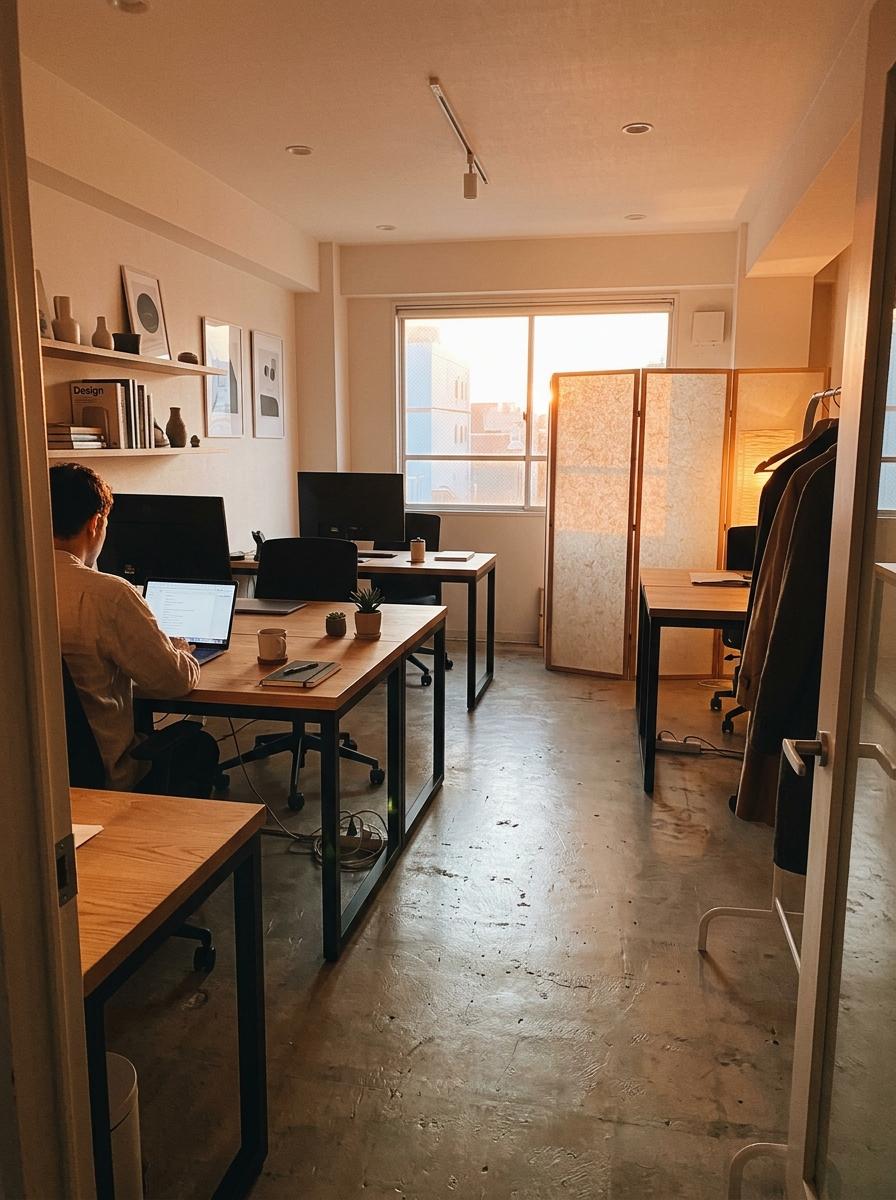

As we cross the threshold into this Tokyo-based creative studio, the workspace sheds its corporate coldness for a philosophy of "disciplined softness." Note how the tactile grain of the open-pore white oak desks meets the industrial rigidity of the powder-coated steel frames, creating a visual dialogue between organic warmth and architectural precision. This environment thrives on a structured fluidity; it is a space that demands rigorous focus while simultaneously offering a sanctuary of calm. As your eyes trace the raw, fibrous texture of the hand-loomed washi paper screens against the cool, monolithic expanse of the polished concrete floor, a physical shift occurs: your heart rate decelerates, and the frantic mental noise of the city outside dissolves into a state of alert tranquility. This is not merely an office, but a curated ecosystem where the minimalist heritage of the Nihonbashi district merges with Scandinavian hygge, proving that a professional environment can be both intellectually sharp and emotionally restorative.
How To Build A Balanced Japandi Office Environment
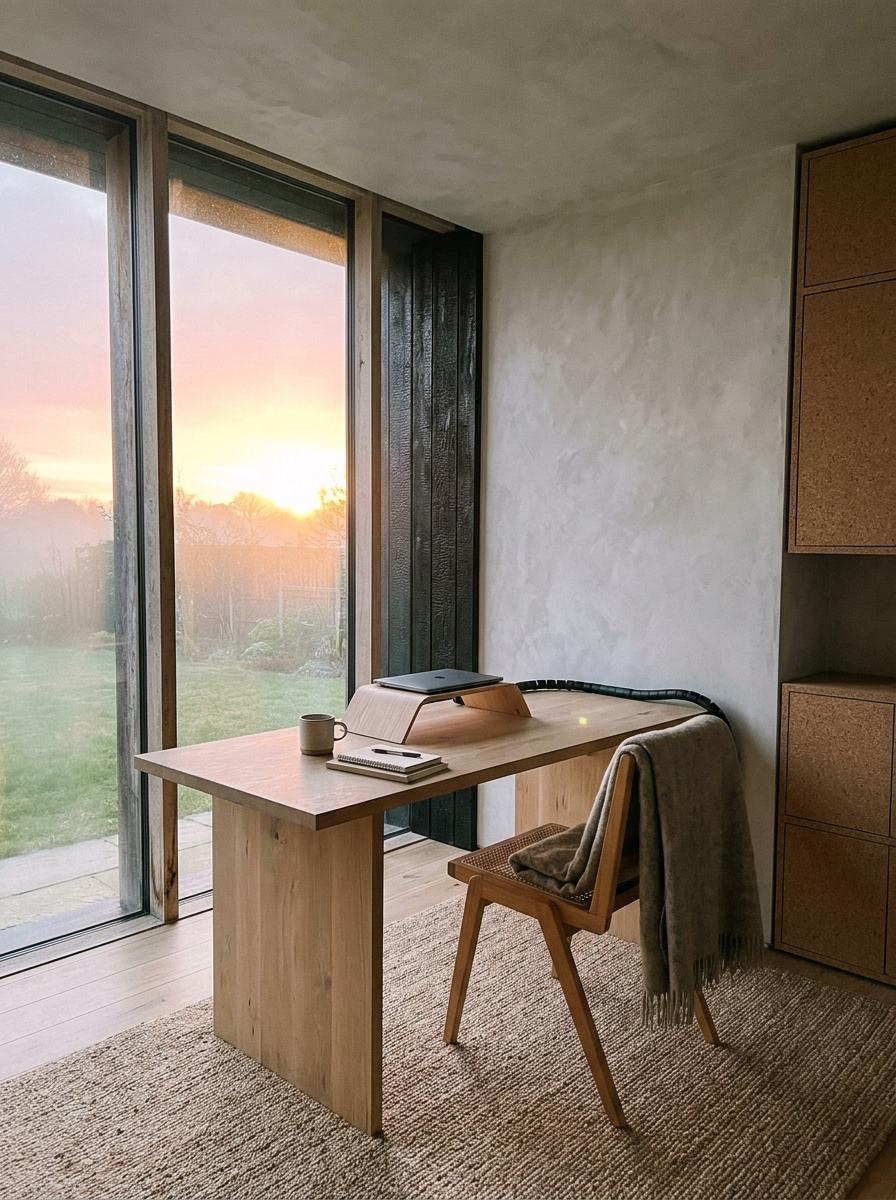

In the modern workspace, a balanced Japandi office begins with Atmospheric Grounding, where the desk is not merely furniture but a low-slung anchor amidst a sea of negative space, grounding the room in a quiet, temple-like stillness. This stability allows for a Figurative Paradox, achieving a state of disciplined warmth-a conceptual synthesis where the cold, sharp lines of minimalism are softened by the cozy, lived-in comfort of hygge. Within this framework, we observe a Structural Dualism that bifurcates the office: the internal zone remains a sanctuary of tactile focus, while the external perimeter is surrendered to the raw, unscripted movement of the natural world through floor-to-ceiling glass. To bridge these worlds, Material Specificity is essential; one must move beyond "wood" to the haptic reality of brushed Shou Sugi Ban accents and the porous, matte texture of hand-applied lime wash walls. Ultimately, the environment succeeds through Functionalist Specification, where modular cork cabinetry and integrated cable management systems act as the invisible industrial utility, ensuring that the visual silence is never interrupted by the chaotic clutter of the digital age.
The Perfect Blend Of Comfort And Function In A Japandi Office
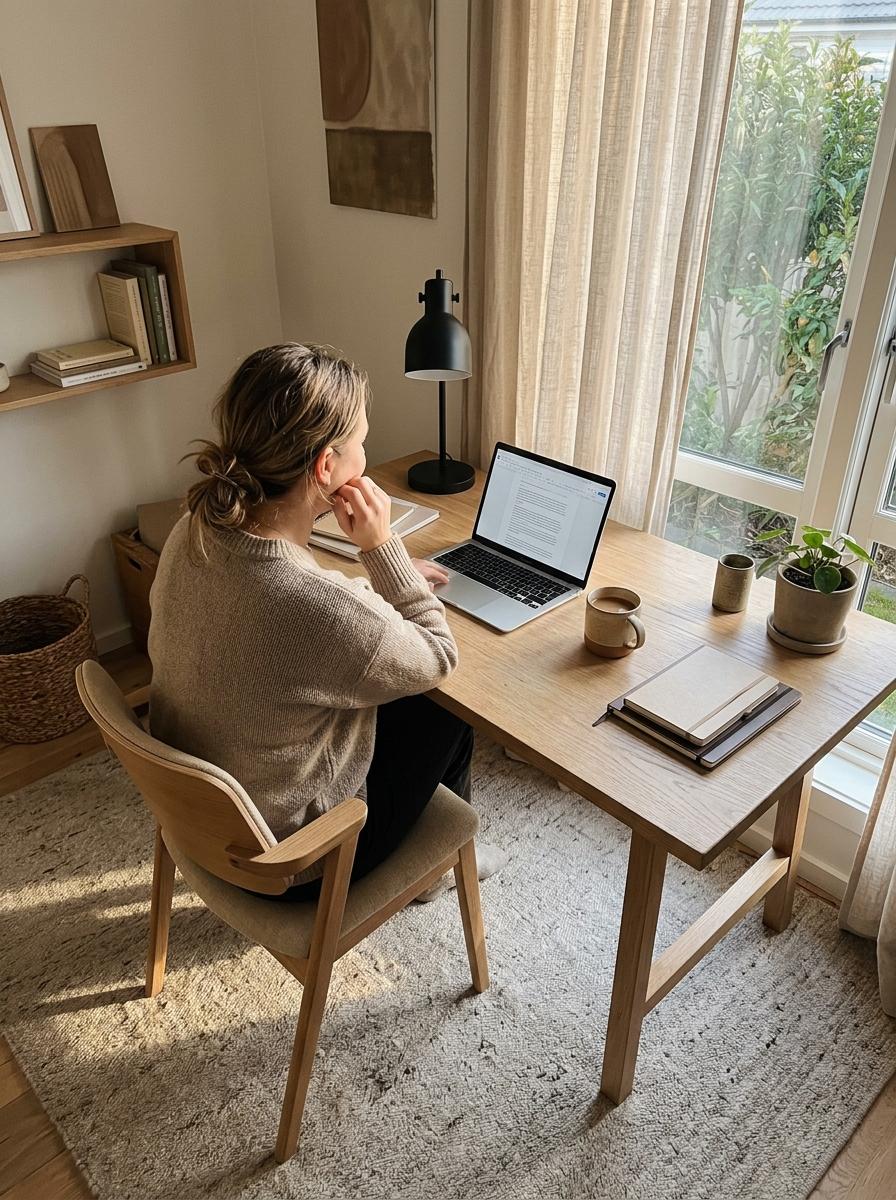

The first time I stepped into a traditional high-octane corporate suite, the air felt thick with the hum of fluorescent ballasts and the aggressive sheen of polished chrome-a space designed for output, perhaps, but certainly not for the human spirit. Contrast that with the studio of a woodworker I interviewed last spring; there, the light didn't just illuminate the room, it seemed to settle into the grain of the white oak desks. "The secret to a productive day," he told me, pausing to run a thumb over a seamless dovetail joint, "isn't more tech. It's about..." he adjusted a slim, matte-black task lamp, "...creating a sanctuary where the mind can actually breathe." This balance of Wabi-sabi imperfection and Scandi-industrial efficiency is what we define as the Japandi office. It is a deliberate rejection of clinical coldness in favor of tactile materiality and ergonomic intentionality. By stripping away the visual noise of the workspace, we find that the intersection of soft minimalism and high utility isn't just an aesthetic choice, but a fundamental shift in how we inhabit our professional lives.
Inside A Creative Studio With Elegant Japandi Design Touches
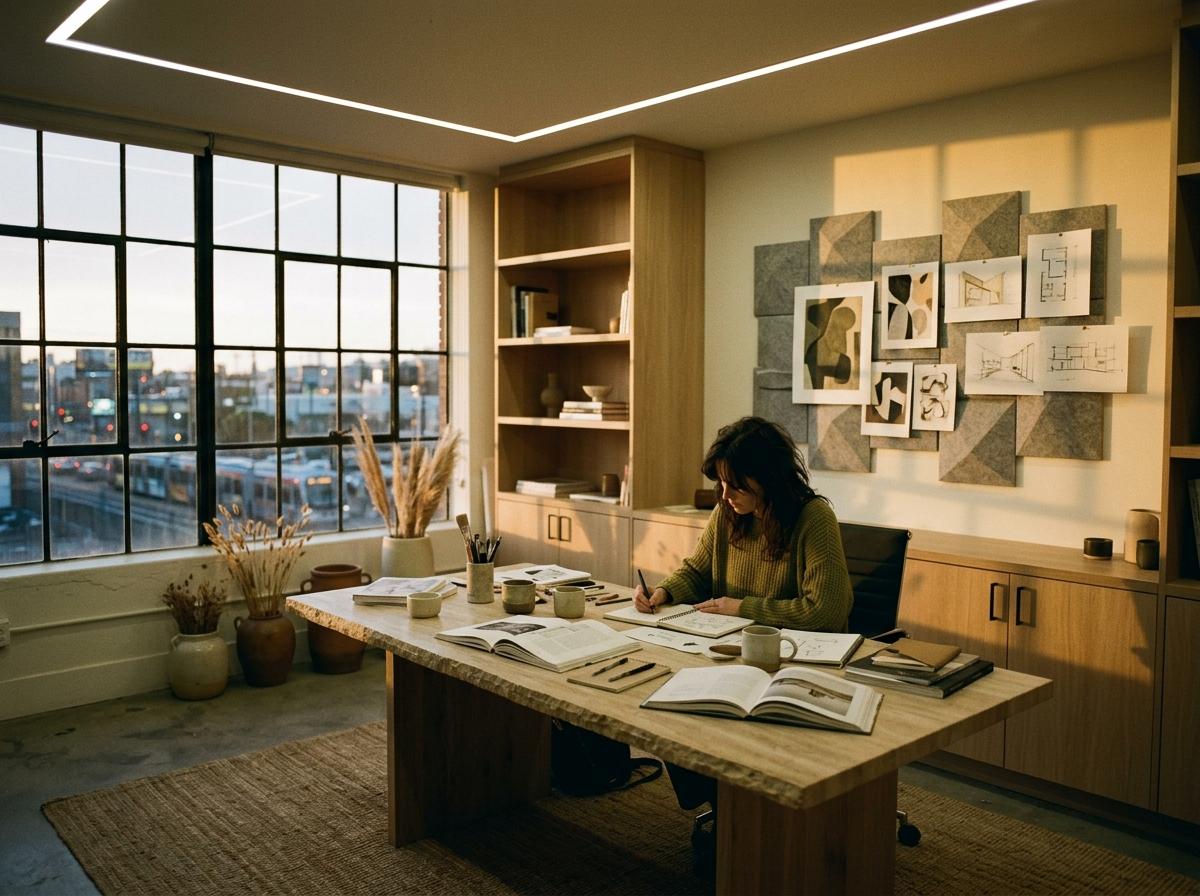

Stepping into this workspace, one immediately feels the hush of a gallery where the frantic pulse of the city is filtered through a veil of deliberate stillness. It is a place of disciplined chaos, where the messy fluidity of the creative process is held in place by an uncompromising, geometric rigor. While the exterior street screams with the gray cacophony of urban transit, the interior whispers in a language of muted ochre and soft shadows, creating a sensory barrier that protects the act of deep work. The tactile soul of the room is defined by brushed white oak cabinetry and honed travertine surfaces, materials that invite the hand to linger on their cool, organic grain. Every element serves a purpose beyond aesthetics; the integrated recessed lighting channels and modular acoustic felt panels act as a silent infrastructure, seamlessly neutralizing technical clutter to ensure that the mind remains as uncluttered as the desk.
Experience A Harmonious Workspace Inspired By Japandi Interior Design
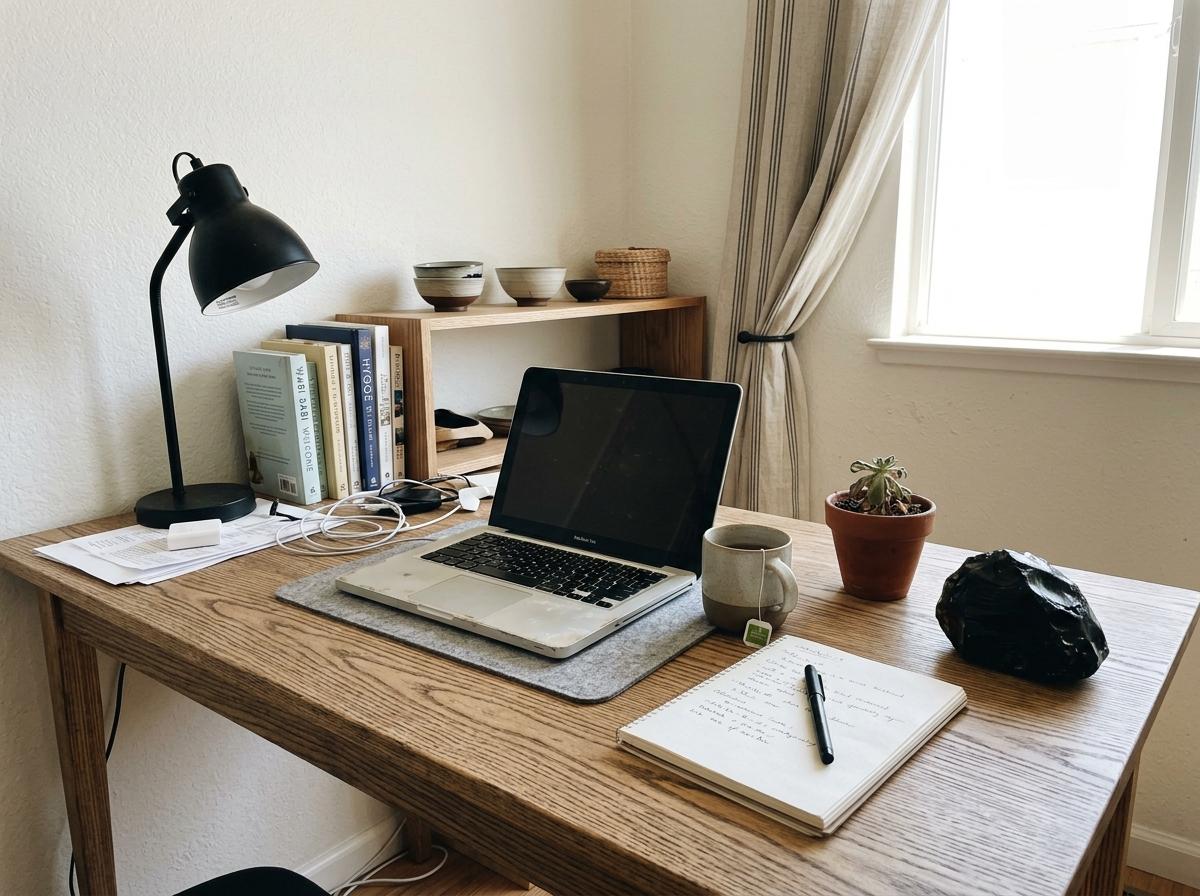

At Japandi.design, our study of contemporary productivity hubs reveals that the most effective environments are those that master the art of ordered chaos. To truly understand this equilibrium, look to the executive suites of the Aman Tokyo, where the workspace is redefined through a lens of quiet discipline. Note how the desk surface-crafted from open-pore, wire-brushed solid ash-provides a tactile grounding that stabilizes the mind. The material is a study in sensory precision: the velvety-rough texture of the timber grain meets the cool, obsidian-slick finish of a stone paperweight. As your hands brush against these curated elements, the physiological shift is immediate; the erratic rhythm of a high-stress workday dissolves into a focused tranquility, lowering your cortisol levels through sheer spatial harmony. This is not merely an office; it is a calibrated sanctuary where the warmth of Scandinavian hygge and the rigorous minimalism of Japanese Zen converge to facilitate a state of effortless flow.
A Sophisticated Home Office With Organic Japandi Design Details
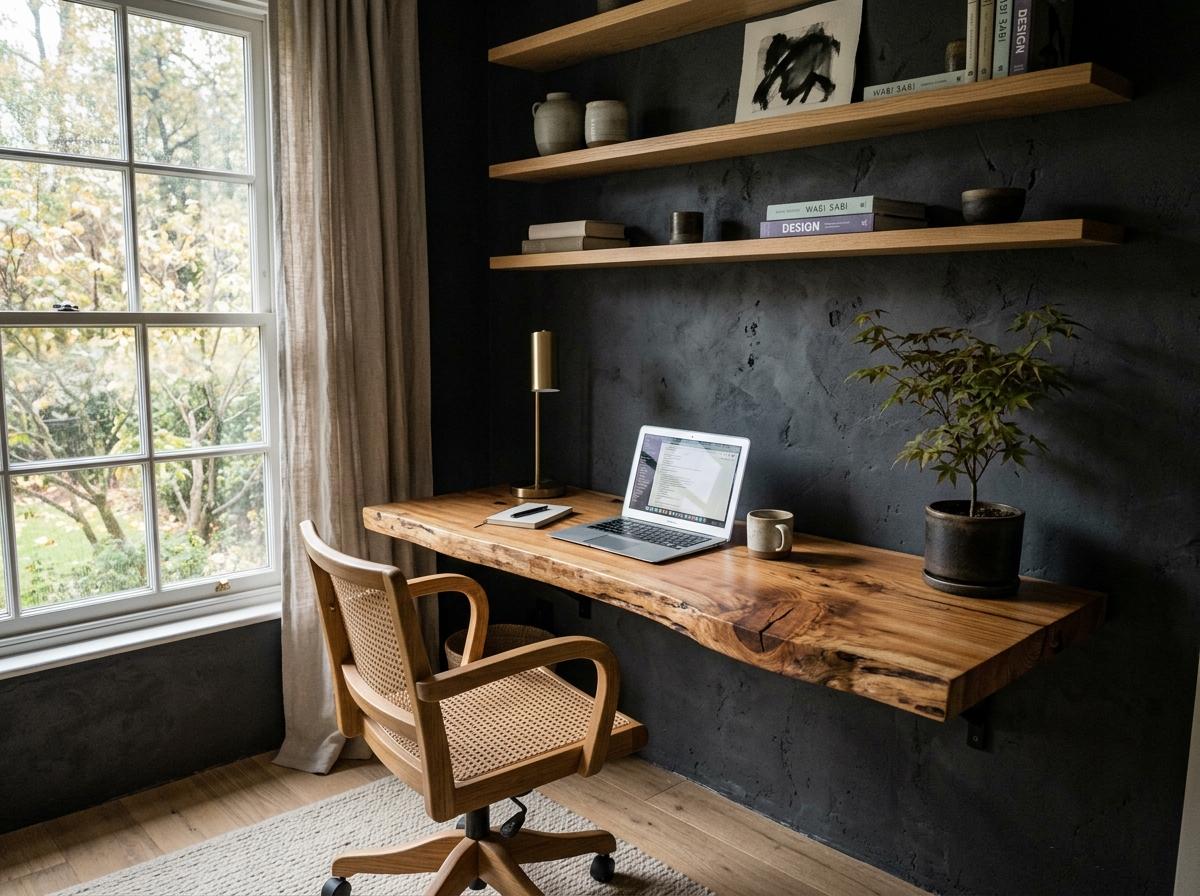

The modern home office is no longer a peripheral utility, but a secluded sanctum carved from the quietest corner of the dwelling, where the air feels weighted with the stillness of a forest clearing. Within this workspace, a calculated spontaneity governs the layout; every deliberate placement of furniture aims to mimic the effortless irregularity of the natural world. While the external world accelerates through digital noise and frantic schedules, the internal environment remains anchored in a profound stasis, creating a sanctuary where the clock feels secondary to the creative flow. This tactile equilibrium is anchored by a cantilevered desk of live-edge Siberian Larch, its deep fissures and amber resin pockets contrasting against the matte, velvet-like texture of charcoal Shikkui plaster walls. This integration of raw material and refined form serves as a precise ergonomic solution, where the warmth of organic wood mitigates the cold efficiency of necessary technology, ensuring the office functions as a high-performance engine housed within a shell of meditative grace.
Modern Productivity Meets Nature In This Japandi Style Office
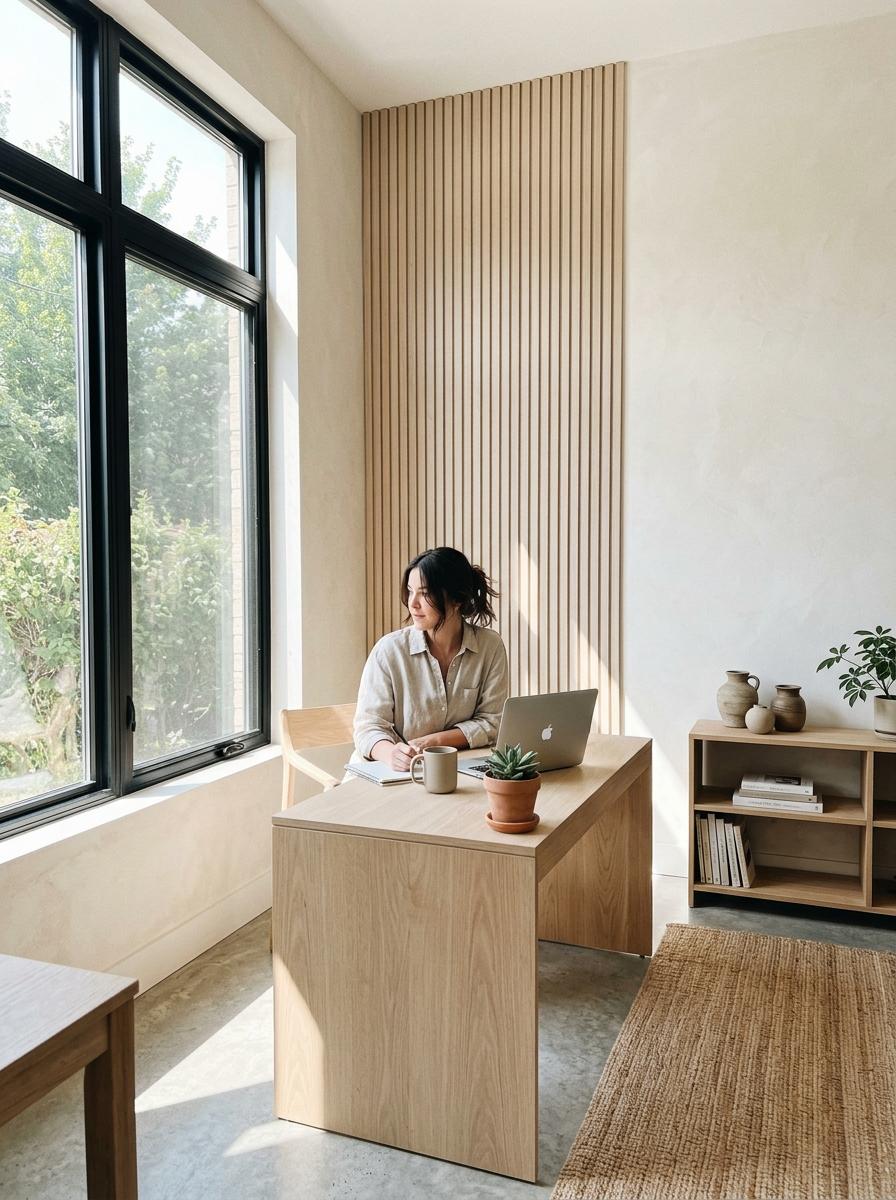

The spatial configuration of this workspace was conceived by a vision to bridge the gap between corporate efficiency and organic tranquility. Within the perimeter, a muted palette governs the layout, prioritizing unadorned surfaces and weightless partitions that eliminate visual noise. This deliberate restraint fosters a balanced, breezy backdrop where focus flourishes without the friction of clutter. Light carves through the expansive windows to enlarge the interior volume, while slender timber slats stretch the ceiling height to invite a sense of boundless verticality. The environment breathes through the integration of tactile textures, rhythmic repetitions, and soft, streaming sunlight.
A Look At A Clean And Organized Japandi Office Space
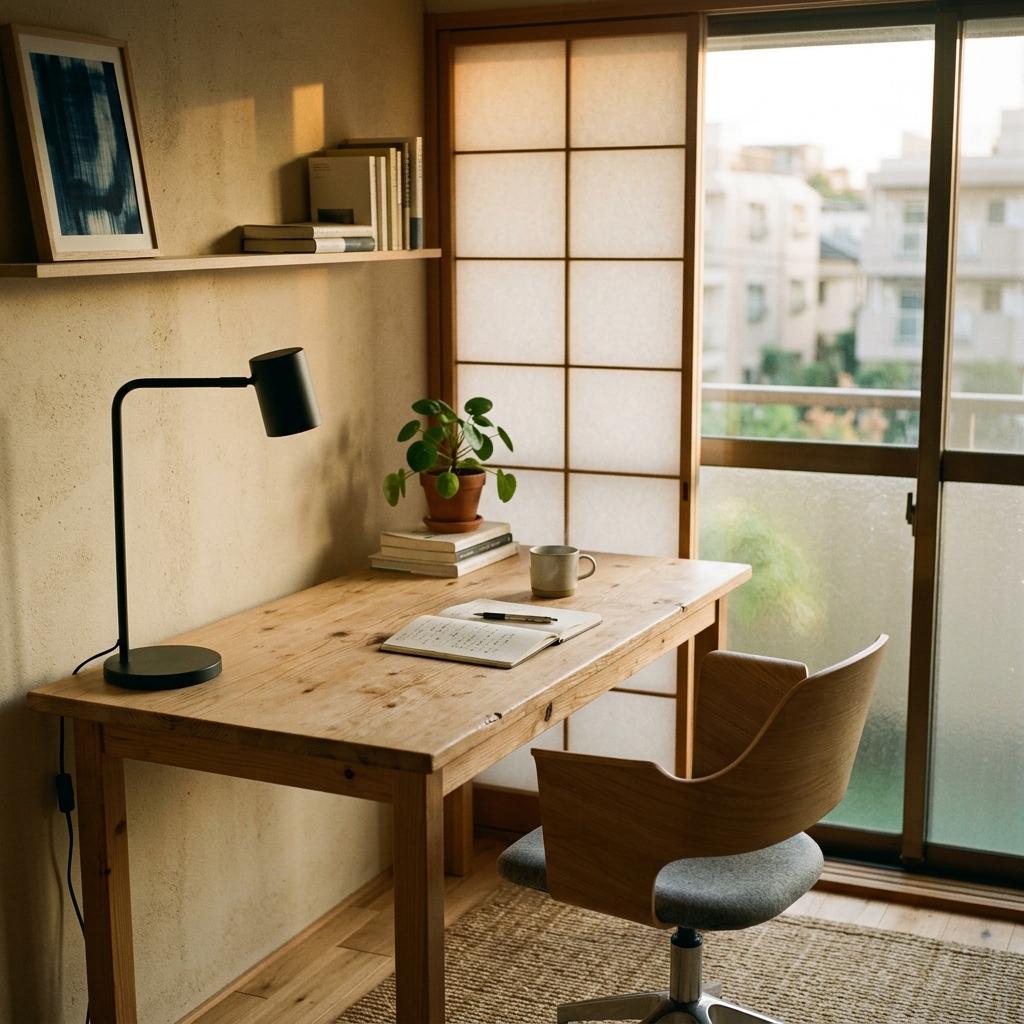

In this Tokyo workspace, the architecture achieves a state of ordered chaos, where the rigorous demands of a modern career meet the soft silence of a sanctuary. Note how the tactile grain of the untreated Siberian larch desk provides a rugged, splinter-free foundation against the ethereal, translucent glow of the hand-woven washi paper screens. This juxtaposition of the weighty lightness in the furniture selection creates a visceral shift in the occupant; as your eyes move from the matte, obsidian-finished steel lamps to the porous, moisture-wicking clay walls, your heart rate slows and your breath deepens, physically anchoring you into a state of deep "flow." By bridging the gap between Scandinavian functionalism and Japanese minimalism, this office serves as a definitive case study in how intentional material choices can transform a mere site of labor into a restorative retreat.
Elevate Your Daily Workflow With Japandi Design Principles
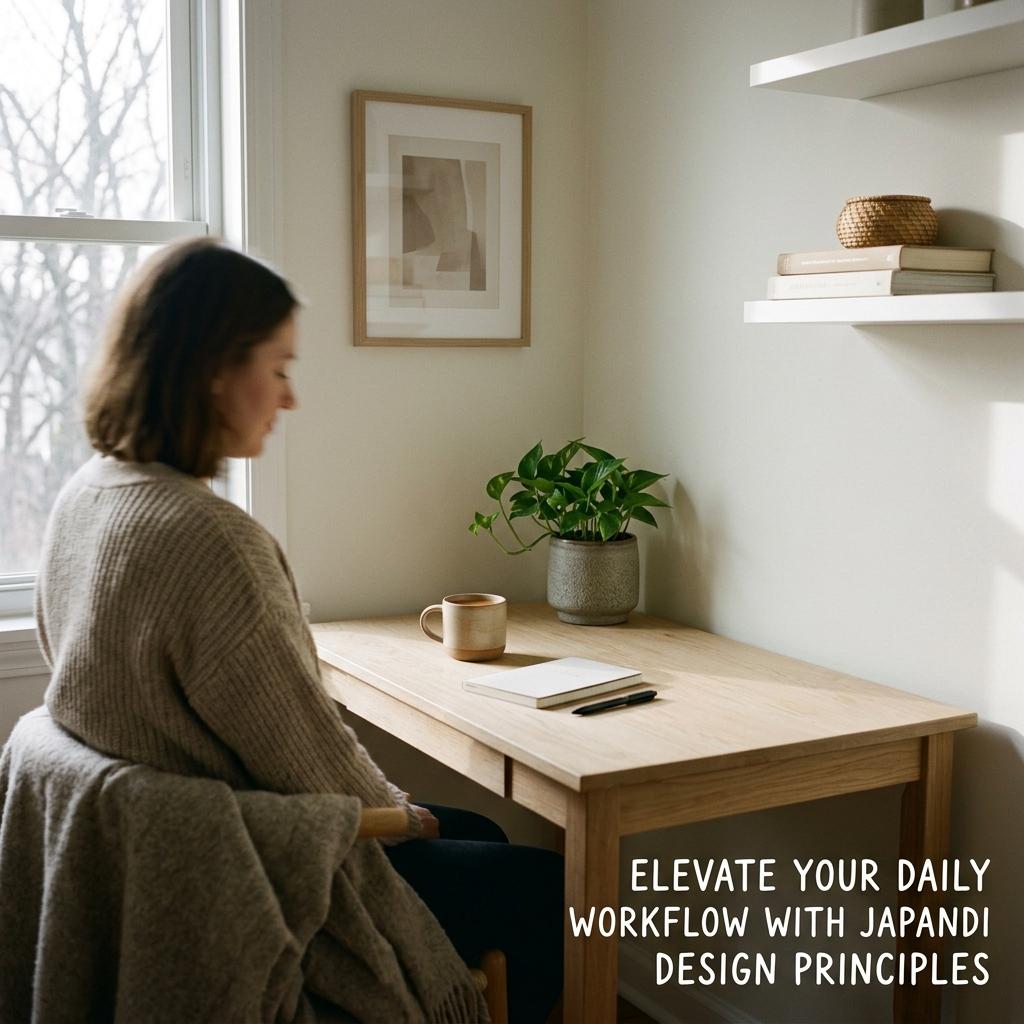

I remember sitting at a heavy, mahogany desk that felt more like a barricade than a workspace, surrounded by the sensory clutter of "productive" chaos-tangled cables, stacks of glossy folders, and the oppressive weight of a room that refused to breathe. "The environment," as a minimalist architect once remarked to me during a late-night interview, "isn't just a backdrop..." he paused, tracing the clean grain of a light cedar tabletop, "...it is the silent partner in every decision you make." That contrast became my epiphany: moving from a space defined by maximalist friction to one governed by shibui-that subtle, unobtrusive beauty-transformed my cognitive load from a state of constant overstimulation to one of intentional flow. By swapping the visual noise of excess for a curated palette of tactile linens and organic silhouettes, I realized that productivity isn't found in the grind of a crowded room, but in the spatial harmony of a refined sanctuary. This intersection of Japanese functionalism and Scandinavian hygge does more than just organize a room; it recalibrates the mind, proving that the intentional composition of our physical surroundings is the foundational blueprint for an elevated daily workflow.
This Light And Airy Workspace Showcases Japandi Style Influence
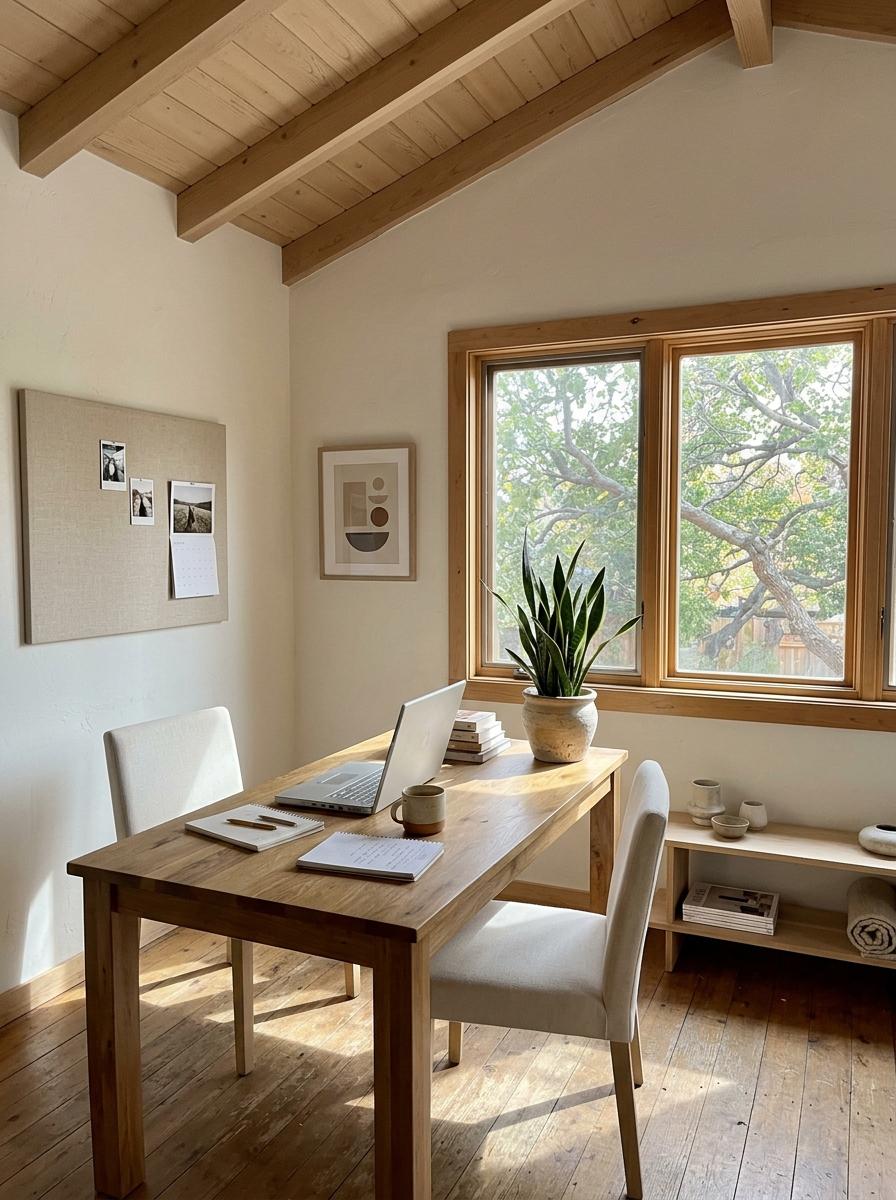

The architectural intent behind this light and airy workspace was realized through a meticulous renovation where structural constraints were transformed into fluid boundaries. Within the interior, a spare and stripped-back aesthetic prevails, defined by unadorned surfaces that eliminate visual noise. This sense of serenity is strengthened by the soft sunlight that streams across the studio, casting a pale, peaceful glow over the natural textures. Large windows pull the outdoors in, while vaulted ceilings expand the vertical volume to cultivate a feeling of limitless breathing room. The final composition serves as a masterclass in Japandi balance, where the floor plan effortlessly integrates functional form, muted materials, and mindful minimalism.
Achieve A Calm Professional Setting With Japandi Interior Design
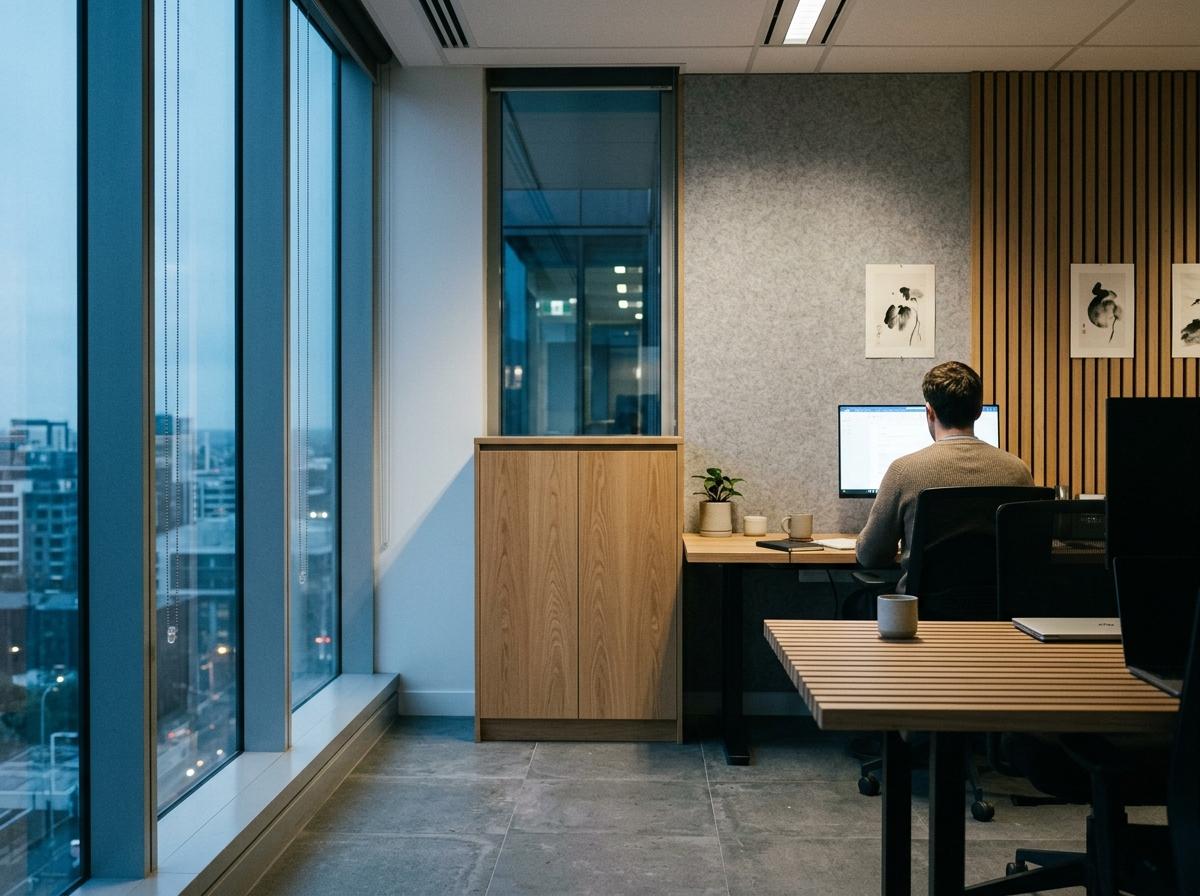

In the contemporary office, where the frantic pulse of digital productivity often clashes with the human need for stillness, the Japandi aesthetic emerges as a necessary anchor for the modern professional. This philosophy achieves a chaotic stillness, a conceptual synthesis where the rigid discipline of corporate efficiency is softened by the organic irregularities of the natural world. While the external city environment remains a cacophony of glass, steel, and relentless motion, the internal workspace is transformed into a sanctuary of intentionality. To bridge this divide, the design relies on a strict material vocabulary: the honeyed warmth of quarter-sawn white oak cabinetry provides a tactile counterpoint to the cool, matte texture of honed grey basalt flooring. This is not merely a stylistic preference but a rigorous industrial utility; by integrating acoustic felt paneling and modular timber slats, the space functions as a high-performance acoustic solution, neutralizing environmental noise to foster a setting of profound, focused calm.
A Functional Home Office With Distinct Japandi Design Features
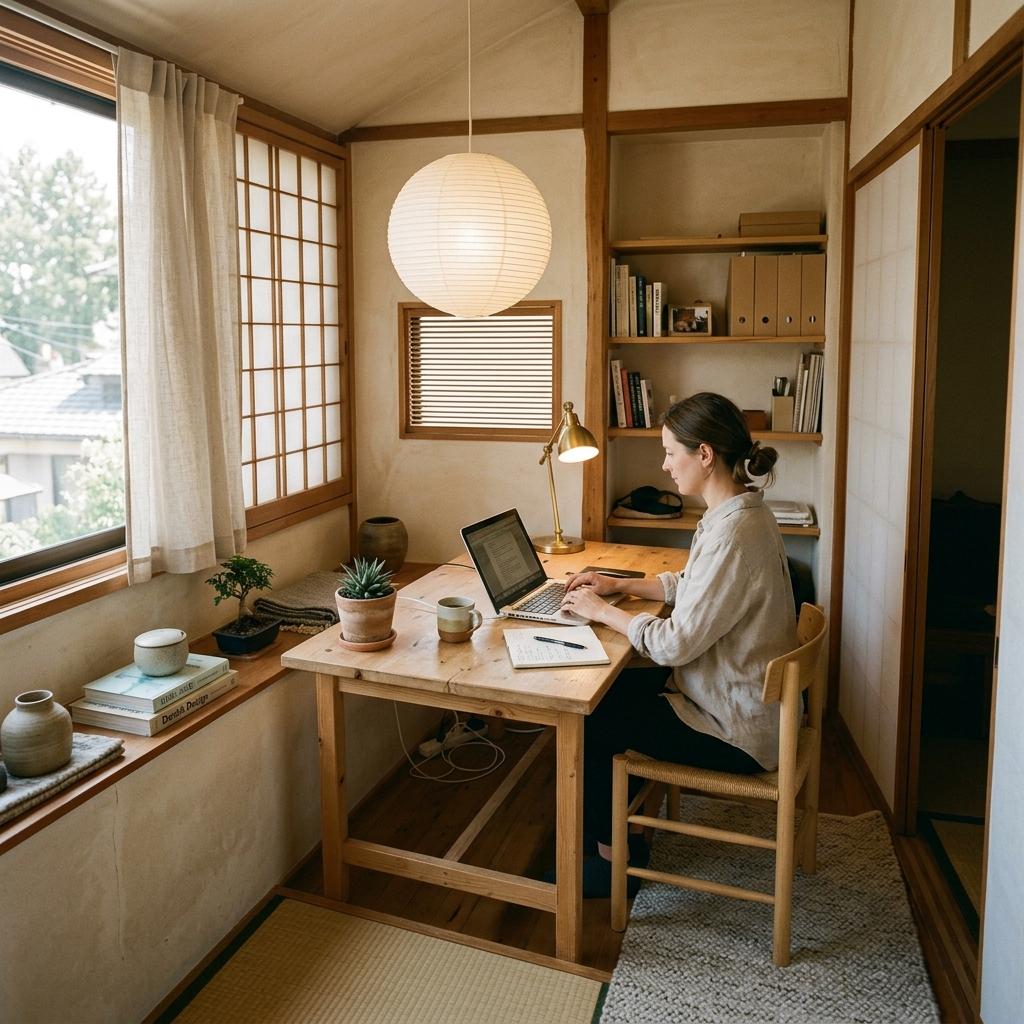

At its core, the Japandi home office is an intentional synthesis-a deliberate fusion where the rustic, imperfect soul of Japanese wabi-sabi intersects with the pragmatic, streamlined efficiency of Scandinavian hygge. This aesthetic relies on a sophisticated dialectical pairing: the environment must feel profoundly communal yet monastic, offering a visual softness that belies its rigorous organizational logic. To achieve this, we can move beyond mere furniture toward a palette of sensorial textures-think of the tactile, haptic resonance of open-pore timber, the olfactory stillness of tatami, and the ethereal, diffused luminosity of shoji-inspired acoustics. It is a space that demands high-functioning ergonomics, yet insists on a transcendental serenity, transforming the professional workspace into a vessel for both focused labor and quiet contemplation.
Redefining The Corporate Suite With Minimalist Japandi Style
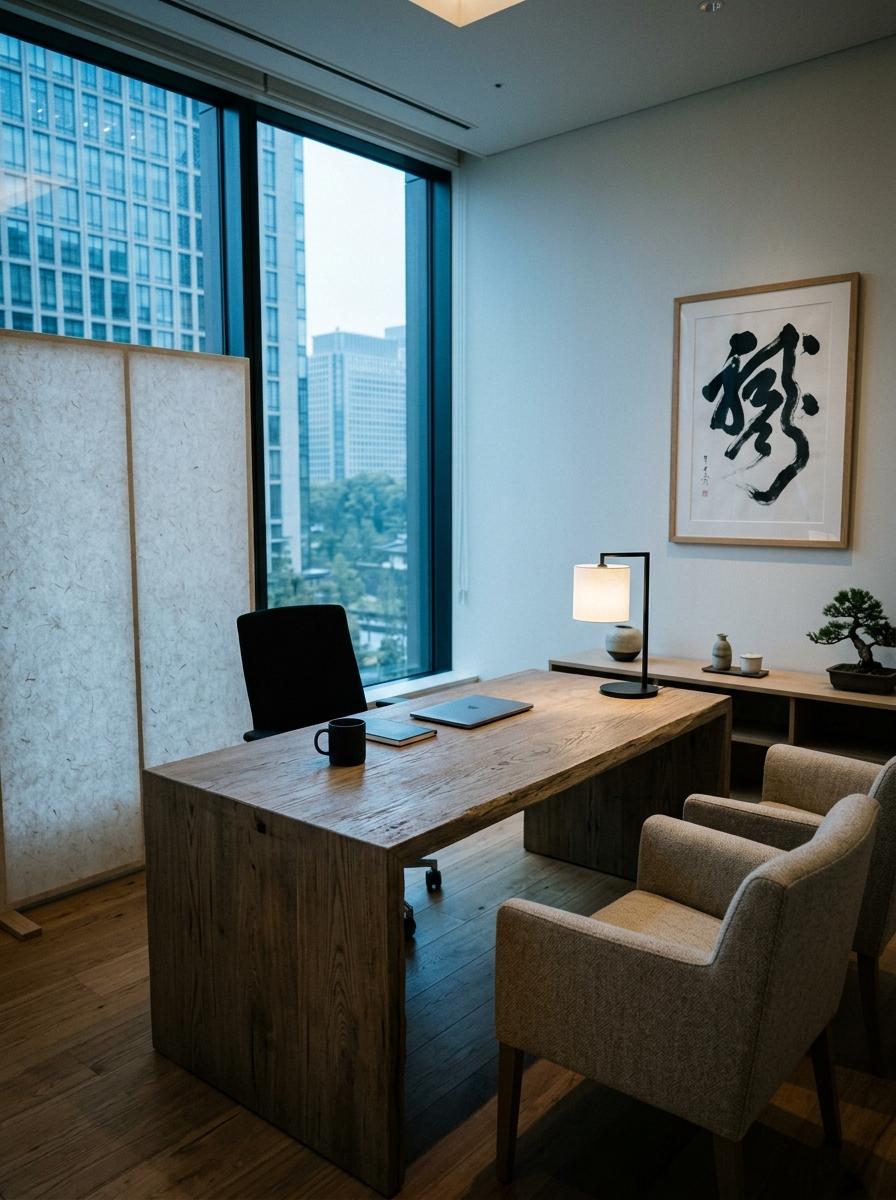

To step inside a modern executive office in Tokyo's Marunouchi district is to witness a profound shift in power dynamics, where the loud opulence of the past is traded for a hushed intensity. Redefining the corporate suite requires a departure from traditional clutter in favor of a curated Japandi aesthetic. Note how the desk-a monolithic slab of open-pore, wire-brushed ash-anchors the room, its velvety-coarse surface inviting a tactile connection that grounds the digital worker. This is a study in structured spontaneity; every element is placed with mathematical precision yet feels as organic as a forest floor. As your eyes move from the fibrous, hand-pressed washi partitions to the matte, charcoal-fired ceramic accents, the body undergoes a physiological shift: the heart rate slows, and the frantic buzz of corporate anxiety dissolves into a state of alert tranquility. In this sanctuary, the air feels cooler, the light softer, and the mind finally finds the expansive silence necessary for truly visionary leadership.
A Warm And Inviting Study Infused With Japandi Design
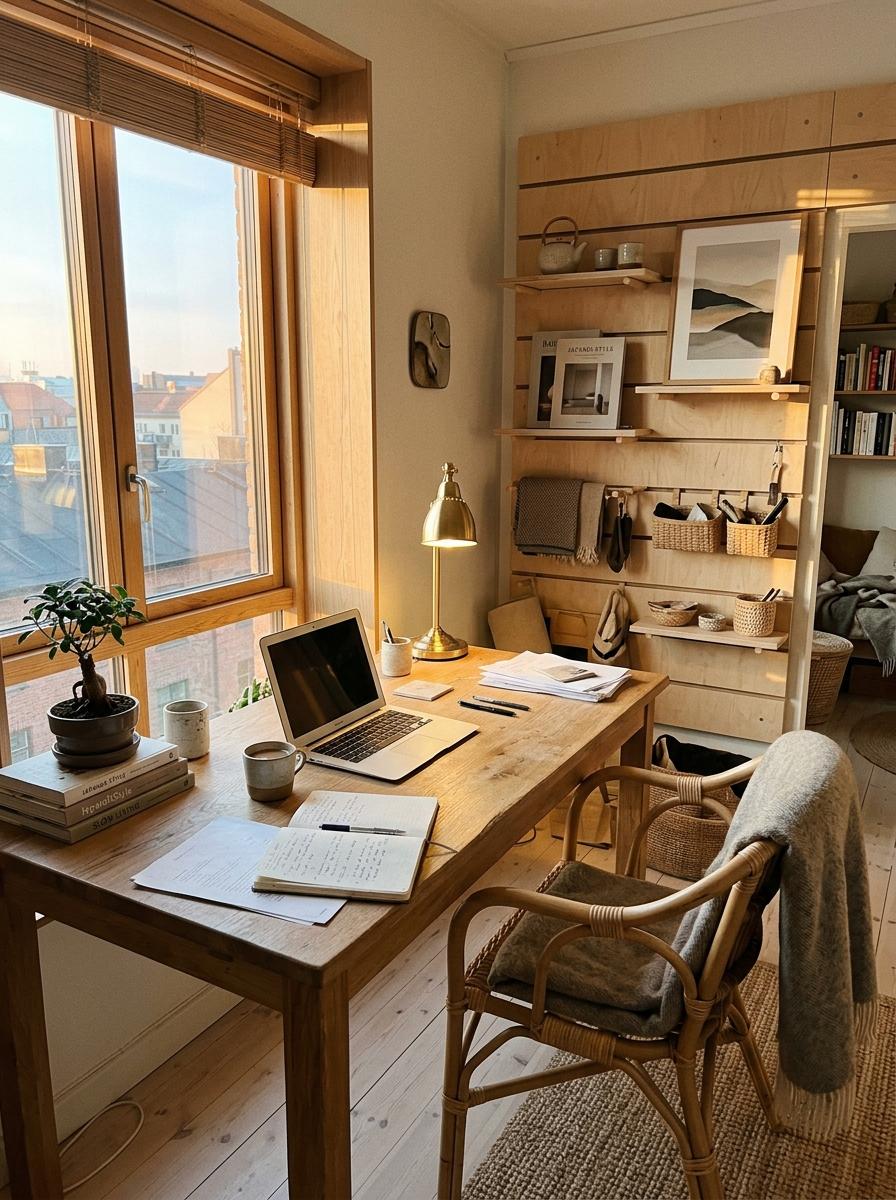

The study resides in a deliberate quietude, a niche carved from the home's frantic pulse where light pools in soft, geometric shadows across the floor. This workspace embodies a cluttered minimalism, a curated density where every object carries the weight of purpose without the burden of excess. While the external world demands a relentless, high-velocity output, the interior remains a sanctuary of slow productivity, drawing a sharp boundary between urban chaos and creative stillness. Beneath the fingertips, the grainy landscape of a raw white oak desk meets the cool, open-weave texture of natural rattan, offering a tactile dialogue between Japanese craftsmanship and Scandinavian forestry. To resolve the friction between domestic life and professional rigor, a series of integrated modular slat-walls serve as a functionalist spine, organizing tools with industrial precision while maintaining the seamless, organic warmth essential to the Japandi soul.
Discover A Thoughtful Workspace Centered On Japandi Interior Design
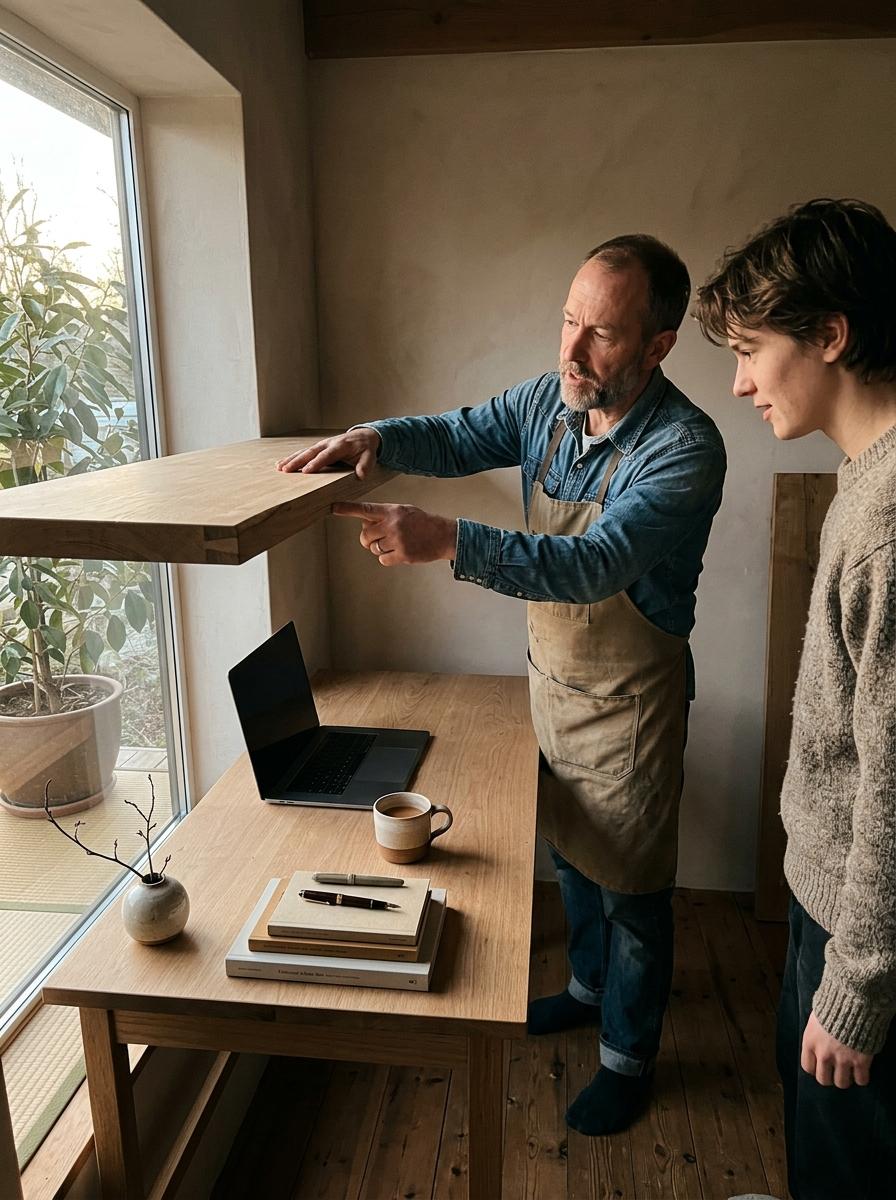

Walking into the average modern office often feels like being caught in a crossfire of "visual noise"-a frantic collage of cold, brushed steel and the relentless, fluorescent hum of productivity. It was this specific sensory overload that I discussed with a local craftsman last week while we surveyed his latest project. "The modern desk has become a battlefield," he remarked, tracing the grain of a reclaimed white oak surface, "where we sacrifice our focus," he paused to adjust a hand-planed joint, "for the sake of sheer, uninspired utility." This tension between the chaotic outside world and the need for internal stillness is where the Japandi ethos finds its voice. By marrying the rustic, tactile warmth of wabi-sabi with the rigorous, tectonic precision of Scandinavian hygge, we move away from sterile cubicles toward an environment of intentionality. This shift from clutter to composition is not merely about aesthetics, but about how a curated workspace can serve as the silent architecture of a focused mind.
The Evolution Of A Private Office Into A Japandi Design Masterpiece
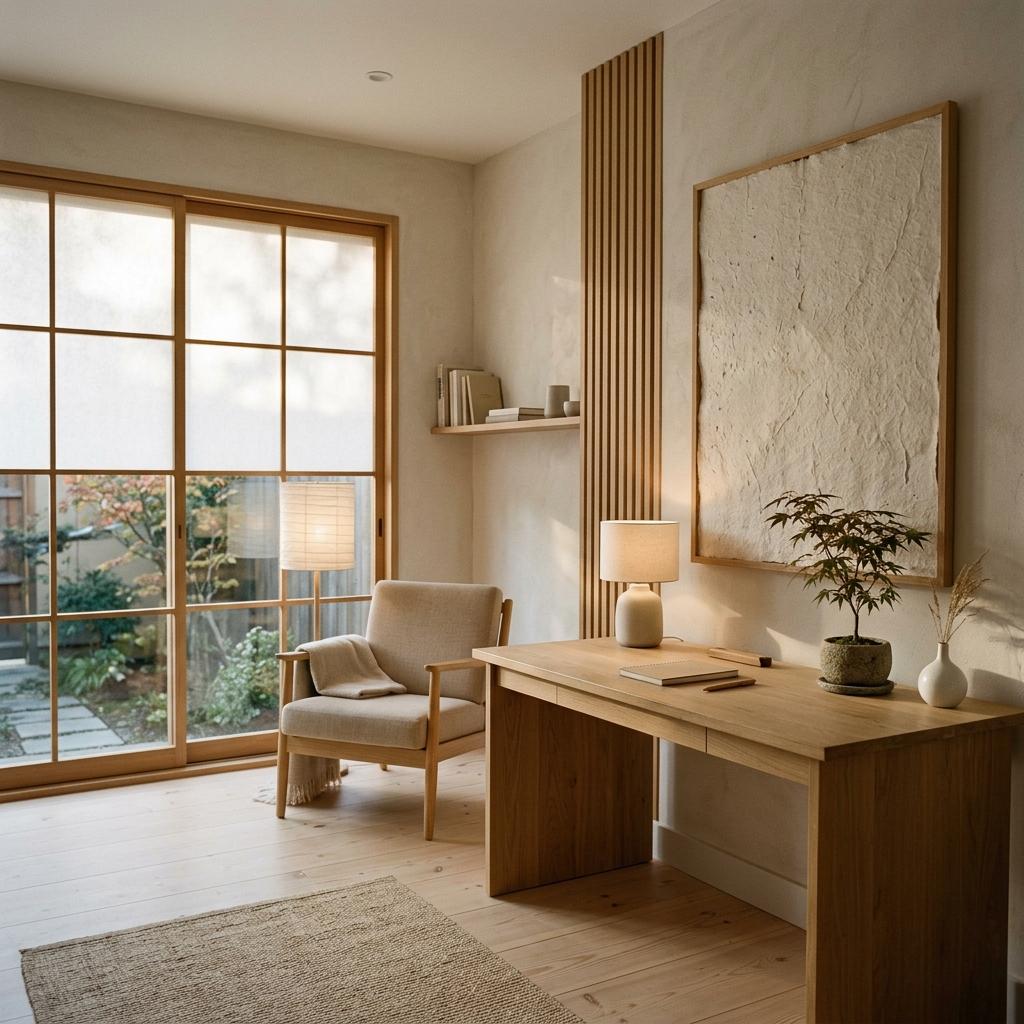

The transformation of this workspace was initiated when a conventional corporate layout was dismantled and reimagined through a lens of intentional restraint. Within this revitalized shell, a hollow hush anchors the atmosphere, anchored by an unburdened expanse where every superfluous detail has been meticulously scrubbed away. The design fosters a serene stillness, weaving together pale pine, polished pebbles, and porous paper to establish a soft, tactile rhythm. This architectural strategy carves out clarity, extends the perceived horizon, and breathes vitality into the once-static volume. Ultimately, the room balances light, anchors focus, and invites introspection.
Seamless Integration Of Natural Wood In A Japandi Style Office
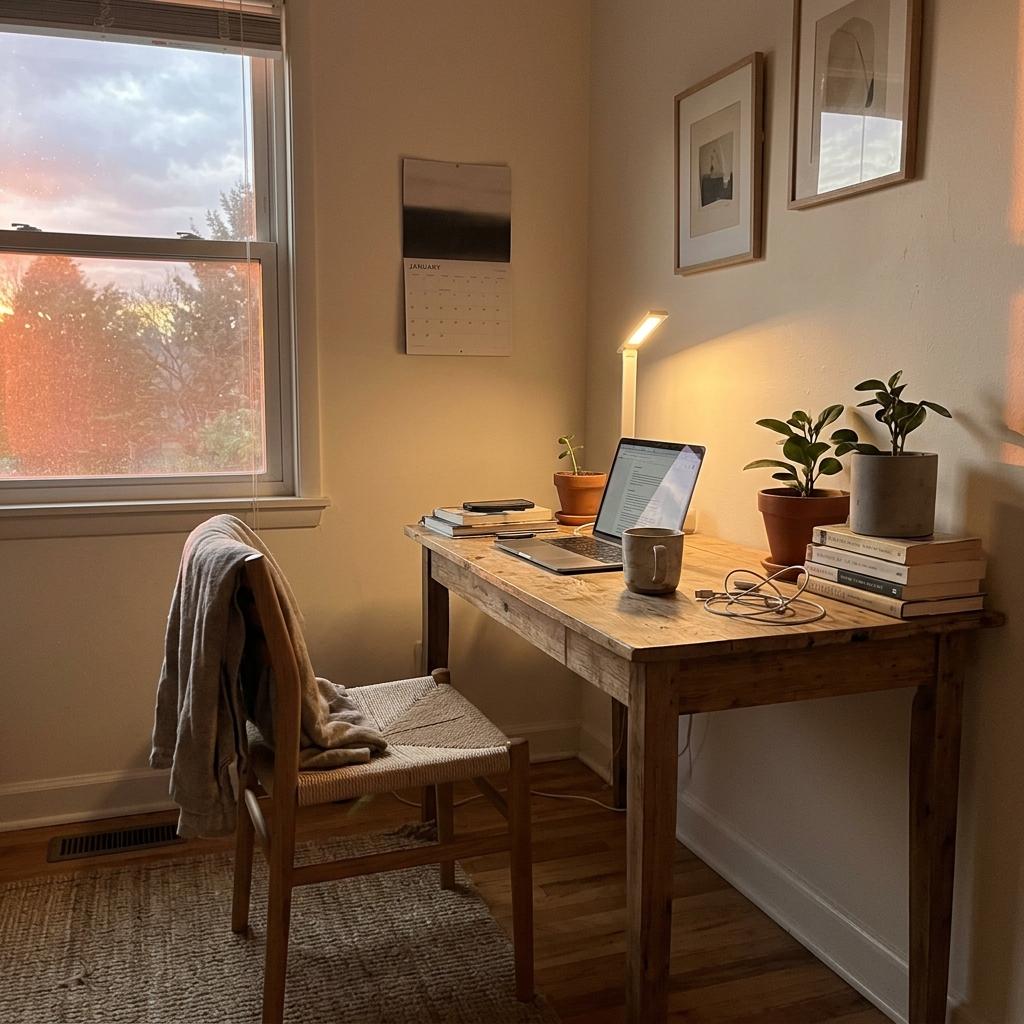

In analyzing the contemporary workspace, we need to recognize that Japandi is not merely a trend, but a rigorous synthesis-the intersection where the rustic, weathered soul of Japanese wabi-sabi meets the clean-lined, functional pragmatism of Scandinavian hygge. To achieve a seamless integration of natural wood in an office setting requires a mastery of textural interplay; the material must feel primordial yet disciplined, offering a tactile grounding that tames the clinical sharpness of modern technology. By utilizing timber with a matte, open-pore finish, the design evokes a sensorial landscape that is simultaneously tectonic and ethereal, rugged yet refined. This dialectical pairing ensures that the warmth of the wood provides a necessary counterbalance to minimalist geometry, transforming a static corporate environment into a sanctuary of haptic resonance and cognitive clarity.


Comments