
By synthesizing the rigorous functionalism of Scandinavian hygge with the meditative impermanence of Japanese wabi-sabi, we arrive at a Japandi workspace that transcends mere utility to become an ecosystem of intentionality. This aesthetic intersection demands a sophisticated calibration of soft minimalism where the clinical precision of Nordic ergonomics meets the soulful, weathered organicism of Eastern craft. The result is an environment that feels architecturally disciplined yet profoundly tactile, balancing the austere demands of high-focus productivity with the restorative quietude of a sanctuary. To curate a Zen Japandi office is to assemble a collection of haptic essentials: objects that are visually ethereal, structurally resilient, and atmospherically grounding.
Zen Japandi Office

Minimalist Zen Japandi Office Interior Design
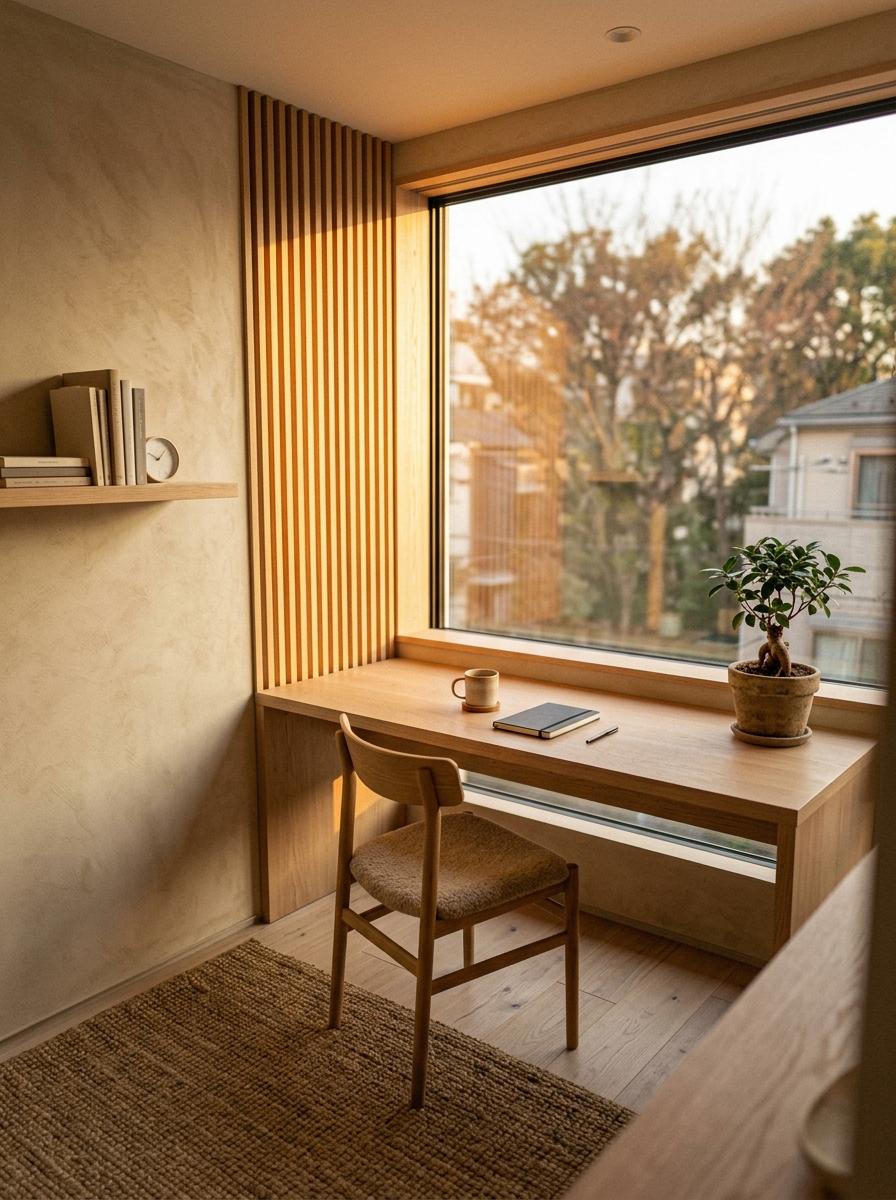

The evolution of the workplace has shifted from the rigid, cubicle-defined hierarchies of the 1990s to a contemporary pursuit of spatial mindfulness, where the office is no longer a factory for output but a sanctuary for thought. In this project, we explore a Minimalist Zen Japandi Office that thrives on a "Structured Fluidity"-an oxymoronic design tension where the unwavering discipline of Japanese minimalism meets the soft, organic warmth of Scandinavian hygge. Situated in the heart of Tokyo's sophisticated Aoyama district, this project was commissioned by a repeat client who, having previously collaborated on their residential estate, entrusted the team with translating their private lifestyle values into a corporate environment. The resulting interior achieves its poise through a meticulous technical synthesis, utilizing low-profile rhythmic slatting, a monochromatic lime-wash palette, and the strategic manipulation of diffused natural light to dissolve the traditional boundaries between labor and repose.
Productive Haven: A Spare Bedroom Turned Zen Japandi Office
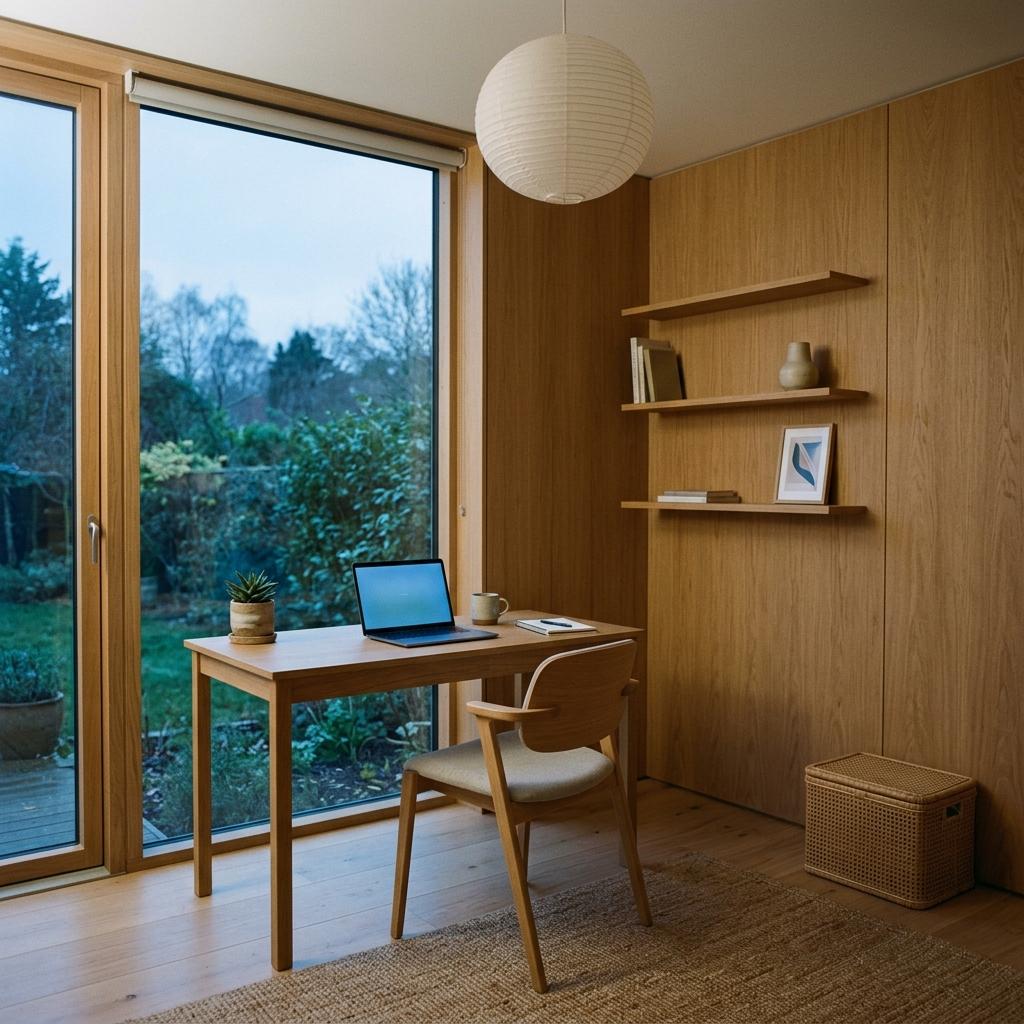

The transformation of this underutilized spare room was commissioned by a client seeking to reconcile professional focus with domestic tranquility. Within this sequestered sanctuary, every surface remains unburdened by clutter, yielding an airy aesthetic that celebrates the intentional absence of the unnecessary. Warm wood wraps the walls, weaving together a sense of grounded grace and quiet quality. The central desk carves out a dedicated zone for deep work, while the floor-to-ceiling windows stretch the perceived boundaries of the room to invite a soft, diffuse glow. This deliberate composition harmonizes natural light, neutral tones, and noble materials.
Walk Through A Refreshed Workspace With Touch Of Japandi Style
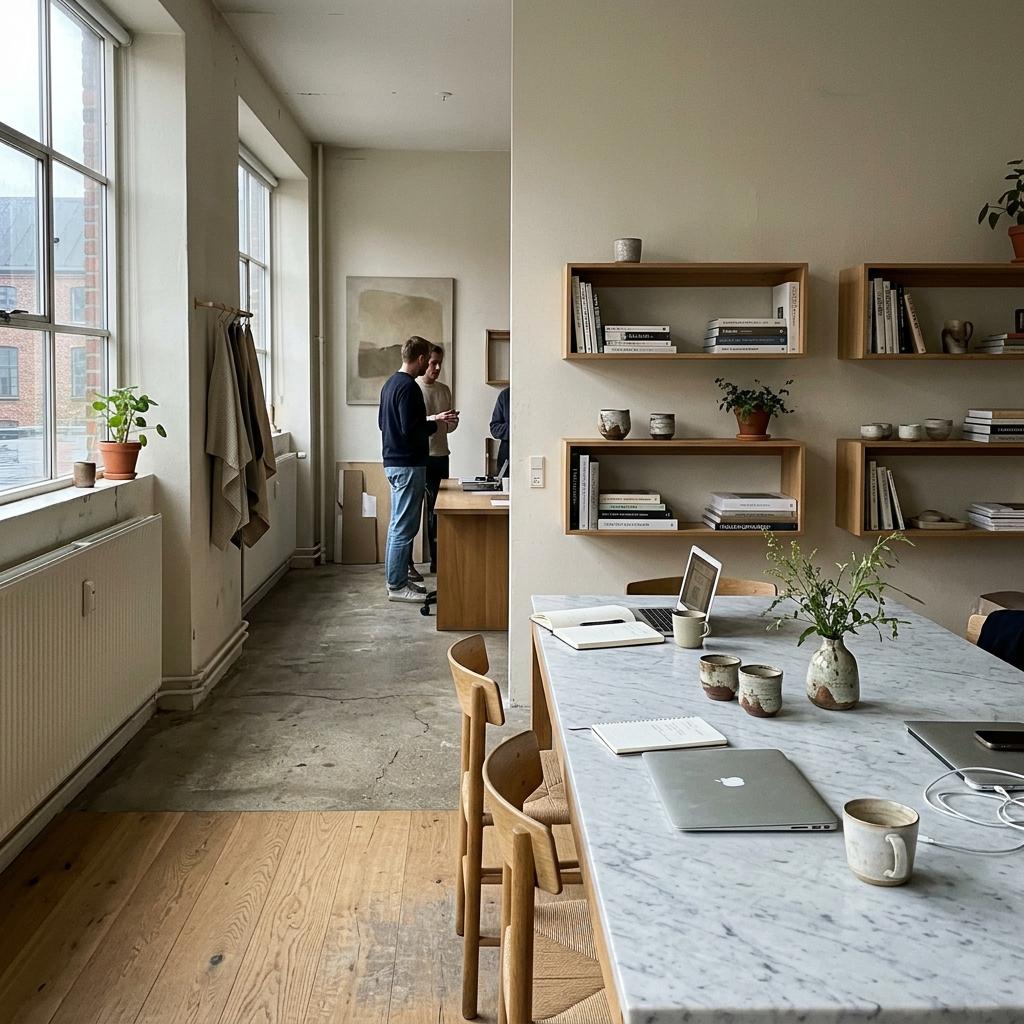

The workspace undergoes a radical metamorphosis, shedding its clinical skin for a palette rooted in quietude. Note how the tactile landscape shifts beneath your gaze, transitioning from the raw, open-pored grain of solid white oak to the cool, honed surface of honed Carrara marble. This is a study in structured spontaneity, where the rigid geometry of Scandinavian functionalism is softened by the deliberate, wabi-sabi imperfections of handcrafted Japanese ceramics. As you move deeper into the room, the visual harmony triggers a rhythmic slowing of the pulse; the "clutter-noise" of traditional office life is replaced by a profound, breathing silence that settles in the chest. This curated environment reflects the signature ethos of Kyoto-inspired minimalism, yet it is grounded in the urban vernacular of a Copenhagen atelier. By weaving together these disparate geographical threads, the design creates a sanctuary where the intellectual rigor of work is tempered by an almost spiritual physical ease.
Glimpse A Fashionable Modern Workstation With Japandi Interior Design
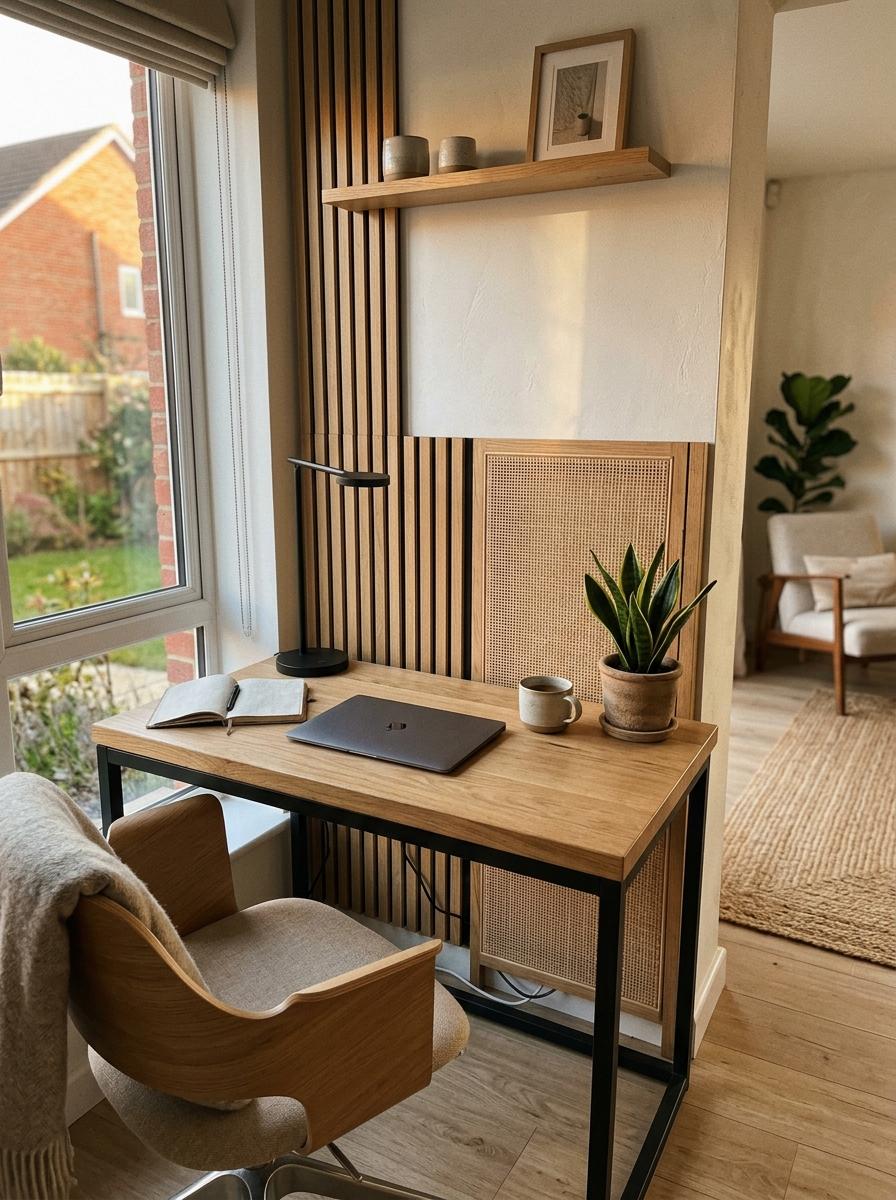

The modern workstation exists as a quiet sanctuary carved from the frantic pace of the digital age, a niche where the home's domestic warmth anchors the clinical precision of the office. It thrives on a structured fluidity, reconciling the rigid demands of professional productivity with the soft, meditative pauses inherent to the Japandi aesthetic. While the exterior world vibrates with chaotic stimuli, this interior cell remains a vacuum of intentionality, creating a sharp distinction between the boundless noise of the web and the tactile stillness of the physical desk. A slab of hand-planed solid white oak serves as the tactile foundation, its open grain contrasting against the matte, powder-coated steel of a slim task lamp. Every element-from the integrated cable management tucked behind woven rattan screens to the ergonomic alignment of the chair-functions as a deliberate solution to cognitive clutter, transforming the workstation into a high-utility engine wrapped in a hushed, organic veil.
Inside A Quiet Zen Japandi Office In The Small Apartment
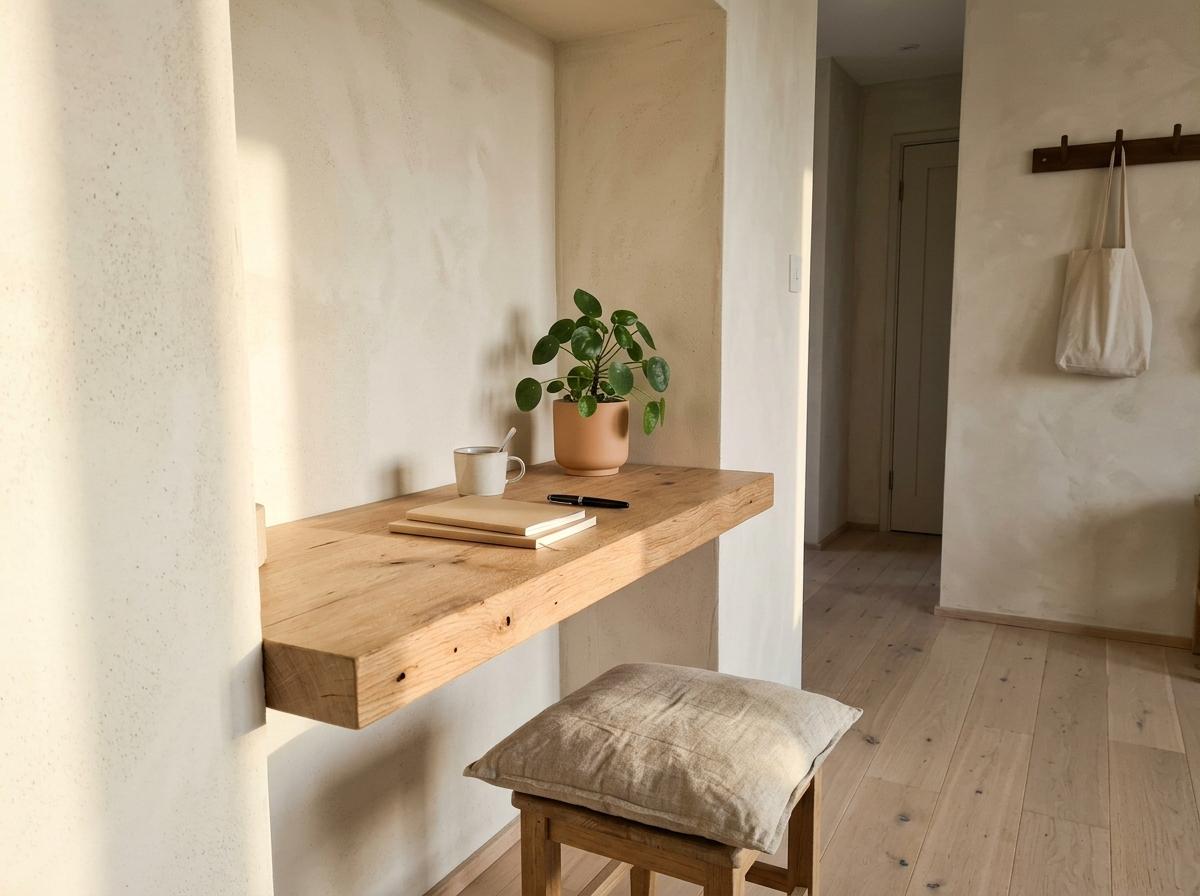

The transformation of this compact floor plan was achieved through a deliberate reconfiguration of light and timber, ensuring that the workspace remains tethered to the home's domestic heart without succumbing to clutter. Within this hollowed-out alcove, the aesthetic is defined by its pristine, pale, and porous surfaces, creating a void that feels remarkably full of potential. Soft shadows stretch across the seamless surfaces, weaving a sense of quietude through the corridor. The layout diligently carves out new dimensions, stretches the perceived ceiling height, and anchors the desk against a backdrop of raw oak. This intentional void invites a clarity of thought, perfected by the harmony of diffused sunlight, tactile textures, and balanced proportions.
A Workplace With Modern Zen Japandi Interior Design Focus
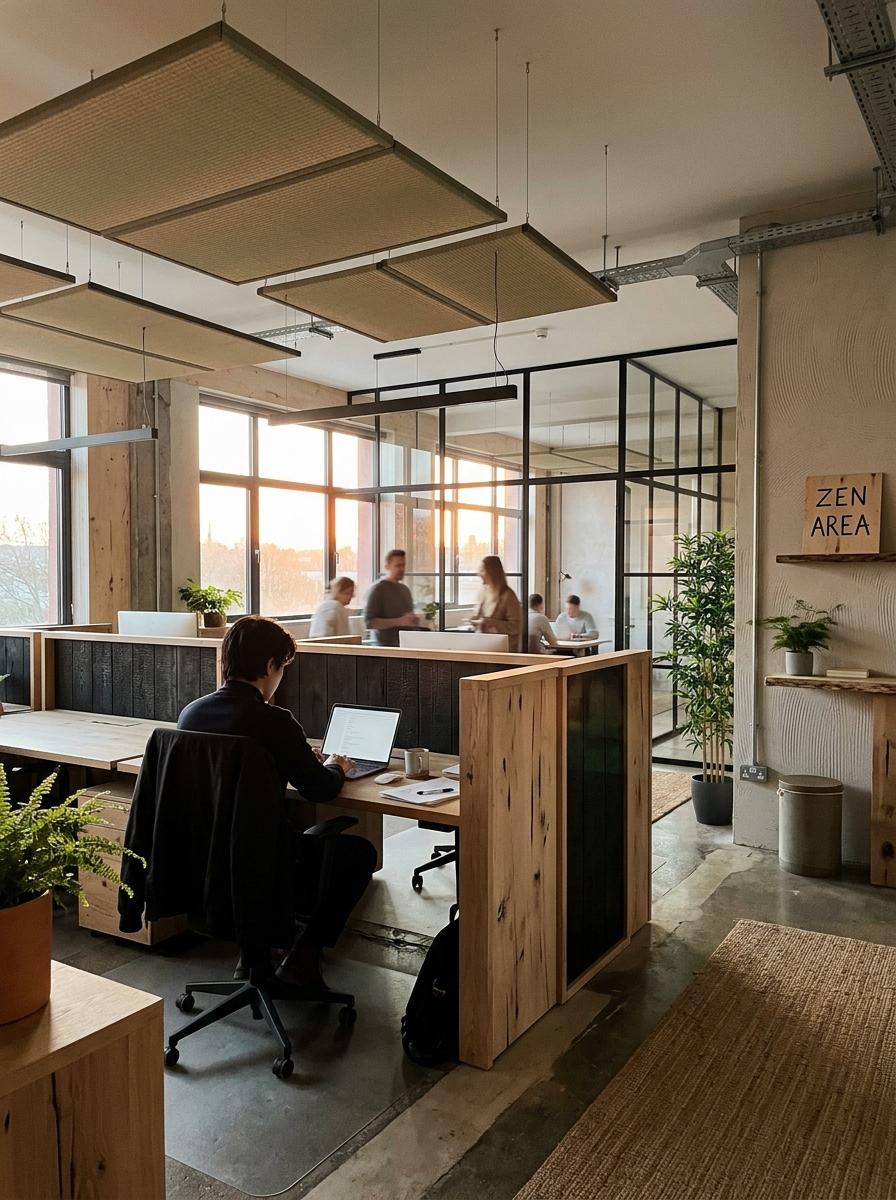

The modern workplace is no longer a mere site of production, but a pressurized vessel where high-velocity corporate demands intersect with the primal human need for stillness. Within the confines of the contemporary office, a planned spontaneity emerges-a curated chaos where the rigid geometry of Scandinavian efficiency is softened by the wabi-sabi philosophy of imperfection. This creates a striking tension between the internal psychological sanctuary of the worker and the external technical performance of the grid, ensuring that focus is harvested rather than forced. Tactile encounters with charred Shou Sugi Ban timber panels and raw, open-pore light oak provide a sensory anchor against the weightless flicker of digital screens. Ultimately, the integration of modular tatami-inspired acoustic baffles serves as a vital industrial solution, neutralizing the roar of open-plan communication to preserve the sacred, silent core of the Japandi ethos.
Embrace A Modern Workspace With Japandi Design Influences
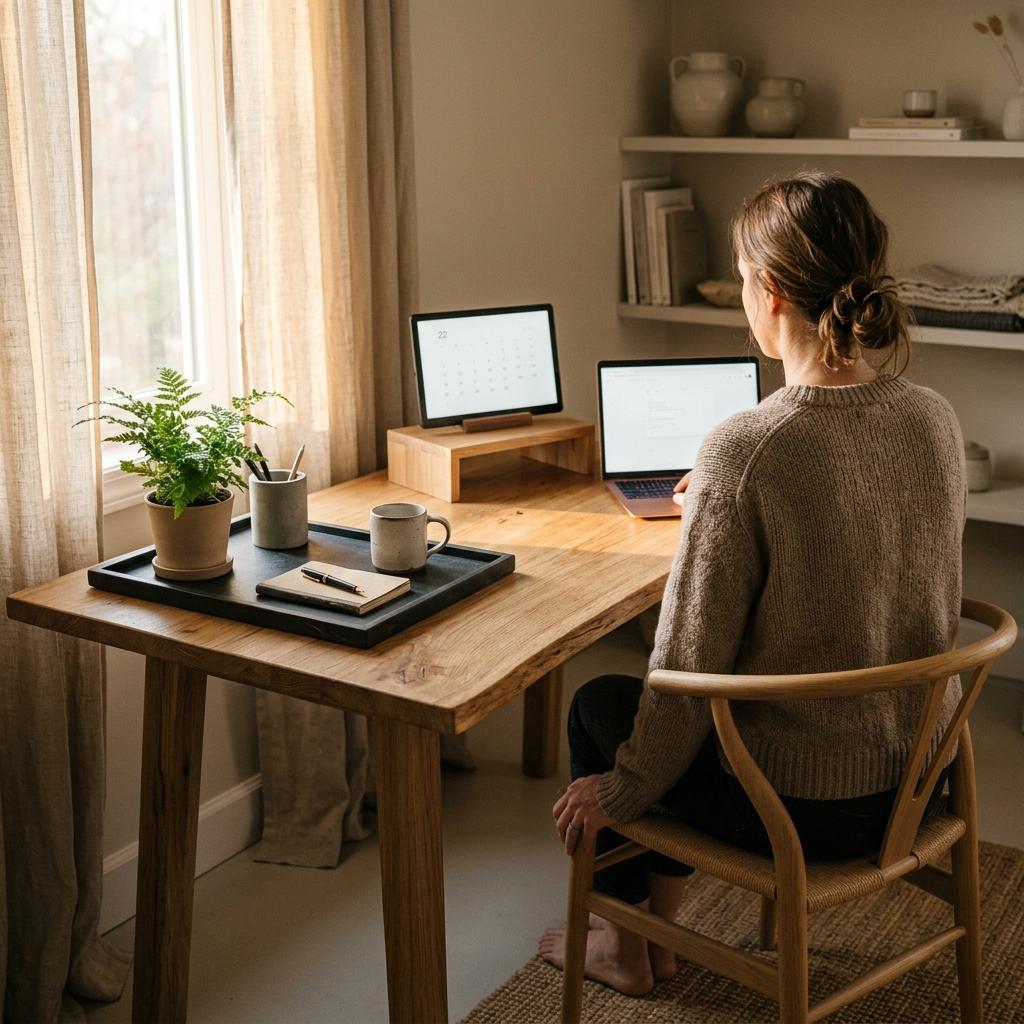

To transform a sterile office into a sanctuary of focus, we need to first master the dialogue between tactile indulgence and rigorous restraint. Start with the centerpiece: a desk crafted from solid, open-pore white oak, where the grain offers a fibrous, topographical depth that grounds the workspace. Note how the desk's asymmetrical symmetry creates a visual anchor; the silhouette is strictly geometric, yet the hand-rubbed oil finish feels skin-soft and organic, bordering on the primordial. This is the essence of the Japandi aesthetic-a structured spontaneity that reconciles the rustic imperfections of Wabi-sabi with the clinical precision of Scandinavian Funkis movements. As your palms rest against the cool, matte-honed basalt of a desk tray or the resilient, open-weave tactile grip of a paper-cord chair, you will feel a palpable shift in your nervous system. The frantic pulse of the workday begins to decelerate, replaced by a heavy lightness-a physiological centering that lowers cortisol as surely as any forest walk. By integrating the low-profile, architectural sobriety found in the flagship showrooms of Aoyama with the hygge-driven warmth of a Copenhagen studio, you cultivate a space that doesn't just house your labor, but actively restores your cognitive clarity.
This Natural Zen Japandi Office Is A Quiet Refuge In The Home
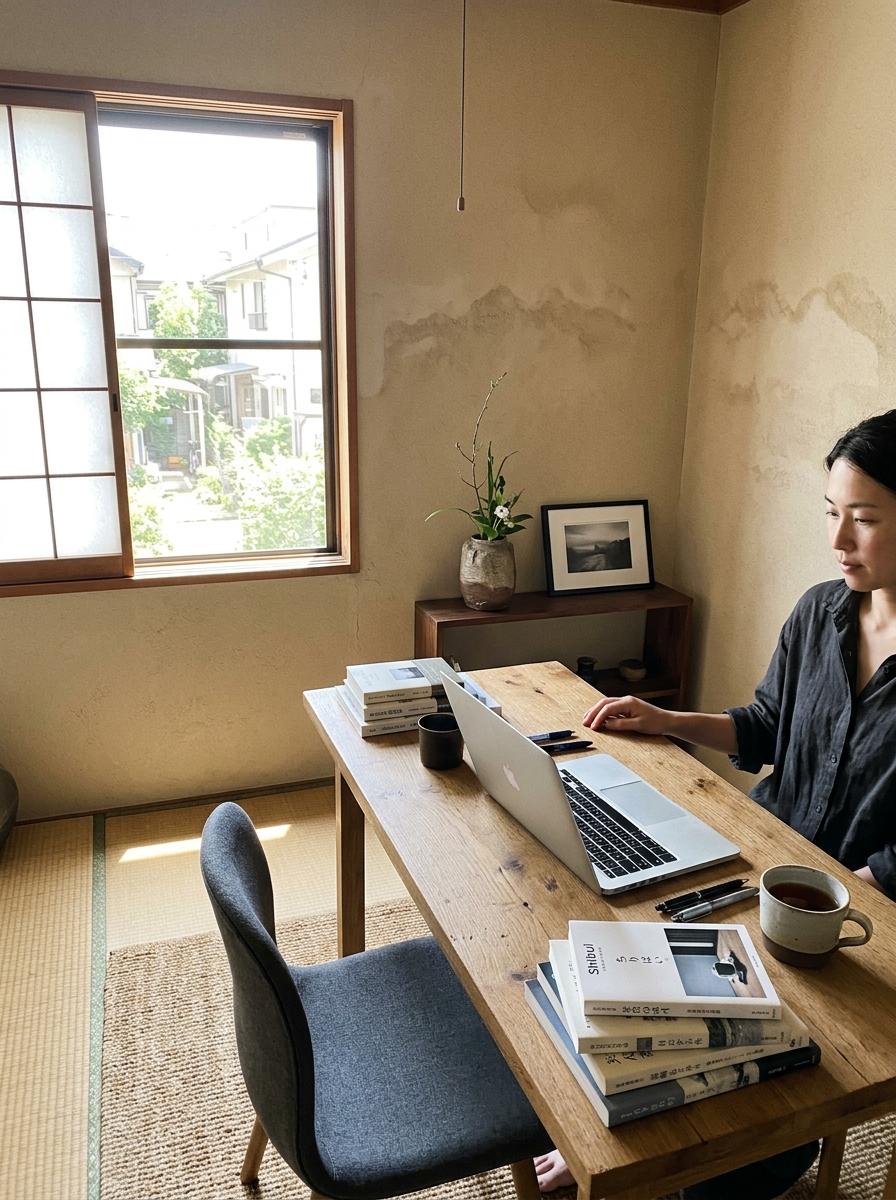

Stepping inside the study, the cacophony of the city-the unrelenting siren wail and the abrasive grit of industrial life-suddenly retreats into a dull, forgotten hum. "I wanted a space that didn't just house my work," the homeowner explained, trailing a hand over a desk of reclaimed white oak, "but one that actually... breathes with me." This pursuit of a quiet refuge led to a masterclass in Japandi restraint, where the sterile coldness of a traditional corporate office is traded for a palette of warm oaks and tactile shanshui-inspired textures. By favoring a low-slung, horizontal silhouette and a monochromatic scheme of oatmeal and charcoal, the room achieves a state of shibui-that elusive, bittersweet beauty found in understated details. It is here, in the intentional tension between Scandinavian functionality and Zen minimalism, that we find a blueprint for how our domestic environments can finally heal the fractures of a hyper-connected world.
How A Small Workspace Embraces Zen Japandi Interior Design Style
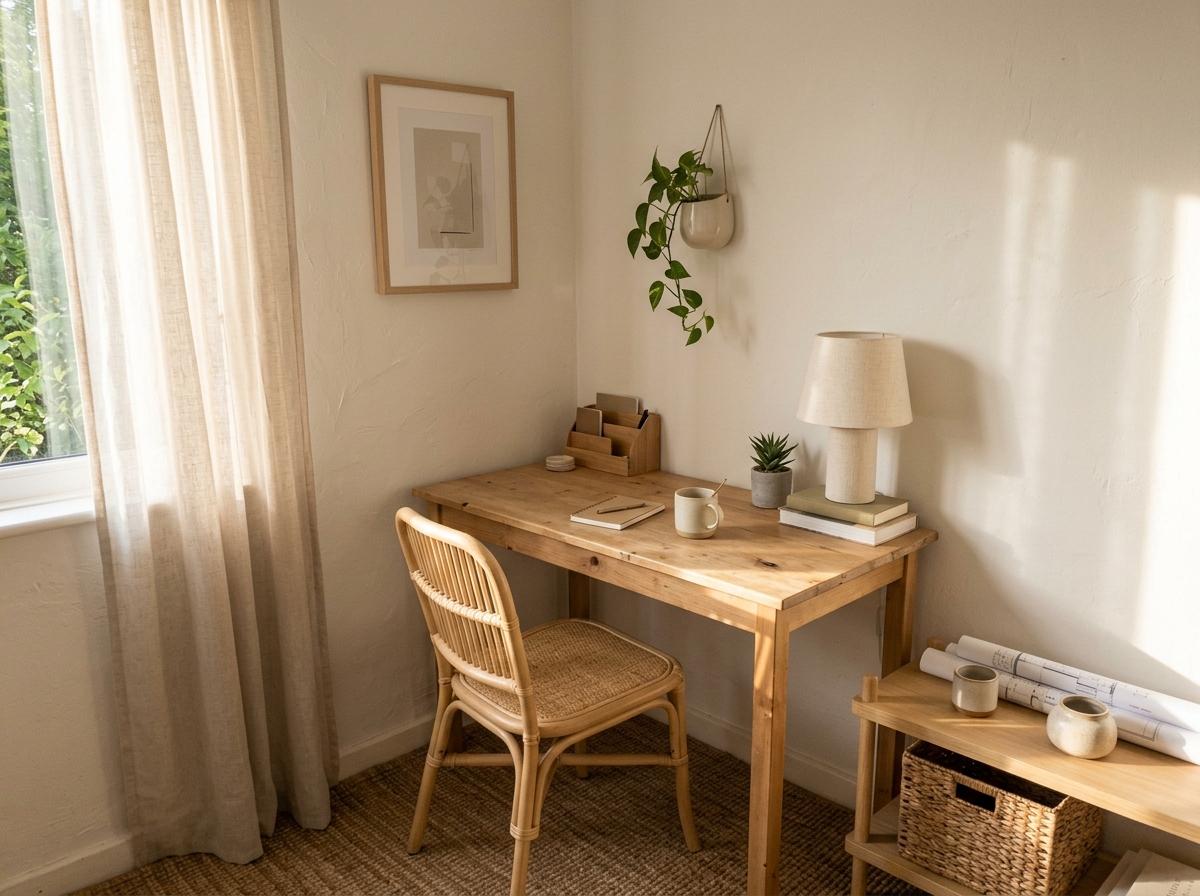

The structural harmony of this small workspace was meticulously conceived through a fusion of traditional craft and modern restraint. Within the compact footprint, an intentional vacuum of clutter permits a quiet, tactile clarity to emerge from the unadorned surfaces. Soft sunlight streams across the setting, highlighting the pristine presence of pale timbers and paper-thin textures. The layout actively breathes life into the corner, carving out a sanctuary that stretches the perceived boundaries of the walls. To achieve this zen equilibrium, the design skillfully balances bento-box precision, bare-bones beauty, and breathable boundaries.
Refined Professionalism: A Corporate Suite Reimagined With Japandi Style
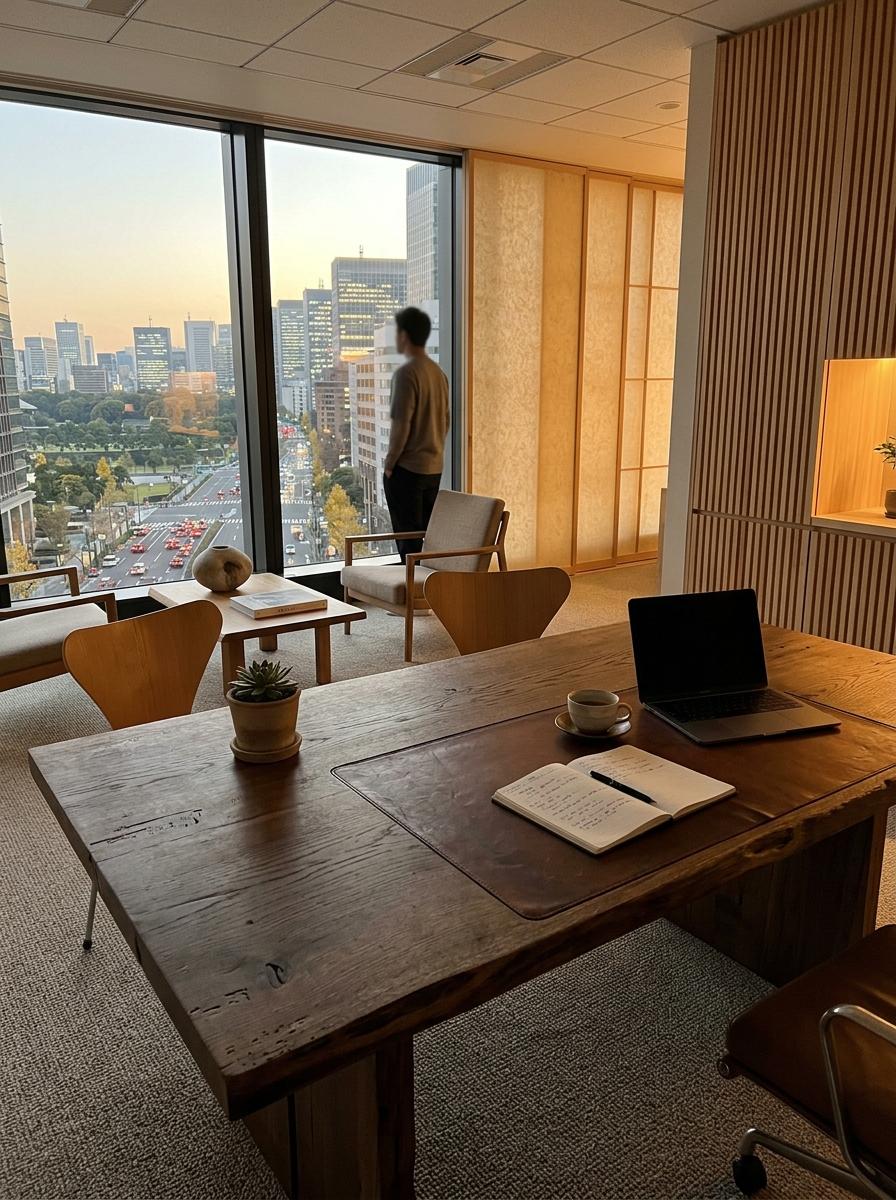

In this corporate suite overlooking the high-octane pulse of Tokyo's Marunouchi district, the traditional office aesthetic is replaced by a philosophy of structured serenity. Here, the cold rigidity of global finance meets the tactile warmth of a Kyoto teahouse, creating a workspace that is simultaneously commanding and quiet. Note how the desk-a monolithic slab of wire-brushed, open-pore fumed oak-anchors the room; its surface offers a haptic feedback that transitions from the jagged grain of the timber to the buttery smoothness of inset saddle leather. This is the essence of Japandi in a professional context: the marriage of Scandinavian industrial precision with the weathered, wabi-sabi imperfections of Japanese craft. As the eye moves across the space, the atmosphere shifts from the visual to the physiological. The ambient scent of hinoki wood, emanating from the vertical slatted cabinetry, lowers the cortisol levels of every visitor, slowing the heart rate even as high-stakes negotiations unfold. This environment achieves a rare dynamic stillness, where the sharp, geometric lines of a Fritz Hansen silhouette are softened by the fibrous, organic translucency of handmade washi paper screens. To stand within this suite is to experience a physical release of tension; the heavy burden of corporate responsibility is counterbalanced by the airy lightness of the architecture, turning a site of labor into a sanctuary of focused clarity.
Walk Through An Organized Zen Japandi Office Concept
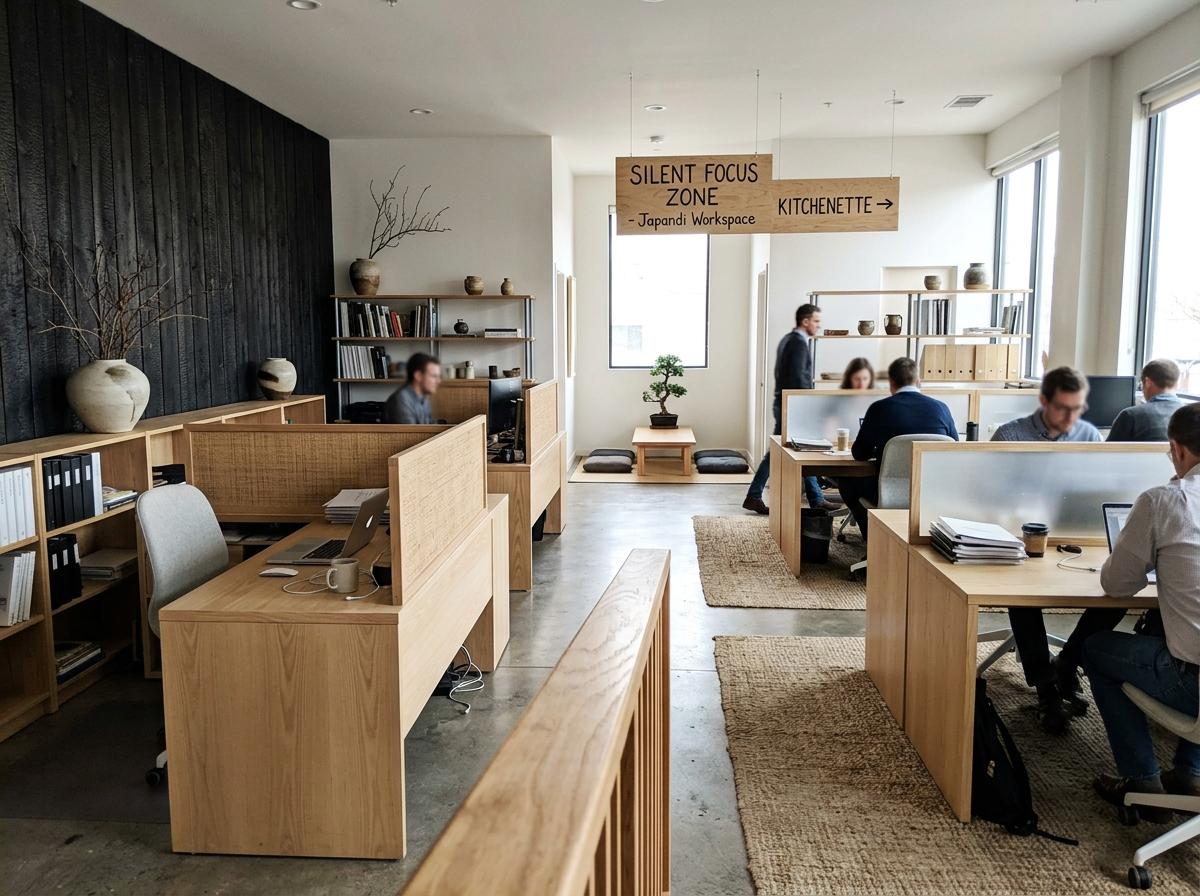

To step into an organized Zen Japandi office is to experience the precise intersection where Scandi-industrial efficiency meets the meditative ethos of Wabi-sabi; it is a deliberate synthesis of northern pragmatism and eastern intentionality. The space operates through a rigorous dialectical pairing, appearing austere yet deeply nurturing, where the rigid geometry of a modular workstation is softened by the organic, asymmetrical silhouettes of handcrafted ceramics. Here, the atmosphere is defined by a sensorial stacking of elements-hushed, tactile, and diaphanous-that transform a mere place of labor into a sanctuary of cognitive clarity. By utilizing niche architectural anchors like shou sugi ban textures alongside blonde white oak, the design achieves a sophisticated equilibrium: it remains functionally hyper-rational for the modern professional, yet remains profoundly anchored in the soulful, restorative stillness of the natural world.
Glimpse A Sophisticated Study With Zen Japandi Design Trends
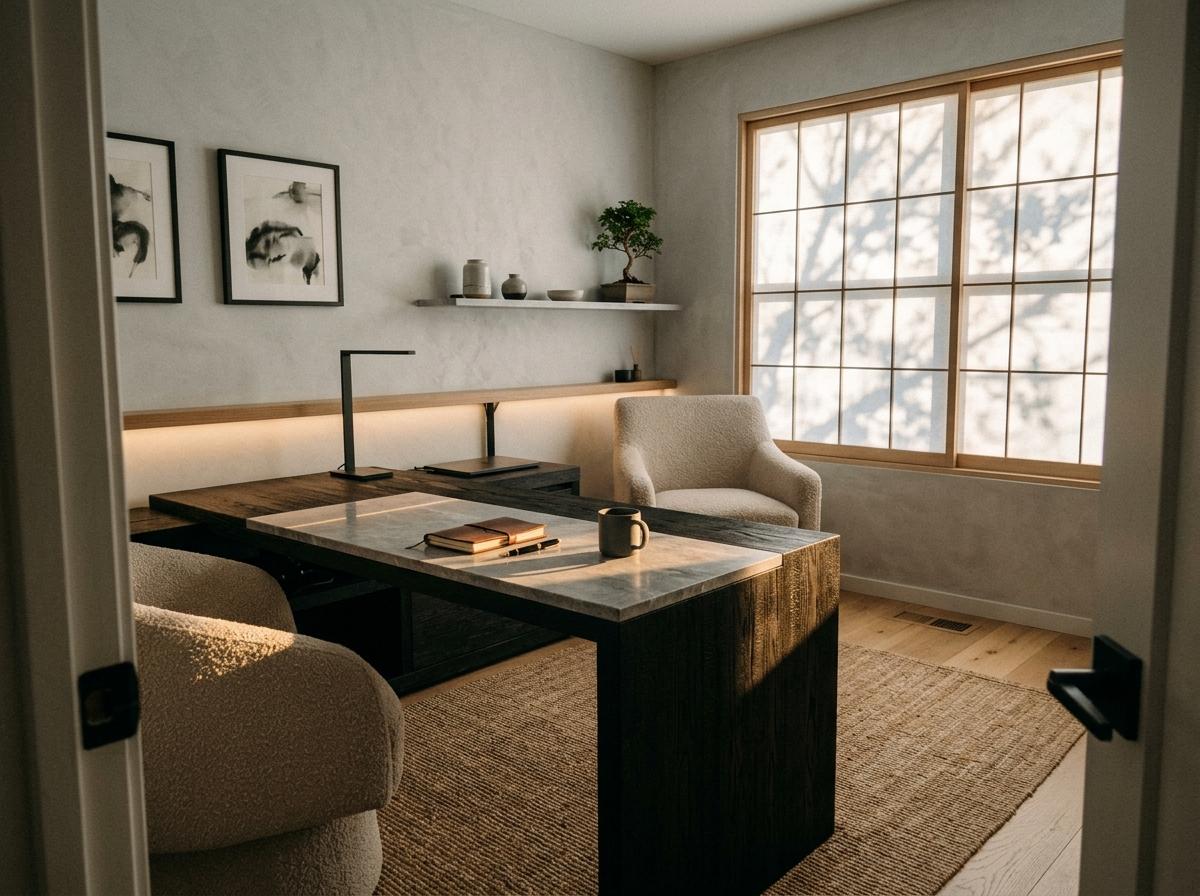

The sophisticated study exists as a cloistered sanctuary where the weight of the world dissolves into the quietude of a high-altitude retreat. Here, a harmonious tension defines the room, where the strict rigor of Japanese minimalism meets the fluid warmth of Scandinavian comfort, proving that a space can be both intensely disciplined and deeply inviting. This internal stillness stands in stark contrast to the external cacophony of the digital age, insulating the mind within a shell of architectural silence. Beneath the fingertips, the grainy topography of sandblasted Shou Sugi Ban wood meets the cool, honed surface of Grey Pietra marble, offering a tactile dialogue between charred resilience and mineral permanence. Ultimately, the integration of recessed task lighting and hidden cable management serves as a vital industrial solution, ensuring that the poetic atmosphere remains undisturbed by the utilitarian clutter of modern productivity.
Inside A Balanced Zen Japandi Office Layout
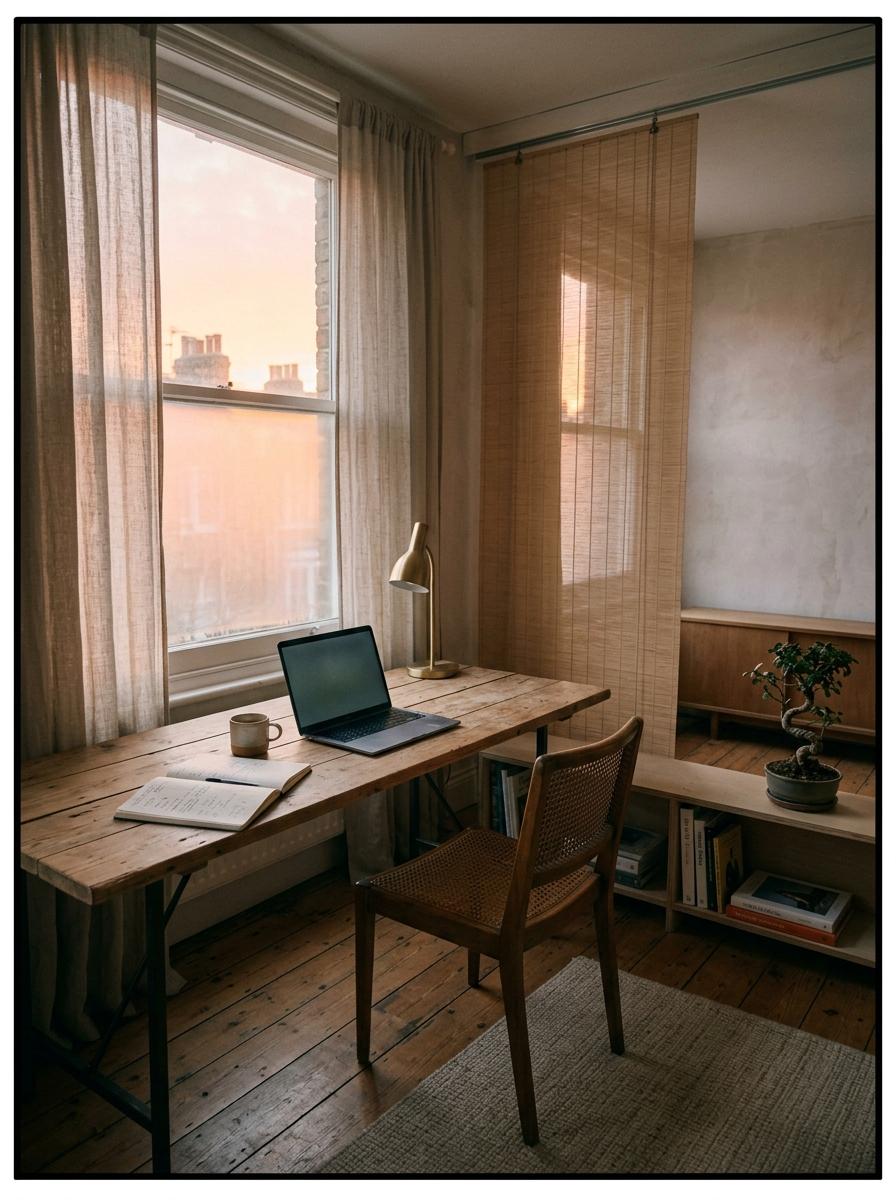

To understand the essence of this Zen Japandi office, we need to first look back at the rigid, high-gloss corporate aesthetics that defined the late nineties-a period of sterile efficiency that has now evolved into an era of mindful sanctuary. This workspace embraces a chaotic stillness, where the raw, organic imperfections of Wabi-sabi meet the razor-sharp precision of Scandinavian minimalism. Located in the heart of London's refined Marylebone district, the project marks another collaboration with a repeat client, whose continued trust serves as a testament to the enduring functionality of this aesthetic. The final result is achieved through a meticulous technical synthesis, where low-profile horizontal planes and diffused light filtration are leveraged to dissolve the boundary between professional productivity and internal peace.
A Creative Studio With Modern Zen Japandi Interior Design Focus
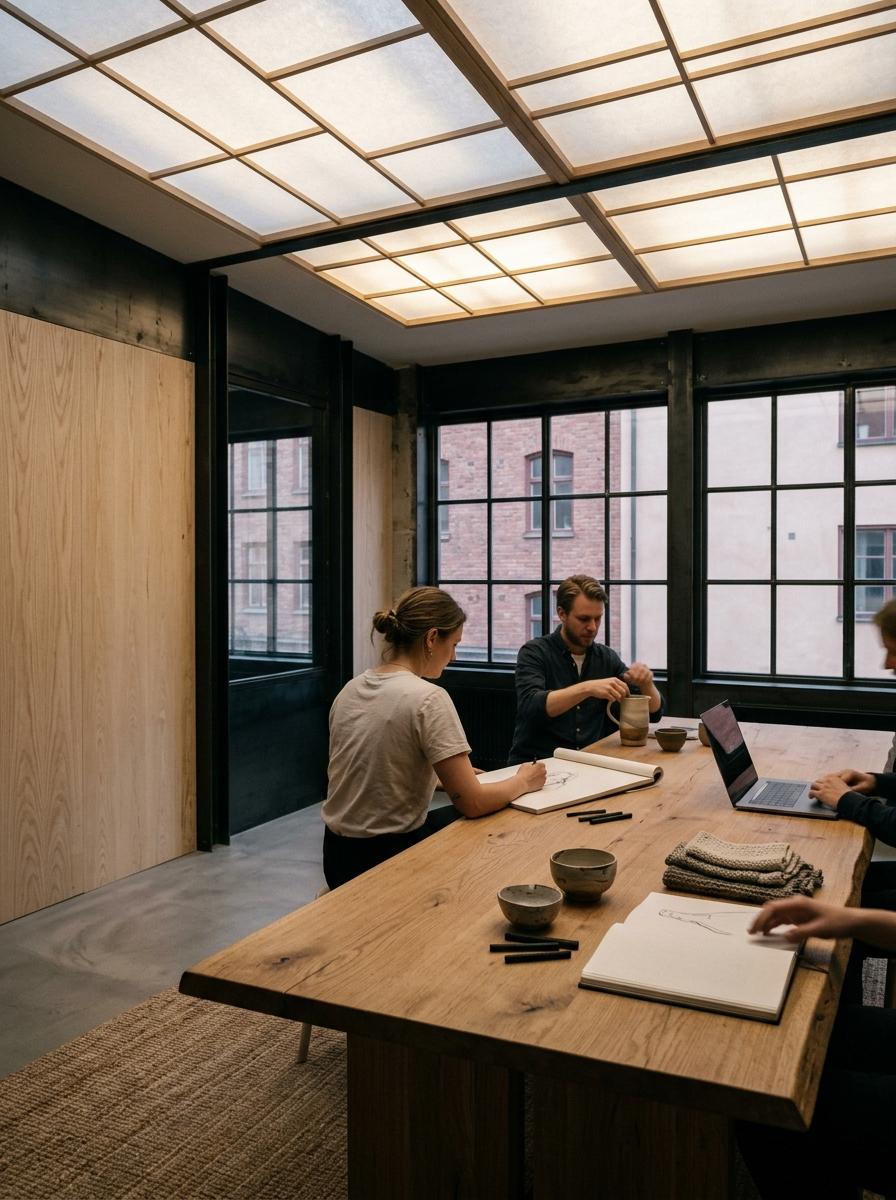

In this creative studio, the architectural narrative is defined by a curated palette of fibrous, open-pore ash wood and cold-rolled, blackened steel, creating a dialogue between organic warmth and industrial precision. Note how the overhead light filters through translucent washi-paper screens, casting a soft, lunar glow that simultaneously illuminates and obscures the workspace. This design achieves a deliberate spontaneity, where the rigid geometry of Scandinavian minimalism meets the intentional imperfection of Wabi-sabi. As you transition from the tactile grain of the communal oak table to the cool, velvet-matte finish of the micro-cement flooring, a physiological shift occurs; the heart rate slows, and the frantic noise of the city outside dissolves into a heavy, comforting silence. This is not merely an office, but a sanctuary of focus located in the heart of Stockholm's Södermalm district, where the local penchant for functionalism is reinterpreted through an Eastern lens, proving that a space can be both intellectually rigorous and spiritually expansive.
Embrace An Organic Workspace With Japandi Design Influences
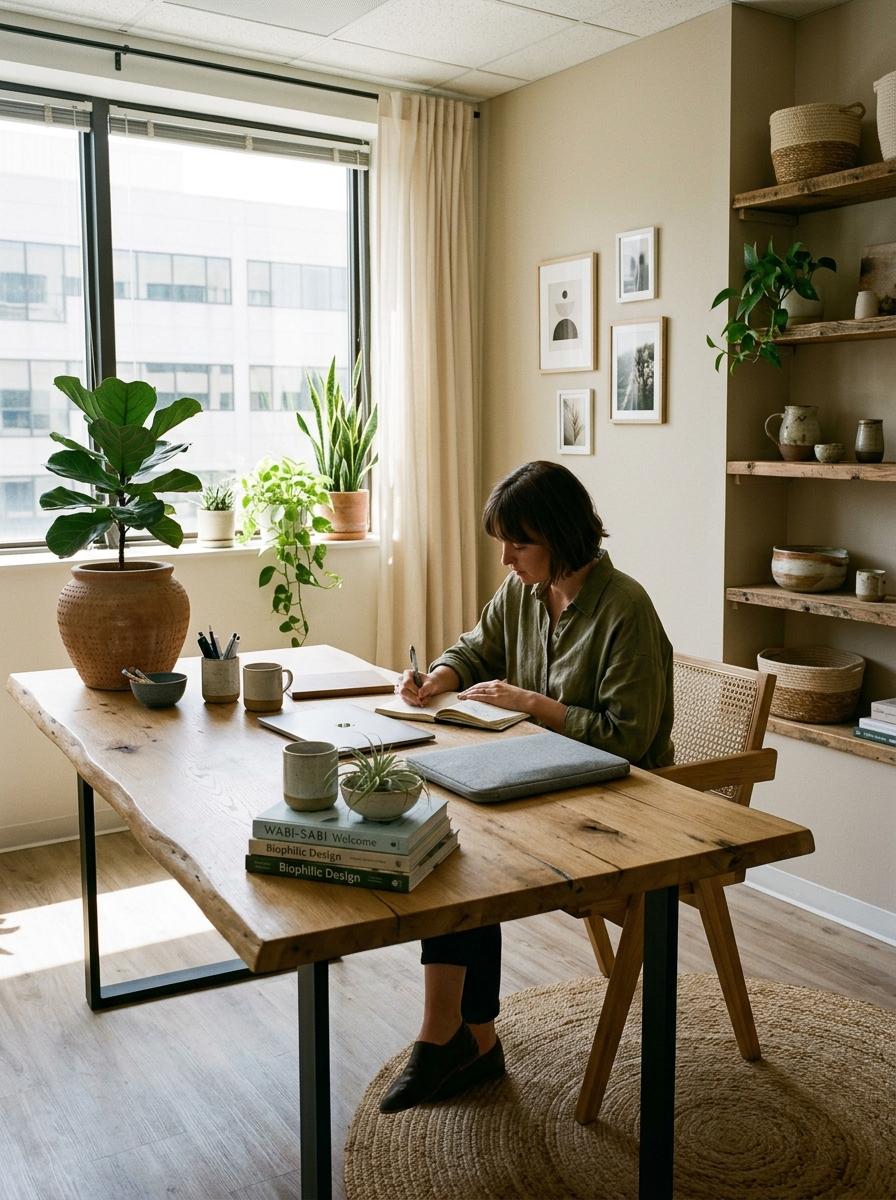

I recently found myself standing in a high-gloss corporate lobby, a space defined by the aggressive hum of fluorescent lighting and the sterile, monochromatic rigidity of industrial steel. It was, as one colleague dryly noted while gesturing toward the cavernous, echoing atrium, "the kind of place designed for productivity," she paused to adjust her collar against the artificial chill, "but certainly not for people." This stark juxtaposition serves as the ultimate foil to the Japandi ethos, where the clinical coldness of modern minimalism is softened by the tactile warmth of organic materiality. By trading sharp, abrasive corners for the wabi-sabi appreciation of natural wood grains and replacing static layouts with a more fluid, spatial choreography, we begin to see the office not as a machine, but as a living ecosystem. This shift toward a more mindful, biophilic environment suggests that our professional output is inextricably linked to the sensory harmony of our physical surroundings.
This Sustainable Zen Japandi Office Is A Quiet Refuge For Work
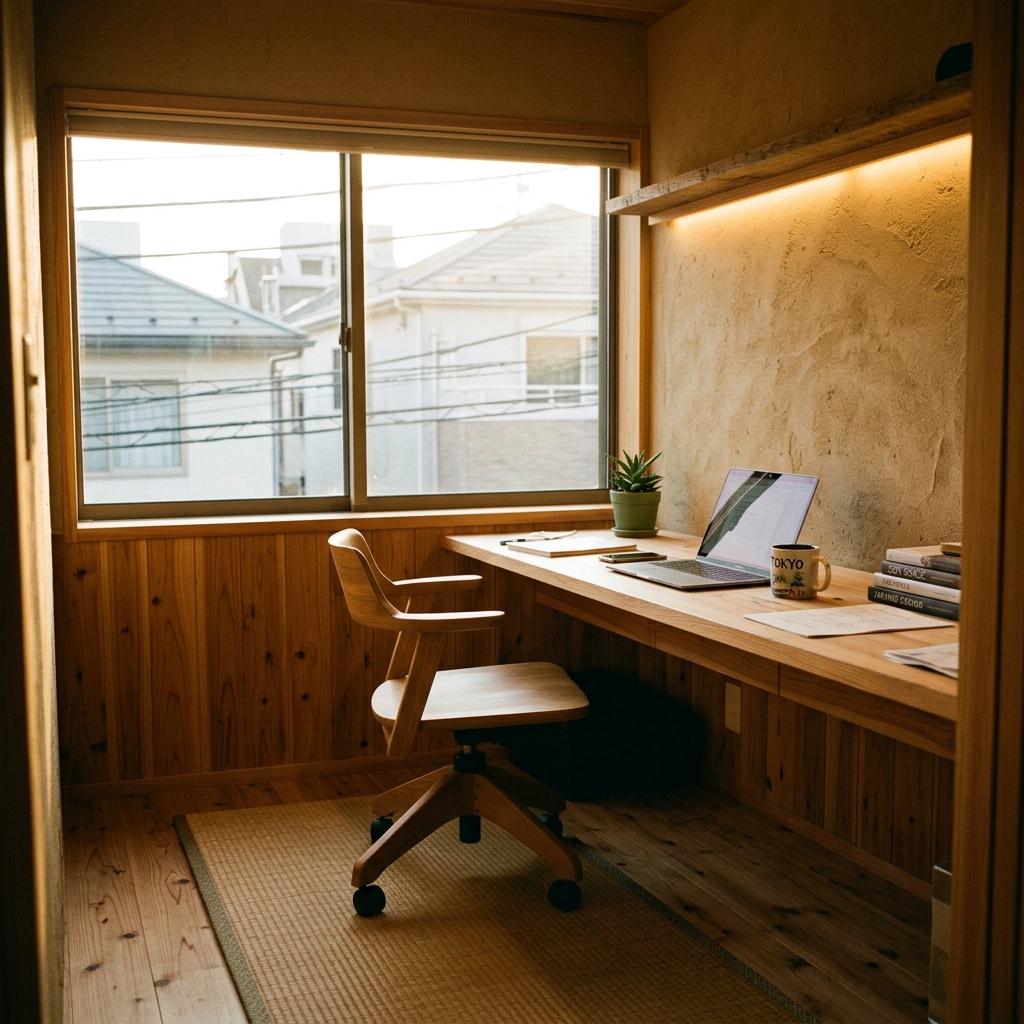

In a neighborhood as historically layered as Tokyo's Aoyama, where the echoes of Edo-period merchant dwellings once dictated the rhythm of daily life, this new workspace emerges as a profound evolution of the city's architectural timeline. It is a study in extravagant austerity, a design that leans into the tension between high-concept luxury and the disciplined restraint of minimalist Zen principles. Commissioned by a repeat client-whose continued partnership with the design team serves as a quiet testament to the studio's technical precision-the project transforms a standard commercial shell into a secluded sanctuary for deep focus. The resulting atmosphere is achieved through a meticulous technical synthesis of carbon-neutral cedar timbering, diffused rhythmic lighting, and low-VOC clay plasters, proving that the future of the Japandi office lies at the intersection of ecological responsibility and sensory stillness.
How An Urban Home Embraces Zen Japandi Interior Design Style
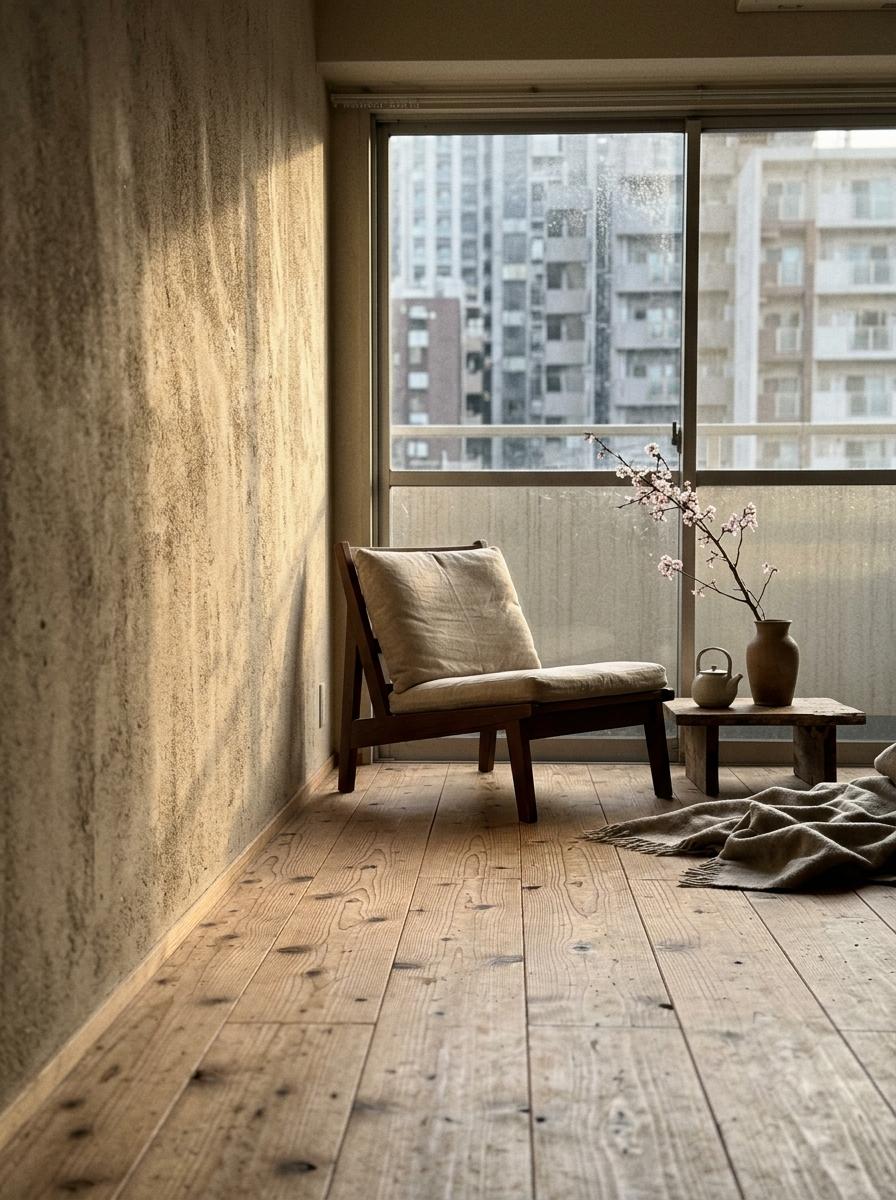

In this Tokyo-inspired sanctuary situated amidst the vertical density of Shinjuku, the residence achieves a state of monumental lightness, balancing the heavy structural requirements of urban living against an ethereal aesthetic. Note how the tactile landscape shifts beneath your feet; the floor, a sequence of knot-textured, open-grain Siberian larch planks, provides a friction that grounds the psyche, while the walls are finished in a friable, mineral-rich diatomaceous earth that catches the light in soft, granular gradients. This environment creates a deliberate stillness, where the chaotic hum of the city is replaced by a physical slowing of the pulse and a profound loosening of the shoulders. It is a masterclass in curated austerity, proving that even within the glass-and-steel confines of a modern metropolis, one can find a rhythmic pulse that is both invigorating and deeply tranquil.
Timeless Aesthetic: A Traditional Den Becomes A Zen Japandi Office
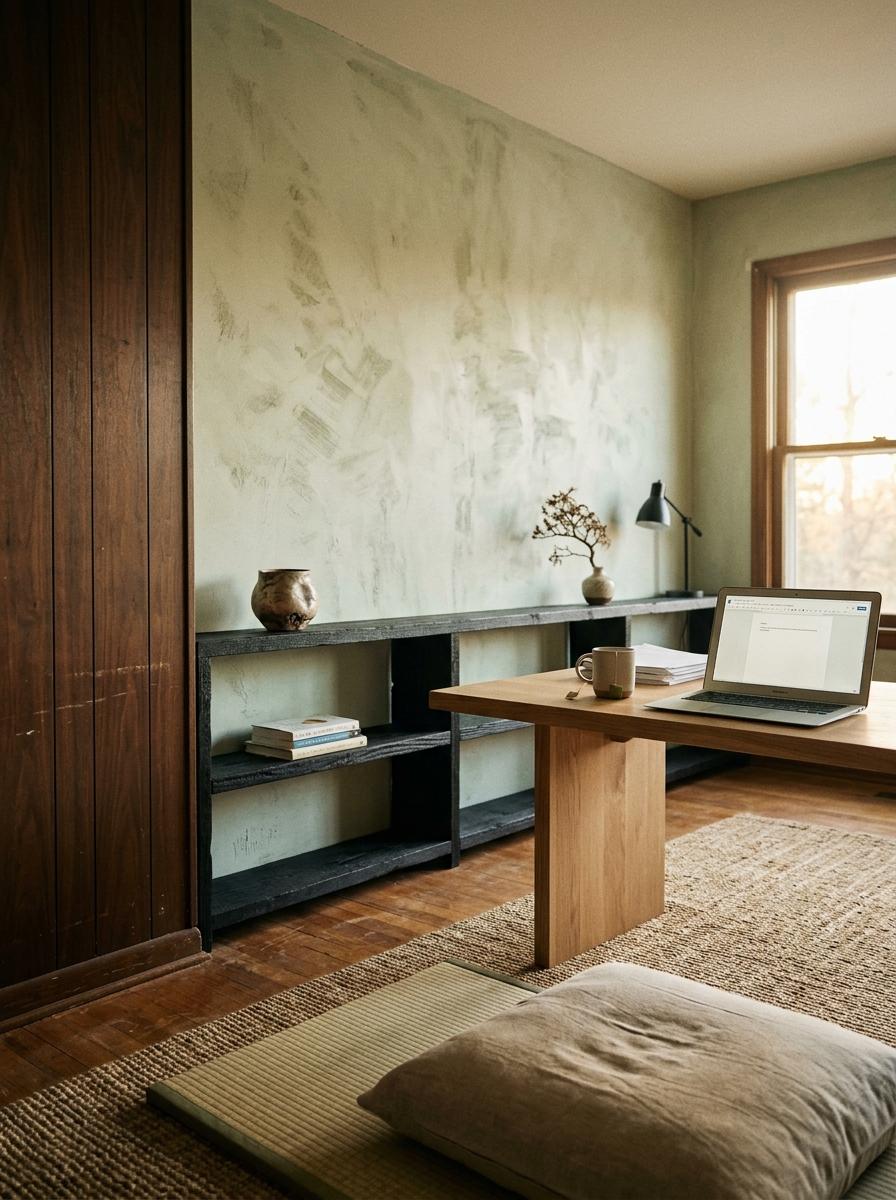

The transformation of this wood-paneled sanctum begins with atmospheric grounding, where the heavy, cloistered air of a mid-century den is recalibrated into a rhythmic sanctuary of stillness. This evolution relies on a figurative paradox, achieving a state of vibrant emptiness-a design philosophy where the void becomes the most potent element of the room, filling the space with intentionality rather than clutter. A sharp structural dualism defines the layout, pitting the rigid, linear geography of the architecture against the soft, organic fluidity of the inhabitant's movement. To touch the space is to engage with material specificity, feeling the coarse, open-grain honesty of brushed Shou Sugi Ban accents juxtaposed against the velvet-matte coolness of hand-applied limewash walls. Finally, the room transcends mere decoration through functionalist specification, where bespoke joinery conceals a labyrinth of modern cabling, integrating high-speed utility into a minimalist facade to ensure the digital workflow never disrupts the Zen equilibrium.


Comments