
At Japandi.design, we define the contemporary kitchen through a rigorous synthesis of Scandi-functionalism and Wabi-sabi intentionality-an A+B formula where Nordic pragmatism meets the ephemeral grace of Japanese minimalism to yield a singular, cohesive sanctuary. This aesthetic duality relies on a delicate dialectic: the space must remain clinically organized to facilitate culinary precision, yet feel deeply organic and lived-in through the integration of tactile, unrefined materials. By balancing the sharp, rectilinear geometry of European cabinetry with the soft, diaphragmatic breath of natural timber and stone, we move beyond mere renovation into the realm of atmospheric curation. The resulting culinary landscape is simultaneously cavernous and intimate, a haptic environment where the stark austerity of the void is softened by a profound, soul-quieting warmth.
Japandi Kitchen Aesthetic

Modern Japandi Kitchen Design For Minimalist Homes
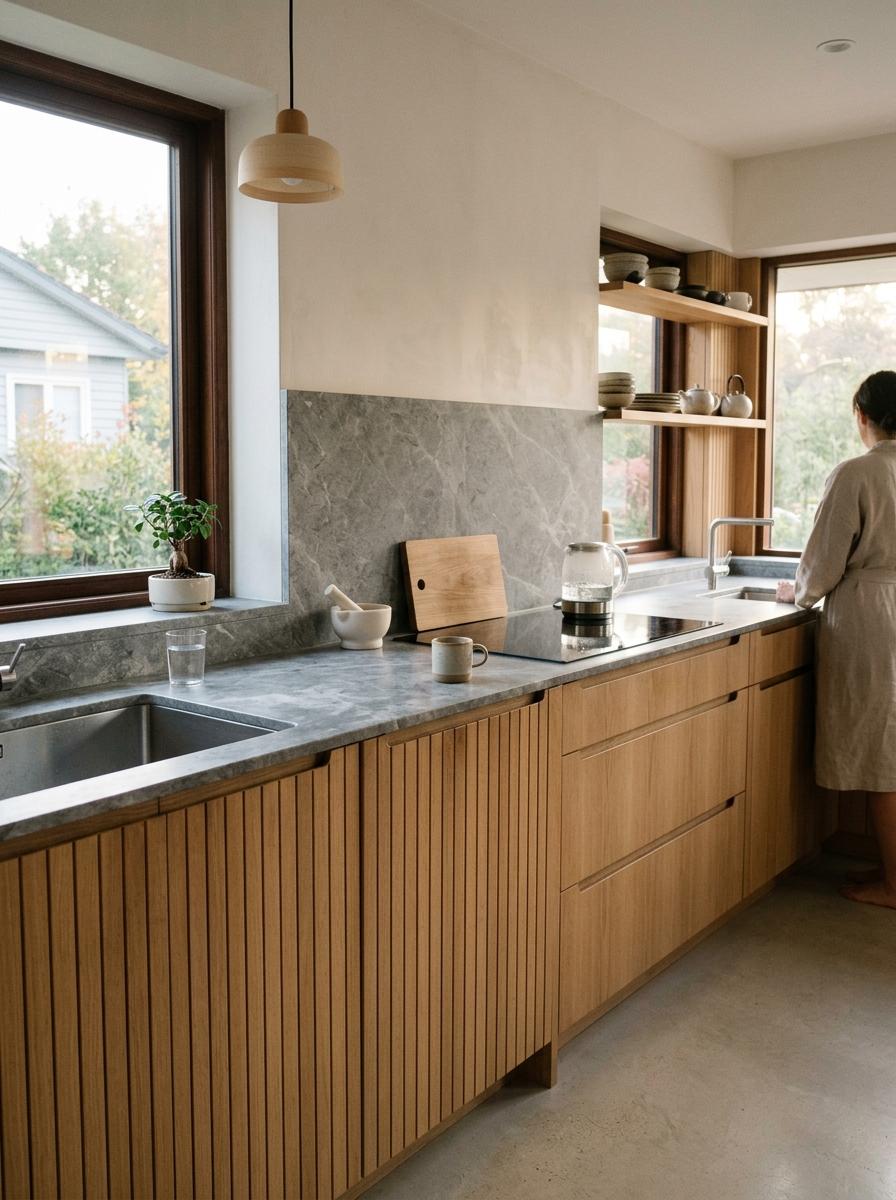

At Japandi.design, we observe the kitchen not merely as a culinary station, but as a silent sanctuary where the frantic pulse of modern life is recalibrated against the stillness of the domestic void. It is within this niche that we find a calculated warmth; a conceptual synthesis where the clinical precision of Scandinavian utility meets the ancient, intentional imperfections of Japanese aesthetics. This structural dualism creates a definitive threshold between the chaotic velocity of the external world and the rhythmic, slow-motion intimacy of the interior hearth. The tactile narrative of the space is anchored in material specificity, defined by the juxtaposition of coarse, honed Pietra Grey marble against the velvet-soft grain of vertical-slat white oak cabinetry. To bridge the gap between form and survival, the design employs functionalist specification: integrated finger-pull channels and recessed induction zones eliminate visual noise, transforming industrial necessity into a seamless, invisible solution for the minimalist inhabitant.
Exploring The Essence Of Japandi Kitchen Aesthetic In Small Spaces
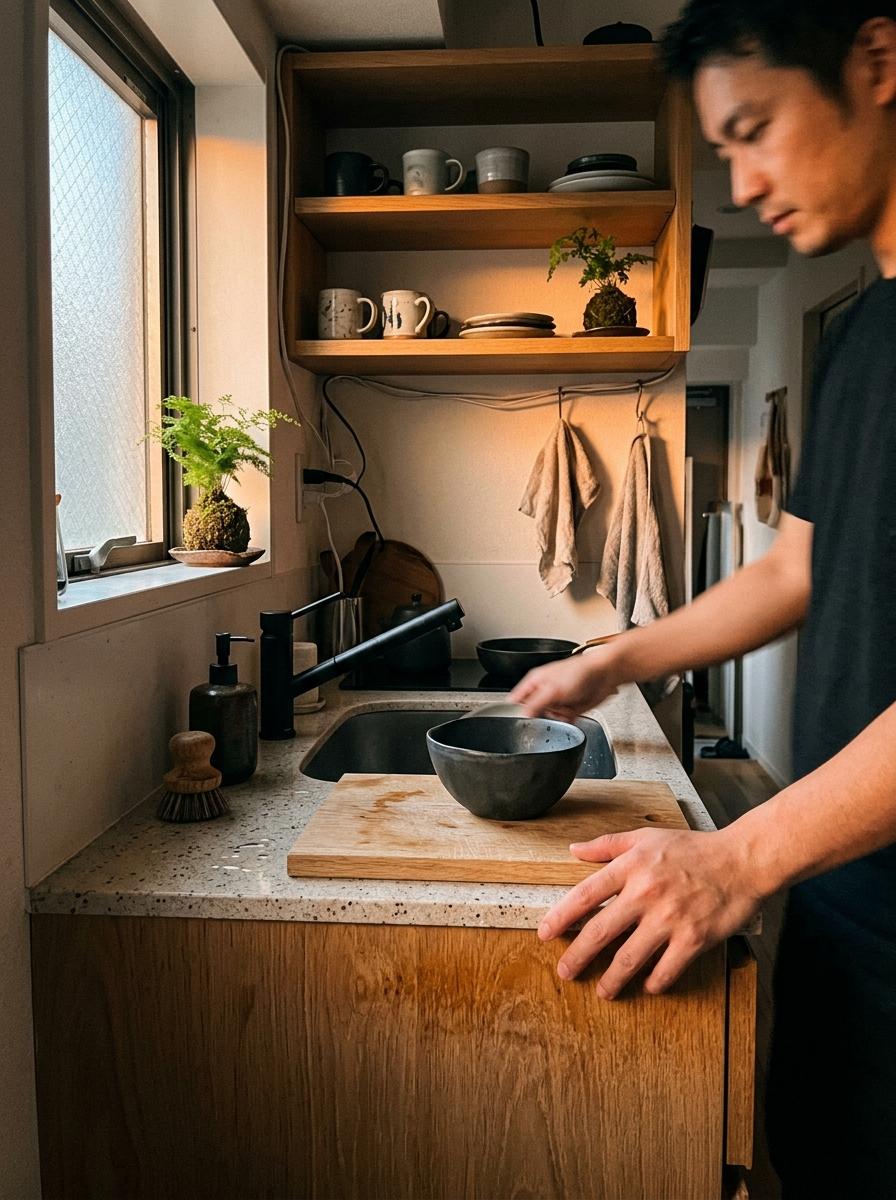

In the compact culinary quarters of a Tokyo urban micro-apartment, the Japandi aesthetic transcends mere styling to become a study in calculating softness. Note how the juxtaposition of matte-black carbonized steel fixtures against the silky, open-pored grain of light Hokkaido oak eliminates visual noise, directing the eye toward a singular, functional horizon. This deliberate arrangement achieves a complex simplicity, where the industrial rigidity of a Caesarstone countertop is neutralized by the organic irregularity of a hand-glazed Hasami porcelain bowl. As the palm brushes over the velvety, tactile friction of untreated timber, a profound sense of physiological equilibrium takes hold, lowering the heart rate and quieting the mental clutter typical of small-scale living. By grounding the design in the Wabi-sabi philosophy of imperfection and the Scandinavian pragmatism of Hygge, the small kitchen is no longer a constraint, but a curated sanctuary of sensory decompression.
The Perfect Balance Of Wood And Stone In A Japandi Kitchen
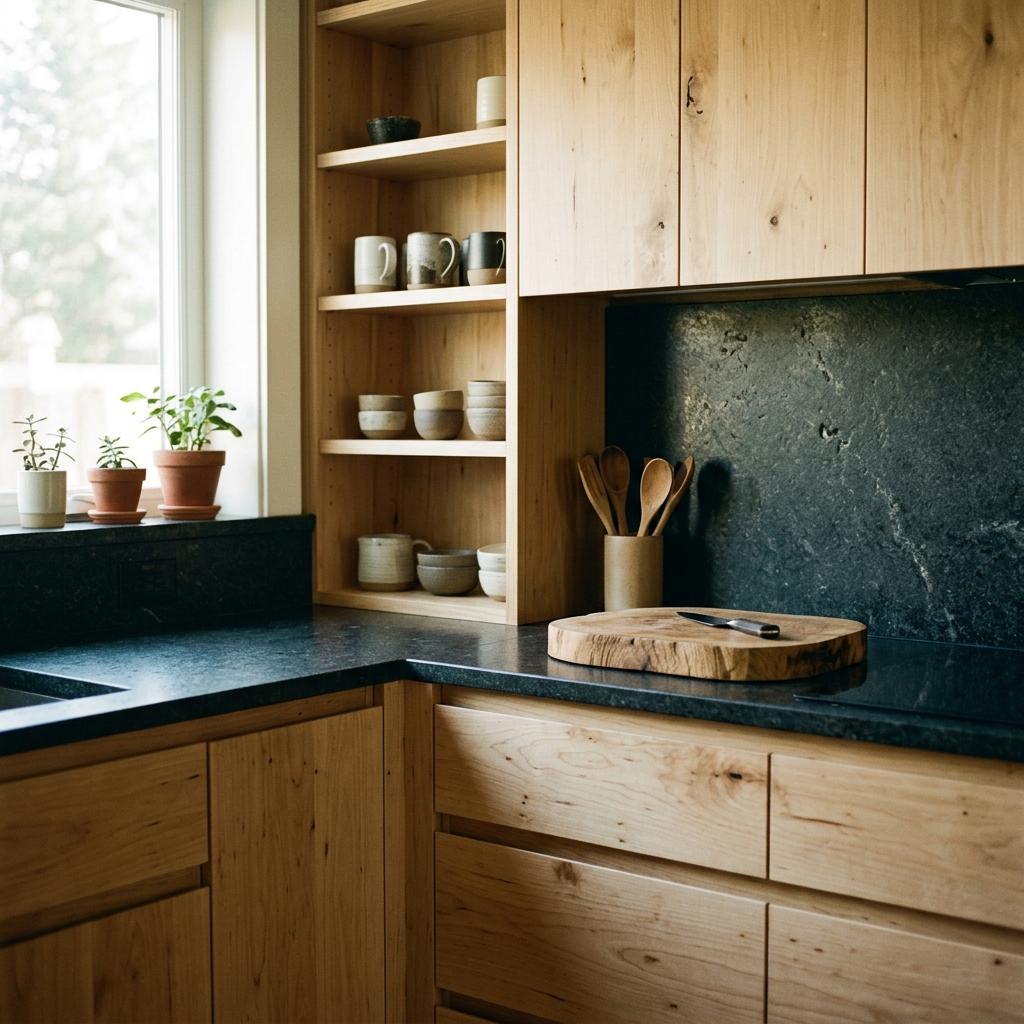

I remember sitting in a chaotic, neon-lit bistro in Shinjuku, where the air hummed with the high-frequency vibration of stainless steel and glass-a space that felt clinically cold despite the crowd. It was there that I met Kenji, a craftsman who views timber not as a material, but as a living pulse. "The secret to a kitchen that breathes," he told me, pausing to run a thumb over a scrap of charred cedar, "isn't just about the warmth of the grain... it's about the silence of the rock underneath." This interplay of materiality is the heartbeat of Japandi design; it is the deliberate juxtaposition of organic, tactile oak against the stoic, monolithic presence of honed granite. By layering these elements, we move away from the sterile industrialism of modern kitchens toward a tactile sanctuary defined by wabi-sabi sensibilities. This delicate negotiation between the soft vulnerability of wood and the immutable strength of stone offers us a blueprint for creating spaces that feel both grounded and ethereal.
Inside A Beautifully Organized Japandi Kitchen With Natural Textures
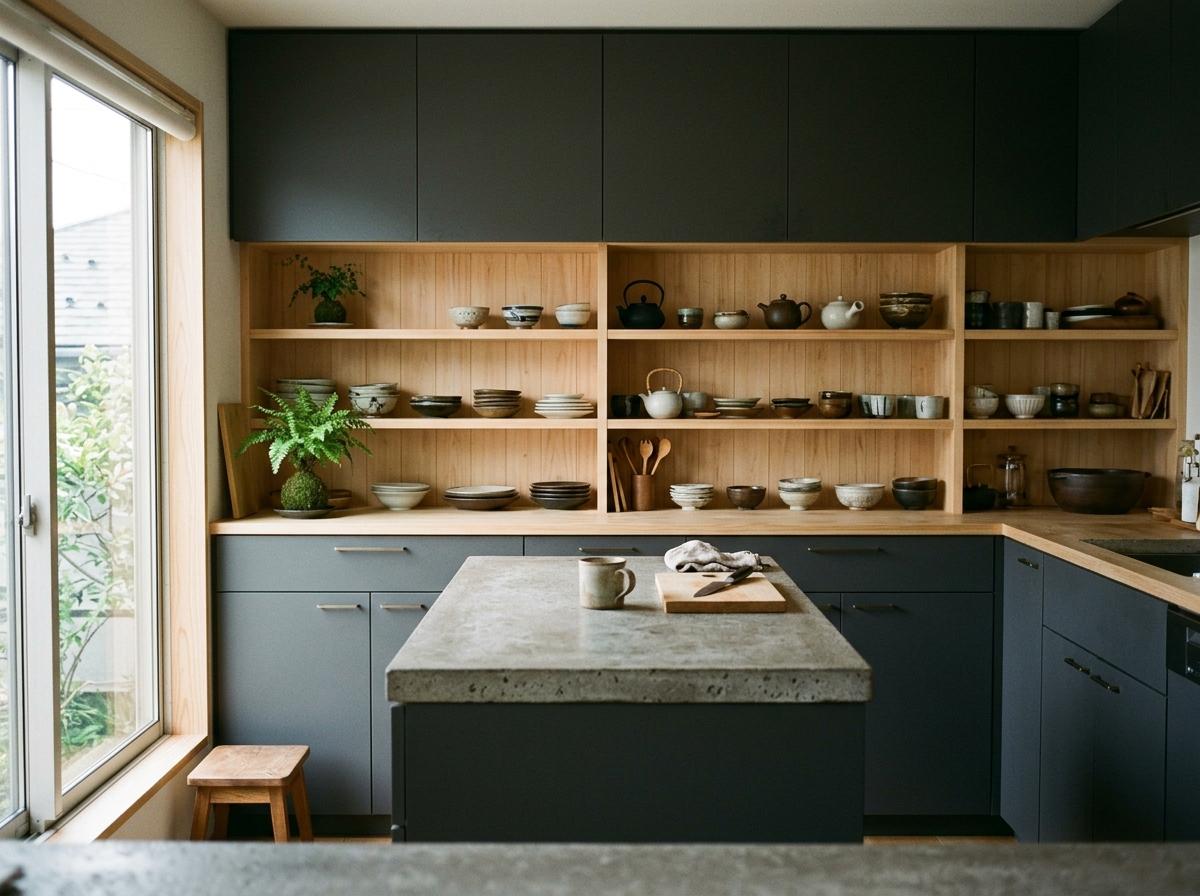

The architectural language of this kitchen, situated in a minimalist residence in the heart of Tokyo's Setagaya ward, relies heavily on the dialogue between hyper-matte charcoal cabinetry and the tactile warmth of brushed Hinoki cypress. Note how the designer employs a strategy of structured spontaneity; while the organizational layout follows a rigid, linear grid, the organic grain of the wood provides a rhythmic, visual vibration that softens the room's industrial edges. This juxtaposition creates a sense of ordered chaos, where every ceramic vessel is precisely placed, yet the overall atmosphere feels effortless and lived-in. Running your hand over the porous, unsealed stone island triggers an immediate sensory grounding-a physiological cooling of the pulse that transitions you from the frantic energy of the city into a state of meditative stillness. Through this intentional pairing of Locational Branding and raw materiality, the space transcends mere utility to become a sanctuary for the senses.
Discovering Functionality Within A Modern Japandi Kitchen Layout
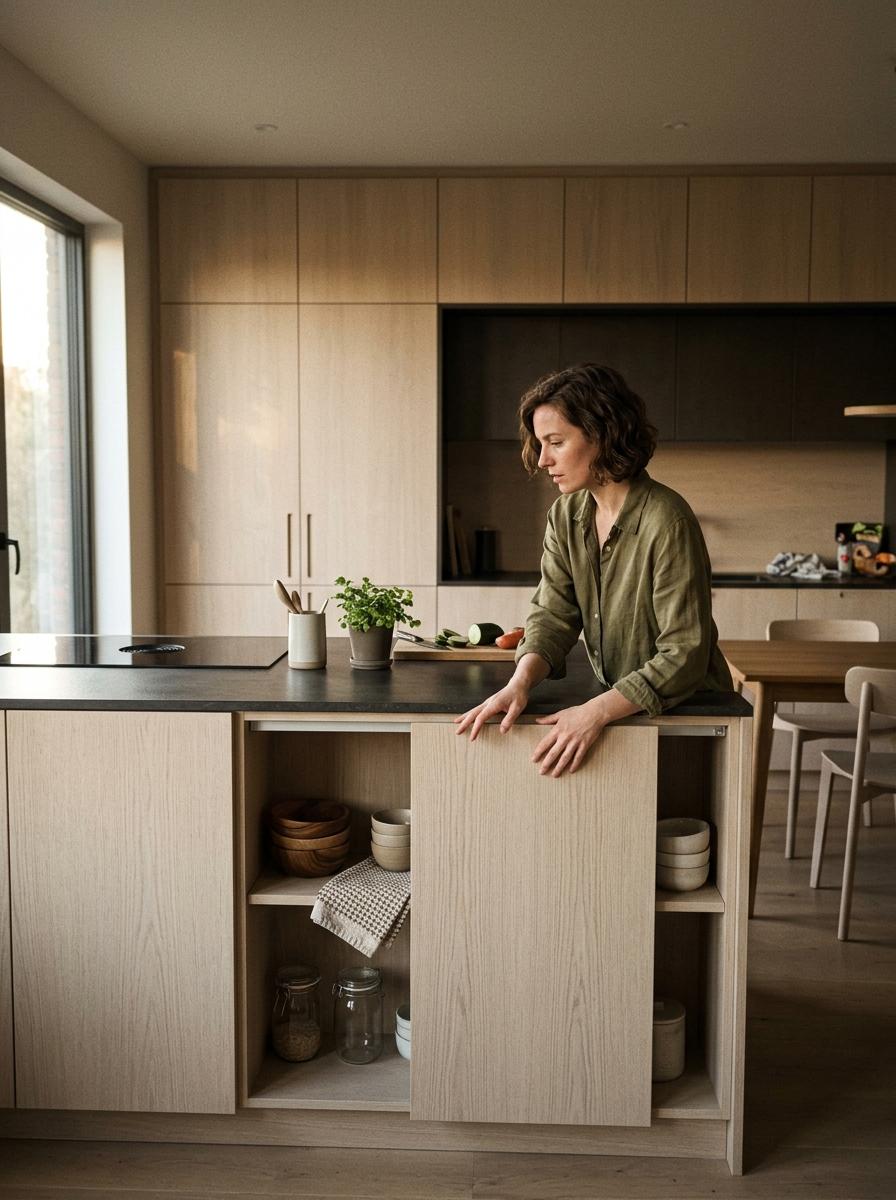

The modern Japandi kitchen exists as a quiet theater of domesticity, where the sprawling openness of contemporary living is anchored by a deliberate, monastic focus on the culinary hearth. Within this space, one encounters a calculated spontaneity; every element is positioned with a precision that feels entirely effortless, marrying the rigid discipline of Japanese minimalism with the fluid warmth of Scandinavian soul. This design language thrives on a sharp structural dualism, where the external visual silence of handleless cabinetry conceals a complex, internal machinery of modern efficiency. Tactile depth is introduced through the honest grit of a honed basalt countertop paired against the pale, silken grain of vertical white oak slats. Ultimately, the layout transcends mere aesthetics through functionalist specification, where integrated pocket doors and flush-mounted induction hobs serve as invisible solutions, ensuring that the labor of the kitchen never disrupts the serenity of the home.
A Peaceful Culinary Space With Subtle Japandi Interior Details
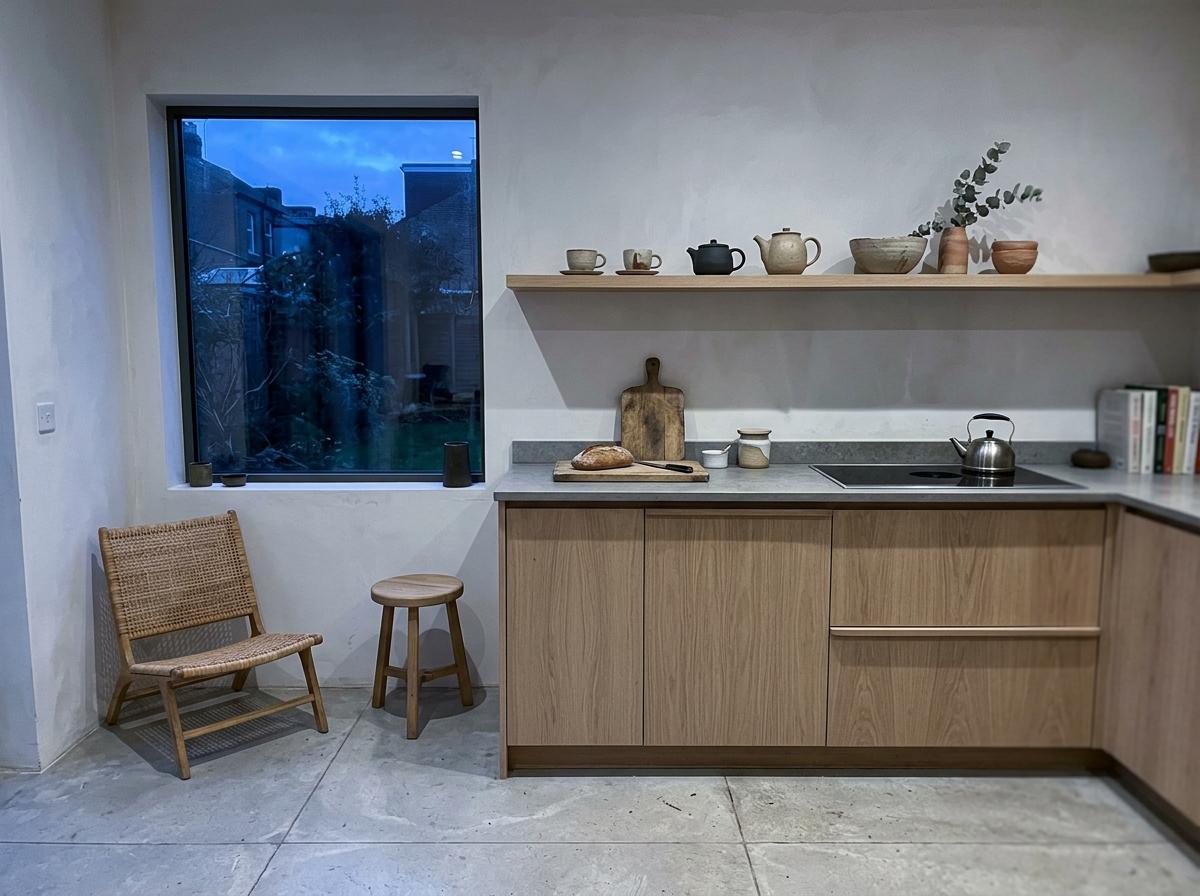

At the core of the modern culinary environment lies a deliberate synthesis of Scandinavian functionalism and Japanese minimalism-a hybridity that defines the Japandi aesthetic not merely as a trend, but as a disciplined philosophy of living. This kitchen space exemplifies such a union, where the cold, streamlined efficiency of Nordic hygge meets the weathered, soulful imperfection of wabi-sabi to cultivate a sanctuary of profound quietude. The architecture of the room relies on a dialectical pairing of elements: the cabinetry possesses a rigorous, geometric precision, yet it is softened by the organic grain of sand-blasted oak, creating a tension that feels both architecturally disciplined and humanely approachable. To inhabit this space is to engage with a tactile landscape of sensorial contrasts-an ethereal, monochromatic, and haptic environment where the cool austerity of honed stone is balanced by the evocative, earthy, and grounding warmth of handcrafted ceramics.
Refining The Heart Of The Home With Japandi Kitchen Styling
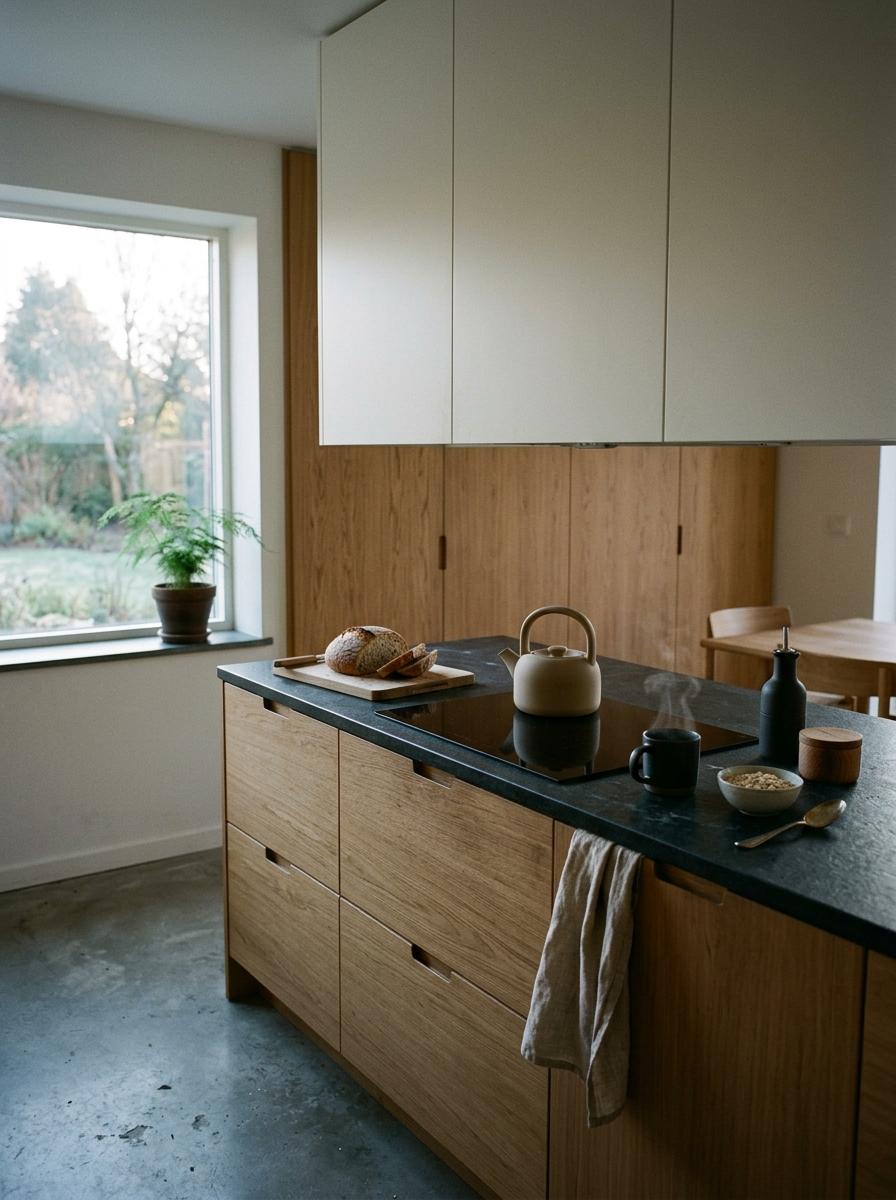

In the modern home, the kitchen serves as a laboratory of daily rituals, a space where the sensory hustle of domestic life is anchored by the quietude of Japandi principles. This aesthetic achieves a structured spontaneity, reconciling the rigid discipline of minimalist geometry with the unpredictable, organic textures of the natural world. While the external shell of the cabinetry presents a seamless, monolithic front to the living area, the internal architecture is a masterclass in hidden complexity, sequestering the chaotic tools of gastronomy behind silent, uniform planes. Here, the tactile warmth of wire-brushed white oak meet the clinical cool of honed basalt countertops, creating a sensory dialogue between soft grain and volcanic density. Far from mere decoration, this material harmony acts as a ergonomic lubricant, where integrated finger pulls and flush-mounted induction surfaces eliminate visual friction, transforming the kitchen from a cluttered workspace into a streamlined engine of intentional living.
Elegant Simplicity Meets Practicality In This Japandi Kitchen Tour
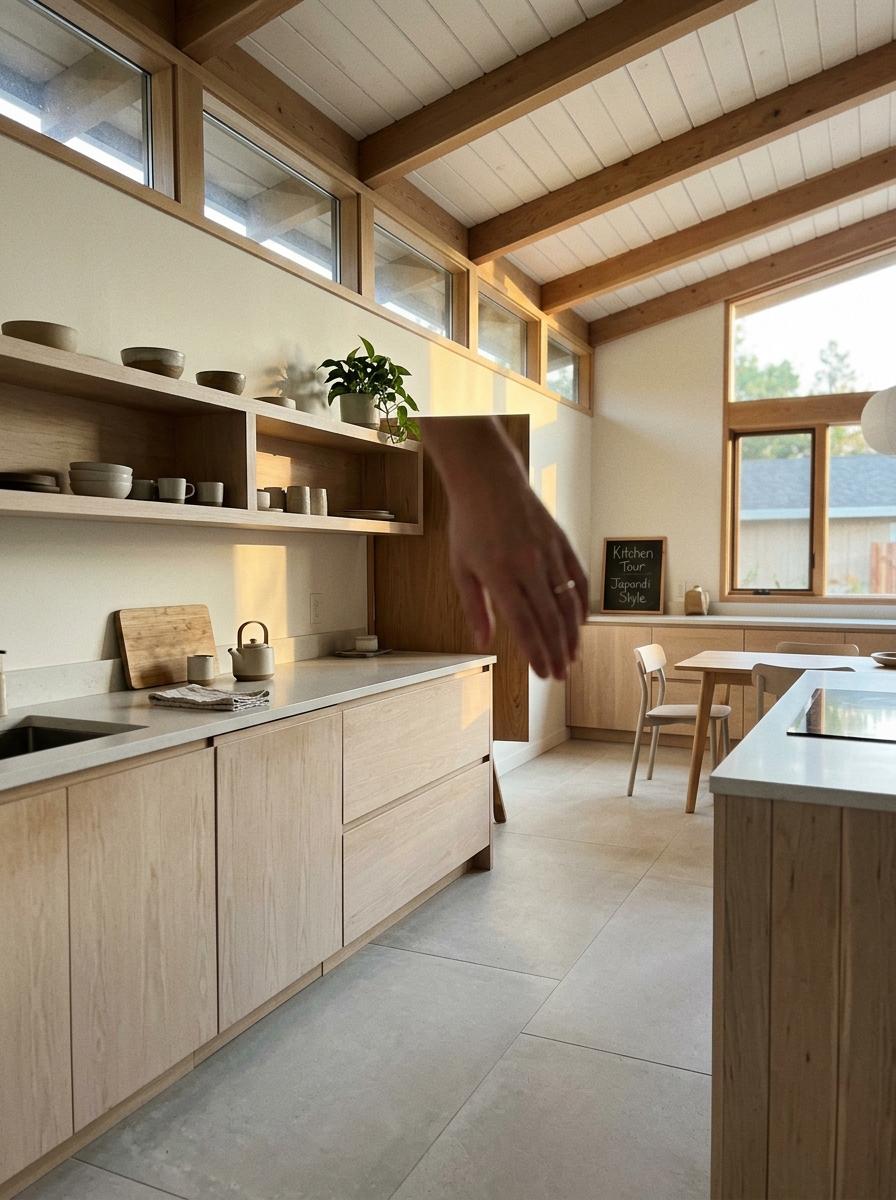

The architectural foundations of this space were established through a meticulous integration of Scandinavian utility and Japanese aesthetic restraint. Within this culinary sanctuary, lean lines and unburdened surfaces cultivate a profound sense of quietude, ensuring every corner remains sparse and serene. The design breathes, as pale planks of white wood wrap around the central island to ground the room in a tactile, temporal warmth. Clerestory windows carve out new dimensions of light, while the vaulted ceiling stretches the vertical volume and pushes the gaze upward. This intentional expansion frames a layout defined by balanced proportions, breathable boundaries, and a singular, sculptural stillness.
Creating A Cozy Atmosphere With Japandi Kitchen Cabinetry
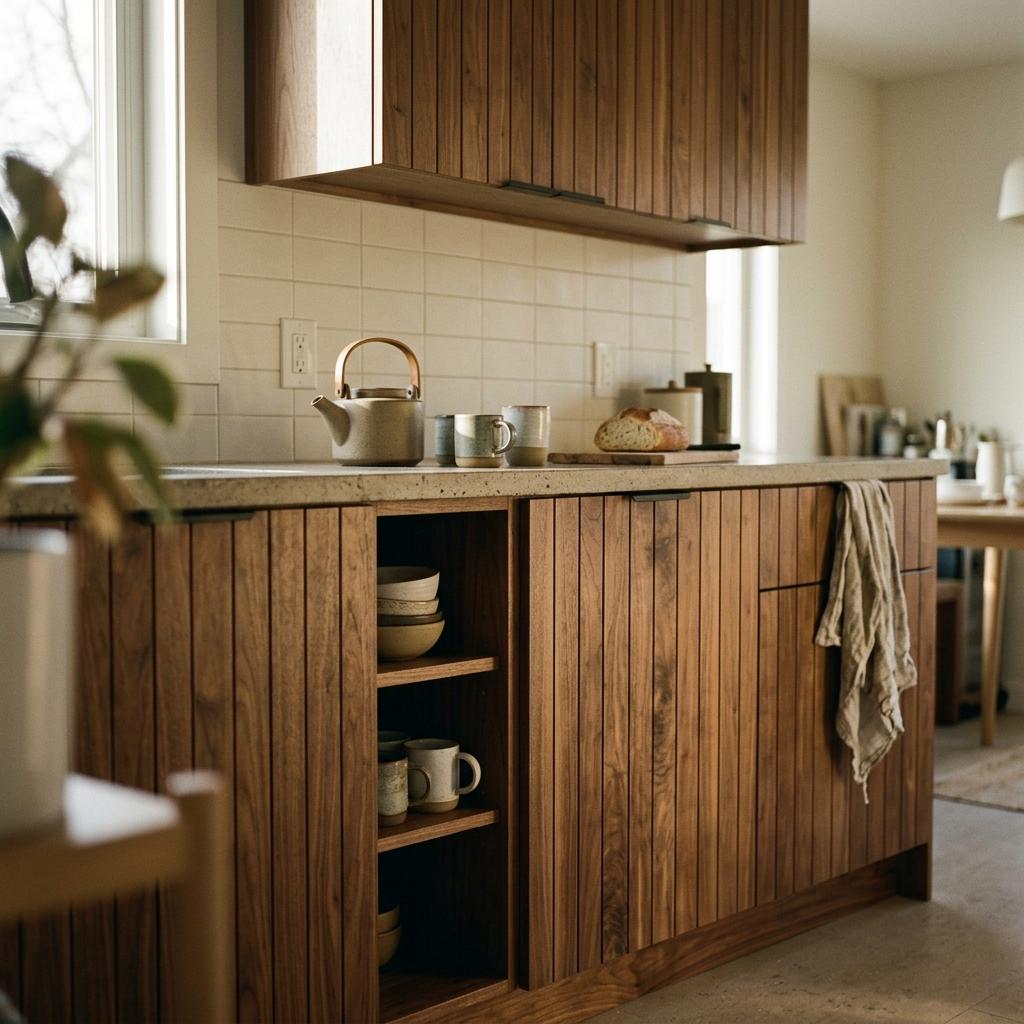

To achieve a truly cozy atmosphere, You must look toward the tactile honesty of Japandi kitchen cabinetry, where the selection of materials transcends mere utility. Incorporate rift-sawn white oak or slat-faced walnut to introduce a filamentous grain that feels both structured and organic under the fingertips. Note how the vertical orientation of these timber profiles draws the eye upward, creating a sense of rhythmic expansion while simultaneously grounding the room in a quiet, earthen stillness. The aesthetic success of this style lies in its complex simplicity-a design paradox where the absence of ornate hardware allows the micro-textured matte lacquer to become the focal point. This intentional restraint triggers a distinct physiological shift; as the visual noise of the kitchen recedes, your cortisol levels drop, replaced by a visceral warmth that mimics the soothing embrace of a wool wrap. By drawing inspiration from the Kyoto-meets-Copenhagen ethos championed by studios like Norm Architects, you are not just choosing storage; you are curating a sanctuary of functional softness that transforms the act of cooking into a slow, meditative ritual.
Sleek Surfaces And Warm Wood Tones For A Japandi Kitchen
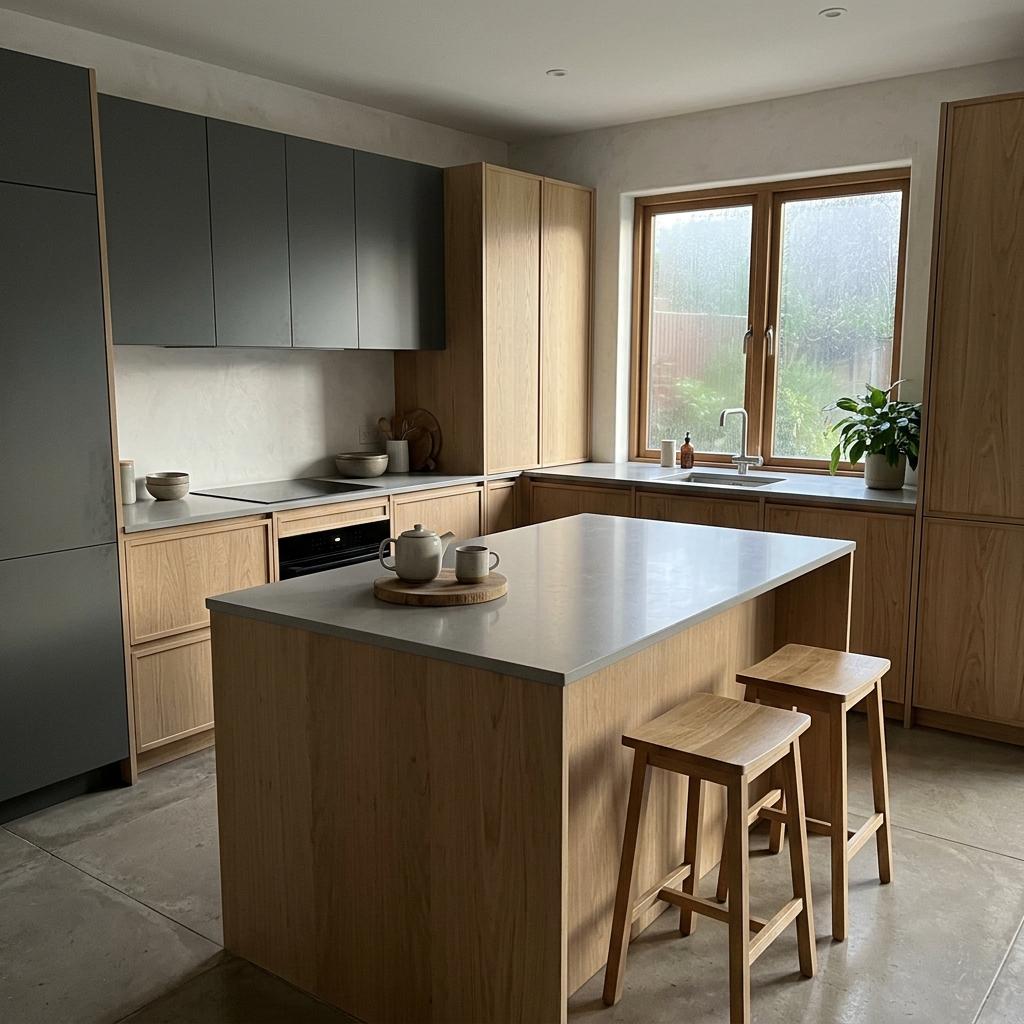

Walking into a traditional kitchen often feels like navigating a frantic workshop-all clattering pots, visual noise, and cold, utilitarian tile-but crossing the threshold into the project I recently toured felt more like stepping into a restorative gallery. "The secret isn't just the minimalism," the lead designer told me, pausing to run a hand over a seamless expanse of honed stone, "it's the intentional friction between the sterile and the organic." By pairing ultra-matte, sleek surfaces that catch the light with the tactile grain of white oak, the space achieves a high-contrast harmony that defines the Japandi ethos. Where a standard modern kitchen can feel clinical, this dialogue between "precision-engineered cabinetry" and "the warmth of natural timber" creates a domestic sanctuary. This delicate balance of materiality-the interplay of shadow on wood and the reflective calm of a polished island-sets the stage for why these two specific elements are the essential pillars of a soulful, functional kitchen design.
An Open Concept Living Area Featuring A Japandi Kitchen Style
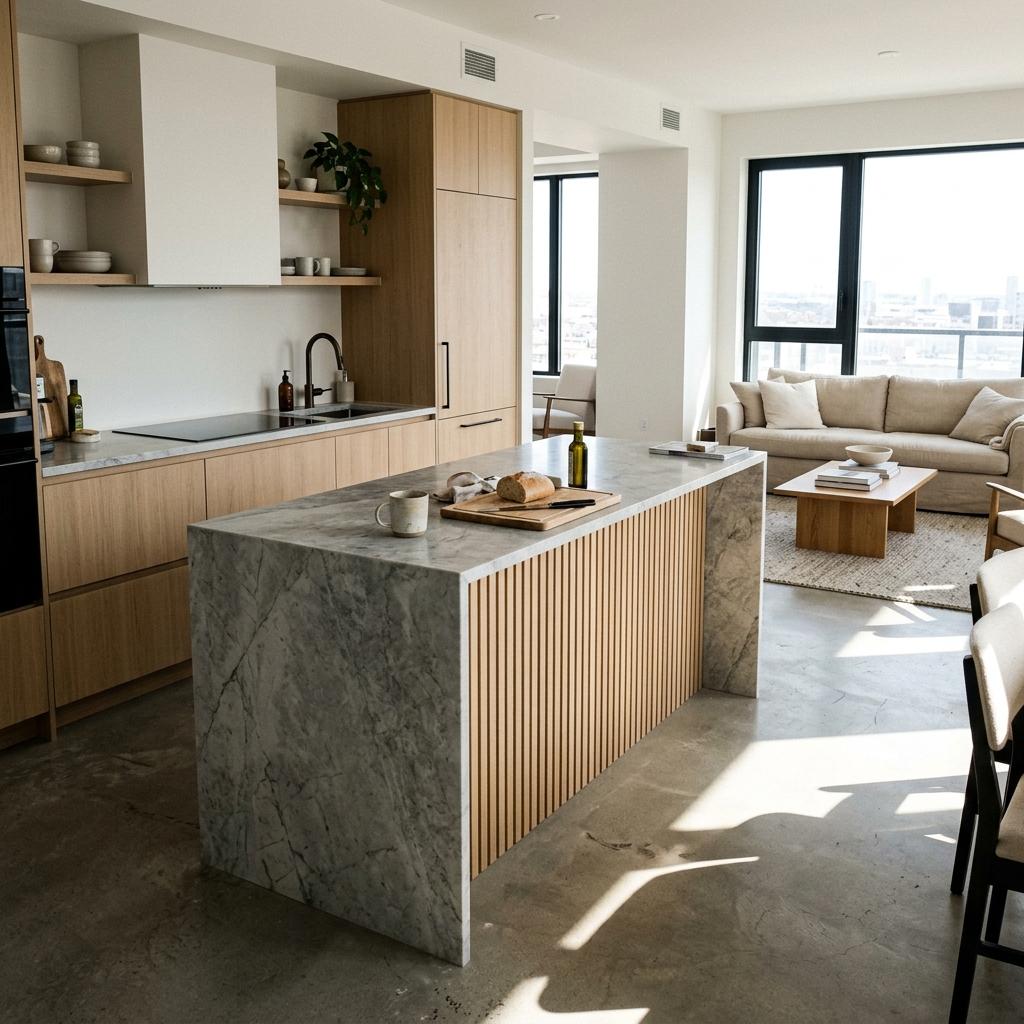

In the modern dwelling, the open-concept living area serves as a curated sanctuary where the architectural boundaries of domesticity are intentionally blurred. This layout embraces a structured fluidity, a conceptual synthesis where the rigid demands of culinary production are reconciled with the soft repose of the lounge, allowing for a space that feels simultaneously expansive and intimate. While the external environment may be defined by the chaotic sprawl of the urban landscape, the internal volume remains a bastion of stillness, creating a sharp distinction between the kinetic energy of the street and the static grace of the home. This atmospheric grounding is achieved through a meticulous selection of tactile materials: the cool, honed surface of a Grey Pietra marble island acts as a central monolith, contrasting against the warmth of vertical white oak slats and the matte texture of micro-cement flooring. The Japandi kitchen style serves as the ultimate expression of functionalist specification, where integrated handle-less cabinetry and recessed induction technology hide the industrial utility of the workspace, ensuring that the transition from nourishment to relaxation is seamless and uninterrupted.
How To Achieve A Timeless Japandi Kitchen Aesthetic With Ease
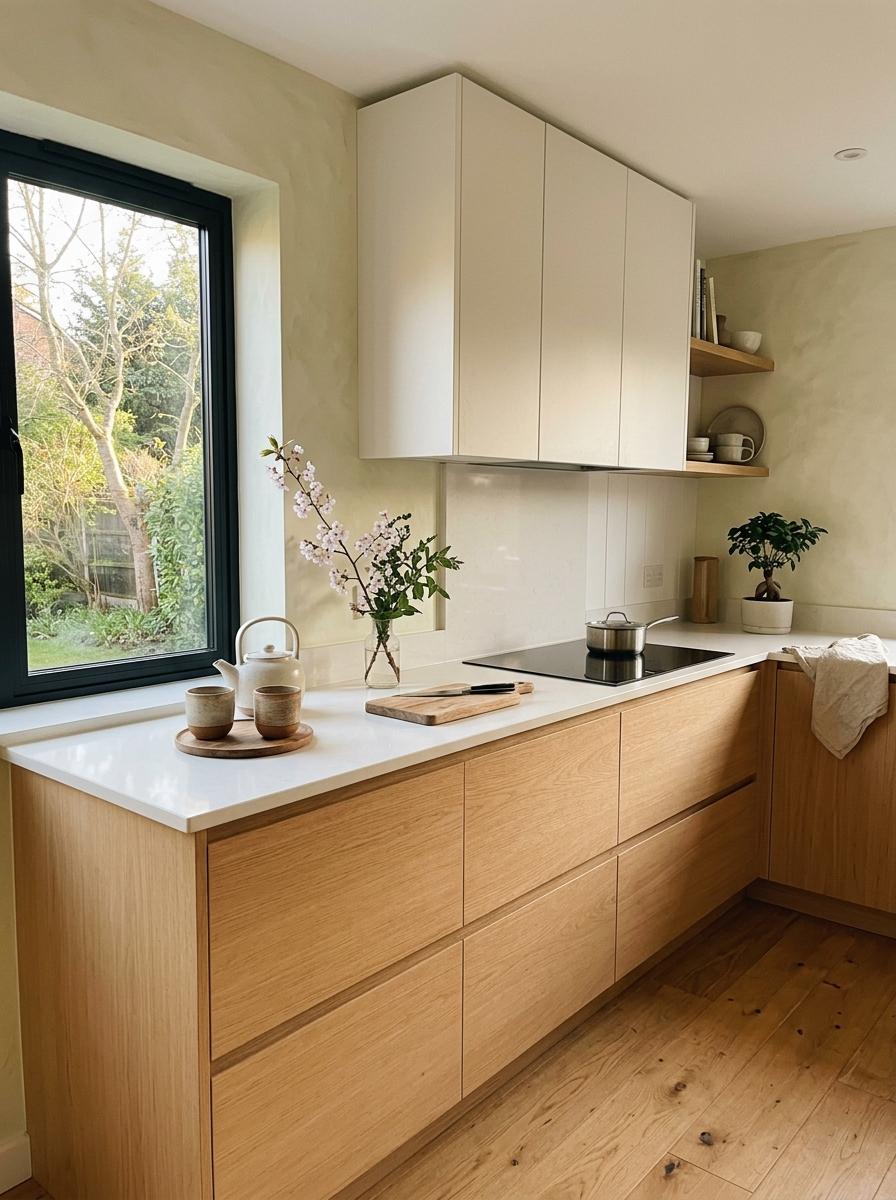

Through a careful synthesis of Scandi functionality and Japanese minimalism, this culinary space was conceived to endure beyond passing trends. The layout is defined by unblemished surfaces and austere cabinetry, stripped of all superfluous ornamentation to reveal a profound, hushed clarity. Subtle transitions of stone and stem bridge the gap between structure and soul, creating a seamless flow that anchors the home. Light carves through the void to stretch the proportions, expanding the visual field while grounding the room in quiet permanence. To master this timeless balance, You must prioritize the tactile warmth of timber, the resilience of honed stone, and the profound serenity of empty space.
Innovative Storage Solutions For A Clean Japandi Kitchen Environment
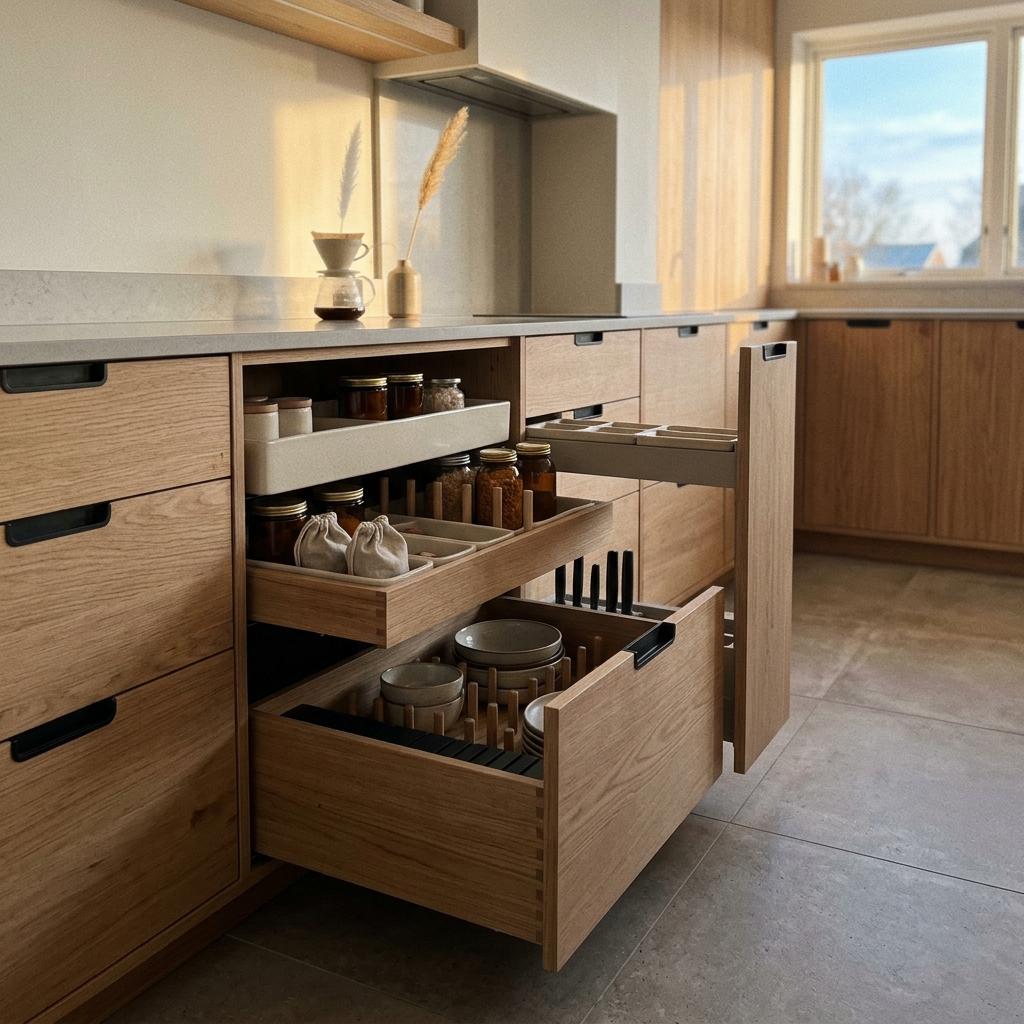

In the modern Japandi kitchen, the atmosphere is defined by a rhythmic stillness, where the scent of Hinoki wood mingles with the cool, clinical precision of a morning mist. This space thrives on the crowded vacuum, a conceptual synthesis where an abundance of utility exists within a visual void, allowing the room to breathe despite its high-performance demands. A sharp structural dualism governs the layout: the external surfaces remain sacrificial altars of minimalist calm, while the internal cavities act as hyper-organized engines of domesticity. Tactile depth is found in the material specificity of matte-finished finger-jointed oak drawers and recessed blackened-steel pulls that disappear into the cabinetry's grain. Ultimately, these aesthetics are grounded by functionalist specification, utilizing integrated pull-out larders and tiered ceramic inserts to transform the chaos of culinary tools into a seamless, invisible infrastructure.
Earth Tones And Organic Materials Define This Japandi Kitchen Space
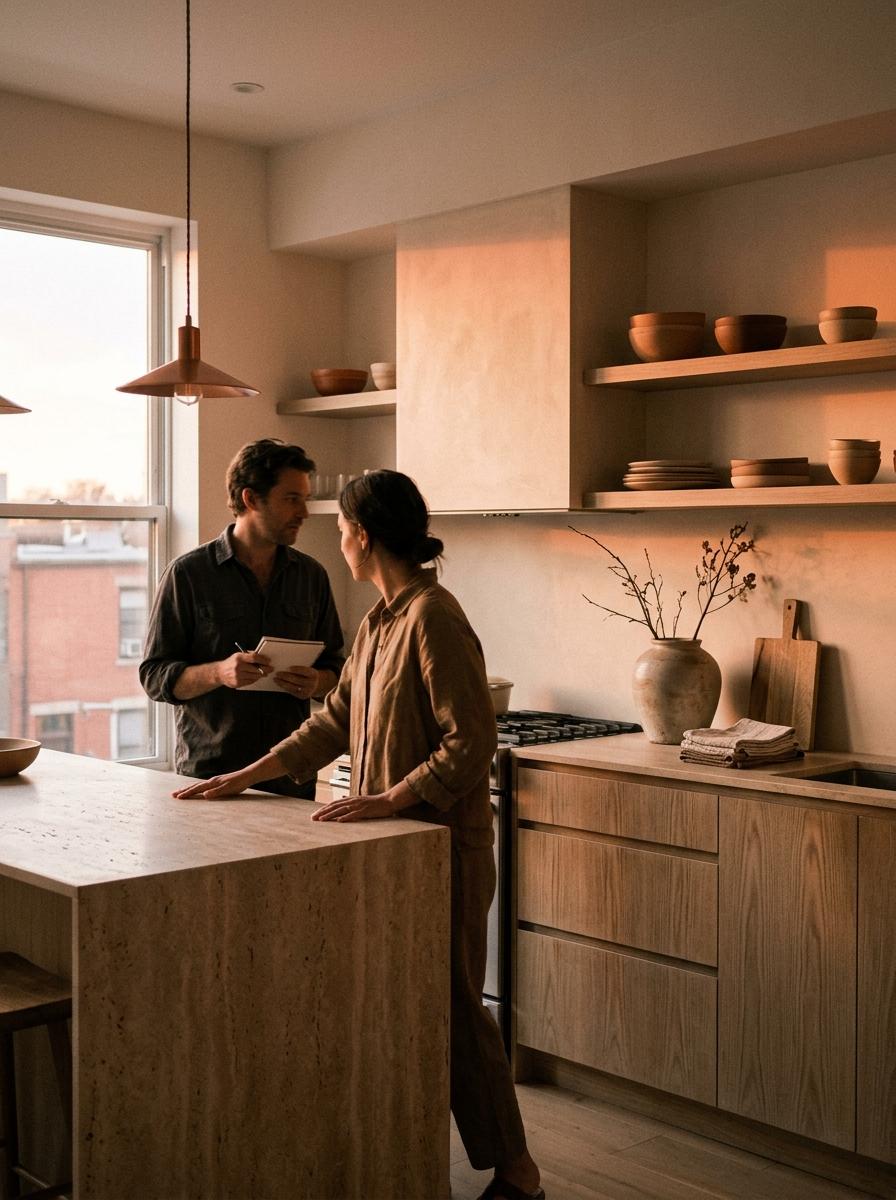

Walking away from the abrasive glare of a fluorescent-lit city street, I stepped into a kitchen that seemed to breathe with a quiet, grounded intention. “The goal wasn't just a renovation,” the designer told me as we stood by a honed travertine island, “but a reclamation... of the domestic ritual.” In this space, the sterile harshness of modern urban living is artfully eclipsed by a palette of warm ochres and soft umbers. We paused to look at the cabinetry, where the tactile grain of wire-brushed oak met the cool, monolithic presence of a lime-wash finish. “Texture,” they noted, running a hand over the matte surface, “is what provides the visual weight that minimalism often lacks.” This deliberate tension between the raw and the refined-the wabi-sabi appreciation for the weathered and the Scandi demand for precision-is precisely how earth tones and organic materials anchor the modern home.
A Sophisticated Approach To Modern Japandi Kitchen Renovations
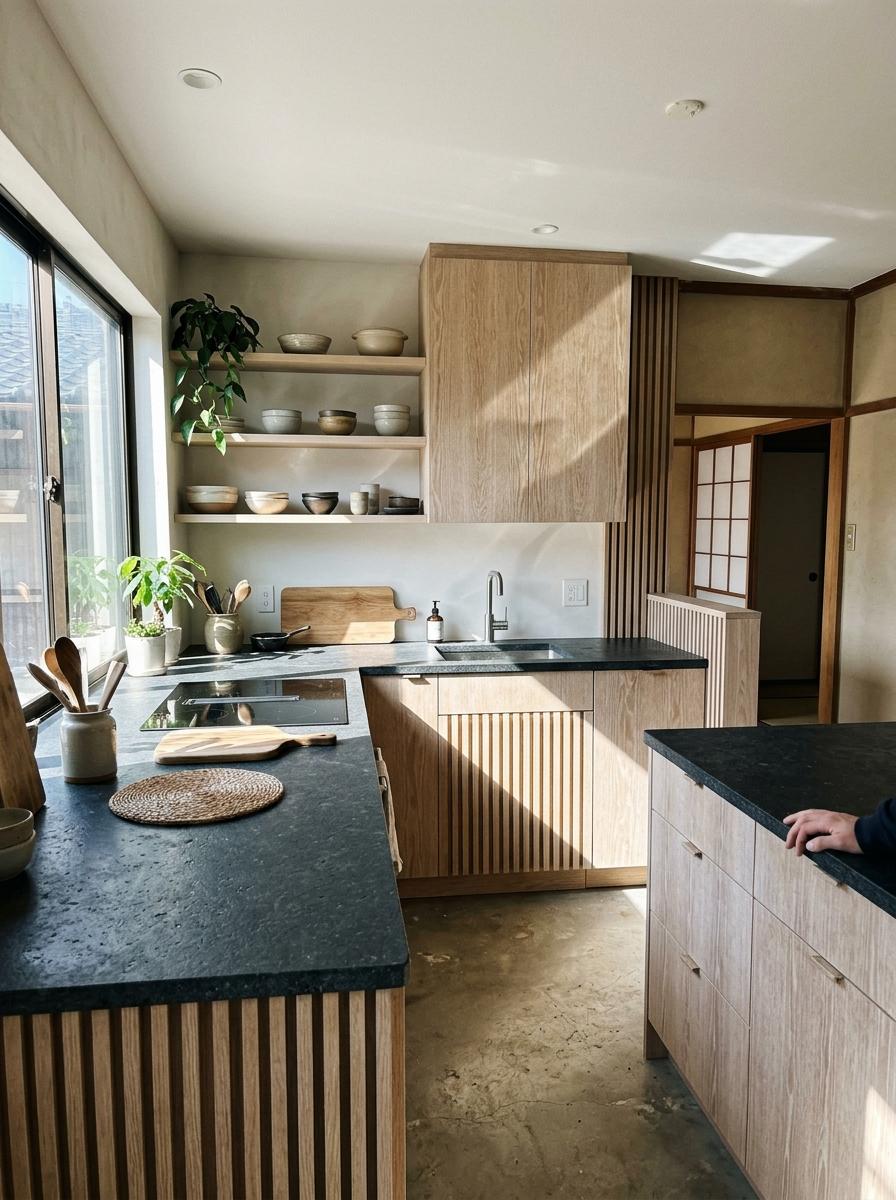

In the heart of a recently revitalized Kyoto townhouse, the kitchen transcends mere utility to become a study in tactile minimalism. To achieve this sophisticated aesthetic, You need to look toward the integration of matte-honed basalt countertops paired with the fibrous, open-grain warmth of bleached white oak cabinetry. Note how the rhythmic verticality of the slatted wood panels draws the eye upward, acting as a structural metronome that paces the entire culinary space. This design achieves a state of complex simplicity-an intentional paradox where the rigorous discipline of Japanese joinery meets the expansive, airy freedom of Scandinavian functionality. As your hand brushes against the suede-like finish of the stone, the initial chill of the mineral surface gives way to a grounding sense of permanence, triggering a visceral lowering of the pulse that transforms the act of meal preparation into a meditative ritual. By layering the organic imperfections of Wabi-sabi philosophy with the precision of a Bulthaup-inspired layout, the modern Japandi renovation creates a sanctuary that feels both ancient and vanguard.
Harmony And Balance Found In A Light Filled Japandi Kitchen
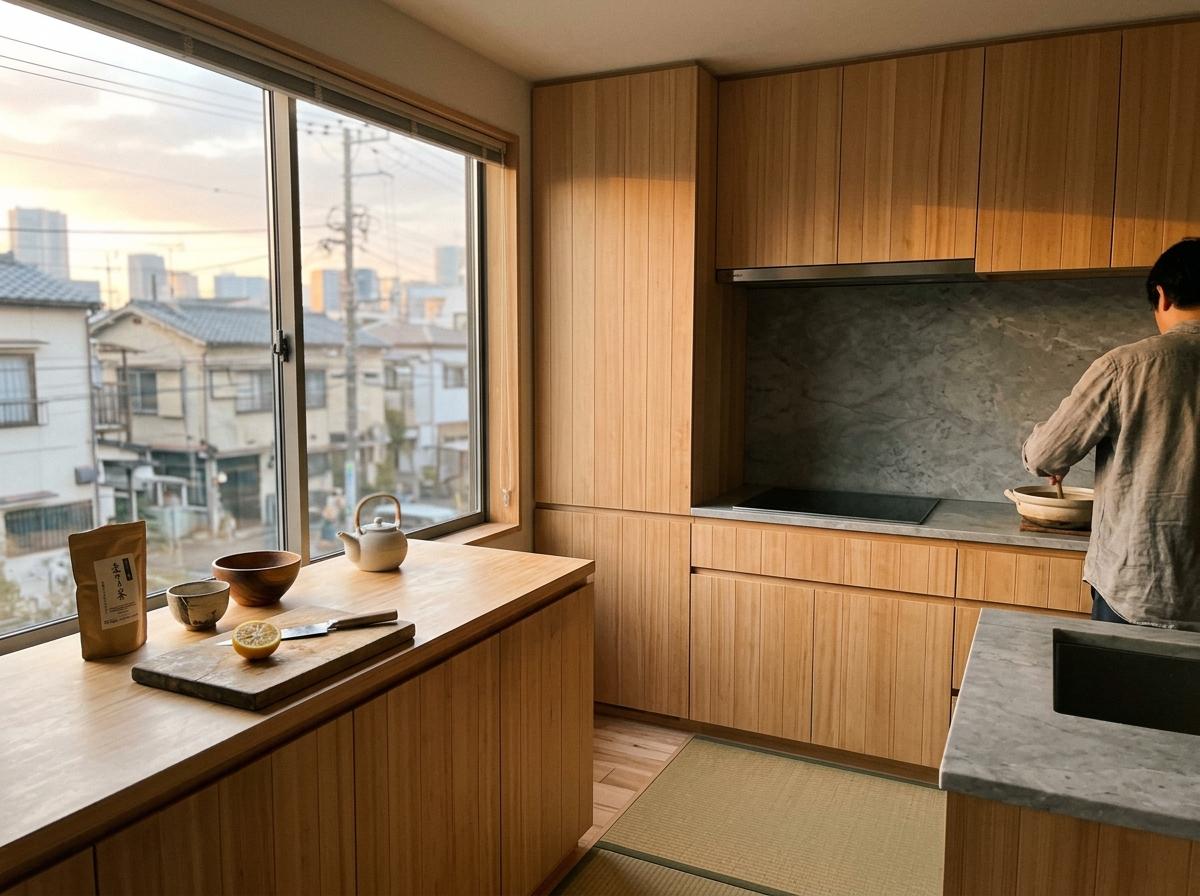

In the soft, diffused glow of a Tokyo morning, the Japandi kitchen reveals itself not as a mere workspace, but as a sanctuary of atmospheric grounding, where the sharp scent of cedar mingles with the clinical coolness of morning air. Here, the room thrives on a figurative paradox, achieving a state of ordered spontaneity-a meticulous arrangement that somehow feels as if it were exhaled by the house itself. This structural dualism defines the experience: while the exterior world dissolves into a chaotic blur of urban movement behind triple-glazed panes, the interior remains a static poem of stillness and intent. The palette is an exercise in material specificity, featuring the honeyed warmth of vertical-grain Hinoki wood juxtaposed against the lunar, matte texture of honed Pietra Grey marble. Far from being purely ornamental, this aesthetic is anchored by functionalist specification, where flush-mounted induction hobs and handle-less cabinetry disappear into the architecture, transforming industrial utility into a seamless, silent partner of the domestic ritual.
Blending Scandinavian Function With Japanese Zen In The Japandi Kitchen
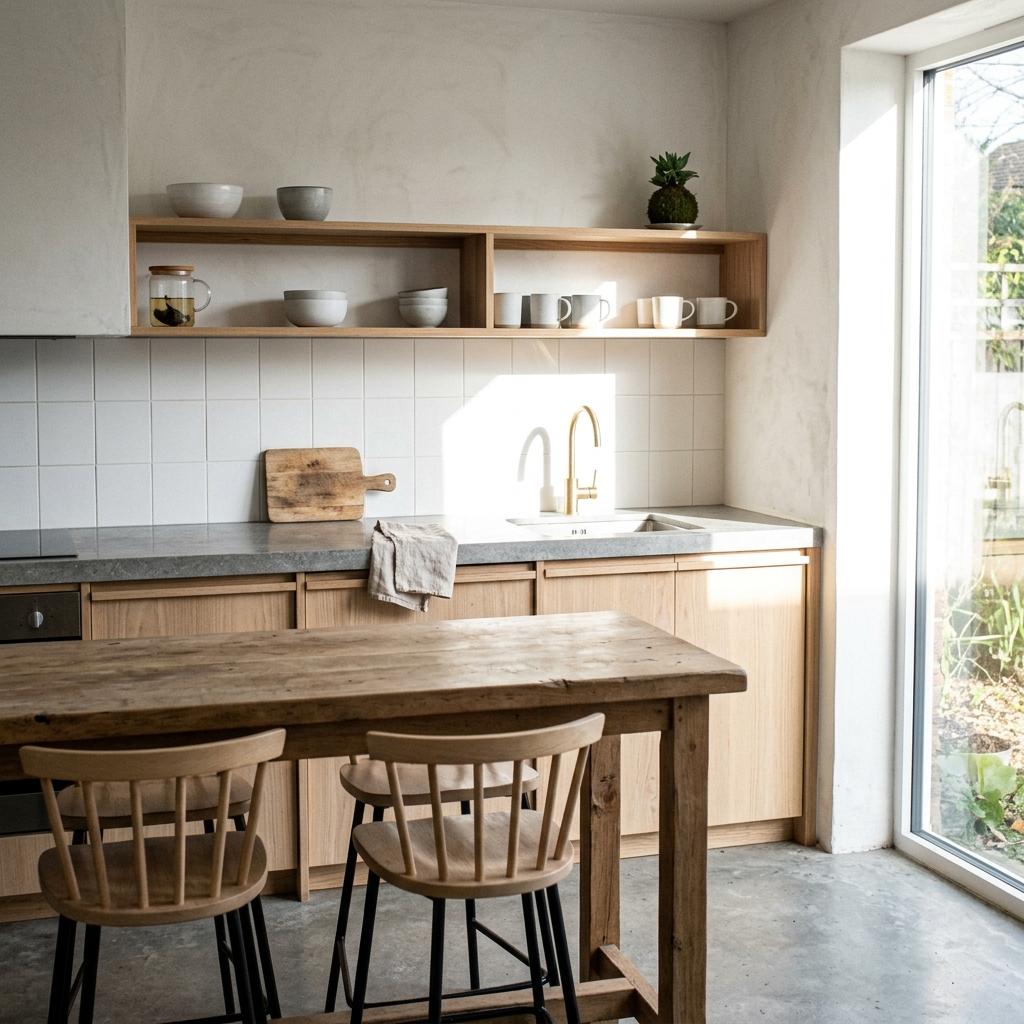

The architecture of the Japandi kitchen is meticulously distilled through a marriage of Nordic pragmatism and Eastern philosophy. In this space, the layout was conceived to prioritize utility without sacrificing the quietude of a tea house, where every cabinet and counter is rendered in a hushed, monochromatic palette. This void-centric approach ensures that visual noise is muted, leaving only a weightless, wintry stillness that invites focused movement. This deliberate design dictates the flow of daily life, as smooth surfaces stretch across the room to expand the perceived volume of the interior. To achieve this balance, the kitchen anchors the home through its tactile timber, seamless stone, and matte metals.
A Closer Look At Minimalist Hardware For A Japandi Kitchen
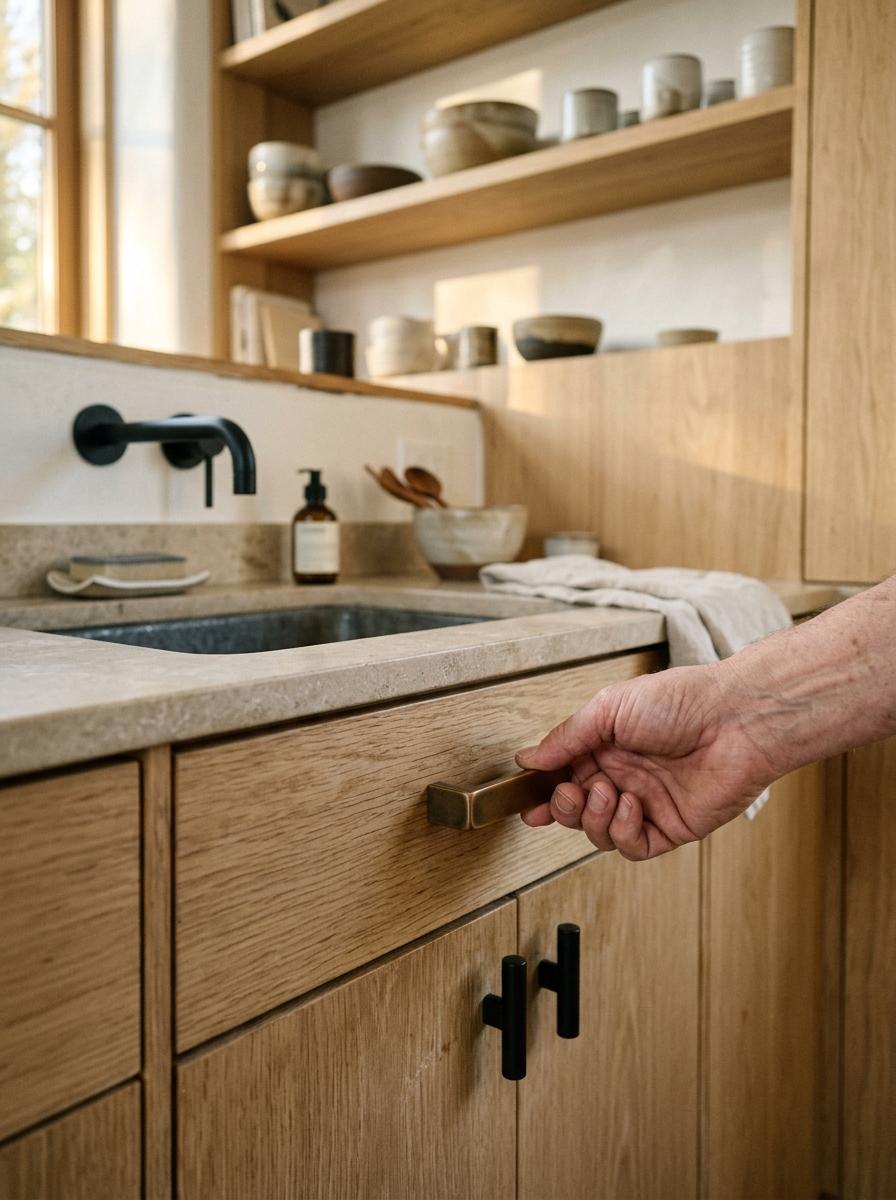

In analyzing the contemporary culinary space, we find that the Japandi aesthetic emerges from the rigorous structural integrity of Scandinavian functionalism synthesized with the transcendent imperfection of Japanese wabi-sabi, resulting in a curated domesticity that prioritizes intentionality over excess. Within the kitchen, hardware acts as the critical tactile interface-a series of haptic touchpoints that must exhibit a surgical precision in form, yet remain softened by an organic, understated patinas. This creates a compelling dialectical tension: the silhouette of a matte bronze pull is severe and geometric, but its interaction with the hand feels fundamentally artisanal and human-centric. To achieve this, You need to look toward a sensorial palette of finishes-utilizing velvety, obsidian, and desaturated textures that provide a grounding weight to the cabinetry, ensuring that even the most utilitarian act of opening a drawer becomes an exercise in quiet, meditative luxury.
Transforming A Small Cooking Area Into A Japandi Kitchen Oasis
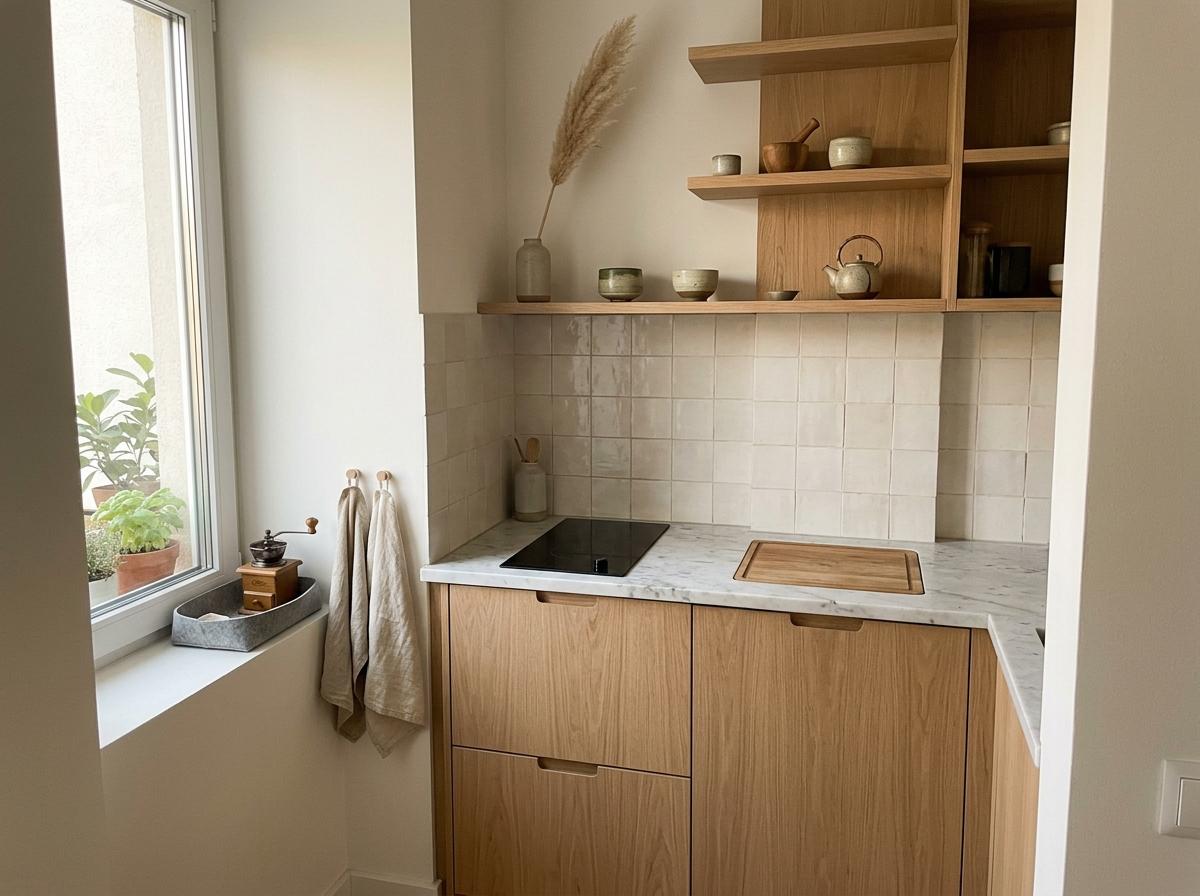

The small kitchen exists not as a cramped enclosure of utility, but as a deliberate sanctuary where the restless energy of the home is distilled into a quiet, rhythmic stasis. Within this compact footprint, we encounter the crowded emptiness of Japandi design-a conceptual synthesis where the absence of clutter creates a profound fullness of spirit, proving that minimalism is not a lack of substance but a heightened state of presence. While the external world demands a frantic, sprawling complexity, this interior environment enforces a rigorous, meditative boundary that transforms every square inch into a site of intentionality. Tactile engagement is driven by the rough-hewn honesty of open-grain FSC-certified white oak and the cool, non-porous resilience of honed Carrara marble, materials that invite the hand to linger where the eye finds rest. This aesthetic harmony is anchored by functionalist precision: integrated handle-less cabinetry and flush-mounted induction hobs dissolve the friction of the workspace, ensuring that the industrial utility of a high-performance kitchen disappears into the seamless flow of a domestic oasis.
Quiet Elegance Captured Through A Minimalist Japandi Kitchen Design
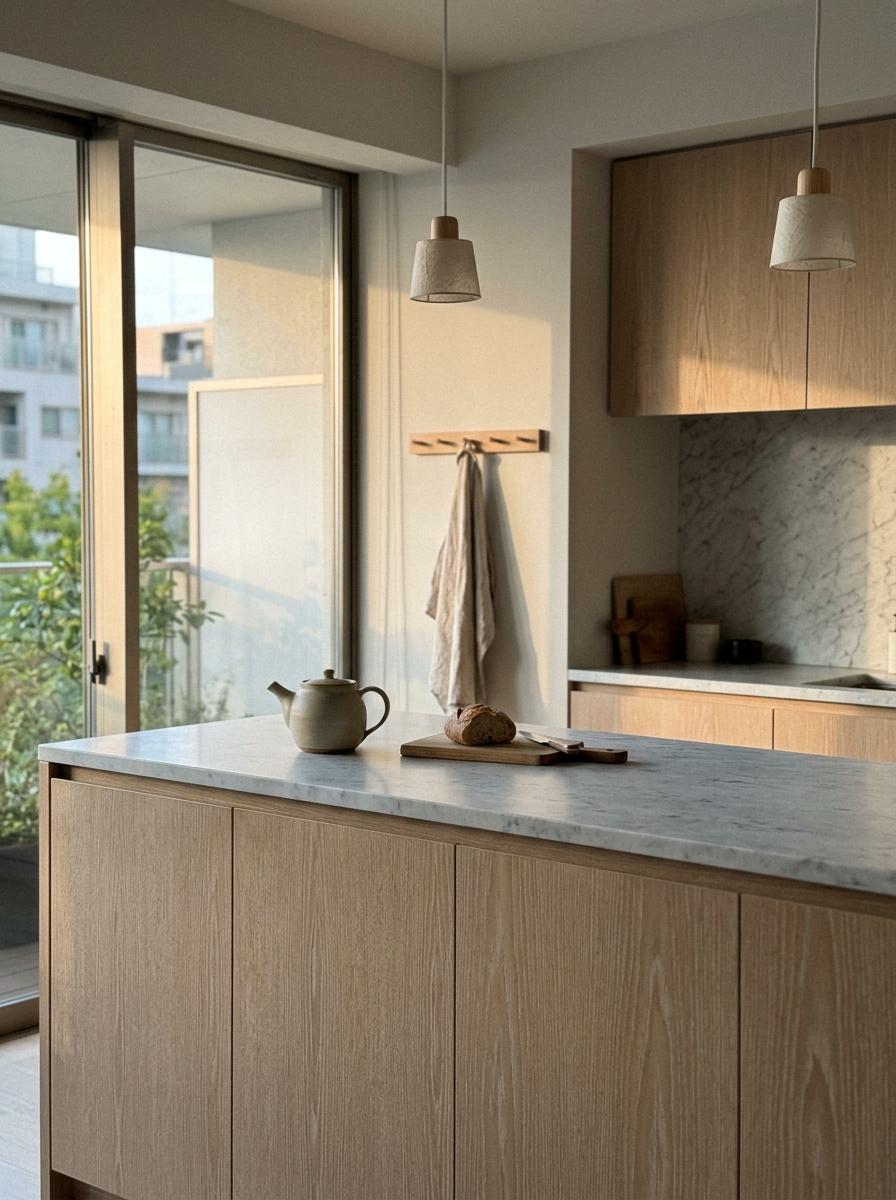

In this culinary sanctuary, the architecture achieves a state of monumental lightness, where the structural weight of the cabinetry feels buoyed by an intentional void of ornamentation. Note how the tactile grain of the cerused white oak meets the cool, non-reflective surface of honed Carrara marble, creating a sensory dialogue between organic warmth and lithic composure. As is characteristic of the high-end residential enclaves in Minato City, Tokyo, this space rejects the clamor of traditional luxury in favor of a curated, quiet sophistication. This visual stillness does more than just organize the home; it lowers the heart rate, shifting the occupant from a state of kinetic stress to one of rhythmic breathing as the fingertips brush against the velvet-matte finishes. Here, the kitchen is no longer a mere utility room, but a physiological anchor where the precision of Japanese joinery and the soul of Scandinavian minimalism converge to soothe the modern psyche.
Comments