
When we synthesize the rigorous functionalism of Scandinavian hygge with the transience and rustic imperfection of Japanese wabi-sabi, the result is a refined architectural vocabulary known as Japandi. In the context of kitchen cabinetry, this aesthetic demands a disciplined adherence to geometric purity, yet it thrives on the tactile, organic warmth of natural timber. To integrate Japandi millwork is to engage in a dialectical balancing act: the silhouettes are uncompromisingly lean and handleless, but the atmosphere they cultivate remains profoundly soulful and grounded. Through this lens of minimalist elevation, we move beyond mere storage to find a sensory landscape defined by ethereal lightness, muted serenity, and a rhythmic, haptic elegance.
Japandi Kitchen Cabinets
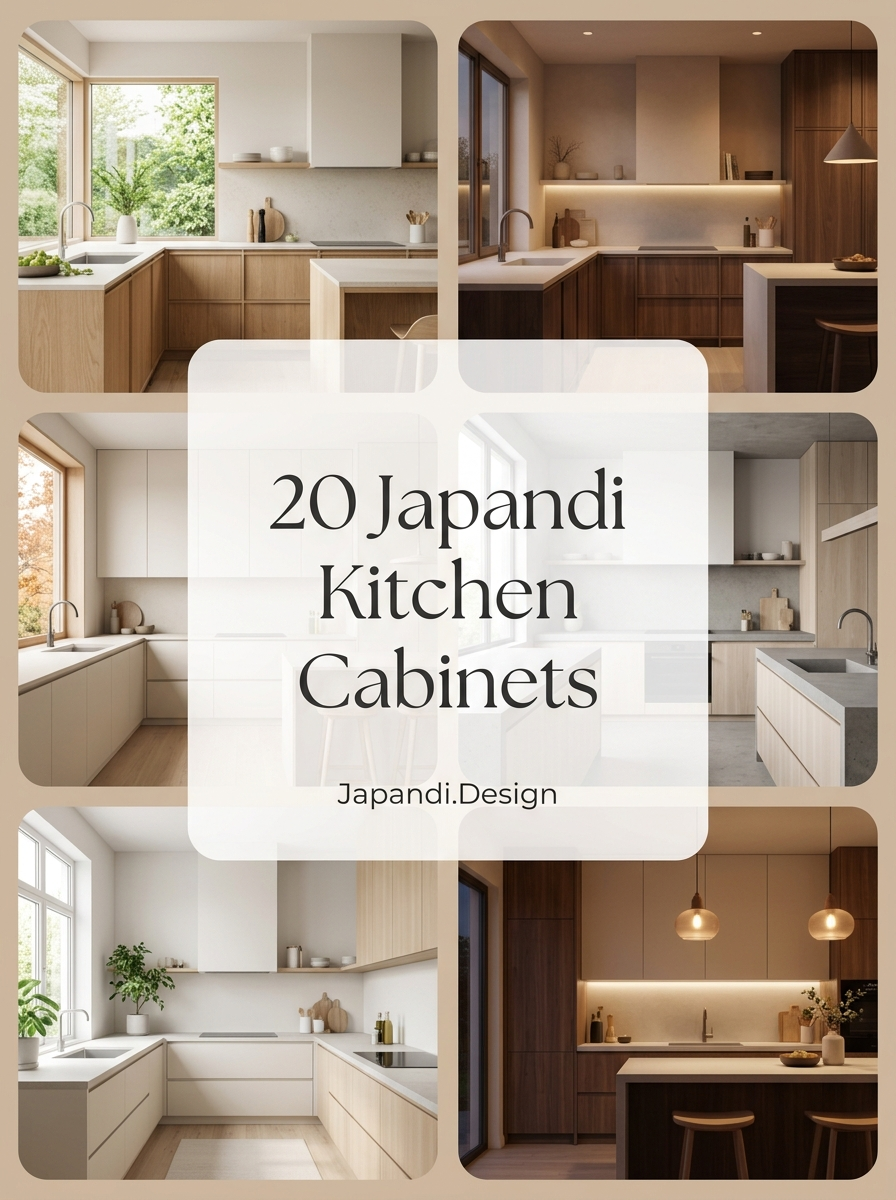

Minimalist Japandi Kitchen Cabinets Design
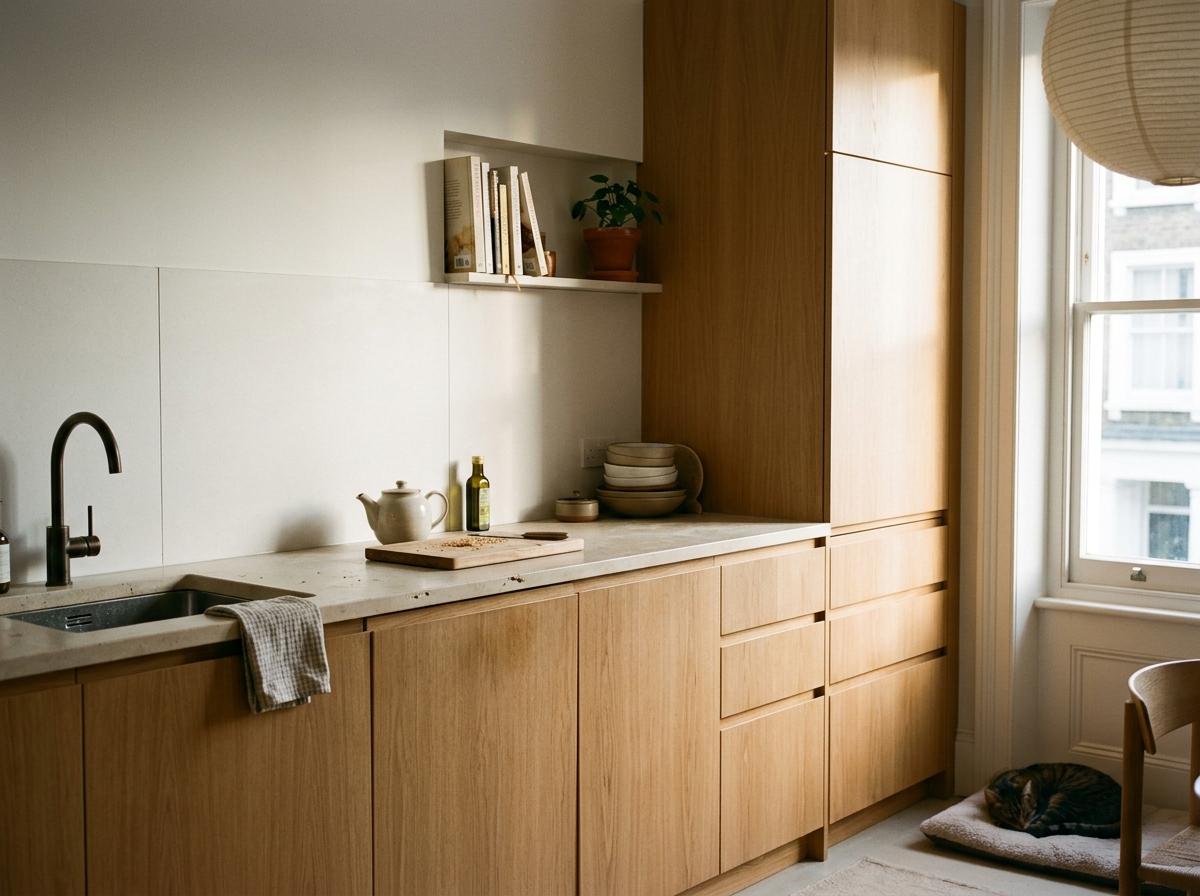

The evolution of the modern culinary space has shifted from the utilitarian, hidden sculleries of the early 20th century to the expansive, soul-centric hubs we see today, where the kitchen is no longer a room of labor but a gallery of intent. This transition finds its peak in a recent project I analyzed, which achieves a state of organized chaos-a design where the rigorous structure of Japanese cabinetry meets the raw, organic warmth of Scandinavian textures. Situated in the leafy, prestigious enclave of Notting Hill, the residence serves as a canvas for a repeat client whose continued trust in this specific aesthetic serves as a testament to the enduring functionality of the style. The final result is a masterclass in Technical Synthesis, achieved through the precise calibration of shadow-gap joinery, handleless oak veneers, and the strategic integration of light-reflective limestone surfaces.
Picture Perfect: A Functional Kitchen With Japandi Cabinets
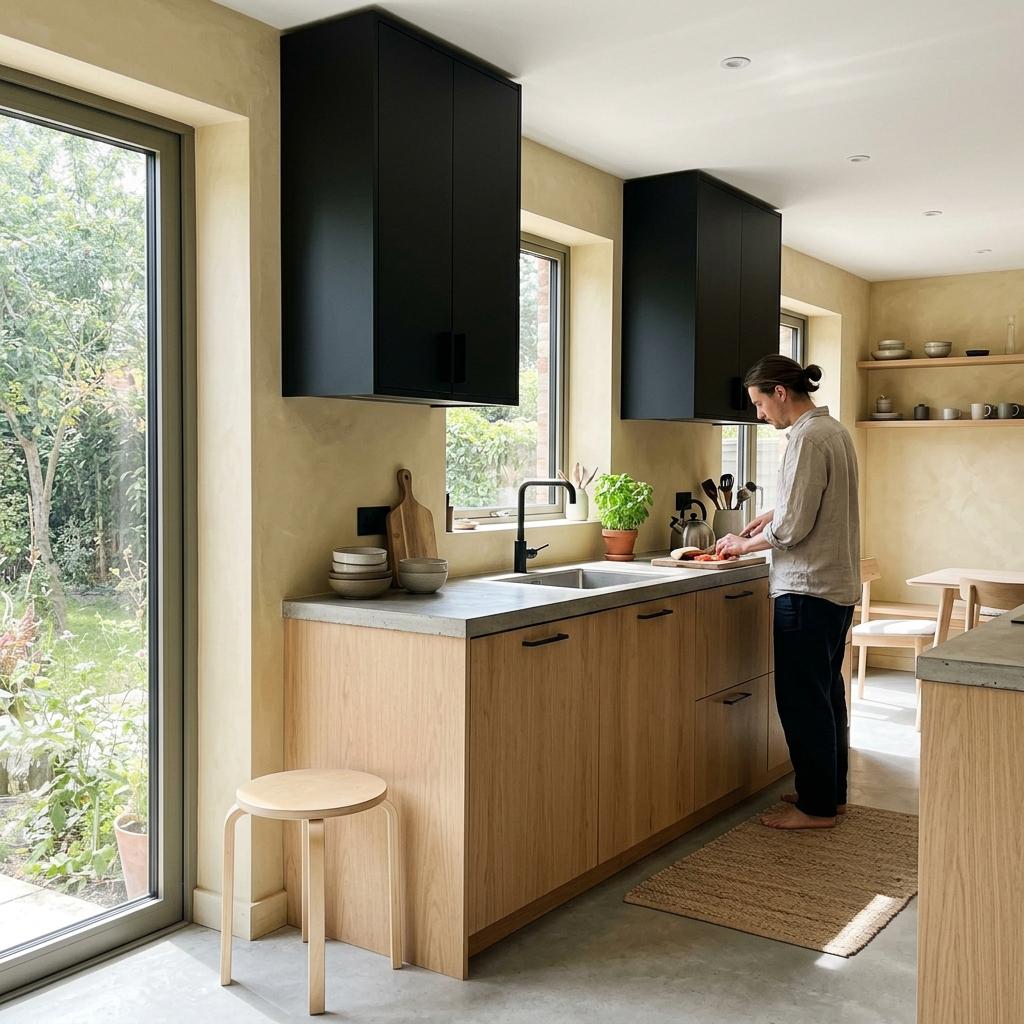

The residence was conceived as a masterclass in restraint, where every structural choice was dictated by the necessity of light and the logic of layout. Within this culinary heart, matte surfaces offer a haptic softness that remains blissfully barren of clutter, ensuring the visual field remains sterile yet soulful. The cabinetry carves a clean contour against the walls, bridging the gap between tactile timber and precise proportion. This intentional geometry stretches the ceiling's reach and expands the room's breadth, pushing the boundaries of the home's footprint. The result is a sanctuary that anchors the daily ritual, celebrates the quiet craft, and prioritizes the purity of form.
Walk Through A Refreshed Kitchen With Japandi Cabinetry Style
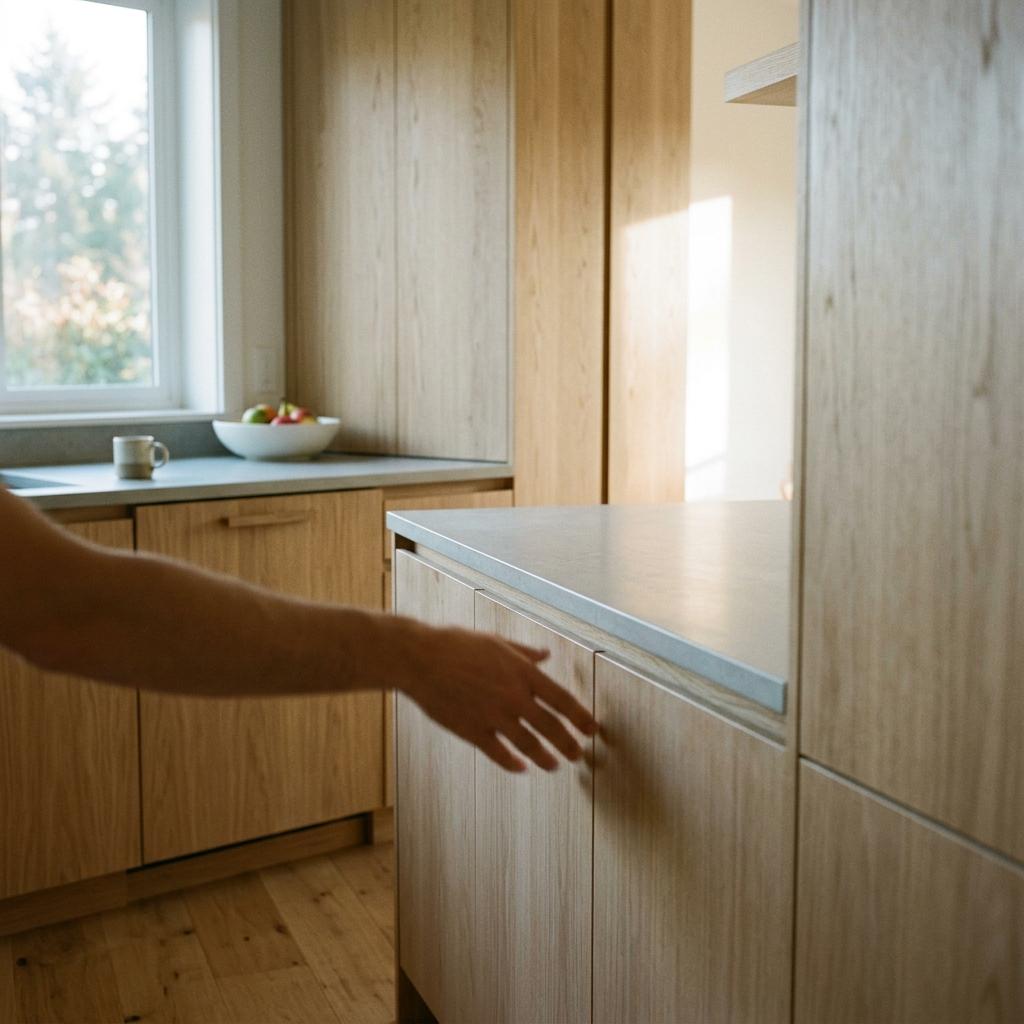

As we step into this renovated culinary sanctuary, the air seems to settle, anchored by the installation of Japandi cabinetry that defines the perimeter. Note how the vertical grain of the rift-sawn white oak creates a rhythmic flow, its surface possessing a porous smoothness that invites the touch while remaining stoically durable. These bespoke units, reminiscent of the minimalist joinery found in the high-end ateliers of Kyoto's Nakagyo-ku district, achieve a state of complex simplicity-where the absence of hardware reveals the intricate precision of mitered edges. Moving your hand across the matte, silken finish of the timber, the initial coolness of the stone countertops gives way to a grounding, organic warmth. This tactile transition triggers a visceral release, shifting the body from the high-frequency hum of daily life into a state of stilled motion. It is a sensory grounding that proves Japandi is not merely an aesthetic choice, but a physiological necessity for the modern home.
Glimpse A Modern Home Featuring Japandi Kitchen Cabinets
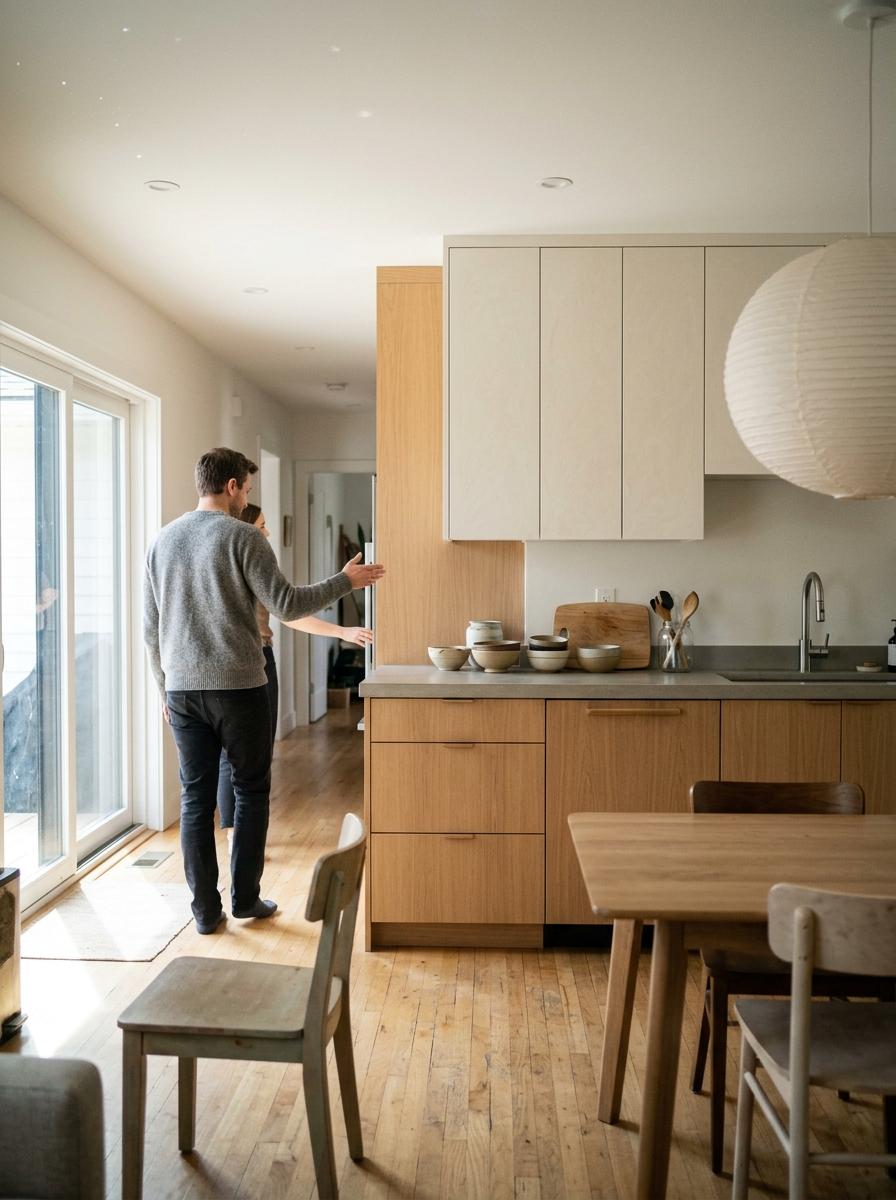

Stepping off the frantic, asphalt-heated pavement of the city into this residence is less like entering a building and more like a physical decompression. While the world outside is a cacophony of jagged edges and sensory overload, the interior unfolds with a quiet, deliberate intent. As we stood in the heart of the home, the lead designer traced the grain of a white oak panel. "The secret to this specific warmth," they explained, pausing to adjust the fall of a linen curtain, "isn't just the timber itself, but the way we've utilized negative space to let the materials breathe." This tension between the wabi-sabi appreciation for natural imperfection and the rigorous, minimalist geometry of Scandi-functionalism creates a palpable sense of tectonic balance. It is a masterful display of how soft tactility can coexist with architectural precision. This intersection of two distant yet kindred philosophies is most vividly realized in the kitchen, where the cabinetry serves as the ultimate anchor for the home's serene identity.
Inside A Peaceful Kitchen With Japandi Wooden Cabinets
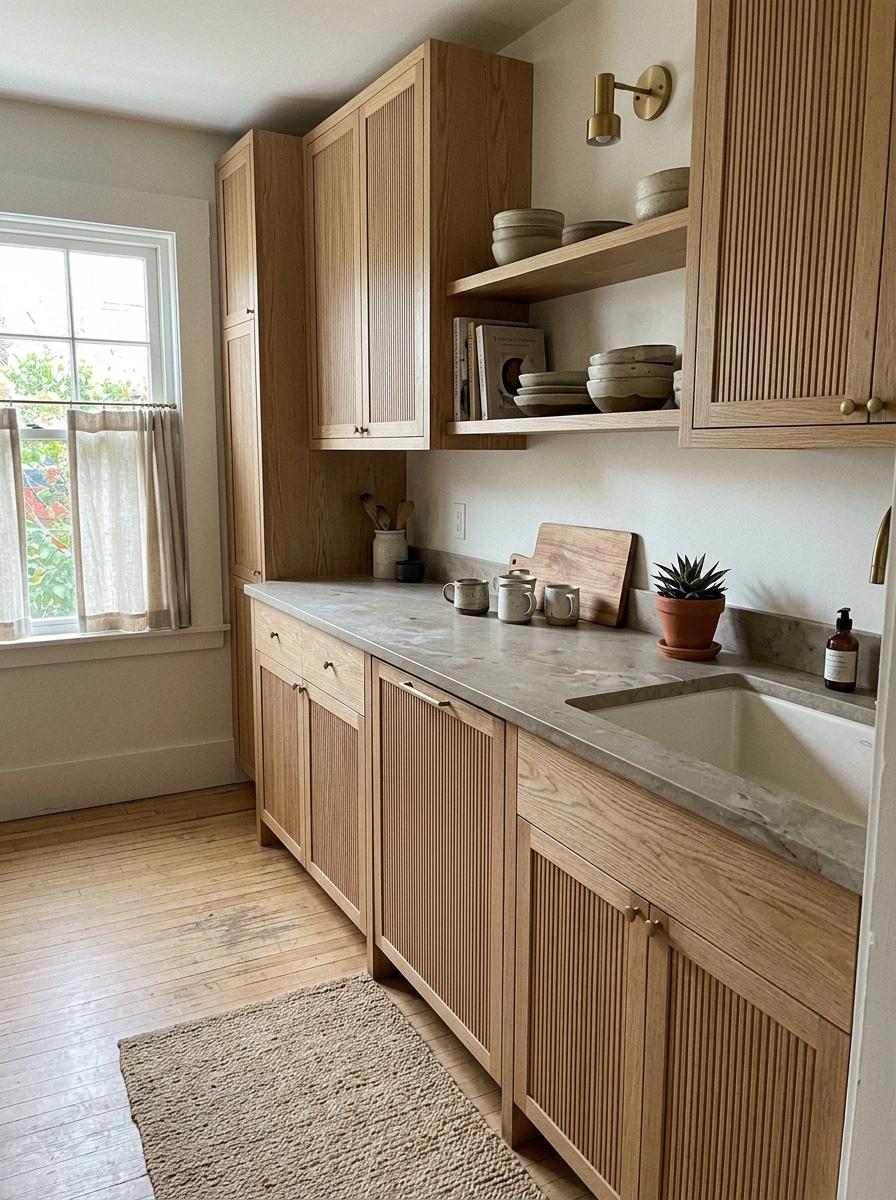

Entering this kitchen, one is immediately struck by the porous, tactile grain of the custom white oak cabinetry, where the surface feels less like a finished product and more like a living, breathing membrane. Note how the vertical reeding of the wood panels creates a rhythmic sequence of light and shadow, guiding your eye toward the honed soapstone countertops that provide a cool, velvety counterpoint to the timber's organic warmth. This space exists as a form of complex simplicity; it is a masterclass in functional minimalism that manages to feel profoundly opulent through its restraint. As you move through the room, the scent of cedar and the dampened acoustics of the thick cabinetry trigger a physiological shift-a lowering of the heart rate and a softening of the shoulders-transitioning the body from the frantic energy of the street into a state of cerebral stillness. Much like the interior philosophies found at the Aman Kyoto, this kitchen leverages Japandi principles to transform a utilitarian zone into a sanctuary, proving that when Japanese precision meets Scandinavian soul, the result is not just a room, but a nervous system reset.
A Kitchen With Modern Japandi Cabinet Design Focus
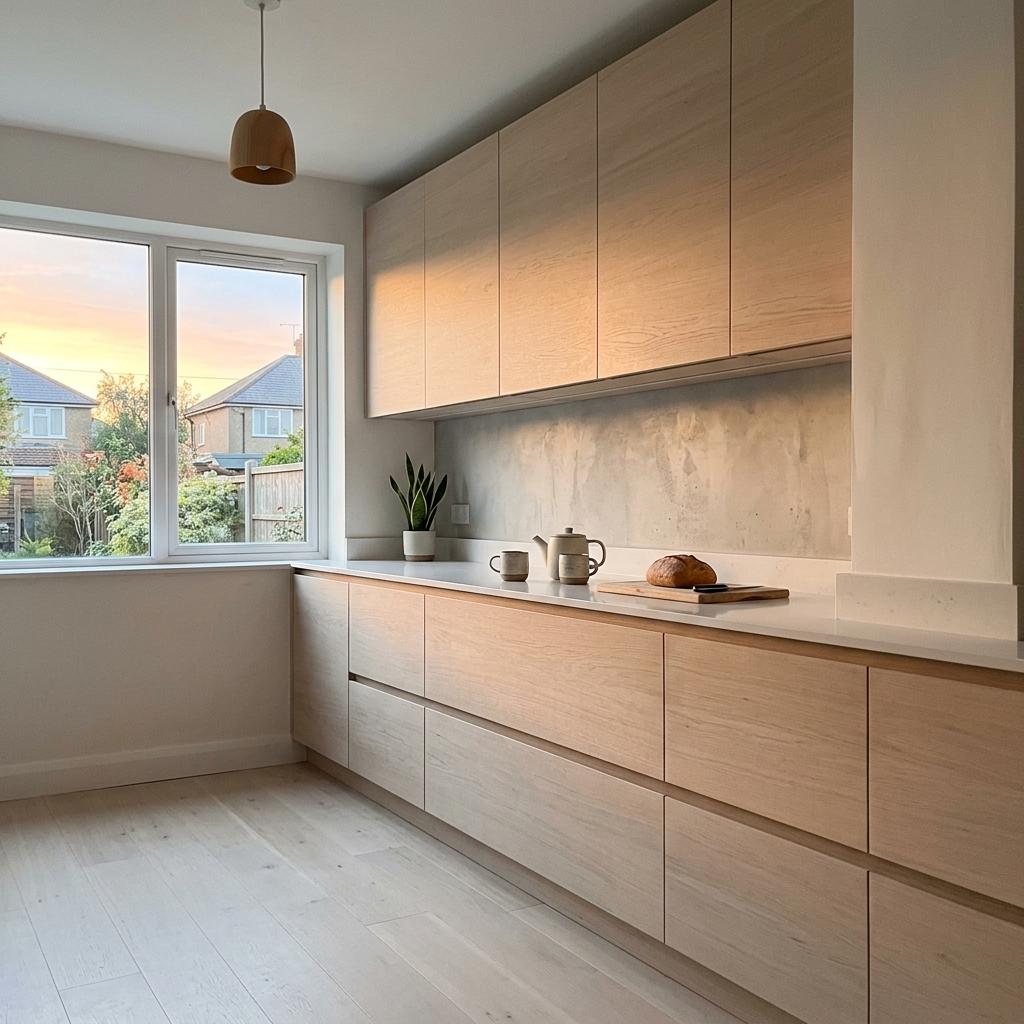

This kitchen project was conceived as a masterclass in restraint, where the structural layout was meticulously organized to prioritize negative space over decorative excess. Within this hollowed-out volume, a monochromatic palette of bleached woods and matte stone cultivates a clinical, quiet clarity. The serene surfaces stretch across the room, providing a balanced, breathable backdrop for the rhythmic rituals of daily life. This deliberate simplicity carves out a sanctuary of light, expands the visual horizon, and anchors the home's core. The design ultimately resolves into a singular vision defined by seamless joinery, shadow-gap details, and sleek, handleless silhouettes.
Embrace A Functional Home With Japandi Cabinetry Influences
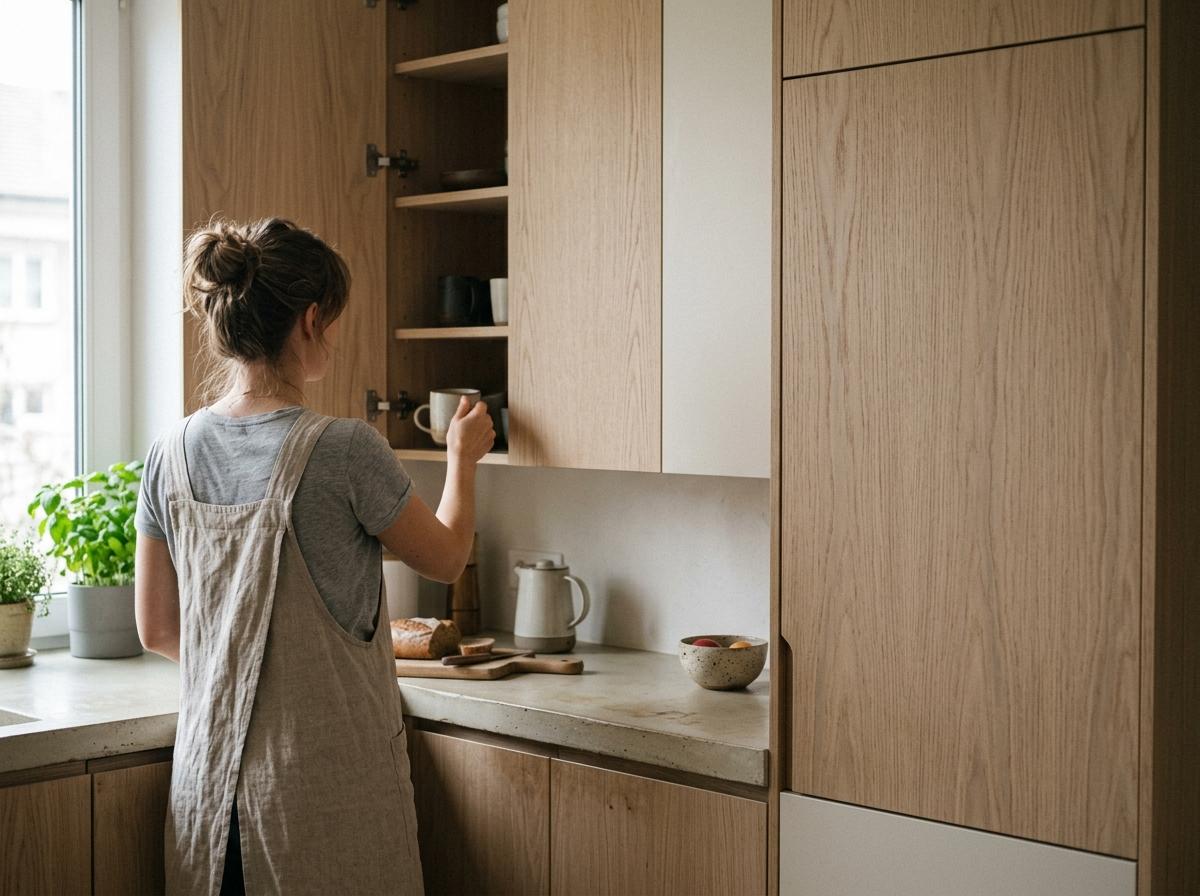

I remember stepping into a chaotic city apartment where the kitchen felt like a battlefield of visual noise-shattered light reflecting off cluttered chrome and heavy, mahogany doors that seemed to swallow the room's air. But when I visited a small studio influenced by the Japandi ethos later that week, the atmosphere shifted instantly; it was as if the space had finally learned how to breathe. "The secret isn't just hiding the mess," a local craftsman told me as he ran a hand over a pale, rift-sawn oak panel, "it is about," he paused to adjust a seamless hidden pull, "creating a silhouette that honors the negative space as much as the storage itself." This juxtaposition between the frantic and the focused reveals the power of architectural millwork: by integrating the rustic warmth of Wabi-sabi with the disciplined, handleless precision of Scandinavian minimalism, we don't just organize a room, we curate a sanctuary. This intersection of quiet aesthetics and utilitarian rigor is exactly why Japandi cabinetry has become the definitive foundation for the modern, functional home.
This Sustainable Kitchen Is A Quiet Haven Of Japandi Design
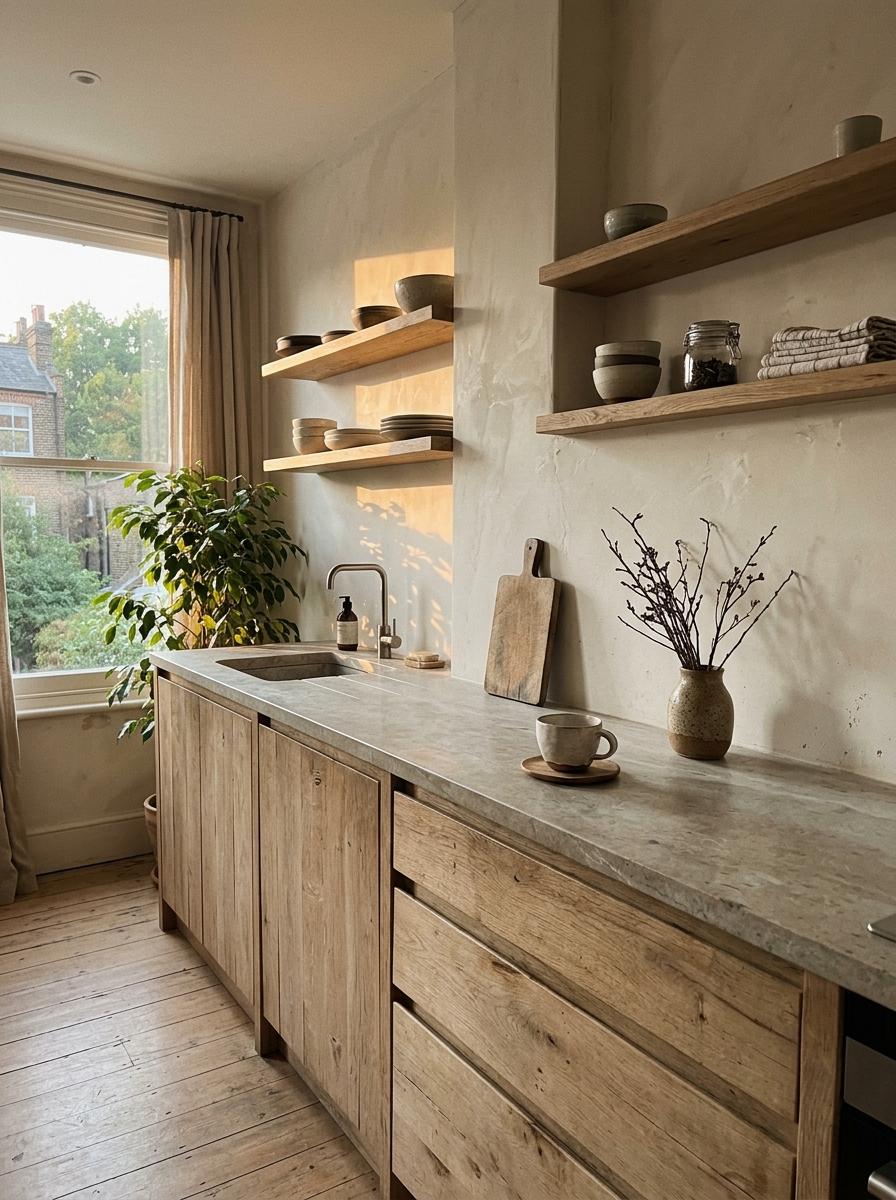

For decades, the traditional kitchen was defined by its industrial excess-a chaotic hub of heavy metals and loud mechanical activity. Yet, in this project, we witness a departure from that historical noise toward a modern era of monastic stillness. This "quiet haven" is defined by a sense of ordered spontaneity, where the rigid discipline of Japanese minimalism meets the rugged, unpredictable textures of Scandinavian hygge. Nestled within the prestigious enclave of Hampstead, the residence draws upon the sophisticated character of its surroundings while offering a retreat from the city's pace. Because the homeowners are a repeat client of the studio, there exists a profound level of creative trust that allowed for such a daring, stripped-back aesthetic. The resulting space is a masterclass in technical synthesis, achieving its soul through the precise calibration of reclaimed timber joinery, breathable lime-plaster walls, and a layout governed by the rhythmic flow of natural light.
How A Small Kitchen Embraces Japandi Cabinetry Style
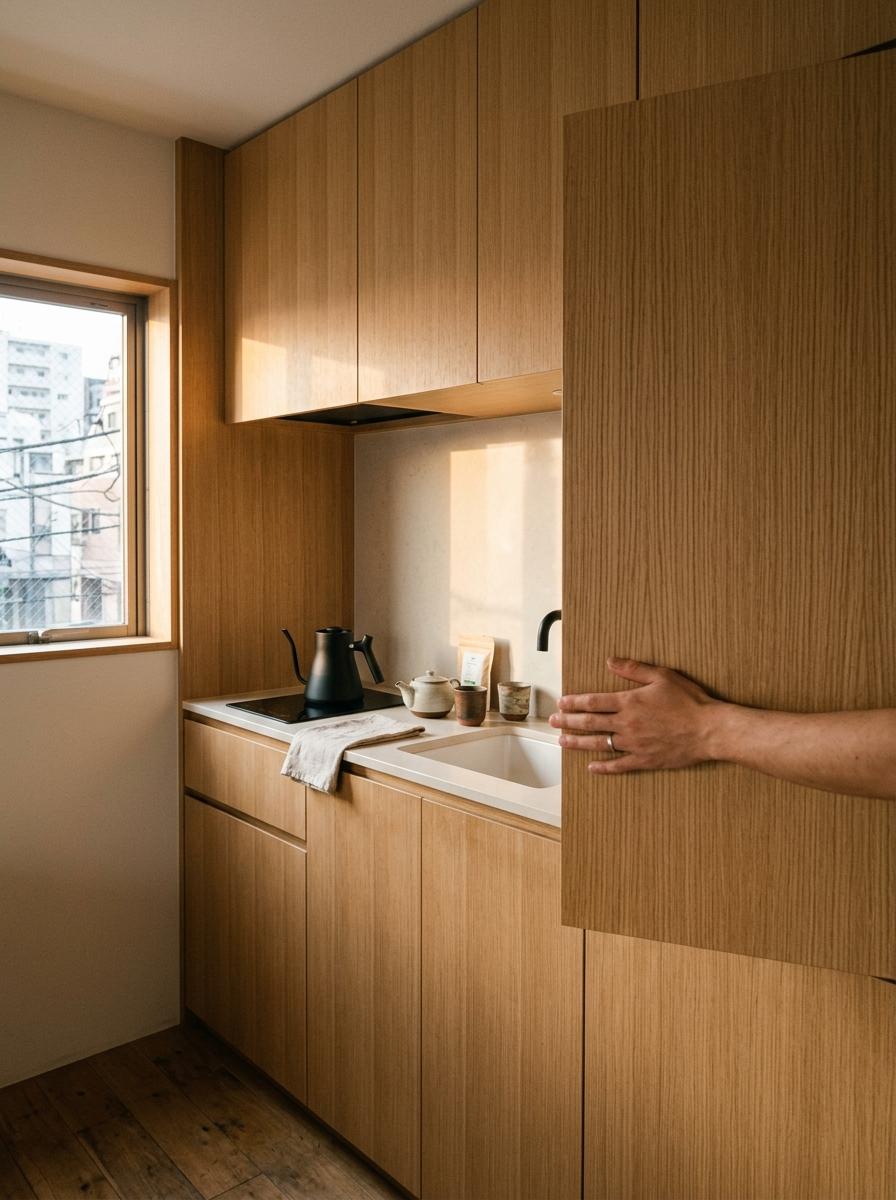

In analyzing the compact culinary spaces of Tokyo's Aoyama district, we see a masterclass in spatial efficiency that transcends mere utility. Note how the cabinetry utilizes rift-sawn white oak, where the linear, tight-grain patterns provide a rhythmic verticality that draws the eye upward, creating an illusion of expansive height. This design choice serves as a functional sculpture, an intentional paradox where the heavy permanence of the wood meets the airy weightlessness of a minimalist silhouette. As your hand glides over the matte-lacquered surfaces-devoid of hardware to maintain a seamless visual flow-the physical sensation of "shibui" (an understated elegance) triggers a visceral lowering of the pulse. The transition from the chaotic urban exterior to this tactile sanctuary transforms a simple task like brewing tea into a grounding ritual, proving that Japandi cabinetry is not just a storage solution, but a biological recalibration of the home.
Elegant Minimalism In Modern Japandi Kitchen Cabinets
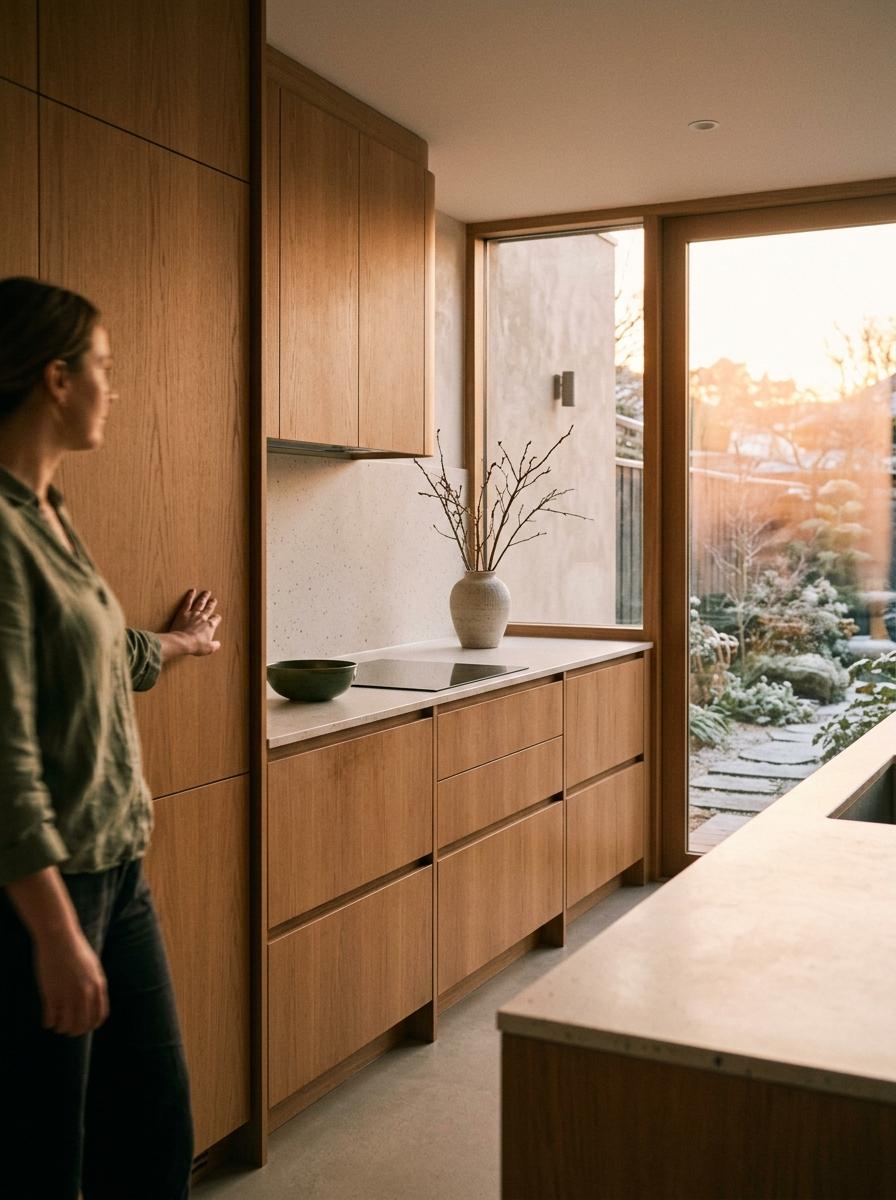

Last Tuesday, while tracing the shadow lines in a Kyoto-inspired townhouse, I watched a client run her hand over a slab of rift-sawn oak. "It's not just about the storage," she remarked, her voice trailing off as she inspected the seamless, handle-less facade, "...it's about the silence it creates in the room." We often mistake minimalism for a lack of substance, but in the realm of Japandi cabinetry, every shadow gap and recessed plinth is a deliberate choice in spatial choreography. Contrast this with the frantic energy of a traditional maximalist kitchen-a cacophony of ornate moldings, clashing hardware, and visual noise that demands constant attention-and you begin to appreciate the profound restraint of the Japandi aesthetic. Here, the exuberant grain of Scandinavian timber is hushed by the disciplined, monochromatic ethos of Japanese wabi-sabi. This intentional marriage of warmth and austerity transforms the kitchen from a mere utility zone into a sanctuary of architectural poise. This pursuit of functional serenity is exactly what defines the evolution of modern cabinetry today.
Sleek Lines And Natural Tones For Japandi Cabinets
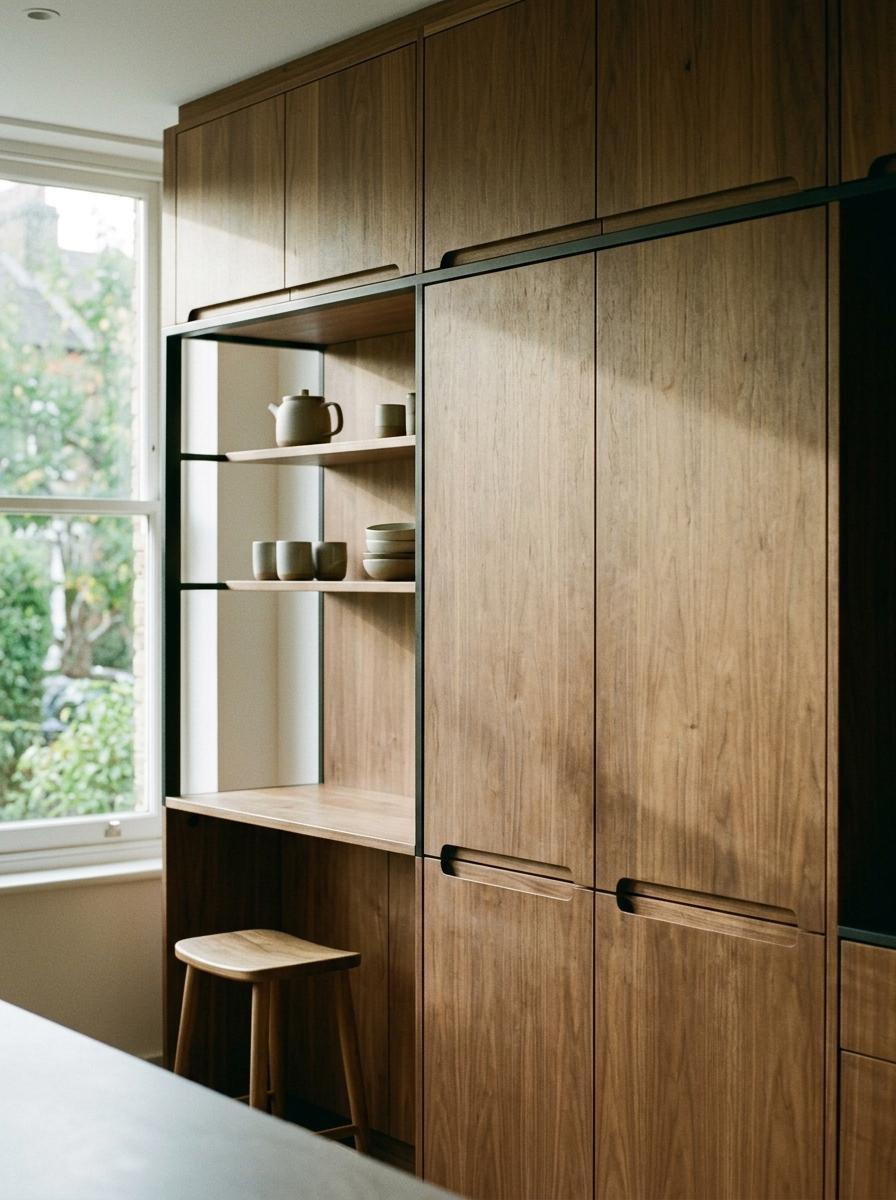

The evolution of cabinetry has shifted from the heavy, ornate oak monoliths of the 19th century to a contemporary pursuit of "functional invisibility." This transition marks a departure from furniture as a status symbol of excess toward a modern era where storage is an integrated architectural component. In the realm of Japandi design, we find the most compelling expression of this shift through a maximalist minimalism; it is a style that demands rigorous discipline to achieve a look that feels effortlessly abundant. In our recent study of a private residence nestled in the leafy streets of Highgate, London, we analyzed a kitchen system designed for a repeat client-a detail that underscores the enduring trust required to execute such a precise aesthetic. The project exemplifies a successful technical synthesis, where the warmth of hand-oiled walnut is balanced against the industrial precision of laser-cut steel, utilizing recessed finger pulls and shadow gaps as the primary architectural levers to create a seamless visual flow.
Explore A Light Filled Space With Japandi Kitchen Cabinets
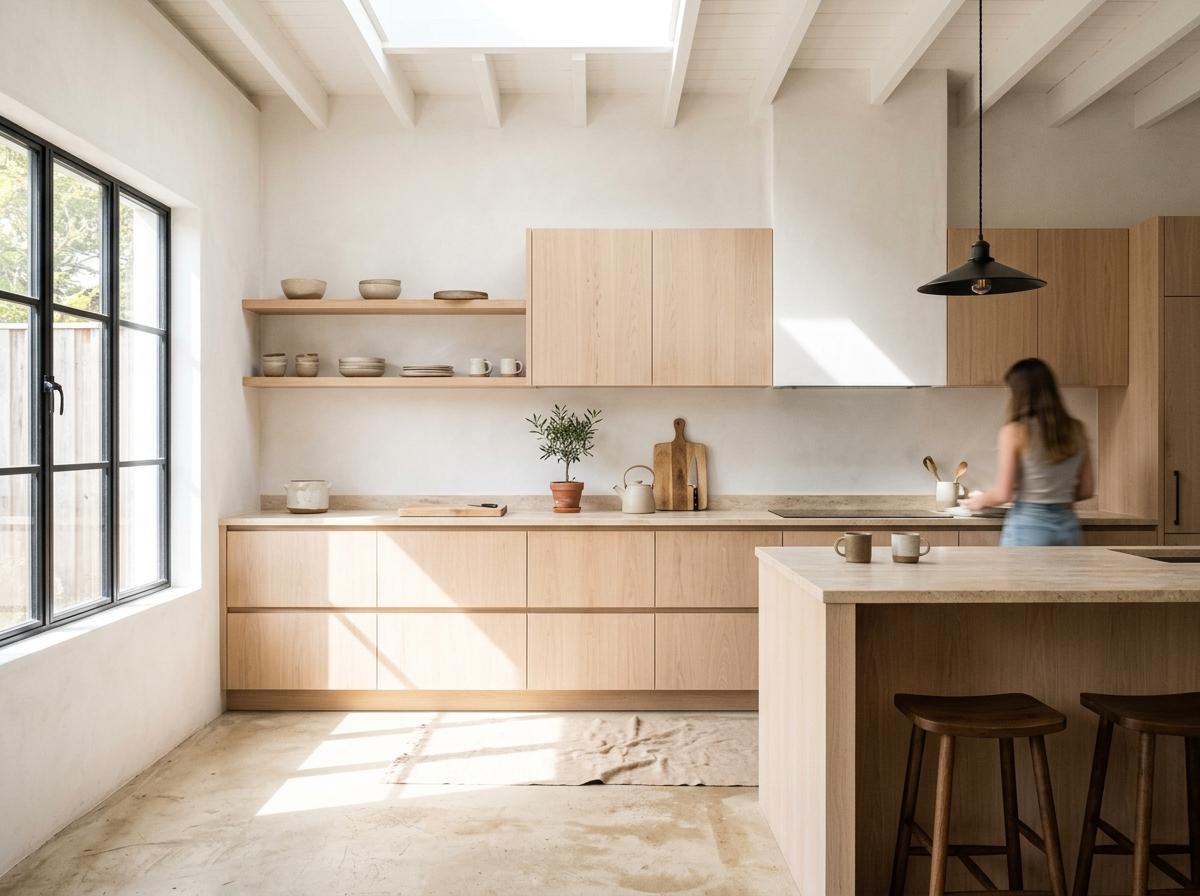

This light-filled kitchen was conceptualized as a study in balance, where the architectural intent was realized through a deliberate fusion of Scandinavian efficiency and Japanese restraint. Within this airy expanse, sleek surfaces and sparse silhouettes cultivate a sense of profound stillness, ensuring that every unadorned plane remains free from visual noise. Pale oaks and polished stone provide a soft, serene structure that tethers the room to its natural origins. This thoughtful composition carves out clarity, stretches the ceiling's reach, and invites a rhythmic play of shadows across the floor. To step into the space is to experience a landscape that breathes through its warm textures, quiet corners, and meticulously curated cabinetry.
The Art Of Simplicity In Japandi Kitchen Cabinetry
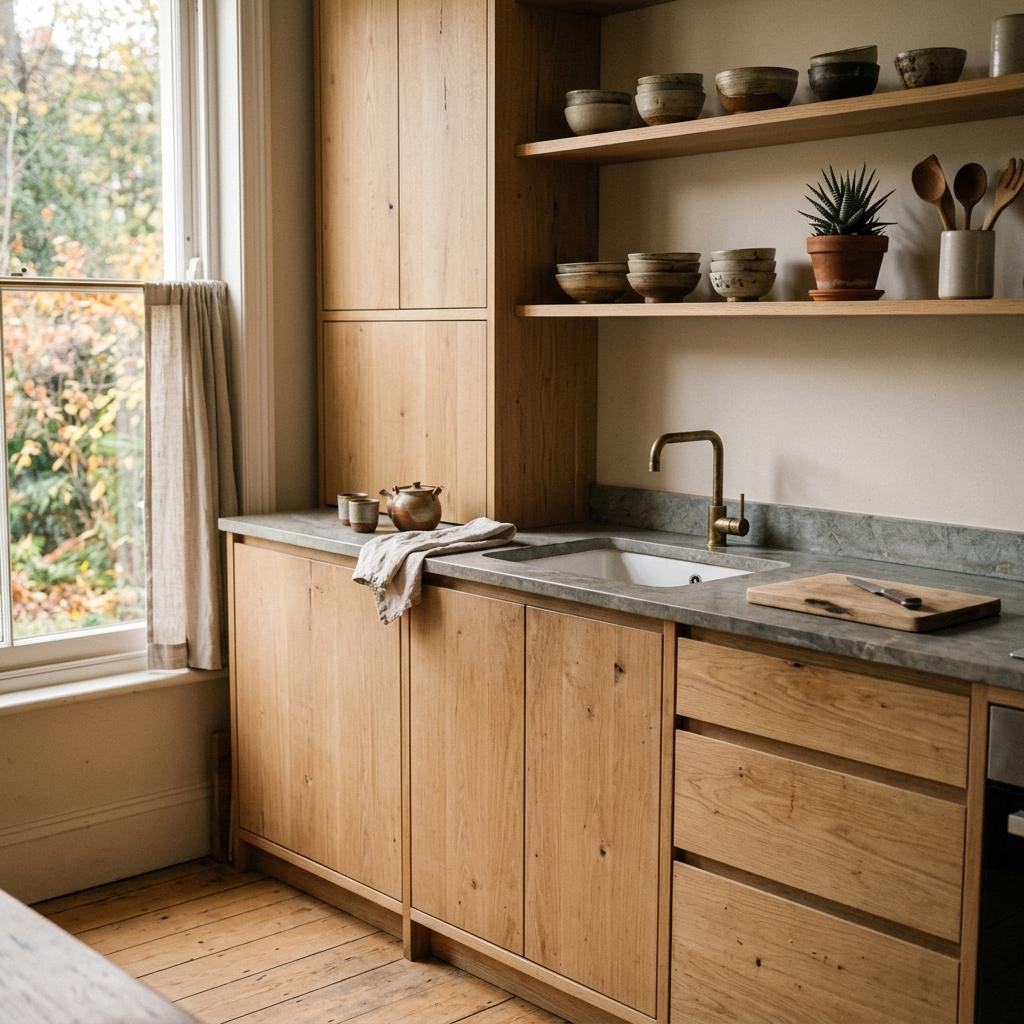

At the heart of modern culinary architecture, Japandi cabinetry emerges from the synthesis of Scandinavian hygge-a commitment to lived-in warmth-and the Japanese ethos of wabi-sabi, which honors the profound beauty of imperfection. This stylistic fusion transcends mere minimalism, demanding a rigorous application of tactile joinery and planar geometry to achieve what we might call a rhythmic serenity. The resulting aesthetic is one of exquisite tension: the cabinetry feels strictly utilitarian in its handleless, rectilinear execution, yet remains profoundly organic through the use of haptic, open-pore timber and patinated stone. By stacking velvety, ethereal, and grounded textures, the design moves beyond the visual, creating a kitchen environment that is not merely observed, but deeply felt-a meditative anchor in the domestic sphere.
Transform Your Culinary Space With Japandi Cabinetry Style
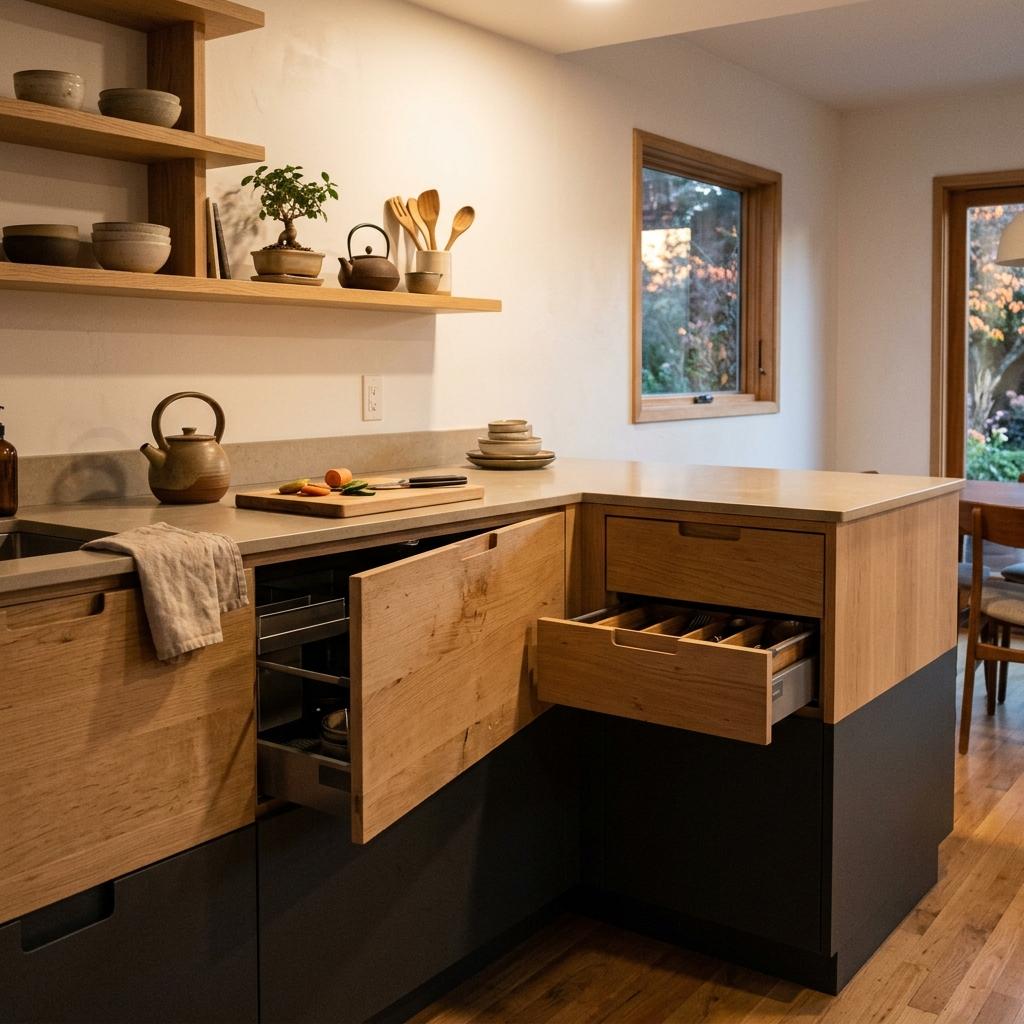

The Japandi kitchen is not merely a room for preparation, but a curated sanctuary where the high-traffic demands of the culinary hearth are softened by an almost monastic stillness. It exists as a disciplined warmth, marrying the rigorous, cold geometry of Scandinavian functionalism with the organic, weathered imperfections of Japanese aesthetics. While the exterior facade presents a seamless landscape of rift-sawn white oak and matte-fingerprint-resistant laminates, the internal architecture reveals a complex topography of modular steel organizers and soft-close kinetic hardware. This deliberate pairing of tactile timber grains against the clinical precision of recessed handle-less profiles ensures that the cabinetry serves as more than storage; it becomes a spatial calibration tool, concealing the chaotic machinery of modern life behind a veil of rhythmic, structural serenity.
Functional Beauty Found In Japandi Kitchen Cabinets
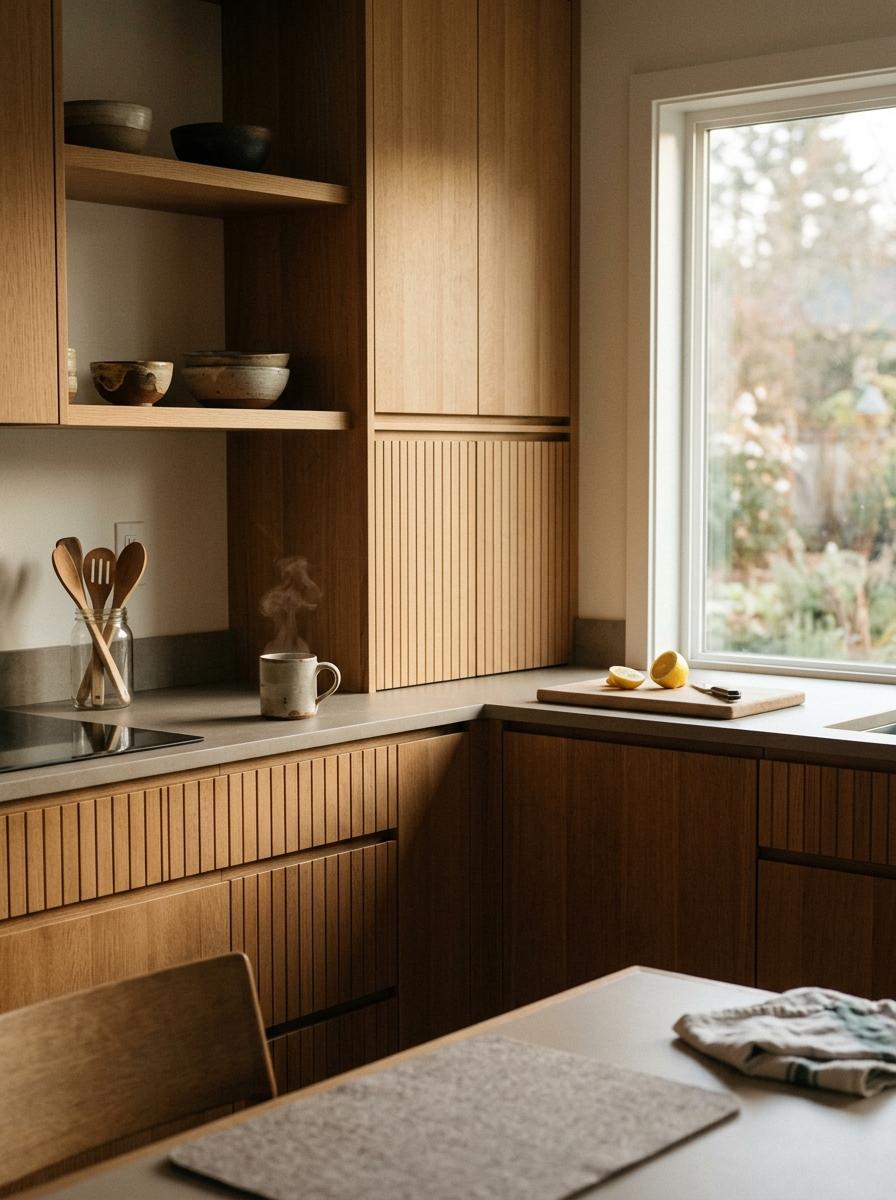

At its core, the Japandi kitchen is a masterclass in Definition via Synthesis: a disciplined fusion where the rustic, philosophical impermanence of Japanese wabi-sabi intersects with the pragmatic, streamlined efficiency of Scandinavian hygge. In the realm of cabinetry, this translates into a rigorous adherence to lexical precision; we see the integration of handleless, push-to-open flat panels and mitered-edge joinery that elevates the millwork from mere storage to architectural installation. The cabinetry operates through a dialectical pairing of form and utility-it is austere in its visual footprint, yet profoundly generous in its ergonomic capacity. To interact with these surfaces is to experience a sensorial stacking of elements: the tactile, velvet-matte warmth of quartersawn oak, the grounding weight of stone-hued linoleum, and the serene, rhythmic cadence of vertical slats. This is beauty that does not merely sit on the surface; it is a calculated, quiet equilibrium engineered for the modern soul.
A Balanced Home Interior Featuring Japandi Kitchen Cabinets
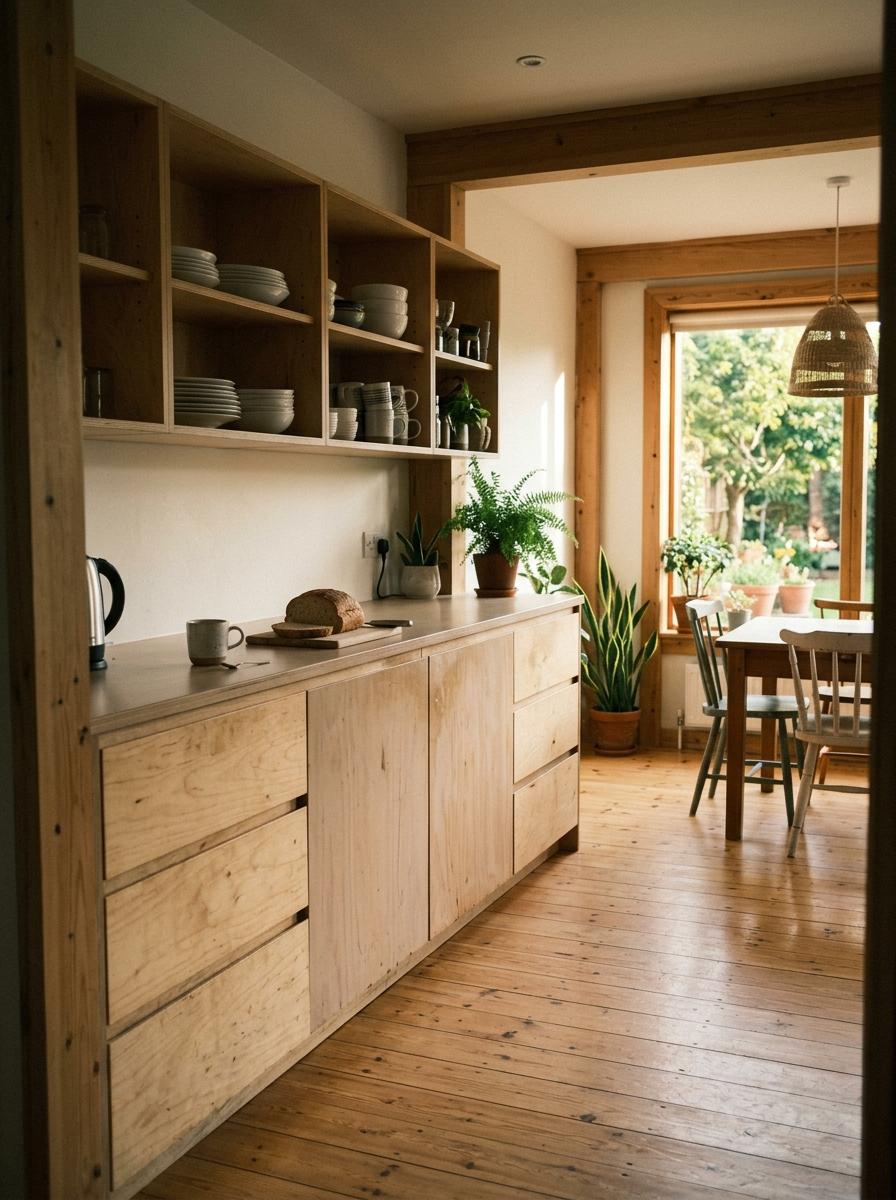

The structural integrity of this residence was established through a meticulous integration of raw textures and refined geometry, ensuring that the architecture remains secondary to the lived experience. Within the culinary heart of the home, the Japandi kitchen cabinets anchor the space with a sterile simplicity, their surfaces finished in a muted, monochrome palette that whispers of quietude. This seamless sanctuary silences the visual noise of daily life through its disciplined, dust-free surfaces and shadowless planes. Polished pine planks bridge the transition between the cooking and dining zones, carving a path that stretches toward the light. The layout intentionally expands the perceived volume of the room, as the cabinetry frames the flow, fosters a sense of openness, and focuses the eye on a singular, serene vista.
Discover The Warmth Of Japandi Kitchen Cabinet Design
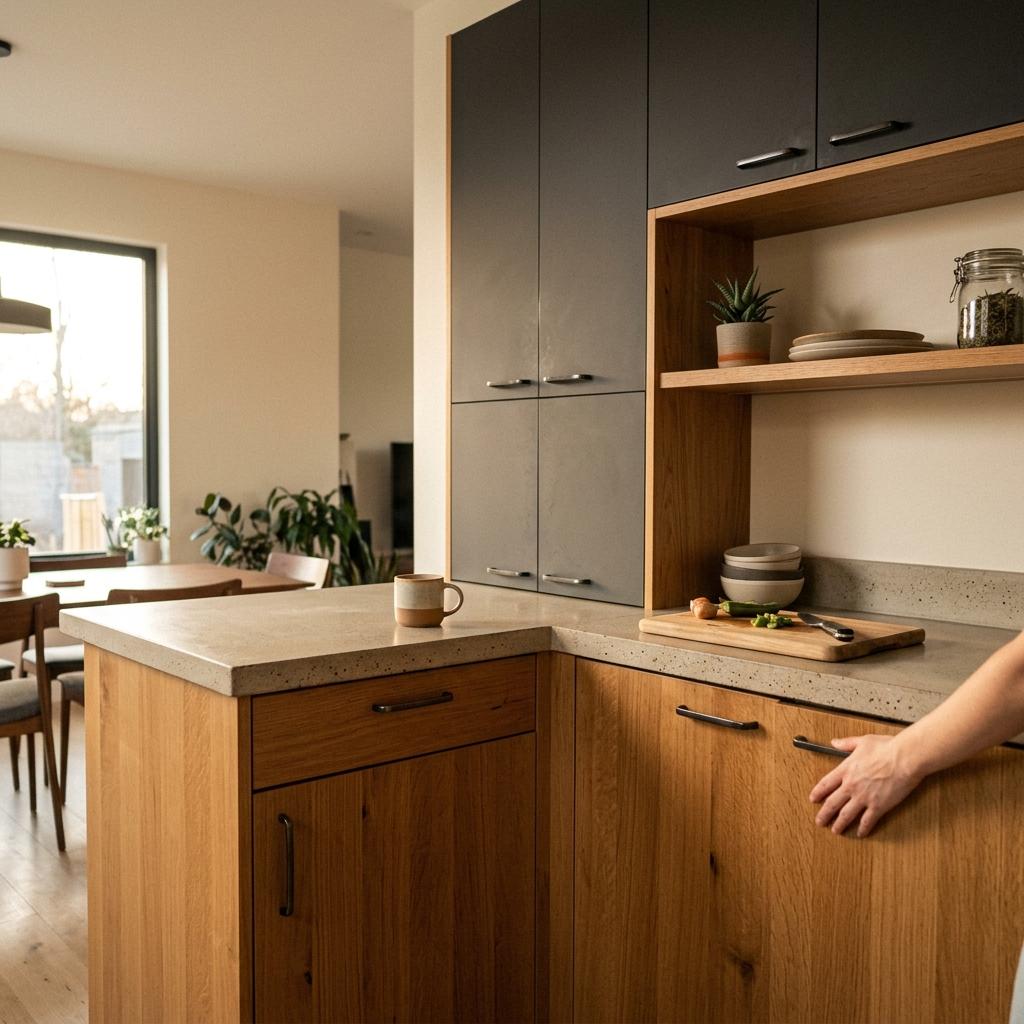

When integrating Japandi kitchen cabinet design into a modern home, the tactile experience of the cabinetry becomes as vital as its utility. To achieve the aesthetic balance found in the high-end residential quarters of Tokyo's Daikanyama or the minimalist lofts of Copenhagen's Indre By, we must select materials that speak a silent language. Note how the tactile interplay between the honey-toned, quarter-sawn oak and the velvety, ultra-matte charcoal laminates creates a space of complex simplicity. This intentional friction between the organic grain and the sterile, precision-engineered hardware offers a visual paradox that grounds the room. As your hand brushes against the open-pore timber finish, there is a shift from mere observation to a profound physiological settling-a lowering of the pulse that mirrors the calming stillness of a forest floor. This is not just a storage solution; it is a sensory sanctuary where the clinical efficiency of Scandinavian layout meets the soul-stirring imperfection of Japanese wabi-sabi, transforming the daily ritual of cooking into a grounded, meditative experience.
Refined Aesthetics For Your Modern Japandi Kitchen Cabinets
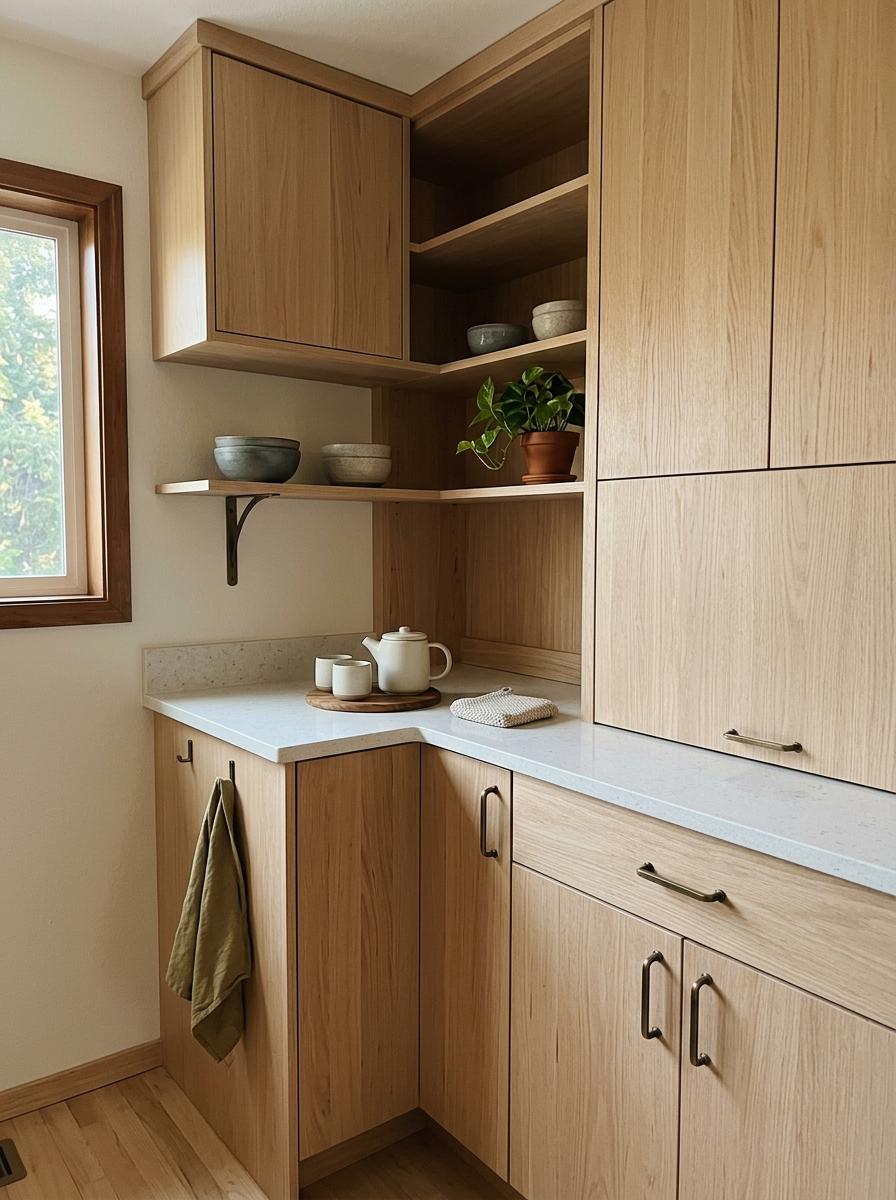

I remember standing in a friend's kitchen years ago-a chaotic landscape of glossy, high-traffic laminate and heavy chrome hardware that seemed to hum with a frantic, industrial energy. It was a space designed for speed, not soul. But last month, while interviewing a woodworker in Kyoto, the atmosphere couldn't have been more different. "The secret to a quiet kitchen," he told me, as he ran a hand over a slab of reclaimed white oak, "isn't the absence of tools. It's the presence..."-he paused to adjust a perfectly flush miter joint-"...of intentionality in the grain." This contrast between the cluttered roar of maximalism and the hushed precision of a craftsman's workshop is where the heart of the Japandi kitchen truly beats. By stripping away the visual noise of ornate molding and replacing it with a tactile palette of rift-sawn timber and matte finishes, we do more than just update a layout. This pursuit of the Wabi-sabi spirit through a Scandi-minimalist lens is what defines the refined aesthetics of modern cabinetry.
Integrating Nature Through Japandi Kitchen Cabinet Finishes
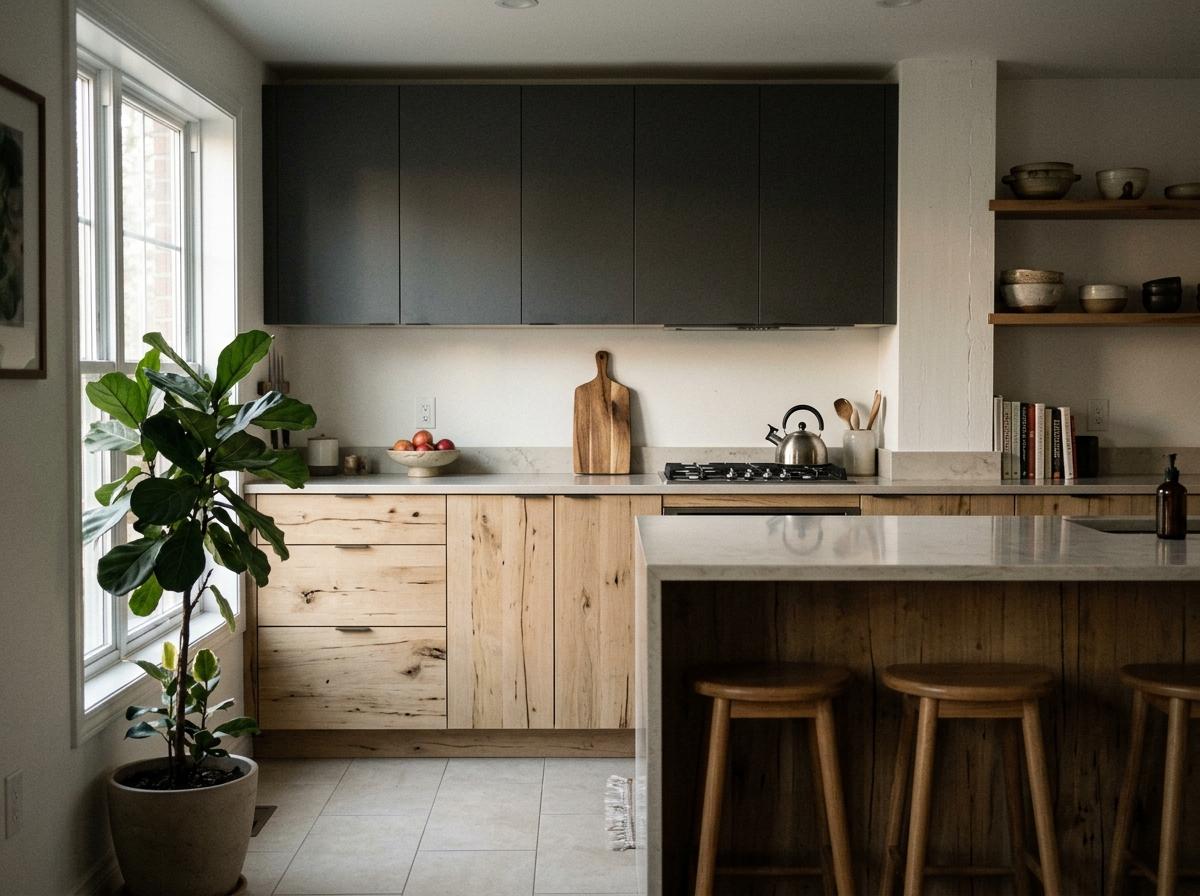

The Japandi kitchen serves as a silent sanctuary where the rhythmic hum of modern appliances meets the stillness of a forest clearing, grounding the culinary workspace in an atmosphere of meditative permanence. Within this niche, the cabinetry achieves a structured fluidity, a conceptual synthesis where the rigid geometry of the kitchen island is softened by the organic unpredictability of grain patterns. This creates a necessary structural dualism: while the external facade presents a curated, minimalist shell to the living area, the internal configuration remains a high-performance engine of utility. To achieve this tactile resonance, we look to material specificity-the silvered patina of reclaimed Hokkaido cedar paired with the ultra-matte, anti-fingerprint surface of charcoal linoleum. Ultimately, these finishes are not merely aesthetic choices but are rooted in functionalist specification, where the integration of non-porous silicate coatings onto raw timber provides a durable, industrial-grade solution to the humidity of the domestic hearth.
Subtle Elegance In Minimalist Japandi Kitchen Cabinets
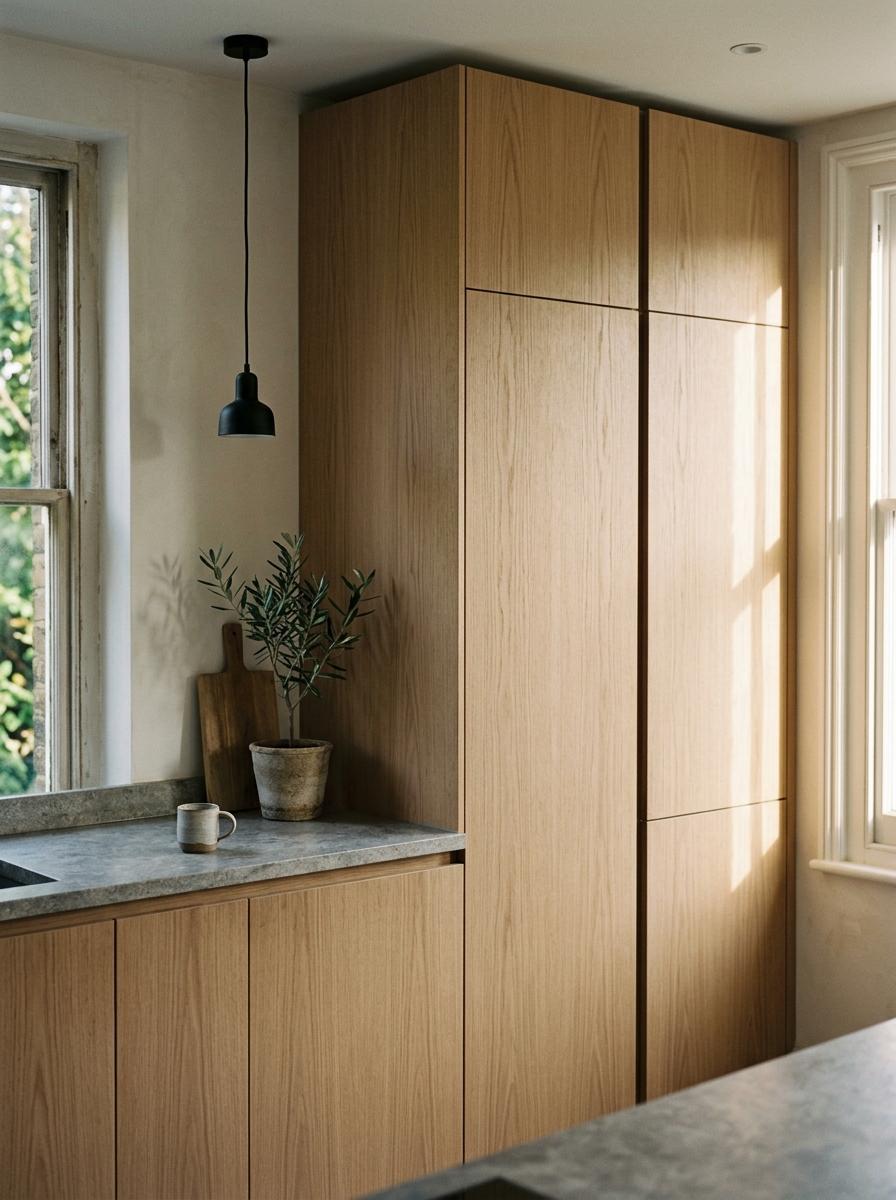

To understand the quiet sophistication of the modern Japandi kitchen, You must first look back to the mid-century period, where the stark utility of post-war functionalism began its slow migration toward the organic warmth of Scandinavian hygge and Japanese wabi-sabi. This evolution from cold machinery to soulful minimalism sets the stage for our latest study: a kitchen that masters the art of structured spontaneity. Located in the leafy, prestigious enclave of Hampstead, the project serves as a sophisticated homecoming for the residents-who, as a repeat client, bring a deep-seated trust that allows for such experimental aesthetic boundaries. The result is a masterful technical synthesis, where the cabinet's visual weight is meticulously balanced through the interplay of vertical grain alignment, recessed shadow gaps, and a monochromatic palette that grounds the space in silent luxury.

Comments