
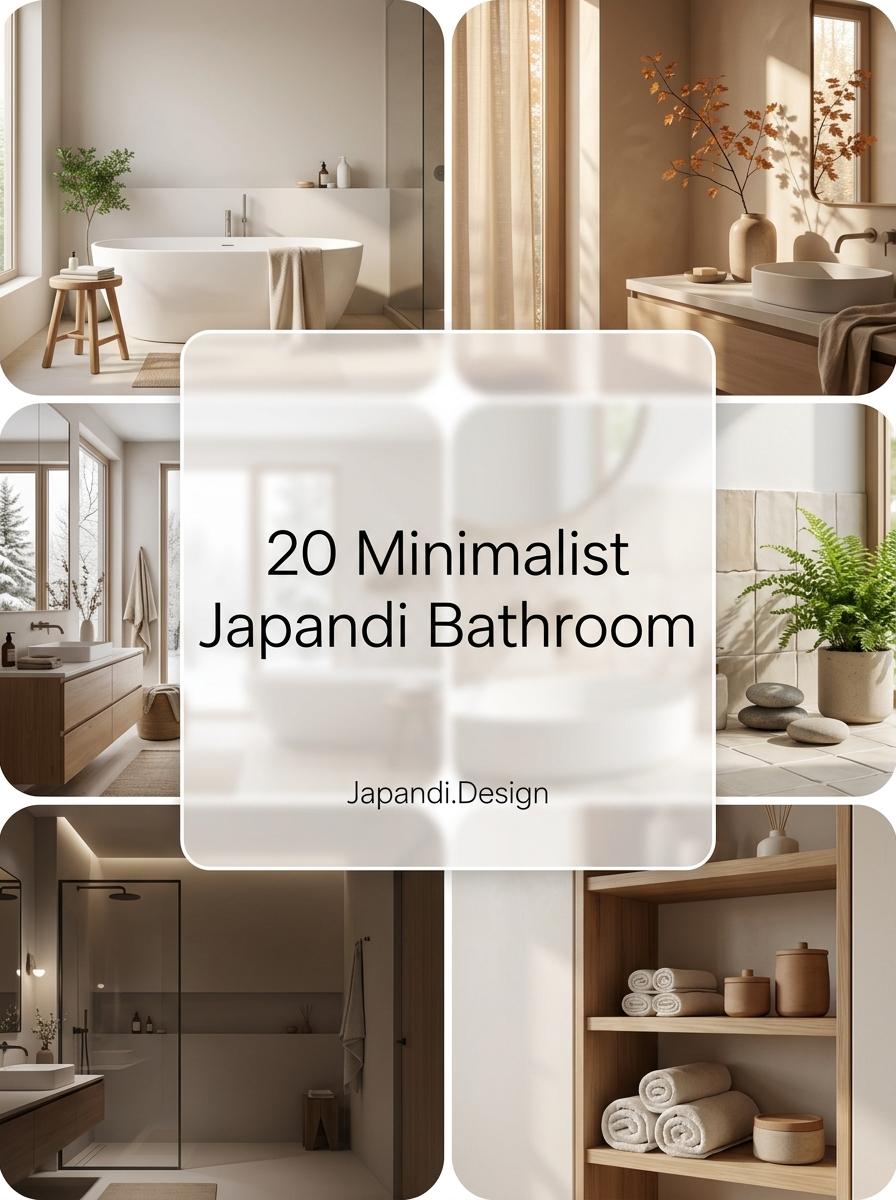
By synthesizing the rigorous functionalism of Scandinavian hygge with the transience of Japanese wabi-sabi, we arrive at a spatial philosophy that redefines the bathroom as a sanctuary of curated intentionality. This Japandi paradigm relies on a meticulous alchemy of tactile materiality and negative space, where the clinical austerity of modernism is tempered by the warmth of organic imperfections. The result is a domestic environment that feels profoundly grounded yet weightlessly ethereal, bridging the gap between utilitarian ritual and spiritual restoration. Through an interplay of haptic, verdant, and monolithic textures, these designs transcend mere aesthetics to offer a multi-sensory immersion into modern wellness.
Minimalist Japandi Bathroom

Create A Minimalist Japandi Bathroom Haven With Natural Wood Accents
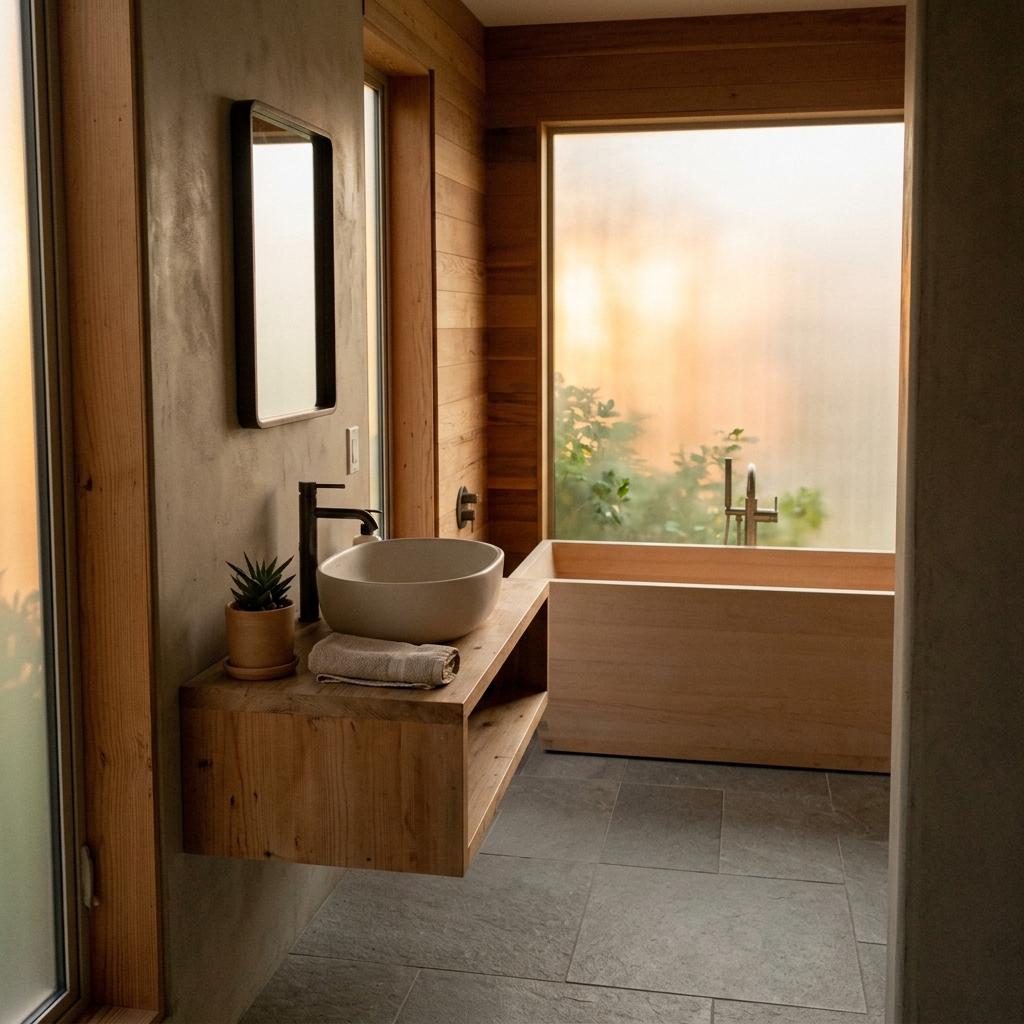

The structural harmony of this Japandi retreat was meticulously conceived by integrating raw timber with muted stone. Within this distilled environment, silent surfaces and sparse silhouettes cultivate a profound sense of uncluttered clarity, stripping away the visual noise of the modern world. Soft shadows sweep across the grain, grounding the room in a quiet, contemplative calm. To further open the layout, floating vanities extend the floor plane and maximize the perceived volume of the interior. This thoughtful orchestration of space celebrates the warmth of cedar planks, the stillness of matte finishes, and the intentionality of a singular, sculptural basin.
Inside A Compact Apartment Featuring A Minimalist Japandi Bathroom
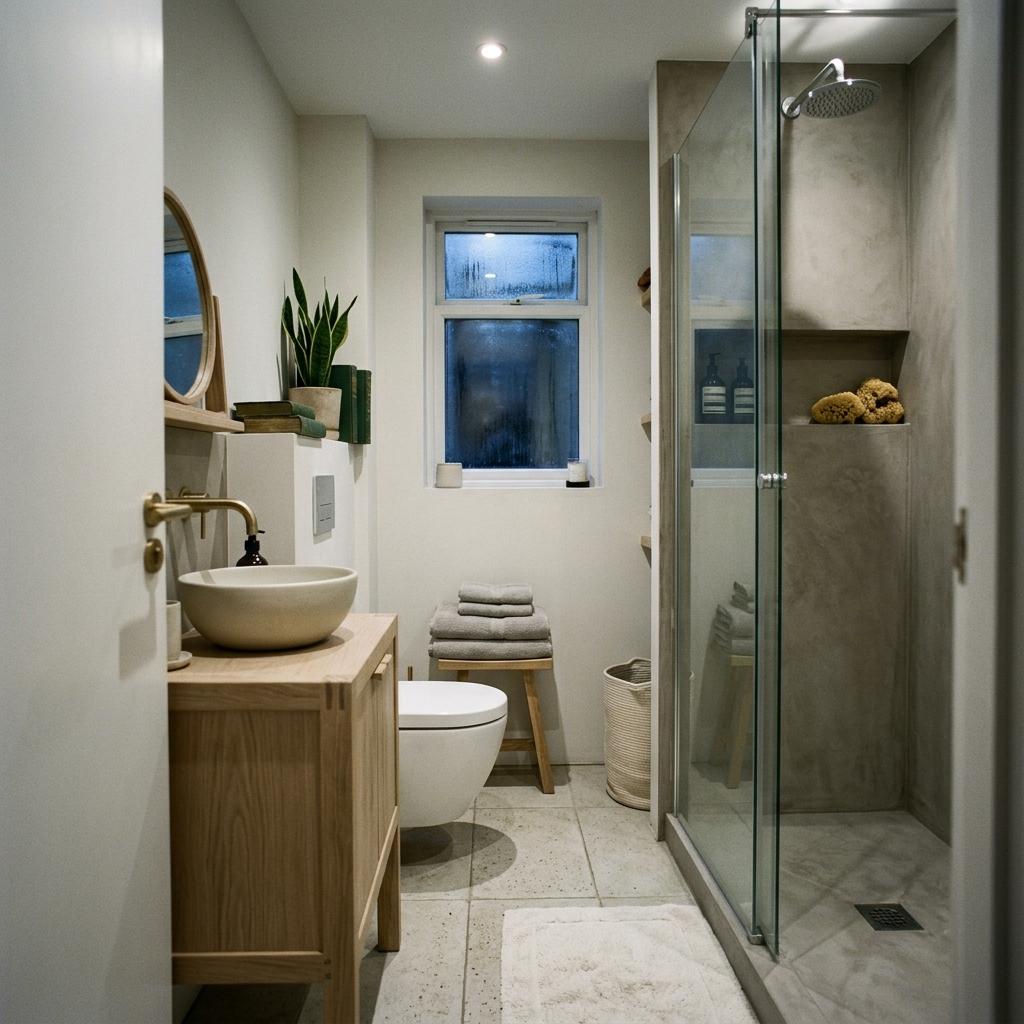

Historically, the concept of the urban dwelling was defined by rigid compartmentalization, a relic of an era that prioritized formal separation over the fluid rhythm of modern life. Today, this compact apartment breaks from those traditional constraints, embracing a philosophy where space is no longer a static boundary but a breathable entity. This transformation results in a structured spontaneity, where the rigorous geometry of Japanese minimalism meets the effortless warmth of Scandinavian hygge. Situated in the heart of London's refined Marylebone, the project carries an inherent prestige, yet avoids the cold austerity often associated with high-end luxury. Because the owners are a repeat client-having previously collaborated with the design team on a larger countryside retreat-there is a palpable sense of trust and shorthand evident in every custom joinery detail. Ultimately, the success of this renovation lies in a precise technical synthesis: the strategic use of concealed storage, reflective micro-cement finishes, and a monochromatic timber palette to expand the visual footprint of the minimalist Japandi bathroom and beyond.
Walk Through A Modern Home With Minimalist Japandi Bathroom Style
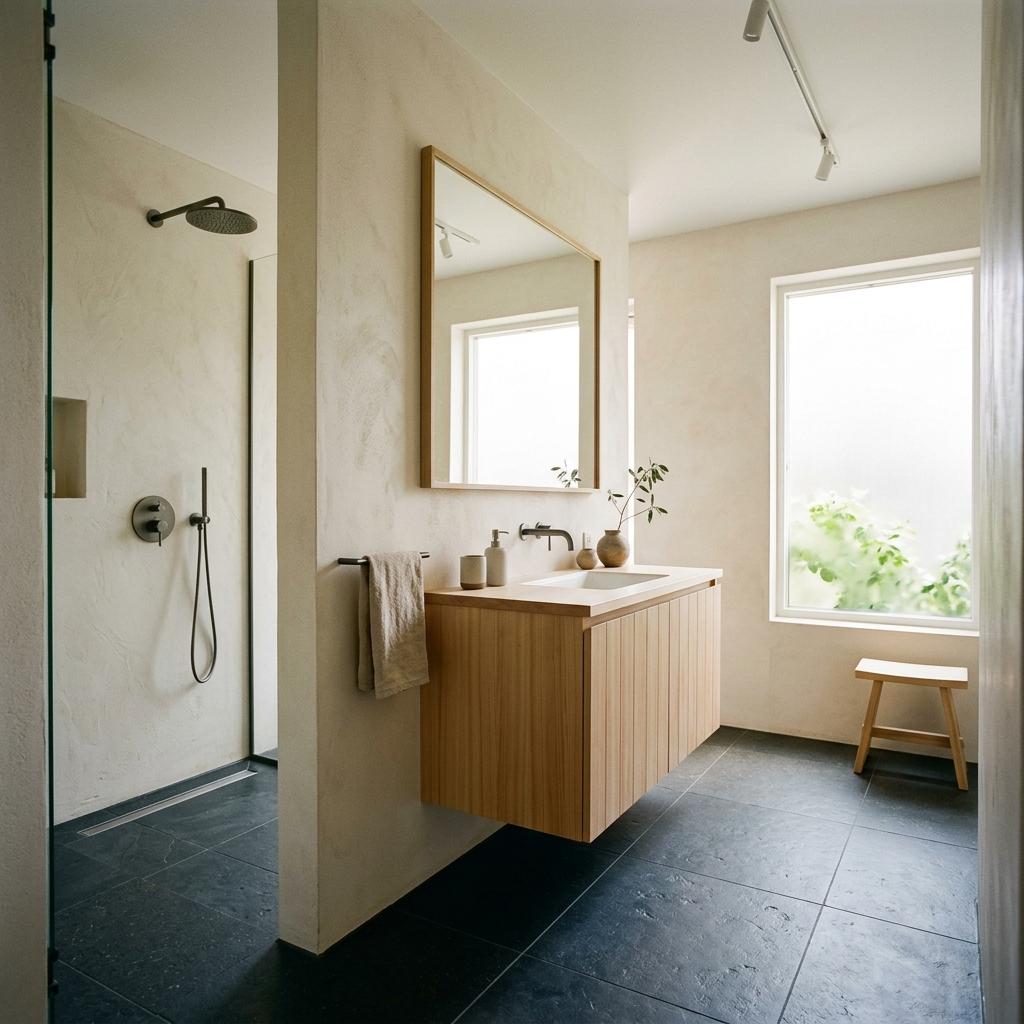

Stepping into this modern residence, the bathroom reveals itself not as a mere utility, but as a sequestered sanctuary where the sensory weight of the world is methodically unspooled. It is a space defined by a structured fluidity, where the rigid discipline of Scandi-minimalism is softened by the organic imperfections of Japanese Zen, creating a room that feels both strictly organized and effortlessly at peace. While the home's exterior corridors hum with the kinetic energy of daily transit, this interior volume exists in a state of suspended animation, offering a profound silence that isolates the inhabitant from the domestic noise beyond the threshold. The tactile experience is anchored by the presence of honed Basalt floor tiles and a vertical-grain Hinoki wood vanity, materials that bridge the gap between cold mineral stability and warm arboreal softness. This is not merely an aesthetic choice, but a masterclass in functionalist integration; the recessed linear drainage and matte gunmetal thermostatic controls are embedded with such surgical precision that the industrial mechanics of the home become invisible. In this Japandi study, the bathroom is redefined: it is no longer a room for hygiene, but a calibrated machine for ritual, where every calculated shadow serves to heighten the clarity of the inhabitant's repose.
How To Design A Minimalist Japandi Bathroom In Small Spaces
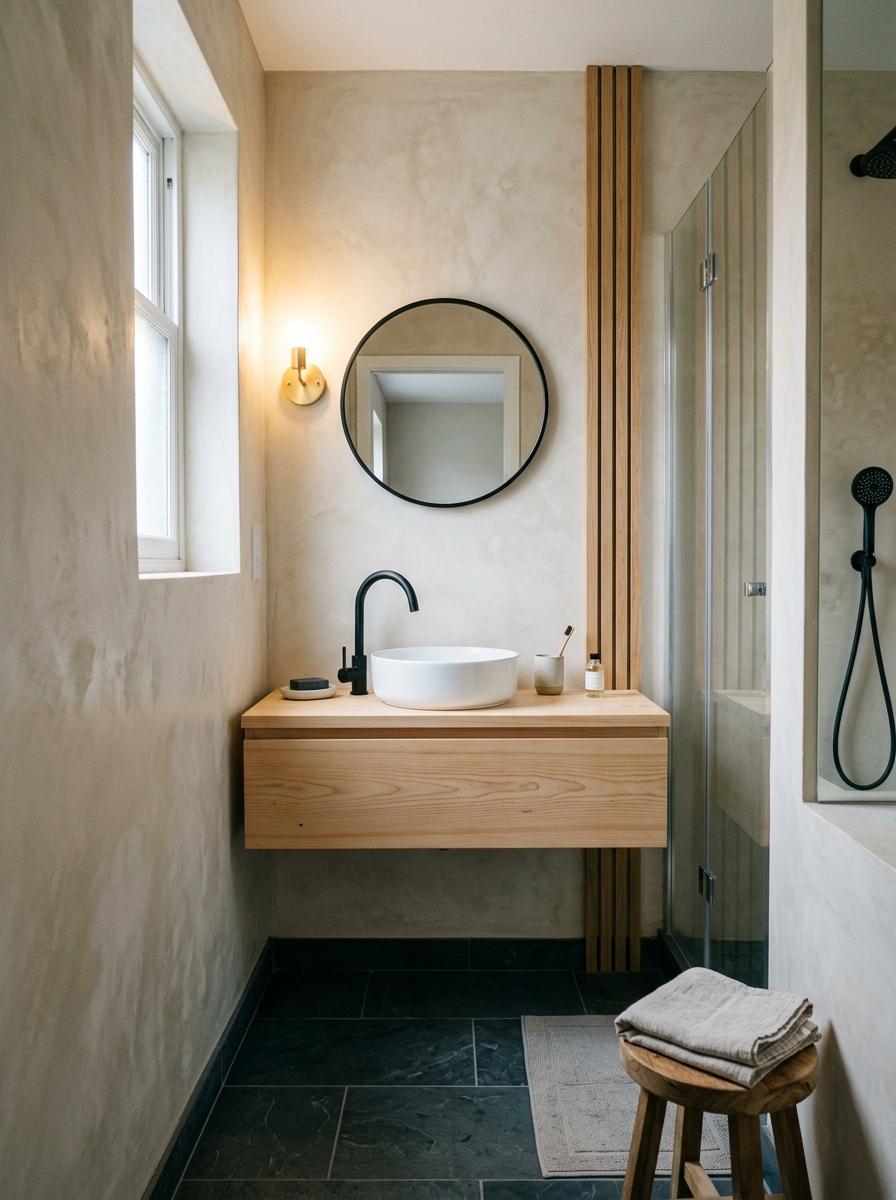

To achieve a sense of expansiveness within a restricted footprint, we can embrace the philosophy of shibui-finding complexity within restraint. Begin by specifying a vanity carved from ashen, open-pored Japanese cypress (Hinoki), whose velvety-matte surface offers a tactile counterpoint to the vitreous, liquid-smooth finish of a white ceramic basin. Note how the intentional placement of a single, vertical strip of rift-sawn oak slats draws the eye upward, effectively elongating the room's perceived height while masking modern plumbing with architectural intent. This design strategy relies on a structured fluidity; the rigid geometry of the layout is softened by the effervescent, cloudy textures of artisanal Tadelakt plaster walls. This juxtaposition creates a heavy lightness, where the permanence of stone-inspired finishes meets the airy openness of a minimalist floor plan. As your hand brushes against the cool, granular relief of the charcoal slate tiling, the physical sensation triggers a sudden slowing of the pulse-a transition from the frantic pace of Tokyo's Shibuya Crossing to the profound, meditative stillness of a Kyoto forest. By grounding the space in the aesthetic rigor of Hans Wegner's functionalism and the soulful organicism of Wabi-sabi, the small bathroom ceases to be a utility and becomes a private sanctuary for physiological restoration.
A Minimalist Japandi Bathroom That Blends Function And Beauty
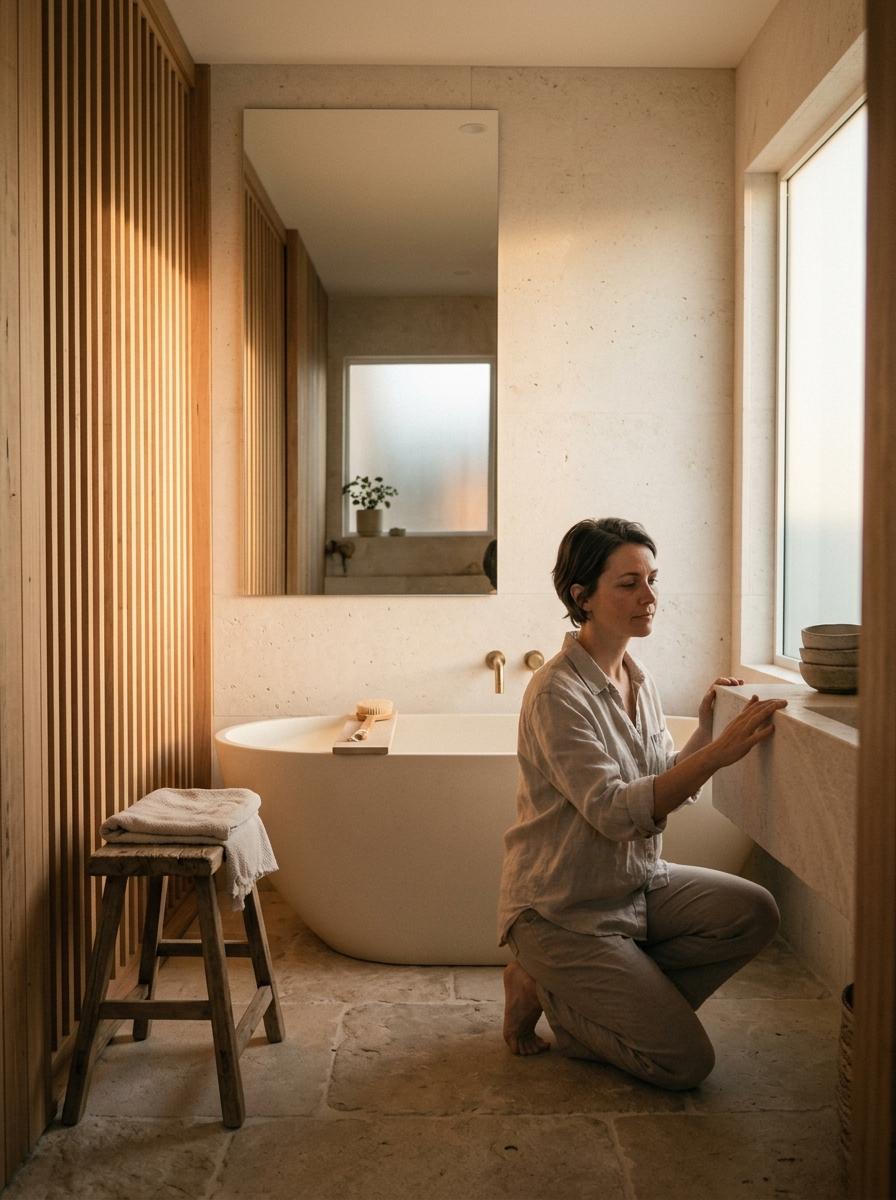

Stepping off the frantic, neon-slicked pavement of a Tokyo intersection and into the hushed sanctuary of this residence is a lesson in sensory recalibration. While the city outside is a cacophony of visual noise, this bathroom offers what architects call "tactile silence," achieved through a deliberate palette of Jura limestone and reclaimed cedar. "The goal was never just a place to wash," the lead designer explained, tracing the seamless mitered edge of a bespoke stone vanity, "but rather to create a-how should I put it-a spatial deep breath." By stripping away the visual clutter of traditional cabinetry and replacing it with the rhythmic shadows of slatted wood panels, the room balances the pragmatic rigor of Scandinavian modernism with the soulful imperfection of wabi-sabi. This transition from urban chaos to domestic stillness illustrates how the bathroom has evolved from a utilitarian necessity into a meditative core of the modern home.
Explore A Quiet Home Featuring A Minimalist Japandi Bathroom
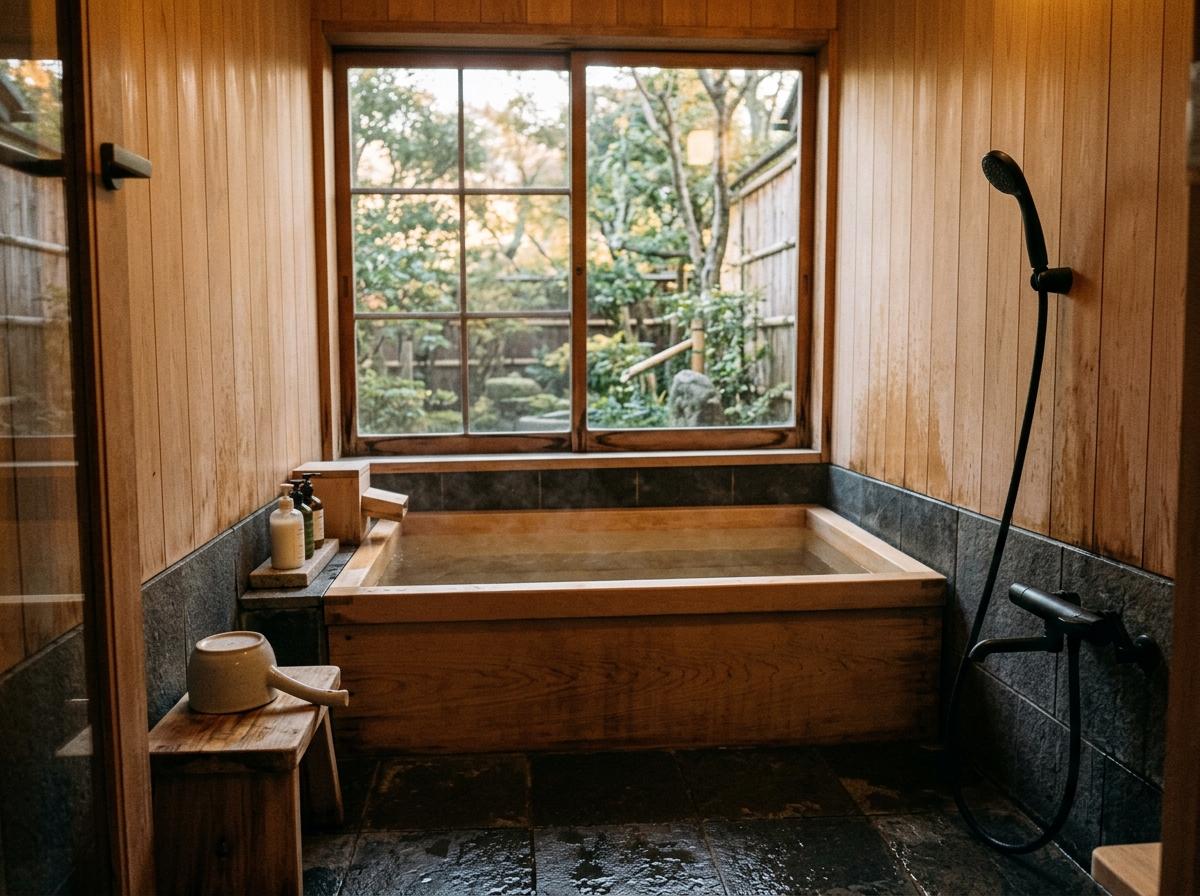

In this exploration of a residence nestled within the serene periphery of Kyoto's northern hills, we encounter a masterstroke of restraint that redefines the wet room as a sanctuary of stillness. The bathroom serves as the home's meditative anchor, where the tactile rigor of honed basalt flooring meets the ethereal, velvety grain of untreated Hinoki cypress. Note how the architectural layout choreographs your movement, forcing a slow, deliberate pace that mimics a traditional tea ceremony. This space thrives on the concept of ordered chaos, where the organic, swirling patterns of the stone are held in a strict, geometric embrace by matte black metal fixtures. As you step into the humid warmth, the sharp, citrusy scent of damp wood triggers a sudden slowing of the pulse, shifting your state from modern restlessness to a profound, physiological tranquility. In this quiet corner of the Rakuhoku district, the Japandi ethos transcends mere decoration, becoming a visceral experience of being.
Embrace The Warmth Of A Minimalist Japandi Bathroom Retreat
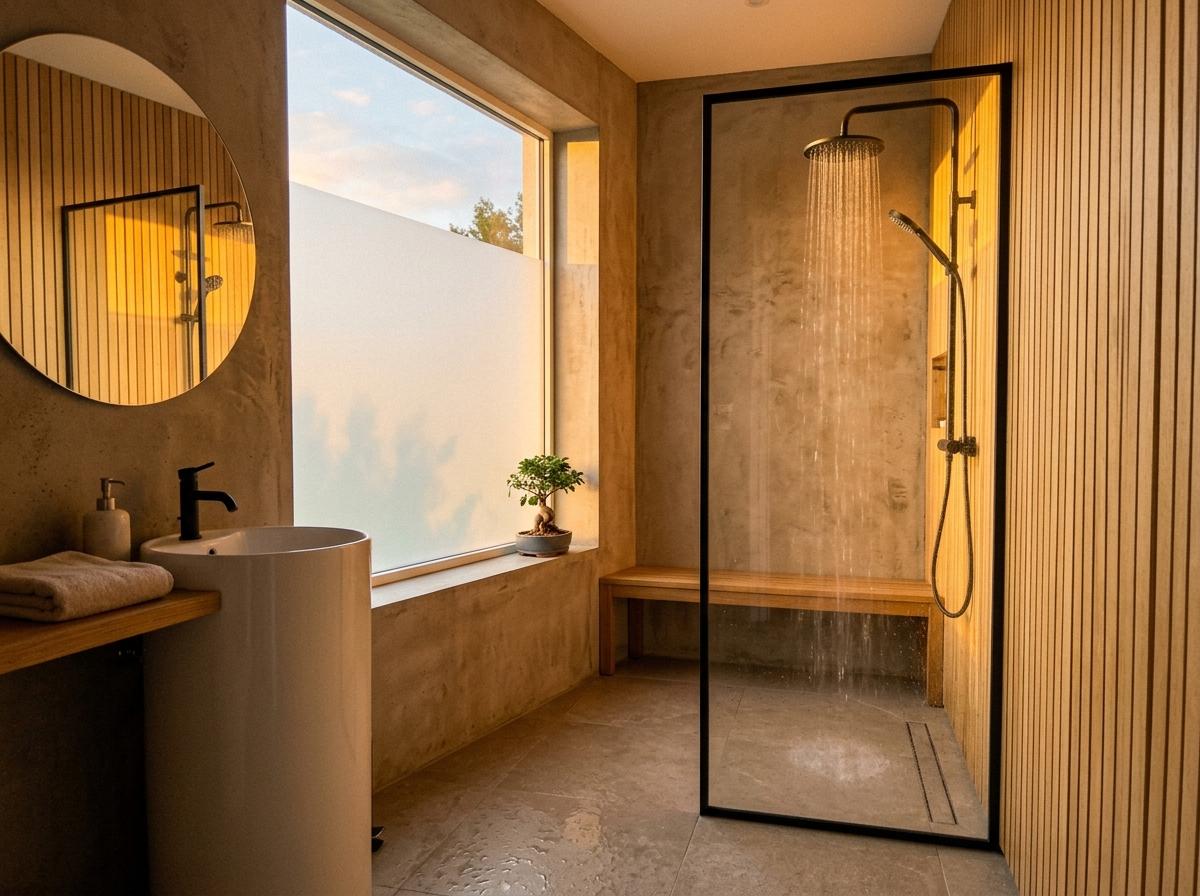

The conceptualization of this sanctuary was envisioned as a fusion of Scandinavian utility and Japanese serenity, where every architectural choice is dictated by the pursuit of intentional stillness. Within this void, the atmosphere is defined by unadorned surfaces, muted tones, and a stark, sculptural simplicity that rejects the clamor of the modern world. This rhythmic resonance radiates through the room, fostering a peaceful, private pocket of purity where the mind can finally rest. The structure carves out generous voids of light and shadow, expanding the perceived volume of the layout to breathe life into the stone. Ultimately, the design balances the tactile grit of raw concrete, the soft glow of honeyed oak, and the steady stream of a rain-head shower.
Discover A Refreshing Minimalist Japandi Bathroom Within This Modern Flat
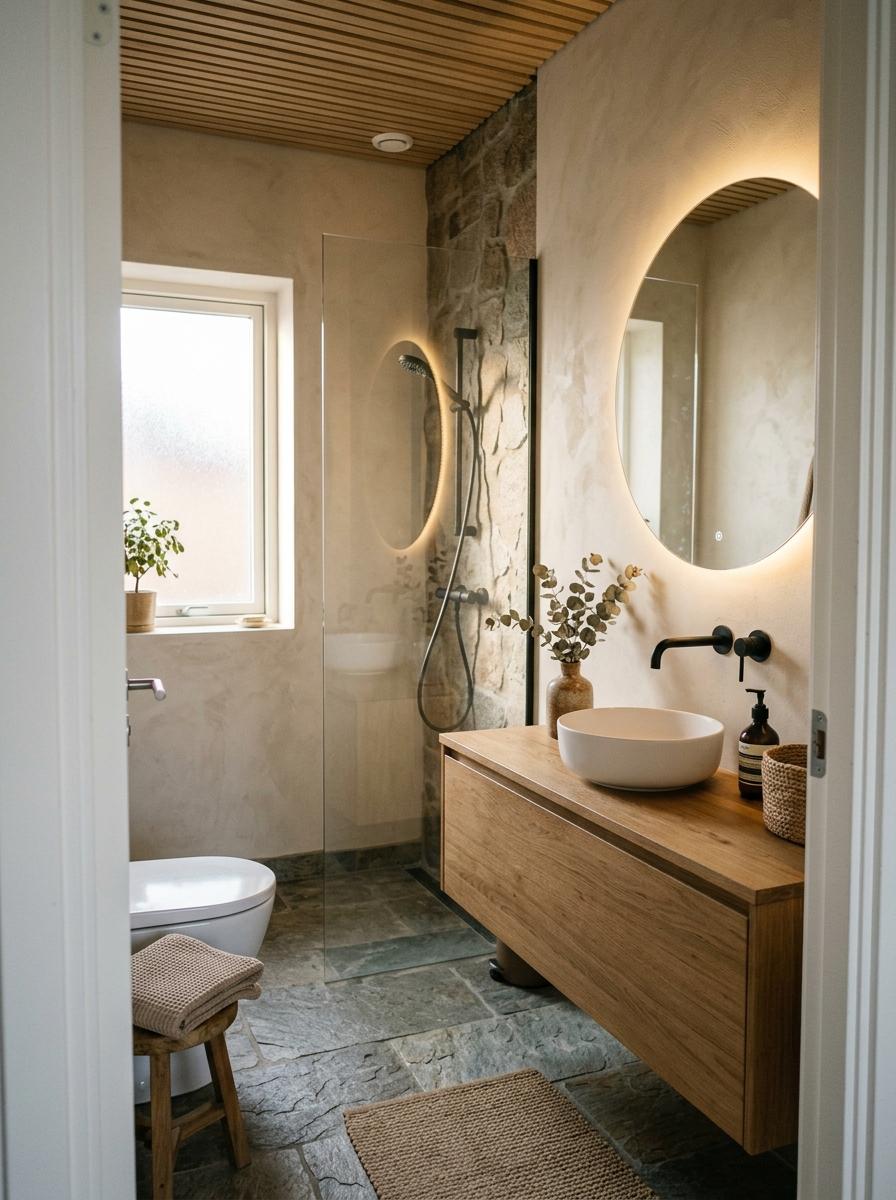

Step inside this modern flat, and the city's frantic pace-a cacophony of steel, glass, and unrelenting motion-suddenly dissolves into a hush. I found myself standing in the doorway of a space that felt less like a utilitarian room and more like a meditative pause. "The goal wasn't just to save space," the lead consultant explained as she traced the edge of a floating vanity, "it was to reclaim silence." We stood in a bathroom that masterfully navigated the tension between Scandinavian functionality and Japanese impermanence. "By using tactile materials," she continued, adjusting a sprig of dried eucalyptus, "we grounded the airy minimalism of the flat into something far more visceral." This intentional juxtaposition of rough-hewn stone against the sleek, handleless cabinetry highlights a sophisticated play on wabi-sabi textures within a rigid, modern floor plan. Ultimately, this specific room serves as a testament to how the Japandi philosophy can transform a cramped urban footprint into a sanctuary of intentional living.
The Art Of Building A Minimalist Japandi Bathroom Haven
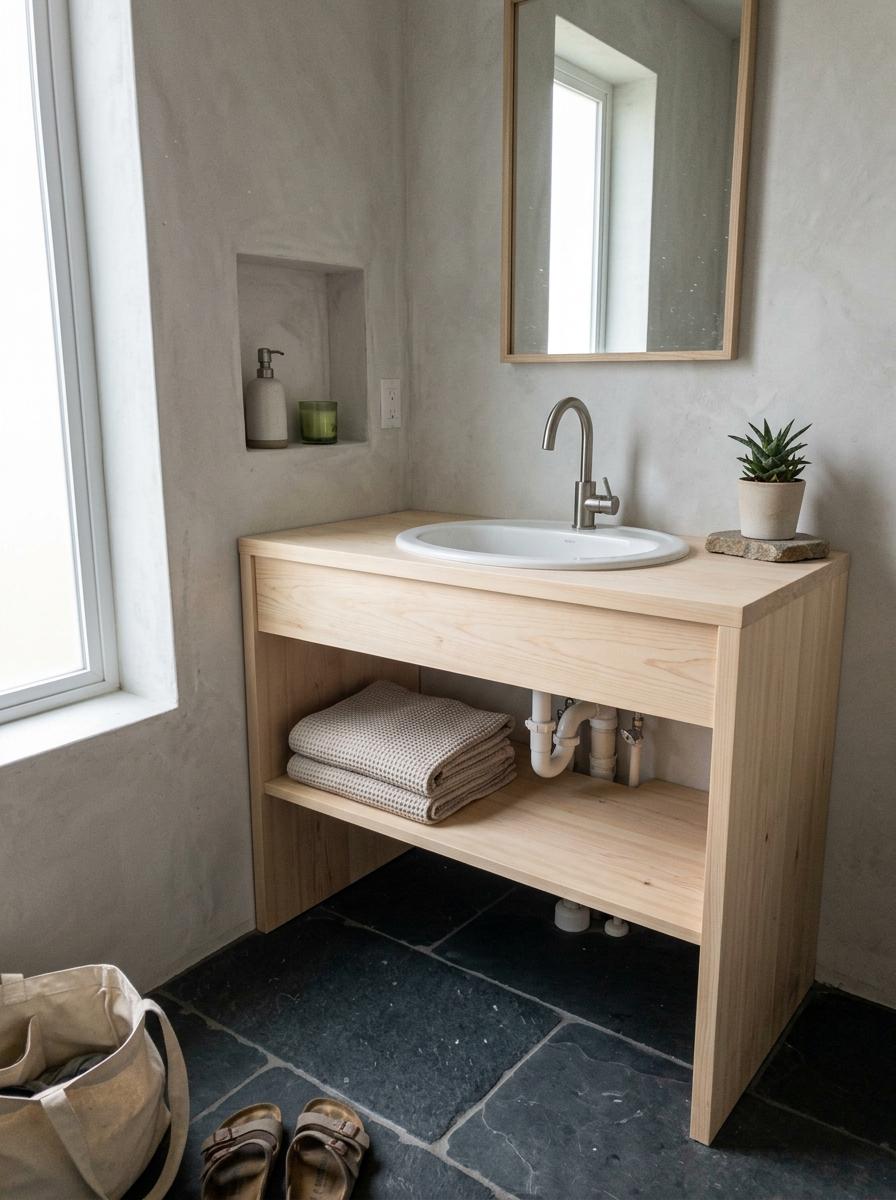

At Japandi.design, we view the bathroom not merely as a utility, but as a site of sensory recalibration where the spatial envelope transitions into a sanctuary of stillness. This intentional environment relies on a complex simplicity, where the rigorous discipline of Japanese minimalism negotiates a truce with the unhurried warmth of Scandinavian hygge. While the external world demands constant kinetic energy, the internal logic of the Japandi bathroom enforces a profound stasis, drawing a sharp line between the chaos of the street and the silence of the stone. This tactile boundary is defined by honed Basalt floor tiles paired with the soft, fibrous grain of unfinished Hinoki wood vanities, creating a landscape that is both cold to the eye and warm to the touch. Ultimately, the success of this haven lies in its integrated modularity; recessed niches and concealed drainage systems act as invisible choreographers, stripping away visual noise to ensure that every plumbing fixture serves as a deliberate tool for human restoration.
Transforming A Simple Space Into A Minimalist Japandi Bathroom
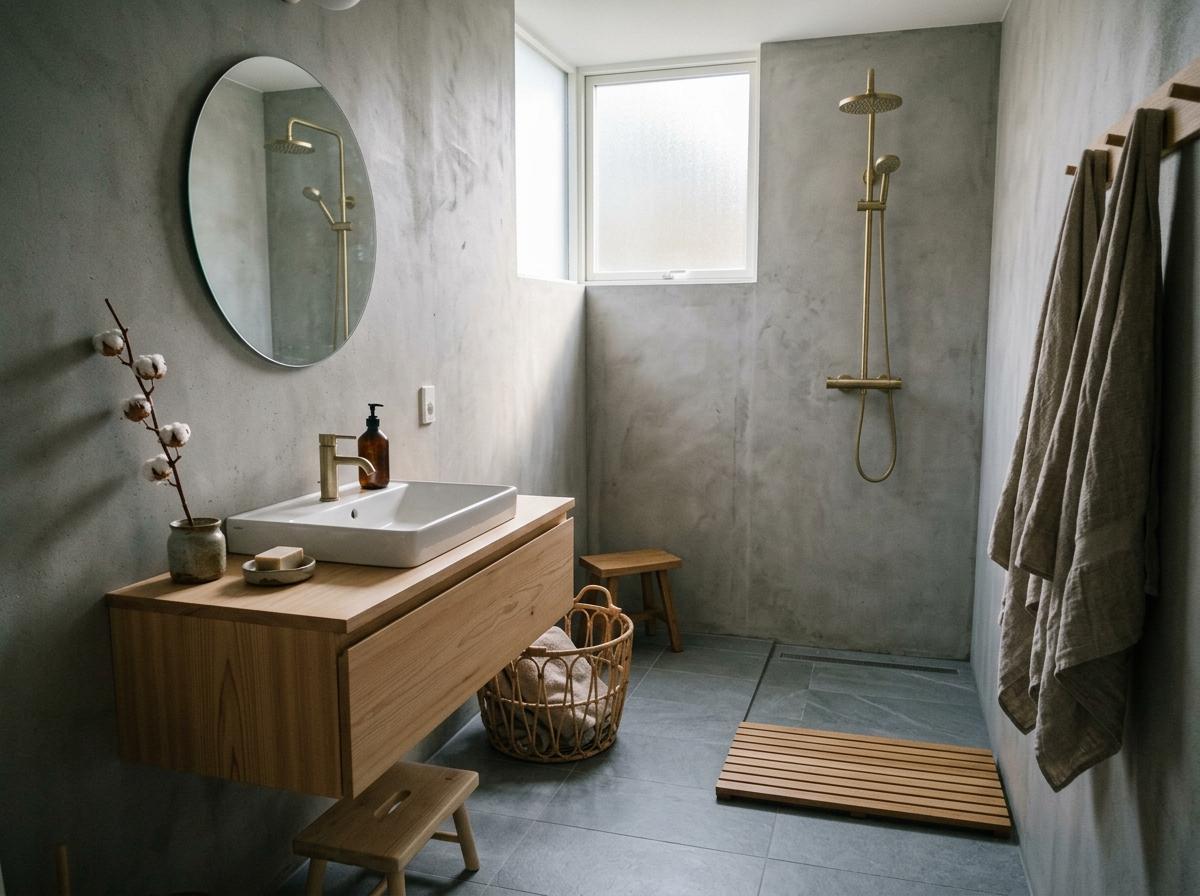

The transformation of this quiet sanctuary was achieved through a deliberate recalibration of layout and light, ensuring the project origins remained rooted in the essence of functional tranquility. Within this renovated shell, the atmosphere is defined by unadorned surfaces, muted tones, and a sparse selection of organic accents that celebrate the void over the variable. Soft shadows stretch across the smooth slate, creating a rhythmic harmony that anchors the room in a state of balanced bliss. This design actively carves out a sense of boundless volume, expanding the visual field to foster a profound clarity of mind. Ultimately, the architecture breathes as it honors the raw texture of timber, the cool weight of stone, and the stark beauty of open space.
A Minimalist Japandi Bathroom Focused On Organic Materials
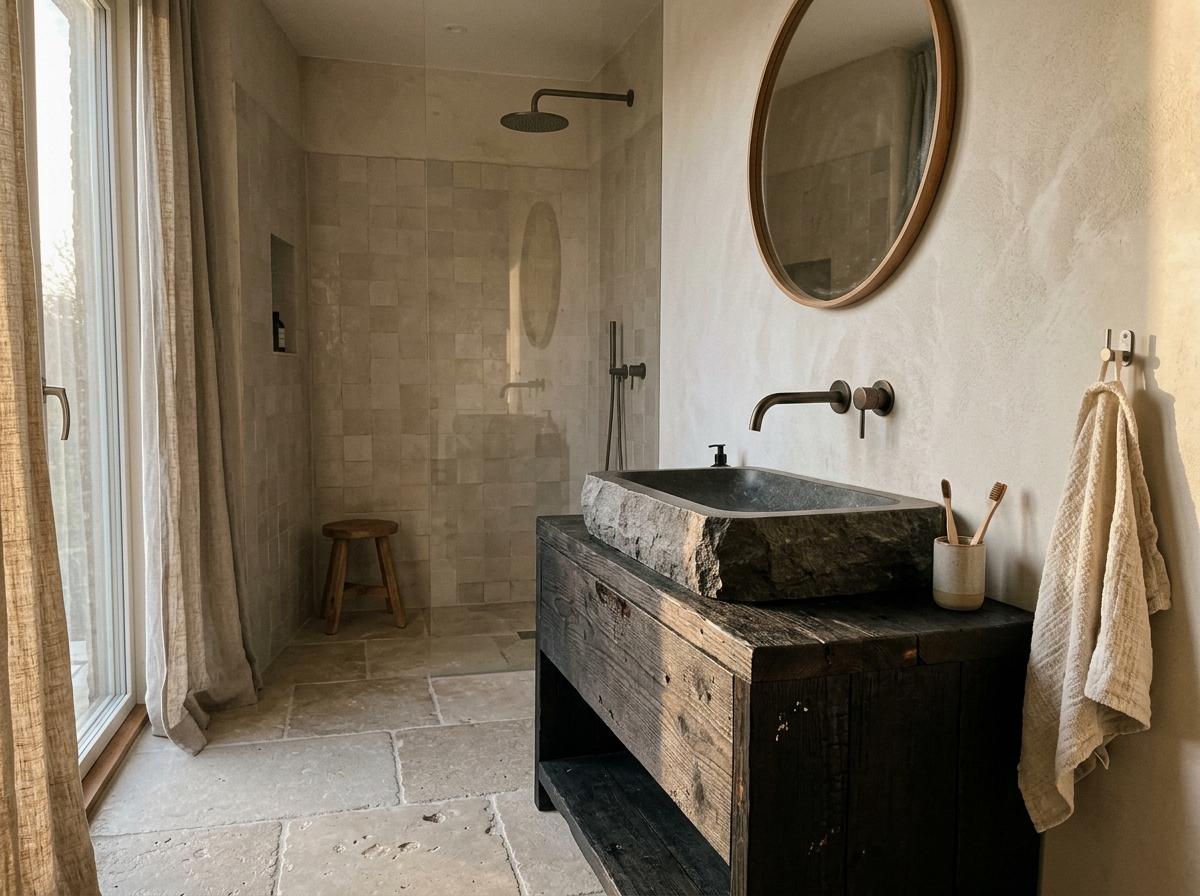

At the intersection of Scandinavian functionalism and Japanese wabi-sabi, the Japandi bathroom emerges as a study in "Definition via Synthesis"-where the clinical efficiency of the North meets the weathered, transience of the East to create a sanctuary of profound intentionality. This space transcends mere utility through a rigorous application of organic materiality and spatial fluidity, utilizing tactile limestone and charred timber to grounding effect. The design logic exists in a perpetual state of dialectical pairing: the silhouette is strictly geometric and disciplined, yet the atmospheric quality remains soft and profoundly forgiving. By rejecting the sterile artifice of modern porcelain in favor of unrefined, haptic, and atmospheric textures, the room moves beyond visual aesthetic into a visceral experience of quietude.
Glimpse A Stylish House Boasting A Minimalist Japandi Bathroom
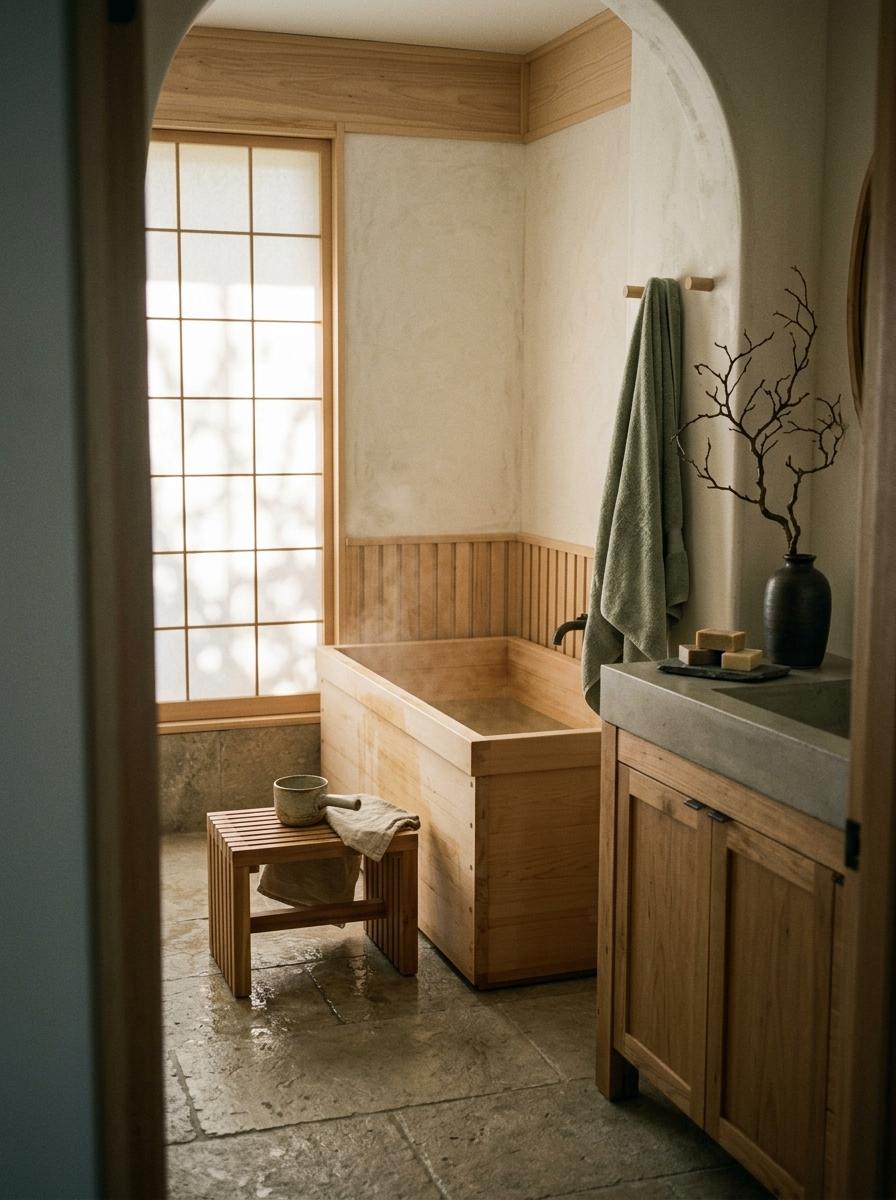

Stepping out of the chaotic, neon-drenched bustle of the Tokyo morning and into the hushed threshold of this residence feels less like entering a building and more like a physical decompression. "The goal wasn't just to build a room," the owner told me, pausing to trace the grain of a Douglas fir stool, "but to create... a sort of atmospheric pause." This deliberate juxtaposition-the frantic urban grid versus this temple of stillness-is most profound in the bathroom, where the cold, utilitarian porcelain of the past has been replaced by the tactile warmth of a hinoki wood soaking tub. By employing a palette of organic textures and muted wabi-sabi sensibilities, the space achieves a high-level "material honesty" that elevates everyday hygiene into a meditative ritual. This seamless marriage of Scandinavian functionality and Japanese etherealism serves as the perfect case study for how we define the modern Japandi sanctuary.
This Cozy Residence Showcases A Stunning Minimalist Japandi Bathroom
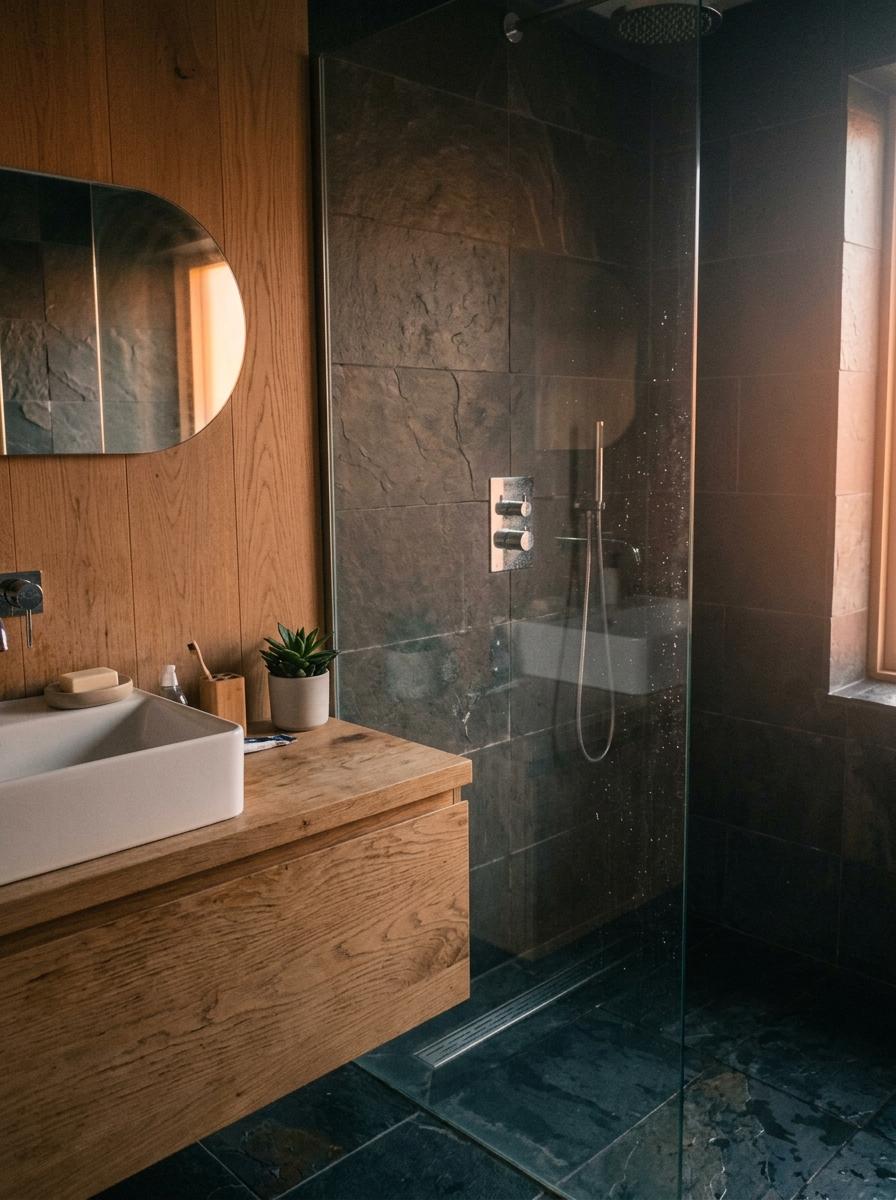

Stepping into this sanctuary, one is immediately anchored by the hushed stillness of a space where the air feels weighted with intention, transforming a standard wet room into a meditative clearing. Here, the design achieves a calculated spontaneity, where the rigid discipline of Japanese minimalism is softened by the unrefined warmth of Scandinavian hygge, proving that strict order can indeed feel effortless. While the home's exterior may contend with the frantic pace of the urban landscape, the bathroom exists as an internal vacuum-a deliberate severance from the outside world that prioritizes the internal rhythm of the inhabitant. This sensory shift is grounded in a palette of honed Basaltina stone and hand-rubbed white oak, materials that invite a tactile dialogue between the coolness of the earth and the organic grain of the forest. Far from being purely aesthetic, the space integrates a linear drainage system and a recessed thermostatic control interface, ensuring that the industrial precision of modern plumbing serves only to heighten the seamless, uninterrupted flow of a restorative ritual.
Achieve A Balanced Look With A Minimalist Japandi Bathroom
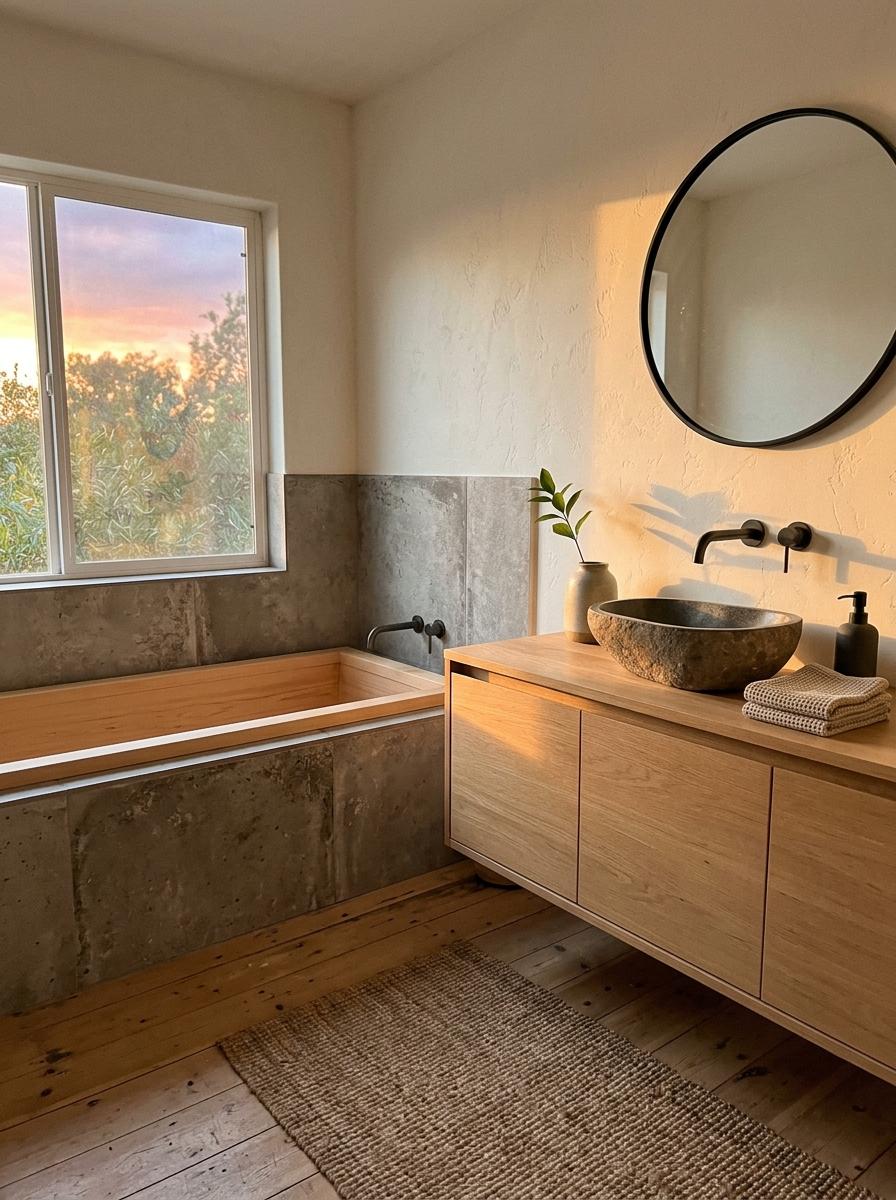

I remember sitting across from a seasoned architect in a rain-slicked Tokyo studio, watching the way he obsessed over the grain of a single Hinoki wood plank. "The bathroom," he began, pausing to adjust a ceramic vase that felt just a fraction out of alignment, "should never be a clinical laboratory for hygiene." He leaned back, the scent of cedar filling the air, and added, "It is, instead, a vessel for stillness." In many modern homes, we are accustomed to the sensory overload of the 'maximalist' bath-a cluttered landscape of chrome fixtures, loud patterns, and plastic bottles that amplify the frantic pace of our digital lives. To step into a Japandi-inspired sanctuary is to experience the profound relief of a different vernacular: the juxtaposition of rough-hewn stone against the sleek, handleless symmetry of Scandinavian cabinetry. By prioritizing this high-contrast tactility and a strictly curated palette, we transition from the chaos of the external world into a space defined by intentionality. This shift in perspective is the foundation of achieving a balanced look through the quiet power of the minimalist Japandi bathroom.
Inside An Elegant Suite With A Minimalist Japandi Bathroom
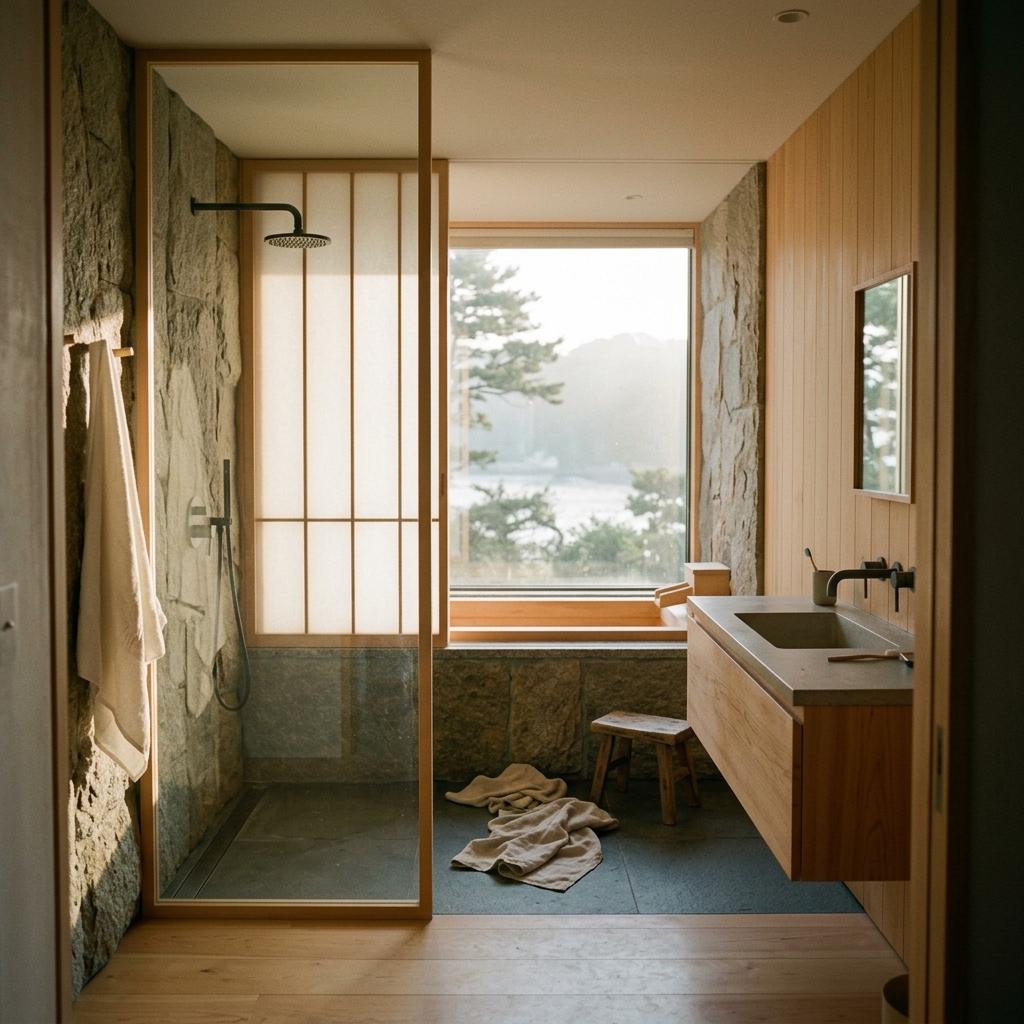

In this exclusive study of a private residence overlooking the Kanagawa coastline, we find a sanctuary that redefines the intersection of brutalism and serenity. Note how the tactile juxtaposition of honed Pietra di Torre stone against the velvet-smooth grain of reclaimed hinoki wood creates a spatial dialogue that is both deliberate and effortless. This complex simplicity ensures that the eye never tires, finding rest in the subtle interplay between the matte charcoal fixtures and the luminous, shoji-inspired glass partitions. As you step onto the thermally regulated slate flooring, the physical sensation of grounded warmth triggers an immediate physiological shift-a slowing of the pulse that transforms a routine morning ritual into a meditative retreat. By integrating the rigorous restraint of Tokyo minimalism with the rustic warmth of Scandinavian hygge, this suite serves as a masterclass in the Japandi philosophy: a space where the rigorous and the soulful coexist in perfect, hushed harmony.
A Minimalist Japandi Bathroom Designed For Ultimate Relaxation
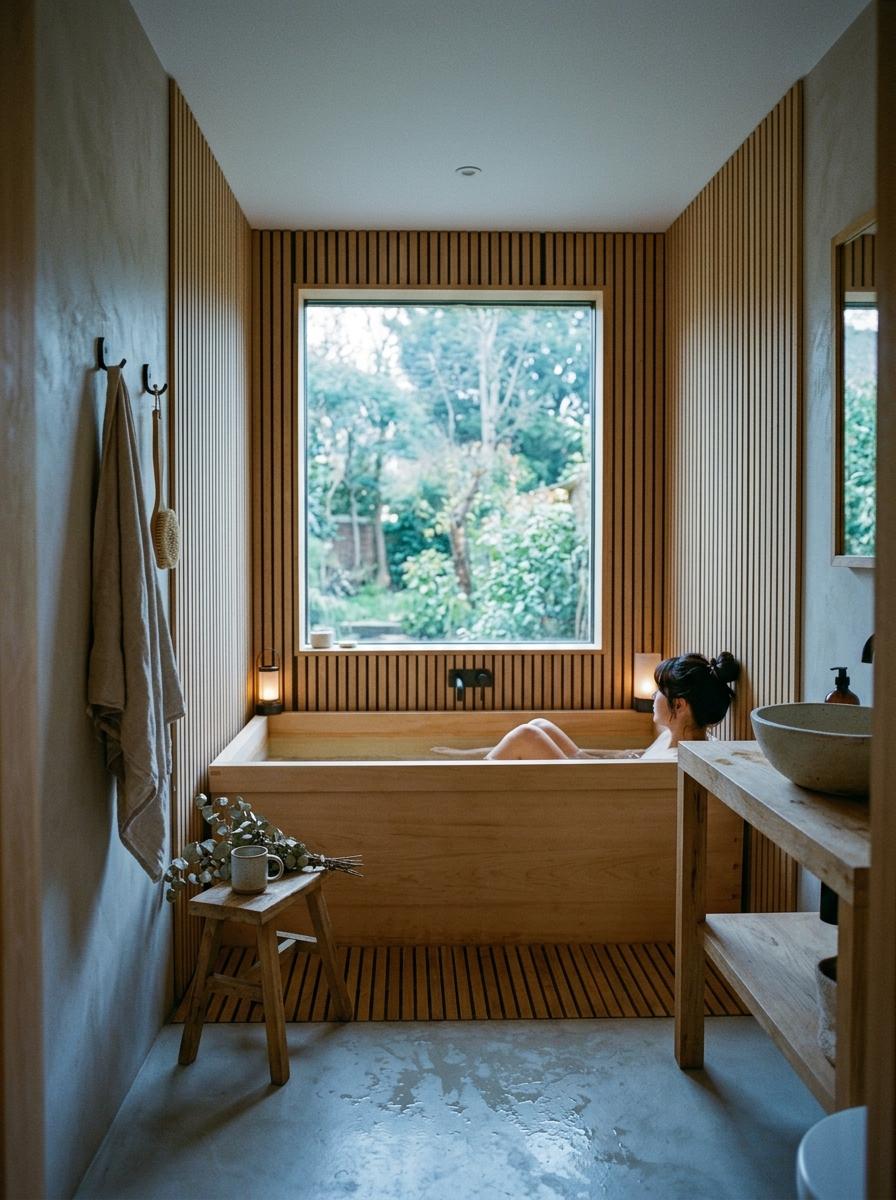

The evolution of the private bath has transitioned from the strictly utilitarian washrooms of the early twentieth century-spaces defined by cold porcelain and clinical efficiency-to the contemporary sanctuary where rituals of self-care take center stage. In this modern interpretation, the space thrives on a maximalist simplicity, where the spareness of the Japandi aesthetic is paradoxically enriched by a profound sensory depth. Located in the leafy, prestigious enclave of Hampstead, this project marks a continued collaboration with a repeat client, whose trust in the design process allowed for an uncompromising exploration of materiality. The final atmosphere is achieved through a precise technical synthesis of rhythmic timber slatting, calibrated natural lighting, and the seamless integration of micro-cement textures, effectively merging Scandinavian logic with Japanese tranquility.
How This Apartment Incorporates A Minimalist Japandi Bathroom Theme
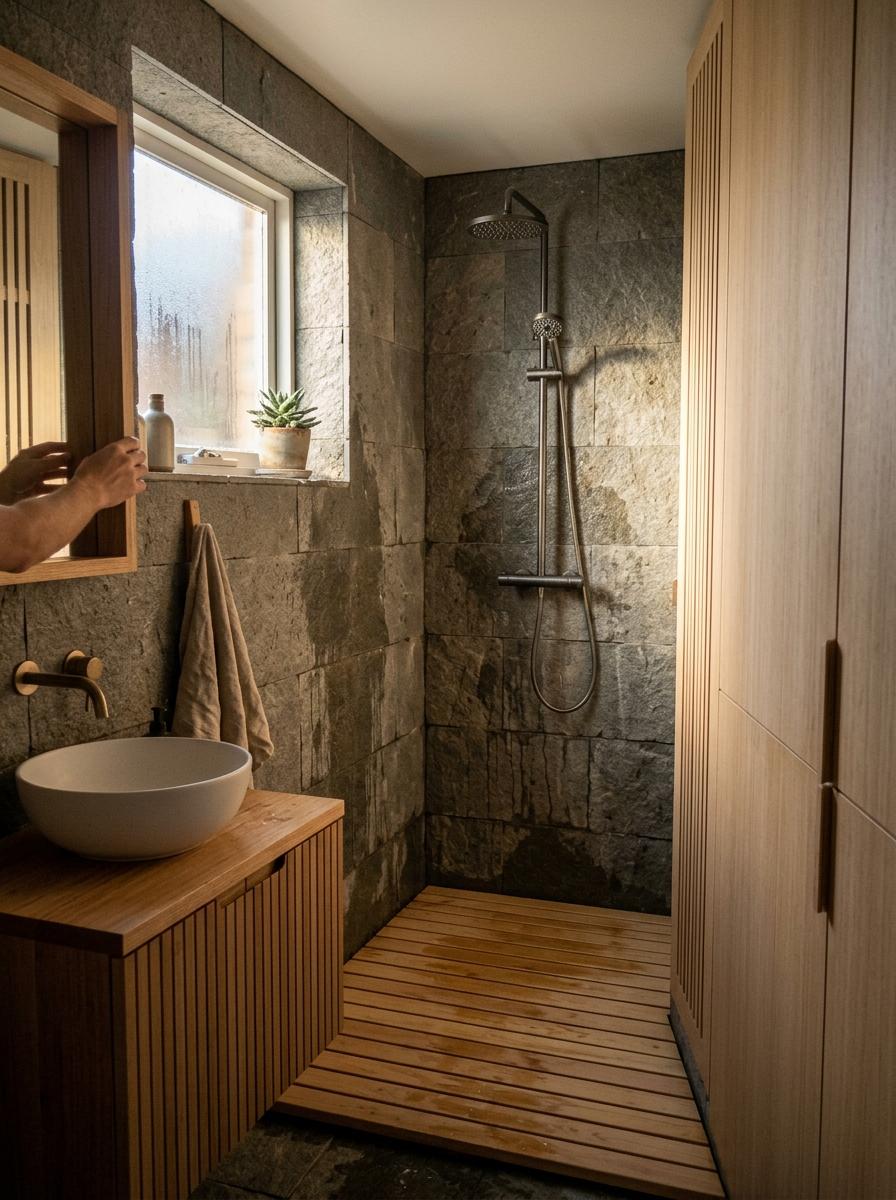

In the heart of a bustling urban core, this apartment interior acts as a sanctuary of hushed seclusion, grounding the bathroom not merely as a utility but as a subterranean-inspired retreat. This space thrives on a structured chaos, where the rigid geometry of modern lines meets the unpredictable, organic soul of Japanese influence. While the exterior living areas are defined by the expansive, floor-to-ceiling transparency of the city skyline, the bathroom turns sharply inward, embracing a cloistered intimacy that prioritizes the internal rhythm of ritual over external visibility. Tactile depth is achieved through the deliberate application of honed Basaltina stone and moisture-resistant Hinoki wood slats, creating a sensory dialogue between cold mineral and warm timber. Far from being purely decorative, these elements serve a strict functionalist mandate; the integrated floor-to-ceiling cabinetry utilizes hidden finger-pulls to eliminate visual noise, ensuring that every architectural gesture functions as a deliberate solution for modern-day essentialism.
Experience The Comfort Of A Minimalist Japandi Bathroom Concept
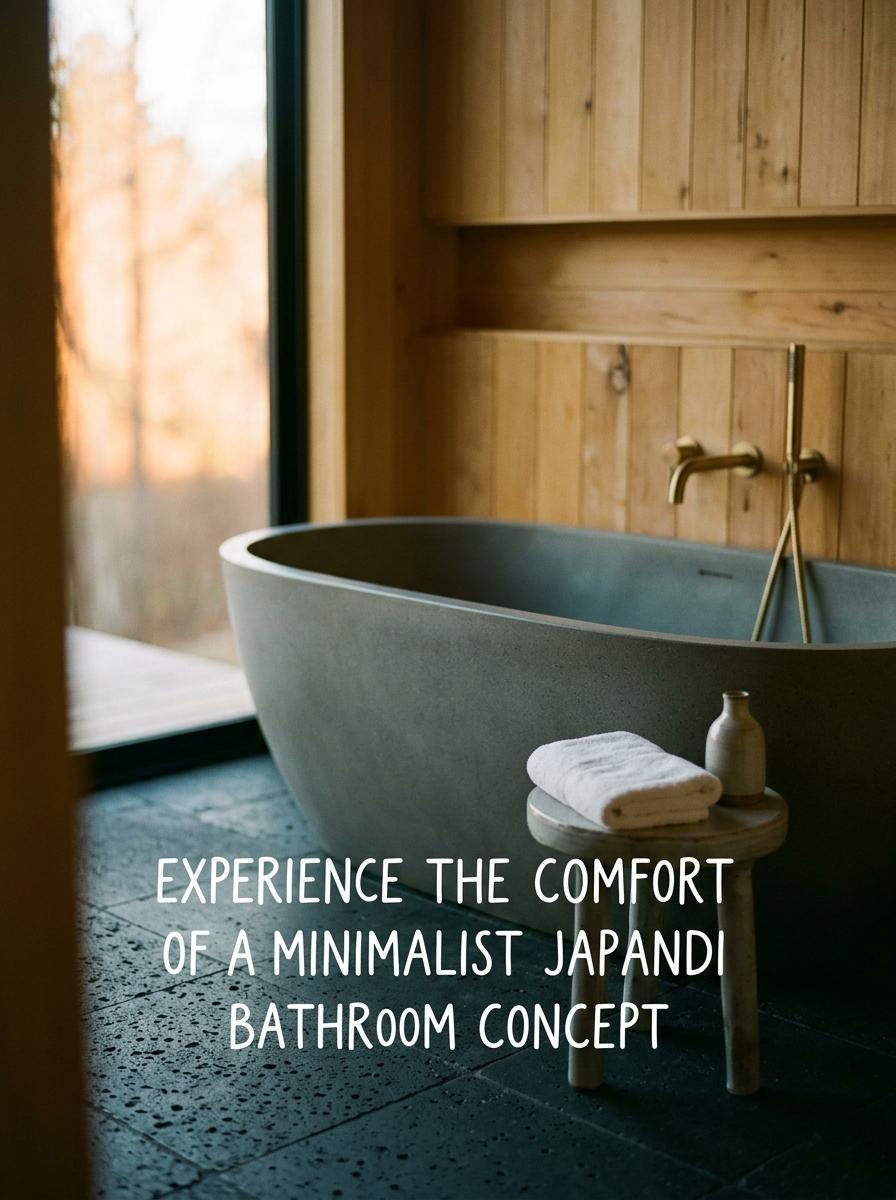

Step inside a sanctuary where the rugged soul of Scandinavian design meets the meditative precision of Japanese aesthetics. To achieve this balance, focus on the haptic interplay of surfaces: the porous, volcanic grit of basalt tiles set against the honeyed, velvet-smooth grain of Alaskan Hinoki wood. Note how the deliberate placement of a matte, stone-resin soaking tub creates a grand intimacy, a sensation where the vastness of an open-plan layout somehow feels like a protective, private cocoon. As you run your hand over the brushed, tactile brass fixtures, notice the shift in your own rhythm; the visual silence of the space triggers a visceral slowing of the heart rate, grounding your nervous system in a state of alert tranquility. This is not merely a room, but a curated environment echoing the restorative principles found at the Aman Tokyo, where the luxury of "less" becomes a profound physical weightlessness.
Simple Living In A Flat With A Minimalist Japandi Bathroom
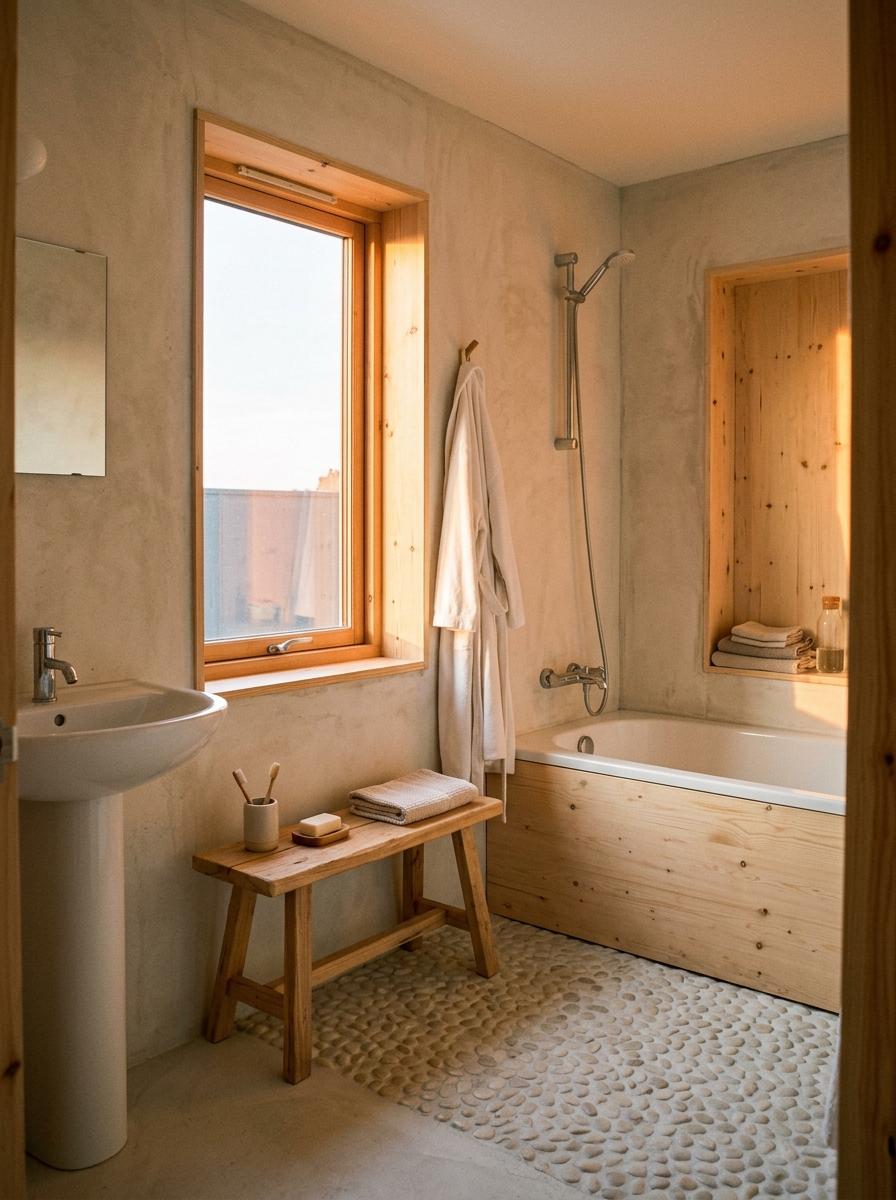

This residential conversion was conceived as a deliberate exercise in restraint, where the structural boundaries were recalibrated to foster a sense of internal quietude. Within the ensuite, every surface exudes a scrubbed, spare sterility, replacing visual noise with a lean and lucid geometry. The design draws upon a palette of pale, porous pebbles and polished pine to provide a tactile groundedness. Each fixture extends the room's utility, while hidden alcoves hollow out the walls to carve a continuous, unobstructed flow of light. This seamless integration of function and form ultimately unifies the basin, the bath, and the breathing room.
Focus On Texture In This Minimalist Japandi Bathroom Project
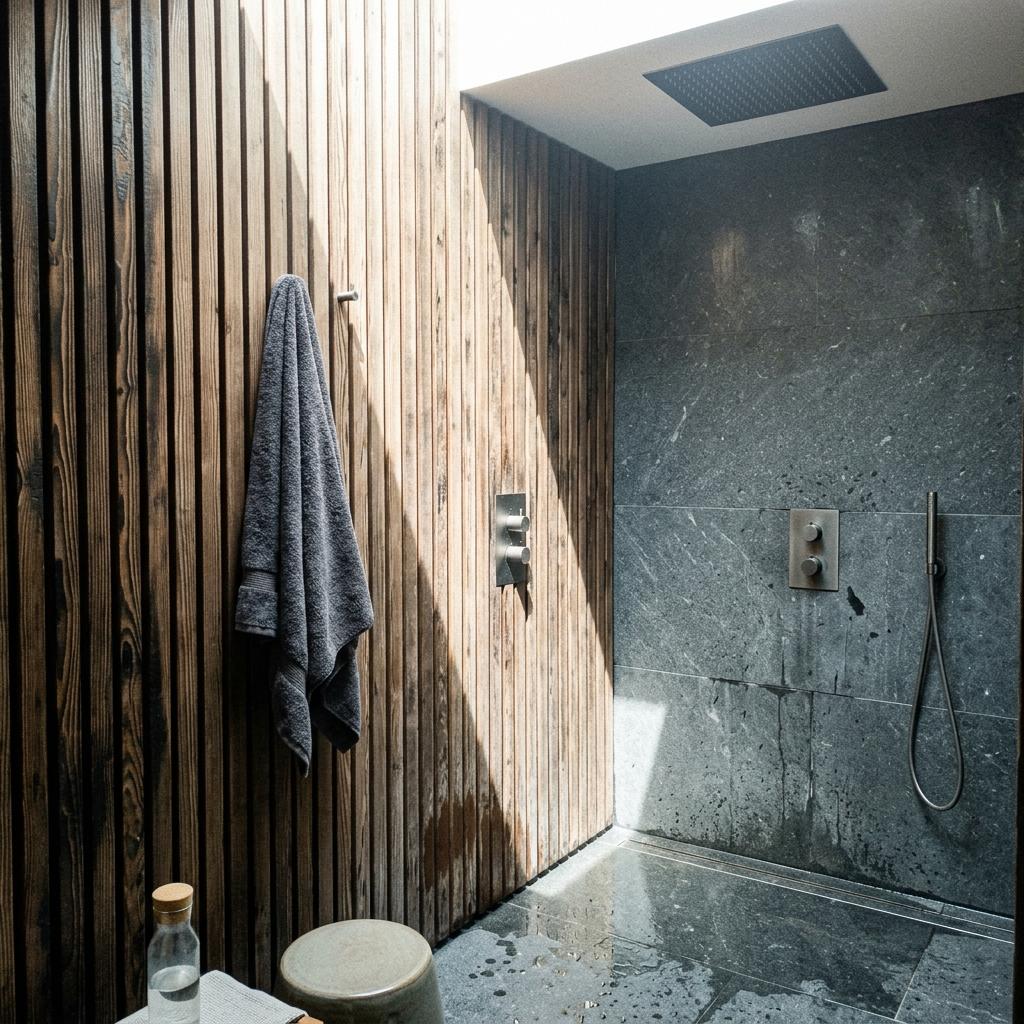

The space is anchored within the humid stillness of a private sanctuary, where the bathroom transcends its utilitarian routine to become a site of atmospheric grounding. Here, the design achieves a complex simplicity, a figurative paradox where the stark removal of clutter serves only to amplify the sensory richness of the remaining elements. This structural dualism defines the room: while the external layout adheres to a rigid, geometric discipline of sharp lines and hidden drains, the internal experience is one of fluid, organic warmth. The tactile narrative is driven by material specificity, juxtaposing the cool, honed surface of Basaltina stone against the rhythmic, vertical grain of lightly charred cedar slats. This dialogue between stone and wood is punctuated by functionalist specification, most notably in the integration of a recessed thermostatic rain shower system and brushed gunmetal fixtures, which disappear into the architecture to ensure that the primary focus remains on the raw, haptic interplay of texture.


Comments