
In our ongoing study at Japandi.design, we define the modern workspace through a rigorous synthesis of Japanese asceticism and Scandinavian hygge-a fusion where disciplined restraint meets tactile warmth to produce a state of intentional clarity. This aesthetic represents a sophisticated dialectic: the environment is meticulously curated yet profoundly organic, demanding an uncompromising commitment to minimalism but offering a soft, restorative embrace in return. By replacing the chaotic clutter of the traditional office with an arrangement of low-profile silhouettes and earthen textures, we cultivate an atmosphere that is simultaneously ethereal, grounding, and luminous, transforming the desk from a mere utility into a sanctuary for deep, undisturbed focus.
Minimalist Japandi Office
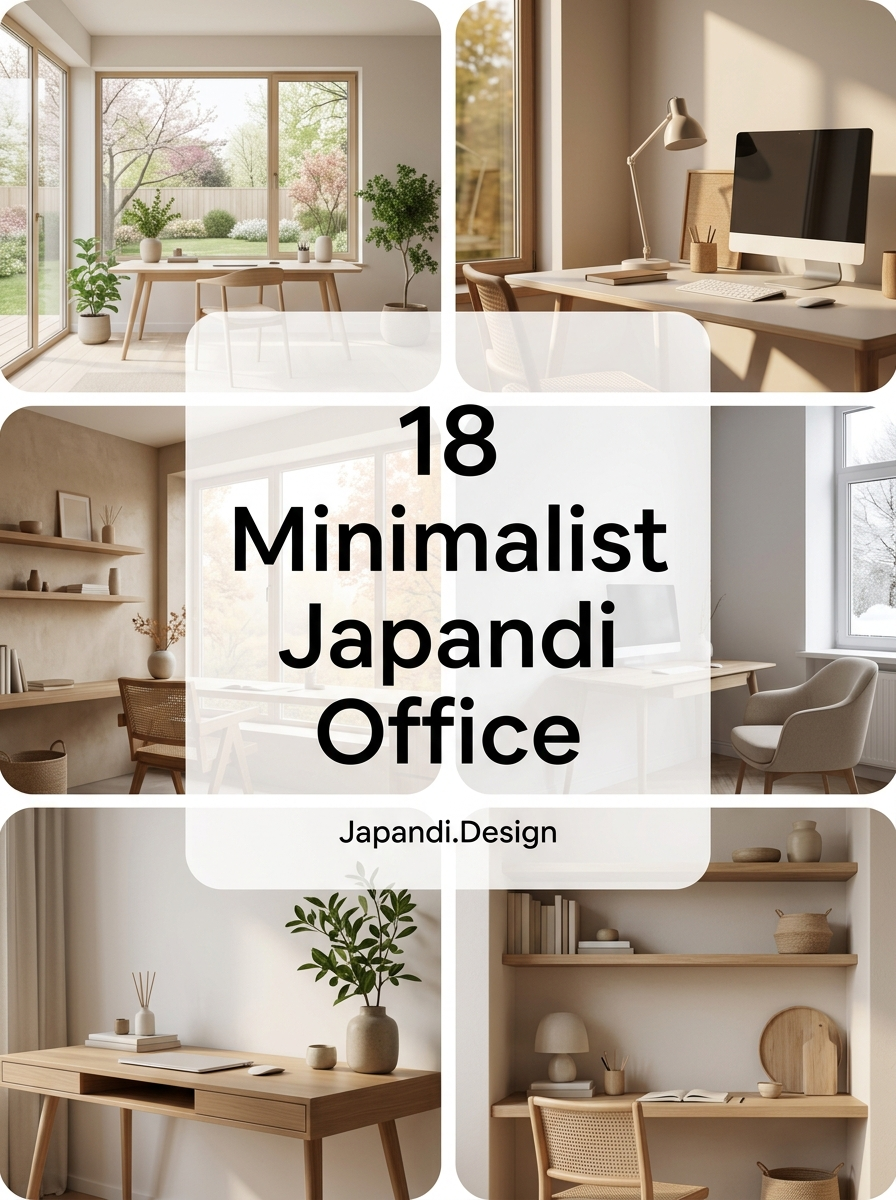

Create A Productive Workspace With Minimalist Japandi Office Principles
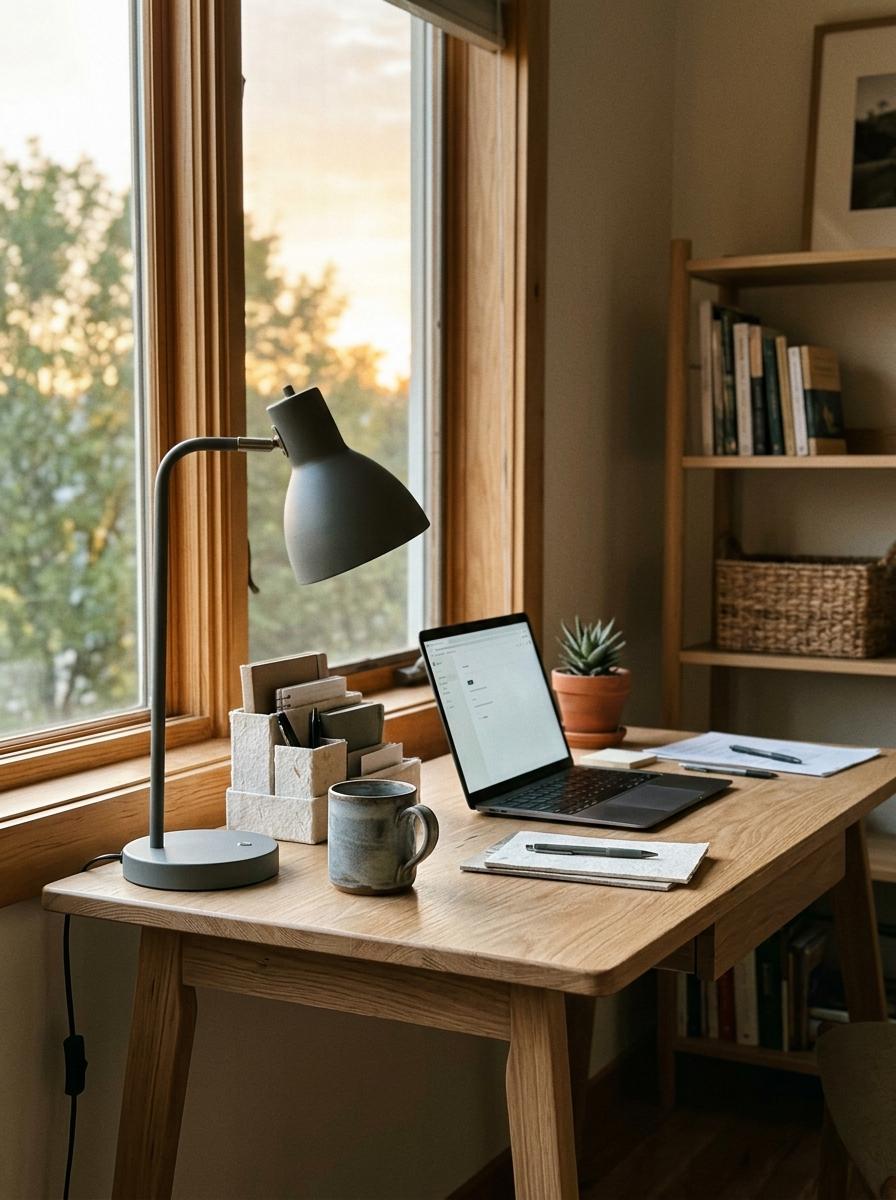

To cultivate a productive sanctuary, you must first embrace the kinetic stillness of a curated environment where efficiency and tranquility coexist. Begin by introducing the tactile warmth of a desk crafted from low-sheen, open-pore white oak, contrasting its organic grain against the matte, powder-coated steel of a task lamp. Note how the interplay between these textures-the honeyed softness of the timber and the industrial crispness of the metal-creates a visual rhythm that anchors the room without cluttering the psyche. This intentional selection echoes the philosophy found in the Kyoto-inspired ateliers of the Higashiyama District, where the physical workspace is treated as a direct extension of the mind's clarity. As you run your hand across the velvety, fibrous surface of a handmade washi paper organizer or the cool, vitreous density of a stoneware mug, you will feel your heart rate stabilize. The sensory transition from the frantic digital world to these grounding, high-precision materials triggers a profound physiological shift; the tension in your shoulders dissolves into a state of alert relaxation. By adopting these Japandi principles, you are not merely decorating a room-you are engineering a neuro-aesthetic landscape that commands focus while demanding nothing but peace.
Inside A Balanced Home Workspace Featuring Minimalist Japandi Elements
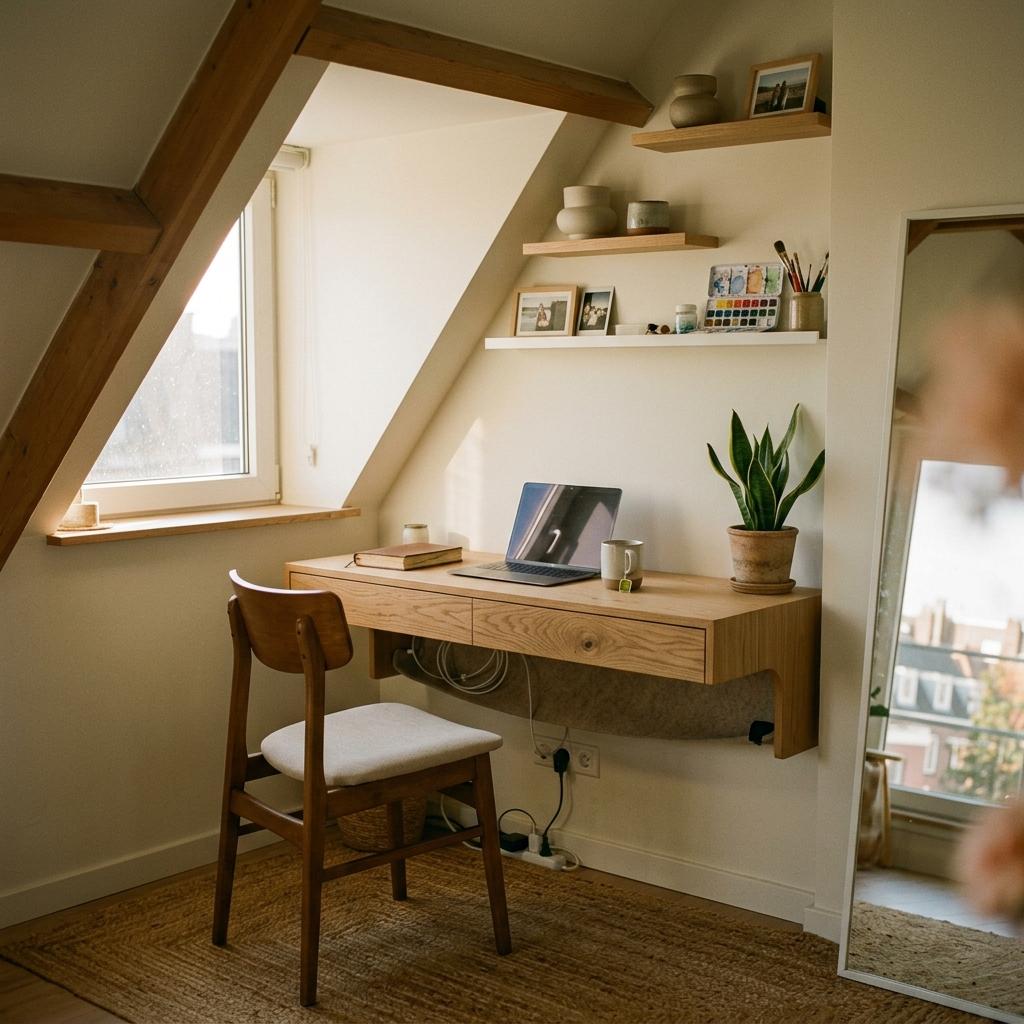

Inside this attic-turned-atelier, the air hangs with a curated stillness, anchored by the rhythmic interplay of soft shadows falling across a broad horizon of honey-hued wood. It is a space defined by a structured fluidity, where the rigid discipline of a workspace dissolves into the meditative calm of a sanctuary. While the world beyond the double-glazed pane vibrates with the frenetic dissonance of the city, the interior remains a vacuum of intentional quiet, drawing a sharp line between industrial chaos and domestic clarity. At the heart of the room sits a cantilevered desk crafted from solid white oak, its surface meticulously sanded to a matte finish that reveals the raw, open-pore texture of the grain. This organic centerpiece serves as the ultimate industrial solution; by integrating hidden cable management channels and a recessed felt inlay, the design eliminates visual noise, ensuring that the physical tools of labor never disrupt the spiritual pursuit of focus.
How To Design A Quiet Professional Hub Using Minimalist Japandi Aesthetics
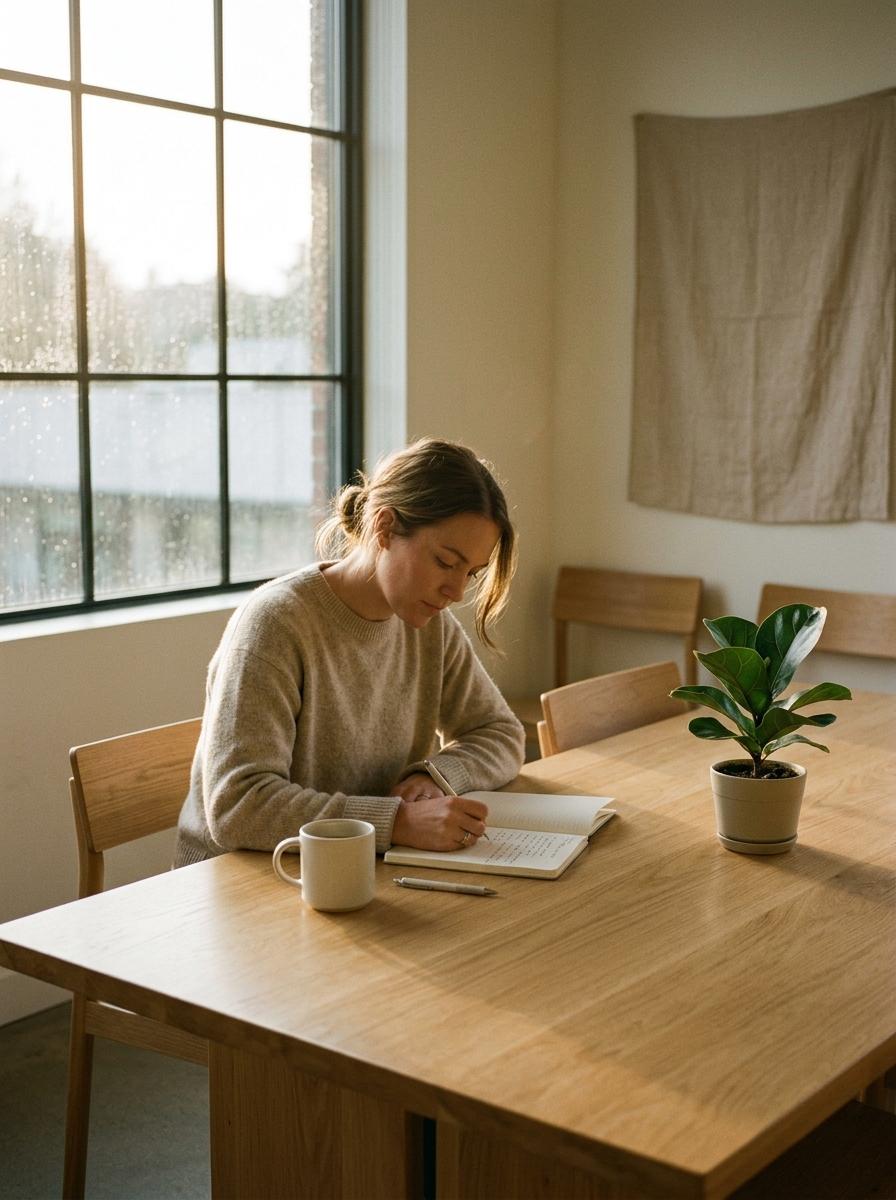

Last Tuesday, I sat in a bustling Midtown co-working space where the sensory overload-the neon hum of overhead fluorescents, the aggressive "pop" of primary-colored furniture, and the relentless clatter of an open-plan kitchen-felt less like a creative spark and more like a cognitive assault. "The modern office isn't designed for focus," a Tokyo-based designer told me during our Zoom interview, pausing as the connection flickered, "it's designed for... visibility. We've traded the sanctity of deep work for the noise of a fishbowl." In the pursuit of a quiet professional hub, we must pivot away from this chaotic maximalism toward a curated serenity, utilizing a palette of tactile oak and matte ceramics to ground the workspace. By favoring shibui-that subtle, unobtrusive beauty-and the clean, architectural silhouettes of Scandinavian functionality, we can replace visual friction with intentional stillness. This transition from high-decibel clutter to a soft-minimalist sanctuary illustrates why the Japandi aesthetic is no longer just a trend, but a necessary framework for the contemplative professional.
The Art Of Building A Functional Minimalist Japandi Office Space
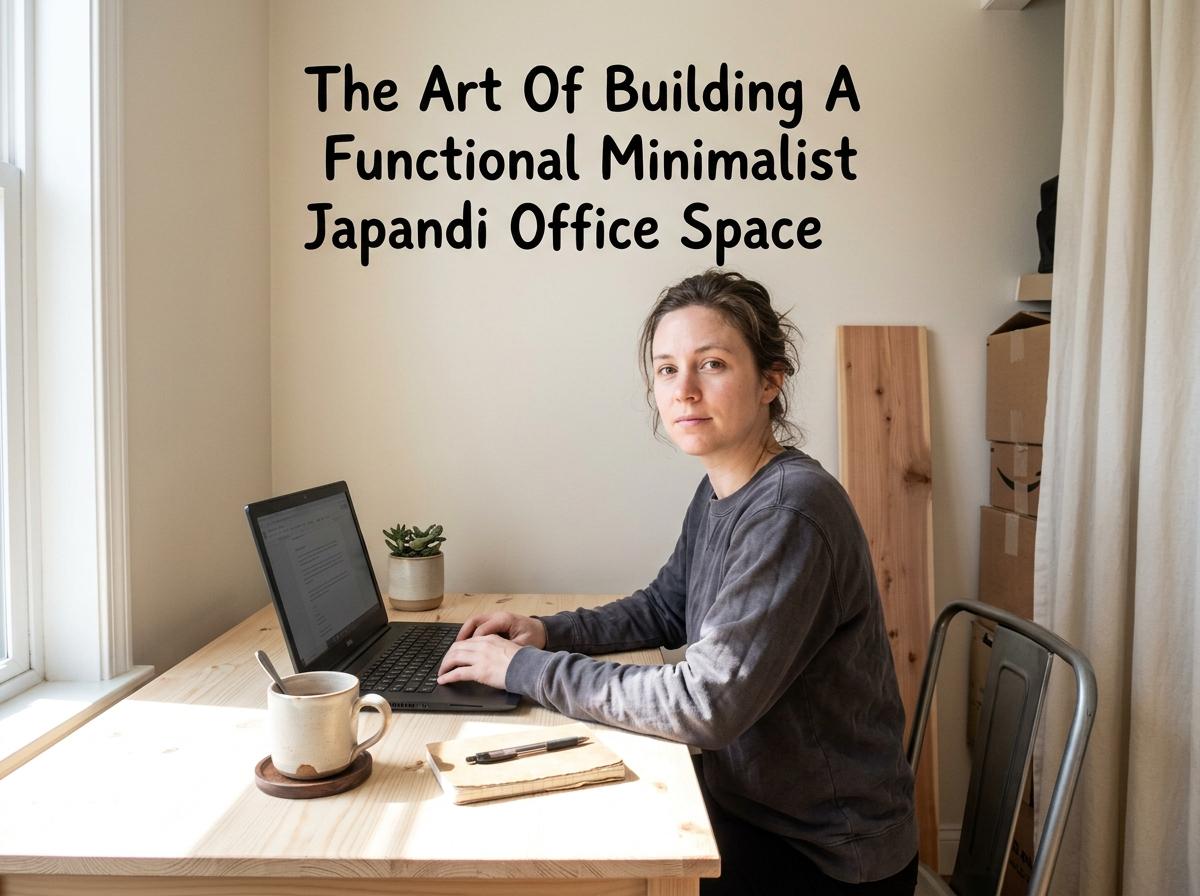

To master the modern workspace, You can first recognize that Japandi is not merely a trend, but a rigorous synthesis of Scandi-utilitarianism and the Wabi-sabi ethos-a fusion where Northern European efficiency meets the Japanese reverence for the ephemeral. In the context of a home office, this manifests as a curated environment that demands lexical precision in its layout; it is a space defined by shibui-an unobtrusive beauty-integrated with the ergonomic imperatives of hygge. The architecture of the desk relies on a dialectical pairing: the aesthetic must be uncompromisingly austere, yet the atmosphere remains profoundly nurturing. It is a calculated tension between the clinical and the organic. To inhabit such a space is to move through a sensorial landscape of tactile, earthen, and atmospheric textures, where the scent of untreated cedar and the haptic feedback of matte stoneware replace the sterile, jarring friction of the traditional corporate cubicle.
A Focused Work Environment Styled With Minimalist Japandi Decor
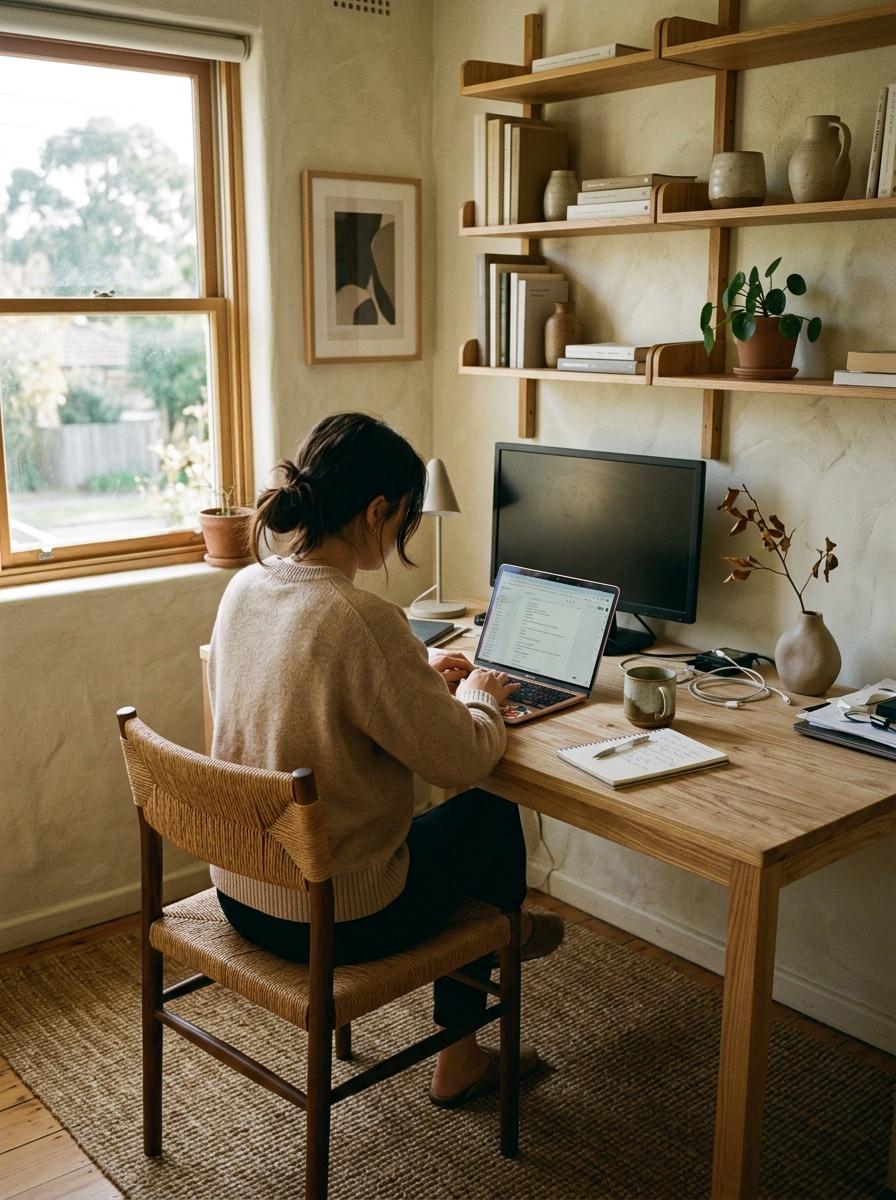

In this home office study, the synthesis of Scandinavian functionality and Japanese aesthetic restraint creates a sanctuary of productive stillness. Note how the desk-a slab of open-pore solid ash-meets the tactile resistance of a cord-woven paper seat, providing a grounding sensory anchor that sharpens your mental clarity. As you observe the interplay between the coarse-grained sisal underfoot and the liquid-smooth matte ceramics on the shelving, you will experience a physiological shift: the breath deepens and the heart rate slows as the visual noise of the outside world is filtered through this calibrated environment. This is the hallmark of the Kyoto-meets-Copenhagen philosophy, where the calculated spontaneity of a single, asymmetrical Ikebana branch prevents the space from feeling sterile. By integrating the minimalist geometry found in Muuto's structural lines with the wabi-sabi imperfections of hand-applied lime wash, the room achieves a state of complex simplicity. It is no longer just a room for labor, but a vessel for deep focus that resonates with the serene, high-end discipline of a Jutland retreat.
Experience A Harmonious Remote Setup Within A Minimalist Japandi Office
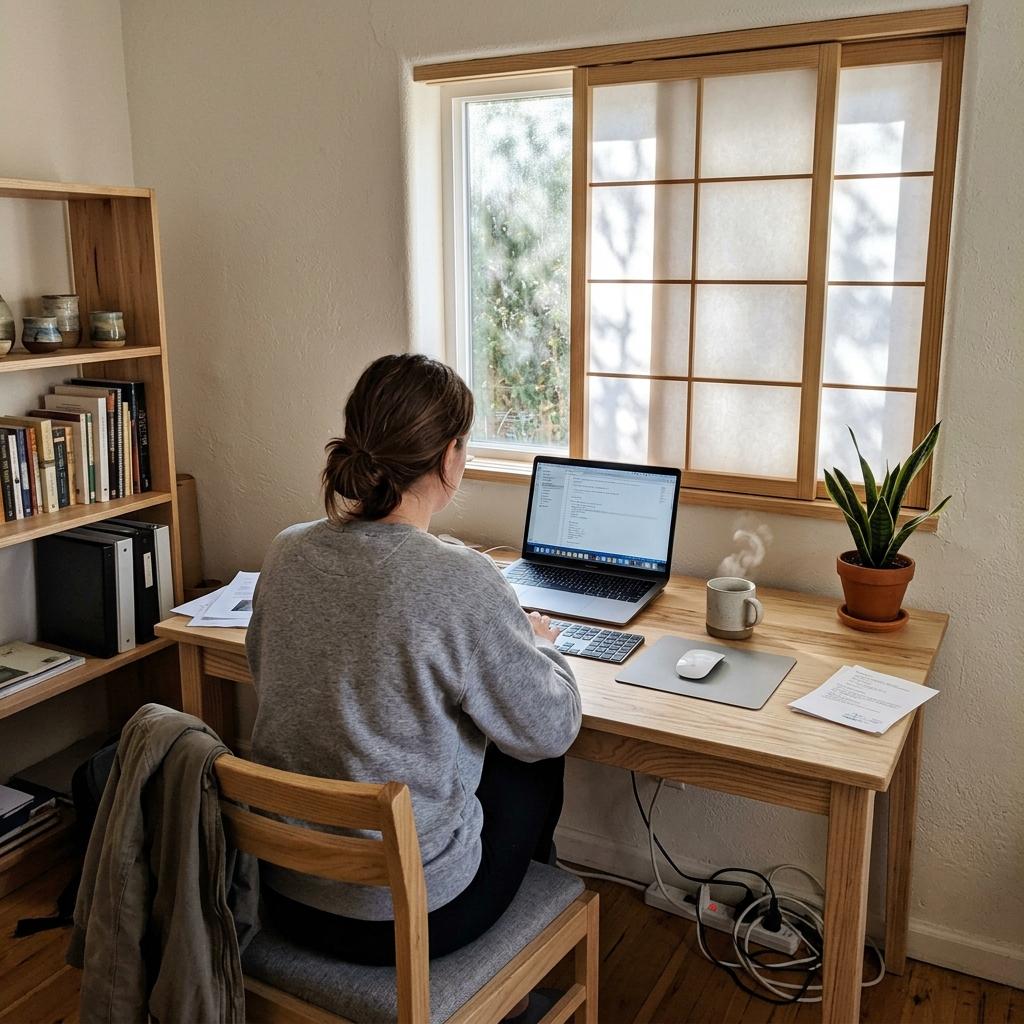

At Japandi.design, we find that the most profound workspaces are those that begin with Atmospheric Grounding, where the desk is not merely furniture but an anchor positioned within a sanctuary of soft shadows and deliberate stillness. This environment thrives on a Figurative Paradox, achieving a state of complex simplicity-where the rigorous discipline of Japanese minimalism softens into the rustic warmth of Scandinavian hygge. There is a profound Structural Dualism at play here: while the internal mind finds a quiet, focused expansiveness, the external world is filtered through shoji-inspired screens that turn chaotic daylight into a disciplined glow. We see this harmony realized through Material Specificity, as the tactile grain of sandblasted solid ash meets the cool, matte precision of recycled linoleum surfaces. Ultimately, this setup transcends aesthetics to reach Functionalist Specification, where integrated cable management and ergonomic modularity act as the silent architecture supporting a seamless transition between creative deep work and digital connectivity.
Simple Elegance Defined In This Refined Minimalist Japandi Office
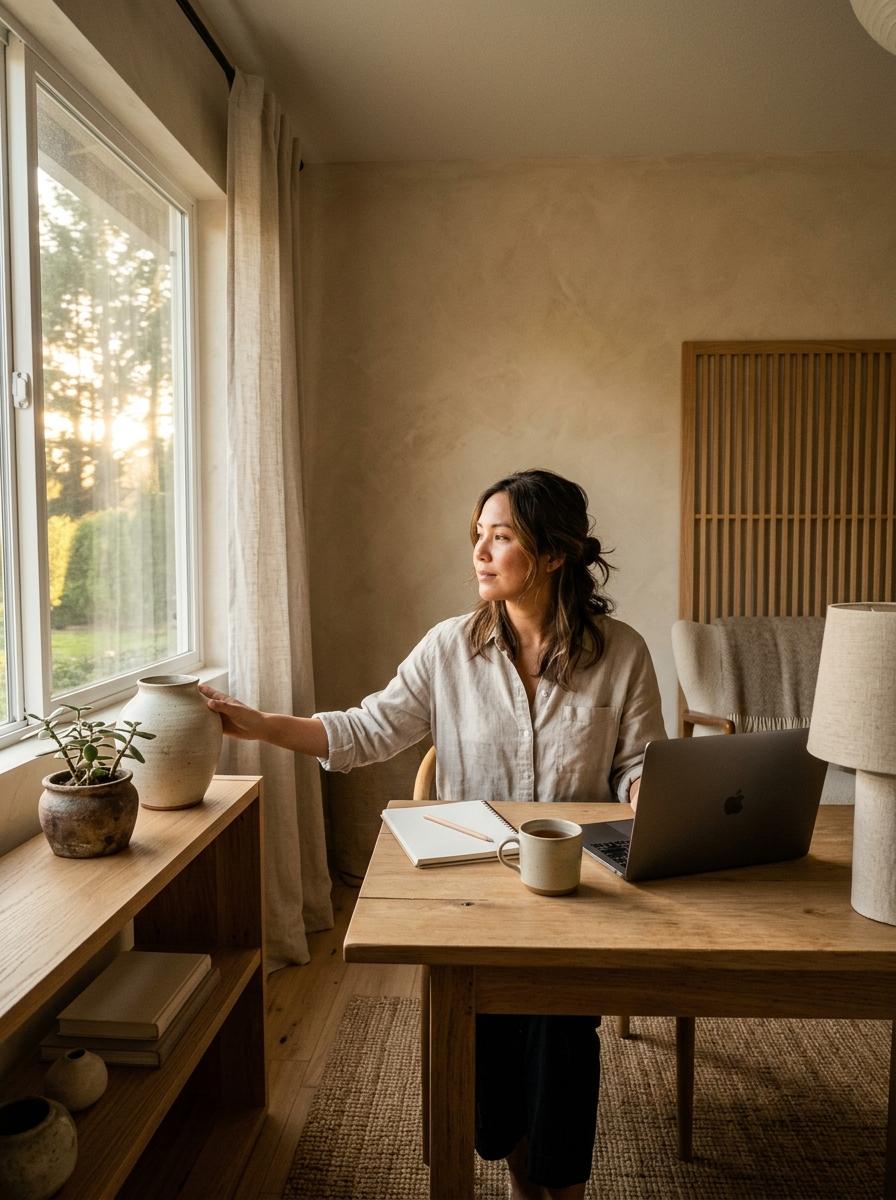

The first time I stepped into the owner's previous workspace, it felt like a physical manifestation of burnout: a chaotic sprawl of glossy synthetic surfaces, tangled cables, and the sterile hum of overhead fluorescent lighting. "I couldn't breathe in there," the lead designer remarked, pausing to adjust a hand-thrown ceramic vessel on the new oak sideboard. "It wasn't just about the clutter... it was the lack of soul." By contrast, this reimagined Japandi office operates on a frequency of quietude, replacing that former sensory overload with a palette of tactile limewash and honest joinery. Here, the frantic pace of modern commerce is subdued by the shibui-that particular Japanese appreciation for understated beauty-and the rhythmic warmth of Scandinavian hygge. This intentional shift from the mechanical to the artisanal serves as a masterclass in how a workspace can become a sanctuary for deep work.
Transform Your Daily Workflow With A Minimalist Japandi Office Layout
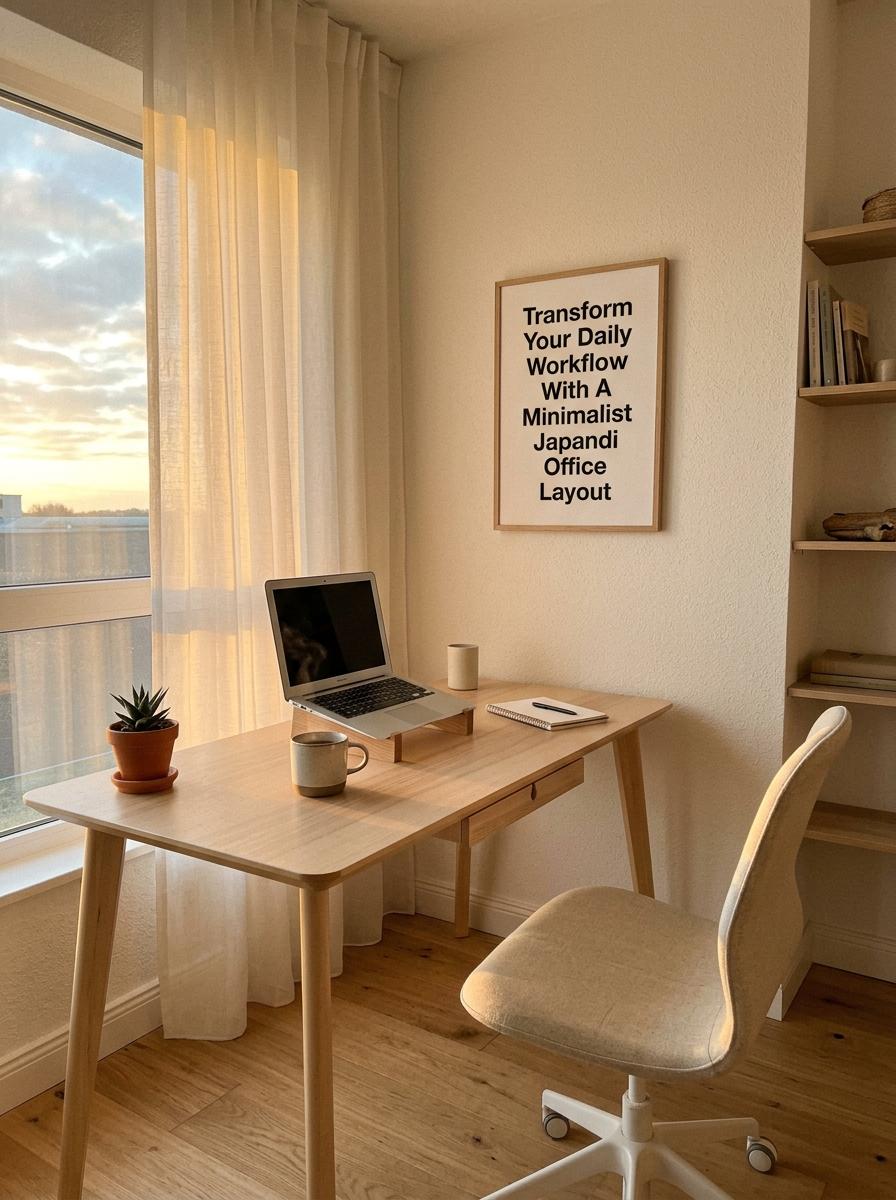

In the study of modern productivity, a sense of profound order is cultivated when the workspace is meticulously stripped of extraneous distraction. This intentional environment was conceived through a synthesis of Scandi-industrial utility and Japanese Zen philosophy, ensuring that every element serves a singular, quiet purpose. By selecting unadorned surfaces and weightless textures, the design fosters a crystalline clarity that silences the mental static of a busy workday. The layout carves out expansive voids for deep concentration, bridges the gap between form and function, and stretches the perceived boundaries of the room. Within this refined sanctuary, the arrangement balances light, breathes life into the shadows, and anchors the wandering mind.
The Beauty Of Natural Wood In A Sophisticated Minimalist Japandi Office
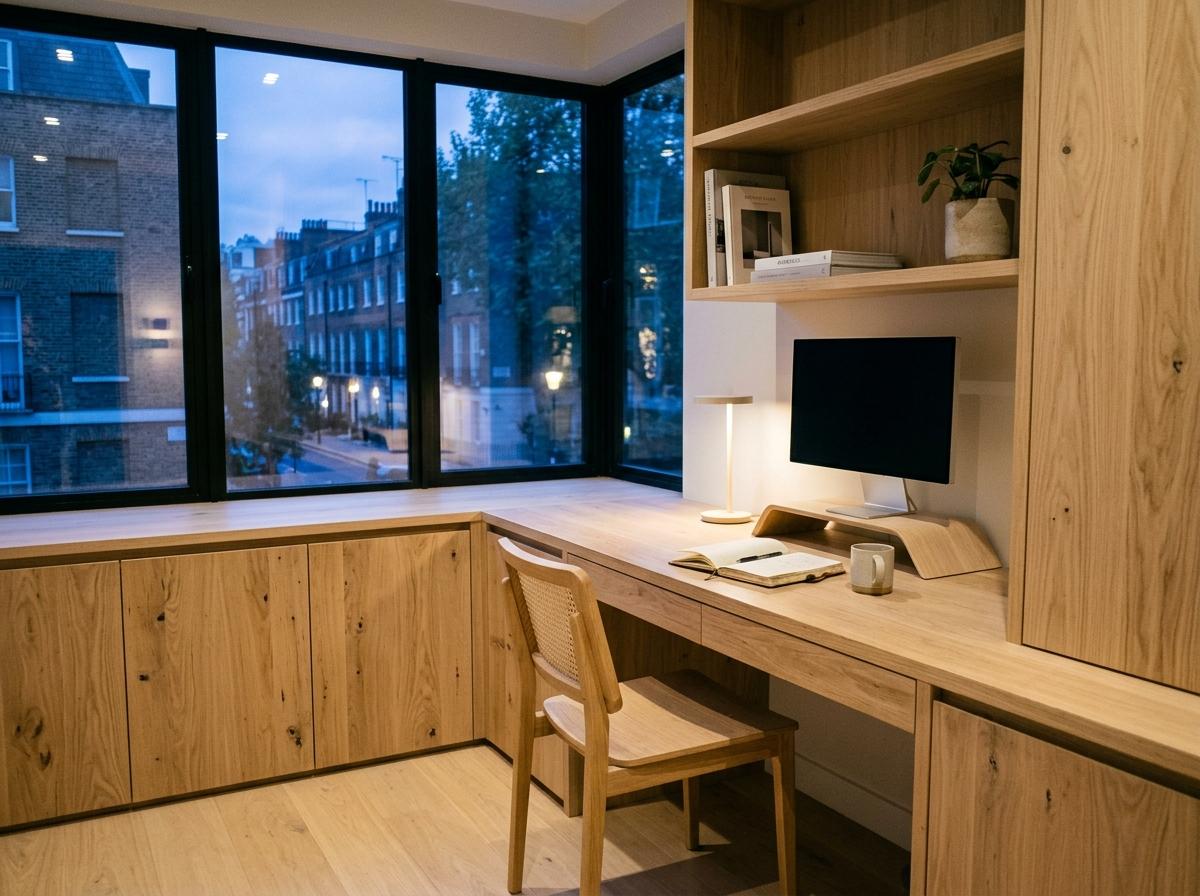

Historically, the workspace was defined by the rigid, dark mahogany heavy-handedness of the industrial era, a stark contrast to the fluid, light-filled sanctuaries we curate today. In this latest project, we find a captivating complex simplicity-a design that feels both monastic and luxurious. Situated in the heart of London's refined Marylebone district, this office serves as a homecoming for a repeat client, whose continued trust in this specific aesthetic evolution speaks to the enduring functional success of the Japandi philosophy. The space achieves its serene authority through a precise technical synthesis of tactile white oak joinery, seamless floor-to-ceiling proportions, and a controlled interplay of shadow and grain.
Achieve Deep Focus Inside This Carefully Curated Minimalist Japandi Office
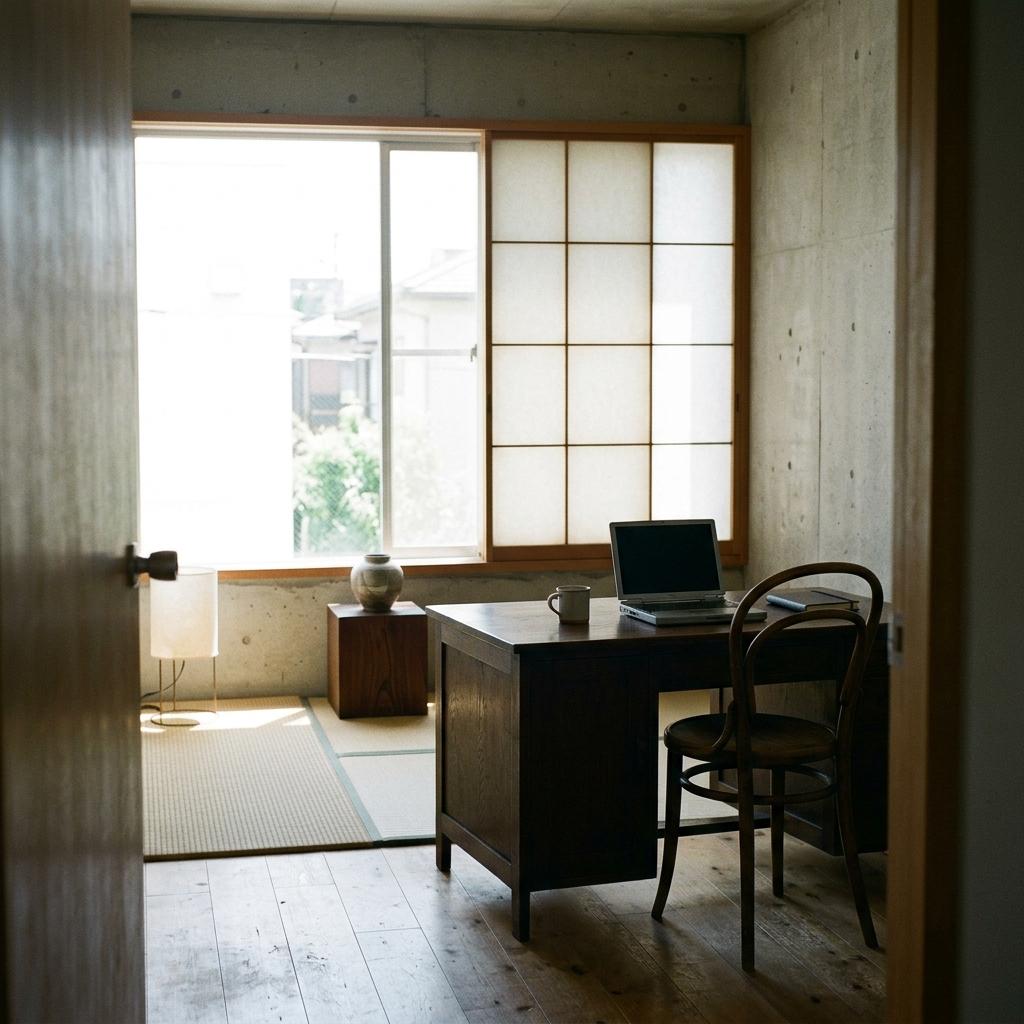

Standing at the threshold of this workspace, one is immediately struck by the silence-not a hollow quiet, but a weighted, intentional stillness that acts as an antidote to the frantic, fragmented energy of the modern open-plan office. I remember discussing this sense of atmospheric pressure with the space's creator, who paused mid-sentence to adjust a ceramic vessel on a low-slung oak plinth. “The goal wasn't just to strip away the excess,” they remarked, their eyes scanning the shadow-play along the walls, “but to ensure that every remaining element-the tactile grain of the timber, the soft diffusion of the shoji-actually serves a psychological purpose.” In this environment, the clatter of urban life is replaced by a meticulous choreography of wabi-sabi textures and mid-century silhouettes. By juxtaposing the chaotic sensory overload of our digital lives with such a disciplined, monochromatic sanctuary, we begin to understand that deep work is not merely a cognitive act, but a spatial one. This deliberate intersection of Scandinavian utility and Japanese Zen philosophy provides more than just aesthetic pleasure; it creates the essential mental scaffolding required for true immersion.
A Light Filled Creative Studio Inspired By Minimalist Japandi Design
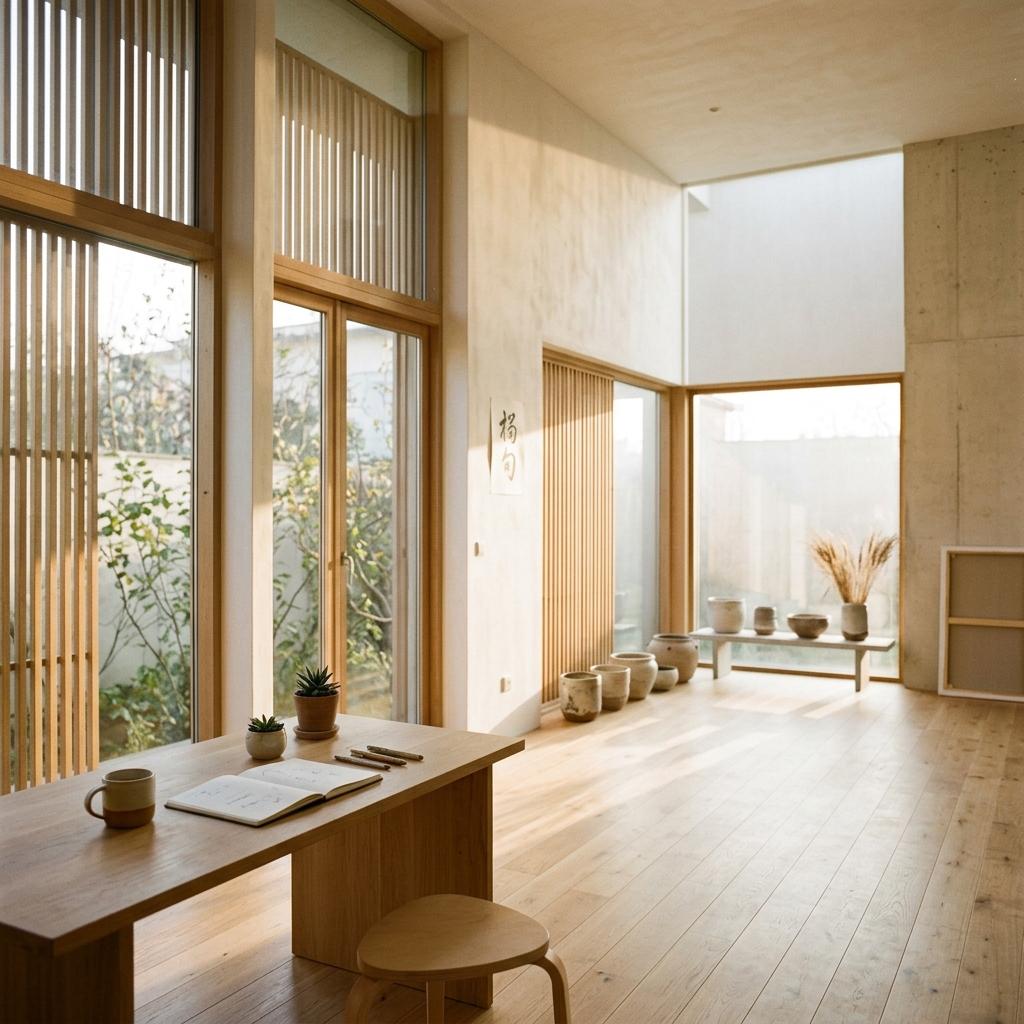

The project was conceived as a deliberate departure from the chaotic urban sprawl, where every architectural choice was dictated by the pursuit of clarity and quietude. Within this skeletal framework, the atmosphere is defined by its unadorned surfaces, muted tones, and a deliberate absence of ornamental noise. This serene sanctuary skillfully softens the harsh exterior world, bridging the gap between functional utility and meditative peace. Sunlight stretches across the expansive floorboards, expanding the visual volume and breathing life into the hollowed heights of the room. The design effortlessly integrates raw tactile textures, rhythmic wooden slats, and a profound sense of purposeful emptiness.
Integrating Organic Textures Into A Modern Minimalist Japandi Office
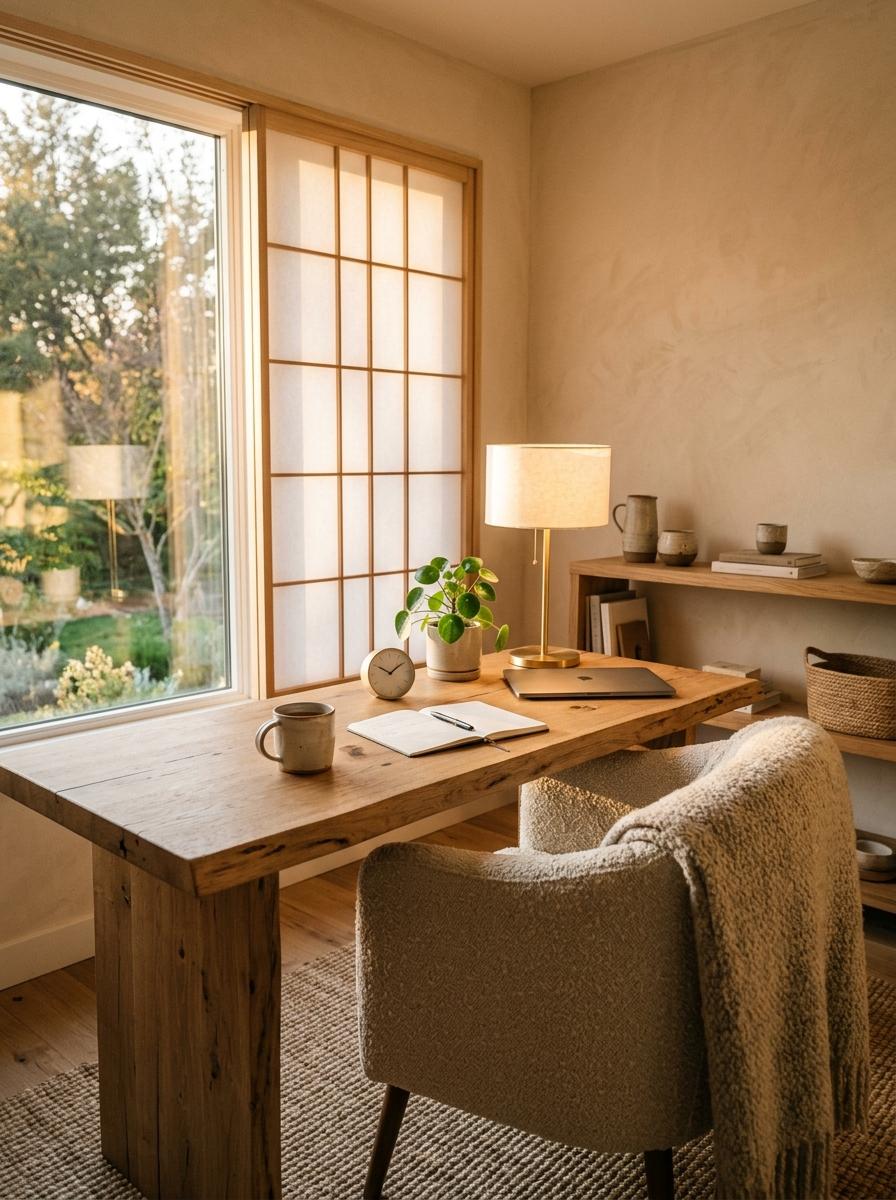

At the intersection of Scandinavian utilitarianism and Japanese wabi-sabi philosophy, Japandi emerges not as a mere trend, but as a deliberate synthesis of structural rigor and organic impermanence. In the context of a modern workspace, this aesthetic requires a sophisticated dialectical pairing: the environment must feel clinical enough to foster cognitive clarity, yet tactile enough to provide a grounding, humanistic reprieve. To achieve this, the designer must look beyond flat surfaces toward a layering of sensorial textures. By juxtaposing the diaphanous quality of shoji-inspired screens against the tectonic weight of raw timber and the haptic richness of bouclé or sisal, the office is transformed into a sanctuary of "quiet luxury." This intentional friction between the precision of minimalist geometry and the unpredictable grain of natural materials creates a spatial equilibrium that is simultaneously austere and soul-stirring, fostering a deep sense of focused serenity.
This Compact Study Showcases The Best Of Minimalist Japandi Style
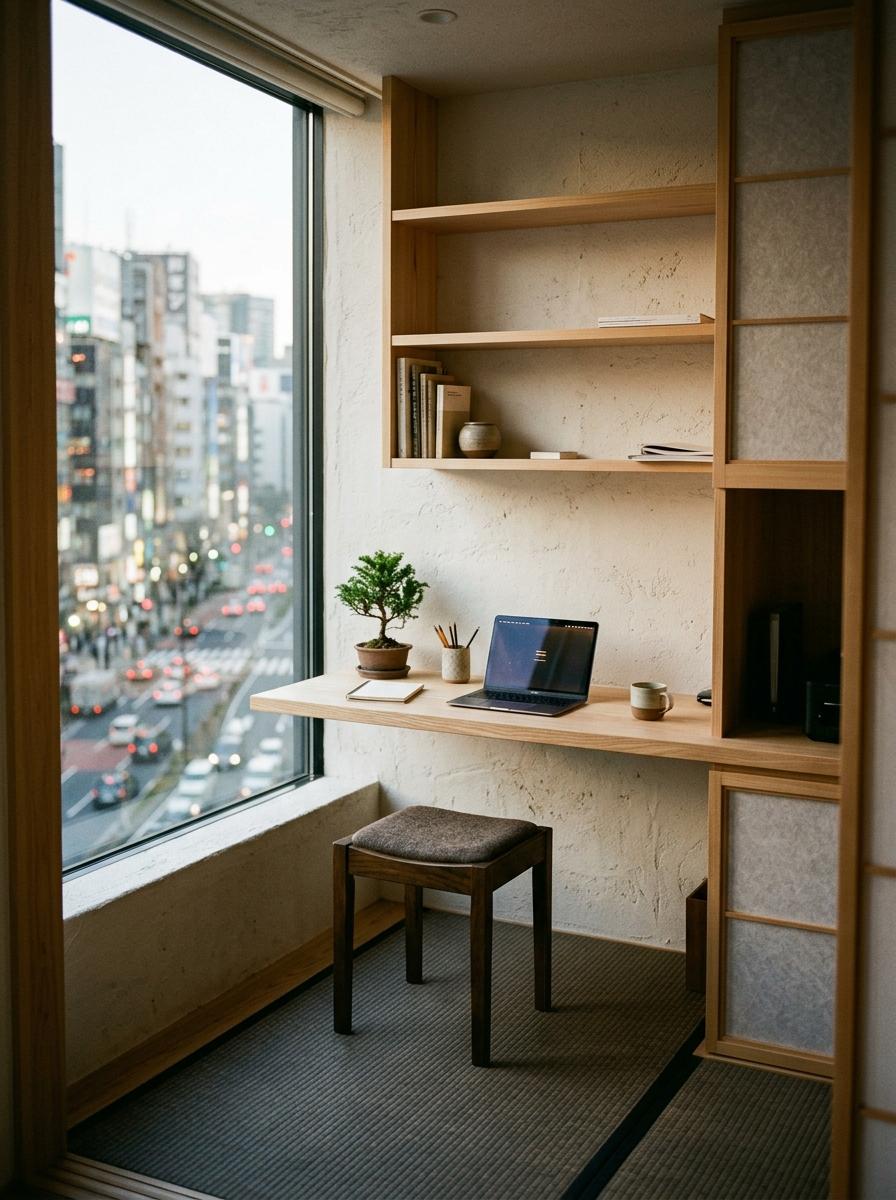

Stepping into this compact study is an exercise in atmospheric grounding, where the spatial constraints of a narrow urban alcove are anchored by a low-slung, floating ash timber desk that transforms a mere transitional niche into a profound sanctuary of focus. The room operates through a figurative paradox, achieving a state of cluttered emptiness; every object is curated with such precision that the density of thought is felt without the weight of physical excess. This serenity is heightened by a structural dualism that pits the internal stillness of the parchment-white walls against the frenetic, unfiltered kinetic energy of the city visible through the single floor-to-ceiling aperture. Tactile imagery defines the experience, from the cool, honest grain of the untreated hinoki wood shelving to the coarse, rhythmic weave of the charcoal tatami flooring underfoot. Ultimately, the space succeeds through functionalist specification, where bespoke cabinetry conceals necessary peripherals behind seamless shoji-inspired panels, integrating the demands of modern digital labor into an architectural solution that prioritizes psychological clarity.
Elevate Your Corporate Presence With A Minimalist Japandi Office Suite
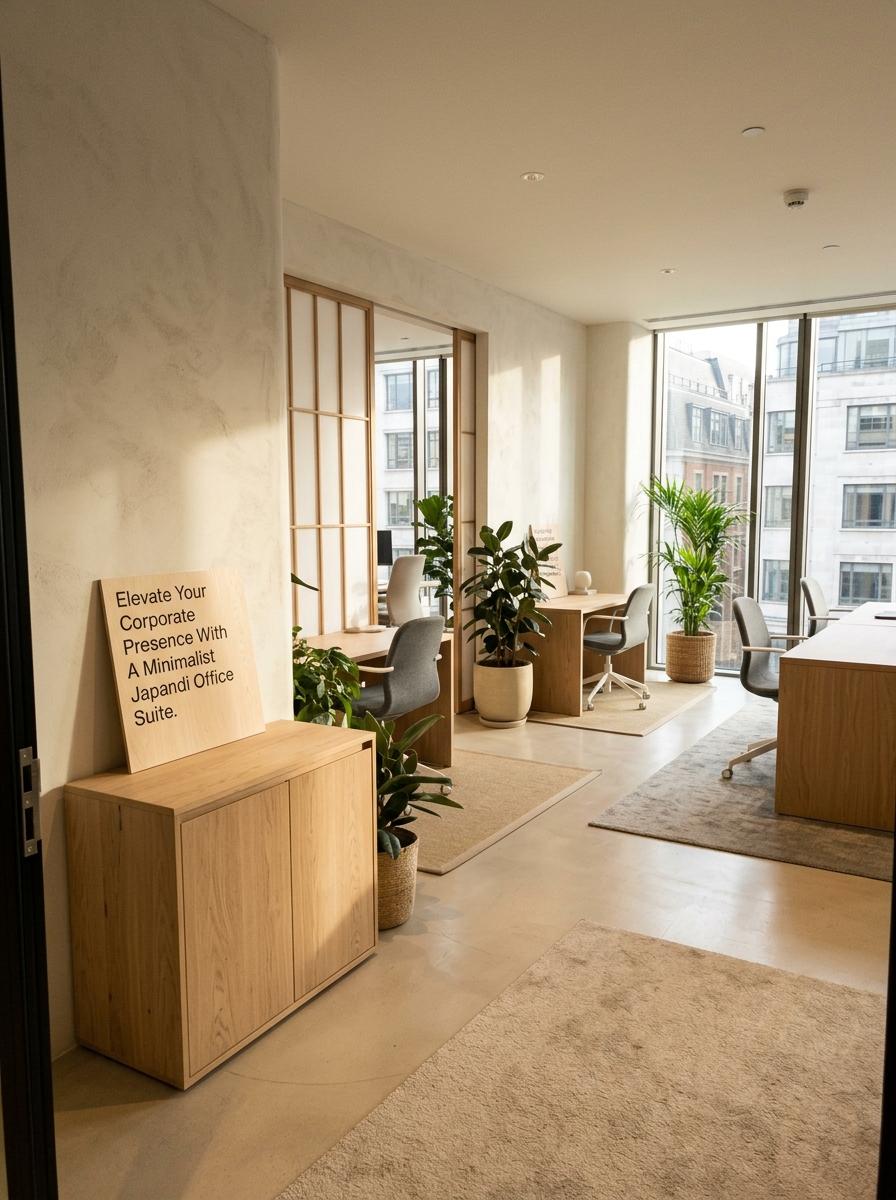

The traditional corporate environment was once defined by the rigid, compartmentalized hierarchies of the late 20th century-a landscape of heavy mahogany and fluorescent isolation. Today, however, we are witnessing a decisive shift toward a philosophy of fluid stillness, where the frantic pace of global commerce is met with the intentional tranquility of Japandi principles. In this latest study, we examine a newly completed office suite situated in the heart of London's Mayfair, a location that demands a presence both commanding and understated. This project marks a significant evolution for the occupants, a high-profile investment group who returned to the same design team as a repeat client, a testament to the enduring trust required to execute such a nuanced vision. The resulting space achieves its impact through a deliberate technical synthesis, utilizing seamless joinery, a calibrated palette of natural textures, and the strategic manipulation of light to bridge the gap between high-stakes productivity and meditative calm.
A Quiet Executive Retreat Boasting Minimalist Japandi Influences
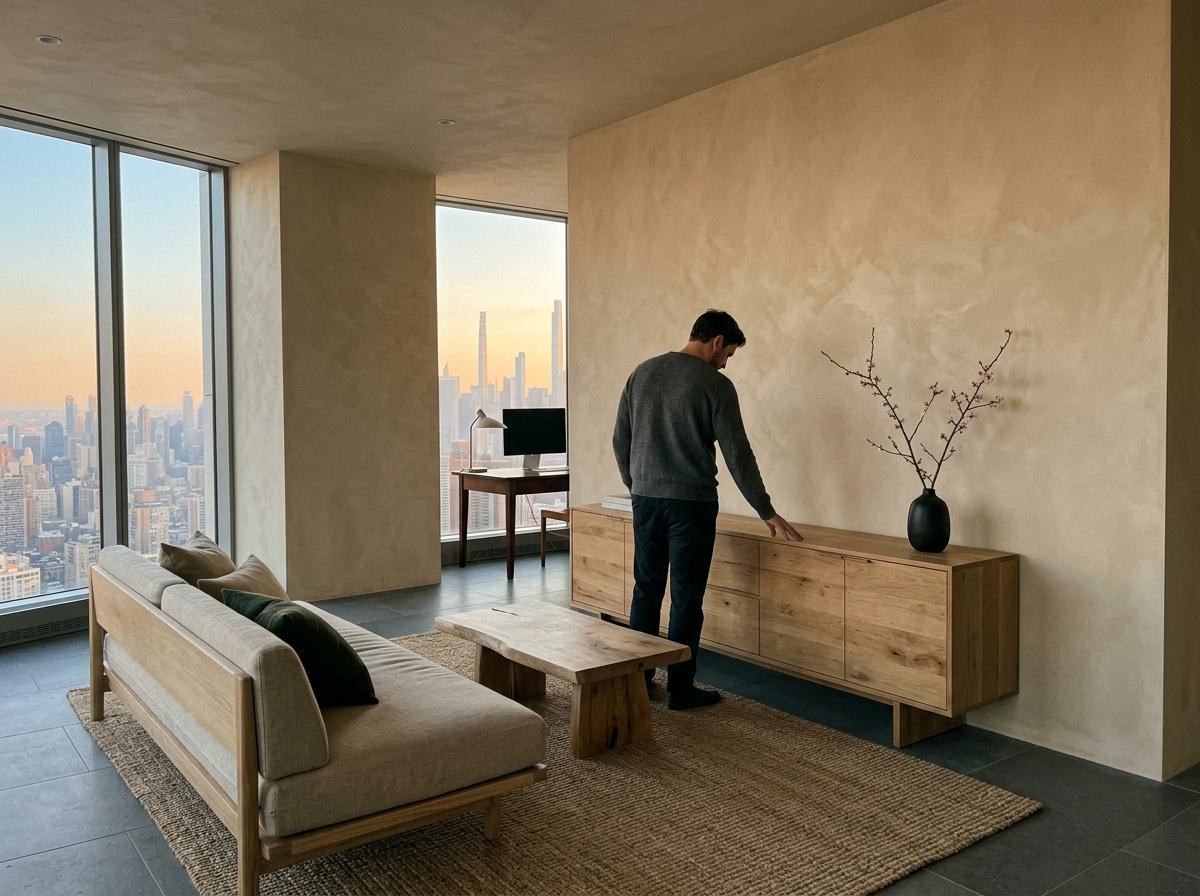

Stepping off the frantic, asphalt-heated pulse of the financial district and into this executive penthouse feels less like entering a residence and more like a physical decompression. Where the city outside demands a constant, jagged alertness, this interior responds with a profound stillness rooted in the careful calibration of "Ma"-the Japanese concept of negative space. "We didn't want a trophy home," the owner explained, pausing to trace the grain of a reclaimed white oak credenza, "we wanted... a sanctuary." This pursuit of tactile honesty is evident in the apartment's material palette; the designer has artfully juxtaposed the cool, industrial precision of honed grey basalt against the organic warmth of hand-applied lime wash walls. By eschewing the "ostentatious glitz often found in C-suite dwellings," the architect noted, "we found luxury in the shibui-the subtle, unstated beauty of functional objects." This intentional friction between the chaotic urban landscape and the curated serenity of the home serves as a perfect case study in how Japandi principles can redefine modern professional living.
Discover The Practicality Of A Well Organized Minimalist Japandi Office
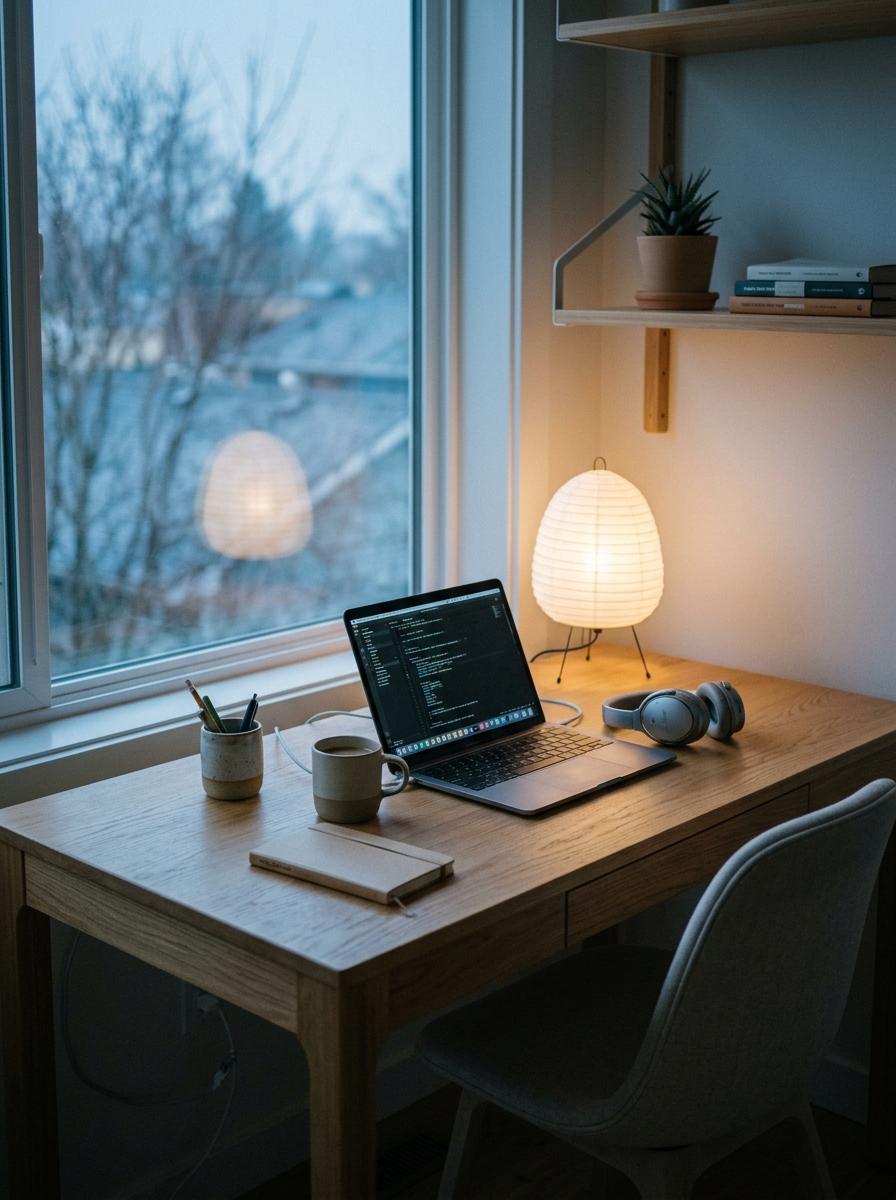

At the core of the modern workspace lies a deliberate synthesis: the integration of Japanese Ma (the intentional use of negative space) with the functional pragmatism of Scandinavian Hygge. This hybridity results in a "curated essentialism" that transcends mere tidiness, evolving instead into a rigorous framework for cognitive clarity. The Japandi office is defined by its lean, ergonomic geometry, yet it remains anchored by an undeniable organic warmth-a dialectical pairing that resolves the tension between clinical efficiency and domestic comfort. To enter such a space is to encounter a sensorial landscape that is simultaneously tactile, hushed, and luminous; it is a sanctuary where the austerity of a monolithic oak desk is softened by the nebulous, earthen texture of handcrafted ceramic vessels, ensuring that every object serves both a logistical purpose and a meditative repose.
Where Function Meets Form In A Minimalist Japandi Office Design
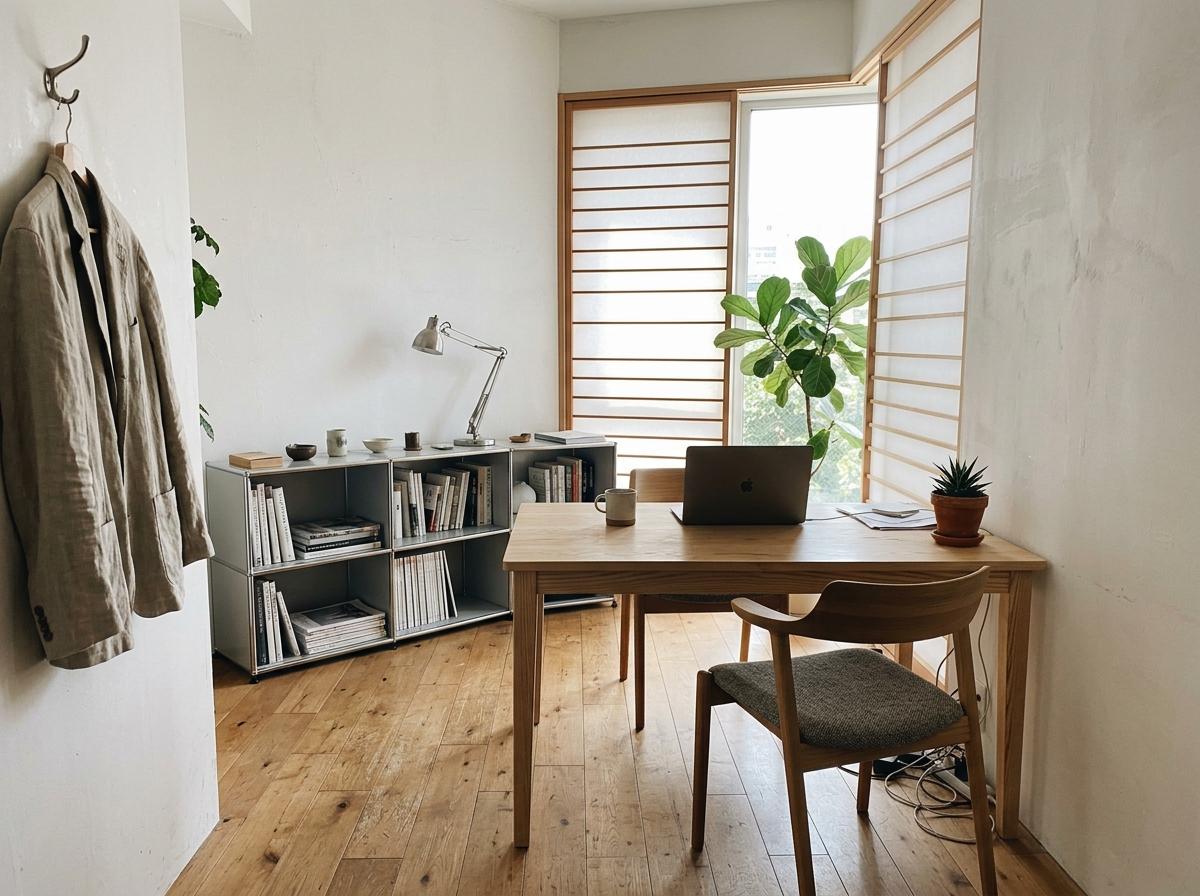

In this study of a private workspace nestled in Tokyo's Aoyama district, we witness the structured spontaneity of a layout that refuses to choose between rigid utility and organic flow. Note how the tactile landscape is defined by the juxtaposition of open-pore solid ash desks against the cool, monolithic smoothness of brushed aluminum shelving. As you transition from the corridor into this intentional void, the sharp, architectural lines of the Karimoku Case Study furniture seem to dissolve into the soft, diffuse glow of shoji-inspired window treatments. This visual silence triggers an immediate physiological shift; the rhythmic symmetry of the timber slats works to lower the heart rate, grounding the restless mind in a state of alert tranquility. By anchoring the space in the low-slung silhouettes typical of Japanese tradition while utilizing the high-tensile precision of Scandinavian craft, the office becomes more than a place of labor-it becomes a sensory sanctuary where the weight of productivity feels impossibly light.
A Breath Of Fresh Air In This Airy Minimalist Japandi Office
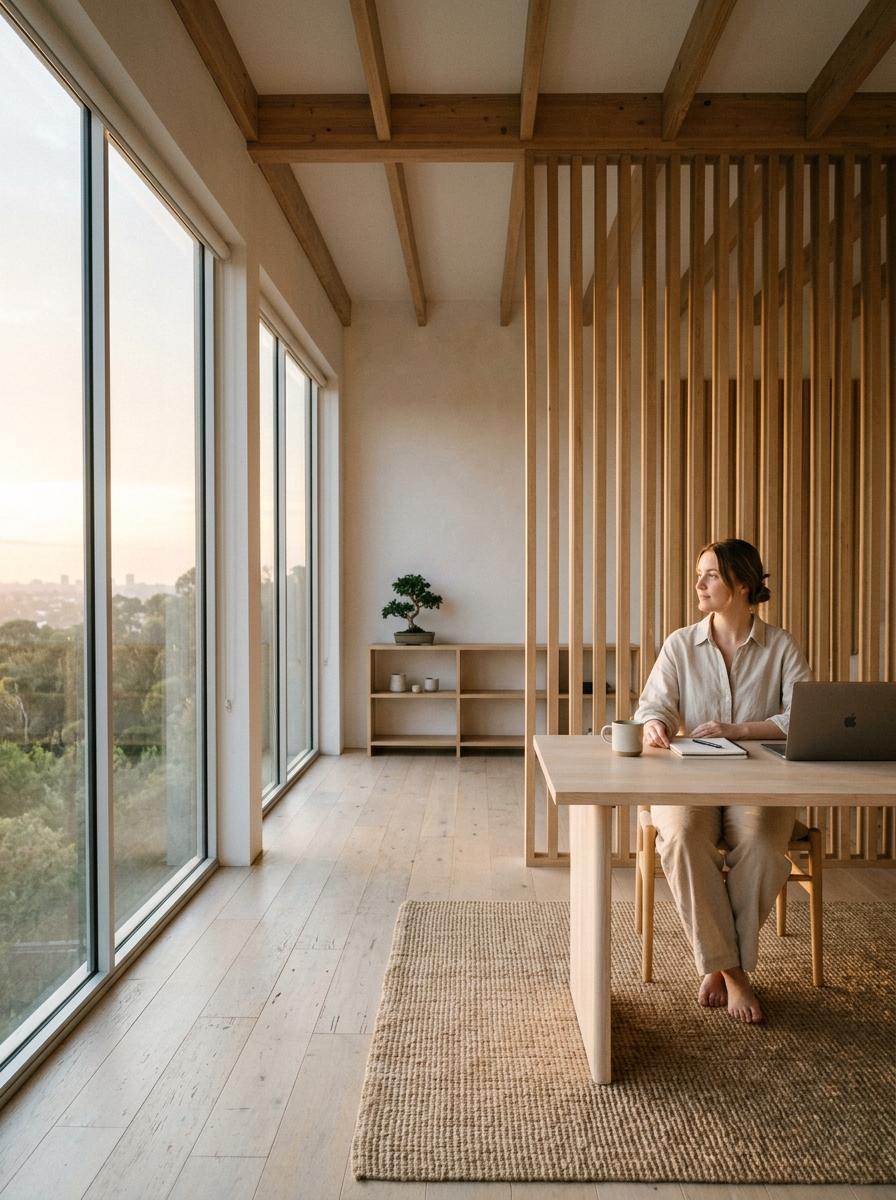

The structural reconfiguration of this workspace was meticulously undertaken to erase the visual noise of its former industrial shell. Within these walls, a quietude prevails, defined by unadorned surfaces, translucent boundaries, and a singular, monochromatic palette. This purposeful paring back permits a profound peace to permeate every corner, ensuring the mind remains free from the friction of clutter. Natural light floods the interior, where soft shadows stretch across pale timber, and soaring ceilings swell to accommodate a new sense of cognitive clarity. The design masterfully balances the void, grounding the inhabitant through a curated selection of tactile textures, rhythmic slats, and boundless horizons.
Comments