
Japandi interiority emerges from the precise synthesis of Scandinavian hygge-a commitment to lived-in warmth-and the Japanese ethos of wabi-sabi, which finds transcendence in the ephemeral and the imperfect. In the context of a living room layout, this aesthetic demands a rigorous spatial discipline that is simultaneously austere yet profoundly inviting, structured through a dialectical tension between Nordic functionality and Zen-like minimalism. To master this balance, one must move beyond mere arrangement toward a curated orchestration of tactile, earthen textures and ethereal, diffused light, ensuring that every sculptural silhouette serves a purpose within the home's overarching kinetic flow.
Japandi Living Room Layout
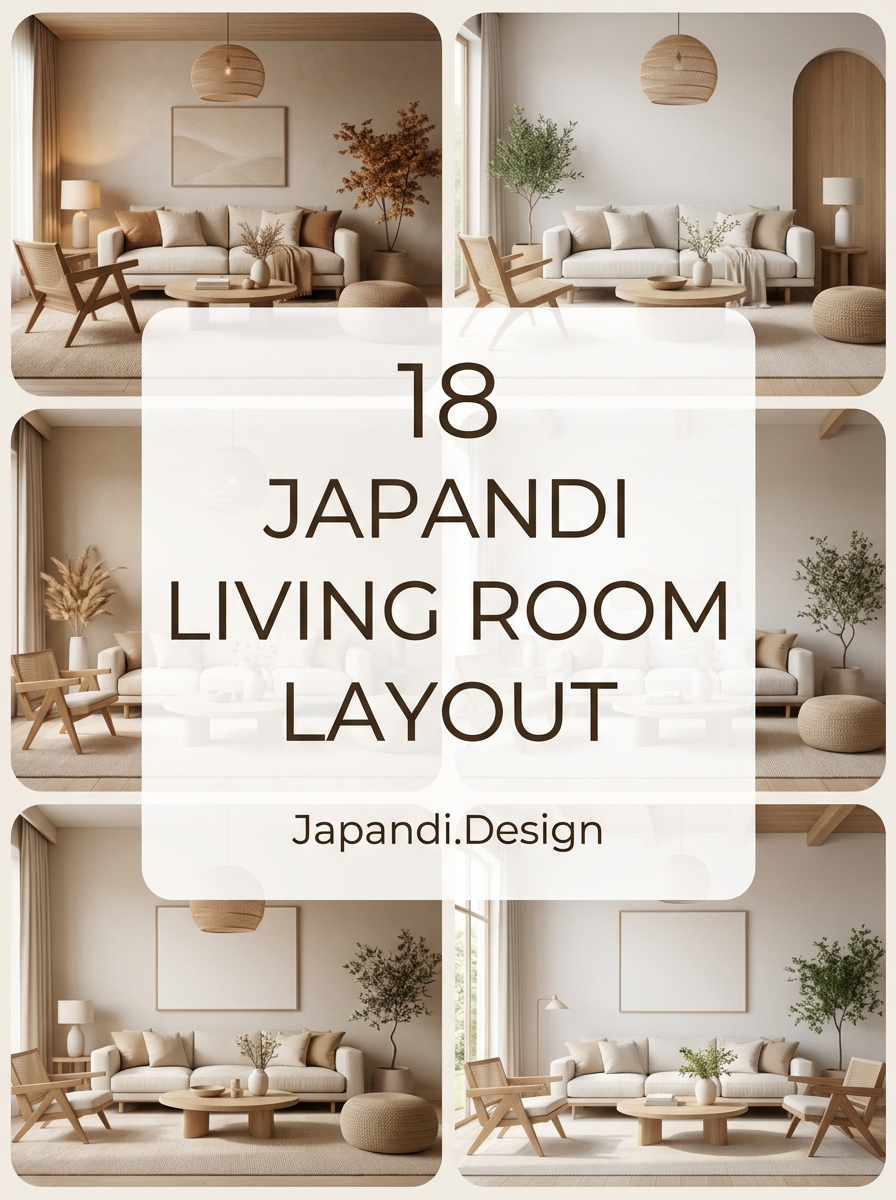

Mastering The Open Concept Japandi Living Room Layout
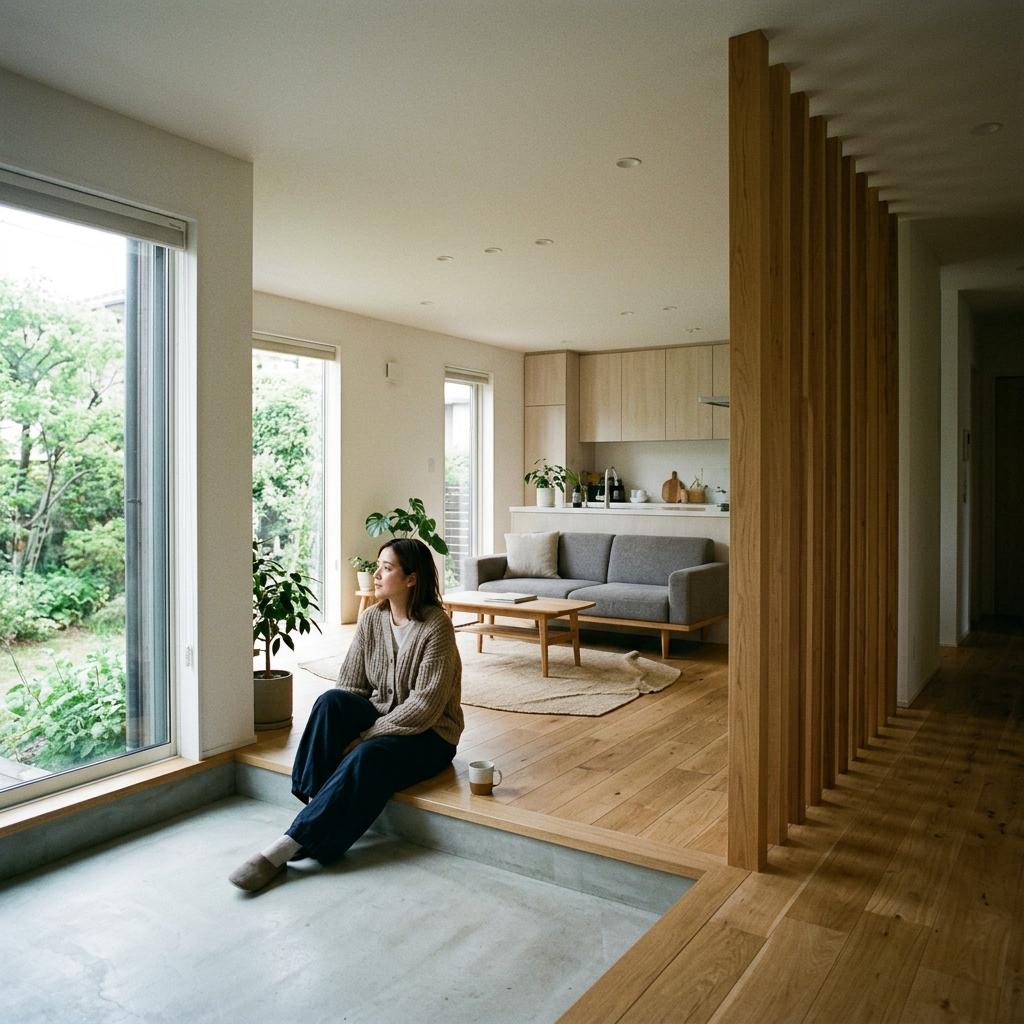

The transition from the rigid, compartmentalized floor plans of the early Shōwa era to the fluid, boundary-less transparency of modern Japandi architecture represents a profound shift in how we inhabit space. In my latest study of a residence nestled within the serene, leafy enclaves of Den-en-chōfu, I observed how this evolution has culminated in a "structured spontaneity." This specific project, designed for a repeat client who sought to deepen their commitment to minimalist living, masters the open concept by balancing the warmth of organic textures against the precision of industrial geometry. The resulting layout achieves its harmony through a technical synthesis of rhythmic timber screening and strategic floor-level variations, which together define distinct zones without ever severing the visual continuity of the home.
Creating Harmony In A Balanced Japandi Living Room Layout
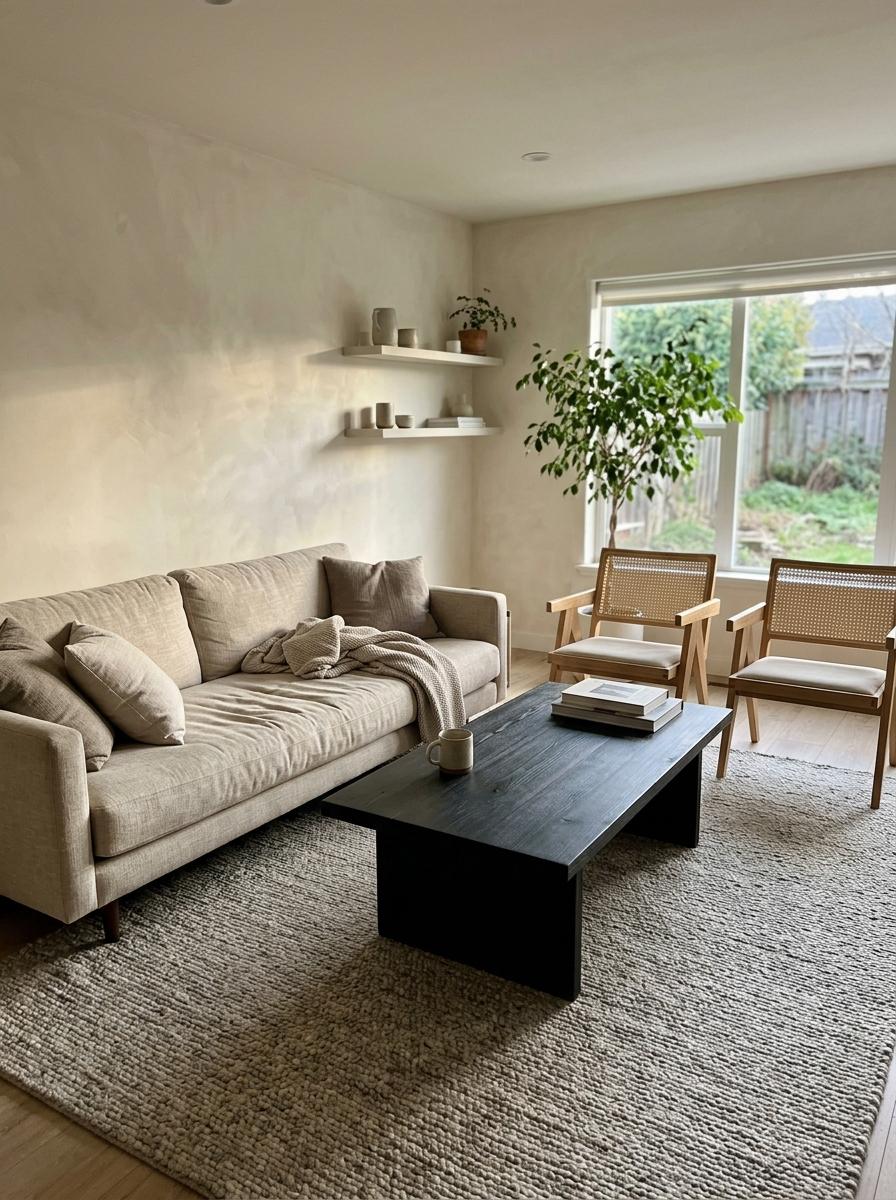

To achieve a truly balanced Japandi living room, we must master the interplay between the tactile and the visual. Begin by anchoring the space with a low-profile sofa upholstered in a slubbed, oatmeal-toned linen, providing a coarse yet refined foundation for the room's geography. Note how the placement of a Kyoto-crafted charred cedar (Shou Sugi Ban) coffee table creates a gravitational pull, its matte-iridescent surface absorbing the afternoon light rather than reflecting it. This deliberate layering of primordial modernity-where ancient woodworking techniques meet minimalist silhouettes-acts directly on the nervous system; as your eyes trace the fibrous grain of the timber and the velvety-cool touch of hand-applied lime wash walls, the breath instinctively deepens, shifting the body from a state of urban alertness to one of meditative stillness. Moving through the layout feels less like navigating a room and more like a curated descent into quietude.
A Modern Transformation Featuring A Japandi Living Room Layout
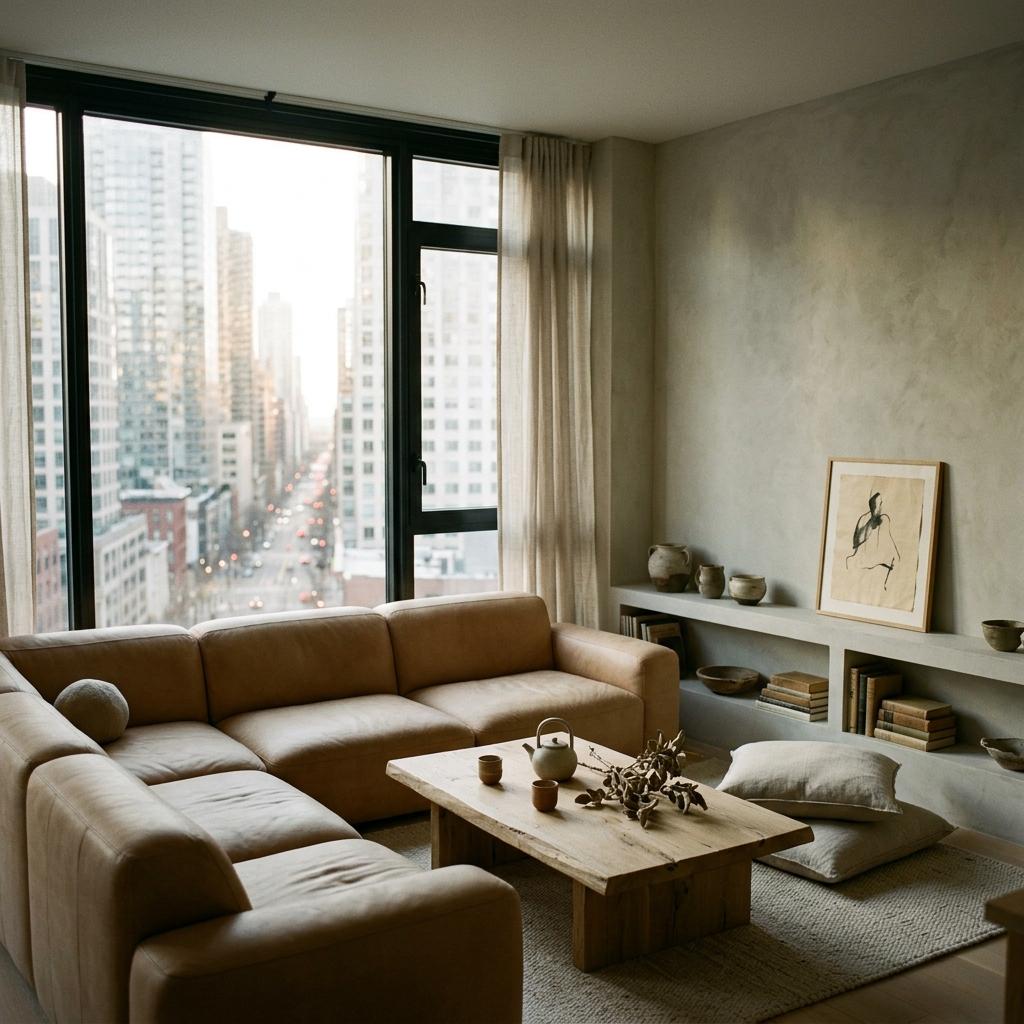

The apartment sits high above the city, a quiet observatory where the frantic pulse of the urban grid is filtered through the stillness of a curated interior. Within this controlled spontaneity, the layout operates as a meditative exercise in restraint, proving that a space can be simultaneously empty and overflowing with intent. While the exterior world is defined by the rigid, cold geometry of steel and glass, the living room retreats into an internal landscape of organic softness and hushed tones. The tactile presence of sand-blasted white oak and nubuck leather ground the room, offering a textured counterpoint to the matte, lime-washed walls that absorb the morning light. This is not merely a stylistic choice but a triumph of functionalist engineering; the low-slung, modular seating and integrated perimeter shelving serve as a deliberate structural solution, maximizing the spatial flow while anchoring the home in a state of permanent, functional calm.
Inside A Curated Home With A Japandi Living Room Layout
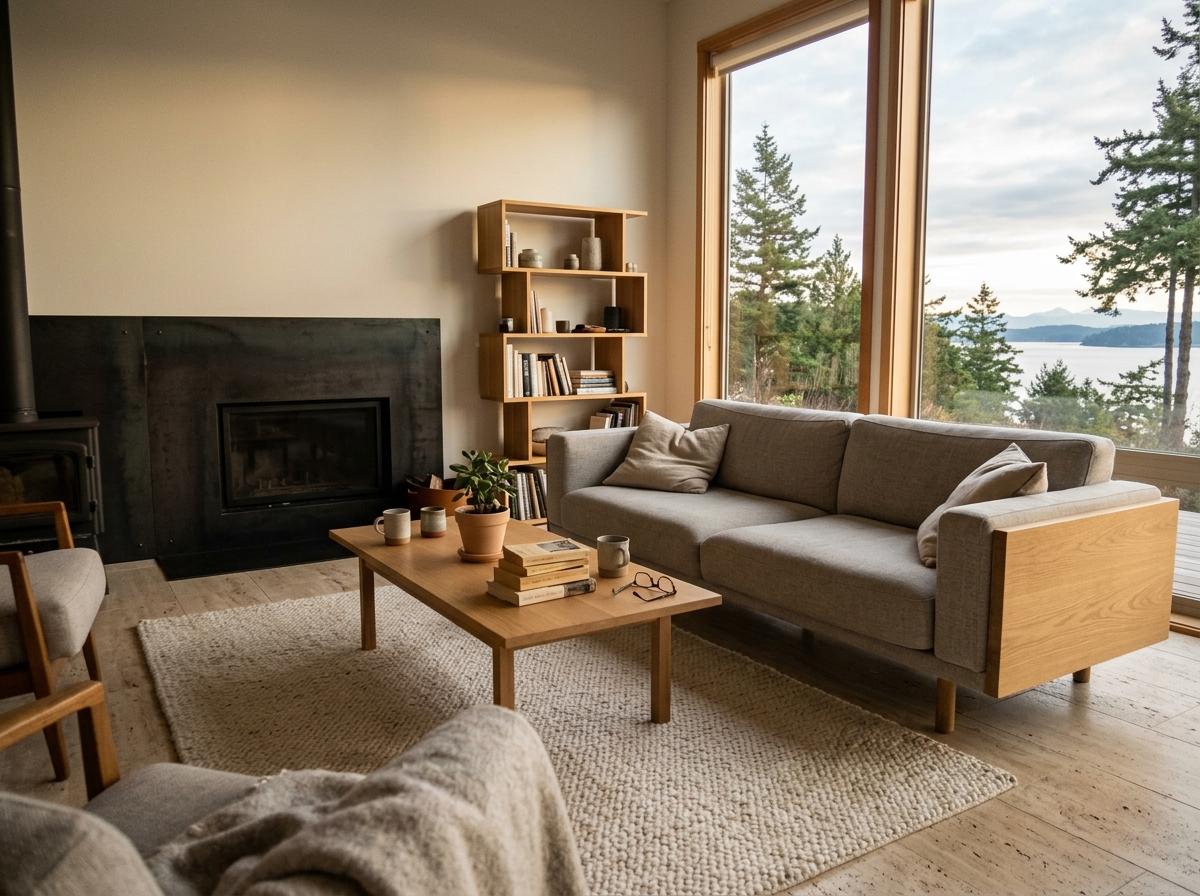

In this curated residence, the Japandi living room layout serves as a masterclass in structured serenity, where the raw integrity of open-pore travertine meets the fluid warmth of honey-toned white oak. Note how the deliberate placement of low-slung seating draws the eye toward the floor-to-ceiling glazing, framing the rugged horizon of the Pacific Northwest like a living canvas. This spatial arrangement creates a studied spontaneity; every object feels serendipitously placed, yet governed by a rigorous geometric logic. As you transition from the tactile grit of a hand-knotted wool rug to the silk-smooth finish of a blackened steel hearth, the body undergoes a physical recalibration-the erratic pulse of urban life surrenders to a deep, diaphragmatic rhythm of calm. This is not merely a room, but a sensory sanctuary where the architectural precision of Tokyo minimalism finds its soul within the rustic hygge of Copenhagen.
The Art Of The Minimalist Japandi Living Room Layout
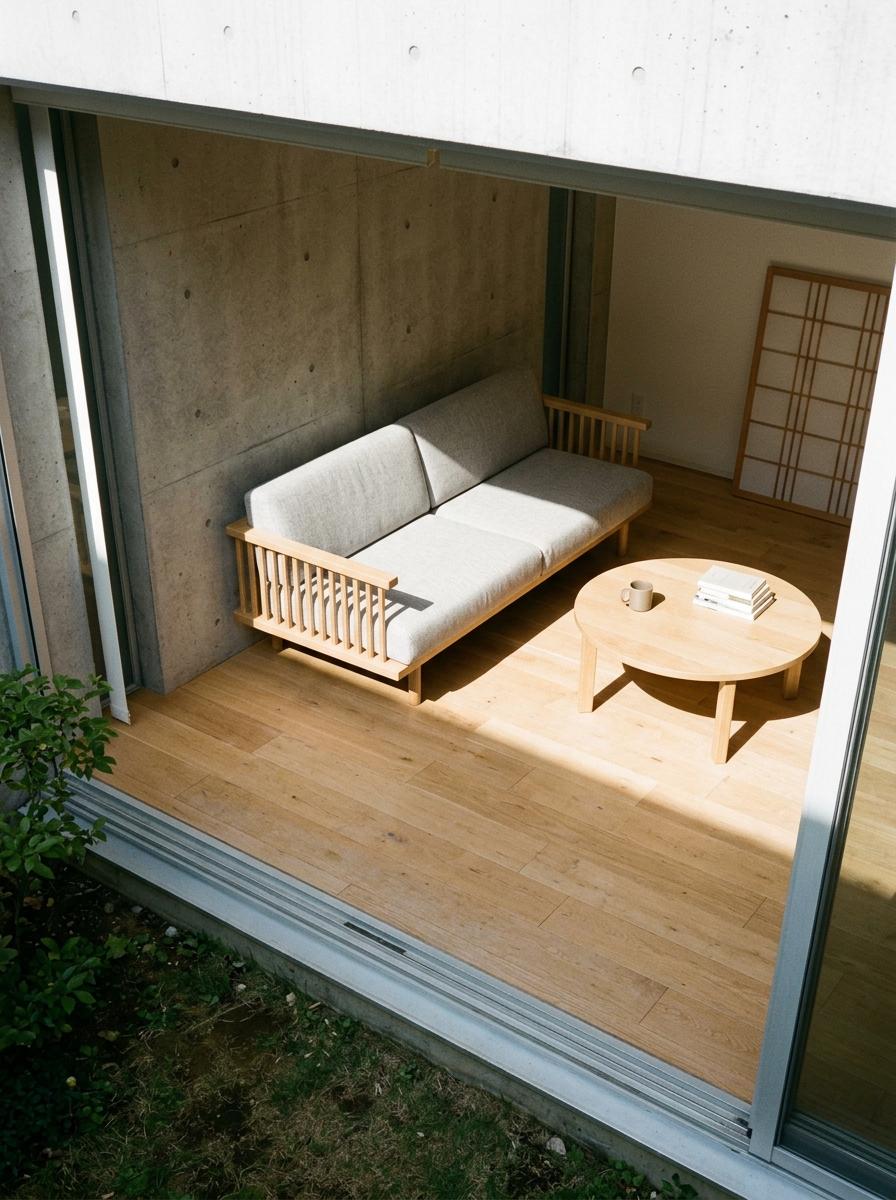

In the quiet theater of the minimalist Japandi living room, the floor becomes a low-slung horizon line, grounding the inhabitant in a sanctuary of silence where spatial emptiness functions as a tangible weight. This design philosophy thrives on a structured spontaneity, a deliberate arrangement that appears accidental yet adheres to a rigorous geometric logic. While the external world accelerates through a cacophony of visual noise, the interior remains a vacuum of stillness, creating a sharp boundary between the chaotic public sphere and the curated private void. Within this perimeter, the tactile honesty of wide-planked white oak meets the industrial grain of hand-poured concrete, offering a sensory contrast that demands physical presence. Ultimately, the layout serves as a high-performance mechanism for rest; every negative space is a calculated utility, engineered to eliminate cognitive friction and transform the domestic square footage into a machine for meditative living.
Explore An Inviting And Warm Japandi Living Room Layout
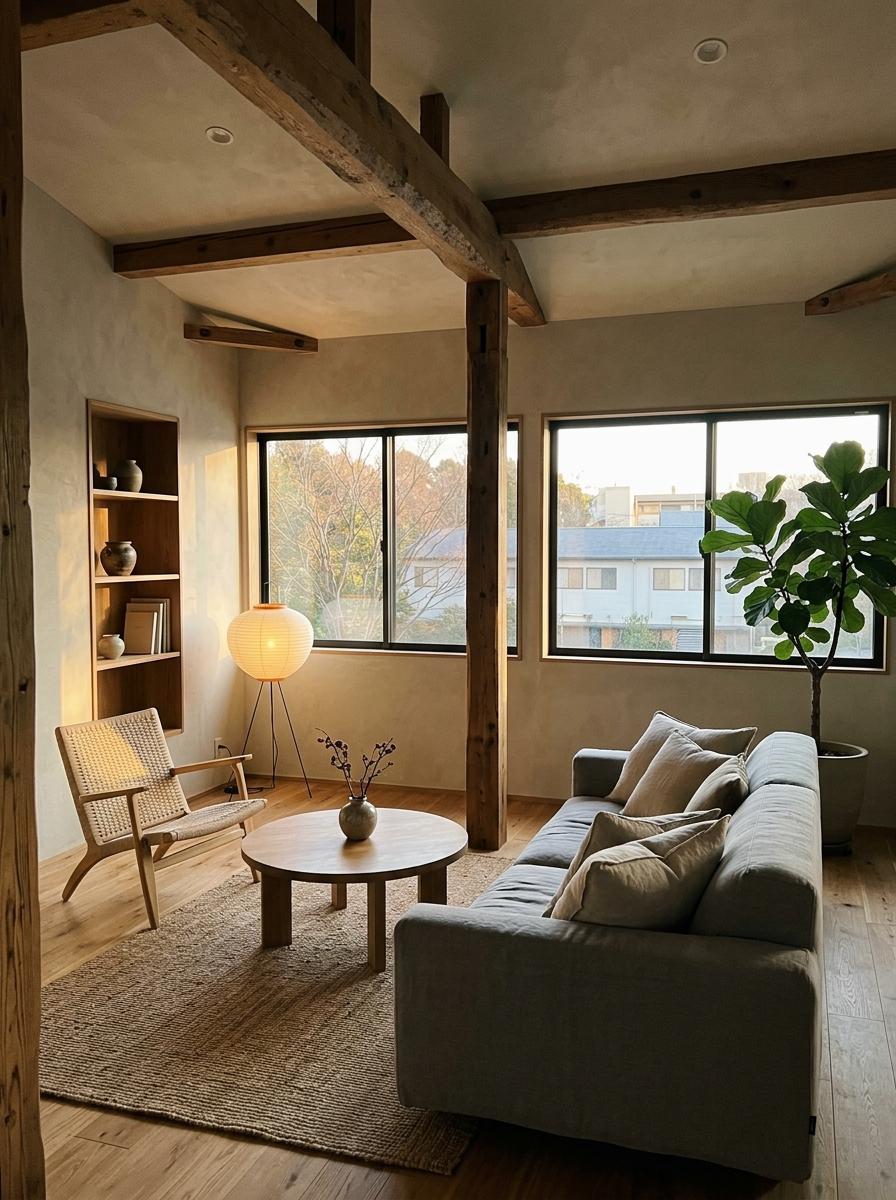

To step into this residence is to witness a profound diachronic evolution; where once the neighborhood's original mid-century interiors favored heavy, compartmentalized ornamentation, the space has been reimagined through a lens of contemporary minimalism that honors its structural heritage. The layout thrives on a sense of harmonious friction, where the "rustic precision" of rough-hewn timber meets the "clinical warmth" of soft linen and neutral stone. Situated in the heart of Tokyo's sophisticated Daikanyama district, the project serves as a serene sanctuary amidst the city's kinetic energy. Because the homeowners are repeat clients-having previously commissioned a study on Scandinavian functionalism-there exists a deep, unspoken trust that allowed for a more radical exploration of negative space. Ultimately, this inviting Japandi atmosphere is achieved through a meticulous technical synthesis of sightline optimization, tactile layering, and the strategic calibration of natural light.
Sophisticated Furniture Placement For A Japandi Living Room Layout
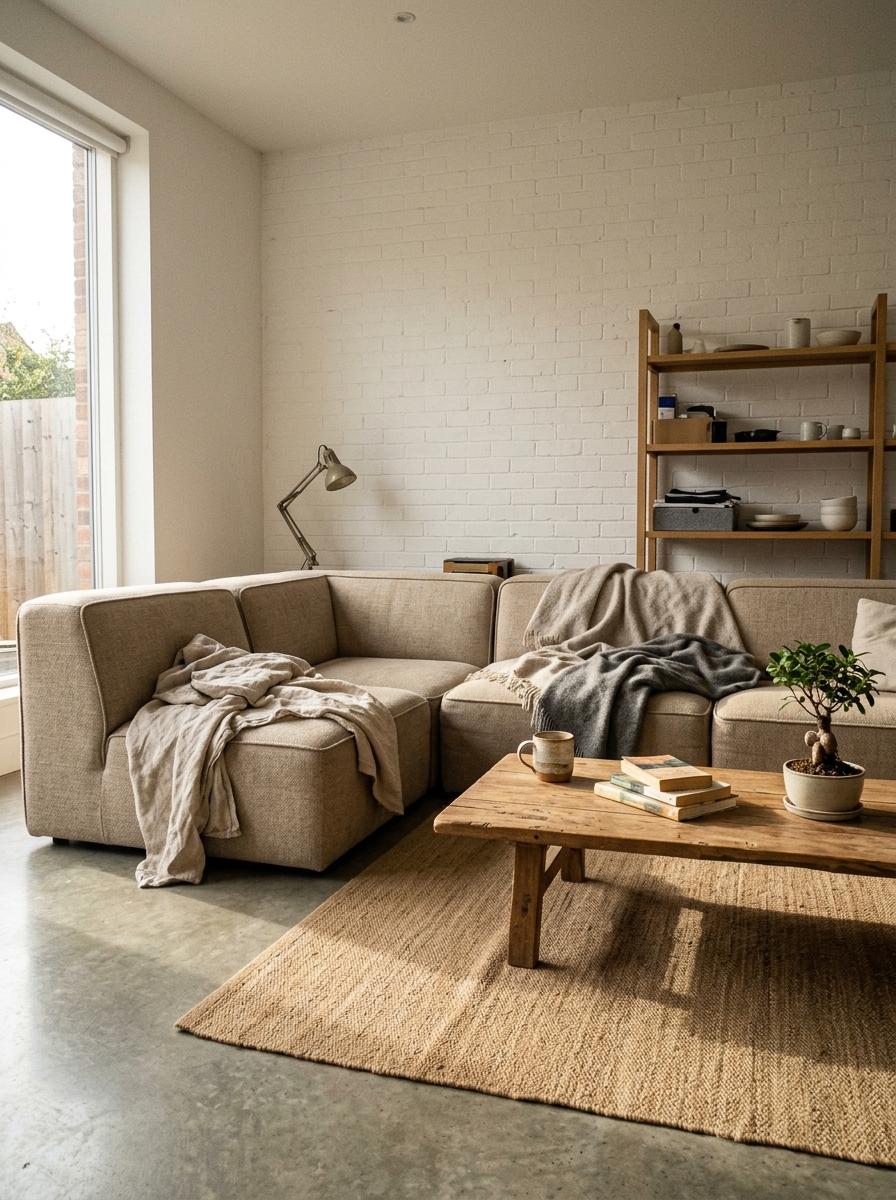

To master the Japandi living room layout, You need to first recognize that the aesthetic is not a mere trend, but a profound Definition via Synthesis: the marriage of Scandinavian hygge-a commitment to cozy, lived-in warmth-with the Japanese ethos of wabi-sabi, which honors the transcendent beauty of the transient and imperfect. This alchemy results in a spatial logic defined by Lexical Precision, where furniture is not merely "arranged" but curated through the lens of feng shui and circulation flow to prioritize negative space, or ma. The placement of a low-slung, modular sofa serves as a grounding anchor that feels unyielding yet invitingly porous, establishing a Dialectical Pairing where the rigorous geometry of Northern European modernism meets the rustic, organic asymmetry of the East. To inhabit such a room is to experience Sensorial Adjective Stacking: an atmosphere that is at once hushed, tectonic, tactile, and profoundly equilibrium-seeking, ensuring that every silhouette serves the overarching narrative of disciplined serenity.
Maximize Small Spaces With A Smart Japandi Living Room Layout
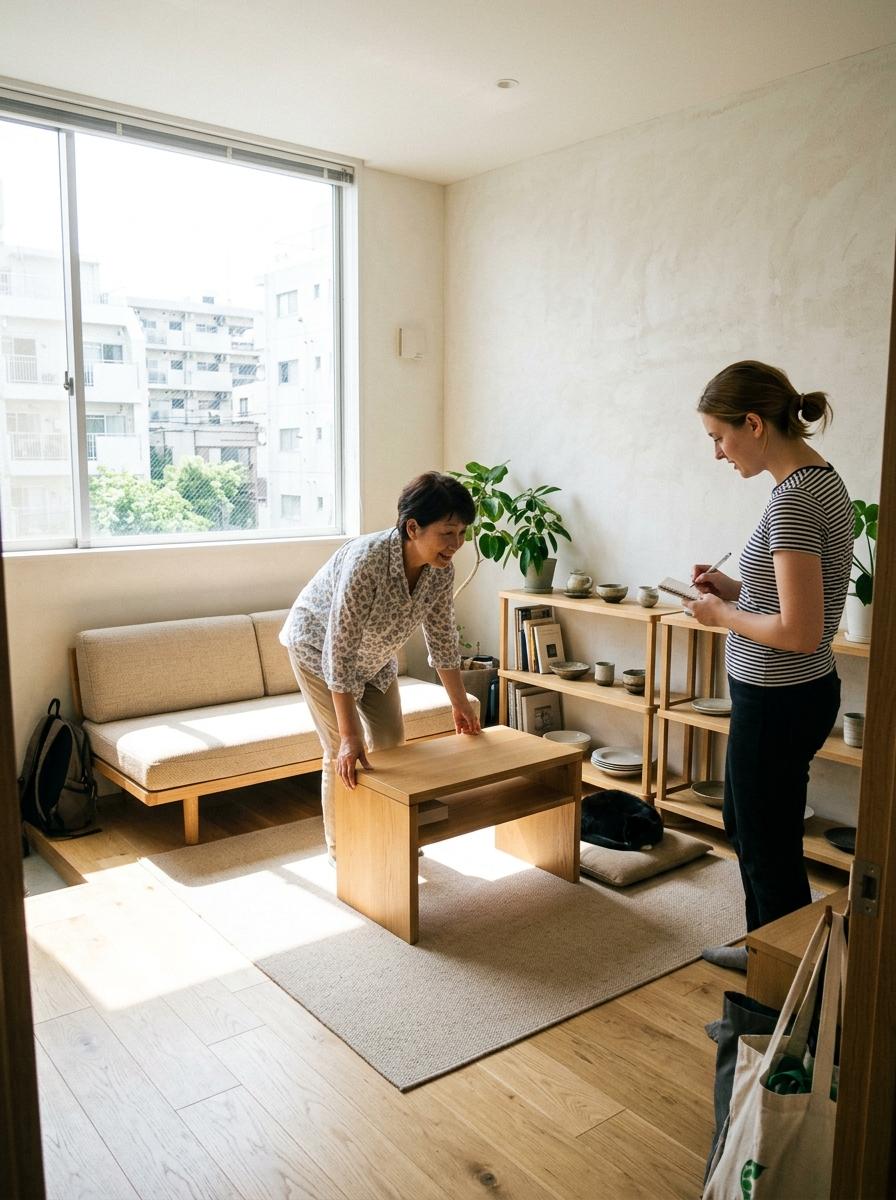

When I first stepped into a 350-square-foot studio in the heart of Tokyo, I expected to feel the claustrophobic weight of the city-that familiar sense of being hemmed in by cluttered walls and heavy, inherited furniture. Instead, I found a sanctuary of profound "ma," the Japanese concept of negative space. "The secret to living small," my host explained, pausing to shift a low-slung oak coffee table that doubled as a meditation bench, "isn't about subtracting your life... it's about curating the void." This deliberate tension between Scandi-utilitarianism and Zen minimalism transforms a cramped footprint into a breathable landscape. By replacing the visual noise of excess with the clean sightlines of a low-profile silhouette and the tactile warmth of a "wabi-sabi" finish, we move away from the suffocating density of modern living toward a more intentional repose. This delicate balance of form and function serves as the ultimate blueprint for those looking to master the art of the smart Japandi layout.
The Fundamentals Of A Classic Japandi Living Room Layout
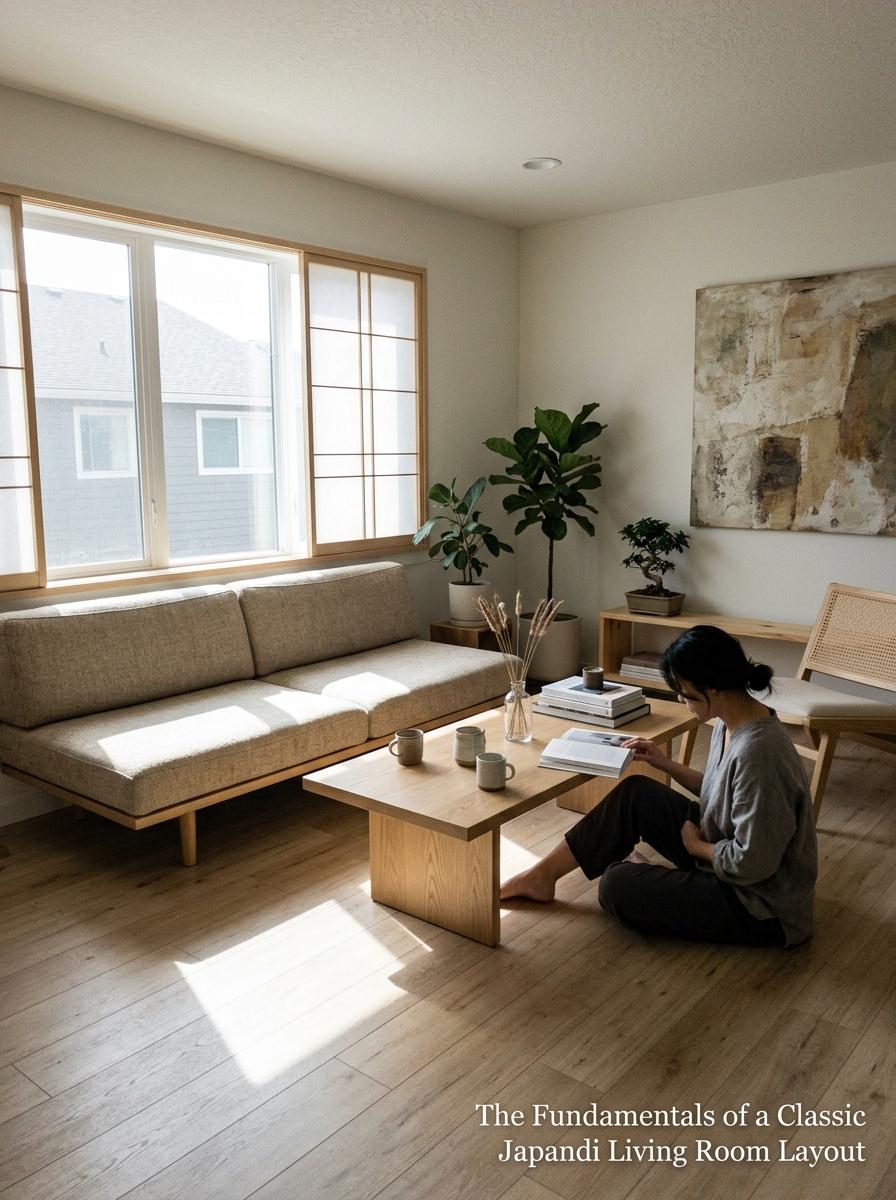

To understand the modern Japandi living room, You can first look back at the rigid, paper-walled austerity of the Edo period and the heavy, partitioned functionalism of post-war Scandinavia; today, these historical archetypes have evolved into a unified language that strips away antiquated formality in favor of fluid, breathable space. This creates a unique chaotic serenity, where the raw, unrefined textures of wabi-sabi strike a deliberate balance against the clinical precision of Nordic minimalism. In a recent project nestled in the leafy enclave of Daikanyama, Tokyo, we observed this philosophy in action within the home of a repeat client-a partnership that allowed for a deeper exploration of spatial intimacy. The resulting layout achieves its harmony through a technical synthesis of low-profile circulation paths, diffused artisanal lighting, and the strategic calibration of negative space (Ma).
Achieve A Zen Aesthetic In Your Japandi Living Room Layout
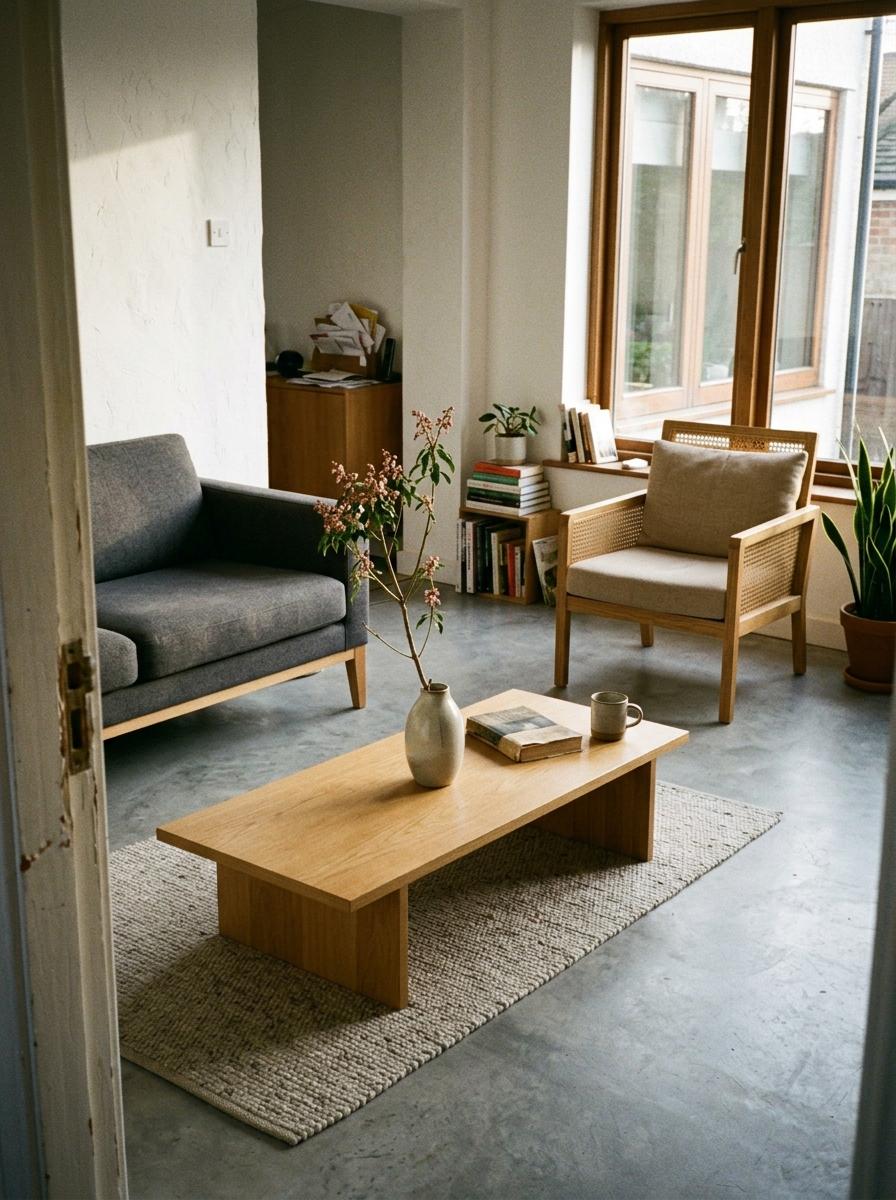

Last Tuesday, I sat across from an ikebana practitioner in a room that felt less like a living area and more like a physical sigh. My own apartment, by comparison, felt like a cacophony of "visual noise"-a cluttered battleground of mid-century knockoffs and forgotten mail that seemed to shrink the walls around me. "The secret," she said, pausing to snip a single, leggy branch of pieris, "isn't what you add to the floor plan." She adjusted the ceramic vase, centering it with a precision that felt almost surgical. "It is about the Ma-the intentional void-that allows the architecture of the furniture to actually breathe." This shift in perspective, from filling a void to curating a vacuum, is the fundamental pivot point where frantic maximalism yields to a disciplined, tactile serenity. By mastering the spatial choreography of a Japandi living room, we move beyond mere decoration and begin to treat our floor layouts as a deliberate canvas for quietude.
Innovative Ideas For A Polished Japandi Living Room Layout
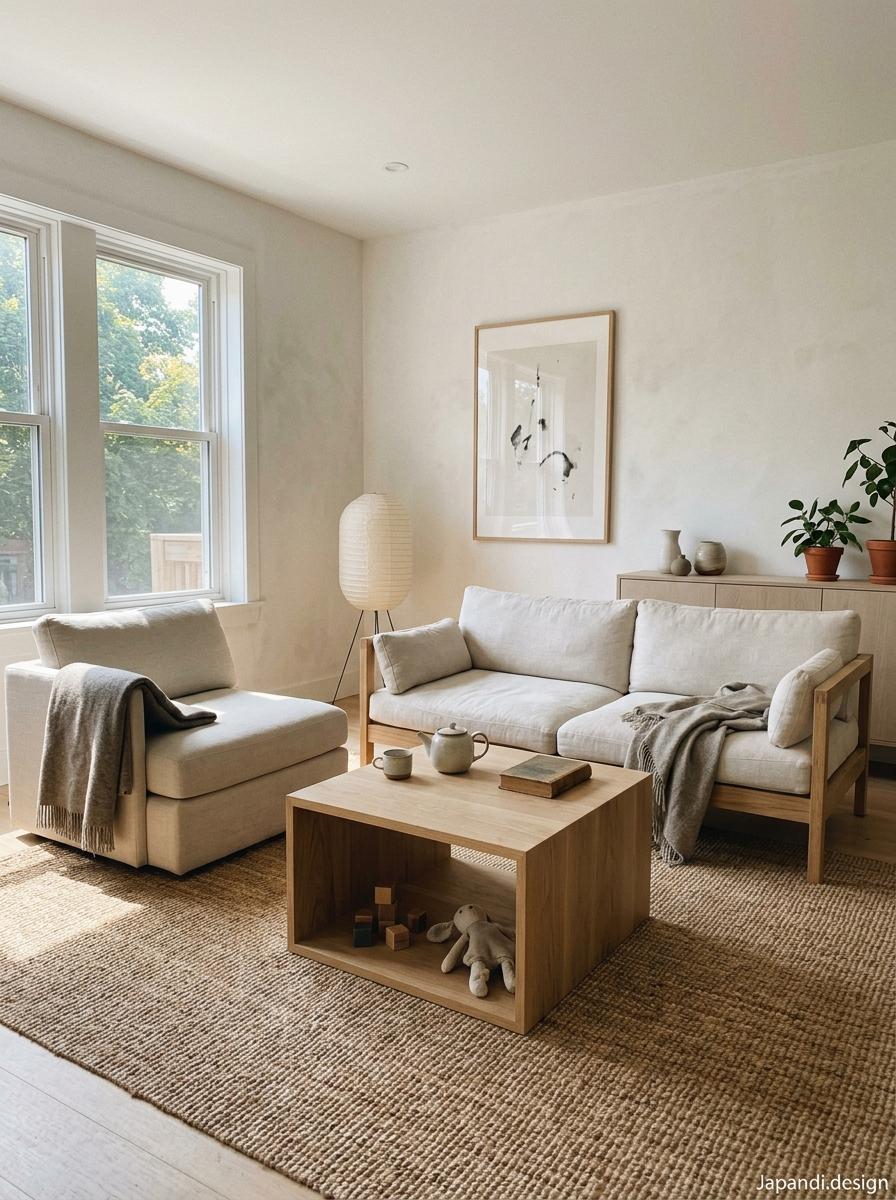

At Japandi.design, we observe that the most successful living rooms are anchored not by mere furniture, but by a precise spatial grounding where low-slung profiles invite the eye to rest at the horizon line of the floor, immediately lowering the room's blood pressure. This layout relies on a structured spontaneity; it is a calculated arrangement that feels entirely accidental, reconciling the rigid geometry of Japanese minimalism with the soft, organic chaos of Scandinavian comfort. We must distinguish between the external world-a clutter of visual noise-and this internal sanctuary, where the architecture of the room acts as a filter, allowing only essential light to penetrate. To achieve this, we look toward material specificity, favoring the cool, open-grain texture of solid white oak paired against the coarse, hand-knotted grit of a jute rug. Ultimately, the layout serves a functionalist specification: every modular seat and hidden storage cavity acts as a deliberate industrial solution to the modern problem of excess, ensuring that the room remains a machine for serenity rather than a warehouse for objects.
Transforming A City Apartment With A Japandi Living Room Layout
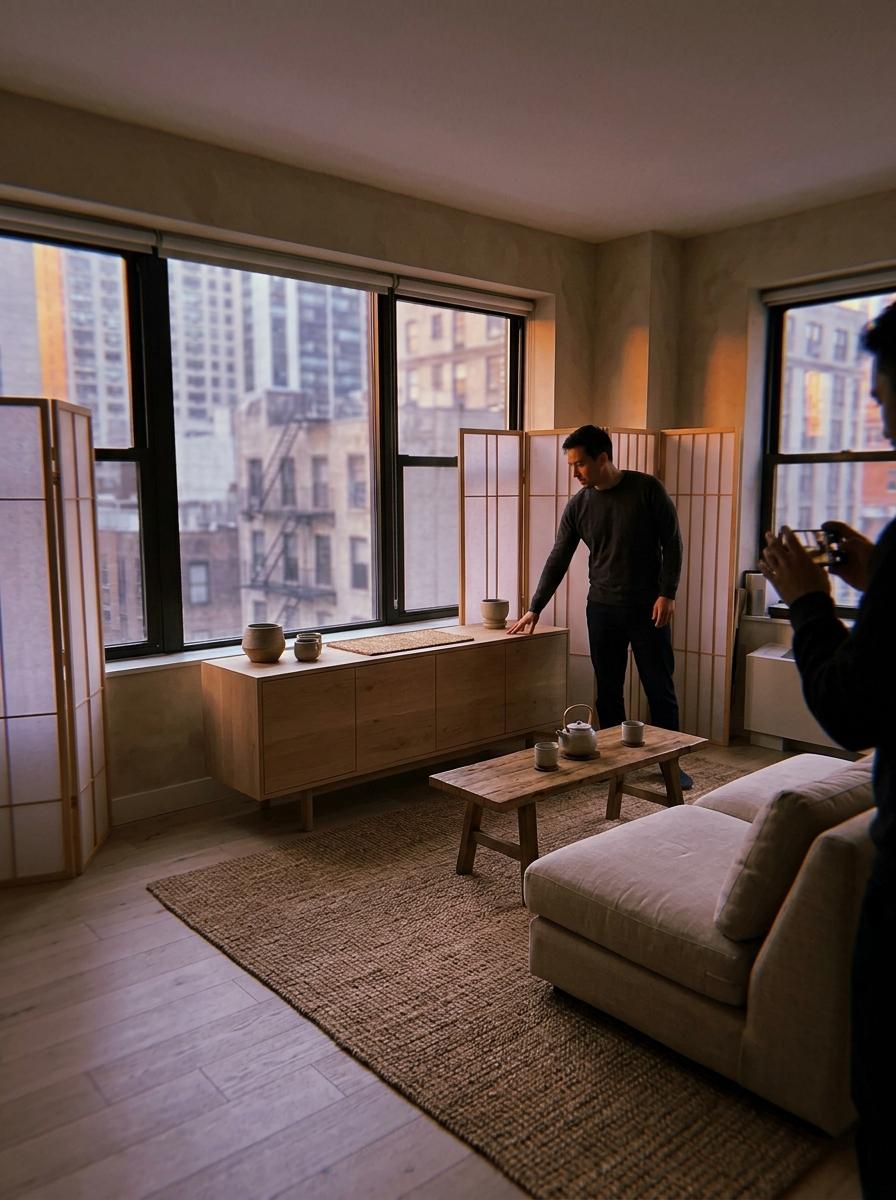

The screech of the subway and the unrelenting kinetic energy of the pavement usually follow me right to my front door, a jarring reminder of the urban chaos that defines city living. However, when I stepped into Julian's restructured flat last week, the transition was visceral; it felt less like entering a room and more like a long-awaited exhale. "The goal," Julian remarked, tracing the grain of a low-slung white oak credenza, "wasn't just to decorate, but to curate a sense of stillness-an intentional departure-from the concrete jungle outside." We stood in a space where the tactile warmth of Scandinavian hygge met the disciplined shibui of Japanese minimalism, a layout that prioritized negative space over decorative clutter. By replacing heavy, ornamental partitions with light-filtering shoji-inspired screens and grounding the room with a palette of oatmeal and slate, he had transformed a cramped metropolitan box into a sanctuary of "soft minimalism." This intersection of functionality and serenity illustrates exactly how a Japandi living room layout can serve as a profound antidote to the overstimulation of modern city life.
Discover The Beauty Of A Symmetrical Japandi Living Room Layout
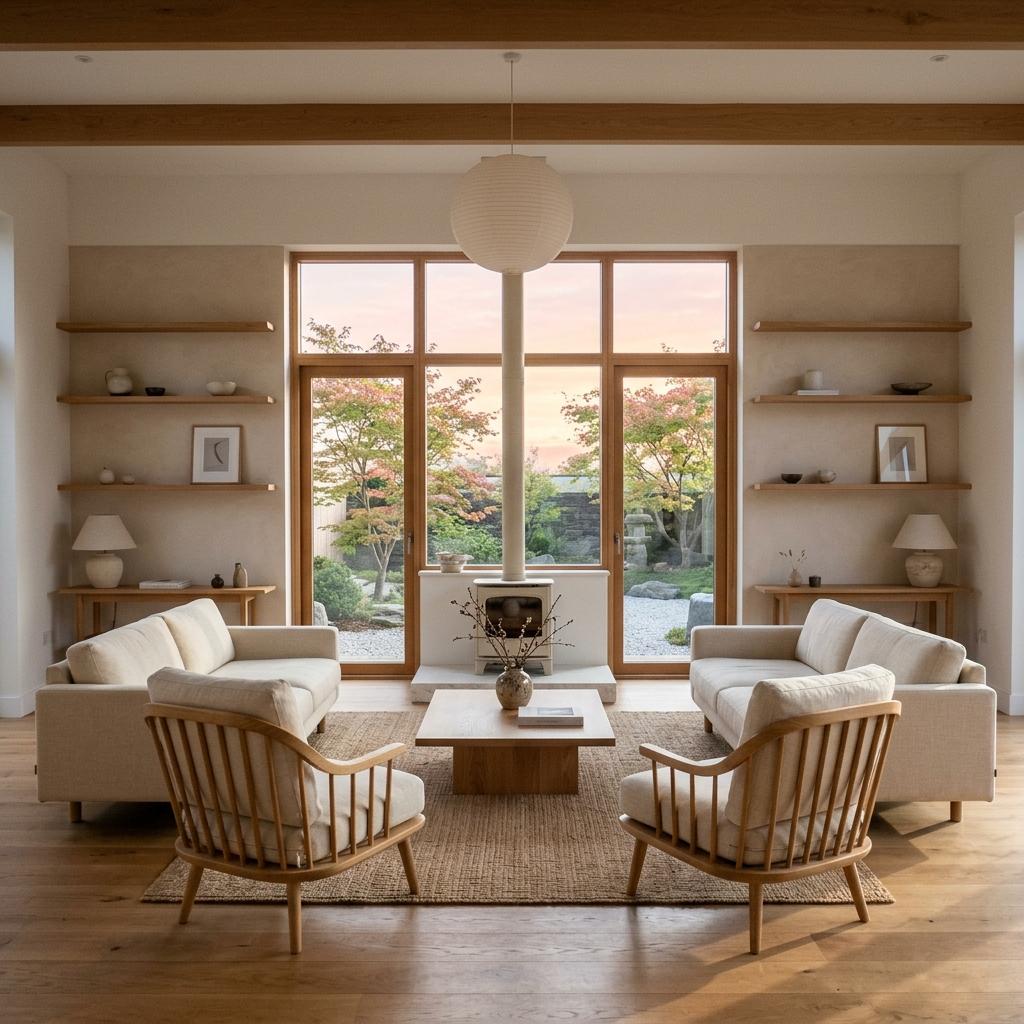

The structural balance of the space was meticulously achieved through a mirrored arrangement of low-slung furnishings and neutral tones. This deliberate positioning fosters a pristine, pared-back environment where every unadorned surface radiates a quiet, clinical clarity. Soft shadows stretch across the floor, tracing the tactile textures of timber and textile. Such purposeful alignment carves out breathing room and expands the visual horizon of the home. This symmetry stabilizes the senses, softens the architectural edges, and sustains a profound spirit of stillness.
Practical Tips For A Cozy Japandi Living Room Layout
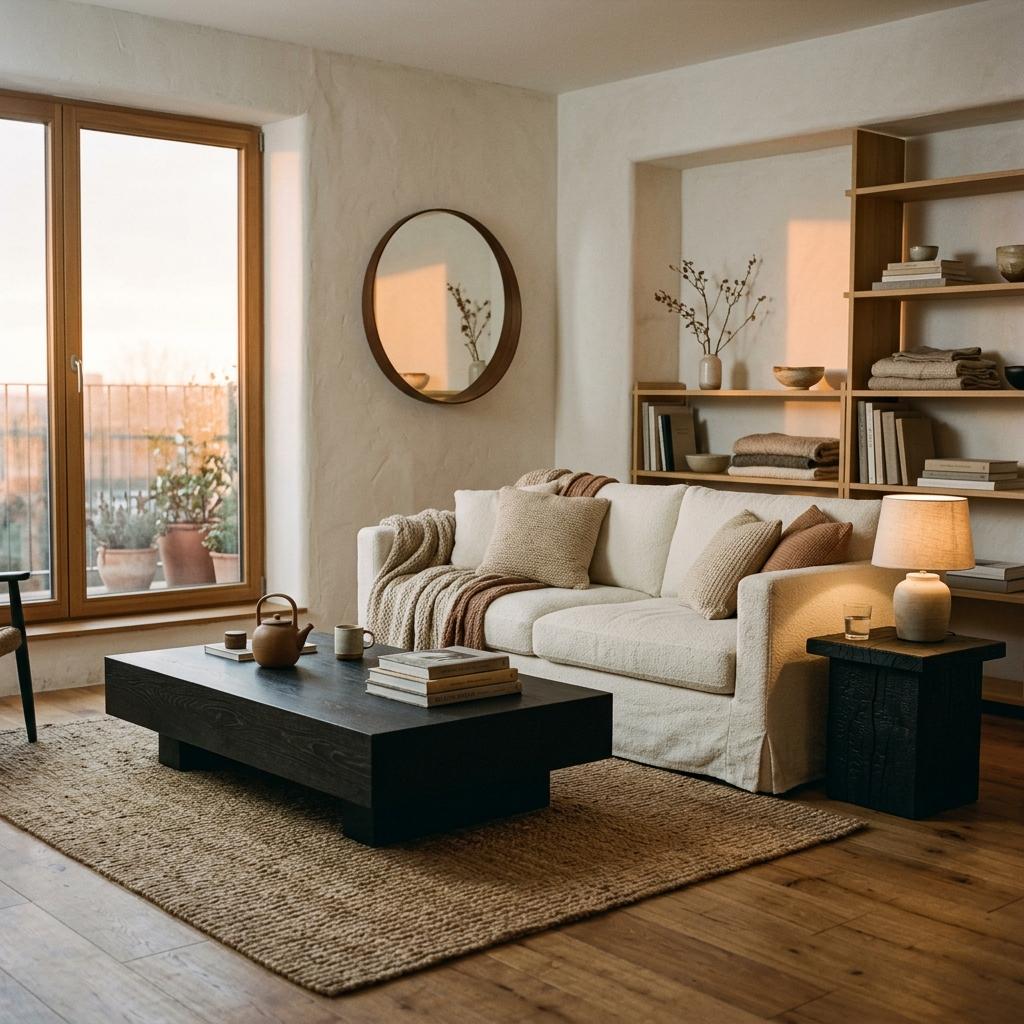

To craft a living room that resonates with the Japandi ethos, You must first master the art of atmospheric grounding, where the heavy stillness of a low-slung oak plinth anchors the room's energy firmly to the floor, transforming a mere seating area into a terrestrial sanctuary. This layout thrives on a figurative paradox, achieving a state of cluttered minimalism; it is a curated density where every object breathes, proving that space is not defined by emptiness but by the intentional gravity of what remains. Achieving this requires a keen eye for structural dualism, drawing a sharp line between the expansive, light-filled volume of the room's upper perimeter and the intimate, tactile landscape of the living zone. Within this zone, material specificity is paramount-the rough, open-pore grain of Shou Sugi Ban side tables provides a necessary friction against the fluid, milk-white softness of a heavy-gauge bouclé sofa. Finally, the layout finds its purpose through functionalist specification, where modular tatami-style shelving acts as a thermal and acoustic buffer, integrating storage as a structural solution that silences the chaos of the outside world.
Elegant Textures Found In This Japandi Living Room Layout
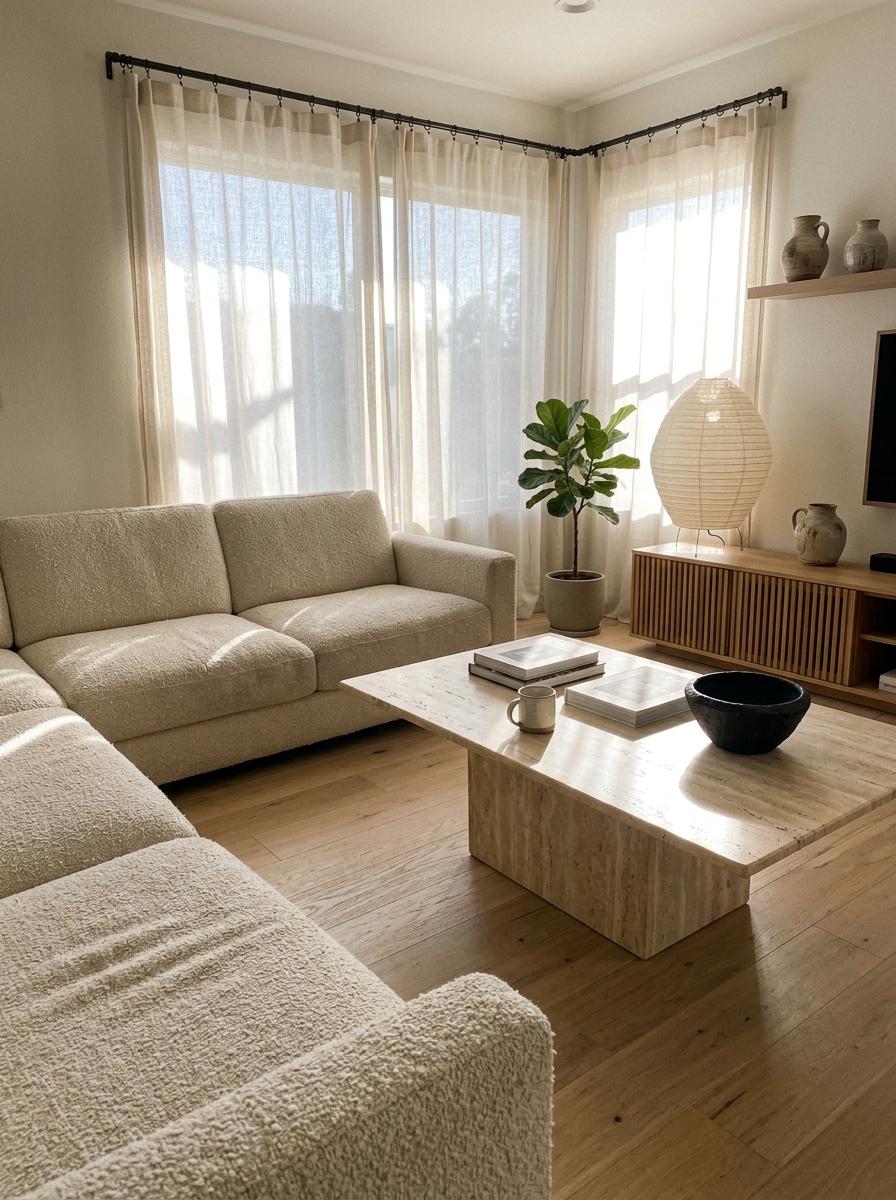

In this curated layout, the dialogue between materials is most evident in the juxtaposition of a low-slung sofa upholstered in nubby, boucle-weave wool against a coffee table crafted from stark, vein-cut travertine. Note how the matte-finished white oak flooring provides a structural anchor, grounding the ethereal lightness of the diaphanous linen window treatments. This arrangement masterfully achieves a sense of monumental fragility, where the heavy, brutalist forms of the stone accents are softened by the organic, irregular grain of the timber. As your eyes traverse these surfaces, the visual complexity triggers a profound somatic stillness, slowing your pulse and inviting a tactile exploration that transcends mere aesthetic appreciation. To step into this space is to experience the high-design ethos of Copenhagen's minimalist studios fused with the wabi-sabi principles of Kyoto, resulting in a sensory environment that feels both sophisticated and profoundly primal.
Redefining Comfort Through A Japandi Living Room Layout
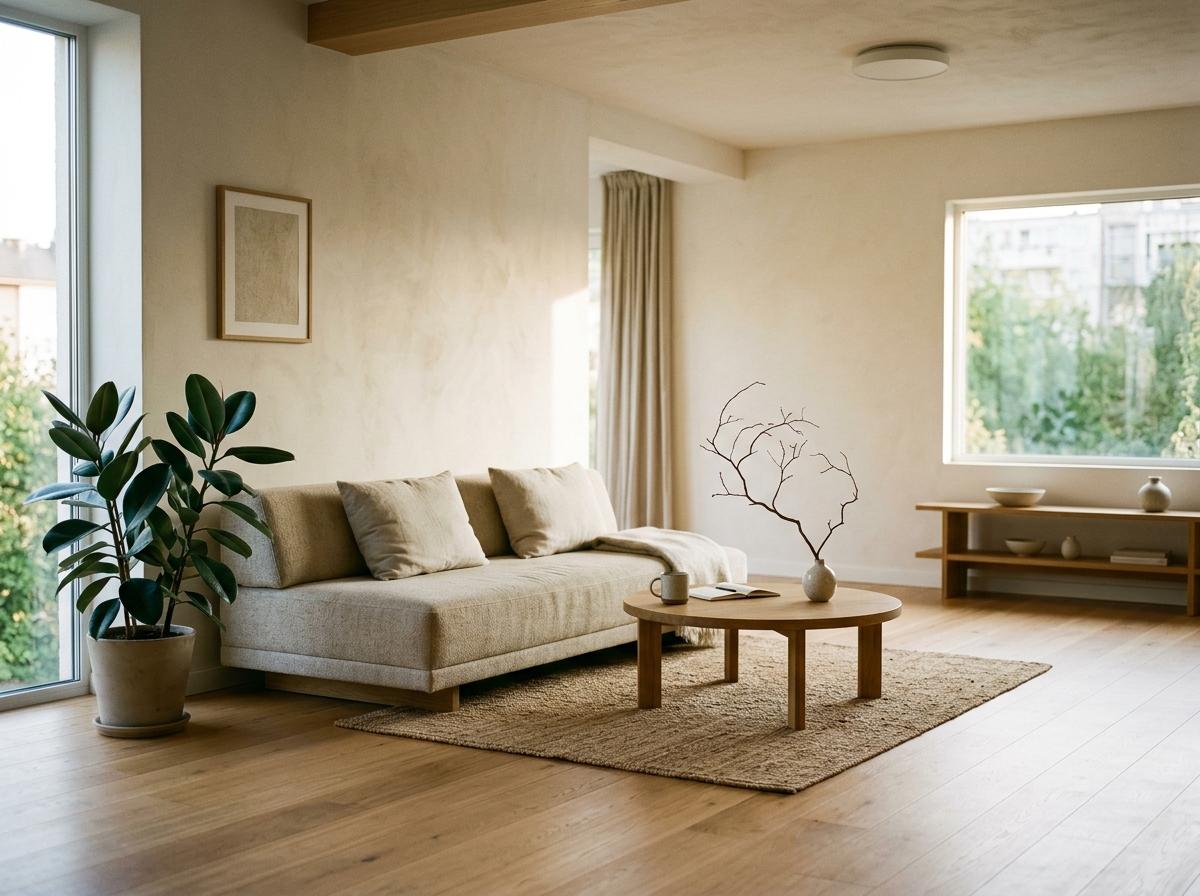

The layout of this Japandi living room was conceived as a deliberate departure from the chaotic density of urban life. Within this curated shell, every element speaks of a sparse, silent, and streamlined intent, ensuring that the void becomes as valuable as the vessel. Deeply deliberate details define the zone, allowing the floor plan to breathe as it stretches across the horizon of the home. This configuration anchors the gaze, expands the perceived volume, and elevates the everyday experience through a grounding low-profile sofa, a sweeping expanse of oak, and a singular, sculptural branch.
A Closer Look At This Organic Japandi Living Room Layout
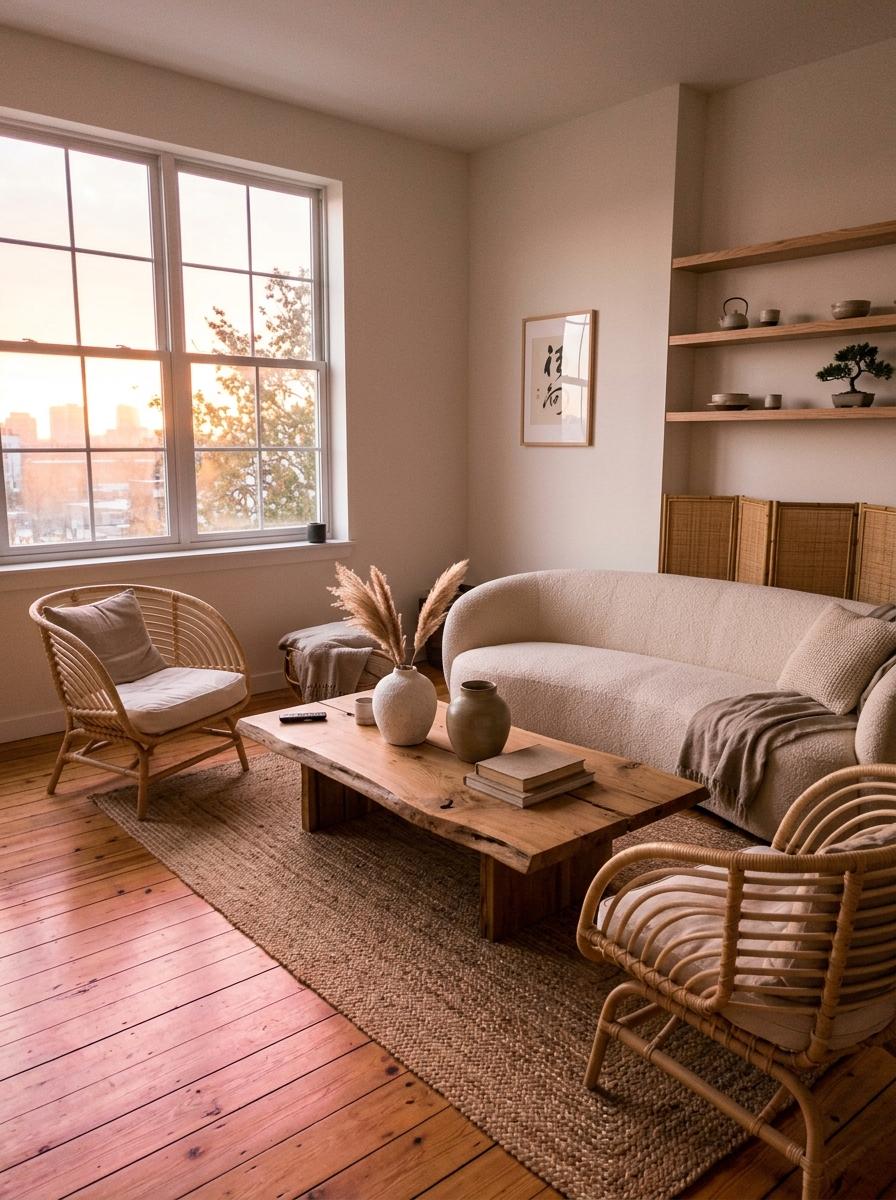

Walking into the chaotic rush of a metropolitan subway station, with its abrasive neon glare and the relentless friction of industrial metal, one quickly forgets that domestic life was ever meant to be a sanctuary. It wasn't until I sat down with the lead designer of this project-tracing the grain of a reclaimed oak table-that the contrast became startlingly clear. "The goal," she noted, adjusting a hand-thrown ceramic vase to better catch the afternoon light, "wasn't just to fill a void in the floor plan, but to cultivate a sense of wabi-sabi-the beauty of the imperfect-within a rigid urban shell." By prioritizing a curvilinear furniture arrangement and a palette of tactile, raw materials, she managed to soften the room's structural brutality into a fluid, rhythmic sequence. This deliberate shift from sharp-edged modernism to a more breathing, haptic environment serves as the perfect lens through which to examine how an organic Japandi layout can fundamentally recalibrate our internal pace.
Essential Elements For A Successful Japandi Living Room Layout
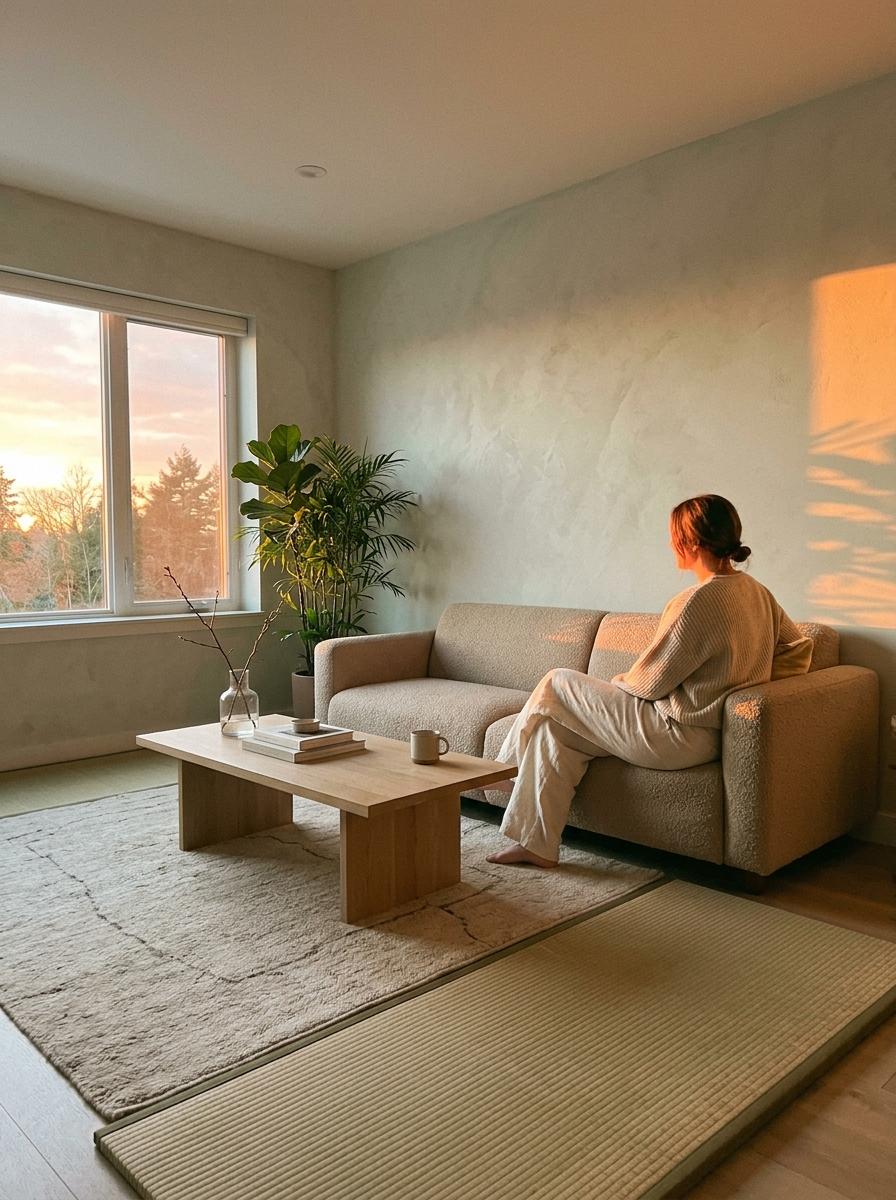

To master the Japandi living room layout, we must first balance the tactile richness of Scandinavian hygge with the spare discipline of Japanese Zen. Begin by anchoring the space with a low-slung sofa upholstered in a slubbed, oatmeal-toned bouclé or a tightly-grained, sand-blasted oak coffee table. Note how the deliberate placement of these pieces creates a centrifugal energy, pulling the gaze toward the center while maintaining a perimeter of breathable, negative space. This arrangement relies on the orderly chaos of a curated minimalist home-a layout that feels both strictly engineered and effortlessly organic. As you move through the room, the transition from the cool, velvet-matte finish of lime-wash walls to the fibrous, honeyed warmth of a hand-knotted tatami rug triggers a profound physiological shift; your heart rate slows as the visual noise of the outside world dissolves into a rhythmic, sensory stillness. This is the same spatial philosophy practiced at the Aman Tokyo or within the private residences of Kyoto's Arashiyama district, where the layout isn't just about furniture placement, but about choreographing a sanctuary for the nervous system.



Comments