
At Japandi.design, our study of contemporary interiors suggests that the most compelling luxury kitchens emerge from a deliberate synthesis: the raw, rustic honesty of Scandinavian hygge integrated with the disciplined, transcendent grace of Japanese wabi-sabi. This fusion results in a culinary sanctuary where ergonomic precision meets an ethereal, organic warmth a space that feels architecturally rigorous yet profoundly soulful. By balancing the tactile gravity of honed stone against the diaphanous levity of white oak, these designs achieve a dialectical harmony that is both opulent in its material selection and ascetic in its visual restraint. The result is a multisensory landscape defined by a haptic, serene, and primordial elegance that redefines the modern heart of the home.
Luxury Japandi Kitchen
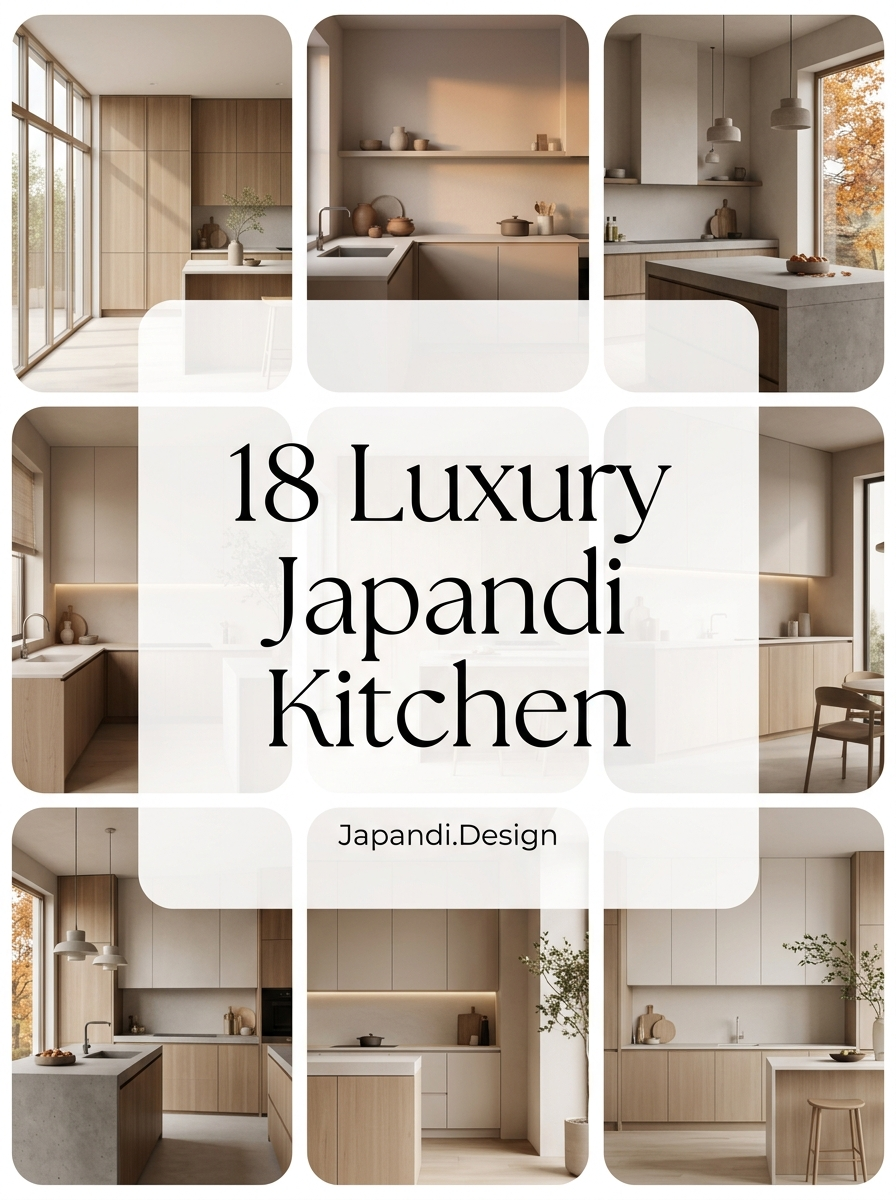

Inside A High End Kitchen With Japandi Aesthetics
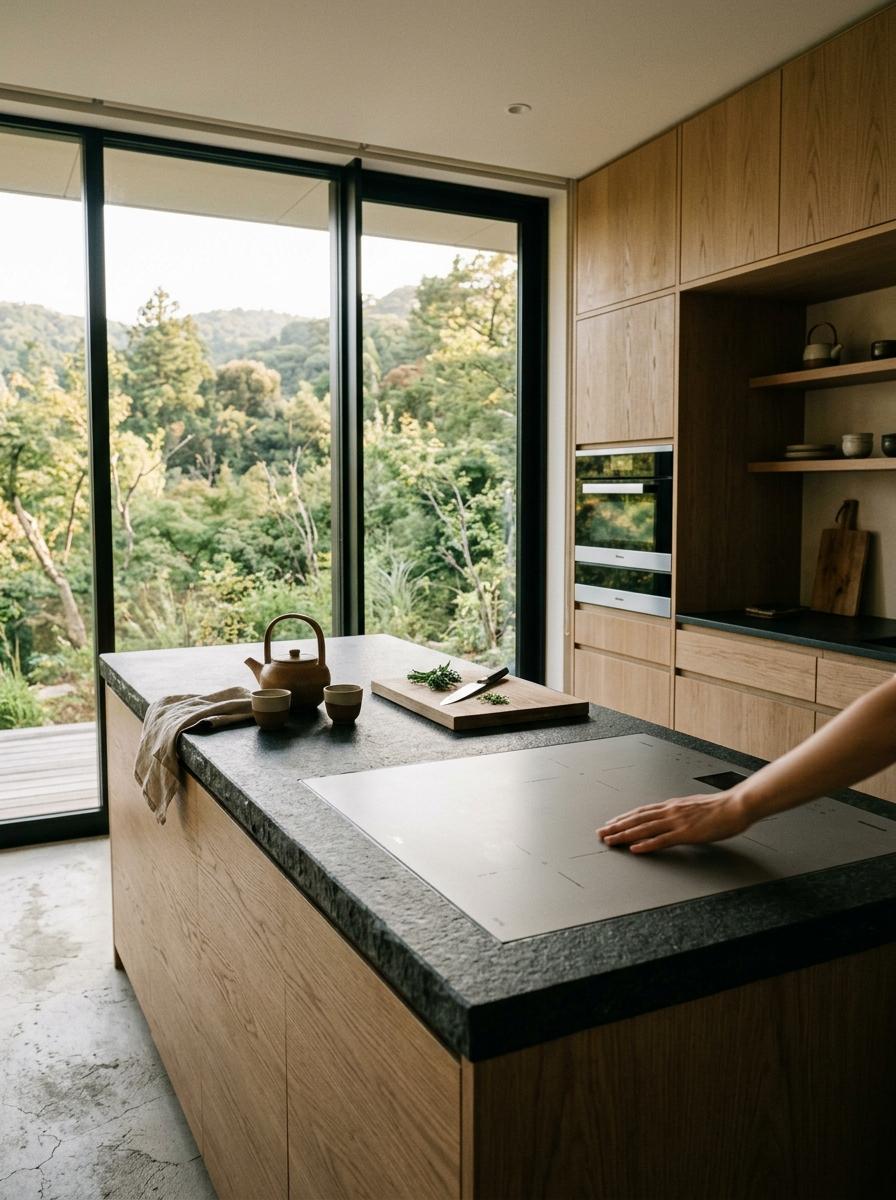

Inside this residence, the kitchen serves as a masterclass in material tension, where the clinical precision of a honed Basaltina countertop meets the tactile, open-pore grain of fumed white oak cabinetry. Note how the horizontal planes draw your eye toward the floor-to-ceiling windows, effectively blurring the boundary between the calibrated interior and the wild, organic landscaping of the surrounding Kyoto foothills. It is a space defined by a "structured fluidity"-a paradox where the rigid geometry of the bespoke cabinetry provides a sense of liberation rather than confinement. As you run your hand across the silk-matte finish of the Gaggenau surfaces, the cooling sensation against your fingertips triggers an immediate physiological deceleration, lowering your heart rate and grounding your presence in the room. This is not merely a place for culinary preparation; it is a sensory sanctuary where the high-performance engineering of German technology and the soul-deep serenity of Japanese minimalism coalesce into a singular, visceral experience.
Elevate Your Cooking Space With Luxury Japandi Elements
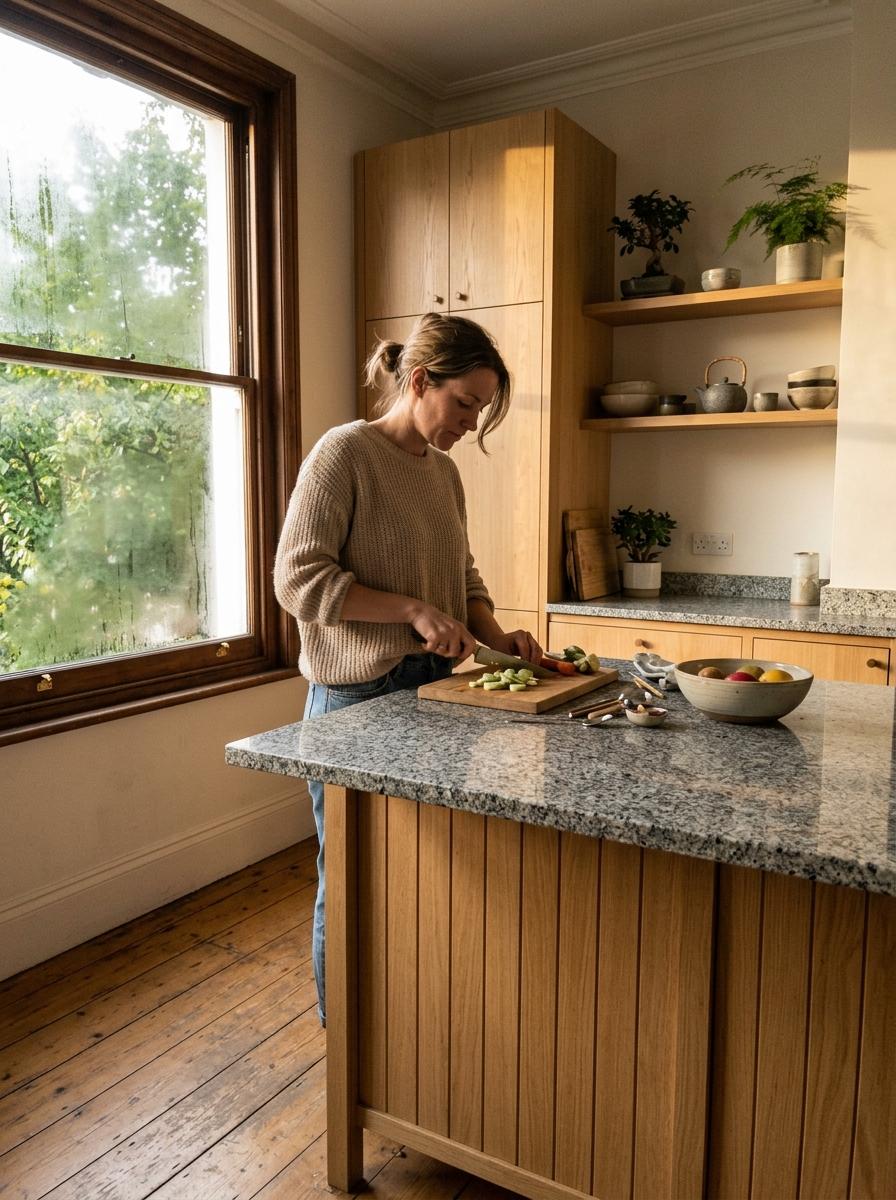

To understand the evolution of the modern kitchen, You need to look back at the utilitarian sculleries of the early 20th century-spaces defined by cold efficiency and hidden labor-and contrast them with today's desire for the "living kitchen," where the hearth serves as a high-tech sanctuary for both nourishment and social connection. This shift towards a curated raw aesthetic defines our latest study: a residence where minimalist discipline meets indulgent comfort. Situated in the leafy, prestigious enclaves of North London's Highgate, this project was commissioned by a repeat client, whose continued trust serves as a testament to the enduring resonance of this specific stylistic fusion. The resulting space achieves its "Luxury Japandi" status through a precise technical synthesis of tactical lighting, high-performance stone surfaces, and bespoke rhythmic timber cladding, effectively blurring the line between functional workplace and meditative retreat.
A Masterpiece Of Modern Luxury Japandi Kitchen Design
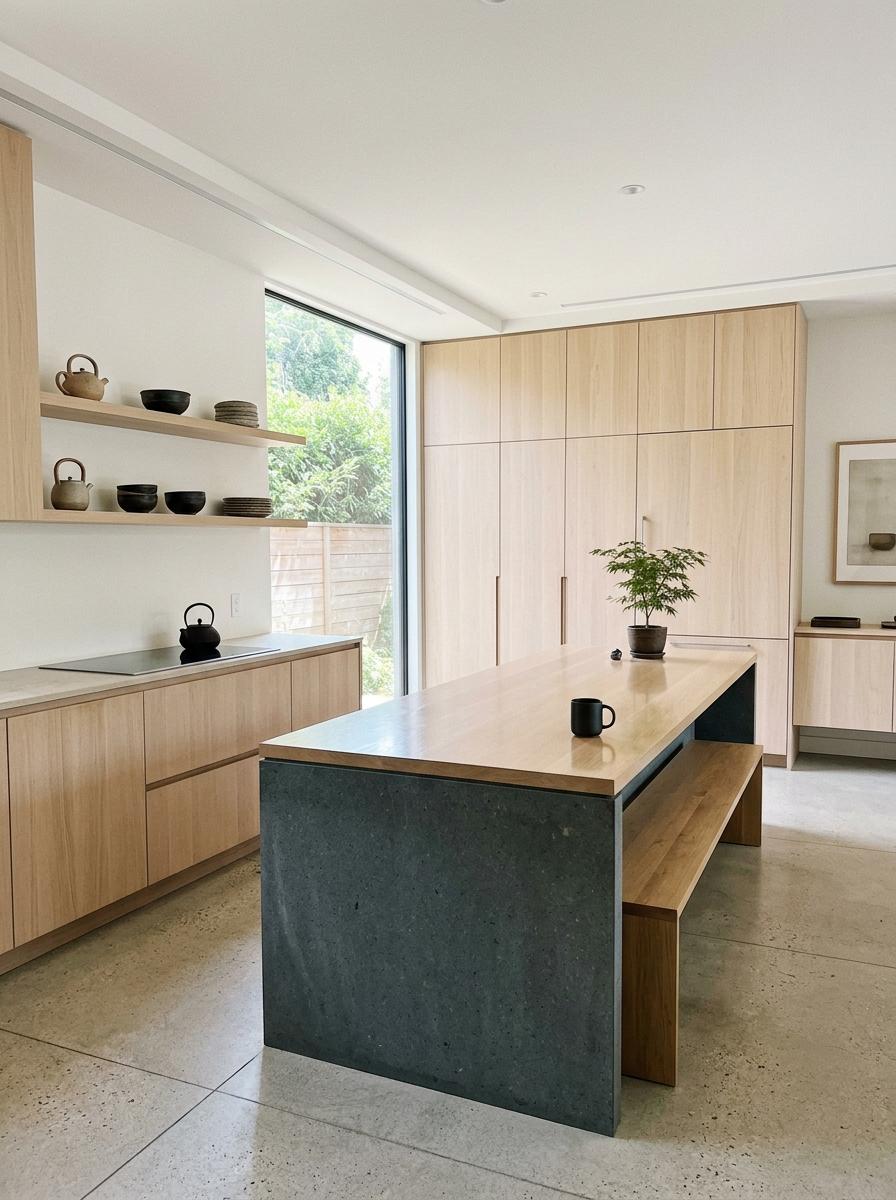

This masterpiece of modern luxury was conceived through a meticulous fusion of Nordic discipline and Japanese heritage, where every intentional void is framed by artisanal craftsmanship. The atmosphere is defined by a sparse serenity, anchored by unadorned surfaces and a curated stillness that rejects the clutter of contemporary life. In this kitchen, polished planes of pale oak meet the muted matte of monolithic stone, creating a rhythmic harmony that guides the eye. The layout stretches the horizon, expands the internal volume, and carves a sanctuary from the surrounding structure. Here, the architecture breathes through its seamless storage, its sculptural island, and its soft, diffused light.
Discover The Elegance Of A Bespoke Japandi Kitchen
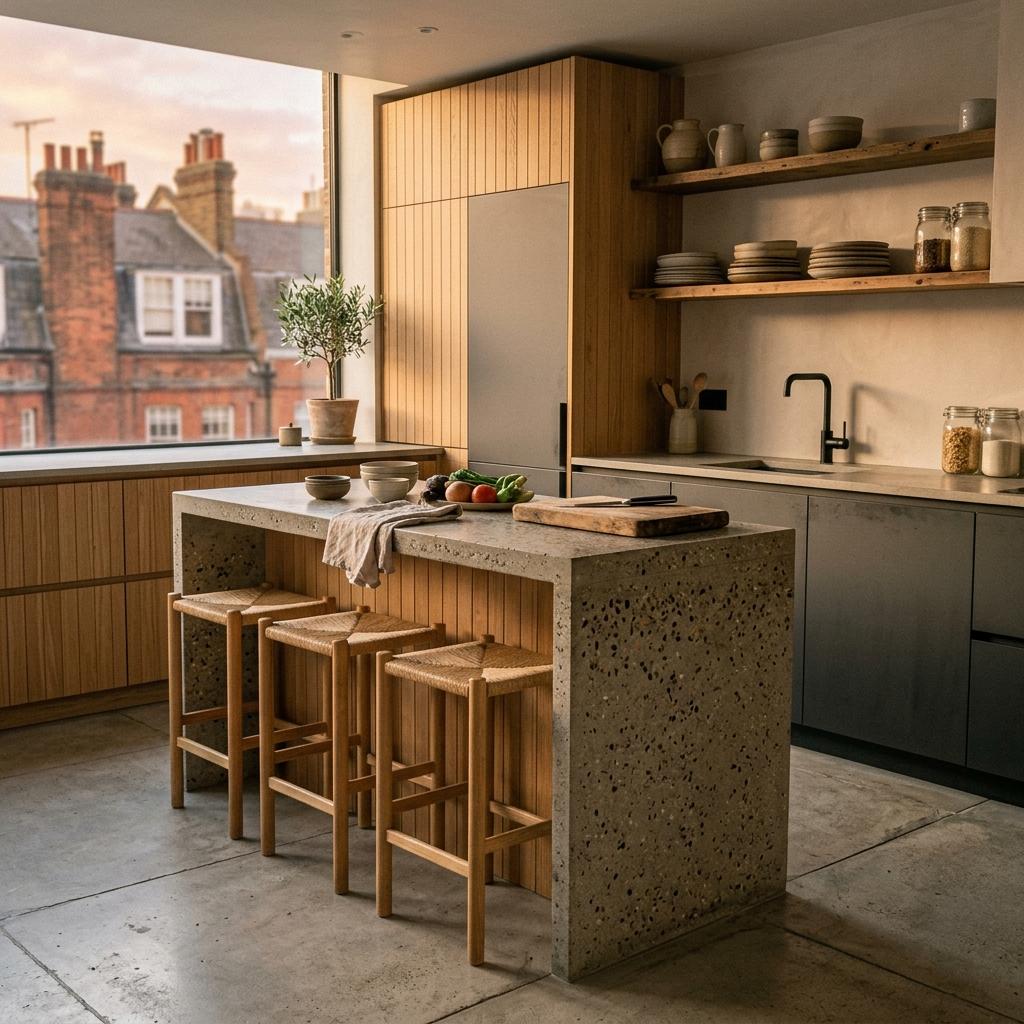

In the early eras of residential design, the kitchen was often a hidden, utilitarian engine room, segregated from the social life of the home; today, it has evolved into a transparent sanctuary where the ritual of nourishment meets architectural intent. This shift is most poignantly realized in a recent project located in the heart of London's refined Marylebone, where we find a striking example of structured spontaneity. Here, the visual silence of Japanese minimalism is punctuated by the rustic warmth of Scandinavian materiality, creating a space that feels both meticulously disciplined and effortlessly lived-in. That the homeowners are a repeat client of the design team speaks to a deep, technical trust-a shared shorthand that allowed for an uncompromising exploration of the Japandi aesthetic. The resulting kitchen avoids the clichés of "fusion" through a precise technical synthesis of spatial volume, rhythmic timber slating, and a monochromatic palette, effectively turning a functional zone into a meditative study of light and shadow.
Refined Textures Meet Luxury Japandi Kitchen Style
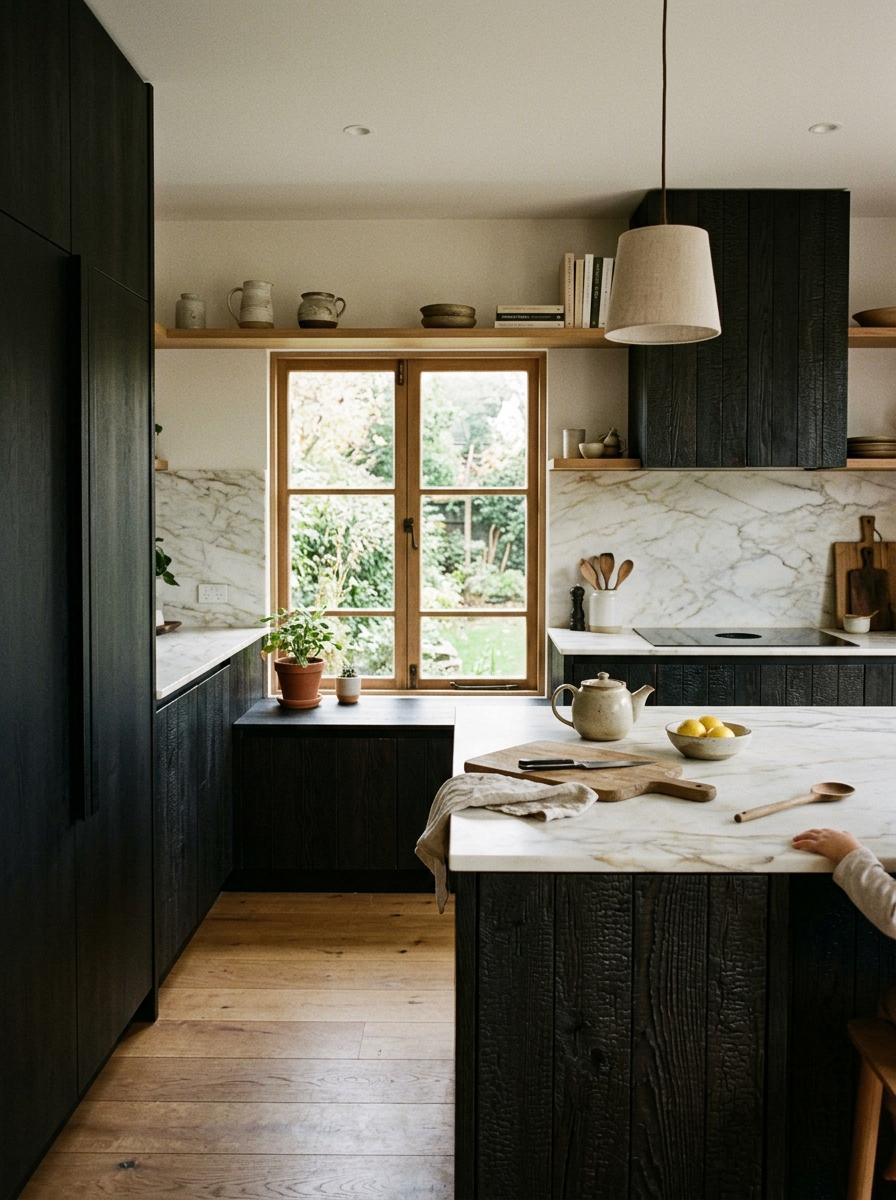

In this exploration of culinary sanctums, we examine how the "Refined Luxury" iteration of the Japandi aesthetic transcends mere minimalism to become a tactile symphony. Note how the tactile friction of wire-brushed charred cedar (Shou Sugi Ban) interfaces seamlessly with the cool, honed velocity of Calacatta Oro marble surfaces. This juxtaposition creates a sumptuous austerity, where the visual silence of the space is anchored by the weight of high-end materiality. As your hand glides over these hyper-matte finishes, the physical transition from organic grain to volcanic stone triggers a profound sense of haptic serenity, slowing the pulse and grounding the occupant in a state of physiological stillness. Much like the serene yet opulent interiors found within the Aman Tokyo, this kitchen style utilizes architectural gravity to transform a functional workspace into a ritualistic retreat.
The Intersection Of Opulence And Japandi Kitchen Simplicity
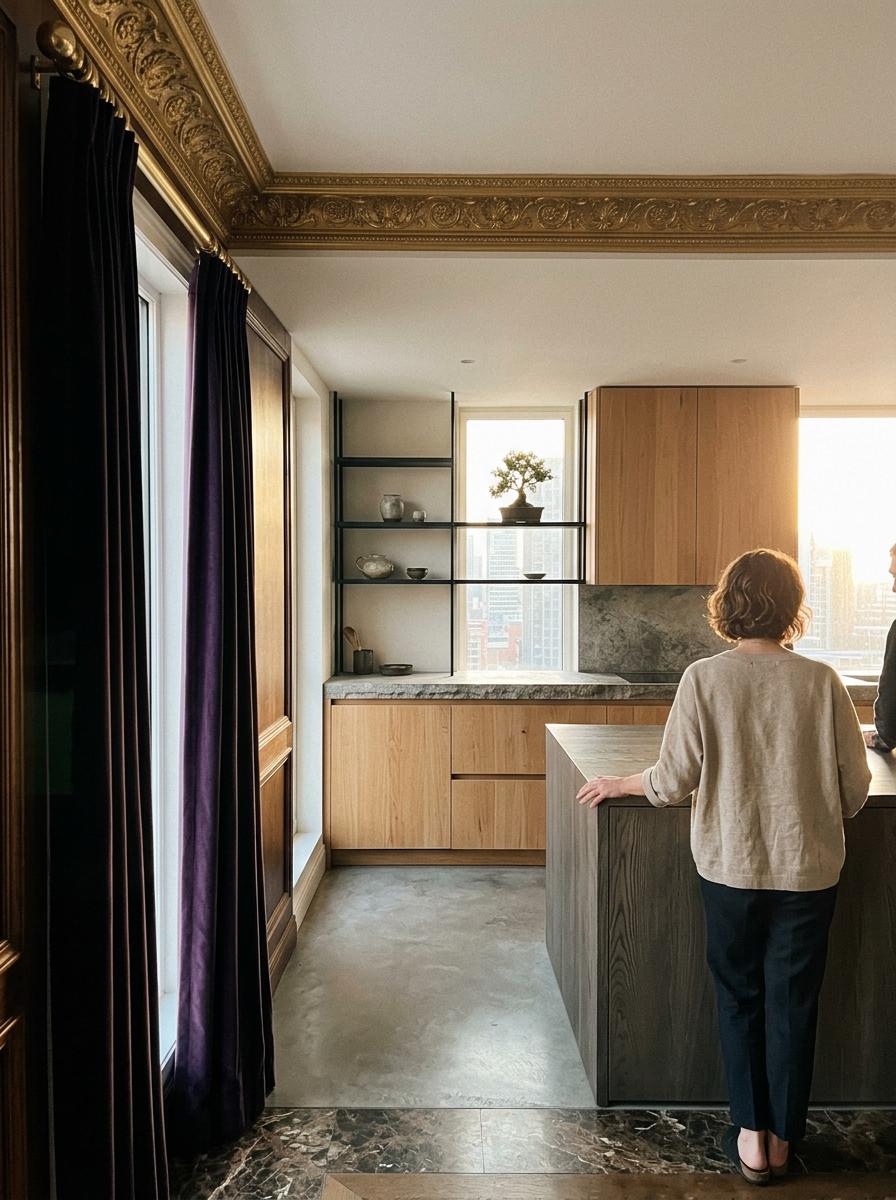

Walking into the penthouse of a recent interviewee, I was immediately struck by the aggressive roar of traditional luxury: gilded crown molding, heavy velvet drapes, and the cold, high-gloss shine of polished marble that seemed to demand attention rather than offer comfort. It felt less like a home and more like a museum of status. "We wanted something more... grounded," my host explained, pausing to run a hand over the matte, tactile grain of a smoked oak island. "Not just wealth for the sake of it, but," she gestured toward the seamless integration of a hidden scullery, "a sense of quietude." This shift from the ostentatious to the essential is where the tension of the modern kitchen lies. By swapping reflective lacquers for the organic wabi-sabi of patinated stone and replacing cluttered cabinetry with a rigorous, minimalist spatial flow, we see a new definition of high-end living emerge. This deliberate marriage of top-tier craftsmanship and functional restraint marks the beginning of our exploration into how the intersection of opulence and Japandi simplicity redefines the heart of the home.
Transforming A Penthouse With A Luxury Japandi Kitchen
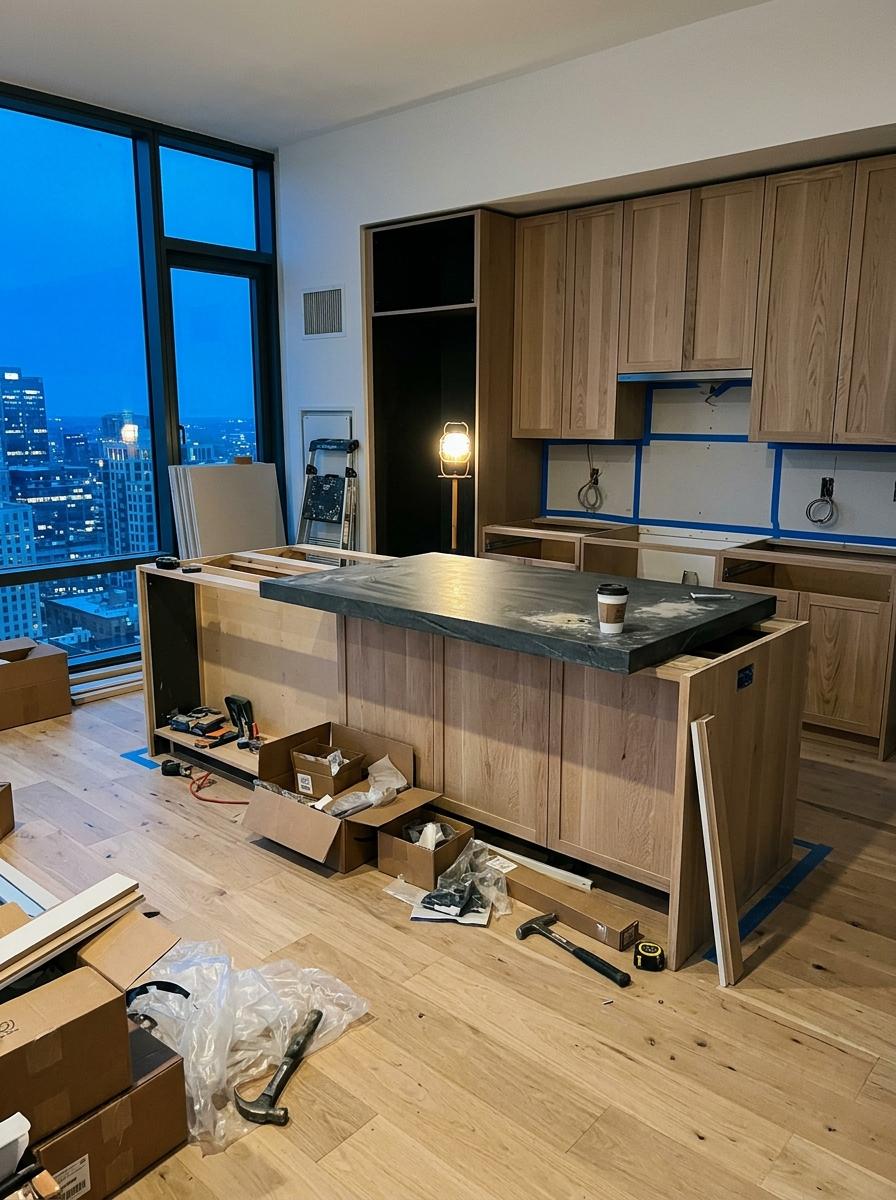

In analyzing the contemporary penthouse, the kitchen emerges not merely as a culinary workspace, but as a masterclass in Definition via Synthesis: the marriage of Scandinavian hygge-with its emphasis on democratic comfort-and Japanese wabi-sabi-the veneration of impermanence-to produce a singular, elevated Japandi aesthetic. This design direction relies on Lexical Precision, utilizing mitered joinery, rift-cut white oak, and monolithic basalt countertops to ground the space in a tactile, architectural rigor. The result is a study in Dialectical Pairing; the silhouette is uncompromisingly minimalist, yet the atmosphere remains profoundly soulful, offering a domestic stage that is at once surgically precise but inherently welcoming. To stand within this kitchen is to experience Sensorial Adjective Stacking: an enveloping, hushed, and velvety serenity that transcends mere interior styling to become a meditative retreat.
Natural Stone And Wood In A Luxury Japandi Kitchen
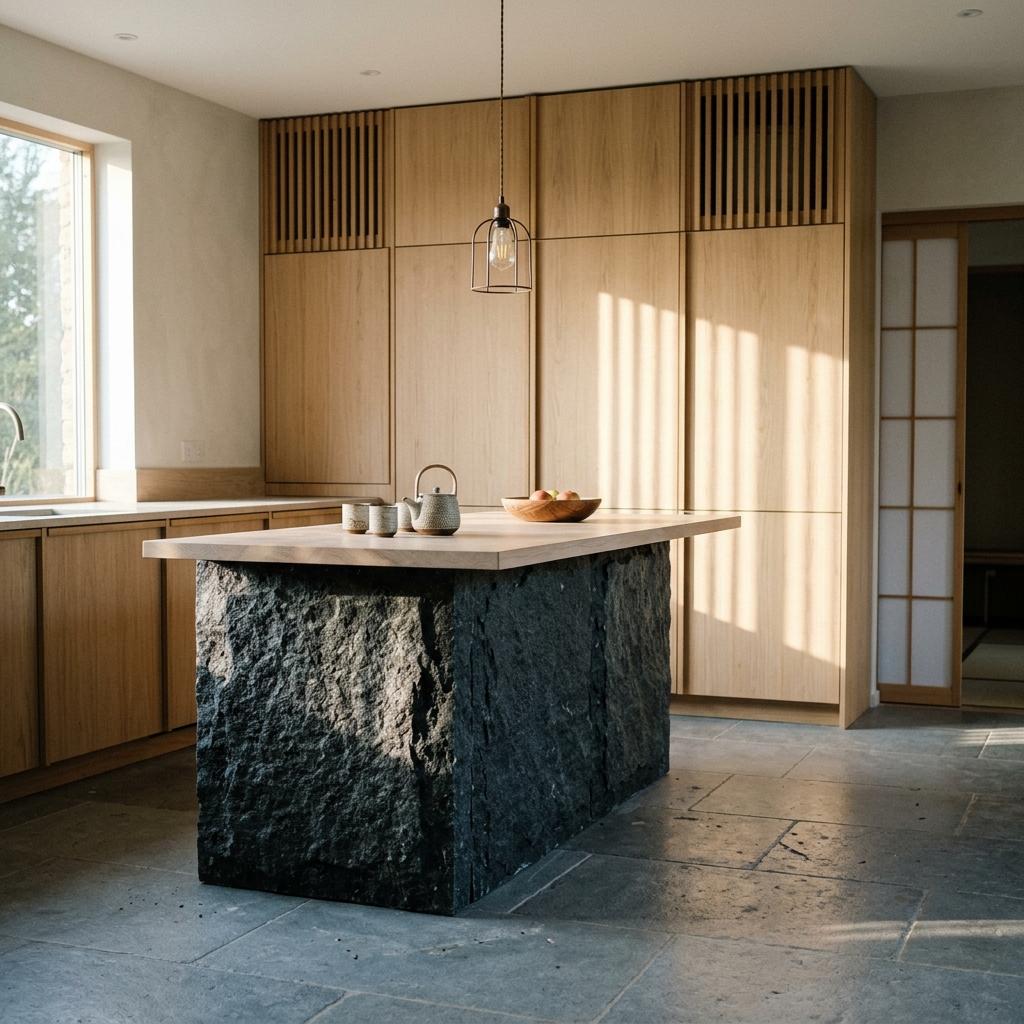

The kitchen has long evolved from its 19th-century origins as a hidden, utilitarian scullery into the contemporary stage for high-end domestic life, representing a shift from private labor to public performance. In this luxury Japandi residence, we find a compelling primitive refinement, where the raw, rugged textures of split-face granite meet the surgical precision of minimalist oak cabinetry. Nestled within the prestigious enclave of Piedmont, the project was commissioned by a repeat client whose previous collaborations have refined a shared visual language of restraint and material honesty. The design achieves its sophisticated equilibrium through a technical synthesis of tectonic weight and rhythmic transparency, utilizing heavy stone plinths to anchor the space while vertical wood slats manipulate the flow of natural light.
A Chef Grade Luxury Japandi Kitchen Showcase
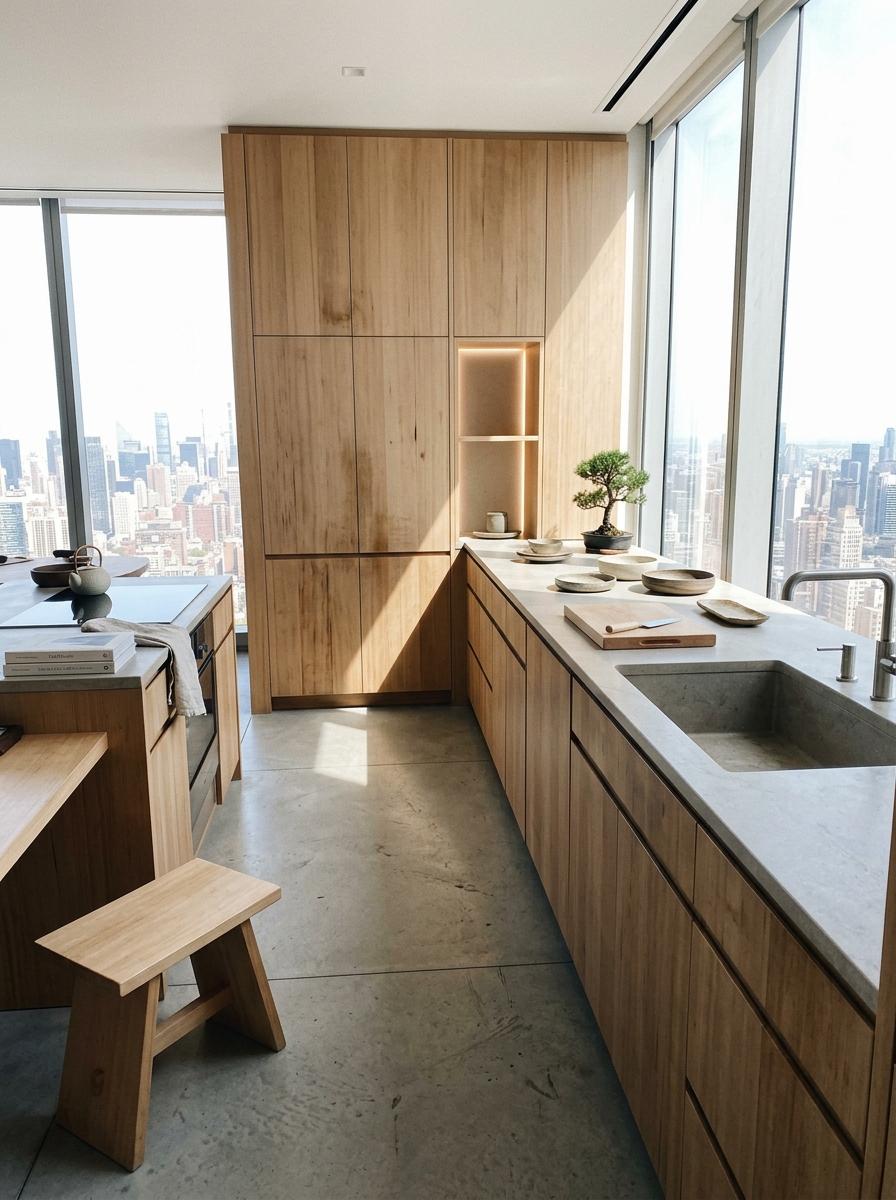

The kitchen stands as a monolithic sanctuary of silence, where the soft glow of recessed perimeter lighting anchors the space within the quietude of a high-altitude urban retreat. Here, we witness a calculated spontaneity; the layout follows a rigorous grid of Japanese efficiency, yet the atmosphere breathes with a soulfulness that contradicts its own meticulous planning. While the external world demands frantic movement and sensory overload, the internal environment provides a rhythmic stillness, shielding the culinary process behind a veil of curated minimalism. This tension is grounded in the tactile reality of brushed hinoki wood cabinetry juxtaposed against the cold, unyielding surface of honed Pietra di Cardoso stone, creating a landscape that is as durable as it is ethereal. Finally, this aesthetic harmony is fortified by industrial-grade induction integration and hidden precision-cooling systems, ensuring that the high-output utility of a professional workspace is seamlessly absorbed into the serene architecture of the home.
Striking Minimalism In This Luxury Japandi Kitchen Project
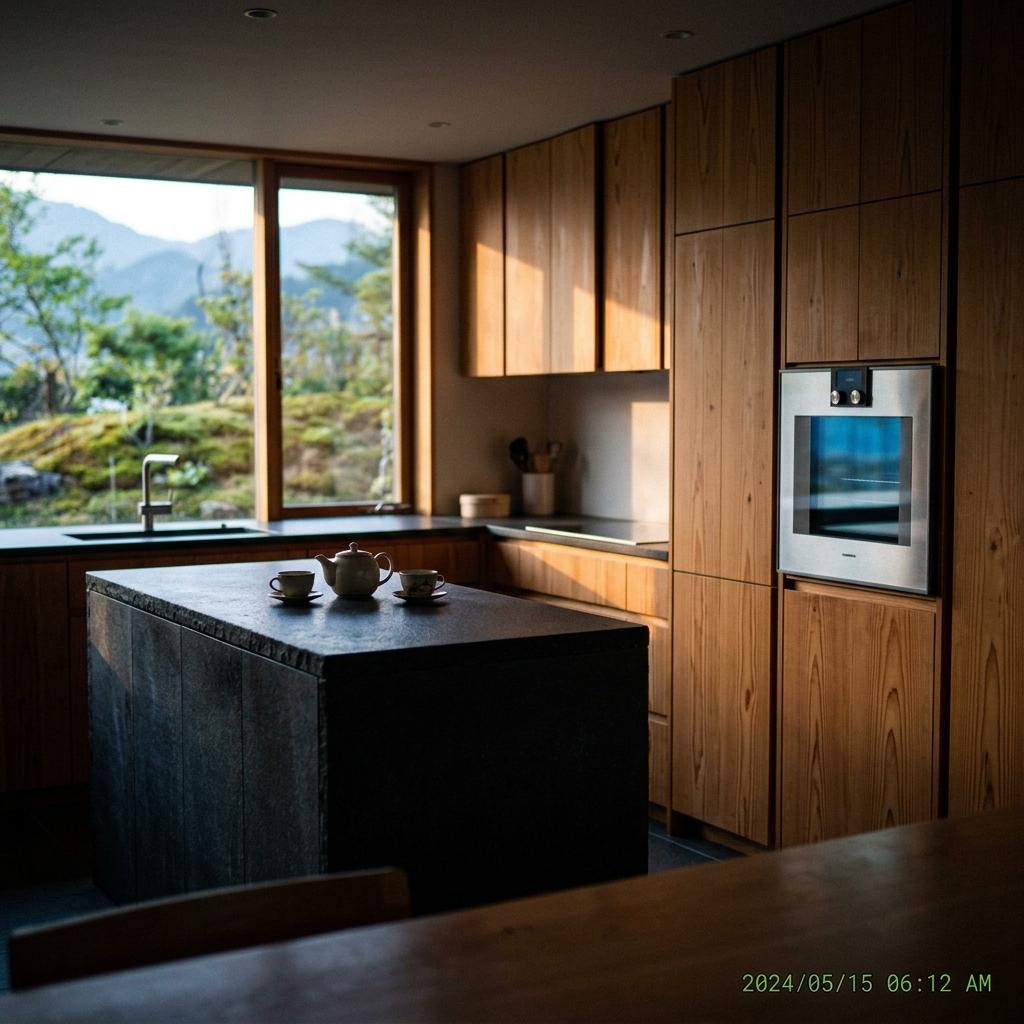

In this luxury kitchen project located in a secluded pocket of Kyoto's northern hills, the architectural language achieves a rare state of monumental lightness. The space is anchored by a monolithic island of honed, open-pore basalt, whose cool, charcoal surface stands in deliberate opposition to the tactile, honeyed grain of vertical-sawn Douglas fir cabinetry. Note how the precision-milled shadow gaps create a rhythmic play of light and void, drawing the eye toward the seamless integration of Gaggenau steel against the organic irregularity of the stone. To run a hand across these contrasting planes-the velvety-matte masonry and the fibrous warmth of the wood-is to feel a profound sense of grounding; the visual austerity immediately yields to a visceral slowing of the pulse, transforming a site of utility into a sanctuary of stillness.
How To Achieve A High End Luxury Japandi Kitchen Look
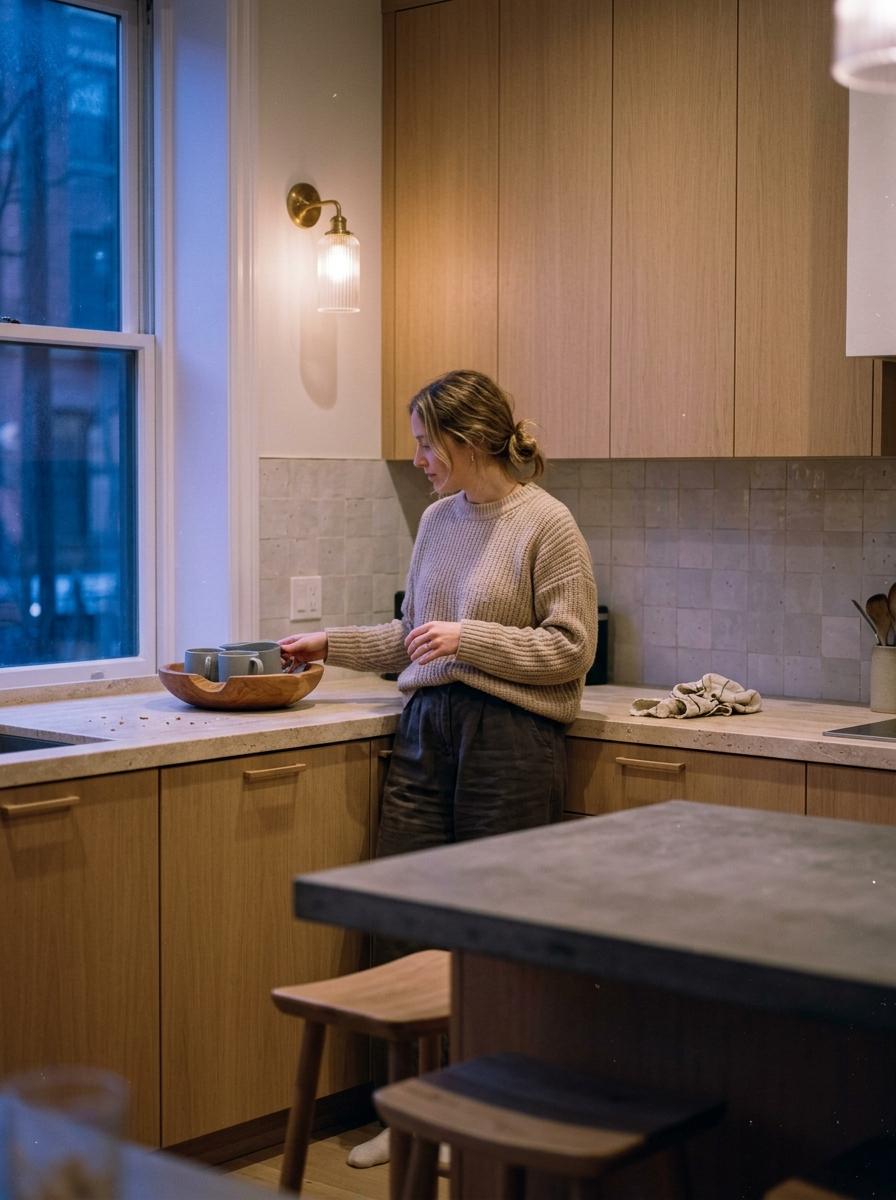

I recently stood in a chaotic, builder-grade kitchen where the glare of polished chrome and the aggressive hum of a heavy-duty extractor fan felt like a sensory assault-a space designed for high-volume utility but devoid of soul. It was there that I interviewed architect Elena Rossi, who gestured toward a slab of honed Travertine. "Luxury," she began, tracing the stone's matte, porous surface, "isn't found in the shine, but in the silence." She paused, repositioning a hand-carved cedar bowl, before adding, "It is the deliberate tension between Japanese restraint and Scandinavian warmth." This shift from the frantic noise of maximalism to a curated, tactile stillness is where the Japandi aesthetic truly lives. By eschewing the "showroom" look in favor of mitered edges, integrated cabinetry, and a soft, earthen palette, we find a kitchen that doesn't just perform-it exhales. This intersection of quietude and craftsmanship serves as the essential blueprint for anyone looking to elevate the heart of the home into a sanctuary of high-end refinement.
Sophisticated Cabinetry Defines This Luxury Japandi Kitchen
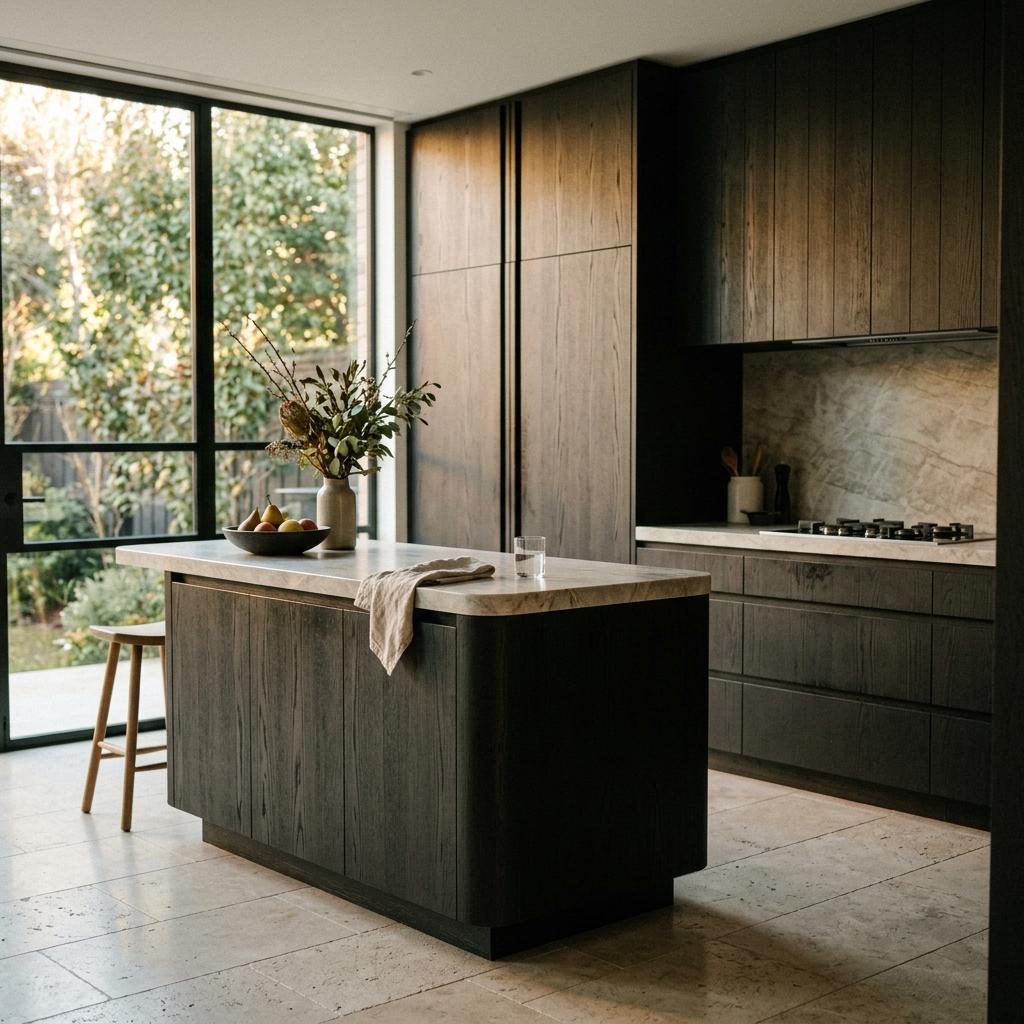

The kitchen exists as a silent anchor within the home, where the morning light filters through floor-to-ceiling glass to settle upon surfaces that feel both ancient and immediate. Here, the design achieves a state of monumental lightness; the cabinetry possesses the visual weight of stone sculpture yet appears to hover effortlessly above the limestone floors, reconciling grand scale with a delicate, airy presence. This structural dualism is most evident in the tension between the monolithic exterior of the kitchen island and the intricate, highly organized world contained within its drawers. Clad in quarter-sawn blackened oak and topped with honed Taj Mahal quartzite, the cabinetry prioritizes tactile depth, inviting a touch that reveals the subtle grain of the timber against the cool, matte silkiness of the stone. Beyond mere aesthetics, the layout serves as a masterclass in functionalist specification, where integrated finger-pull channels and recessed plinths eliminate visual noise, transforming the storage system into a seamless architectural solution that hides the complexities of culinary utility behind a facade of rhythmic, vertical precision.
Seamless Integration In A Modern Luxury Japandi Kitchen
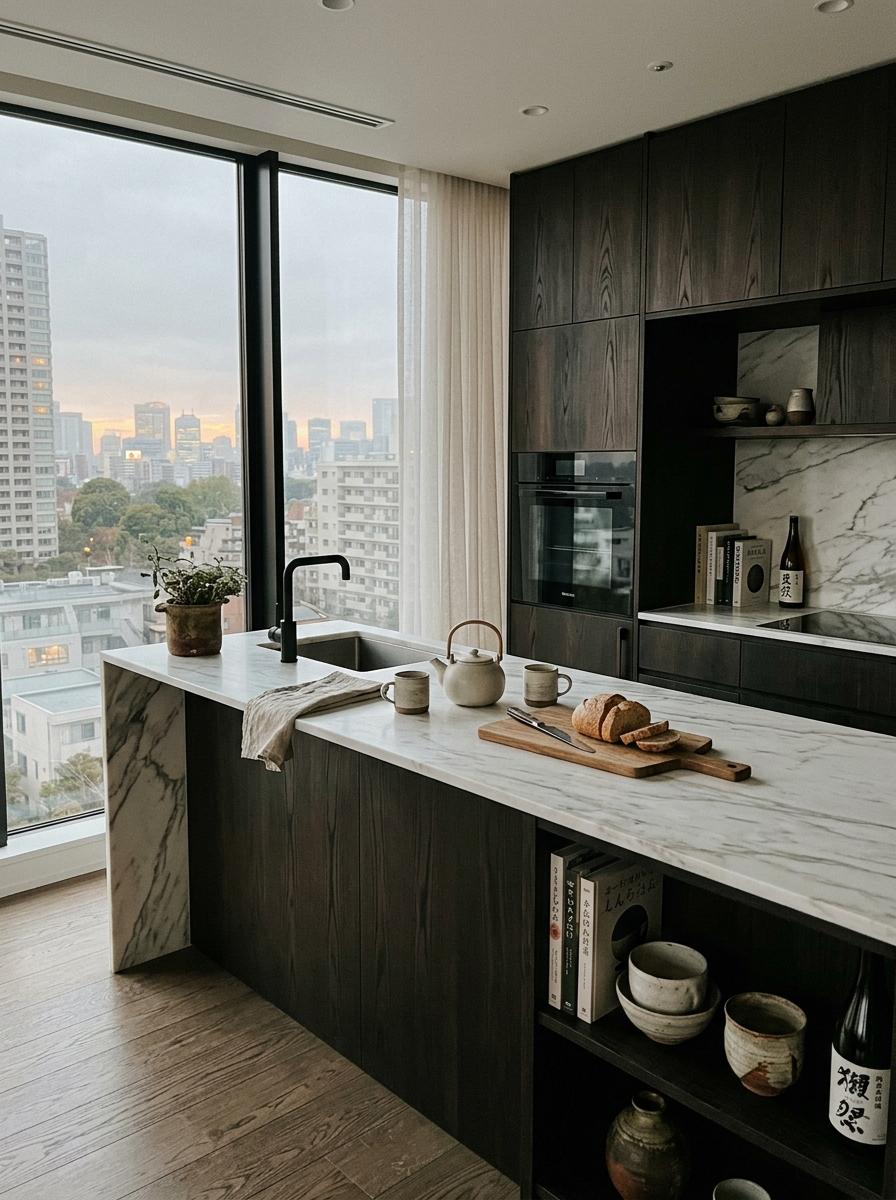

In this study of a residence located in the prestigious Minato district of Tokyo, we observe a culinary space that redefines the boundaries of domestic luxury. Note how the tactile landscape is defined by the juxtaposition of open-pore blackened ash cabinetry and honed, silk-veined Statuario marble, creating a sensory dialogue between the organic and the monolithic. This environment operates on a principle of opulent minimalism; it is a space where the rigorous discipline of Japanese joinery meets the expansive scale of European high-modernism. As you trace the seamless transitions from the matte, timber grain to the cool, crystalline surfaces, the visual clutter of the external world dissolves, triggering a profound physiological shift toward stillness. This is not merely a kitchen, but a curated sanctuary where the weight of the materials grounds the spirit, transforming the daily ritual of preparation into an act of meditative refinement.
Exquisite Craftsmanship Within A Luxury Japandi Kitchen
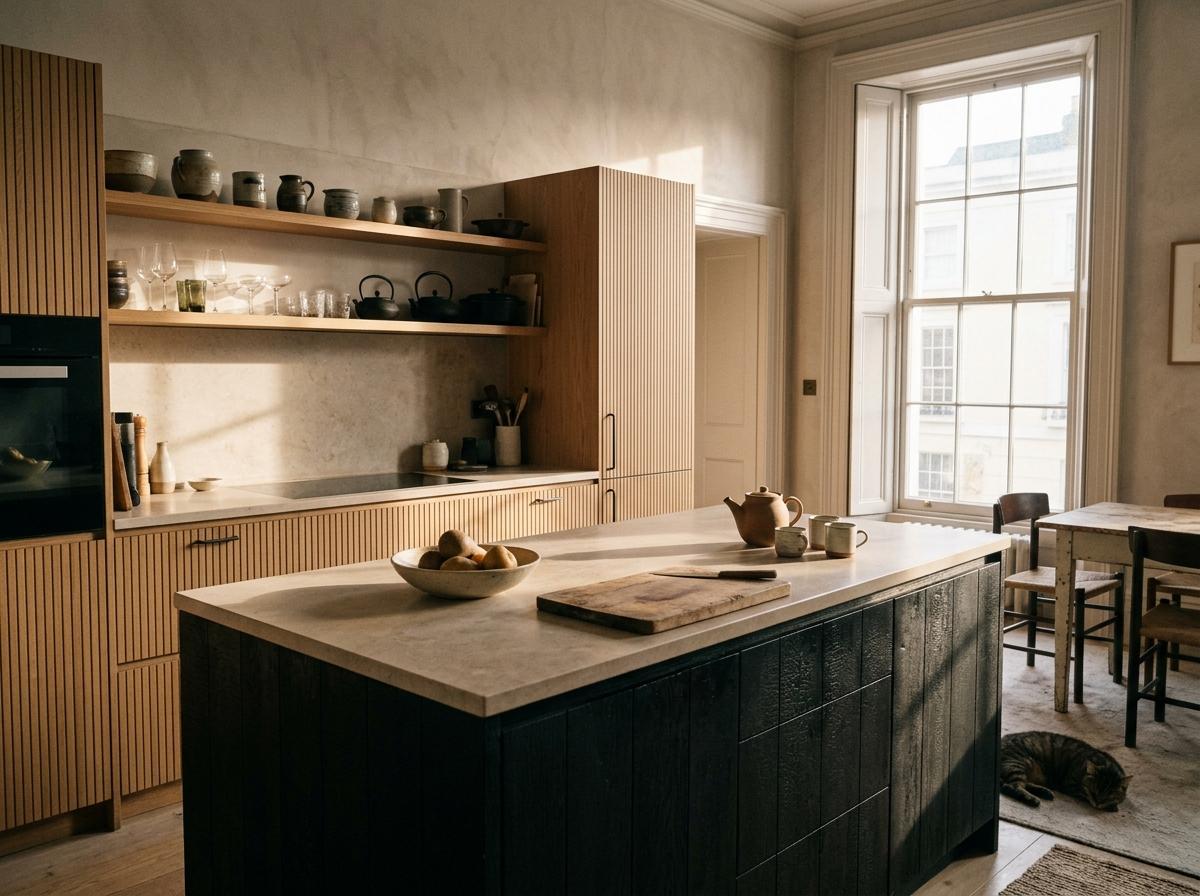

In the heart of Mayfair, where the echoes of Georgian formality meet a new era of global minimalism, this kitchen renovation marks a sophisticated evolution of the Japandi aesthetic. Historically, the culinary quarters of such grand residences were sequestered as purely utilitarian zones-dimly lit and hidden from the social gaze-yet today, they have transformed into the spiritual and architectural epicenter of the home. This project represents a "luxurious austerity," a deliberate oxymoron where the raw, tactile simplicity of Japanese wabi-sabi is elevated by the indulgent precision of Scandinavian engineering. Because the homeowners are repeat clients of the design team, there exists a profound level of creative trust, allowing for a daring departure from conventional luxury tropes in favor of a more soulful, curated experience. The final result is a masterclass in technical synthesis, achieved through the calibrated alignment of hand-charred timber cabinetry, seamless stone integration, and a rhythmic play of shadow and light.
Timeless Beauty Found In This Luxury Japandi Kitchen Layout
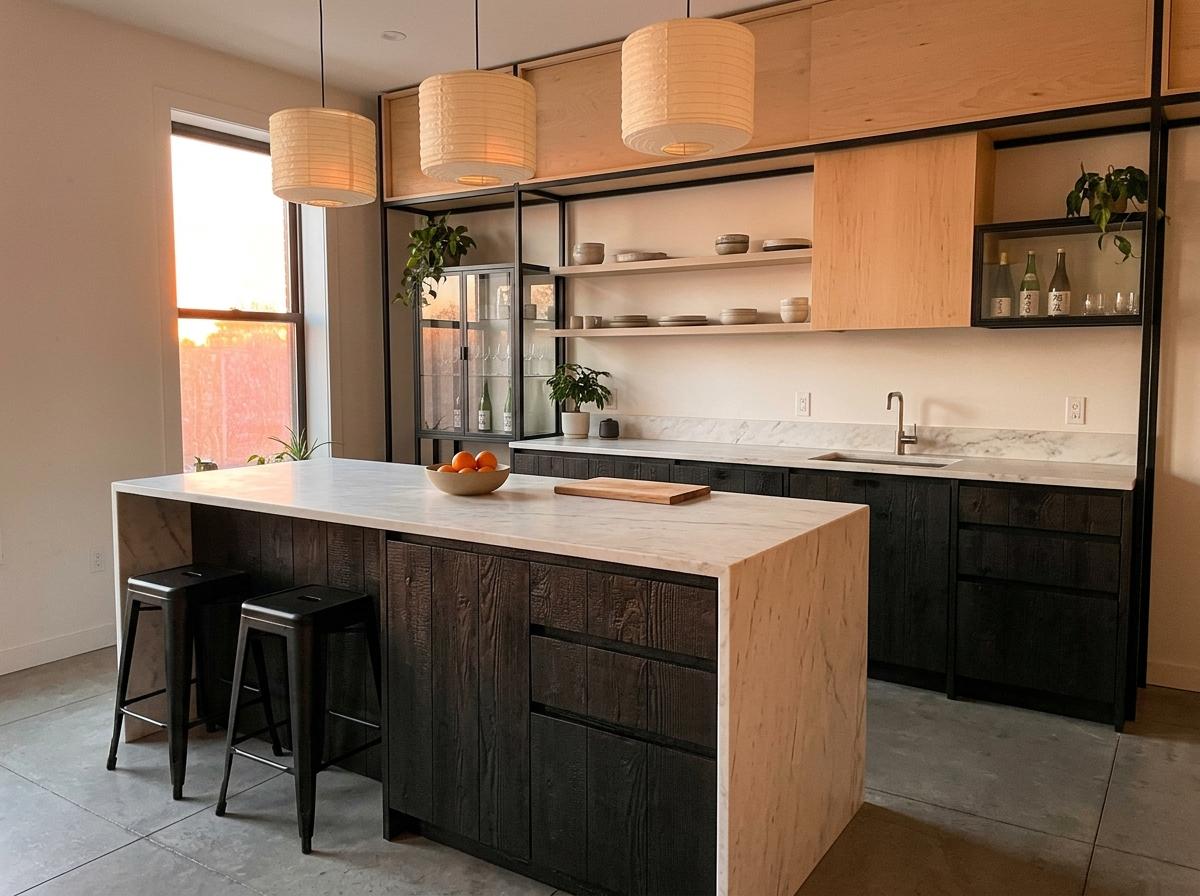

The heart of this residence exemplifies the "quiet opulence" that defines modern Kyoto-inspired minimalism. Note how the tactile friction of the wire-brushed charred cedar cabinetry meets the frictionless, honed surface of the Calacatta marble island, creating a dialogue between the scorched and the pristine. This intentional ordered chaos-where the organic unpredictability of wood grain is disciplined by razor-sharp geometric joinery-transmutes a mere culinary space into a sanctuary of monastic luxury. As you trace the vein of the stone, a physiological shift occurs: the frantic pulse of urban life decelerates into a rhythmic, deep-bellied calm, a visceral response to an environment that demands nothing but presence. By integrating the structural honesty of Viaduct-style metalwork with the soft luminosity of hand-poured washi pendants, the layout achieves a timelessness that feels both ancient and experimental.
A Statement Island Centered In A Luxury Japandi Kitchen
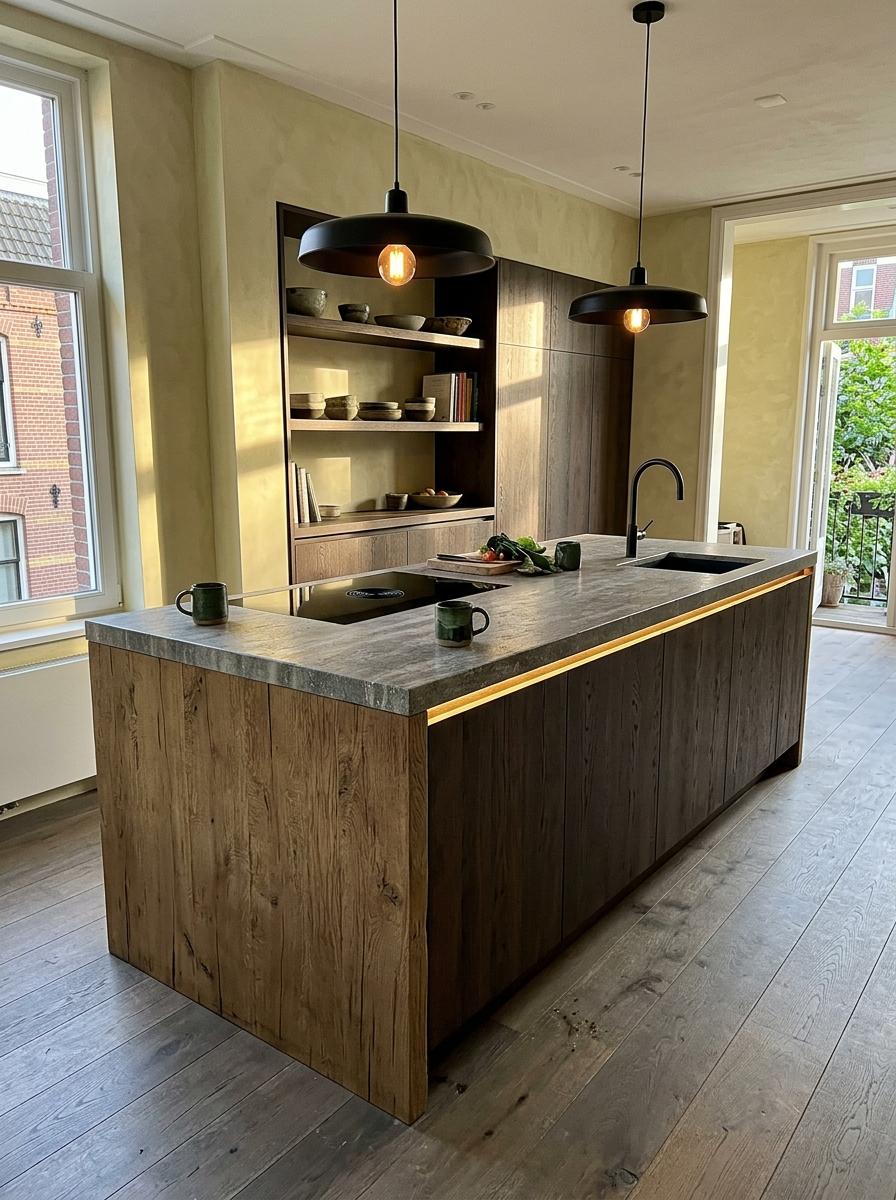

The evolution of the hearth has traveled a long trajectory, moving from the soot-stained communal pits of traditional Japanese farmhouses to the clinical, hidden galleys of mid-century modernism. In this contemporary residence, however, the kitchen reclaims its ancestral role as the home's spiritual anchor, though reimagined through a lens of maximalist minimalism. Nestled within the leafy, high-end enclaves of Oud-Zuid, Amsterdam, the space centers around a monolithic statement island that commands the room with a sense of rugged refinement. This project marks the third collaboration with a repeat client, a partnership that allowed for a deeper exploration of their specific aesthetic sensibilities and functional needs. The resulting atmosphere is achieved through a precise technical synthesis of tactile organic textures, subterranean lighting schemes, and a rigorous structural symmetry that bridges the gap between historical reverence and future-forward luxury.
Where Japanese Zen Meets Scandinavian Luxury Kitchen Design
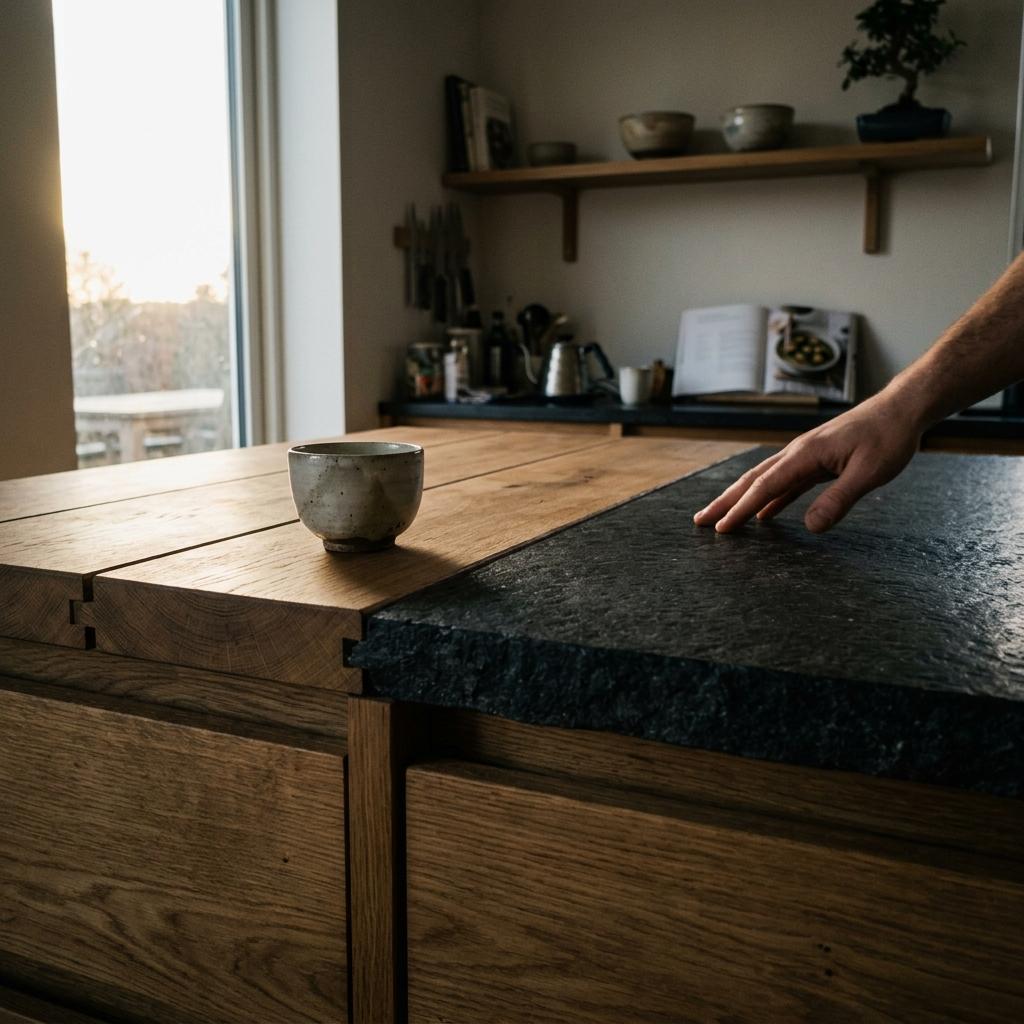

In the heart of a bespoke culinary space, the tactile dialogue between East and West begins with the selection of petrous, honed volcanic stone countertops juxtaposed against the velvety, open-pore grain of smoked Nordic oak. Note how the deliberate shadow gaps between the cabinetry-a hallmark of high-end København engineering-invite the eye to rest on the void, creating a rhythmic cadence that balances the visual weight of the heavy timber. This is the realm of opulent austerity, where the raw, unyielding honesty of wabi-sabi aesthetics is elevated by the exacting, high-gloss precision of Scandinavian luxury. As your hand glides across the cool, obsidian-slick surfaces, the initial tactile chill gives way to a profound sense of grounding, a physiological recalibration that slows the pulse and quiets the frantic hum of modern life. By integrating the silent philosophy of a Kyoto tea house with the prestigious craftsmanship of a Bulthaup or Vipp kitchen, the space ceases to be a mere utility and becomes a sanctuary of sensory equilibrium.
Sleek Architectural Lines Of A Luxury Japandi Kitchen
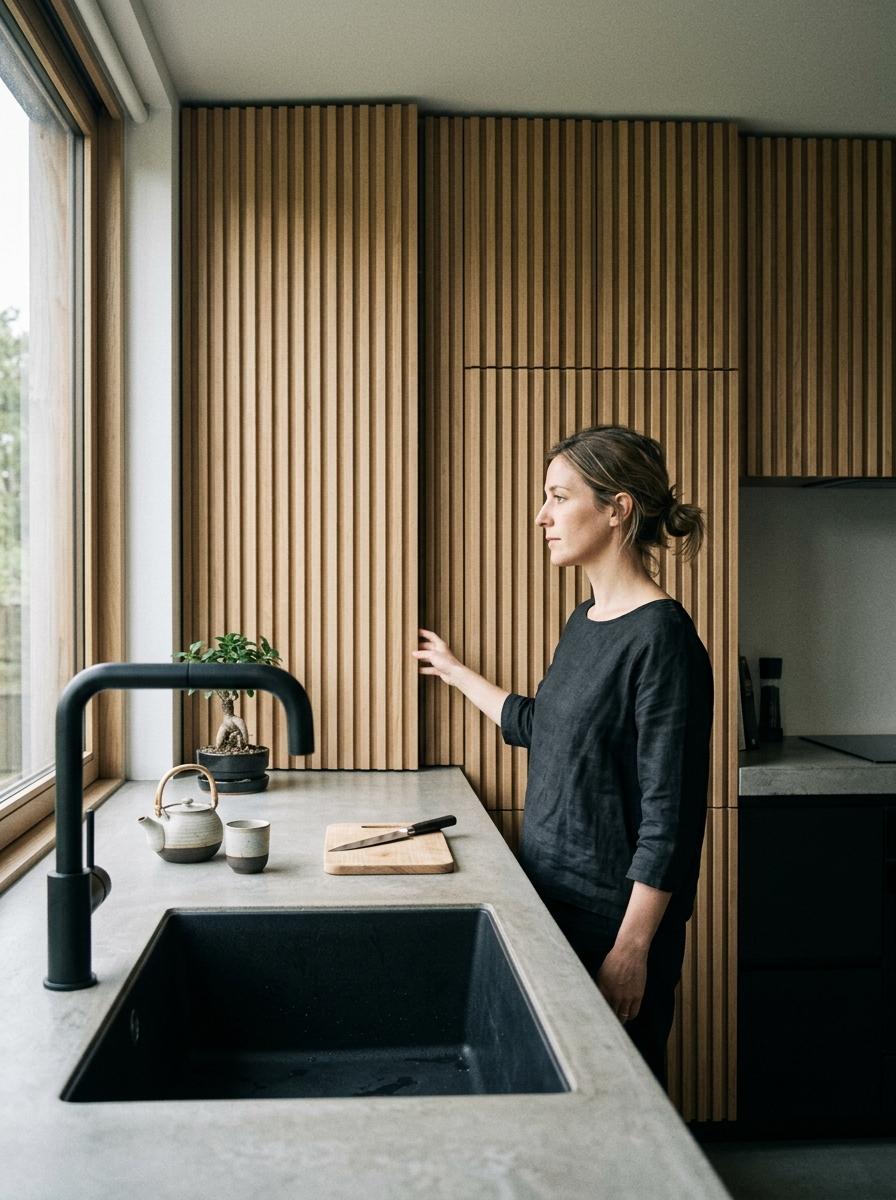

Standing in a cramped, cluttered kitchen where the hum of a dated refrigerator competes with the visual noise of mismatched cabinetry, one feels a kinetic sort of anxiety-a restlessness born of excess. It was this specific tension I discussed with lead architect Elena Rossi as we toured her latest project, a kitchen that felt less like a utility room and more like a temple of restraint. "The secret to this luxury," she told me, tracing the seamless edge of a matte black faucet, "isn't what we added, but the tectonic clarity we refused to compromise." She pointed toward the floor-to-ceiling oak louvering, noting how the verticality draws the eye upward, and added, "by concealing the appliances within a rhythmic, timber skin, we achieve a state of shibui-that subtle, unobtrusive beauty." This intentional juxtaposition between the chaotic world outside and the disciplined geometry of the home's core reveals the true power of the Japandi aesthetic. It is a philosophy where the sleek architectural line serves as a silent guide, leading us away from domestic clutter and toward a profound, structural serenity.
Comments