
At Japandi.design, our analysis of the contemporary interior often centers on the Definition via Synthesis of disparate worlds: when the raw, tectonic honesty of Industrialism merges with the disciplined serenity of Japanese minimalism, the result is a curated urban sophistication. This aesthetic rests upon a delicate dialectical pairing, where the cold, uncompromising rigidity of exposed structural elements is present, yet it is perpetually softened by the organic warmth and intentional stillness of Japandi principles. To achieve this balance, one must navigate a landscape of sensorial textures-integrating the caustic, gritty tactile resonance of weathered concrete against the ethereal, hushed olfactory softness of untreated white oak. Through this study, we explore how the industrial bedroom transcends its warehouse origins to become a sanctum of refined, architectural repose.
Industrial Bedroom Style


Modern Industrial Bedroom With Japandi Style Nuances
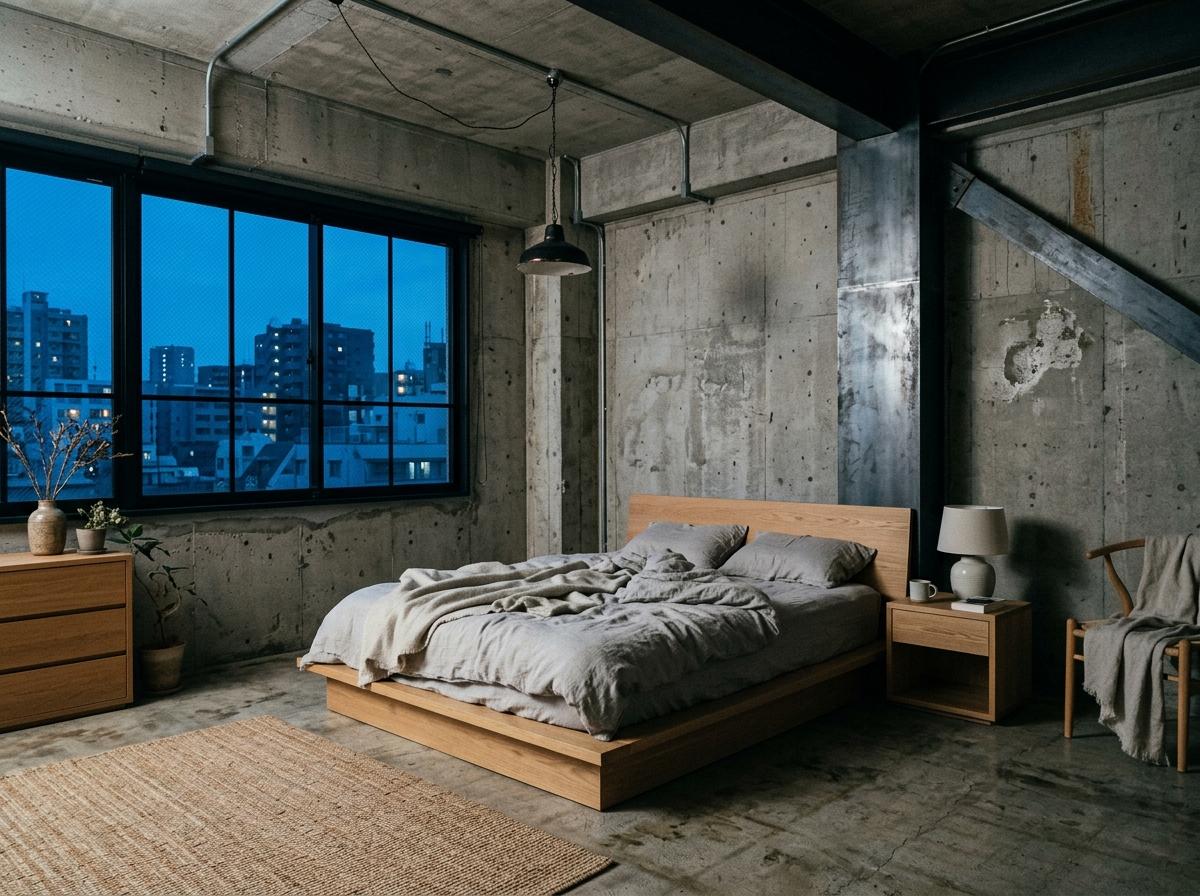

In this study of a loft renovation in the Nakameguro district, we observe a masterful synthesis of grit and grace. To achieve this aesthetic, we can look toward the juxtaposition of scabrous, cold-rolled steel against the silken, open-pore grain of white oak-a pairing that defines the Modern Industrial palette through a Japandi lens. Note how the designer utilizes a low-slung platform bed to anchor the verticality of the exposed concrete walls, creating a deliberate sense of monolithic lightness. As your gaze moves from the brutalist textures to the soft linen upholstery, the space triggers a profound physiological shift; the initial starkness of the industrial shell melts into a cocoon of sensory stillness, lowering the heart rate and inviting a meditative pause amidst the urban density of Tokyo.
Industrial Loft Bedroom Embracing Japandi Minimalism
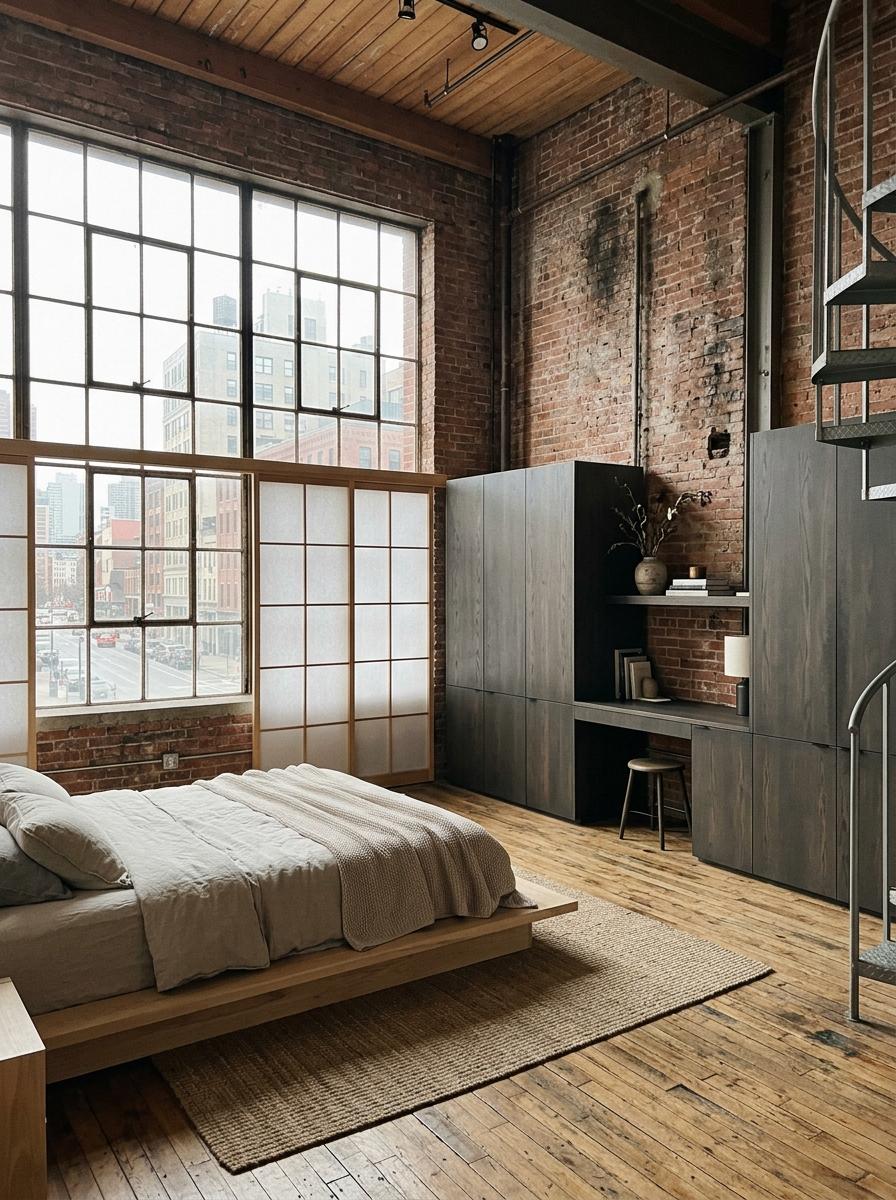

The bedroom exists as a suspended sanctuary within a former textile factory, where the soaring volume of the industrial shell is anchored by a low-profile platform bed that draws the eye toward the meditative stillness of the floor. This "expansive intimacy" reclaims the hollow grandeur of the loft, transforming a cold architectural void into a curated retreat of quietude. While the exterior streetscape is defined by the rigid grid of steel-framed windows and the relentless movement of the city, the interior perimeter is softened by translucent washi paper screens that filter light into a rhythmic, hazy glow. The tactile presence of raw, wire-brushed Douglas fir grain strikes a deliberate contrast against the verticality of exposed, soot-stained brick, grounding the space in a marriage of organic warmth and grit. To resolve the inherent lack of storage in such an open plan, a modular system of charcoal-stained oak cabinetry serves as a functionalist spine, concealing modern clutter behind handleless surfaces to ensure that the industrial utility of the room remains secondary to its Zen-like composure.
A Raw Industrial Bedroom With Japandi Design Accents
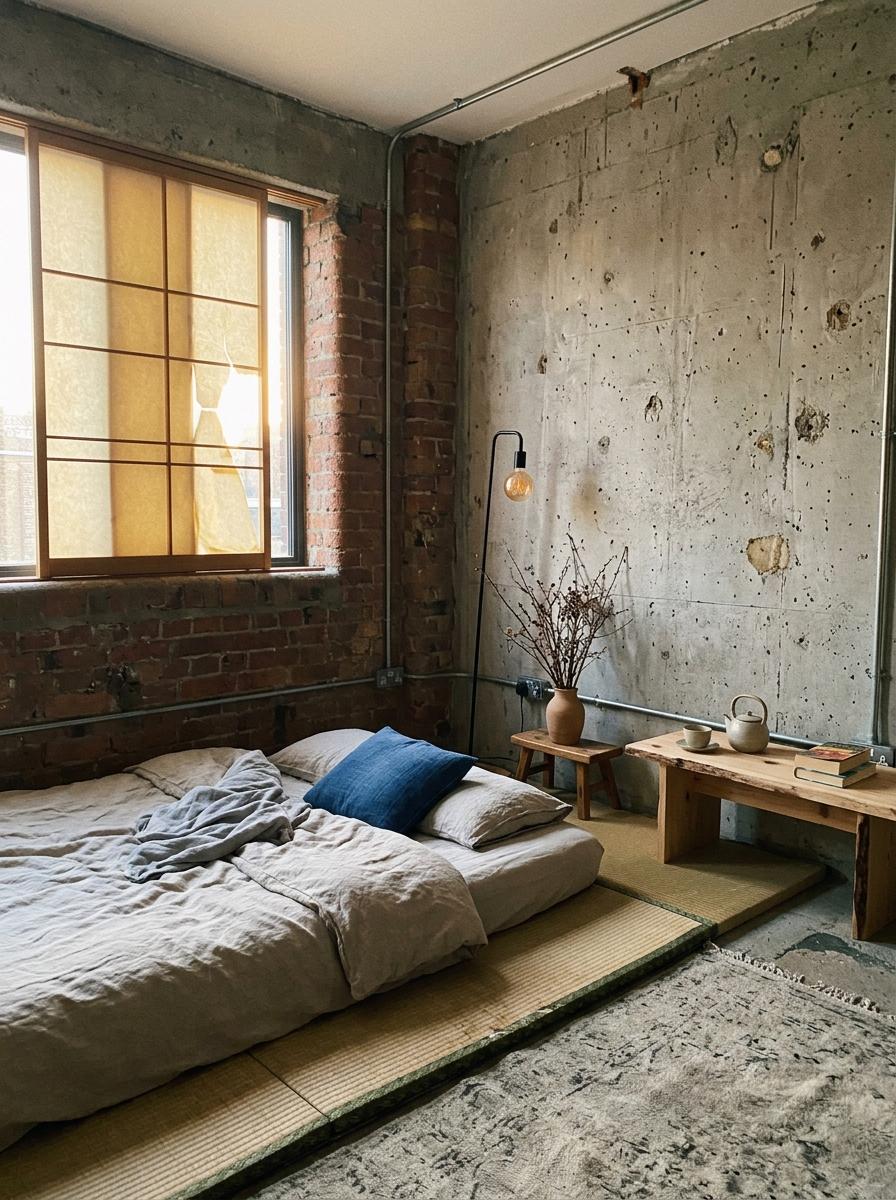

In this study of a converted warehouse in London's Shoreditch district, we find a space that masterfully balances the brutalist history of the site with the serenity of a Kyoto retreat. Note how the unyielding, grit-blasted concrete walls provide a structural canvas for the diaphanous shoji-inspired window screens, creating a delicate interplay between the immovable and the ephemeral. This aesthetic is defined by a "refined ruggedness"-a paradox where the cold, tactile abrasiveness of exposed rebar meets the velvet-smooth, oil-rubbed finish of solid Hinoki cypress furniture. As the eye traverses the transition from the jagged, porous brickwork to the meticulously woven tatami flooring, a visceral sense of grounding occurs; the initial sensory shock of the industrial shell dissolves into a lowered heart rate and a profound, bone-deep stillness. By grounding this Japandi intervention in the architectural vernacular of East London, the room transcends mere decoration, becoming a study in how harsh urban environments can be tamed through the rhythmic, silent language of Japanese minimalism.
Urban Industrial Living Meets Japandi Bedroom Design
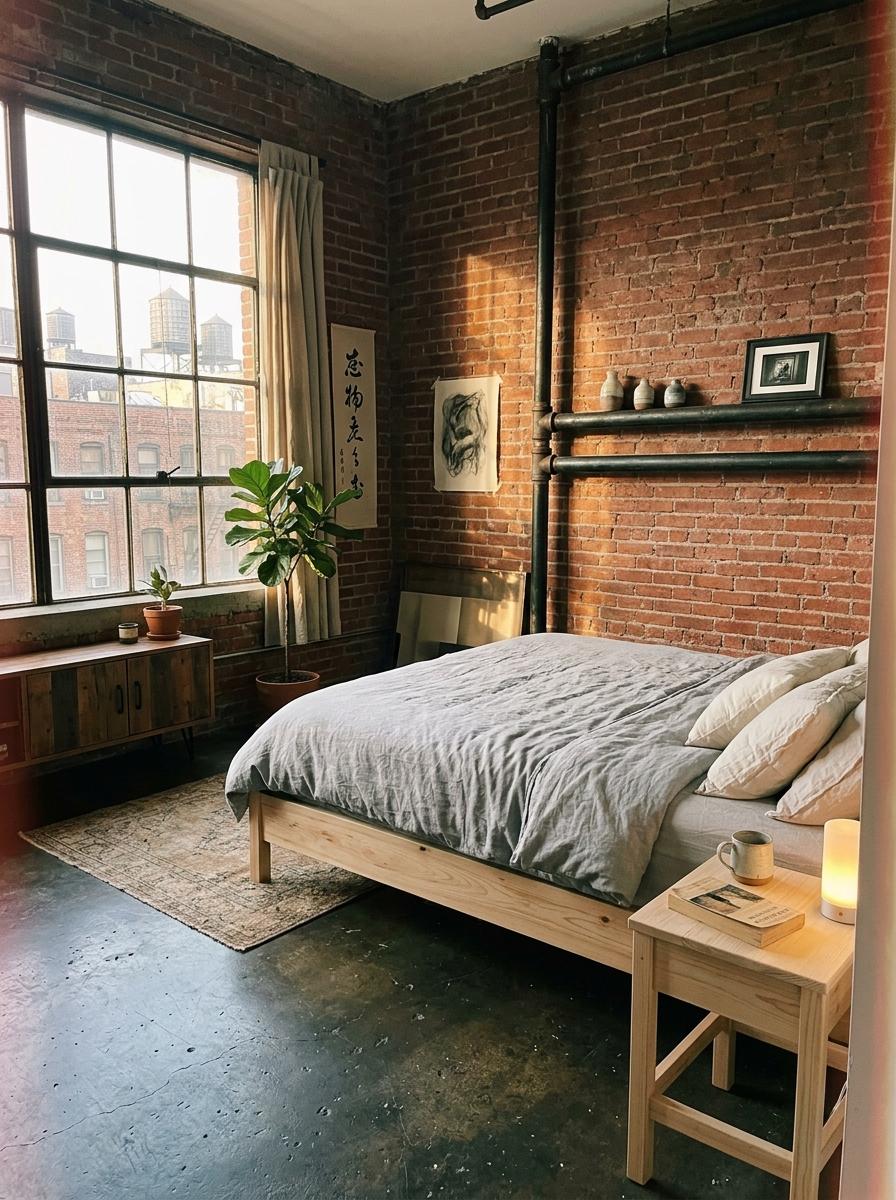

Walking through the iron-wrought canyons of the Meatpacking District, one is swallowed by the relentless staccato of jackhammers and the cold, unyielding grit of exposed brick. "The city," a local artisan told me, pausing mid-weld as his visor caught the afternoon glare, "is a machine that never knows when to power down." It was this friction-the constant sensory abrasion of urban industrialism-that led me to explore how we might soften such sharp edges without losing their character. By juxtaposing the brutalist honesty of blackened steel with the hushed, organic warmth of Hinoki wood, we find a sanctuary that doesn't deny the city's pulse but rather filters it. "Japandi," the artisan continued, gesturing toward a minimalist bench where the joinery was as precise as a heartbeat, "isn't about hiding from the noise; it's about creating a silence that can withstand it." This delicate calibration of wabi-sabi imperfection against the rigid geometry of the loft is where we discover the true potential of the bedroom as a restorative void. This interplay between the machine age and the meditative spirit forms the foundation of what I call the new urban monastery.
The Fusion Of Industrial Textures And Japandi Style
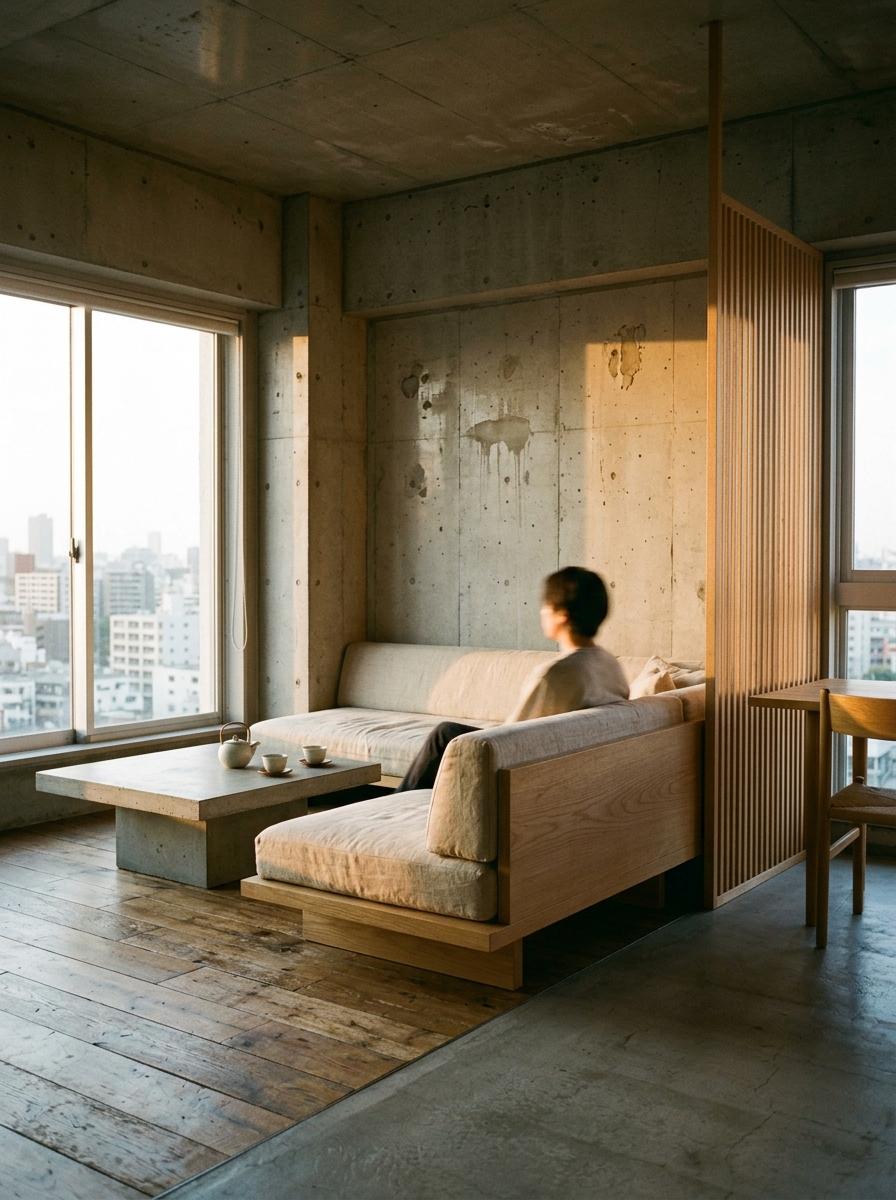

The evolution of the urban domestic space has shifted from the soot-stained grit of the early 20th-century factory floor to the curated tranquility of the modern sanctuary, a diachronic transformation that replaces industrial survival with aesthetic intention. Within a penthouse overlooking the refined streets of Aoyama, this historical arc is reimagined through a lens of "raw softness"-an oxymoron that balances the cold, unforgiving edge of exposed concrete with the warm, ethereal embrace of Japanese minimalism. Entrusting the studio for a third consecutive project, the repeat clients sought a residence that honored their fast-paced professional lives while providing a rhythmic psychological retreat. The resulting interior achieves a sophisticated technical synthesis, utilizing the interplay of light-reactive textures and strategic timber joinery to bridge the gap between industrial skeletal structures and the soulful stillness of Japandi design.
Reimagining An Industrial Space With Japandi Design
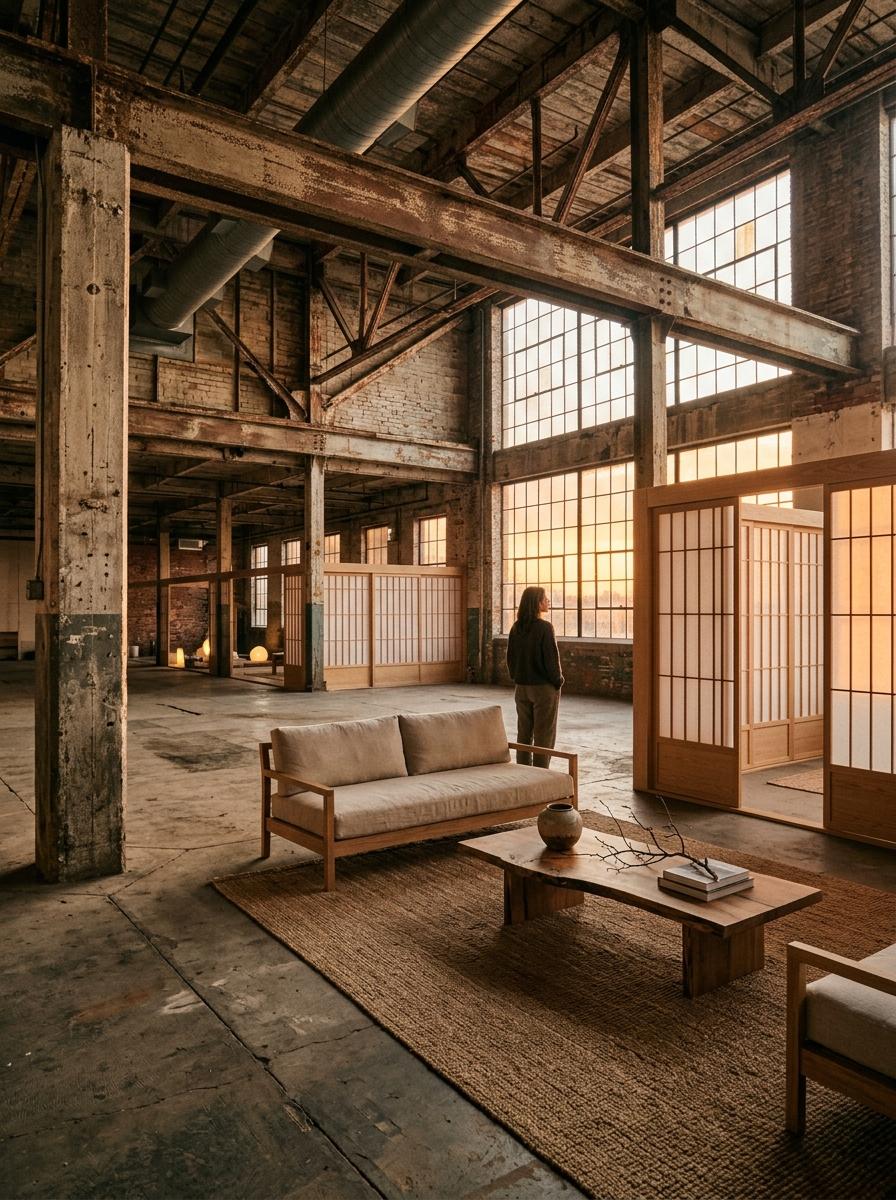

Walking into the decommissioned textile mill on the edge of the city, I was immediately struck by the aggressive honesty of its skeletal structure-all jagged rust, cold iron beams, and the hollow echo of a concrete floor that seemed to swallow the light. "The challenge," the lead developer remarked, pausing to trace the rough grain of a structural pillar, "isn't just about softening these edges... it's about finding a way to make the void feel intentional." This tension between the brutalist weight of the industrial past and the ethereal lightness of the Japandi aesthetic creates a profound dialogue; where the factory floor demands durability, the design responds with low-profile oak joinery and the "wabi-sabi" appreciation for weathered textures. By juxtaposing the soaring, cold heights of an open-plan loft with the tactile warmth of shoji-inspired screens and organic wools, the space is transformed from a relic of labor into a sanctuary of stillness. This delicate calibration of hard and soft serves as a masterclass in how we can bridge the gap between historical grit and the modern pursuit of a curated, mindful home.
Sophisticated Industrial Bedroom Infused With Japandi Style
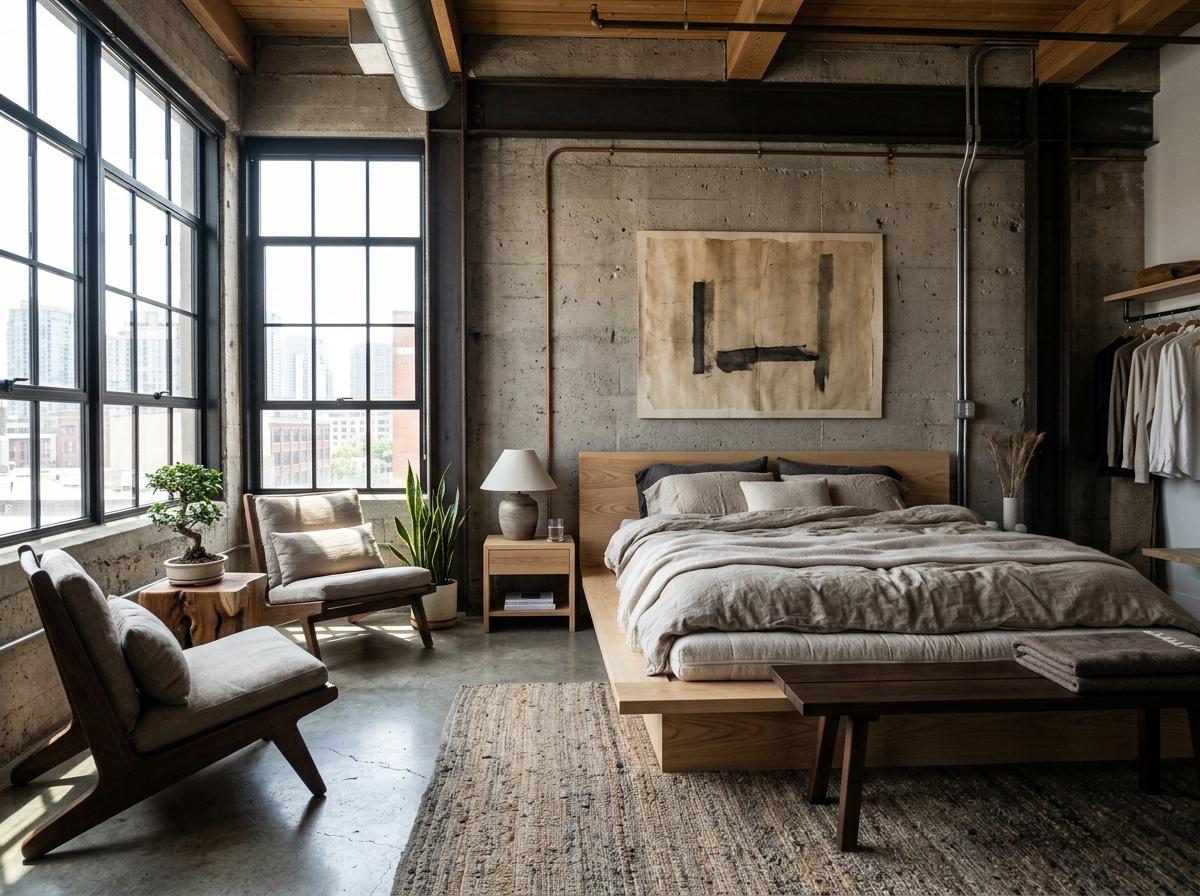

At the intersection of raw urbanity and meditative stillness lies the sophisticated industrial Japandi bedroom-a space where the uncompromising structuralism of a concrete loft converges with the reductive serenity of Eastern minimalism to form a new paradigm of residential retreat. This aesthetic synthesis requires a masterful dialectical pairing: the environment must feel unapologetically monumental in its exposure of conduit and masonry, yet profoundly intimate through the curated integration of low-profile joinery and tactile warmth. To achieve this, the designer must look beyond mere decoration toward a sensorial landscape of atmospheric, haptic, and obsidian textures that ground the room's inherent loftiness. By anchoring the cold, expansive volumes of industrial architecture with the wabi-sabi appreciation for organic imperfection, the bedroom transcends its utilitarian origins, becoming a sanctuary that is at once architecturally rigorous but emotionally soft.
Concrete Walls Meet Japandi Design In This Bedroom
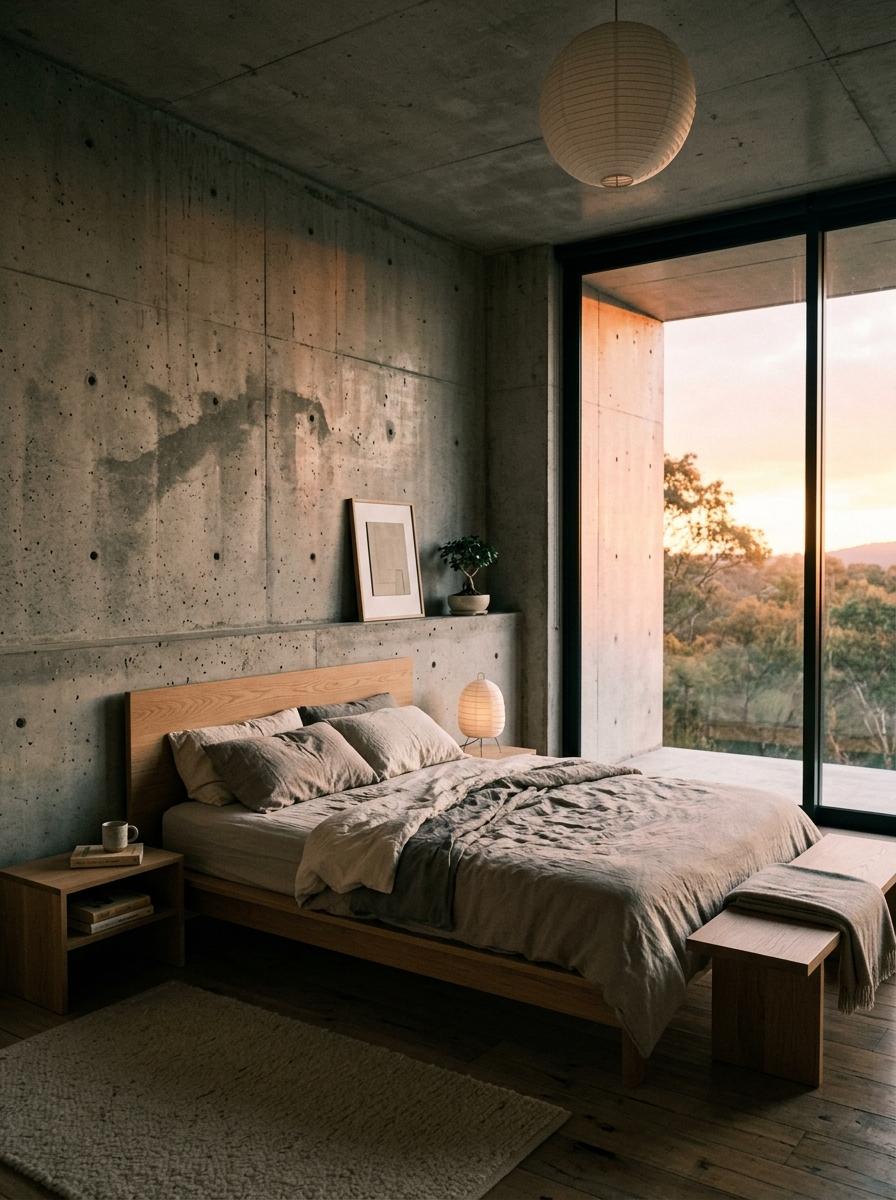

The architectural framework of this sleeping sanctuary was conceived through a deliberate intersection of raw brutalism and organic warmth, where cold masonry is softened by intentional curation. Within this skeletal shell, a spare and silent atmosphere prevails, defined by an unburdened layout that honors the void over the vestigial. The heavy grey planes of the concrete walls ground the space, while low-slung, light-toned timber frames foster a sense of foundational fluidity. This deliberate design stretches the visual horizon, ensuring that every shadow serves a purpose and every surface invites stillness. The room ultimately radiates through its balanced textures, breathable volumes, and muted palettes.
Refining An Industrial Bedroom With Japandi Elements
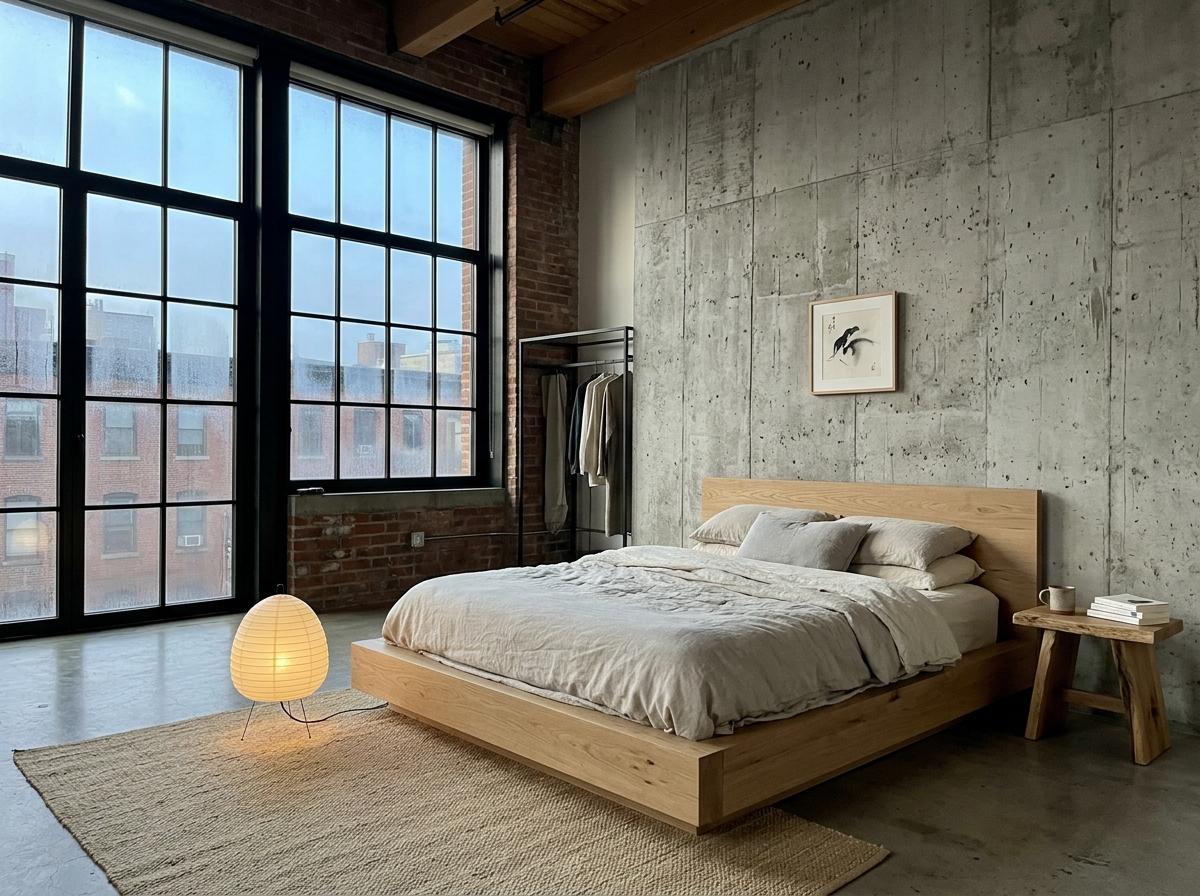

To refine the raw, structural honesty of a Brooklyn-loft aesthetic, we can introduce the stabilizing serenity of Kyoto-inspired minimalism. Note how the juxtaposition of a cold, shuttered-concrete accent wall finds its equilibrium when paired with the open-pored grain of a solid white oak platform bed. This arrangement creates a structured spontaneity-a deliberate paradox where the grit of urban decay meets the refined discipline of Zen craft. As your eyes transition from the brutalist matte steel of the window frames to the fibrous, tactile relief of a hand-woven tatami rug, the body undergoes a physical recalibration; the initial visual tension of the industrial shell dissolves into a profound sense of rootedness, lowering the heart rate through sheer haptic harmony. By grounding the airy, high-ceilinged volume of an industrial space with these grounded Japanese elements, the bedroom ceases to be a mere gallery of hard surfaces and becomes a sanctuary of soft strength.
A Cozy Industrial Sanctuary Featuring Japandi Design
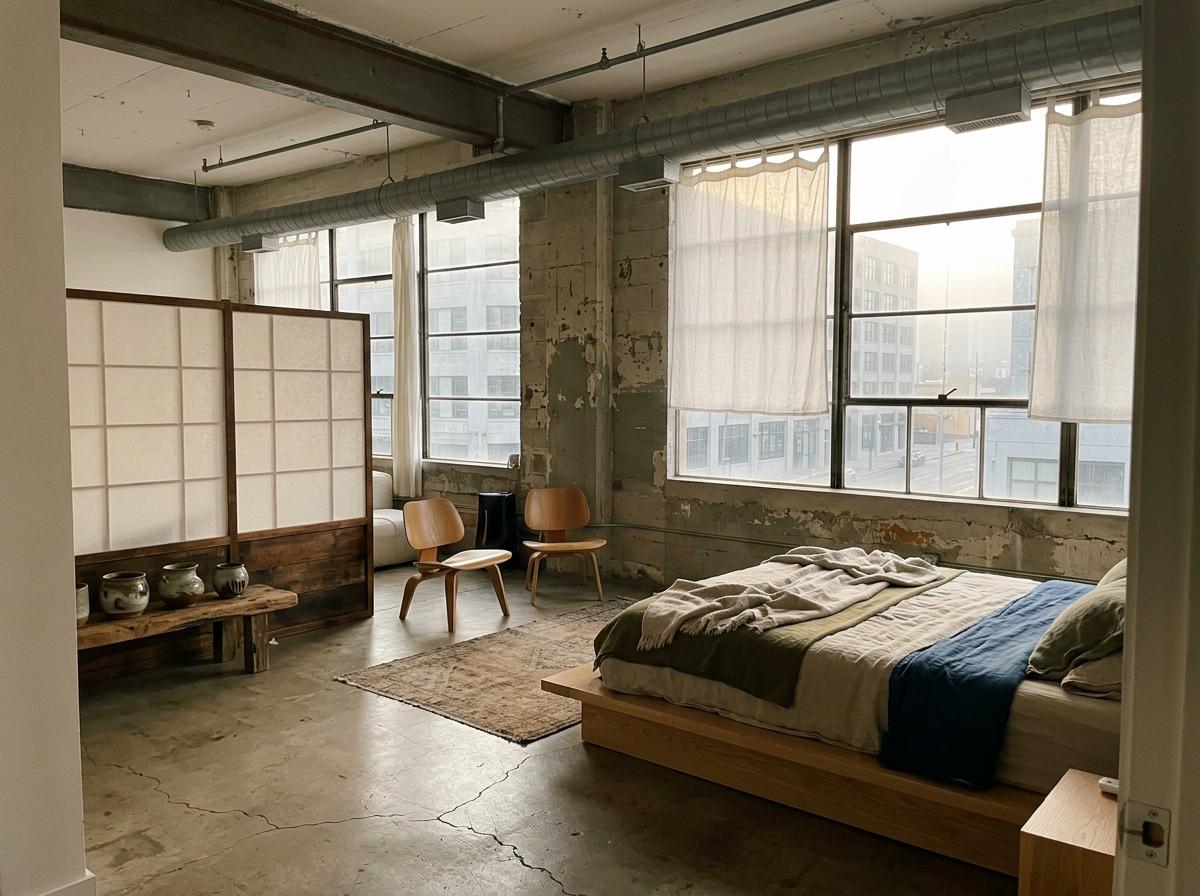

Stepping into the loft, I was immediately struck by the paradox of the space-a skeletal, concrete shell that somehow felt like a warm embrace. Outside, the city was a dissonant blur of polished glass and screeching steel, but here, the air seemed to settle into a hushed stillness. "The challenge," the lead designer explained, pausing to adjust a low-slung oak chair, "wasn't just to soften the edges... it was to find the soul within the structure." She gestured toward the towering windows where the harsh, direct light was filtered through translucent linen scrims, "creating a dialogue," she continued, "between the brutalist past and a softer, more intentional present." By juxtaposing the raw, tactile honesty of exposed ductwork with the refined minimalism of a Shoji-inspired screen, the room achieves a delicate wabi-sabi equilibrium. This intentional friction between the industrial "cold" and the organic "warmth" is precisely what defines the modern evolution of the home as a retreat. It is this specific intersection of grit and grace that serves as the foundation for our exploration into the Japandi sanctuary.
Transforming An Industrial Loft Into A Japandi Haven
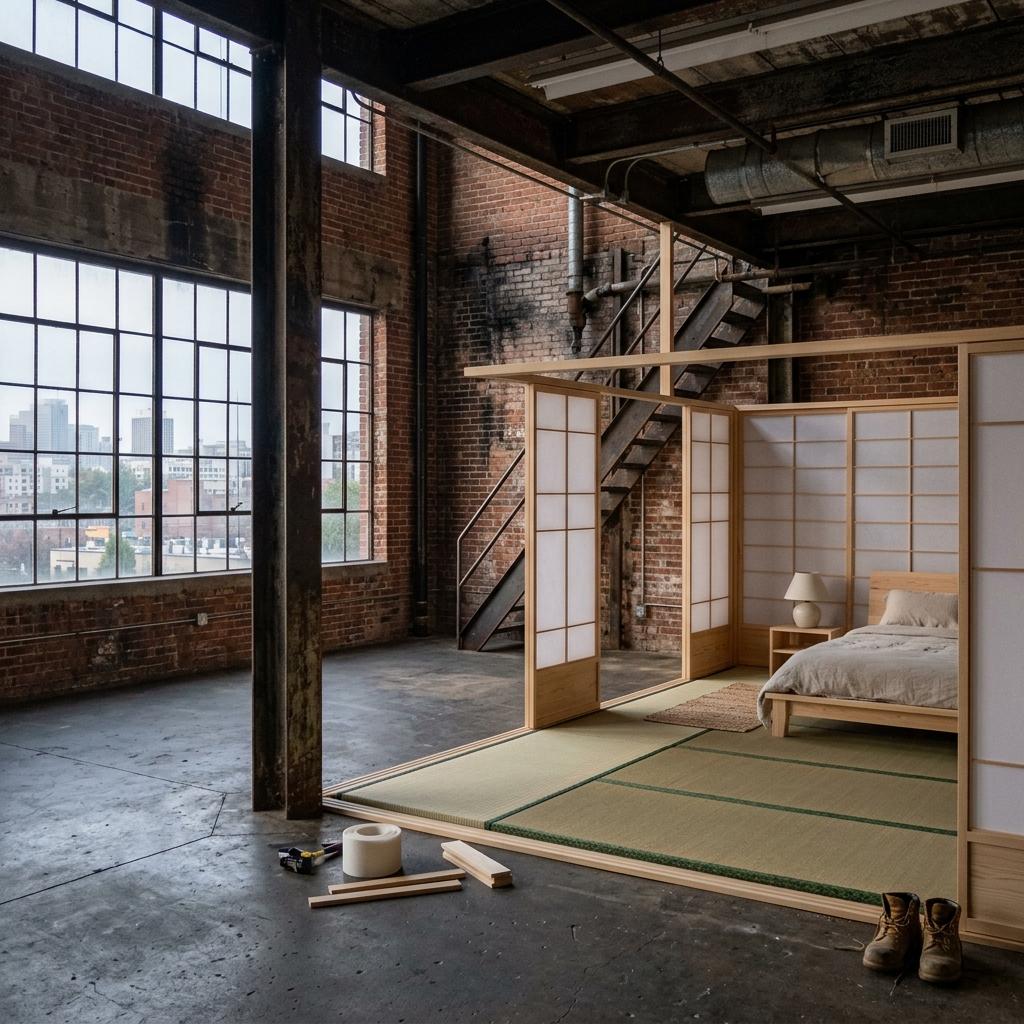

Inside this converted warehouse, the air carries a heavy, cavernous silence that clings to the raw, towering brickwork and the soot-stained history of the district. This is a study in intentional emptiness, where the void becomes a tangible substance that fills the room rather than vacating it. While the exterior remains locked in a rigid embrace of weathered iron and fractured concrete, the threshold reveals a startling departure into a sanctuary of soft minimalism. Here, the brutal coldness of exposed structural beams is softened by the inclusion of untreated Hinoki cypress and the rhythmic, tactile grain of woven tatami rush, creating a sensory bridge between the factory floor and the forest floor. To resolve the chaotic scale of the high ceilings, a series of modular shoji-inspired screens serve as a kinetic partition system, allowing the dweller to recalibrate the vast industrial volume into intimate, human-centric zones without sacrificing the functionalist integrity of the original open plan.
Rustic Industrial Bedroom With A Japandi Style Twist
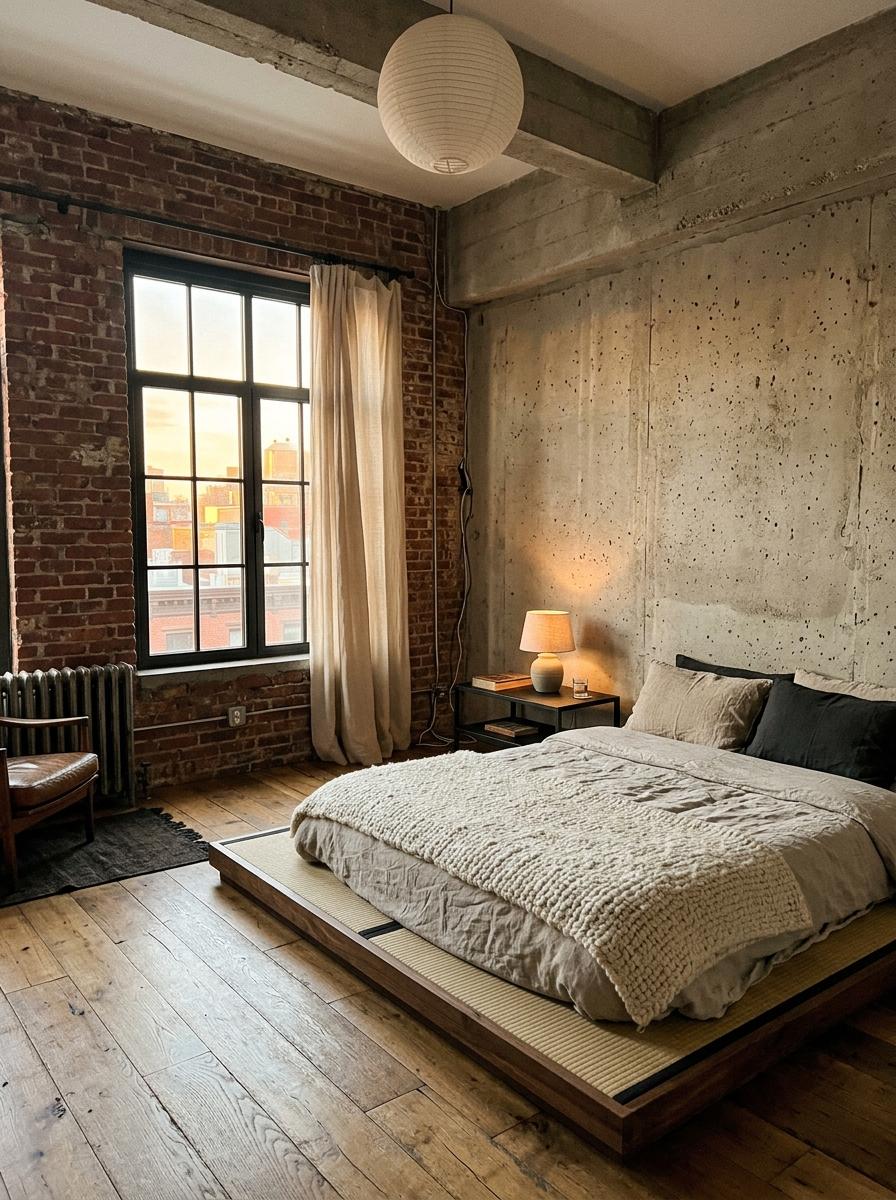

In this curation of a Chelsea loft-inspired retreat, we explore how the grit of New York's manufacturing history converges with the hushed restraint of Kyoto minimalism. The architectural shell is defined by weathered, wire-brushed oak flooring and the pitted, porous texture of exposed red brick, providing a rugged canvas for the interior's refined additions. Note how the deliberate placement of a low-slung, tatami-integrated bed frame anchors the room, pulling the eye downward to appreciate the interplay between the cool, industrial calcification of concrete walls and the velvety, fibrous warmth of hand-woven wool throws. This design succeeds by mastering a structured spontaneity, where the rigid geometry of blackened steel window frames is softened by the ethereal, diaphanous drape of unbleached linen. As you inhabit this space, the initial visual impact of the raw materials gives way to a profound sense of kinetic stillness; the tactile contrast of cold metal against sun-warmed wood triggers a somatic shift, lowering your heart rate and grounding your breath. By stripping away the ornamental noise often found in standard industrial builds, the room becomes a sanctuary of austere comfort, proving that a space can feel both impenetrably solid and profoundly welcoming.
Minimalist Industrial Bedroom Boasting Japandi Design
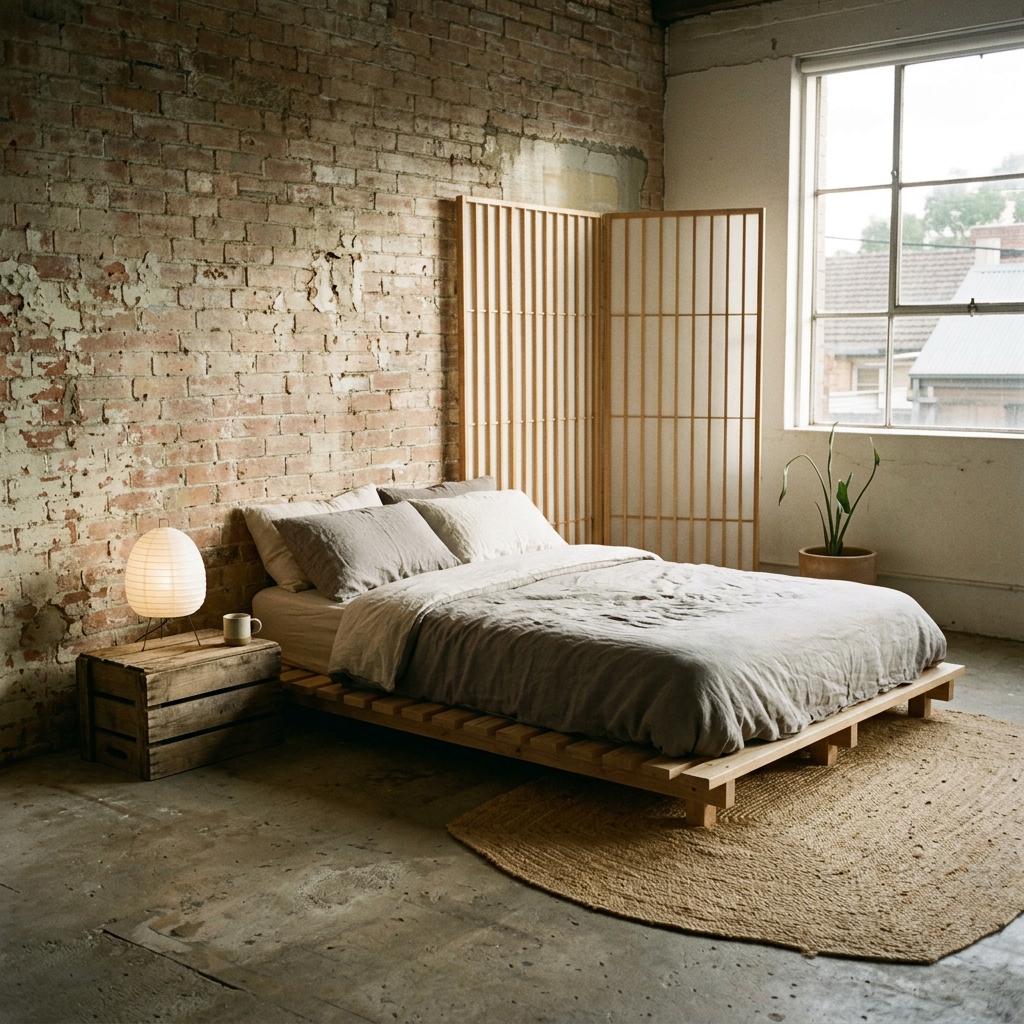

Stepping into this bedroom feels less like entering a construction site and more like witnessing a conversation between two distant relatives who finally found a common language. I remember discussing this specific spatial tension with a local stylist who noted that while industrialism is often "unapologetically raw," the introduction of Japandi elements acts as a "necessary, softening filter" that makes the room habitable rather than just habitable-adjacent. Where a traditional industrial loft might feel cavernous and cold-defined by the sterile echo of concrete floors-this space pivots toward hygge through the deliberate use of low-profile slatted wood bed frames and shoji-inspired textures. It is the juxtaposition of the "utilitarian grit," as the stylist put it, "against the serene, intentional void of Japanese minimalism" that creates such a compelling visual friction. This delicate equilibrium between the unfinished and the meticulously refined serves as the perfect blueprint for understanding how industrial bones can support a soul of pure tranquility.
Contrast Between Industrial Metal And Japandi Wood
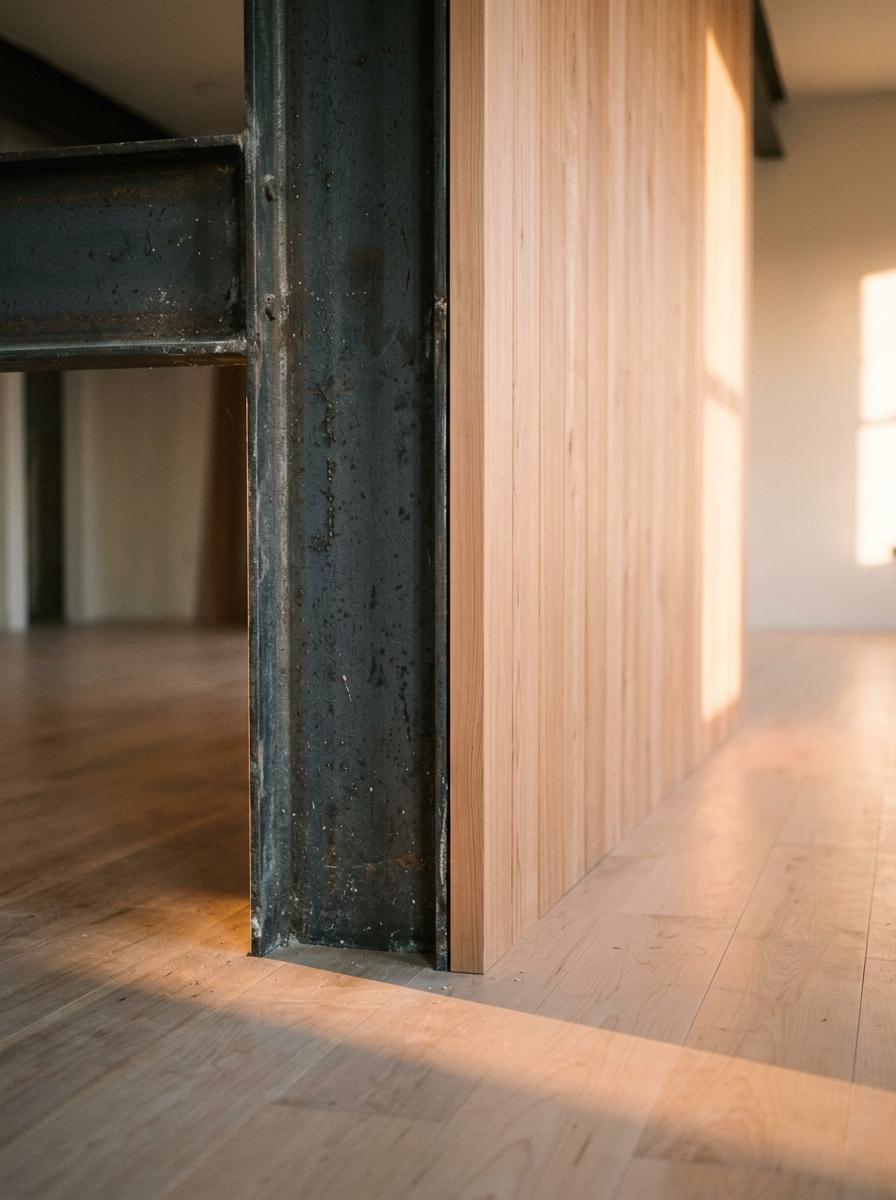

In the restoration of this urban loft, a deliberate balance was achieved through the marriage of raw structural elements and refined natural textures. Within this void, sparse surfaces and hollow forms cultivate a quietude that feels both intentional and immense, stripping away the visual noise of the city. Soft cedar planks meet the cold, charcoal-colored steel, creating a tactile harmony where the warmth of the grain softens the stern strength of the metal. These materials carve out light, stretch the horizon of the floor plan, and anchor the drifting eye. The resulting space celebrates a dialogue between the industrial and the organic, the rigid and the resilient, and the metal and the maple.
Elegant Industrial Bedroom With Signature Japandi Style
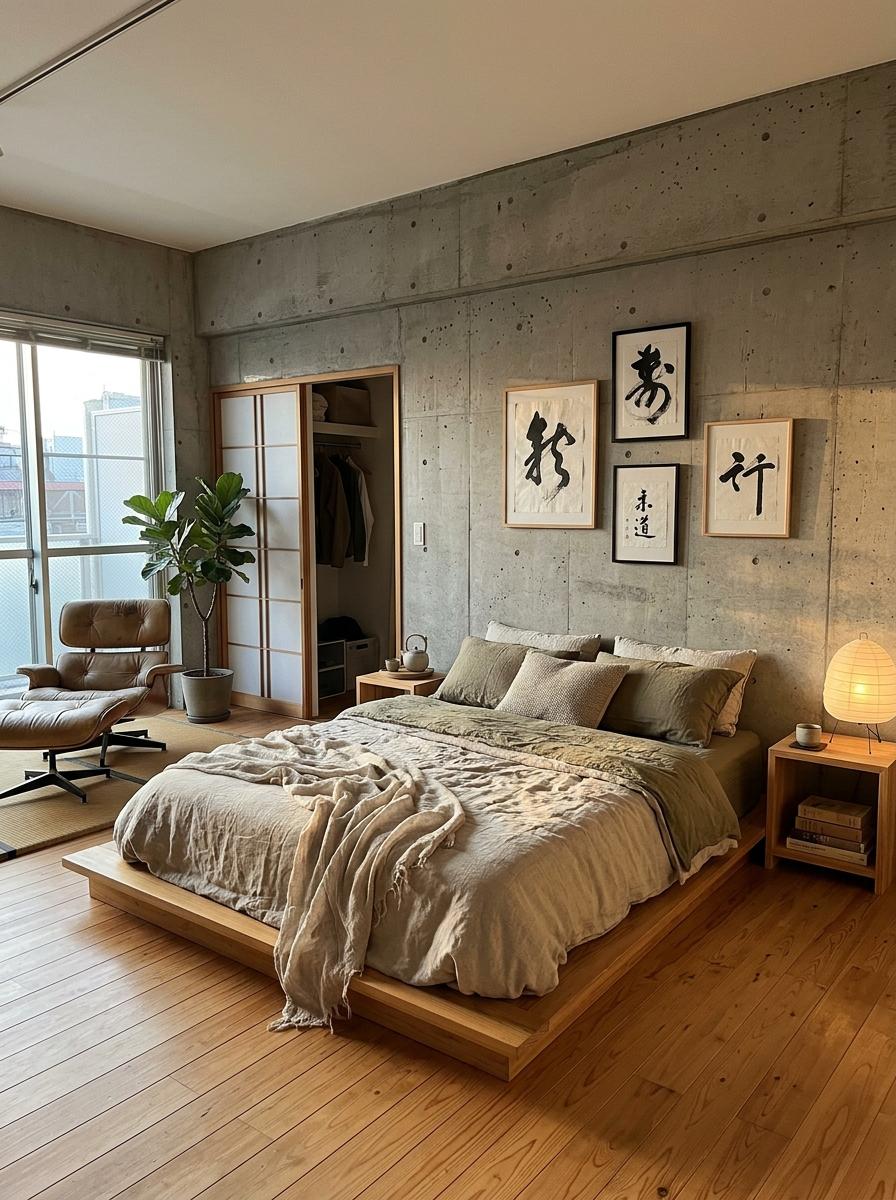

In this Tokyo-inspired sanctuary, the architectural dialogue is defined by the tension between cold structuralism and organic warmth. Note how the raw, shutter-finished concrete walls-marked by a tactile, calcified grit-provide a sobering backdrop to the honeyed grains of reclaimed Hinoki cypress floorboards. This deliberate juxtaposition creates a harmonious friction, where the brutalist skeletal frame of the room is softened by the minimalist restraint of the furnishings. As your eyes trace the silhouette of the low-profile platform bed, the transition from the rugged, porous stone surfaces to the fluid, gossamer drape of Belgian linen triggers a physical decompression, lowering the heart rate through a deliberate sensory shift from industrial austerity to domestic serenity. In this space, the "Industrial Japandi" aesthetic ceases to be a mere trend and becomes a physiological anchor, grounding the dweller in a state of quiet, disciplined comfort.
Balancing Industrial Grit With Japandi Design Harmony
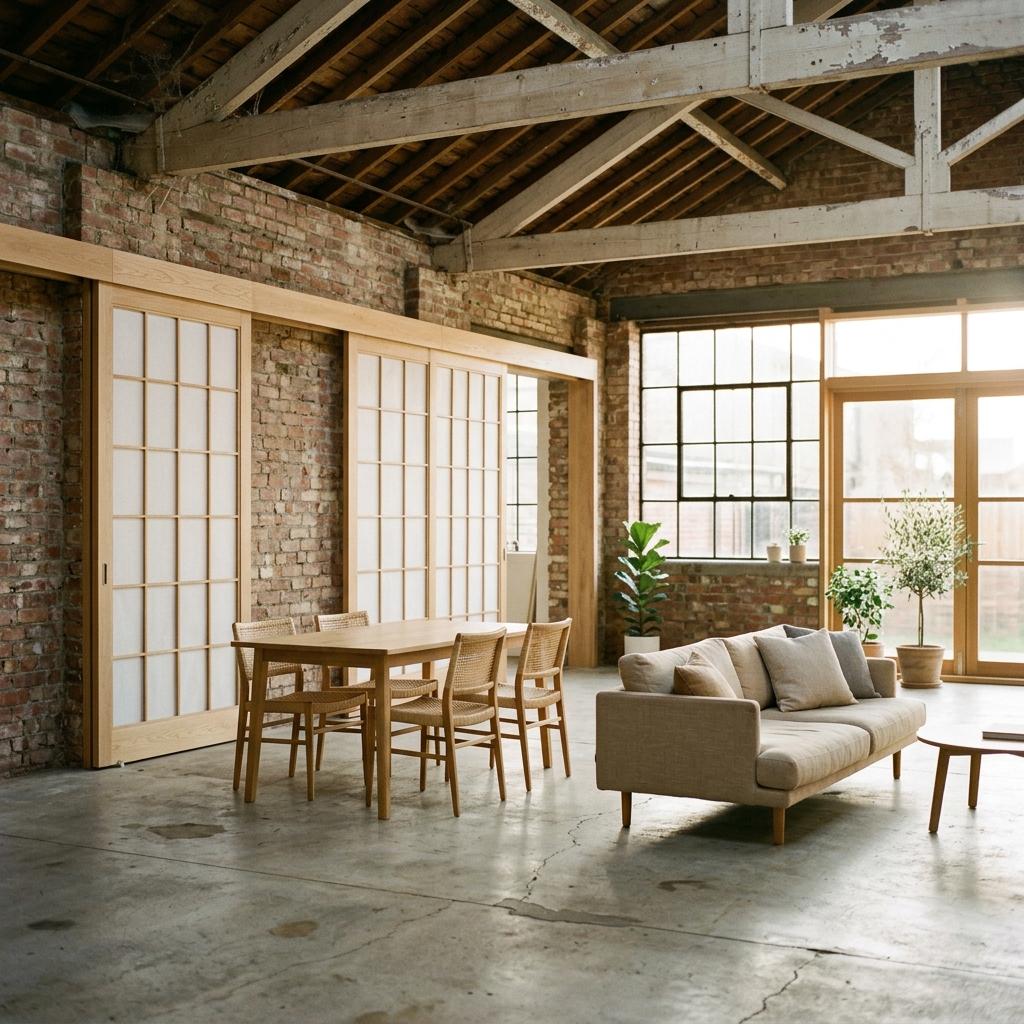

The structural foundation for this residence was established through the adaptive reuse of a former textile warehouse, where the skeletal remains of the original masonry were meticulously preserved to serve as a backdrop for contemporary intervention. Within this expansive volume, the aesthetic pivots toward a serene clarity, defined by unadorned surfaces, hushed tones, and a sparse arrangement of bespoke timber elements. This thoughtful curation allows a soft stillness to settle over the space, merging the raw resilience of the factory floor with the quiet quality of craft. The layout carves wide corridors of light, stretches the ceiling heights toward the rafters, and breathes life into previously neglected corners. The resulting interior masterfully stabilizes the environment through the integration of tactile concrete, translucent paper screens, and warm white oak.
How This Industrial Bedroom Adopts Japandi Style
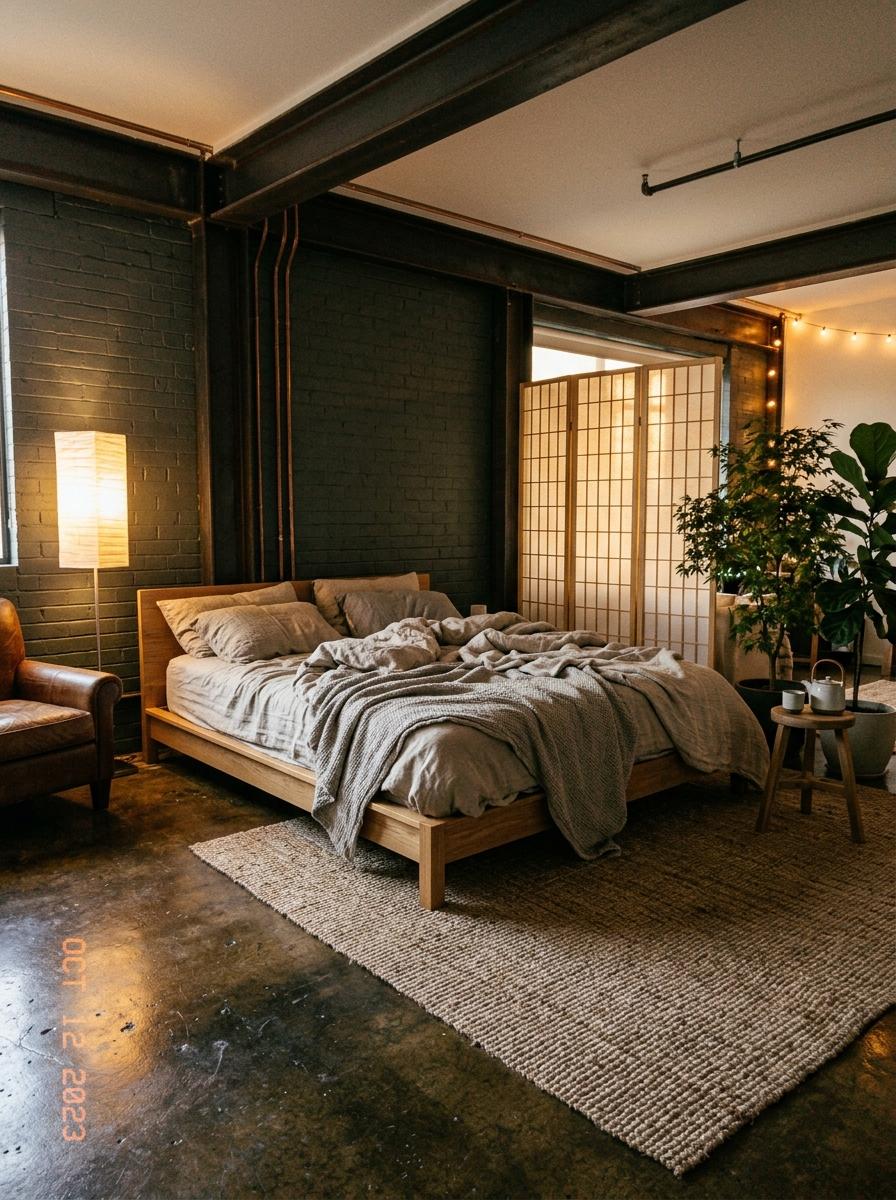

In this industrial sanctuary, the inherent friction between cold utility and organic warmth is mediated through a meticulous selection of finishes. Note how the raw, unyielding temperament of the burnished concrete floors is softened by the introduction of a low-profile bed frame crafted from open-grain Tasmanian oak. This pairing creates a serene brutality, where the sterile precision of exposed steel beams finds equilibrium against the tactile, slubby irregularities of hand-loomed linen bedding. As you transition from the visual geometry of the space to its physical embrace, the initial shock of the cavernous architecture dissolves into a grounding weightlessness, lowering your heart rate and inviting a meditative stillness. This is not merely a stylistic overlap; it is an exercise in Shibui logic applied to a modern loft, proving that even within a framework of urban grit, the Japandi ethos can cultivate a profound sense of physiological refuge.
Inside A Dark Industrial Bedroom With Japandi Flair
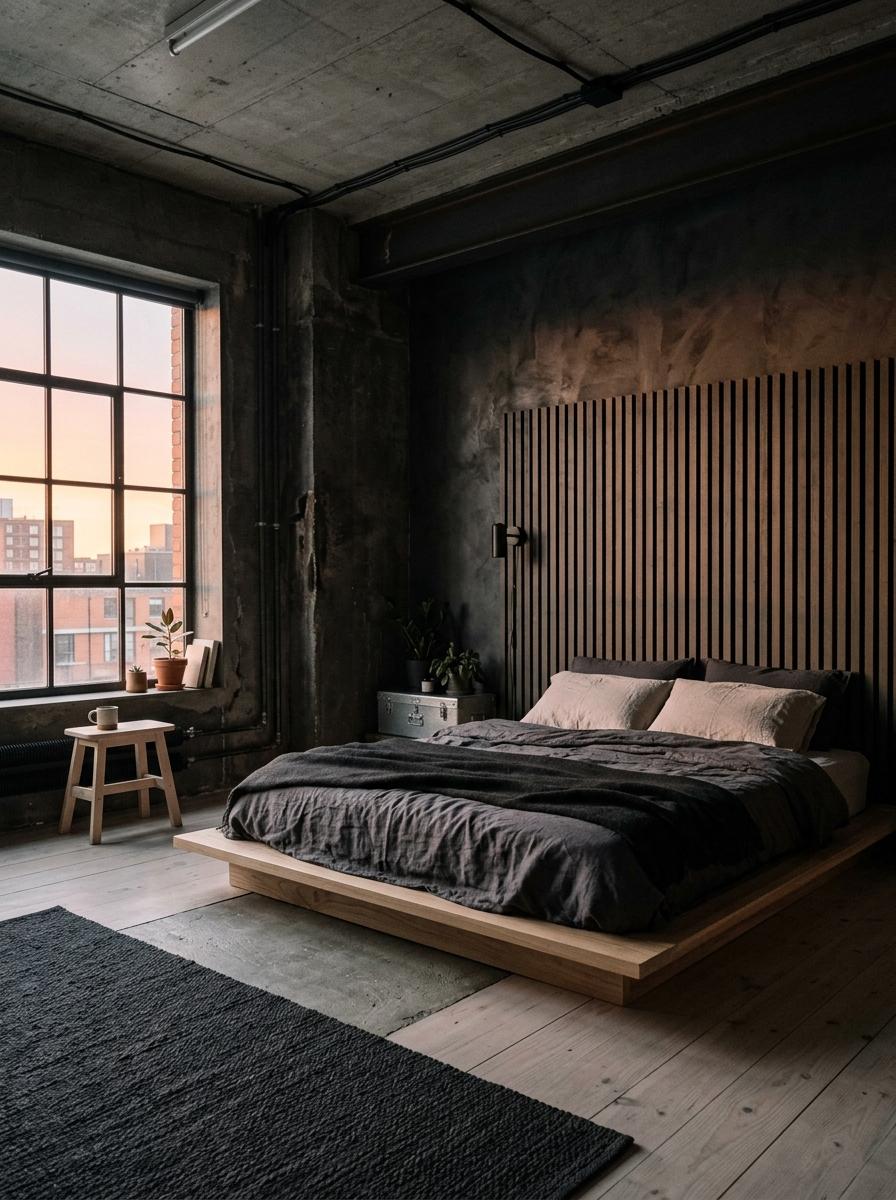

The residence was conceived as a meditation on contrast, where raw structural bones are softened by deliberate, mindful interventions. Within this shadowy sanctuary, monochromatic surfaces and unadorned alcoves radiate a curated stillness, stripping away the visual noise of the external world. Polished plaster pairs with pale planks to provide a grounded sense of tactile tranquility. Deep ebony tones anchor the room, while a low-slung platform bed stretches the perceived horizon, expanding the volume of the sleeping quarters. This intentional void invites a quiet dialogue between the industrial shell and its refined interior, harmonizing rugged concrete, rhythmic slats, and radiant light.
A Polished Industrial Space Using Japandi Design
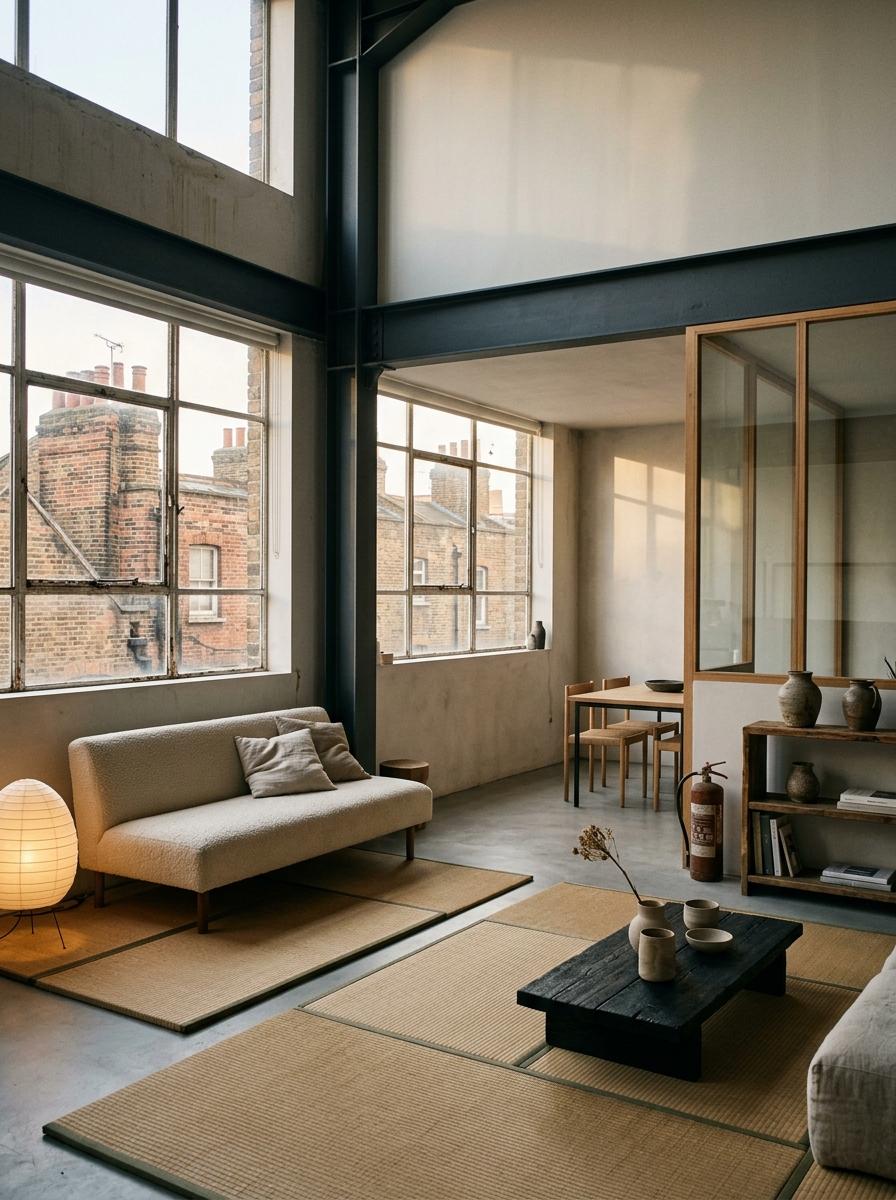

In this loft overlooking the weathered brickwork of London's Shoreditch district, the intersection of raw urbanism and Zen minimalism creates a sanctuary of structured fluidity. To achieve this aesthetic, You need to embrace the velvety coldness of micro-cement flooring paired against the fibrous warmth of hand-woven tatami mats. Note how the soaring, exposed steel beams-finished in a matte charcoal-do not impose weight, but rather frame the negative space, guiding the eye toward a low-slung sofa upholstered in nubby, tactile bouclé. The environment operates on a principle of raw refinement, where the brutalist honesty of the architecture is softened by the organic imperfections of reclaimed Shou Sugi Ban wood. As you move through the open plan, the transition from the slick, vitreous sheen of the glass partitions to the porous, earthen grit of unglazed ceramic vases triggers a profound physiological shift; the rhythmic pulse of the city outside fades, replaced by a lowering of the heart rate and a deep, visceral sense of groundedness. This is not merely a residence, but a study in how industrial rigidity can be exhaled into a soft, meditative breath.
Urban Bedroom Retreat With Japandi Style Focus
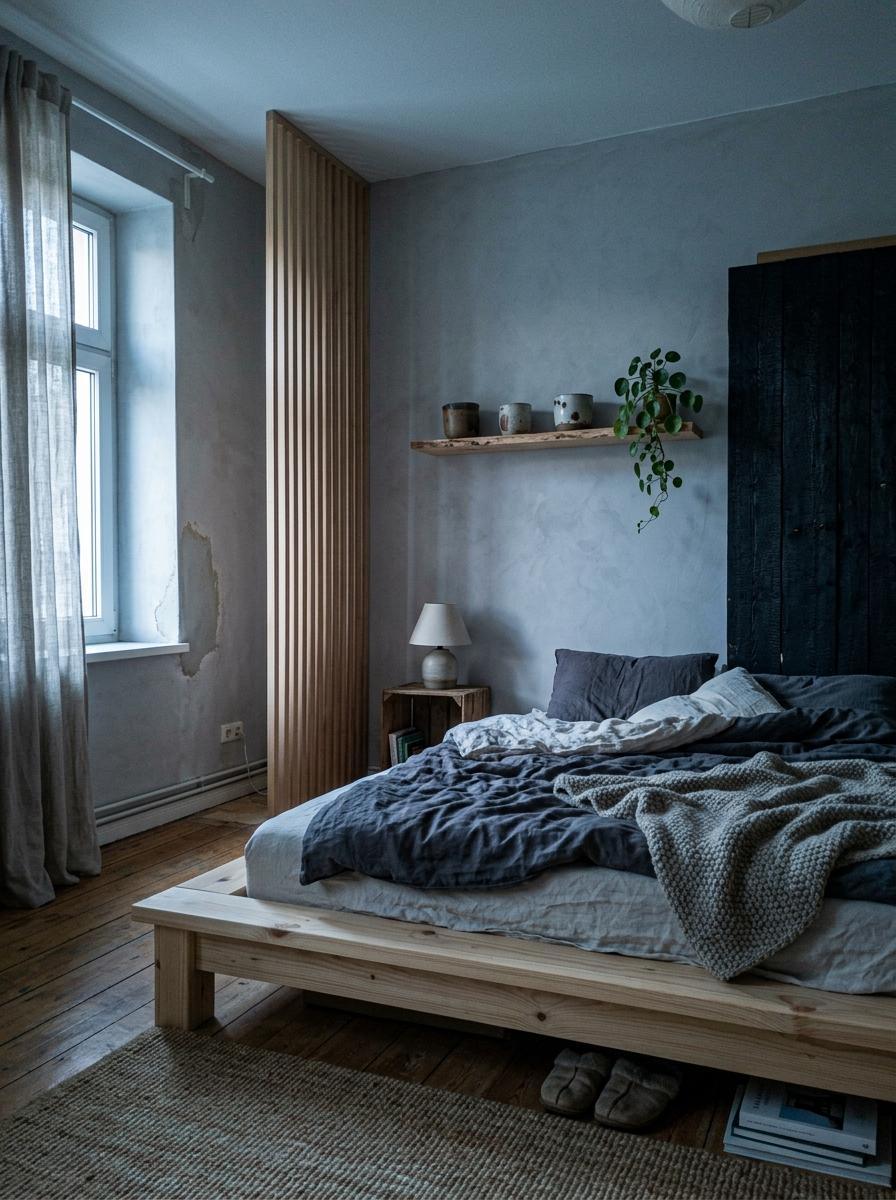

At the core of the urban bedroom retreat lies the intentional fusion of Scandi-industrial pragmatism and the profound aesthetic of Japanese wabi-sabi-a synthesis that yields a sanctuary of "curated stillness." This design language transcends simple minimalism by employing a rigorous dialectical pairing: the architecture demands a structural, monochromatic austerity, yet it is perpetually softened by the organic, tactile warmth of unrefined timber and low-slung silhouettes. To achieve this, You must look beyond mere furniture to the lexical precision of shou sugi ban textures and rhythmic verticality, ensuring every element serves a spatial purpose. The resulting atmosphere is defined by sensorial adjective stacking-a spatial experience that is simultaneously cavernous, enveloping, hushed, and restorative-offering a definitive domestic antithesis to the relentless kinetic energy of the city outside.



Comments