
To master the Japandi bedroom is to understand that the rigorous intentionality of Japanese minimalism, when synthesized with the soulful hygge of Scandinavian functionalism, yields a sanctuary defined by curated serenity. In these spaces, the layout must navigate the dialectical tension between spartan precision and tactile warmth; the floor plan must feel architecturally disciplined, yet remains profoundly inviting. By prioritizing shibui-an aesthetic of unobtrusive beauty-we select furniture arrangements that honor the negative space (the ma) while employing a sensorial palette of grounded, organic, and ethereal elements to ensure that maximizing a footprint never comes at the expense of the souls repose.
Bedroom Furniture Layout


Optimizing Small Bedroom Space With Japandi Furniture Layout
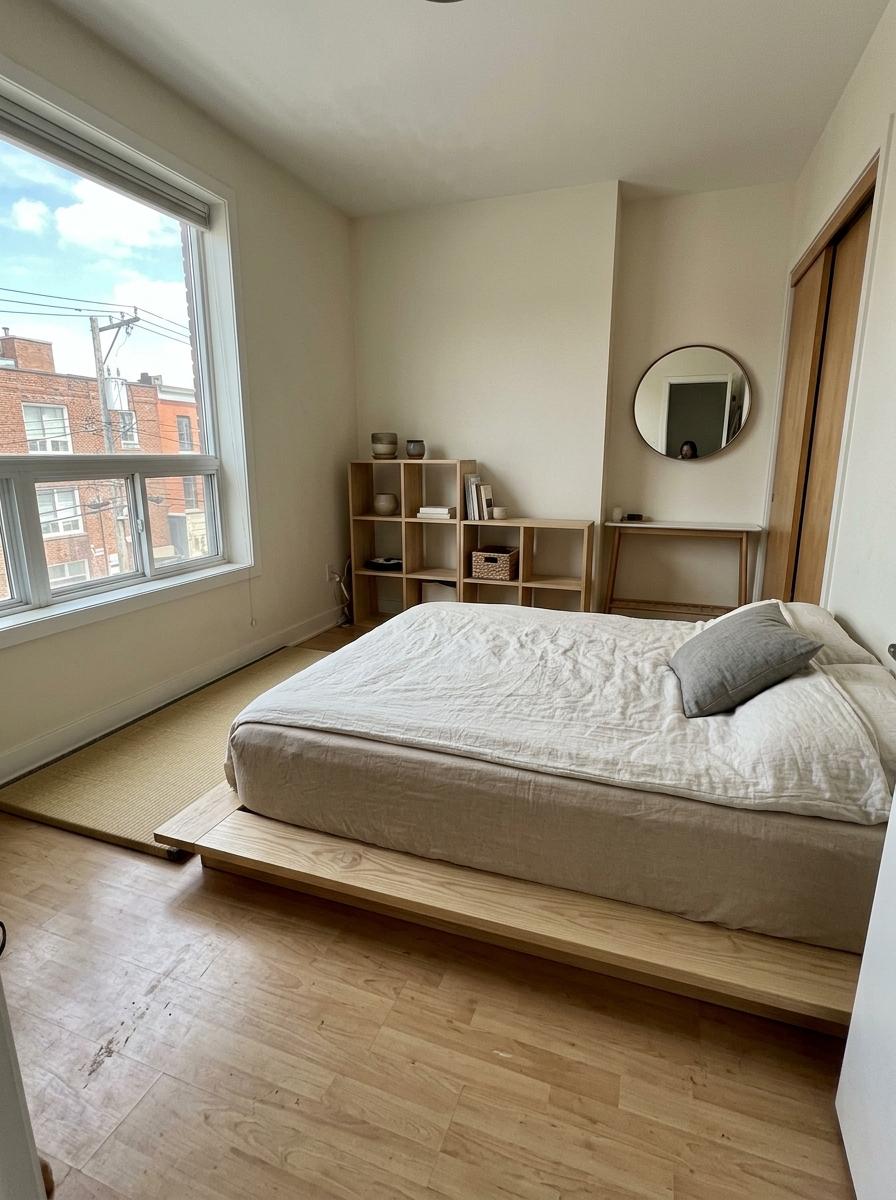

In the constrained geometry of a metropolitan studio, the small bedroom often exists as a pressurized vacuum where rest feels claustrophobic rather than restorative. To navigate this, You must embrace the expansive enclosure of Japandi design-a philosophy where the visual weight of the room is paradoxically lightened by the addition of deliberate, grounded forms. While the external world demands a chaotic accumulation of objects, the internal logic of the Japandi layout insists on a radical spatial editing, separating the room's structural shell from its living core. By introducing a low-slung platform bed crafted from open-pore solid ash and a single hand-loomed tatami mat, the floor plane is transformed into a tactile landscape rather than a mere thoroughfare. This intentional arrangement serves as a vital functionalist specification; by utilizing modular, multi-purpose joinery and maintaining clear sightlines under the furniture, the layout resolves the friction between limited square footage and the human need for atmospheric depth.
A Guide To Arranging Your Japandi Style Bedroom Furniture
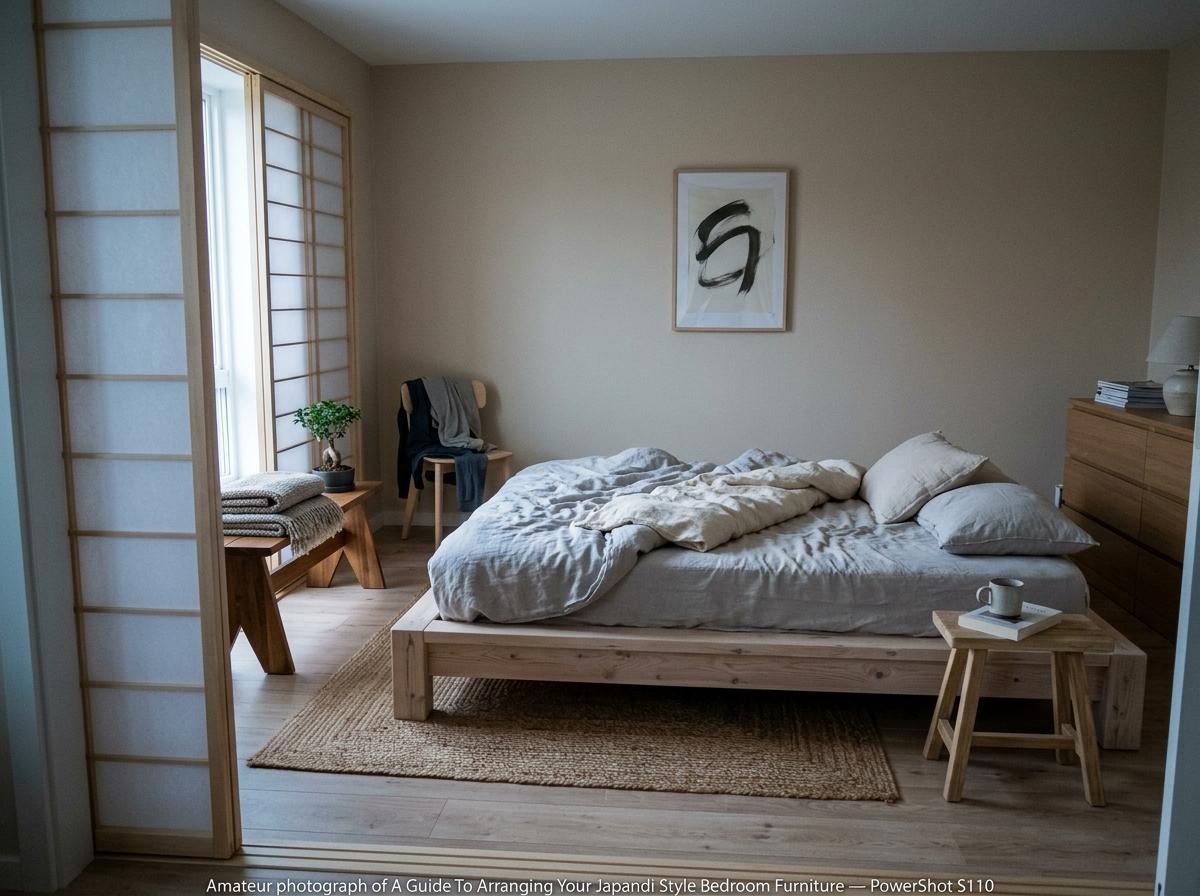

The layout of a Japandi retreat is meticulously informed by a philosophy of intentional placement, where each structural element was conceived to bridge the gap between Nordic utility and Japanese Zen. Within this void, one finds a profound sense of breathless beauty, curated through the use of spare silhouettes and unburdened surfaces that reject the chaotic clutter of modern life. Soft, sculptural shadows stretch across the floor, grounding the room in a quiet, contemplative calm. To maximize the atmosphere, the bed frames carve out low-profile horizons, while sliding partitions extend the visual reach of the walls to capture natural light. The final arrangement breathes through the purposeful use of negative space, the strategic alignment of low-slung timber, and the graceful balance of organic textures.
Creating Balance In A Modern Japandi Bedroom Layout
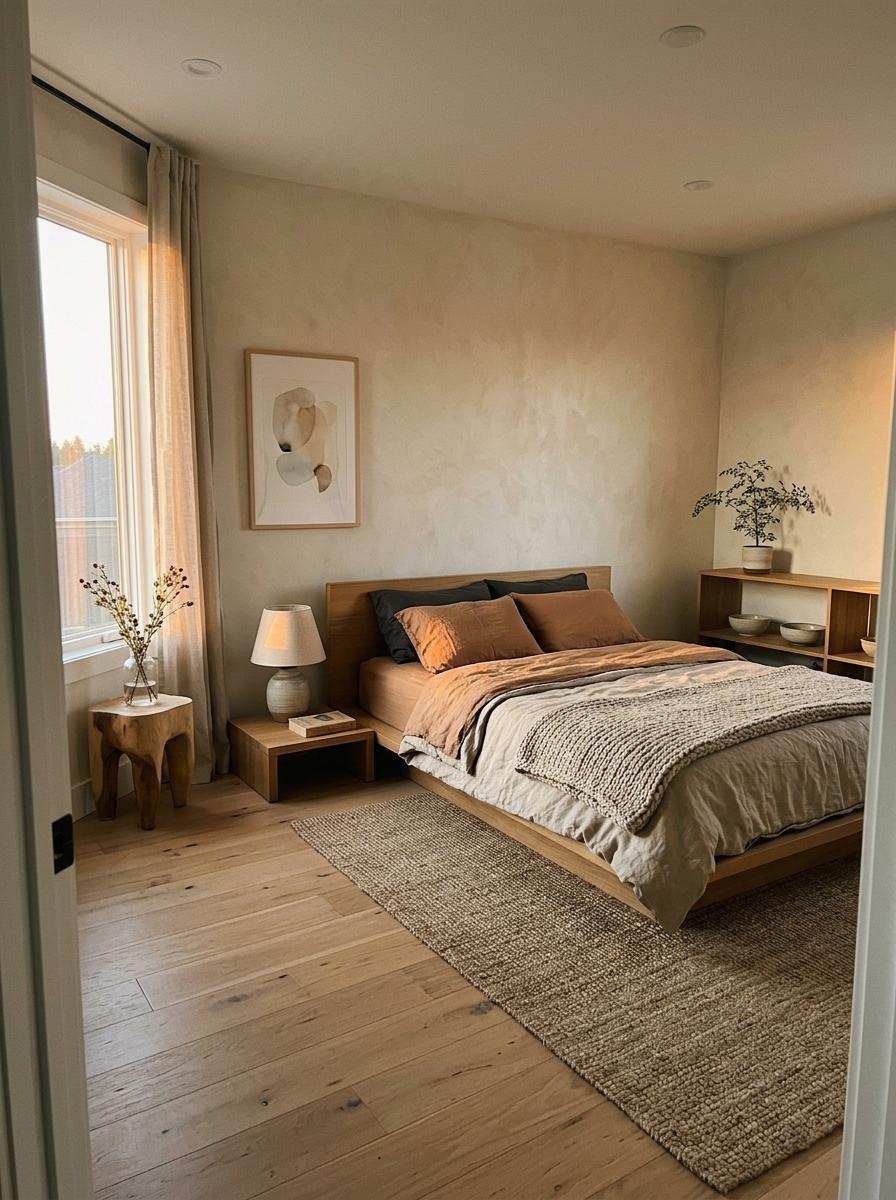

At its core, a modern Japandi bedroom is the result of a deliberate aesthetic fusion: the rigorous, functional geometry of Scandinavian modernism integrated with the ancient, transience-focused philosophy of Japanese wabi-sabi. This synthesis produces a space that is defined not by mere minimalism, but by a curated equilibrium. The layout must navigate a complex dialectical tension; it must feel profoundly grounded and structural, yet remain ethereal and spacious. To achieve this, You must move beyond basic furniture placement toward a study of spatial haptics and rhythmic voids. By layering visceral, earthen textures against the precision of low-profile joinery, the room transcends its utilitarian purpose. The result is an environment that is simultaneously stoic, enveloping, and liminal-a sanctuary where the architectural discipline of the North meets the meditative soul of the East.
The Art Of Minimalist Japandi Bedroom Furniture Placement
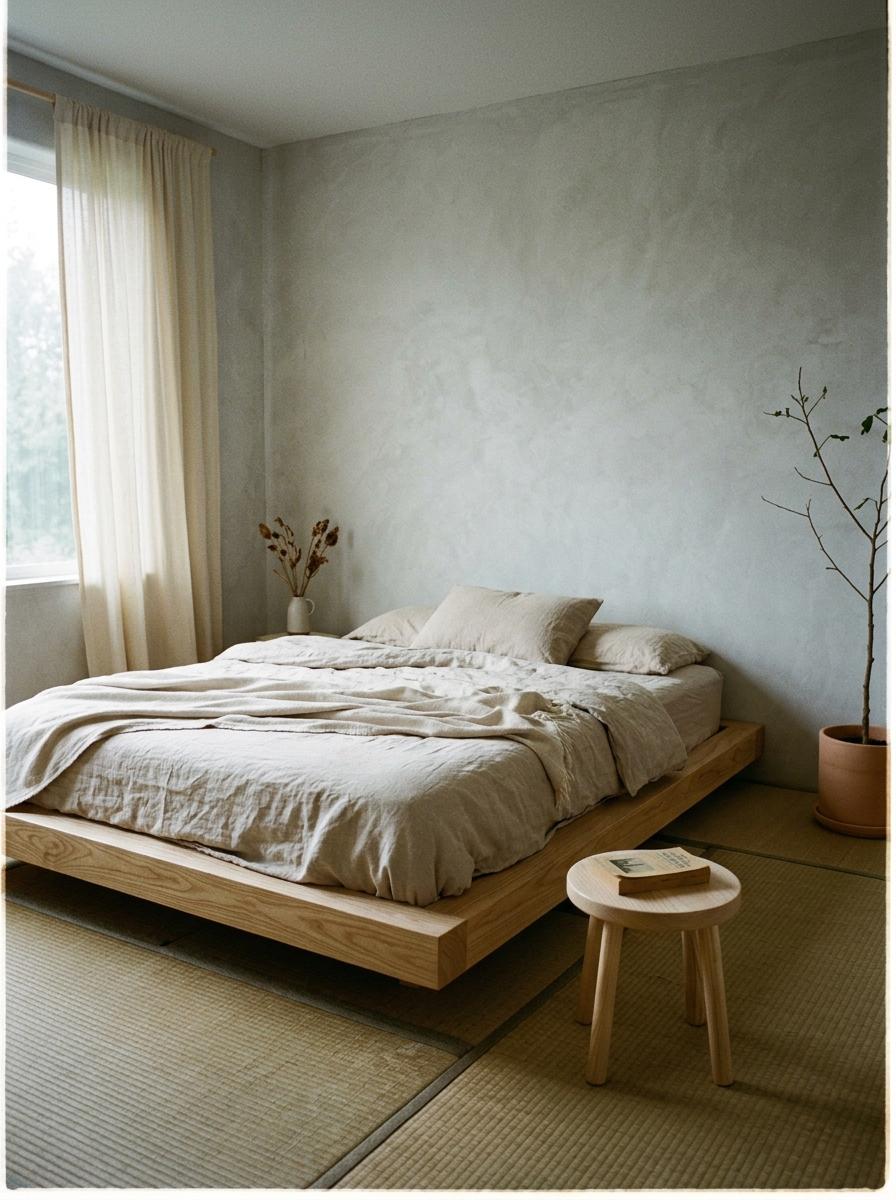

To master the layout of a minimalist Japandi sanctuary, we must first respect the architectural silence of the room. Begin by positioning a low-slung platform bed, crafted from open-pored, tactile solid ash, against the primary wall to anchor the space. Note how the deliberate void beneath the frame creates a heavy lightness, where the physical mass of the timber seems to levitate above the floorboards. This specific arrangement-inspired by the spatial economy found in Kyoto's Aman resorts-demands that you strip away the superfluous. As your eyes trace the grain of the fibrous, hand-loomed tatami mats against the cool, velvet-matte clay walls, your heart rate begins to synchronize with the room's rhythmic simplicity. The transition from the chaotic external world to this structured vacuum triggers an immediate visceral release, lowering cortisol levels as the physical geometry of the furniture manifests as a profound psychological exhale.
How To Achieve A Functional Japandi Bedroom Layout
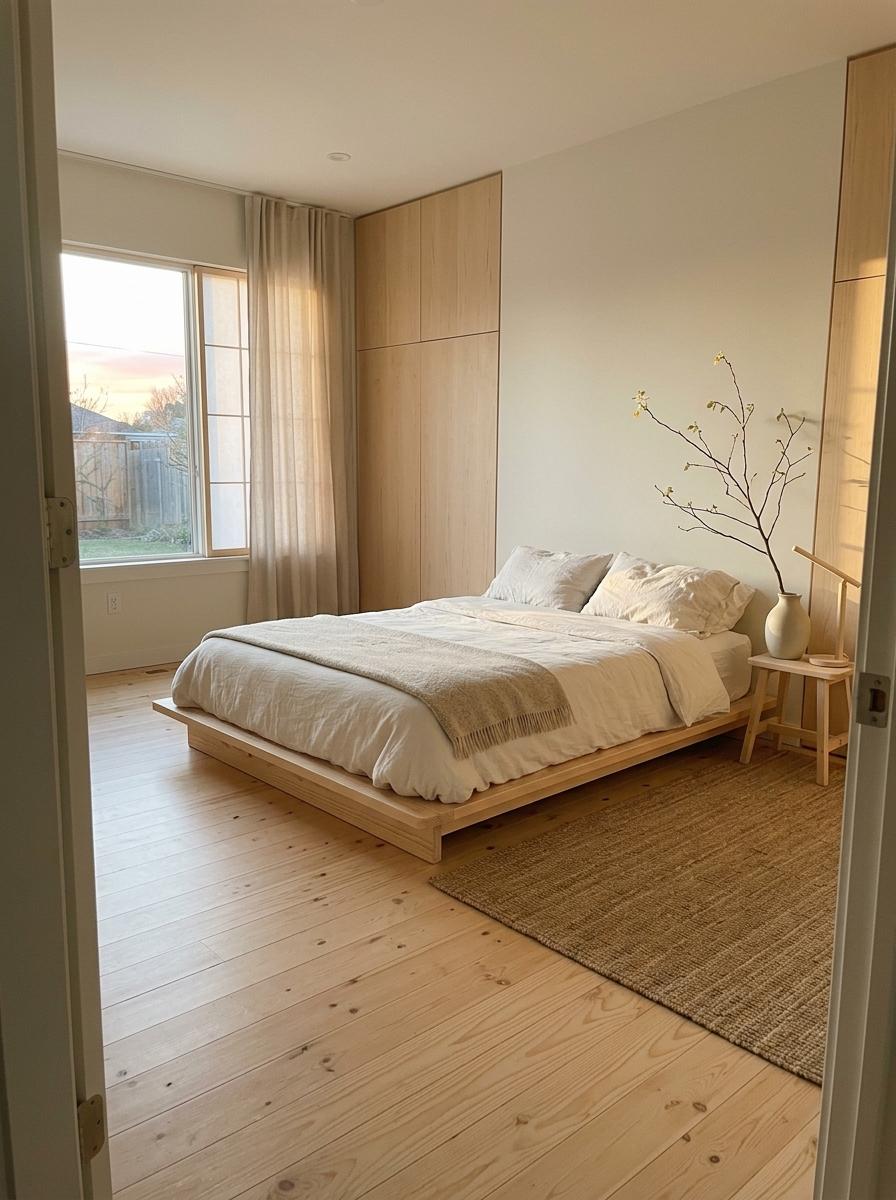

The layout is meticulously orchestrated to prioritize equilibrium over excess, ensuring that every square inch serves a deliberate purpose. Within this void, tactile textiles and muted minerals define a landscape of hollowed harmony, where the absence of clutter fosters a profound sense of stillness. Pale planks of polished pine stretch across the floor, drawing the eye toward the horizon of the room. This deliberate spatial arrangement expands the visual field, grounds the furniture in stillness, and invites the light to linger. To truly master the aesthetic, the plan integrates a low-profile bedframe, a singular statement branch, and a discreet system of hidden storage.
Step Inside A Master Suite With Japandi Furniture Layout
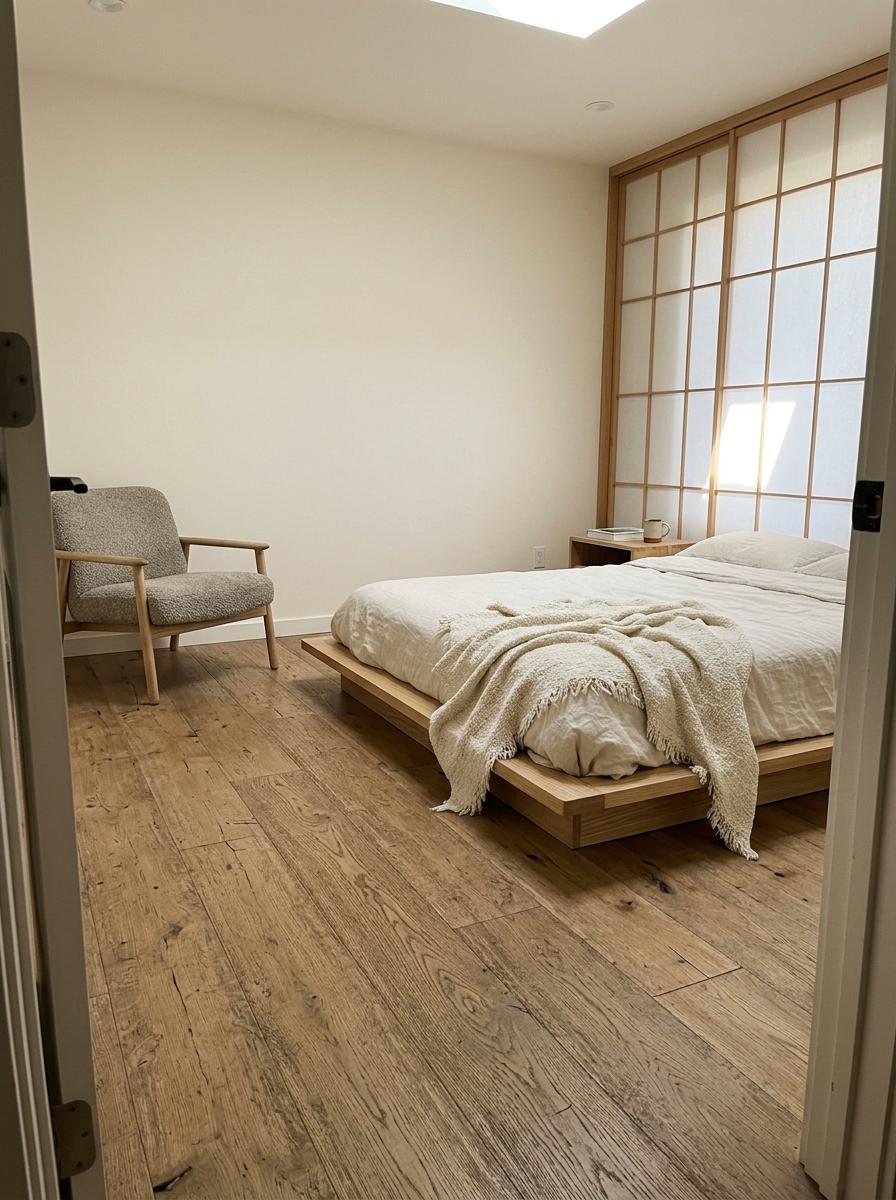

Cross the threshold into this Kyoto-inspired sanctuary, where the floorboards of reclaimed, wire-brushed white oak provide a grounding, tactile grit beneath your feet. Note how the placement of the low-slung platform bed-hand-carved from open-pore solid ash-dictates a flow that is both intentional and effortless, guiding your gaze toward the floor-to-ceiling shoji screens. The room exists in a state of ordered chaos, where the stark minimalism of the furniture layout is softened by the organic, nubby irregularity of hand-loomed bouclé upholstery. As your eyes settle on the curated silhouette of a Muuto lounge chair, the physical tension in your shoulders dissolves into a rhythmic stillness, a physiological shift that mirrors the quietude of a traditional Zen tea house. This is more than a bedroom; it is a study in Japandi precision, where every calculated void in the floor plan invites a profound, deep-breath sigh of relief.
Designing A Cozy Retreat With Japandi Bedroom Furniture Ideas
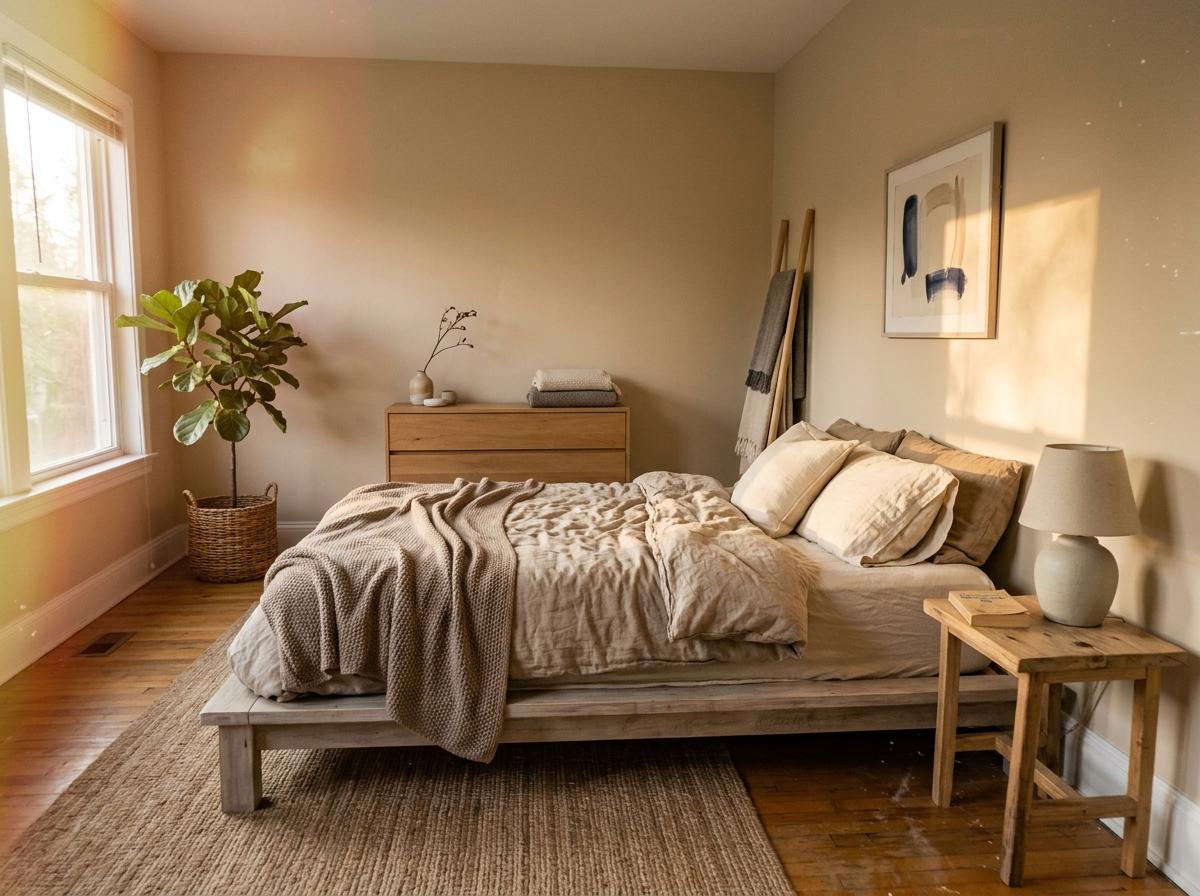

At its core, Japandi is the aesthetic result of a rigorous synthesis: the pragmatic, rustic warmth of Scandinavian hygge fused with the transcendental, transience-focused ethos of Japanese wabi-sabi. In the context of a bedroom retreat, this manifests as a curated environment where the architectural austerity of low-profile tatami frames meets the plush, tactile indulgence of organic linen layers. The design language is one of profound dialectical pairing; the furniture must appear structurally rigorous yet visually weightless, grounding the room in a sense of permanence while facilitating a fluid, ethereal energy. To achieve this, we look beyond mere utility toward a sensorial layering of materials-utilizing reclaimed timbers that feel weathered, hushed, and ancient, set against matte ceramics and hand-loomed textiles that evoke an atmosphere of profound, sequestered stillness.
Modern Minimalist Bedroom Layout Featuring Japandi Aesthetics
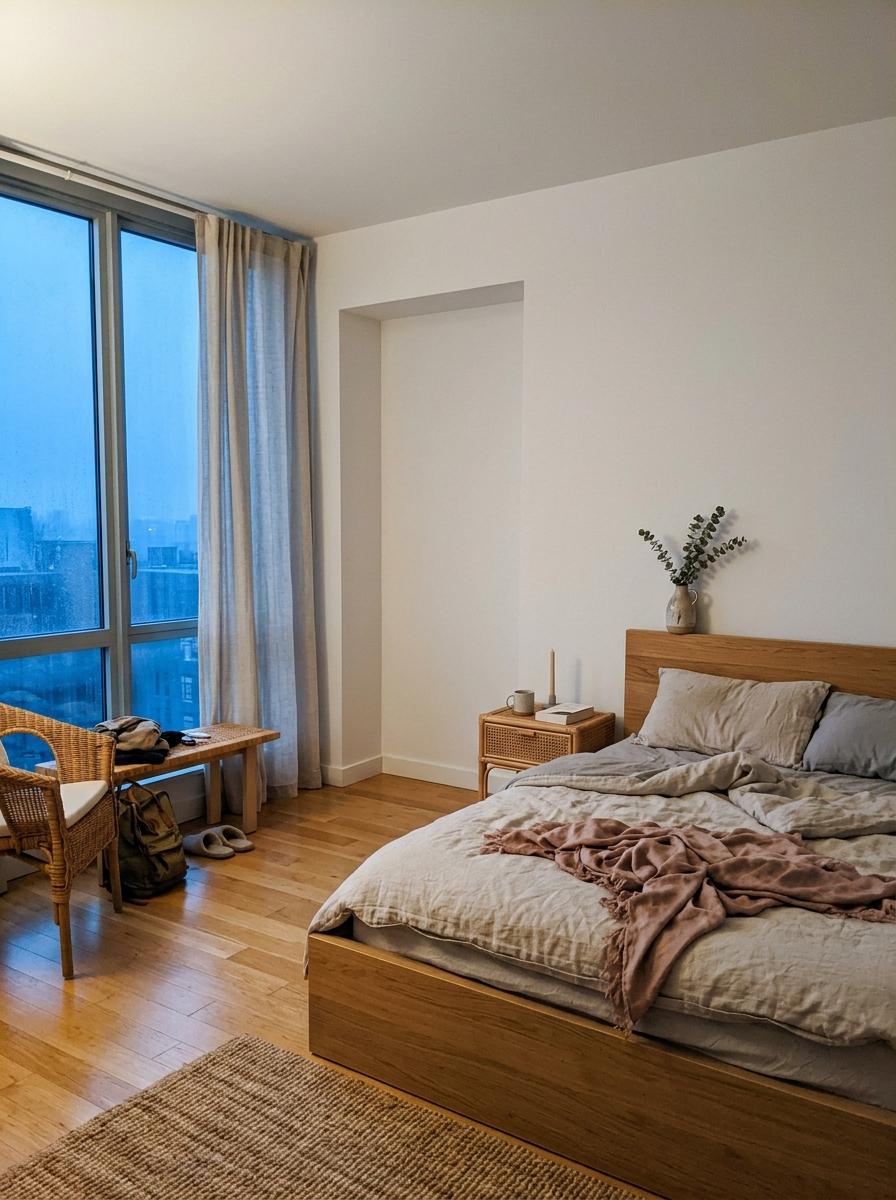

This modern minimalist sanctuary was conceived as a deliberate departure from the chaotic density of urban living. Within this serene space, vacant surfaces and unadorned alcoves cultivate a profound sense of stillness, stripping away the superfluous to reveal a skeletal grace. The layout leverages light to stretch the perceived boundaries of the room, while low-profile furnishings anchor the volume to the earth, grounding the inhabitant in a quiet, curated equilibrium. This composition harmonizes the warmth of wood, the softness of silk, and the resilience of rattan.
The Perfect Japandi Bedroom Furniture Arrangement For Small Spaces
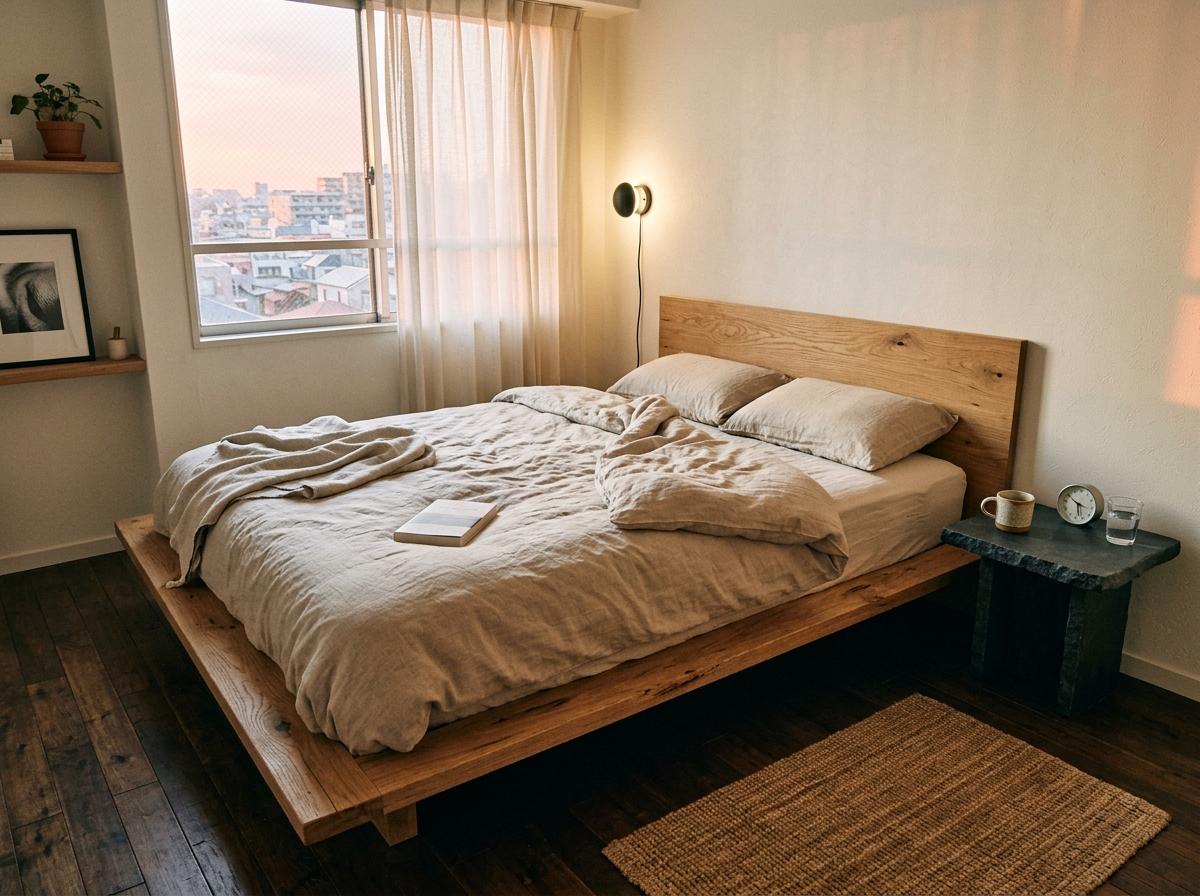

To master the layout of a compact sanctuary, we need to embrace the philosophy of Functional Minimalism. Begin by anchoring the room with a low-slung platform bed crafted from open-pore solid white oak; its velvety, fibrous grain provides a tactile grounding that prevents the piece from overwhelming the limited square footage. Note how the intentional void beneath the frame creates an illusion of expanded floor area, a technique frequently mastered in the high-density micro-apartments of Setagaya, Tokyo. This arrangement thrives on the cluttered emptiness of Japandi style-a paradox where every square inch is meticulously utilized yet feels breathably vacant. As your eyes trace the clean, horizontal lines toward a nightstand of matte-honed Basalt, the visual tension of the room dissolves. This shift from the rugged, cool stone to the warmth of the wood triggers a rhythmic slowing of the pulse, transitioning your state of mind from the frantic pacing of urban life to a profound, visceral stillness that only a balanced interior can provide.
Refined Simplicity In A Japandi Bedroom Furniture Design
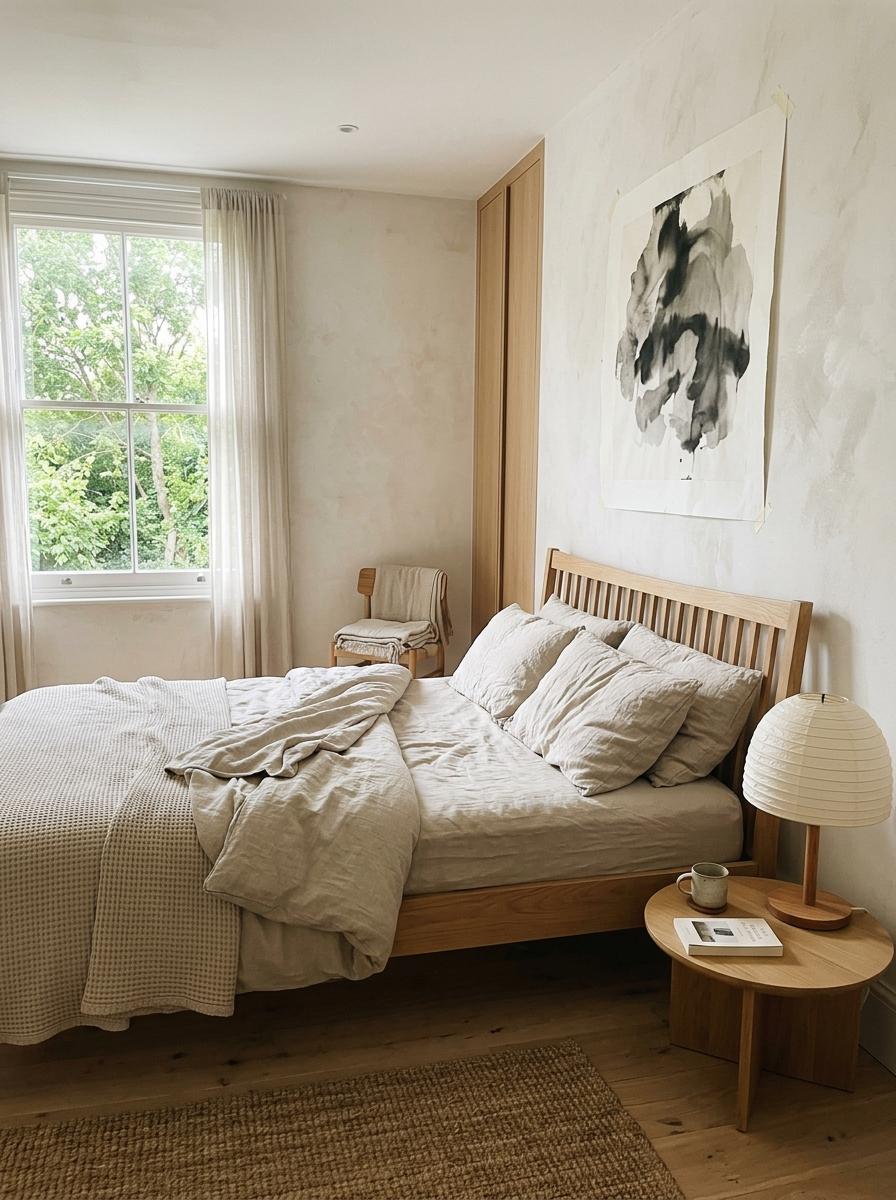

The evolution of the Japandi bedroom represents a significant shift from the rigid, ornate heavy-timbered chambers of the 19th century to the weightless, light-filled sanctuaries we seek today. In this project, we explored a structured fluidity, where the solid presence of white oak furniture meets the ethereal lightness of paper-thin textures, creating a space that feels both grounded and airborne. Located in the leafy, prestigious enclave of Highgate, London, the residence serves as a serene retreat for a repeat client-a partnership that allowed for a deeper, more nuanced exploration of their minimalist lifestyle. The final design achieves its refined simplicity through a precise technical synthesis of geometric linearity, tactile materiality, and intentional negative space, proving that the most profound comfort lies in the balance of what is kept and what is removed.
A Look At Sustainable Japandi Bedroom Layout Solutions
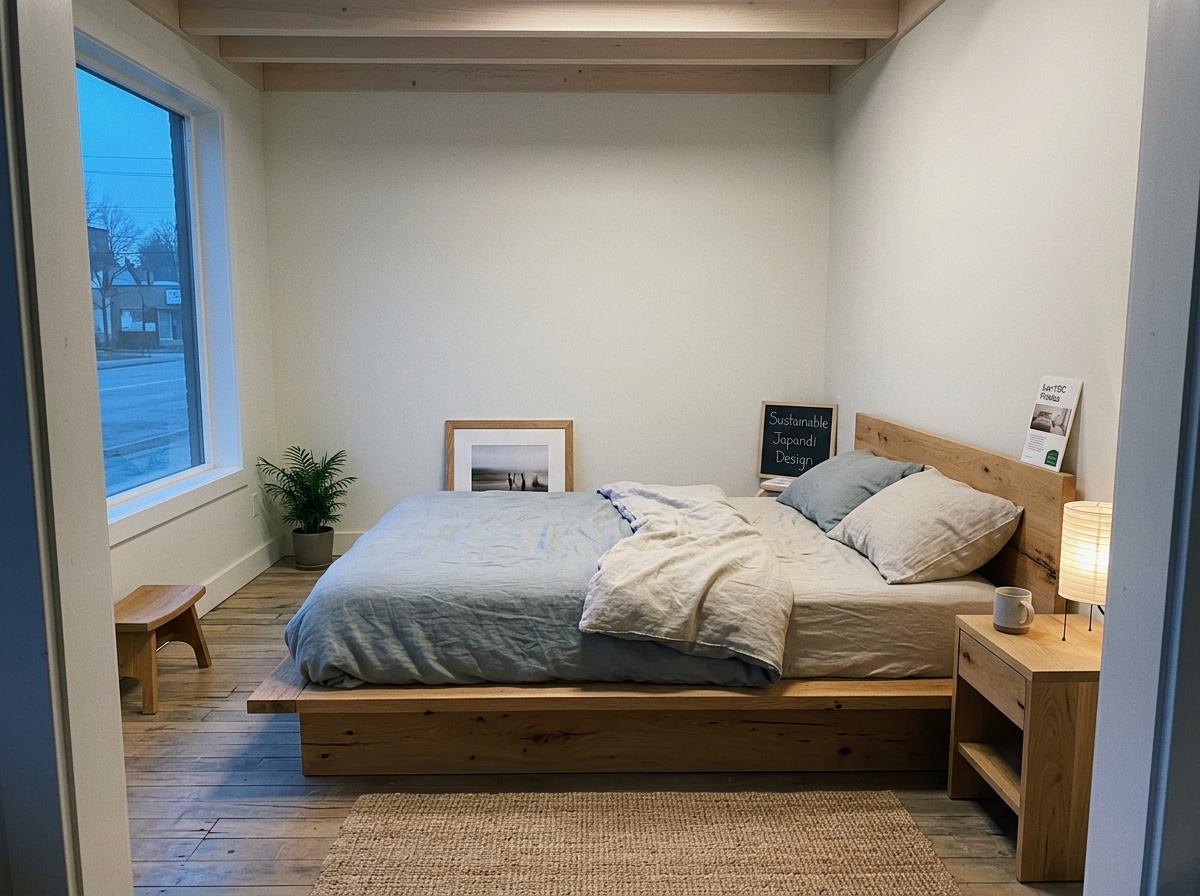

I recently found myself standing in a showroom that felt like a sensory assault-a "maximalist dream" cluttered with synthetic velvets, heavy mahogany frames, and a restless energy that seemed to shrink the room's actual footprint. By contrast, when I sat down with a local craftsperson to discuss the blueprint of a conscious home, the atmosphere shifted entirely. "Sustainability," he noted, pausing to run a thumb over a sample of reclaimed white oak, "isn't just about the raw material... it's about the spatial breathability we allow within a floor plan." This dialogue between ethics and aesthetics is where we find the sweet spot of the Japandi bedroom: a sanctuary where the spatial flow of Scandinavian hygge meets the wabi-sabi appreciation for natural imperfection. By prioritizing low-VOC finishes and a minimalist orientation that honors the room's circadian rhythm, we can transform a chaotic sleeping quarter into a curated retreat. This intersection of environmental responsibility and intentional arrangement serves as the foundation for exploring modern, sustainable layout solutions.
Transforming Your Sleep Space With Japandi Furniture Positioning
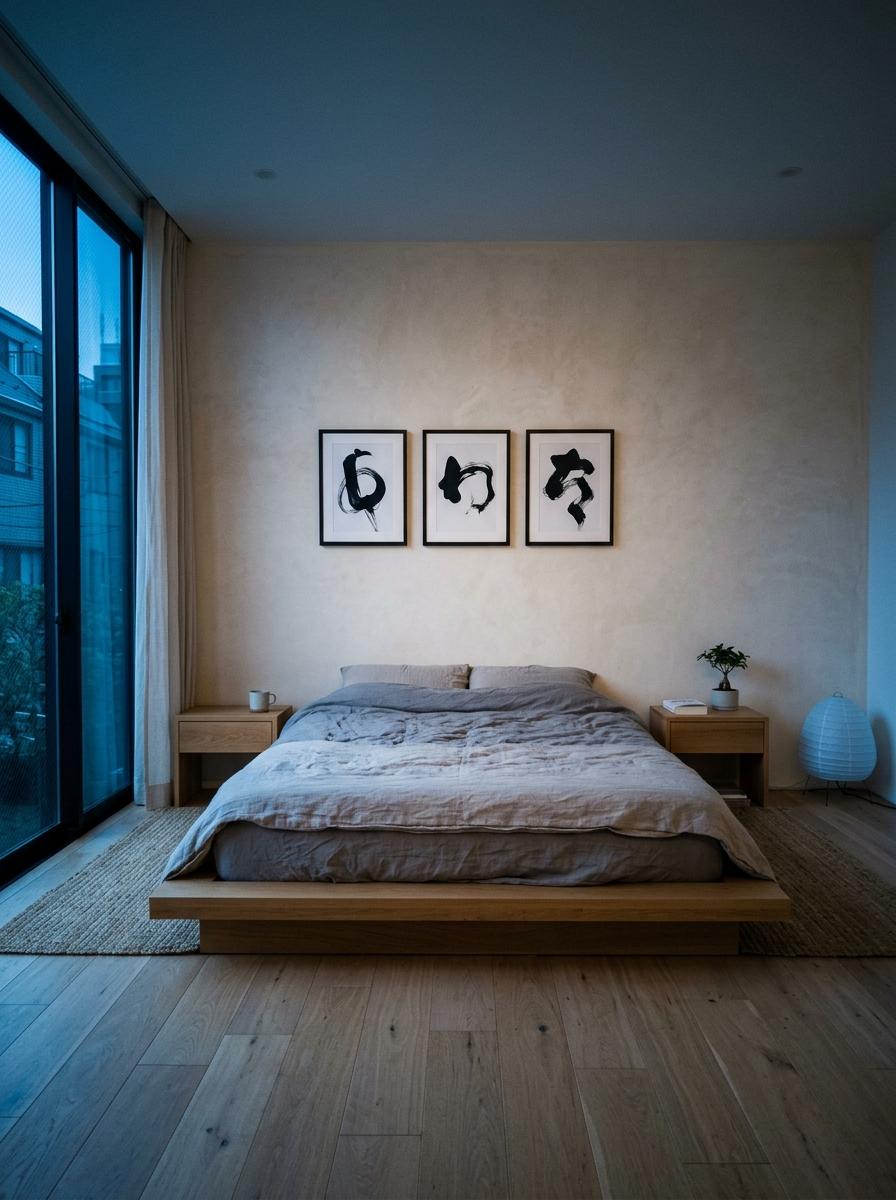

In my recent study of restorative interiors, I looked back at the rigid, ornamental heavy-handedness of the 19th-century bedroom, where sleep was often secondary to a display of social status. Today, this has evolved into a quest for "organic precision," a stylistic juxtaposition where the raw imperfections of nature are governed by the strict, intentional lines of Japanese minimalism. While observing a newly finished residence in the heights of Tokyo's Aoyama neighborhood, the power of spatial arrangement became undeniable. This project was particularly revealing as the owners are repeat clients of the studio I interviewed; their ongoing partnership serves as a testament to the long-term psychological benefits of this design philosophy. Ultimately, the successful transformation of their sleep space was achieved through a technical synthesis of low-profile furniture heights, bilateral symmetry, and the strategic calibration of negative space.
Elegant And Practical Japandi Bedroom Layout Concepts
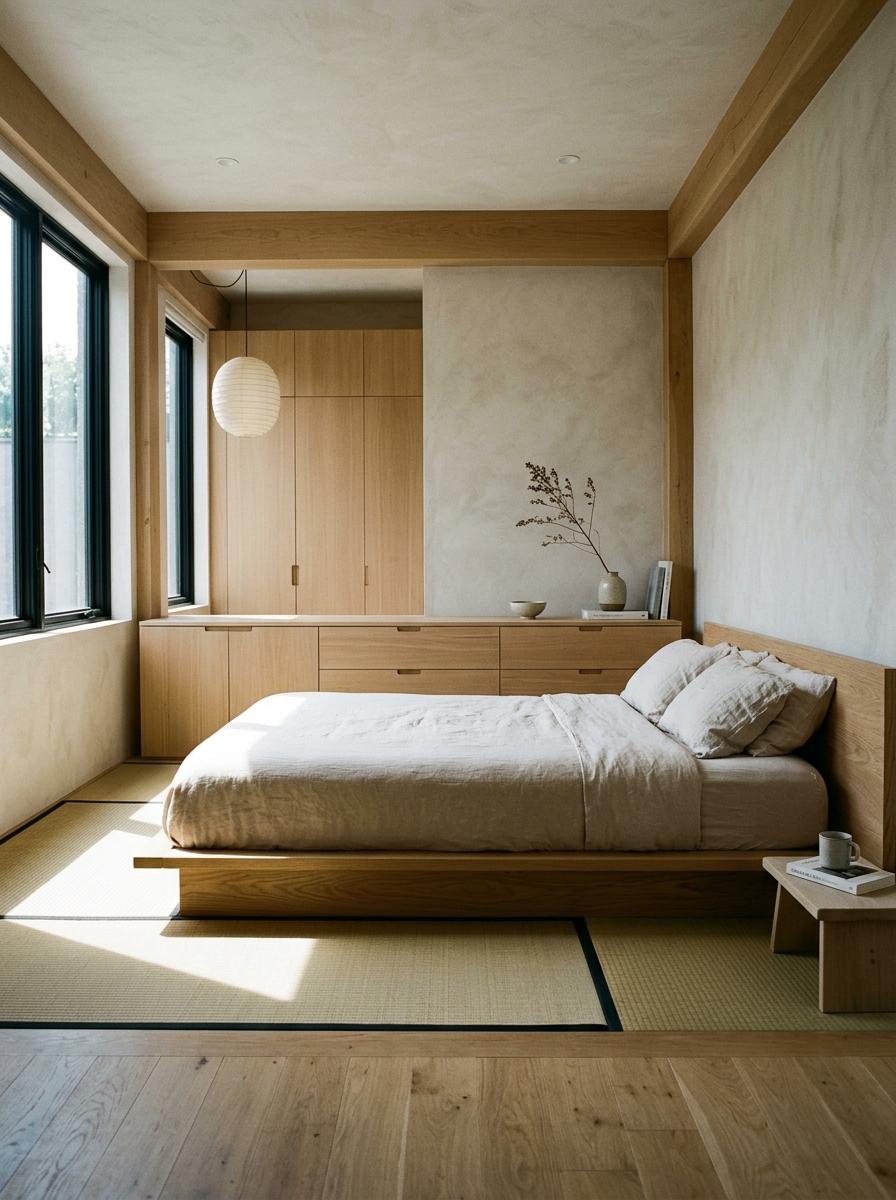

The Japandi bedroom exists as a curated sanctuary where the architectural skeleton of the home retreats to allow for a profound psychological stillness. This "maximalist minimalism" governs the floor plan, proving that a space can be rigorously sparse yet emotionally overflowing. While the external world demands a frantic, multi-directional kineticism, the internal layout of the Japandi chamber is dictated by a singular, linear intentionality, focusing all energy toward the act of rest. Tactile grounding begins with the low-slung bed frame-crafted from open-grain white oak or carbonized bamboo-which lowers the room's center of gravity to foster an immediate connection to the floor. By integrating sunken tatami matting with modular, handle-less cabinetry, the layout solves the industrial dilemma of storage; it hides the clutter of daily existence behind seamless surfaces, ensuring that the room's utility remains invisible, leaving only the quiet dialogue between shadow and light.
Maximizing Comfort In A Tiny Japandi Bedroom Layout
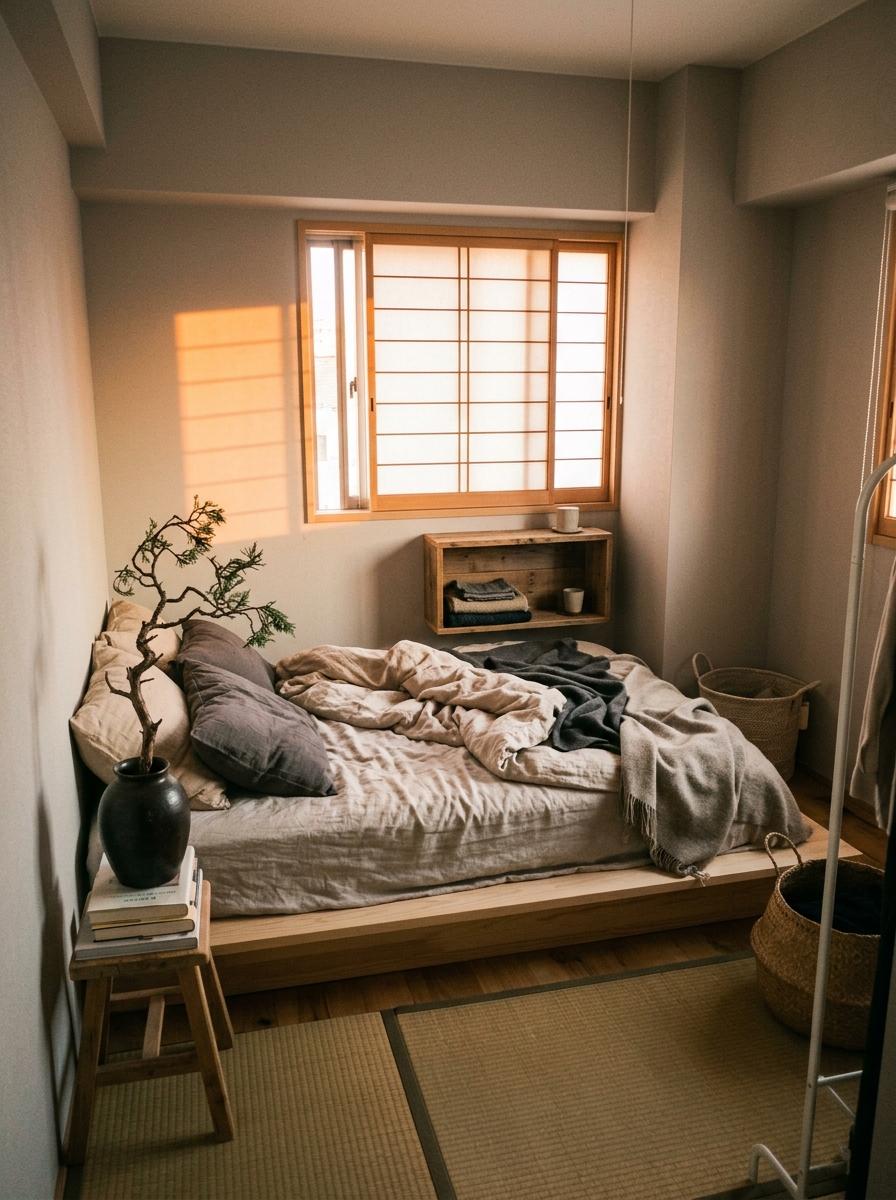

I remember standing in a cluttered, maximalist flat in London-where a "gallery wall" was really just a cacophony of visual noise and the air felt heavy with the scent of stagnant velvet-when I first realized that square footage is rarely the enemy of comfort. "The secret to a small space," a Tokyo-based designer told me during a recent interview, pausing to adjust a single, gnarled cedar branch in a ceramic vase, "isn't about what you can fit inside, but about the ma, or the negative space, you allow to breathe between the objects." We were discussing the delicate calibration of a Japandi sleeping quarters, where the raw, rustic textures of Scandi hygge meet the monastic precision of Japanese minimalism. By replacing a bulky, ornate bed frame with a low-profile plinth and trading heavy drapes for translucent washi screens, a room can pivot from a claustrophobic cell to a curated sanctuary. This intentional shift toward tactile materiality and spatial economy reveals that maximizing a tiny bedroom is less about storage solutions and more about mastering the quiet dialogue between function and serenity.
Harmony And Flow In A Japandi Bedroom Furniture Setting
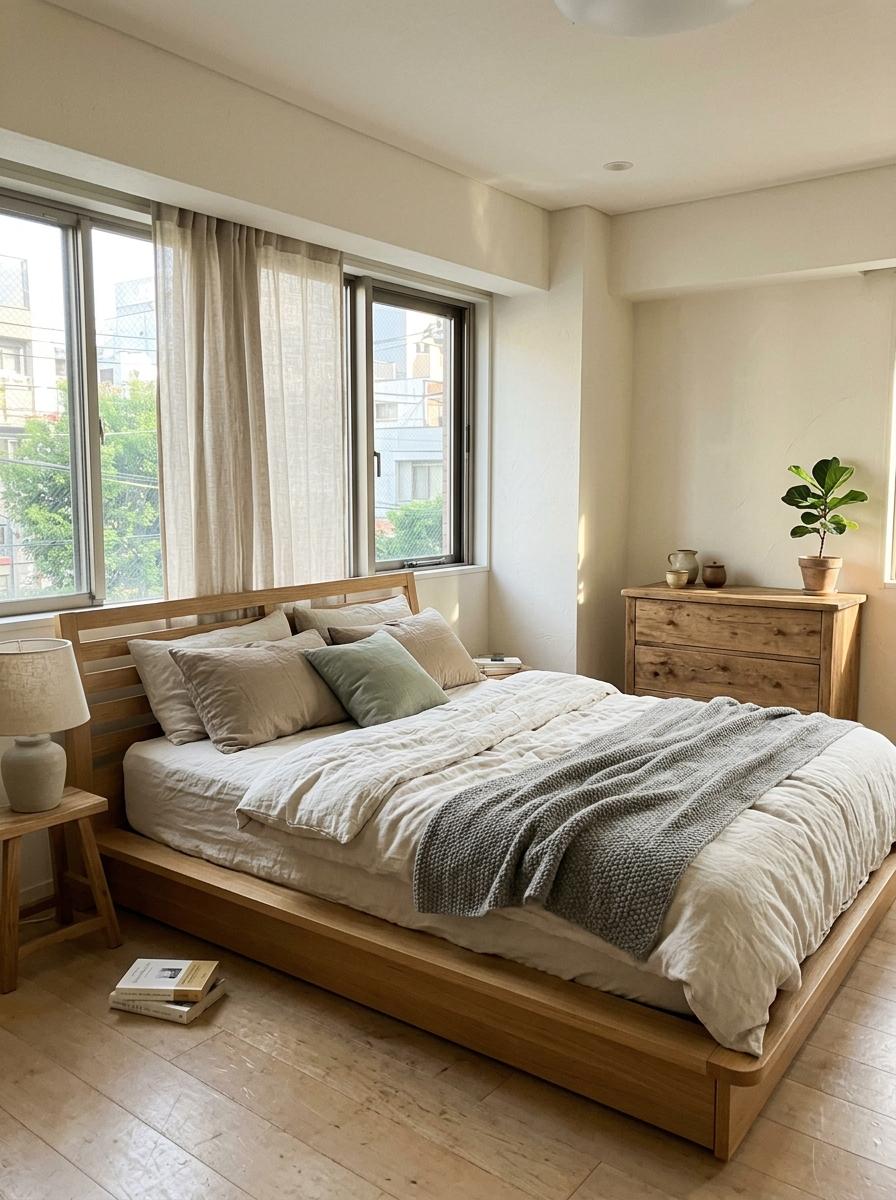

The evolution of the sleeping chamber has journeyed from the heavy, ornate tapestries of the Edo period and the rigid formality of Victorian quarters to a modern era that prioritizes mental clarity over material display. In this particular residence, we find a striking example of structured chaos, where the rigorous geometry of Japanese minimalism meets the rustic, untamed warmth of Scandinavian hygge. Situated in the heart of Minami-Aoyama, where the city's architectural pulse is most refined, this bedroom serves as a sanctuary for a repeat client who sought to deepen our previous explorations of spatial tranquility. The final composition succeeds through a deliberate technical synthesis of low-profile joinery, diffused natural light, and a curated spatial hierarchy, ensuring that every piece of furniture functions as a silent anchor within a fluid, rhythmic floor plan.
Discover The Best Japandi Bedroom Furniture Layout Strategies
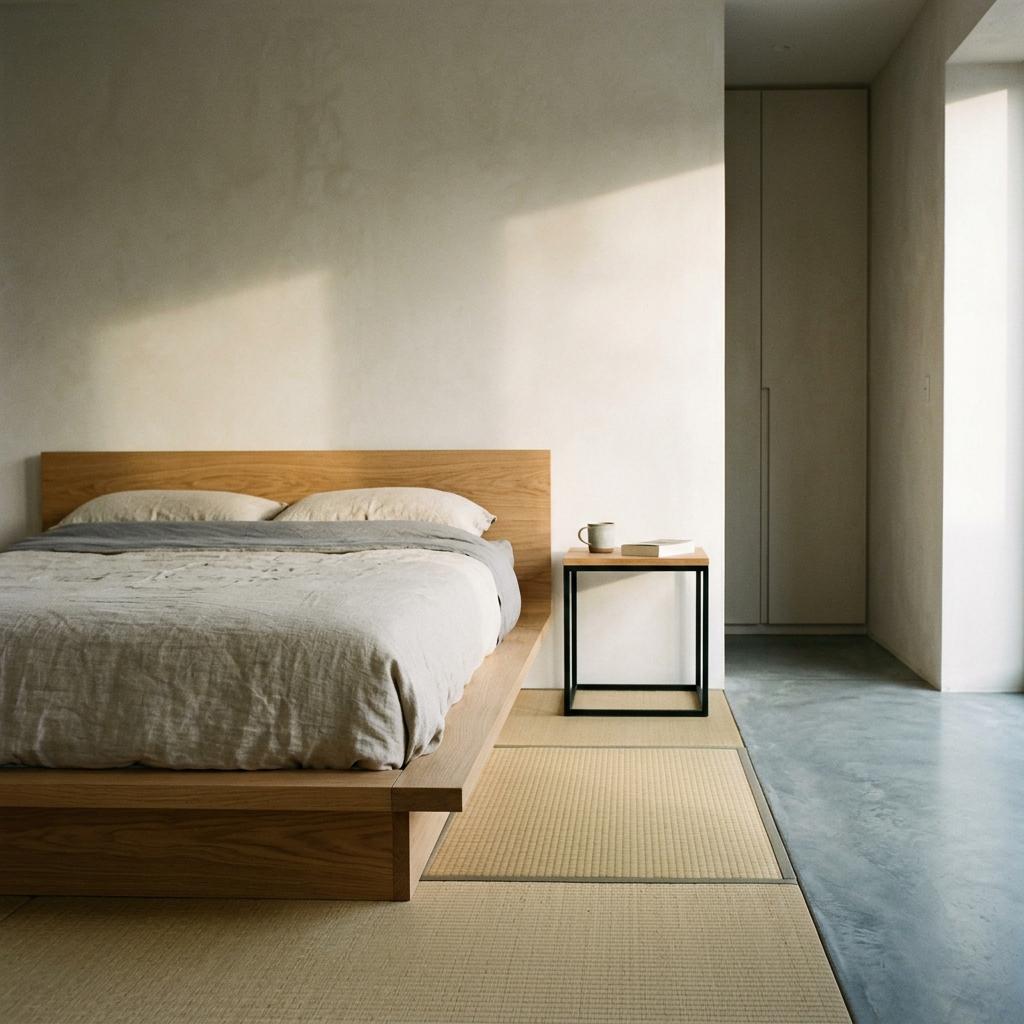

To master the Japandi bedroom layout, You must first curate a foundation of sculptural, open-pored oak and calibrated matte-black steel, ensuring each piece serves as an anchor of tactile permanence within the void. Note how the placement of a low-slung platform bed away from the primary wall creates a deliberate path for "Ma"-the Japanese concept of pure space-inviting you to navigate the room with unhurried intention. This arrangement achieves a complex simplicity; it is a meticulously choreographed emptiness that feels both expansive and grounding. As your eyes trace the fibrous, hand-loomed tatami transitioning into the cool, poured-concrete surfaces reminiscent of a Tadao Ando masterpiece in Naoshima, a profound biological shift occurs. The visual silence of the hidden joinery lowers your cortisol levels, replacing the frenetic hum of urban life with a visceral stillness that slows the heart rate and prepares the spirit for restorative rest.
A Quiet Haven Built Around Japandi Bedroom Layout Principles
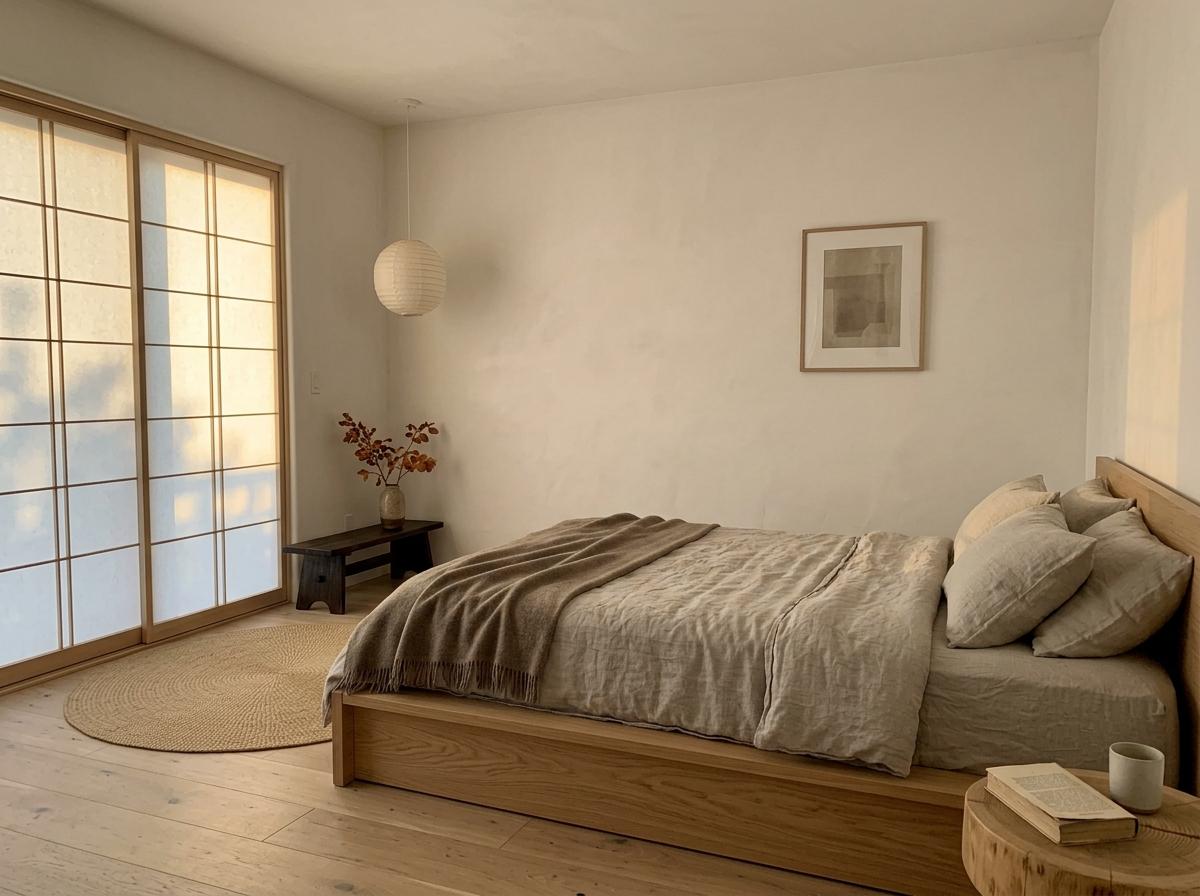

The structural harmony of this retreat was meticulously conceived through a deliberate application of Japandi bedroom layout principles, where every spatial decision serves a singular intent. Within this serene sanctuary, monochromatic tones and sparse silhouettes foster an environment of weightless tranquility, free from the friction of modern clutter. The soft shadows and silken surfaces suggest a quietude that calms the senses, while the room's open geometry breathes life into the void. This layout expands the floorplan, carves out a niche for reflection, and anchors the bed amidst a sea of low-slung timber, woven fibers, and unadorned stone.
Strategic Furniture Placement For An Authentic Japandi Bedroom
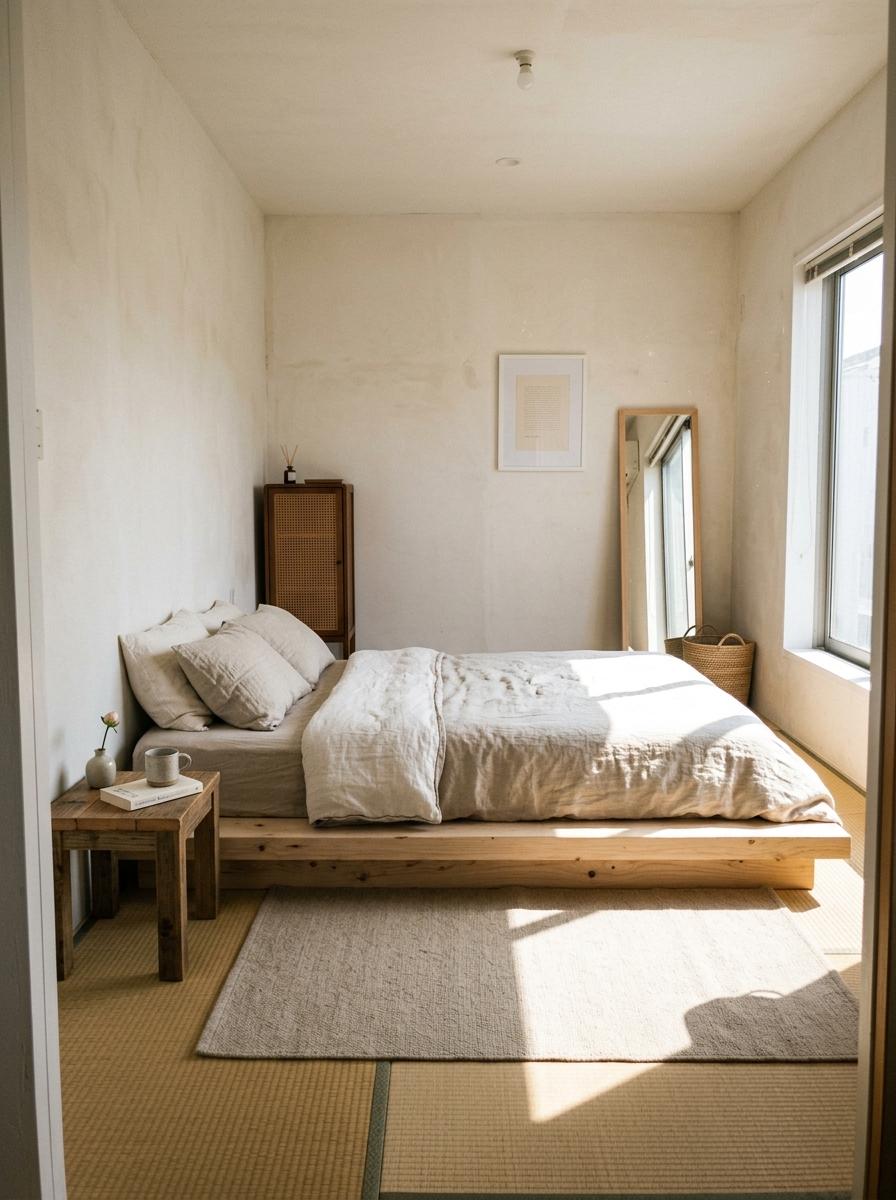

While interviewing a minimalist woodworker in a sun-drenched Kyoto atelier last spring, I watched him nudge a low-slung bed frame just inches to the left. "The flow," he whispered, his hands tracing the grain of the reclaimed oak, "isn't merely about where the object sits, but where the shadow falls." This concept of ma-the intentional use of negative space-is often lost in the cluttered cacophony of Western maximalism, where every corner is suffocated by heavy drapes and ornate chests. In contrast, the Japandi bedroom breathes through a curated restraint, prioritizing a clean sightline and the tactile honesty of organic materials over sheer volume. By understanding how to balance these functional silhouettes within a room's architectural envelope, we can transform a chaotic sleeping quarter into a sanctuary of quietude. This delicate interplay between the stillness of Shaker-style utility and the warmth of Scandinavian hygge begins not with the furniture itself, but with the strategic geometry of its arrangement.
Simple Steps To A Balanced Japandi Bedroom Furniture Layout
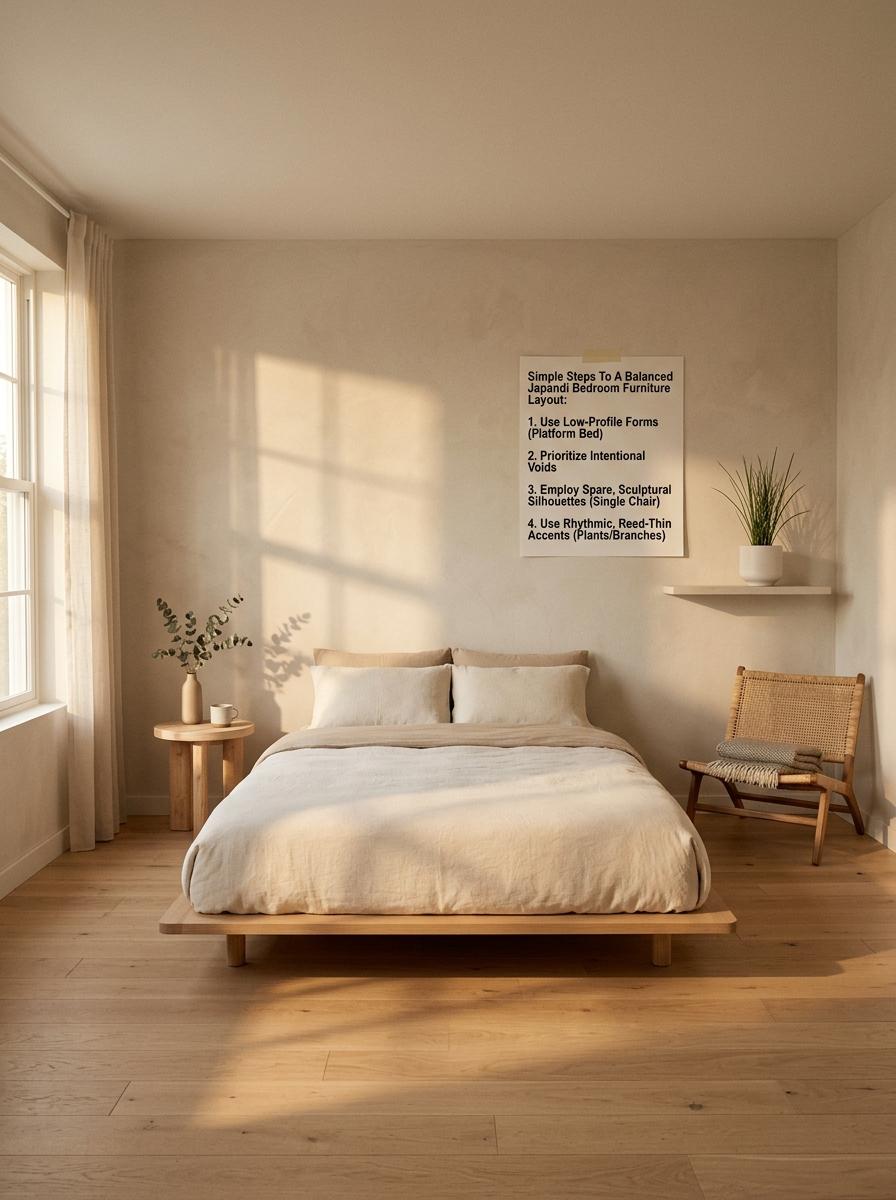

The foundational blueprint of the Japandi sanctuary is established through a careful curation of low-profile forms and intentional voids. Within this environment, a hushed harmony is maintained by employing spare, sculptural silhouettes that resist the urge to clutter. Soft shadows stretch across the floor, guided by the deliberate placement of a platform bed that anchors the room without overwhelming the visual field. This layout carves out quiet corners, stretches the perceived dimensions of the walls, and breathes life into the stillness. To achieve true equilibrium, You can prioritize a low-slung frame, a singular statement chair, and a rhythmic arrangement of reed-thin accents.
Stylish Living With A Thoughtful Japandi Bedroom Layout
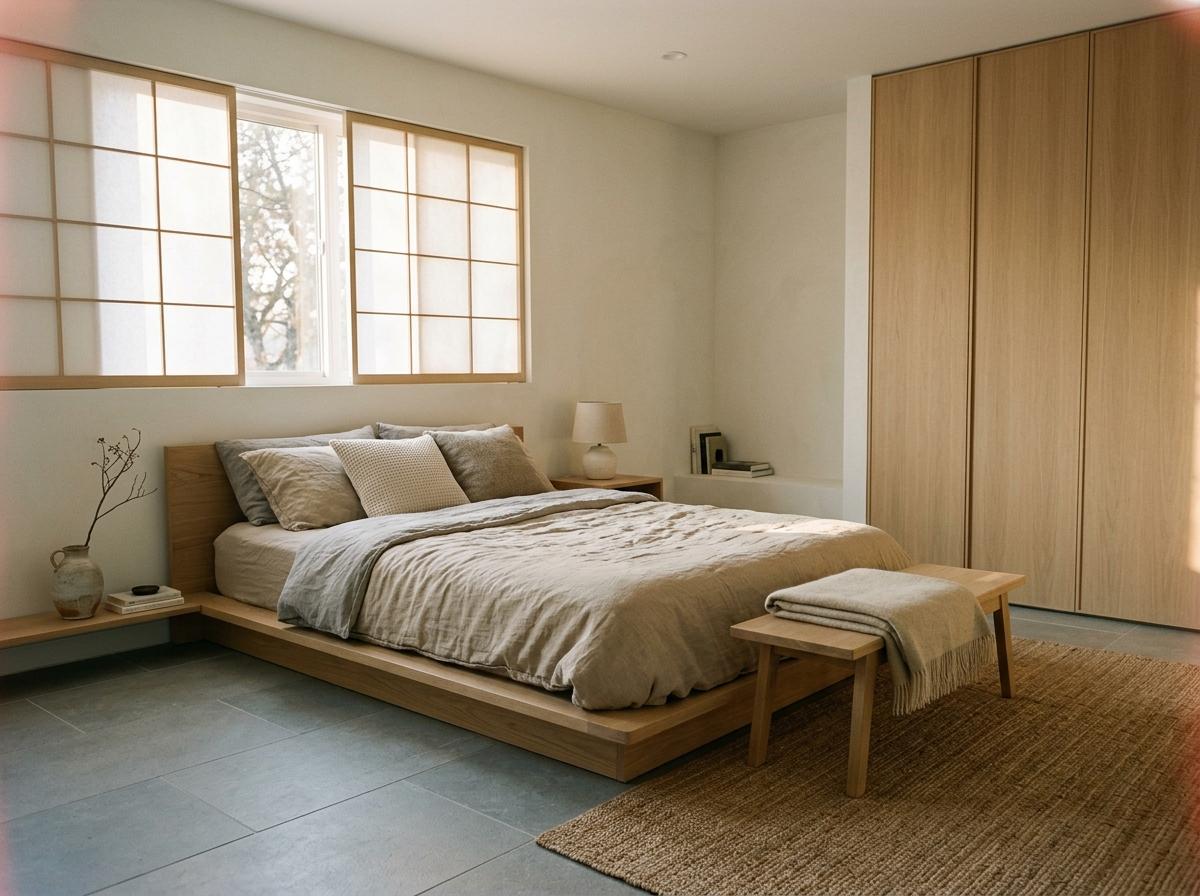

To achieve a truly stylish Japandi bedroom, we must look beyond mere minimalism and embrace the structural integrity of the space. Consider the tactile allure of open-pore solid white oak paired against the fibrous, hand-pressed texture of washi paper screens. This combination defines the aesthetic: a calculated harmony between Scandinavian durability and Japanese fragility. Note how the low-profile bed frame creates an intentional void in the upper half of the room, forcing the eye to rest not on objects, but on the curated atmosphere itself. The success of this layout lies in its stark opulence-a paradox where the absence of clutter serves as the ultimate luxury. As you transition from the cooling touch of a honed limestone floor to the cushioned warmth of a tatami-inspired jute rug, your nervous system begins a rhythmic deceleration. The physical grounding of these materials triggers a visceral release of tension, lowering the heart rate and inviting a state of restorative stillness. Drawing inspiration from the Aman Kyoto or the quiet residential pockets of Stockholm's Södermalm, this layout proves that a thoughtful bedroom is not just a place to sleep, but a sensory sanctuary designed for psychological recalibration.




Comments