
By synthesizing the meditative austerity of Japanese minimalism with the tactile pragmatism of Scandinavian hygge, we arrive at a definitive architectural ethos: the Zen Japandi retreat. This aesthetic alignment demands a rigorous dialectical balance, where the cool, reductive geometry of Wabi-sabi meets the soft, structural warmth of Nordic craftsmanship-creating a space that feels profoundly disciplined yet intuitively nurturing. To transition the bathroom into a mindful sanctuary, one must curate an environment of haptic resonance; it is a composition defined by weathered, earthen textures, hushed monochromatic palettes, and a luminous, vaporous tranquility that elevates daily ablutions into a transcendent ritual of restoration.
Zen Japandi Bathroom
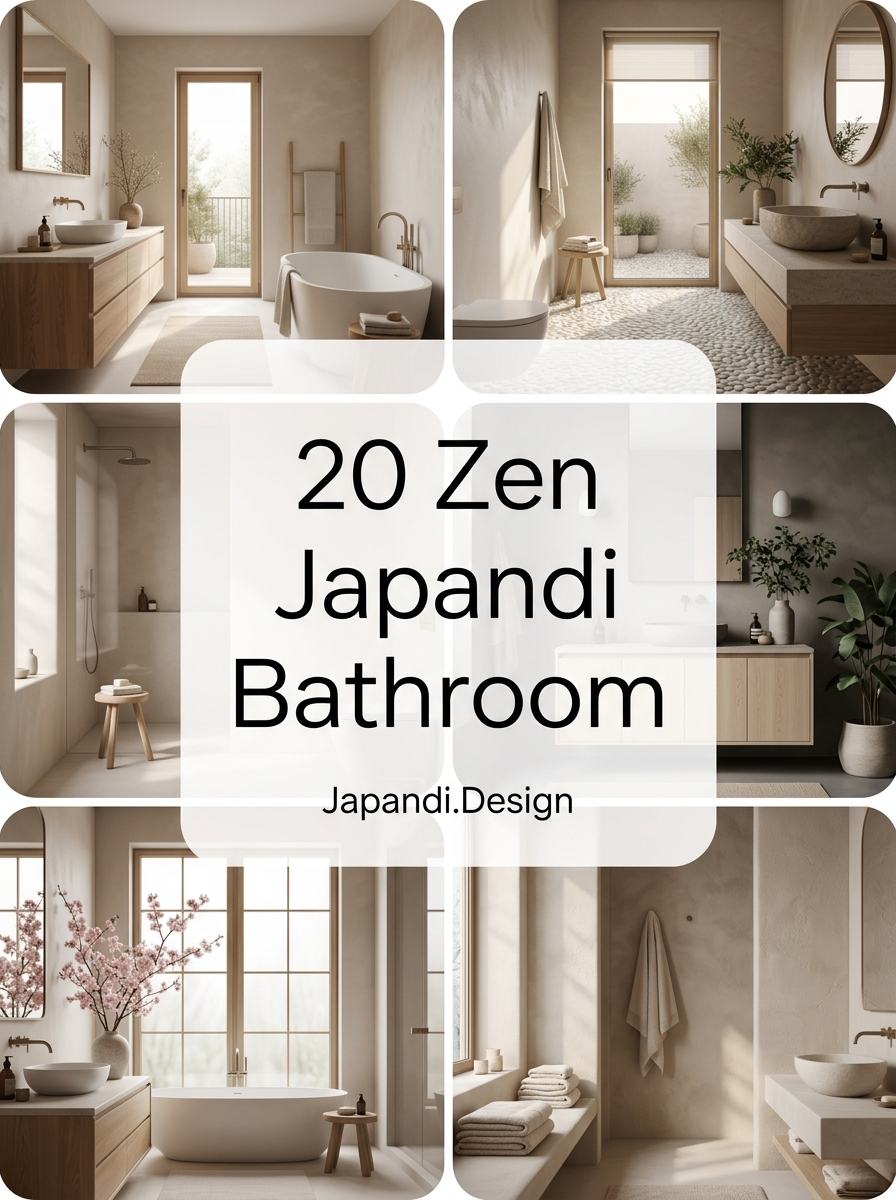

Zen Japandi Bathroom Design Ideas For The Modern Home
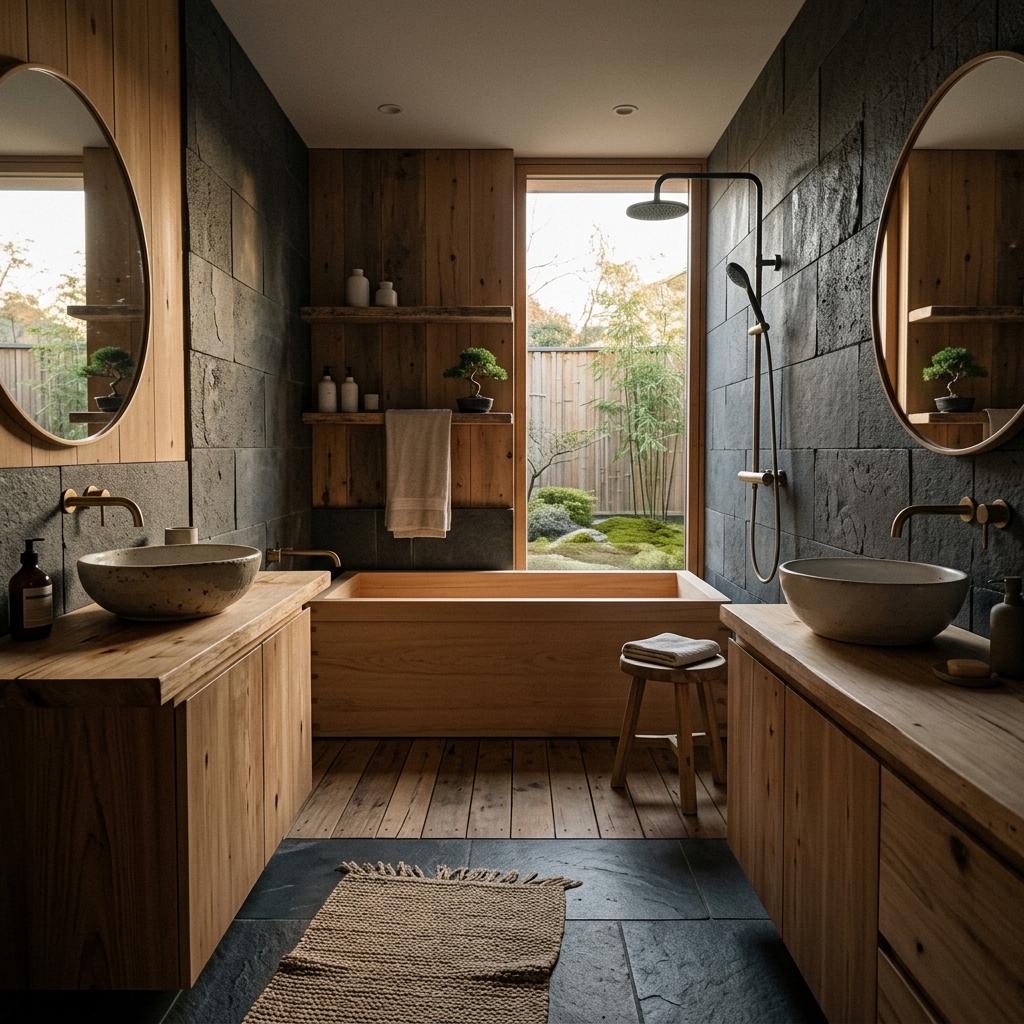

In the hushed sanctuary of the modern home, the Japandi bathroom emerges not merely as a utility room, but as a liminal chamber where the sterile hum of the city dissolves into the weighted silence of a forest floor. This aesthetic achieves a structured spontaneity, a deliberate arrangement of form that feels entirely accidental, reconciling the rigid geometry of Scandinavian minimalism with the weathered, organic imperfections of Japanese wabi-sabi. While the external world demands constant kinetic energy, this internal micro-climate insists on stasis, creating a sharp rupture between the frantic pace of the street and the tectonic stillness of the bath. The sensory experience is anchored in the tactile friction of charcoal-grey volcanic basalt tiles set against the velvety, oil-rubbed warmth of reclaimed Hinoki wood cabinetry. Far from being decorative, these elements serve a rigorous functionalist purpose: the integration of hidden, wall-mounted drainage systems and recessed lighting troughs acts as a silent technological backbone, ensuring that the mechanical requirements of hygiene never disrupt the meditative flow of the architectural void.
Inside A Peaceful Zen Japandi Bathroom Sanctuary
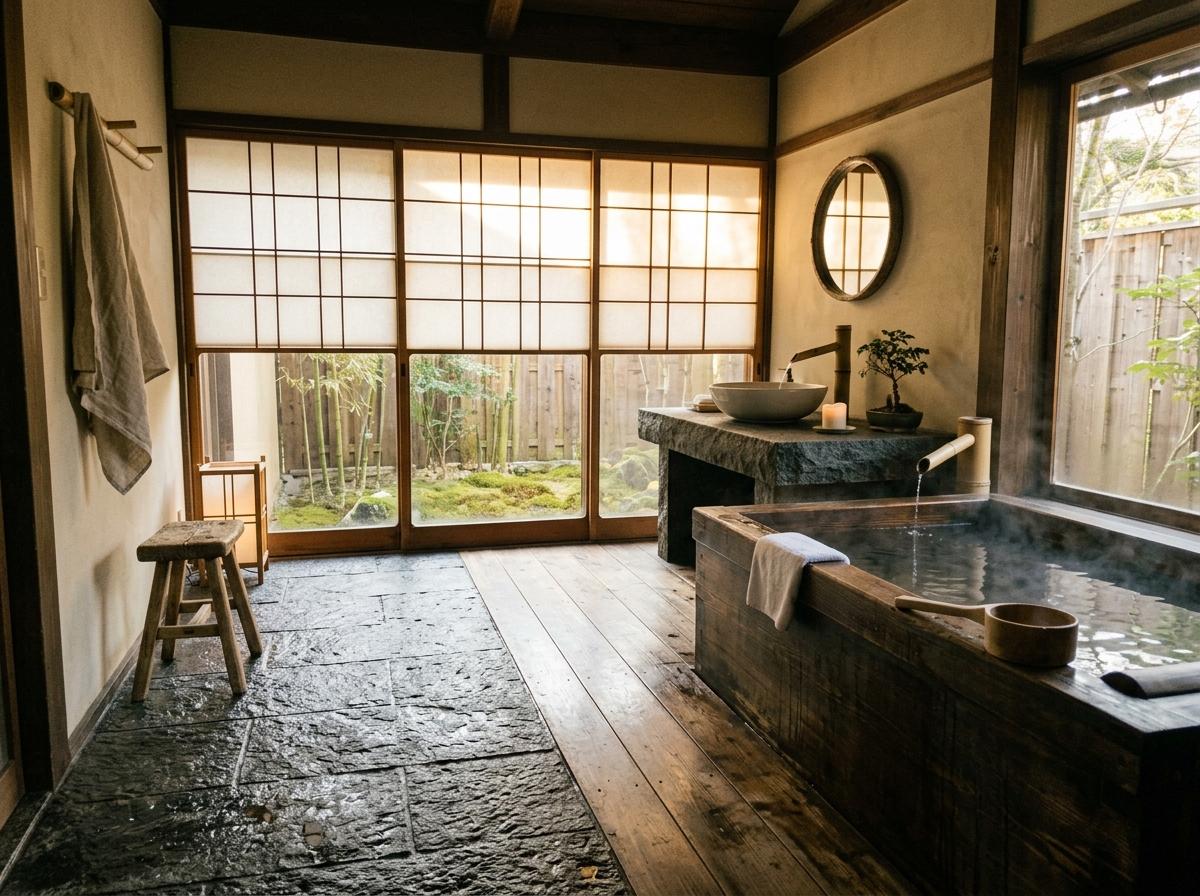

Step across the threshold of this Kyoto-inspired retreat, where the atmosphere thickens with the scent of damp Hinoki wood and cold stone. Note how the tactile landscape shifts beneath your feet, transitioning from the coarse, slip-resistant grain of flame-finished granite to the silk-like, oil-rubbed smoothness of a hand-carved soaking tub. This space thrives on the concept of ordered chaos-a precise arrangement of organic imperfections where the brutal weight of the basalt vanity is lightened by the ethereal, translucent glow of rice-paper shoji screens. As you observe the interplay of shadow and light, your heart rate begins a rhythmic deceleration; the physical density of the architecture dissolves into a visceral lightness of being, purging the sensory clutter of urban life. This is not merely a room, but a meticulously engineered sanctuary of Japandi minimalism, where the stillness of a Tokyo tea house meets the rugged, functional soul of Scandinavian craft.
This Minimalist Zen Japandi Bathroom Is A Quiet Refuge
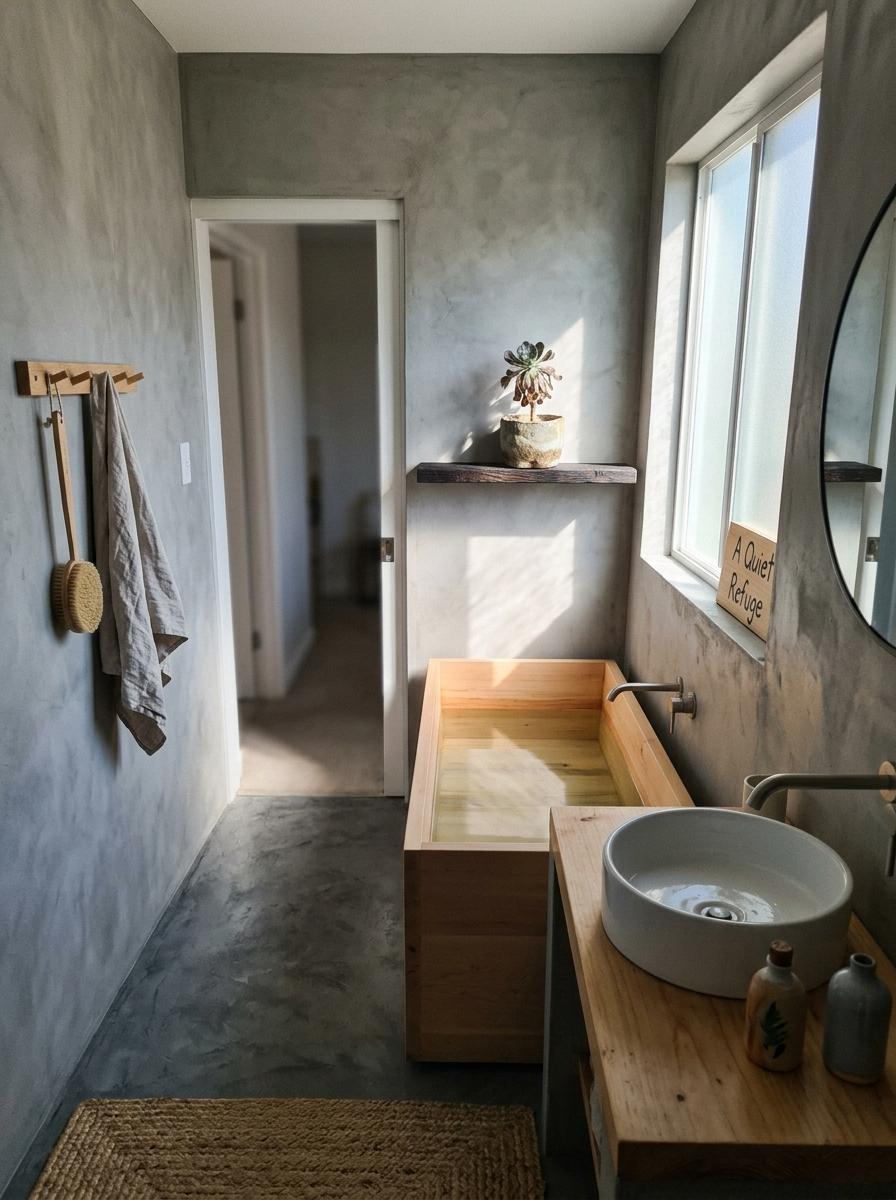

At its core, this bathroom exemplifies Japandi design as a rigorous synthesis of Scandinavian functionalism and Japanese aesthetic philosophy-a fusion where the pragmatic efficiency of the North meets the meditative impermanence of the East. The space leverages a sophisticated palette of tactile materials, grounding the room in the textural honesty of shou sugi ban accents and the earthen depth of micro-cement. It is a composition defined by a dialectical tension: the silhouette is strictly geometric, yet the atmosphere remains fluid; the layout is meticulously edited, but the resulting environment feels profoundly generous. By rejecting superficial ornamentation in favor of ethereal, soft-focus lighting and olfactory cues of cedar and stone, the design transcends mere utility to become a visceral, haptic sanctuary.
Walk Through A Refreshed Zen Japandi Bathroom
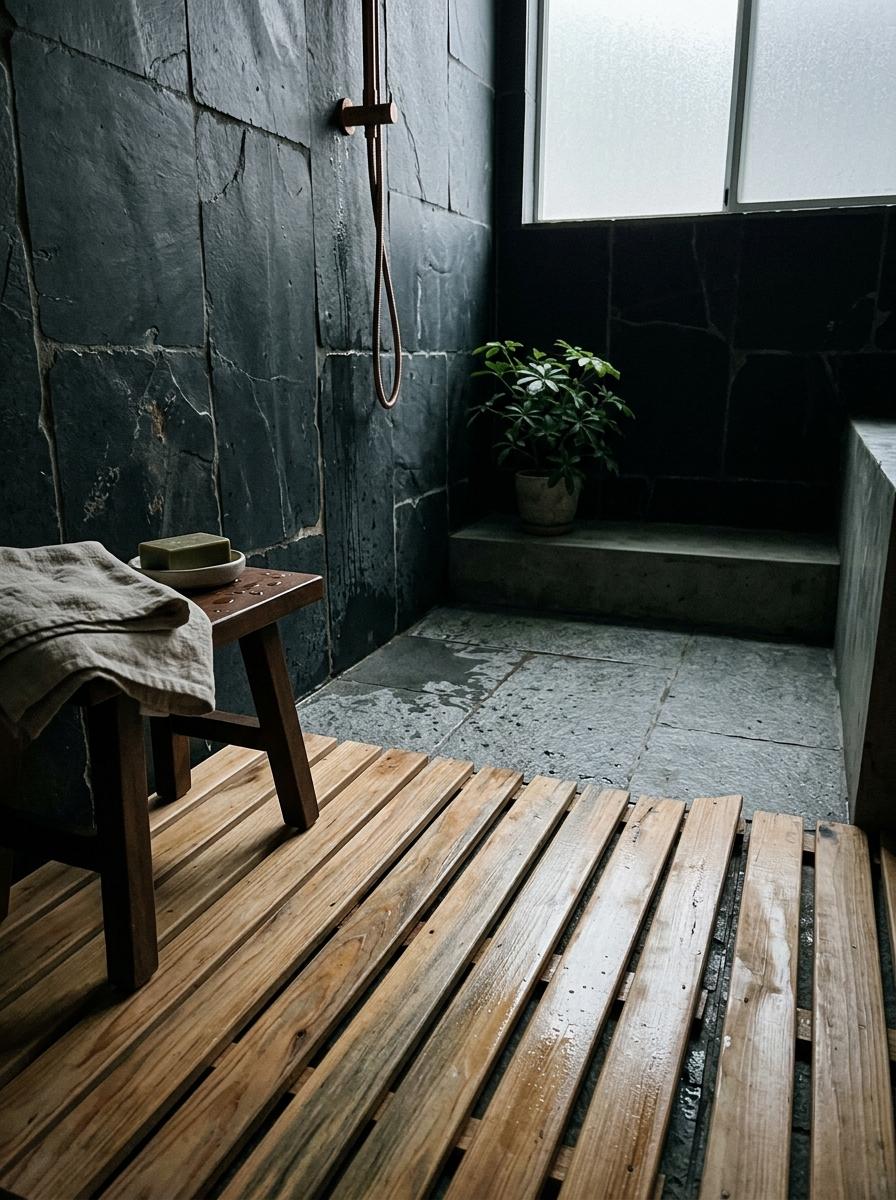

Step inside this sanctuary of stillness, where the architectural vocabulary of a Kyoto-inspired wet room meets the clinical precision of Scandinavian utility. Note how the tactile, open-pore Hinoki wood slats underfoot provide a grippy, organic resistance against the honed, obsidian-cool basalt tiling that lines the walls. This intentional interplay creates a harmonious friction; the space feels both cavernously expansive yet intimately cocooning, a paradox of design that grounds the senses. As you trace the vein-cut grain of the stone, the physical chill of the environment dissolves into a visceral wave of parasympathetic relief, slowing your pulse to match the rhythmic drip of water against mineral. This is not merely a room for hygiene, but a calibrated environment where the brutalist weight of the masonry is softened by the ethereal luminescence of rice-paper glass, transporting the dweller into a state of cellular quietude.
Glimpse A Fashionable Zen Japandi Bathroom
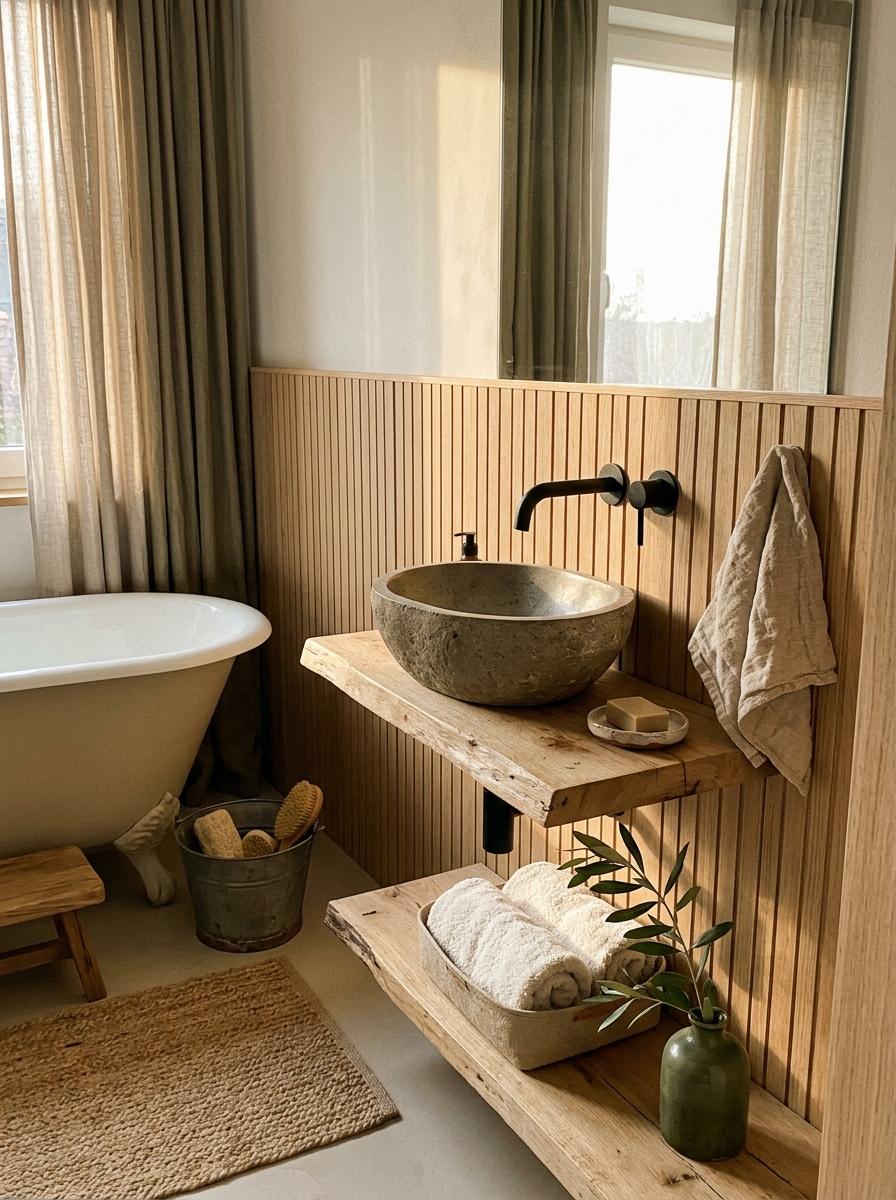

To step inside a fashionable Japandi bathroom is to witness the seamless synthesis of Scandinavian hygge-that localized pursuit of cozy contentment-and the Japanese philosophy of wabi-sabi, or the aesthetic appreciation of transience; together, they crystallize into a sanctuary of "functional serenity." This space operates through a sophisticated dialectical pairing: it is rigorously minimalist in its spatial configuration, yet profoundly maximalist in its sensory depth. The environment achieves a precarious balance where the geometric austerity of Nordic line-work meets the organic, weathered imperfections of Eastern materiality. Here, the atmosphere is defined by a sensorial stacking of elements-an ethereal, tactile, and meditative aura that transcends mere utility. Every surface invites a haptic dialogue, utilizing a palette of honed stone and tactile timber to create a room that feels simultaneously expansive but intimate, rigorous but restorative.
A Home With Zen Japandi Bathroom Focus
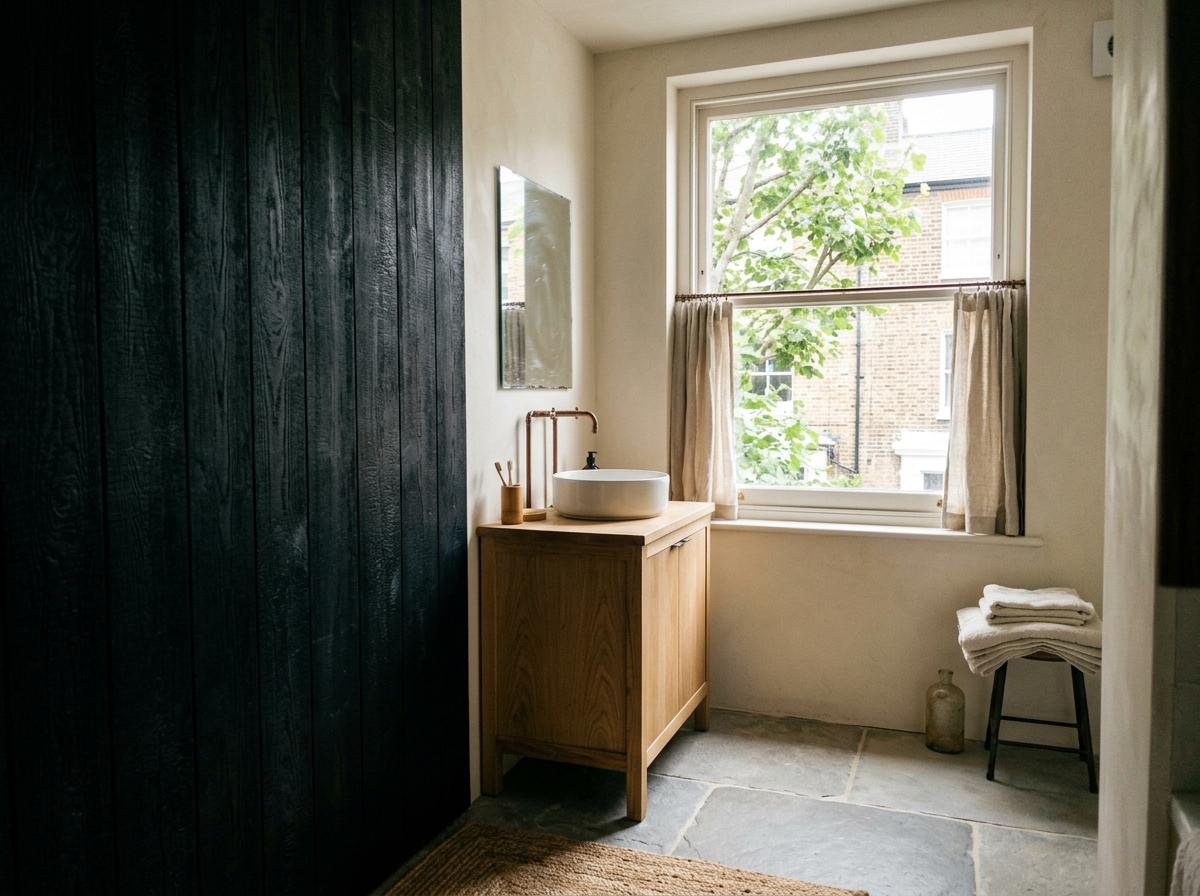

The evolution of the private washroom has transitioned from the utilitarian, clinical chambers of the mid-century to the soulful sanctuaries we demand today, where the bathroom is no longer a hidden necessity but the spiritual heart of the home. In this latest project, we find a striking maximalist minimalism-a design tension where the stark restraint of Japanese wabi-sabi meets the rich, tactile warmth of Scandinavian hygge. Nestled within the leafy, affluent enclave of North Chelsea, this residence marks the third collaboration with a repeat client, a partnership that underscores a deep, evolving trust in the Japandi vision. The resulting space achieves its serene equilibrium through a precise technical synthesis of raw charred timber (Shou Sugi Ban), honed limestone surfaces, and a recalibrated floor plan that prioritizes rhythmic natural light over traditional ornamentation.
Embrace A Modern Home With Zen Japandi Bathroom Influences
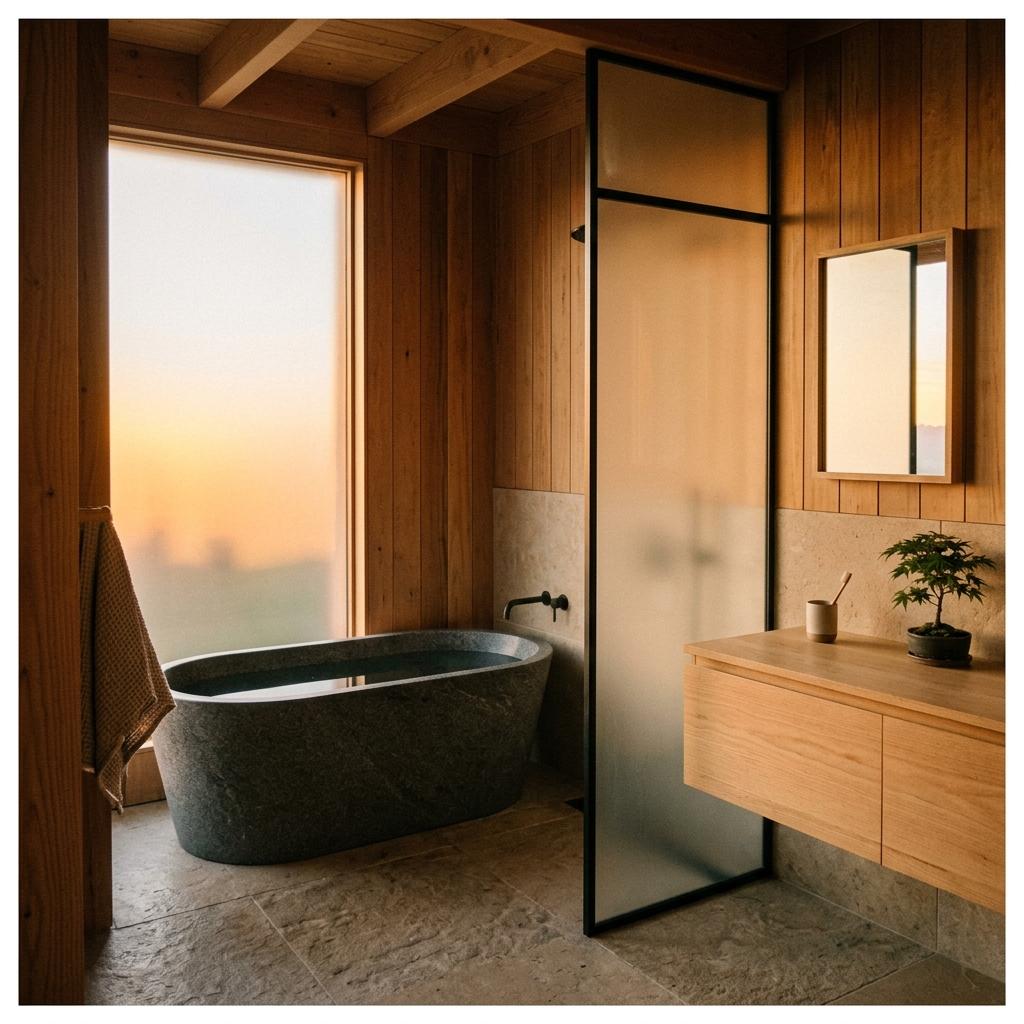

The structural harmony of the modern sanctuary is meticulously informed by Zen Japandi principles, where the traditional washroom is reimagined as a void of restorative stillness. Within this curated environment, intentional emptiness replaces clutter, utilizing pristine planes and unadorned surfaces to signal a departure from the chaotic outside world. This deliberate design language permits a serene sense of soft symmetry, ensuring that every shadow and shape serves a specific purpose. Light carves through the interior, stretching the perceived boundaries of the layout as the architecture breathes with new-found depth. To achieve this equilibrium, the space anchors itself through the warmth of raw timber, the coolness of honed stone, and the clarity of frosted glass.
How A Small Home Embraces Zen Japandi Bathroom Style
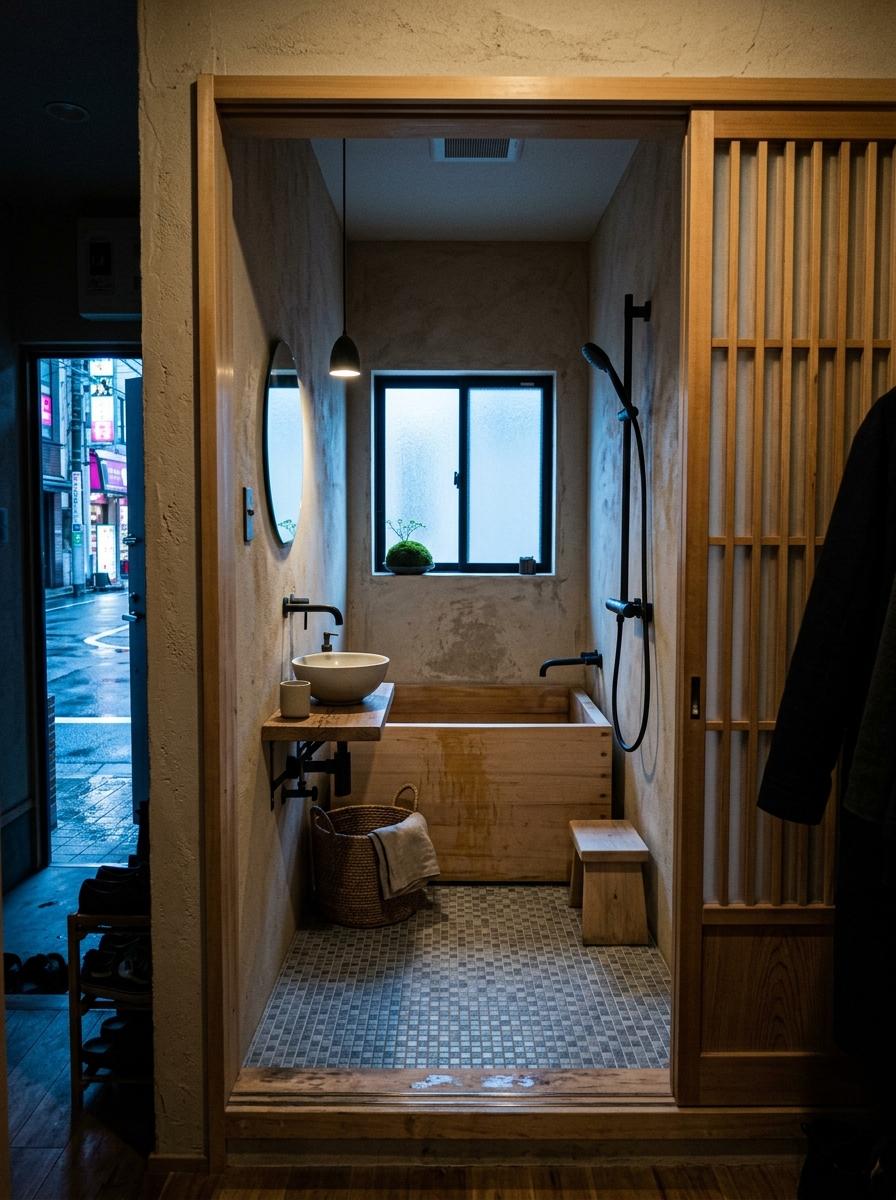

Standing on a rain-slicked Tokyo street, the sensory assault of neon signs and relentless locomotive hum felt almost physical-a chaotic grit that defines modern urban density. Yet, as I crossed the threshold into the owner's compact 45-square-meter apartment, the friction of the city simply dissolved. "The footprint is negligible," the owner remarked, gesturing toward a door of slatted hinoki wood, "but the psychological volume..." she paused, sliding the door open to reveal a bathroom bathed in a soft, ethereal glow, "...that is where we find the room to breathe." By prioritizing a palette of tactile oat-colored stone and matte black fixtures, the space achieves a profound spatial economy that belies its actual dimensions. It is a masterclass in functional minimalism; there is no wasted motion in the layout, only the intentional placement of a deep-soaking tub nestled against a backdrop of textured clay walls. This deliberate juxtaposition-the frantic, sprawling metropolis outside versus the hushed, curated sanctuary within-illustrates how a small home can transcend its physical boundaries. It is here, in the balance between Japanese ritual and Scandinavian efficiency, that we discover how purposeful design transforms a utilitarian room into a meditative core.
Natural Wood Elements For Your Zen Japandi Bathroom
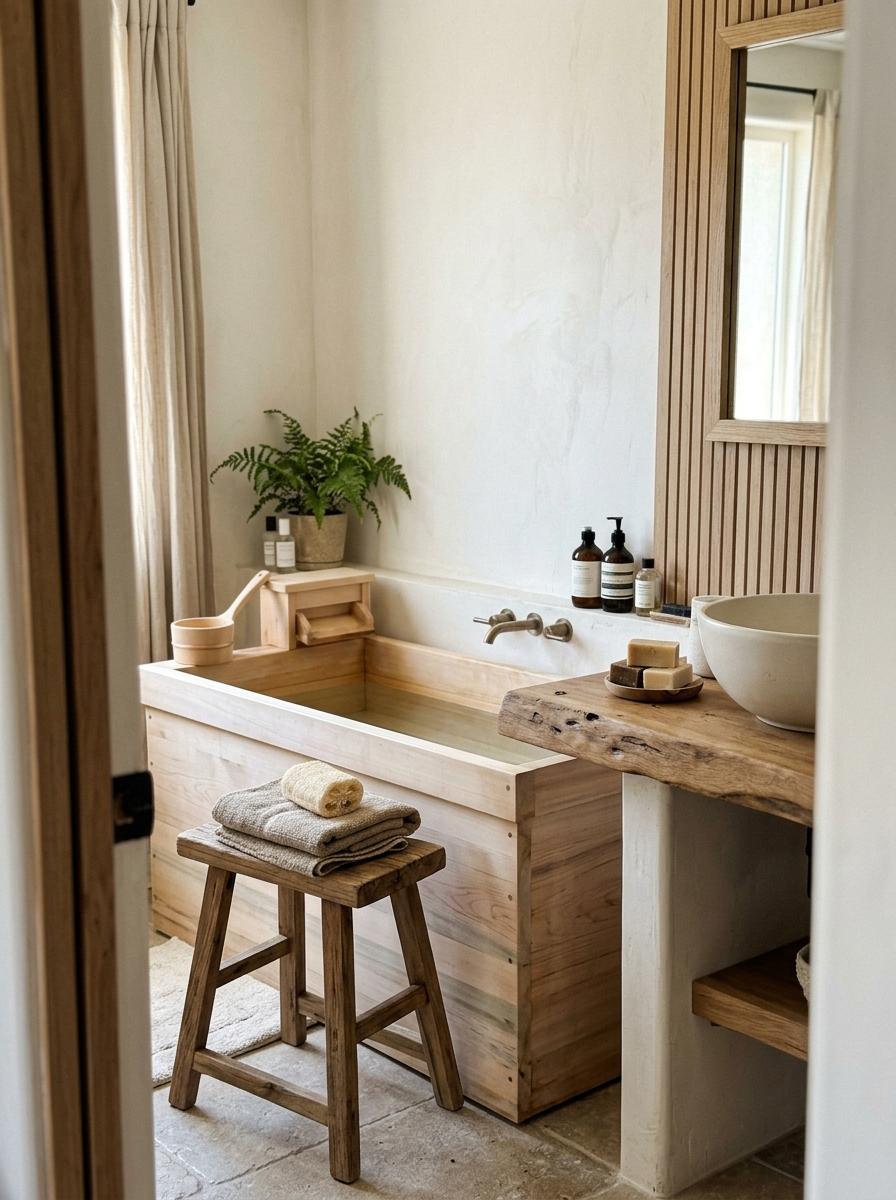

At its core, the Japandi bathroom is a masterclass in Definition via Synthesis: it is the precise intersection where the rustic, unrefined warmth of Scandinavian hygge meets the disciplined, transcendental minimalism of Japanese wabi-sabi. To achieve this, we must move beyond mere decoration and engage with Lexical Precision, utilizing the tactile integrity of hinoki cypress or reclaimed teak to ground the space. These materials offer a profound Dialectical Pairing-they are inherently robust and structural, yet possess a vulnerability that celebrates the impermanence of natural decay. By integrating these elements, the environment transforms through Sensorial Adjective Stacking, evolving into a sanctuary that is simultaneously visceral, meditative, aromatic, and grounding. This intentional fusion of wood and water does not just fill a room; it curates an atmospheric equilibrium that speaks to the soul of modern dwelling.
Organic Materials Define This Zen Japandi Bathroom
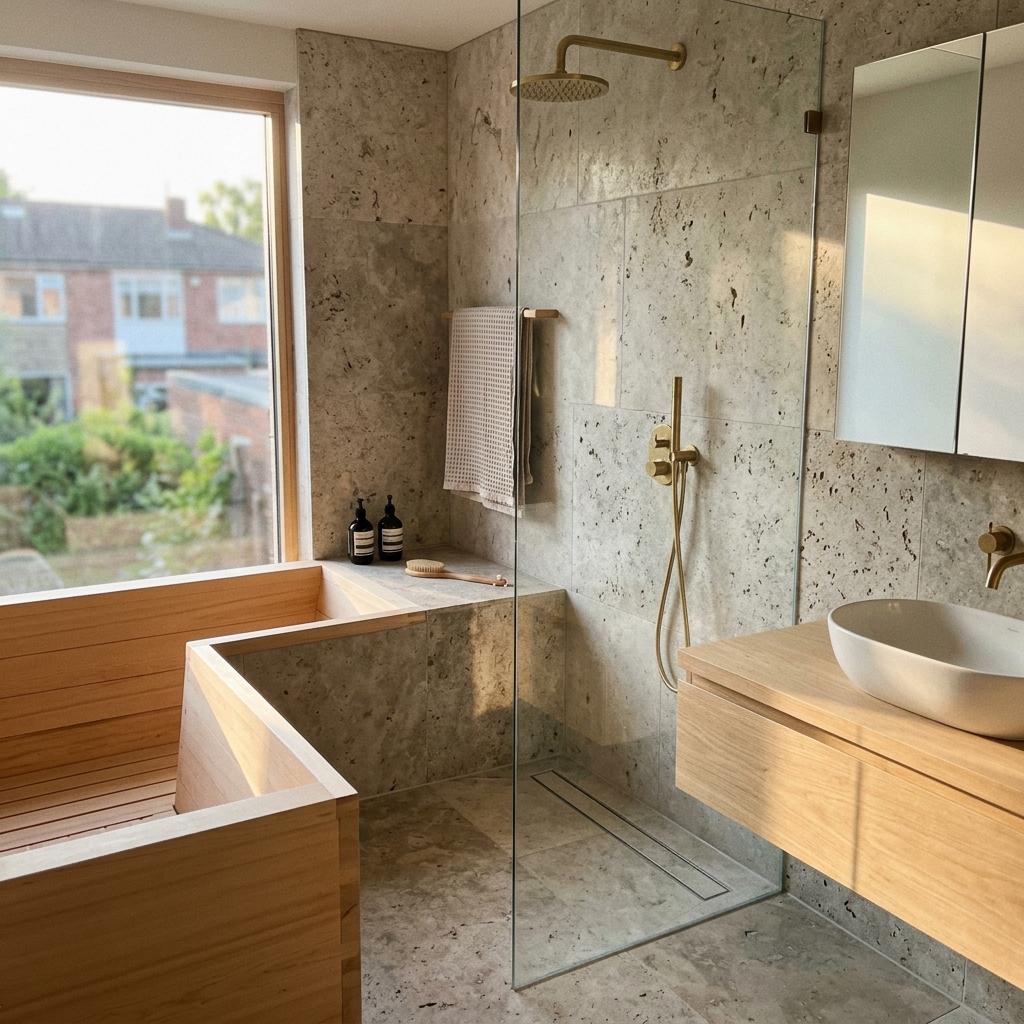

Stepping into this sanctuary, the air feels weighted with a quiet gravity, where the bathroom is no longer a mere utility but a sequestered clearing set deep within the home's urban pulse. It is a space of sculpted emptiness, where the deliberate absence of clutter creates a profound presence of spirit, manifesting a void that feels remarkably full. While the exterior world vibrates with the jagged, neon frenetics of the city, the interior remains a stilled pocket of silence, drawing a sharp line between the exhausting pace of the commute and the restorative pause of the bath. This stillness is anchored by the tactile honesty of honed silver travertine and slatted hinoki wood, materials that offer a cool, mineral grounding against the skin while releasing a soft, resinous perfume when met with steam. Every element, from the recessed floor drainage to the unlacquered brass fixtures, serves a rigorous industrial purpose, streamlining the ritual of cleansing into a seamless, ergonomic flow that prioritizes the body's movement above all else.
Finding Balance In A Zen Japandi Bathroom
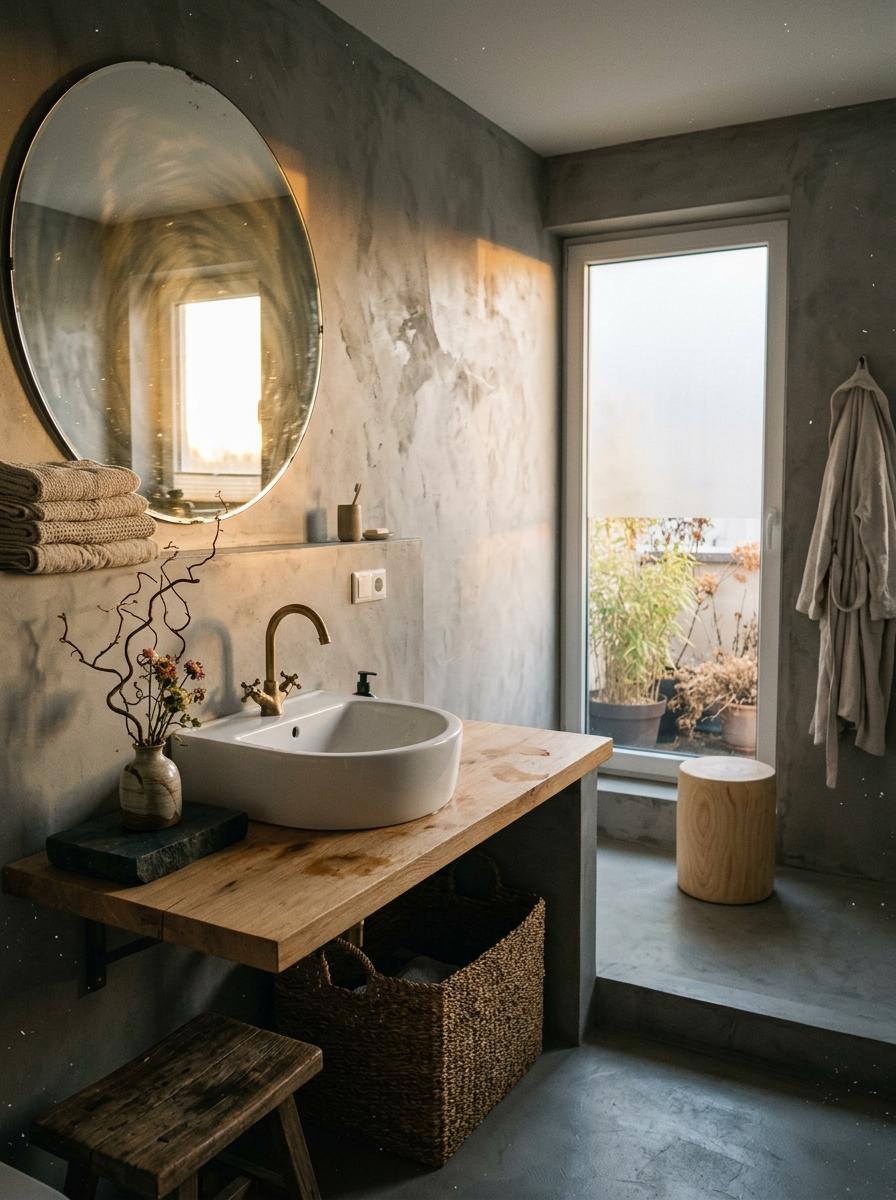

I recently stepped out of the relentless, neon-pulsing friction of a Tokyo business district and into a private residence that felt less like a building and more like a collective exhale. "The secret," the homeowner explained, guiding me toward a washroom tucked away like a hidden grotto, "isn't just about removing the clutter." She paused to adjust a single, gnarled branch of ikebana resting atop a honed basalt plinth. "It is about," she continued, "the intentional calibration of silence against the weight of the material world." In this space, the aggressive sensory overload of the city-the screeching subways and digital glare-was replaced by a tactile symphony of 'Wabi-sabi' imperfections and 'Scandi' functionalism. Here, the juxtaposition was visceral: where the street outside was a chaotic collage of plastic and chrome, this bathroom was an altar to tactility, featuring low-sheen micro-cement walls that played against the warmth of honey-hued white oak cabinetry. This delicate equilibrium between the sterile efficiency of a modern spa and the weathered soul of a mountain retreat reveals how we can curate our most private rituals. This pursuit of harmony through contrasting textures is precisely what defines the spiritual core of a Zen Japandi bathroom.
Sophisticated Simplicity Of A Zen Japandi Bathroom
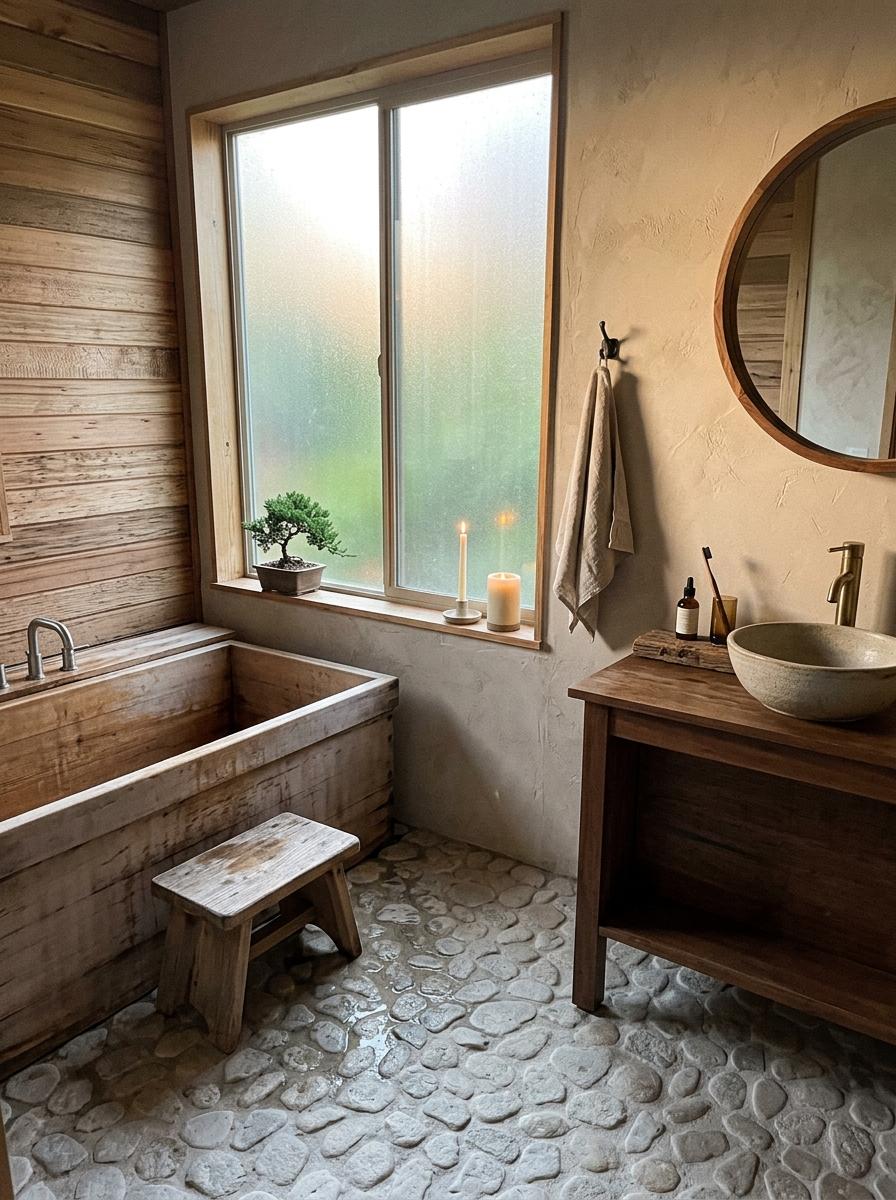

This Zen Japandi bathroom was conceived as a masterclass in quietude, where every structural element is defined by a commitment to functional stillness. The layout reveals a sterile serenity, stripping away the superfluous to celebrate a vacant, luminous void that honors the rituals of cleansing. Soft stone surfaces and slender slats of cedar ground the room, bridging the gap between tactile warmth and cool, calculated composure. Through meticulous subtraction, the architecture breathes, carves, and expands the perceived volume of the interior. To enter this space is to encounter a deliberate harmony between shadow and light, a seamless transition from chaotic noise to a sanctuary defined by organic textures, rhythmic patterns, and profound silence.
A Deep Soak Tub In A Zen Japandi Bathroom
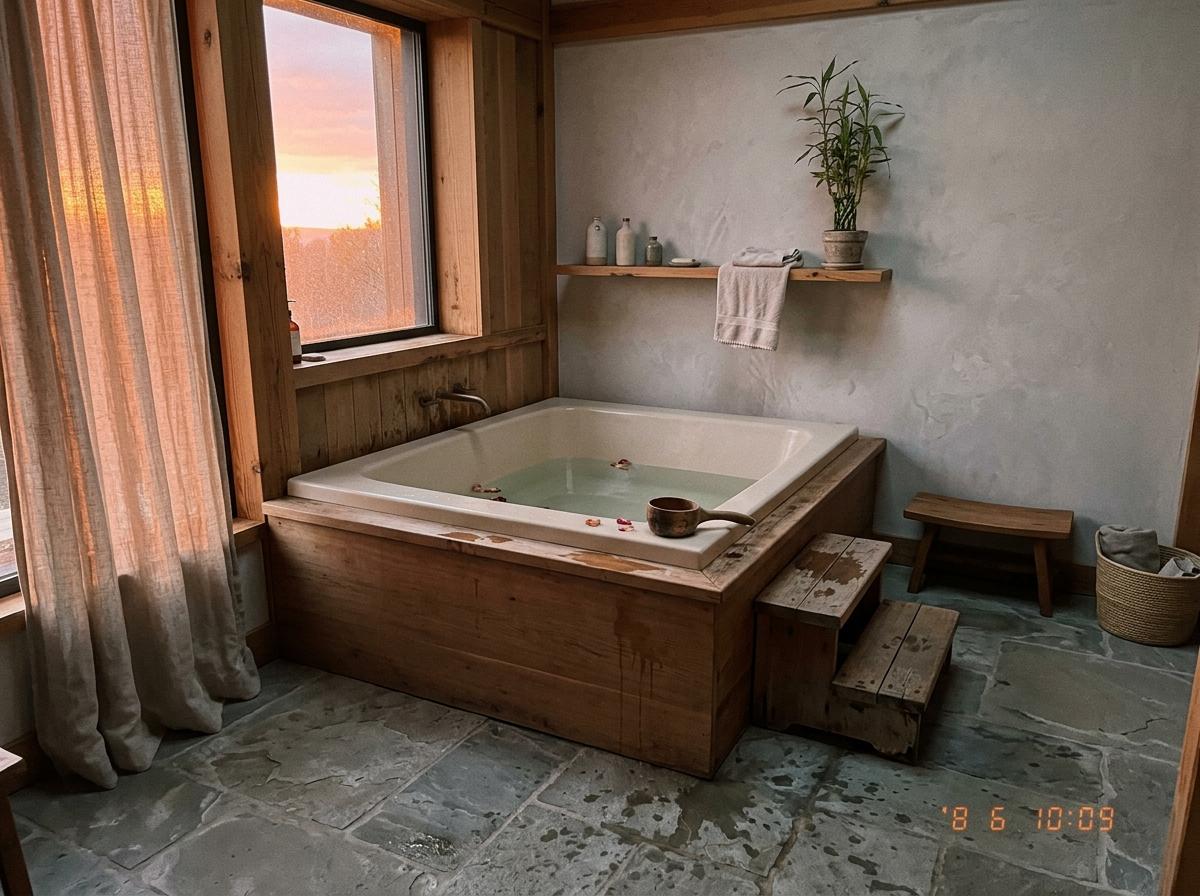

At the core of the Japandi ethos lies a deliberate fusion of Scandinavian hygge-the pursuit of cozy intimacy-and the Japanese concept of wabi-sabi, or the celebration of ephemeral imperfection; this synthesis culminates in a bathroom environment that transcends mere utility to become a sanctuary of ritualized cleansing. Central to this composition is the deep-soak tub, an architectural anchor that embodies a compelling dialectical tension: its silhouette is uncompromisingly minimalist and geometric, yet its purpose is rooted in a fluid, primordial indulgence. To integrate such a vessel is to navigate the fine line between the clinical precision of northern modernism and the organic, weathered warmth of Eastern philosophy. Within this space, the atmosphere is defined by a sensorial palette that is simultaneously hushed, tactile, and meditative, inviting a contemplative stillness that recalibrates the psyche against the frenetic cadence of modern life.
Floating Vanities For A Zen Japandi Bathroom Look
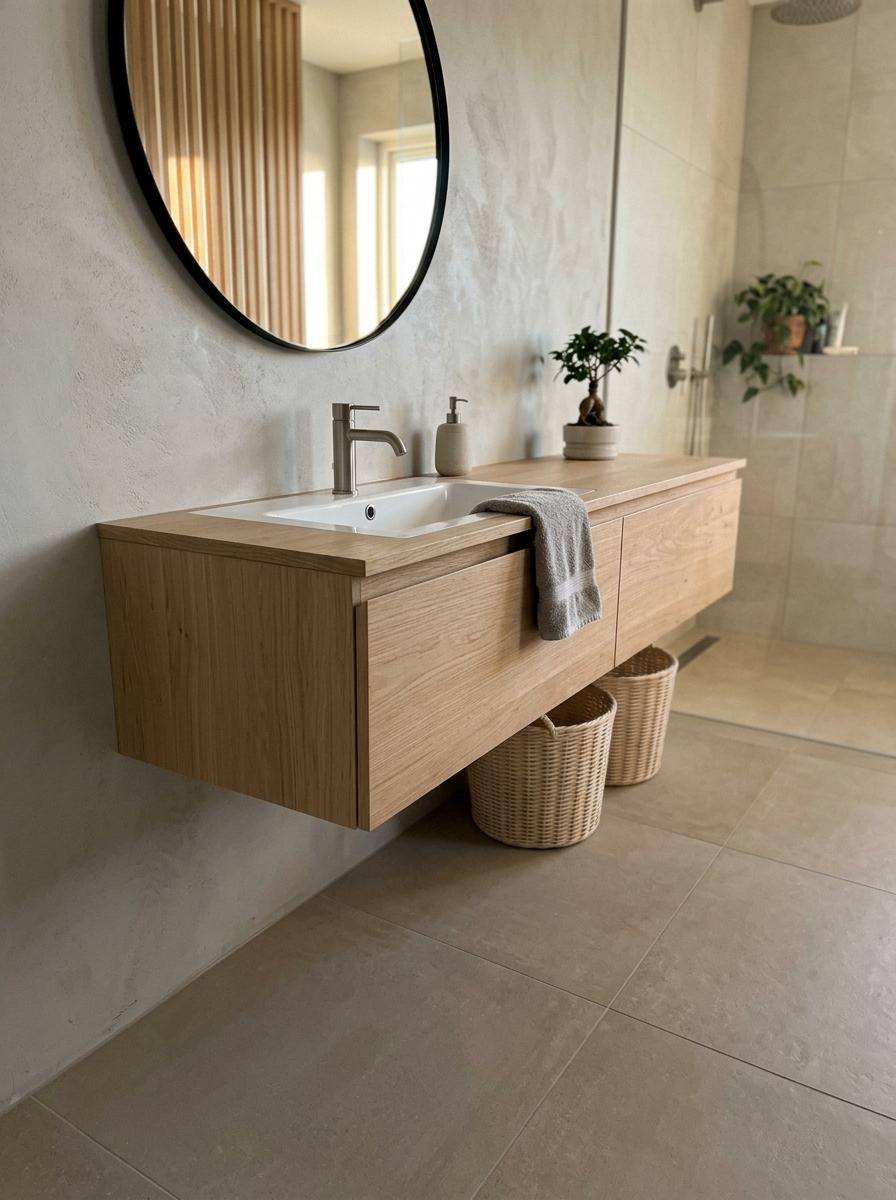

During a recent interview with a minimalist architect in Kyoto, we stood in a cluttered, traditional washroom where the heavy cabinetry seemed to anchor the room in a state of stagnant density. "The floor is the soul of a room," he remarked, pausing to adjust a sliding shoji screen, "and when you smother it with bulky pedestals, you suffocate the flow of chi." This stifling atmosphere stood in stark contrast to the Japandi sanctuary we visited later that afternoon, where the vanity didn't sit on the floor, but rather hovered-a seamless expanse of white oak suspended against a micro-cement wall. By utilizing a wall-hung silhouette, the design achieved a sense of "visual lightness," liberating the negative space beneath and allowing the eye to travel uninterrupted across the continuous flooring. This transition from grounded mass to an ethereal, cantilevered form illustrates how floating vanities serve as the quintessential anchor for a bathroom that prioritizes serenity over storage.
Neutral Tones Enhance This Zen Japandi Bathroom
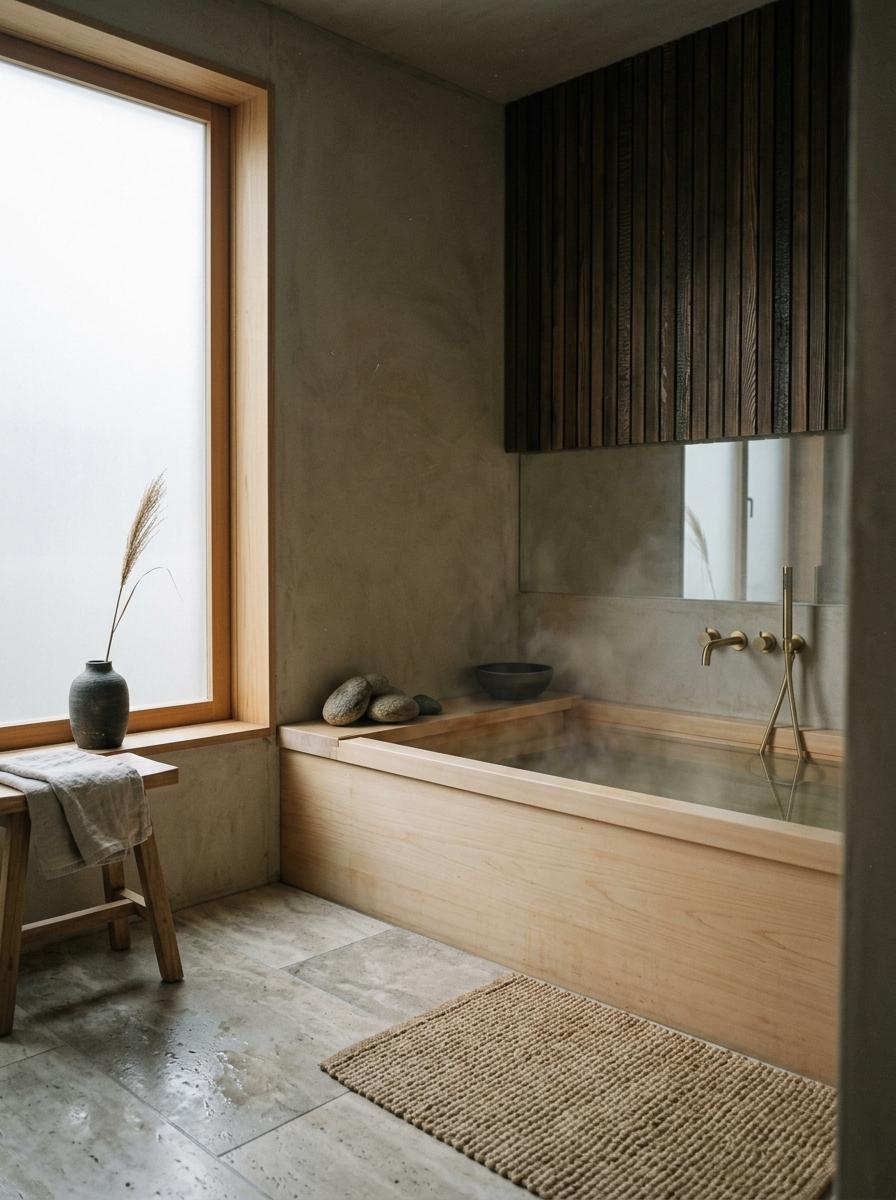

In this Tokyo-inspired sanctuary, the spatial narrative is defined by a palette of desaturated sand and slate, where the tactile architecture speaks louder than any decorative flourish. Note how the matte, micro-cement walls intersect with the linear precision of charred cedar battens, creating a rhythmic shadow play that guides the eye toward the sunken soaking tub. This intentional curation achieves a state of structured chaos, where the rigid geometry of the layout is softened by the organic, open-pored texture of honed travertine. As you transition from the cool, calcified surface of the stone floor to the radiant warmth of the vapor-misted air, your nervous system experiences a profound deceleration-a physical shedding of urban static. This is the hallmark of the Kyoto-Minimalist aesthetic: a deliberate calibration of neutral tones that transforms a functional routine into a restorative ritual of stillness.
Functional Beauty In A Zen Japandi Bathroom
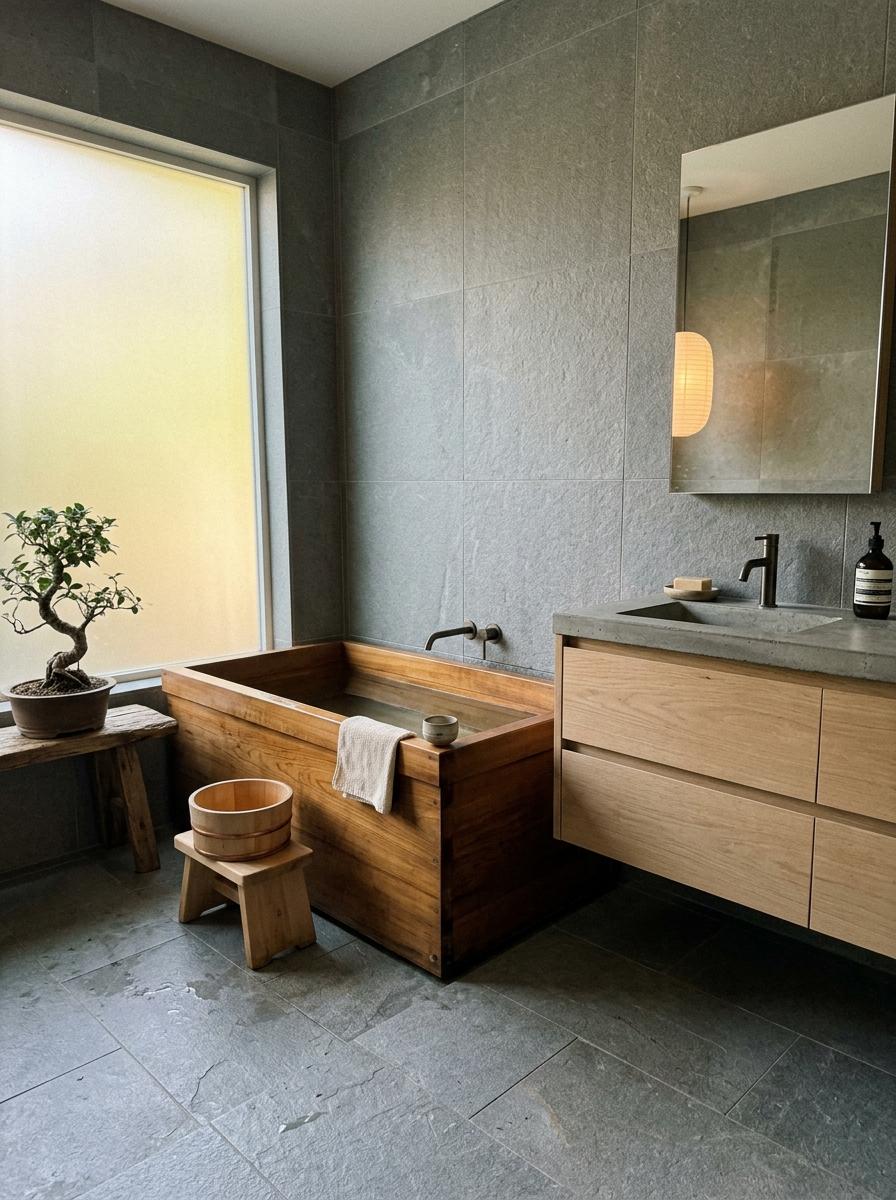

In the modern bathroom, the threshold between the chaotic pulse of the city and the restorative silence of the home is defined by an intentional atmospheric grounding. This space exists as a structured fluidity, where the rigid geometry of Scandinavian utility finds its equilibrium within the soft, impermanent flow of Zen philosophy. While the external world demands a frantic, visual complexity, the interiority of the Japandi bath is governed by a radical reduction, transforming the room into a sensory vacuum that prioritizes psychological stillness over decorative noise. The tactile experience is anchored by the presence of a deep-soaking ofuro tub carved from aromatic Hinoki cypress, whose honeyed grain provides a rhythmic counterpoint to the matte, charcoal-grey honed basalt tiles underfoot. Every element is refined through functionalist specification; the wall-mounted vanity eliminates visual clutter by concealing high-performance drainage systems behind seamless oak cabinetry, ensuring that the utility of the space remains invisible, subservient to the ritual of the cleanse.
Stone And Wood Harmonize In This Zen Japandi Bathroom
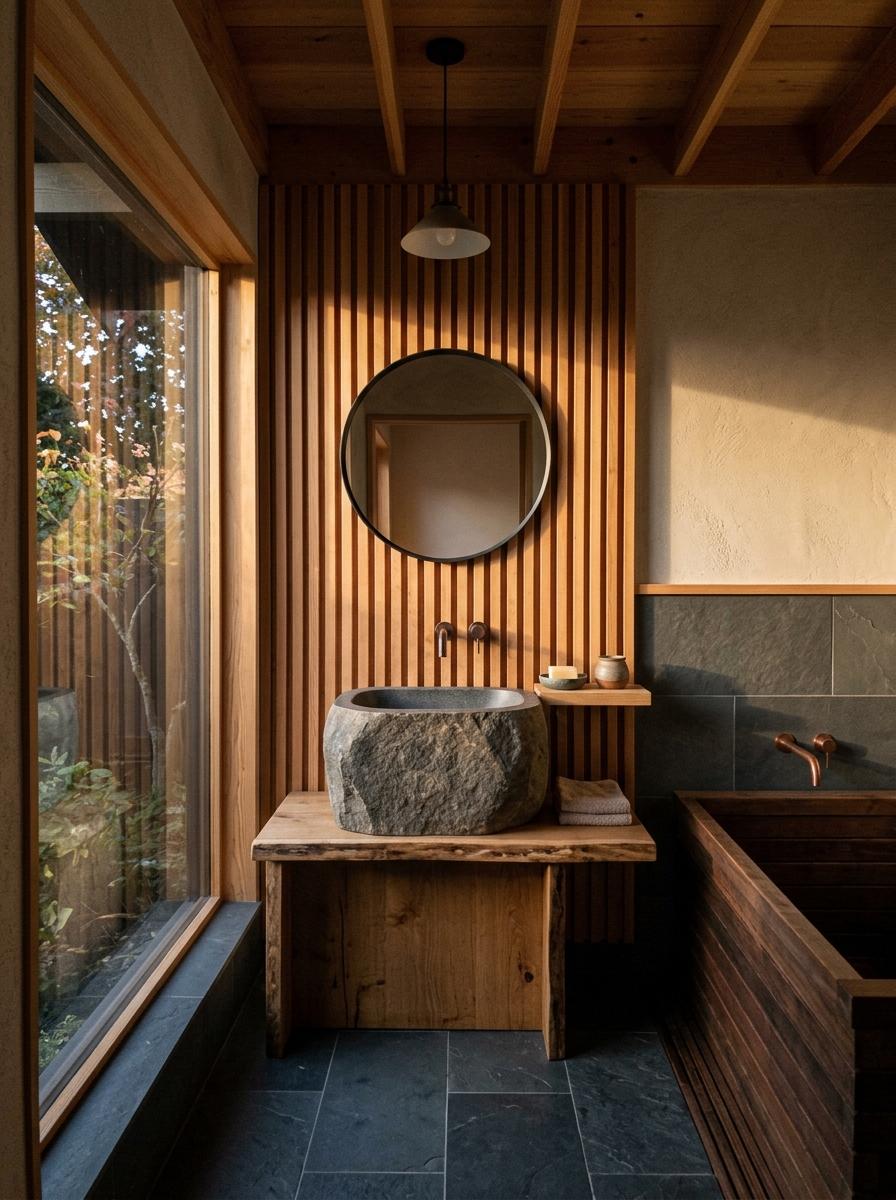

The structural intent of this Zen retreat was conceived through a meticulous marriage of raw materiality and disciplined geometry. Within this sanctuary, a curated selection of matte textures and muted tones establishes a profound sense of stillness, stripping away the superfluous to reveal a skeletal, silent beauty. Soft sunlight sweeps across the surfaces, where smooth slate and silvered sapwood coalesce to ground the spirit. This intentional layout carves out a void for contemplation, stretches the perception of height, and anchors the bathroom in an atmosphere of enduring calm. The composition ultimately breathes life into the space through the alignment of rhythmic cedar slats, the weight of a monolithic stone basin, and the clarity of an unobstructed view.
Light Filled Luxury In A Zen Japandi Bathroom
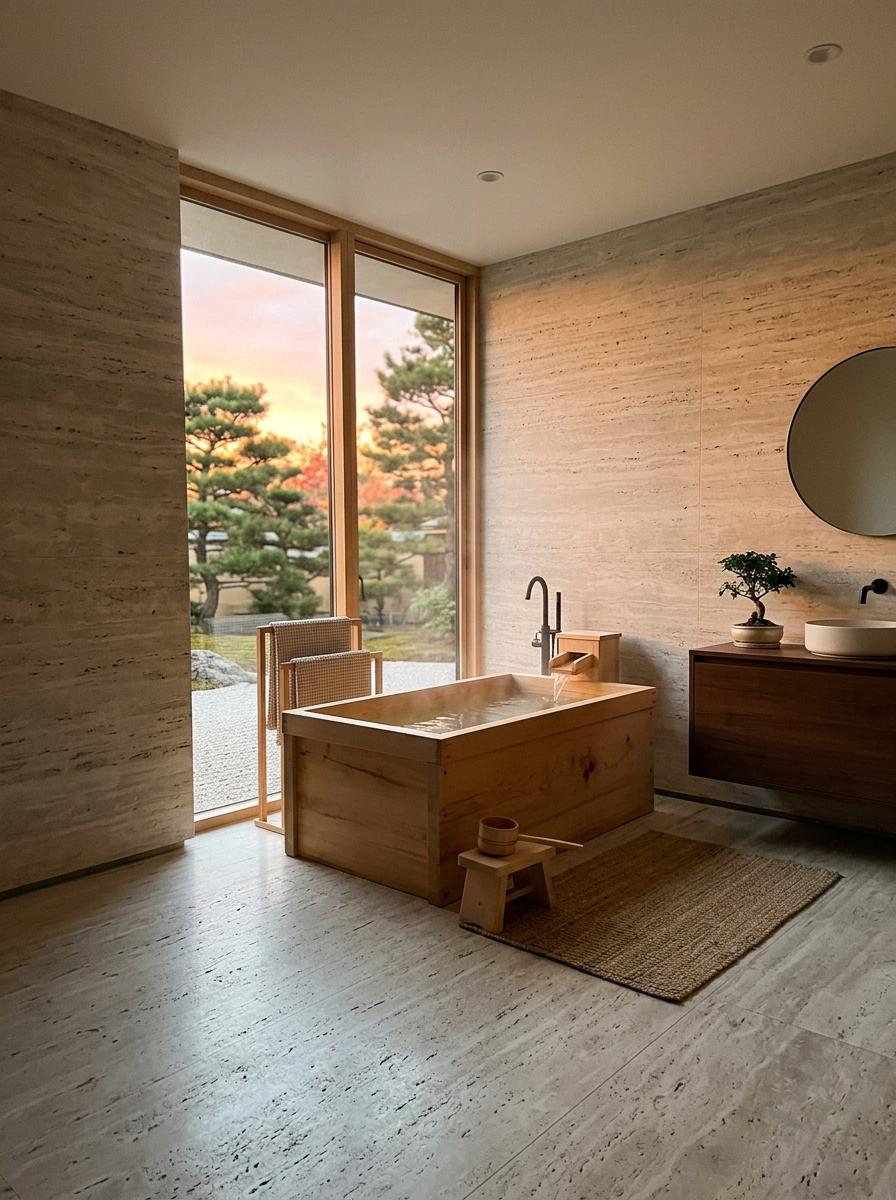

The hallmark of this sanctuary is the juxtaposition of tactile minimalism; the space achieves a sense of monumental lightness that defies its structural weight. Note how the horizontally-veined Silver Travertine walls meet the floor in a seamless shadow gap, creating an illusion that the heavy stone is merely floating in air. By grounding the design in the organic warmth of a custom Hinoki wood soaking tub-a staple of the traditional Japanese Onsen-the room balances the clinical precision of Scandinavian geometry with the raw, wabi-sabi imperfections of nature. As your eyes trace the play of sunlight across the honed, matte surfaces, the physical world begins to recede. The sharp, cooling touch of the stone underfoot gives way to a rhythmic, diaphragmatic breathing; it is a visceral shift where the architecture stops being a mere container and starts acting as a biological reset, slowing the pulse through the sheer clarity of its composition.
Discover The Essence Of A Zen Japandi Bathroom
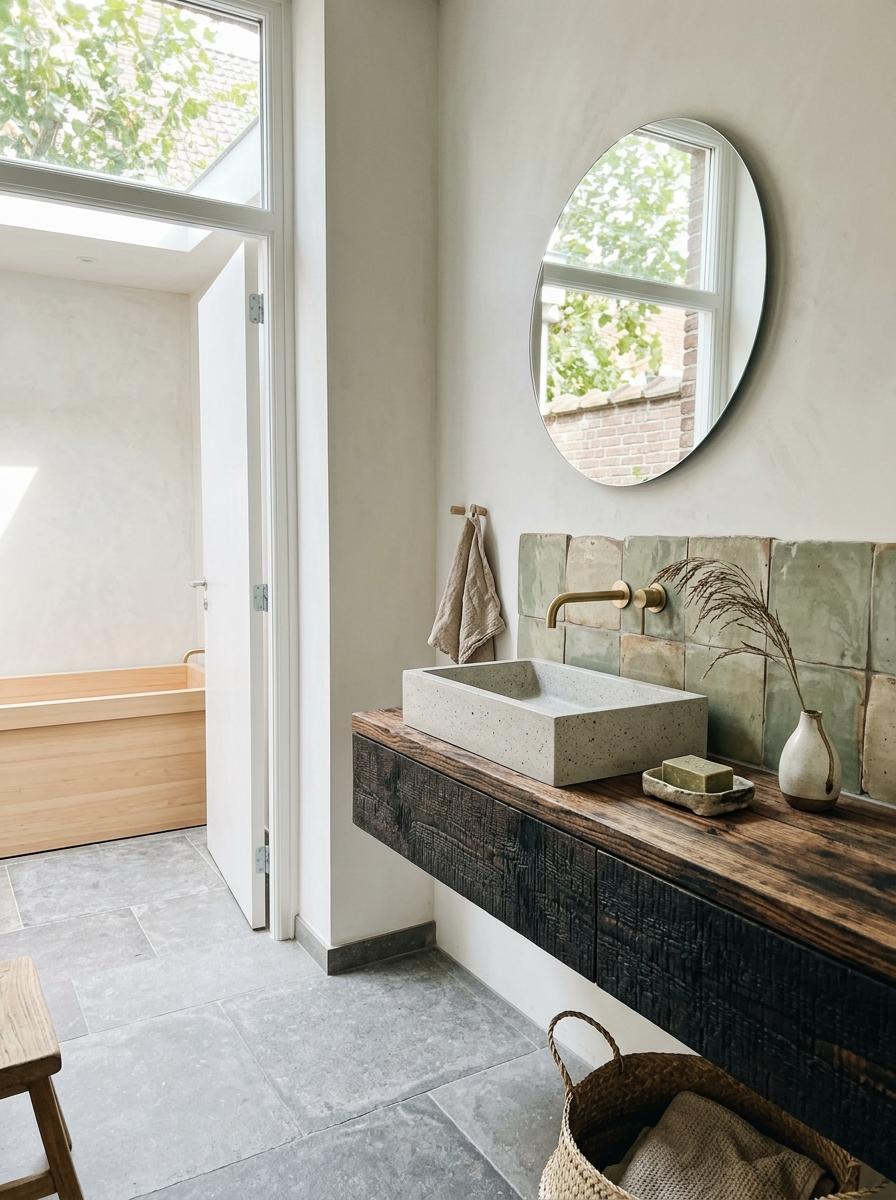

To understand the essence of a Zen Japandi bathroom, we need to first trace the evolution from the communal, steam-filled Sento bathhouses of Edo-period Tokyo to the hyper-private, minimalist sanctuaries of the modern era. This design achieves a state of structured spontaneity, where the rigid geometry of Scandinavian cabinetry meets the organic, wabi-sabi imperfections of hand-fired ceramic tiles. Set within the hushed, leafy enclaves of Kensington, the project was commissioned by a repeat client-a partnership that allowed for a deeper exploration of the tactile world than a first-time collaboration often permits. The resulting space is a masterclass in technical synthesis, utilizing the material intersection of charred cedar (Shou Sugi Ban) and light-reflective micro-cement to bridge the gap between ancient tradition and contemporary serenity.
Earthy Elegance Within A Zen Japandi Bathroom
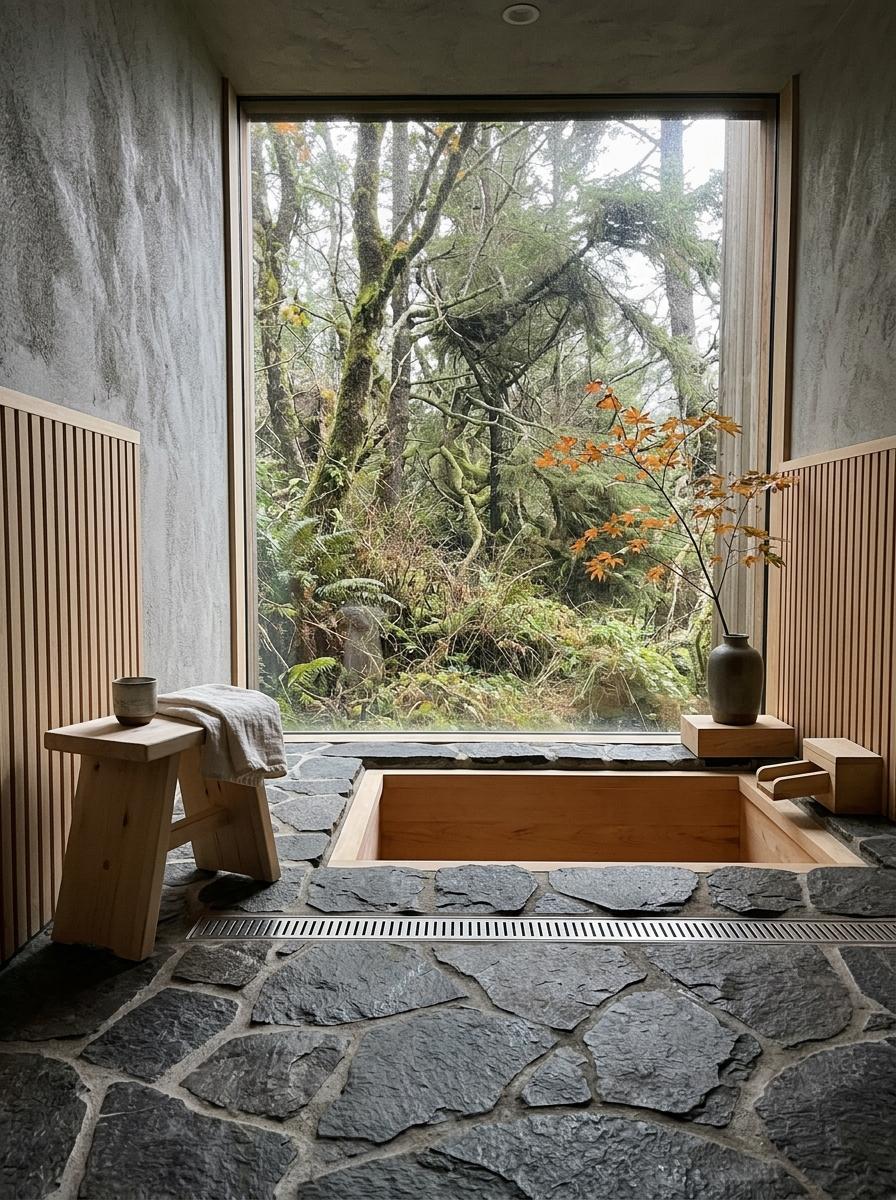

The space is defined by a low-slung, subterranean orientation, where the floor plane seems to pull the viewer deeper into a state of meditative repose, far removed from the vertical urgency of modern urban life. Here, one encounters a calculated spontaneity, where the rigorous geometry of Japanese minimalism is softened by the unpredictable, rustic textures of Scandinavian warmth. This creates a definitive boundary between the man-made sanctuary and the unbridled wilderness visible through floor-to-ceiling glass; inside, the air is still and curated, while outside, the elements remain in constant, chaotic flux. Tactile engagement is driven by the use of oversized Basalt river stones and open-grain Hinoki wood, materials that offer a cool, mineral grounding against the velvet-soft heat of the timber. Far from mere ornament, these elements serve a strict industrial utility, with the porous stone acting as a natural thermal mass and the integrated linear drainage systems ensuring that the transition between water and earth remains seamless and efficient.
Comments