
By synthesizing the rustic, unpolished honesty of Japanese wabi-sabi with the pragmatic, streamlined efficiency of Scandinavian hygge, the Japandi living room emerges as a deliberate exercise in reductive curation. This aesthetic necessitates a rigorous adherence to a neutral palette-think oatmeal linens, bone-white ceramics, and silvered oaks-that feels profoundly ethereal yet grounded in tactile permanence. Through our ongoing analysis at Japandi.design, we observe a singular dialectical tension: the space must remain rigorously austere but evoke an enveloping, visceral warmth. The result is a minimalist sanctuary defined by a sensorial layer of diaphanous, organic, and hushed textures, transforming the domestic void into a sophisticated theater of stillness.
Neutral Japandi Living Room

Minimalist Neutral Japandi Living Room Design
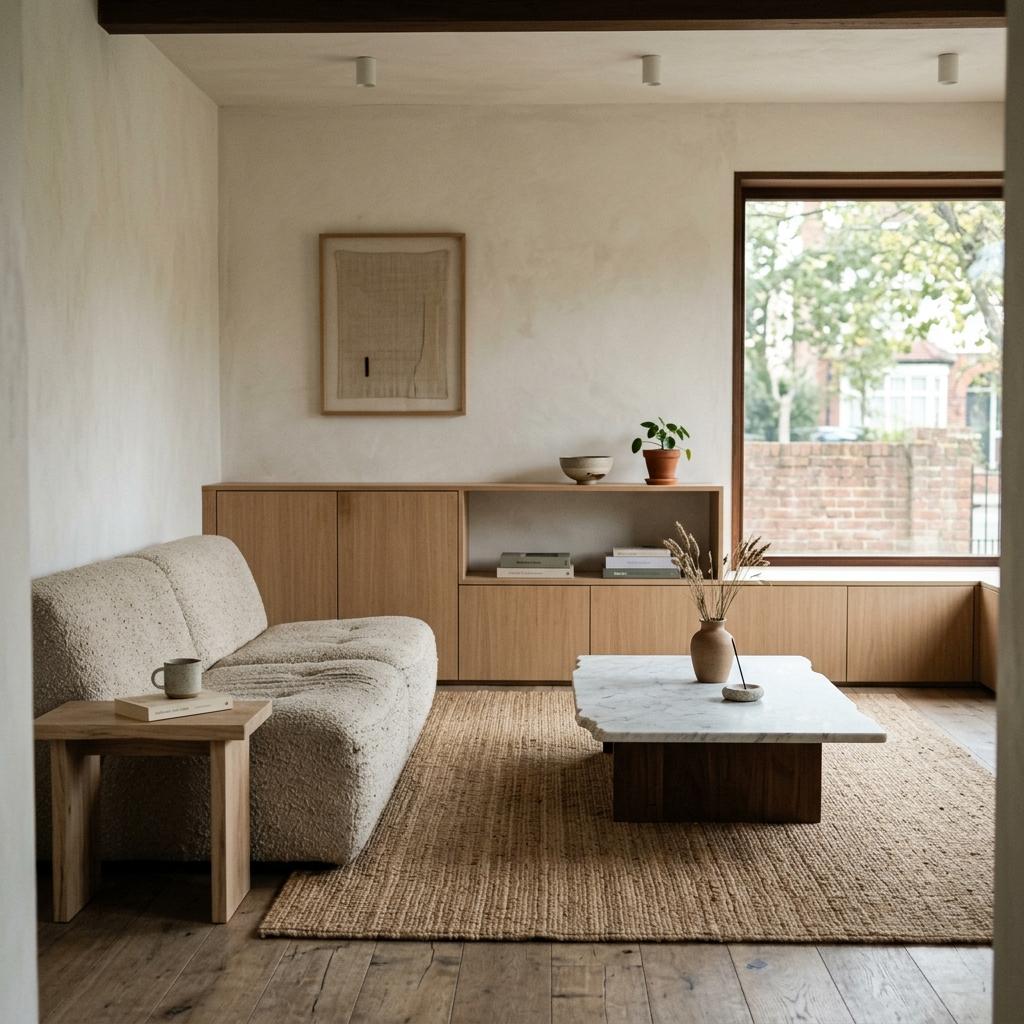

In the muted expanse of the contemporary home, the minimalist Japandi living room serves as a curated sanctuary where the architectural void is intentionally anchored by a low-slung, earthen-toned silhouette. This environment achieves a complex simplicity, where the rigorous austerity of Scandinavian logic find harmony within the weathered imperfection of Japanese Zen. While the external world remains a chaotic flux of sensory overload, the interior stands as a static monolith of composure, drawing a sharp boundary between the noise of the street and the silence of the hearth. Tactile engagement is driven by the interplay of nubby oatmeal bouclé upholstery against the cool, glass-like finish of honed Carrara marble, grounded further by the fibrous warmth of hand-woven jute underfoot. Every element is governed by a philosophy of industrial utility, where integrated recessed lighting and modular cabinetry function as invisible scaffolding, ensuring that the visual landscape remains unburdened by the clutter of daily existence.
Picture Perfect: A Soft Toned Neutral Japandi Living Room
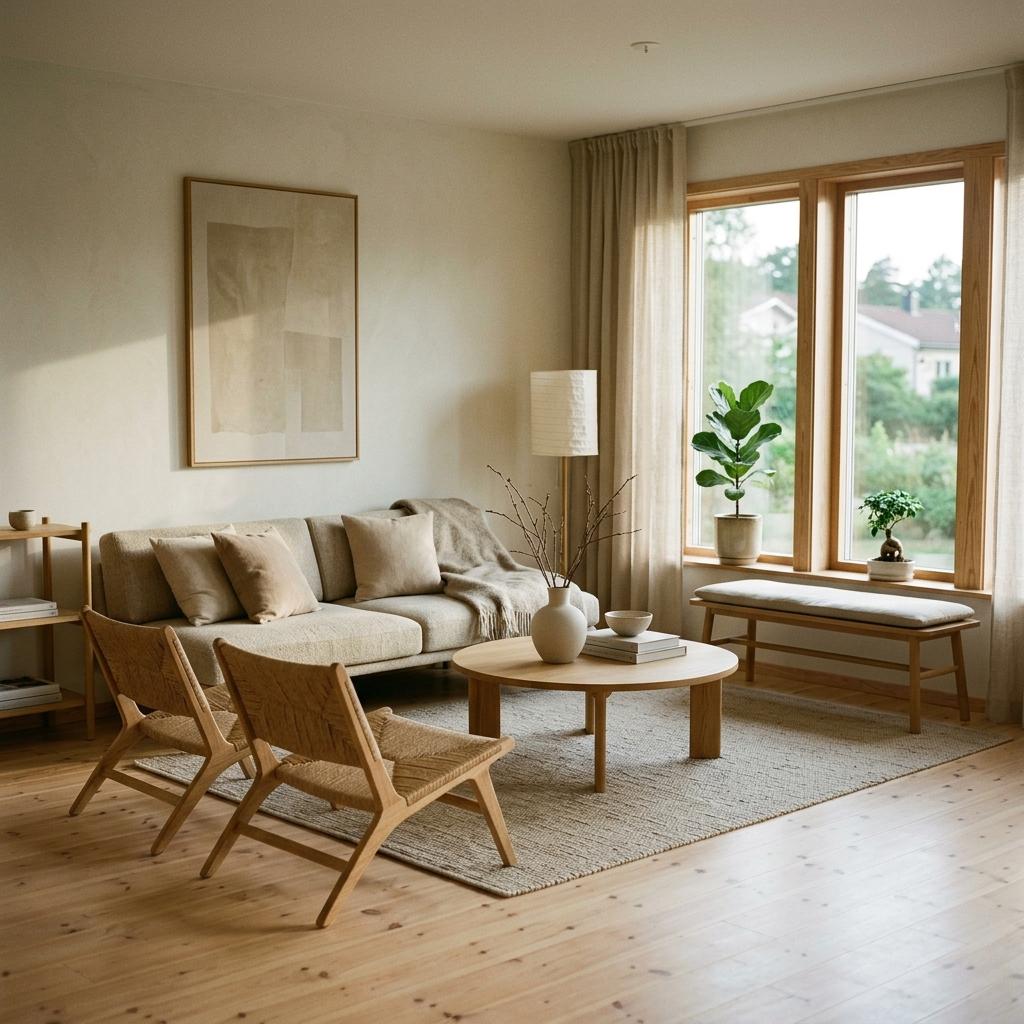

In this refined interior, the Japandi aesthetic was meticulously realized through a deliberate fusion of Scandinavian efficiency and Japanese restraint. The layout breathes within an unburdened environment, where bare surfaces and sparse silhouettes anchor the room in a state of quietude. Polished planks of pale pine provide a steady, serene foundation for the furniture to rest upon. This deliberate spatial arrangement expands the visual horizon, carving out a sanctuary that stretches toward the soft, natural light. The design honors the dialogue between shadow and substance by layering oatmeal textiles, matte ceramics, and slender wooden frames.
Walk Through A Refined Neutral Japandi Living Room Space
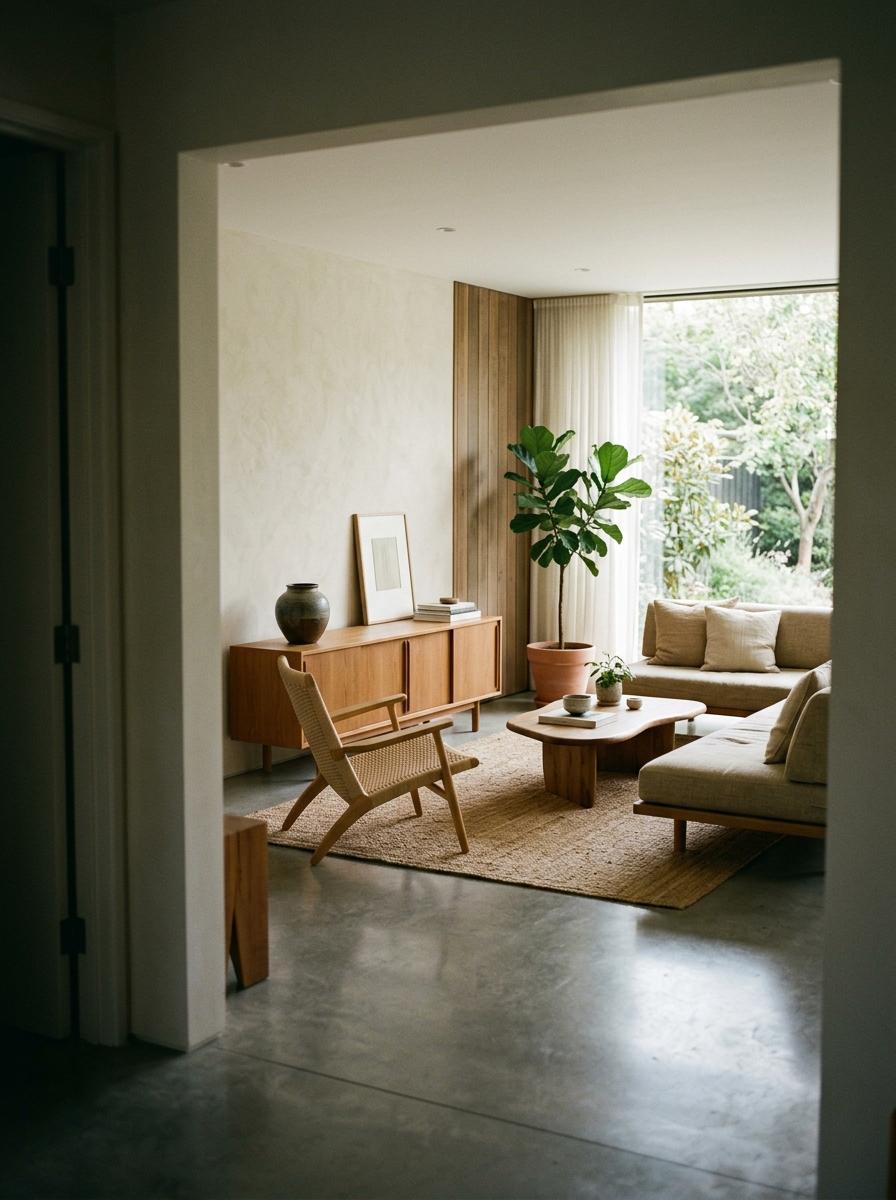

Stepping into the space, the immediate sensation is one of profound deceleration, a stark departure from the frenetic, neon-pulsed rhythm of the city street just moments behind me. "The intention," the designer explained as we paced the perimeter of the room, "was never to fill the volume with objects, but to-" she paused, adjusting a hand-thrown ceramic vessel on a low-slung oak credenza, "-curate the void between them." This mastery of spatial compression and release is where the Japandi ethos breathes; it is the deliberate tension between the rustic, weathered textures of wabi-sabi and the exacting, functional lines of Scandinavian modernism. While the world outside is a cacophony of visual noise and disposable trends, this interior serves as a study in tectonic honesty, utilizing a palette of oatmeal linens and scorched cedar to ground the senses. This seamless dialogue between two seemingly distant cultures reveals a deeper truth: that true luxury is found not in the accumulation of things, but in the quiet refinement of our daily environment.
Glimpse A Modern Home With Neutral Japandi Living Room Style
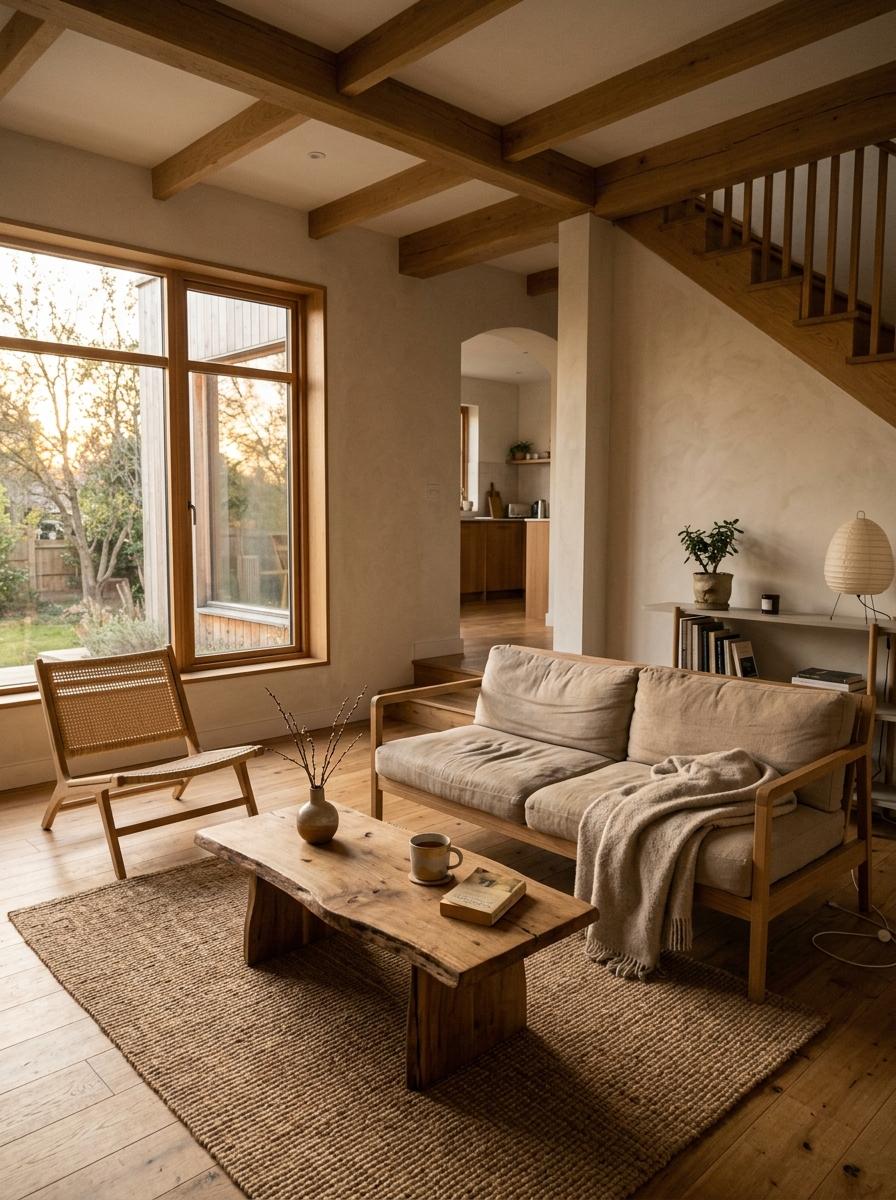

At its core, the Japandi aesthetic emerges through a rigorous synthesis of Scandinavian hygge-a philosophy centered on creature comforts-and the Japanese principle of wabi-sabi, which finds transcendence in the ephemeral and imperfect. This living room serves as a masterclass in this fusion, where the skeletal precision of Nordic functionalism meets the quiet, meditative ethos of Eastern minimalism to create a space that feels inherently balanced. The architecture is defined by a compelling dialectical pairing: the lines are unapologetically sharp and geometric, yet they are softened by a materiality that feels organic and deeply grounded. It is a sanctuary characterized by a sensorial palette of tactile, weathered, and hushed tones-a deliberate curation that rejects the sterile in favor of an environment that is at once visually rhythmic and profoundly soul-soothing.
Inside A Quiet Refuge With Neutral Japandi Living Room Decor
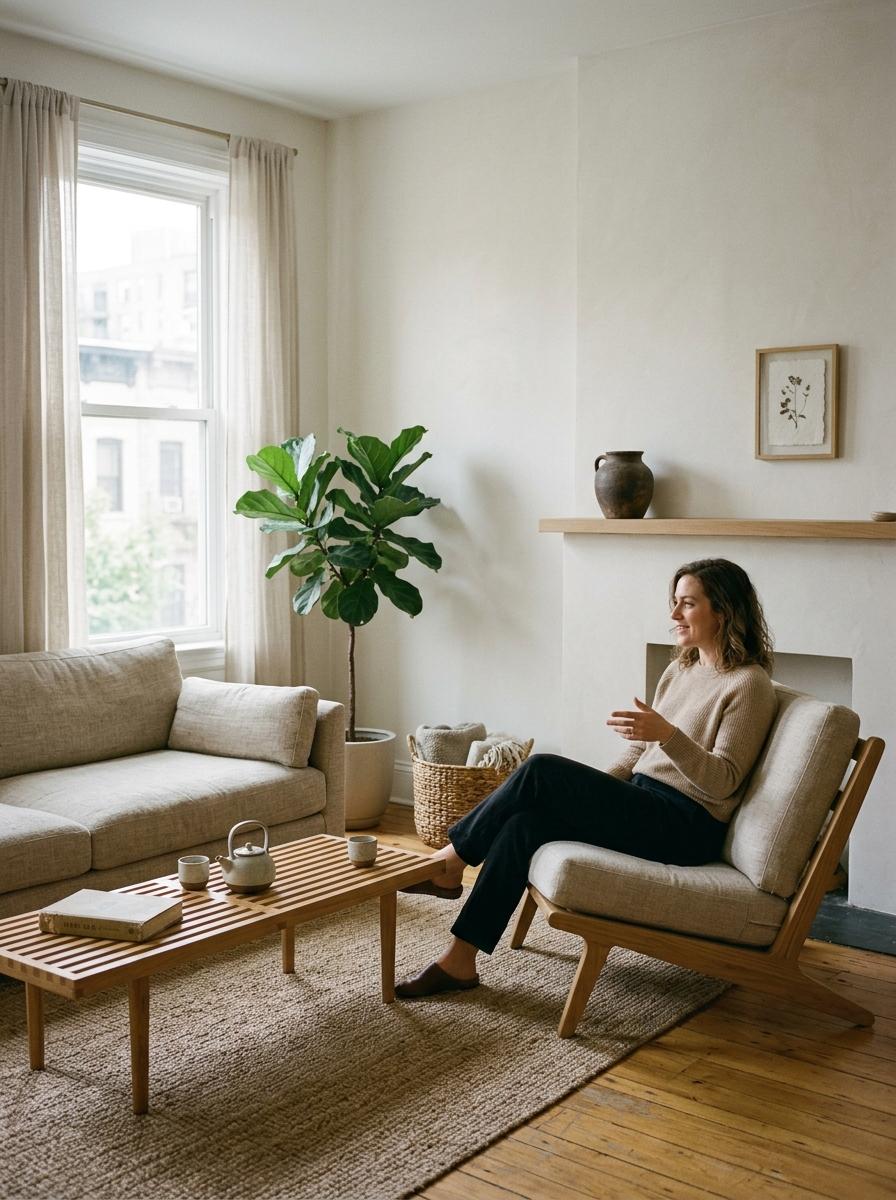

Stepping off the frantic, asphalt-slicked streets of the city is less of a physical movement and more of a sensory shedding; the jarring cacophony of the metropolitan grind suddenly dissolves into a profound, intentional hush. As I sat down with the homeowner to discuss the intentionality behind the space, she gestured toward the soft curve of a low-slung oak chair. "It wasn't just about the look," she explained, pausing to adjust a single ceramic vessel on the mantle, "but rather about how the light hit the grain-finding that specific point where Japanese minimalism meets Scandinavian warmth." This domestic sanctuary relies on a sophisticated interplay of tactile materiality, utilizing a palette of oatmeal linens and desaturated timbers to establish a rigorous yet inviting visual cohesion. By juxtaposing the chaotic, high-contrast urban landscape outside with the "wabi-sabi" imperfections of the handcrafted decor within, the space achieves a rare equilibrium. This deliberate layering of organic textures and negative space serves as the perfect case study for understanding how neutral Japandi living room decor can transform a dwelling into a quiet refuge.
A Home With Neutral Japandi Living Room Aesthetic Focus
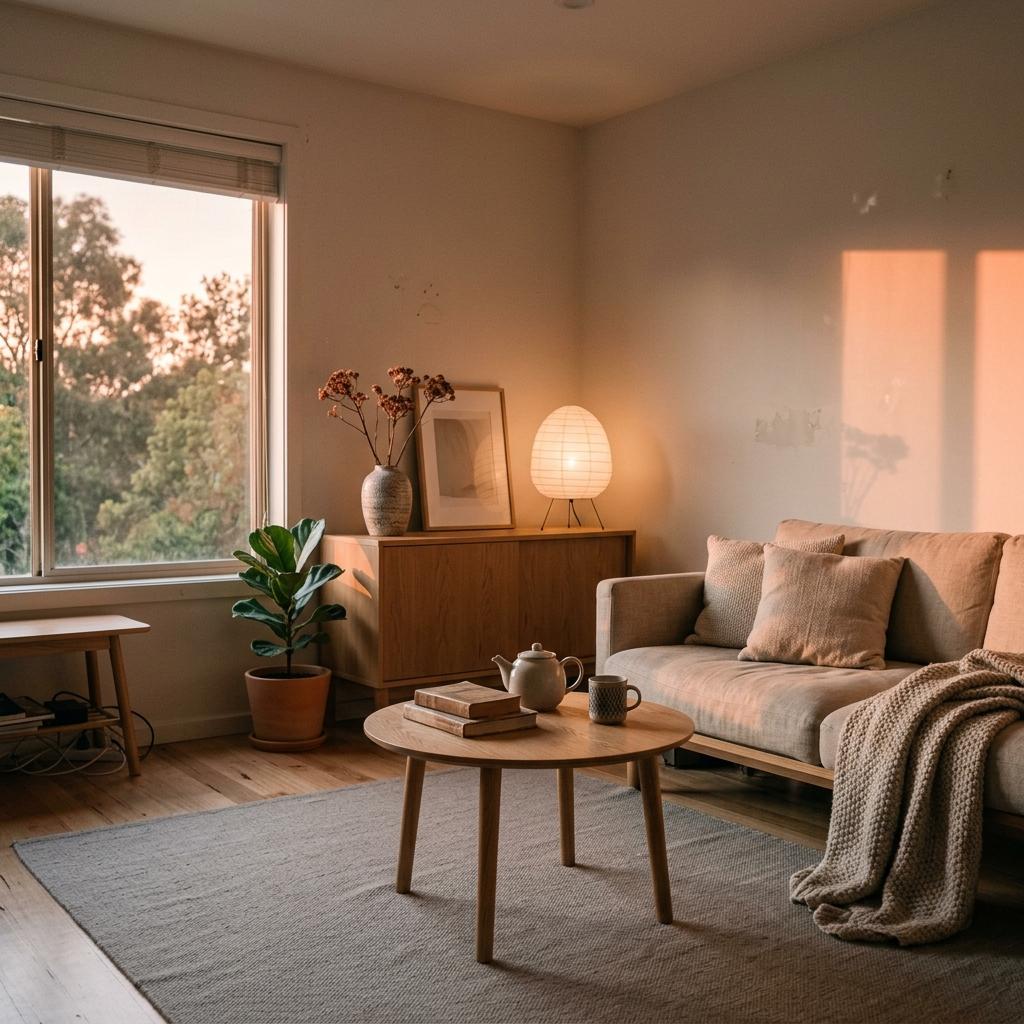

At the intersection of Scandinavian utilitarianism and Japanese wabi-sabi philosophy, Japandi design emerges not as a mere trend, but as a deliberate synthesis of northern hygge and eastern transience. This aesthetic achieves a profound equilibrium through the orchestration of monochromatic palettes and artisanal materiality; it is a space that feels rigorously disciplined, yet remains intuitively hospitable. By juxtaposing the tactile, haptic quality of raw oak with the ethereal, translucent properties of washi paper, the living room becomes a study in dialectical pairing-where the structural austerity of minimalism meets a soulful, weathered warmth. The result is an atmosphere characterized by an olfactory stillness and a visual cadence that is simultaneously grounding, luminous, and sequestered, inviting a sensory retreat from the cacophony of modern life.
Embrace A Balanced Life In A Neutral Japandi Living Room
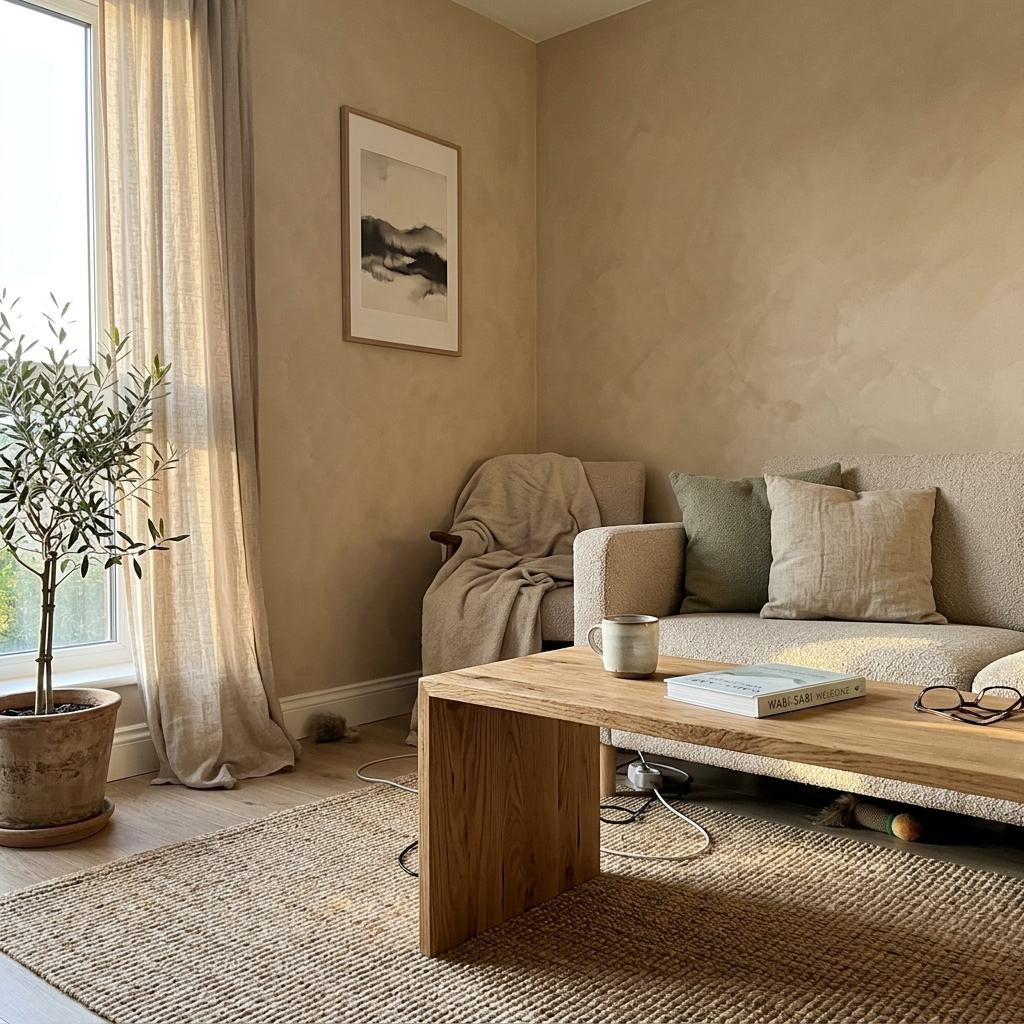

To achieve a balanced life, we must first curate a space that commands stillness. Note how the placement of a low-slung, open-pored oak coffee table anchors the room, its fibrous grain offering a tactile grounding against the diaphanous fall of linen drapery. This is the essence of a neutral Japandi sanctuary: a structured fluidity where the rigid geometry of a Tokyo loft meets the unrefined elegance of a Scandinavian summer house. As your eyes trace the muted, clay-washed walls, the visual noise of the external world begins to dissolve. You are no longer merely observing a room; you are experiencing a physiological deceleration. The heart rate slows, the breath deepens into the diaphragm, and the nervous system recalibrates, finding a profound sense of home within this curated void.
This Urban Apartment Features A Neutral Japandi Living Room
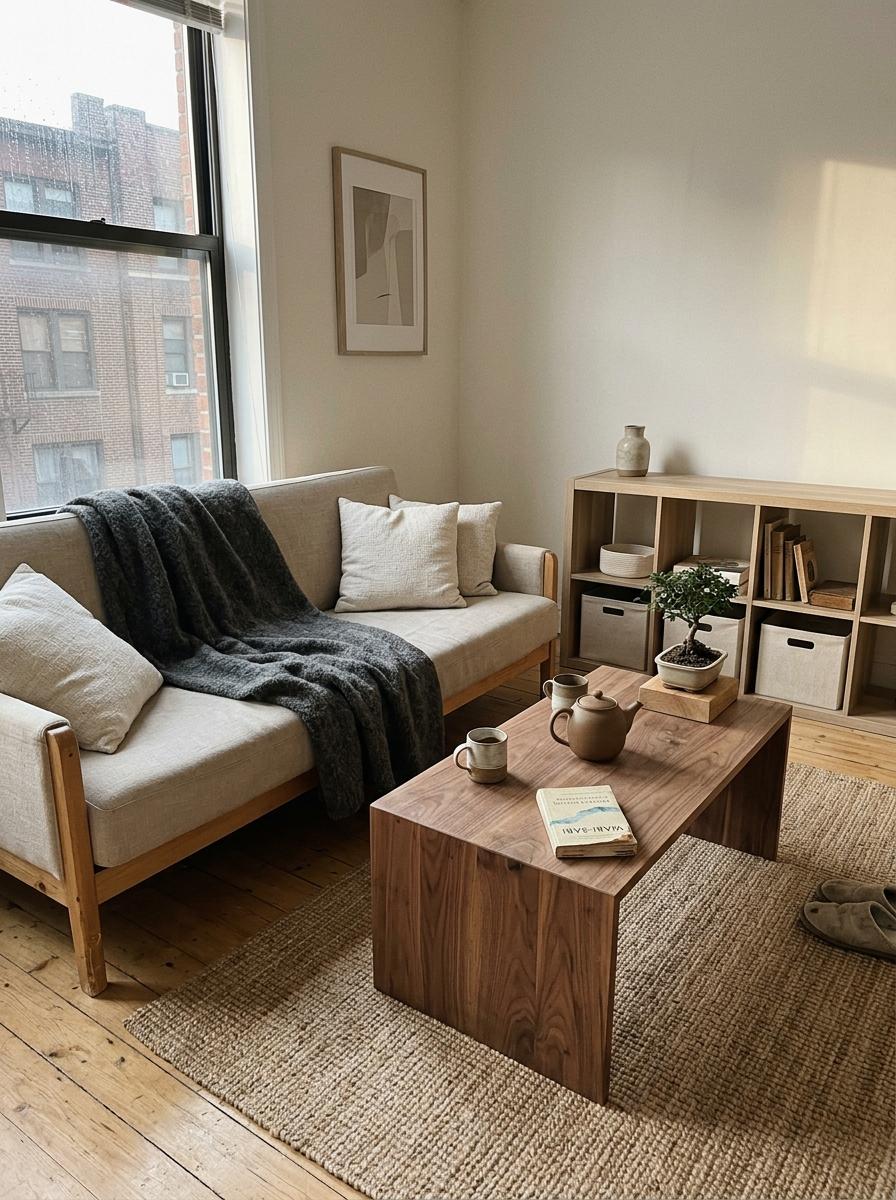

At the heart of this urban sanctuary lies a meticulous realization of Japandi-a stylistic alchemy where the unyielding pragmatism of Scandinavian hygge converges with the ephemeral, weathered grace of Japanese wabi-sabi. This synthesis produces a space defined by a rigorous minimalist vernacular, utilizing a palette of oatmeal, bone, and charcoal to anchor the visual field. The architecture of the room is governed by a dialectical pairing: the silhouette of the furniture remains uncompromisingly geometric and structural, yet it is softened by the organic irregularities of hand-spun textiles and open-pore wood grains. By navigating this tension between industrial precision and artisanal imperfection, the living room achieves a sensorial depth that is simultaneously grounding, ethereal, and profound.
How To Style A Minimalist Neutral Japandi Living Room
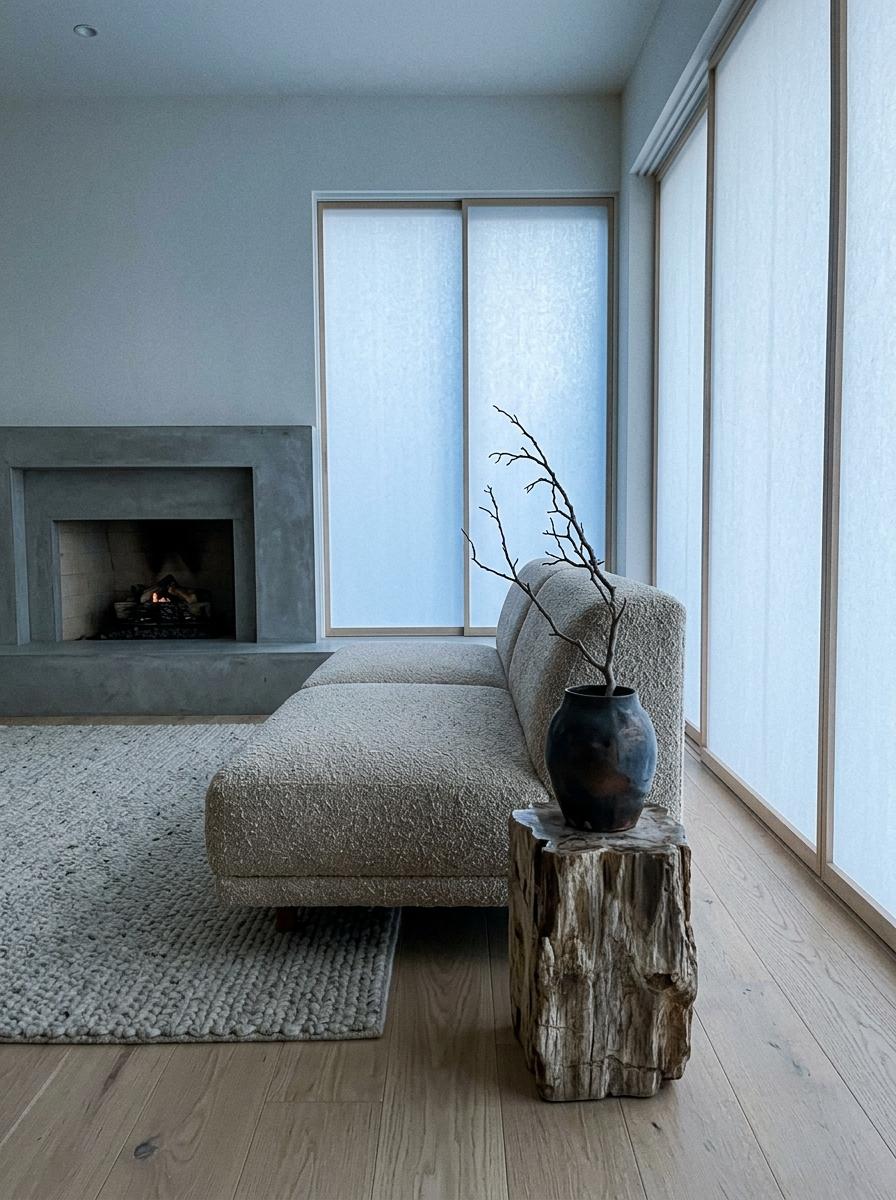

To achieve the quietude of a high-end Tokyo residence or a secluded Copenhagen retreat, begin by layering textures that speak of origin and honesty. Direct your attention to the foundation: select a low-profile sofa upholstered in nubby, oat-flecked bouclé or a tightly-woven, salt-and-pepper charcoal linen. These textiles provide a tactile anchor against the open-grained, honeyed warmth of white oak flooring. Note how the intentional placement of a single, hand-burnished ceramic vessel on a petrified wood plinth draws the eye toward the room's negative space, acting as a silent conductor for the light entering through sheer washi-style screens. Embrace the concept of calculated spontaneity-a design paradox where every "accidental" shadow and "raw" edge is the result of meticulous curation. This tension between the austere and the inviting creates a room that feels both monumental and intimate. As you inhabit the space, the visual rhythm of the poured concrete hearth meeting the plush, hand-tufted wool rug triggers a visceral shift; your heart rate slows as the physical weight of the outside world dissolves into a state of hygge-inspired tranquility. This is the hallmark of the Aoyama-Scandi aesthetic: a profound stillness that resonates deep within the nervous system, turning a simple living area into a sanctuary of sensory decompression.
Minimalist Textures For A Neutral Japandi Living Room
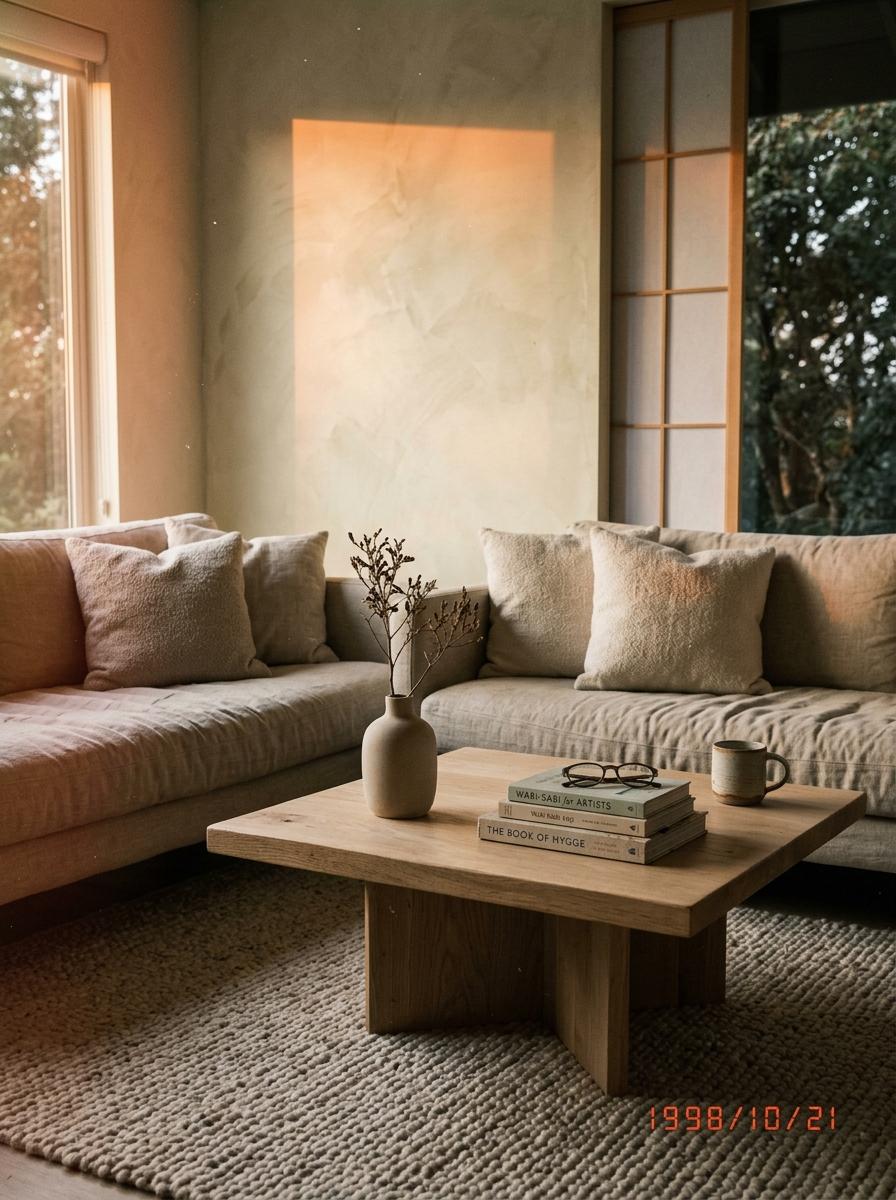

In analyzing the modern evolution of the Japandi living room, we must look back to the mid-century fusion of Shisui lacquer and Teakwood, which has since transformed into today's preference for raw, breathable fibers and lime-wash finishes. This progression creates a sense of ordered chaos, where the rigorous geometry of Japanese minimalism is softened by the tactile, unpredictable spirit of Scandinavian hygge. This particular study focuses on a residence nestled in the quiet, leafy enclaves of Setagaya, Tokyo, a neighborhood that serves as the perfect backdrop for such a refined aesthetic. The project was commissioned by a repeat client-a partnership that allowed for a deeper exploration into the subtleties of material interplay than a first-time collaboration might permit. Ultimately, the space achieves its neutral balance through a precise technical synthesis of light-diffusing textiles and mineral-based wall treatments, which act as the primary architectural levers to ground the room in quiet sophistication.
Picture Perfect: A Light Filled Neutral Japandi Living Room
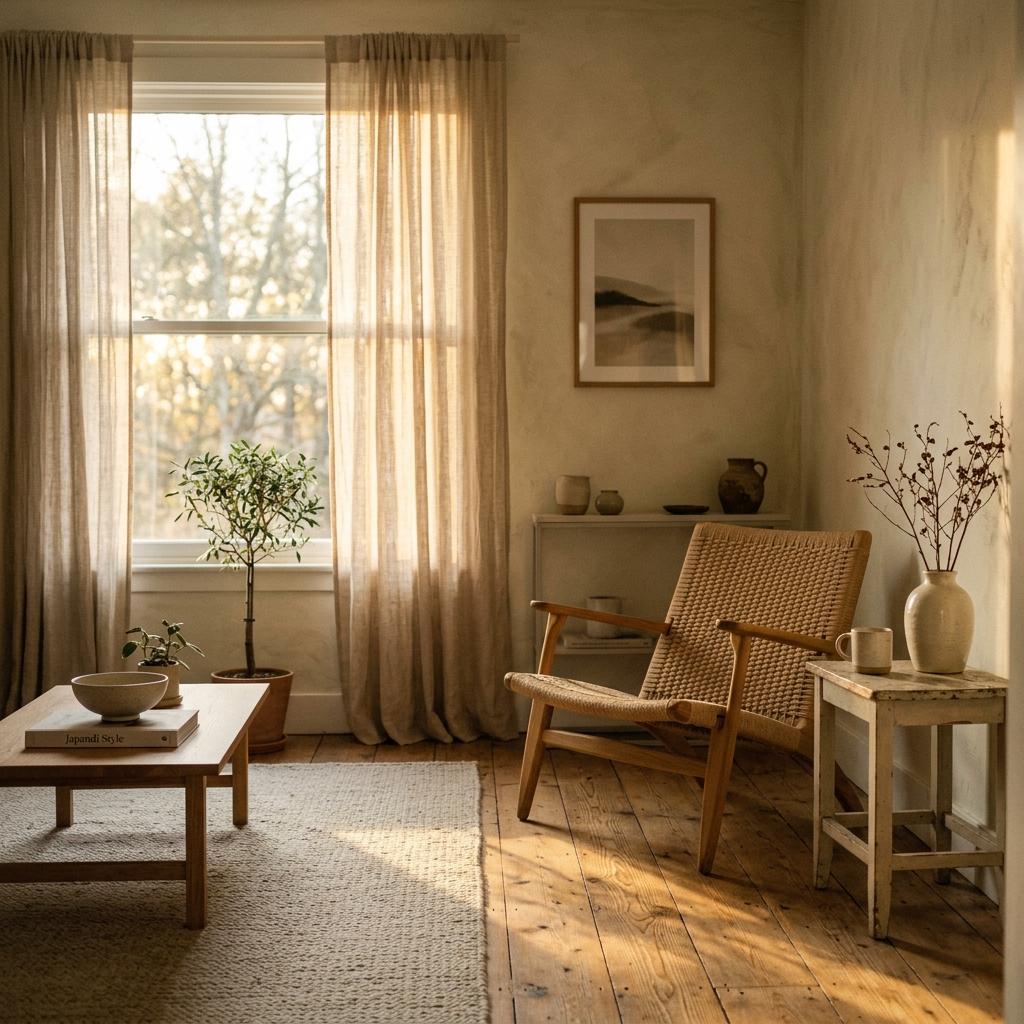

In this residence, the architecture dissolves into a canvas of curated stillness, where the tactile language of the space speaks louder than its minimalism. Note how the diaphanous linen drapery catches the afternoon sun, filtering light across the floorboards of Dinesen Douglas Fir-a material so velvet-smooth to the touch it feels almost warm underfoot. There is a profound dynamic stillness at play here; the room feels vibrating with energy yet remains perfectly hushed, a paradox achieved through the interplay of raw, open-grain oak and the soft, matte consistency of lime-wash walls. As you trace the silhouette of a low-slung Hans Wegner lounge chair against the cream-toned ceramics, the visual harmony shifts from mere observation to a physiological release. The jaw unclenches, the breath deepens, and the nervous system settles into a state of restorative quietude, proving that a neutral palette isn't just an aesthetic choice, but a visceral return to center.
Walk Through A Cozy Neutral Japandi Living Room Layout
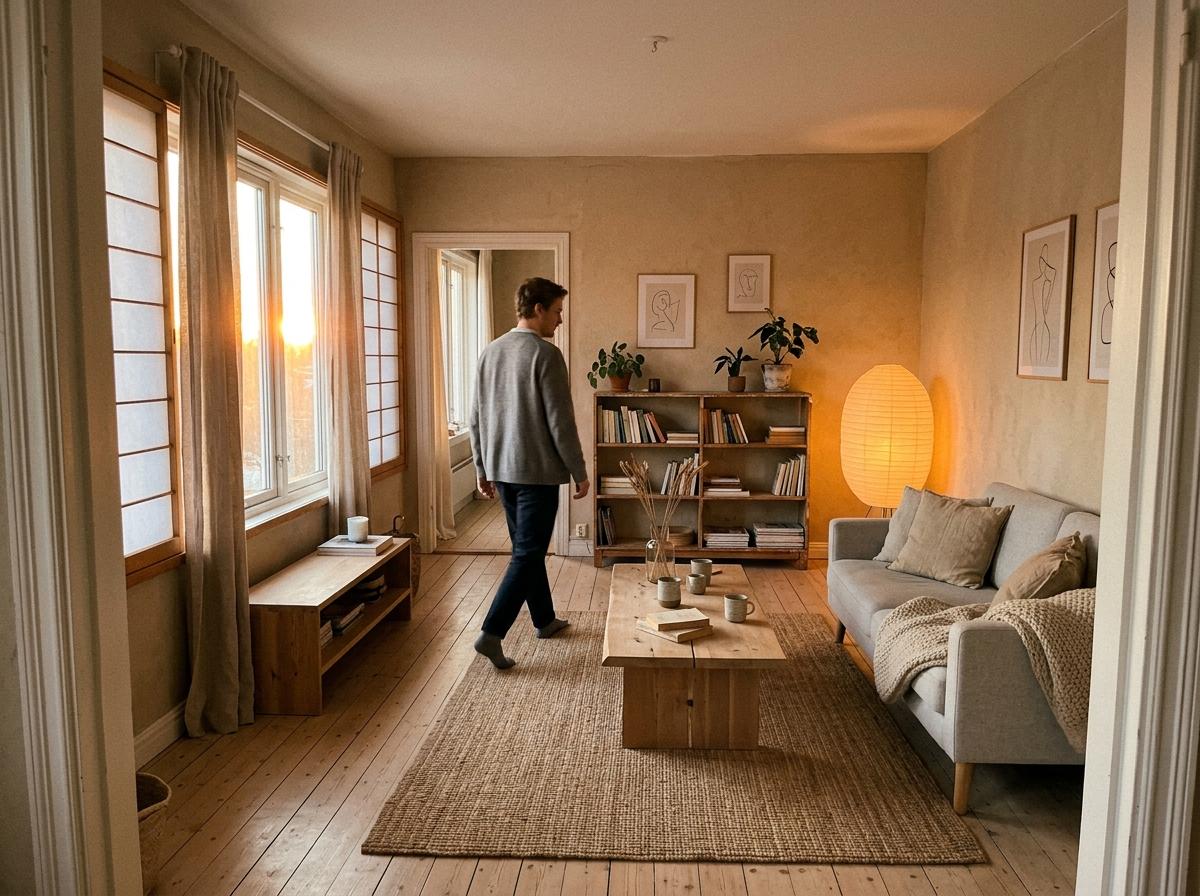

In analyzing the modern domestic landscape, we find that the Japandi aesthetic emerges not merely as a trend, but as a deliberate synthesis where the rustic, intentional imperfection of Japanese wabi-sabi intersects with the streamlined, utilitarian warmth of Scandinavian hygge. This stylistic convergence demands a rigorous lexical precision, grounding the space in a palette of oatmeal linens and bleached timbers that favor tactile authenticity over visual clutter. The layout serves as a study in dialectical pairing: the structural silhouette of the furniture feels architectural and uncompromising, yet it is softened by an atmosphere of profound, breathable tranquility. As we move through the room, we are met with a sensorial stacking of elements-the parched, earthen scent of untreated oak, the hushed, velvety resonance of a low-pile wool rug, and the luminous, ethereal glow of a paper shoji lamp-which collectively transform a static floor plan into a sanctuary of restorative stillness.
Glimpse The Natural Beauty Of A Neutral Japandi Living Room
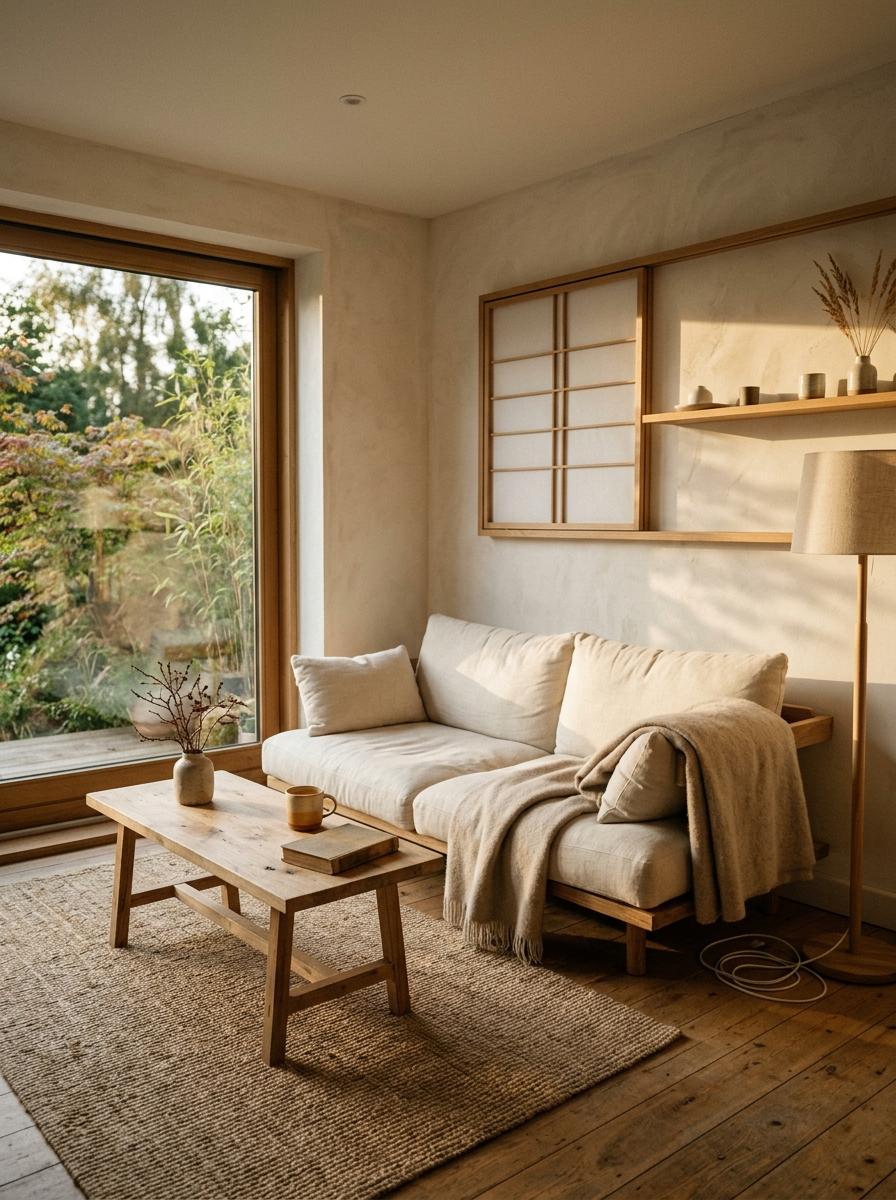

The architectural vision for this serene sanctuary was conceived as a dialogue between Japanese restraint and Scandinavian warmth. Within this hollowed expanse, a muted palette unfolds across tactile surfaces, where sparse furnishings anchored by void and volume celebrate the profound beauty of the barely-there. Light leans into the layout, while soft shadows stretch across the floor, fostering a feeling of fluid, functional freedom. Large panes of glass carve out the scenery, inviting the exterior to expand inward and breathe life into the bones of the home. This curated stillness is ultimately defined by its low-slung profiles, linen-wrapped layers, and lean, liminal lines.
Inside A Peaceful Home With Neutral Japandi Living Room
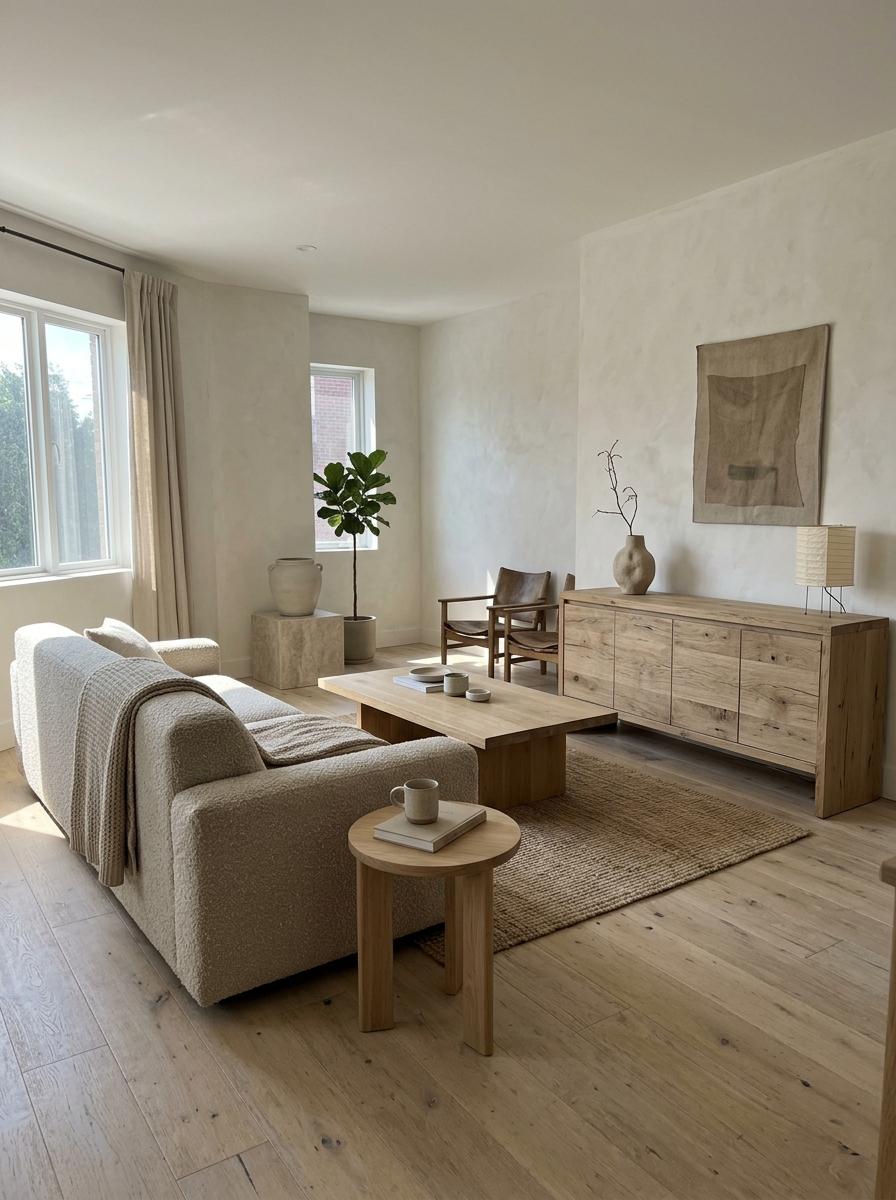

Stepping off the frantic, asphalt-heated pavement of the city into this residence is less like entering a building and more like a physical decompression. While the world outside is a cacophony of visual noise and fragmented steel, the foyer greets you with a profound, intentional silence. As I sat down with the homeowner, the space seemed to breathe through its materiality. “The goal wasn't just a look,” she explained, pausing to trace the raised grain of a reclaimed white oak sideboard, “it was about finding a specific kind of... tactile stillness.” This sense of shibui-an unobtrusive, refined beauty-is anchored by a low-slung sofa upholstered in a heavy oatmeal bouclé, creating a soft silhouette against the limewash walls. “In a city that never stops demanding your attention,” she continued, gesturing toward a solitary ceramic vase atop a stone plinth, “this room finally gives me permission to stop giving it.” This delicate balance between Scandinavian functionality and Japanese minimalism serves as a masterclass in how a neutral palette can become a sanctuary.
A Home With Neutral Japandi Living Room Furniture Focus
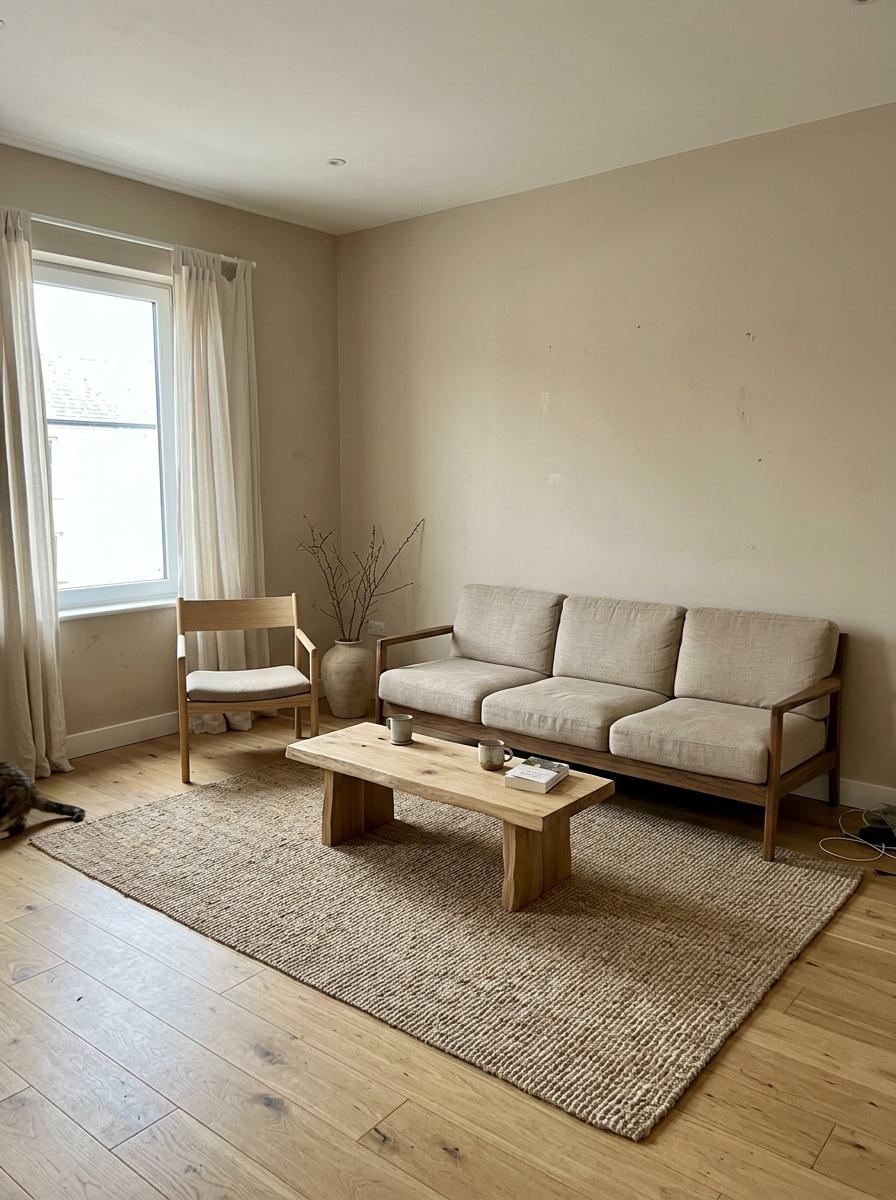

This residence was conceived as a masterclass in restraint, where every structural decision was dictated by the quiet interplay of light and void. The open-plan layout breathes through an unadorned expanse, meticulously curated to emphasize a spare, sterile elegance that rejects the clamor of unnecessary ornamentation. Within this hollowed sanctuary, soft sunlight strokes the smooth surfaces of sand-toned timber, grounding the space in a tranquil, tactile harmony. Low-slung silhouettes carve deliberate paths through the room, stretching the visual horizon to expand the perceived volume of the interior. This deliberate arrangement anchors the home's soul, centering the daily experience around a linen-clad sofa, a singular stone plinth, and a hand-woven rug.
Embrace Soft Minimalism In A Neutral Japandi Living Room
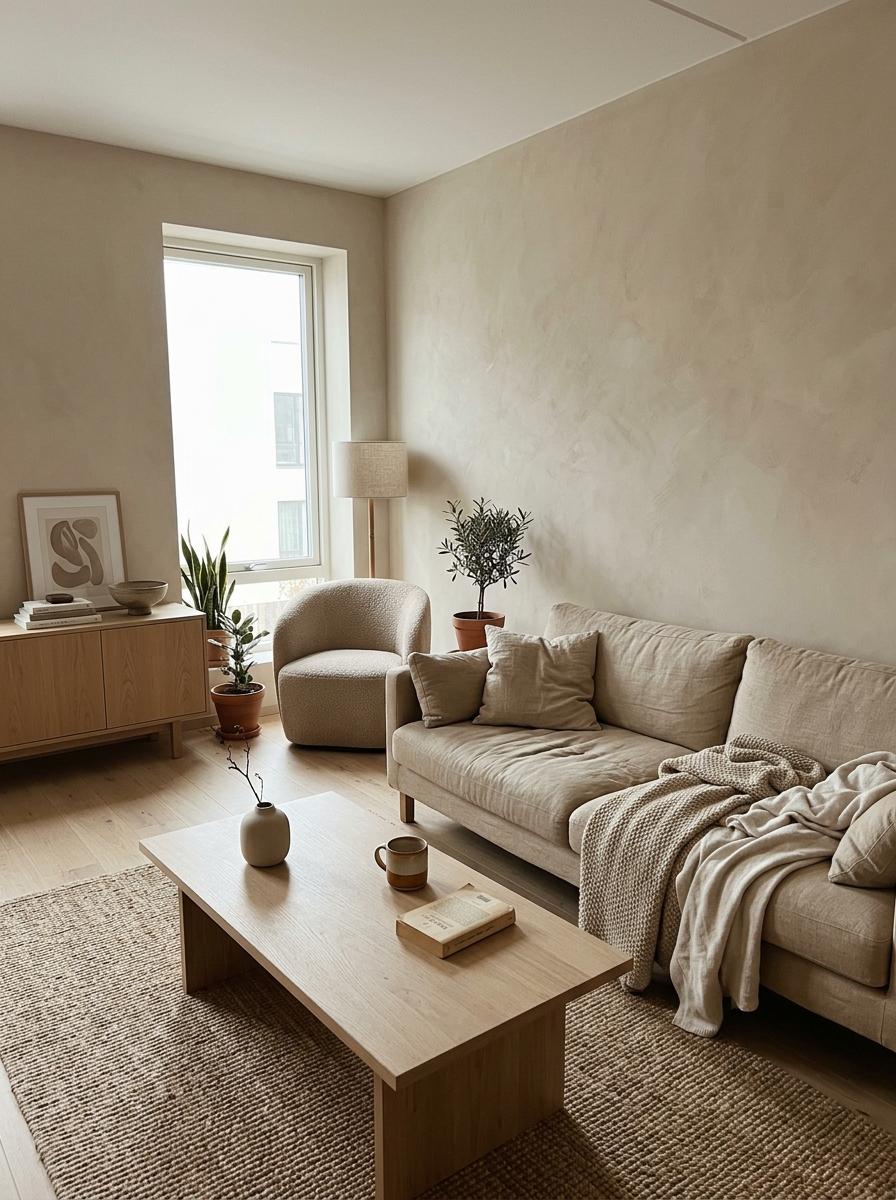

I recently found myself standing in a friend's Midtown loft, a space defined by high-gloss surfaces and the relentless "visual noise" of chrome accents that seemed to vibrate under the recessed lighting. It felt less like a sanctuary and more like a gallery where one is forbidden to sit. "I wanted it to feel modern," she confessed, her voice trailing off as she adjusted a glass vase, "but instead... it just feels cold." That realization-the sharp friction between a space that looks expensive and one that feels inhabited-is exactly where the philosophy of soft minimalism begins to take root. By replacing those sterile, reflective finishes with a palette of sand and oatmeal, we shift the focus toward tactile resonance. We trade the harsh geometry of industrialism for the organic "wabi-sabi" imperfections of a limewash wall or a low-slung, white oak credenza. This intentional softening of the environment does more than just curate a look; it recalibrates our sensory experience, turning the neutral Japandi living room into a masterclass in quiet restorative power.
This Spacious Home Boasts A Neutral Japandi Living Room
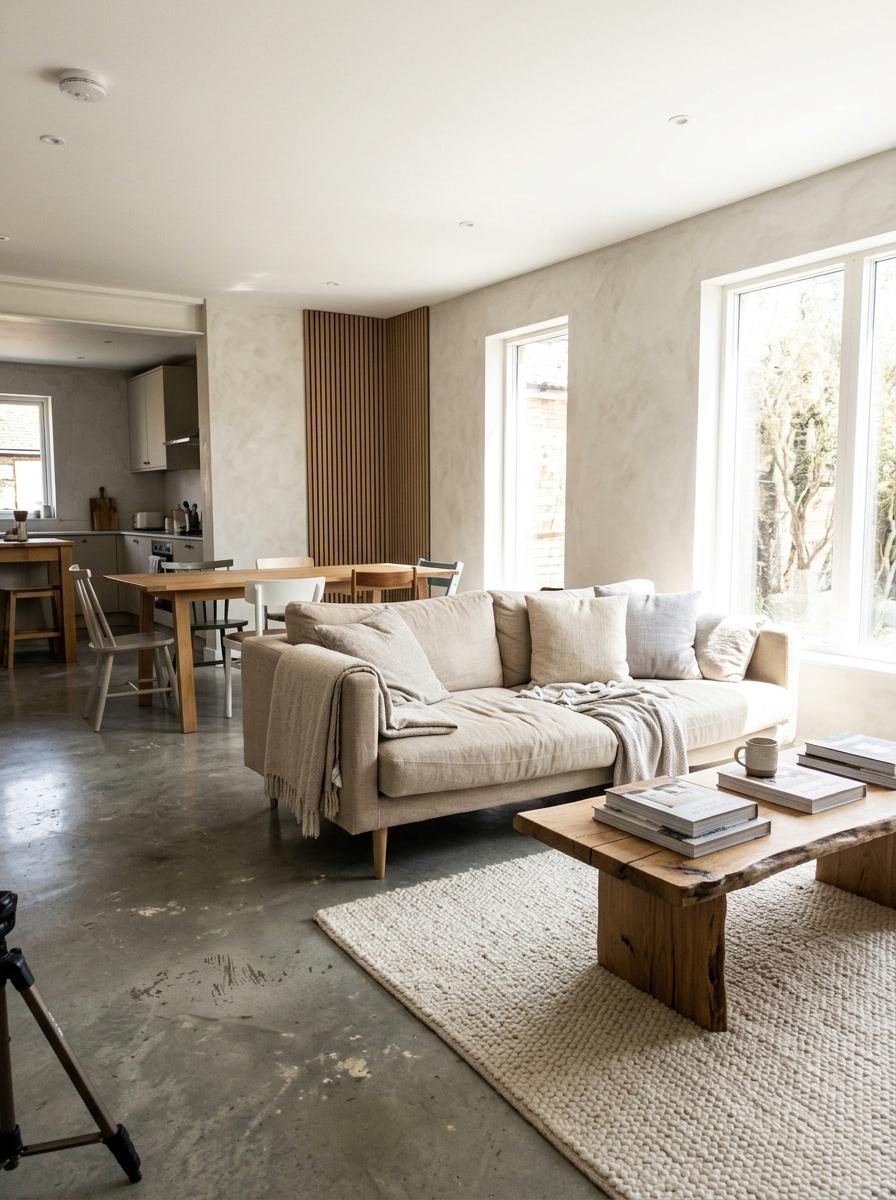

Once defined by the heavy, compartmentalized ornamentation of mid-century aesthetics, the modern home has undergone a quiet revolution, shedding its historical clutter in favor of a profound, meditative stillness. This particular residence, situated in the leafy, prestigious enclave of Hampstead, exemplifies this shift through a masterclass in complex simplicity. By embracing a maximalist minimalism, the space achieves a rare tension-feeling at once expansive and intimately grounded. This project marks a significant milestone for the design team, as the homeowners are repeat clients whose long-standing trust allowed for a deeper exploration of their evolving lifestyle needs. Ultimately, the success of this neutral Japandi sanctuary is found in its technical synthesis, where the deliberate calibration of natural light, the rhythm of vertical timber slats, and a monochromatic palette of tactile limewash converge to redefine the boundaries of open-plan living.
How A Small Space Uses Neutral Japandi Living Room Style
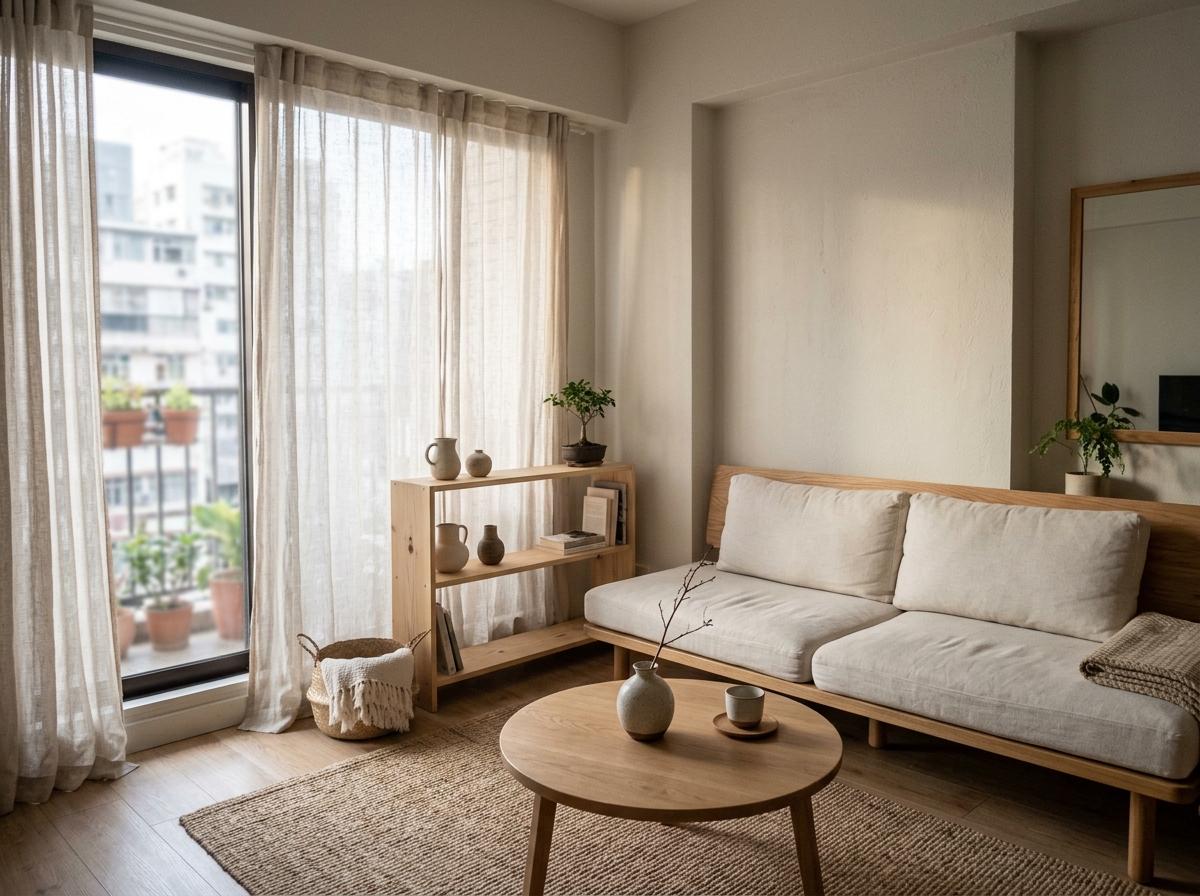

The spatial configuration was conceived through a meticulous distillation of form, where every structural element was curated to maximize the perceived volume of the compact footprint. Within this void, a hushed palette of oatmeal and ash anchors the room, ensuring that the visual field remains undisturbed by the weight of excess or the friction of clutter. Light leans softly across the liminal surfaces, creating a serene sanctuary that celebrates the quiet quality of craft. This intentional restraint stretches the horizon of the walls and pulls the eye toward the periphery, effectively enlarging the room's internal dimensions. To achieve this balance, the layout choreographs the placement of low-slung timber frames, ethereal linen drapes, and organic ceramic vessels.
Minimalist Wood Elements In A Neutral Japandi Living Room
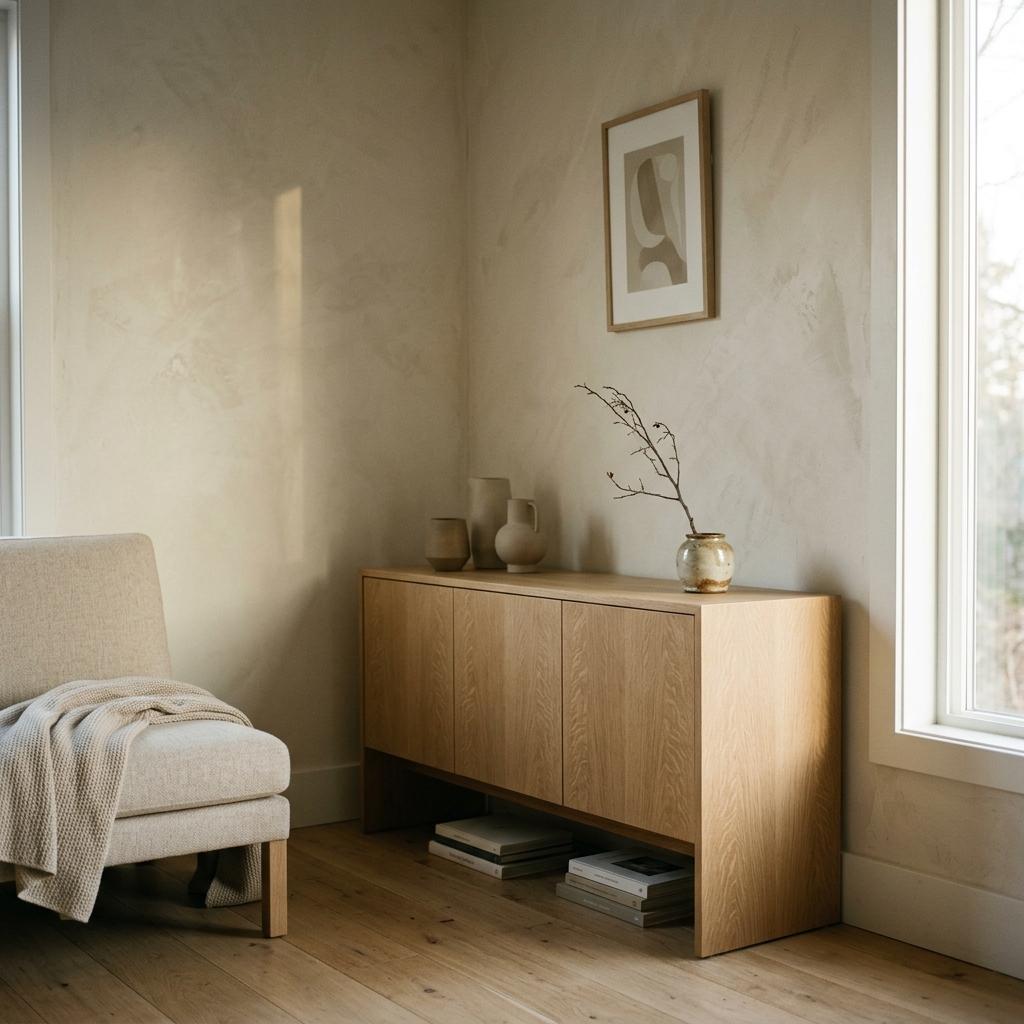

In this neutral Japandi living room, the atmosphere is defined by the tactile silkiness of quarter-sawn white oak and the porous, matte grit of lime-washed walls. Note how the low-slung credenza utilizes its ordered chaos-a design paradox where the rigorous, geometric wood grain provides a visual anchor against the fluid, asymmetrical ceramic vessels resting atop it. This interplay between the rigid organicism of the timber and the soft, oatmeal-toned textiles creates a profound sense of respiratory decompression; as your eyes trace the seamless joinery, your heart rate slows, mimicking the rhythmic stillness of a Kyoto teahouse. By integrating the structural honesty found in Scandinavian Hygge with the weathered integrity of Wabi-sabi, the space transcends mere aesthetics to become a sanctuary for the central nervous system.
Walk Through An Elegant Neutral Japandi Living Room
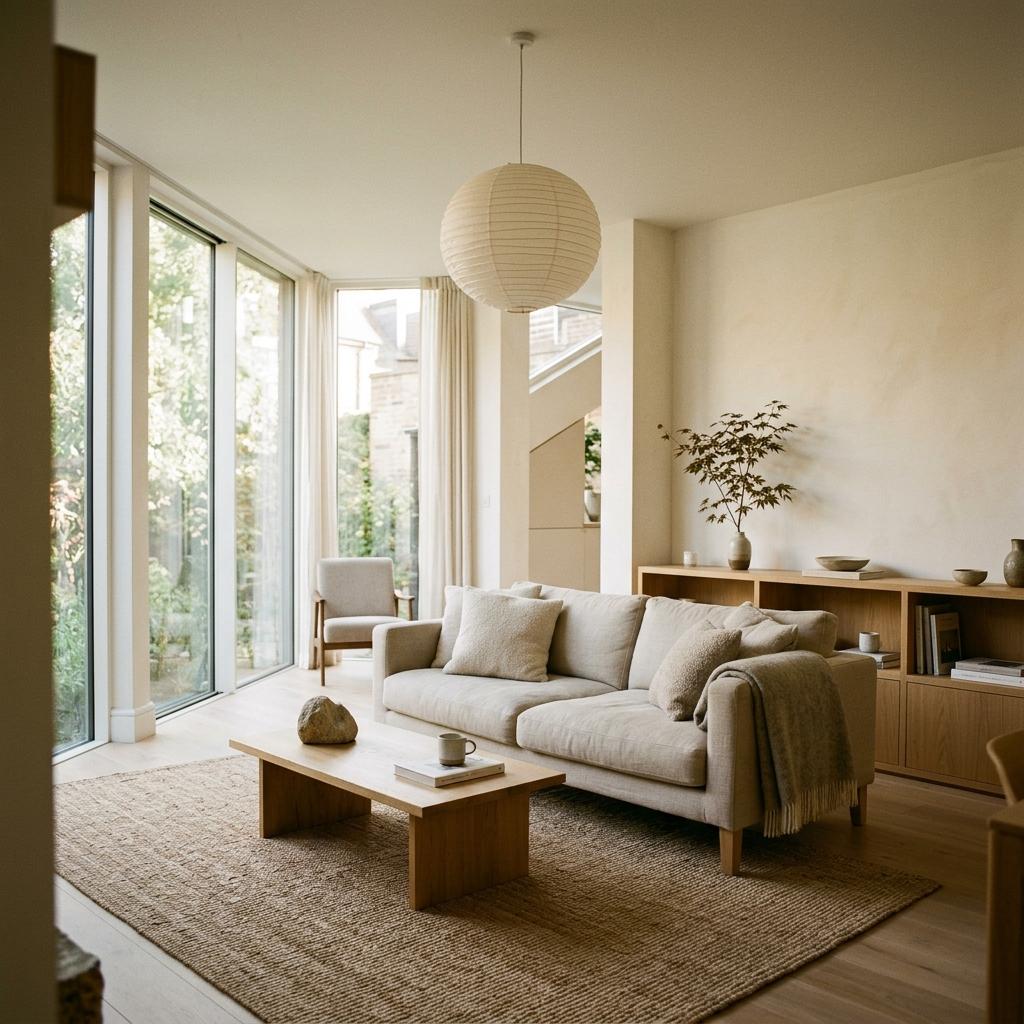

Stepping into this residence, one immediately senses a diachronic shift from the rigid, heavy ornamentation of mid-century suburban builds to a contemporary fluidity that favors breathability. This particular project serves as a masterclass in structured softness, a design tension where the clean, masculine lines of Japanese minimalism are harmonized with the tactile, feminine warmth of Scandi hygge. Situated in the leafy, prestigious enclave of Hampstead, the space feels anchored in a neighborhood known for its architectural integrity. Because the homeowners are a long-term repeat client, there is a palpable sense of trust in the layout-a deep understanding of their daily rituals that allows for such bold simplicity. Ultimately, this elegant neutral sanctuary is achieved through a precise technical synthesis of monochromatic layering, low-profile oak joinery, and the strategic manipulation of diffused natural light.




Comments