
By synthesizing the structural rigor of Scandinavian functionalism with the transcendent, weathered grace of Japanese wabi-sabi, the Japandi living room emerges as a curated sanctuary of intentionality. This aesthetic intersection demands a sophisticated calibration of form, where the clinical precision of Northern European geometry is softened by the organic, artisanal warmth of Eastern materiality. The resulting atmosphere is paradoxically complex yet profoundly vacant, offering a spatial experience that is simultaneously grounding and ethereal, tactile yet disciplined. To inhabit such a space is to surrender to a sensorial landscape of hushed, earthen patinas and luminous, unburdened expanses that recalibrate the spirit toward a state of quietude.
Japandi Living Room Ideas


Cozy Japandi Living Room Transformation With Natural Elements
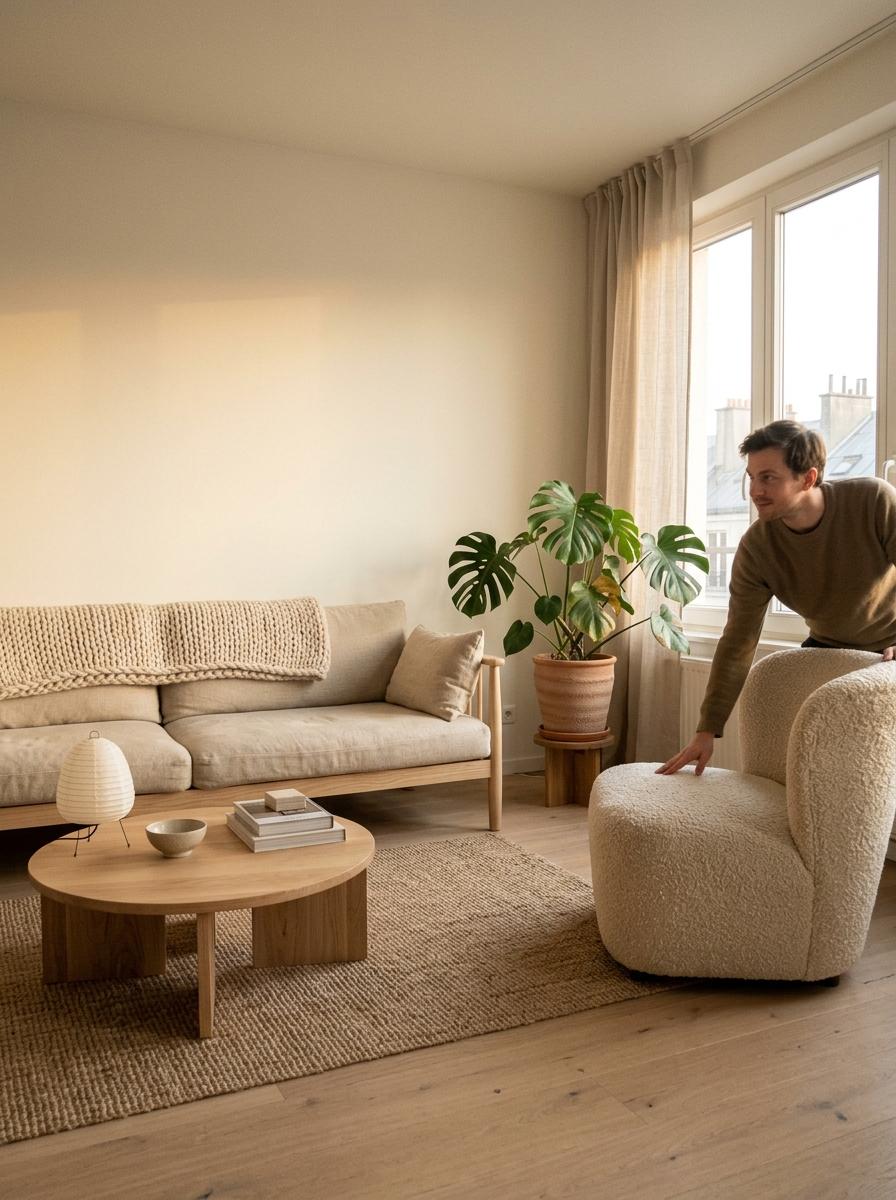

Stepping into Elias's pre-renovation apartment felt like a study in industrial friction-all cold steel legs, sterile white lighting, and the persistent hum of the city vibrating through thin glass. "It wasn't that I hated the space," he told me, gesturing toward a corner where a sprawling, leggy Monstera struggled against a drafty window, "it was more that the space... well, it never quite learned how to exhale." To remedy this architectural breathlessness, we didn't just add furniture; we introduced a curated dialogue between Scandinavian functionality and Japanese rusticity. By swapping the aggressive gloss of the previous floors for a matte, wire-brushed white oak, the room underwent a tactile shift from "clinical" to "grounded." "The light hits different now," Elias noted, pausing to run a hand over the nubby texture of a boucle armchair, "it's softer, almost like the walls are finally absorbing the stress of the day instead of reflecting it back at me." This deliberate orchestration of organic materiality-what we designers refer to as biophilic integration-serves as the foundation for a true Japandi sanctuary. It is through this intentional layering of raw wood, woven grasses, and earth-toned textiles that a house ceases to be a mere container for objects and begins to function as a vessel for tranquility.
Modern Japandi Aesthetics In A Compact City Apartment
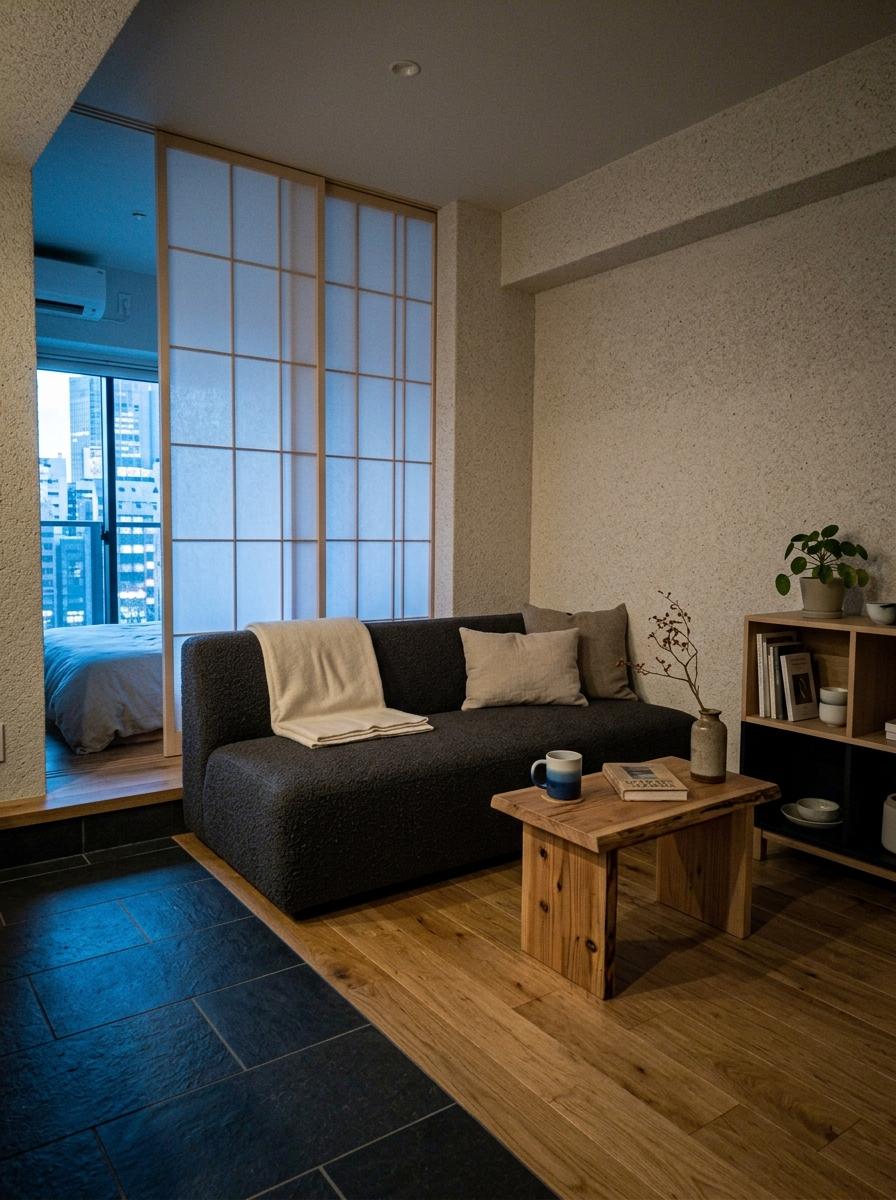

In this compact Tokyo residence, the interior architecture achieves a sense of monumental lightness, where the constraints of square footage are dissolved by a deliberate selection of tactile finishes. Note how the walls, coated in a granular shirasu-kabe plaster, catch the shifting afternoon light to create a surface that is simultaneously abrasive and soft to the eye. This dialogue between the raw and the refined is anchored by a low-slung sofa upholstered in a densely-looped charcoal bouclé, providing a grounded weight against the ethereal, translucent shoji screens that partition the sleeping quarters. As you move through the space, the transition from the cool, honed basalt entryway to the yielding warmth of oil-rubbed white oak flooring triggers a physical deceleration; your heart rate lowers as the visual noise of the Shinjuku skyline fades behind layers of organic texture. By integrating the minimalist precision of Muuto furnishings with the rustic, unyielding soul of Japanese cedar, the apartment transcends its urban density, transforming a confined footprint into a sanctuary of expansive serenity.
Walk Through This Warm Earthy Japandi Living Room Retreat
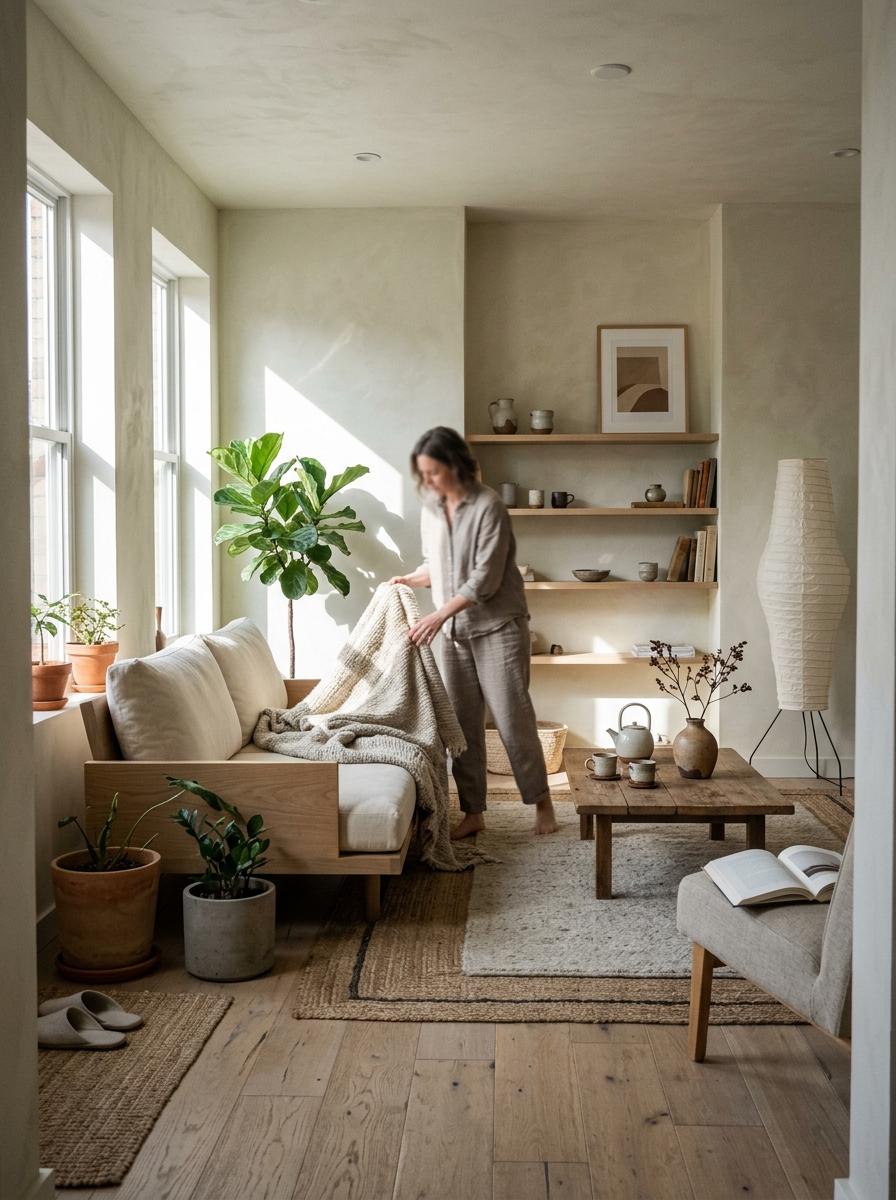

Stepping off the frantic, asphalt-slicked streets of the city is often a sensory assault, but crossing the threshold into this particular villa feels like a deliberate exhale. "The goal wasn't just a renovation," the homeowner explained, pausing to adjust a hand-loomed throw, "it was a rejection of the clinical-an attempt to find, well, a soul for the structure." In this space, the sterile glare of modern minimalism is traded for a curated warmth where the grain of raw white oak meets the tactile honesty of lime-wash walls. By layering these organic textures against a backdrop of disciplined, low-profile silhouettes, the room achieves a sophisticated sabi-that celebrated appreciation of imperfection. While most urban dwellings feel like cages of glass and steel, this living room functions as a soft-focus sanctuary. This delicate balance between architectural restraint and natural comfort serves as the perfect blueprint for what it truly means to inhabit the Japandi aesthetic.
Minimalist Textures Define This Refined Japandi Living Area
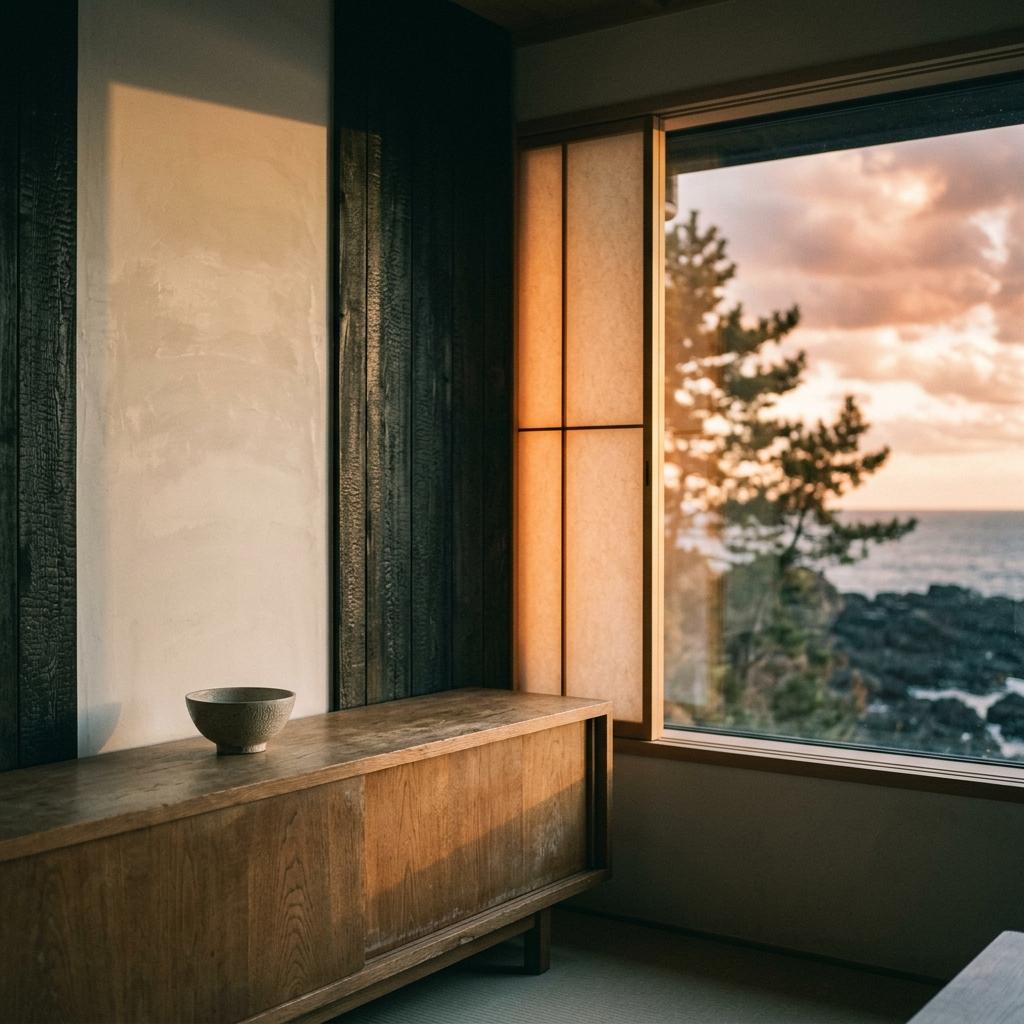

In this curated study of a residence overlooking the rugged coastline of Kamakura, the space transcends mere decoration to become a masterclass in tactile storytelling. Note how the desaturated grain of the reclaimed Shou Sugi Ban accents provides a rugged, charred counterpoint to the velvet-smooth application of traditional shikkui plaster walls. This juxtaposition creates a strikingly soft atmosphere; the materials feel simultaneously ancient and avant-garde, grounding the room in a state of permanent evolution. As your eyes trace the silhouette of a low-slung oak credenza against the translucent shimmer of handcrafted washi paper screens, the physical environment begins to trigger a profound physiological shift. The initial visual appreciation dissolves into a visceral lowering of the heart rate, as the "quiet noise" of the minimalist textures lulls the nervous system into a state of alert tranquility.
Sustainable Materials Found Inside This Japandi Living Room
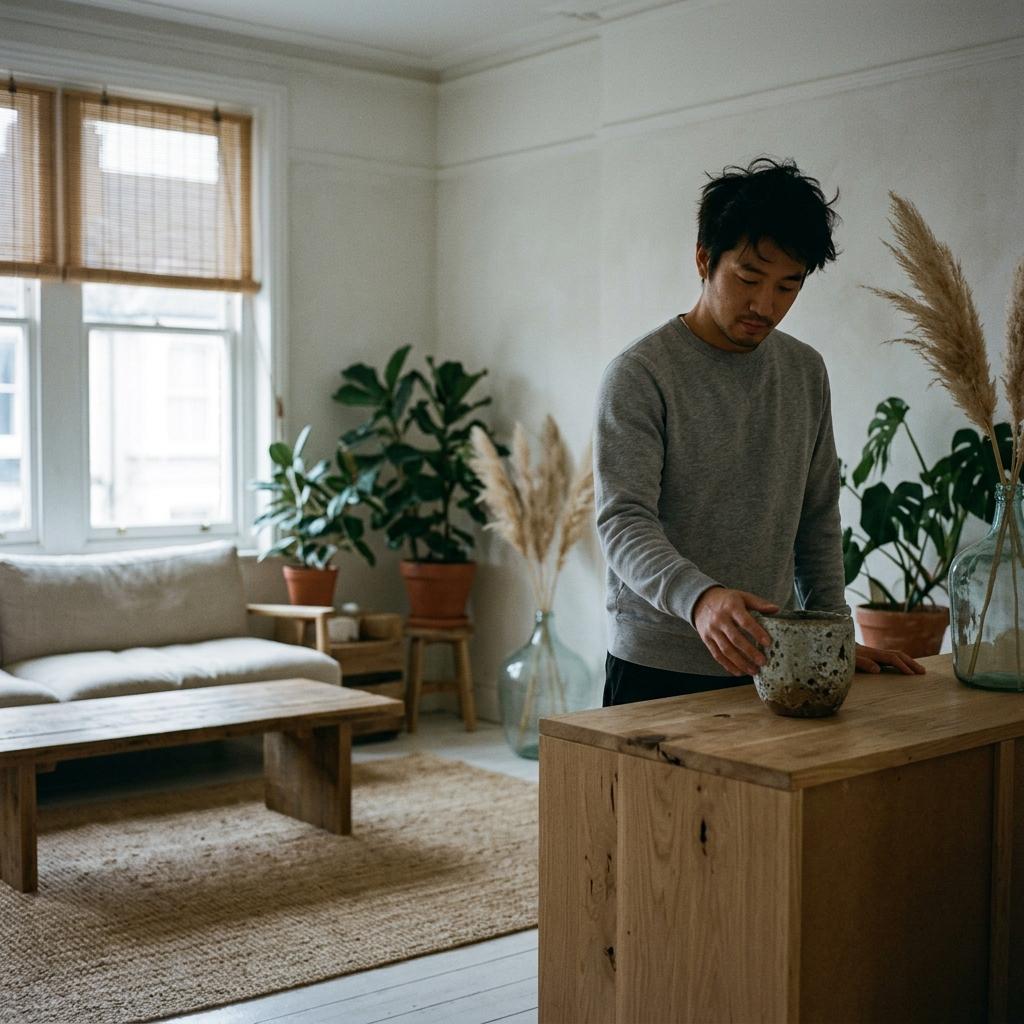

Stepping out of the humid, relentless roar of the central Tokyo metro, the silence inside this living room felt less like an absence of sound and more like a deliberate, tactile presence. While the city outside was a chaotic collage of neon and poured concrete, this space breathed through a curated palette of organic textures that seemed to absorb the frantic energy of the streets. "The goal wasn't just to decorate," the lead stylist explained, pausing to run a hand over the matte, open-grain finish of the white oak sideboard, "but to foster a sense of... biophilic reciprocity." She adjusted a ceramic vessel on the mantle-a piece with a raw, cratered glaze-before continuing, "where the materials actually age into their beauty rather than degrading." This deliberate juxtaposition between the disposable urban sprawl and the enduring integrity of the wabi-sabi philosophy reveals how the Japandi aesthetic has evolved from a mere trend into a rigorous study of environmental stewardship.
Natural Light Meets Japandi Design In This Airy Lounge
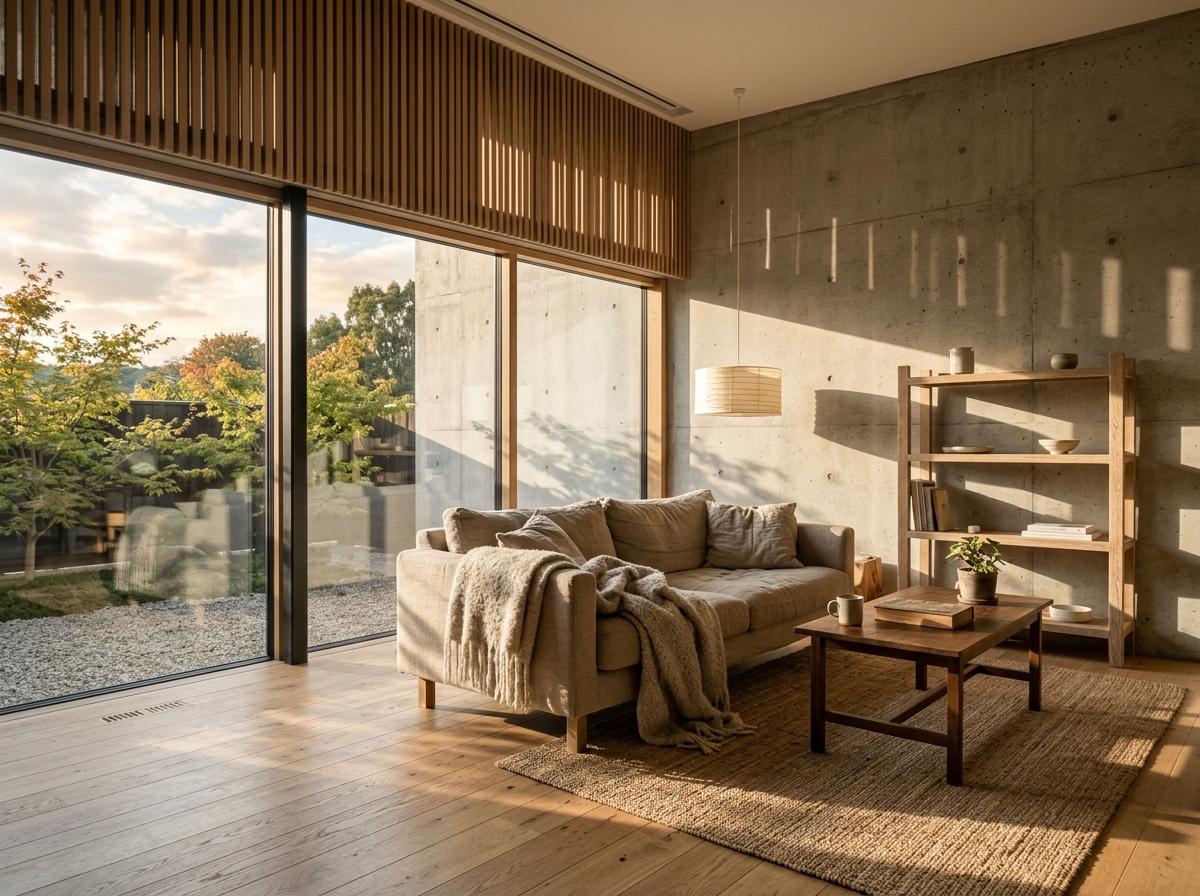

In this sun-drenched lounge, the spatial context is anchored by a profound architectural stillness, where the volume of the room serves as a silent vessel for the shifting choreography of daybreak. There is a compelling ordered chaos in the way the sunlight disrupts the minimalist geometry, creating a conceptual synthesis where the rigid discipline of Japanese lines meets the fluid, untamed warmth of Scandinavian hygge. This structural dualism creates a sharp distinction between the protected, introspective sanctuary of the interior and the expansive, untethered sky visible through floor-to-ceiling glass. Tactile imagery is defined by the grain of sand-blasted white oak and the coarse weave of unbleached linen, materials that ground the ethereal light in a physical, earthy reality. Ultimately, the integration of recessed motorization for timber slats acts as a necessary functionalist specification, providing an industrial solution that allows the inhabitant to curate the luminosity, transforming the lounge from a transparent gallery into a private, shaded retreat.
Neutral Color Palettes For The Ultimate Japandi Living Space
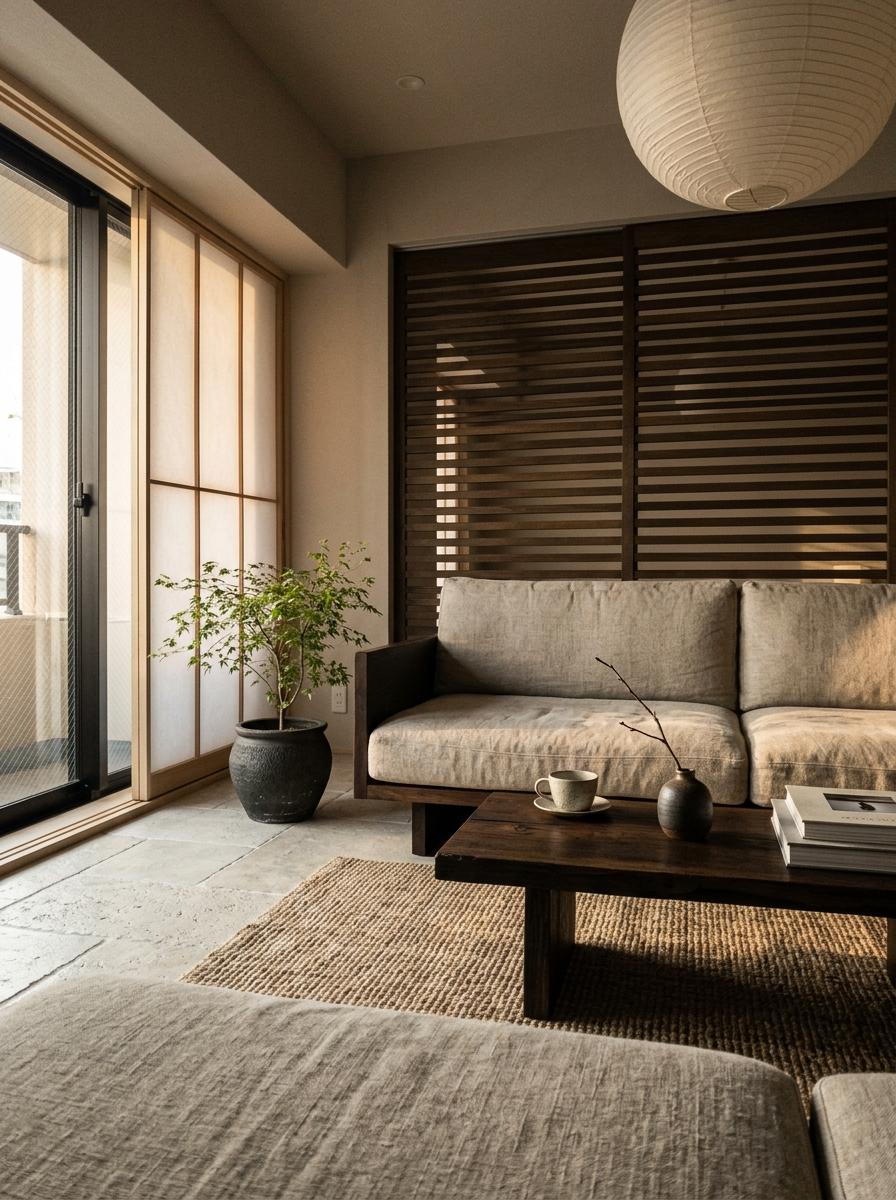

To achieve the ultimate Japandi living space, one must master the art of the intentional neutral-a palette that transcends simple beige to embrace the structural soul of the home. Begin with a foundation of calcareous limestone flooring and fibrous unbleached linen upholstery, materials that offer a tactile vocabulary of raw refinement. Note how the interplay of light across these surfaces creates a "heavy lightness," where the visual weight of dark Bog Oak furniture is paradoxically lifted by the ethereal transparency of Washi paper screens. This deliberate contrast-the ordered chaos of natural grain against the mathematical precision of slatted timber-triggers a profound physiological shift; as your eyes settle on the muted tones, your heart rate slows, and a deep, somatic stillness replaces the frenetic static of modern life. This is the hallmark of the Aoyama aesthetic found in Tokyo's most refined districts: a sensory environment that moves beyond mere decoration to become a visceral sanctuary for the nervous system.
Smart Furniture Layouts In A Functional Japandi Living Room
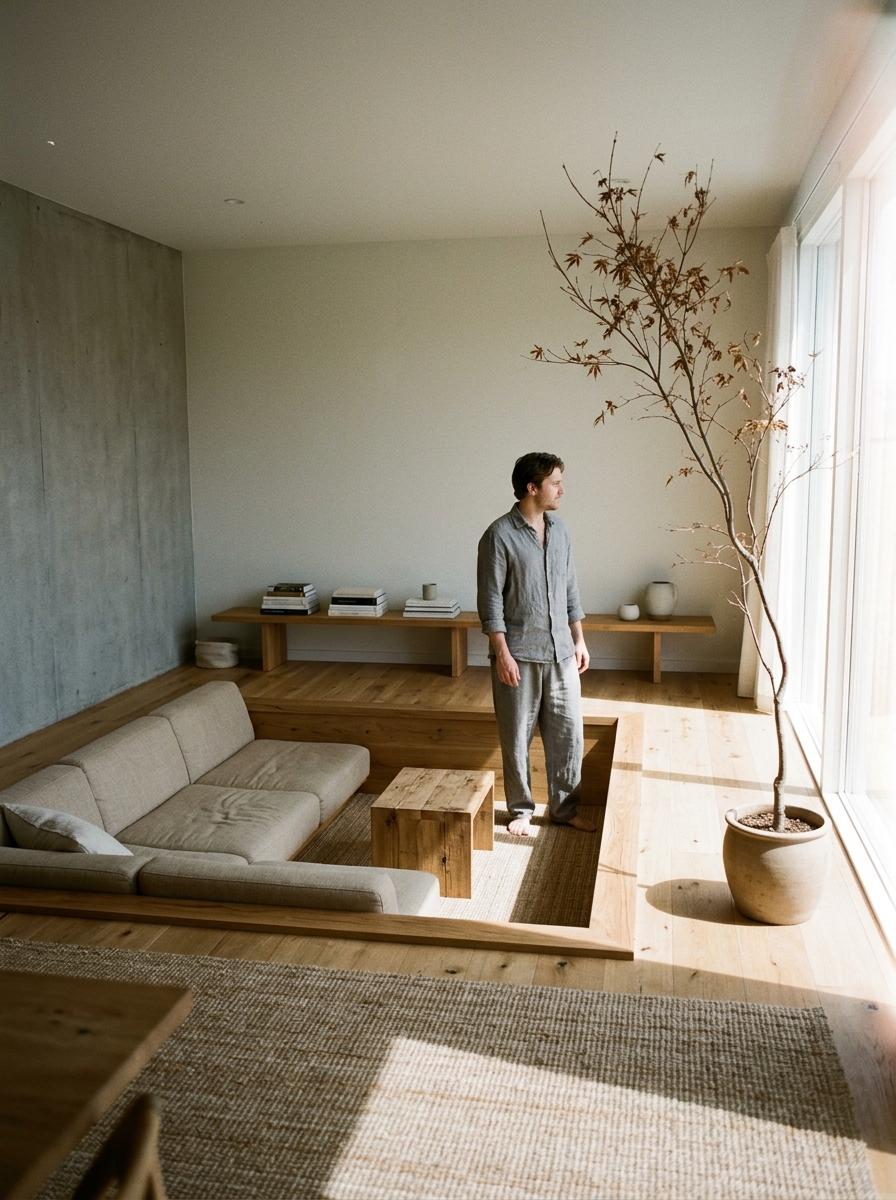

The blueprint for this balanced environment was conceptualized through a meticulous study of spatial efficiency, where every piece is positioned to prioritize movement over mass. Within this curated shell, one encounters a sparse, silent serenity that rejects the chaotic clutter of traditional living spaces. Low-slung silhouettes stretch across the floor, while purposeful pockets of poise provide a rhythmic repose for the eye. Tactile timber textures anchor the room, carving out a sanctuary that breathes through intentional voids and expansive light. This layout actively unfolds the interior volume, liberating the floor plan to feature a sunken seating area, a solitary sculptural branch, and a seamless flow of air.
Scandinavian Simplicity Meets Japanese Zen In This Living Area
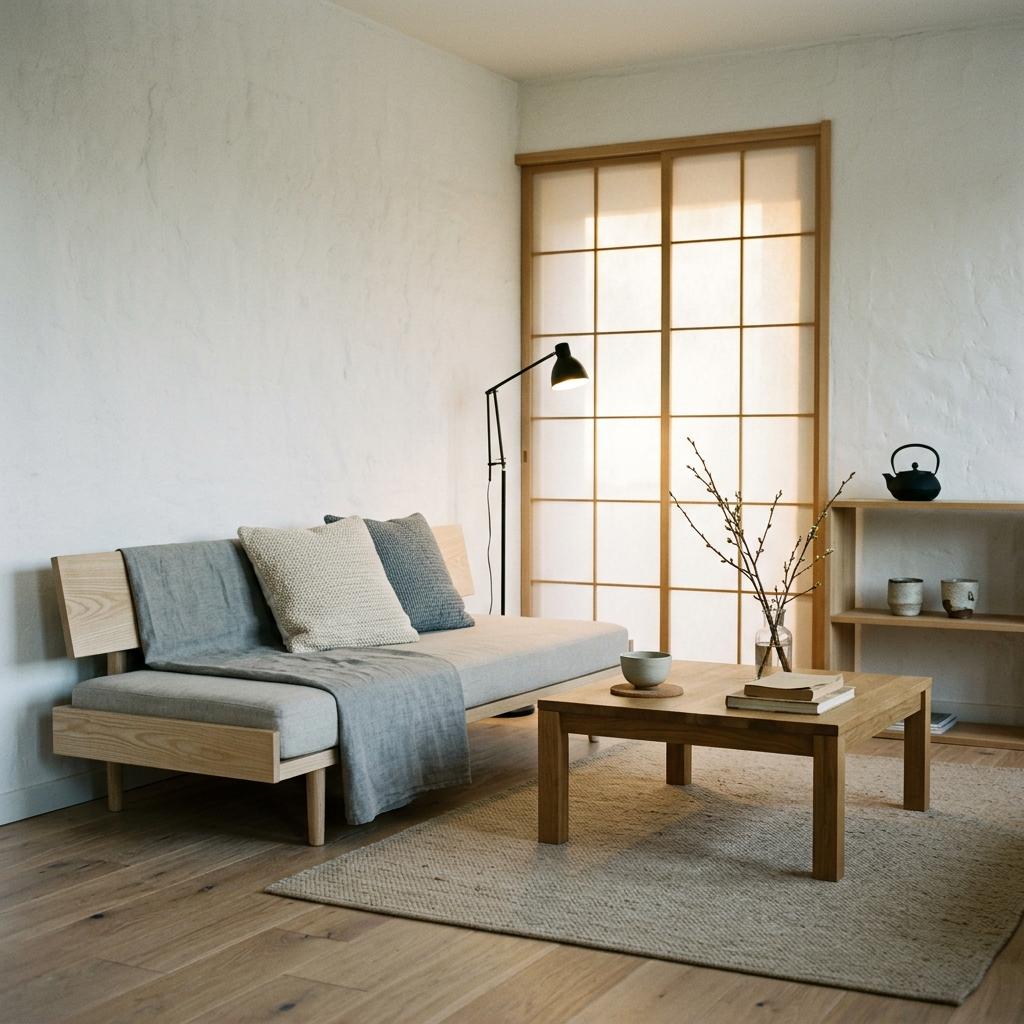

At its core, this living area operates as a masterclass in Definition via Synthesis, where the democratic functionality of Scandinavian Hygge coalesces with the transcendental minimalism of Japanese Wabi-sabi to form a singular, cohesive Japandi identity. The space transcends mere decoration through its Lexical Precision, utilizing a curation of low-profile shoji-inspired silhouettes and tactile, lime-washed masonry that speaks to a high-level architectural literacy. There is a profound Dialectical Pairing at play: the composition feels strictly disciplined, yet inherently soulful; the geometry is clinical in its precision, but softened by the organic irregularities of artisanal ceramics. This balance is further enriched by a Sensorial Adjective Stacking of textures-an atmosphere defined by haptic, hushed, and primordial qualities-that transforms the room from a visual study into a profound, meditative sanctuary.
Textural Layers For A Comforting Japandi Living Room Concept
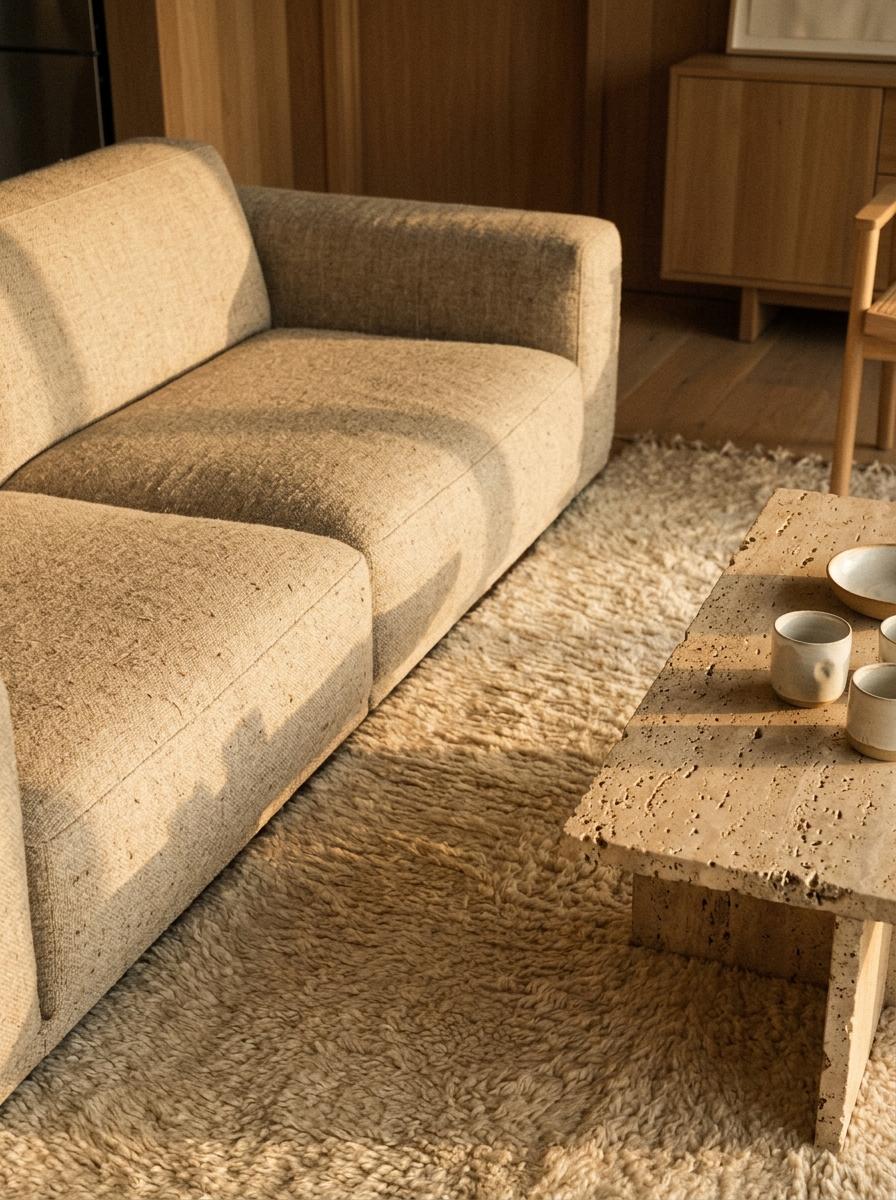

To achieve a truly resonant Japandi atmosphere, You must move beyond mere visual minimalism and embrace the tactile choreography of the space. Start by integrating a Kvadrat wool upholstery in a muted oatmeal hue; its fibrous, granular weave offers a structured yet soft foundation for the seating area. Note how the juxtaposition of a rugged, open-pore travertine coffee table against a deep-pile silk rug creates a refined rawness-a sophisticated friction that defines the modern Japanese-Scandinavian aesthetic. As your eye travels across these surfaces, observe the interplay between the cool, calcified density of stone and the organic, thumb-pressed irregularities of Hasami porcelain. This deliberate layering of "warm-cold" elements triggers an immediate physiological shift: the sympathetic nervous system settles, replaced by a profound sense of somatic grounding. It is within this intersection of Nordic precision and Wabi-sabi imperfection that the living room ceases to be a mere curated gallery and becomes a restorative sanctuary for the senses.
Zen Inspired Accents Within This Modern Japandi Living Room
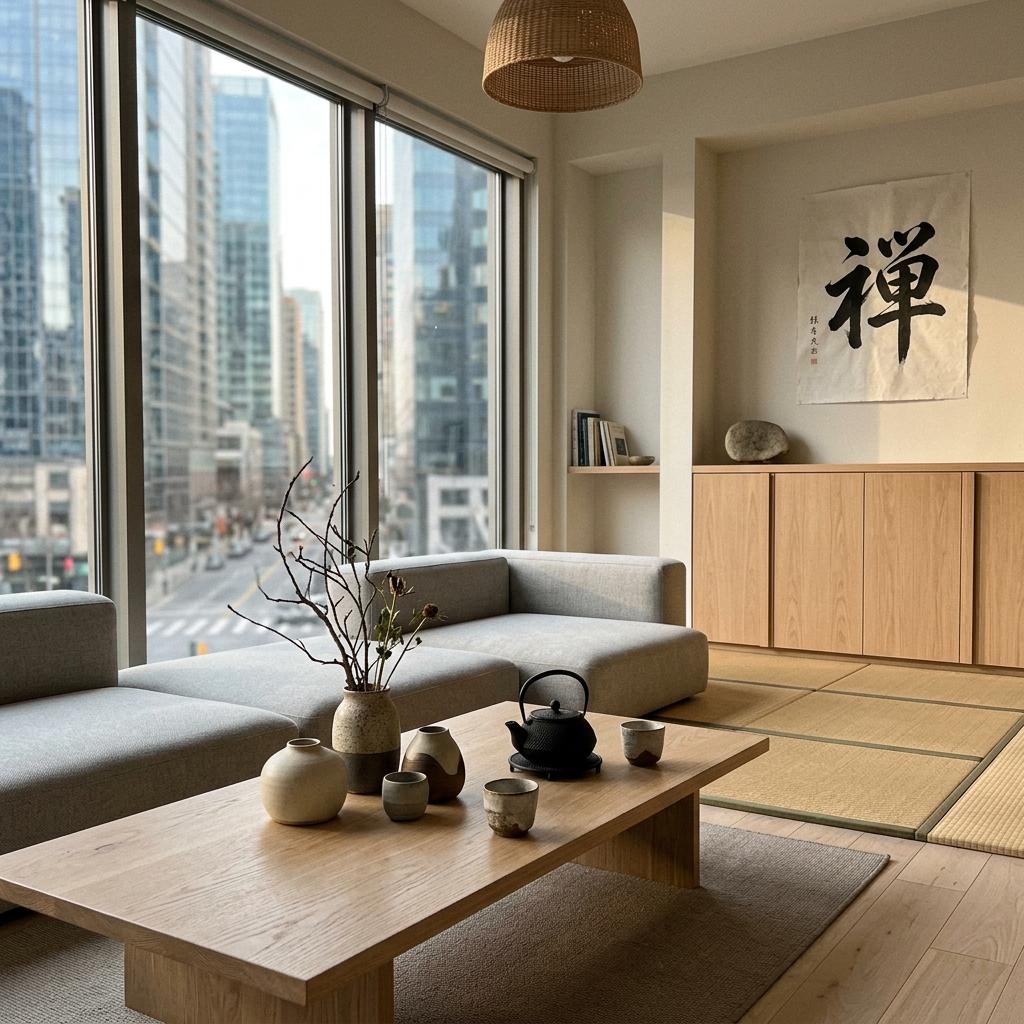

In the quietude of this urban sanctuary, the living room serves as a curated void where light interacts with shadow to anchor the inhabitant in a state of suspended animation. Here, we encounter a planned spontaneity-a conceptual synthesis where the rigid geometry of Scandinavian cabinetry reconciles with the organic, asymmetrical flow of Zen-inspired stoneware. This internal stillness stands in sharp opposition to the chaotic kinetic energy of the metropolis pulsing just beyond the floor-to-ceiling glass, creating a dualism between the sanctuary and the street. To achieve this, the palette relies on the tactile honesty of sand-blasted white oak and hand-pressed tatami rush, materials that ground the sensory experience in physical texture rather than mere visual ornament. These elements are not merely decorative; they function through a rigorous industrial utility, where low-slung modular seating acts as a spatial solution to maximize the perceived height of the ceiling, seamlessly integrating form with the fundamental human need for expanse.
Refined Japandi Living Room Design For Urban Apartment Living
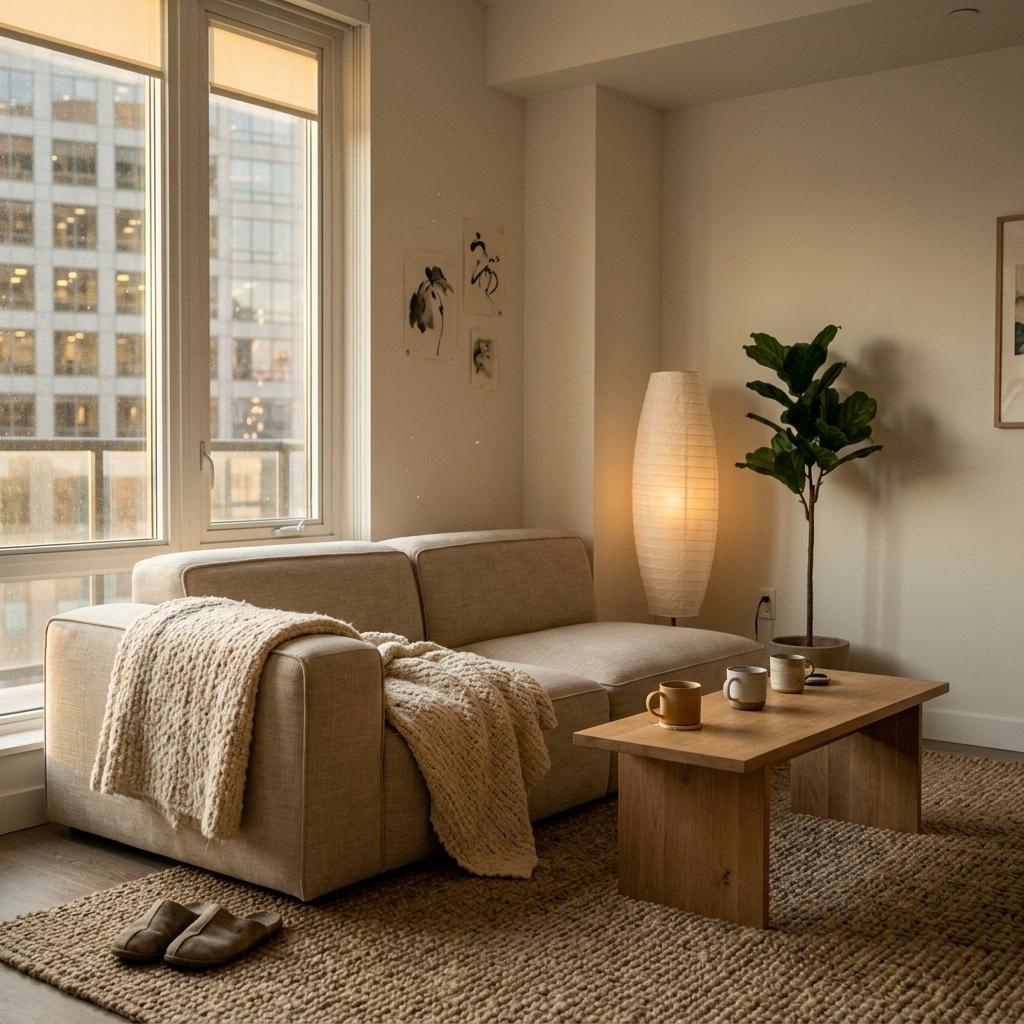

The elevator doors open to the relentless staccato of the city-a cacophony of sirens and harsh neon glare-but stepping into this apartment feels like an immediate exhale. I recently sat down with a local curator who gestured toward her sprawling, low-profile modular sofa and noted that the secret to urban sanity isn't just silence, but "a deliberate curation of tactile honesty." She paused, smoothing a hand over the nubby grain of a hand-loomed wool rug, before adding, "When the skyline is all jagged glass and steel, your sanctuary must be defined by organic warmth." This juxtaposition between the brutalist exterior of the metropolis and the softened, wabi-sabi interior of the home creates a profound sense of equilibrium. By replacing high-gloss surfaces with a matte, earthy palette and utilizing negative space to let the architecture breathe, we see the true power of this aesthetic. This intentional shift from chaotic density to a disciplined, refined minimalism is exactly what defines the modern evolution of Japandi living.
Artisan Craftsmanship Found In This Elegant Japandi Living Room
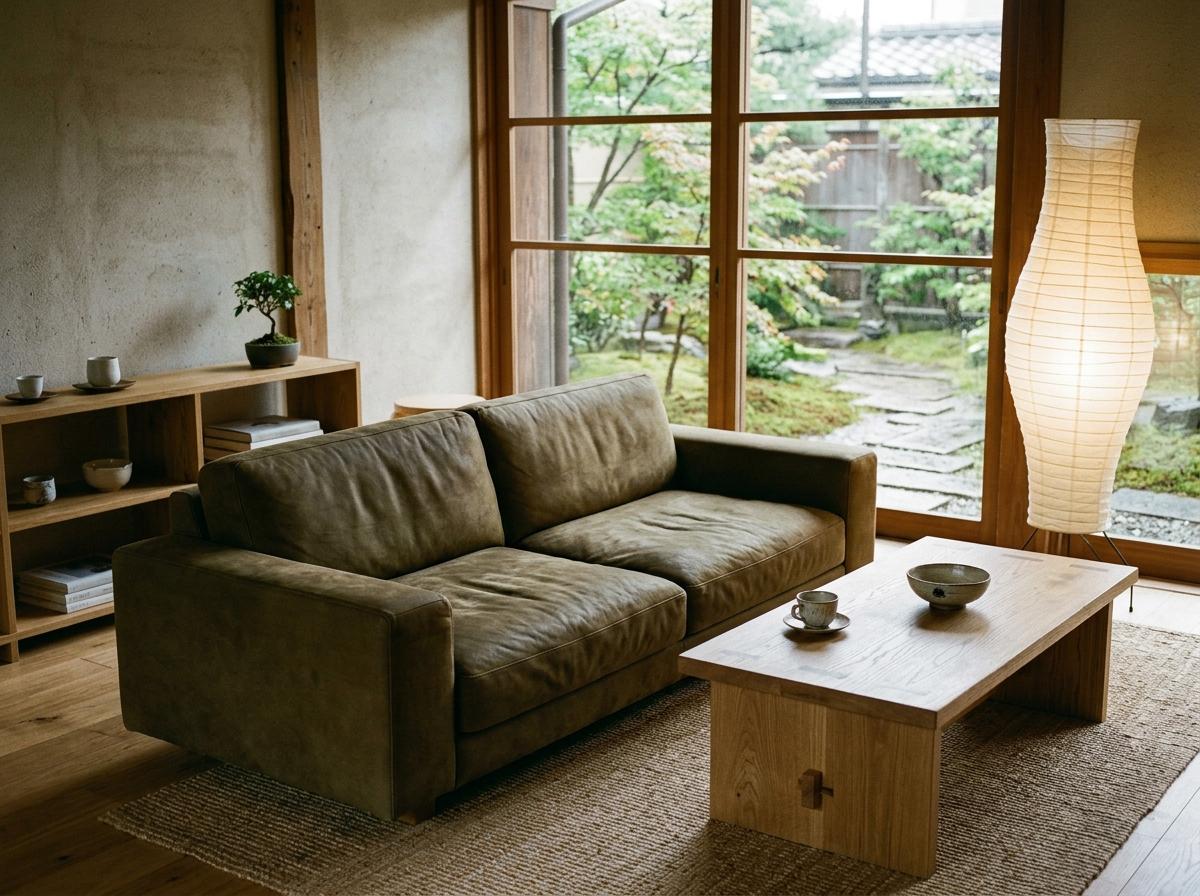

In this curated space, the intersection of Scandinavian pragmatism and Japanese minimalism reveals itself through a devotion to material honesty. Note how the low-slung sofa is upholstered in a nubuck-leather with a micro-denier finish, offering a tactile grip that feels simultaneously rugged yet silken to the touch. This paradox of a structured softness defines the room's atmosphere, where the visual weight of a hand-planed mortise-and-tenon coffee table is balanced by the ethereal lightness of a Washi paper floor lamp. As your eyes trace the open-pore grain of the solid white oak-sourced and crafted with the precision of a Kyoto-based workshop-the sensory experience shifts from the analytical to the biological. The atmosphere triggers a parasympathetic release, slowing your heart rate as the scent of natural resins and the absence of visual noise settle deep into your chest. This is the hallmark of the Japandi.design philosophy: a space that doesn't just house objects, but orchestrates a profound state of composed serenity.
Balanced Decor Featuring Essential Japandi Furniture Pieces
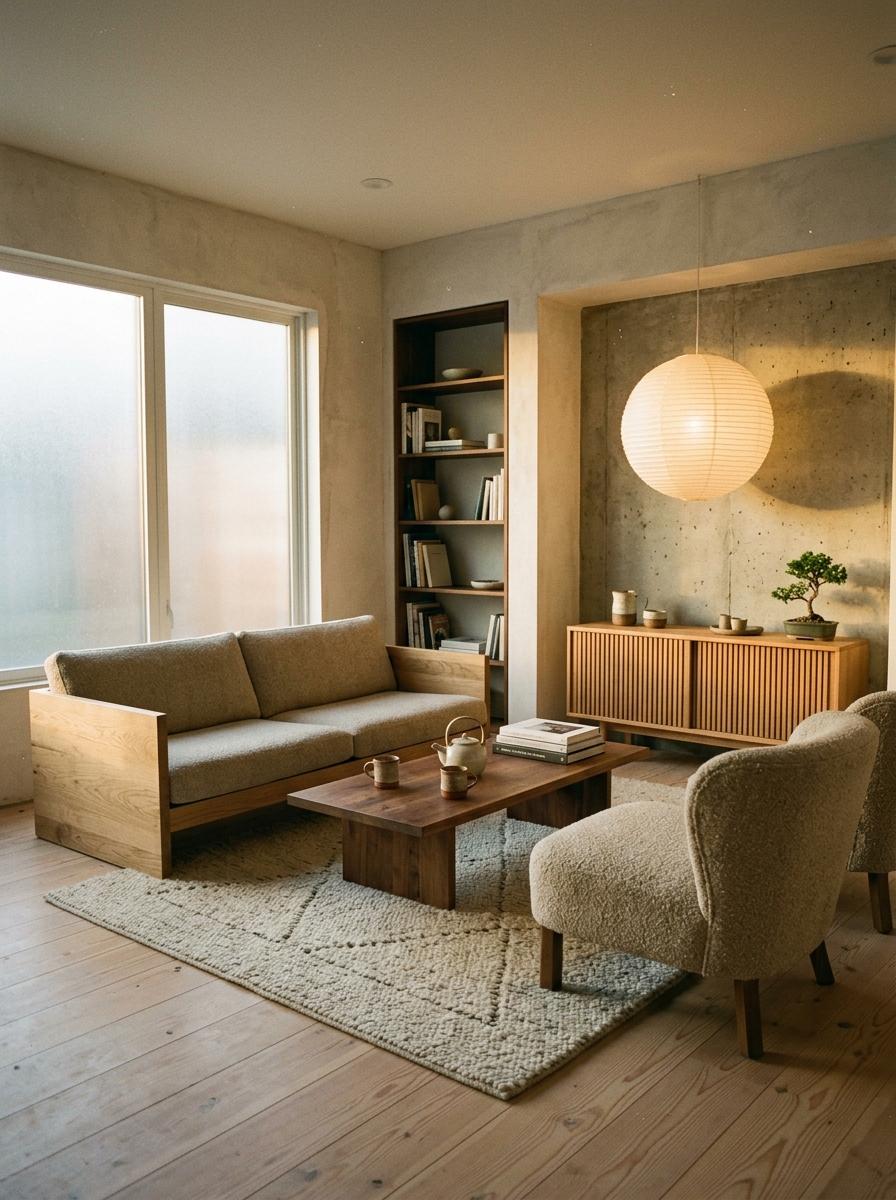

The evolution of the Japandi aesthetic has traveled a long path from the rigid, ancestral austerity of Meiji-era interiors and the mid-century functionalism of Scandinavia to the fluid, hybrid sanctuaries we see today. In a recent study of a private residence nestled in Tokyo's prestigious Daikanyama neighborhood, this historical trajectory is rendered visible through a curated maximalist minimalism. The space belongs to a repeat client of the project's lead consultant-a detail that underscores a deep, iterative trust in the execution of such a specific vision. By anchoring the room with low-slung, solid oak seating and ethereal paper lanterns, the design achieves a sophisticated technical synthesis, balancing spatial compression with chromatic neutrality to redefine the modern domestic landscape.
Organic Shapes For A Fluid Japandi Living Room Interior
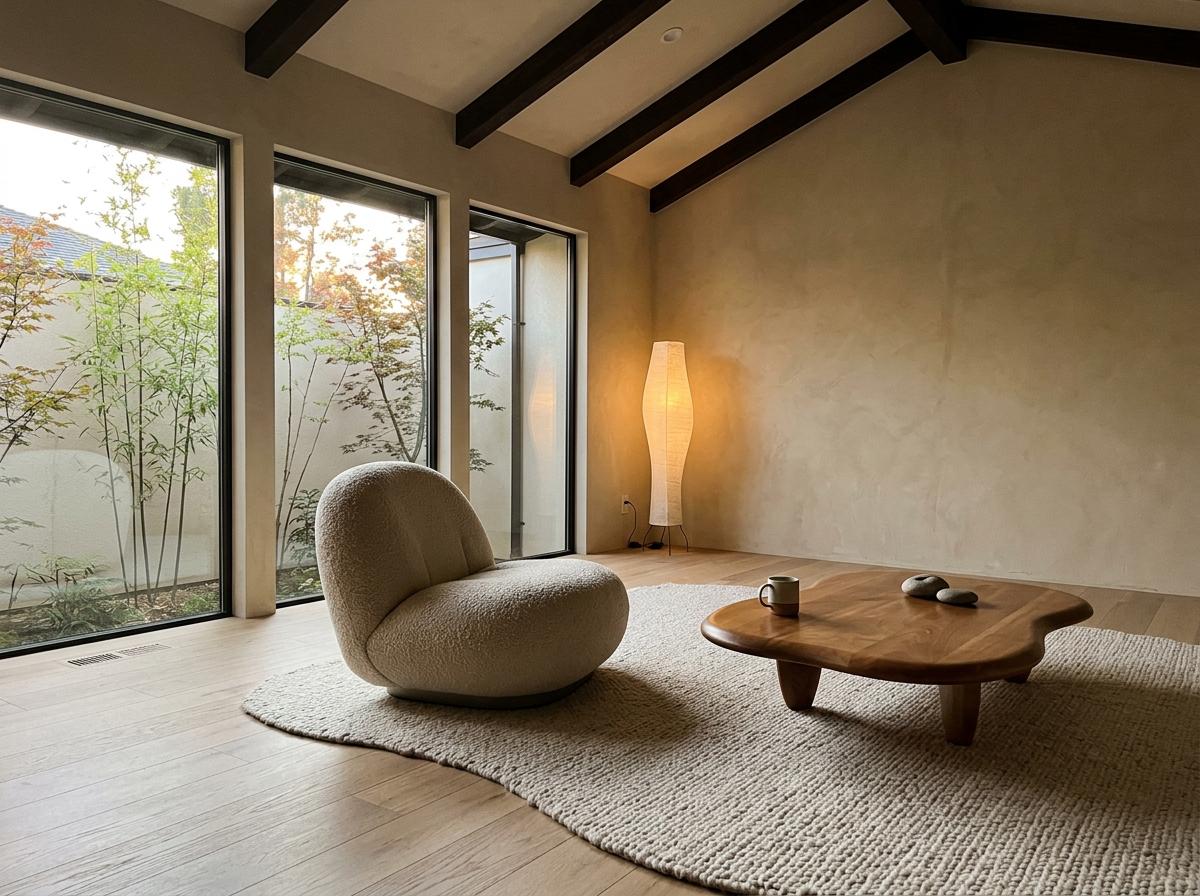

To achieve a truly fluid Japandi living room, You need to prioritize the interplay between silken, open-pore oak and the rugged, tactile grain of hand-loomed bouclé. Note how the sweeping, pebble-like contour of a Gubi Pacha lounge chair anchors the space, directing your gaze toward the soft-focus geometry of a low-slung Isamu Noguchi coffee table. This intentional arrangement creates a structured spontaneity; every piece feels as though it drifted into place like river silt, yet remains governed by a rigorous minimalist logic. As your eyes trace the unbroken lines of a vaulted ceiling against the matte, lime-washed walls of a Kyoto-inspired sanctuary, a profound sense of biological relief takes hold-your pulse slows, and the physical weight of the day dissolves into the expansive serenity of the room.
Cozy Textures Define This Contemporary Japandi Living Space
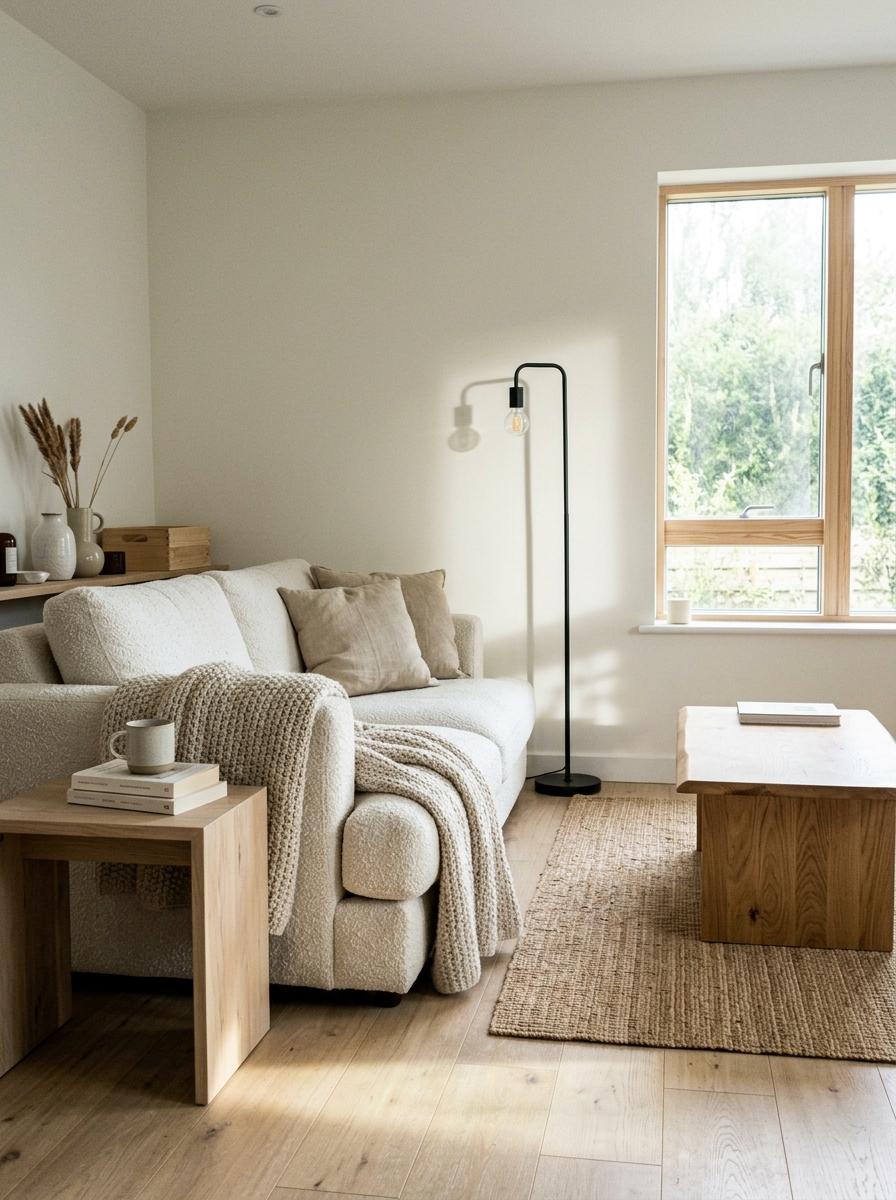

This contemporary living space was meticulously conceived as a dialogue between Scandinavian functionality and Japanese restraint. Within the open plan, a curated palette of bone-white linens and pale timbers fosters an atmosphere of monastic purity and weightless calm. The design purposefully balances bulky bouclé seating with the sharp, slender shadows of blackened steel accents. To ground the room, a low-slung oak table anchors the center, while light spills across the floor and shadow stretches toward the perimeter. The composition ultimately breathes through the seamless integration of raw fibers, refined wood, and radiant light.
Harmonious Living Room Setup Influenced By Japandi Principles
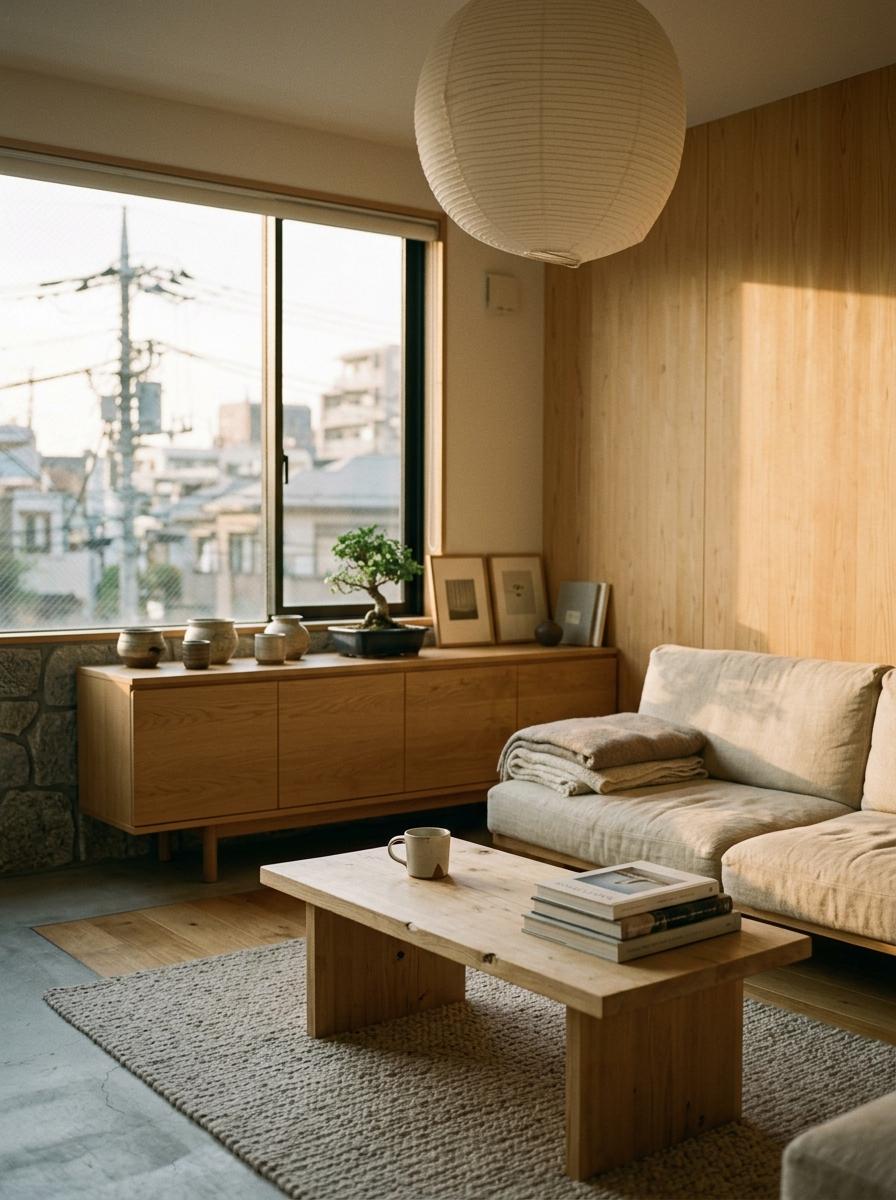

To understand the essence of a harmonious living room setup influenced by Japandi principles, we must first observe the diachronic contrast between the rigid, heavy mahogany parlors of the Edo period and the fluid, democratic open-plan layouts of the modern era. This evolution from compartmentalized formality to breathable transparency defines the contemporary domestic landscape. In a recent study of a residence located in the prestigious enclave of Minato City, Tokyo, I examined a space characterized by a calculated spontaneity-a design tension where the raw, rugged textures of Scandinavian stone meet the polished, ethereal silence of Japanese cedar. The project, commissioned by a repeat client who has consistently sought to refine their spatial philosophy through successive collaborations, serves as a masterclass in cross-cultural fusion. Ultimately, the room achieves its equilibrium through a technical synthesis of low-profile horizontal planes, natural light diffusion, and a monochromatic materiality that bridges the gap between Nordic functionality and Zen minimalism.
Minimalist Living Room Details For A Sophisticated Japandi Look
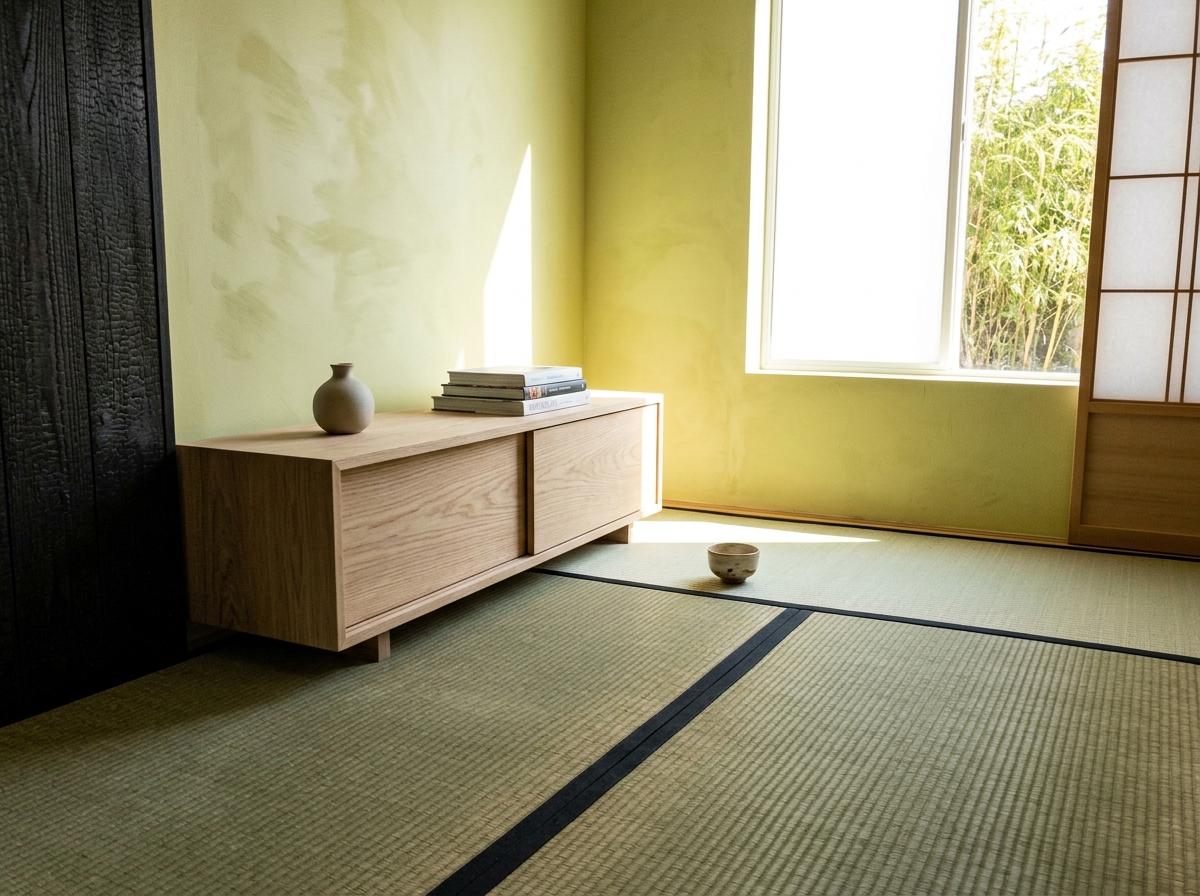

To achieve a sophisticated Japandi aesthetic, we must look beyond mere emptiness and focus on the tactile dialogue between surfaces. Note how the juxtaposition of a low-slung, open-grain white oak credenza against a backdrop of lime-washed walls creates a structural harmony that feels both intentional and effortless. By integrating the raw, fibrous integrity of hand-woven tatami mats with the silken, obsidian sheen of Japanese Shou Sugi Ban accents, you cultivate a sense of ordered chaos. This deliberate layering of the unrefined and the polished serves as a visceral anchor; as your eye moves across the room, the visual tension dissolves into a profound physiological stillness, lowering the heart rate through sheer spatial clarity. Much like the serene, light-filled sanctuaries found in Kyoto's Arashiyama district or the refined urban dens of Minato, the success of the room lies in its "heavy lightness"-a paradox where the weight of high-quality materials provides a liberating sense of freedom.





Comments