
To achieve a sanctuary of absolute calm, one must look toward the intentional intersection of Scandinavian functionalism and Japanese minimalism-a synthesis where pragmatic hygge meets the ephemeral beauty of wabi-sabi to create the Japandi aesthetic. This design ethos demands a rigorous spatial discipline, yet it remains profoundly inviting, balancing the clinical precision of modernist lines with the tactile, organic warmth of artisanal craft. By layering haptic, earthy, and hushed textures against a muted palette, we can curate a bedroom environment that transcends mere rest, fostering a meditative, grounded, and restorative atmosphere.
Dream Bedroom Makeover


Transforming Your Space Into A Minimalist Japandi Dream Bedroom
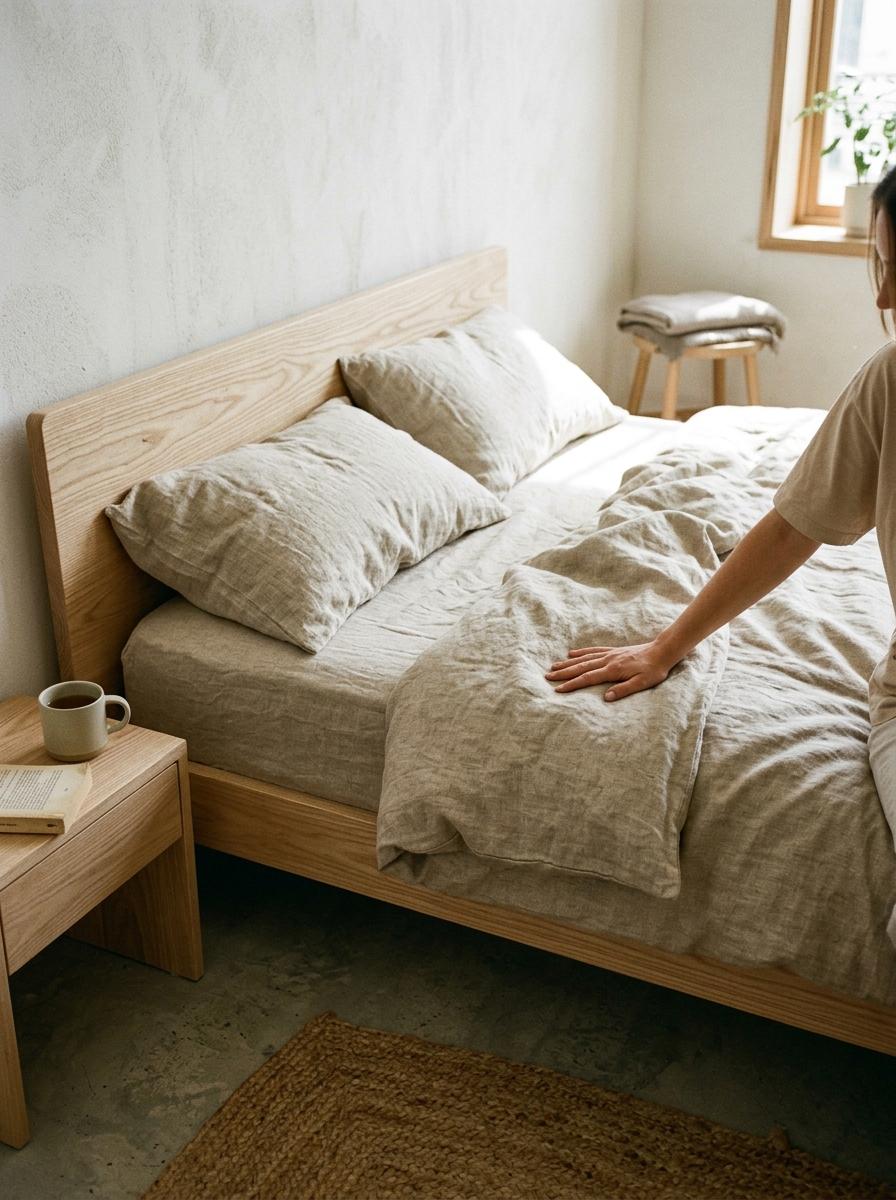

To achieve a master suite that feels less like a room and more like a sanctuary, you must curate a palette of tactile intelligence. Begin by sourcing a low-profile bed frame in sandblasted solid ash, paired with bedding made of heavy-gauge slubbed linen. Note how the intentional friction of the textile against the satin-smooth wood creates a complex simplicity; it is a design language that feels both unfinished and meticulously polished. This juxtaposition functions as a sensory anchor, grounding the room in what the masters at Kyoto's Hosoo residence call the beauty of the imperfect. As you run your hand across these fibers, the physical grain triggers a visceral deceleration-a slowing of the heart rate as the frantic pace of the outside world is replaced by a deep, resonant stillness. By adopting this rigorous Japandi lens, your bedroom ceases to be a mere functional space and becomes a physiological reset button.
Inside A Beautiful Japandi Bedroom Makeover Project
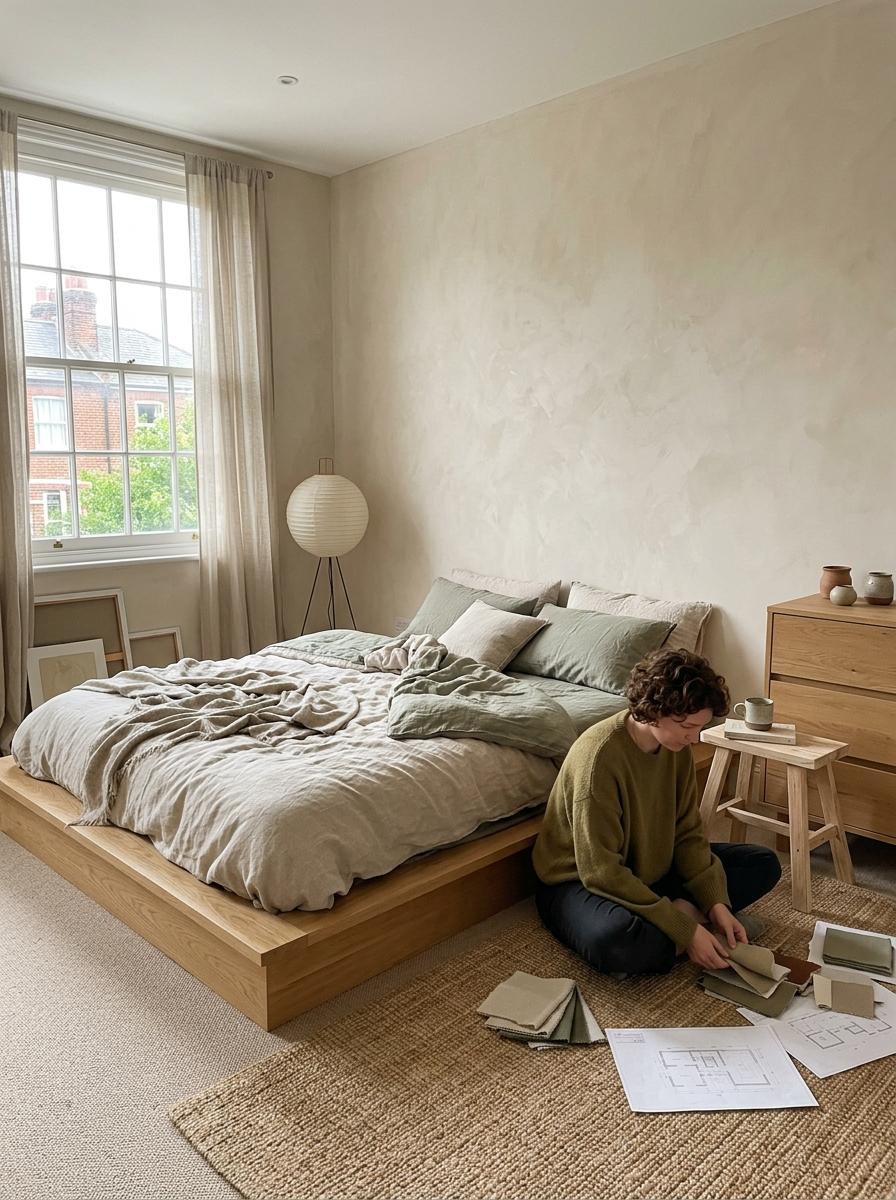

Inside this sun-drenched residence in London's prestigious Notting Hill, the transformation of the primary suite serves as a masterclass in modern spatial evolution. To understand the current serenity, You must look back to the Victorian era's architectural intent-a period defined by heavy ornamentation and compartmentalized grandeur-which has here been stripped back to embrace a contemporary ethos of airy minimalism. This "quiet intensity" is the hallmark of the project; it is a space that feels both substantially weightless and rigorously organic, balancing the sharp precision of Japanese craftsmanship with the soft, tactile warmth of Scandinavian hygge. For the studio behind the transformation, the stakes were particularly high as the owners are a repeat client, a detail that signals a deep-seated trust in their ability to translate personal lifestyle into physical form. The project's success ultimately rests on a sophisticated technical synthesis: the designers utilized tactile materiality, strategic negative space, and a refined rhythmic symmetry to bridge the gap between historic architecture and the timeless Japandi aesthetic.
Step Into This Light And Airy Japandi Dream Bedroom
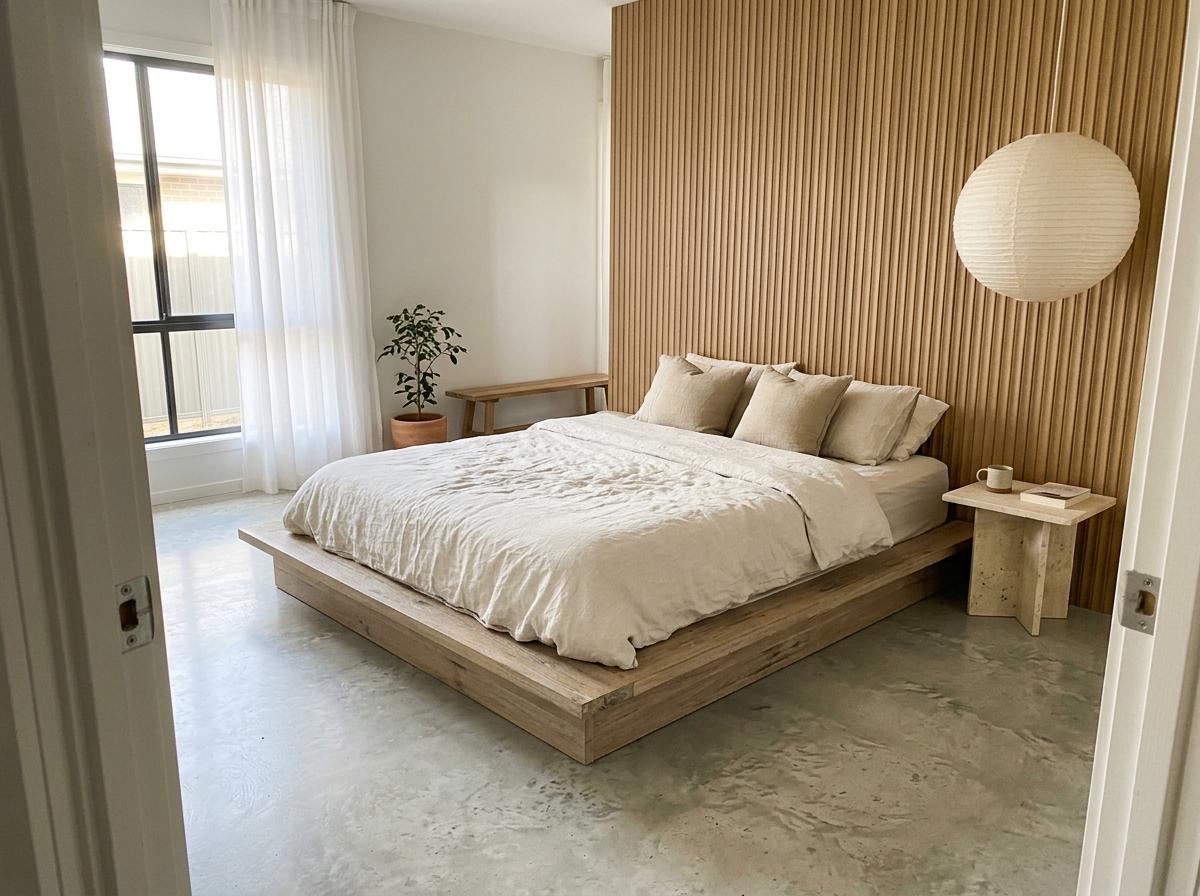

Title: Step Into This Light And Airy Japandi Dream Bedroom The core of this Kyoto-inspired sanctuary lies in its masterful use of quenched white oak and porous limestone, materials that provide a tactile grounding against the ethereal lightness of the space. Note how the ribbed timber paneling creates a rhythmic shadow play, drawing your eye upward toward the soaring ceiling height. This design achieves a rare structured fluidity; it is a room that feels architecturally disciplined yet remains soft enough to yield to your presence. As you move through the space, the visual transition from fibrous washi paper pendants to the cool, calcified matte flooring triggers a profound physiological shift-your pulse slows, and the frantic hum of modern life dissolves into a state of alert tranquility. This isn't merely a room, but a curated study in stillness that bridges the gap between traditional Japanese minimalism and the functional warmth of Scandinavian living.
How To Achieve A Modern Japandi Bedroom Makeover
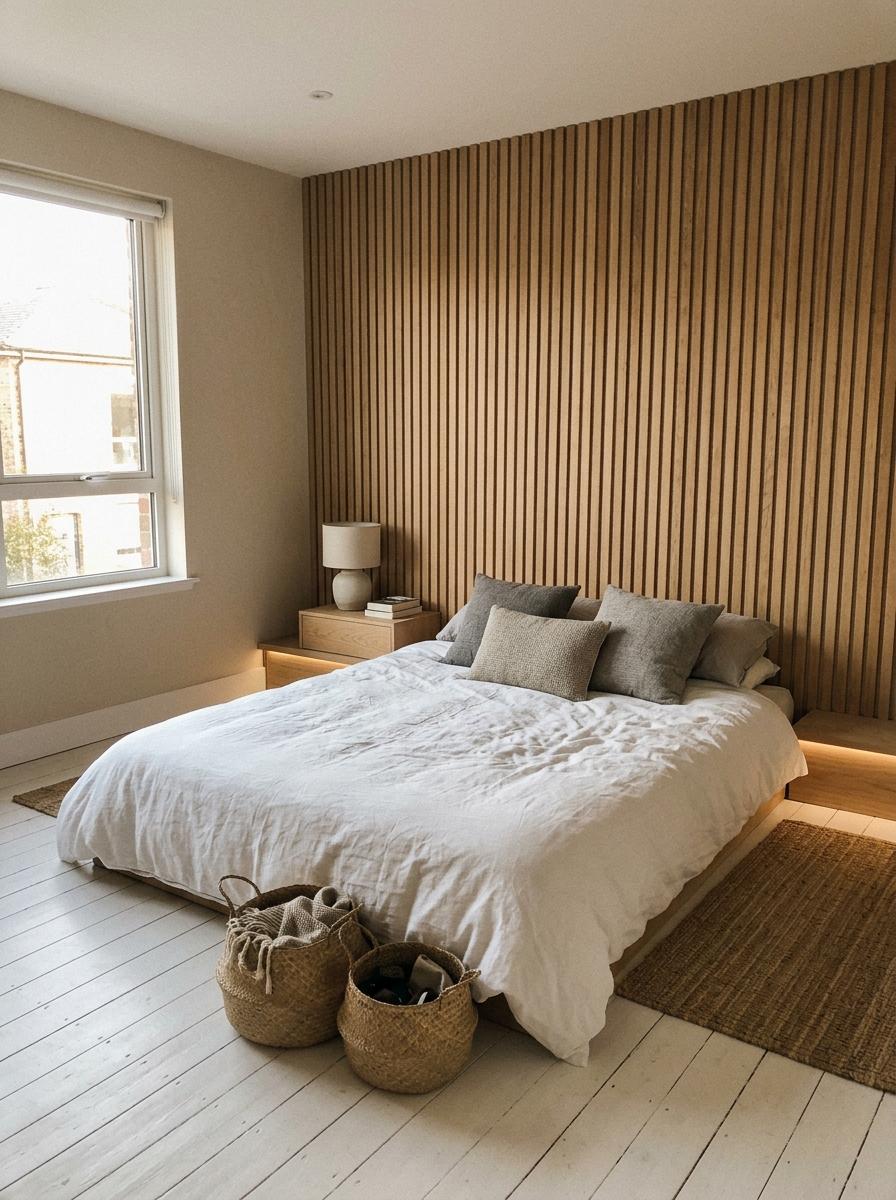

The modern Japandi bedroom begins with an atmospheric grounding in the low-profile sanctuary, where the bed is positioned as a gravitational center that anchors the room's energy to the floorboards, grounding the sleeper within the stillness of a curated void. This layout embraces a figurative paradox of cluttered minimalism; every object is chosen with such rigorous intent that the absence of excess feels like a physical presence, filling the room with a heavy lightness. We observe a strict structural dualism between the interior psyche and the exterior environment, where the chaotic noise of the urban street is silenced the moment it meets the internal boundary of a rhythmic timber slat wall. To achieve this, we must look to material specificity, replacing synthetic fibers with the haptic honesty of open-pore white oak and hand-loomed nubby linen that catches the shifting afternoon light. Finally, the makeover is completed through functionalist specification, utilizing integrated joinery and recessed dimmable LEDs that serve as a mechanical solution to visual noise, ensuring that the room operates as a high-performance machine for rest.
A Peaceful Retreat With Japandi Interior Design Focus
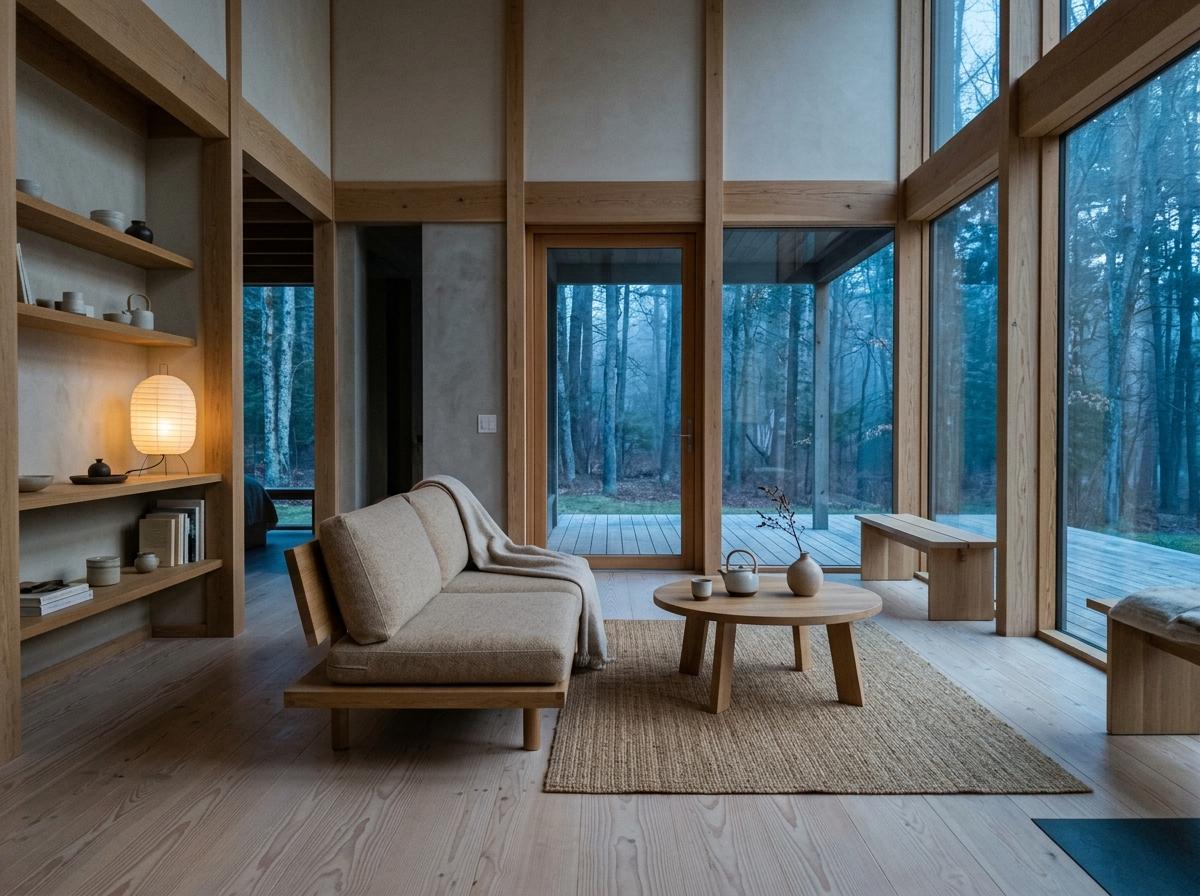

The architectural vision for this residence was meticulously conceived through a lens of quietude, where the structure was shaped by a deliberate fusion of Nordic utility and Japanese restraint. Within the void, a sparse serenity prevails; the atmosphere feels weightless, anchored only by the presence of unadorned surfaces and hollow spaces that refuse the clutter of modern life. This design philosophy breathes life into the layout, as light stretches across the floorboards and glass carves the periphery to merge the interior with the landscape beyond. Every corner celebrates a soft, sculptural stillness that grounds the soul. Here, the home stretches, breathes, and expands to reveal a sanctuary of tactile timber, muted metals, and woven wool.
Refining Your Sanctuary With This Japandi Bedroom Makeover
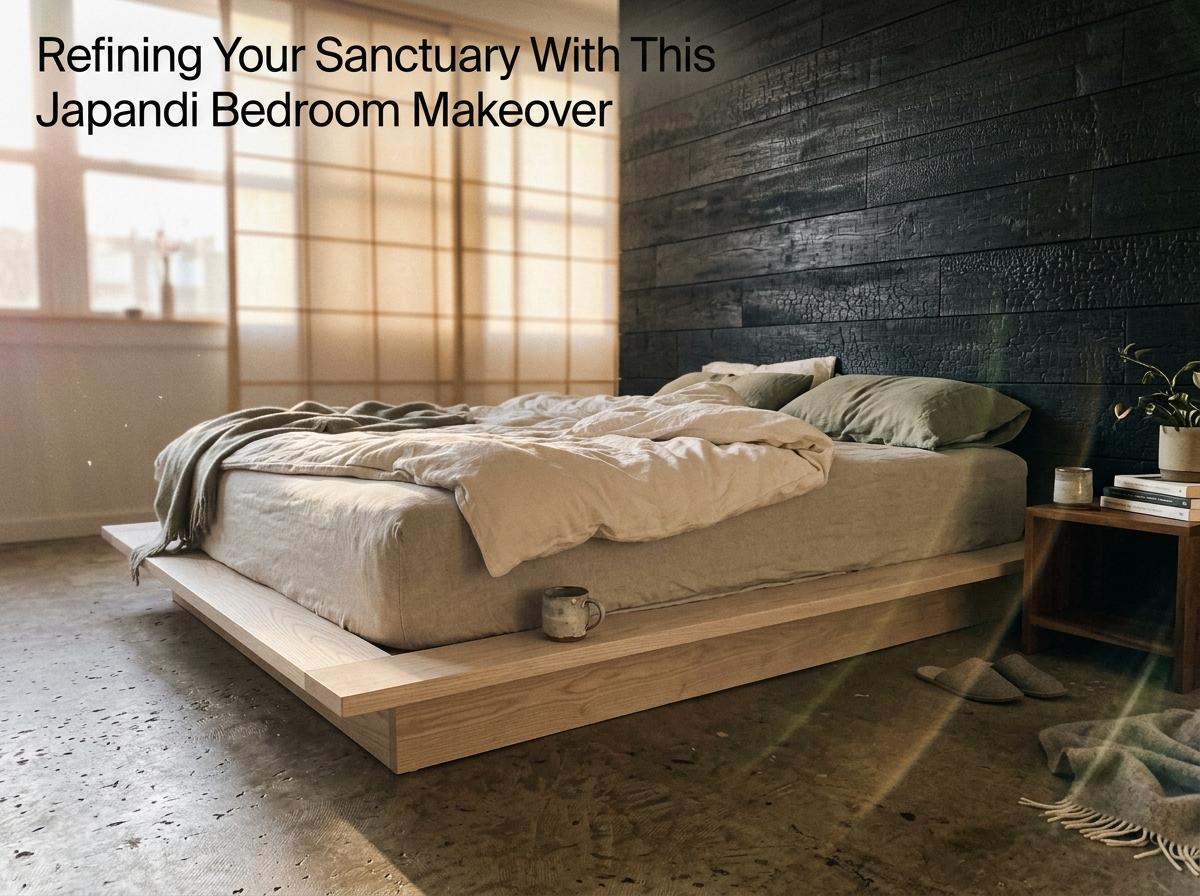

To transform your sleeping quarters into a true sanctuary, begin by grounding the space in the tactile honesty of Kyoto-sourced charred cedar and the gossamer lightness of bleached Japanese ash. Note how the interplay between the open-grain timber and the cool, matte slurry of lime-wash plaster creates a landscape of structured spontaneity. This aesthetic paradox-where rigid geometric precision meets the wabi-sabi imperfections of hand-thrown ceramics-invites a profound shift in your internal rhythm. As your eyes trace the silhouette of a low-profile platform bed against a backdrop of tactile shoji paper, the visual silence begins to manifest as a physical release; the frantic pace of the day dissolves into a weighted weightlessness, slowing your heart rate until your surroundings are felt rather than just seen. This is the essence of Japandi: a deliberate curation that moves beyond mere decor to perform a silent, architectural lullaby for the nervous system.
Glimpse A Cozy Haven Featuring Japandi Style Elements
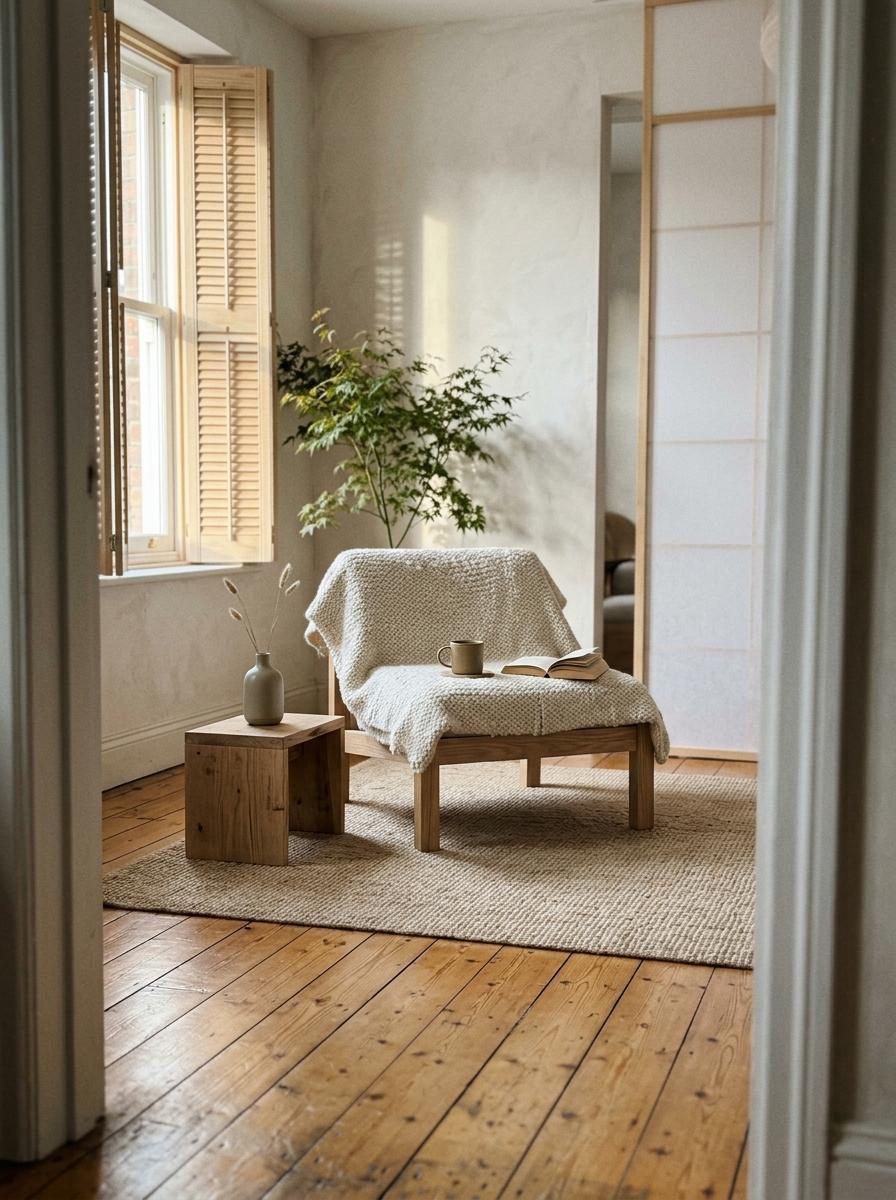

This serene sanctuary was conceived through a careful calibration of Japanese minimalism and Scandinavian comfort, ensuring that every structural choice prioritizes quietude over clamor. Within this void-centric volume, the layout celebrates a sparse sophistication, where unadorned surfaces and weightless transitions define a liberated living area. Sunlight streams through the soft, sallow shutters, casting a pale pattern across the polished pine. This deliberate openness stretches the perceived boundaries of the room, carves out a niche for contemplation, and tethers the interior to the natural world. The final composition artfully balances the warmth of raw timber, the softness of woven wool, and the stillness of a singular ceramic vase.
Bringing Natural Texture To Your Japandi Dream Bedroom
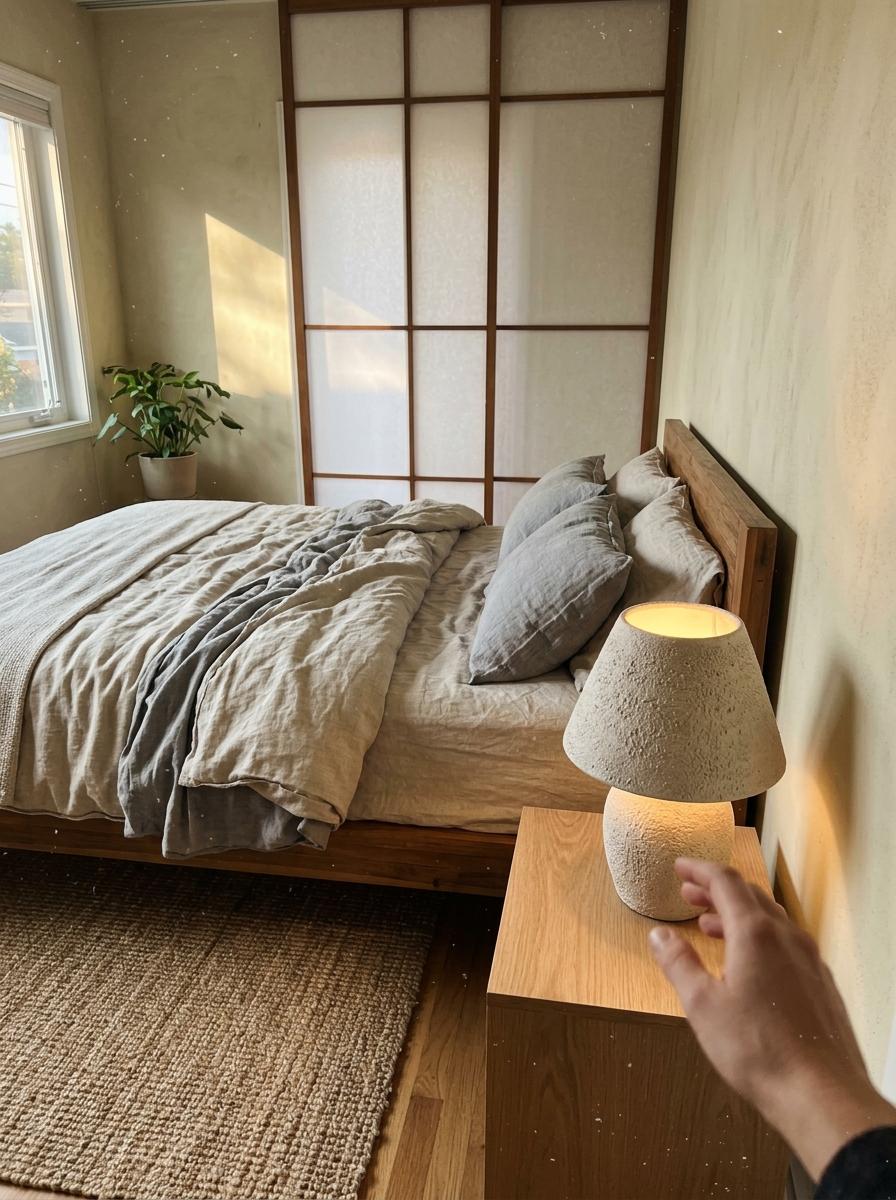

To achieve the tactile serenity of a true Japandi sanctuary, you must curate a palette that balances the raw with the refined. Start by layering open-pored white oak alongside the fibrous, structural irregularity of hand-woven tatami mats. Note how the interplay between the cool, calcified surface of a Hokkaido-inspired lime wash wall and the warm, oily grain of a reclaimed teak bed frame creates a dialogue of light and shadow. This deliberate arrangement relies on a structured spontaneity-a design paradox where every organic imperfection is precisely placed to foster a sense of ordered chaos. As your hand brushes against the granulated, thumb-pressed finish of a Shigaraki ceramic lamp, the tactile friction triggers a visceral lowering of the heart rate, grounding your nervous system in the present moment. This is the essence of the Japandi ethos: moving beyond mere visual aesthetics to cultivate a state of alert relaxation. By integrating the unyielding softness of heavy-gauge Belgian linen with the kinetic sturdiness of a Kyoto-style sliding shoji screen, you transform the bedroom from a simple sleeping quarters into a sensory anchor that recalibrates the soul.
Minimalist Japandi Bedroom Makeover For Small Spaces
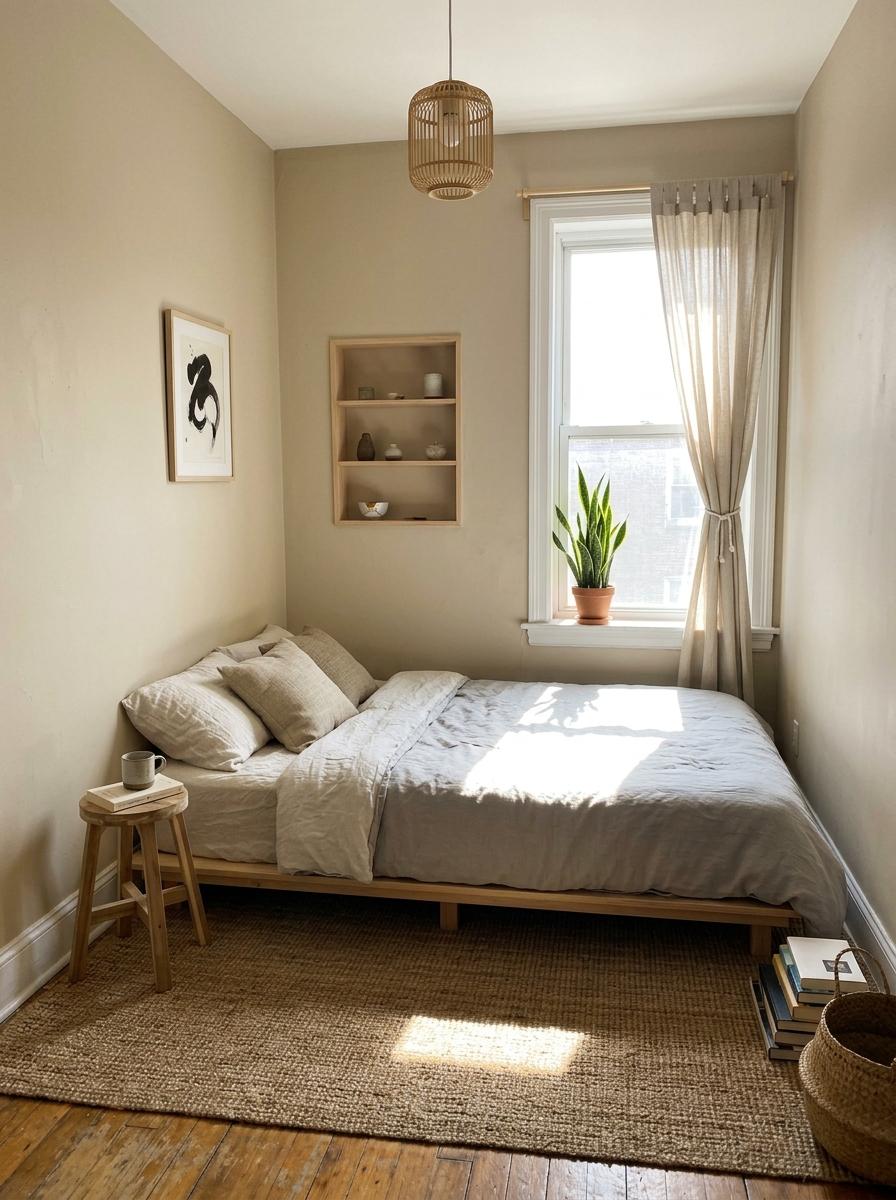

I remember stepping into a client's studio apartment-a cramped, frantic space where the visual noise of mismatched plastic bins and heavy velvet curtains seemed to shrink the walls in real-time. "It's not just the size," she told me, her voice trailing off as she gestured toward a mountain of clutter, "it's that I can't... breathe in here." We sat amidst the chaos to discuss the restorative power of kintsugi philosophy, and she paused, smoothing a hand over a rough-hewn wooden stool, "...is it possible to find stillness in twelve square feet?" That stark contrast between her current "maximalist anxiety" and the intentionality of a Japandi retreat became our blueprint. By stripping away the superfluous and introducing a low-profile tatami platform bed, we replaced the suffocating density of the room with a sense of shibui-that subtle, unobtrusive beauty. This shift from sensory overload to curated emptiness demonstrates that a minimalist makeover isn't about losing square footage, but about gaining a sanctuary through the deliberate marriage of Scandi functionality and Japanese rusticism.
Walk Through A Modern Japandi Dream Bedroom Transformation
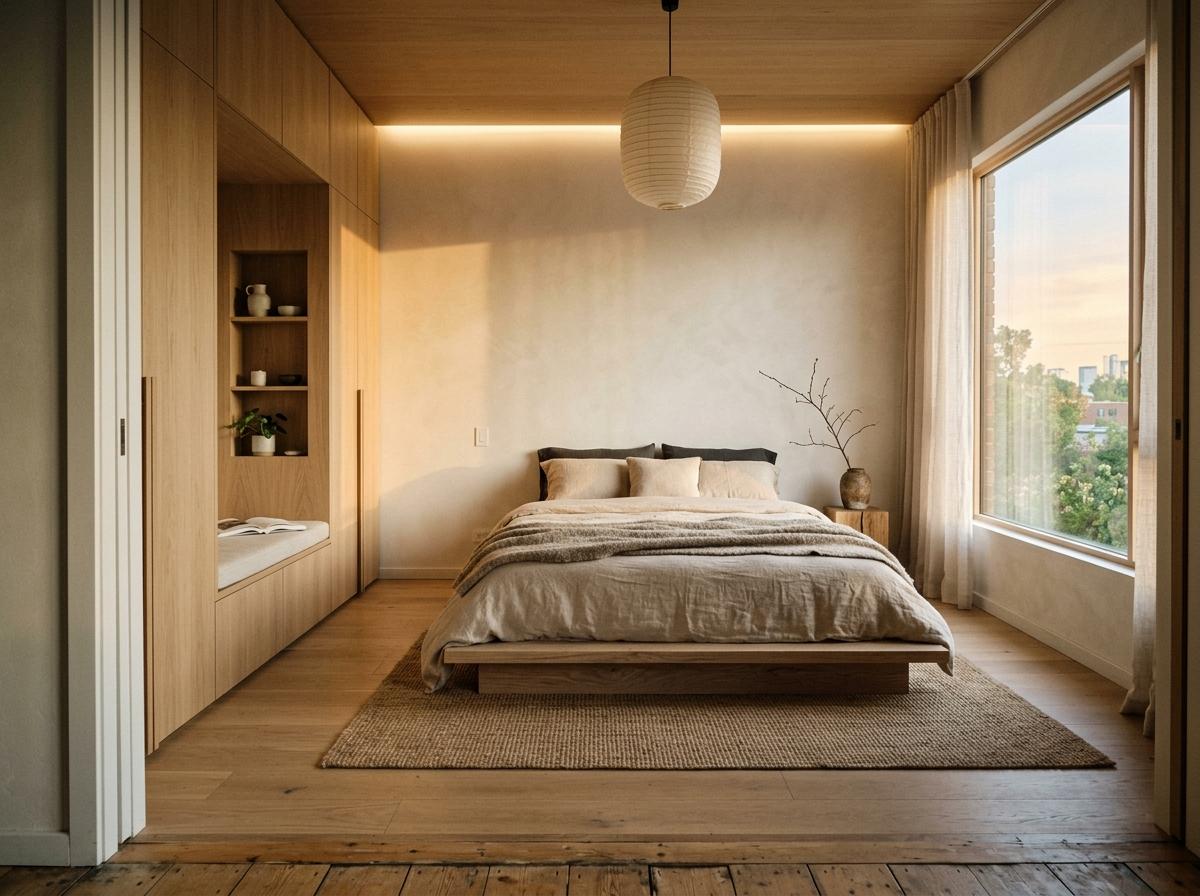

To step into this redesigned sanctuary is to witness a masterclass in Atmospheric Grounding; here, the bedroom is no longer a mere utility for sleep, but an anchored void where the heavy stillness of a Kyoto morning meets the airy clarity of a Stockholm studio. This space achieves a Figurative Paradox, existing as a piece of sculptural emptiness-a deliberate curation of "nothingness" that feels profoundly substantial. We observe a rigorous Structural Dualism, where the chaotic, sensory noise of the external urban landscape is severed by a threshold of silence, retreating into an internal realm of rhythmic order. The palette is defined by Material Specificity, grounding the eyes in the tactile honesty of wire-brushed white oak, low-slung tatami-inspired weaves, and the cool, chalky breath of lime-wash plaster. Ultimately, the transformation is realized through Functionalist Specification, where integrated joinery and recessed lighting channels serve as invisible architecture, solving the problem of clutter by dissolving it into the very walls themselves.
Elegant And Quiet Japandi Bedroom Design Inspiration


While most of our modern lives are dictated by the frenetic, neon-lit hum of "always-on" connectivity-a chaotic landscape of visual noise and high-gloss plastic-I recently found myself sitting in a space that felt like the physical embodiment of a deep exhale. I was interviewing a homeowner about her recent renovation when she paused, running her hand over a raw, sand-blasted oak headboard. "The city is so demanding," she noted, her voice dropping as she adjusted a linen throw, "that I needed a room that didn't... well, it shouldn't ask anything of me." This delicate tension between the rustic, weathered textures of wabi-sabi and the polished, functional precision of Scandinavian modernism creates a sanctuary where the spirit can finally settle. By trading the cluttered maximalism of the street for a curated palette of oatmeal tones and low-slung silhouettes, we discover that true luxury isn't found in excess, but in the intentionality of a quiet space. This pursuit of a balanced, tactile retreat is exactly what defines the most successful Japandi bedroom designs.
Designing A Stylish Japandi Dream Bedroom From Scratch


To design a Japandi dream bedroom is to anchor the soul within a cavernous sanctuary, where the vastness of the architectural envelope is intentionally compressed into a cocoon of meditative stillness. This pursuit relies on a structured spontaneity, a design philosophy where the rigid logic of Nordic geometry is softened by the unpredictable, weathered grace of Japanese wabi-sabi. While the external world remains a cacophony of visual noise and industrial friction, the internal chamber is reimagined as a silent void, a deliberate boundary that separates the chaos of the city from the equilibrium of the self. The floor serves as the tactile foundation, featuring wide-plank, oil-rubbed white oak that meets the raw, open-pore texture of hand-applied lime wash walls. Within this meticulously curated space, the low-slung platform bed acts as a primary tool for ergonomic recovery, integrating integrated recessed slat systems that prioritize spinal alignment and airflow, transforming the aesthetic dream into a machine for restorative living.
A Sophisticated Look At This Japandi Bedroom Makeover
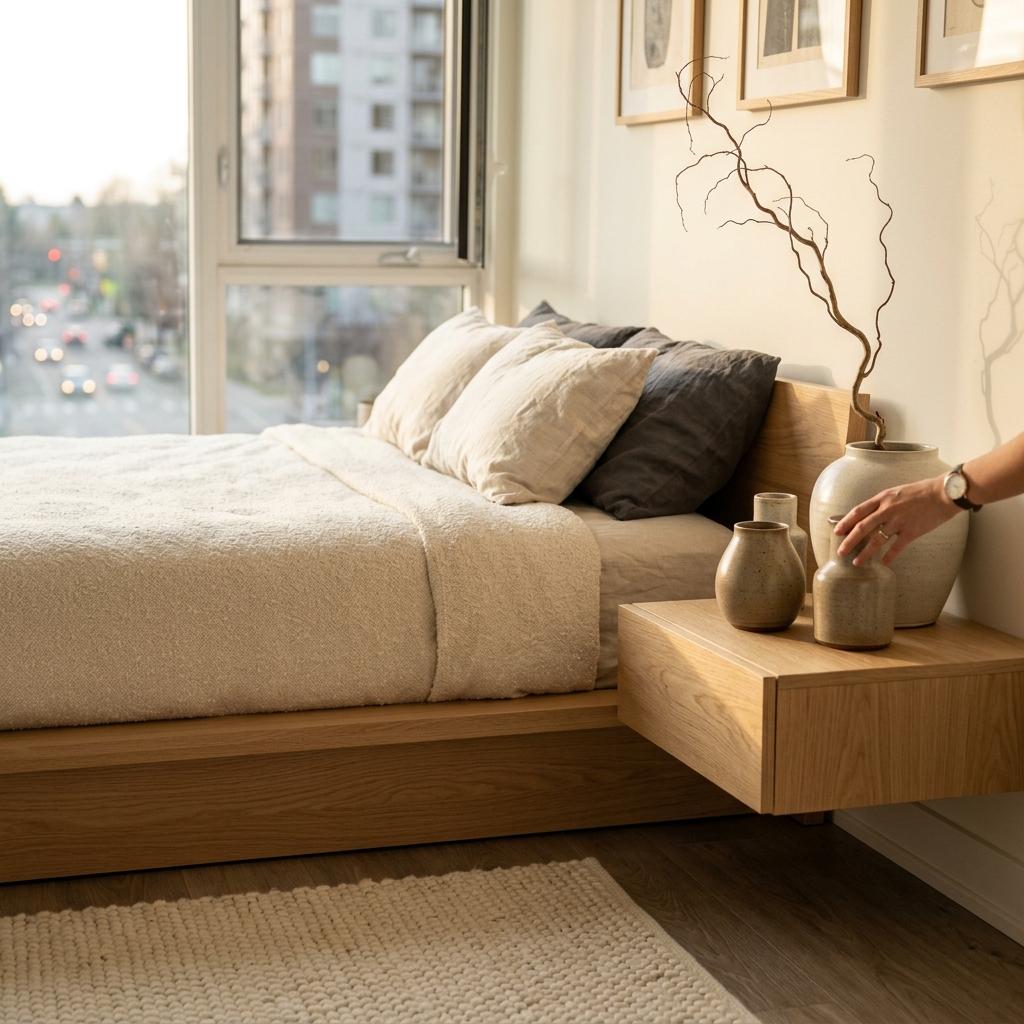

Before I stepped into this redesigned sanctuary, my notes were filled with the sensory clutter of the city-the aggressive neon of street signs and the cold, industrial hum of high-traffic living. But inside, the air seemed to settle, filtered through what the designer described as a "curated restraint." As we traced the room's perimeter, she paused to adjust a hand-thrown ceramic vase, noting how "the organic silhouette"-she brushed a thumb over the matte glaze-"softens the rigorous, linear geometry of the platform bed." It was a deliberate study in the tension between Japanese minimalism and Scandinavian warmth, where the stark, antiseptic chill of modernism is replaced by a tactile symphony of white oak and bouclé. This transition from the chaotic external world to a space defined by intentionality underscores a deeper shift in our domestic desires. In this makeover, we see that Japandi is not merely an aesthetic choice, but a sophisticated architectural response to the noise of contemporary life.
Creating A Warm And Inviting Japandi Dream Bedroom
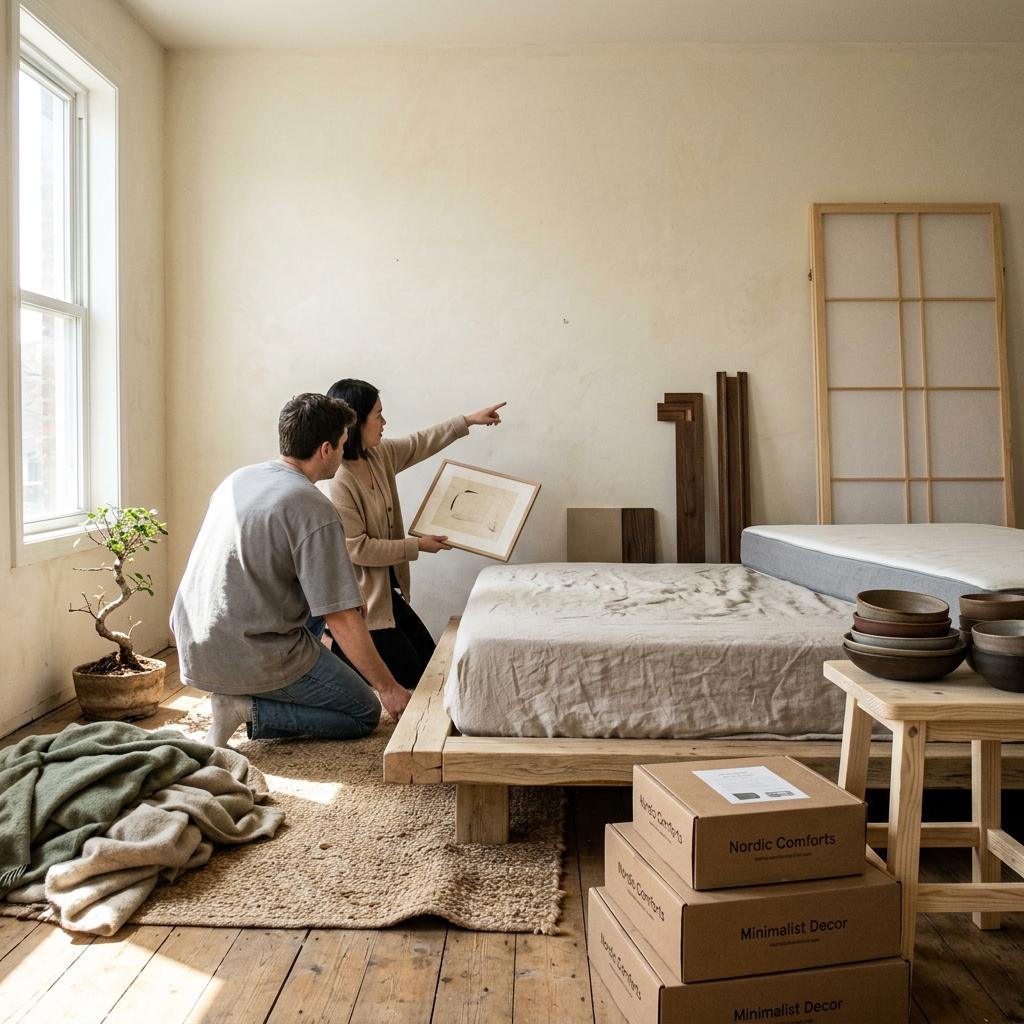

At the core of the Japandi dream bedroom lies a sophisticated Definition via Synthesis: the marriage of Wabi-sabi's acceptance of transience with the rigorous Hygge principles of Nordic comfort. It is an aesthetic alchemy where the rustic, weathered textures of the East meet the streamlined, functional warmth of the North to create a sanctuary of intentional repose. This style thrives on a Dialectical Pairing of seemingly opposing forces; the environment must feel clinical in its lack of clutter, yet profoundly soulful in its artisanal execution. It is a space that demands a monastic discipline in its layout, but rewards the inhabitant with a soft, tactile indulgence. To achieve this, we must employ Lexical Precision, curated through the use of low-profile shoji-inspired framing, bespoke joinery, and a monochromatic palette of muted earth tones that prioritize spatial fluency over mere decoration. The result is a Sensorial Stacking of elements that are not merely "pretty," but are fundamentally restorative, visceral, and transcendental-a quiet orchestration of organic materials that grounds the spirit while elevating the mind.
Discover The Essence Of Japandi Style In This Bedroom
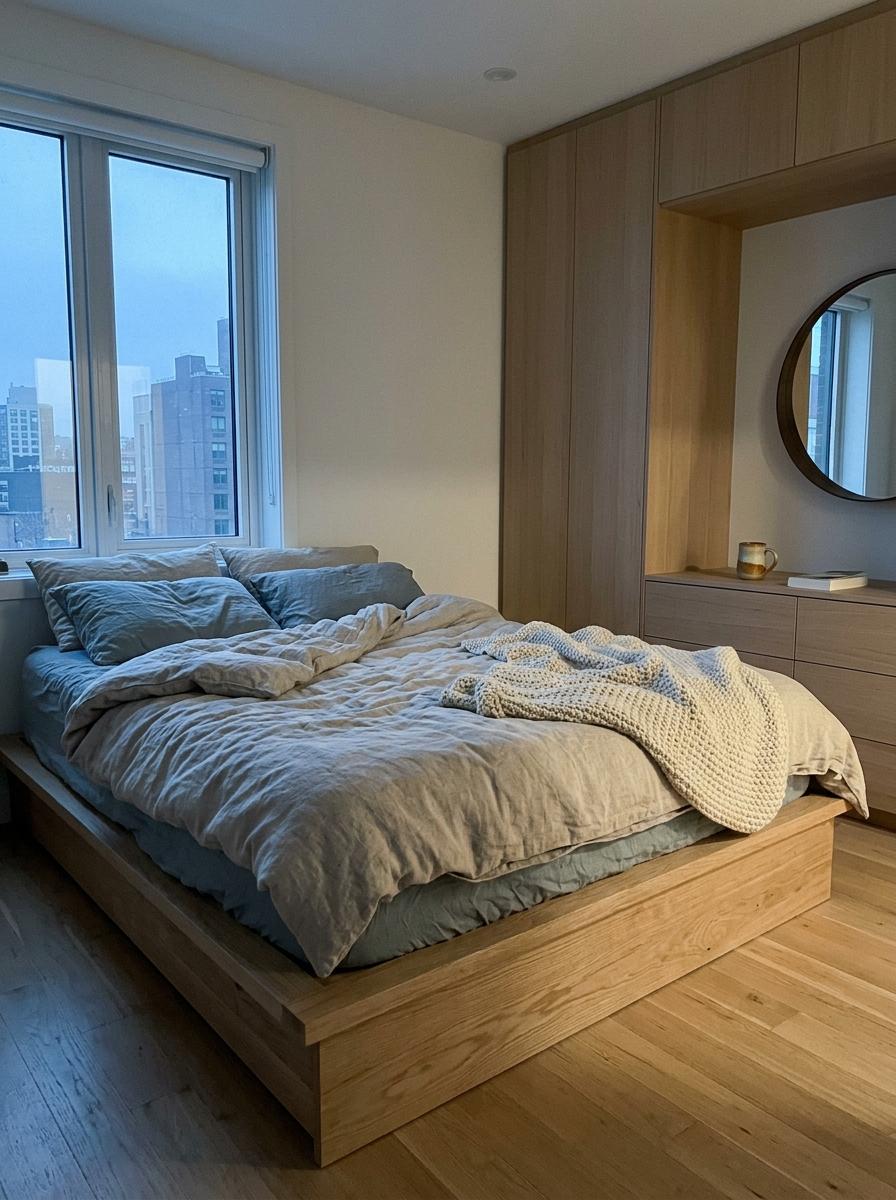

Entering this bedroom, one is immediately anchored in a sub-aquatic stillness, where the spatial volume feels less like a room and more like a curated void designed to suspend the frantic pace of the outside world. This environment thrives on a choreographed spontaneity, where the rigid discipline of Japanese minimalism harmonizes with the unruly, soulful warmth of Scandinavian hygge. While the external facade of the home may contend with the urban grit of a modern skyline, the internal sanctuary remains an impervious shell of tactile tranquility. Every surface invites the hand: the raw, open-grain texture of solid white oak bedframes meets the irregular slubs of hand-loomed Belgian linen, creating a haptic dialogue between forest and field. Far from mere decoration, the integrated recessed joinery and flush-mount cabinetry serve as a functionalist masterstroke, eliminating visual noise to ensure that the room's utility is felt in its efficiency, but never seen in its clutter.
A Balanced Japandi Bedroom Makeover For Better Sleep
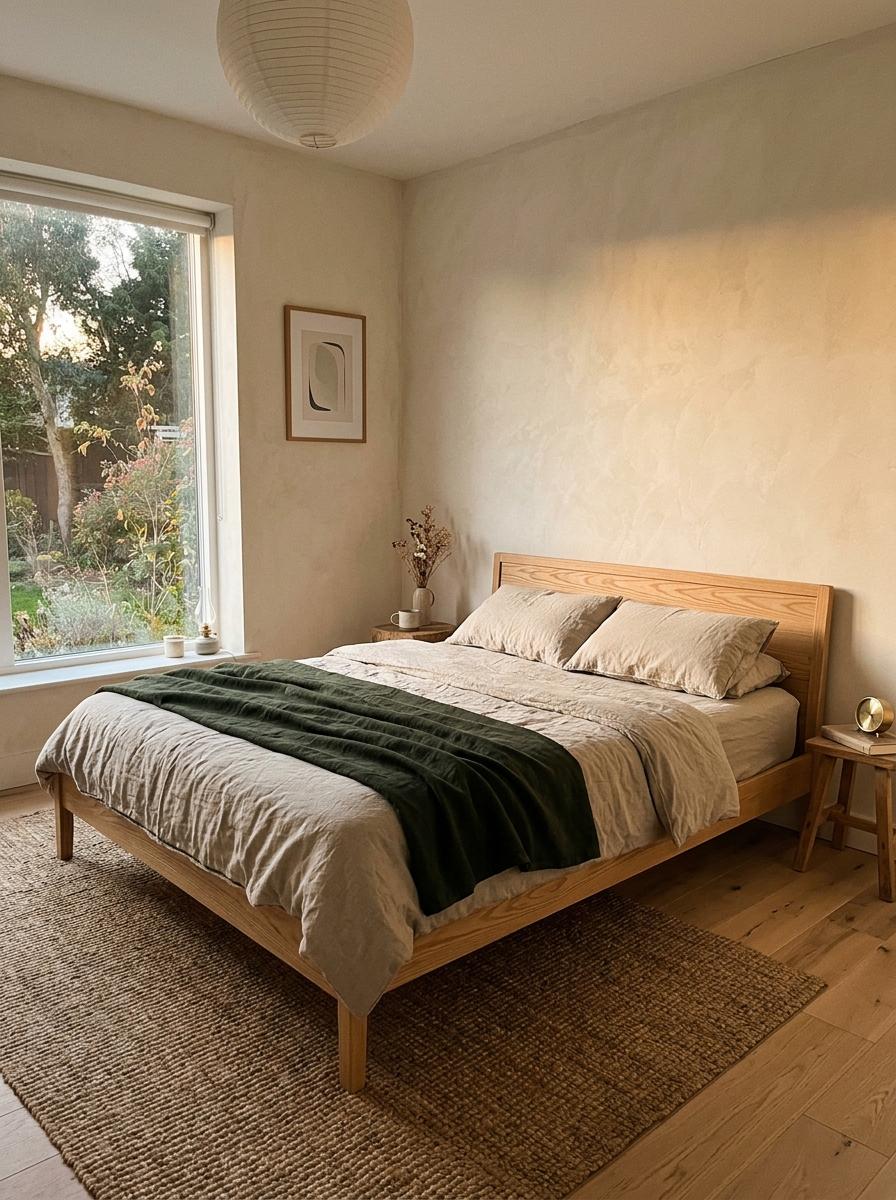

To achieve a sleep sanctuary that transcends simple aesthetics, You must prioritize the tactile dialogue between raw and refined surfaces. Start by integrating a low-profile bed frame carved from open-pore solid ash, paired with bedding in stone-washed, heavy-gauge Belgian linen. Note how the organized chaos of the fabric's natural wrinkles creates a visual depth that feels both intentional and effortless. This specific interplay-the rugged softness of the textile against the velvety rigidity of the wood-triggers an immediate physiological shift; as your hand brushes the cool, fibrous weave, your cortisol levels begin to dip, signaling to the nervous system that the day's frictions have finally ceased. In our analysis of minimalist retreats from the Shimane Prefecture to the high-end lofts of Copenhagen, we observe that the most successful makeovers rely on this precise sensory calibration. By anchoring the room with a hand-knotted jute rug-possessing a fibrous, structural bite-you ground the ethereal lightness of the space. Note how the diffused light hitting the matte, clay-lime washed walls eliminates harsh shadows, enveloping the sleeper in a cocoon of weightless density. It is through this rigorous study of material honesty that we find the Japandi ideal: a room that does not just look silent, but actively hushes the mind.
Modern Comfort Meets Japandi Design In This Sanctuary
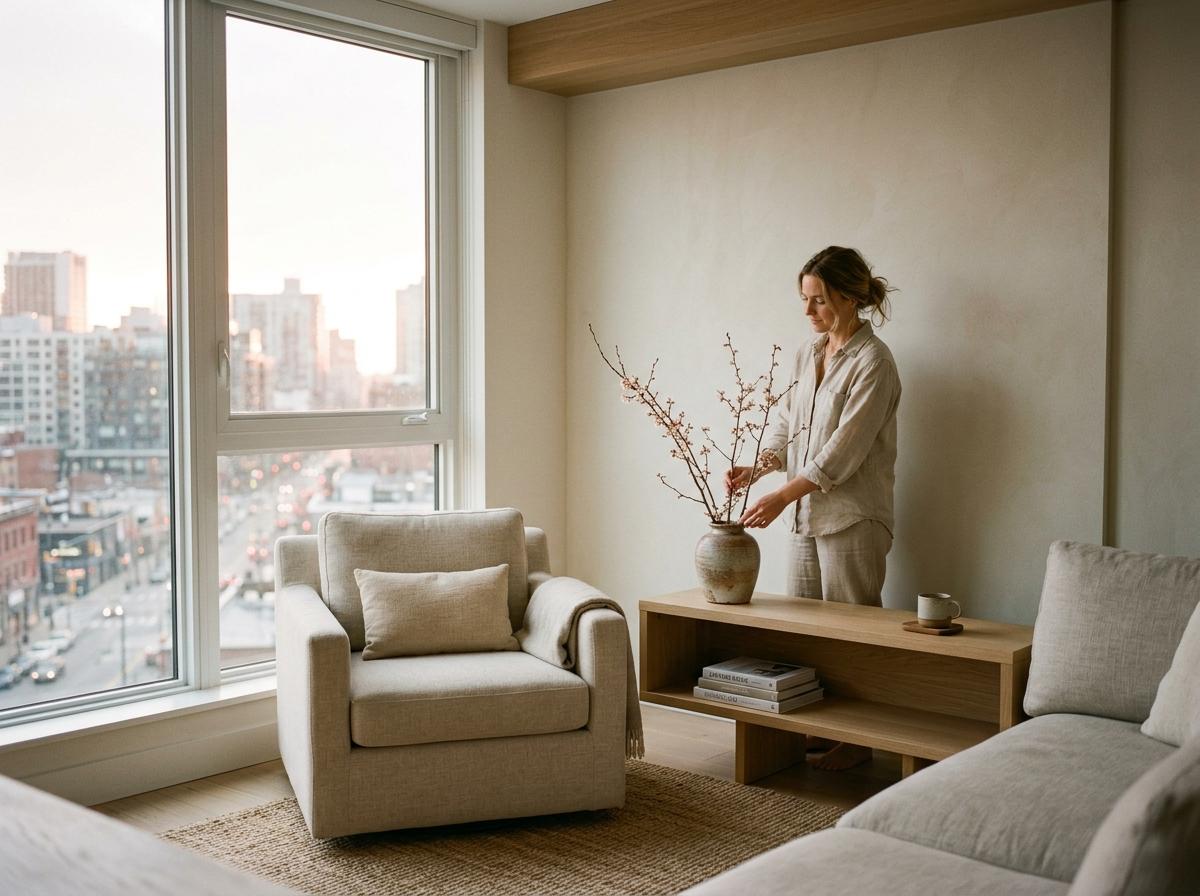

Stepping off the frantic, asphalt-heated pulse of the city and into this residence feels less like entering a house and more like a slow, intentional exhale. Where the street outside is a cacophony of visual noise and jagged edges, this interior welcomes you with a muted palette of oatmeal linens and the soft, tactile grain of white oak. "We wanted to strip away the excess," the owner explained, pausing to adjust a ceramic vase atop a cantilevered ledge, "not to create emptiness, but to make room for... well, for peace." This deliberate juxtaposition-the chaotic urban sprawl versus the disciplined serenity of the home-highlights the transformative power of Japandi principles. By blending the rustic wabi-sabi appreciation for imperfection with the sleek, ergonomic precision of Scandinavian functionalism, the space achieves a rare architectural equilibrium. It is within this intersection of high-contrast living and soft minimalism that we find the true essence of a modern sanctuary.
Refreshing Your Home With A Japandi Dream Bedroom Makeover
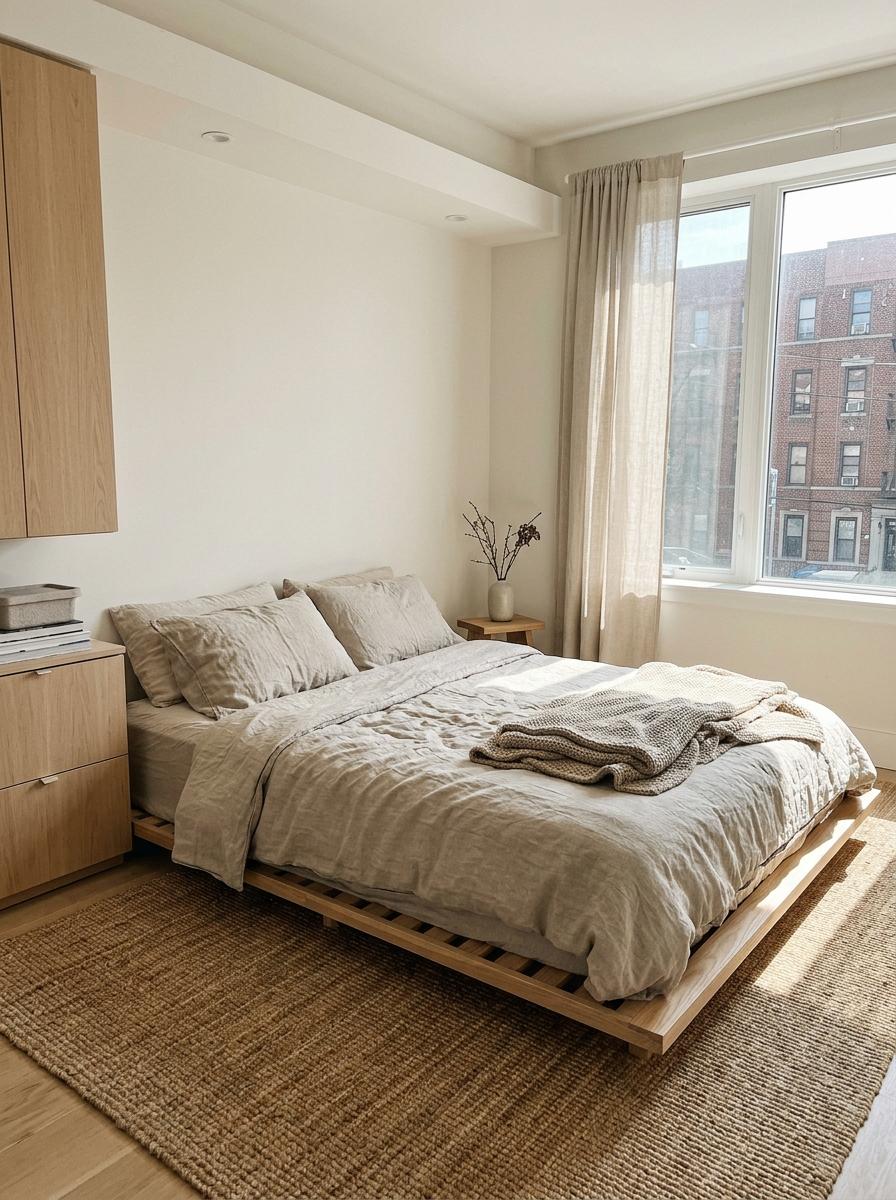

To transform a bedroom into a Japandi sanctuary is to engage in a deliberate curation of silence, where the architecture of rest meets the philosophy of minimalism. The room begins with Atmospheric Grounding, anchoring the inhabitant within a low-profile landscape where the horizon of the bed sits closer to the floor, pulling the gaze downward to evoke an immediate sense of terrestrial stability and calm. This spatial arrangement achieves a Figurative Paradox, resulting in a state of disciplined softness; it is a room that feels rigorously structured yet remains profoundly inviting, reconciling the sharp precision of Japanese aesthetics with the indulgent comfort of Scandinavian hygge. Within this sanctuary, a Structural Dualism emerges, drawing a sharp distinction between the external chaos of the urban sprawl and the internal equilibrium of the private sphere-the threshold of the door acting as a filter for noise and haste. This transition is felt through Material Specificity, where the touch of open-pore white oak meets the weight of heavy-gauge stonewashed linen and the tactile grain of hand-woven tatami mats. Ultimately, the room's success lies in its Functionalist Specification, utilizing integrated modular cabinetry and hidden recessed lighting as industrial solutions that eliminate visual clutter, ensuring that every object serves a utility of both purpose and peace.





Comments