
By synthesizing the rigorous functionalism of Scandinavian hygge with the transience and organic imperfection of Japanese wabi-sabi, we arrive at the refined equilibrium of the Japandi bathroom-a space redefined as a contemplative sanctuary. This aesthetic synergy demands a delicate dialectic where clinical precision meets earthen warmth; it is a composition that feels architectural yet profoundly intimate, structured but inherently fluid. To inhabit such a retreat is to experience a curated sensory immersion, characterized by tactile materiality, haptic softness, and a rhythmic, holistic tranquility that transcends mere utility to achieve a state of meditative luxury.
Japandi Bathroom Design
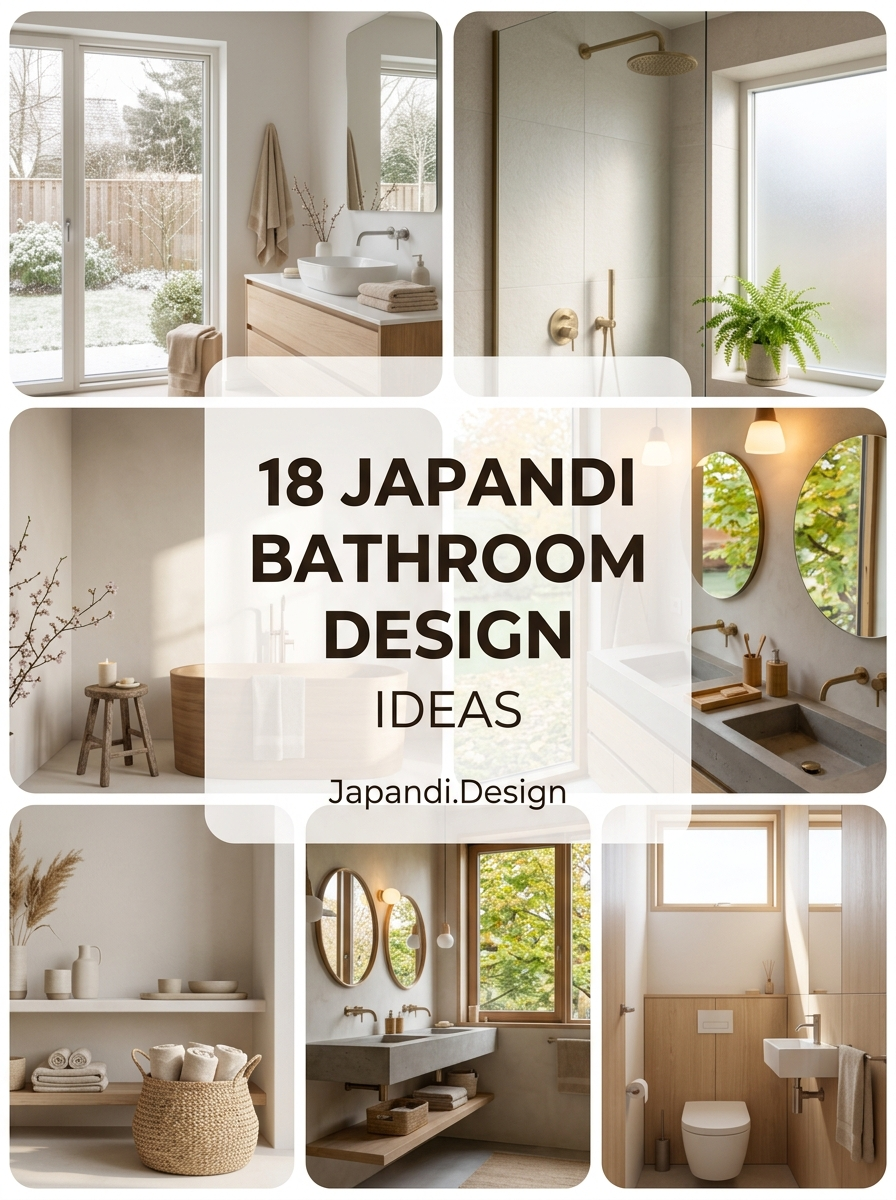

Minimalist Japandi Bathroom Design
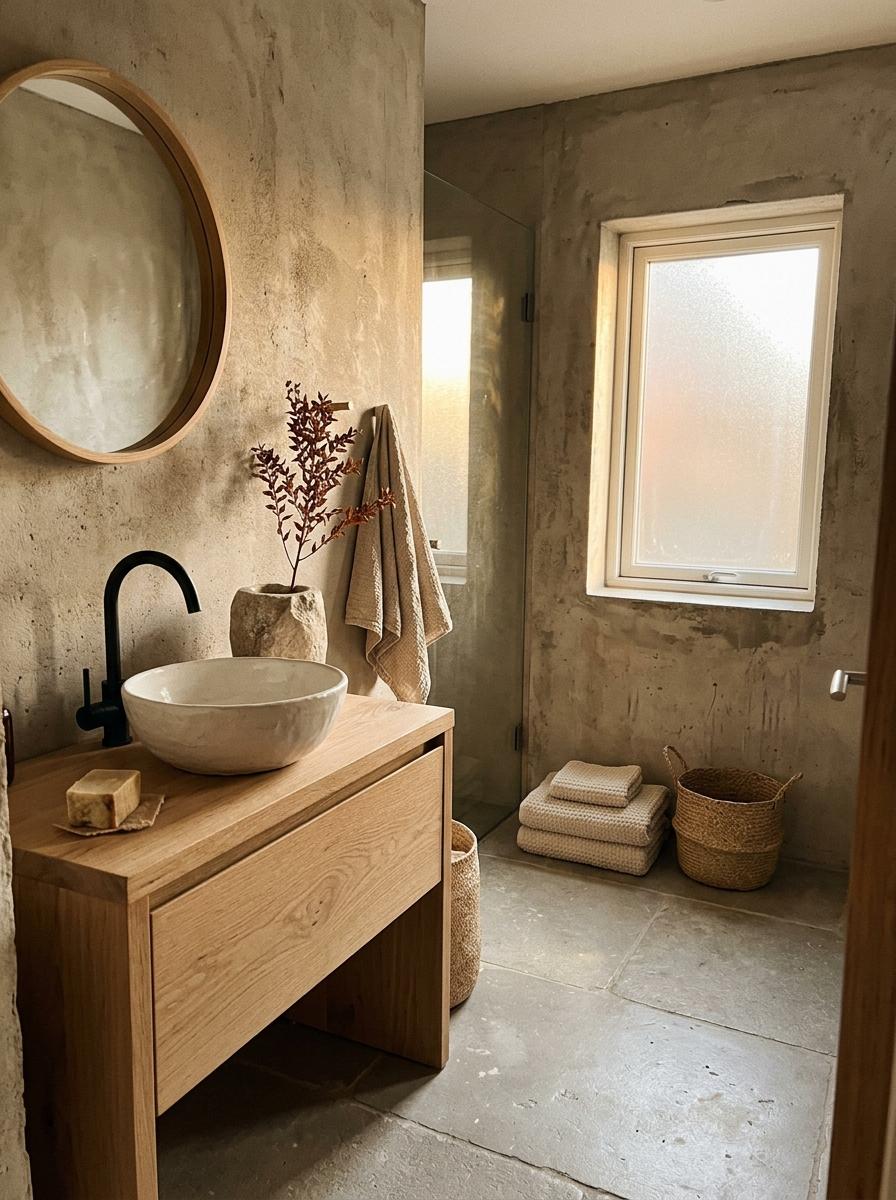

The Japandi bathroom exists as a sequestered sanctuary where the hum of the modern household dissolves into a curated silence. It is a space of structured spontaneity, where the rigid discipline of Scandi-minimalism is softened by the intentional imperfections of Wabi-sabi philosophy. This environment enforces a dualism of the senses: while the external world remains chaotic and overstimulated, the internal volume of the room acts as a sensory vacuum, drawing the occupant into a state of rhythmic stillness. Tactile precision is found in the juxtaposition of honed Basalt floor tiles against the warmth of a vertical-grain Hinoki wood vanity, creating a landscape that is both cold to the touch and visually glowing. This aesthetic is anchored by functionalist integration, where concealed thermostatic valves and recessed lighting channels serve as invisible solutions, ensuring that the utility of the modern bath never interrupts the visual flow of the architectural void.
Spa Like: A Functional Japandi Space Turned Retreat
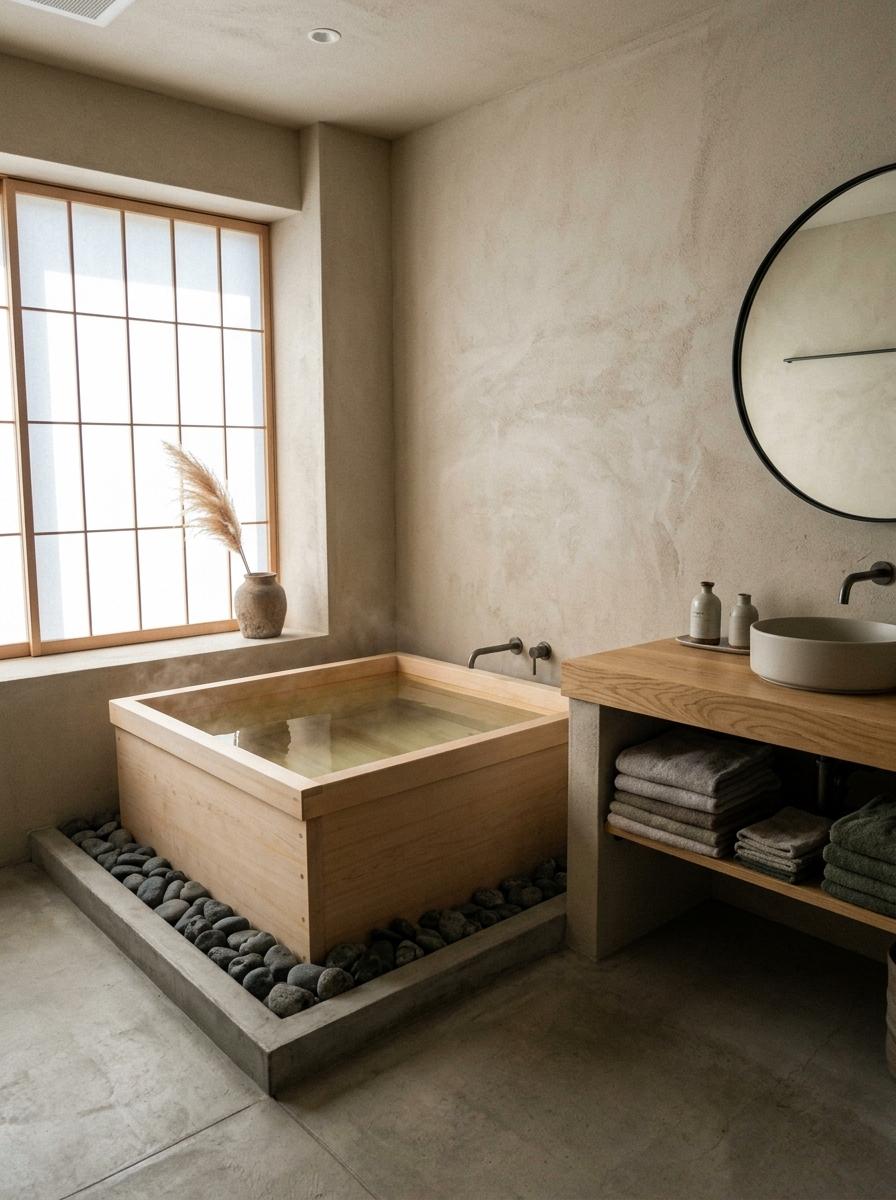

Historically, the traditional bath was a communal necessity, a utilitarian ritual rooted in the wooden bathhouses of Edo-period Japan. Today, however, this functional heritage has evolved into the ultimate private luxury, moving from the public square into the intimate heart of the home. In this recent project, we explore a "structured fluidity"-a design tension that balances the rigorous geometry of Japandi minimalism with the soft, organic movement of a wellness retreat. Located in the prestigious enclave of Tokyo's Minami-Aoyama, the project was commissioned by a repeat client, a partnership that allowed for a deeper, more experimental exploration of their personal sanctuary. By transforming a standard domestic floor plan into a restorative escape, the renovation achieves a technical synthesis through the precise application of tactile materiality, strategic lighting coves, and spatial decompression.
Walk Through A Refreshed Washroom With Touch Of Japandi Style
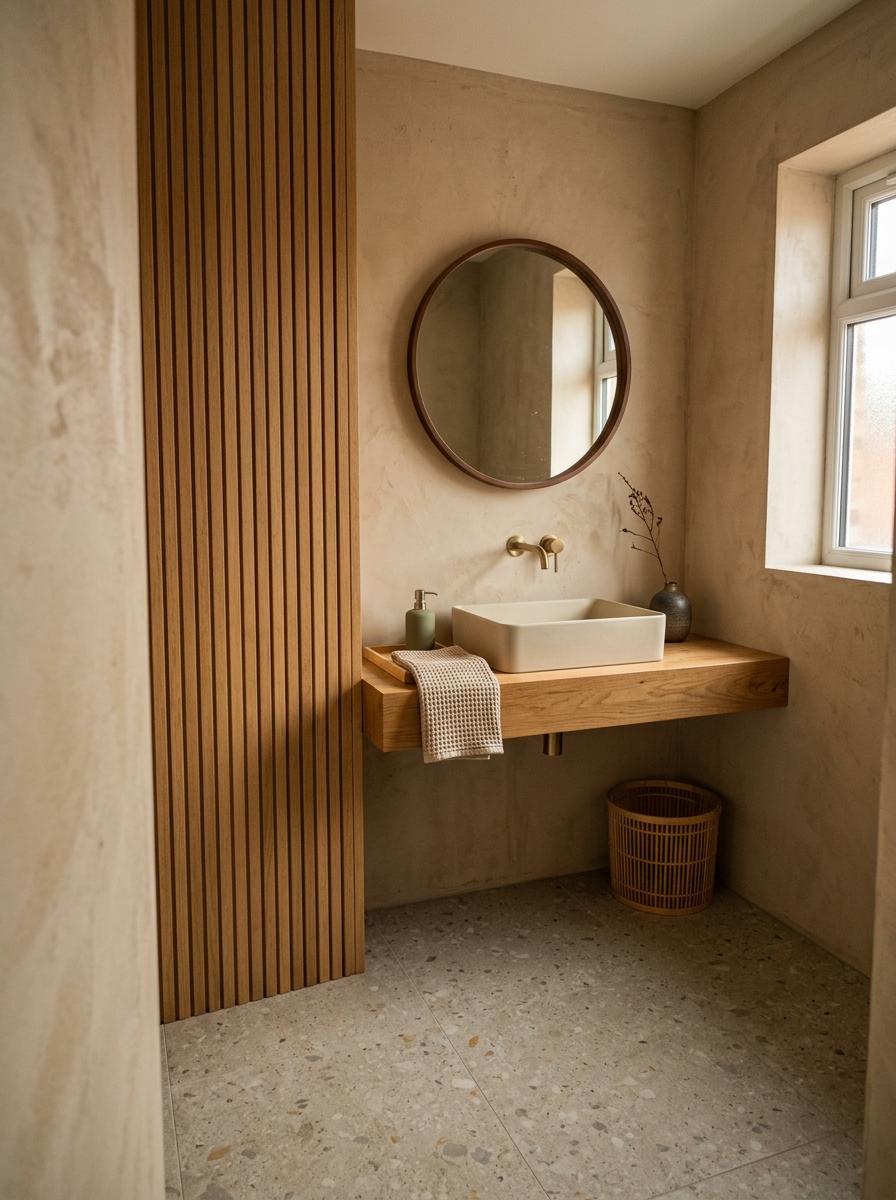

Stepping out of the abrasive glare of a humid, tile-heavy city morning-where the sensory overload of traffic and neon feels almost kinetic-and into this refreshed washroom is a study in immediate decompression. "The goal wasn't just a renovation," the project's lead designer explained as we traced the matte texture of the vanity, "it was an attempt to curate-" she paused, adjusting the placement of a single Hinoki wood tray, "-a sensory pause in a high-velocity life." By replacing the cold, clinical porcelain of the original space with a palette of sand-toned microcement and slatted oak, the room utilizes a clever play of tactile materiality and negative space. This juxtaposition between the frantic exterior world and the quiet, intentional geometry of the interior highlights the core of the Japandi ethos: the pursuit of functional serenity through the marriage of Scandi-minimalism and Japanese wabi-sabi. It is within this intersection of organic warmth and disciplined form that we find the blueprint for a truly restorative domestic sanctuary.
Glimpse A Fashionable Modern Suite With Japandi Bathroom Design
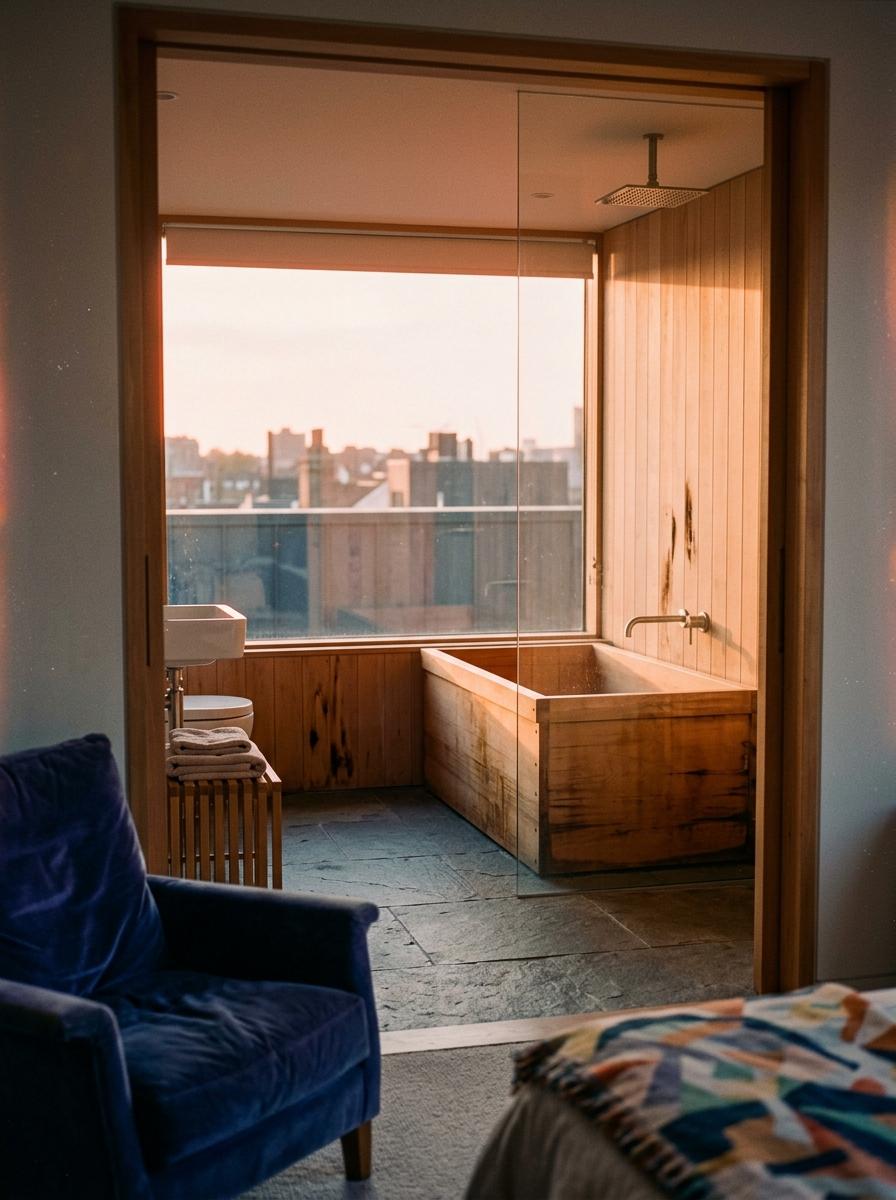

The suite unfolds as a curated sanctuary where the high-octane pulse of urban fashion subsides into a profound, meditative stillness. Within this perimeter, the Japandi bathroom emerges as a structured spontaneity, reconciling the rigid precision of Scandinavian minimalism with the weathered, wabi-sabi imperfections of Japanese tradition. While the suite's exterior lounge is defined by flamboyant textiles and social energy, the threshold of the bath marks a transition into a silent interiority, stripping away the performative in favor of the essential. Here, the tactile weight of a honed basalt soaking tub contrasts against the ethereal grain of vertical-grain Hinoki wood paneling, creating a sensory dialogue between cool volcanic stone and warm, resinous timber. This aesthetic rigor is balanced by the integration of a concealed thermostatic rain shower system and wall-mounted brushed nickel fixtures, a functionalist move that ensures the fluid visual continuity of the space remains uninterrupted by the clutter of modern utility.
Inside A Quiet Japandi Sanctuary In The Master Bathroom
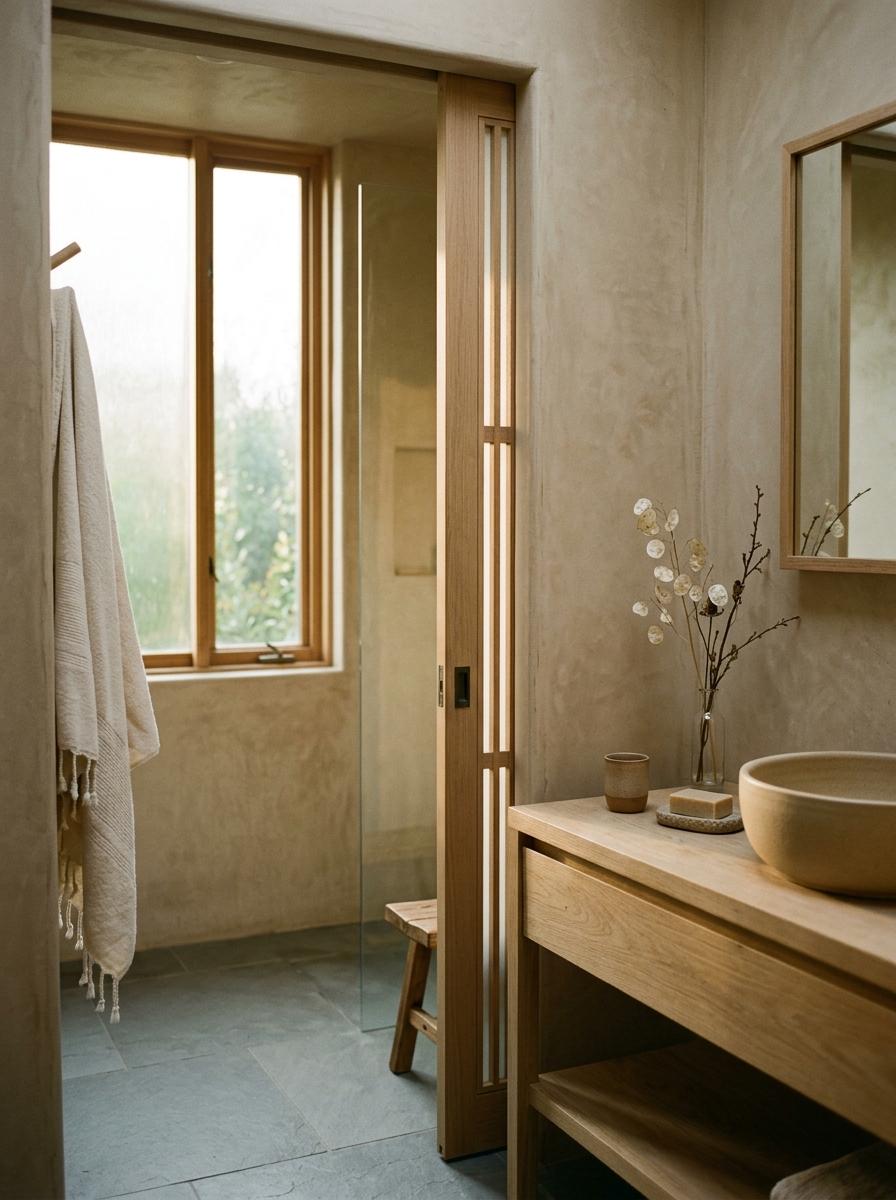

Stepping off the frantic, asphalt-grey streets of the city, where the sensory overload of sirens and neon creates a constant state of high-alert, I found myself crossing the threshold into a space that felt less like a room and more like a collective exhale. "The intention here," the homeowner explained, pausing to run a hand over the textured, sand-colored basin, "was never about showing off wealth. It was about..." She trailed off, adjusting a single branch of dried lunaria, "...finding a way to curate silence through materiality." This particular master bathroom eschews the cold, clinical glare of traditional luxury in favor of a soft-minimalist palette where the tactile warmth of white oak meets the raw, organic grit of Tadelakt plaster. By juxtaposing the chaotic dissonance of the outside world with a meticulously balanced internal landscape, we begin to see how Japandi design functions not just as a visual trend, but as a vital architectural ritual for reclaiming one's peace.
A Space With Modern Japandi Bathroom Design Focus
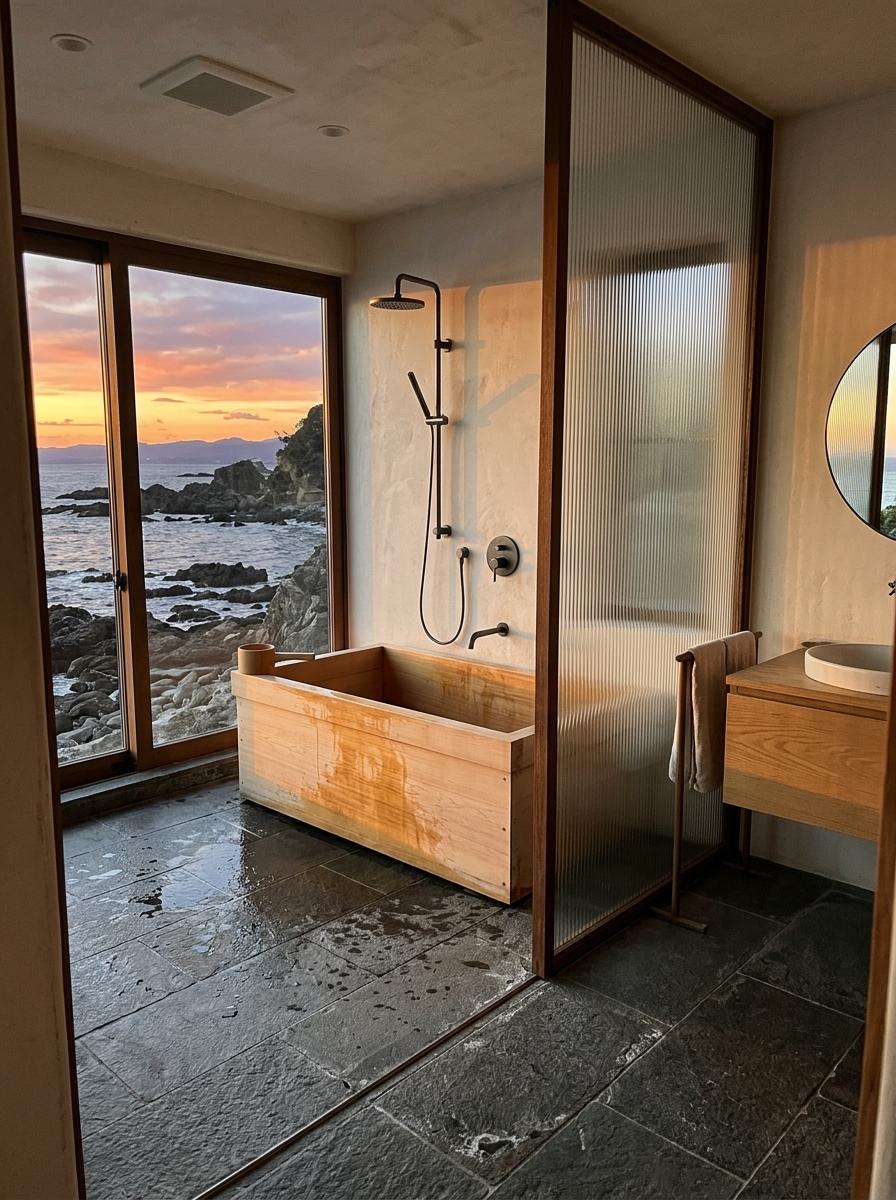

In this study of a residence overlooking the rugged coastline of Hayama, Japan, we find a sanctuary that redefines the wet room through a lens of monastic luxury. Note how the tactile friction of the flamed basalt flooring provides a grounding counterpoint to the ethereal, translucent shoji-inspired glass partitions that enclose the shower. This intentional arrangement creates a structured spontaneity, where the rigid geometry of the layout is softened by the organic, silky-smooth grain of a solid Hinoki wood soaking tub. As you move through the space, the scent of damp cypress mingles with the cool touch of matte gunmetal fixtures, triggering a profound parasympathetic release-a physical shedding of urban tension that slows the heart rate and deepens the breath. It is a masterclass in the Japandi ethos, proving that true stillness is found at the intersection of rugged earthliness and refined precision.
Embrace A Modern Home With Japandi Bathroom Influences
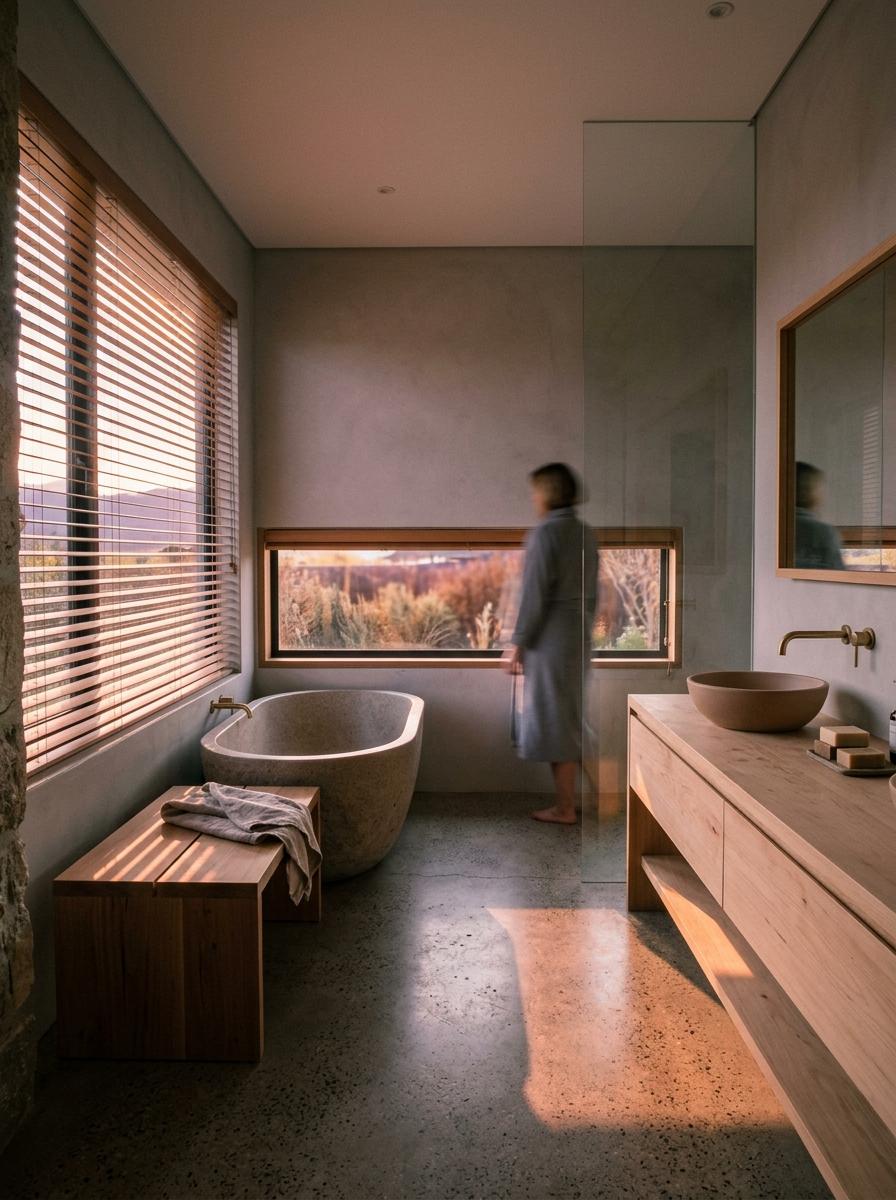

The structural integrity of this sanctuary was achieved through the thoughtful integration of organic materials and linear precision. Within the frame, a hushed palette of stone and cedar fosters a sterile yet soothing stillness, ensuring that every surface remains unburdened by the unnecessary. This deliberate design dissolves the boundaries of the traditional washroom, as light leaps across liminal lines to expand the perceived volume of the room. Soft shadows stretch over the floor, sculpting a space that feels both grounded and weightless. The architecture breathes life into the layout, harmonizing the warmth of wood, the coolness of clay, and the clarity of glass.
This Natural Wood Japandi Bathroom Is A Calm Refuge In The City
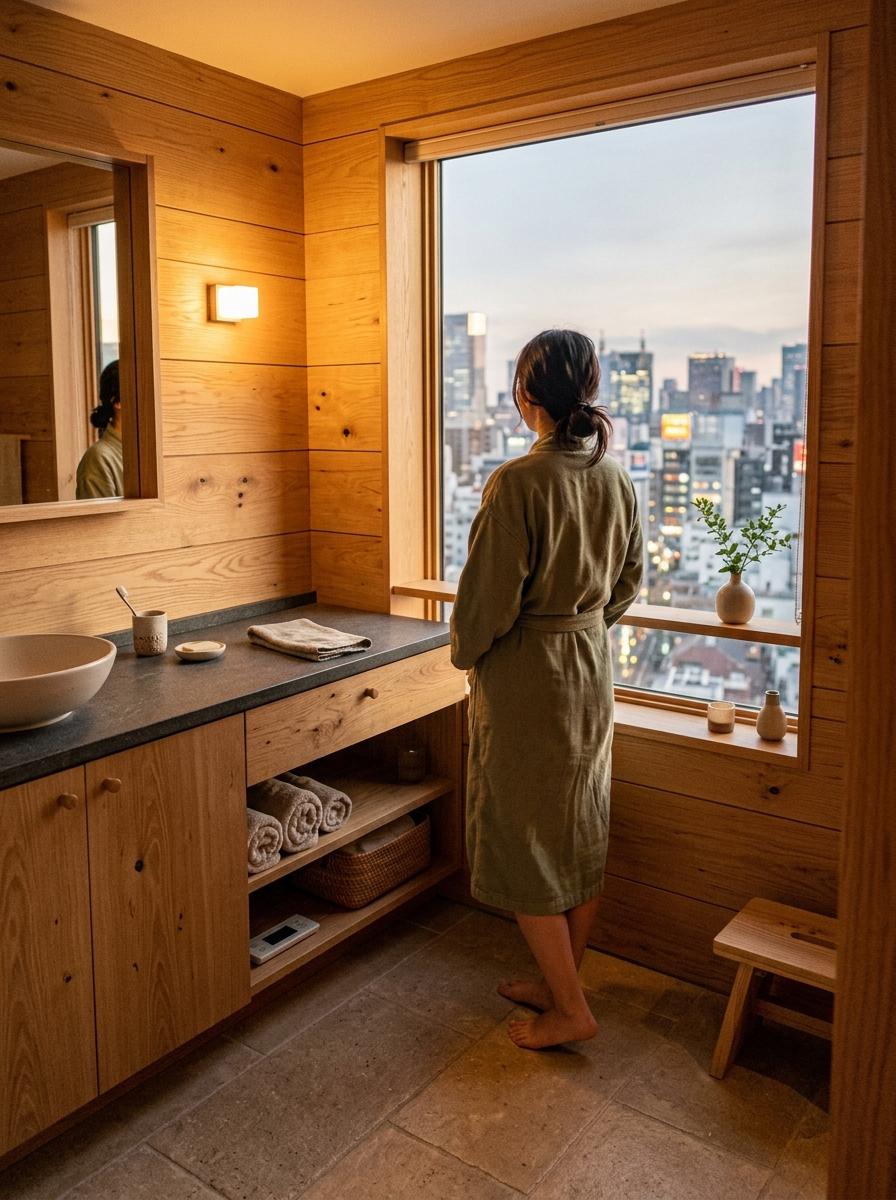

In this urban sanctuary, the transition from the frantic rhythm of the metropolis to the stillness of the interior is mediated by the tactile presence of quarter-sawn white oak and the honed, non-porous surfaces of matte volcanic stone. Note how the horizontal grain of the timber wraps the room in a continuous ribbon, creating a seamless visual flow that dissolves the traditional boundaries of the bath. This design achieves a state of structured spontaneity, where the rigid geometry of the cabinetry is softened by the organic, swirling patterns of the wood's natural knots. As you step onto the radiant-heated floors, the sudden shift from the visual to the somatic triggers a parasympathetic release; the heart rate decelerates, and the chest expands, trading the sensory overload of the city for a deep, diaphragmatic calm. It is a space that reflects the sophisticated restraint found in a Kyoto machiya, reimagined with the crisp, functional precision of Copenhagen minimalism, proving that a bathroom can serve as both a functional utility and a profound emotional reset.
How A Small Area Embraces Japandi Bathroom Design Style
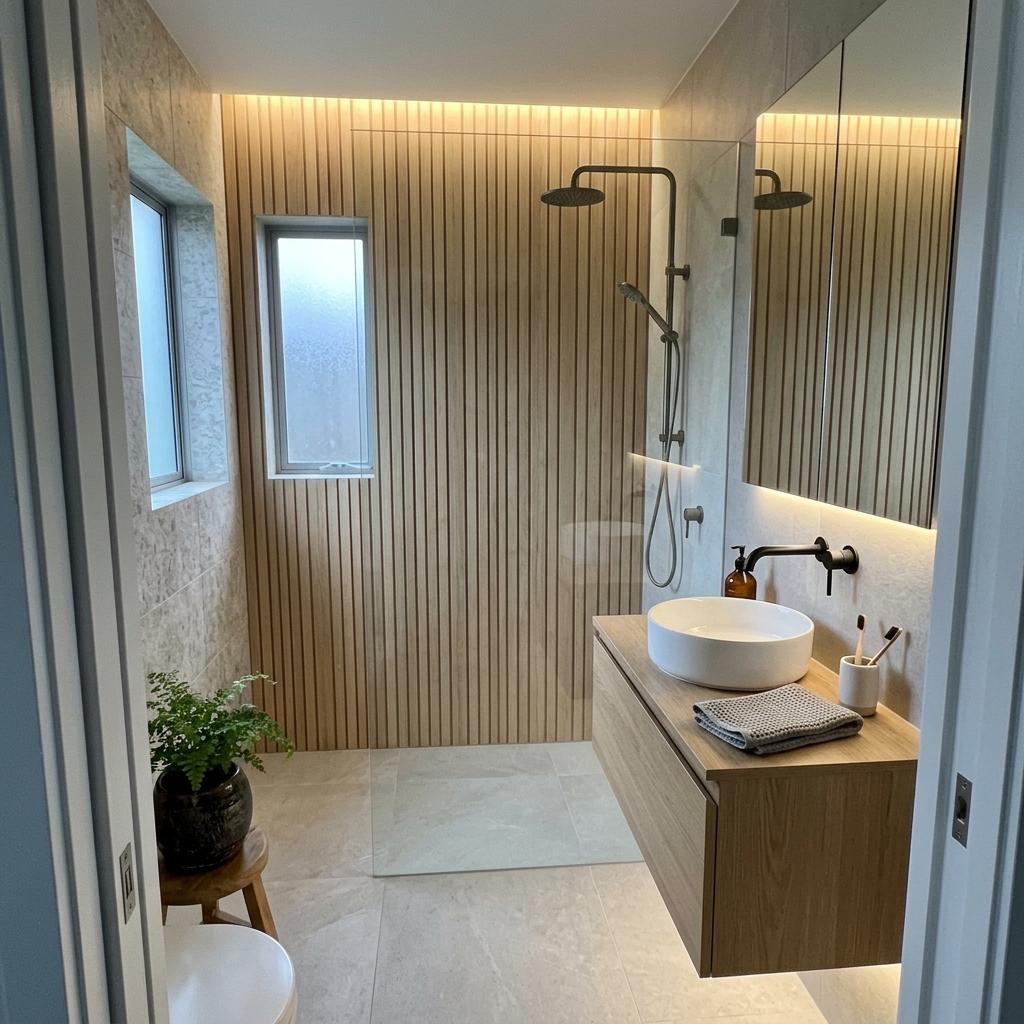

Historically, the urban bathroom was a purely utilitarian afterthought, a cramped relic of mid-century industrial efficiency where aesthetics were sacrificed for mere plumbing necessity. Today, however, we see a radical shift toward the bathroom as a curated sanctuary, a transformation beautifully realized in a recent project located in the heart of London's refined Marylebone district. In this compact space, the design achieves a captivating maximalist minimalism, where the spare lines of Japanese zen intentionally collide with the rich, tactile warmth of Scandinavian hygge. Because the homeowners are a repeat client of the studio-having previously commissioned a full-scale loft renovation-there exists a profound level of trust that allowed for such bold experimentation in a limited footprint. Ultimately, this small-scale masterpiece succeeds through a deliberate technical synthesis of vertical timber slatting and integrated recessed lighting, architectural levers that effectively dissolve the room's physical boundaries to create an expansive, meditative retreat.
Contemporary Japandi Bathroom Design
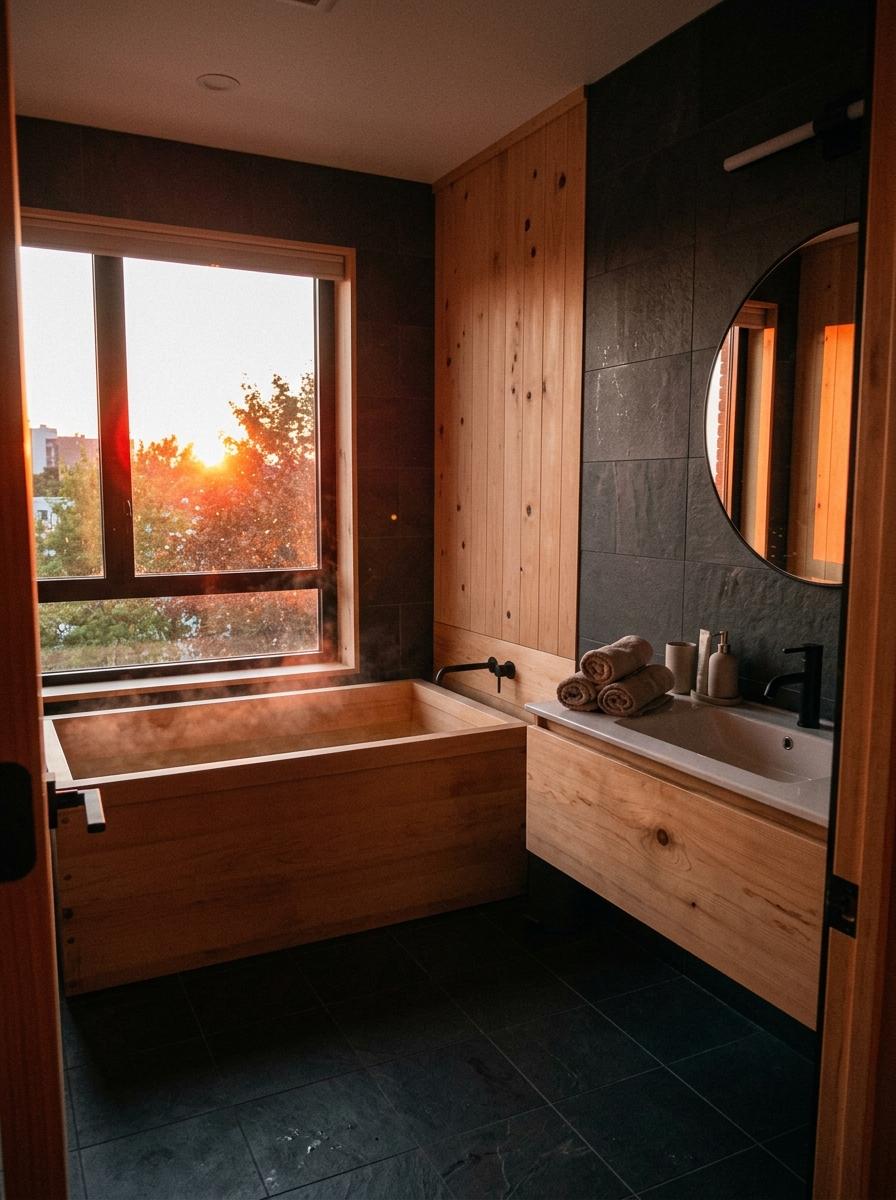

In modern urban sanctuaries, the Contemporary Japandi Bathroom transcends mere utility, evolving into a site of ritualistic purification. To achieve this, designers often look toward the minimalist luxury of the Aman Tokyo, where the boundary between architecture and nature dissolves. Note how the juxtaposition of charcoal-hued, honed basalt tiles against the silky, fine-grained warmth of untreated Hinoki wood creates a structural dialogue. This intentional pairing manifests a curated spontaneity-a space that feels rigorously engineered yet fundamentally organic. As you step onto the radiant-heated stone, the tactile shift from the cool, matte surfaces to the aromatic softness of the timber triggers an immediate parasympathetic release, lowering the heart rate and quieting the mental noise of the city. It is here, amidst the steam and the scent of lemon-peel cypress, that the body transitions from the frantic pace of the external world into a state of profound, rhythmic stillness.
Earthy Palette: A Dated Japandi Room Turned Oasis
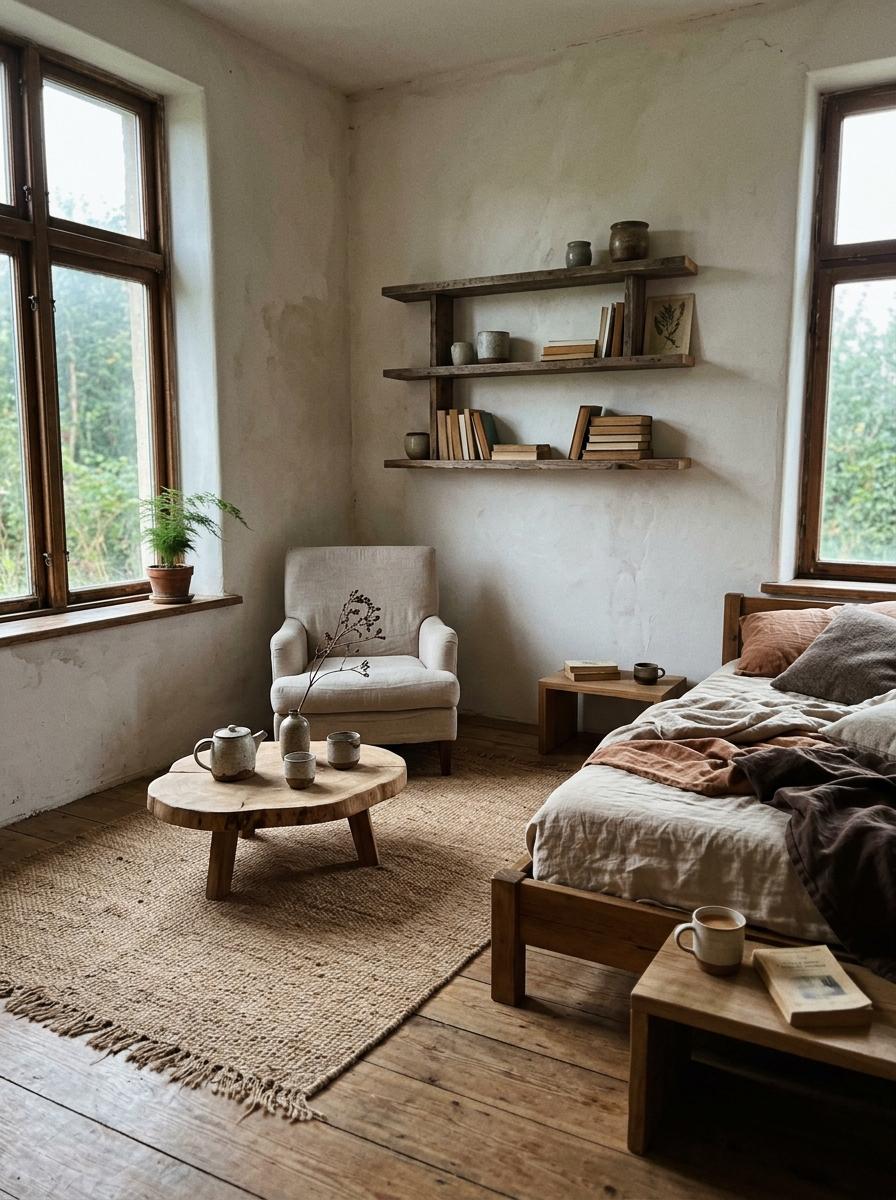

At its core, Japandi is the masterful synthesis of Scandinavian hygge-that pursuit of lived-in contentment-and the Japanese ethos of wabi-sabi, which finds perfection in the transient and the weathered. In this specific transformation, we observe how a tired, cluttered space was distilled into a sanctuary through the application of tactile minimalism and organic geometry. The room manages to feel rigorously disciplined, yet profoundly inviting; it honors a strict monochromatic restraint, but pulses with the warmth of raw timber and unbleached linens. By replacing glossy synthetics with a palette of umber, terracotta, and pumice, the design achieves an atmosphere that is simultaneously subterranean, grounding, and ethereal. It is a study in how "earthy" need not mean heavy, but rather a sophisticated return to the primordial, where the sensory interplay of rough-hewn stone and silk-smooth oak creates a resonant, contemplative stillness.
Walk Through A Balanced Interior With Touch Of Japandi Style
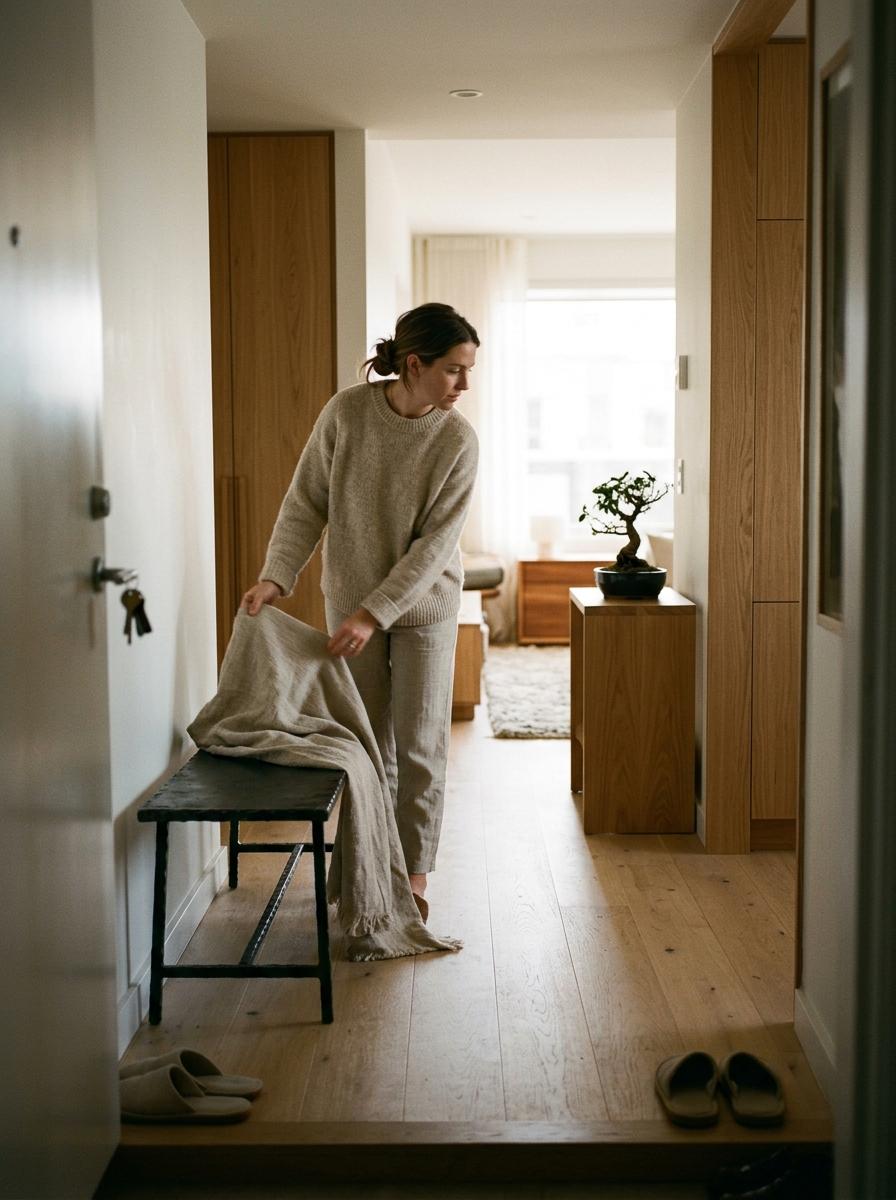

Stepping into the entryway, the frantic pulse of the city-that relentless sensory overload of neon glare and asphalt heat-abruptly dissolved into a hush of soft textures and muted tones. I wasn't there to critique the floor plan as a builder would, but to observe how space influences the soul, noting how the architect had masterfully utilized negative space to frame a single, gnarled bonsai. "The secret to this equilibrium," the homeowner remarked, pausing to adjust a linen throw that softened the edge of a blackened steel bench, "isn't about filling the room with things, but rather," she trailed off, her eyes scanning the seamless joinery of the cabinetry, "letting the materials themselves dictate the rhythm of the home." This juxtaposition of raw, tactile wabi-sabi imperfections against the rigorous, clean-lined functionalism of Scandinavian design creates a deliberate tension that elevates the mundane. This specific harmony, where the rustic warmth of timber meets the cool precision of minimalism, provides the perfect entry point into understanding the quiet power of a balanced Japandi interior.
Glimpse A Sophisticated Private Bath With Japandi Bathroom Design
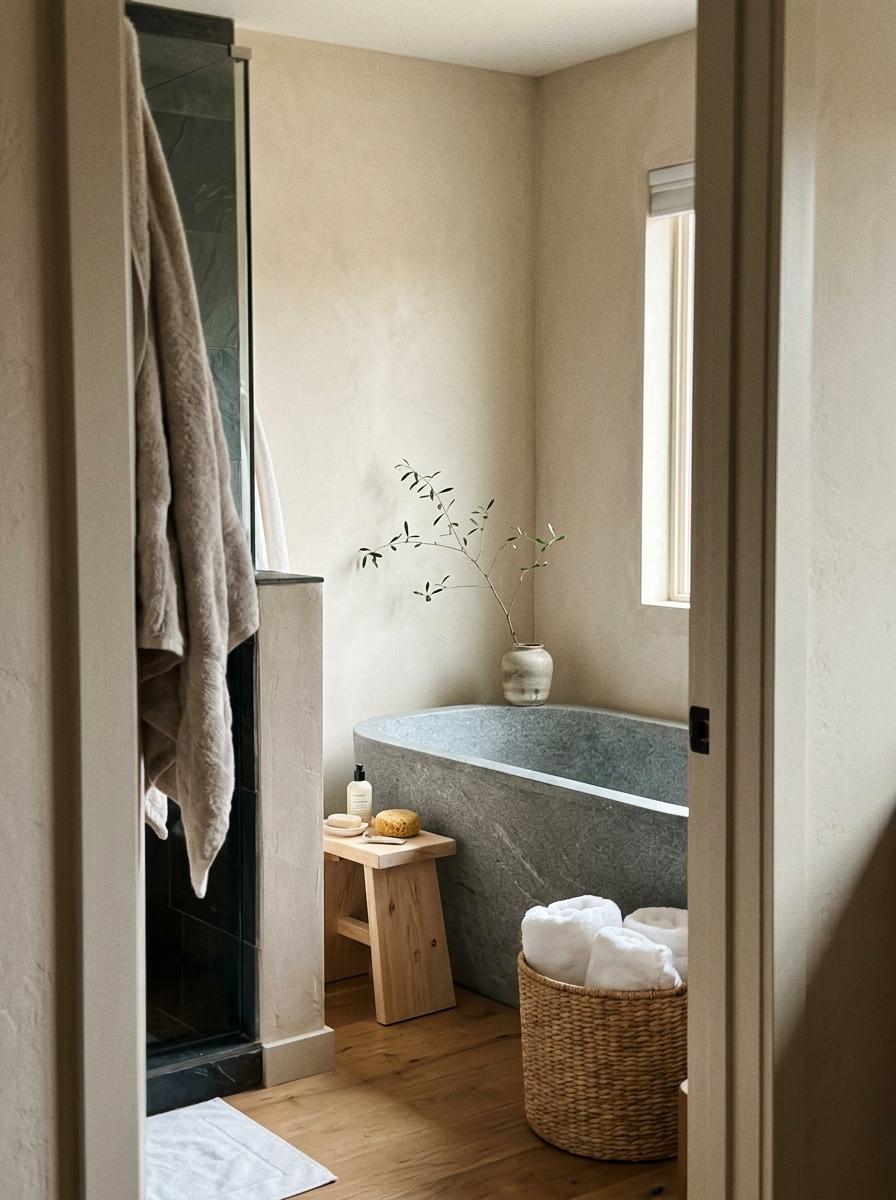

At its core, Japandi is the masterful synthesis of Scandinavian functionalism and the ancient Japanese ethos of Wabi-sabi; it is a deliberate union where Nordic utility meets a transcendental appreciation for the ephemeral. This design vernacular prioritizes a strictly curated spatial arrangement, often utilizing a monochromatic palette of oatmeal and slate to ground the room's more ethereal elements. The aesthetic is defined by a compelling dialectical tension: the silhouette of a stone soaking tub feels architectural and permanent, yet it is softened by the organic, irregular grain of reclaimed Hinoki wood. This interplay creates an atmosphere that is simultaneously austere but enveloping, rigorous but profoundly tranquil. By integrating tactile surfaces-think honed volcanic rock paired with gossamer-thin linen-the private bath transcends its utilitarian origins to become a sensory sanctuary, offering a resonant, haptic experience that silences the cacophony of the modern world.
Inside A Minimalist Japandi Sanctuary In The Small Bathroom
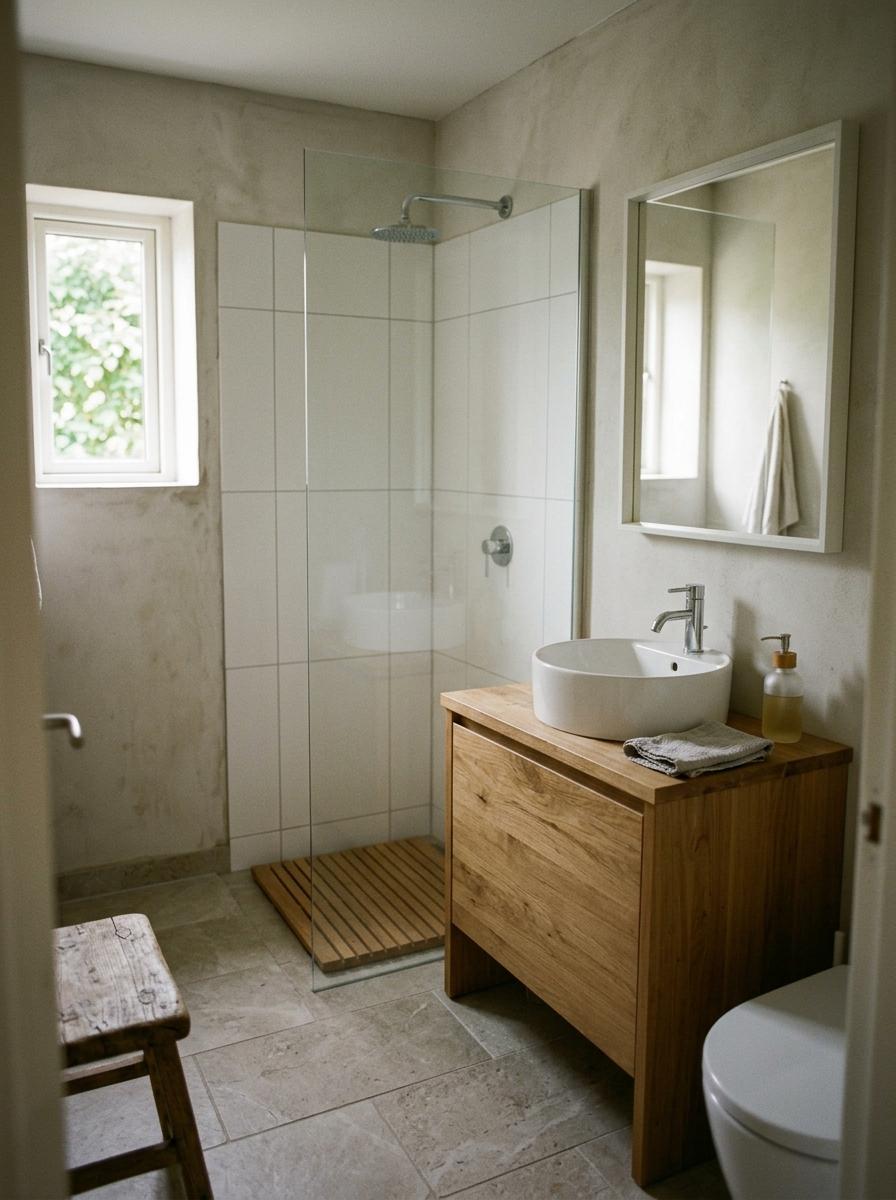

This bathroom transformation was conceived as a deliberate exercise in restraint, where every structural choice was dictated by the pursuit of absolute clarity. Within this compact envelope, a quiet composition of unadorned surfaces and weightless textures replaces the typical clutter of domestic utility. Soft stone, slender slats, and silvered fixtures create a seamless visual continuity that breathes life into the narrow footprint. The design skillfully expands the perceived volume, pulling light across the porcelain while pushing the boundaries of the original walls. This meticulous curation results in a space that celebrates the beauty of the bare, the balance of the brave, and the bliss of the basic.
A Room With Organic Japandi Bathroom Design Focus
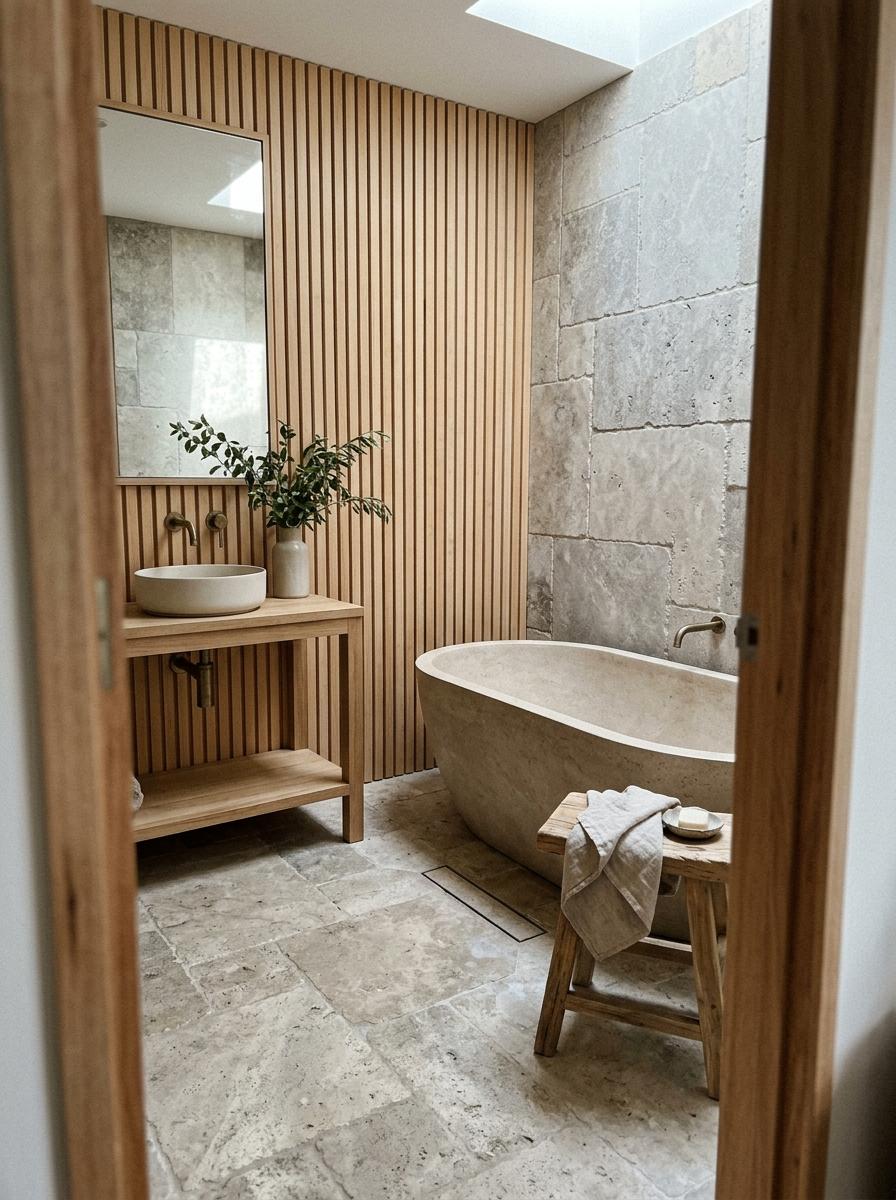

Title: A Room With Organic Japandi Bathroom Design Focus The room settles into a quiet corner of the home where the transition from the bustling living area to the bath acts as a sensory decompression chamber, anchoring the inhabitant in a sanctuary of muted light and stillness. Within this niche, the design achieves a structured spontaneity, where the rigid geometry of Japanese minimalism is softened by the unpredictable, fluid curves of Scandinavian nature. While the external world remains a chaotic grid of glass and steel, the internal volume of the bathroom retreats into a cavernous, soft-edged intimacy that prioritizes the psyche over the streetscape. The tactile narrative is driven by the use of honed silver travertine and slatted Hinoki wood, materials that offer a gripping friction underfoot while remaining velvety to the touch. This aesthetic cohesion is anchored by the recessed floor-to-ceiling drainage channels, a functionalist integration that eliminates visual clutter, ensuring that the water's movement remains the only active element in an otherwise motionless space.
Embrace A Minimalist Home With Japandi Bathroom Influences
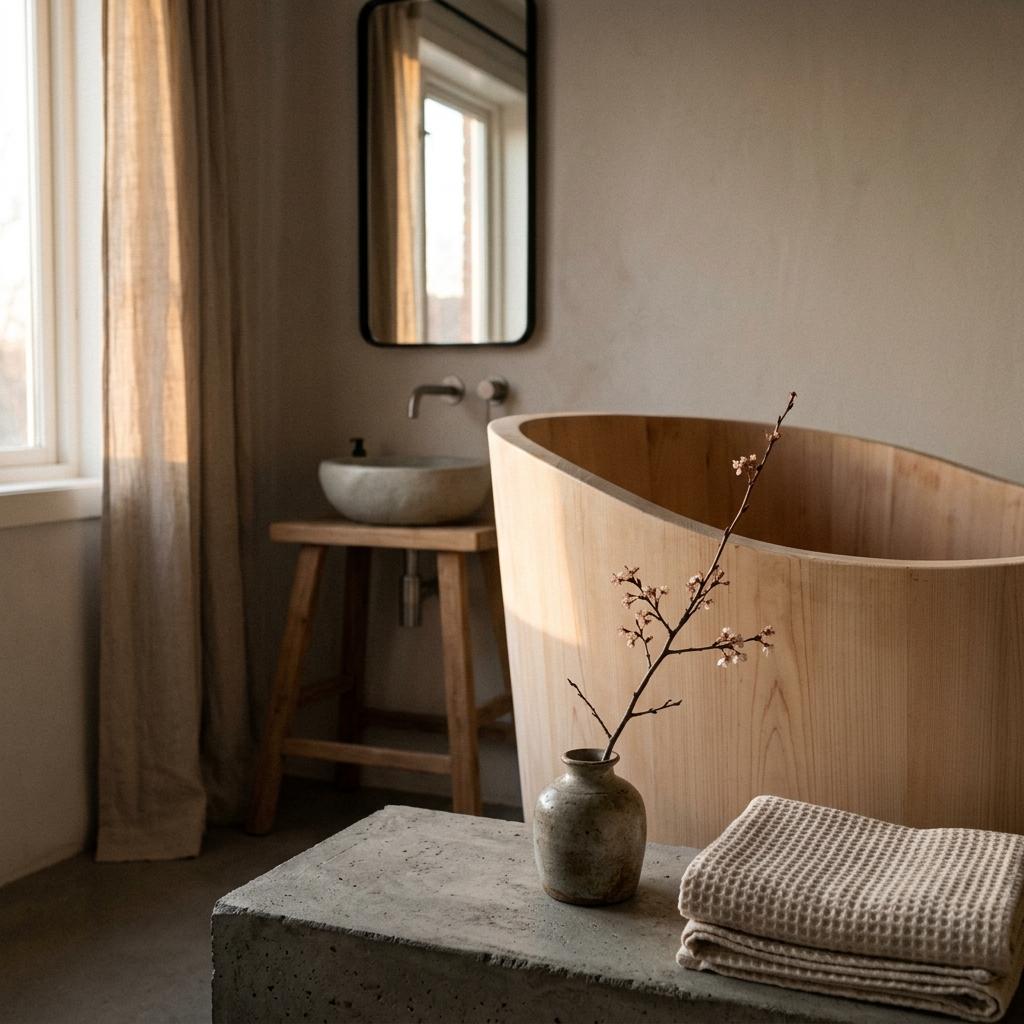

Stepping into a typical modern bathroom often feels like navigating a frantic, fluorescent-lit laboratory-cold porcelain reflecting the harsh glare of chrome and the visual noise of cluttered vanities. It was this specific sensory overload that dominated my conversation with a Tokyo-based designer last week. "The bathroom," he remarked, pausing to adjust a sample of raw hinoki wood on his desk, "should never be a chore of utility." He leaned back, the scent of the timber filling the room. "It is, quite simply," he continued, "the threshold where the day's fatigue is exchanged for a quiet, tactile clarity." This shift from clinical sterility to a sanctuary of warmth defines the heart of the Japandi aesthetic. By marrying the rustic, weathered patina of Wabi-sabi with the disciplined, sculptural lines of Scandinavian functionalism, we move away from mere decoration toward an intentional 'spatial hygiene.' This evolution of the private sphere suggests that a minimalist home begins not in the living room, but in the ritualistic stillness of a well-balanced bath.
This Sustainable Japandi Bath Space Is A Gentle Refuge In The Home
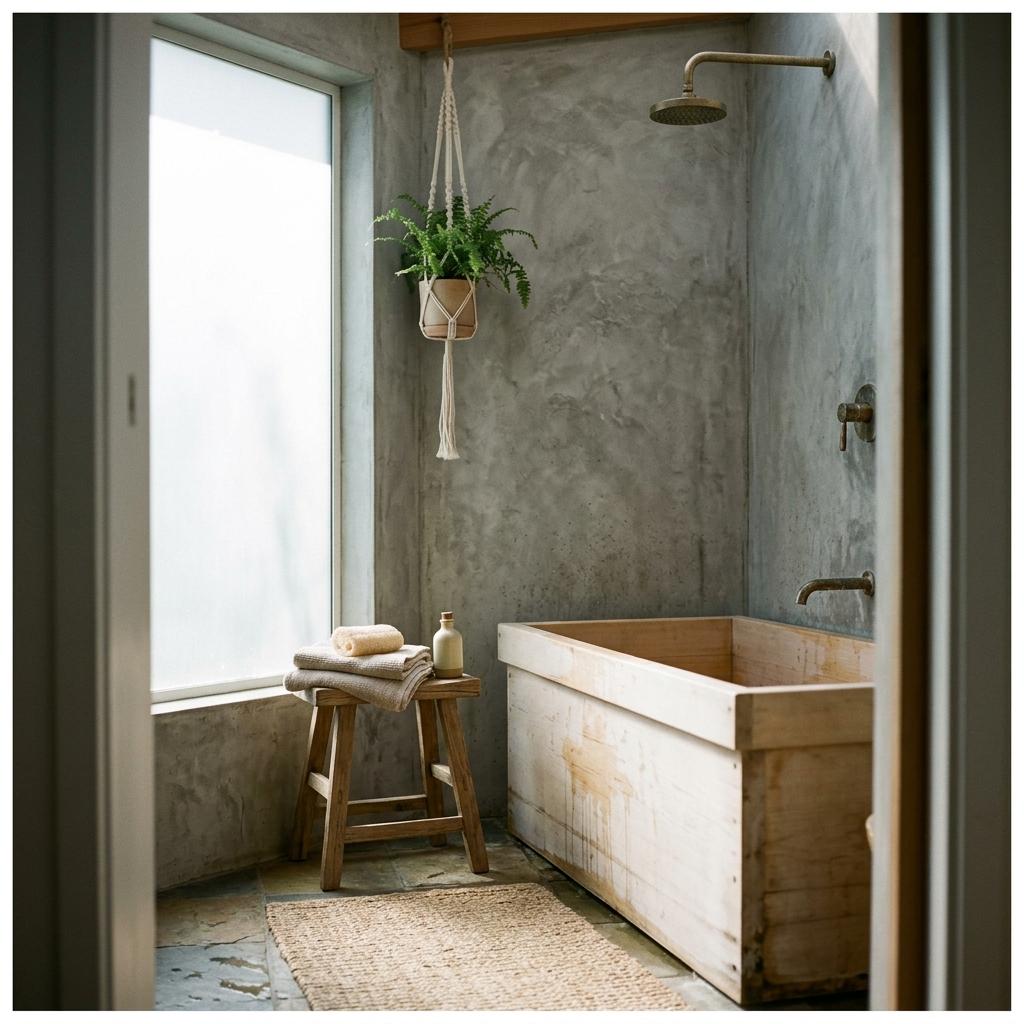

Stepping into this bathing niche, one is immediately anchored by a profound stillness that feels less like a room and more like a curated sanctuary carved from the noise of the modern floor plan. It is a space defined by a structured fluidity, where the rigid geometry of Japanese minimalism is softened by the organic, unpredictable warmth of Scandinavian hygge. While the exterior world remains a chaotic theater of digital demands and visual clutter, the interior threshold enforces a deliberate silence, transforming the act of cleansing into a meditative boundary between public life and private restoration. This transition is articulated through a rigorous palette of Hinoki wood and tactile microcement, materials that ground the senses through their raw grain and cool, stone-like resilience. Far from being merely decorative, the integration of low-flow aged brass fixtures and hidden geothermal heating serves as a precise functionalist solution, ensuring that the room's ecological footprint remains as light as its aesthetic impact.
How A Narrow Space Embraces Japandi Bathroom Design Style
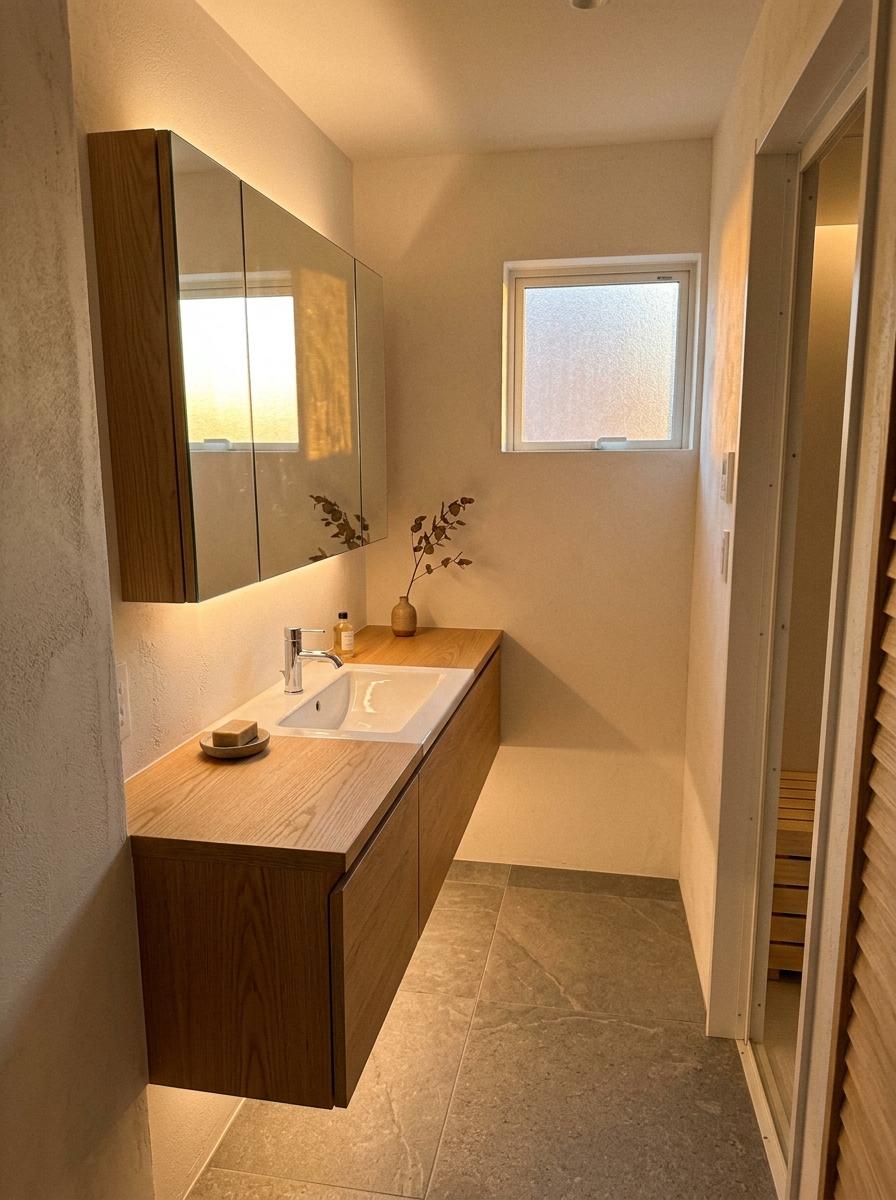

Walking into a cramped, windowless bathroom often feels like stepping into a cluttered storage locker-a claustrophobic jumble of plastic bottles and harsh, fluorescent shadows. However, when I recently visited a renovated studio in Tokyo, that sense of constriction vanished, replaced by a profound "quietude." The architect leaned against the doorframe, adjusting his glasses. "The challenge," he told me, gesturing toward the slender vanity carved from light oak, "wasn't just about making the room look bigger." He paused, tracing the grain of the wood with his thumb, before adding, "it was about choreographing the light to soften the edges of the spatial constraint." By utilizing a restrained palette of matte textures and recessed cove lighting, the design effectively dissolved the physical boundaries of the narrow footprint. This intentional shift-moving from a cluttered, utilitarian box to a curated sanctuary of wabi-sabi imperfections and Scandinavian functionality-illustrates how the Japandi ethos transforms architectural limitations into a masterclass of spatial poetry.
Comments